


This article was automatically translated from the original Turkish version.
+3 More
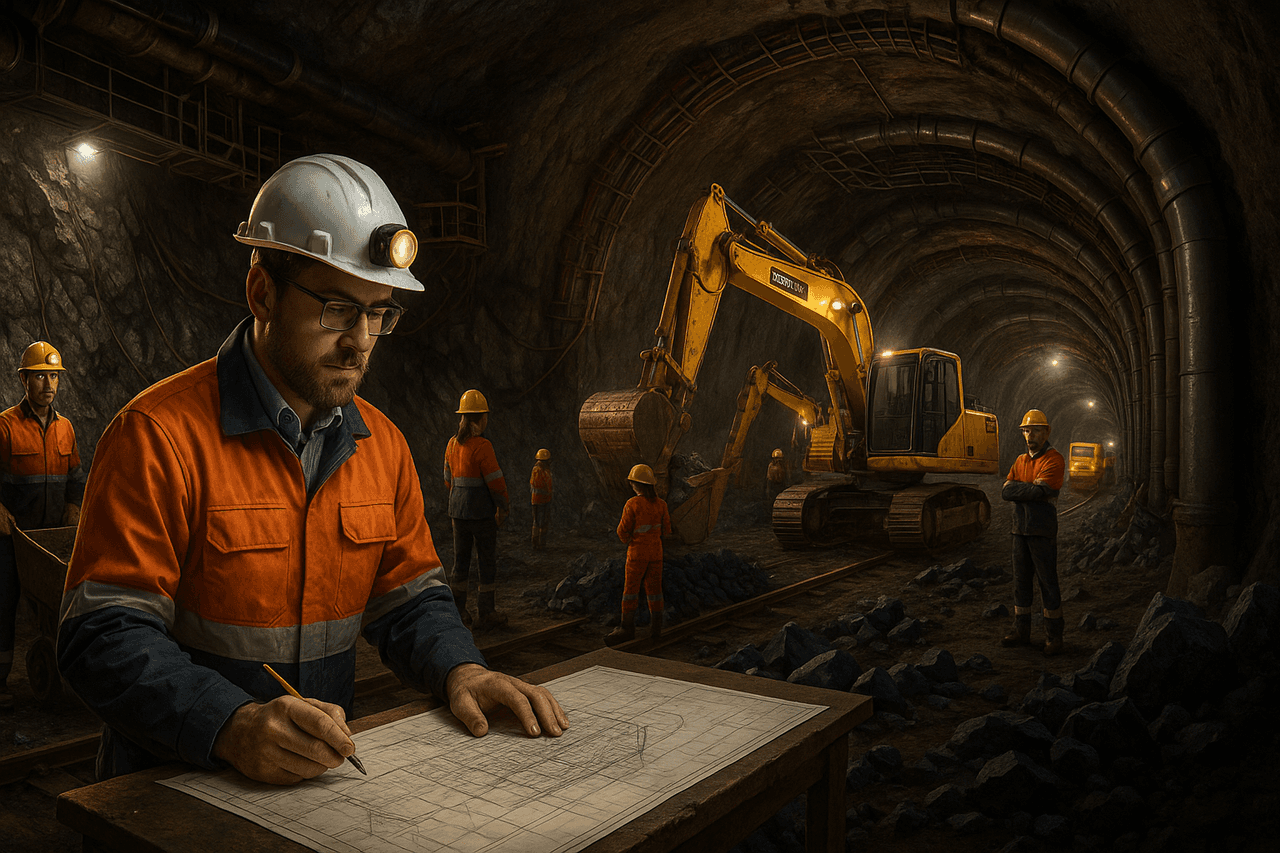
Generated with artificial intelligence.
Mining Engineering
Discipline | Engineering | ||||||||
|---|---|---|---|---|---|---|---|---|---|
Related Field(s) | Geology Environmental Engineering Geotechnical Metallurgy | ||||||||
Duration of Education | 4 Years (Bachelor's) | ||||||||
Basic Responsibilities | Mineral Exploration, Extraction, Processing, Safety and Environmental Management | ||||||||
Work Sectors | Public and Private Mining Companies, Construction, Cement, Ceramic | ||||||||
Mining engineering is an engineering discipline that forms the technical and scientific foundation of the mining sector, one of the most strategic areas of the global economy. Mining engineers play a critical role in the processes of locating, extracting, processing, transporting, and adding natural resources to the economy. They not only enhance the efficiency of production processes but also stand at the center of an environmentally conscious and safe operational approach. Mining activities impact every aspect of human life, ranging from energy production and the construction industry to the manufacturing of high-tech products and the supply of agricultural inputs. Therefore, mining engineering is not merely a technical field but a multidisciplinary profession with significant social, economic, and environmental impacts.
Activities within the mining sector encompass the exploration, extraction, processing, and final preparation of economically valuable minerals found in the Earth’s crust for consumption. Each stage of this process requires scientific methods, technological infrastructure, and strategic planning. Mining engineers have a broad scope of responsibilities, from identifying ore reserves and developing operational plans to designing safety protocols and conducting environmental rehabilitation efforts. In this regard, mining engineering has emerged as a critical discipline for the development of modern industries.
The historical origins of mining engineering extend back to the earliest periods of human history, to stone and metal processing activities. In ancient times, mining was largely conducted through empirical and traditional methods, but over time it evolved into a professional field grounded in scientific principles. The mining technical schools established in Europe during the 18th century were pioneers of this transformation. These institutions laid the modern foundations of engineering education and initiated systematic knowledge production in mining engineering.
Mining engineering education in Türkiye began in the second half of the 19th century and rapidly institutionalized during the Republican era. Higher education institutions established in Zonguldak and subsequent engineering faculties in major cities played a critical role in the development of the profession. Mining engineers trained during this period made significant contributions to the country’s energy and industrial investments. Today, mining engineering education is offered at more than twenty universities in Türkiye, with programs structured in accordance with the criteria of international accreditation bodies. This ensures the profession’s development aligns with global standards.
Mining engineering education begins with four-year undergraduate programs and offers opportunities for specialization at the master’s and doctoral levels. The curriculum starts with fundamental engineering courses such as mathematics, physics, chemistry, and materials science, which build students’ foundational scientific knowledge. In later stages, courses are offered in areas such as mineral exploration, ore preparation, rock mechanics, mining operations, ventilation, blasting technologies, mining economics, occupational safety, and environmental management. Students reinforce their theoretical knowledge through mandatory field internships and practical laboratory work.
Current trends highlight the growing importance of digitalization and interdisciplinary approaches in mining engineering education. Computer-aided design, production planning software, data analytics, automation, and artificial intelligence applications have become indispensable components of educational programs. Concepts such as environmental sustainability, social responsibility, and circular economy have also been integrated into the core of engineering education. As a result, graduates acquire not only technical competence but also a professional identity characterized by global social and environmental awareness.
The roles and responsibilities of mining engineers encompass a broad framework covering all stages of mining activities:
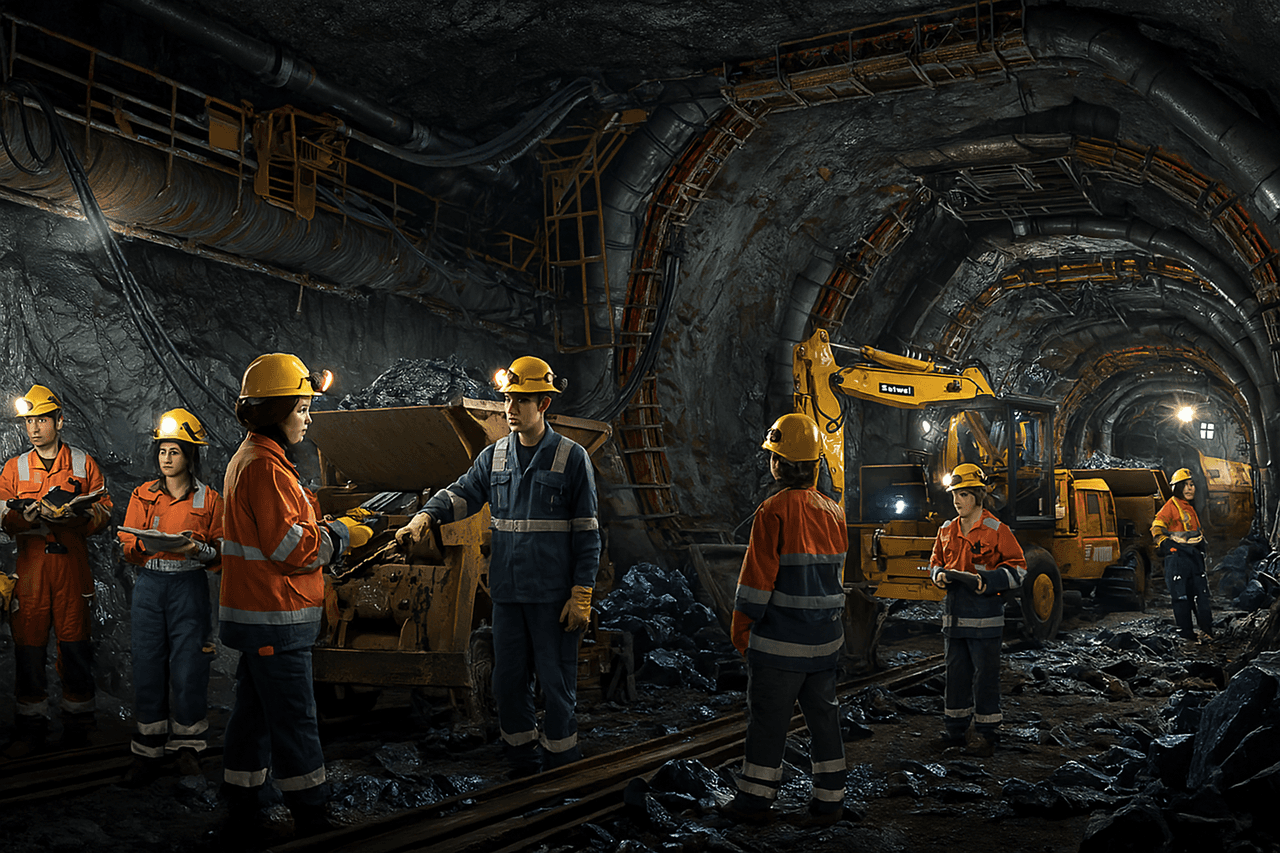
Mining Engineering (generated by artificial intelligence.)
Mining engineers have a wide range of employment opportunities across various sectors.
Metal Mining: Production and processing of metallic minerals such as iron, copper, aluminum, gold, silver, and zinc.
Industrial Minerals: Production of industrial raw materials such as clay, limestone, phosphate, and feldspar.
Energy Minerals: Extraction of coal, uranium, and other energy-focused minerals.
Infrastructure Projects: Participation in large-scale engineering projects such as dams, tunnels, and underground storage facilities.
Waste Management and Recycling: Management of mining waste and recovery of industrial by-products.
Public and Private Sector Consulting: Technical and strategic roles in regulatory agencies, international consulting firms, and energy companies.
Today, mining engineering is rapidly transforming through technological advancements. Key developments include:
Modern drilling machines enable access to deep and complex geological structures. Software used in blasting processes supports environmentally friendly practices by reducing vibrations and gas emissions.
Production planning software, real-time data collection systems, and automated control mechanisms enhance production efficiency. Remote-controlled equipment and autonomous haulage vehicles significantly elevate workplace safety.
Sensors used in underground operations continuously monitor gas levels, temperature, vibration, and geomechanical changes. Wearable technologies provide real-time tracking of workers’ health conditions.
Water treatment systems, dust suppression technologies, and environmental rehabilitation equipment used in waste management increase the sustainability of operations.
Artificial intelligence-assisted analysis of data generated from production processes improves the accuracy of operational decisions. This leads to reduced costs and increased resource utilization efficiency.
Mining engineering is being shaped by new dynamics centered on energy transition, digitalization, and sustainability.
Importance of Critical Minerals: Rising demand for lithium, cobalt, and rare earth elements used in renewable energy technologies requires specialized expertise in these areas.
Sustainable Mining: Technologies that reduce carbon footprints, improved recycling processes, and methods minimizing environmental impact have gained prominence.
Workforce Trends: As experienced engineers retire, the need for qualified personnel is increasing. Continuous education and interdisciplinary skills are becoming essential.
Digital Mining: Mining operations are becoming safer and more efficient through robotic systems, autonomous vehicles, and artificial intelligence-supported decision-making tools.
International Collaborations: International education and research programs are emerging as key factors supporting the global development of the profession.
Mining engineering is a discipline that ensures the safe, efficient, and environmentally responsible integration of natural resources into the economy. Updating educational programs to include digitalization and sustainability, expanding the application of new technologies, and developing qualified human resources are among the key developments in this field. Mining engineers are also increasingly involved in energy transition, management of critical minerals, and environmental sustainability initiatives alongside traditional production processes.
Gümüşhane Üniversitesi. "Maden Mühendisliği Tanım ve Mesleki Görevler." Accessed July 25, 2025. Accessed Adresi.
Kaymakoğlu, Burçin, and Tuğba Deniz Tombal Kara. “Türkiye’de Maden Mühendisliği Eğitimine İstatistiksel Bakış”. *Bilimsel Madencilik Dergisi* 61, no. 4 (December 2022): 231–38. Accessed Adresi.
ODTÜ. "Maden Mühendisliği." ODTÜ. Accessed July 25, 2025. Accessed Adresi.
Özbayoğlu, Gülhan. “Maden Mühendisliği Eğitiminde Eğilimler Ve Sorunlar.” *Yükseköğretim Ve Bilim Dergisi*, no. 3 (December 2011): 156–60. Accessed Adresi.
İstanbul Teknik Üniversitesi. "Maden Mühendisi Kimdir?" İstanbul Teknik Üniversitesi. Accessed July 25, 2025. Accessed Adresi.

Generated with artificial intelligence.
Mining Engineering
Discipline | Engineering | ||||||||
|---|---|---|---|---|---|---|---|---|---|
Related Field(s) | Geology Environmental Engineering Geotechnical Metallurgy | ||||||||
Duration of Education | 4 Years (Bachelor's) | ||||||||
Basic Responsibilities | Mineral Exploration, Extraction, Processing, Safety and Environmental Management | ||||||||
Work Sectors | Public and Private Mining Companies, Construction, Cement, Ceramic | ||||||||
Historical Development
Educational Structure and Current Trends
Roles and Responsibilities
Exploration and Reserve Management
Preparation of Operational Plans
Production and Operations Management
Occupational Safety and Environmental Management
Financial and Economic Management
Work Areas and Sectors
Technologies and Equipment Used
Drilling and Blasting Technologies
Digitalization and Automation
Sensor and Monitoring Systems
Environmental Technologies
Artificial Intelligence and Big Data
The Future of the Profession and Emerging Areas