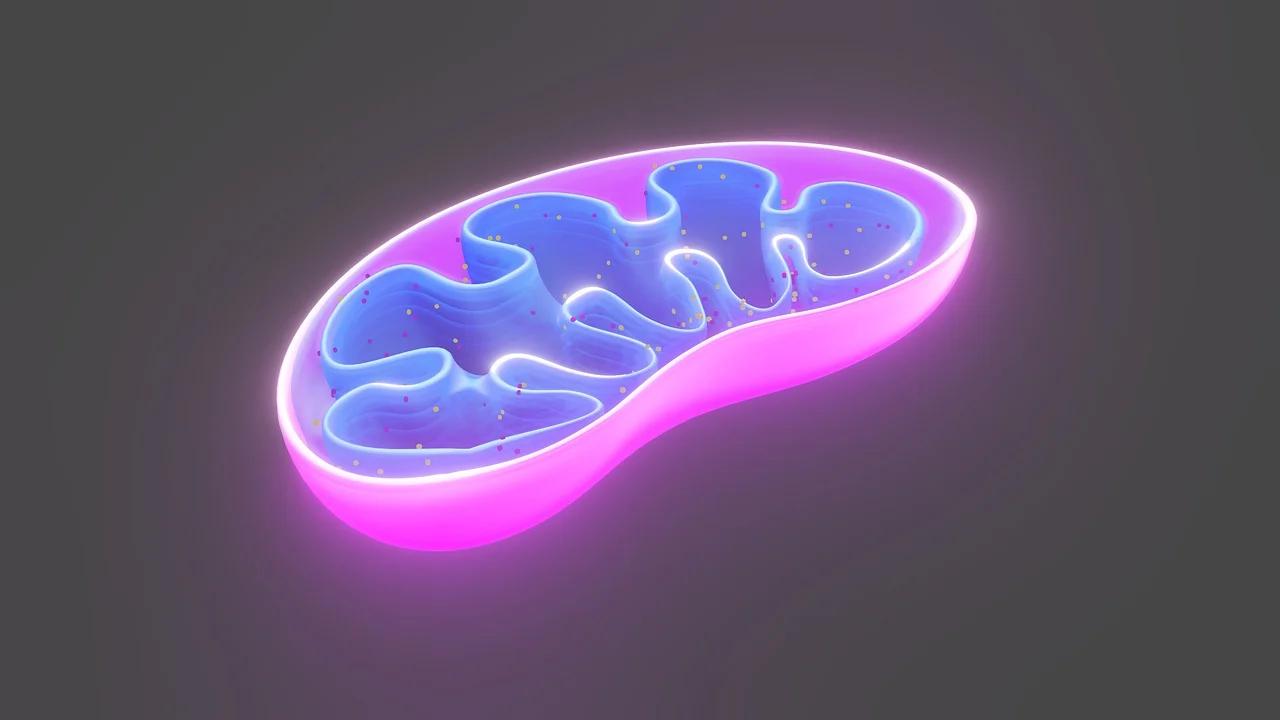
Mitochondrion Organelle
Structure(s) | while the inner membrane is folded. the outer membrane is smooth It is surrounded by a double membrane | ||||||||
|---|---|---|---|---|---|---|---|---|---|
Primary Function | Production of ATP through cellular respiration. | ||||||||
Cellular Respiration Processes | Oxidative Phosphorylation: ATP synthesis and achievement of high energy efficiency. Krebs Cycle: Generation of energy carrier molecules. Glycolysis: Conversion of glucose into pyruvate (preparation for the citric acid cycle). | ||||||||
Mitochondrial DNA | Carries its own genetic information independently from the cell nucleus. | ||||||||
Other Functions | Role in inheritance (via mitochondrial DNA). Mitochondrial biogenesis (formation of new mitochondria). Initiation of apoptosis (programmed cell death). Regulation of the cell cycle. | ||||||||
Mitochondria are organelles found in eukaryotic cells that are primarily involved in cellular energy production. These structures, which are surrounded by a double membrane, carry out cellular respiration processes necessary for the synthesis of adenosine triphosphate (ATP). Additionally, mitochondria play essential roles in regulating metabolic functions within the cell, the cell cycle, inheritance, and processes such as apoptosis.
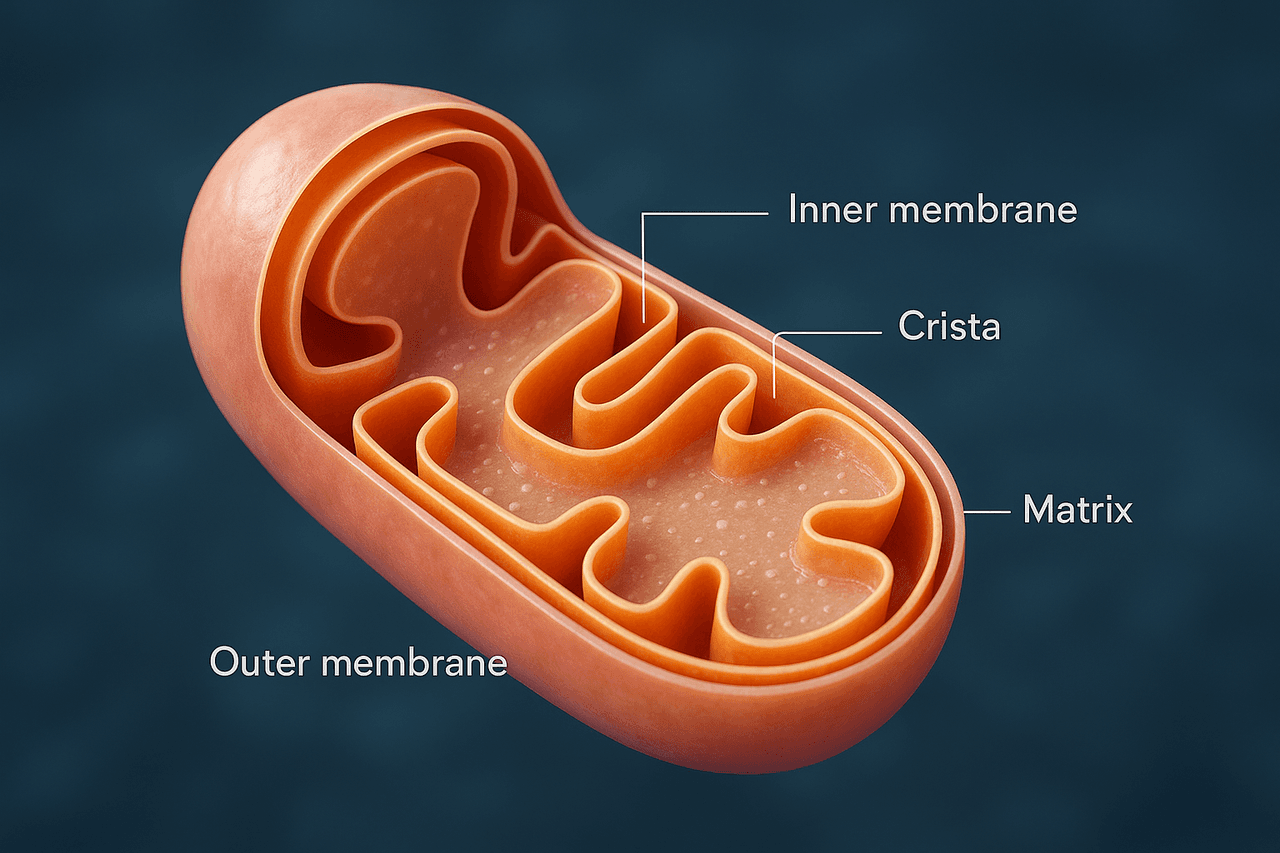
Representative Image of the Mitochondrion Organelle (Created by Artificial Intelligence).
Mitochondria are organelles enclosed by a double membrane. The outer membrane separates the mitochondrion from the surrounding cytosol, while the inner membrane has a multilayered structure. The inner membrane contains proteins that include enzymes responsible for ATP synthesis and structures that function as proton carriers. These features enable the mitochondrion to produce ATP with high efficiency. Inside the mitochondrion is a fluid matrix known as the mitochondrial matrix, where the Krebs cycle and other metabolic reactions occur.
Mitochondria possess their own genetic material called mitochondrial DNA (mtDNA). This DNA carries genetic information independently from the nuclear DNA and encodes some mitochondrial proteins. Additionally, mitochondria have the capability to produce ribosomes and certain essential enzymes.
Mitochondria perform two primary functions: energy production and the maintenance of cellular homeostasis.
Mitochondria generate ATP through cellular respiration, which consists of glycolysis, the Krebs cycle, and oxidative phosphorylation. ATP serves as the energy currency of the cell and is utilized in numerous cellular processes.
Mitochondria play an important role in storing and regulating intracellular calcium ions. This function is critical for cellular signaling and muscle contraction.
Mitochondria contribute to the control of the cell cycle and cell division. They are also involved in regulating cellular growth and proliferation.
Mitochondria are central regulators of apoptosis. They initiate the programmed cell death process to eliminate damaged or harmful cells.
While producing energy through oxygen consumption, mitochondria also generate reactive oxygen species (ROS). These free radicals can be sources of oxidative stress and affect cellular structures.
Mitochondria are capable of autonomous replication within the cell. This process allows an increase in mitochondrial number in response to cellular energy demands.
Mitochondria contain their own DNA, which is maternally inherited. This characteristic plays a significant role in the determination of hereditary mitochondrial traits.
Mitochondria regulate the oxidation of fatty acids as well as the metabolism of proteins and carbohydrates. These processes contribute to maintaining cellular energy balance.
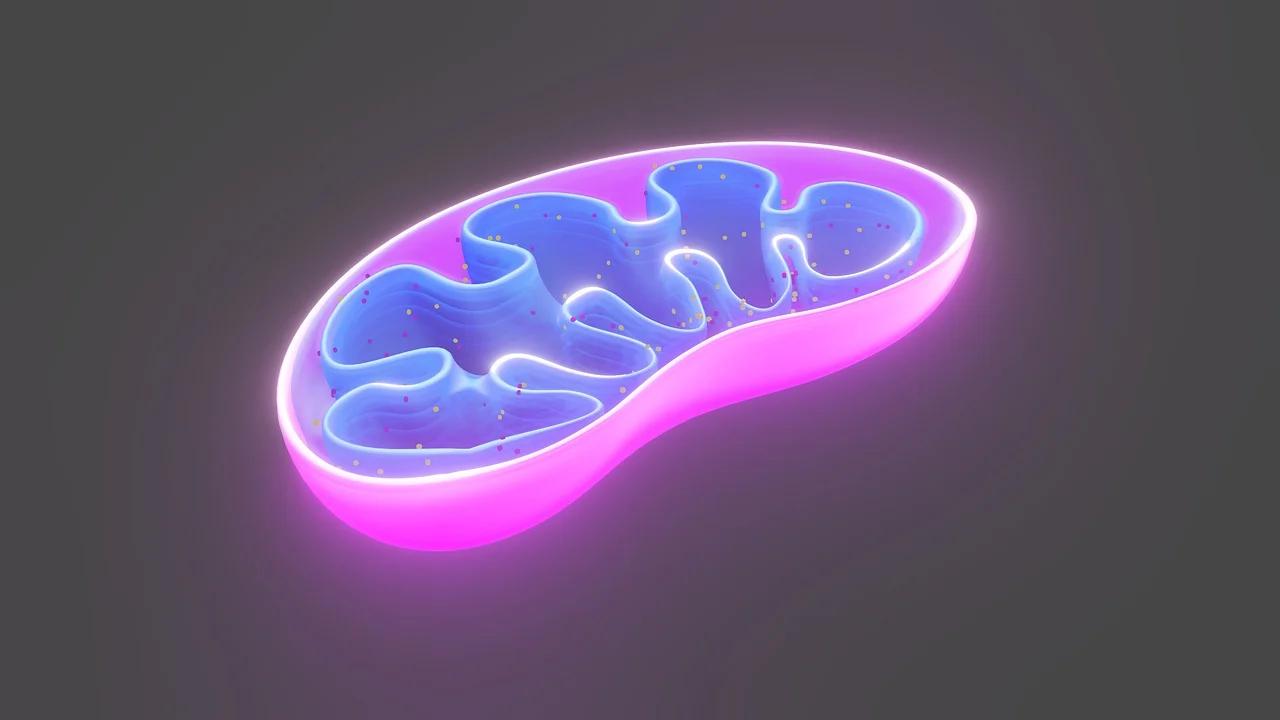
Mitochondrion Organelle ( Pixabay)
Mitochondria generate ATP during the process of cellular respiration. This process consists of three main stages:
Glycolysis occurs in the cytoplasm of the cell, where glucose molecules are converted into pyruvate. Although ATP is produced during this stage, the energy yield is relatively low. The pyruvate generated is then transported into the mitochondrion.
Once inside the mitochondrion, pyruvate is converted into acetyl-CoA and enters the Krebs cycle. During this cycle, energy carrier molecules such as NADH and FADH₂ are produced. These molecules are later utilized in oxidative phosphorylation.
The electron transport chain, located in the inner mitochondrial membrane, uses the electrons carried by NADH and FADH₂ to drive ATP production. Protons are pumped into the intermembrane space between the inner and outer membranes, creating a proton gradient. This gradient activates an enzyme called ATP synthase, which synthesizes ATP. This stage is the most efficient phase of cellular energy production.
Mitochondria are inherited exclusively from the mother. Mitochondrial DNA (mtDNA) functions independently from nuclear DNA and encodes a subset of mitochondrial proteins. Mutations in mtDNA can lead to mitochondrial diseases, often disrupting energy production. These defects primarily affect energy-dependent tissues and organs, such as muscles, nerves, and the heart.
Mitochondria constantly move within the cell. This mobility is regulated through mitochondrial fission and fusion processes. Fission enables the division of larger mitochondria into smaller fragments, while fusion allows smaller mitochondria to merge. These dynamic processes enhance mitochondrial energy-producing capacity and help adjust mitochondrial distribution in response to the cell’s energy demands. Additionally, mitochondrial biogenesis— the increase in the number of mitochondria— helps meet increased energy requirements.
Mitochondria play a pivotal role in apoptosis, a process of programmed cell death. Apoptosis serves as a critical mechanism to prevent uncontrolled cell proliferation or damage. Mitochondria detect apoptotic signals and trigger the release of proteins such as cytochrome c. These proteins activate enzymes that execute the cell death program. Apoptosis is particularly important in the prevention of diseases such as cancer.
Mitochondrial biogenesis refers to the process of generating new mitochondria. This process is regulated according to the cell’s energy requirements and can be triggered by environmental factors such as exercise or fasting. Mitochondrial biogenesis is controlled by transcription factors like PGC-1α and increases the mitochondrion’s capacity for energy production. Maintaining proper mitochondrial function and metabolic balance within the cell depends heavily on this process.
Pixabay. Cell Mitochondrion Biology Organelle [illustration]. 2021. Accessed May 31, 2025. .
ScienceDirect. “Mitochondrion.” In Methods in Cell Biology, 2021. Accessed May 31, 2025. https://www.sciencedirect.com/topics/neuroscience/mitochondrion.
Schwerzmann, Kurt, Hans Hoppeler, Susan R. Kayar, and Ewald R. Weibel. “Oxidative Capacity of Muscle and Mitochondria: Correlation of Physiological, Biochemical, and Morphometric Characteristics.” Proceedings of the National Academy of Sciences 86, no. 5 (1989): 1583–1587. https://doi.org/10.1073/pnas.86.5.1583.
Zimorski, Verena, Chuan Ku, William F. Martin, and Sven B. Gould. “Endosymbiotic Theory for Organelle Origins.” Current Opinion in Microbiology 22 (December 2014): 38–48. https://www.sciencedirect.com/science/article/abs/pii/S1369527414001283.

Mitochondrion Organelle
Structure(s) | while the inner membrane is folded. the outer membrane is smooth It is surrounded by a double membrane | ||||||||
|---|---|---|---|---|---|---|---|---|---|
Primary Function | Production of ATP through cellular respiration. | ||||||||
Cellular Respiration Processes | Oxidative Phosphorylation: ATP synthesis and achievement of high energy efficiency. Krebs Cycle: Generation of energy carrier molecules. Glycolysis: Conversion of glucose into pyruvate (preparation for the citric acid cycle). | ||||||||
Mitochondrial DNA | Carries its own genetic information independently from the cell nucleus. | ||||||||
Other Functions | Role in inheritance (via mitochondrial DNA). Mitochondrial biogenesis (formation of new mitochondria). Initiation of apoptosis (programmed cell death). Regulation of the cell cycle. | ||||||||
No Discussion Added Yet
Start discussion for "Mitochondrion Organelle" article
Structure
Functions
Energy Production (ATP Synthesis)
Cellular Respiration
Calcium Storage and Regulation
Regulation of the Cell Cycle
Apoptosis (Programmed Cell Death)
Oxygen Consumption and Free Radical Production
Mitochondrial Biogenesis
Hereditary Role
Regulation of Metabolic Pathways
Energy Production and Cellular Respiration
Glycolysis
Krebs Cycle (Citric Acid Cycle)
Oxidative Phosphorylation and Electron Transport Chain
Inheritance and Mitochondrial DNA
Mitochondrial Dynamics
Mitochondria and Apoptosis (Programmed Cell Death)
Mitochondrial Biogenesis
This article was created with the support of artificial intelligence.