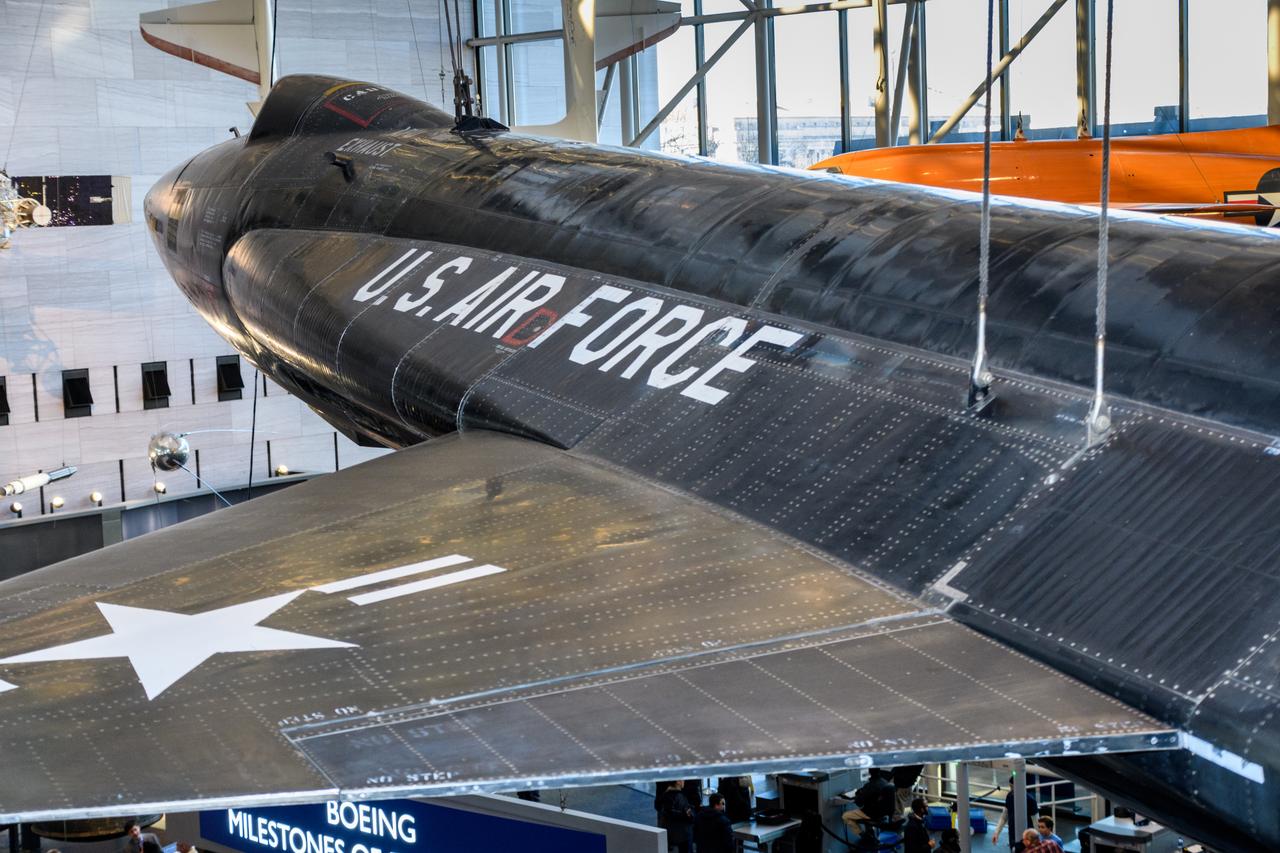


This article was automatically translated from the original Turkish version.
+1 More
Primary Users | NASA United States Air Force (USAF) United States Navy | ||||||||
|---|---|---|---|---|---|---|---|---|---|
Role / Type | Hypersonic research aircraft | ||||||||
Program Start | 1954 | ||||||||
Program End | 1968 | ||||||||
Production Quantity | 3 | ||||||||
Flight Conducted | Total of 199 flights | ||||||||
Crew | 1 (Pilot) | ||||||||
Wingspan | 6.7 metres (22 ft) | ||||||||
Maximum Speed | Mach 6.72 / 4,520 miles per hour | ||||||||
Maximum Altitude | 354.200 ft / Approximately 67 miles | ||||||||
Engine | 1 × Reaction Motors XLR-99 rocket engine | ||||||||
Producer | North American Aviation Inc | ||||||||
Length | 15.2 - 15.5 m (50 - 51 ft) | ||||||||
Altitude | 4 m (13 ft vertical tail height) | ||||||||
North American X-15 is an experimental rocket-powered aircraft used in a hypersonic research program conducted by the United States Air Force and NASA between 1959 and 1968. Three X-15 aircraft were built under the program, completing a total of 199 flights. The aircraft was designed to study aerodynamic and thermal behavior during both atmospheric and exoatmospheric flight.【1】
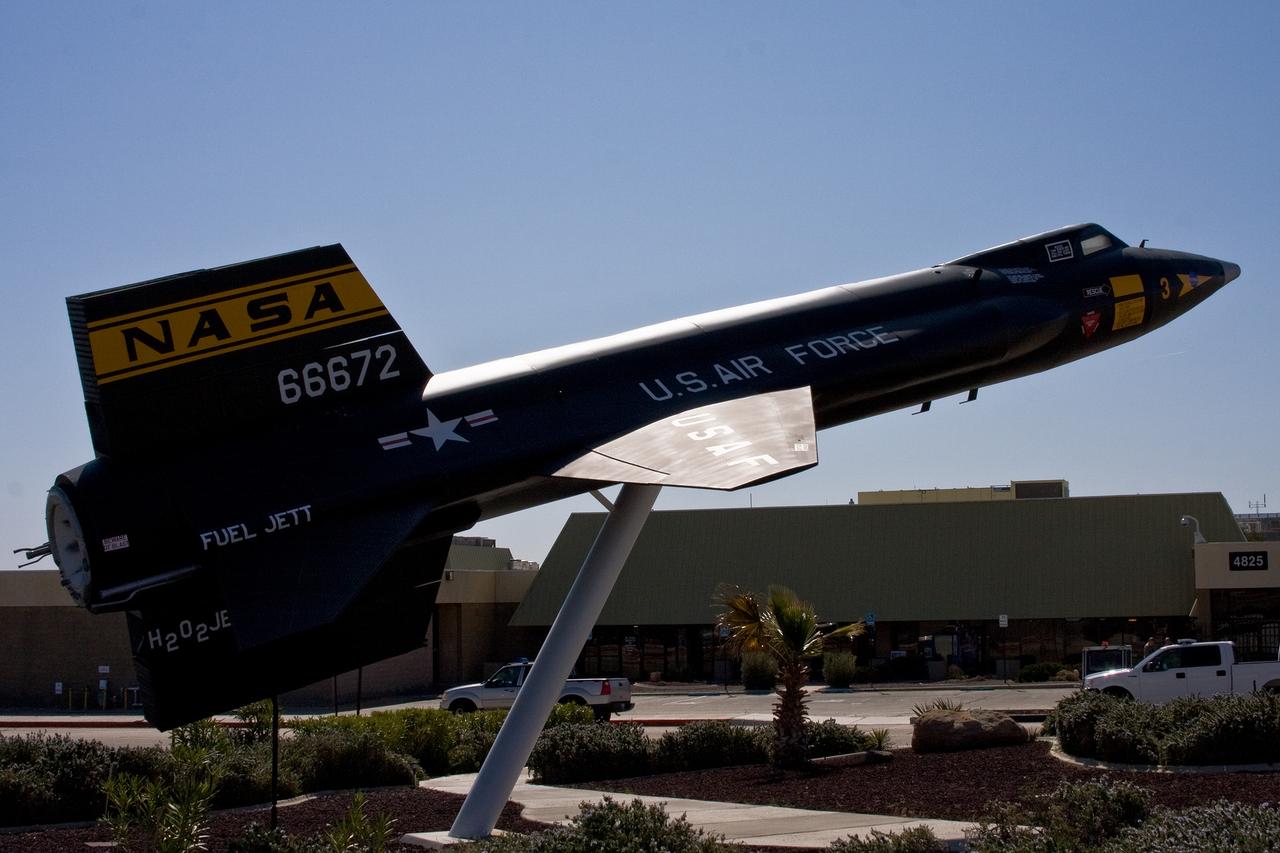
North American X-15 (Terje Nesthus)
Development of the North American X-15 project began in 1954. As demand for spaceflight and hypersonic speeds increased, the National Advisory Committee for Aeronautics (NACA — later renamed NASA), the United States Air Force (USAF), the United States Navy, and the private sector jointly initiated the program. In July 1954, the aircraft’s fundamental characteristics were defined, and in September 1955, North American Aviation was selected as the prime contractor. The primary objective of the program was to exceed the limits of atmospheric flight and reach the boundaries of space (hypersonic speeds of Mach 5 and above), while investigating aerodynamic heating, stability, and control challenges under these conditions.【2】
The first prototype was rolled out of the factory on 15 October 1958. Testing procedures were designed so that the aircraft would not take off from a conventional runway but would instead be carried to an altitude of approximately 45,000 feet beneath the wing of a modified Boeing B-52 Stratofortress and then air-launched. The first unpowered glide flight was conducted on 8 June 1959 by test pilot Scott Crossfield. A special 485-mile test corridor stretching from Utah to Edwards Air Force Base in California was established, and flat dry lakebeds were designated for emergency landings.【3】
As a completely experimental "X-Series" research aircraft, the X-15 never entered mass production; only three units were built. Flight systems on these three aircraft were continuously improved. The initial X-15 models were powered by two XLR-11 engines, but were later upgraded with the massive XLR-99 rocket engine, capable of generating 57,000 pounds of thrust. Since the aircraft was not designed as a combat vehicle, no weapons testing was conducted. Instead, it was used to test aerodynamic sensors, thermal insulation materials, and full-pressure protective space suits intended for astronauts.
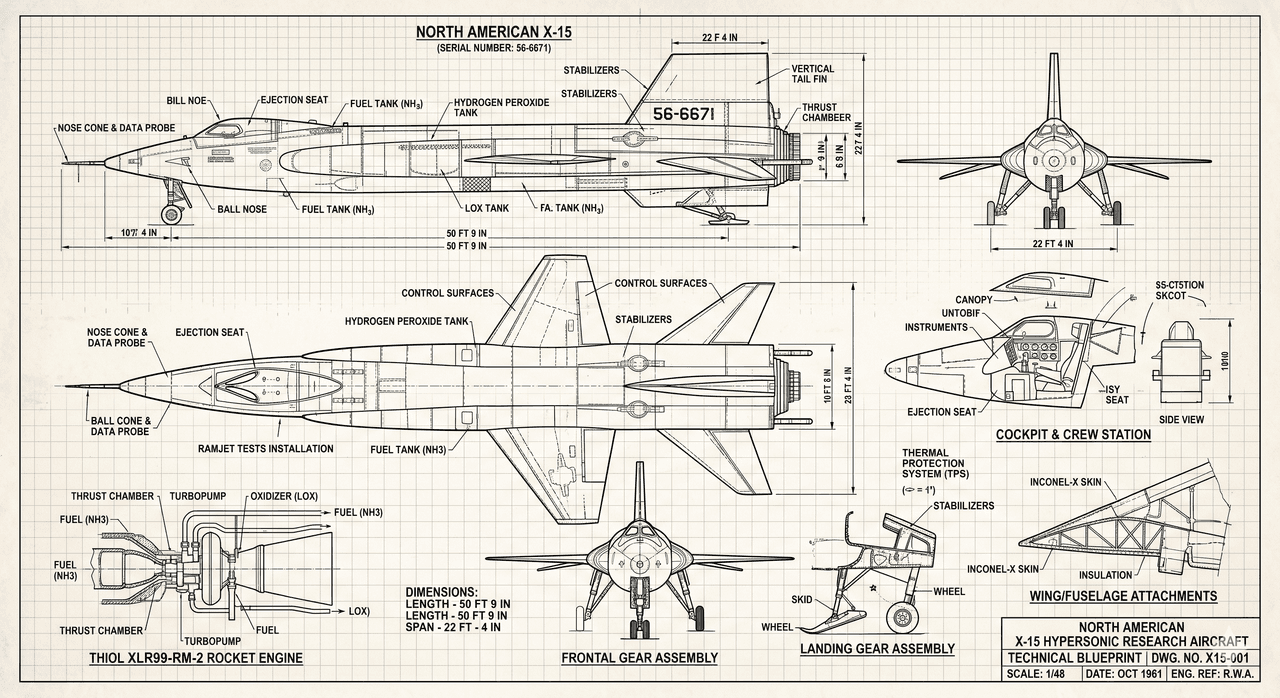
North American X-15 technical drawing (generated by artificial intelligence)
The X-15 is a rocket-powered experimental vehicle designed to bridge atmospheric flight and spaceflight. To withstand the extreme aerodynamic temperatures reaching up to 1,200 °F, the aircraft’s airframe was constructed from a high-strength nickel-chromium alloy known as "Inconel X." The pilot’s cockpit was insulated from this intense heat using an aluminum outer shell. For landing, instead of conventional wheels, the nose featured a standard wheel while the tail incorporated steel skids to allow landings on dry lakebeds; additionally, just before ground contact, the lower vertical tail fin detached via parachute to ensure a stable descent angle.
The X-15’s control systems were specifically adapted for two distinct flight environments: atmospheric and exoatmospheric. While flying within the atmosphere, the aircraft used conventional aerodynamic control surfaces on its tail and wings. At the edge of space, where air is extremely thin, it employed hydrogen peroxide-powered reaction control thrusters mounted on the nose and wingtips to maneuver. A sensitive "ball nose" sensor, developed by Northrop and located at the aircraft’s tip, measured airflow to determine angle of attack and sideslip, transmitting this data to the pilot even under extreme heat. The cockpit windows were designed with a two-layer structure: an outer layer of aluminosilicate glass and an inner layer of soda-lime tempered glass to withstand severe flight heating.
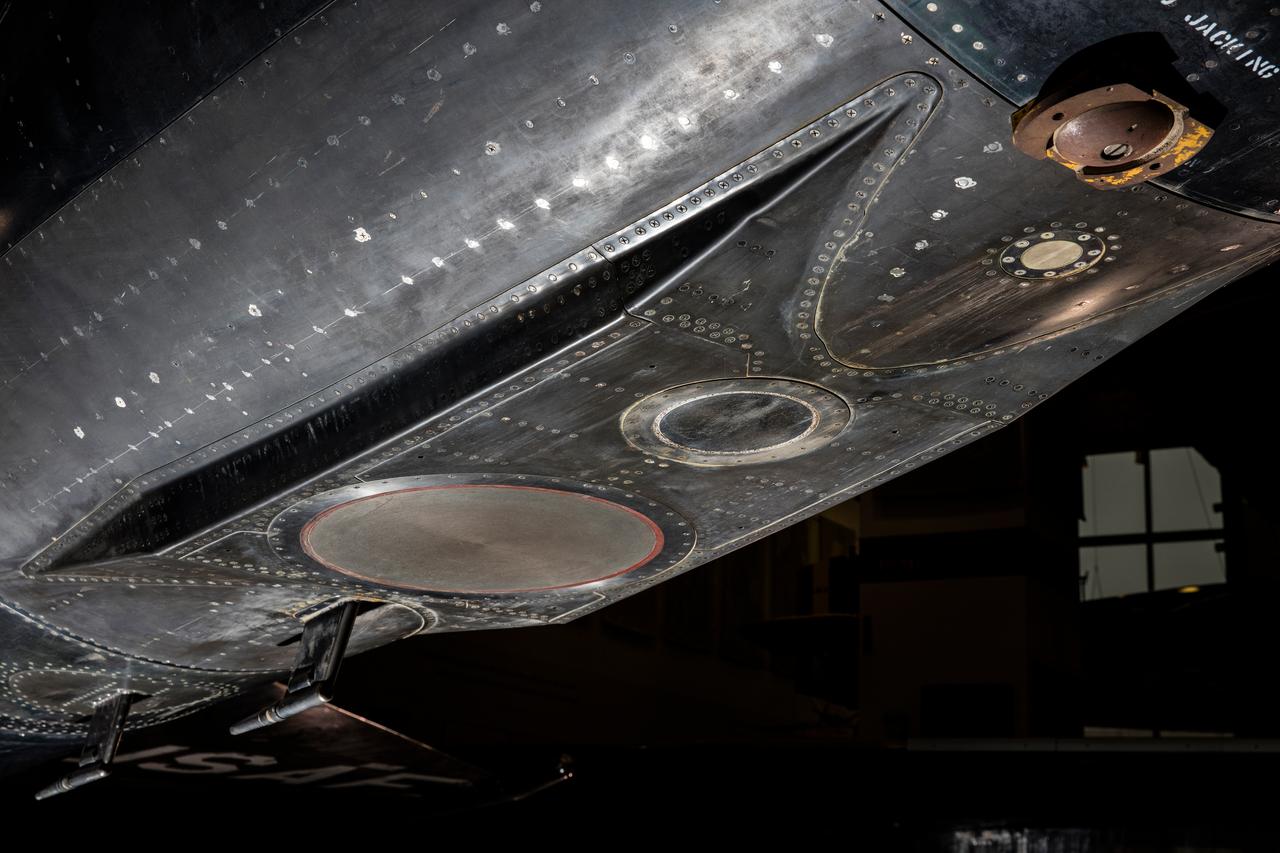
North American X-15 Sensors (Smithsonian National Air and Space Museum)
The single-pilot X-15 is approximately 15.2 meters (50–51 feet) long, with a wingspan of 6.7 meters (22 feet) and a vertical tail height of 13 feet. At launch from the B-52 mothership, its fully loaded weight was 31,275 pounds; after complete fuel consumption, its glide landing weight dropped to 12,295 pounds. The primary powerplant was the massive Reaction Motors XLR-99 rocket engine, fueled by a cryogenic mixture of liquid oxygen and anhydrous ammonia, capable of producing up to 57,000 pounds of thrust. This extraordinary thrust enabled the aircraft to achieve a climb rate of 4,000 feet per second. During official flights, the X-15 reached a record speed of 4,520 miles per hour (Mach 6.72) and an altitude of 354,200 feet (approximately 67 miles), securing its place in aviation history.【5】
As a purely experimental research platform operated jointly by civilian (NASA) and military (United States Air Force and Navy) institutions, the X-15 had no capability for air-to-air or air-to-ground ordnance, electronic warfare systems, or tactical reconnaissance equipment. Instead of weapons integration, it carried scientific payloads such as astronomical experiment kits, micrometeorite collectors, spacecraft life support units, and prototype ramjet engines designed for future hypersonic flight, all aimed at data collection under extreme conditions.
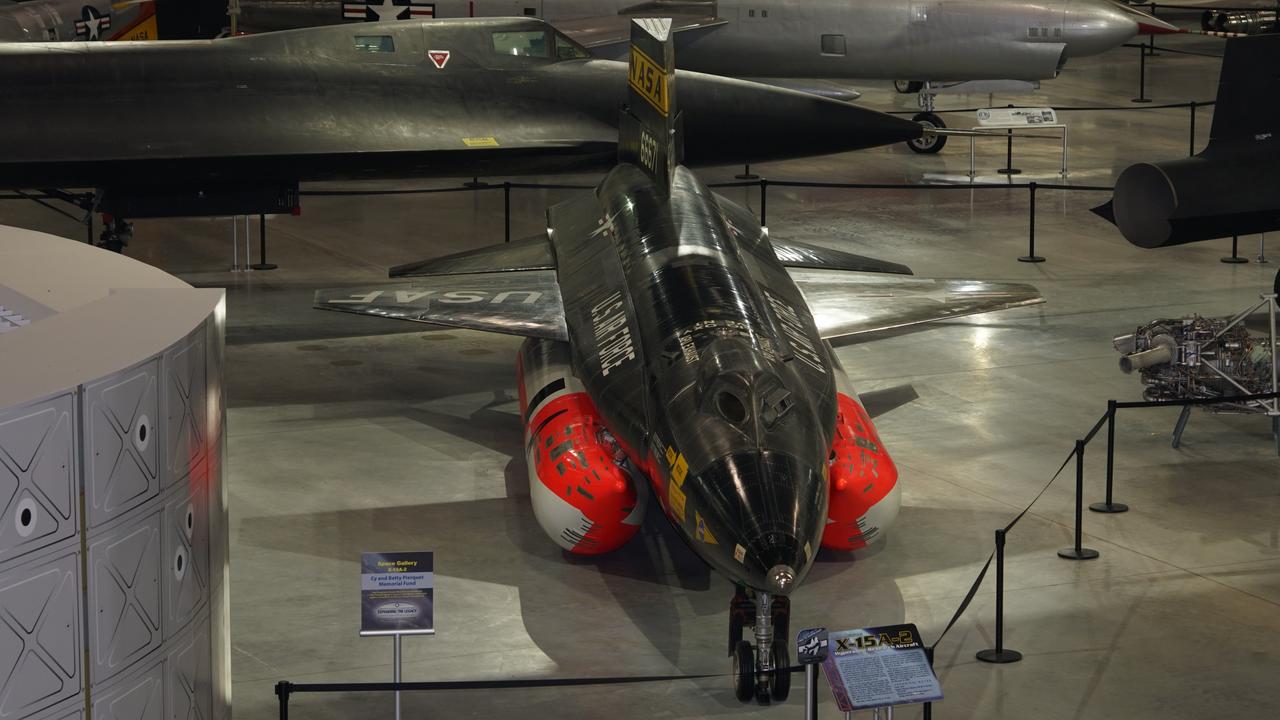
North American X-15A-2 Variant (Johnny Comstedt)
During the program’s duration, only three X-15 aircraft were built, each serving a different phase of the flight program. The first aircraft, tail number 56-6670 (X-15-1), completed 81 missions and remains the most-flown variant, having conducted the initial tests. The second aircraft (X-15-2 / 56-6671) was rebuilt after a landing accident into a more advanced variant known as the X-15A-2. Its fuselage was extended, two large external tanks for liquid hydrogen and ammonia fuel were added, and it was coated with an ablative heat-resistant layer. This variant set the aircraft’s highest recorded speed of Mach 6.72.【6】 The third aircraft (X-15-3 / 56-6672) featured a more advanced cockpit display panel and an autonomous adaptive flight control system. However, during its atmospheric re-entry, a system failure caused loss of control and the aircraft disintegrated.
Although funded by the United States Air Force and Navy, the program’s goal was not to develop combat tactics but to gather data for aviation medicine and future spaceflight. During flights, pilots’ heart rates were documented rising to between 145 and 185 beats per minute due to launch stress; these military physiological measurements later became standard in astronaut training.
Under NASA’s leadership, the civilian side of the program collected vital data on winged re-entry from space, aerodynamic heat transfer, and spacecraft life support systems. Over 700 technical documents produced as a result of the program formed the foundation of America’s space program.【7】
The X-15 program ended in 1968. Although the aircraft had no active future, the flight control, energy management, and materials knowledge gained from the X-15 directly enabled the success of the Mercury, Gemini, Apollo, and especially the Space Shuttle programs, passing its legacy on to future spacecraft.
Between 1959 and 1968, a total of 199 research flights were conducted using the three X-15 aircraft. Each flight lasted approximately 10 minutes, with the rocket engine firing for only 80 to 120 seconds. After fuel exhaustion, the aircraft glided unpowered back to Earth.
North American X-15 landing (NASA Armstrong Flight Research Center)
Operations were extremely demanding and hazardous. Due to the aircraft’s incredible climb rate of 4,000 feet per second, if the pilot delayed engine shutdown by even one second, the aircraft could deviate from its target altitude by 4,000 feet. The cockpit windows, exposed to temperatures of 1,000 °F (approximately 537 °C) during flight, shattered when standard tempered glass was used and were later replaced with aluminosilicate glass.
The X-15 set unofficial speed and altitude records for manned aircraft. On 22 August 1963, NASA pilot Joseph Walker reached an altitude of 354,200 feet. On 3 October 1967, Air Force pilot Pete Knight achieved a speed of Mach 6.72. A total of 12 pilots flew the X-15, and eight of them exceeded the 50-mile altitude boundary, earning the "astronaut wings" — including Neil Armstrong, who would later become the first human to walk on the Moon.【8】
The most tragic incident occurred on 15 November 1967, when Major Michael Adams, flying the X-15-3 variant, lost control during atmospheric re-entry due to a system malfunction and pilot disorientation, resulting in the aircraft breaking apart and his death.【9】
The project was a strictly domestic test platform conducted entirely within the borders of the United States during the Cold War. It was used exclusively by U.S. government institutions (NASA, United States Air Force, United States Navy). Export, sale, or orders from other countries were never considered.【10】
Due to its nature, no international cooperation was undertaken. The program was entirely a domestic technological development effort led by the U.S. military and domestic industry (North American Aviation, Reaction Motors, etc.).
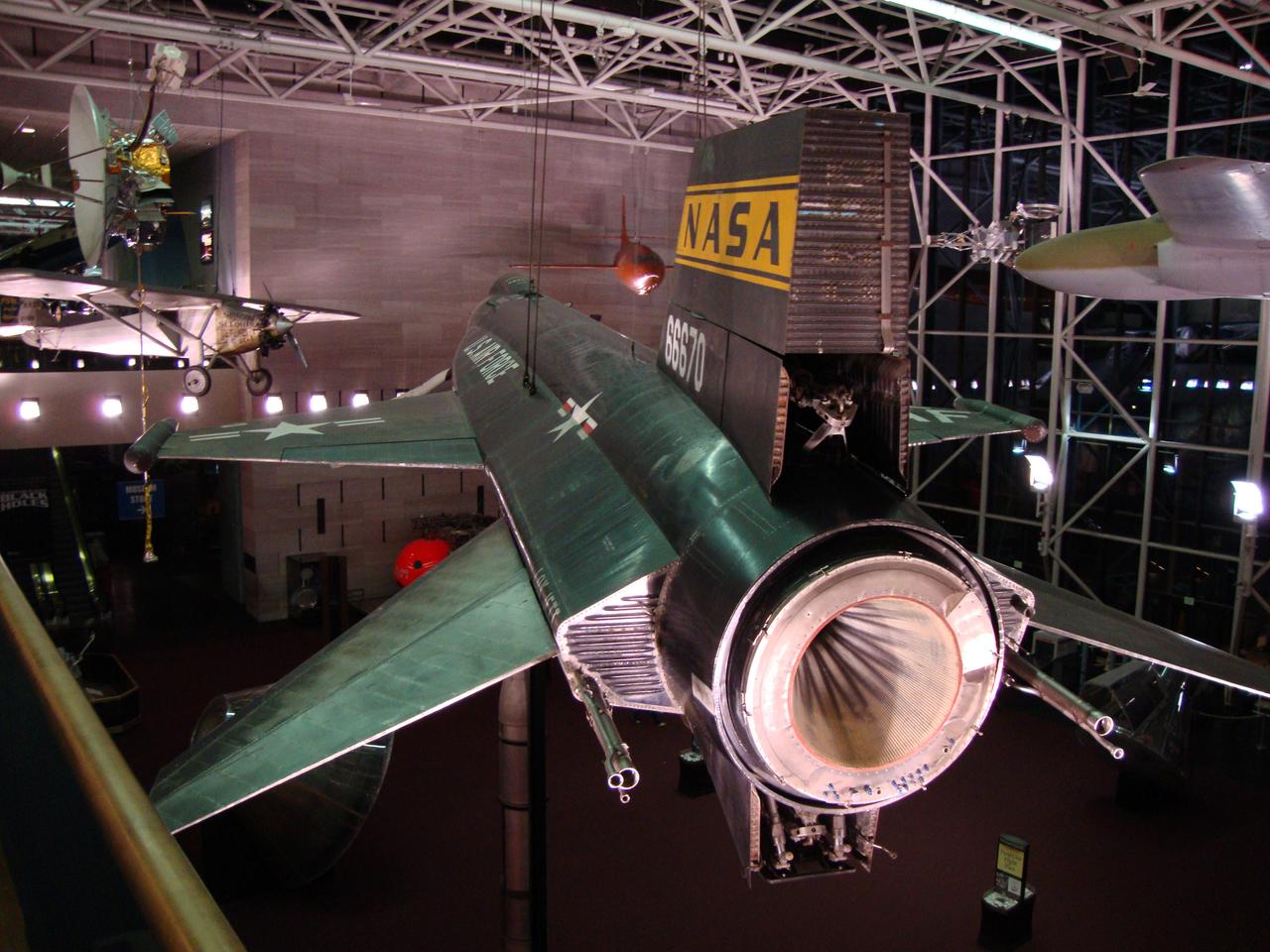
North American X-15 top view (James H)
The X-15 is a manned system designed to test the limits of human piloting in spacecraft-like environments and therefore cannot be directly compared to unmanned aerial vehicles (UAVs) of its era or today. The program was specifically intended to demonstrate whether a pilot could manually control a rocket-powered vehicle during atmospheric ascent and re-entry.
The system’s greatest achievement was reaching speeds above Mach 6 and altitudes exceeding 100 kilometers — levels not surpassed for decades afterward. Its weaknesses included its inability to take off independently (it required a B-52 mothership), its extremely short fuel burn time (maximum 85–120 seconds), and the absence of any fully autonomous safety system, making it inherently lethal in operation.【11】
Comstedt, Johnny. "North American NA-240 X-15A-2 56-6671 at Wright-Patterson," Flickr, Accessed May 28, 2026, https://www.flickr.com/photos/johnnyflight/39713286304/..
Miller, Peter. "North American X-15," Flickr, Accessed May 28, 2026, https://www.flickr.com/photos/pmillera4/48671072756/..
NASA Armstrong Flight Research Center. "X-15 Landing on Rogers Dry Lake," YouTube, Accessed May 28, 2026. https://www.youtube.com/watch?v=_xUG5N9qDcY.
NASA. "X-15 Hypersonic Research Program." Accessed May 28, 2026. https://www.nasa.gov/reference/x-15/.
National Air and Space Museum. "A Close Look at the North American X-15." Accessed May 28, 2026. https://airandspace.si.edu/stories/editorial/close-look-north-american-x-15.
National Air and Space Museum. "North American X-15." Accessed May 28, 2026. https://airandspace.si.edu/collection-objects/north-american-x-15/nasm_A19690360000.
National Museum of the United States Air Force. "North American X-15A-2," National Museum of the United States Air Force, Accessed May 28, 2026. https://www.nationalmuseum.af.mil/Visit/Museum-Exhibits/Fact-Sheets/Display/Article/195761/north-american-x-15a-2/.
Nesthus, Terje. "North American X-15," Flickr, Accessed May 28, 2026, https://www.flickr.com/photos/93161966@N04/20842391671/.
Smithsonian Institution. "North American X-15." Accessed May 28, 2026. https://www.si.edu/object/north-american-x-15%3Anasm_A19690360000.
Smithsonian Magazine. "X-15 Walkaround." Accessed May 28, 2026. https://www.smithsonianmag.com/air-space-magazine/x-15-walkaround-225.
Smithsonian National Air and Space Museum. "Undercarriage and the Flow Direction Sensor of the North American X-15." Flickr, Accessed May 28, 2026. https://www.flickr.com/photos/airandspace/41707201414/.
greyloch. "North American X-15 top view," Flickr, Accessed May 28, 2026. https://www.flickr.com/photos/greyloch/4920739663/.
[1]
National Air and Space Museum, "North American X-15," National Air and Space Museum, Access Date: 28 May 2026, https://airandspace.si.edu/collection-objects/north-american-x-15/nasm_A19690360000.
[2]
NASA, "X-15 Hypersonic Research Program", NASA, Access Date: 28 May 2026,https://www.nasa.gov/reference/x-15/.
[3]
NASA, "X-15 Hypersonic Research Program", NASA, Access Date: 28 May 2026,https://www.nasa.gov/reference/x-15/.
[5]
National Museum of the United States Air Force, "North American X-15A-2," National Museum of the United States Air Force, Access Date: 28 May 2026,https://www.nationalmuseum.af.mil/Visit/Museum-Exhibits/Fact-Sheets/Display/Article/195761/north-american-x-15a-2/.
[6]
Smithsonian Institution, "North American X-15," Smithsonian Institution, Access Date: 28 May 2026,https://www.si.edu/object/north-american-x-15%3Anasm_A19690360000.
[7]
National Air and Space Museum, "North American X-15," National Air and Space Museum, Access Date: 28 May 2026, https://airandspace.si.edu/collection-objects/north-american-x-15/nasm_A19690360000.
[8]
National Museum of the United States Air Force, "North American X-15A-2," National Museum of the United States Air Force, Access Date: 28 May 2026,https://www.nationalmuseum.af.mil/Visit/Museum-Exhibits/Fact-Sheets/Display/Article/195761/north-american-x-15a-2/.
[9]
National Air and Space Museum, "North American X-15," National Air and Space Museum, Access Date: 28 May 2026, https://airandspace.si.edu/collection-objects/north-american-x-15/nasm_A19690360000.
[10]
NASA, "X-15 Hypersonic Research Program", NASA, Access Date: 28 May 2026,https://www.nasa.gov/reference/x-15/.
[11]
NASA, "X-15 Hypersonic Research Program", NASA, Access Date: 28 May 2026,https://www.nasa.gov/reference/x-15/.


Primary Users | NASA United States Air Force (USAF) United States Navy | ||||||||
|---|---|---|---|---|---|---|---|---|---|
Role / Type | Hypersonic research aircraft | ||||||||
Program Start | 1954 | ||||||||
Program End | 1968 | ||||||||
Production Quantity | 3 | ||||||||
Flight Conducted | Total of 199 flights | ||||||||
Crew | 1 (Pilot) | ||||||||
Wingspan | 6.7 metres (22 ft) | ||||||||
Maximum Speed | Mach 6.72 / 4,520 miles per hour | ||||||||
Maximum Altitude | 354.200 ft / Approximately 67 miles | ||||||||
Engine | 1 × Reaction Motors XLR-99 rocket engine | ||||||||
Producer | North American Aviation Inc | ||||||||
Length | 15.2 - 15.5 m (50 - 51 ft) | ||||||||
Altitude | 4 m (13 ft vertical tail height) | ||||||||
No Discussion Added Yet
Start discussion for "North American X-15" article
Development Process
Technical Specifications
Current and Planned Variants
Purpose and Missions
Operational History and Achievements
User Countries and Integration
International Comparison and Competing Systems