


This article was automatically translated from the original Turkish version.
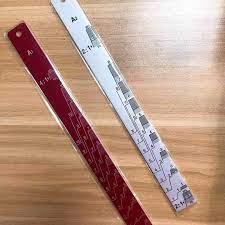
Paint Mixer
Type(s) | Handheld Auxiliary Equipment | ||||||||
|---|---|---|---|---|---|---|---|---|---|
Material(s) | Wood or Metal Plastic | ||||||||
Purpose of Use(s) | Paint and Chemical Mixture Homogenization | ||||||||
Field of Use | Paint, Primer, Varnish, Putty | ||||||||
Standards | ISO 8780-2, TS 5808 | ||||||||
A paint stirring stick is a manual mixing tool used to homogenize paints, primers, putties, varnishes, and similar liquid or semi-fluid materials prior to application. It ensures that the material achieves the desired color, consistency, and performance characteristics in both professional industrial applications and individual use. Despite its simple design, it plays a decisive role in determining coating quality.
Paint stirring sticks are typically manufactured from chemically resistant materials such as wood (lime, poplar, etc.), plastic (polypropylene, ABS, etc.), or stainless steel. Their dimensions vary according to the size of the container but generally range from 20 to 60 cm in length. The tips of the sticks may be flat, perforated, or wing-shaped. Ergonomic grip and splash-resistant design are the primary features that enhance usability and efficiency.
Although paints, varnishes, primers, or two-component coating materials are homogenized during production, they may develop settling, separation, or density variations within the container due to storage time. This negatively affects the product’s application performance. Stirring with a mixing stick ensures that:
In particular, for two-component products (such as epoxy or polyurethane), the correct stirring duration and method directly influence the curing properties of the material.
Before application, the container lid is opened and any surface film that may have formed is removed. The stick is inserted vertically into the material and, once it reaches the bottom, is drawn upward using spiral or circular motions. The process should last approximately 2 to 5 minutes and, if necessary, be repeated in the opposite direction. During application:
After stirring, the stick must be cleaned with a solvent or, if disposable, disposed of properly.
Paint stirring sticks are widely used in numerous fields including construction painting, furniture polishing, automotive painting shops, industrial coating facilities, plastic pigment mixing, and laboratory sample preparation. They are also commonly preferred for pre-mixing powder paints or manual sample preparation tasks.
Millî Eğitim Bakanlığı (MEGEP). *Kimya Teknolojisi – Boyama Ekipmanları ve Teknikleri*. Ankara: MEB Yayınları, 2013. Accessed June 17, 2025. .
Millî Eğitim Bakanlığı (MEGEP). *Yüzey Hazırlama ve Boya Uygulama Ekipmanları*. Ankara: MEB Yayınları, 2013. Accessed June 17, 2025. .

Paint Mixer
Type(s) | Handheld Auxiliary Equipment | ||||||||
|---|---|---|---|---|---|---|---|---|---|
Material(s) | Wood or Metal Plastic | ||||||||
Purpose of Use(s) | Paint and Chemical Mixture Homogenization | ||||||||
Field of Use | Paint, Primer, Varnish, Putty | ||||||||
Standards | ISO 8780-2, TS 5808 | ||||||||
Structural Features and Materials
Purpose and Function
Application Method and Technical Details
Applications
Advantages and Limitations
Advantages:
Limitations: