


This article was automatically translated from the original Turkish version.
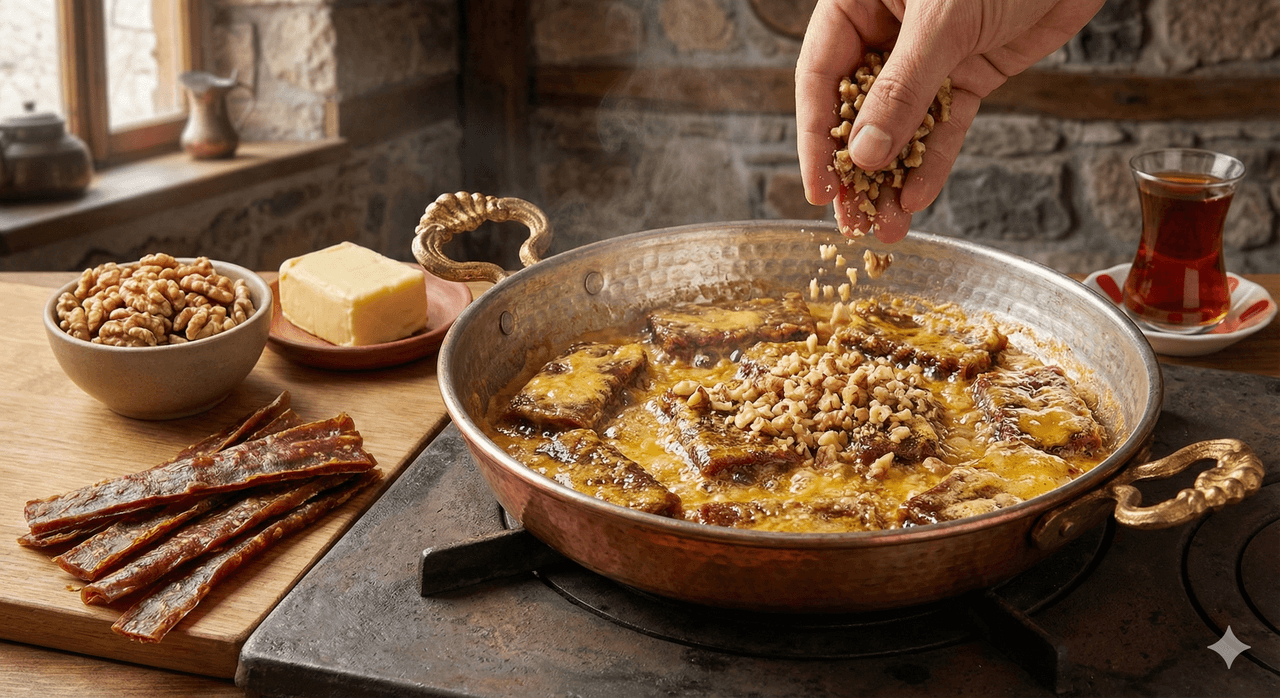
Pestil Çullaması (Generated with Artificial Intelligence.)
Cooking Method(s) | Fried in Pan / Kavurma | ||||||||
|---|---|---|---|---|---|---|---|---|---|
Category | Traditional Turkish Desserts / Hot Desserts | ||||||||
Origin(s) | Erzurum Eastern Anatolia Region | ||||||||
Other Name(s) | Pestil Kavurması | ||||||||
Serving Style | Hot | ||||||||
Consumption Season | Winter Months | ||||||||
Basic Component | Erzurum, Eastern Anatolia Region | ||||||||
Pestil Çullaması is a warm dessert based on the principle of cutting pestil into pieces, coating them in an egg mixture, frying in butter, and serving with walnuts. It is found in the culinary traditions of Erzurum and surrounding provinces. Although technically classified as a dessert, this dish is historically consumed by the local population as a main food source during breakfasts or suhoor meals due to its high protein and fat content. It is sometimes referred to in regional literature as “pestil kavurması.” The name is believed to derive from the egg coating acting as a kind of “çul” (covering) over the pestil.

Pestil Çullaması (Generated by Artificial Intelligence.)
The harsh winter months in the Erzurum region led the local population to preserve summer harvests through drying—a form of dried food technology. Pestil, made by boiling and drying mulberry juice, was not only eaten as a standalone snack during winter but also transformed into a cooking ingredient in the kitchen.
Pestil çullaması is an energy-dense “winter dish” created by combining fruit pestil, rich in simple sugars (fructose), with animal protein (egg) and fat. It was especially favored during severe winter conditions to maintain body heat and provide sustained energy. On traditional Erzurum tables, it is commonly served warm during tea times or breakfasts rather than as a dessert after meals.
The ingredients and steps for preparing pestil çullaması are as follows:
Pestil çullaması represents a unique gastronomic synthesis that blends traditional food preservation methods with culinary artistry. The process of drying agricultural products and transforming them into a high-energy food for winter months exemplifies the pragmatic and creative nature of folk cuisine. In this context, this dessert is not merely a biological source of nutrition but also a symbolic vessel through which local production practices and collective cultural memory are passed from generation to generation.
Erzurum Valiliği İl Kültür ve Turizm Müdürlüğü. "Erzurum Yemekleri" (PDF). Erzurum Mutfak Kültürü Yayını. Accessed December 19, 2025. https://erzurum.ktb.gov.tr/Eklenti/57940,erzurum-yemekleri.pdf?0
Erzurum İl Kültür ve Turizm Müdürlüğü. "Ne Yenir?" Erzurum İl Kültür ve Turizm Müdürlüğü Resmi Web Sitesi. Accessed December 19, 2025. https://erzurum.ktb.gov.tr/TR-56088/ne-yenir.html

Pestil Çullaması (Generated with Artificial Intelligence.)
Cooking Method(s) | Fried in Pan / Kavurma | ||||||||
|---|---|---|---|---|---|---|---|---|---|
Category | Traditional Turkish Desserts / Hot Desserts | ||||||||
Origin(s) | Erzurum Eastern Anatolia Region | ||||||||
Other Name(s) | Pestil Kavurması | ||||||||
Serving Style | Hot | ||||||||
Consumption Season | Winter Months | ||||||||
Basic Component | Erzurum, Eastern Anatolia Region | ||||||||
History and Cultural Context
Preparation Technique and Ingredients
Gastronomic Heritage and Cultural Sustainability