


+1 More

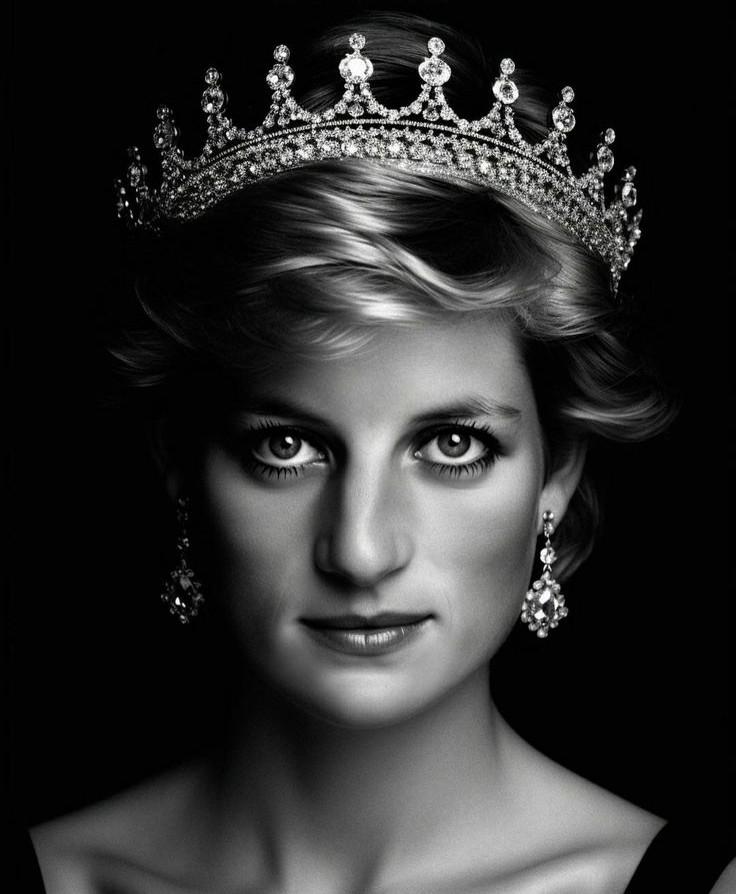
Diana Frances Spencer was born into the established Spencer family of the British aristocracy. Her family was closely connected to the royal family; Diana’s grandmother Ruth Roche was one of Queen Elizabeth’s ladies-in-waiting. She spent her childhood at Park House near Sandringham. Mother and witnessed her parents’ divorce at the age of small. Diana continued her education at various boarding schools. During her youth, child she worked as a nursery assistant and kindergarten teacher.
She received her early education at Riddlesworth Hall School, a boarding school in Norfolk. She then attended West Heath Girls’ School, one of the leading schools for young girls. Although her academic performance was average, together she became more active in sports and music like. In 1978, she enrolled temporarily at the Institut Alpin Videmanette in Switzerland. Later, she returned to London and worked as an assistant teacher at a kindergarten. This process was among her first experiences of direct interaction with the public.
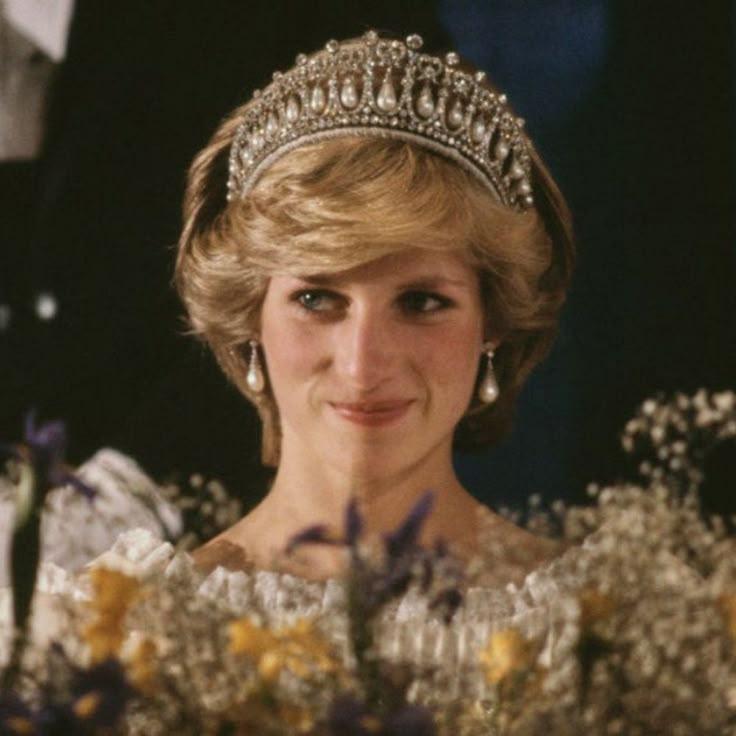
Diana began her relationship with Prince Charles of Wales in 1980 and became engaged on 24 February 1981. She officially joined the royal family with her wedding at St Paul’s Cathedral on 29 July 1981 and assumed the title of “Princess of Wales”. Wedding The ceremony was watched on television by approximately 750 million people worldwide. She also held the titles of “Duchess of Cornwall”, “Countess of Rothesay”, and “Baroness of Carrick”. From her marriage, she had two children: Prince William (1982) and Prince Henry (Harry) (1984).
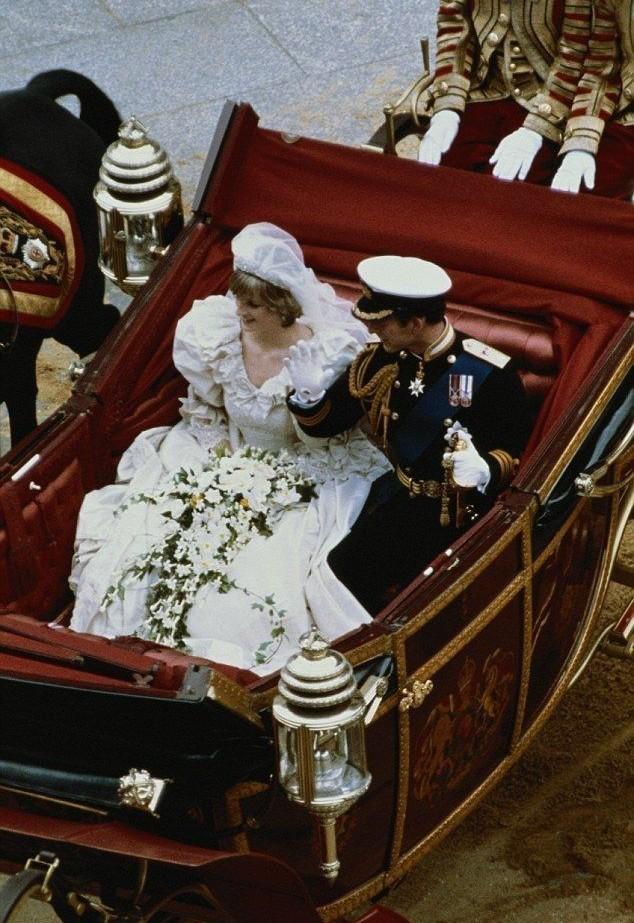
Prince Charles of Wales and Princess Diana of Wales
Problems in her marriage came to public attention in the late 1980s. The couple began living separately in 1992 and were officially divorced on 28 August 1996. After the divorce, Diana lost the title of “Her Royal Highness” but continued to use the title “Princess of Wales”.
Princess Diana broke from the royal family’s traditional protocols to establish a more direct and sincere vine with the public. Her interactions with patients, her support for the campaign to ban landmines, and her work for the homeless brought her humanitarian side to the forefront. Diana became known for her sincere connection with the public and her charitable activities. At a time when stigma around HIV/AIDS was high, she drew attention by physically touching people living with the disease. These actions played a significant role in increasing awareness of AIDS. She also gained public attention through her contact with leprosy patients. Diana’s handshake with HIV/AIDS patients was seen as a symbolic step in breaking down prejudices surrounding disease.
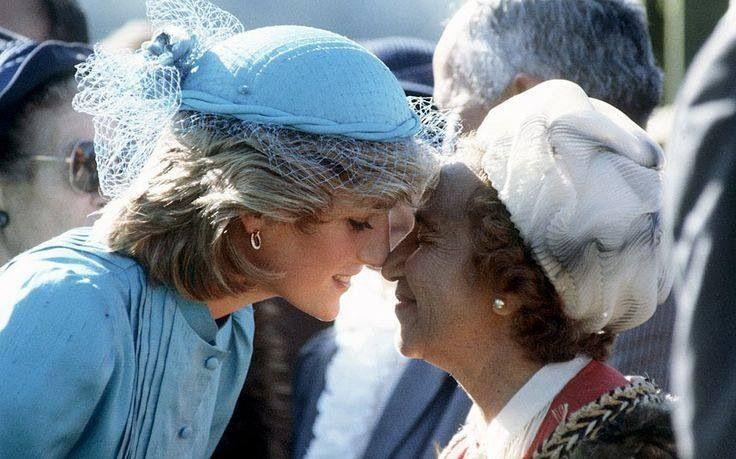
She also supported efforts to clear landmines and ban land mines. In 1997, she walked through a minefield in Angola to draw attention to the issue. Among the organizations she supported were the AIDS Crisis Trust, Great Ormond Street Hospital, The Leprosy Mission, and National Aids Trust place.
She collaborated with numerous charities addressing issues such as child health, homelessness, substance addiction, and elderly care. Her social responsibility work, particularly after distancing herself from the royal family, attracted widespread attention.
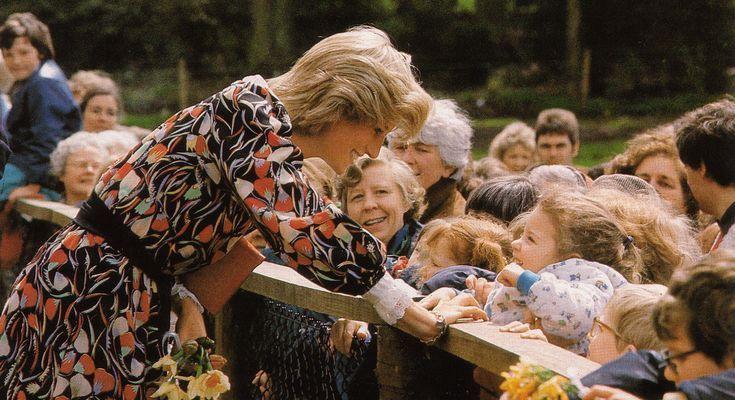
Princess Diana's Interaction with Her Children
Diana, known internationally as “The People’s Princess”, became a fashion icon through her beauty, style, and grace. However, throughout her life, her private life remained under constant scrutiny due to intense media attention.
On 31 August 1997, Diana died in a car crash in Paris while attempting to evade paparazzi. Her friend Dodi Al-Fayed and driver Henri Paul also lost their lives in the accident. Event The crash occurred in the Pont de l’Alma tunnel in Paris. The incident triggered widespread public debate; eyewitnesses stated it resulted from being pursued by a group of paparazzi.
Her death was met with profound sorrow worldwide. Diana’s funeral took place in London on 6 September 1997. The ceremony held at Westminster Abbey was watched on television by approximately 2.5 billion people globally. Funeral The funeral was attended by numerous political and religious leaders as well as row famous figures and members of the public. Diana was buried on a private island within the grounds of Althorp, the Spencer family estate.
Diana’s legacy continues through her children, Prince William and Prince Harry. Both princes have taken up the humanitarian causes their mother championed and continue to uphold her values.
Princess Diana’s life and work have been examined for long years after her death, both in public discourse and academic studies. Her sensitivity to social inequality, her efforts to combat stigma around illnesses, and her direct relationship with the public established a new model of representation within the royal family. Diana’s children, Prince William and Prince Harry, have actively continued the social responsibility initiatives she launched.
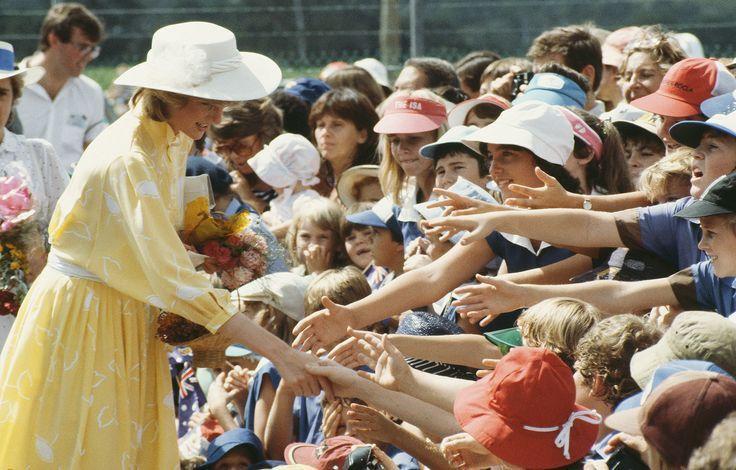
Princess Diana and Social Responsibility Projects (Jayne Fincher/Princess Diana Archive/Getty)
Fine Art Storehouse. "Prince Charles and Princess Diana Wedding." Bettmann Archive. Accessed April 6, 2025. https://www.fineartstorehouse.com/bettmann-archive/prince-charles-princess-diana-wedding-38981591.html.
Getty Images. “Coberley, Gloucestershire.” Getty Images. Accessed April 6, 2025. https://www.gettyimages.com/photos/coberley-gloucestershire.
Harper’s Bazaar Türkiye. “Prenses Diana Hakkında Hiç Bilmediğiniz 40 Şey.” Accessed April 6, 2025. https://www.harpersbazaar.com.tr/prenses-diana-hakkinda-hic-bilmediginiz-40-sey-2-h?sayfa=1.
Historic Talk. "Photos of Princess Diana." Accessed April 6, 2025. https://www.historictalk.com/en/photos-of-princess-diana.
Infobae. “Cuáles Eran las Flores Favoritas de Lady Di y por Qué Son un Símbolo en la Historia de la Realeza Británica.” Infobae, August 8, 2024. Accessed April 6, 2025. https://www.infobae.com/america/realeza/2024/08/08/cuales-eran-las-flores-favoritas-de-lady-di-y-por-que-son-un-simbolo-en-la-historia-de-la-realeza-britanica/.
National Geographic. “Prenses Diana’nın Kayıp Sırları.” National Geographic Türkiye. Accessed April 6, 2025. https://www.natgeotv.com/tr/ozel/prenses-diananin-kayip-sirlari.
People. "Princess Diana and Prince Charles’ Australia Tour: The Crown Highlighted How It Caused Tension." Accessed April 6, 2025. https://people.com/royals/princess-diana-prince-charles-australia-tour-the-crown-caused-tension/.
Smith, Tim, Clayton, and Phil Craig. *Diana: Story of a Princess*. New York: Simon and Schuster, 2003. Accessed April 6, 2025. https://books.google.com.tr/books?hl=tr&lr=&id=bX98AQAAQBAJ.
TGRT Haber. "Prenses Diana Kimdir, Neden ve Nasıl Öldü? Prenses Diana Hakkında Merak Edilen Soruların Yanıtları." *TGRT Haber*. Accessed April 6, 2025. https://www.tgrthaber.com/mavikadin/prenses-diana-kimdir-neden-ve-nasil-oldu-prenses-diana-hakkinda-merak-edilen-sorularin-yanitlari/.
The Royal Household. “Diana, Princess of Wales.” The Royal Family. Accessed April 6, 2025. https://www.royal.uk/diana-princess-wales.
Today. "Warren Buffett Once Revealed Which President Princess Diana Deemed Sexiest." Today, August 4, 2021. Accessed April 6, 2025. https://www.today.com/popculture/warren-buffett-once-revealed-which-president-princess-diana-deemed-sexiest-t208421.


Life
Entry into the Royal Family and Titles
Charitable Work and Social Contributions
Death and Funeral
Lesser-Known Aspects
Legacy and Social Impact