


 Recently Added:
This article was automatically translated from the original Turkish version.
Protests that erupted in Indonesia in August and September 2025 began as social uprisings centered on the privileges granted to members of parliament and economic grievances but escalated into widespread violent unrest. The demonstrations spread nationwide, particularly after public outrage over the high housing allowance paid to lawmakers and the police killing of a motorcycle courier.
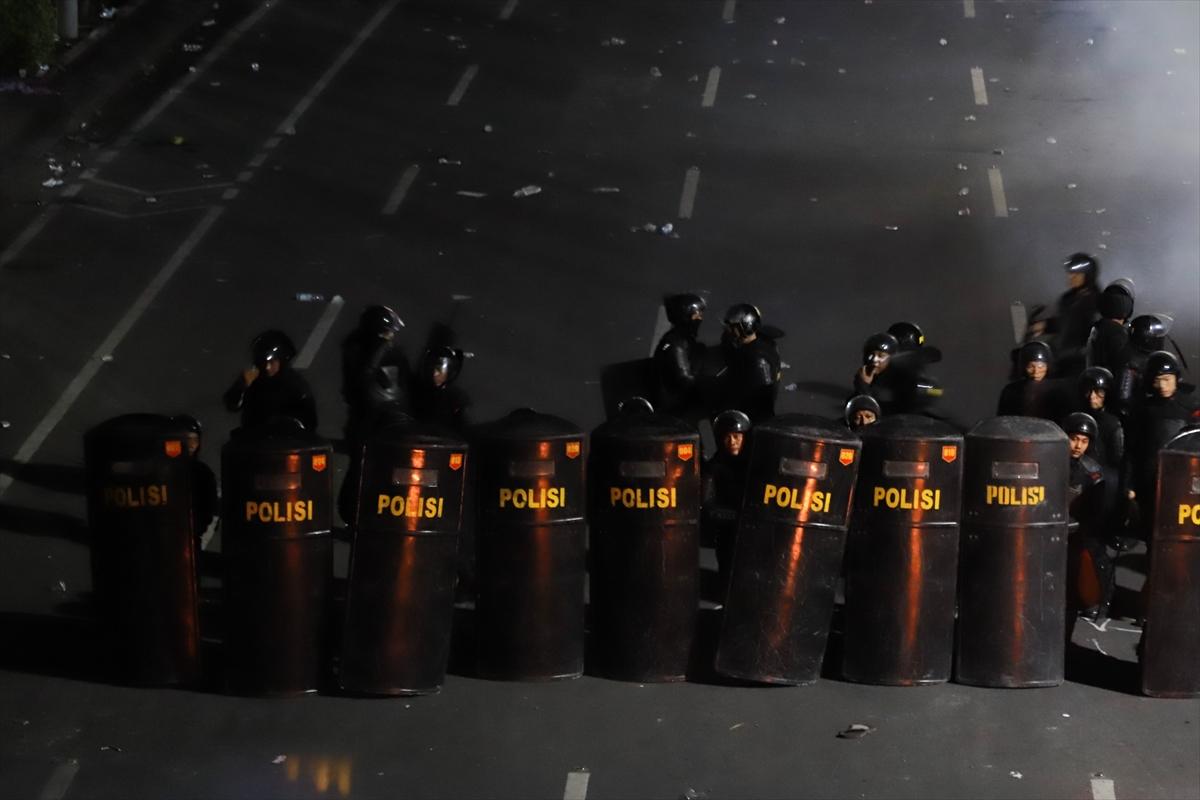
Police Barricade in Jakarta (Anadolu Ajansı)
The primary cause of the protests was the decision, effective September 2024, to provide members of parliament with a monthly housing allowance of 50 million rupiah (approximately 3,000 US dollars). This amount is roughly ten times the national minimum wage and twenty times the minimum wage in impoverished regions. The decision provoked widespread public anger, intensifying popular discontent over high living costs, rising taxes, and unemployment.
The protests began with thousands of students marching toward the parliament building in Jakarta. Police used tear gas to disperse the crowd, and students responded with stones and bottles. Soon after, the demonstrations spread across the country.
The death of 21-year-old motorcycle courier Affan Kurniawan, who was crushed when a police vehicle drove into the crowd, became a turning point in the protests. Videos of the incident went viral on social media, fueling further anger and sparking demonstrations in multiple cities against police violence.
Protesters took to the streets in Jakarta, Surabaya, Bandung, Semarang, Yogyakarta, and Medan. In Makassar, at least three people were killed and several others seriously injured when the city hall was set on fire. The home of Finance Minister Sri Mulyani Indrawati was looted, and the residences of several members of parliament were vandalized.
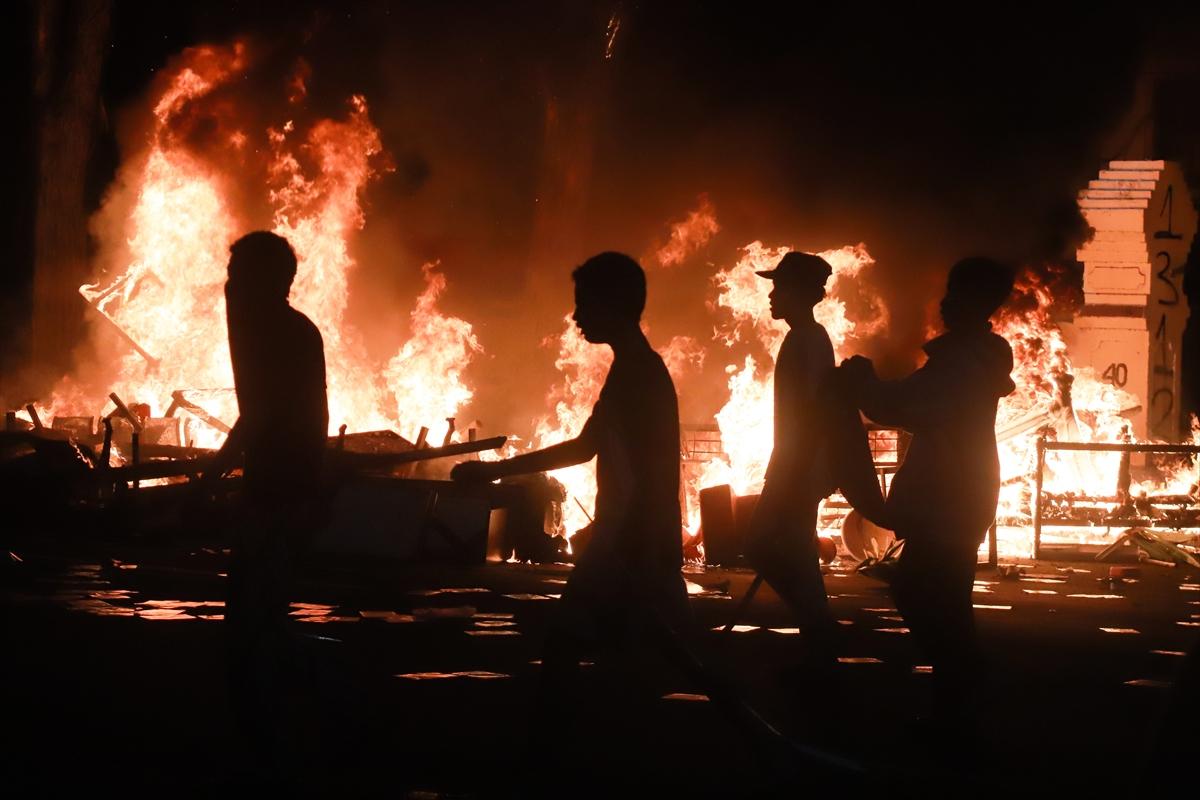
Fire and Protesters in Indonesia (Anadolu Ajansı)
At least eight people were reported killed and hundreds injured during the protests. Among the dead were students, civilians, and a person suspected of being an intelligence officer who was lynched.
President Prabowo Subianto announced the removal of certain privileges granted to members of parliament in an effort to quell public anger. The housing allowance was abolished, and a moratorium was imposed on overseas trips by lawmakers. At the same time, he ordered the military and police to take firm action against looters.
Subianto characterized the unrest as attempts to escalate into acts of “treason against the nation” and “terrorism.” As the protests continued, the state established checkpoints in Jakarta and deployed armored vehicles.
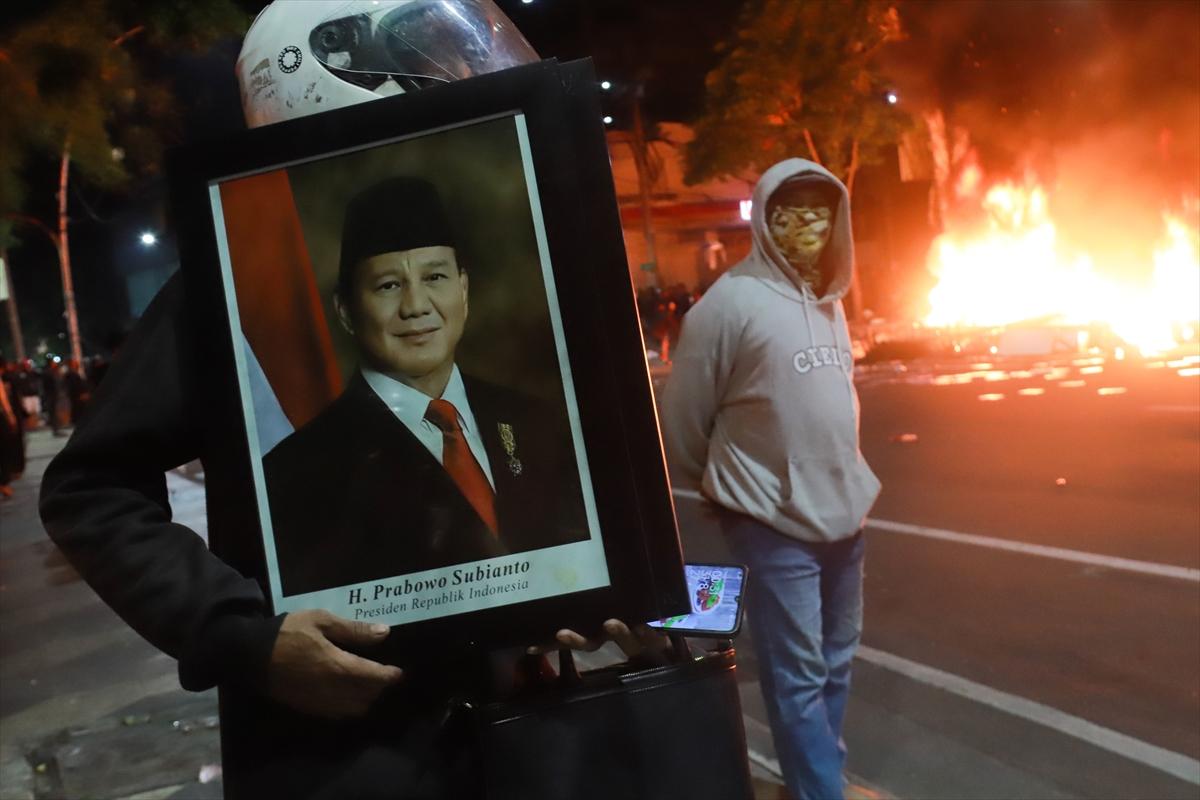
Protest with Portrait of Subianto (Anadolu Ajansı)
Student unions and civil society organizations postponed their demonstrations in Jakarta due to escalating security measures and fears of further violence. The Alliance of Indonesian Women and some student groups announced they were halting their actions citing “impossible conditions.” However, reports indicated that protests continued in some regions.
ABC Asia. "Everything You Need to Know about the Riots in Indonesia." Accessed September 1, 2025. https://www.abc.net.au/asia/what-you-need-to-know-riots-indonesia/105720388
Al Jazeera. “Indonesia Protesters Clash with Riot Police as Tensions Soar.” Accessed September 1, 2025. https://www.aljazeera.com/gallery/2025/8/31/indonesia-protesters-clash-with-riot-police-as-tensions-soar
Al Jazeera. “Indonesia Tightens Security after Deadly Protests.” Accessed September 1, 2025. https://www.aljazeera.com/news/2025/9/1/indonesia-tightens-security-after-deadly-protests
Reuters. "Indonesian Groups Call Off Protests Monday, Citing Heightened Security." Accessed September 1, 2025. https://www.reuters.com/world/asia-pacific/indonesian-groups-call-off-protests-monday-citing-heightened-security-2025-09-01/
The Guardian. “Indonesia Protests: President Prabowo Subianto Scraps Lawmakers’ Perks.” Accessed September 1, 2025. https://www.theguardian.com/world/2025/sep/01/indonesia-protests-president-prabowo-subianto-scraps-lawmakers-perks

In Indonesia in 2025, a high housing allowance granted to members of parliament and the killing of a motorcycle courier by a police vehicle sparked nationwide protests. During the demonstrations, public buildings and the homes of politicians were targeted, resulting in at least eight deaths. Although President Prabowo Subianto abolished some parliamentary privileges, the heavy-handed response by security forces deepened the crisis.
No Discussion Added Yet
Start discussion for "Protests and Uprisings in Indonesia (2025)" article
September 1, 2025
Background
September 1, 2025
Course of the Protests
September 1, 2025
Government Response
September 1, 2025
Temporary Suspension of Protests