


This article was automatically translated from the original Turkish version.
+1 More
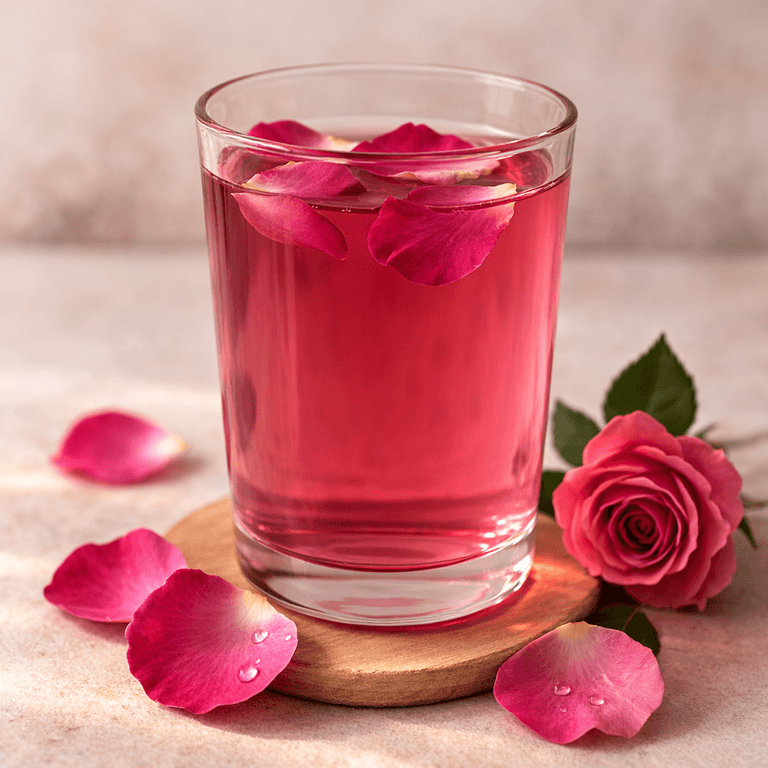
Gül Şerbeti (Yapay Zeka İle Oluşturulmuştur)
Gül şerbeti is a traditional non-alcoholic beverage made from rose petals or rose water, sweetened with sugar or honey. Within Turkish cuisine culture, floral sherbets hold a significant place, and gül şerbeti was widely consumed especially during the Ottoman period, finding broad usage from the imperial kitchen to folk cuisine.
Sherbets in general are beverages prepared by mixing water with sugar, honey, or similar sweeteners and enriching them with fruit, flower, or herbal aromas. In this context, gül şerbeti stands out among floral sherbets due to the rose’s distinctive fragrance and color.
The history of sherbets in Turkish culinary culture extends at least to the 11th century. The mention of apricot sherbet in Kaşgarlı Mahmud’s Divânü Lügati’t-Türk demonstrates that sherbets were already part of Turkish dietary culture in early periods.
In the Ottoman imperial kitchen, sherbets formed an important category of beverages. Special sections called şerbethane were designated within the Matbah-ı Âmire for their preparation.

Gül Şerbeti (Anadolu Images)
While some sherbets were prepared within the palace, others were produced using raw materials brought from Anatolia and other regions. Gül şerbeti became one of the beverages consumed daily and served at feasts in the Ottoman imperial kitchen. Alongside violet, lotus, and demirhindi sherbets, gül şerbeti was among the most important varieties in Ottoman court cuisine.
Sherbets attracted attention not only through their preparation but also their presentation. Beverages such as gül şerbeti were served in special pitchers and bowls. To keep sherbets cold, snow was brought down from mountains and stored in containers known as karlık.
Rose is a plant belonging to the Rosa genus of the Rosaceae family and has carried religious, mythological, and cultural meanings across various societies throughout history. In Turkish culture, particularly during the Ottoman period, the rose was regarded as an important plant both symbolically and practically【1】.
In Ottoman cuisine, the rose held a special place among edible flowers. Red roses and damask roses were cultivated in palace gardens specifically for culinary use, from which rose water and various food products were prepared【2】.
Rose petals and rose water were used as flavoring agents in the preparation of sweets, jams, and sherbets. In this regard, gül şerbeti became one of the characteristic beverages of Ottoman culinary tradition.
The main ingredients of gül şerbeti are as follows:
In sherbets prepared by infusion, rose petals are sometimes used together with spices.
Gül şerbeti is prepared using general methods applied to floral sherbets. These methods can be grouped into two main categories. In the first method, fresh rose petals are washed and cleaned, then mixed or crushed with sugar in a mortar. During this process, the rose’s color and fragrance transfer to the sugar. Subsequently, the flavored sugar is dissolved in water to make the sherbet.
In the second method, dried rose petals are steeped in boiling water. Sugar or honey is then added to sweeten the mixture, and the beverage
[1]
Şeyma Nur Güneş ve Tolga Akcan, "Yenilebilir Çiçek Olarak Gülün Önemi ve Osmanlı Mutfak Kültüründeki Yeri," Aydın Gastronomy 6 (2), (2022): 327, Erişim Tarihi: 28 Şubat 2026, https://dergipark.org.tr/en/download/article-file/2214995
[2]
Şeyma Nur Güneş ve Tolga Akcan, "Yenilebilir Çiçek Olarak Gülün Önemi ve Osmanlı Mutfak Kültüründeki Yeri," Aydın Gastronomy 6 (2), (2022): 328, Erişim Tarihi: 28 Şubat 2026, https://dergipark.org.tr/en/download/article-file/2214995


Gül Şerbeti (Yapay Zeka İle Oluşturulmuştur)
Historical Development
The Role of the Rose in Culinary Culture
Ingredients
Preparation