This article was automatically translated from the original Turkish version.
+2 More
Type of Geographical İndication | Traffic Sign | ||||||||
|---|---|---|---|---|---|---|---|---|---|
Registration Number | 1219 | ||||||||
Applicant/Registrant(s) | Balıkesir Metropolitan Municipality | ||||||||
Registration Date | 12.09.2022 | ||||||||
Product / Product Group(s) | Bakery and Confectionery Products Desserts Dough Products | ||||||||
Province(s) | Balıkesir | ||||||||
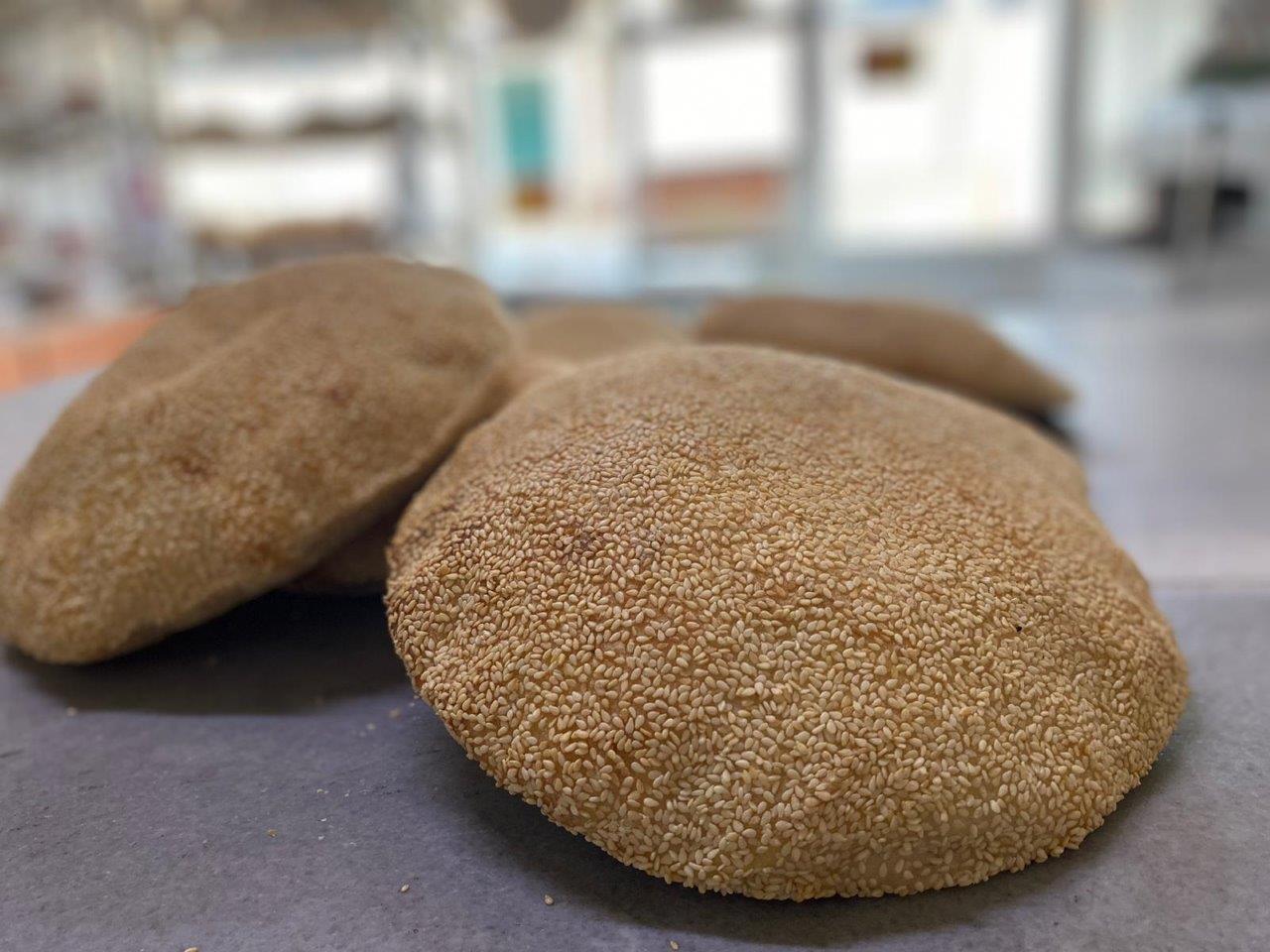
Seferberlik Çöreği is a sesame-covered bread variety unique to the Sarıbeyler Neighborhood of the Savaştepe District in Balıkesir Province. It is recognized as one of the symbolic foods of the Turkish nation’s historical struggles. It acquired the name "seferberlik" (mobilization) due to its role as one of the essential rations carried by soldiers heading to the front during the Çanakkale and War of Independence years.
This nutritional item, also known locally as "Sarıbeyler Çöreği", was included in the National Inventory of Intangible Cultural Heritage of Türkiye in 2014 under the name "Sarıbeyler Seferberlik Çöreği". Additionally, on 12 September 2022, it was officially registered as a geographical indication by the Balıkesir Metropolitan Municipality.

Seferberlik Çöreği (AA)
Seferberlik Çöreği is produced in a circular shape, approximately 450–480 grams in weight, 26 centimeters in diameter and 2 centimeters in thickness. One of its most distinctive features is its ability to provide long-lasting satiety and resist staling for extended periods. The bread retains its freshness for up to seven days at room temperature and can be stored for up to six months when dried or frozen. This is attributed to the use of sourdough starter and the traditional baking method. The acidity generated by sourdough, tarhana and yogurt shortens the fermentation time and delays staling. Tarhana imparts a mild sour aroma to the bread. Its ingredients include tarhana, olive oil, yogurt, flour, sugar and sesame, giving it a nutritious and energy-rich profile.
Traditional methods are used in preparing Seferberlik Çöreği. Its main components are wheat flour for bread, sourdough starter, water and salt. The surface of the bread is covered with sesame. The sourdough starter is prepared using tarhana, yogurt, wheat flour for bread, white sugar, olive oil and water.
Tarhana Preparation: For tarhana, wheat flour for bread, yogurt, chickpeas and water are used. The flour is added to boiling water and cooked at a temperature of 50–60∘C. In a separate container, yogurt and boiled chickpeas are mixed, then combined with the cooked flour mixture and kneaded. The resulting dough is shaped into small cloths, covered with yogurt and left to rest at room temperature for 12 hours. It is then divided into small pieces and placed on food-safe cloth to dry in sunlight for two hours. The pieces are rubbed by hand until they reach the size of rice grains and left to dry in the sun for another day. Before being used in sourdough starter preparation, the tarhana is soaked in water for eight hours.
Sourdough Starter Preparation: Yogurt, water, olive oil, wheat flour for bread, sugar and soaked tarhana are mixed and kneaded until a homogeneous mixture is obtained. The dough is left to rest at room temperature (21°C) for 12 hours.

Seferberlik Çöreği (AA)
Bread Dough Preparation: Wheat flour for bread and water are mixed. Salt and sourdough starter are then added and the mixture is kneaded. The resulting dough is rested for one hour before being divided into pieces of approximately 500 grams each.
Shaping and Sesame Coating: The dough pieces are rested for an additional 20 minutes, then rounded by hand into discs measuring 26 centimeters in diameter and 2 centimeters in thickness. Both top and bottom surfaces are generously coated with sesame. Typically, hulled yellow sesame is used; this is soaked in a mixture of oak ash and hot water to remove the husks and turn the color white. White sesame purchased from the market may also be used.
Baking: The sesame-coated dough pieces are rested for another hour before being baked for 10–15 minutes in a stone oven heated to 250°C using wood fire. After removal from the oven, the breads are placed individually on clean cloth and covered to prevent drying, then left to rest for about one hour. Baking is traditionally carried out in wood-fired ovens located adjacent to each household.
Seferberlik Çöreği holds an important place in the culinary culture of Savaştepe District in Balıkesir. Historically, it was known as the indispensable ration carried by soldiers on their seven-day journey to the front lines. During the War of Independence, women from Sarıbeyler prepared and delivered this bread to Turkish soldiers fighting against the Greeks near Savaştepe.
This tradition continues today. During religious holidays, women prepare the bread collectively and distribute it among neighbors—a practice known as the "çörekleşme tradition". The "çak çak çöreği" made for children is also part of the traditional food culture. In the past, before weddings, bread and halva were sent from the groom’s house to the bride’s house in woven baskets and distributed as wedding invitations (okuntu). In Sarıbeyler, it is noted that no significant event—wedding or funeral—takes place without bread; it is served to guests and given as gifts. All stages of bread production are carried out exclusively in the Savaştepe District of Balıkesir.
The production processes of Seferberlik Çöreği are supervised by a four-member oversight body composed of one expert each from the Balıkesir Metropolitan Municipality, Savaştepe Municipality, Savaştepe District Directorate of Agriculture and Forestry, and Savaştepe Chamber of Tradespeople and Craftsmen, under the coordination of the Balıkesir Metropolitan Municipality.
Inspections cover the suitability of ingredients used in production, compliance with production methods, and the proper use of the designation "Savaştepe Sarıbeyler Seferberlik Çöreği" and its geographical indication emblem. Inspections are conducted annually as a routine measure, and also whenever necessary or upon complaint.
"Balıkesir’s centuries-old 'Savaştepe Sarıbeyler Seferberlik Çöreği' geographically marked and registered." *Anadolu Ajansı*, September 20, 2022. Accessed June 30, 2025. https://www.aa.com.tr/tr/yasam/balikesirin-asirlik-savastepe-saribeyler-seferberlik-coregi-cografi-isaretle-tescillendi/2689600.
"Seferberlik Çöreği Balıkesir'de yaşatılıyor." Tarım TV, March 18, 2014. Accessed June 30, 2025. https://www.tarimtv.gov.tr/tr/video-detay/seferberlik-coregi-balikesir-d-4324.
Balıkesir Büyükşehir Municipality. "Savaştepe Sarıbeyler Seferberlik Çöreği." Mahreç İşareti No: 1219. Türk Patent ve Marka Kurumu. Accessed June 30, 2025. https://ci.turkpatent.gov.tr/Files/GeographicalSigns/39057c07-d28e-4d24-afc2-b6d1248ae704.pdf.
Narin, Meziyet. "Savaştepe Sarıbeyler Seferberlik Çöreği." *Türkiye Turizm Ansiklopedisi*, 2025. Accessed June 30, 2025. https://turkiyeturizmansiklopedisi.com/savastepe-saribeyler-seferberlik-coregi.
Turkish Patent and Trademark Office. "Savaştepe Sarıbeyler Seferberlik Çöreği." Geographical Indications Portal. Accessed June 30, 2025. https://ci.turkpatent.gov.tr/cografi-isaretler/detay/5902.
Özacar, İlyas Umut. "Kurtuluşun izlerini taşıyan 'seferberlik çöreği'." TRT Haber, November 6, 2023. Accessed June 30, 2025. https://www.trthaber.com/haber/yasam/kurtulusun-izlerini-tasiyan-seferberlik-coregi-792019.html.

Type of Geographical İndication | Traffic Sign | ||||||||
|---|---|---|---|---|---|---|---|---|---|
Registration Number | 1219 | ||||||||
Applicant/Registrant(s) | Balıkesir Metropolitan Municipality | ||||||||
Registration Date | 12.09.2022 | ||||||||
Product / Product Group(s) | Bakery and Confectionery Products Desserts Dough Products | ||||||||
Province(s) | Balıkesir | ||||||||
No Discussion Added Yet
Start discussion for "Savaştepe Sarıbeyler Mobilization Çöreği" article
Characteristics
Production Process
Cultural Significance
Supervision