This article was automatically translated from the original Turkish version.
+1 More
Type of Geographical İndication | Mahreç Signal | ||||||||
|---|---|---|---|---|---|---|---|---|---|
Registration Number | 483 | ||||||||
Registration Date | 03.02.2020 | ||||||||
Product / Product Group(s) | Rugs and kilims | ||||||||
Province(s) | Muğla | ||||||||
Applicant/Registrant(s) | Fethiye Chamber of Commerce and Industry | ||||||||
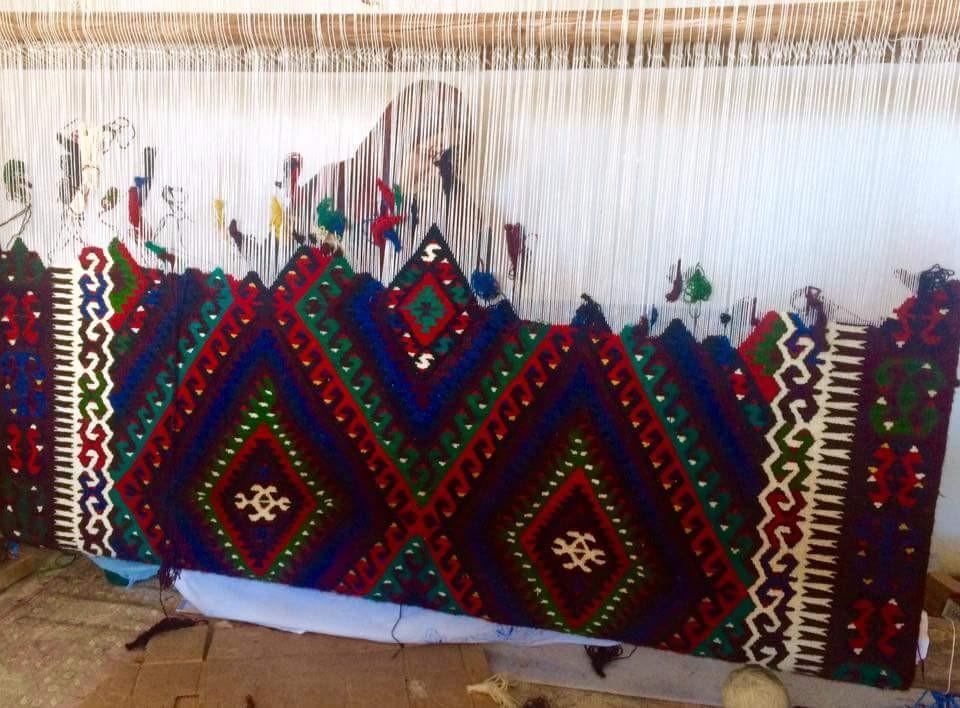
Seydiler Kilim is a geographical indication carpet type produced in the neighborhoods of Seydiler, Seki, Atlıdere, and Ören in the Seydikemer district of Muğla Province, reflecting a deep-rooted weaving tradition. It was officially registered as a geographical indication on 3 February 2020 under Law No. 6769 on Industrial Property and is protected by the Fethiye Chamber of Commerce and Industry.
The Seydiler Kilim is a traditional weaving that expresses the lifestyle of the Yörük communities in the region through unique colors and motifs. These kilims, used for purposes such as floor coverings, prayer rugs, and saddlebags, have the following distinguishing features:
The production of the Seydiler Kilim involves a multi-stage process shaped by traditional knowledge. Each step is specific to the region in both technical and cultural terms.
In the past, yarn was obtained by cleaning sheep’s wool and spinning it to the desired fineness using a spindle (kirman). These yarns were dyed using plants native to the region. Today, weavers procure warp and pattern yarns ready-made. Pattern yarns are typically purchased uncolored, and dyeing is carried out using local methods. Colors are achieved through techniques refined over generations of experience.
Before dyeing, the yarns undergo a "mordanting" process to fix the dye and enhance durability. This process is locally known as "faşıllama" or "acımıklama". Natural substances such as alum, citrus fruit, lemon peel, mallow, and oregano are used as mordants.
Dyeing is performed using different plants and methods depending on the desired color. Each technique ensures the yarn’s resistance to environmental factors and the longevity of the motifs. For example:
Each application is shaped by the accumulated knowledge passed down from generation to generation among local weavers.
Weaving is carried out on wooden looms locally called "kilim ağacı". The parts of the loom are known by regional names:
The Seydiler Kilim is produced using the "bezayağı" flat-weave technique. The weaving process consists of the following stages:
Each step in this process is preserved as part of a living transmission of technical and cultural heritage.
The motifs, composition, and color choices of the Seydiler Kilim are the product of artisanal skills transmitted across generations within the region. Therefore, all stages of production are carried out exclusively within the defined geographical boundaries.
Monitoring is conducted by a supervisory body composed of expert representatives from relevant local institutions under the coordination of the Fethiye Chamber of Commerce and Industry. The motif structure, pattern arrangement, dyeing methods, and proper use of the geographical indication are inspected at least once annually and as needed.
Turk Patent and Trademark Office. "Seydiler Kilimi Coğrafi İşaret Tescil Belgesi." Accessed October 19, 2025. https://ci.turkpatent.gov.tr/Files/GeographicalSigns/2588c413-b4a0-428c-9a6c-fa7e5c62f408.pdf.
Turk Patent and Trademark Office. "Seydiler Kilimi." *Geographical Indications Portal.* Accessed October 19, 2025. https://ci.turkpatent.gov.tr/cografi-isaretler/detay/38680.

Type of Geographical İndication | Mahreç Signal | ||||||||
|---|---|---|---|---|---|---|---|---|---|
Registration Number | 483 | ||||||||
Registration Date | 03.02.2020 | ||||||||
Product / Product Group(s) | Rugs and kilims | ||||||||
Province(s) | Muğla | ||||||||
Applicant/Registrant(s) | Fethiye Chamber of Commerce and Industry | ||||||||
Definition and Distinguishing Features
Production Process
Yarn Preparation
Dyeing and Mordanting
Tools and Equipment
Weaving Technique
Geographical Boundary and Cultural Context
Monitoring