

This article was automatically translated from the original Turkish version.
+2 More
Period(s) | Bronze Roman Hellenistic Phrygian | ||||||||
|---|---|---|---|---|---|---|---|---|---|
Excavation Start | 1989 | ||||||||
Findings | Cylinder seal, poppy, chickpea, temple | ||||||||
Economy | Agriculture mining pottery | ||||||||
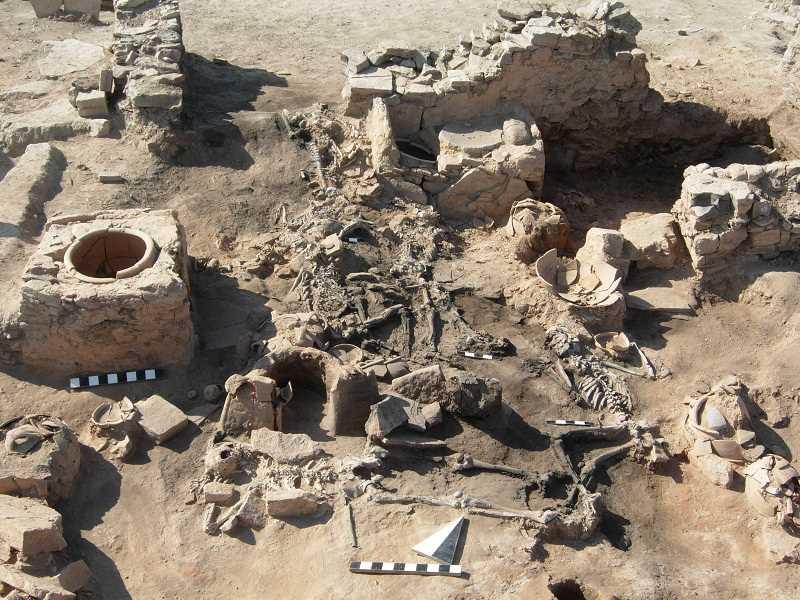
Seyitömer Höyüğü is located 26 kilometers northwest of the city center of Kütahya, Türkiye, within the operational area of Çelikler Seyitömer Elektrik Üretim AŞ. The mound has a diameter of 150 by 140 meters and a height of approximately 23.5 to 26 meters. It has an oval plan with a steep northern slope and a gently sloping southern side. Its summit forms a flat area of about 2,000 square meters. The mound rests on a layer of clayey rock known as marl; beneath this layer lies a lignite coal reserve of 12 million tons.

Seyitömer Höyüğü (T.C. Kütahya Municipality)
The first archaeological excavations at Seyitömer Höyüğü were initiated in 1989 by the Eskişehir Museum Directorate with the aim of making the coal reserves accessible. Between 1990 and 1995, excavations were conducted by the Afyonkarahisar Museum Directorate, during which only about one-tenth of the mound was uncovered. In 2006, under a protocol signed between the General Directorate of Turkish Coal Enterprises and Dumlupınar University, excavations were taken over by the university’s Department of Archaeology. By 2014, more than 17,000 artifacts had been recovered and transferred to the museum directorate. Since 2019, excavations have been continued by the Kütahya Museum Directorate under the leadership of Dr. Archaeologist Sevgi Gürdal.
Excavations have revealed that the mound has a 5,000-year history, with cultural layers dating to the Early Bronze Age, Middle Bronze Age, Achaemenid, Hellenistic, Roman and Phrygian periods. The earliest settlement traces are dated to the 30th century BCE.
During the Early Bronze Age, the mound was a settlement surrounded by walls and situated along a stream bank. Intensive pottery production using molds is observed from this period. Structures are generally rectangular in plan and consist of two adjacent rooms. In the lower layers, each house has its own walls, while in the upper layers, shared walls are identified. Additionally, agricultural products such as poppy, chickpea, wheat and lentil, along with burned food remains found in the storage areas of dwellings, have been uncovered.
Settlement continued during this period, and evidence has been found regarding architecture, daily life and craft activities. Various domestic furnishings such as kitchenware, weights and vessels have been discovered. Data on cooking ovens and workshop usage have also been obtained.
During the Hittite period, the mound was re-encircled by walls, and horseshoe-shaped hearths were identified within structures. In the upper levels, iron-working workshops and iron ingots are particularly notable. In the Phrygian period, thick and tall wall fortifications were constructed, along with a long staircase extending along the northern slope and a large stepped terraced structure built on the western side.
During these periods, the mound was surrounded by thick defensive walls reinforced with towers. Structures were built in a contiguous arrangement with square and rectangular stone walls. Numerous small finds from this period include kitchenware, sling stones, glass beads and a portrait of Athena, as well as weights.
Evidence from remains and artifacts indicates the presence of a temple structure at the summit of the mound. Ceramic fragments, bronze coins and other small objects from the Roman period have been unearthed. This period is marked by a transition from the cult of the mother goddess to that of Zeus, documented through statues, idols and figurines.
The lifestyle of the mound’s inhabitants varied across periods. From the Early Bronze Age onward, economic activities included agriculture, animal husbandry (particularly small livestock), pottery, weaving and metallurgy. Among agricultural products, chickpea and poppy stand out, and their economic significance to the region continues to the present day.
During the 2024 excavation season, a 4,400-year-old cylinder seal dating to the Early Bronze Age II layer was discovered. Made of jadeite, this seal is the oldest cylinder seal found to date in the Inner Western Anatolia region. Its significance lies in the evidence it provides of international trade and cultural interaction.
Anadolu Ajansı. “Kütahya'daki Höyük Kazısında 4 Bin 400 Yıllık Silindir Mühür Bulundu.” Accessed June 21, 2025. https://www.aa.com.tr/tr/kultur/kutahyadaki-hoyuk-kazisinda-4-bin-400-yillik-silindir-muhur-bulundu/3413836
Anadolu Ajansı. “Seyitömer Höyüğü'nde Tunç Çağı'ndan Kalma Haşhaş ve Nohut Taneleri Bulundu.” Accessed June 21, 2025. https://www.aa.com.tr/tr/kultur/seyitomer-hoyugunde-tunc-cagindan-kalma-hashas-ve-nohut-taneleri-bulundu/3394609
Kütahya Belediyesi. “Seyitömer Höyük.” Kutahya.bel.tr. Accessed June 21, 2025. https://www.kutahya.bel.tr/tarihiyerler.asp?islem=goster&id=24
Ministry of Culture and Tourism of the Republic of Türkiye. "Seyitömer Höyük Arkeolojik Kazıları." *Kültür Portalı*. Accessed June 21, 2025. https://www.kulturportali.gov.tr/turkiye/kutahya/gezilecekyer/seytomer-hoyuk-arkeolojk-kazilari

Period(s) | Bronze Roman Hellenistic Phrygian | ||||||||
|---|---|---|---|---|---|---|---|---|---|
Excavation Start | 1989 | ||||||||
Findings | Cylinder seal, poppy, chickpea, temple | ||||||||
Economy | Agriculture mining pottery | ||||||||
History of Excavations
Stratigraphy and Settlement Periods
Early Bronze Age
Middle Bronze Age
Hittite and Phrygian Periods
Classical and Hellenistic Period
Roman Period
Economic and Cultural Life
Important Archaeological Finds