


This article was automatically translated from the original Turkish version.
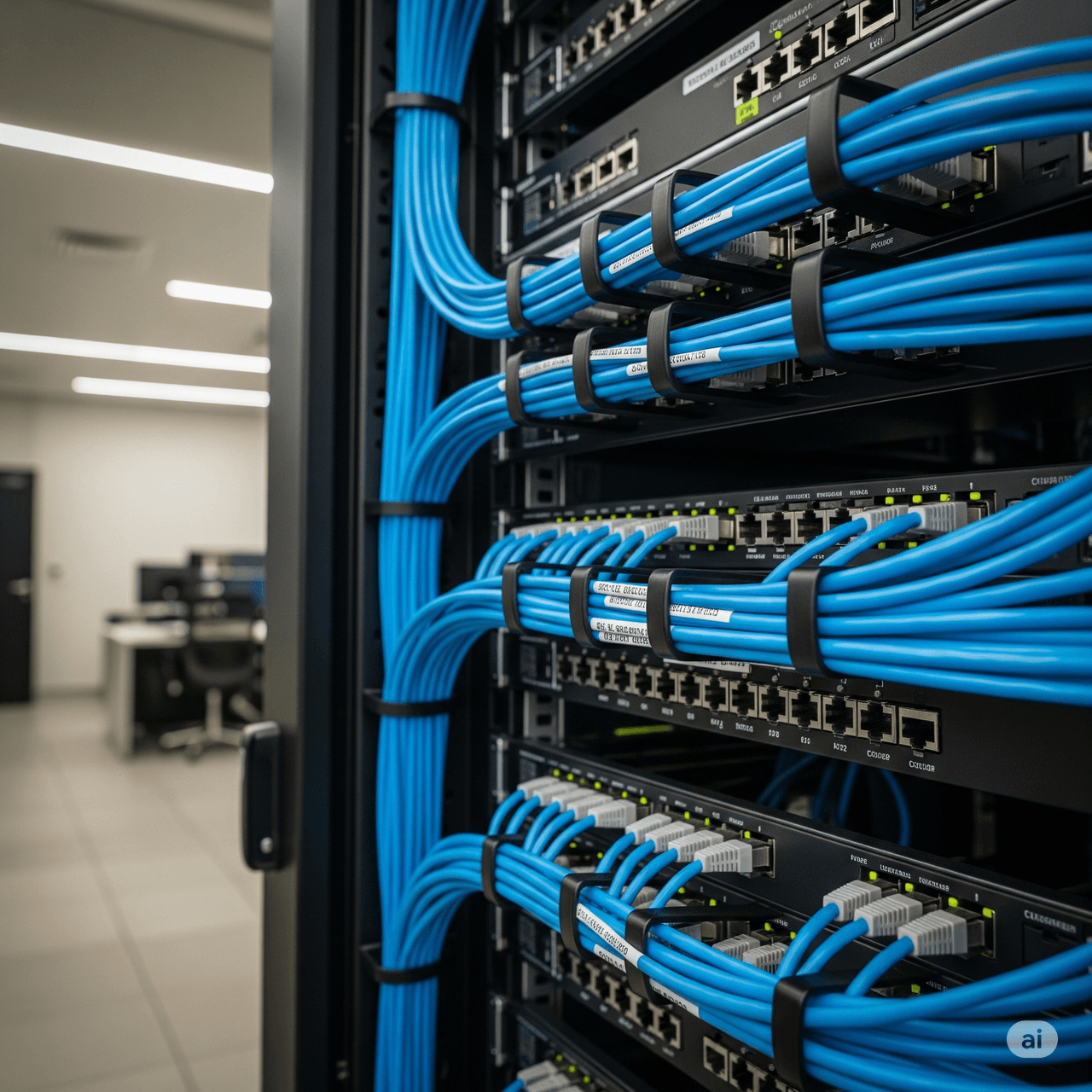
Generated by Artificial Intelligence
Structured Cabling System
Producing / Defining Organizations | Division of Information Technology (Bhutan) BICSI CENELEC ISO/IEC ANSI/TIA | ||||||||
|---|---|---|---|---|---|---|---|---|---|
National Origin | International (led by U.S.-based standards organizations) | ||||||||
Variant | Singlemode Fiber Multimode Fiber Cat 7 Cat 6A Cat 6 Cat 5e | ||||||||
Type(s) | Structured Telecommunications Distribution System Information and Communication Technology Infrastructure | ||||||||
Subsystems | Work Area Horizontal Cabling Telecommunications Closet Backbone Cabling Equipment Room Building Entrance | ||||||||
Application Area(s) | Smart Buildings and IoT Networks Industrial Facilities Public Institutions Data Centers Educational Campuses Commercial Buildings | ||||||||
Structured cabling is a modular architecture designed to plan, install, and document the entire telecommunications infrastructure of a building or campus in accordance with internationally recognized standards, dividing it into six distinct subsystems. This approach enables diverse transmission media—such as voice, data, video, and security applications—to be supported over a single infrastructure, addressing both current requirements and potential future technological needs.
What is structured cabling in networking? (Structured Data Cabling)(NM Cabling Solutions)
The physical point where external service providers (telephone, internet, etc.) connect to the building or campus. This includes conduits, pathways, and connection elements through which fiber or copper cables are linked to the internal backbone cabling.
The central control area housing active equipment (servers, switches, PBX, etc.) and main cross-connect panels. Environmental controls for humidity and temperature are typically provided, along with cable management and grounding requirements.
Cables connecting equipment rooms across different floors or buildings. These include single-mode and multi-mode fiber, as well as UTP/STP copper cables. The cabling must follow a hierarchical structure limited to main and intermediate cross-connect levels, using a star topology.
The area on each floor or within each zone where horizontal cables terminate, housing horizontal cross-connect elements and patch panels. Grounding and labeling systems are also maintained here.
The cabling extending from wall outlets at workstations to the cross-connect point in the telecommunications closet. It may consist of UTP/STP categories (Cat 5e, Cat 6, Cat 6A, etc.) or multimode fiber. The total distance is limited to a maximum of 90 meters of horizontal cable plus 10 meters of patch or jumper cable.
Patch cables, connectors, and adapters that connect end-user equipment (computers, telephones, security cameras, etc.) to the horizontal cabling. These must be compatible with the cable category and performance requirements; adapters should be kept external when necessary.
Structured cabling is designed and documented within the framework of the following key standards:
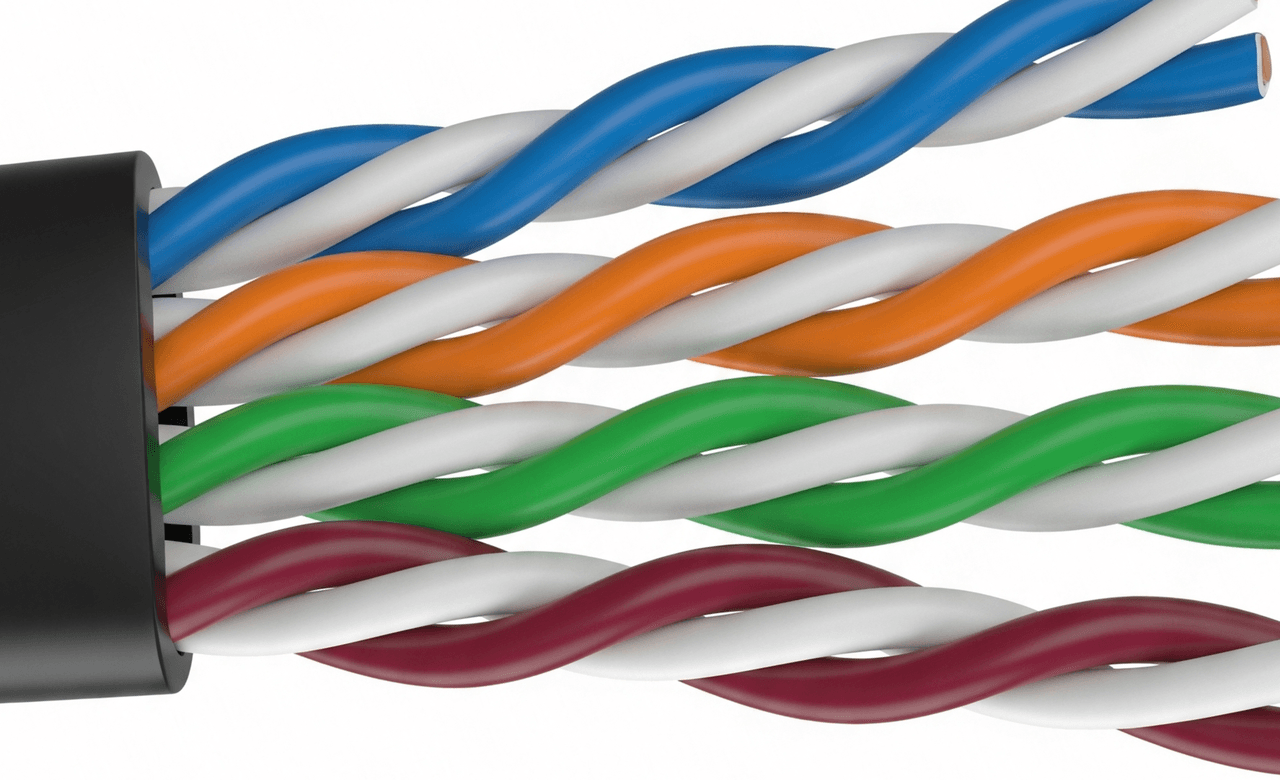
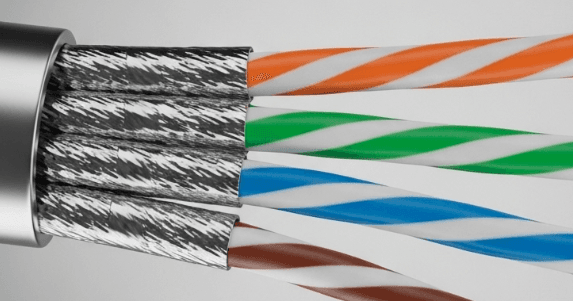
STP Cable (Generated by Artificial Intelligence)

Fiber Optic Cable (Generated by Artificial Intelligence)
The structured cabling system offers the flexibility to integrate emerging technologies—such as next-generation PoE applications, 40/100 GbE infrastructures, and beam-based access technologies—without modifying the existing infrastructure. This ensures that the initial investment remains viable for an extended period of 10 to 15 years.
Dukda, Sonam. *Introduction to Structured Cabling*. Division of Information Technology, Ministry of Communication, September 2000. Accessed June 8, 2025. https://tech.gov.bt/wp-content/uploads/2024/09/cablingstandard.pdf
Norden Communication. “What Are the Components of Structured Cabling?” Norden Communication. Accessed June 8, 2025. https://www.nordencommunication.com/en/blog/what-are-the-components-of-structured-cabling
Structured Cabling. "What Is Structured Cabling?" StructuredCabling.com. Accessed June 8, 2025.
“What Is Structured Cabling in Networking.” YouTube. Accessed June 8, 2025. https://youtu.be/k8mCWycc3gU?si=XNXFNw9Ly77h8lYQ

Generated by Artificial Intelligence
Structured Cabling System
Producing / Defining Organizations | Division of Information Technology (Bhutan) BICSI CENELEC ISO/IEC ANSI/TIA | ||||||||
|---|---|---|---|---|---|---|---|---|---|
National Origin | International (led by U.S.-based standards organizations) | ||||||||
Variant | Singlemode Fiber Multimode Fiber Cat 7 Cat 6A Cat 6 Cat 5e | ||||||||
Type(s) | Structured Telecommunications Distribution System Information and Communication Technology Infrastructure | ||||||||
Subsystems | Work Area Horizontal Cabling Telecommunications Closet Backbone Cabling Equipment Room Building Entrance | ||||||||
Application Area(s) | Smart Buildings and IoT Networks Industrial Facilities Public Institutions Data Centers Educational Campuses Commercial Buildings | ||||||||
No Discussion Added Yet
Start discussion for "Structured Cabling System" article
Six Subsystems
Building Entrance
Equipment Room
Backbone Cabling
Telecommunications Closet
Horizontal Cabling
Work Area Components
International Standards and Performance Criteria
Cable Types and Categories
Physical Design Principles
Installation and Implementation Practices
Testing, Labeling, and Documentation
Management and Maintenance
Future-Proofing