
This article was automatically translated from the original Turkish version.
Abbreviation | SHAPE | ||||||||
|---|---|---|---|---|---|---|---|---|---|
Establishment | 2 April 1951 | ||||||||
Founder/First Commander | General Dwight D. Eisenhower | ||||||||
Initial Headquarters | Rocquencourt France | ||||||||
Current Headquarters | Casteau Mons Belgium | ||||||||
Parent Organization | NATO Allied Command Operations | ||||||||
Primary Mission | plan and manage NATO military operations | ||||||||
Highest Commander | SACEUR | ||||||||
Motto | Awareness is the price of freedom. | ||||||||
Europe Allied Command Operations (ACO), the strategic headquarters of NATO's military command structure, is located in Mons, Belgium. This headquarters serves as the central command node for all Alliance military operations. ACO, together with the Allied Command Transformation (ACT), constitutes one of the two highest-level strategic commands within NATO's military organization. This structure was designed to deter security threats and, in the event of deterrence failure, to provide an effective military response to any armed attack against member states' territories. ACO is a three-tiered military mechanism comprising headquarters operating at strategic, operational, and tactical levels. SHAPE represents the strategic level of this structure.
SHAPE's core mission is to manage, at the strategic level, the preparation, planning, and execution of NATO's military operations, tasks, and routine activities. The headquarters coordinates these operational activities to achieve the Alliance's strategic objectives. The command's overall purpose is to contribute to the deterrence of potential attacks, safeguard the territorial integrity of the Alliance, and ensure the freedom of the seas and economic lifelines. In this context, SHAPE assumes responsibility for preserving peace and international stability, as well as restoring or maintaining the security of member states. The military planning and force generation activities conducted within the headquarters form the essential strategic infrastructure required for the execution of joint and combined operations.【1】
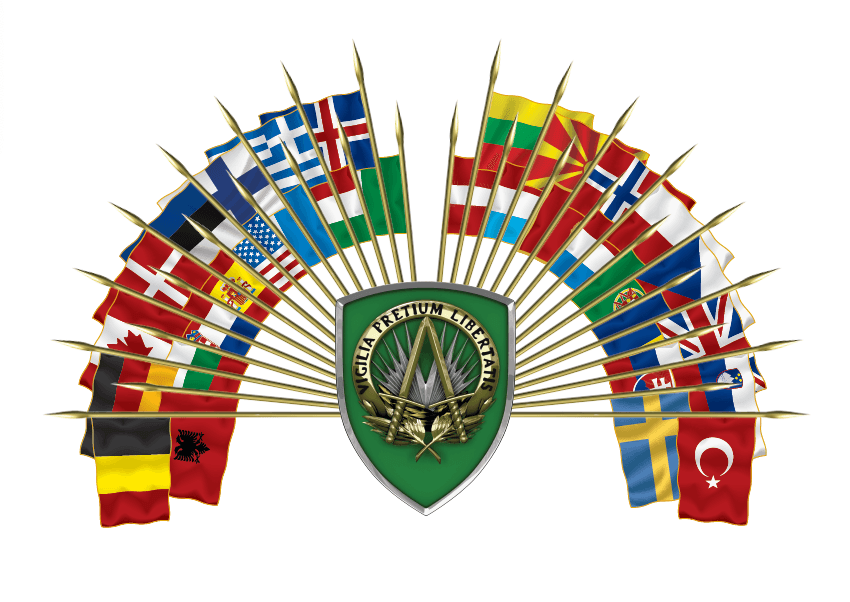
The Great Crest of Supreme Headquarters Allied Powers Europe. (SHAPE)
The highest level of SHAPE's organizational hierarchy is the Supreme Allied Commander Europe (SACEUR). The SACEUR assumes overall command of strategic-level operations and provides strategic military guidance to subordinate commands. The SACEUR, a four-star general, is invariably a U.S. Army officer and simultaneously holds the position of Commander of U.S. European Command (USEUCOM). Supporting the SACEUR in administrative and operational matters are the Deputy Supreme Allied Commander Europe (DSACEUR) and the Chief of Staff (COS). The SACEUR is directly accountable to the Military Committee (MC). The Military Committee, in turn, operates under the overarching political authority of the North Atlantic Council (NAC) and the Nuclear Planning Group (NPG), providing the highest level of military advice.【2】
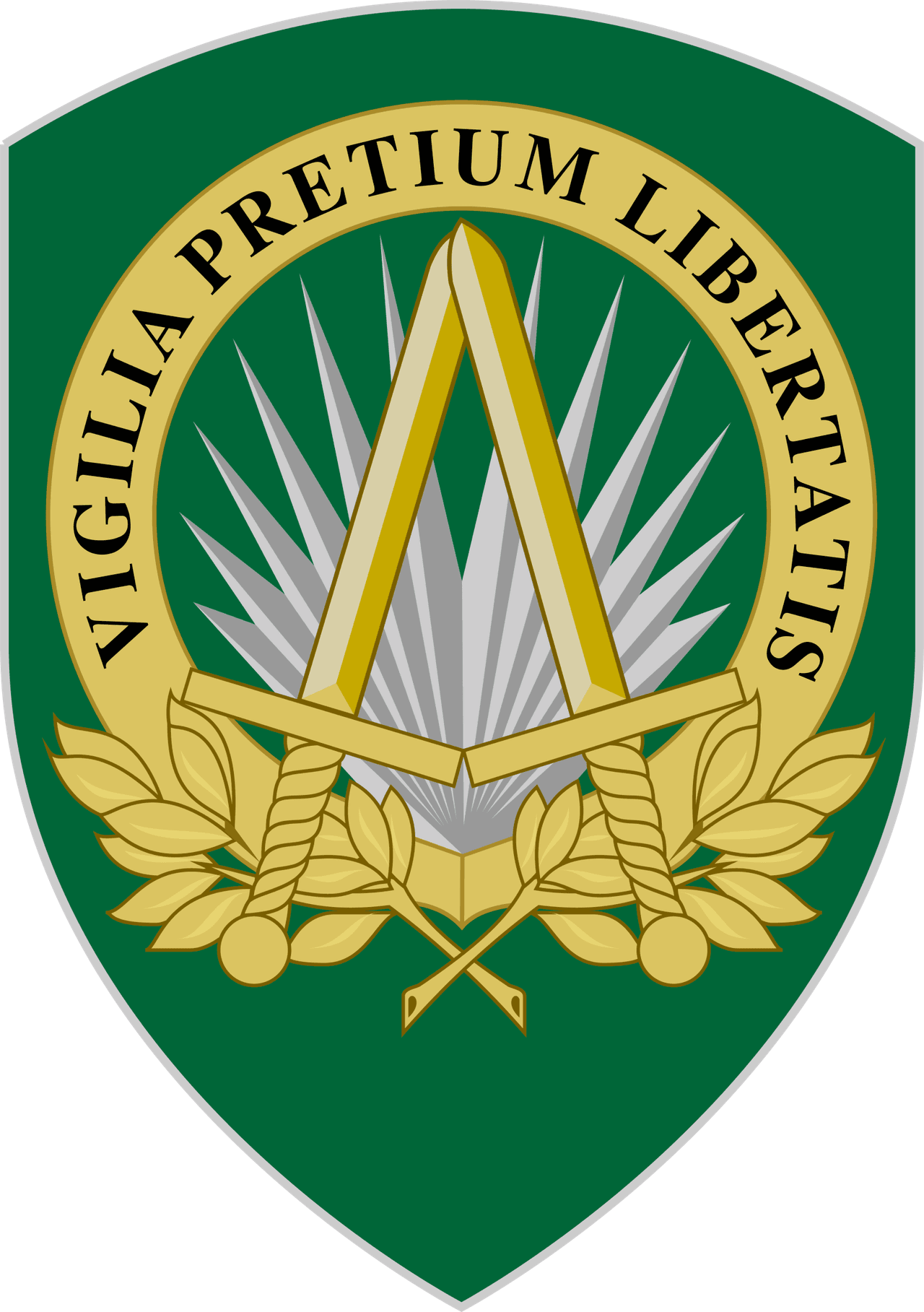
The design process for the official crest of Supreme Headquarters Allied Powers Europe (SHAPE), reflecting its institutional identity and ideals, was initiated at the direct request of the first Supreme Allied Commander Europe (SACEUR), General Dwight D. Eisenhower, who sought an original emblem symbolizing the aims and objectives of NATO nations. The coordination of this process and the technical preparation of the crest were entrusted to U.S. Army Colonel Robert J. Wood, serving as SHAPE's Secretary. The conceptual foundation of the design was based on an initial sketch by Parisian designer Arthus Bertrand, featuring a circle surrounding the map of the Western Hemisphere and two swords, which were retained in the final design. However, the Latin phrase “Si Vis Pacem Para Bellum” (If you wish for peace, prepare for war), proposed by Bertrand in this sketch, was removed from the design by authorities on the grounds that it did not fully reflect SHAPE’s foundational vision.【3】
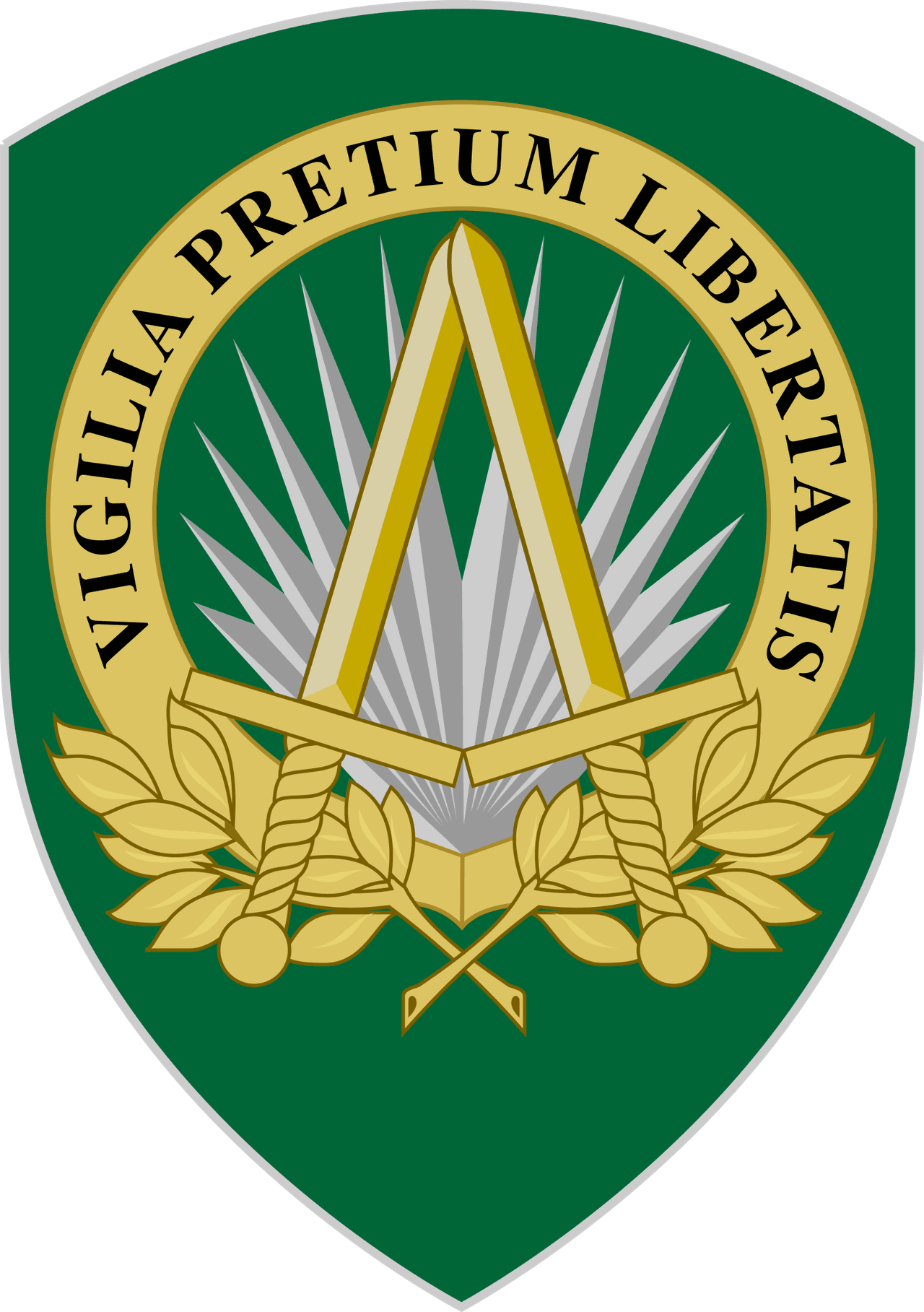
Crest of Supreme Headquarters Allied Powers Europe (SHAPE)
In place of the rejected phrase, on the suggestion of Mrs. Robert J. Wood, the wife of Colonel Wood, the historical quote “Vigilia Pretium Libertatis” (Vigilance is the price of liberty), drawn from a 1790 speech by John Philpot Curran on the right to vote, was added as the official motto on a golden scroll. The dark green shield, depicting the peaceful forests and fields of the European continent, was personally incorporated into the crest by General Eisenhower. Colonel Wood finalized the design by integrating all these motifs and determining the overall color palette for the crest.【4】
The symbolism of the crest contains subtle details reflecting the Alliance’s core values and military posture. The two golden olive branches placed below the golden scroll symbolize the unwavering commitment of NATO nations to peace; the two golden swords, positioned on the shield with blades drawn, represent the armed strength essential to establish and preserve this peace. The positioning of the swords forms the letter “A,” symbolizing “Alliance.” At the suggestion of U.S. Army heraldry expert Arthur Du Bois, the olive branches and the twelve silver leaves (fronds) emerging from them and positioned behind the swords represent the twelve original founding states of the North Atlantic Treaty. These silver leaves, arranged in the crest to resemble rays of hope, convey a unified message of peace and defense.【5】
Following the signing of the North Atlantic Treaty, the Soviet Union’s atomic bomb test in 1949 and the outbreak of the Korean War in 1950 compelled the Alliance to establish a unified military command structure. In this context, the SHAPE Planning Group, beginning its work at the Hotel Astoria in Paris, designed the foundational structure of the Allied Command Europe (ACE). The first Supreme Allied Commander Europe (SACEUR), U.S. General Dwight D. Eisenhower, signed the activation order for the Allied Forces in Europe and SHAPE on 2 April 1951. The headquarters relocated to facilities constructed in the Rocquencourt suburb near Paris and officially became operational in July 1951. 【6】
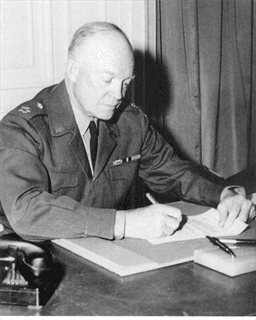
SACEUR Eisenhower Signing the Activation Order for SHAPE on 2 April 1951 (SHAPE)
At its establishment, the headquarters began operations with a staff of 183 officers representing nine of the twelve NATO allies. General Eisenhower and his planning team developed a command structure dividing the European theater geographically into three main regions: Northern, Central, and Southern Europe. The Northern region covered Scandinavia, the North Sea, and the Baltic; the Central region encompassed Western Europe; and the Southern region included Italy and the Mediterranean. Simultaneously with SHAPE’s activation on 2 April 1951, subordinate headquarters in Northern and Central Europe were activated, with the Southern Region headquarters becoming operational in June of the same year.【7】
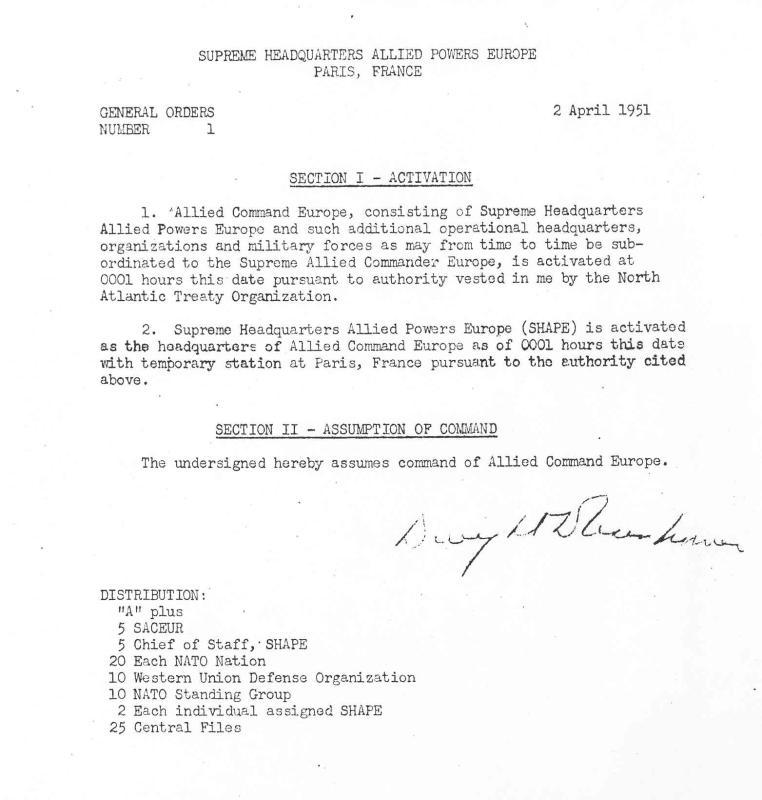
Activation Order for SHAPE on 2 April 1951 (SHAPE)
The operational scale and international personnel composition of the headquarters expanded during the early 1950s with the accession of new members to the Alliance. Following the integration of Greece and Türkiye in 1952 and the Federal Republic of Germany in 1955, officers from these countries were assigned to SHAPE. By the mid-1950s, the number of nations represented within SHAPE had increased to twelve. During this period, SHAPE managed the process of training national units under a single unified command to enhance NATO forces’ readiness and ensure military integration.【8】
SHAPE’s period of activity in France came to an end when French President Charles de Gaulle announced in early 1966 that France would withdraw from NATO’s integrated military command structure. The French government formalized this decision in March 1966, requiring SHAPE and other allied military headquarters to vacate French territory by 1 April 1967. In response, logistical preparations for relocating the headquarters to a new country were initiated. The evacuation of facilities in France was carried out according to the planned schedule, and SHAPE formally closed its headquarters in Rocquencourt on 30 March 1967 in a ceremonial event, concluding its French period.【9】【10】
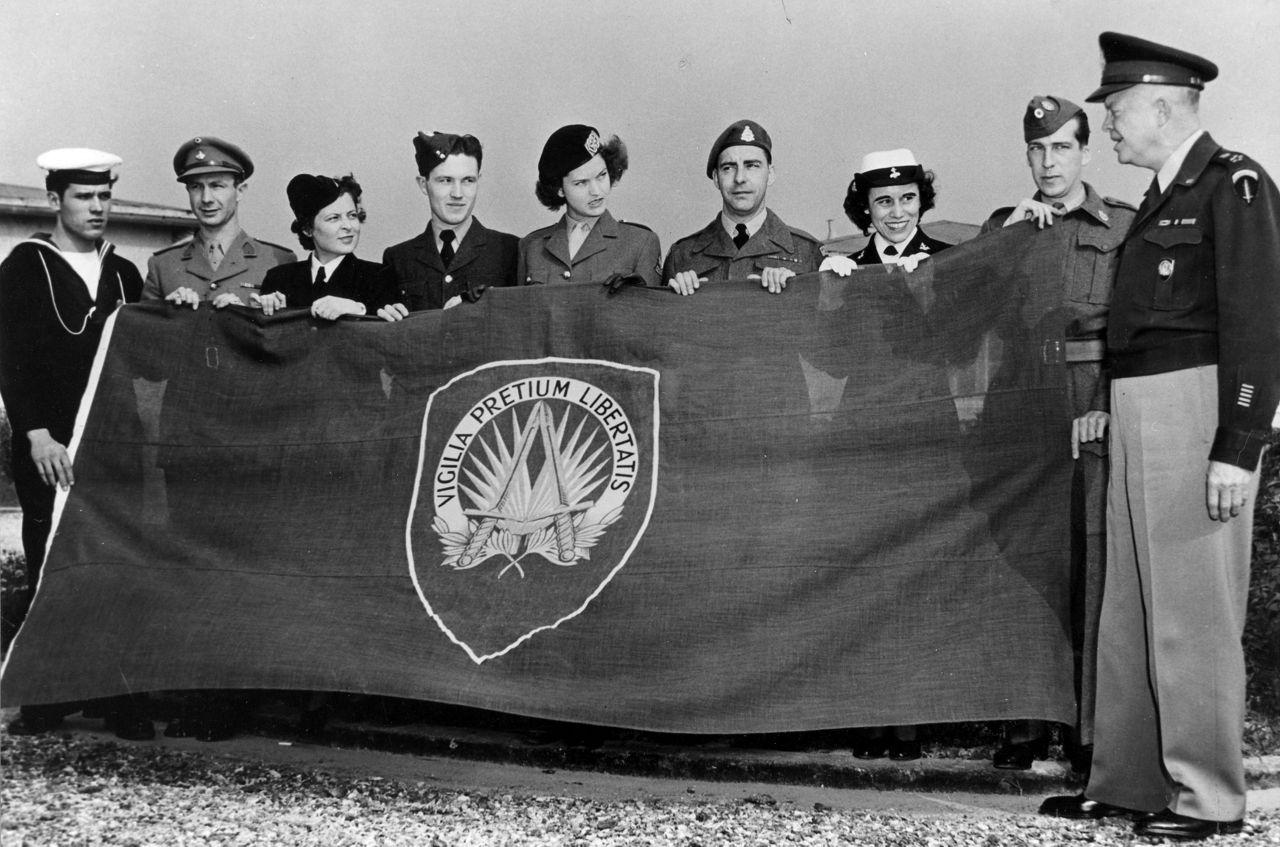
General Dwight D. Eisenhower Inspecting the SHAPE Flag in the Suburbs of Paris in October 1951. (NATO)
Following France’s decision to withdraw from NATO’s integrated military command, the Belgian government designated the Casteau area near Mons, 50 kilometers from Brussels, as the new site for the headquarters. The Belgian authorities’ decision was driven by the site’s potential as a primary wartime target, its status as a state-owned military training camp (Camp Casteau), which eliminated land acquisition costs, and the goal of stimulating economic development in the economically depressed Borinage region. SHAPE’s logistical concerns regarding distance from Brussels were addressed by Belgium’s commitment to construct a high-speed highway between Mons and Brussels, and in September 1966, the Casteau site was officially approved by NATO.【11】
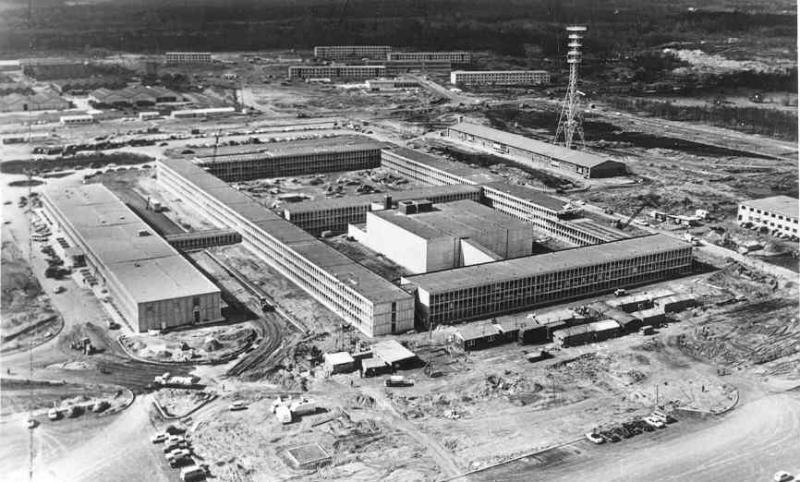
Construction of NATO’s Headquarters Building in Brussels (SHAPE)
Through coordination among the Belgian central government, local authorities, and a construction consortium, a seven-day-a-week construction program began on 14 October 1966 on a 200-hectare site. Operational needs dictated that the highest priority be given to the construction of command and control facilities. The first completed structure was the Communications Center, which became operational on 15 December 1966. The construction process leveraged logistical capabilities at the Belgian air base in Chievres, and the main headquarters buildings were rendered operational in just six and a half months.【12】
The physical relocation of the headquarters from France to Belgium was carried out in three main phases: the deployment of a reconnaissance team to Belgium, the gradual relocation of the main personnel to Casteau throughout March 1967, and the final closure of the French facilities by the Termination Group. The first transfer of equipment occurred on 22 November 1966, and the facilities in Rocquencourt were officially closed and the flags lowered on 30 March 1967. The new headquarters was formally opened on 31 March 1967 with a flag-raising ceremony in Casteau.【13】
The Camp Voluceau, housing SHAPE’s Support Group, was evacuated on 8 September 1967, terminating all operations there. The final transfer of personal belongings and logistical materials from France to Belgium was completed on 14 December 1967, concluding the entire relocation process. With this, SHAPE began fully managing the strategic-level direction of European military operations from the Casteau site.【14】
The adoption of the “Flexible Response” strategy in 1967 marked a fundamental shift in NATO’s military doctrine, replacing the concept of massive nuclear retaliation with a structure emphasizing conventional defense and offering a range of military response options prior to full-scale nuclear conflict. Concurrently, the Harmel Report, approved by the North Atlantic Council, introduced a parallel political approach that combined military deterrence with dialogue and détente with Warsaw Pact countries.【15】 Following the Soviet Union’s military intervention in Czechoslovakia in 1968, SHAPE closely monitored the military consequences and strategic implications of the crisis, providing direct military briefings to the Alliance regarding increased combat readiness levels of Soviet forces near the borders of the Federal Republic of Germany. During the tenure of the sixth SACEUR, General Andrew J. Goodpaster, shifting strategic balances favoring the Soviet Union, arms reduction negotiations, the 1973 Oil Crisis, and Greece’s withdrawal from the military wing following the 1974 Cyprus Crisis, all directly shaped SHAPE’s activities.【16】
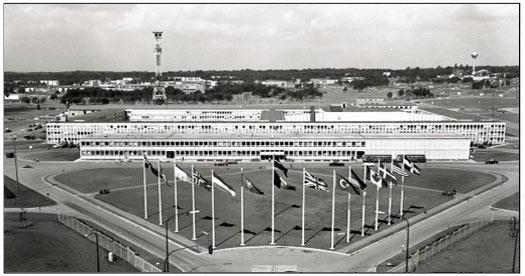
Supreme Headquarters Allied Powers Europe. (SHAPE)
In 1970, a comprehensive defense study prepared by the headquarters addressed force reductions and laid the groundwork for the Alliance’s next decade of strategic planning, proposing improvements in procedures for conventional and nuclear forces. With the appointment of SACEUR General Alexander M. Haig, the concept of “Preparation, Rationalization, and Reinforcement” became the operational focus of SHAPE, aimed at countering the growing military capacity of the Warsaw Pact. During this period, SHAPE played a central role in planning and implementing the NATO Long-Term Defense Improvement Program, which profoundly transformed NATO forces in the 1980s and beyond, strongly supporting the establishment of the NATO Airborne Early Warning Force (NAEWF). Integration was achieved in communication, command, and control systems, particularly in the NATO Air Defense Ground Environment (NADGE) system, which coordinated air defense. To enhance force readiness, the “Autumn Forge” exercise program, initiated in 1975, and its most well-known component, the REFORGER (Return of Forces to Germany) series, annually tested the ability of North American allies to rapidly reinforce Europe during a crisis.【17】
By the late 1970s, in response to the Soviet Union’s significant enhancement of its military capabilities and the deployment of SS-20 ballistic missiles in Europe, NATO formally adopted the “Dual Track” policy in December 1979. This strategic decision conditioned the deployment of U.S. cruise and Pershing II nuclear missiles in Europe on simultaneous negotiations with the Soviet Union for arms control agreements. During the tenure of the eighth SACEUR, General Bernard W. Rogers, SHAPE managed the military deployment of these missiles and conducted public information campaigns to inform the public about the Soviet military threat. General Rogers, asserting that insufficient conventional defense would inevitably necessitate early nuclear intervention, developed the “Follow-On Forces Attack” (FOFA) concept. This doctrine aimed to prevent Warsaw Pact forces from reaching NATO defensive positions by launching deep conventional attacks against their second and third echelons. General Rogers also managed the diplomatic and military negotiations surrounding Greece’s reintegration into the Allied Command in 1980.【18】
During the crisis in Poland beginning with the imposition of martial law in 1981 and targeting the Solidarity movement, SHAPE provided strategic planning to NATO headquarters regarding military measures to be taken in case of Soviet intervention or civil war. In terms of operational infrastructure and facility construction, the SHAPE Bunker project, initiated in 1980, was completed in 1985, enhancing the headquarters’ physical resilience. One of the most intensive activities during this period focused on updating nuclear weapons control procedures and planning protocols. SHAPE directly participated in the operational implementation of the 1983 “Montebello Decision,” which foresaw the withdrawal of 1,400 nuclear warheads from Europe, and prepared technical reports on NATO’s future nuclear weapons requirements. Alongside these analytical studies, key military strategy documents were developed, including the Rapid Reinforcement Concept, the SACEUR’s Conceptual Military Framework, and the ACE Long-Term Infrastructure Plan.【19】
In the mid-1980s, the rise of Mikhail Gorbachev to power in the Soviet Union initiated a period of détente in relations between NATO and the Warsaw Pact. SHAPE analyzed and reported on the military implications of the rapidly advancing Intermediate-Range Nuclear Forces (INF) negotiations. The 1987 INF Treaty, which aimed to eliminate all intermediate-range nuclear ground-launched ballistic and cruise missiles between the United States and the Soviet Union, entered into force. SACEUR Rogers strongly opposed the complete elimination of missiles, arguing that it would disarm the Alliance and leave Europe more vulnerable to Soviet blackmail or potential attacks. This strategic divergence between military requirements and political compromise was a decisive factor in General Rogers’ departure from office and retirement in 1987. Ultimately, SHAPE entered an internal adaptation process during the final phase of the Cold War, responding to radical reductions in nuclear forces and the specific operational planning changes brought by new arms control regimes.【20】
The end of the Cold War, the fall of the Berlin Wall, and the dissolution of the Soviet Union triggered a comprehensive transformation in the military strategies and force planning of Supreme Headquarters Allied Powers Europe (SHAPE). In 1990, a restructuring initiative within the headquarters led to a 25 percent reduction in personnel and the number of military headquarters, previously 78 during the Cold War, was reduced to 20. In accordance with the new Strategic Concept approved in November 1991, SHAPE coordinated the safe withdrawal of U.S. chemical and intermediate-range nuclear weapons from Europe. To enhance military cooperation with former Warsaw Pact members, the Military Contact Cell was established within SHAPE in 1991, creating new military communication mechanisms suited to the demands of the new era. Training activities were updated, purged of Cold War-oriented scenarios, based on “Right Mix” analyses.【21】
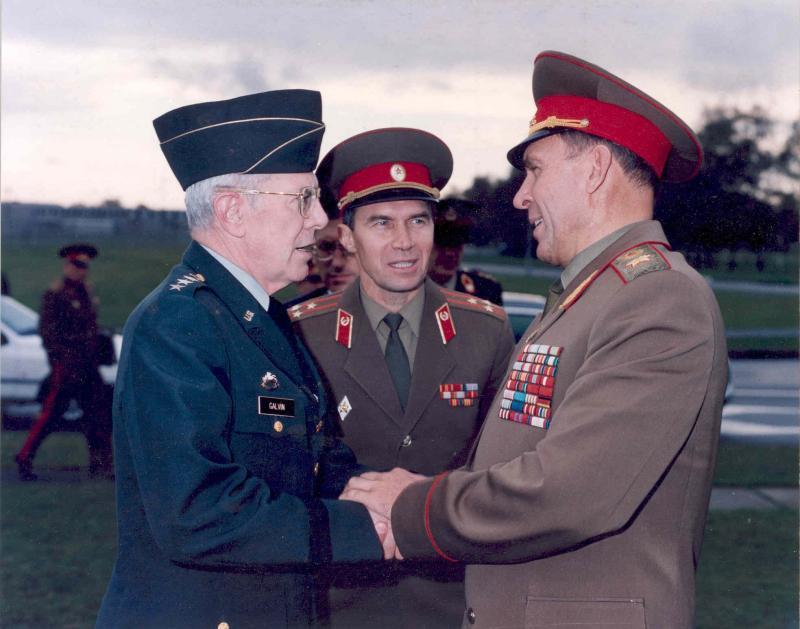
SACEUR Galvin Welcoming Soviet General Moiseyev During His Historic Visit to SHAPE in 1990. (SHAPE)
As part of SHAPE’s institutional transformation, the Allied Command Europe Rapid Reaction Corps (ARRC) was activated in October 1992 to establish a multinational and flexible military mechanism. Structural reforms in 1993 led to the appointment of German General Peter Carstens as the first European Chief of Staff (COS) in SHAPE’s history. By 1994, the planning phase for the Joint Combined Task Force Concept, designed to manage operations outside NATO’s borders, was completed.【22】 In the same year, a Partnership Coordination Center was established within SHAPE to conduct military cooperation with neutral countries and former Warsaw Pact members under the Partnership for Peace (PfP) program.【23】
In response to escalating instability in the Balkans, SHAPE established a Crisis Intervention Cell in June 1992 to initiate military planning for the region. In July 1992, the Maritime Monitor Operation was launched to enforce the United Nations (UN) arms embargo on the former Yugoslavia; this operation was transformed into the Maritime Guard Operation in November 1992 and then into the Sharp Guard Operation, jointly conducted with the Western European Union, in June 1993. The Air Surveillance Operation, initiated to monitor the no-fly zone over Bosnia-Herzegovina, evolved into the Deny Flight Operation in April 1993.【24】 On 28 February 1994, the Alliance carried out its first combat engagement by shooting down four Bosnian Serb aircraft that violated the flight ban.【25】
As attacks on UN-declared safe areas intensified, the Deliberate Force Operation was conducted between 30 August and 14 September 1995, targeting Bosnian Serb command, control, and ammunition facilities. Following the military operation, the military provisions of the Dayton Peace Agreement, signed in November 1995, were implemented by transferring command from the UN to the NATO-led Implementation Force (IFOR) on 20 December 1995.【26】 A special Russian deputy to the SACEUR was established for the 50,000-member Russian contingent in IFOR, and a Russian delegation was integrated into SHAPE’s coordination center. The IFOR mission was succeeded in December 1996 by the Stabilization Force (SFOR), which had a lower military profile.【27】
As tensions escalated in Kosovo by late 1998, the Eagle Eye Operation was conducted, involving aerial surveillance to monitor compliance with UN resolutions. After diplomatic efforts proved unsuccessful, NATO forces launched Operation Allied Force on 24 March 1999. This 78-day operation, involving 38,000 flight sorties, extensively employed submarine-launched cruise missiles and air defense systems. To manage the refugee influx into Albania caused by the Kosovo conflict, humanitarian assistance activities were coordinated under Operation Allied Harbour. Following the withdrawal of Serbian forces, the NATO-led Kosovo Force (KFOR) entered the region on 12 June 1999 to assume responsibility for security.【28】
Operational activities in the Balkans continued in 2001 with crises in North Macedonia. In August 2001, Operation Essential Harvest was conducted to disarm armed groups, followed by Operation Amber Fox to protect international observers and Operation Allied Harmony. Following the 11 September 2001 attacks in the United States, the Alliance invoked Article 5 of the Washington Treaty. In this context, Operation Eagle Assist deployed NATO Airborne Warning and Control System (AWACS) aircraft to protect U.S. airspace, and in October 2001, Operation Active Endeavour was launched to ensure maritime security in the Mediterranean.【29】
The Prague Summit in 2002 initiated a new consolidation process within NATO’s military command structure. In accordance with summit decisions, the former Allied Command Europe (ACE) was transformed into the single strategic command responsible for all Alliance military operations, adopting the name Allied Command Operations (ACO). With the addition of operational responsibilities in the Atlantic region, SHAPE became the strategic hub for NATO military operations. The operational scope of this new structure extended beyond the Euro-Atlantic geography to Afghanistan in August 2003, when NATO assumed command of the International Security Assistance Force (ISAF).【30】
The national flags of NATO member states, arranged in a semicircle in front of the main building of Supreme Headquarters Allied Powers Europe (SHAPE), follow a special rotation system to ensure diplomatic equality. This practice, based on the principle that no member state’s symbol should be permanently positioned last in the hierarchy, involves moving each flag one position forward at midnight every Sunday. This diplomatic tradition was integrated into the headquarters’ culture in 1951 by the first Supreme Allied Commander Europe (SACEUR), General Dwight D. Eisenhower, drawing inspiration from United Nations (UN) practices. In General Eisenhower’s original arrangement, the host nation’s flag was placed on the central pole, and the flags of other member states were arranged alphabetically in French order, subject to daily rotation to emphasize equality.【31】
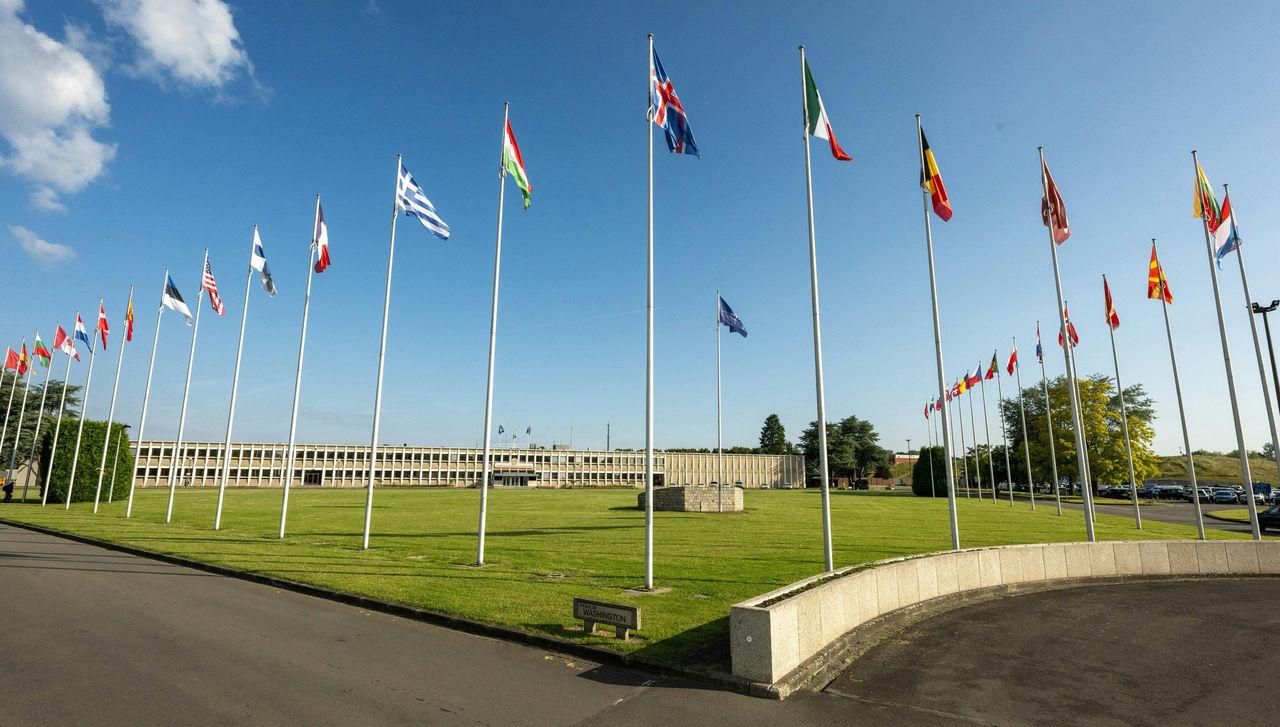
Supreme Headquarters Allied Powers Europe (SHAPE) Headquarters Building (NATO)
The arrangement of the flags has historically been the subject of various naming and diplomatic prestige disputes among member states. After the initial implementation, the Netherlands objected to the French designation “Pays-Bas” and requested the use of the English name “Netherlands,” temporarily moving its flag between Luxembourg and Norway (“Norvège”). However, in 1953, SHAPE’s legal advisor determined that “Grande Bretagne” was not the correct French term for the United Kingdom and moved its flag to the position corresponding to the letter “R” under “Royaume Uni,” while also rejecting the Netherlands’ exceptional status and returning its flag to its original French-named position. Similarly, in 1959, the Turkish military representative expressed dissatisfaction with Türkiye’s permanent position at the end of the sequence and proposed the model used at NATO headquarters in Paris, which employed English names and a fixed arrangement. However, it was decided to preserve the established tradition initiated by the first SACEUR, and the existing system was maintained.【32】
Following France’s 1966 decision to withdraw from the Alliance’s integrated military command structure, this longstanding diplomatic tradition was maintained during SHAPE’s relocation to Mons, Belgium, in 1967. The flag rotation practice continued uninterrupted at the new headquarters, and objections regarding the sequence of national flags were rejected with reference to the institution’s historical memory. Today, the flag of each new member state joining the Alliance is incorporated into this existing diplomatic and organizational structure according to its position in the French alphabet, consistently preserving the system’s principle of multilateral equality.【33】
The 2002 Prague Summit decisions led to a comprehensive reorganization of NATO’s military command structure, transforming Allied Command Europe (ACE) into Allied Command Operations (ACO). This reform shifted the command architecture entirely from a geographical to a functional basis. Allied Command Operations became the sole strategic command responsible for planning and executing all Alliance military operations, including those previously managed by Allied Command Atlantic (ACLANT). This transformation was based on the goal of consolidating the command structure to establish a more flexible operational mechanism.【34】
Within the ACO structure, Joint Force Commands (JFCs) operate at the operational level under strategic command. These units consist of three main headquarters located in Brunssum, the Netherlands; Naples, Italy; and Norfolk, United States. The Joint Force Commands have the capability to manage NATO military operations of varying scales from their static facilities or deployable headquarters. Additionally, they carry out responsibilities for achieving military integration with non-member countries and institutional coordination with regional organizations.【35】
The tactical level of the operational hierarchy is composed of Service Component Commands reporting directly to the strategic level. These tactical-level structures include the Allied Land Command (LANDCOM) in İzmir, responsible for command and control of land forces; the Allied Maritime Command (MARCOM) in Northwood, responsible for naval operations; and the Allied Air Command (AIRCOM) in Ramstein, responsible for air and missile defense. These headquarters provide sector-specific military expertise to the Joint Force Commands and contribute tactically to military transformation processes.【36】
The communication requirements of the command structure are managed by the NATO Communications and Information Systems Group (NCISG), located in Belgium. NCISG acts as the coordination authority for command and control services in military operations, providing deployable communication equipment. The operational readiness capacity of Allied Command Operations is supported by specialized multinational forces integrated into the strategic headquarters. In this context, NATO Strike Force (STRIKFORNATO), the NATO Airborne Early Warning and Control Force (NAEW&C), and the NATO Intelligence, Surveillance, and Reconnaissance Force (NISRF) operate as tactical elements of the command structure.【37】
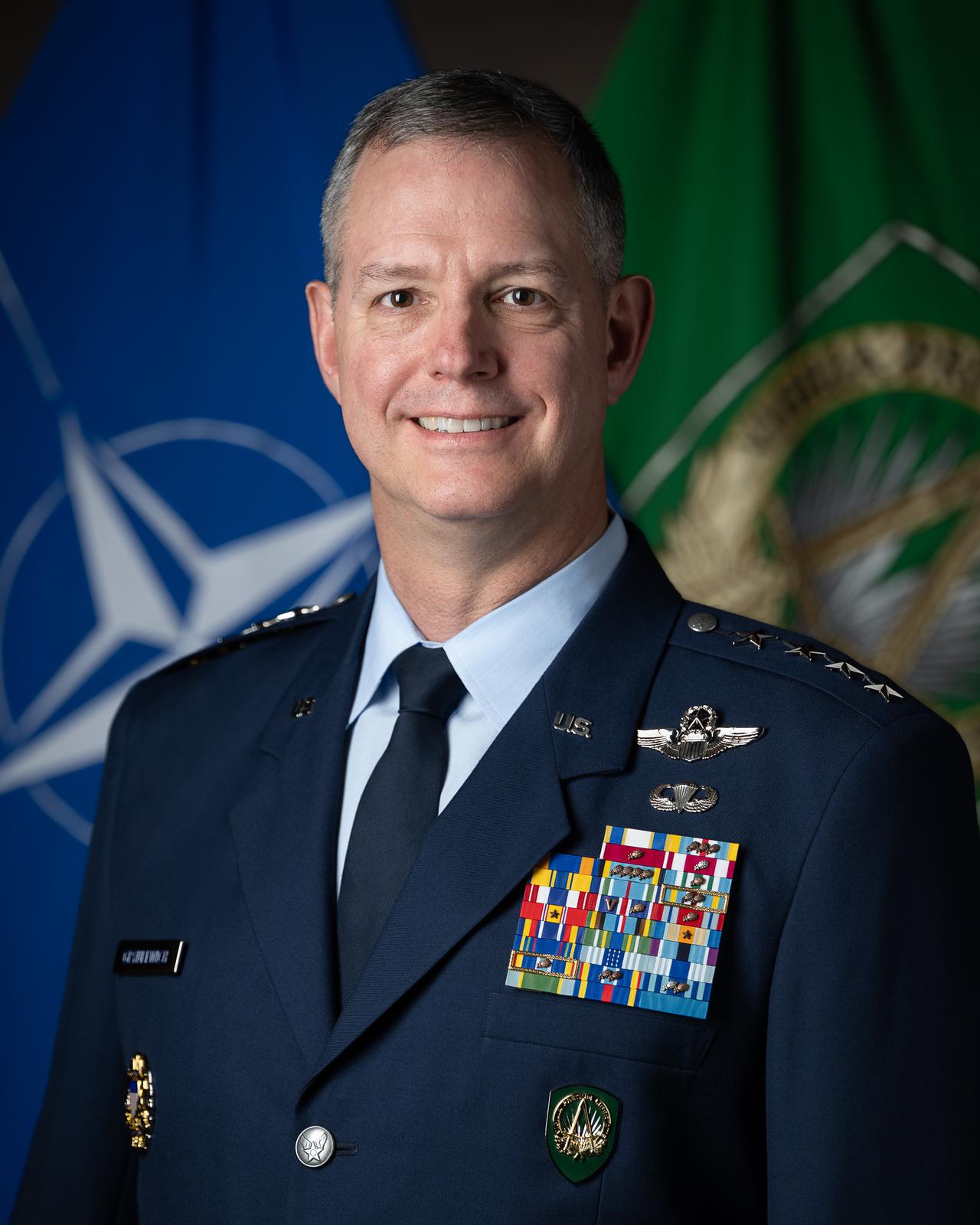
General Alexus G. Grynkewich (SHAPE)
The highest level of the hierarchical structure of Supreme Headquarters Allied Powers Europe (SHAPE) is occupied by the Supreme Allied Commander Europe (SACEUR). The SACEUR is always a four-star general or admiral from the armed forces of the United States and simultaneously serves as Commander of U.S. European Command (USEUCOM).【38】 The first SACEUR was General Dwight D. Eisenhower, who held the five-star rank.【39】 Historically, the SACEUR position was held exclusively by U.S. Army officers; in later years, officers from the Air Force, Marine Corps (General James L. Jones in 2003), and Navy (Admiral James G. Stavridis in 2009) also assumed the role.【40】 Directly accountable to the NATO Military Committee, the SACEUR provides overall command and control of all Alliance military operations. The current SACEUR, General Alexus G. Grynkewich, assumed office on 4 July 2025.【41】
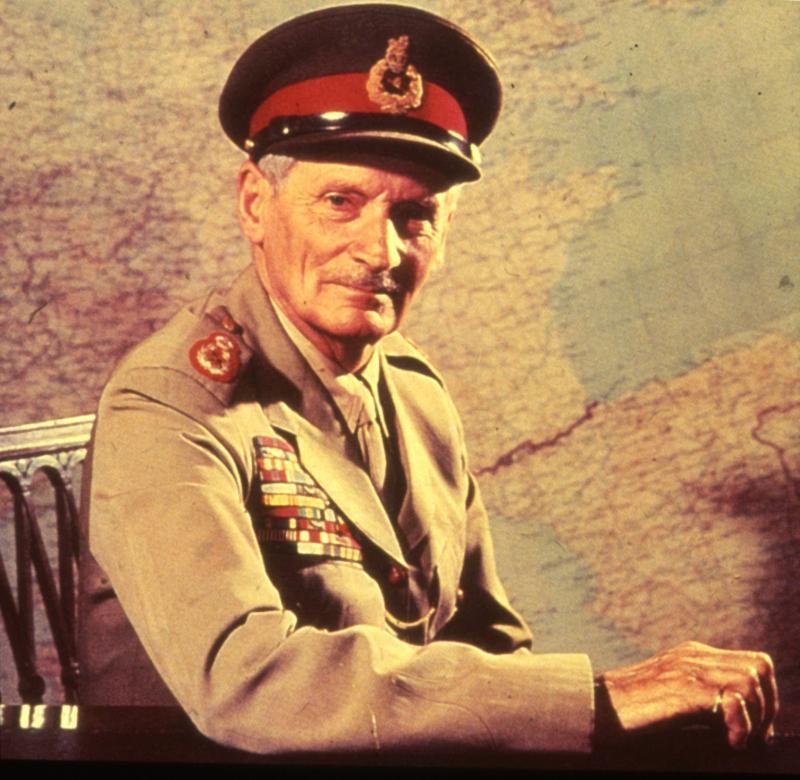
The First DSACEUR, Montgomery ((SHAPE)
The second-highest authority in the command group is the Deputy Supreme Allied Commander Europe (DSACEUR), who provides direct operational and strategic support to the headquarters. The first DSACEUR was British Field Marshal Viscount Montgomery.【42】 Until 1978, there was only one DSACEUR position; however, to reflect the Federal Republic of Germany’s growing military contribution to the Alliance, a second German DSACEUR position was established with the appointment of General Gerd Schmueckle.【43】 Although the Clay Report of 1980–1981 recommended consolidating the DSACEUR position into a single post, political considerations led to the maintenance of two separate four-star DSACEUR positions for the United Kingdom and Germany until 1992.
The Chief of Staff (COS), responsible for the day-to-day operational functioning and personnel management of the headquarters, was administered by U.S. officers for much of the Cold War. After the abolition of the Air Deputy position in 1968, the COS position was reassigned to generals from the U.S. Air Force. Following comprehensive organizational reviews led by General Arno Schaefer between 1991 and 1992, radical changes were made to the command structure, resulting in the elimination of the German DSACEUR position. As part of this reorganization, the COS position was transferred from the United States to Europe; in 1993, German General Peter Carstens became the first European Chief of Staff in SHAPE’s history. As part of the same reform, the DSACEUR position was formally integrated into the command and control chain.【44】
In 2001, to ensure continuity in NATO’s senior military command structure and reinforce the growing role of the DSACEUR in European Union operations, a new agreement was reached between the United Kingdom and the Federal Republic of Germany.【45】 The agreement aimed to prevent institutional memory loss caused by simultaneous rotations of high-ranking positions. Accordingly, the four-star DSACEUR position was permanently assigned to the United Kingdom, and the four-star Chief of Staff (COS) position was permanently assigned to the Federal Republic of Germany. These permanent national assignments were confirmed and institutionalized during the structural reforms of 2004 that established Allied Command Operations (ACO).【46】 Currently, the DSACEUR position is held by Air Chief Marshal Sir Johnny Stringer of the United Kingdom, and the COS position is held by German General Markus Laubenthal.【47】
Throughout the historical evolution of SHAPE’s command group, additional four-star deputy positions were established during certain periods to assume specific military missions. The Naval Deputy position, created in the 1950s and left vacant since 1960, and the Air Deputy position were fully abolished in 1968. Similarly, the Deputy for Nuclear Affairs, established in 1963 during Multilateral Force (MLF) discussions to enhance European ally participation in nuclear planning, was removed from the command structure in 1968.【48】 In the current modern hierarchy, a Vice Chief of Staff (VCOS) and a Senior Enlisted Leader represent the command group to provide administrative and operational depth. Currently, Lieutenant General Ludovic Pinon de Quincy serves as VCOS, and Senior Enlisted Leader Zoltán Kaszab holds the Senior Enlisted Leader position. 【49】
To ensure structural coherence with subordinate headquarters, SHAPE abandoned its traditional divisional system in October 2003 and adopted the “J-structure” organizational model. With the implementation of this reform in November 2004, one-star generals known as J-Heads were appointed, and a new Deputy Chief of Staff (DCOS) tier of two-star generals was established between the Chief of Staff and the J-Heads. During this period, the Combined Joint Planning Staff (CJPS) unit was abolished and its functions were integrated directly into SHAPE headquarters personnel. Additionally, for the first time, French military personnel, who had separated from the integrated military command structure in 1966, were officially incorporated into SHAPE’s Peacetime Establishment.【50】
The application of the J-structure model created various operational challenges and was deemed inefficient by SHAPE’s Command Group. The primary reason was the lack of sufficient experience among the one-star J-Heads to manage strategic-level issues. Furthermore, the J-structure model created an institutional barrier in communication and coordination processes between SHAPE and NATO headquarters that did not use this system. Based on these operational considerations, a new organizational scheme was implemented on 1 August 2010. The J-structure was abolished, and SHAPE reverted to a more comprehensive traditional departmental system managed by two-star generals holding the title of Deputy Chief of Staff, with the intermediate “Assistant Chief of Staff” (ACOS) tier entirely eliminated.【51】
SHAPE’s current internal architecture consists of various specialized directorates and administrative units responsible for implementing strategic directives. Key departments operating directly within the headquarters include the Cyber and Space Directorate, the Finance and Procurement Directorate, the Strategic and International Relations Directorate, the Management Directorate, and the Partnerships Directorate. The Partnerships Directorate manages political dialogue, practical cooperation, and capacity-building exercises with non-member countries in the Euro-Atlantic, Mediterranean, and Gulf regions. Each directorate is managed by senior military officers or their civilian equivalents, ensuring functional specialization within the headquarters.【52】
Within SHAPE’s institutional structure, military liaison mechanisms facilitate direct coordination with member and partner countries. National Military Representatives (NMR) serve as the primary liaison officers for NATO member states within the headquarters. Similarly, Partner Nation Military Representatives (PNMR) coordinate the military integration processes of countries that are not Alliance members but engage in cooperation. This liaison model establishes continuous structural alignment and intelligence sharing between SHAPE’s central command and the national military authorities of participating countries.【53】
SHAPE’s tactical-level military control network includes specialized command and control elements supporting specific operations. These include the Combined Air Operations Centers (CAOC) located in Spain and Germany, Static Air Defense Centers responsible for air policing, and Deployable Air Operations Centers (D-AOC) supporting operations. The Deployable Air Command and Control Center (DACCC) in Italy provides control of ground-to-air missiles, air traffic management, and deployable sensor capabilities. These specialized tactical units, which have no regional responsibilities during peacetime, directly reinforce the Allied Air Command (AIRCOM) during combat operations.【54】
The NATO Force Model (NFM) is a structural framework for organizing, managing, activating, and commanding national forces to support NATO’s three core missions: deterrence and defense, crisis prevention and management, and cooperative security. This model enhances response times, readiness levels, and combat power, enabling the Alliance to adopt a more proactive force posture. Under this system, member states designate national forces available for peacetime operations under the command of the Supreme Allied Commander Europe (SACEUR). Simultaneously, a broad reserve force pool is established, capable of immediate deployment during crises or conflict. This ensures that NATO defense plans are supported by pre-assigned, forward-deployed forces and reinforcement elements, guaranteeing the capacity to respond rapidly to collective defense requirements.【55】
The military infrastructure of the model is based on a three-tiered readiness system classified by response times. Tier 1 consists of forces capable of becoming operational within 0 to 10 days; Tier 2 includes units capable of deployment within 10 to 30 days; and Tier 3 comprises units requiring 30 to 180 days of preparation. The foundation of this structural model is the NATO Readiness Process, shaped by the evolution of the NATO Readiness Initiative launched at the 2018 Brussels Summit. This initiative aimed to institutionalize rapid response capacity by ensuring the availability of 30 heavy or medium maneuver battalions, 30 kinetic air forces, and 30 major naval units ready for deployment within 30 days or less.【56】
One of the operational components of the NATO Force Model is the Allied Reaction Force (ARF). This multinational and multi-domain military structure, possessing a high readiness level, encompasses land, sea, air, special operations, cyber, space, logistics, and strategic communications elements. The Allied Reaction Force is composed of voluntary contributions from member states and reinforcement units drawn from the NATO Force Model pool. Operating directly under the overall command of SACEUR, it is integrated into the three-tier readiness system. The Allied Reaction Force leverages regional expertise and geographical proximity as operational advantages, utilizing national forces’ local knowledge to enable effective and timely intervention across all strategic dimensions.【57】
The NATO Force Model has permanently replaced the NATO Response Force (NRF), which the Alliance had used since 2002 to organize its member forces. At the 2022 Madrid Summit, allies decided to modernize the NATO Force Structure in response to Russia’s invasion of Ukraine, leading to the creation of the new Force Model. This institutional transformation process concluded at the 2023 Vilnius Summit with the approval of next-generation regional defense plans and agreement on the establishment of the Allied Reaction Force. Ultimately, the Allied Reaction Force was officially activated in July 2024, and the NATO Force Model fully assumed the operational functions of the NRF as the framework for force organization.【58】
Supreme Headquarters Allied Powers Europe (SHAPE) manages an extensive partnership network with non-member countries to ensure stability beyond Alliance borders, prevent crises, and strengthen international security. These integration activities are systematically coordinated by the Partnerships Directorate and the Strategic and International Relations Directorate within the headquarters. Cooperation mechanisms include political dialogue and practical military alignment programs with non-member countries in the Euro-Atlantic, Mediterranean, Gulf regions, and globally.【59】 Within SHAPE’s organizational architecture, Partner Nation Military Representatives (PNMR) are assigned to lead the military integration processes of partner countries. In this context, military representatives from non-NATO states such as Algeria, Armenia, Australia, Serbia, Switzerland, and Ukraine maintain direct structural communication with headquarters personnel to coordinate efforts in alignment with Alliance strategic objectives.【60】
The practical implementation and field phase of military partnerships are operationalized through specific capacity-building exercises and specialized training programs. SHAPE provides various military training services to help partner countries’ armed forces align with modern democratic standards and NATO procedures. In this context, joint military exercises are organized in high-skill areas such as the implementation of security sector reforms, standardization of military medical training, and the destruction of improvised explosive devices. Within the framework of institutional training activities, the headquarters hosts specialized educational modules such as the “Introduction to Partner Personnel Managers” and the “Introduction to NATO’s Military Partnerships” for officers from non-member countries. Additionally, regional events such as the “Annual Conference on Partnership Operational Capabilities” held in Georgia form fundamental pillars of SHAPE’s training and partnership vision, serving to monitor operational capabilities on the ground and establish standards.【61】
Civil-military cooperation, civil preparedness, and crisis management activities are centrally coordinated through the Euro-Atlantic Disaster Response Coordination Centre (EADRCC). As NATO’s primary civil emergency response mechanism, the EADRCC facilitates operational coordination by receiving assistance requests from member and partner countries. Provided aid and offers are transferred either through EADRCC or directly to the affected country to enable a rapid international response. The center’s operational duties are conducted in integration with the United Nations Office for the Coordination of Humanitarian Affairs (UN OCHA), complementing the civil operations of the United Nations and the European Union. During the COVID-19 pandemic, the EADRCC managed multinational medical equipment transfers and coordinated logistical assistance from NATO allies and partners following the devastating earthquakes in Türkiye in February 2023 within a single command and control framework.【62】
Coordination centers and support missions established to address specific regional crises and security threats represent the highest level of SHAPE’s international military training activities. In this strategic context, the NATO Security Assistance and Training for Ukraine (NSATU) organization reflects a modern application of targeted military integration and operational technical support. All civil preparedness and training scenarios conducted under partnership programs are planned in parallel with the highest-level military and political guidance of NATO’s Resilience Committee. These training processes, structured around seven core needs—government continuity, preservation of essential public services, coping with mass casualties, and providing civil support to military operations—enhance, at an institutional level, the resilience of both Alliance members and international partners against potential hybrid attacks and structural crises.【63】
Türkiye’s accession to the Alliance in 1952 expanded SHAPE’s multinational structure and initiated the integration of Turkish officers into its headquarters staff.【64】 In the same year, the Allied Land Forces Southeast Europe (LANDSOUTHEAST) headquarters was established in İzmir under the direct command of a U.S. general, establishing Türkiye’s pivotal position in the regional defense architecture.【65】 The process of military integration along NATO’s southeastern flank required careful diplomatic management by SHAPE; particularly during the 1980 reintegration of Greek armed forces into the military structure, Supreme Allied Commander Europe (SACEUR) General Bernard W. Rogers conducted prolonged military diplomacy to balance Türkiye’s and Greece’s strategic interests and security concerns.【66】
Within the modern NATO Command Structure, Türkiye hosts one of the most critical components directly subordinate to SHAPE at the tactical level. The Allied Land Command (LANDCOM), located in İzmir, serves as NATO’s primary land advisory body. This tactical command provides a deployable land command and control capability to support Joint Force Commands managing large-scale joint operations. LANDCOM also contributes strategically to force development, military transformation, and engagement activities within its area of expertise.【67】 National military coordination and integration within SHAPE headquarters are currently managed by Turkish Rear Admiral Refik Levent Tezcan, the National Military Representative.【68】
Historically, SHAPE has directly coordinated various defense and support operations to safeguard Türkiye’s territorial integrity during regional crises. Following Iraq’s invasion of Kuwait in 1990, SHAPE expanded the coverage area of NATO Airborne Warning and Control System (AWACS) aircraft in the Mediterranean, mobilized naval forces, and provided substantial logistical and air defense support to Türkiye, planning the deployment of ACE Mobile Force (Air) to Türkiye in January 1991.【69】 Similarly, in the lead-up to the 2003 U.S.-led coalition invasion of Iraq, amid rising tensions in the Middle East, NATO conducted Operation Display Deterrence from 20 February to 16 April 2003 to strengthen Türkiye’s defense against potential threats.【70】
NATO’s operational commitment to Türkiye’s security continues in contemporary geopolitical crises and humanitarian disasters. Recently, ballistic munitions launched from Iran and detected heading toward Turkish airspace were neutralized by NATO air and missile defense assets stationed in the Eastern Mediterranean. Following this incident, the North Atlantic Council declared full solidarity with Ankara and commended SACEUR and Allied personnel for their efforts in countering the threat.【71】 In the context of humanitarian crisis management, following the devastating earthquakes in Türkiye in February 2023, NATO’s Euro-Atlantic Disaster Response Coordination Centre (EADRCC) organized the transfer of extensive international aid offers from NATO allies and partners to Türkiye.【72】
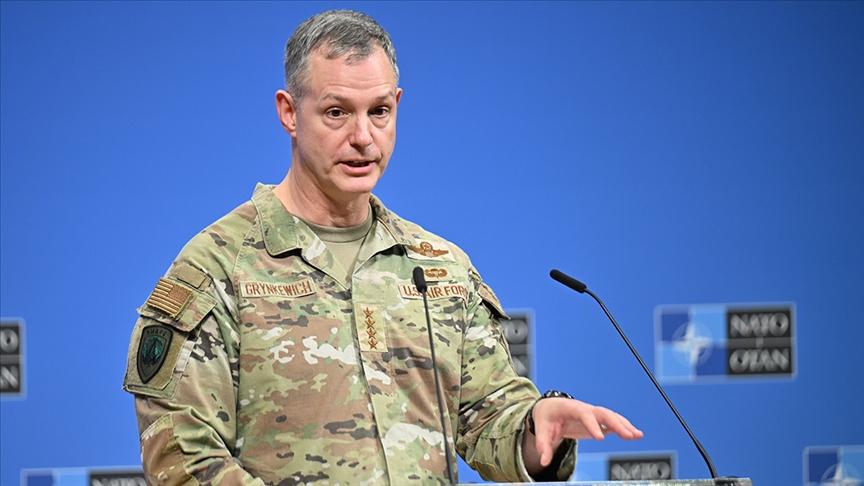
Supreme Allied Commander Europe Grynkewich (Anadolu Ajansı)
Türkiye’s strategic importance and military capabilities within the Allied Command Operations structure are frequently emphasized by the highest command levels. SACEUR General Alexus G. Grynkewich has publicly stated that Türkiye is an extremely important ally with highly capable armed forces. General Grynkewich highlighted the qualitative contributions of Turkish military personnel, noting that some of the Alliance’s most distinguished military leaders have come from Türkiye. In this context, the leadership demonstrated by Turkish command personnel during the Kosovo Force (KFOR) mission is held in high regard within the Alliance, and this operational contribution is gratefully acknowledged by SHAPE. 【73】
Anadolu Ajansı. "Avrupa Müttefik Kuvvetler Yüksek Komutanı Grynkewich: Türkiye son derece önemli bir müttefik." Accessed June 25, 2026. https://www.aa.com.tr/tr/dunya/avrupa-muttefik-kuvvetler-yuksek-komutani-grynkewich-turkiye-son-derece-onemli-bir-muttefik/3762344
Anadolu Ajansı. “NATO'nun Müttefik Kuvvetler Avrupa Komutanı ABD'li General Grynkewich oldu.” Accessed June 25, 2026. https://www.aa.com.tr/tr/dunya/natonun-muttefik-kuvvetler-avrupa-komutani-abdli-general-grynkewich-oldu/3622059
Anadolu Ajansı. “NATO: Ankara ile tam dayanışma içindeyiz.” Accessed June 25, 2026. https://www.aa.com.tr/tr/dunya/nato-ankara-ile-tam-dayanisma-icindeyiz/3851938
Directorate General of Trade Research andRisk Değerlendirme. "Belçika’da NATO’nun Yeni Karargahi İçin 800 Milyon Avro’yu Aşan Dev Yatırım Onaylandı." Ministry of Trade of the Republic of Turkey. Accessed June 25, 2026. https://dtybs.ticaret.gov.tr/blog/post/29159/
Government Offices of Sweden. “This Is NATO.” Government.se. Accessed June 25, 2026. https://www.government.se/government-policy/sweden-in-nato/this-is-nato/
North Atlantic Treaty Organization. “Allied Command Operations (ACO).” NATO. Accessed June 25, 2026. https://www.nato.int/en/about-us/organization/nato-structure/allied-command-operations-aco
North Atlantic Treaty Organization. “NATO History.” NATO. Accessed June 25, 2026. https://www.nato.int/en/about-us/nato-history/a-short-history-of-nato
Pedlow, Gregory W. “The Evolution of NATO’s Command Structure, 1951-2009.” SHAPE, 1-15. Accessed June 25, 2026. https://shape.nato.int/history/information/documents
Supreme Headquarters Allied Powers Europe. "Directorates." SHAPE. Accessed June 25, 2026. https://shape.nato.int/about/leadership-staff/directorates
Supreme Headquarters Allied Powers Europe. "Partnerships." SHAPE. Accessed June 25, 2026. https://shape.nato.int/partnerships
Supreme Headquarters Allied Powers Europe. "Supreme Headquarters Allied Powers Europe." SHAPE. Accessed June 25, 2026. https://shape.nato.int/
Supreme Headquarters Allied Powers Europe. “1949-1952: Creating a Command Structure for NATO.” SHAPE. Accessed June 25, 2026. https://shape.nato.int/page14612223
Supreme Headquarters Allied Powers Europe. “1952-1965: Early Years of SHAPE and Allied Command Europe.” *SHAPE*. Accessed June 25, 2026. https://shape.nato.int/page14622353
Supreme Headquarters Allied Powers Europe. “1952-1965: Early Years of SHAPE and Allied Command Europe.” SHAPE. Accessed June 25, 2026. https://shape.nato.int/page14622353
Supreme Headquarters Allied Powers Europe. “1966-1967: SHAPE Finds a New Home.” SHAPE. Accessed June 25, 2026. https://shape.nato.int/page1463252
Supreme Headquarters Allied Powers Europe. “1967-1979: NATO's Readiness Increases.” SHAPE. Accessed June 25, 2026. https://shape.nato.int/page14642550
Supreme Headquarters Allied Powers Europe. “1979-1989: 'Dual Track' Decade - New Weapons, New Talks.” SHAPE. Accessed June 25, 2026. https://shape.nato.int/page214610458
Supreme Headquarters Allied Powers Europe. “1989-1992: End of Cold War Transforms the Alliance.” SHAPE. Accessed June 25, 2026. https://shape.nato.int/page14652746
Supreme Headquarters Allied Powers Europe. “1990 Onwards.” SHAPE. Accessed June 25, 2026. https://shape.nato.int/about-us/what-is-shape/1990-onwards
Supreme Headquarters Allied Powers Europe. “1992-1994: Transformation Continues, Involvement in the Balkans Grows.” SHAPE. Accessed June 25, 2026. https://shape.nato.int/page14662857
Supreme Headquarters Allied Powers Europe. “1994-1998: One Team, One Mission! NATO Begins Peacekeeping in Bosnia.” SHAPE. Accessed June 25, 2026. https://shape.nato.int/page14672955
Supreme Headquarters Allied Powers Europe. “1998-1999: NATO Enlarges and Faces Another Balkans Crisis.” SHAPE. Accessed June 25, 2026. https://shape.nato.int/page14683036
Supreme Headquarters Allied Powers Europe. “2000-2003: More Balkans Peacekeeping & NATO declares Article 5.” SHAPE. Accessed June 25, 2026. https://shape.nato.int/page14693118
Supreme Headquarters Allied Powers Europe. “2003-2010: NATO's area of operations continues to expand.” SHAPE. Accessed June 25, 2026. https://shape.nato.int/page2146115059
Supreme Headquarters Allied Powers Europe. “2010-Present: The Way Ahead.” SHAPE. Accessed June 25, 2026. https://shape.nato.int/history/2010present-the-way-ahead
Supreme Headquarters Allied Powers Europe. “About us.” SHAPE. Accessed June 25, 2026. https://shape.nato.int/about
Supreme Headquarters Allied Powers Europe. “Brief History.” SHAPE. Accessed June 25, 2026. https://shape.nato.int/about-us/what-is-shape/brief-history
Supreme Headquarters Allied Powers Europe. “Command Group.” SHAPE. Accessed June 25, 2026. https://shape.nato.int/about/leadership-staff/command-group
Supreme Headquarters Allied Powers Europe. “Evolution of the SHAPE Staff Structure, 1951-Present.” *SHAPE*, 1-12. Accessed June 25, 2026. https://shape.nato.int/history/information/documents
Supreme Headquarters Allied Powers Europe. “Historical Documents.” SHAPE. Accessed June 25, 2026. https://shape.nato.int/history/information/documents
Supreme Headquarters Allied Powers Europe. “History Corner.” SHAPE. Accessed June 25, 2026. https://shape.nato.int/history
Supreme Headquarters Allied Powers Europe. “History of the Crest.” SHAPE. Accessed June 25, 2026. https://shape.nato.int/about-us/what-is-shape/history-of-the-crest
Supreme Headquarters Allied Powers Europe. “NATO Force Model.” SHAPE. Accessed June 25, 2026. https://shape.nato.int/page134134653
Supreme Headquarters Allied Powers Europe. “NATO’s Operations 1949 – Present.” SHAPE. 1–8. Accessed June 25, 2026. https://shape.nato.int/history/information/documents
Supreme Headquarters Allied Powers Europe. “National Military Representatives.” SHAPE. Accessed June 25, 2026. https://shape.nato.int/about/leadership-staff/national-military-representatives
Supreme Headquarters Allied Powers Europe. “Nations.” SHAPE. Accessed June 25, 2026. https://shape.nato.int/nations
Supreme Headquarters Allied Powers Europe. “Order of the NATO Flags at SHAPE.” SHAPE. Accessed June 25, 2026. https://shape.nato.int/about-us/what-is-shape/order-of-the-nato-flags-at-shape
Supreme Headquarters Allied Powers Europe. “Partner Nation Military Representatives.” SHAPE. Accessed June 25, 2026. https://shape.nato.int/about/leadership-staff/partner-national-military-representatives
Supreme Headquarters Allied Powers Europe. “SHAPE in France.” SHAPE. Accessed June 25, 2026. https://shape.nato.int/about-us/what-is-shape/shape-in-france
Supreme Headquarters Allied Powers Europe. “Supreme Allied Commander Europe: General Alexus G. Grynkewich.” SHAPE. Accessed June 25, 2026. https://shape.nato.int/saceur-2
Supreme Headquarters Allied Powers Europe. “The Alleged SHAPE ‘Assessment’ of UFOs in 1964: What the Official Records Show.” SHAPE. 1-5. Accessed June 25, 2026. https://shape.nato.int/history/information/documents
Supreme Headquarters Allied Powers Europe. “Visitors.” SHAPE. Accessed June 25, 2026. https://shape.nato.int/visitors
United States Army NATO. “Supreme Headquarters Allied Powers Europe (SHAPE).” United States Army NATO. Accessed June 25, 2026. https://www.usanato.army.mil/About-Us/Articles/Article/1513239/supreme-headquarters-allied-powers-europe-shape/
[1]
North Atlantic Treaty Organization, “Allied Command Operations (ACO),” NATO, accessed 25 June 2026. https://www.nato.int/en/about-us/organization/nato-structure/allied-command-operations-aco
[2]
North Atlantic Treaty Organization, “Allied Command Operations (ACO).”
[3]
Supreme Headquarters Allied Powers Europe, “History of the Crest,” SHAPE, accessed 25 June 2026, https://shape.nato.int/about-us/what-is-shape/history-of-the-crest
[4]
Supreme Headquarters Allied Powers Europe, “History of the Crest.”
[5]
Supreme Headquarters Allied Powers Europe, “History of the Crest.”
[6]
Supreme Headquarters Allied Powers Europe “1949-1952: Creating a Command Structure for NATO,” SHAPE, accessed 25 June 2026. https://shape.nato.int/page14612223
[7]
Gregory W. Pedlow, “The Evolution of NATO’s Command Structure, 1951-2009,” SHAPE, 1, accessed 25 June 2026, https://shape.nato.int/history/information/documents
[8]
Supreme Headquarters Allied Powers Europe, “1952-1965: Early Years of SHAPE and Allied Command Europe,” SHAPE, accessed 25 June 2026. https://shape.nato.int/page14622353
[9]
Gregory W. Pedlow, “The Evolution of NATO’s Command Structure, 1951-2009,” 8.
[10]
Supreme Headquarters Allied Powers Europe, “1966-1967: SHAPE Finds a New Home,” SHAPE, accessed 25 June 2026. https://shape.nato.int/page1463252
[11]
Supreme Headquarters Allied Powers Europe, “1966-1967: SHAPE Finds a New Home.”
[12]
Supreme Headquarters Allied Powers Europe, “SHAPE in France,” SHAPE, accessed 25 June 2026. https://shape.nato.int/about-us/what-is-shape/shape-in-france
[13]
Supreme Headquarters Allied Powers Europe, “SHAPE in France.”
[14]
Supreme Headquarters Allied Powers Europe, “SHAPE in France.”
[15]
North Atlantic Treaty Organization, “NATO History,” NATO, accessed 25 June 2026. https://www.nato.int/en/about-us/nato-history/a-short-history-of-nato
[16]
Supreme Headquarters Allied Powers Europe, “1967-1979: NATO's Readiness Increases,” SHAPE, Accessed: 25 June 2026. https://shape.nato.int/page14642550
[17]
Supreme Headquarters Allied Powers Europe, “1967-1979: NATO's Readiness Increases.”
[18]
Supreme Headquarters Allied Powers Europe, “1979-1989: "Dual Track" Decade - New Weapons, New Talks,” SHAPE, accessed 25 June 2026, https://shape.nato.int/page214610458
[19]
Supreme Headquarters Allied Powers Europe, “1979-1989: "Dual Track" Decade - New Weapons, New Talks.”
[20]
Supreme Headquarters Allied Powers Europe, “1979-1989: "Dual Track" Decade - New Weapons, New Talks.”
[21]
Supreme Headquarters Allied Powers Europe, “1989-1992: End of Cold War Transforms the Alliance,” SHAPE, accessed 25 June 2026. https://shape.nato.int/page14652746
[22]
Supreme Headquarters Allied Powers Europe, “1992-1994: Transformation Continues, Involvement in the Balkans Grows,” SHAPE, accessed 25 June 2026. https://shape.nato.int/page14662857
[23]
Supreme Headquarters Allied Powers Europe, “1994-1998: One Team, One Mission! NATO Begins Peacekeeping in Bosnia,” SHAPE, Accessed: 25 June 2026. https://shape.nato.int/page14672955
[24]
Supreme Headquarters Allied Powers Europe, “1992-1994: Transformation Continues, Involvement in the Balkans Grows.”
[25]
Supreme Headquarters Allied Powers Europe, “1994-1998: One Team, One Mission! NATO Begins Peacekeeping in Bosnia.”
[26]
Supreme Headquarters Allied Powers Europe, “NATO’s Operations 1949 – Present,” SHAPE, 2, accessed 25 June 2026. https://shape.nato.int/history/information/documents
[27]
Supreme Headquarters Allied Powers Europe, “1994-1998: One Team, One Mission! NATO Begins Peacekeeping in Bosnia.”
[28]
Supreme Headquarters Allied Powers Europe, “NATO’s Operations 1949 – Present,” SHAPE, 3-4, accessed 25 June 2026. https://shape.nato.int/history/information/documents
[29]
Supreme Headquarters Allied Powers Europe, “NATO’s Operations 1949 – Present,” SHAPE, 4-5.
[30]
Supreme Headquarters Allied Powers Europe, “NATO’s Operations 1949 – Present,” SHAPE, 5.
[31]
Supreme Headquarters Allied Powers Europe, “Order of the NATO Flags at SHAPE,” SHAPE, accessed 25 June 2026. https://shape.nato.int/about-us/what-is-shape/order-of-the-nato-flags-at-shape
[32]
Supreme Headquarters Allied Powers Europe, “Order of the NATO Flags at SHAPE.”
[33]
Supreme Headquarters Allied Powers Europe, “Order of the NATO Flags at SHAPE.”
[34]
North Atlantic Treaty Organization, “Allied Command Operations (ACO),” NATO, accessed 25 June 2026. https://www.nato.int/en/about-us/organization/nato-structure/allied-command-operations-aco
[35]
North Atlantic Treaty Organization, “Allied Command Operations (ACO).”
[36]
North Atlantic Treaty Organization, “Allied Command Operations (ACO).”
[37]
North Atlantic Treaty Organization, “Allied Command Operations (ACO).”
[38]
Supreme Headquarters Allied Powers Europe, “Command Group,” SHAPE, accessed 25 June 2026. https://shape.nato.int/about/leadership-staff/command-group
[39]
Supreme Headquarters Allied Powers Europe, “1949-1952: Creating a Command Structure for NATO,” SHAPE, accessed 25 June 2026. https://shape.nato.int/page14612223
[40]
Supreme Headquarters Allied Powers Europe, “2000-2003: More Balkans Peacekeeping & NATO declares Article 5,” SHAPE, erişim: 25 Haziran 2026. https://shape.nato.int/page14693118
[41]
Supreme Headquarters Allied Powers Europe, “Supreme Allied Commander Europe: General Alexus G. Grynkewich,” SHAPE, erişim: 25 Haziran 2026. https://shape.nato.int/saceur-2
[42]
Supreme Headquarters Allied Powers Europe, “1949-1952: Creating a Command Structure for NATO.”
[43]
Supreme Headquarters Allied Powers Europe, “1967-1979: NATO's Readiness Increases,” SHAPE, accessed 25 June 2026. https://shape.nato.int/page14642550
[44]
Supreme Headquarters Allied Powers Europe, “Evolution of the SHAPE Staff Structure, 1951-Present,” SHAPE, 10, accessed 25 June 2026. https://shape.nato.int/history/information/documents
[45]
Supreme Headquarters Allied Powers Europe, “Evolution of the SHAPE Staff Structure, 1951-Present,” SHAPE, 10.
[46]
Supreme Headquarters Allied Powers Europe, “Evolution of the SHAPE Staff Structure, 1951-Present,” SHAPE, 11.
[47]
Supreme Headquarters Allied Powers Europe. “Command Group.” SHAPE. Accessed: 25 June 2026. https://shape.nato.int/about/leadership-staff/command-group
[48]
Supreme Headquarters Allied Powers Europe, “Evolution of the SHAPE Staff Structure, 1951-Present,” SHAPE, 7.
[49]
Supreme Headquarters Allied Powers Europe, “Command Group,” SHAPE, erişim: 25 Haziran 2026. https://shape.nato.int/about/leadership-staff/command-group
[50]
Supreme Headquarters Allied Powers Europe, “Evolution of the SHAPE Staff Structure, 1951-Present,” SHAPE, 11.
[51]
Supreme Headquarters Allied Powers Europe, “Evolution of the SHAPE Staff Structure, 1951-Present,” SHAPE, 11.
[52]
Supreme Headquarters Allied Powers Europe, “Partnerships,” SHAPE, accessed 25 June 2026. https://shape.nato.int/partnerships
[53]
Supreme Headquarters Allied Powers Europe, “National Military Representatives,” SHAPE, accessed 25 June 2026. https://shape.nato.int/about/leadership-staff/national-military-representatives
[54]
North Atlantic Treaty Organization, “Allied Command Operations (ACO),” NATO, accessed 25 June 2026. https://www.nato.int/en/about-us/organization/nato-structure/allied-command-operations-aco
[55]
Supreme Headquarters Allied Powers Europe, “NATO Force Model,” SHAPE, accessed 25 June 2026. https://shape.nato.int/page134134653
[56]
Supreme Headquarters Allied Powers Europe, “NATO Force Model.”
[57]
Supreme Headquarters Allied Powers Europe, “NATO Force Model.”
[58]
Supreme Headquarters Allied Powers Europe, “NATO Force Model.”
[59]
Supreme Headquarters Allied Powers Europe, “Partnerships,” SHAPE, accessed 25 June 2026. https://shape.nato.int/partnerships
[60]
Supreme Headquarters Allied Powers Europe, “Partner Nation Military Representatives,” SHAPE, accessed 25 June 2026. https://shape.nato.int/about/leadership-staff/partner-national-military-representatives
[61]
Supreme Headquarters Allied Powers Europe, “Partnerships.”
[62]
Government Offices of Sweden, “This Is NATO,” Government.se, erişim: 25 Haziran 2026. https://www.government.se/government-policy/sweden-in-nato/this-is-nato/
[63]
Government Offices of Sweden, “This Is NATO.”
[64]
Supreme Headquarters Allied Powers Europe, “1952-1965: Early Years of SHAPE and Allied Command Europe,” SHAPE, accessed 25 June 2026. https://shape.nato.int/page14622353
[65]
Gregory W. Pedlow, “The Evolution of NATO’s Command Structure, 1951-2009,” SHAPE, 3, accessed 25 June 2026, https://shape.nato.int/history/information/documents
[66]
Supreme Headquarters Allied Powers Europe, “1979-1989: "Dual Track" Decade - New Weapons, New Talks,” SHAPE, accessed 25 June 2026. https://shape.nato.int/page214610458
[67]
North Atlantic Treaty Organization, “Allied Command Operations (ACO),” NATO, accessed 25 June 2026. https://www.nato.int/en/about-us/organization/nato-structure/allied-command-operations-aco
[68]
Supreme Headquarters Allied Powers Europe, “National Military Representatives,” SHAPE, accessed 25 June 2026. https://shape.nato.int/about/leadership-staff/national-military-representatives
[69]
Supreme Headquarters Allied Powers Europe, “1989-1992: End of Cold War Transforms the Alliance,” SHAPE, accessed 25 June 2026. https://shape.nato.int/page14652746
[70]
Supreme Headquarters Allied Powers Europe, “2003-2010: NATO's area of operations continues to expand,” SHAPE, accessed 25 June 2026. https://shape.nato.int/page2146115059
[71]
Anadolu Ajansı, “NATO: Ankara ile tam dayanışma içindeyiz,” accessed 25 June 2026. https://www.aa.com.tr/tr/dunya/nato-ankara-ile-tam-dayanisma-icindeyiz/3851938
[72]
Government Offices of Sweden, “This Is NATO,” Government.se, accessed 25 June 2026. https://www.government.se/government-policy/sweden-in-nato/this-is-nato/
[73]
Anadolu Ajansı, “Avrupa Müttefik Kuvvetler Yüksek Komutanı Grynkewich: Türkiye son derece önemli bir müttefik,” accessed 25 June 2026. https://www.aa.com.tr/tr/dunya/avrupa-muttefik-kuvvetler-yuksek-komutani-grynkewich-turkiye-son-derece-onemli-bir-muttefik/3762344


Abbreviation | SHAPE | ||||||||
|---|---|---|---|---|---|---|---|---|---|
Establishment | 2 April 1951 | ||||||||
Founder/First Commander | General Dwight D. Eisenhower | ||||||||
Initial Headquarters | Rocquencourt France | ||||||||
Current Headquarters | Casteau Mons Belgium | ||||||||
Parent Organization | NATO Allied Command Operations | ||||||||
Primary Mission | plan and manage NATO military operations | ||||||||
Highest Commander | SACEUR | ||||||||
Motto | Awareness is the price of freedom. | ||||||||
No Discussion Added Yet
Start discussion for "Supreme Headquarters of the Allied Forces of Europe" article
Core Mission
History and Symbolism of SHAPE's Crest
Establishment and French Period (1951–1967)
Relocation from France to Belgium (1966–1967)
SHAPE During the Cold War: Strategic Doctrines and Activities (1967–1989)
Post-Cold War Transformation and Peacekeeping Operations in the Balkans (1989–2003)
Arrangement of NATO Flags at SHAPE
Allied Command Operations (ACO) Concept and SHAPE’s Strategic Position
Hierarchical Structure and Leadership: SACEUR, DSACEUR, and Chief of Staff (COS)
SHAPE Military Command Structure, Tactical Units, and Directorates
NATO Force Model and Response Forces
International Military Partnerships, Coordination Centers, and Training Activities
SHAPE and Türkiye: Historical Process, Institutional Structure, and Operational Activities