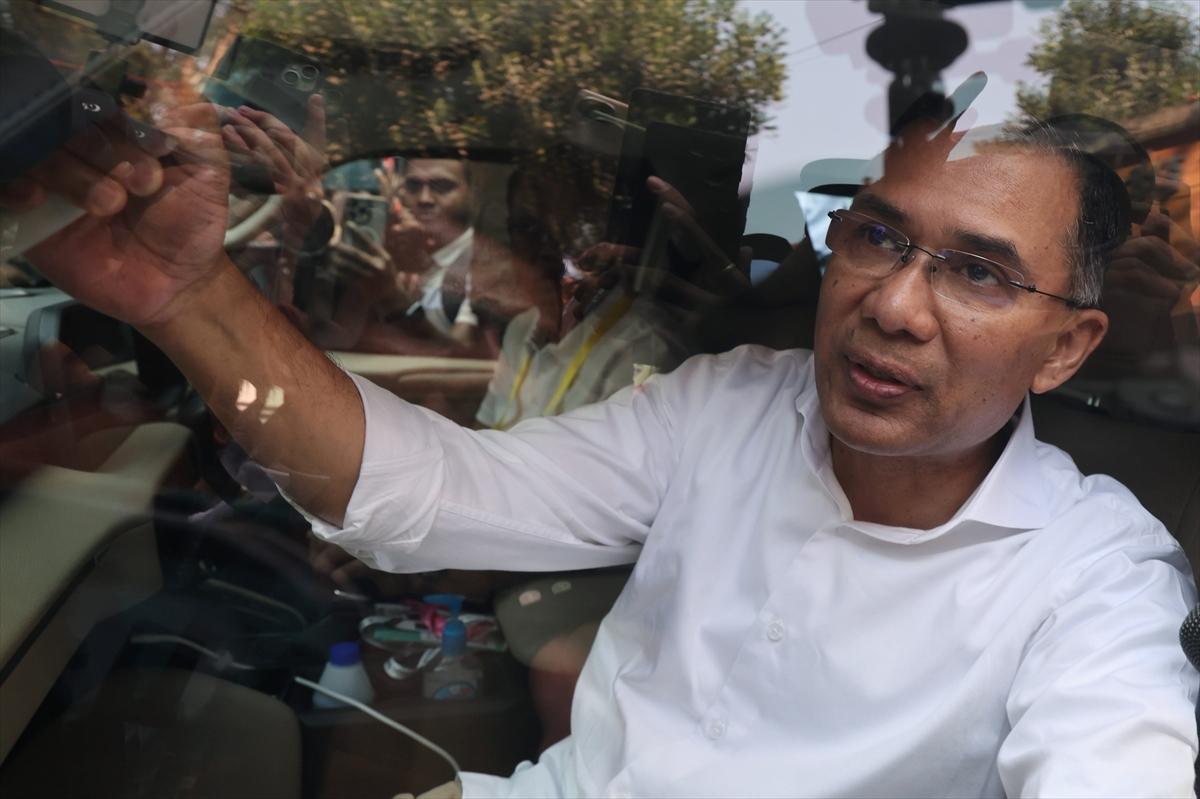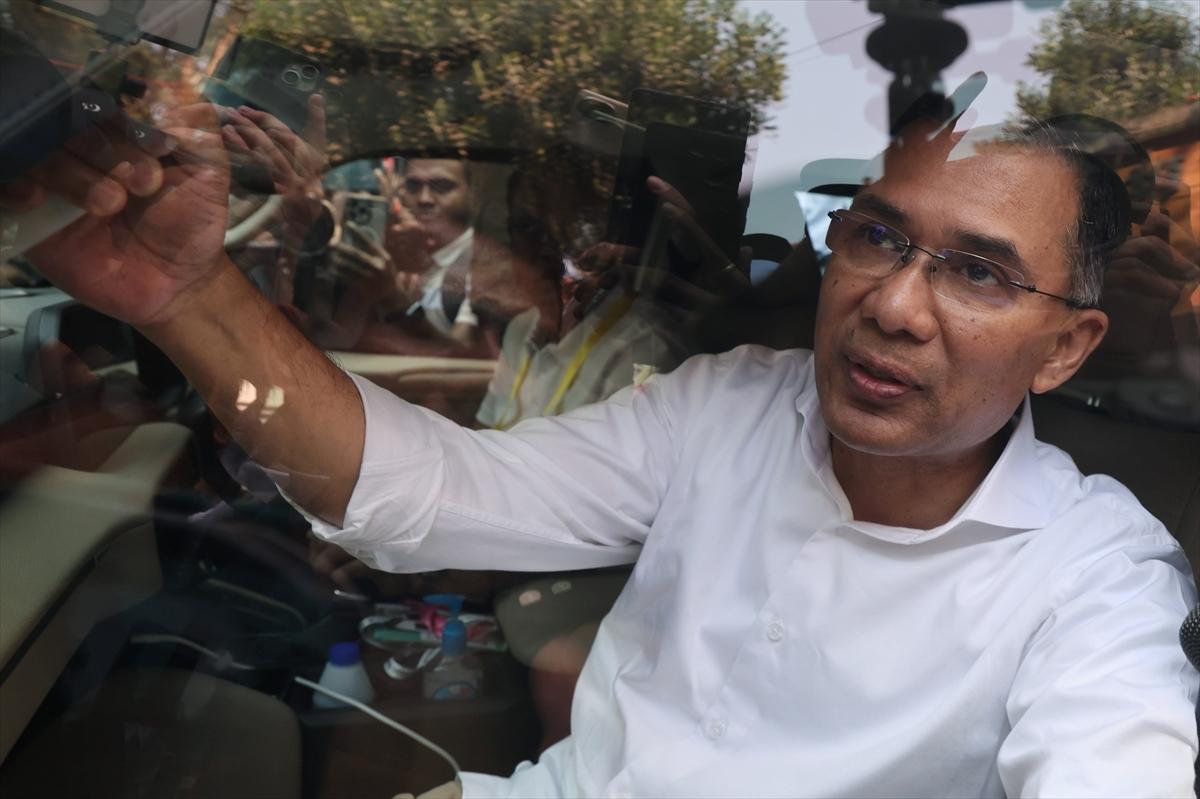

Doğum tarihi | 1965-11-20 | ||||||||
|---|---|---|---|---|---|---|---|---|---|
Babası | Ziaur Rahman | ||||||||
Place of Birth | Bangladesh Dhaka | ||||||||
Political Party(s) | Bangladesh Nationalist Party (BNP) | ||||||||
Position(s) | Deputy General Secretary of the BNP / Prime Ministerial Candidate | ||||||||
Tarik Rahman, a prominent figure in Bangladesh’s political history as the eldest son of the Zia family one of the country’s founding political dynasties. He is the son of former President Ziaur Rahman who founded the Bangladesh Nationalist Party (BNP) in 1978 and emerged as a key figure in Bangladesh’s independence movement. Ziaur Rahman was assassinated in a military coup in 1981.
Rahman’s mother, Khaleda Zia, became Bangladesh’s first female prime minister and served her first term from 1991 to 1996. She later served a second term. Khaleda Zia’s political career began after her husband’s death in 1981. In this context Tarik Rahman is a bearer of a political legacy as the son of both a military-origin president and a prime minister.
The Zia family has been influential in Bangladeshi politics for decades and the country’s political competition has largely been shaped by this family’s rivalry with the Awami League led by Sheikh Hasina. Tarik Rahman’s political positioning has developed within this historical and institutional framework of competition.
Tarik Rahman began active political involvement within the Bangladesh Nationalist Party in 2001 at the start of his mother’s second term as prime minister. This period coincided with his mid-thirties. In 2002 he was promoted to a senior position within the party.
The opposition characterized this rise as a clear example of nepotism. Over time Rahman’s role within the party came to be described as that of an enforcer and a figure who maintained party discipline. During this period allegations surfaced that he had used his position for personal gain but Rahman denied these corruption charges.
In 2004 he was implicated in connection with a fatal hand-grenade attack. The case later became the subject of legal developments and he was eventually acquitted of the charges in subsequent years.
In 2007 he was arrested during the military-backed interim government on corruption charges. He claimed to have been subjected to torture prior to trial. He spent a total of 18 months in prison before being released.
After his release he moved to London and entered a prolonged period of exile. He settled in London in 2008 for medical treatment and remained there. Multiple criminal cases were filed against him and he was convicted in absentia in some. One of these cases alleged his involvement in a plot to assassinate Sheikh Hasina.
Following his mother Khaleda Zia’s imprisonment in 2018 Rahman assumed de facto leadership of the BNP and became interim party president. For 17 years while in exile he directed the party’s strategies and policies from abroad. In 2024 after Sheikh Hasina was removed from power all legal barriers against him were lifted and previous convictions were overturned.
Tarik Rahman returned to Bangladesh on 25 December 2025 after 17 years in exile. His return occurred ahead of the 2026 general elections and had a symbolic impact on the political atmosphere. Five days later his mother Khaleda Zia passed away.
On 9 January 2026 he became the official leader of the Bangladesh Nationalist Party. The BNP entered the February 2026 general elections under his leadership. The interim government’s ban on Sheikh Hasina’s Awami League elevated the BNP to the position of the leading party in the elections.
Rallies organized during the campaign drew large crowds and a notable increase in party mobilization was observed. At age 60 Rahman declared confidence that he would secure a majority to form government alone.
Rahman’s return exposed internal disciplinary problems within the party. It was reported that in 79 of 300 constituencies 92 internal dissenting candidates ran against the official BNP nominees. This indicated ongoing factionalism within the party.
Public data showed that BNP activists were involved in the majority of political violence incidents recorded since 5 August 2024. This has intensified debates about the party’s capacity for internal control and discipline.
During exile Rahman worked closely with a close circle based in London and after his return he largely relied on this team to manage campaign communications. Internal party assessments have raised criticism that loyalty has been prioritized over merit. Tensions have been reported between long-standing local cadres and the advisory circle formed during exile.
During the election campaign Rahman pledged to restore democratic governance strengthen the rule of law and combat corruption. In a televised address he apologized for past mistakes and promised a government based on accountability.
His campaign platform included a “family card” initiative to provide monthly cash support to women and the unemployed. Large-scale tree planting projects and regional development promises were also presented to the public.
His anti-corruption rhetoric has been debated in light of past allegations against him and the party’s candidate selections. In response Rahman has declared that if elected he will implement principles of transparency accountability and institutional reform in state governance.
The Bangladesh Nationalist Party won enough seats in the 2026 general elections to secure a majority and Tarik Rahman is set to become prime minister. The election marked the first general election held after the 2024 uprising.
Rahman framed the electoral process as the reconstruction of democratic stability and claimed it would usher in a new era following authoritarian rule. During the campaign he asserted that peace and stability would be restored.
Al Jazeera. "Is BNP’s Tarique Rahman the Change Post-Hasina Bangladesh Is Looking For?" February 10, 2026. Accessed February 13, 2026. https://www.aljazeera.com/news/2026/2/10/is-bnps-tarique-rahman-the-change-post-hasina-bangladesh-is-looking-for.
BBC News. "Who Is Tarique Rahman, Set to Become Bangladesh’s Next PM?" 2026. Accessed February 13, 2026. https://www.bbc.com/news/articles/cj98n7k7rmgo.
Deutsche Welle (DW). "Bangladesh: Tarique Rahman Poised to Be Next PM." 2026. Accessed February 13, 2026. https://www.dw.com/en/bangladesh-tarique-rahman-poised-to-be-next-pm/a-75942949.
NDTV. "What Tarique Rahman's Win Means For India." Accessed February 13, 2026. https://www.ndtv.com/india-news/why-india-is-watching-bangladesh-election-the-first-since-2024-uprising-10992841.
TIME. "What Bangladesh’s New Leader Tarique Rahman Means for South Asia and the World." 2026. Accessed February 13, 2026. https://time.com/7378368/bangladesh-election-result-bnp-tarique-rahman-interview-takeaways.

Doğum tarihi | 1965-11-20 | ||||||||
|---|---|---|---|---|---|---|---|---|---|
Babası | Ziaur Rahman | ||||||||
Place of Birth | Bangladesh Dhaka | ||||||||
Political Party(s) | Bangladesh Nationalist Party (BNP) | ||||||||
Position(s) | Deputy General Secretary of the BNP / Prime Ministerial Candidate | ||||||||
Entry into Politics and Internal Rise (2001–2007)
Arrest Judicial Proceedings and Exile (2007–2025)
Return to the Country and Ascension to Leadership (December 2025–January 2026)
Party Discipline Institutional Issues and Organizational Structure
Political Rhetoric Policy Proposals and Conceptual Framework
The 2026 Elections and Ascension Process