This article was automatically translated from the original Turkish version.
+2 More
Tunceli (Pertek) Sungur Bey Camii
Location | Pertek district Tunceli Province | ||||||||
|---|---|---|---|---|---|---|---|---|---|
Construction Date(s) | 1573 | ||||||||
Patron | Sungur Bey | ||||||||
Period(s) | Ottoman Period | ||||||||
Building Material | Regularly cut stone | ||||||||
Plan Type | Square plan | ||||||||
Sungur Bey Camii is located in the center of Pertek district, Tunceli province, Türkiye. Pertek district was separated from Elazığ province in 1935 and attached to Tunceli. The building is currently situated within the urban settlement of the district and remains in active use for worship.

Tunceli Sungur Bey Camii (Culture Portal)
According to an inscription on the entrance door on the northern facade, the structure was built in 1573 (H.981) during the Ottoman period by Sungur Bey. The inscription provides direct information regarding the construction date and the founder. Sources indicate that the mosque has been continuously used as a place of worship since its construction and has undergone various repairs over time.
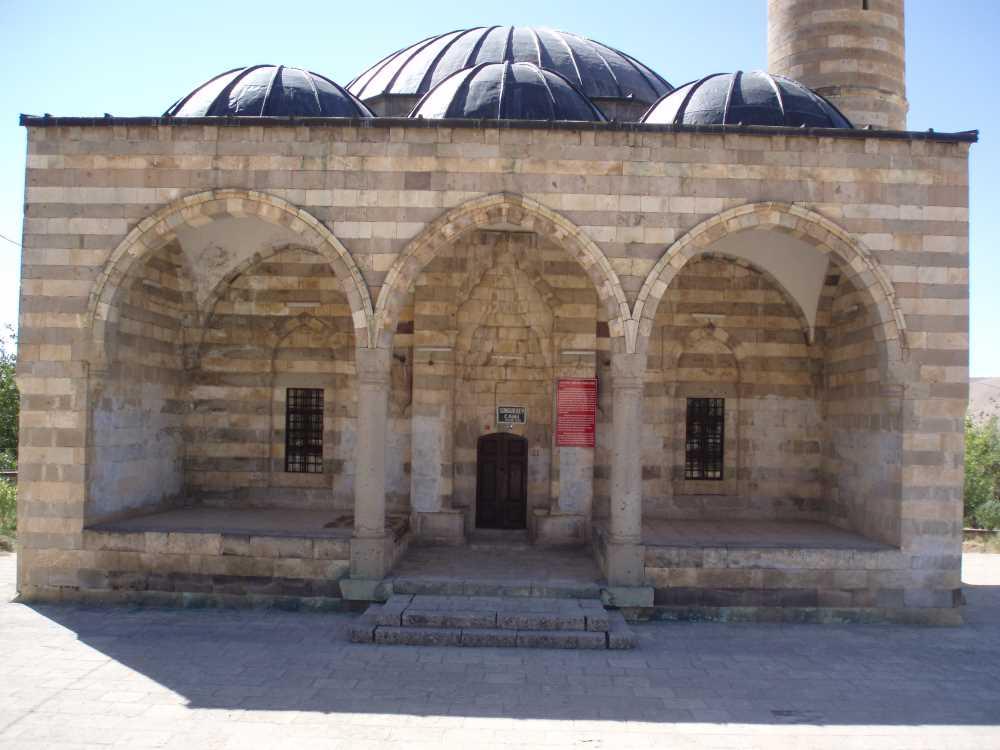
Sungur Bey Camii was constructed with a square plan and features a single dome as its roof. Regularly cut stone was used in the construction of the building. The northern facade contains the final congregational space, which also serves as the main entrance to the mosque.
Pointed arch windows are located on the eastern, western and southern facades, providing natural illumination. Adjacent to the northeastern corner of the building is a single-minaret minaret. The shaft of the minaret is constructed of regular stone. Decorative elements in the overall architectural structure of the mosque are very limited. The construction techniques, materials used and plan characteristics of the building exemplify the Ottoman stone architecture tradition.
Sungur Bey Camii has been restored under the supervision of the Tunceli Provincial Directorate of Culture and Tourism. As a result of the restoration works, the structure has been preserved, its original architectural fabric has been maintained, and the mosque continues to be used for worship. Maintenance and conservation measures are carried out by relevant public institutions.
Accessed November 26, 2025.
Ministry of Culture and Tourism of the Republic of Turkey. “Sungur Bey Camii.” Türkiye Kültür Portalı. Accessed June 24, 2025. https://www.kulturportali.gov.tr/turkiye/tunceli/gezilecekyer/sungur-bey-camii.
Pertek Kaymakamlığı. “Sungur Bey Camii.” Accessed June 24, 2025. http://www.pertek.gov.tr/sungur-bey-camii.
T.C. Kültür ve Turizm Bakanlığı. "Zeytin ve Zeytinyağı Kültürü – Görsel Arşiv." Kültür Portalı. Accessed June 28, 2025.
T.C. Kültür ve Turizm Bakanlığı. "Zeytinyağı Üretiminde Geleneksel Presleme Yöntemi." Kültür Portalı. Accessed June 28, 2025.
T.C. Ministry of Culture and Tourism. "Sungur Bey Camii."Tunceli İl Directorate of Culture and Tourism. Accessed June 24, 2025. https://tunceli.ktb.gov.tr/TR-57299/sungurbey-camii.html.
Türkiye Diyanet Vakfı İslâm Ansiklopedisi. "Tunceli." Accessed June 24, 2025. https://islamansiklopedisi.org.tr/tunceli.

Tunceli (Pertek) Sungur Bey Camii
Location | Pertek district Tunceli Province | ||||||||
|---|---|---|---|---|---|---|---|---|---|
Construction Date(s) | 1573 | ||||||||
Patron | Sungur Bey | ||||||||
Period(s) | Ottoman Period | ||||||||
Building Material | Regularly cut stone | ||||||||
Plan Type | Square plan | ||||||||
No Discussion Added Yet
Start discussion for "Tunceli (Pertek) Sungur Bey Camii" article
History
Architectural Features
Conservation Status