

 Recently Added:
This article was automatically translated from the original Turkish version.
The Process for a Terror-Free Türkiye is a multi-stage demilitarization program initiated by the Republic of Türkiye State with the aim of completely eliminating the armed presence of the terrorist organization PKK and removing both internal and external terrorist threats against Türkiye. This process is implemented as a comprehensive state policy encompassing security reforms, political dialogue, social consensus, disarmament, and constitutional adjustments.
This process, a critical turning point in Türkiye’s half-century-long struggle against terrorism, was launched to neutralize internal security threats directed at the state, ensure regional stability, enhance political stability, and strengthen social cohesion. The Process for a Terror-Free Türkiye represents a simultaneous transformation across military, political, and social domains led by the state.
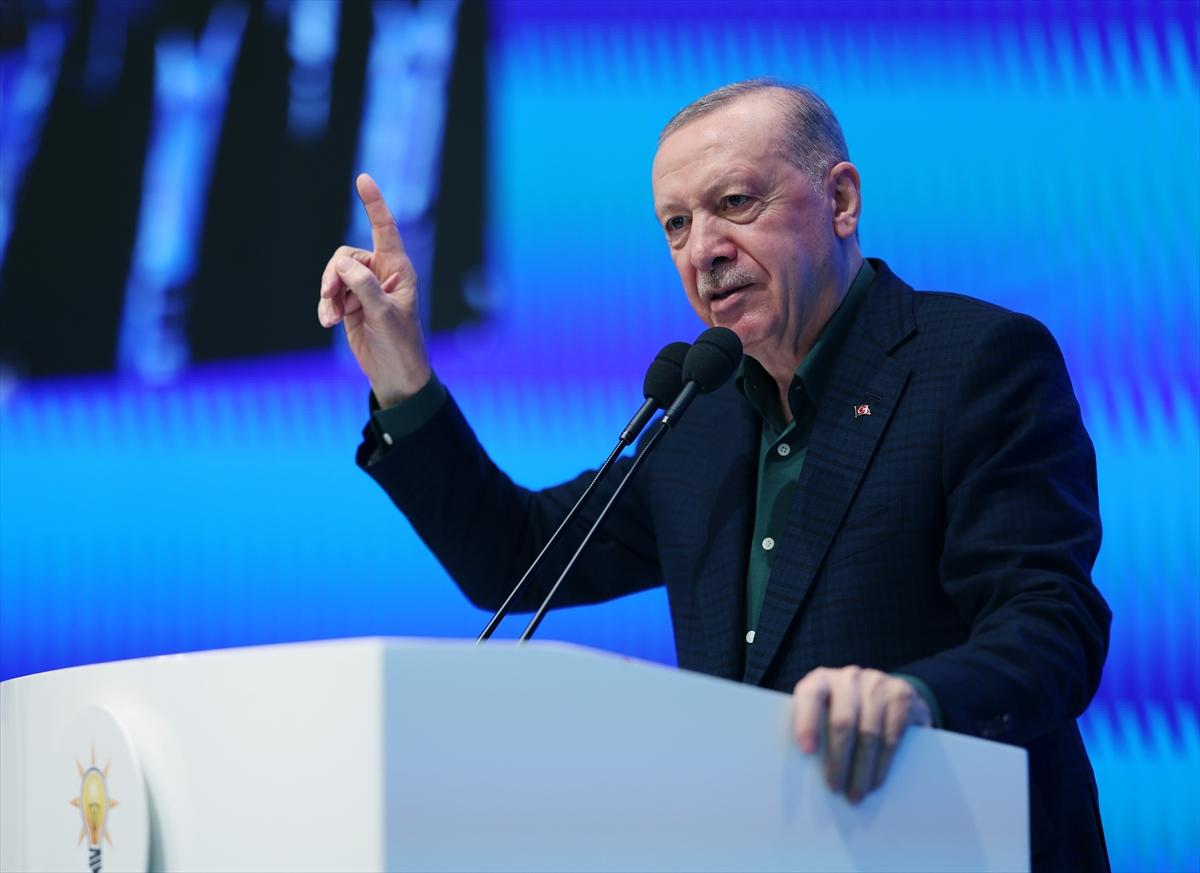
President and AK Party General Secretary Recep Tayyip Erdoğan at his party’s 32nd Consultation and Evaluation Meeting in Kızılcahamam on 12 July 2025 – (Anadolu Agency)
The initiation of the process was significantly influenced by advancements in Türkiye’s defense industry and military successes achieved in the fight against terrorism. In particular, following the purge of FETÖ from state institutions, the effectiveness of security units was enhanced, and the operational scope of the PKK terrorist organization was narrowed both within Türkiye’s borders and beyond.
On 1 October 2024, during the opening of the Grand National Assembly of Türkiye, MHP General Chairman Devlet Bahçeli’s handshake with DEM Party members and his subsequent statements were recorded as the first political step of the process. Bahçeli called out to those who claim “nothing can happen unless the terrorist leader is involved,” saying, “Remove his isolation, let him come to the Assembly and declare that the organization has been dissolved.” With these remarks, Bahçeli signaled the parliamentary arena as the platform for the termination of the PKK terrorist organization.
This call was adopted by President Recep Tayyip Erdoğan, and the process was subsequently pursued as the joint will of the People’s Alliance. Erdoğan emphasized that the process was not based on negotiation or compromise, stating, “Whatever we do, we do for Türkiye. Our project for a Terror-Free Türkiye is carried out without disgracing the honor of our state or forcing our nation to bow its head.”
The DEM Party delegation actively and constructively participated in the process. Following the Imralı talks with the terrorist leader Abdullah Öcalan, the party publicly shared appeals for the PKK to lay down arms and disband. DEM Party representatives affirmed that the solution framework lies within the Grand National Assembly and engaged in direct contact with all political parties within the parliamentary setting.
The Process for a Terror-Free Türkiye advanced on the foundations of restructuring the state’s internal security policies, extending counter-terrorism strategies beyond national borders, and strengthening the democratic political sphere. During this process, Türkiye adopted the principle of rejecting interference by third-party actors and pursued the initiative strictly in accordance with its national interests.
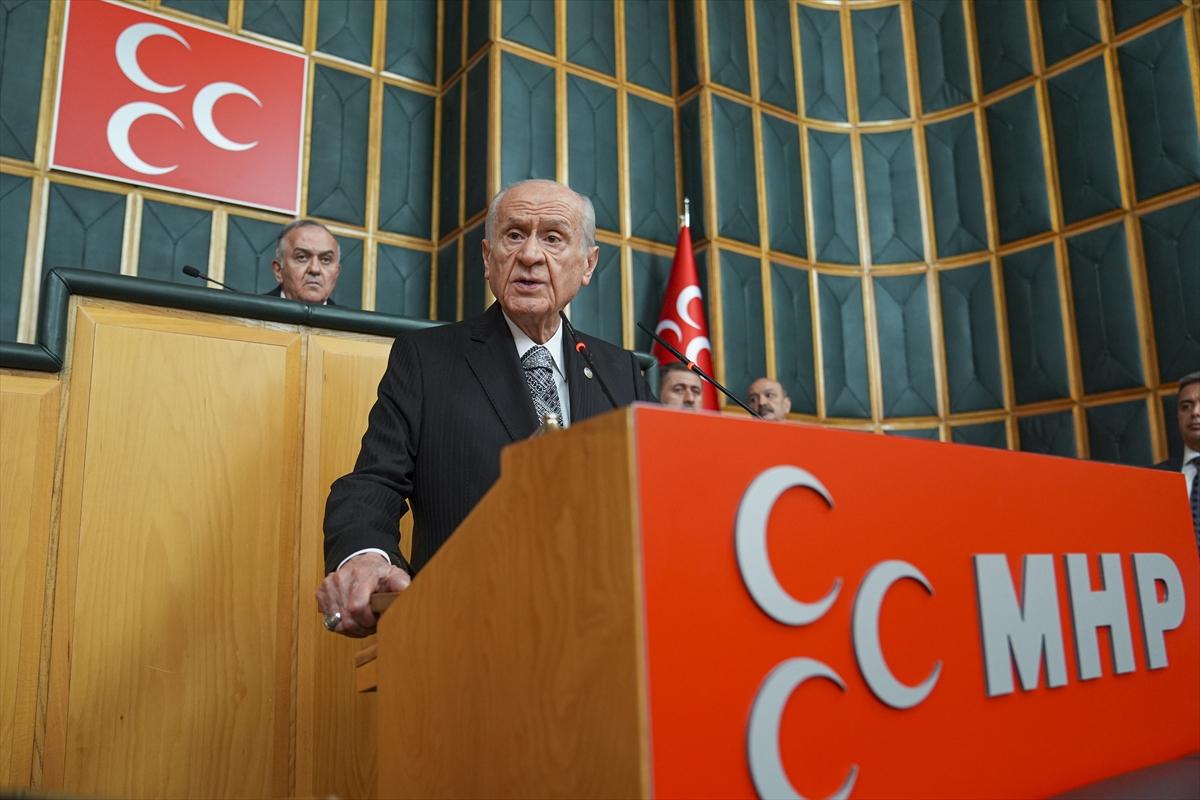
MHP General Chairman Devlet Bahçeli – (Anadolu Agency)
MHP General Chairman Devlet Bahçeli first articulated his calls to initiate the political phase of the Process for a Terror-Free Türkiye during a party group meeting in the Grand National Assembly on 22 October 2024. In his speech, Bahçeli emphasized that Türkiye did not require a peace process and called on Abdullah Öcalan, the terrorist leader, to publicly declare in a DEM Party group meeting in the Assembly that terrorism had ended and the organization had been dissolved, provided his isolation was lifted. Bahçeli stated, “Neither Kandil nor Edirne—the address must extend from Imralı to the DEM. This heavy and historic terrorist issue must be entirely removed from the national agenda. We have reached the point of decisive action. For the sake of our homeland, our nation, our state, our flag, our shared future, and full independence, we are prepared to endure this burden to the very end. We are determined, we are resolute, and we are ready to make every sacrifice, endure every hardship, and take every necessary step. Before history, I swear: we are committed.”
Bahçeli stated that, in the context of the goal of a politics without terrorism, a country without terrorism, and a future without terrorism, everyone must unite: “We are not placing our hands under the stone—we are placing our bodies, and we are here.” This appeal established a political foundation for resolving the process under the umbrella of the Grand National Assembly.
Bahçeli’s call has been advanced through direct steps within the Assembly framework. On 2 January 2025, the DEM Party delegation was received by TBMM Speaker Numan Kurtulmuş, during which information was provided regarding the Imralı visits and the legal framework for the process within the Assembly.
Bahçeli emphasized that similar resolution models have never brought Türkiye to a conclusion, stating: “The crux of the matter is this: Accepting the demands of a terrorist organization amounts to capitulation to threat. Moreover, it will not yield any result other than provoking new attacks. Just as it is wrong to show that society submits to arms and violence, it is equally erroneous to refuse taking democratic steps aimed at improving the conditions that breed terrorism. The media’s stance and attitude are also of great importance. Presenting terrorist acts as successes of terrorists or as a climate of public panic is equivalent to pouring water into the mill of separatist organizations. Two factors undermine the morale and weaken the resistance of terrorists: one is the emergence of doubts about their core claims, and the other is being convinced that armed actions are doomed to failure. The armed actions of the separatist terrorist organization PKK are destined to fail. No destination can be reached through terrorism, none will be reached, and none can ever be reached. Türkiye will never consent to separatist terrorism; negotiations and ceasefire demands will not work. While waging an uncompromising struggle against terrorism on one side, the most rational course is to implement democratic reforms and social and economic adjustments on the other. There is no common ground between our Kurdish brothers and the terrorist organization.”
The MHP’s clear stance on the process has been that all state institutions must actively carry it forward. Bahçeli stated that if terrorist leader Abdullah Öcalan declares the end of terrorism, necessary legal measures—including the right to hope—can be enacted within the legal framework. The contacts conducted with the DEM Party have continued along the political dialogue path initiated by Bahçeli’s “outstretched hand” appeal.
As part of the Process for a Terrorism-Free Türkiye, the DEM Party delegation conducted a series of meetings with terrorist leader Abdullah Öcalan at Imrali Prison. The first meeting took place on 28 December 2024. During the meeting, attended by DEM Party Members of Parliament Sırrı Süreyya Önder from Istanbul and Pervin Buldan from Van, Öcalan stated he was “ready to take positive steps and make the call.” In its post-meeting statement, the DEM Party affirmed: “Strengthening Turkish-Kurdish brotherhood is a historical responsibility. The most essential foundation for the success of the process is the Grand National Assembly.”
The second Imralı meeting was held on 22 January 2025. It was emphasized once again that the process must advance under the umbrella of the Grand National Assembly and that all political circles must take initiative, free from narrow and temporary calculations. Terrorist leader Abdullah Öcalan stated: “I possess the competence and determination to make the necessary contribution to the new paradigm endorsed by Mr. Bahçeli and Mr. Erdoğan.”
The third and critical Imralı meeting took place on 27 February 2025. During this meeting, terrorist leader Abdullah Öcalan transmitted the document titled “Call for Peace and Democratic Society” to public opinion through the Imralı delegation. In this document, it was stated that PKK’s historical mission had been fulfilled, that its structure rooted in real-socialist influence had lost its meaning, and that the organization must dissolve itself. Öcalan emphasized that PKK must convene a congress to adopt a decision to dissolve and that all armed groups must lay down their weapons.
Following the Imralı meetings, the DEM Party established contact with all political parties represented in the Assembly to advance the process through consultation. The DEM Party delegation held discussions with TBMM Speaker Numan Kurtulmuş, presented their proposals regarding the process, and requested support for the establishment of a commission within the Assembly.
Abdullah Öcalan’s call directly triggered the convening of the 12th Extraordinary Congress of the Terrorist Organization PKK and the initiation of its dissolution process. In his appeal, Öcalan stated: “As every modern society and party that has not been forcibly extinguished does voluntarily, convene your congress and make a decision to integrate with the state and society; all groups must lay down their arms and PKK must dissolve itself.”
DEM Party Spokesperson Ayşegül Doğan, in her statement on 9 May 2025 regarding the process, stated that after PKK’s decision to dissolve, steps must be taken toward democratization. Doğan said: “We are ready to fulfill all our responsibilities with courage, sacrifice, and determination to realize a Türkiye where equal, just, and lasting peace has been achieved and our vision of a democratic society has come to life.”
Following terrorist leader Abdullah Öcalan’s 27 February 2025 “Call for Peace and Democratic Society,” the Terrorist Organization PKK convened its 12th Extraordinary Congress from 5 to 7 May 2025. The Congress decided to dissolve the organization. This decision was publicly announced with the statement that “PKK’s historical mission has been fulfilled, its organizational structure has been rendered obsolete, and its armed struggle method has been terminated.”
The dissolution decision has been regarded as the most critical phase of the Process for a Terrorism-Free Türkiye. With this decision, the Terrorist Organization PKK declared that it had ended both its name and its armed existence. The organization’s dissolution statement announced that “all activities carried out under the name of PKK are to be terminated.” It was stated that terrorist leader Abdullah Öcalan’s call was decisive in reaching this decision.
Following the decision to disband, details regarding how the disarmament process would be carried out were disclosed to the public. It was decided that the surrender process would be conducted under the supervision of the United Nations and monitored by international observers. The regions designated for the surrender of weapons are the Amadiya district of Duhok province in northern Iraq, the Binar and Köysancak areas of Erbil, and the Seyid Sadık district of Sulaymaniyah. The surrender process will be carried out in accordance with a three-phase plan.
Shortly after the disbandment decision, the first statement from the MHP was made by Deputy Group Chairman Celal Adan. Adan stated, “Thanks to the steel will of our leader Mr. Devlet Bahçeli, our deepest wound has been healed and the cycle of blood and hatred has come to an end.”
In the subsequent stages of the process, the terrorist organization PKK began its disarmament and evacuation of camps, with state authorities ensuring that this process was conducted transparently, under UN supervision, and according to a clear timetable.
Following the decision to disband adopted at the 12th Congress of the terrorist organization PKK, the disarmament process commenced. This process was implemented under the supervision of international observers and the United Nations, in accordance with a three-phase surrender plan. The regions designated for the surrender of weapons are the Amadiya district of Duhok province in northern Iraq, the Binar and Köysancak areas of Erbil, and the Seyid Sadık district of Sulaymaniyah.
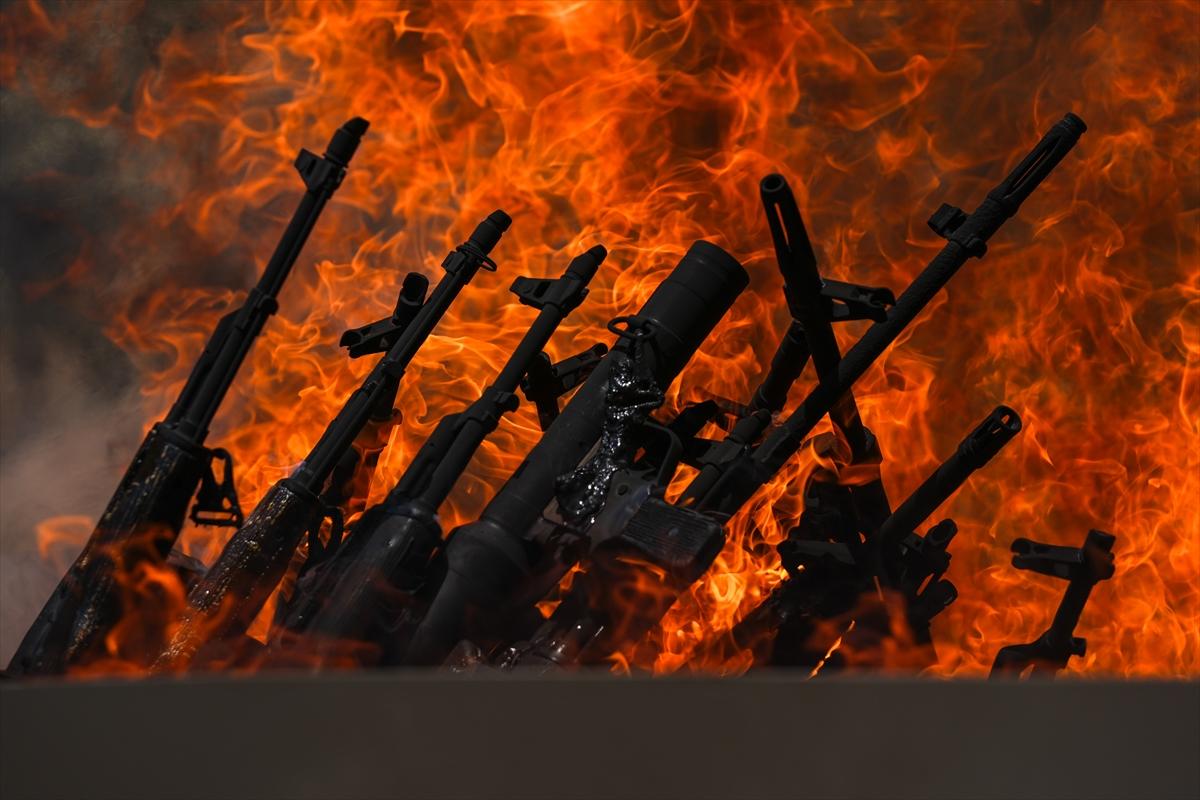
Weapons destroyed by a group from the terrorist organizationPKK in the city of Sulaymaniyah, Iraq, on 11 July 2025 – (Anadolu Agency)
The first concrete step in the disarmament process was taken on 11 July 2025 during a ceremony held in Sulaymaniyah. During this ceremony, a group of 30 members of the terrorist organization PKK destroyed their weapons. The group was led by PKK leaders Bese Hozat, Behzat Çarçel, and Tekoşin Ozan. The weapons included automatic, semi-automatic, and heavy machine guns.
At the historic weapons surrender ceremony, officials from the National Intelligence Organization of Türkiye (MİT), security forces of the Iraqi Kurdistan Regional Government, representatives of the DEM Party, civil society observers, and media personnel were present. Also in attendance were DEM Party Co-Chairs Tuncer Bakırhan and Tülay Hatimoğulları, as well as Ahmet Türk.
The disarmament process is planned to be completed by the end of September 2025. As part of this process, the PKK aims to fully evacuate all of its camps in northern Iraq. The evacuation of the Kandil and Mahmur camps has been identified as one of the key milestones of the process. The Republic of Türkiye expects the Iraqi Central Government and the Iraqi Kurdistan Regional Government to strengthen their control over the region following the closure of these camps.
Following the completion of the disarmament process, plans will be implemented regarding the future of PKK members. Members of the organization who have not participated in armed activities will be integrated into civilian life under the supervision of state institutions, with efforts made to facilitate their social reintegration. The organization’s leaders and individuals implicated in serious crimes are planned to be relocated to third countries. The Iraqi Central Government and the Kurdistan Regional Government will assume a facilitating role in this process.
President Recep Tayyip Erdoğan emphasized that the process was not the result of negotiation or bargaining but of the determined will of the state. He stated, “Now we will sit down and talk. Not with weapons, not with violence, not to fight—but to converse, to foster brotherhood, by removing the terrorist barrier between us, face to face, heart to heart. We will resolve all our issues through dialogue.”
In his statements regarding the Terror-Free Türkiye Process, President Recep Tayyip Erdoğan emphasized that the process was carried out by the determined will of the state and that Türkiye has reached an irreversible stage in its liberation from terrorism. Speaking at the 32nd Consultation and Evaluation Meeting held in Kızılcahamam on 12 July 2025, Erdoğan said, “Today the dawn of a great and strong Türkiye is breaking. Now we will sit down and talk—not with weapons or violence, but for dialogue and brotherhood, removing the terrorist barrier between us, face to face, heart to heart.”
Recalling that the PKK’s decision to disband and lay down its arms came in response to the call of its leader Abdullah Öcalan, Erdoğan said, “As of yesterday, the 47-year terror scourge has, God willing, entered its final phase. Türkiye is closing a long, painful, agonizing chapter filled with tears.” Emphasizing that this process was neither a negotiation nor a compromise, Erdoğan added, “The Terror-Free Türkiye Project we have followed in recent times is not the result of any negotiation or bargaining. We have closely monitored every initiative aimed at stopping the bloodshed and silencing the tears of mothers. Let everyone be certain: we will never humiliate the honor of the Republic of Türkiye, nor will we ever bow our heads. We are pursuing our Terror-Free Türkiye project with this understanding.”
President Erdoğan, noting that the People’s Alliance and the DEM Party have been moving together throughout the process, stated: “No one has the right to question the nationalism and patriotism of MHP General Chairman Devlet Bahçeli and his team. Similarly, no one can question our love for Türkiye. Whatever we do, we do it for Türkiye.” Erdoğan emphasized that they are closed to all kinds of speculation during this process and highlighted that structures benefiting from terrorism are disturbed by these developments: “What disturbs them most is the end of terrorism. Because their rent-seeking channels are closing. Because their interests are being harmed. Because their schemes are collapsing. They are making intense efforts to confuse the public and cloud minds. They claim to be nationalists and patriots. When terrorism ends, you should rejoice—but they cannot rejoice. No matter what they do, terrorism will end.”
Erdoğan, affirming that all citizens in Türkiye are first-class citizens before the state, said: “Every citizen of this country—whether Turkish, Kurdish, Arab, Sunni, or Alevi—has equal rights before the state. The Republic of Türkiye is our common home, our common roof.” Regarding the process involving terrorist leader Abdullah Öcalan, Erdoğan stated: “We will provide every possible facilitation to anyone who takes a step forward. We will open the door wide for anyone seeking an exit. But if the waters turn backward, we will take the necessary measures.”
Erdoğan indicated that the process will continue on the platform of the Turkish Grand National Assembly (TBMM), saying: “As the first step, we will establish a commission within the Turkish Grand National Assembly and begin discussing the legal requirements of the process under the umbrella of Parliament.” He underscored that the People’s Alliance—comprising the AK Party, MHP, and DEM Party—will carry this process into the future. Erdoğan also noted that Kurds living in Iraq and Syria are part of this process, stating: “It is essential for our Kurdish brother in Syria to live in peace, security, and tranquility.”
Erdoğan added the following to his speech: “Hand in hand, heart to heart, we will jointly build the Turkish Century. With the end of terrorism, the Republic of Türkiye will become much stronger and far more confident. We will now direct our energy toward our true mission. Türkiye will grow through brotherhood, strengthen through democracy, and move toward the future in stability and security.”
AK Party. "Our President Erdoğan Spoke at Our Party’s Parliamentary Group Meeting." Accessed August 5, 2025. https://www.akparti.org.tr/haberler/cumhurbaskanimiz-erdogan-partimizin-tbmm-grup-toplantisi-nda-konustu-30-10-2024-14-55-28/
Anadolu Ajansı. "Cumhurbaşkanı Erdoğan: Bugün Büyük ve Güçlü Türkiye’nin Şafağı Söküyor." Accessed August 5, 2025. https://www.aa.com.tr/tr/politika/cumhurbaskani-erdogan-bugun-buyuk-ve-guclu-turkiyenin-safagi-sokuyor/3628703
Anadolu Ajansı. "MHP Genel Başkanı Bahçeli: Elimizi Taşın Altına Koymaya Varız." Accessed August 5, 2025. https://www.aa.com.tr/tr/politika/mhp-genel-baskani-bahceli-elimizi-tasin-altina-koymaya-variz/3369920#
Anadolu Ajansı. "TBMM Başkanı Kurtulmuş DEM Parti Heyetini Kabul Etti." Accessed August 5, 2025. https://www.aa.com.tr/tr/politika/tbmm-baskani-kurtulmus-dem-parti-heyetini-kabul-etti/3440260
Anadolu Ajansı. "Terörsüz Türkiye Kronolojisi." Accessed August 5, 2025. https://cdnuploads.aa.com.tr/uploads/InfoGraphic/2025/07/11/5923607c99f51093e95e2a8aa93a4ecb.jpg
Anadolu Ajansı. “MHP Genel Başkanı Bahçeli DEM Parti Heyetiyle Görüştü.” Accessed August 5, 2025. https://www.aa.com.tr/tr/politika/mhp-genel-baskani-bahceli-dem-parti-heyetiyle-gorustu/3440312
Anadolu Ajansı. “Terör Örgütü PKK’dan Bir Grup Silahlarını İmha Etti.” Accessed August 5, 2025. https://www.aa.com.tr/tr/gundem/teror-orgutu-pkkdan-bir-grup-silahlarini-imha-etti/3628035
DEM Party. "Call for Peace and Democratic Society." DEM Party. Accessed August 5, 2025. https://www.demparti.org.tr/tr/baris-ve-demokratik-toplum-cagrisi/20769/
DEM Party. "To the Press and Public." DEM Party. Accessed August 5, 2025. https://www.demparti.org.tr/tr/basina-ve-kamuoyuna/20624/
Euronews. “DEM Parti İmralı Heyeti Abdullah Öcalan ile Görüşmek Üzere İmralı’ya Gitti.” Euronews. Accessed August 5, 2025. https://tr.euronews.com/2025/04/21/dem-parti-imrali-heyeti-abdullah-ocalan-ile-gorusmek-uzere-imraliya-gitti
Presidency of the Republic of Türkiye. "President Erdoğan Receives the DEM Party Delegation." Presidency of the Republic of Türkiye. Accessed August 5, 2025. https://www.iletisim.gov.tr/turkce/haberler/detay/cumhurbaskani-erdogan-dem-parti-heyetini-kabul-etti
SETA. "Terörsüz Türkiye Girişimine Giden Yol ve Sürecin Aşamaları." SETA. Accessed August 5, 2025. https://www.setav.org/terorsuz-turkiye/terorsuz-turkiye-girisimine-giden-yol-ve-surecin-asamalari
Yeni Şafak. "Bahçeli’den Deme Tarihi Öcalan ve PKK Çağrısı: Gelsin Parti Grubunda Konuşsun." Yeni Şafak Video Galeri. Accessed August 5, 2025. https://www.yenisafak.com/video-galeri/gundem/bahceliden-deme-tarihi-ocalan-ve-pkk-cagrisi-gelsin-parti-grubunda-konussun-4652060
Yeni Şafak. "DEM Parti Heyeti İkinci Kez İmralı’da Öcalan ile Görüştü." Accessed August 5, 2025. https://www.yenisafak.com/gundem/dem-parti-heyeti-ikinci-kez-imralida-ocalan-ile-gorustu-4671781
Yeni Şafak. "DEM Parti’den İmralı Görüşmesi Sonrası İlk Açıklama: Öcalan’dan ‘Hazırım’ Çağrısı." Accessed August 5, 2025. https://www.yenisafak.com/gundem/dem-partiden-imrali-gorusmesi-sonrasi-ilk-aciklama-ocalandan-hazirim-cagrisi-4666221
Yeni Şafak. "PKK’nın Tepe Kadrosu Silah Bıraktı: İşte Silah Bırakan Elebaşı İsimler ve PKK’lıların Kimlikleri." Accessed August 5, 2025. https://www.yenisafak.com/gundem/pkknin-tepe-kadrosu-silah-birakti-iste-silah-birakan-elebasi-isimler-ve-pkklilarin-kimlikleri-4727629
Yeni Şafak. "Terör Örgütü PKK Kendisini Feshettiğini Duyurdu (Son Dakika)." Accessed August 5, 2025. https://www.yenisafak.com/gundem/teror-orgutu-pkk-kendisini-feshettigini-duyurdu-son-dakika-4705981
Yeni Şafak. “Adalet Bakanlığı DEM Heyetinin Başvurusunu Onayladı: İmralı’ya 3’üncü Ziyaretin Tarihi Belli Oldu.” Accessed August 5, 2025. https://www.yenisafak.com/gundem/adalet-bakanligi-dem-heyetinin-basvurusunu-onayladi-imraliya-3uncu-ziyaretin-tarihi-belli-oldu-4679745
Yeni Şafak. “PKK Fesih Kongresinde Hangi Kararları Aldı? PKK Fesih Kararına İlişkin Metni Açıkladı mı?” Yeni Şafak Foto Galeri. Accessed August 5, 2025. https://www.yenisafak.com/foto-galeri/ozgun/pkk-fesih-kongresinde-hangi-kararlari-aldi-pkk-fesih-kararina-iliskin-metni-acikladi-mi-4705171/2
Yeni Şafak. “Terörsüz Türkiye Kronolojisi.” Accessed August 5, 2025. https://www.yenisafak.com/gundem/terorsuz-turkiye-kronolojisi-4736056
As part of the Terror-Free Türkiye Process, the Grand National Assembly of Türkiye (TBMM) has called on political parties to nominate members for the newly established Commission for a Terror-Free Türkiye. The Presidency of the Assembly has granted political groups and other parties represented in the Assembly until 17:00 on 31 July 2025 to submit their nominations for the 51-member commission.
The Justice and Development Party (AK Party) has nominated 21 members. The Republican People’s Party (CHP) has joined with 10 members. The Nationalist Movement Party (MHP) and the DEM Party have each nominated four members. The Yeni Yol Party has nominated three members. The Free Cause Party (HÜDA PAR), the Workers’ Party of Türkiye (TİP), the Labour Party (EMEP), the Democratic Left Party (DSP) and the Renewal of Prosperity Party have each nominated one member.
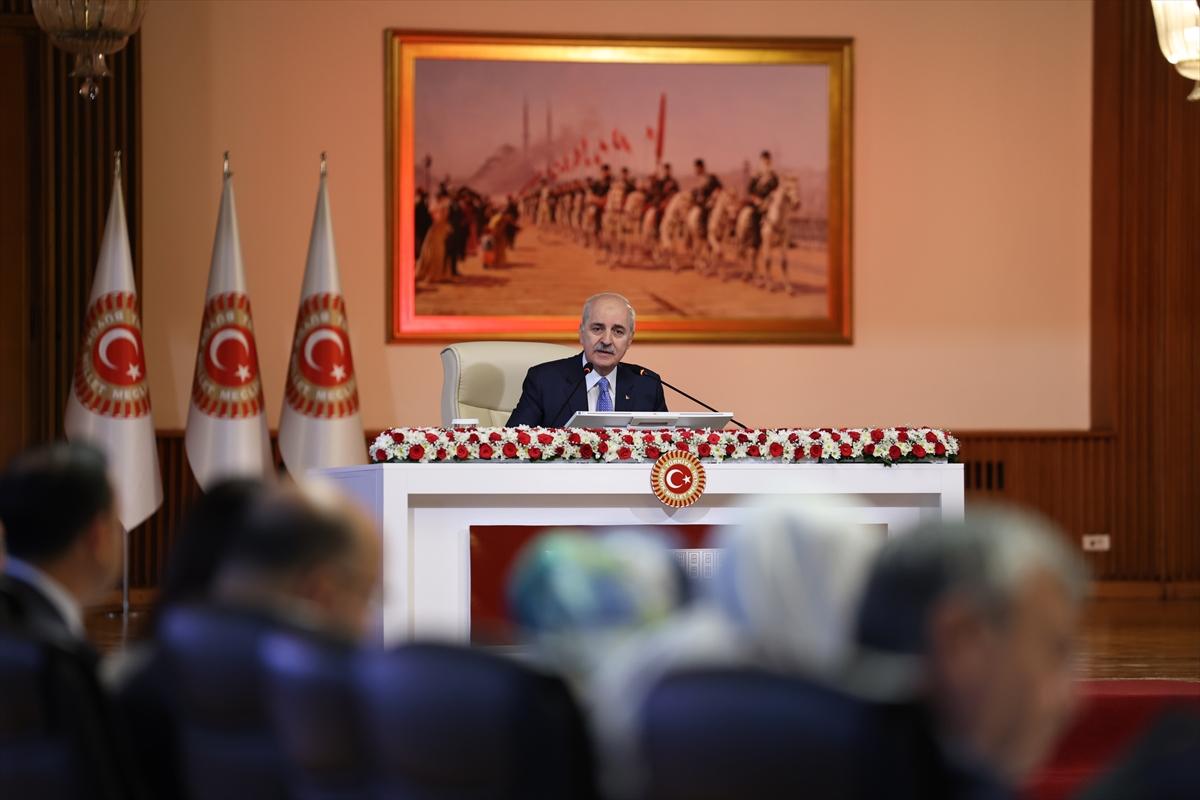
TBMM President Numan Kurtulmuş chairs the first meeting of the commission established under the "Terror-Free Türkiye" objective, 5 August 2025 – (Anadolu Agency)
The nominated members of the commission include from AK Party: Mustafa Şen, Abdulhamit Gül, Cüneyt Yüksel, Selami Altınok and Mehmet Sait Yaz; from CHP: Murat Emir, Okan Konuralp and Sezgin Tanrıkulu; from MHP: Feti Yıldız and Levent Bülbül; from DEM Party: Gülüstan Kılıç Koçyiğit and Meral Danış Beştaş; from TİP: Ahmet Şık; from EMEP: İskender Bayhan; from HÜDA PAR: Zekeriya Yapıcıoğlu; and from DSP: Önder Aksakal.
The İYİ Party did not submit any nominations for the three seats allocated to it by the Presidency of the Assembly. The Democratic Party also did not nominate any members. Democratic Party officials stated that the final decision regarding participation in the commission will be made after a meeting of its General Administrative Board. With the establishment of the commission, the participation rates and representation levels of political parties have been determined, marking the first steps toward activities to be carried out in the TBMM under the objective of a Terror-Free Türkiye.
TBMM President Numan Kurtulmuş formally invited the members of the Commission for a Terror-Free Türkiye to its inaugural meeting on 1 August 2025. An announcement published on the official social media accounts of the TBMM requested that the nominated members attend the meeting scheduled for Tuesday, 5 August 2025 at 11:00 in the TBMM Ceremony Hall.
In his invitation, President Kurtulmuş stated that the opening meeting would establish the commission’s working procedures and principles and provide a platform for political parties to share their views and assessments. It was also announced that principles governing the commission’s operations would be discussed during the meeting.
The invited members include those nominated by AK Party, CHP, MHP, DEM Party, Yeni Yol Party, HÜDA PAR, TİP, EMEP, DSP and the Renewal of Prosperity Party.
On 4 August 2025, MHP General Chairman Devlet Bahçeli issued a written statement evaluating the commission established within the TBMM as part of the Terror-Free Türkiye Process. Bahçeli stated, “There is no room or justification for muddying the waters or stoking suspicion. Moreover, historic developments are taking place regarding the Terror-Free Türkiye initiative.”
Bahçeli described attempts to undermine the commission’s work as a tactical campaign of harassment and exhaustion and expressed confidence that parties participating in the commission would resist such efforts. In his statement, Bahçeli added, “The Turkish nation is courageous and discerning enough to confront chronic and crystallized serious problems.”
Bahçeli criticized the İYİ Party for not joining the commission, calling accusations related to “commission membership” baseless and worthless remarks. He emphasized the important role of commissions in the functioning of the Gazi Assembly and asserted that parties not participating in this process should also withdraw from other commissions within the TBMM.
Bahçeli stated, “A Terror-Free Türkiye is one that has refreshed and strengthened national unity and brotherhood,” underscoring the vital importance of the process not only for Türkiye’s security but also for regional stability. He noted that those seeking to obstruct the commission process are acting on ideological and interest-based motives, but that such efforts cannot prevent its success.
The Commission for a Terror-Free Türkiye, established under the auspices of the Grand National Assembly of Türkiye, held its first meeting on 5 August 2025. The meeting, chaired by TBMM President Numan Kurtulmuş, opened with his inaugural address. Members nominated by AK Party, CHP, MHP, DEM Party, the Renewal of Prosperity Party, Yeni Yol Party, HÜDA PAR, DSP, TİP and EMEP attended the meeting. The İYİ Party and the Democratic Party did not participate.
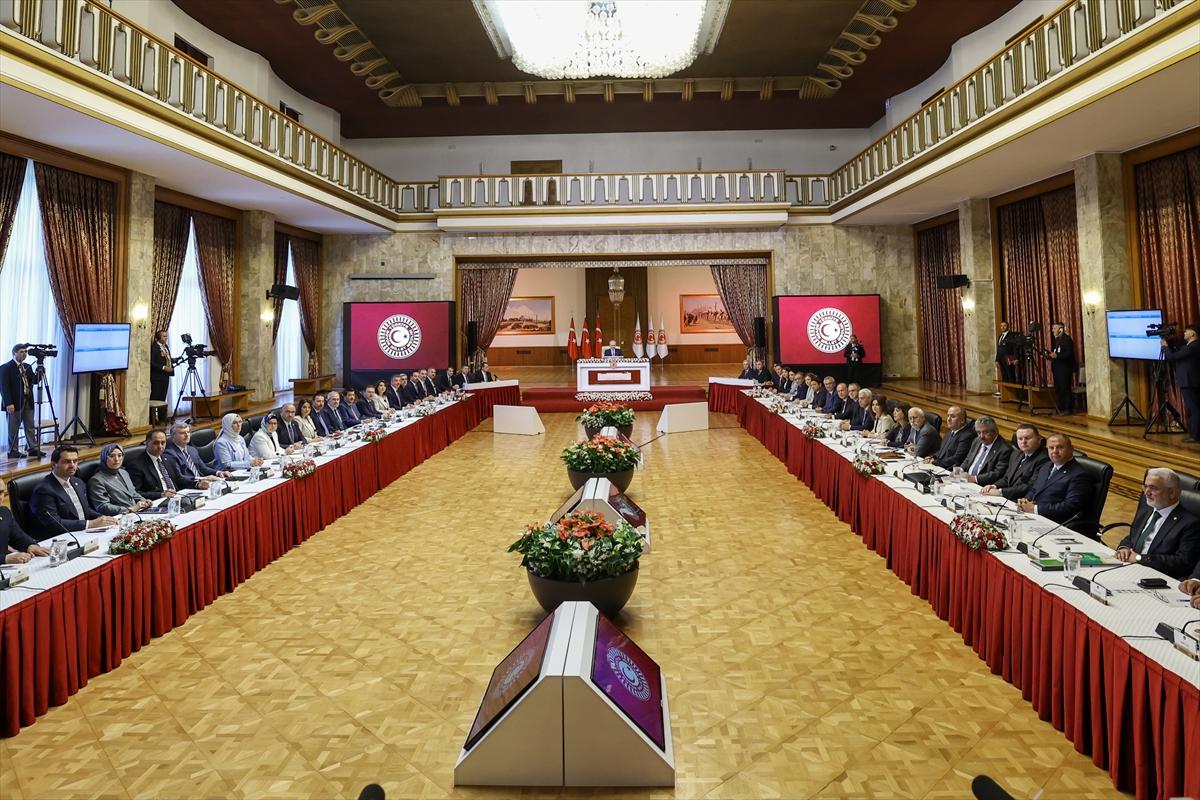
The first meeting of the commission established under the "Terror-Free Türkiye" objective, 5 August 2025 – (Anadolu Agency)
At the meeting, it was decided that the commission’s official name would be "National Solidarity, Brotherhood and Democracy Commission". Among the commission’s initial agenda items were the determination of its working procedures and principles, the establishment of a meeting calendar, and the clarification of its mandate.
The commission’s name was formally adopted by unanimous vote as the “National Solidarity, Brotherhood and Democracy Commission”. A quorum for meetings was set at one third of its members. Decisions require the absolute majority of members present. The commission’s initial term was announced as one year, with the possibility of extension by the Speaker of the Grand National Assembly if needed.
It was decided that meetings would be held at least once a week, and extraordinary sessions could be convened as necessary. Members will determine whether meetings will be held publicly or in private. Managers, experts, civil society representatives, and academics from public institutions may also be invited to participate in the commission’s work. In this context, a secretariat has been established to provide technical and administrative support to commission members.
The scope of the National Solidarity, Brotherhood and Democracy Commission has been defined with the objectives of strengthening social cohesion, reinforcing national solidarity, and institutionalizing democratic governance within the framework of the “Turkey Without Terrorism” process. Among its core responsibilities are identifying legal reforms required by the process, developing recommendations in this direction, and drafting legislative proposals.
Representatives from relevant ministries and public institutions will be invited to the commission to facilitate information sharing aimed at addressing gaps in the legal and administrative framework. The commission’s mandate also includes the regular informing of public opinion. To this end, regular reporting, informational meetings, and public engagement activities are planned.
The commission’s structure, open to representation from all political parties under the umbrella of the Grand National Assembly, has been organized to directly contribute to legislative activities. It was established that each political party shall have equal speaking rights in decision-making processes and that proposals shall be evaluated on the basis of majority rule.
TBMM Speaker Numan Kurtulmuş delivered the opening address at the commission’s first meeting on 5 August 2025, held within the framework of the “Turkey Without Terrorism” process. The meeting took place in the TBMM Ceremony Hall, with all political parties represented by the members they had nominated to the commission. Beginning his speech with a wish for it to be “blessed and auspicious”, Kurtulmuş stated: “There are moments in the history of nations that do not merely define that day or that moment, but shape the future of entire peoples. Today, we are at one such moment.”
Numan Kurtulmuş noted that Türkiye has been combating terrorism for nearly half a century and that the current point represents a “historic turning point”. He added: “We are witnessing a historic turning point in our struggle to free our nation from the scourge of terrorism that has plagued it for half a century.” He emphasized that this commission is not merely the beginning of work, but the starting point for the blossoming of the nation’s hopes for the future.
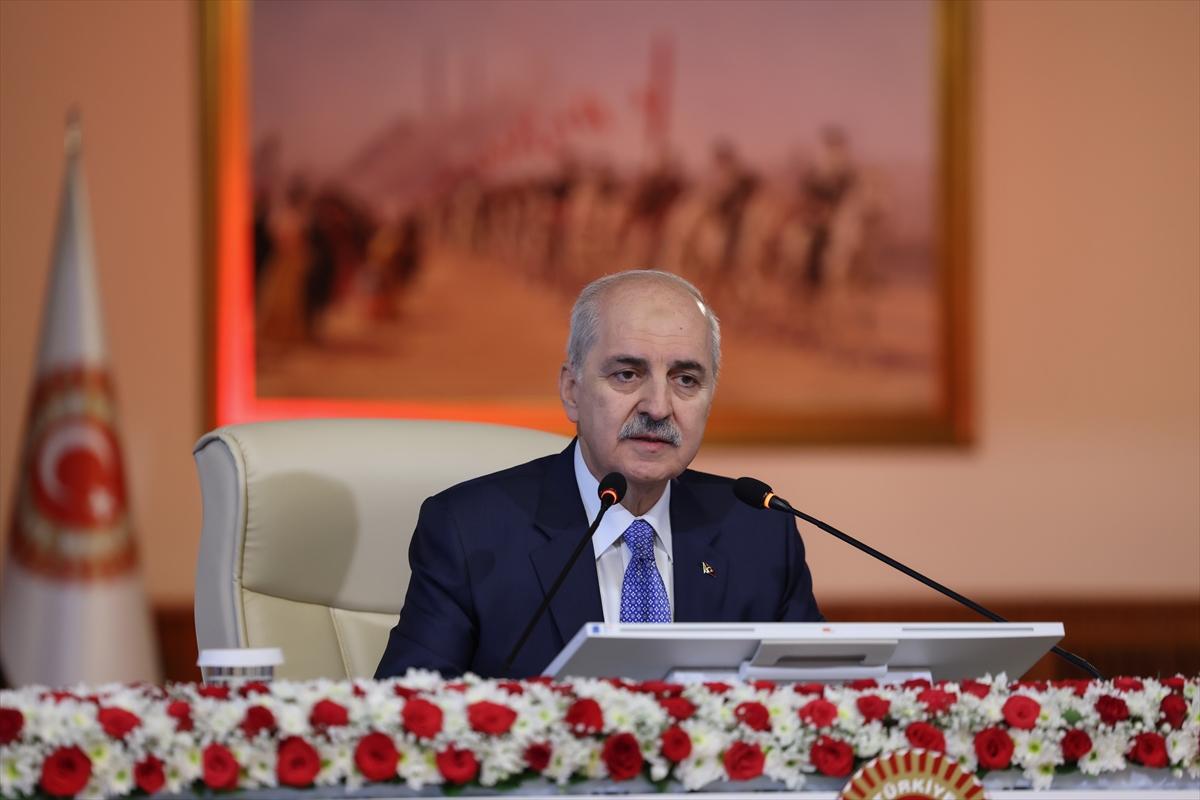
TBMM SpeakerNuman Kurtulmuş presides over the first meeting of the commission established under the goal of “Turkey Without Terrorism”, 5 August 2025 – (Anadolu Agency)
Kurtulmuş stated that he does not view the commission as a “mere delegation”, but rather as a historic mission embodying the courage to repair the future and the will to strengthen social cohesion. “In this hall, we are witnessing the beginning of a new era representing the will of the nation,” he said, adding that the commission was established to serve as the voice of the Grand National Assembly and the nation in addressing solutions.
Kurtulmuş clarified that his goals were not to draft a new constitution or to solve all problems at once. He defined the commission’s function as “the resolve to remind everyone that the Grand National Assembly is not only the voice of the people, but also the carrier of social peace, the guarantor of brotherhood, and the legitimate address of solutions.” At a stage where weapons have fallen silent and organizations have disbanded themselves, he emphasized that this process belongs not to any individual, institution or political structure, but directly to the will of the nation.
Kurtulmuş stated that the commission’s goal is to reinforce the social fabric, solidify brotherhood, and accept diversity as enrichment to strengthen shared life. “The feelings of unity, togetherness and brotherhood among our nation have been the most important building block of our society,” he said.
In his speech, Kurtulmuş also addressed global powers’ “divide, fragment, control” policies and drew attention to the losses terrorism has inflicted on Türkiye. “The dark years caused by terrorist acts are the common loss and shared grief of every citizen,” he said, noting that terrorism targets not only lives but also labor, hope and collective dreams. He stated that for a significant part of the Republic’s history, energy has been spent battling internal darkness, and that various terrorist organizations have stood as obstacles to Türkiye’s goal of becoming a peaceful and strong nation.
Kurtulmuş noted that many structures operating under different names and masks have sought to block Türkiye’s path, and that these structures have been used to wage proxy wars, causing instability, conflict and waves of migration in the region. He emphasized that these processes have also hindered Türkiye’s democratic development.
Kurtulmuş stated, “Today, alongside resolute steps that have neutralized coup attempts, including those by FETÖ, and weakened the influence of terrorist organizations, we stand on the threshold of a new era.” He emphasized that this era must be one in which politics, thought, and conscience are spoken of more openly. He highlighted the regional dimensions of the process, noting, “A terror-free Türkiye is, quite simply, a terror-free region.” He underscored that Turkish-Kurdish brotherhood is the original code of this geography and pointed out that a shared destiny has been shaped by historical experiences such as Çanakkale and others.
Kurtulmuş noted that the commission carries meaning not only at the technical level but also at the societal level, saying, “Our parliament will not merely remind us of a thousand years of brotherhood; it will redefine it politically.” He stressed that the observed disarmament process is not the result of negotiation but of the nation’s firm determination for peace and unity. He stated that if resources previously allocated to combating terrorism were redirected to other areas, the country’s development process could have been completed earlier than in previous years.
Kurtulmuş identified the martyrs and veterans as the spiritual architects of this process, declaring, “With unwavering loyalty to their legacy, we pledge to uphold every step we take in this direction.”
He specified that the commission’s fundamental principles are “transparency,” “clarity,” and “pluralism.” He explained that all information and actions would be carried out transparently and that the public would be informed solely by the Presidency of the Grand National Assembly. He added that protecting the public from provocative statements is also among the commission’s responsibilities.
Kurtulmuş asserted that this process cannot be left solely to political institutions; it will benefit from the contributions of opinion leaders, academia, the legal community, and civil society. “No one must be left out; no idea must be pushed to the margins,” he said. He clarified that this structure would function as a consultative forum aimed at uniting diverse perspectives within a shared collective reasoning.
He outlined the commission’s responsibilities as monitoring the disarmament process, guiding it within legal and political frameworks, and formulating recommendations when necessary. In this context, he emphasized the importance of effectively managing social psychology, stating that mutual social respect would be decisive to the success of the process.
He affirmed that the parliament serves as a protective force against provocations and that the democratic structure provides assurance in this regard. He stated that the commission will operate with an approach that does not ignore the truth, deny emotions, or lack the courage to produce solutions.
At the conclusion of his speech, Kurtulmuş declared, “Every identity is the authentic color of our nation. No citizen shall be marginalized because of their identity, language, or belief. We remain fully committed to the will of the nation in this cause.” He affirmed that the commission would faithfully carry out this historic mission within the framework of national unity and brotherhood. He announced that the commission would embrace “peace” as its common word and “brotherhood” as its shared goal.
At the opening of the second session, which followed the given interval, Kurtulmuş thanked all political party leaderships and members of parliament—including President Recep Tayyip Erdoğan, MHP General Chairman Devlet Bahçeli, Main Opposition Party General Chairman Özgür Özel, and officials from the Yeni Yol Party and DEM Party—for their contributions to the process. He emphasized that the commission is a uniquely specialized consultative body, empowered by political parties, and clarified that the outcomes it produces will be submitted to the Grand National Assembly’s General Assembly. He stressed that the process is “not a venue for political party calculations.”
Anadolu Ajansı. "TBMM’de Kurulacak Komisyon İçin Siyasi Partiler Üyelerini Belirledi." Accessed August 5, 2025. https://www.aa.com.tr/tr/politika/tbmmde-kurulacak-komisyon-icin-siyasi-partiler-uyelerini-belirledi/3647476#
Anadolu Ajansı. “Bahçeli’den Terörsüz Türkiye Hedefi Doğrultusunda TBMM’de Kurulan Komisyona İlişkin Açıklama.” Accessed August 5, 2025. https://www.aa.com.tr/tr/politika/bahceliden-terorsuz-turkiye-hedefi-dogrultusunda-tbmmde-kurulan-komisyona-iliskin-aciklama/3650442#
Anadolu Ajansı. “TBMM Başkanı Kurtulmuş: Kararlı Adımlarla Birlikte Yeni Bir Dönemin Eşiğindeyiz.” Accessed August 5, 2025. https://www.aa.com.tr/tr/gundem/tbmm-baskani-kurtulmus-kararli-adimlarla-birlikte-yeni-bir-donemin-esigindeyiz/3650857#
Anadolu Ajansı. “TBMM Başkanı Kurtulmuş: Kararlı Adımlarla Birlikte Yeni Bir Dönemin Eşiğindeyiz.” Accessed August 7, 2025. https://www.aa.com.tr/tr/gundem/tbmm-baskani-kurtulmus-kararli-adimlarla-birlikte-yeni-bir-donemin-esigindeyiz/3650857
Anadolu Ajansı. “TBMM’de Terörsüz Türkiye Hedefi Doğrultusunda Kurulacak Komisyonun İlk Toplantısı 5 Ağustos’ta Yapılacak.” Accessed August 5, 2025. https://www.aa.com.tr/tr/politika/terorsuz-turkiye-hedefi-dogrultusunda-kurulacak-komisyonun-ilk-toplantisi-5-agustosta-yapilacak/3648031#
Anadolu Ajansı. “TBMM’de Terörsüz Türkiye Hedefi Doğrultusunda Kurulacak Komisyonun İlk Toplantısı Yapılacak.” Accessed August 5, 2025. https://www.aa.com.tr/tr/politika/tbmmde-terorsuz-turkiye-hedefi-dogrultusunda-kurulacak-komisyonun-ilk-toplantisi-yapilacak/3650007#
Anadolu Ajansı. “Terörsüz Türkiye Süreci Kapsamında Meclisteki Komisyonun İlk Toplantısı Yapıldı.” Accessed August 7, 2025. https://www.aa.com.tr/tr/gundem/terorsuz-turkiye-sureci-kapsaminda-meclisteki-komisyonun-ilk-toplantisi-yapildi/3651373#
On 7 August 2025, President Recep Tayyip Erdoğan authored two separate letters addressed to the families of martyrs, veterans, their relatives, and all citizens as part of the “Terror-Free Türkiye” process. The letters comprehensively outlined the fundamental principles of the process, the state’s approach, and the steps undertaken.
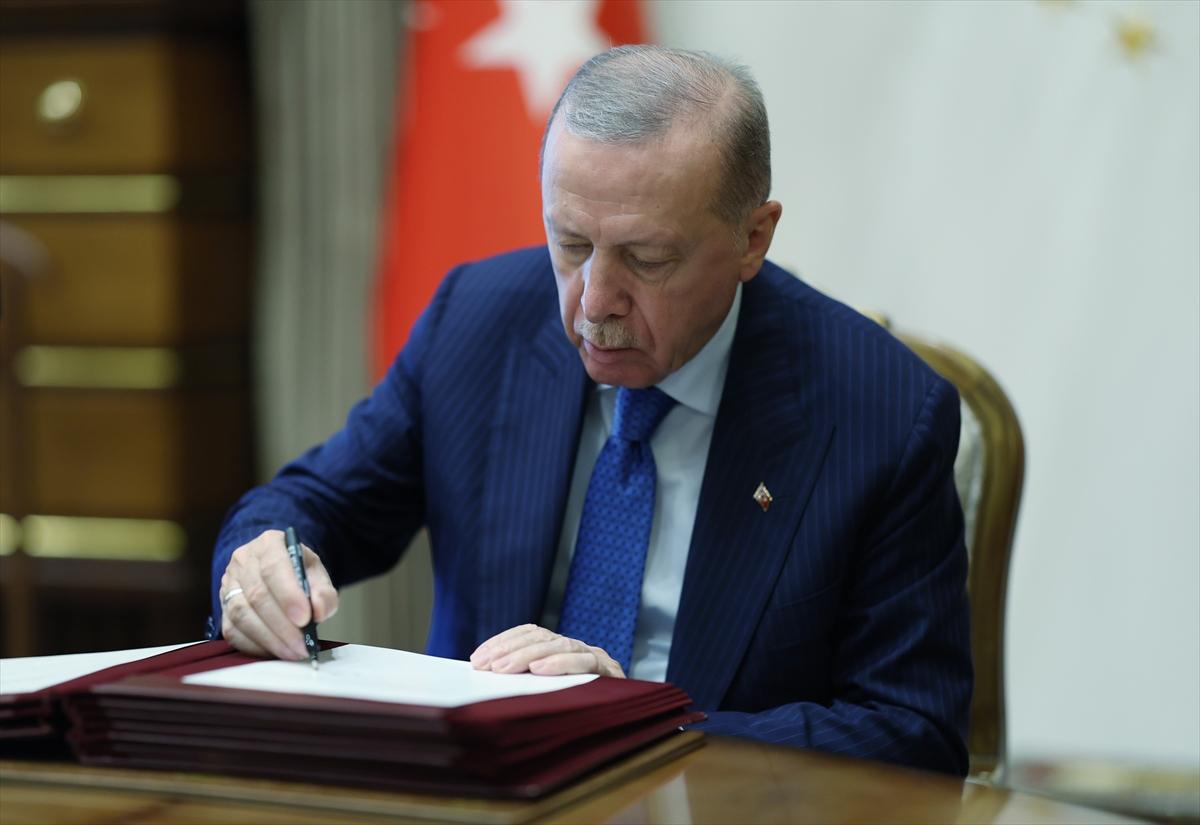
President Recep Tayyip Erdoğan – (Anadolu Agency)
In his letter to the families of martyrs and veterans, President Erdoğan began by offering greetings and expressing his reverence for the martyrs with mercy and for the veterans with gratitude. He stated in the opening of the letter: “If the soil of our homeland is soaked with the blood of our martyrs and veterans, if the call to prayer of Muhammad echoes respectfully in our skies, if our flag with the crescent and star waves proudly above us, and if our 86 million citizens live in peace and security, then the greatest share of this belongs unquestionably to our martyrs and veterans. Protecting the legacy they entrusted to us is the most fundamental duty of our state.”
Erdoğan emphasized that since assuming office, the state has confronted all forms of terrorism most effectively within the country, along its borders, and in the region, resulting in thousands of lives lost as martyrs and thousands more honored as veterans. Yet, he affirmed that not a single stain has been allowed to mar the sacred and exalted values for which these martyrs and veterans shed their blood.
President Erdoğan underscored that the state and the nation are jointly advancing toward the goals of the “Century of Türkiye,” and declared: “I earnestly request and implore you to be certain that at no point in this process has there been, nor will there ever be, any compromise, negotiation, concession, or secret and underhanded initiatives. No action has been taken, nor will any be taken, that would dishonor the noble souls of our martyrs, wound our families of martyrs, or hurt our veterans. When we successfully reach our goals of a Terror-Free Türkiye and subsequently a Terror-Free region, a brand-new chapter will open before us; our thousand-year-old brotherhood will enter a new phase; and the seeds of discord planted among us will be uprooted and cast away forever.”
In closing, Erdoğan prayed to Allah for support and aid, wished mercy upon the martyrs, and blessings upon the veterans. He noted that he kisses the hands of the mothers and fathers who raised the martyrs and veterans, and kisses the children who carry the legacy of the martyrs on their foreheads.
On the same day, President Erdoğan also sent a separate letter addressed to all citizens, outlining the broader framework of the “Terror-Free Türkiye” process and explaining the rationale and objectives behind the state’s actions.
In the letter, Erdoğan stated that every citizen bears responsibility for building a great and strong Türkiye, and that they have continued working tirelessly toward this goal. He noted that over the past 23 years, through investments, projects, reforms, services, and regulations implemented by the state, Türkiye has been elevated to a position of prominence in its region and across the world.
Erdoğan recorded that despite all obstacles placed before them, they have stood shoulder to shoulder with the nation to strengthen democracy, open the path to rights and freedoms, dismantle tutelary centers of power, and establish national will as the supreme authority in all state institutions.
While waging an uncompromising struggle against all forms of terrorism, Erdoğan emphasized that all necessary steps have been taken to ensure that 86 million citizens live in peace, tranquility, and brotherhood. He added the following words in the letter: “We launched the Terror-Free Türkiye process, assuming a historic responsibility to tear down the walls of discord, dismantle the insidious traps built against our brotherhood, revitalize our unity and mutual affection, and guide our country toward a far brighter future. We are determined to break and discard the bloody chain that has held our nation back for half a century. Insha’Allah, we will ultimately reach the horizon of a Terror-Free Türkiye and a Terror-Free region. At that moment, blank pages of a brand-new future will open before us, and we will adorn these pages together with our victories, epics, and songs of brotherhood. Be certain that we fully understand what we are doing, and that we act with strategic wisdom, great care, and utmost sensitivity. Every step we take is meticulously calculated. There is no place in the Terror-Free Türkiye efforts for any transaction, negotiation, or action that would endanger our independence and future — and there never will be. We have not permitted, nor will we ever permit, any initiative that would offend the noble souls of our martyrs, hurt our veterans, or sadden and shame our families of martyrs. With the permission of Almighty Allah, and with the prayers and support of our nation, we will continue our struggle for a luminous future with patience and determination. May our Lord be the helper and supporter of us all, and grant us what we hope for.
Anadolu Ajansı. “Cumhurbaşkanı Erdoğan’dan Şehit Yakınları ve Gaziler ile Tüm Vatandaşlara ‘Terörsüz Türkiye’ Mektubu.” Accessed August 7, 2025. https://www.aa.com.tr/tr/gundem/cumhurbaskani-erdogandan-sehit-yakinlari-ve-gaziler-ile-tum-vatandaslara-terorsuz-turkiye-mektubu/3652780
The first meeting of the National Solidarity, Brotherhood and Democracy Commission was held on 5 August 2025 in the Grand National Assembly of Türkiye (TBMM) Ceremony Hall. The meeting was chaired by TBMM Speaker Numan Kurtulmuş. During this inaugural session, the commission’s working procedures and principles were established, the framework for issues to be addressed in subsequent stages was outlined, and decisions were made regarding whom to invite.
The commission’s second meeting took place on 8 August 2025, also in the TBMM Ceremony Hall. Interior Minister Ali Yerlikaya, National Defense Minister Yaşar Güler, and Chief of the National Intelligence Organization (MİT) İbrahim Kalın attended the meeting. The ministers and the MİT Chief provided the commission with information on the work carried out by their respective institutions and on current developments.
TBMM Speaker Kurtulmuş stated that, given the nature of the meeting, it should be conducted as a closed session and submitted the matter to a vote by commission members. The vote resulted in unanimous approval to conduct all meetings under a strict closed-session principle. Under this principle, all statements made during the meetings will be recorded in the official minutes but will not be published or disclosed in any form for a period of ten years.
The second meeting, conducted in accordance with the closed-session principle, lasted approximately 5.5 hours. During this session, the ministers and the MİT Chief delivered comprehensive presentations on security, defense, and intelligence matters, followed by responses to questions from commission members.
The date for the commission’s third meeting has been set for 12 August 2025. This meeting is expected to involve the collection of proposals from members regarding the commission’s work and the planning of subsequent stages.
The third meeting of the commission was held on 12 August 2025 in the TBMM Ceremony Hall. Members of parliament attended the meeting, which was chaired by TBMM Speaker Numan Kurtulmuş. A total of 38 members of parliament took the floor to present their proposals on the agenda.
Prior to the meeting, the three vacant seats—due to the İYİ Party’s decision not to nominate members—were redistributed among other political parties and filled. In this context, Cahit Özkan, MP from Denizli for the AK Party, Umut Akdoğan, MP from Ankara for the CHP, and Celal Fırat, MP from Istanbul for the DEM Party, began their duties as new members of the commission.
The meeting agenda addressed topics including enhancing societal awareness to remove terrorism entirely from Türkiye’s agenda, strengthening national unity and brotherhood, and reinforcing freedom, democracy, and justice. Kurtulmuş noted that while each member approached the issues from different perspectives, all expressed their views openly, which he said contributed positively to the process.
Three main points highlighted by Kurtulmuş during the meeting were:
The commission’s unique structure was emphasized, distinguishing it from conventional commissions by its specific mandate to propose legal reforms following disarmament and to inform public opinion on issues such as democratization, peace, and justice.
At the conclusion of the meeting, it was announced that the commission’s fourth meeting will be held on 19 August 2025. It was specified that families of martyrs, veterans, and Minister of Family and Social Services Mahinur Özdemir Göktaş will be invited to this meeting.
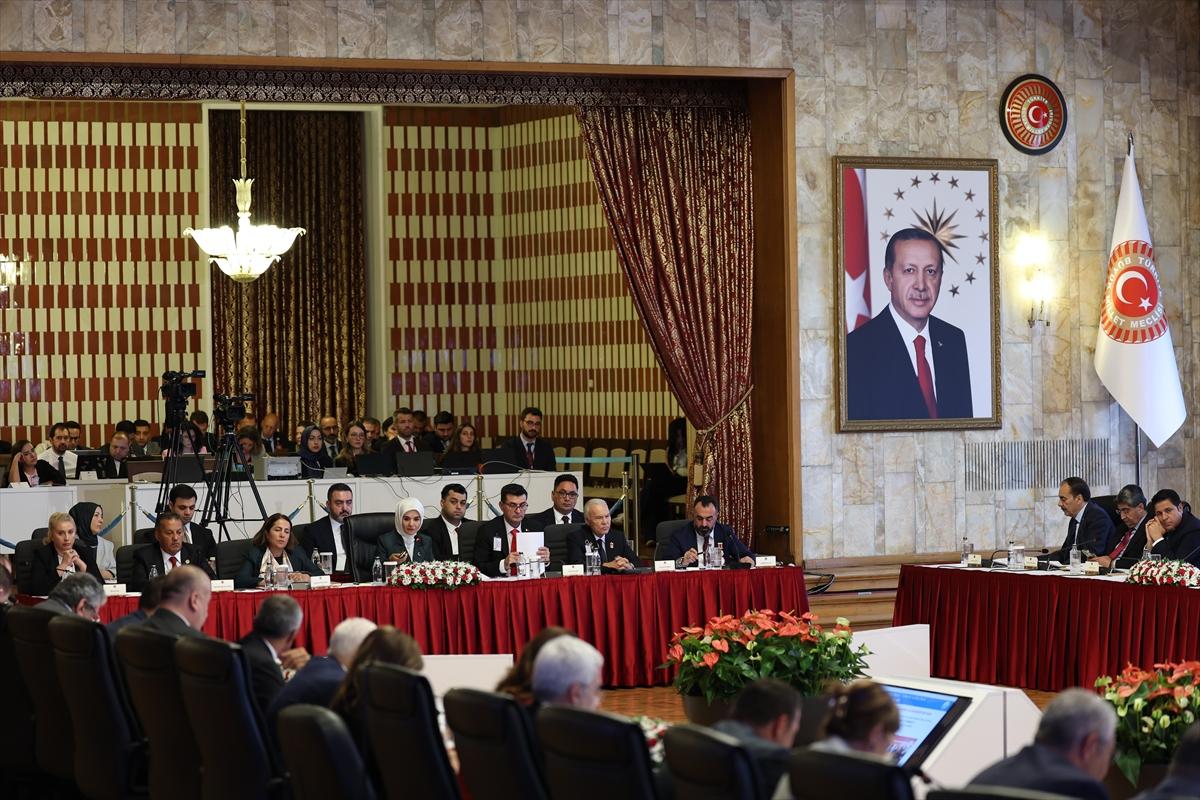
National Solidarity, Brotherhood and Democracy Commission meeting, 19 August 2025 - (Anadolu Agency)
The fourth meeting of the Commission was held on 19 August 2025 in the Grand National Assembly of Türkiye (TBMM) Ceremony Hall. The meeting was chaired by TBMM Speaker Numan Kurtulmuş. Representatives of families of martyrs and veterans, as well as civil society organizations representing them, were heard during the session. Participants included Minister of Family and Social Services Mahinur Özdemir Göktaş, General President of the Türkiye Association of War Veterans, Martyrs’ Widows and Orphans Mustafa Işık, President of the Türkiye Foundation of War Veterans and Martyrs’ Families Lokman Aylar, President of the Türkiye Foundation for Solidarity with Martyrs’ Families and Veterans Bilge Gürs, and General President of the Türkiye Association of Combat Veterans Beyazıt Yumuk.
In his opening speech, TBMM Speaker Kurtulmuş referred to the establishment process of the Commission. He stated that Türkiye had entered a historic phase following the decision to lay down arms, and that the Commission’s work was being intensified under the umbrella of the Assembly. He emphasized the importance of the sacrifices made by martyrs, noting that without their struggle this process would not have taken place today. He added that the phrase “may the homeland be well” had become the shared response of martyrs’ families and was a motto passed down through generations.
Kurtulmuş underscored that veterans are among the most important pillars of the nation, having participated in the struggle with the ethos of “if I die I am a martyr, if I live I am a veteran,” and are entrusted to society. He clarified that from the outset no bargaining had been part of the process, and that the process had been conducted without any element of negotiation. He affirmed that the TBMM was and would remain entirely free of bargaining, with its sole objective being the restoration of eternal and unbreakable brotherhood.
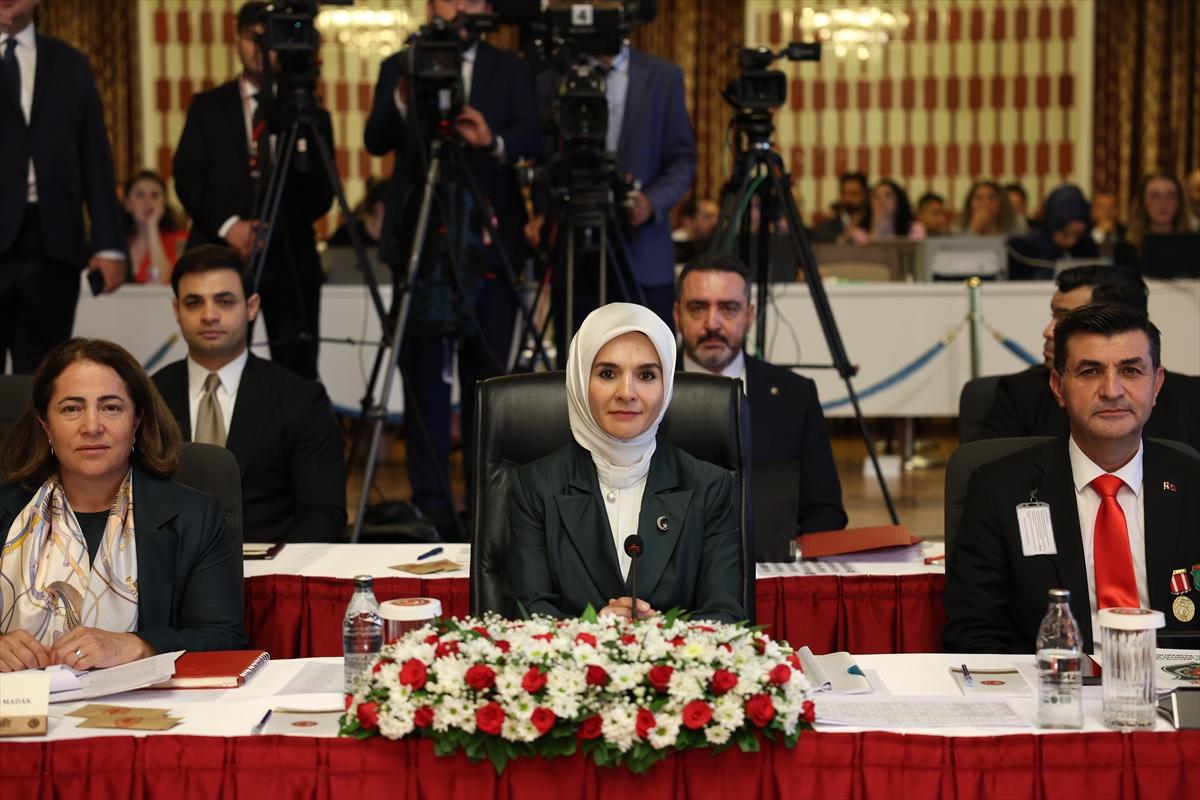
Minister of Family and Social Services Göktaş at the National Solidarity, Brotherhood and Democracy Commission, 19 August 2025 - (Anadolu Agency)
It was announced that all institutional structures capable of contributing to the process would be invited to present their views to the Commission. It was stated that opinions from diverse segments of society—including civil society organizations, professional associations, and opinion leaders—would be gathered. The Commission emphasized that increasing social consensus, fostering sensitivity, and ensuring participation from all societal segments were among its core objectives.
The fifth meeting of the Commission was held on 20 August 2025 in the TBMM Ceremony Hall. During this meeting, civil society organizations and family representatives from various segments of society were heard. Participants included representatives from Saturday Mothers and Mothers for Peace, as well as the Human Rights Association (İHD), the Association for Solidarity with Victims of Human Rights Violations (MAZLUMDER), the Tahir Elçi Human Rights Foundation, and the Human Rights and Freedoms (İHH) Humanitarian Aid Foundation.
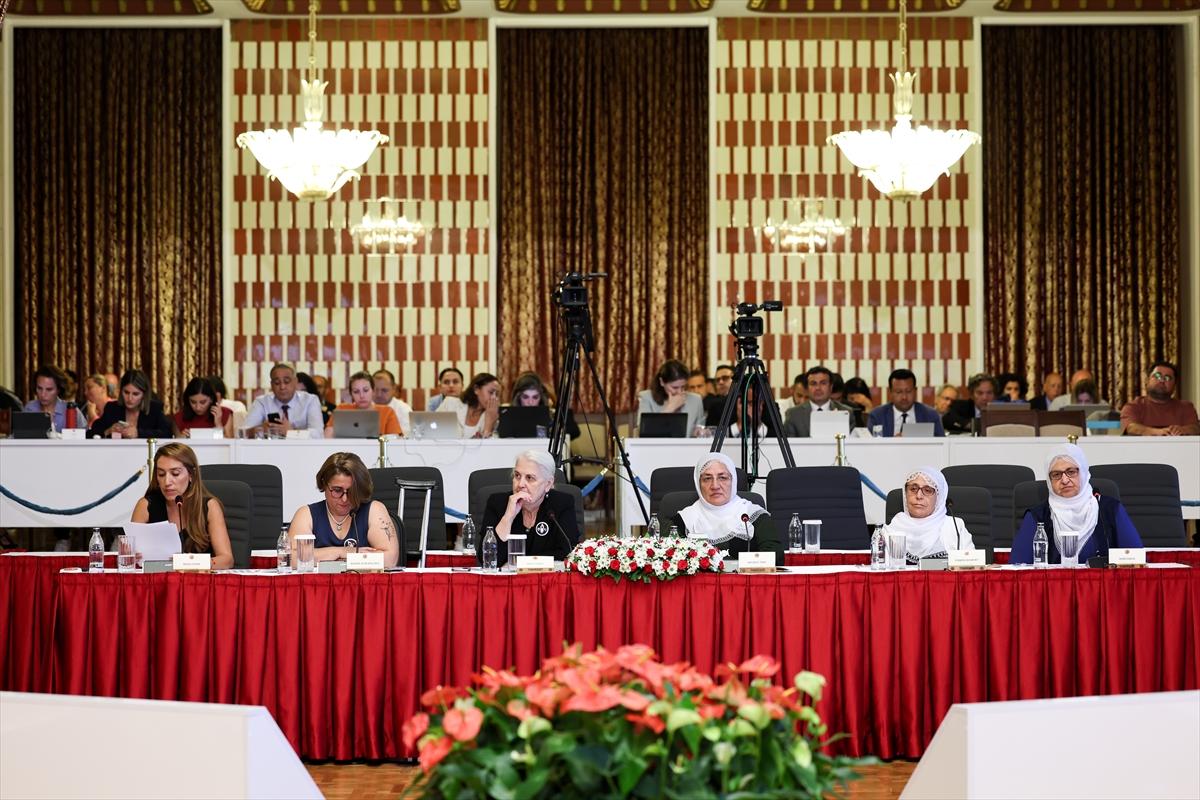
"Saturday Mothers" and "Mothers for Peace" at the National Solidarity, Brotherhood and Democracy Commission meeting, 20 August 2025 - (Anadolu Agency)
In his opening remarks at the meeting, Kurtulmuş noted that the first three meetings had established the Commission’s working framework, the fourth meeting had heard the voices of martyrs’ families and veterans, and this fifth meeting had convened specifically to gather the perspectives of civil society representatives. He stressed that the pain of past events was a shared burden for all, and must not be exploited for competition. He clarified that the Commission’s purpose was not to revisit past debates, but to take preventive measures to ensure such suffering would not recur in the future.
Civil society representatives who spoke at the meeting put forward various proposals. İHD representatives criticized the Commission for not being established by law and highlighted the short duration of its mandate. They emphasized the need to make visible the grievances and human rights violations related to the Kurdish issue. They proposed legal reforms to enable PKK militants to disarm and reintegrate into social life as a prerequisite for lasting peace. They also stated that the locations of the graves of important historical figures such as Sheikh Said, Seyit Rıza, and Said Nursi should be disclosed, and that returning their remains to their families would enhance social trust.
MAZLUMDER representatives stressed that the process must be supported by legal frameworks and that steps must be structured to prevent a return to violence. They called for amendments to the Enforcement Law and the termination of administrative appointments to certain municipalities. İHH representatives presented examples from international mediation experiences, asserting that external interventions had negatively affected the process, and that a sustainable solution could only be achieved through the TBMM and Türkiye’s internal dynamics.
In a statement following the meeting, TBMM Speaker Kurtulmuş noted that the civil society organizations invited to the Commission had expressed their own views, but that these views were not to be regarded as the Commission’s official or collective positions. He emphasized that all speeches had been recorded and documented in official minutes. He also affirmed that the 51 members of the Commission were united in their determination and that the process would be protected against any provocative actions.
At the conclusion of the meeting, it was announced that the commission’s sixth meeting would be held on 27 August 2025 and that former Speakers of the Grand National Assembly of Türkiye would be invited to this meeting, followed by the seventh meeting on 28 August 2025, during which the Turkish Bar Association would be heard.
The sixth meeting of the commission was held on 27 August 2025 in the Parliamentary Ceremony Hall. The meeting was chaired by the Speaker of the Grand National Assembly of Türkiye, Numan Kurtulmuş. Present at this session were Erinç Sağkan, President of the Turkish Bar Association (TBA), and the presidents of the bar associations of Ankara No. 2, Bingöl, Diyarbakır, Hatay, Istanbul No. 2, Malatya, Mardin, Mersin, Van and Sivas.
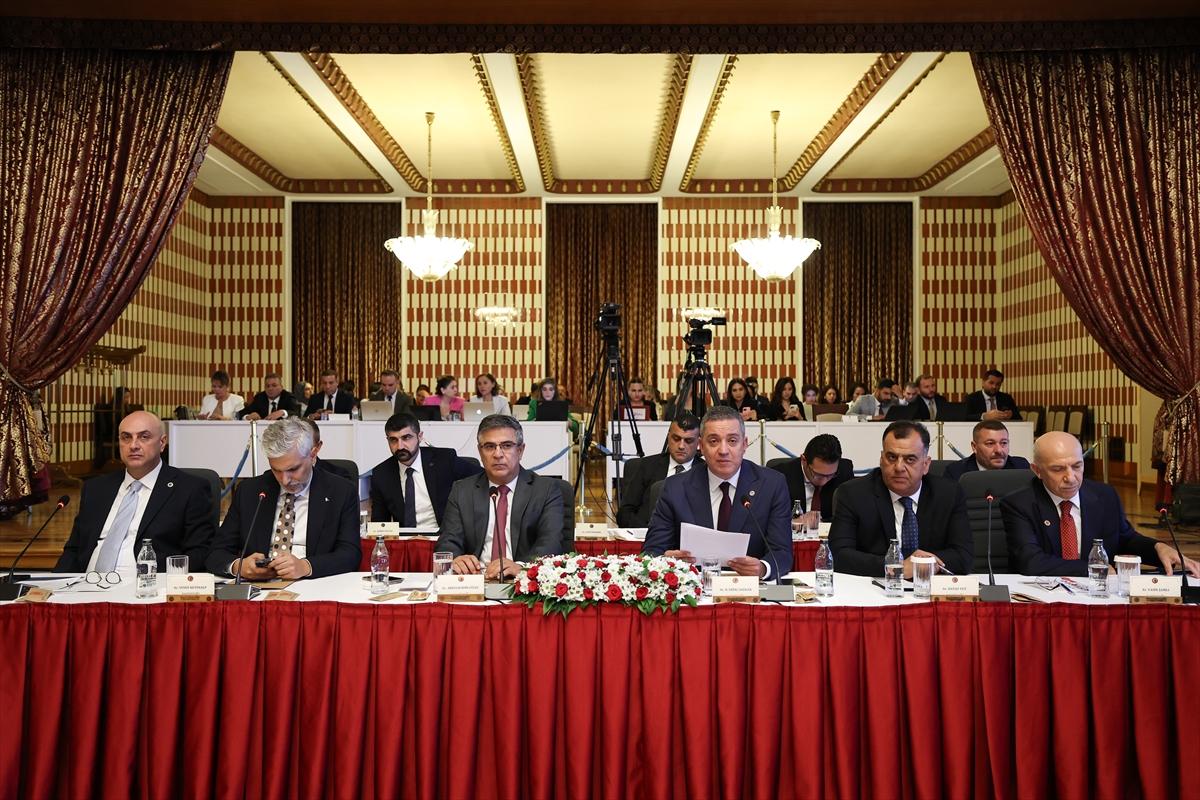
Sixth Meeting of the National Solidarity, Brotherhood and Democracy Commission, 27 August 2025 – (Anadolu Agency)
In his opening remarks, Kurtulmuş stated that a historic opportunity had emerged in Türkiye in line with the goal of a “Türkiye without Terrorism,” following the statement issued from İmralı and the organization’s decision to dissolve itself. He emphasized that in this environment, politics had assumed responsibility for establishing an order in which weapons are no longer spoken of and peace and tranquility prevail, and that the National Solidarity, Brotherhood and Democracy Commission was established for this purpose.
The Speaker of the Grand National Assembly noted that the commission had produced significant work and that preparing the legal infrastructure in the coming phase was inevitable. He underscored the immense value of the contributions by the Turkish Bar Association and the bar associations, and stated that the views of the legal community would play a vital role in completing the process. Kurtulmuş added, “Establishing a Türkiye model and realizing a model unique to Türkiye will be one of the historic achievements of this commission. This is the expectation of our nation.”
During the meeting, reference was made to the shared views expressed by previously heard groups, including the Mothers of Diyarbakır, Saturday Mothers, Mothers for Peace, families of martyrs and war veterans. Kurtulmuş highlighted their call—“Let us now bury our weapons, not our children”—as a fundamental motivation for the commission’s work.
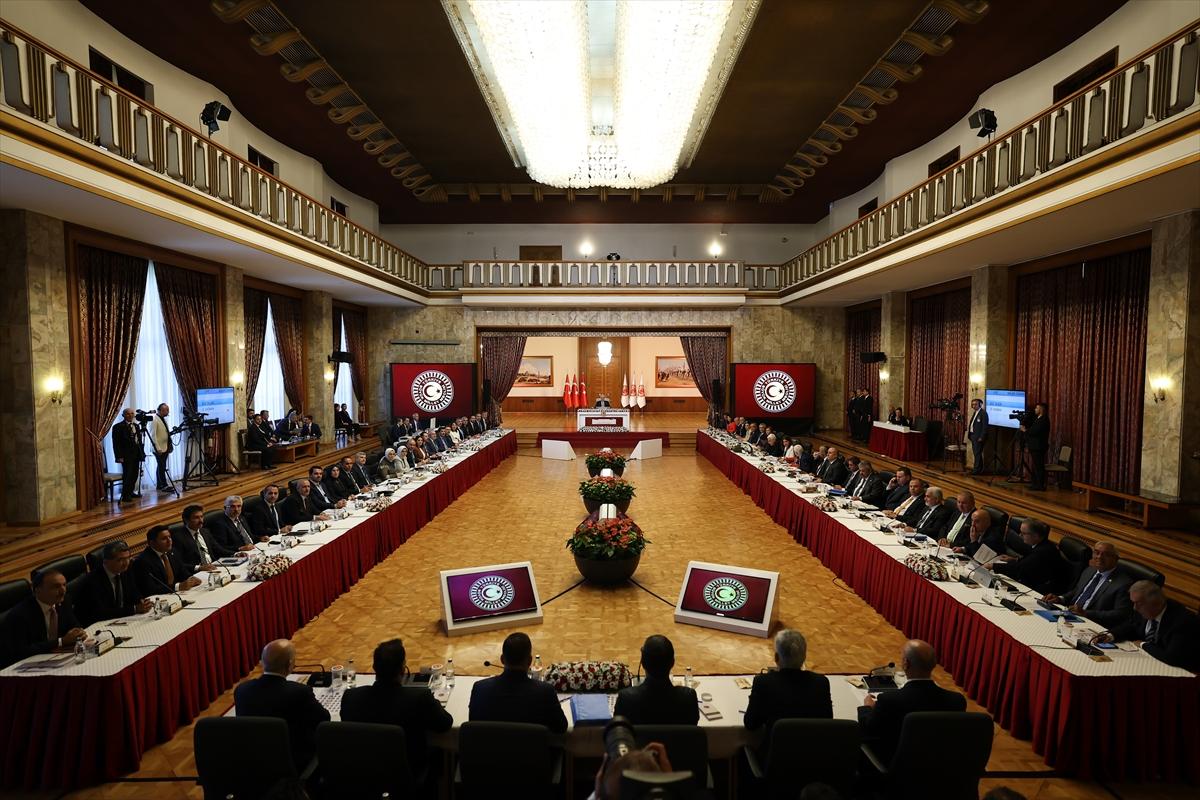
Sixth Meeting of the National Solidarity, Brotherhood and Democracy Commission, 27 August 2025 – (Anadolu Agency)
At the sixth meeting, clarification was provided regarding assessments that the Istanbul No. 1 Bar Association had not been invited. It was stated that the association had been invited under the same procedures but was unable to attend due to scheduling constraints, thereby correcting the public perception that it had been excluded.
Kurtulmuş announced that over 400 proposals had been submitted by commission members and confirmed that all proposals had been formally recorded. He emphasized that the commission’s responsibility extended beyond listening to include results-oriented work, and that the ultimate aim of the process was to transform a state policy into a national policy.
At the conclusion of the meeting, the President of the Turkish Bar Association and the bar presidents shared their views, and members of parliament offered their assessments. In a written statement issued by the Speaker’s Office, it was noted that this meeting once again highlighted the importance of contributions toward enhancing social consensus, and that the inclusion of the legal community was valuable for strengthening the legal foundations of the process.
The seventh meeting of the commission was held on 28 August 2025 in the Parliamentary Ceremony Hall. The central agenda of this meeting consisted of assessments by former Speakers of the Grand National Assembly of Türkiye. The meeting was conducted in two sessions. In the first session, former Speakers Hikmet Çetin, Ömer İzgi, Bülent Arınç, Köksal Toptan and Mehmet Ali Şahin spoke. In the second session, Cemil Çiçek, İsmet Yılmaz, İsmail Kahraman, Binali Yıldırım and Mustafa Şentop shared their views.
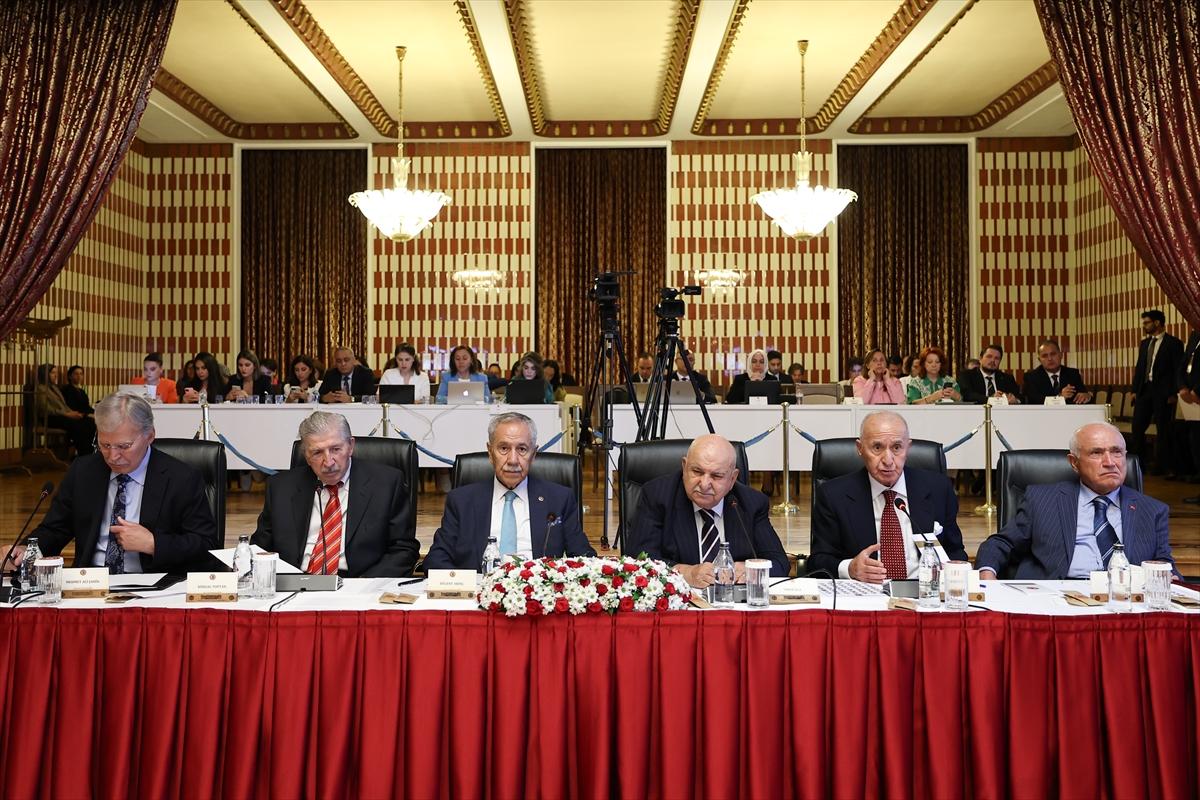
Seventh Meeting of the National Solidarity, Brotherhood and Democracy Commission, 28 August 2025 – (Anadolu Agency)
In his opening speech, TBMM Speaker Kurtulmuş stated that the experiences of former Speakers of the Parliament serve as a guiding reference for the commission and thanked them for accepting the invitation. Kurtulmuş emphasized that this process represents a historic turning point and that the views gathered will make significant contributions to the commission’s work.
During the first session, Hikmet Çetin, Speaker of the 20th TBMM, drew attention to the contribution of MHP General Chairman Devlet Bahçeli to the process and stated that those who were sent to the mountains as children and were found not to have committed any crimes must be pardoned. Çetin also noted that members of armed groups who laid down their weapons could be evaluated in terms of social integration in the future, but that pardons for individuals who committed serious crimes would not be possible. He affirmed that the Kurdish and Turkish peoples have lived interwoven lives and that separation is not feasible.
Ömer İzgi, Speaker of the 21st TBMM, stated that the process began with Bahçeli’s statements and continued with the determination of President Erdoğan. He emphasized that the situations of individuals who were sent to the mountains as children and were found not to have participated in any actions must be addressed by the TBMM. İzgi also suggested that constitutional amendments could be made if necessary, proposing as an example the re-inclusion of the 1924 Constitution’s phrase “All citizens of Türkiye are called Turks regardless of religion or ethnicity.”
Bülent Arınç, Speaker of the 22nd TBMM, considered it important that all political parties except the İYİ Party were represented in the commission and welcomed the DEM Party’s contribution to the process with appreciation. Arınç stated that radical rhetoric from the past must be left behind and that strengthening social consensus is essential. He also expressed that a general amnesty is a necessary requirement.
Köksal Toptan, Speaker of the 23rd TBMM, referred to past constitutional efforts and said that the current commission offers hope for drafting a new and liberal constitution. He stated that achieving a Turkey free of terrorism requires new legislation and new approaches.
Mehmet Ali Şahin, Speaker of the 24th TBMM, stated that the process marks a turning point and that a new era has begun with the contributions of Bahçeli and Erdoğan. He described the goal of a Turkey free of terrorism as a blessed endeavor and stressed the need for urgency on this issue, emphasizing that the commission must focus immediately on its core objectives without delay.
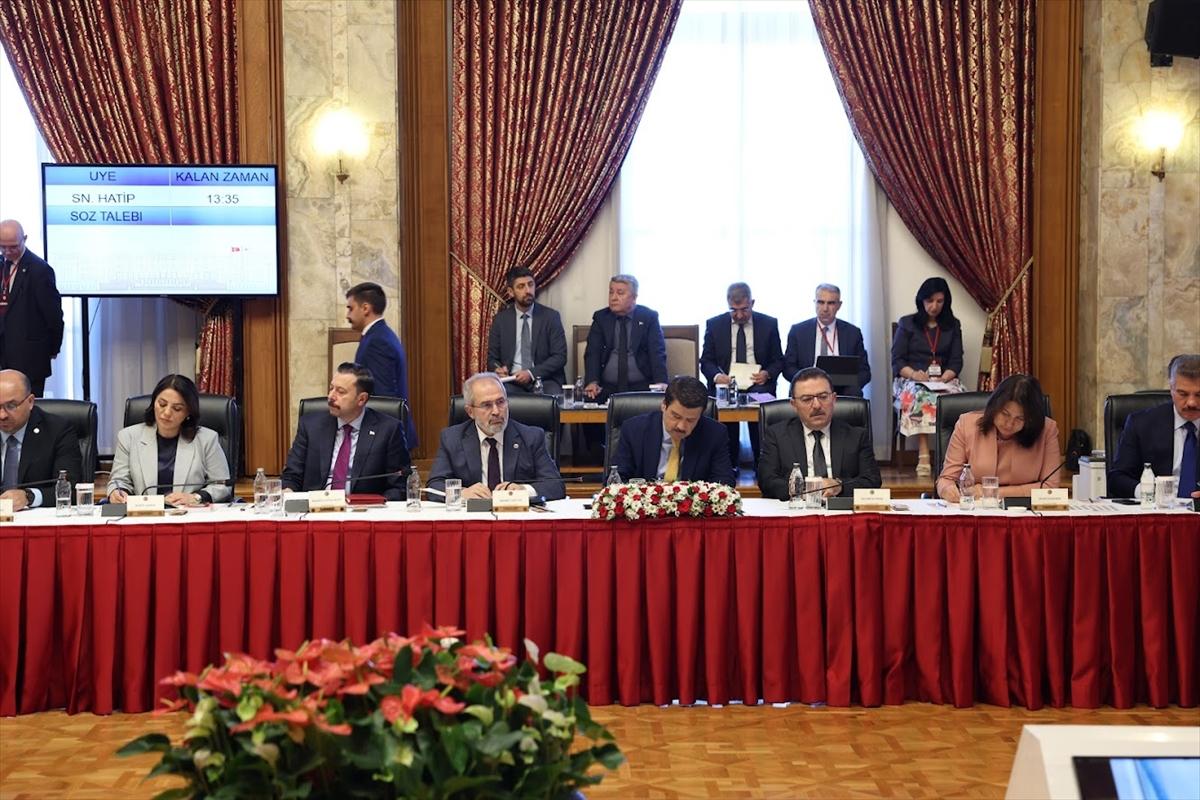
National Solidarity, Brotherhood and Democracy Commission, 7th Meeting, 28 August 2025 – (Anadolu Agency)
During the second session, İsmet Yılmaz, Speaker of the 26th TBMM, stated that the process transcends party politics, emphasized that the disarmament process must not be prolonged over time, and highlighted the importance of completing the process swiftly with public support. Cemil Çiçek, Speaker of the 25th TBMM, stated that the commission must clarify ambiguities, base its work on facts, and ensure that the process is not exploited as material for domestic political agendas. İsmail Kahraman, Speaker of the 27th TBMM, noted that resolving this issue through the free will of the Parliament holds historical significance and underscored the spirit of unity achieved on 15 July.
Binali Yıldırım, Speaker of the 28th TBMM, drew attention to the importance of anchoring the process in a national foundation and emphasized that the fundamental principles of the Republic are not open to debate. He stated that the unitary state must be preserved, but that strengthening local administrations would be beneficial for the effectiveness of public services. He affirmed that terrorism is the common problem of Turks and Kurds and that a future based on equal citizenship must be built.
Mustafa Şentop, Speaker of the 29th TBMM, stated that the process has been elevated to an institutional and inclusive foundation and that a transparent and multidimensional approach is necessary to achieve peace. He emphasized that the disarmament process must not be prolonged and that all branches of the PKK must be included as interlocutors in this process. Şentop underscored that the commission’s roadmap will not only end terrorism but will also constitute a social reconciliation project aimed at strengthening the unity and solidarity of the nation.
At the end of the meeting, TBMM Speaker Numan Kurtulmuş stated that the views presented by former Speakers of the Assembly were enlightening and that the common emphasis among all was that the process must be addressed as a national issue beyond everyday politics. He also announced that the meeting had been productive and that future sessions plan to invite representatives from the business community, trade unions, and academics to contribute to the process.
Anadolu Ajansı. "Milli Dayanışma, Kardeşlik ve Demokrasi Komisyonu Toplandı." Accessed August 27, 2025. https://www.aa.com.tr/tr/politika/milli-dayanisma-kardeslik-ve-demokrasi-komisyonu-toplandi/3654224#
Anadolu Ajansı. "Milli Dayanışma, Kardeşlik ve Demokrasi Komisyonu, TBMM Başkanı Kurtulmuş Başkanlığında Toplandı." Accessed August 29, 2025. https://www.aa.com.tr/tr/politika/milli-dayanisma-kardeslik-ve-demokrasi-komisyonu-tbmm-baskani-kurtulmus-baskanliginda-toplandi/3671283.
Anadolu Ajansı. "TBMM Başkanlığı, Milli Dayanışma, Kardeşlik ve Demokrasi Komisyonu İçin 3 Partiden Birer Üye Daha İstedi." Accessed August 27, 2025. https://www.aa.com.tr/tr/politika/tbmm-baskanligi-milli-dayanisma-kardeslik-ve-demokrasi-komisyonu-icin-3-partiden-birer-uye-daha-istedi/3656111#
Anadolu Ajansı. “Milli Dayanışma, Kardeşlik ve Demokrasi Komisyonu’nun Üçüncü Toplantısı Yapıldı.” Accessed August 27, 2025. https://www.aa.com.tr/tr/gundem/milli-dayanisma-kardeslik-ve-demokrasi-komisyonunun-ucuncu-toplantisi-yapildi/3657488#
Anadolu Ajansı. “TBMM Başkanı Kurtulmuş: ‘Komisyonda Konuşulmamış Konuları Konuşulmuş Gibi Ortaya Koymak Açık Bir Provokatörlüktür.’” Accessed August 27, 2025. https://www.aa.com.tr/tr/politika/tbmm-baskani-kurtulmus-komisyonda-konusulmamis-konulari-konusulmus-gibi-ortaya-koymak-acik-bir-provokatorluktur/3664486#
Anadolu Ajansı. “TBMM Başkanı Kurtulmuş: ‘TBMM, Ebedi Kardeşliğimizin Yeniden Tesisi İçin Üzerine Düşen Sorumluluğu Yerine Getirecektir.’” Accessed August 27, 2025. https://www.aa.com.tr/tr/politika/tbmm-baskani-kurtulmus-tbmm-ebedi-kardesligimizin-yeniden-tesisi-icin-uzerine-dusen-sorumlulugu-yerine-getirecektir/3663546#
Anadolu Ajansı. “Terörsüz Türkiye Süreci Kapsamında Meclisteki Komisyonun İlk Toplantısı Yapıldı.” Accessed August 27, 2025. https://www.aa.com.tr/tr/gundem/terorsuz-turkiye-sureci-kapsaminda-meclisteki-komisyonun-ilk-toplantisi-yapildi/3651373
On 1 October 2025, following the opening session of the 28th Term of the Grand National Assembly of Türkiye, President Recep Tayyip Erdoğan met with leaders of political parties in the office of TBMM Speaker Numan Kurtulmuş. The meeting took place in the Speaker’s Office and the Speaker’s Podium located behind the General Assembly rostrum.
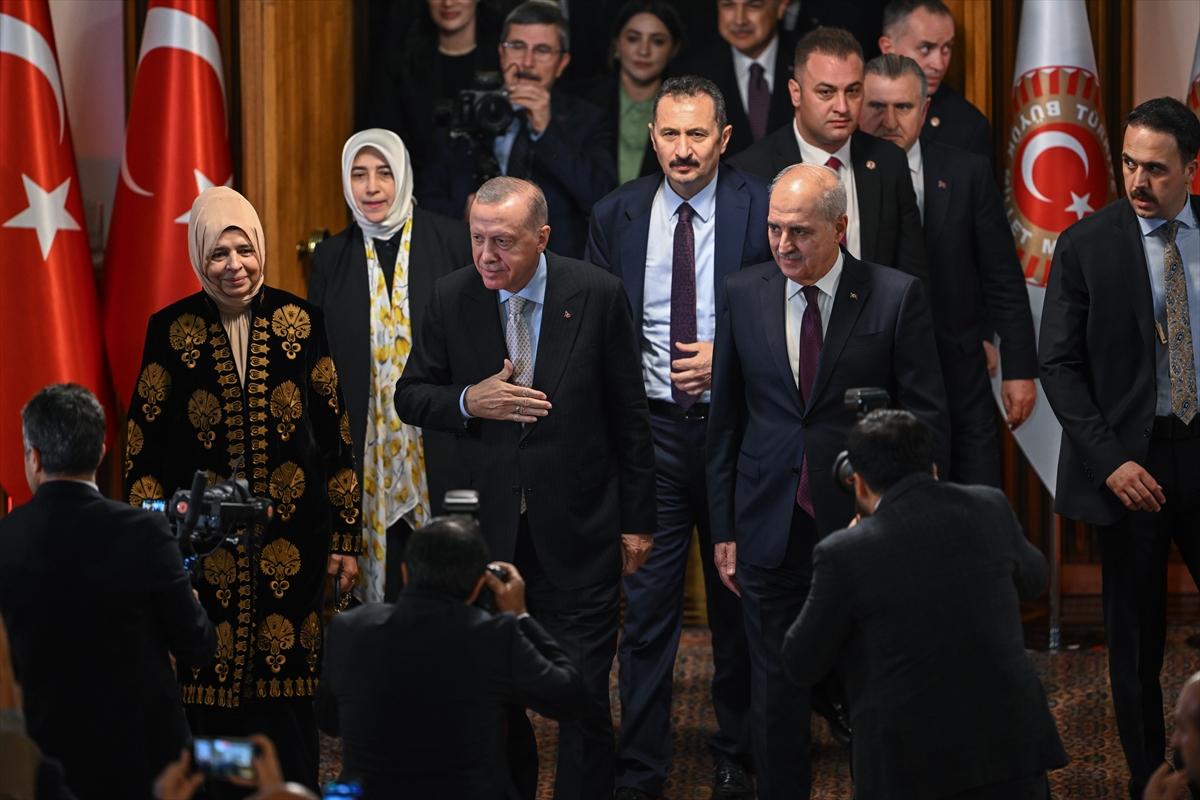
President Recep Tayyip Erdoğan attending a reception held in the TBMM Ceremony Hall, 1 October 2025 – (Anadolu Agency)
Attendees included President Erdoğan, TBMM Speaker Kurtulmuş, MHP General Chairman Devlet Bahçeli, İYİ Party General Chairman Müsavat Dervişoğlu, and DEM Party Co-Chairs Tuncer Bakırhan and Tülay Hatimoğulları. Also present were DEM Party TBMM Deputy Speaker Pervin Buldan and Deputy Group Chairman Gülistan Kılıç Koçyiğit. The meeting occurred immediately after the opening session and lasted approximately half an hour.
Following the meeting, President Erdoğan told reporters about the atmosphere of the discussion: “We had a very sincere conversation with the leaders. The meeting proceeded in a very sincere manner.”
Anadolu Ajansı. “TBMM Başkanı Kurtulmuş, Yeni Yasama Yılı Dolayısıyla Resepsiyon Verdi.” Accessed October 2, 2025. https://www.aa.com.tr/tr/politika/tbmm-baskani-kurtulmus-yeni-yasama-yili-dolayisiyla-resepsiyon-verdi/3704839#
Yeni Şafak. "Cumhurbaşkanı Erdoğan’dan TBMM’de Sürpriz Görüşme." Accessed October 2, 2025. https://www.yenisafak.com/gundem/cumhurbaskani-erdogandan-tbmmde-surpriz-gorusme-4754120
The announcement regarding the terrorist organization PKK’s decision to “withdraw from Türkiye” was made on 26 October 2025 at the foothills of Mount Kandil near the city of Sulaymaniyah in Iraq. In the press statement, it was stated that decisions adopted during the 12th PKK Congress held between 5 and 7 May 2025 were being implemented, and that all armed elements of the organization were being withdrawn from within Türkiye’s borders to northern Iraq under the guidance of Abdullah Öcalan.
The statement was read in Turkish by Sabri Ok, a senior member of the organization, and in Kurdish by Vejîn Dêrsim. Twenty-three PKK members were present at the location where the press statement was issued, and it was confirmed that these individuals had crossed from Turkish territory into Iraq.
The announcement included the following statements: “We are committed to the decisions of the 12th Congress and determined to implement them. However, to operationalize these decisions, the legal and political approaches required by the process must be promptly demonstrated in accordance with the resolutions of the 12th PKK Congress. Within this framework, the PKK’s unique Transition Law must be adopted, and the necessary freedoms and democratic integration laws to enable participation in democratic politics must be enacted without delay.”
Vice President Cevdet Yılmaz, in a statement posted on his social media account on 26 October 2025, characterized the PKK’s withdrawal decision as “an important step in the right direction.”
Yılmaz noted that the organization had decided to dissolve itself in accordance with the call of its founder and that its decision to remove its armed elements from Türkiye and the border regions marked the beginning of a new phase in the process.
In his statement, Yılmaz emphasized that the process would create a democratic political environment free from the shadow of weapons and terrorism, in which economic development and social welfare would gain momentum. He also stated that the “National Solidarity, Brotherhood and Democracy Commission” would define the framework for the necessary adjustments during the dismantling process of the terrorist organization.
Communication Director of the Presidency Burhanettin Duran, in a statement made on the same day, said: “The PKK’s announcement today represents a new step in the ‘Terror-Free Türkiye’ process. This new step is a positive development aligned with the objective of the PKK laying down its arms. The ‘Terror-Free Türkiye’ process continues thanks to the determined and courageous leadership of our President and Mr. Devlet Bahçeli. Our goal is to consolidate peace and security within our country and to establish lasting peace and stability in our region. The developments in our region and the growing uncertainties at the global level impose new responsibilities on Türkiye in the coming period. Persisting resolutely with the policies of ‘Terror-Free Türkiye’ and ‘Terror-Free Region’ is indispensable both to fulfill these responsibilities and to advance toward the ideal of a ‘Strong Türkiye’.”
AK Party Spokesperson and Deputy Chairman Ömer Çelik, in his statement regarding the PKK’s decision to “withdraw from Türkiye,” said: “With today’s developments, the PKK’s decision to withdraw from Türkiye and the announcement of new steps toward disarming are concrete outcomes of progress along the roadmap of ‘Terror-Free Türkiye’. The withdrawal of terrorist elements from Türkiye and the announcement of new steps toward disarmament constitute progress consistent with the main objective. The roadmap continues to produce positive results toward the goal of ‘Terror-Free Türkiye’. The ‘Terror-Free Türkiye’ process is a strategic and historic step taken to free our democracy from all threats. The goal of a ‘Terror-Free Region’, as a natural and inseparable consequence of this process, stands as a firm stance against imperialist interference through terrorist organizations, particularly among neighboring countries.”
AK Party Deputy Chairman Efkan Ala, in his statement on 26 October 2025, said: “Today, we have once again crossed an important threshold in our ‘Terror-Free Türkiye’ process, which we have pursued by strengthening our internal front. With the complete eradication of terrorism, which has been a chain around our country’s feet for years, the doors to a new era will open.”
Ala emphasized that recent statements and steps mark another significant milestone in the dismantling of terrorism. He added: “Today, we have once again crossed an important threshold in our ‘Terror-Free Türkiye’ process, which we have pursued by strengthening our internal front. With the complete eradication of terrorism, which has been a chain around our country’s feet for years, the doors to a new era will open.”
Ala underscored that the importance of the ‘Terror-Free Türkiye’ goal is evident without further explanation, given developments within Türkiye and in its surrounding region. He stated: “A Türkiye that focuses on its opportunities rather than consuming its energy on internal problems, and fully directs its capabilities and potential toward the goals of the ‘Century of Türkiye’, will be the winner. Our 86 million citizens, our brothers and sisters who have placed their hope in us and turned their gaze toward us, and our entire region will be the beneficiaries. Those who seek to destabilize our country and region, and who feed on terrorism, blood, and violence, will be the losers. With the will and wisdom of our President Mr. Recep Tayyip Erdoğan and Mr. Devlet Bahçeli, and with the support of our nation, our country will finally be freed from this problem, the enemy of every good. We once again emphasize that everyone’s contribution is vital to bringing this process, which will consolidate the stability of our country and region, to a successful conclusion.”
Anadolu Ajansı. "Cumhurbaşkanı Yardımcısı Yılmaz: ‘PKK’nın Türkiye’den Çekilme Kararı Doğru Yönde Atılmış Önemli Bir Adımdır.’" Accessed October 27, 2025. https://www.aa.com.tr/tr/gundem/cumhurbaskani-yardimcisi-yilmaz-pkknin-turkiyeden-cekilme-karari-dogru-yonde-atilmis-onemli-bir-adim/3727257#
Anadolu Ajansı. “AK Parti Genel Başkanvekili Ala: ‘Terörsüz Türkiye Sürecinde Bugün Önemli Bir Eşiği Daha Geride Bırakmış Bulunuyoruz.’” Accessed October 27, 2025. https://www.aa.com.tr/tr/gundem/ak-parti-genel-baskanvekili-ala-terorsuz-turkiye-surecinde-bugun-onemli-bir-esigi-daha-geride-birakmis-bulunuyoruz/3726947#
Anadolu Ajansı. “Terör Örgütü PKK’dan Türkiye’den Çekilme Kararı.” Accessed October 27, 2025. https://www.aa.com.tr/tr/gundem/teror-orgutu-pkkdan-turkiye-den-cekilme-karari/3726907
Anadolu Ajansı. “İletişim Başkanı Duran: ‘PKK’nın Bugünkü Açıklaması Silah Bırakma Hedefi Doğrultusunda Olumlu Bir Gelişmedir.’” Accessed October 27, 2025.
Yeni Şafak. "PKK: Türkiye’den Çıktık." Accessed October 27, 2025. https://www.yenisafak.com/gundem/pkk-turkiyeden-ciktik-4762548
Yeni Şafak. "Terörsüz Türkiye Sürecinde Yeni Adım: Terör Örgütü PKK’dan Çekilme Açıklaması." Accessed October 27, 2025. https://www.yenisafak.com/gundem/terorsuz-turkiye-surecinde-yeni-adim-teror-orgutu-pkkdan-cekilme-aciklamasi-4762278
President Recep Tayyip Erdoğan received the DEM Party delegation on 30 October 2025 at the Presidential Complex. The closed-door meeting was attended by AK Party Deputy General Chairman Efkan Ala and the Chief of the National Intelligence Organization (MİT), Ibrahim Kalın. The reception, which lasted approximately one hour, took place in the Presidential Protocol Hall.
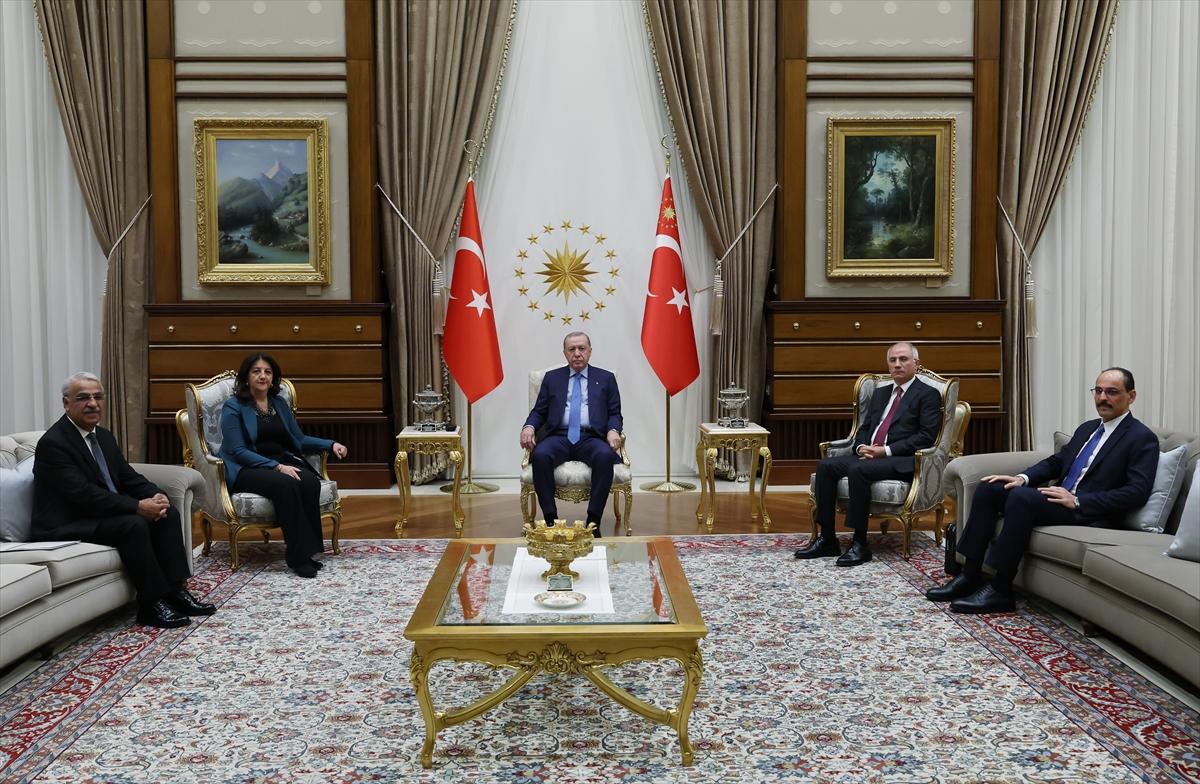
President Erdoğan and the DEM Party delegation, 30 October 2025 – (Anadolu Agency)
The delegation consisted of DEM Party Members of Parliament Pervin Buldan from Van and Mithat Sancar from Şanlıurfa. In a statement issued by the DEM Party, it was stated: “Our delegation presented its views and recommendations regarding the current stage of the peace and democratic society process and the steps to be taken thereafter during the approximately one-hour meeting.”
Yeni Şafak. "Cumhurbaşkanı Erdoğan, DEM Parti Heyetini Kabul Etti." Accessed October 30, 2025. https://www.yenisafak.com/gundem/cumhurbaskani-erdogan-dem-parti-heyetini-kabul-etti-4763720
On 3 November 2025, a DEM Party delegation visited İmralı Island to meet with Abdullah Öcalan, the leader of a terrorist organization. The delegation included DEM Party Member of Parliament for Van Pervin Buldan, Member of Parliament for Şanlıurfa Mithat Sancar, and lawyer Özgür Faik Erol. The meeting lasted approximately three hours.
In a statement issued after the visit, it was stated that the discussion took place in “an extremely positive atmosphere” and that efforts were made to “move the process into a positive phase.”
On 5 November 2025, President and AK Party General Secretary Recep Tayyip Erdoğan, in his speech at the AK Party Parliamentary Group Meeting, stated that “Turkey is walking with firm steps toward the horizon of a Turkey without terrorism.” Erdoğan emphasized that the memorandums should be viewed not as obstacles but as supportive steps that facilitate the process.
Emphasizing that everything is progressing within its proper framework, Erdoğan said, “We continue our efforts without being swayed by provocations and without giving priority to secret or open initiatives aimed at undermining the process.”
Erdoğan underlined that Turkey has maintained strict control over security and defense matters, stating, “We have courageously taken the steps necessary to free Turkey from the great distress and burden that has plagued it for nearly half a century.” He added, “As head of state, my determined and prudent stance, the bold and forward-looking contributions of our Cumhur İttifakı partner, the General Secretary of the Nationalist Movement Party Mr. Devlet Bahçeli, the intensive efforts of our party to embrace all segments of society, and the extraordinary dedication of all relevant state institutions have enabled us, thanks be to God, to walk with firm steps toward the horizon of a Turkey without terrorism.”
Erdoğan noted that significant developments had occurred in recent weeks, mentioning that he had received DEM Party Member of Parliament for Van Pervin Buldan and DEM Party Member of Parliament for Şanlıurfa Mithat Sancar, and described the meeting as “highly constructive.”
Reiterating that he and the parliamentarians shared similar concerns regarding the careful advancement of the process, Erdoğan remarked, “It is evident that we have reached a new crossroads on the path toward the goals of a Turkey without terrorism and a region without terrorism. Everyone must put their hand under the stone, support the process, and focus on making the maximum possible contribution.”
Erdoğan stated that as the Cumhur İttifakı, they have fulfilled their responsibilities and will continue to do so. He highlighted that the National Solidarity, Brotherhood and Democracy Commission had successfully carried out its founding mission through meetings held since 5 August, and stressed that it was highly valuable for all issues related to the process to be discussed under the Commission’s umbrella, for all relevant parties to be heard without exclusion, and for differing opinions—even contrary ones—to be expressed.
Erdoğan noted that the Commission, under the chairmanship of the Speaker of the Grand National Assembly Numan Kurtulmuş, had filled an important gap and built a strong body of knowledge to guide decision-makers. He emphasized the importance of the comprehensive report the Commission will prepare and the legal roadmap it will establish for the coming period.
Erdoğan continued his speech as follows: “As the Cumhur İttifakı, moving in complete solidarity, we will achieve our goals of a Turkey without terrorism and then a region without terrorism. On this occasion, I sincerely thank Mr. Devlet Bahçeli, who in yesterday’s group meeting delivered historic assessments that exposed all the schemes of the destructive and bankrupt mindset, beginning with the FETÖ elements, and who went further by leaving their foul ambitions behind them. As Mr. Bahçeli rightly pointed out, a Turkey without terrorism is a strong Turkey that has broken its rusty chains. A Turkey without terrorism is a happy Turkey living in peace and tranquility. A Turkey without terrorism will be the emblem of a successful, victorious, and respected Turkey marked by immense brotherhood and embrace. With the support of our Commission and our honored nation, God willing, we will together build this Turkey.”
Anadolu Ajansı. "Cumhurbaşkanı Erdoğan: Terörsüz Türkiye Menziline Doğru Emin Adımlarla Yürüyoruz." Accessed November 6, 2025. https://www.aa.com.tr/tr/politika/cumhurbaskani-erdogan-terorsuz-turkiye-menziline-dogru-emin-adimlarla-yuruyoruz/3735432
CNN Türk. “Son Dakika… İmralı Ziyareti Sonrası DEM Heyetinden Açıklama.” Accessed November 6, 2025. https://www.cnnturk.com/turkiye/son-dakika-imrali-ziyareti-sonrasi-dem-heyetinden-aciklama-2355663
Under the umbrella of the Grand National Assembly of Türkiye, the National Solidarity, Brotherhood and Democracy Commission, established with the goal of a “Türkiye Without Terrorism,” held its 18th meeting on 21 November 2025 under the chairmanship of TBMM Speaker Numan Kurtulmuş. The meeting took place in the TBMM Ceremony Hall and addressed the evaluation of the commission’s activities since 5 August 2025, as well as the agenda of a visit to the İmralı High Security Prison Institution.
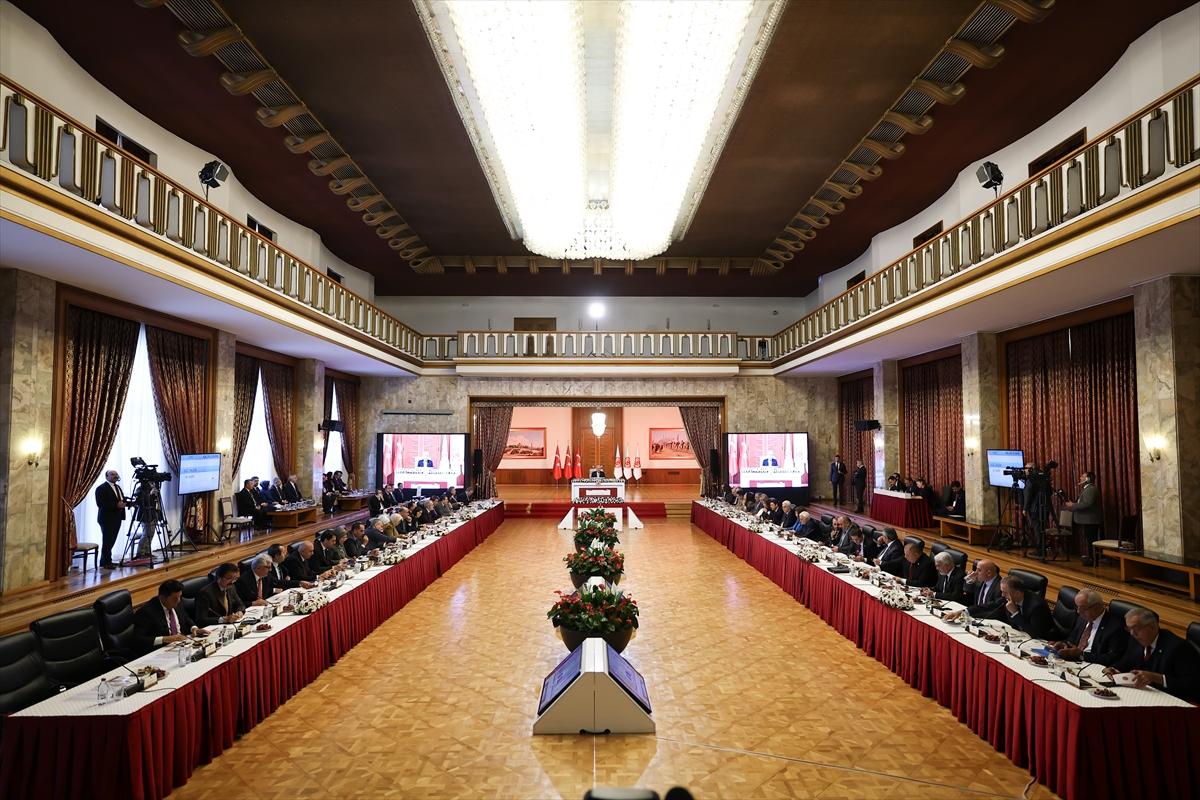
18th Meeting of the National Solidarity, Brotherhood and Democracy Commission, 21 November 2025 – (Anadolu Agency)
In his opening remarks, TBMM Speaker Numan Kurtulmuş stated that since its inception, the commission had maintained “an exceptionally sensitive and meticulous approach,” adding: “What is the purpose of these efforts? To produce an exceptionally robust report that strengthens national solidarity, brotherhood and democracy, as reflected in the commission’s very name. This is one of the most important tasks the commission must fulfill in its final phase.”
Kurtulmuş emphasized that since its establishment, the commission had operated according to the principle that “procedure precedes substance,” and that all decisions had been implemented in accordance with established guidelines. He underscored the commission’s adherence to procedural discipline, stating: “At no time, not even once, have we engaged in any practice that undermines or exceeds this procedure.”
During the 17 meetings held by the commission since 5 August 2025, information was gathered from various state institutions, with particular emphasis placed on the assessments presented by the heads of the Ministry of National Defense, the Ministry of the Interior and the National Intelligence Organization during closed sessions. Kurtulmuş noted: “We are well aware that the information presented during the 17th meeting was exceptionally significant and constitutes critical considerations for the healthy continuation of this process.”
The meeting also set the goal of transitioning to the final stage of the process and preparing the final report. To this end, a vote was held and it was decided that subsequent meetings would be conducted in closed session.
The main agenda item of the meeting was whether the commission’s delegation would travel to İmralı Island. The issue was put to a vote among the commission’s 51 members. The vote resulted in 32 “yes” votes, 2 “no” votes, and 3 abstentions, leading the commission to decide by majority vote to visit İmralı.
The TBMM Presidency, in its official statement issued on 22 November 2025, confirmed the commission’s decision, stating: “The National Solidarity, Brotherhood and Democracy Commission decided, by a qualified three-fifths majority of its full membership, to visit the İmralı High Security Prison Institution.” The statement also required that party groups submit the names of their representatives to the delegation by the morning of 22 November, and that proposals regarding the final report be submitted to the Presidency by the evening of 28 November.
Before the vote, CHP Deputy Group Chairman Murat Emir opposed the decision to hold closed sessions and to visit İmralı, stating: “We do not consider it appropriate for our party to nominate a member.” Emir argued that the matter could not be treated as a mere technical meeting and insisted that transparency required the process not to be conducted in secrecy.
MHP Deputy Chairman Feti Yıldız, in remarks to journalists prior to the meeting, declared: “On behalf of the MHP, I will go to İmralı,” and emphasized that the decision should have been made through an open vote. Yıldız added: “As the MHP, we have nothing to hide from the Turkish nation.”
DEM Party Deputy Group Chairman Gülistan Kılıç Koçyiğit stated that her party supported the visit to İmralı, saying: “Whether the vote is open, secret or closed is of no consequence to us. As a whole, we believe that a visit to İmralı is necessary and that Öcalan should be allowed to rest.”
DSP General Secretary Önder Aksakal proposed that the meeting on İmralı be conducted using the SEGBİS system, stating that this would allow the process to be carried out more transparently with the participation of all members. HÜDA PAR General Secretary Zekeriya Yapıcıoğlu similarly remarked, “A formula can be established allowing commission members to ask questions, and Abdullah Öcalan can be heard via the SEGBİS method.”
According to the graphical information published on the day of the meeting, the party distribution within the commission is as follows: Ak Party: 22 members, CHP: 11 members, DEM Party: 5 members, MHP: 4 members, Yeni Yol Group: 3 members, HÜDA PAR, Yeniden Refah, TİP, EMEP, DSP and Democratic Party: 1 member each.
The Grand National Assembly of Türkiye further announced in its statement on the decision that Ak Party had nominated Hatay Member of Parliament and Deputy General Secretary Hüseyin Yayman to the committee. It was stated that Yayman was selected for the committee due to his previous work related to the process and his academic experience. The meeting was reported to have concluded in a closed session, and it was announced that discussions regarding the İmralı visit would be included in the commission’s final report in the next stage.
Anadolu Ajansı. “TBMM Başkanlığı: Millî Dayanışma, Kardeşlik ve Demokrasi Komisyonu, 5’te 3 Çoğunlukla İmralı’ya Gitme Kararı Aldı.” Accessed November 22, 2025. https://www.aa.com.tr/tr/politika/tbmm-baskanligi-milli-dayanisma-kardeslik-ve-demokrasi-komisyonu-5-te-3-cogunlukla-imraliya-gitme-karari-aldi/3750306
Anadolu Ajansı. “TBMM Başkanı Kurtulmuş: ‘Bu Çalışmaların Muradı, Millî Dayanışmayı Güçlendirecek Bir Raporu Ortaya Koymak.’” Accessed November 22, 2025. https://www.aa.com.tr/tr/politika/tbmm-baskani-kurtulmus-bu-calismalarin-muradi-milli-dayanismayi-guclendirecek-bir-raporu-ortaya-koymak/3750256
Anadolu Ajansı. “TBMM Millî Dayanışma, Kardeşlik ve Demokrasi Komisyonu Toplandı.” Accessed November 22, 2025. https://www.aa.com.tr/tr/politika/tbmm-milli-dayanisma-kardeslik-ve-demokrasi-komisyonu-toplandi/3750220
According to an announcement by the Grand National Assembly of Türkiye on 25 November 2025, a delegation formed by the National Solidarity, Brotherhood and Democracy Commission visited the Imrali High Security Prison on 21 November, in accordance with a decision taken on that date. The announcement stated that the visit was carried out based on a qualified majority decision of the commission.
The Grand National Assembly of Türkiye’s statement included the following: “As a result of the discussions, positive outcomes were achieved in terms of social cohesion, strengthening brotherhood and advancing the process with a regional perspective.”
The announcement also noted that since its first meeting on 5 August 2025, the commission had convened 18 times and conducted listening activities directed at relevant sectors. It was recalled that the commission’s most recent meeting took place on 21 November 2025, during which a qualified majority decision was adopted regarding the release of Abdullah Öcalan, leader of the Terrorist Organization.
According to the Grand National Assembly of Türkiye’s report, during the visit on 24 November 2025, detailed questions were posed and statements were collected concerning developments linked to the Call for Peace and Democratic Society held on 27 February, as well as statements regarding the organization’s declaration of its own dissolution and disarmament and the 10 March agreement in Syria.
In the evaluation following the visit, it was stated that the process had “progressed positively toward social cohesion, strengthening brotherhood and reinforcing regional stability,” and that the commission’s “determined and resolute attitude toward achieving its objectives would be sustained.”
Following the National Solidarity, Brotherhood and Democracy Commission’s visit to the Imrali High Security Prison, MHP General Chairman Devlet Bahçeli made statements on 25 November 2025 during his party’s parliamentary group meeting. In his speech, Bahçeli assessed the “Turkey Without Terrorism” process and stated: “‘Turkey Without Terrorism’ is the unwavering resolve of the Turkish nation and the Turkish state. Neither any shameless maneuver nor any reckless political act will be able to obstruct or sabotage this decision and its determination.”
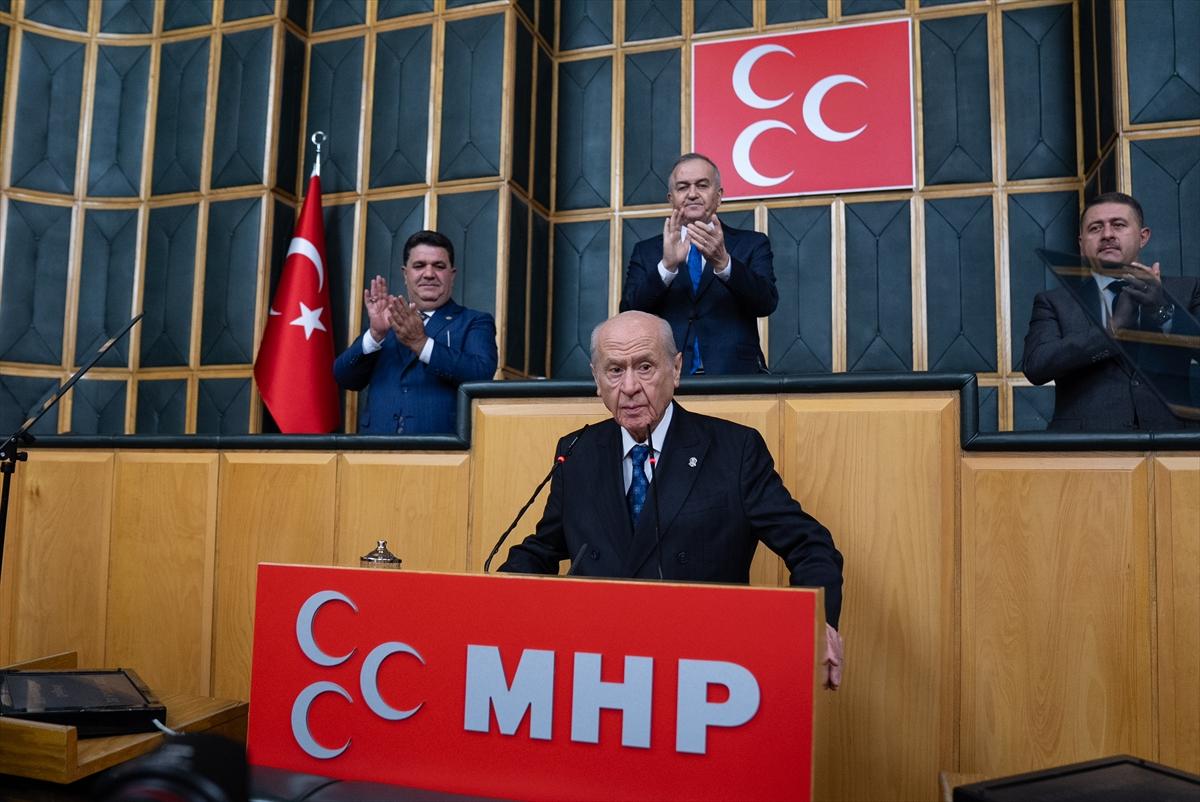
MHP General Chairman Devlet Bahçeli at his party’s parliamentary group meeting, 25 November 2025 – (Anadolu Agency)
Bahçeli, identifying Imrali as one of the most serious targets of the “Turkey Without Terrorism” objective, added: “They say they will judge us. They say they will hold us accountable. They say we have committed crimes under the constitution and the law. Judge yourselves, judge your own bag-carrier deceit and your opportunistic subservience. At my age, I declare with dignity and honesty: enough! Let Turkey and the Turkish nation find peace, tranquility and calm. Let terrorism be permanently uprooted from our lives. Let our end be the gallows if it must be. We have endured fear for too long. Our feigned fears and manufactured anxieties have gone unnoticed and unacknowledged.
If we had paid attention to the false challenges posed by jackals mingling with the trail of the Kurds, we would have long ago lost faith in our country or in ourselves. The path the Kurd follows is again the wolf’s path, and those who will answer who is chasing whose bones are clear. Suspicion is the exception; trust is the norm. Our side is the noble Turkish nation. One of the most serious targets of the ‘Turkey Without Terrorism’ objective is Imrali. The qualified majority decision taken by the National Solidarity, Brotherhood and Democracy Commission established in the Grand National Assembly of Türkiye last Friday to visit Imrali is a historic development. On this occasion, I sincerely thank our Deputy General Chairman and Istanbul Member of Parliament Mr. Feti Yıldız and the other members of parliament who went to the island.”
Bahçeli also addressed the decision by the CHP and other parties not to visit Imrali, saying: “Let them do as they wish, it is no problem. Had we pursued the goal of ‘Turkey Without Terrorism’ by hoping for salvation from them, we would not even be able to stir from our place.” Emphasizing that the Nationalist Movement Party is not a spectator in this process but a movement “possessing the will to change the direction of life,” Bahçeli stated: “We are not spectators. We are the Nationalist Idealist movement, the witness of our time and our ground, endowed with the will to change the direction of life. Courage leads to victory, indecision to danger, cowardice to disaster. With our hearts and souls, we stand with ‘Turkey Without Terrorism.’ Defending our history, our ancestors, our martyrs and our flag, embracing a common future, uniting around national values, preserving the honor of Türkiye, safeguarding national unity, national identity and the national state, and living and sustaining a thousand-year-old brotherhood—all these are the reasons we stand firmly to the very end for ‘Turkey Without Terrorism.’”
We do not concern ourselves with what a politically, morally and conscientiously bankrupt opposition mindset—devoid of principle, will or passion, whose only capital is lies, hypocrisy and exploitation, mired in corruption, theft and plunder, looking at problems from other capitals, and characterized by failure, malice and suspicion—has done or said. We pay no attention to scribblers whose pens have been rented, opportunistic academics exploiting university platforms, research firms producing results on order, so-called think tanks generating biased reports, state-appointed pseudo-intellectuals insulting our ancestors, media channels bound by profit to their own belly buttons, or so-called civil society collaborators. If we were to surrender to, or concede to, the common denominator of this vile front that displays itself on screens, headlines, columns and podiums, I say: let our blood dry up. Our call is the call of a violated, humiliated and scorned national honor. Our call is the call of the Turkish nation, which will rule and prevail in the new century under the banner of ‘Turkey Without Terrorism.’ Ultimately, our call is the call for the salvation of Türkiye.”
Completing his speech with a call for unity and cohesion, Bahçeli said, “We will not give opportunities to troublemakers and destroyers. We will not grant credibility to exploiters. We will not pay attention to provocation and conspiracy. We will unite and embrace one another. As Kurds and Turks, we will speak with one voice and breathe as one. We will never forget that there is no other way or method to carry our Türkiye and our revered nation beyond the ages. We all possess the determination and faith to achieve this. The day is not the day of sterile debates. The day is the day of unity, cohesion, and strengthening our ranks. No one who seeks truth and pursues justice will listen to noise or give credence to lies and gossip.”
Anadolu Ajansı. “MHP Genel Başkanı Bahçeli: ‘Terörsüz Türkiye, Türk Milletinin ve Türk Devletinin Tavizsiz Kararıdır.’” Accessed November 26, 2025. https://www.aa.com.tr/tr/politika/mhp-genel-baskani-bahceli-terorsuz-turkiye-turk-milletinin-ve-turk-devletinin-tavizsiz-kararidir/3753366#
Anadolu Ajansı. “TBMM Başkanlığı Milli Dayanışma, Kardeşlik ve Demokrasi Komisyonu, İmralı Yüksek Güvenlikli Ceza İnfaz Kurumu’na Gitti.” Accessed November 25, 2025. https://www.aa.com.tr/tr/gundem/tbmm-baskanligi-milli-dayanisma-kardeslik-ve-demokrasi-komisyonu-imrali-yuksek-guvenlikli-ceza-infaz-kurumuna-gitti/3752889#
Türkiye Büyük Millet Meclisi (TBMM). "Milli Dayanışma, Kardeşlik ve Demokrasi Komisyonu Üyeleri İmralı Yüksek Güvenlikli Ceza İnfaz Kurumu’nu Ziyaret Etti." TBMM Resmî İnternet Sitesi. Accessed November 25, 2025. https://www.tbmm.gov.tr/Haber/Detay?Id=8de86ee8-b2d7-4117-9af3-019ab6f5d5f3
On 19 December 2025, the Report of the National Solidarity Brotherhood and Democracy Commission, prepared by the Justice and Development Party (AK Party), was submitted to the Presidency of the Grand National Assembly of Türkiye on the same day following its presentation to President Recep Tayyip Erdoğan.
The report submission ceremony was attended by AK Party Deputy Group Chairman Abdulhamit Gül, Chairman of the TBMM Justice Commission Cüneyt Yüksel, and AK Party Deputy Chairman Mustafa Şen. Gül, in his remarks on the report, stated: “We presented our report under 15 headings, spanning 60 pages. With intense effort, all commission members and our party’s relevant authorities and committees jointly evaluated the content.”
In his remarks, Gül emphasized that the report constitutes a comprehensive study prepared in line with the objective of a “Terror-Free Türkiye”, covering approximately 15 headings and extending to 60 pages. He expressed gratitude to President Recep Tayyip Erdoğan, MHP Chairman Devlet Bahçeli, and TBMM Speaker Numan Kurtulmuş.
The report, transmitted to the TBMM after its presentation to President Erdoğan, marks the final stage of the commission’s process. With this development, all reports prepared by the political parties represented within the National Solidarity Brotherhood and Democracy Commission have been formally submitted to the Presidency of the Grand National Assembly of Türkiye, completing the commission’s reporting phase.
Anadolu Ajansı. “AK Parti Millî Dayanışma, Kardeşlik ve Demokrasi Komisyonu Raporunu Cumhurbaşkanı Erdoğan’a Sundu.” Accessed December 19, 2025. https://www.aa.com.tr/tr/politika/ak-parti-milli-dayanisma-kardeslik-ve-demokrasi-komisyonu-raporunu-cumhurbaskani-erdogana-sundu/3774905#
Anadolu Ajansı. “AK Parti Millî Dayanışma, Kardeşlik ve Demokrasi Komisyonu Raporunu TBMM Başkanlığına Sundu.” Accessed December 19, 2025. https://www.aa.com.tr/tr/politika/ak-parti-milli-dayanisma-kardeslik-ve-demokrasi-komisyonu-raporunu-tbmm-baskanligina-sundu/3775574#
TRT Haber. “Terörsüz Türkiye İçin Hazırlanan Rapor Yarın TBMM’ye Sunulacak.” Accessed December 19, 2025. https://www.trthaber.com/haber/gundem/terorsuz-turkiye-icin-hazirlanan-rapor-yarin-tbmmye-sunulacak-929069.html
The Terror-Free Türkiye Process is a multi-stage demilitarization program initiated by the Republic of Türkiye State with the aim of completely eliminating the armed presence of the terrorist organization PKK and removing both internal and external terrorist threats against Türkiye. This process is implemented as a comprehensive state policy encompassing security reforms, political dialogue, social consensus, disarmament, and constitutional amendments.
A critical turning point in Türkiye’s half-century-long struggle against terrorism, this process was launched to eliminate internal security threats to the state, ensure regional stability, enhance political stability, and strengthen social cohesion. The Terror-Free Türkiye Process is a transformation program conducted simultaneously by the state across military, political, and social domains.
President and AK Party General Secretary Recep Tayyip Erdoğan at his party’s 32nd Consultation and Evaluation Meeting in Kızılcahamam, July 12, 2025 – (Anadolu Agency)
The initiation of the process was significantly influenced by advancements in Türkiye’s defense industry and military successes achieved in the fight against terrorism. In particular, the removal of FETÖ from state institutions enhanced the effectiveness of security forces, narrowing the operational scope of the PKK both within Türkiye and beyond its borders.
The first political step of the process was recorded when MHP General Chairman Devlet Bahçeli, during the opening of the Turkish Grand National Assembly on October 1, 2024, greeted DEM Party members and subsequently made public statements. Bahçeli signaled the need for parliamentary engagement to end the PKK by declaring: “To those who say nothing will happen unless the terrorist leader is involved, I say: lift the isolation, let him come to the Assembly and declare that the organization has been dissolved.”
This call was adopted by President Recep Tayyip Erdoğan, and the process began to be implemented as the joint will of the People’s Alliance. Erdoğan emphasized that the process was not based on negotiation or compromise, stating: “Whatever we do, we do for Türkiye. Our Terror-Free Türkiye project is carried out without dishonoring our state or forcing our nation to bow its head.”
The DEM Party delegation actively and constructively participated in the process. Following meetings with terrorist leader Abdullah Öcalan on İmralı Island, it publicly shared appeals for the PKK to lay down arms and dissolve itself. DEM Party representatives affirmed that the path to resolution lay within the Turkish Grand National Assembly and engaged in dialogue with all political parties in Parliament.
The Terror-Free Türkiye Process advanced on the basis of restructuring the state’s internal security policies, extending counter-terrorism strategies beyond national borders, and strengthening the democratic political sphere. During this process, Türkiye adopted the principle of rejecting interference by third-party actors and pursued the process strictly in accordance with its national interests.
MHP General Chairman Devlet Bahçeli – (Anadolu Agency)
MHP General Chairman Devlet Bahçeli formally initiated the political phase of the Terror-Free Türkiye Process during a party group meeting in the Turkish Grand National Assembly on October 22, 2024. In his speech, Bahçeli emphasized that Türkiye did not need a peace process and called on terrorist leader Abdullah Öcalan, if his isolation were lifted, to appear before the DEM Party group in Parliament and declare that terrorism had ended and the organization had been dissolved. Bahçeli stated: “Neither Kandil nor Edirne—let the address extend from İmralı to DEM. This heavy and historic terrorist issue must be completely removed from the national agenda. We have reached the point of saying ‘enough.’ We are fully prepared to endure any sacrifice, any hardship, and take every necessary step for our homeland, our nation, our state, our flag, our shared future, and complete independence. We are determined, we are resolute, and before the judgment of history, I swear: we are committed.”
Bahçeli declared that if everyone united behind the goals of a terror-free politics, a terror-free country, and a terror-free future, “We do not place our hands under the stone—we place our entire bodies under it, and we are here.” This call established the political foundation for resolving the process under the parliamentary framework.
Bahçeli’s call led to direct steps within Parliament. On January 2, 2025, the DEM Party delegation was received by Speaker of the Assembly Numan Kurtulmuş, during which information was provided regarding visits to İmralı and the legal framework needed for the process within Parliament.
Bahçeli noted that similar resolution models had failed to produce results for Türkiye to date, stating: “The crux of the matter is this: accepting the demands of a terrorist organization means capitulating to terrorism. Moreover, it will only provoke new attacks. Just as it is wrong to show that society has bowed under arms and violence, it is equally erroneous to refuse taking democratic steps to improve the conditions that gave rise to terrorism. The media’s stance and attitude are also crucial. Presenting terrorist acts as successes of terrorists or as sources of public panic is equivalent to pouring water into the mill of divisive organizations. Two factors undermine the morale and resistance of terrorists: first, the emergence of doubt about their core claims; second, being convinced that their armed actions are doomed to failure. The armed actions of the divisive terrorist organization PKK are destined to fail. No destination can be reached through terrorism—it cannot be reached, and never will be. Türkiye will never consent to divisive terrorism; negotiations and imposed ceasefires will not work. While relentlessly combating terrorism on one front, it is the most rational course to simultaneously implement democratic reforms and socio-economic adjustments. There is no common ground between our Kurdish brothers and the terrorist organization.”
MHP’s clear stance on the process affirmed that all state institutions must jointly implement it. Bahçeli indicated that if terrorist leader Abdullah Öcalan declared the end of terrorism, necessary legal adjustments—including granting the “right to hope”—could be made. Contacts between MHP and DEM Party continued along the political dialogue framework established by Bahçeli’s “outstretched hand” appeal.
As part of the Terror-Free Türkiye Process, the DEM Party delegation conducted a series of meetings with terrorist leader Abdullah Öcalan at İmralı Prison. The first meeting took place on December 28, 2024. During the meeting, attended by DEM Party MPs Sırrı Süreyya Önder and Pervin Buldan, Öcalan stated he was “ready to take a positive step and issue a call.” In its post-meeting statement, DEM Party affirmed: “Strengthening Turkish-Kurdish brotherhood is a historical responsibility. The most vital foundation for the success of this process is the Turkish Grand National Assembly.”
The second İmralı meeting occurred on January 22, 2025. It was emphasized that the process must advance under the parliamentary framework and that all political actors must rise above narrow, short-term calculations and take initiative. Terrorist leader Abdullah Öcalan stated: “I possess the competence and determination to make the necessary contribution to the new paradigm endorsed by Mr. Bahçeli and Mr. Erdoğan.”
The third and critical İmralı meeting took place on February 27, 2025. During this meeting, terrorist leader Abdullah Öcalan transmitted the document titled “Call for Peace and Democratic Society” to the public through the İmralı delegation. In this document, it was stated that the PKK had completed its historical mission, lost the meaning of its structure rooted in revolutionary socialism, and must dissolve itself. Öcalan emphasized that the PKK must convene a congress to formally dissolve and that all armed groups must lay down their weapons.
Following the İmralı meetings, the DEM Party delegation engaged in consultations with all political parties represented in Parliament. The DEM Party delegation met with Speaker of the Assembly Numan Kurtulmuş, presented their proposals regarding the process, and requested support for establishing a parliamentary commission.
The call issued by terrorist leader Abdullah Öcalan directly triggered the convening of the 12th Extraordinary Congress of the Terrorist Organization PKK and the initiation of its dissolution process. In his appeal, Öcalan stated: “Just as every modern society and party that has not been forcibly terminated chooses to dissolve itself voluntarily, convene your congress and make a decision to integrate with the state and society; all groups must lay down their arms and the PKK must dissolve itself.”
On May 9, 2025, DEM Party Spokesperson Ayşegül Doğan, in her statement regarding the process, emphasized that after the PKK’s decision to dissolve, steps must be taken toward democratization. Doğan stated: “We are ready to fulfill all our responsibilities with courage, sacrifice, and determination to realize our vision of a Türkiye with equal, just, and lasting peace.”
Following the “Call for Peace and Democratic Society” issued by terrorist leader Abdullah Öcalan on February 27, 2025, the Terrorist Organization PKK convened its 12th Extraordinary Congress from May 5 to 7, 2025. The Congress adopted a decision to dissolve the organization. This decision was publicly announced with the statement that “the PKK has completed its historical mission, its organizational structure has been invalidated, and its armed struggle method has been terminated.”
The dissolution decision was regarded as the most critical phase of the Terror-Free Türkiye Process. With this decision, the Terrorist Organization PKK declared the end of its name and armed existence. The organization’s dissolution statement announced: “All activities conducted under the name of the PKK are hereby terminated.” It was stated that the decisive factor in reaching this decision was the call issued by terrorist leader Abdullah Öcalan.
Following the dissolution decision, details regarding the disarmament process were made public. It was decided that the surrender of weapons would be conducted under the supervision of the United Nations and monitored by international observers. The designated locations for weapon surrender were the Amediye district of Duhok Province in northern Iraq, the Binar and Köysancak regions of Erbil, and the Seyid Sadık district of Sulaymaniyah. The surrender process will be carried out in three phases.
The first public statement following the dissolution decision was made by MHP Deputy Group Leader Celal Adan, who said: “Thanks to the iron will of our leader Devlet Bahçeli, our deepest wound has been healed, and the cycle of blood and hatred has ended.”
In the subsequent stages of the process, the PKK began the disarmament and evacuation of its camps, with state authorities ensuring that this process was carried out transparently, on a fixed schedule, and under United Nations supervision.
Following the dissolution decision adopted by the PKK at its 12th Congress, the disarmament process commenced. This process was implemented under the three-phase surrender plan, under the supervision of international observers and the United Nations. The designated locations for weapon surrender were the Amediye district of Duhok Province, the Binar and Köysancak regions of Erbil, and the Seyid Sadık district of Sulaymaniyah in northern Iraq.
A group from the terrorist organization PKK destroying weapons in the city of Sulaymaniyah, Iraq, on July 11, 2025 – (Anadolu Agency)
The first concrete step of the disarmament process was taken on July 11, 2025, during a ceremony held in Sulaymaniyah, where a 30-member group from the Terrorist Organization PKK destroyed its weapons. The group was led by PKK leaders Bese Hozat, Behzat Çarçel, and Tekoşin Ozan. The weapons destroyed included automatic, semi-automatic, and heavy machine guns.
At the historic weapons surrender ceremony, officials from Türkiye’s National Intelligence Organization (MİT), security forces of the Kurdistan Regional Government of Iraq, DEM Party representatives, civil society observers, and media personnel were present. DEM Party Co-Chairs Tuncer Bakırhan and Tülay Hatimoğulları, along with Ahmet Türk, also attended the ceremony.
The disarmament process is planned to be completed by the end of September 2025. As part of this process, the PKK aims to fully evacuate all its camps in northern Iraq. The evacuation of the Kandil and Mahmur camps has been identified as one of the critical stages of the process. The Republic of Türkiye State expects the Iraqi Central Government and the Kurdistan Regional Government to consolidate their control over the region following the closure of these camps.
After the completion of disarmament, plans will be implemented regarding the future of former PKK members. Members who did not participate in armed actions will be reintegrated into civilian life under the supervision of state institutions. Leaders of the organization and those involved in serious crimes are planned to be transferred to third countries. The Iraqi Central Government and the Kurdistan Regional Government are assuming a facilitating role in this process.
President Recep Tayyip Erdoğan emphasized that the process was not based on negotiation or compromise but on the determined will of the state, stating: “Now we will sit down and talk—not with weapons, not with violence, not to fight—but to converse, to foster brotherhood, by removing the terrorist barrier between us, face to face, heart to heart. We will resolve all our issues through dialogue.”
In his statements regarding the Terror-Free Türkiye Process, President Recep Tayyip Erdoğan affirmed that the process was being implemented by the determined will of the state and that Türkiye had reached an irreversible stage in its liberation from terrorism. Speaking at the 32nd Consultation and Evaluation Meeting in Kızılcahamam on July 12, 2025, Erdoğan stated: “Today, the dawn of a great and strong Türkiye is breaking. Now we will sit down and talk—not with weapons or violence, but for dialogue and brotherhood, removing the terrorist barrier between us, face to face, heart to heart.”
Recalling that the Terrorist Organization PKK had decided to dissolve and lay down its arms following the call of terrorist leader Abdullah Öcalan, Erdoğan said: “As of yesterday, the 47-year terror scourge has, God willing, entered its final phase. Türkiye is closing a long, painful, tear-filled chapter.” Emphasizing that this process was neither a negotiation nor a compromise, Erdoğan added: “We have closely monitored every initiative aimed at stopping the bloodshed and calming the tears of mothers. Let everyone be certain: the Republic of Türkiye will never dishonor its dignity or force its nation to bow its head. We are pursuing our Terror-Free Türkiye project with this understanding.”
President Erdoğan, noting the joint action of the People’s Alliance and the DEM Party, stated: “No one has the right to question the nationalism and patriotism of MHP General Chairman Devlet Bahçeli and his team. Similarly, no one can question our love for Türkiye. Whatever we do, we do for Türkiye.” Erdoğan stressed that the government was closed to all speculation and that structures benefiting from terrorism were disturbed by these developments: “The end of terrorism most disturbs them, because their rent-seeking doors are closing, their interests are being harmed, and their schemes are collapsing. They are making intense efforts to confuse the public and cloud minds. They claim to be nationalists and patriots, yet they cannot rejoice as terrorism ends. No matter what they do, terrorism will end.”
Erdoğan affirmed that all citizens of Türkiye are equal before the state: “Every citizen of this country—whether Turkish, Kurdish, Arab, Sunni, or Alevi—has equal rights before the state. The Republic of Türkiye is the common home and common roof for all of us.” Regarding the process with terrorist leader Abdullah Öcalan, Erdoğan stated: “We will provide every possible facilitation to those who take a step forward and open the door fully to those seeking an exit. But if waters turn backward, we will take the necessary measures.”
Erdoğan affirmed that the process would continue within the framework of Parliament: “As the first step, we will establish a commission in the Turkish Grand National Assembly and begin discussing the legal requirements of the process under the parliamentary roof.” He emphasized that the People’s Alliance, comprising the AK Party, MHP, and DEM Party, would carry this process into the future. Erdoğan also noted that Kurds living in Iraq and Syria were part of the process, stating: “It is essential for our Syrian Kurdish brother to live in peace, security, and safety.”
Erdoğan concluded his speech with these words: “Hand in hand, heart to heart, we will jointly build the Türkiye Century. With the end of terrorism, the Republic of Türkiye State will become far stronger and more confident. We will now direct our energy toward our true mission. Türkiye will grow through brotherhood, strengthen through democracy, and move toward the future in stability and security.”

The Process for a Terror-Free Türkiye is advancing as a multi-stage demilitarization program aimed at eliminating both internal and external terrorist threats to Türkiye by ending the armed presence of the terrorist organization PKK. Security reforms, political dialogue, social consensus, and constitutional amendments are being implemented simultaneously. The dissolution and disarmament steps concerning the PKK are continuing according to the established schedule. The state aims to complete the process within the framework of the Grand National Assembly of Türkiye and to establish lasting social peace.
No Discussion Added Yet
Start discussion for "Turkey Without Terrorism Process" article
August 5, 2025
Demands by MHP General Chairman Devlet Bahçeli and the Parliamentary Process
August 5, 2025
DEM Party Delegation’s Imralı Meetings and the Call by Terrorist Leader Abdullah Öcalan
August 5, 2025
The Dissolution Process of the Terrorist Organization PKK and its 12th Congress
August 5, 2025
Disarmament and Demobilization Phases
August 5, 2025
Statements by President Recep Tayyip Erdoğan on the Process
August 5, 2025
Chronological Stages of the Terror-Free Türkiye Process (2024–2025)
August 5, 2025
Establishment of the Commission for a Terror-Free Türkiye in the Grand National Assembly of Türkiye (31 July 2025)
August 5, 2025
Invitation by TBMM President Numan Kurtulmuş to Commission Members (1 August 2025)
August 5, 2025
Statements by MHP General Chairman Devlet Bahçeli on the Commission Process (4 August 2025)
August 5, 2025
First Meeting of the TBMM Commission for a Terror-Free Türkiye (5 August 2025)
August 7, 2025
President Recep Tayyip Erdoğan’s Letter on “Terror-Free Türkiye”
August 27, 2025
Meetings of the National Solidarity, Brotherhood and Democracy Commission
October 2, 2025
President Erdoğan Meets with Devlet Bahçeli, Numan Kurtulmuş, and DEM Party (1 October 2025)
October 27, 2025
Decision of the Terrorist Organization PKK to Withdraw from Türkiye
October 31, 2025
President Erdoğan’s Reception of the DEM Party Delegation
November 6, 2025
DEM Party Delegation’s Visit to İmralı Island (3 November 2025)
November 6, 2025
President Erdoğan’s Remarks at the AK Party Parliamentary Group Meeting (5 November 2025)
November 21, 2025
18th Meeting of the National Solidarity, Brotherhood and Democracy Commission
November 25, 2025
Delegation of the National Solidarity, Brotherhood and Democracy Commission’s Visit to Imrali
December 19, 2025
Submission of the AK Party’s Commission Report to the Grand National Assembly of Türkiye (19 December 2025)
February 18, 2026
Calls by MHP General Chairman Devlet Bahçeli and the Parliamentary Process
February 18, 2026
DEM Party Delegation’s İmralı Meetings and the Call by Terrorist Leader Abdullah Öcalan
February 18, 2026
The Dissolution Process of the Terrorist Organization PKK and the 12th Congress
February 18, 2026
Disarmament and Dismantlement Phases
February 18, 2026
President Recep Tayyip Erdoğan’s Statements on the Process
February 18, 2026
Chronological Phases of the Terror-Free Türkiye Process (2024–2025)