


This article was automatically translated from the original Turkish version.
+1 More
Volcanic ash consists of fine mineral particles ejected into the atmosphere during volcanic eruptions, directly affecting both local and global ecosystems. These ash particles can vary in properties and concentration depending on factors such as the volcano’s magma composition, eruption intensity, and atmospheric conditions. During explosive volcanic eruptions, massive ash clouds can rise to the upper troposphere and sometimes even into the stratosphere. These events generate sudden and powerful effects not only around the volcano but also on global climate and environmental dynamics. Volcanic ash alters the physical and chemical structure of the atmosphere, creating multifaceted impacts ranging from air quality to agriculture, from climate systems to human health.
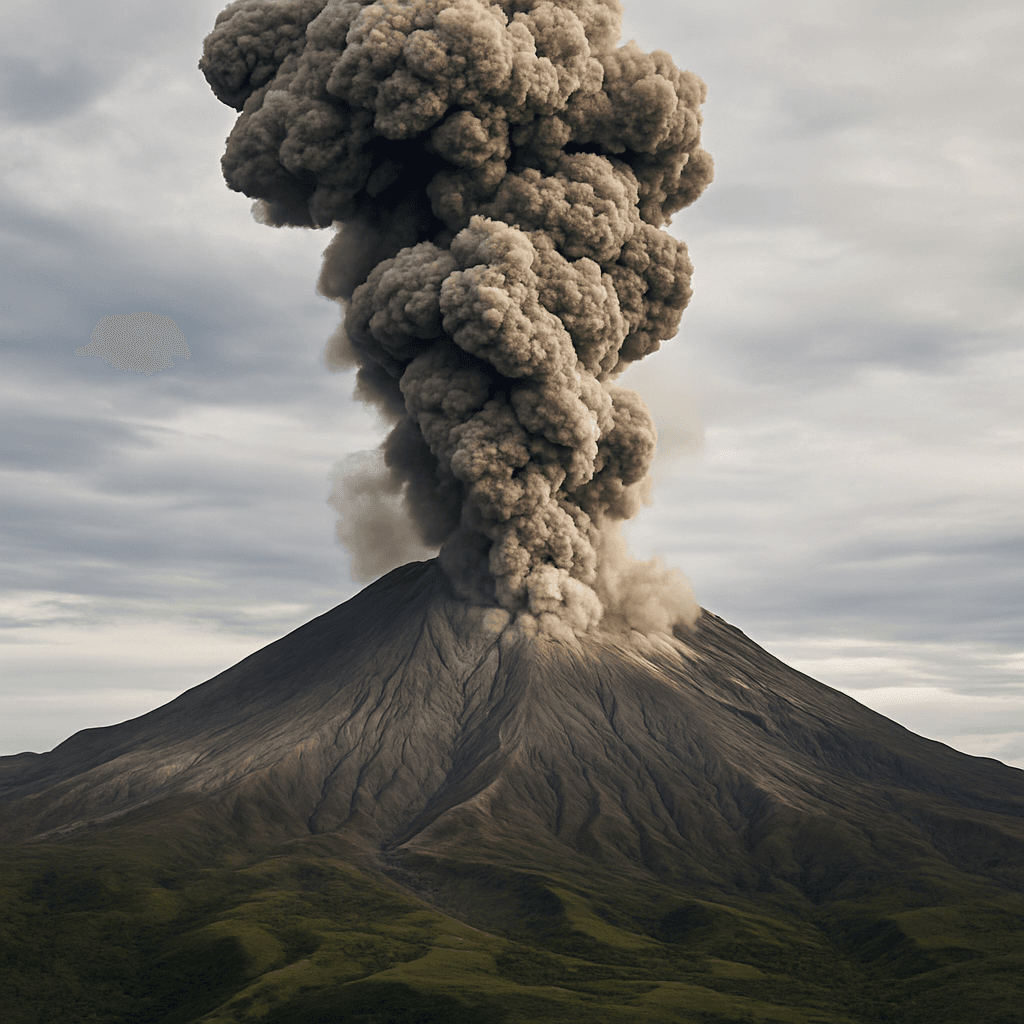
Strong Impact of Volcanic Ash in the Atmosphere (Generated by Artificial Intelligence)
Volcanic ash forms through the rapid cooling and fragmentation of magma rising from the magma chamber during an eruption. In this process, magma expands rapidly under the pressure of explosive gases and breaks apart into fine mineral particles. Depending on the intensity of the volcanic eruption, these ash particles can be ejected into the atmosphere as ash columns reaching hundreds of kilometers in height. These columns affect air pollution and soil cover in different regions based on wind direction.
The size and composition of ash particles are directly related to the geological characteristics of the volcano. Some volcanoes emit more basaltic and fluid lavas, while others produce violent eruptions with more viscous magmas, generating finer, glassy ash particles. For example, magmas rich in silica produce lighter and more buoyant ash particles. The density and aerodynamic properties of these particles determine their transport processes in the atmosphere and their environmental impacts.
Volcanic ash also varies in chemical composition. It typically contains silicate minerals such as feldspar and quartz, as well as elements like iron and magnesium. The proportions of these minerals directly influence the optical properties and atmospheric behavior of ash particles. In particular, glassy structures can increase light scattering in the atmosphere, temporarily reducing the amount of sunlight reaching the Earth’s surface.
Volcanic ash alters atmospheric composition not only through its mineral content but also through gases it carries. Gases such as sulfur dioxide (SO₂), hydrogen chloride (HCl), and hydrogen fluoride (HF) can be adsorbed onto ash particles. These gases can form acidic solutions in the atmosphere, leading to acid rain and causing damage to soil and aquatic ecosystems.
The duration that ash particles remain in the atmosphere varies according to their size and density. Larger particles settle more quickly due to gravity, while particles smaller than 10 micrometers (PM10 and below) can remain suspended in the atmosphere for days or even weeks. This process is a critical factor determining long-distance ash transport and its global climate effects.
Volcanic ash particles embark on a complex journey through the atmosphere from the moment of eruption. Factors such as temperature, wind, and humidity in the lower and upper atmospheric layers determine their transport and dispersion. During an eruption, ash particles typically form a rapidly rising column that begins to spread laterally according to wind direction. Thus, ash clouds evolve from a local phenomenon into a regional or global impact.
The first stage of this transport process is the ascent of the ash column into the upper atmosphere. Thanks to high temperatures and intense updrafts, ash particles can be carried to the limits of the troposphere and sometimes into the stratosphere. Ash particles reaching the stratosphere remain suspended for months due to minimal interference from weather events such as rain and snow that occur in the troposphere. This enables long-distance transport of ash clouds.
Atmospheric wind patterns directly influence the geographical distribution of ash particles. For example, strong westerly winds can carry ash clouds from volcanic eruptions in Asia and the Pacific region as far as North America. Historically, such long-distance transport events have led to the observation of ash layers in Europe and North America. This transport poses not only environmental risks but also significant hazards to aviation and infrastructure safety.
While in the atmosphere, factors such as humidity and temperature can alter the properties of ash particles. Particularly hygroscopic (water-attracting) ash particles can grow by absorbing water vapor from the air and settle more rapidly. This process also facilitates cloud formation. Thus, ash clouds become not merely a pollutant but also an actor influencing cloud microphysics.
Volcanic ash transport is also an important parameter in climate science. Long-distance transported ash particles can alter atmospheric light scattering and absorption, temporarily affecting regional and global temperature balances. In particular, ash clouds reaching the stratosphere create a “volcanic cooling” effect by reflecting sunlight. This process can shape not only air temperatures but also atmospheric moisture balance and precipitation patterns.
Once volcanic ash particles settle from the atmosphere to the Earth’s surface, they directly affect the environment and ecosystems. These impacts can vary significantly depending on factors such as ash density, chemical composition, and precipitation conditions. A fine ash layer can alter the physical structure and chemical composition of soil, influencing plant growth cycles. In particular, heavy ashfall can physically cover vegetation, temporarily blocking photosynthesis.
Ash layers can have both positive and negative effects on agricultural productivity. In the short term, ash can clog soil porosity, reducing permeability. This can limit oxygen uptake by plant roots and increase water stress. On the other hand, mineral nutrients in ash such as potassium and calcium can enhance soil fertility over the long term. Thus, while volcanic ash may cause temporary declines in agricultural yields, it can contribute to the formation of fertile soils over time.
Volcanic ash also has significant effects on aquatic ecosystems. Ashfall can mix with lakes and river systems, lowering water pH and creating acidic conditions. Additionally, ash particles covering the water surface limit light penetration, reducing the photosynthetic efficiency of aquatic vegetation. These effects can temporarily disrupt food chains and fish populations in aquatic ecosystems.
Air quality is directly affected by volcanic ashfall. Ash particles, particularly those in respirable sizes such as PM10 and PM2.5, pose serious risks to human and animal health. In livestock and natural habitats, inhalation of ash can lead to respiratory infections and general stress responses. Therefore, volcanic ash is a major environmental risk factor threatening not only ecosystem health but also the well-being of living organisms.
Ecologically, ashfall can create new opportunities for certain plant species. An ash layer can temporarily slow the growth of invasive plants, allowing native species to recover. However, this effect is usually short-lived and produces different outcomes depending on factors such as ash thickness, seed bank, and soil moisture. Therefore, volcanic ashfall causes temporary ecosystem imbalances while being a complex process that plays a role in long-term soil and vegetation dynamics.
Volcanic ash is a significant factor not only for local environments but also for the global climate system. In particular, ash and gas clouds reaching the stratosphere following large eruptions can temporarily but powerfully alter climate patterns. During this process, ash particles directly reflect sunlight, reducing the radiation received by the troposphere and Earth’s surface. This results in a short-term climate effect known as “volcanic cooling.”
Volcanic cooling has been observed in numerous historical events. For example, the 1991 eruption of Mount Pinatubo in the Philippines injected large quantities of ash and sulfate aerosols into the stratosphere, lowering global average temperatures by approximately 0.5 °C. This effect persisted for several years, directly influencing regional precipitation patterns and agricultural productivity. This example highlights the delicate balance between volcanic ash and climate.
Volcanic ash particles can influence not only light scattering in the atmosphere but also cloud formation processes. Ash particles act as cloud condensation nuclei (CCN), contributing to the formation of cloud droplets. This process can alter cloud lifetime and albedo (reflectivity), reshaping regional temperature patterns. In tropical regions, this effect can cause temporary fluctuations in monsoon cycles.
Gases released into the atmosphere during volcanic eruptions, such as sulfur dioxide (SO₂), create significant changes in atmospheric chemistry alongside ash particles. These gases transform into sulfate aerosols in the atmosphere, which can reflect sunlight more effectively than ash particles. Sulfate aerosols remain in the stratosphere longer than ash particles, allowing the cooling effect to persist for months or even years. This contributes to the long-lasting impact of volcanic eruptions on the global climate.
However, the impact of volcanic ash on the climate system varies greatly depending on factors such as eruption size and duration. Small eruptions typically affect local or regional air quality, while large eruptions (VEI-6 and above) can temporarily disrupt global climate patterns. Therefore, volcanic ash is regarded as one of the short-term triggers of climate variability.
Volcanic ash is a significant factor not only due to its environmental and climatic effects but also because of its consequences for human health and social life. Ash particles ejected into the atmosphere during eruptions can enter the body primarily through inhalation, causing serious health problems. Particles smaller than 10 micrometers (PM10 and below) accumulate in the nose, throat, and lungs, causing irritation and respiratory infections. Smaller particles (PM2.5 and below) can penetrate deep into the lungs, triggering chronic respiratory diseases, asthma attacks, and cardiovascular issues.
In addition to respiratory effects, volcanic ash can cause irritation to the eyes, skin, and mucous membranes. In areas with heavy ashfall, symptoms such as eye redness, burning, and itching are common. Fine ash particles can also cause skin sensitivity and itching. Therefore, protective measures such as goggles and masks are vital during periods of heavy ashfall.
Socially, high concentrations of volcanic ash can lead to significant infrastructure problems depending on ash density and the location of settlements. Ash accumulation on building roofs can increase the risk of collapse. Additionally, ash can negatively affect power lines and communication networks, disrupting daily life. Contamination of water sources by ash can reduce drinking water quality and increase public health risks. In such situations, rapid intervention by local authorities and public awareness are critical.
Economically, ashfall directly affects sectors such as agriculture and livestock. Ash layers can disrupt the photosynthesis process of crops, reducing productivity. In livestock activities, contamination of animal feed and water sources threatens the food chain. This creates serious challenges for food security and leads to economic losses in agricultural production.
Income-oriented sectors such as tourism can also experience temporary stagnation due to volcanic ash. In particular, ash clouds blocking air traffic can disrupt regional and international transportation, generating economic and social ripple effects. Historical examples show that airports have been closed for days and tourism revenues have suffered significant losses.
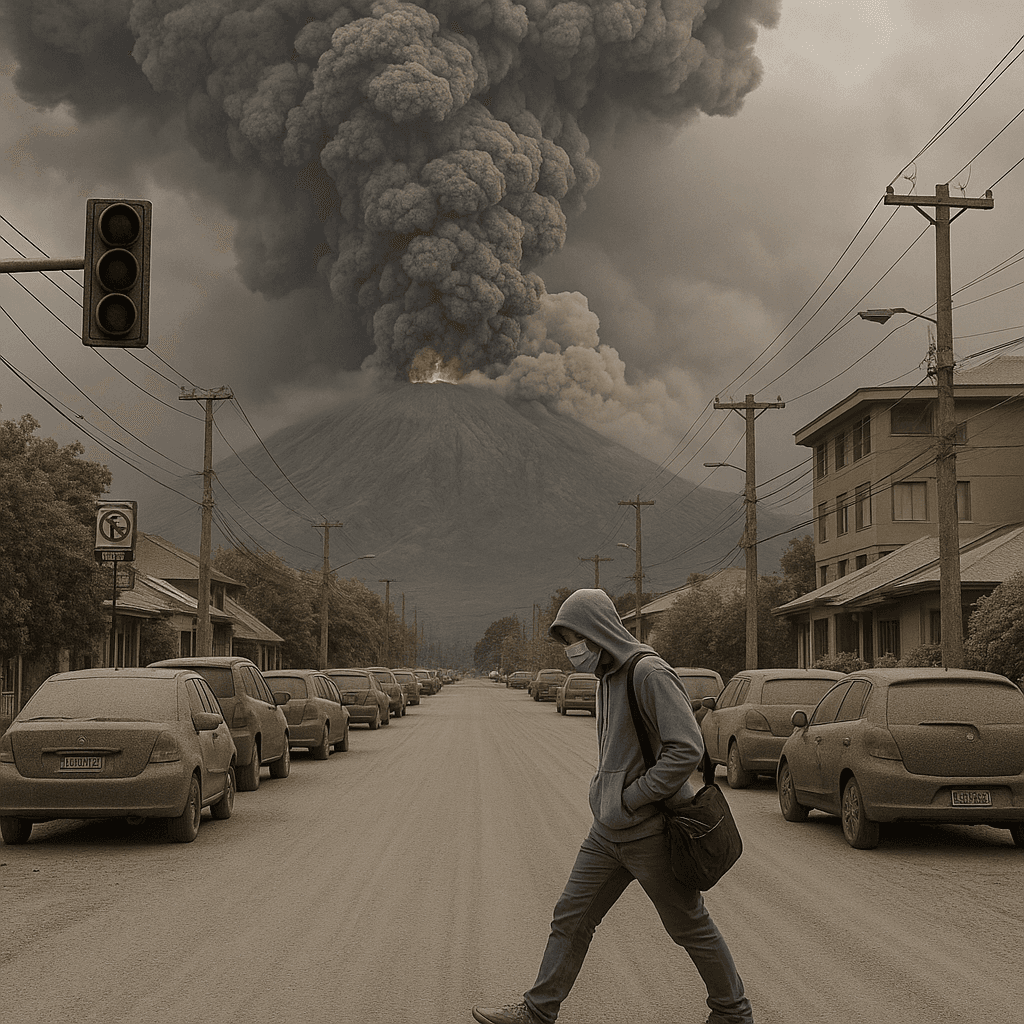
Effects of Volcanic Ash on Human Health (Generated by Artificial Intelligence)
Volcanic ash and its atmospheric transport are of major importance in modern science as a multidisciplinary research field. These ash particles not only affect local environments but can also leave lasting impacts on the global climate system and human life, necessitating careful monitoring. Traditionally, ash monitoring relied on ground-based measurements, but today advanced observation technologies have made this process far more precise and comprehensive.
Ground-based measurement systems are the most fundamental tools for studying volcanic ash. These systems are equipped with ash collectors and meteorological stations to determine the intensity and distribution of ashfall. These instruments provide critical data for understanding local population exposure and implementing public health measures, while also analyzing the physical and chemical properties of ash particles.
Remote sensing technologies have revolutionized ash monitoring. In particular, lidar (light detection and ranging) and radar-based systems can accurately measure the density and vertical distribution of ash clouds. Lidar technology analyzes the spread and optical properties of ash clouds in the stratosphere, contributing to the development of global transport models. These methods are vital for aviation and climate modeling.
Satellite observations enable global-scale ash monitoring. For example, NASA’s MODIS and CALIPSO satellites can track the location and concentration of ash clouds worldwide. These satellites provide critical data for aviation and climate modeling by determining the speed and geographic extent of ash cloud dispersion. Satellite data are indispensable for monitoring long-distance transoceanic ash transport events.
Modern research focuses on understanding both the physical and chemical processes related to volcanic ash. Properties such as the mineral structure of ash particles, their hygroscopicity (water-attracting ability), and their role as cloud condensation nuclei are studied in detail to reveal their contributions to cloud formation and climate cycles. Additionally, the long-term impacts of ash clouds on climate feedback mechanisms are increasingly incorporated into modern climate models.
These studies are also crucial for aviation safety and disaster management planning. Volcanic ash can cause severe damage to aircraft engines and disrupt air traffic. Therefore, modern science is focused on developing advanced prediction systems to detect ash clouds promptly and accurately. This helps minimize both environmental and economic losses.
Casadevall, Thomas J. "The 1989–1990 Eruption of Redoubt Volcano, Alaska: Impacts on Aircraft Operations." *Journal of Volcanology and Geothermal Research* 62, no. 1–4 (1994): 301–316. https://doi.org/10.1016/0377-0273(94)90038-8.
Horwell, Claire J., and Peter J. Baxter. “The Respiratory Health Hazards of Volcanic Ash: A Review for Volcanic Risk Mitigation.” *Bulletin of Volcanology* 68, no. 1 (2005): 1–24 https://link.springer.com/article/10.1007/s00445-006-0052-y
Robock, Alan. "Volcanic Eruptions and Climate." *Reviews of Geophysics* 38, no. 2 (2000): 191–219. https://doi.org/10.1029/1998RG000054.
Textor, Christiane, Hans-F. Graf, Michael Herzog, and J. M. Oberhuber. "Injection of Gases into the Stratosphere by Explosive Volcanic Eruptions." *Journal of Geophysical Research: Atmospheres* 108, no. D19 (2003). https://doi.org/10.1029/2002JD002987

Formation Process and Characteristics of Volcanic Ash
Behavior and Transport of Volcanic Ash in the Atmosphere
Environmental and Ecological Impacts of Volcanic Ash
Impacts of Volcanic Ash on the Climate System
Impacts of Volcanic Ash on Human Health and Society
Monitoring and Modern Research on Volcanic Ash