


This article was automatically translated from the original Turkish version.
+1 More
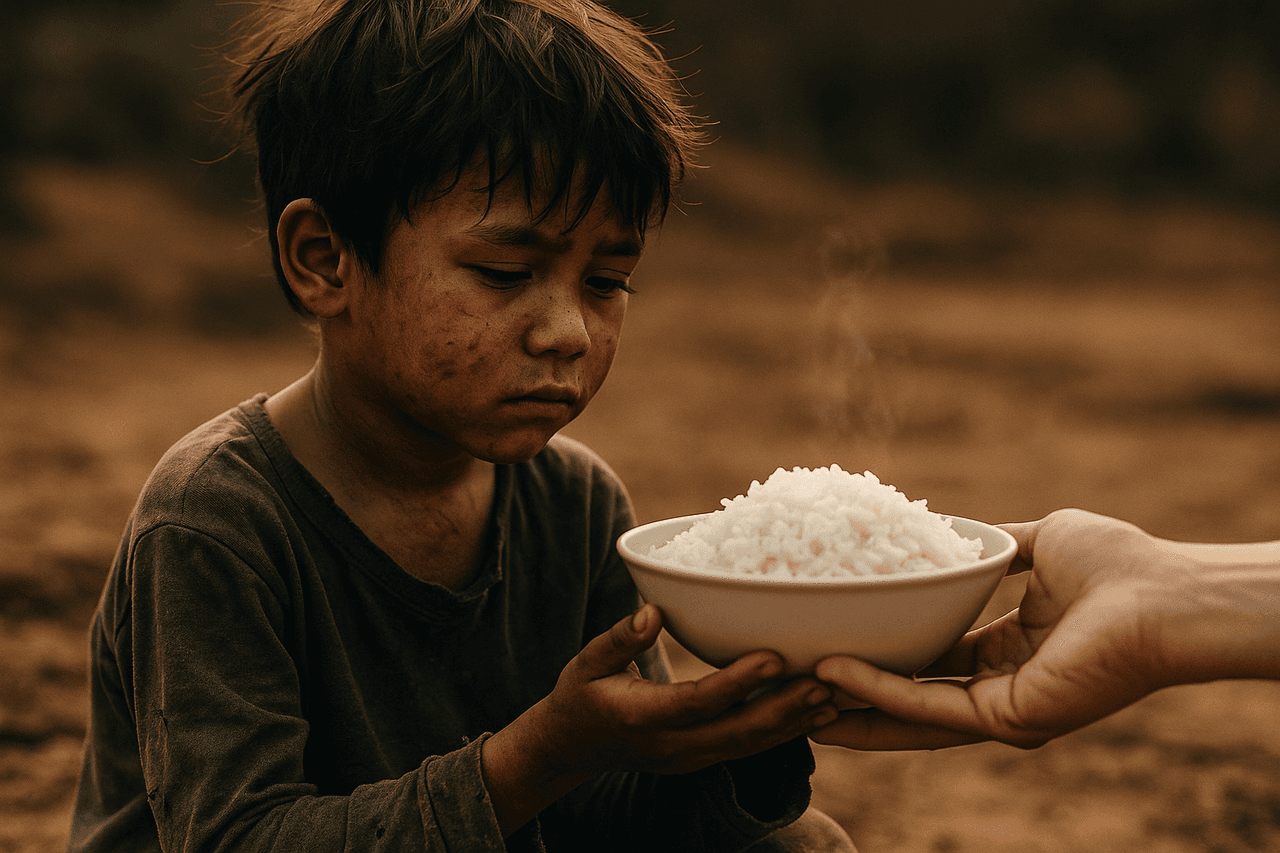
Representative Image (Generated by Artificial Intelligence.)
First Application | 17 October 1987, Trocadéro Square, Paris | ||||||||
|---|---|---|---|---|---|---|---|---|---|
United Nations Resolution | Decision 47/196, 22 December 1992 | ||||||||
2025 Theme | Ending social and institutional mistreatment through respect for families and effective support | ||||||||
Global Data | 690 million people in extreme income poverty, 1.1 billion people in multidimensional poverty | ||||||||
Interconnected Goals | SDG 1 (No Poverty), SDG 5 (Gender Equality), SDG 10 (Reduced Inequalities) | ||||||||
Institutions | United Nations, UNESCO, UNDP, UN DESA | ||||||||
Throughout human history, poverty has been one of the enduring indicators of social inequality and economic imbalance. October 17 has become a symbol of global solidarity against this inequality. Officially recognized by the United Nations as the International Day for the Eradication of Poverty, this day is observed annually worldwide to raise awareness about the elimination of poverty. This day has also come to represent the defense of human dignity, fundamental rights and social justice—not merely economic deprivation.

Representative Image (Generated by Artificial Intelligence.)
The foundations of the International Day for the Eradication of Poverty were laid on October 17, 1987, in Paris, the capital of France. On that date, more than 100,000 people gathered at the Trocadéro Square, the very site where the Universal Declaration of Human Rights was signed, to honor victims of extreme poverty, hunger and violence, and to declare that poverty constitutes a clear violation of human rights. This conviction was inscribed on a monument unveiled that same day, known as the Memorial Stone, which was later replicated in the grounds of the United Nations Headquarters. This symbolic stone has since been at the center of commemorative ceremonies held each year on October 17.
On December 22, 1992, the United Nations General Assembly, through Resolution 47/196, officially proclaimed October 17 as the International Day for the Eradication of Poverty. This resolution called upon member states to develop concrete actions against poverty within their national contexts and encouraged international organizations to support these efforts.
The theme for 2025 is defined as “Ending Social and Institutional Discrimination by Respecting Families and Providing Effective Support.” According to the United Nations, poverty is not merely a lack of income but a comprehensive issue encompassing justice, dignity and belonging. This theme emphasizes the urgent need to eliminate stigmatization, exclusion and punitive practices faced by disadvantaged families in public institutions.
It has been noted that negative treatment experienced by poor families in educational institutions, health centers and social assistance systems weakens social cohesion. Therefore, the 2025 theme focuses on three key transformations:
This approach is directly aligned with the United Nations’ Sustainable Development Goals (SDGs). Specifically, SDG 1 (No Poverty), SDG 2 (Zero Hunger), SDG 3 (Good Health and Well-being), SDG 4 (Quality Education), SDG 5 (Gender Equality), SDG 8 (Decent Work and Economic Growth), SDG 10 (Reduced Inequalities), and SDG 16 (Peace, Justice and Strong Institutions) are addressed in harmony with this theme.
UNESCO emphasizes that sustainable progress against poverty requires strengthening individuals’ capacities for knowledge, skills and creativity. According to the organization, access to education and scientific advancement have been the most powerful tools in breaking the intergenerational transmission of poverty. UNESCO has drawn particular attention to the employment-generating potential of creative economies and scientific innovation.
UNESCO Director-General Audrey Azoulay has reiterated that “poverty is not only material deprivation but also a denial of human rights,” affirming that education is not merely a right but a guarantee of human dignity. Under this framework, the organization has implemented projects supporting the first goal of the 2030 Agenda: “End Poverty in All Its Forms Everywhere.” Key components of these initiatives include increasing inclusivity in education, ensuring access to education for girls and women, and supporting local knowledge production.
The United Nations’ Sustainable Development Goals (SDGs), adopted in 2015 by 193 countries, aim to eliminate extreme poverty by 2030. The core objective of SDG 1 is “to end poverty in all its forms everywhere.” This goal extends beyond income levels to include multidimensional aspects such as housing, health, education, social protection and access to justice.
In AIESEC Türkiye’s 2020 assessment, it was reported that one in five people worldwide lives on less than $1.25 per day, with approximately 800 million people enduring these conditions. Poverty disproportionately affects women and children. Women’s limited access to economic and educational opportunities has accelerated the intergenerational transmission of poverty.
According to data from the United Nations Development Programme’s World Social Report 2025, more than 690 million people live in extreme income poverty. Additionally, 1.1 billion people experience multidimensional poverty, meaning they simultaneously lack access to health, education and adequate living standards.
World Bank data reveal that between 1990 and 2015, 1.1 billion people worldwide escaped poverty. In 1990, 36 percent of the global population lived on less than $1.90 per day; by 2015, this figure had fallen to 10 percent. This marked one of the most rapid increases in human welfare in history.
However, progress slowed after 2013. In 2020, the COVID-19 pandemic pushed more than 70 million people back below the extreme poverty line. During this period, not only economic factors but also climate crises, rising food prices and conflicts played significant roles.
According to data from the United Nations Children’s Fund (UNICEF) and UNDP, the impact of poverty on children has been especially severe. Child poverty manifests not only as income deprivation but also as lack of access to education and health services. For women, social gender inequalities and wage gaps have increased the risk of poverty. As noted by UNDP in its Vietnam case study, although women’s labor force participation rate is 68 percent, wage disparities and incidents of violence have constrained their economic security.
Climate change has directly affected the geographic distribution and intensity of poverty. The poorest populations, responsible for only a small fraction of global emissions, suffer disproportionately from the consequences of climate crises. Events such as droughts, floods and storms have destroyed livelihoods in rural areas and caused income losses in agriculture-dependent economies.
This situation represents not only an economic loss but also a deepening of social vulnerability. In particular, increases in poverty in Africa and South Asia have paralleled the rising frequency of climate-related disasters.
The World Bank’s threshold of $2.15 per day is the primary benchmark for measuring poverty. In addition, the Multidimensional Poverty Index (MPI) provides a more comprehensive assessment by combining indicators such as health, education and living standards. Joint research by UNDP and the University of Oxford has shown that 25 countries reduced their poverty index by 50 percent between 2000 and 2023.
October 17, the International Day for the Eradication of Poverty, is not only a day to confront economic inequality but also a day that embodies the shared conscience of humanity. It reminds us that poverty is not destiny but the result of social structures shaped by human action. With the contributions of institutions such as the United Nations, UNESCO and UNDP, global efforts to eliminate poverty have continued. Yet as of 2025, billions of people still live without access to basic needs.
Combating poverty is a multidimensional process that must be pursued not only through development policies but also through the lenses of justice, equality, education, climate policy and human rights. The annual commemoration on October 17 continues to reaffirm humanity’s collective responsibility.
AIESEC Türkiye. "17 Ekim Dünya Yoksullukla Mücadele Günü!" aiesec.org. Accessed October 13, 2025. https://aiesec.org.tr/17-ekim-dunya-yoksullukla-mucadele-gunu/
Anadolu Ajansı. "110 ülkedeki 6,1 milyar kişiden 1,1 milyarı yoksullukla mücadele ediyor" AA. Accessed October 13, 2025. https://www.aa.com.tr/tr/dunya/110-ulkedeki-6-1-milyar-kisiden-1-1-milyari-yoksullukla-mucadele-ediyor/3021409
BBC News Türkçe. “Dünya Yoksullukla Mücadele Günü: Yoksulluk Gerçekten Azalıyor mu?” Accessed October 13, 2025. https://www.bbc.com/turkce/haberler-dunya-50062398
Bilis, Hande. “17 Ekim Yoksullukla Mücadele Günü.” UNIQVIBE. Accessed October 13, 2025. https://uniqvibe.com/blogs/uniqmag/17-ekim-yoksullukla-mucadele-gunu?srsltid=AfmBOopcBEBWF2k9WNtKfMSSBArkaCvzUsmHTc_zrts1G52riXaj9Wb1
Compassion International. "World Poverty Day." compassion.com. Accessed October 13, 2025. https://www.compassion.com/world-days/world-poverty-day.htm#:~:text=World%20Poverty%20Day%2C%20formally%20known,held%20annually%20on%20October%2017.
UN DESA. “End poverty in all its forms everywhere.” unstats.un.org. Accessed October 13, 2025. https://unstats.un.org/sdgs/report/2025/goal-01/#:~:text=In%202025%2C%20an%20estimated%20808,or%201%20in%2010%20people.
UNDP. “The New Face of Poverty: for World Poverty Day.” *undp.org.* Accessed October 13, 2025. https://www.undp.org/vietnam/blog/new-face-poverty-world-poverty-day
UNESCO. "International Day for the Eradication of Poverty." Accessed October 13, 2025. https://www.unesco.org/en/days/poverty-eradication
United Nations. “International Day for the Eradication of Poverty, 17 October.” un.org. Accessed October 13, 2025. https://www.un.org/en/observances/day-for-eradicating-poverty

Representative Image (Generated by Artificial Intelligence.)
First Application | 17 October 1987, Trocadéro Square, Paris | ||||||||
|---|---|---|---|---|---|---|---|---|---|
United Nations Resolution | Decision 47/196, 22 December 1992 | ||||||||
2025 Theme | Ending social and institutional mistreatment through respect for families and effective support | ||||||||
Global Data | 690 million people in extreme income poverty, 1.1 billion people in multidimensional poverty | ||||||||
Interconnected Goals | SDG 1 (No Poverty), SDG 5 (Gender Equality), SDG 10 (Reduced Inequalities) | ||||||||
Institutions | United Nations, UNESCO, UNDP, UN DESA | ||||||||
No Discussion Added Yet
Start discussion for "World Day for the Eradication of Poverty" article
Origins and Historical Background
United Nations 2025 Theme: Ending Social and Institutional Discrimination
UNESCO’s Approach and Education-Based Struggle
Sustainable Development Goals and Global Orientation
Global Statistics and Trends
Women’s and Children’s Poverty
Climate Crisis and the Impacts of Poverty
Measuring Poverty and Indicators
The Meaning of Global Solidarity