

Bu içerik Türkçe olarak yazılmış olup yapay zeka ile otomatik olarak İngilizceye çevrilmiştir.
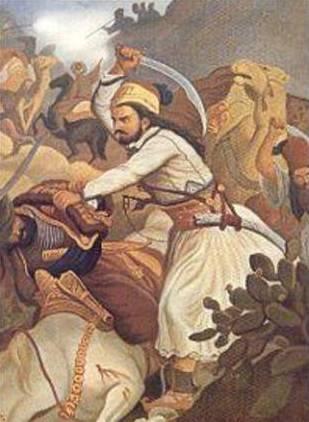
The Massacre of the Morea refers to the systematic killing of the Muslim population of the Morea Peninsula during the Greek War of Independence, which began in 1821. Mora
During the Morea Revolt of 1821–1830, which resulted in Greek independence, tens of thousands of Turks and a small number of Jews who had lived in the Peloponnese for centuries were massacred en masse by Greek rebels, without regard to gender or age. The revolt evolved from a simple uprising into an ethnic and religious cleansing campaign. In particular, the massacre carried out by the rebels in Tripolitsa, the administrative center of the Morea, in April 1821, is recorded in Turkish history as one of the most brutal episodes of violence. After nearly a decade of conflict, the Kingdom of Greece was established in 1830, and the Muslim population of the Morea Peninsula was either entirely eradicated or expelled from the region, effectively erased from history. independent population
In the early 19th century, the rise of nationalist movements within the Ottoman Empire, along with the ideological legacy of the French Revolution in Europe, incited separatist tendencies among the empire’s various ethnic groups. The Greeks (Ottoman Rum Milleti), despite enjoying extensive privileges within the Ottoman millet system, became captivated by the dream of an independent state and organized under the leadership of the secret society Filiki Eteria, founded in 1814. state Greek
The activities and plans to weaken the Ottoman state by the society’s members in the Danubian Principalities were first translated into direct action under the leadership of Alexandros Ypsilantis, the voivode of Moldavia and Wallachia. In March 1821, Ypsilantis crossed the Prut River from Russia and launched a rebellion against the Ottomans. Although Ypsilantis’s uprising was quickly suppressed, it provided a crucial signal to the Greeks in the Morea. February
In the same year, in April 1821, a large-scale revolt erupted across the Morea Peninsula against Ottoman rule. Just before the revolt, a critical development for the Ottomans occurred in the north of the region: the rebellion of Tepedelenli Ali Pasha, the governor of Ioannina. The Ottoman central forces’ withdrawal from the Morea to suppress Ali Pasha’s uprising created a power vacuum that provided favorable conditions for the Greek insurgents. judgment Yanya Pasha
In this context, the Morea Revolt of 1821 began as a violent movement aimed at overthrowing Ottoman authority and achieving independence. The Greek leaders openly declared their goal to the world: “to fight until not a single Turk remains in the Morea.” Starting in March 1821, attacks were launched throughout the Morea against Ottoman officials and Muslim civilians. Ottoman sources record that thousands of Turks were killed by the sword even in the first days of the revolt. In fact, the chronicler Ahmed Lütfi Efendi noted that at least 35,000 Turks were killed in the Morea at the outset of the uprising. As Greek rebels murdered Muslims they captured in villages and towns, Turks seeking to save their lives fled to the nearest fortresses. Among the key cities of the Morea, the ports and fortresses of Nafplio (Nauplion), Navarino, and Patras (Badra) gradually fell into rebel hands, and the majority of their Muslim inhabitants were massacred or executed. place Anabolu Balya such as
For example, when the city of Navarino fell in May 1821, a massive massacre occurred, and the city was pillaged for several days. The rebels destroyed all material and spiritual remnants of Ottoman presence in the towns they captured. Mosques not burned or demolished were seized and converted into churches, built upon the foundations of former mosques. Thus, from its inception, the revolt in the Morea took on the character of a campaign not merely for political independence, but for the complete eradication of Ottoman presence and the Muslim community in the region. only
As the Morea Revolt progressed, Ottoman centers of resistance in the region began to fall one by one. The rebels’ primary objective was to capture Tripolitsa (Tripolis or Trabluçe), the administrative capital of the Morea province. Throughout 1821, Tripolitsa served as the largest refuge for Turkish and Jewish civilians fleeing the violence. For approximately five months, the city, sheltering some 50,000 to 60,000 people, remained under constant siege by Greek rebels. By the end of the siege, the Ottoman garrison and civilians inside the fortress had been reduced to the brink of collapse due to starvation and disease. In October 1821, the fortress fell when Albanian troops defending it secretly negotiated with the rebels and opened the gates. The Greek insurgents who entered the city showed no mercy even to those who had surrendered, committing one of the largest massacres in history. castle siege September long on mercy witness
With the fall of Tripolitsa, nearly all of the approximately 40,000 Turks who had taken refuge in the fortress were slaughtered in a three-day wave of savage violence. Men, women, and children were all brutally killed without distinction. The Greek thirst for revenge was so intense that graves were dug up and Muslim bones were exhumed and burned. The rebels captured and executed the Tripolitsa Qadi, Halim Efendi, by pouring oil over him and burning him alive. The Massacre of Tripolitsa, which lasted three days and three nights, is etched into history through the eyewitness accounts of those who survived it.
According to the American historian Justin McCarthy, “For three days the unfortunate Turkish settlers were left to the mercy of a band of savages, with no distinction made by sex or age; women and children were tortured before being killed.”
McCarthy, describing the scale of the massacre, quotes the rebel leader Kolokotronis as saying: “When I entered the town, the hooves of my horse did not touch the ground because of the path of corpses.” leader
In fact, the Greek rebel leader Theodoros Kolokotronis himself admitted in his memoirs that his horse had walked over corpses upon entering the city. The Romanian historian of the period, Nicolae Iorga, wrote that after capturing Tripolitsa on 5 October 1821, the Greeks had “set the region ablaze with blood and fire in a horror even the cruelest Asiatics could not have committed,” estimating the number of Turks killed at approximately 32,000. This number far exceeds the number of Christian Greeks who died during the entire Greek revolt.
After the massacre, half of Tripoliçe’s city of 4,500 homes was completely destroyed, leaving only smoldering ruins. The rebels destroyed everything that remained of the Ottoman-Turkish presence within and outside the city and seized a vast amount of plunder. The bands that participated in the massacre shared the spoils. For example, the local bey of the Manya (Maina) Peninsula could barely transport his share on 20 mules and two camels.
The Tripoliçe massacre was a dönüm turning point in the mass extermination of the Turks of the Morea. Very few people survived this event. Although the rebels initially took around 90 prominent individuals (Ottoman officials and their families) hostage under the promise of ransom, they later killed the majority of them. With the fall of Tripoliçe, Ottoman resistance in the Morea Peninsula collapsed, and no hope remained for Turks trapped in other fortresses. Some Turkish groups stationed in fortresses north of Tripoliçe managed to escape by boat to the opposite shore (the Attica coast) just before the city’s fall, but most were pursued and killed by the rebels. Shortly after the fall of Tripoliçe, approximately 15,000 Muslims who had taken refuge in the fortress of Balya Badra (Patras) on the western side of the Morea suffered a similar fate after the city surrendered. Thus, by the end of the first year of the 1821 uprising, Muslim populations across nearly every corner of the Morea had been annihilated in large-scale massacres.
Although the Morea uprising initially appeared as an internal matter of the Ottoman State, it quickly acquired an international dimension. Greek revolutionaries received intense sympathy and support from intellectual circles and populations in Europe. Under the influence of the “Philhellenism” movement, European writers, painters, and politicians revived admiration for ancient Greece and idealized the Greek revolutionaries. As a result of intensive propaganda campaigns directed at European public opinion, the Greek struggle was presented as a legitimate resistance against Ottoman oppression. Within this atmosphere context, large numbers of adventurers and volunteer fighters from France, England, Germany, Italy, and even the United States flocked to the Morea to join the Greek uprising, which they regarded as a “holy cause.”
For example, even before the first year of 1821 ended, fundraising campaigns for Greek revolutionaries were organized in major European cities, and money and ammunition collected in metropolises such as New York were shipped to the Morea by sea. Moreover, special volunteer units were formed in Europe for officers and adventurers wishing to support the Greek cause. Among these volunteers were figures such as the British poet Lord Byron, as well as various French, German, and Italian officers.
However, European volunteers who arrived in the Morea with lofty ideals experienced profound disillusionment upon confronting the realities of war. The revolutionaries’ massacres and plundering of civilian populations opened the eyes of some of these volunteers. Indeed, many French officers returning from the Morea to Marseille in 1822 warned newly arriving volunteers, conveying deeply degree negative impressions of the Greeks. These officers, who stated that the revolutionaries, idealized as descendants of ancient Greece, in reality behaved cowardly and treacherously, lost their sympathy for the uprising due to the brutality they had witnessed firsthand. A Prussian officer declared that the Greeks had abandoned the reasonable laws of ancient Athens and descended into barbarism, asserting that Greek virtues no longer existed. Although such testimonies from volunteers slightly diminished European public admiration for Greece, they had little effect on the political interests of the great powers.
Although major European powers initially sought to maintain diplomatic balances with the Ottoman Empire, they eventually intervened directly in the Greek uprising. By the mid-1820s, the Ottoman State had largely succeeded in suppressing the revolt in the Morea with the assistance of Mehmed Ali Pasha, the Viceroy of Egypt. However, the prospect of the Greeks being completely defeated mobilized powers such as England, France, and Russia, who supported Greek independence. These states issued ultimatums to the Ottomans demanding an end to the fighting in the Morea. When the Ottoman side refused to comply, the three major navies launched a surprise attack on the Ottoman-Egyptian fleet anchored in Navarino Bay on 20 October 1827. This event, known in history as the Navarino Massacre, event, deprived the Ottoman State of its naval power and altered the fate of the uprising. The following year, French troops under French command landed in the Morea, effectively occupying the peninsula and forcing Ottoman forces to withdraw from the region. Meanwhile, Russia declared war on the Ottoman Empire in 1828, applying pressure from the east.
Facing direct European intervention, the Ottoman State completely lost its control over the Morea. The Treaty of Edirne signed in 1829 recognized Greece as a principality. The London Protocol of 1830 and the London Treaty of 1832 internationally recognized the establishment of an independent Greek Kingdom. With the military and diplomatic support of European powers, the Morea uprising, which would have had little chance of success otherwise, achieved its goal of establishing a state. However, during this process, the ancient Muslim population of the Morea paid a heavy price, being expelled from their homes or killed.
The scale of the massacres during and after the Morea uprising has been documented by contemporary records and eyewitness accounts. The violence against the Muslim population of the Morea Peninsula between 1821 and 1822 was systematic and planned, amounting to a campaign of extermination. Greek revolutionaries did not merely target armed Ottoman units but also carried out mass killings against defenseless civilian populations in villages. In the settlements they captured, they destroyed mosques, madrasas, and even cemeteries in an attempt to erase the Ottoman-Muslim cultural heritage. From this perspective, the Morea massacres reached the dimensions of modern ethnic cleansing or, as some historians term it, genocide.
Researchers such as Professor Justin McCarthy have emphasized that the violence in the Morea was not merely a war but a deliberate movement to eliminate an entire population.
Various sources provide striking figures regarding the numerical scale of the massacres. Some Greek and European sources indicate that around 90,000 Turks lived in the uprising region (the Morea and Central Greece) at the beginning of 1821. Approximately 50,000 of these were Muslim males in the Morea Peninsula. The fate of this population was horrifically decisive: some accounts even state that “not a single Turk remained” in the Morea after the uprising. Considering that around 40,000 people were killed in Tripoliçe within a short time, it becomes clear that the total number of Turks and other Muslims killed across the Morea ran into the tens of thousands.
The Ottoman official historian Ahmed Cevdet Pasha emphasized the magnitude of losses during the Morea uprising, noting that 35,000 Turks were killed in the very first phase. The Romanian historian Nicolae Iorga also stated that only in Tripoliçe and its vicinity, 32,000 Turks were killed, a number far exceeding the number of Greeks killed during Ottoman-era uprisings. Numbers of Muslims killed in various cities and fortresses are recorded in multiple period sources: for example, 500 in Gördüs (Korditsa) Fortress, 100 each in Vostitza and Kartina, 170 in Argos, 180 in Navarino, 200 each in Coron and Modon, 300 in Gastuni, 400 each in Arkadia (Kyparissia) and Mezistre, 500 in Benefşe (Vanezza), and a total of 750 Turks and Jews killed in the vicinity of Anabolu (Nauplion). These figures reveal the immense scale of mass violence directed against the Muslim population across the Morea during the first year of the uprising.
The massacres in the Morea were carried out with extreme brutal methods. Greek revolutionaries often slaughtered Muslims who had surrendered, raped and tortured women and children before killing them. This information is frequently corroborated by contemporary documents. The fate of those captured in Tripoliçe served as a grim example for other locations. The corpses of murdered Turks were left in the streets for days, wells filling the towns and poisoning the air, while water sources became undrinkable current state. Even Muslim graves were opened, bones exhumed, and then burned, showing no respect for the dead. These practices demonstrate that the revolutionaries intended not only to eliminate the living population but also to erase all traces of the past. Although some prominent individuals captured by the Greeks were spared temporarily in the hope of receiving ransom, many were later killed. For instance, the execution of Tripoliçe’s qadi Halim Efendi, who was burned alive in front of a crowd while still dressed in his robes as a warning, stands as one of the most horrific examples of the brutality.
Witnesses and contemporary observers have left behind shocking accounts of the events. The descriptions provided by Europeans who witnessed the Tripolitsa massacre were reflected in some works published in Europe at the time.
American missionary Rufus Anderson stated that the Greek cause for independence, which many Greeks viewed as just, was overshadowed by the brutality committed in Tripolitsa, and that this event was long attempted to be concealed. Even Lord Byron, one of the earliest European supporters of the Greek cause, was disillusioned by the brutality displayed by Greek revolutionaries and criticized them, saying, “The Greeks are devoid of the capacity to grasp the truth.” On the other hand, Ottoman appeals received insufficient response in Europe. Although the Ottoman government sought to inform the international community that it was the Turks—not the Christians—who were subjected to systematic extermination in the Morea, the period’s Hellenophile propaganda obscured these realities. European press and public opinion, preoccupied with romantic narratives supporting the Greek revolt, largely remained indifferent to the massacres of Turks in the Morea. Indeed, due to the very small number of neutral foreigners present in Greece throughout 1821, most reports leaving the region were written by Greek sympathizers in collusion with the revolutionaries and were therefore one-sided. This situation has led to the international community’s insufficient awareness of the Morea Massacre and its prolonged neglect.
For the few surviving Muslim inhabitants of the Morea, the only recourse after the Morea Revolt and massacres was to abandon their homes. During the conflicts between 1821 and 1829, Turks fleeing the violence migrated en masse to other regions deemed safe by the Ottoman state. A significant portion of those who survived the massacres sought refuge in the Aegean Islands, islands under Ottoman control, coastal cities of Western Anatolia (especially İzmir and its surroundings), and Istanbul. The Muslim presence in the Morea, which had endured for centuries, came to an end as a result of the massacre, replaced by the migration stories of refugee caravans.
The Mora Turks who migrated suffered severe material losses and were forced onto the roads destitute of basic necessities. The Ottoman state took measures to alleviate the plight of these refugees effort consumption. Sultan Mahmud II issued directives concerning the resettlement of the victims from the Morea and the provision of their livelihood. The Sultan sent imperial decrees to local administrators, instructing them to ensure the provision of shelter, food, and security for these people. In accordance with Ottoman societal principles of “müsaferet hukuku” (law of hospitality) and “uhuvvet-i İslâmiye” (Islamic brotherhood), the public was also encouraged to assist the refugees to the best of their ability. As a result, the refugees were received with considerable hospitality by the communities in the Ottoman territories where they arrived relative.
A significant portion of the Turkish population that left the Morea was resettled in Western Anatolia and Rumelia. In particular, the districts surrounding the city of İzmir were among the areas that received the largest numbers of Morea refugees. Indeed, Ottoman population registers from 1830–31 (H.1246) and 1843–44 (H.1259) detail the families of Turks originating from the Morea within the Sanjak of İzmir (Sığla). These records list the names, ages, occupations, and physical characteristics of Morea refugees settled in the districts of İzmir center (self-i İzmir), Aydın, Seferihisar, Kuşadası, and Söke. Moreover, the records note the places of origin of these migrants: expressions such as “Moralı (Moravî),” “Anabolulu,” “Navarinli,” “Eğribozlu,” “Benefşeli,” and “Atinalı” indicate that these refugees came from the Morea Peninsula and its vicinity. Thus, the demographic profile of the first Turkish refugees arriving in İzmir and its surroundings after the Morea Revolt is known in considerable detail.
For instance, among these first refugees to İzmir were large families from Balya, Badra (Patras), and the vicinity of Tripolitsa; some of them eventually moved as far inland as Ödemiş and took up agricultural activities. Ottoman archival documents reveal that land was allocated to those who migrated from the Morea, that they were temporarily housed in abandoned homes, and that they were provided with tools for farming credit. However, integration was not always easy. In some regions, clashes occurred between the refugees and local populations. For example, some Morea refugees were initially settled near Varna, but after failing to coexist with the locals, they were relocated to areas such as Filibe (Plovdiv) and Edirne.
The Turks who had regarded the Morea as their homeland for centuries dispersed across various parts of the Ottoman country after the revolt and sought to establish new lives. With the assistance of the state and the public, some successfully settled and integrated into cities in Rumelia and Western Anatolia, while others perished amid the hardships of their struggle.
The Kingdom of Greece, internationally recognized as independent through the 1829 Treaty of Edirne and the subsequent 1830 London Protocol, was established over a territory encompassing the Morea Peninsula and Central Greece. The Turkish-Muslim population within these newly defined borders had been reduced to negligible numbers. The Morea Revolt and its aftermath had nearly eradicated the Turkish presence in the region. While some contemporary sources report that over 90,000 Turks lived in the Morea and its vicinity before the 1821 revolt, by the 1830s it was stated that not a single Muslim remained in the Morea.
According to Ali Fuat Örenç’s findings, approximately 50,000 Muslim males lived in the Morea Peninsula before the revolt, nearly 40,000 of whom were killed in the Tripolitsa massacre. The survivors were either killed in subsequent massacres or fled the region to save their lives. By the 1830s, the proportion of Muslims remaining in the Kingdom of Greece had fallen to a negligible level—about one-tenth that of the Greek population. Even the Turkish communities that had existed for centuries on the islands adjacent to the Morea Peninsula—such as Euboea (Eğriboz) and the Cyclades—were entirely eliminated.
Greece’s total population was around 938,000 in 1821 but had declined to 752,000 by 1838; this reduction of approximately 186,000 people is largely attributable to the extermination and displacement of the Mora Turks. Thus, Greece’s attainment of independence coincided with the erasure of the Mora Turks from the historical stage.
The erasure of the Mora Turks was not only demographic but also cultural. Between 1821 and 1832, Greek revolutionaries destroyed hundreds of Ottoman-era structures in the Morea, including mosques and madrasa. The few remaining mosques were converted into churches, stripped of their Islamic identity. Turkish lands, homes, and foundation property were looted by revolutionaries or confiscated by the newly established Greek state. Consequently, after independence, the Morea Peninsula was transformed into a homogeneous Christian landscape, with all traces of its Ottoman-Turkish past erased. The few remaining Muslims were forced to leave Greek territory en masse in the early 1830s. Through agreements between the Ottoman government and Greek authorities, several hundred Muslims remaining in regions such as the Morea and Athens were sent to Ottoman territory in exchange for guarantees of safety can.
Greek independence was achieved at the cost of the complete dissolution of the Mora Turks’ social existence. This situation reveals how ethnic and religious homogenization was forcibly achieved during the founding process of the Greek state.
The Morea Massacre has become embedded in Turkish-Greek common memory as a historical event remembered in entirely opposing ways. In Greece, the independence struggle that began in 1821 is elevated as the central pillar of national historiography, while the massacres of Turks and Muslims during this struggle are typically either justified as legitimate retribution or ignored. In the Greek historical narrative, the centuries-long resentment and desire for revenge under Ottoman rule are portrayed as having erupted in 1821, and the violence committed by revolutionaries is commonly framed as the “revenge for Turkish oppression.”
In the Turkish collective memory, the tragedy of the Turks in the Morea did not receive adequate attention for a long time. Other major disasters experienced during the late Ottoman period and the early years of the Republic (the Balkan Wars, World World War I, population exchange etc.) pushed the memory of the Turks exterminated in the Morea into the background. As a result, the details of the Morea Massacre remained largely unknown within Turkish society until academic research on the subject began, but in recent years they have begun to emerge into public awareness as historians have taken up the topic.
Greece, however, has not neglected to incorporate this event into its national heroic narrative. Figures such as Kolokotronis, who led the rebels involved in the Tripolitsa massacre, have been celebrated in Greece as national heroes. Indeed, some verses praising the massacres in the Morea have found their place in Greek independence epics.
For example, in Dionysios Solomos’s poem Eleftheria Ichnos (Hymn to Liberty), recognized as the Greek National Anthem, the theme of “revenge taken” against the enemy (the Turks) is invoked in reference to the victory at Tripolitsa. As Ali Fuat Örenç notes, the fact that a Greek epic praising the Tripolitsa massacre was adopted as the national anthem demonstrates the significance attributed to this event in the Greek collective memory. Today, every year on 25 March, Greece celebrates Independence Day, commemorating the start of the 1821 uprising and indirectly recalling the “victories” in the Morea. During the grand ceremonies held in 2021 to mark the 200th anniversary of Greek independence, no engagement with the bloody aspects of the Morea uprising took place. On the contrary, European leaders and Russian representatives participated in these celebrations with praise messages, elevating the “struggle for freedom” of the 19th century.
The disparity between the official historical narratives of the two countries has had indirect effects on contemporary Turkish-Greek relations. For Greece, the period 1821–1830 represents a national victory and a foundational myth; for Turkey, the same period is one of trauma and loss. Consequently, there is a deep-rooted divergence in mutual perceptions. For instance, in Greek school textbooks the Morea uprising is portrayed heroically, while in Turkey until recently it received only limited attention. In recent Turkish historiography, however, studies on the fate of the Turks in the Morea have begun to increase, thereby making this historical truth known to a broader public.
Today, historians are striving to bring the Morea Massacre into international scholarship and argue that it constitutes an example of a “forgotten genocide.” This scholarly effort has led to the Morea Massacre being transformed into digital content and introduced to public consciousness through reason.
Digital Content Describing the Mora Massacre (GZT)
The memory of the Morea Massacre has continued to subtly influence political and cultural relations between the two country. Despite the passage of two century, the emotional legacy of these events has not been entirely erased. In Greece, the 1821 rebels are revered as symbols of national honor, while in Turkey, particularly within nationalist circles, the massacres committed by these rebels are not forgotten. This dynamic manifests itself in political rhetoric and historical polemics time.
For example, during periods of tension in Turkish-Greek relations, the past tragedy of the Morea is revived in the Turkish press, while the Greek side brings up the losses suffered by Greeks during Ottoman efforts to suppress the uprising. The intergenerational transmission of historical trauma continues to persist in the subconscious of both nations. Ali Fuat Örenç draws attention to this phenomenon, emphasizing that centuries-old pains and narratives of victory remain active in the collective psyche and continue to deeply affect Turkish-Greek relations.
The Morea Massacre is not merely a past event; it remains a historical legacy that is remembered in different ways in the collective memory of the two neighboring nations and continues to complicate mutual understanding.

Henüz Tartışma Girilmemiştir
"Massacre of Moras" maddesi için tartışma başlatın
Background and Beginning of the Morea Revolt
Development of the Massacre and the Tripolitsa Incident
The Role of European States and Volunteers
Scale, Methods, and Testimonies of the Massacres
Forced Migration and Its Aftermath
Greek Independence and the Erasure of the Mora Turks
Historical Memory and Contemporary Impacts