


Bu içerik Türkçe olarak yazılmış olup yapay zeka ile otomatik olarak İngilizceye çevrilmiştir.
+2 Daha
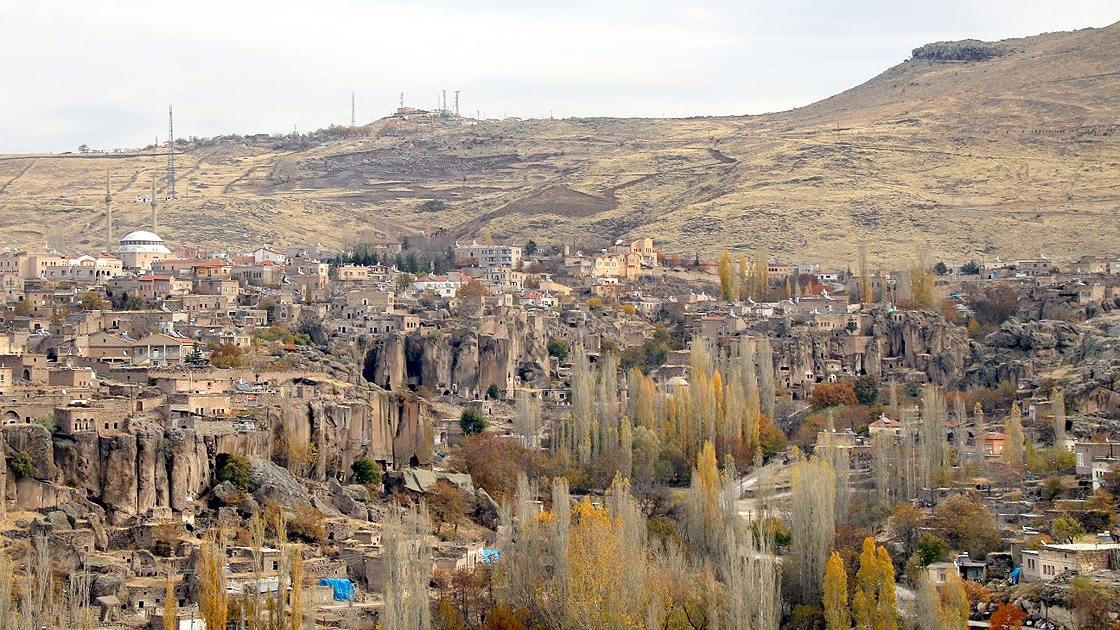
Monastery Valley is a valley located within the boundaries of Güzelyurt district in Aksaray Province, in Türkiye’s Central Anatolia Region, approximately 48 kilometers from the provincial center and to the southeast of the district. The valley lies on volcanic terrain and extends in a west-southeast direction, having been eroded by the Tunguru Stream. With a depth reaching up to 60 meters in some areas and a total length of 5.5 kilometers, the valley is notable for its steep and vertical cliffs. This natural formation influenced the development of rock-cut churches, monasteries, and habitation areas on both slopes of the valley.

Monastery Valley (Anadolu Agency)
The Cappadocia region was incorporated into the Roman Empire in 17 CE. Until the 2nd century CE, Christianity began to spread in the region, particularly among the enslaved population, which was otherwise under the influence of polytheistic religions. In the 4th century, the region became one of the earliest centers of Christian expansion in Anatolia following the settlement of the theologian Saint Gregory the Theologian from Neocaesarea in Güzelyurt. During this period, Christians seeking to practice their faith in secrecy utilized the region’s natural geology to carve out rock-cut spaces for worship. During the Arab raids beginning in the 7th century, Cappadocia served as a buffer zone. Iconoclasm had limited impact in Cappadocia, as clergy who opposed the iconoclastic movement concentrated in the region. From the late 11th century onward, under Turkish rule, the Christian population continued to practice their worship freely. Turkish and Greek communities coexisted in the region until the 1924 population exchange between Türkiye and Greece.

Monastery Valley (Anadolu Agency)
Monastery Valley contains typical examples of the rock-cut architecture unique to the Cappadocia region. Along the valley, there are 28 churches, two underground cities, and numerous rock-cut structures. Among the churches are 17 single-nave, seven double-nave, one triple-nave, one free-cross plan, and two closed Greek-cross plan buildings. Five of the seven main church plan types identified in Cappadocia are represented among the structures in Güzelyurt. Notable structures include the Church Mosque (formerly the Church of Saint Gregory the Theologian), Sivişli Church, Koç Church, Çömlekçi Church, Kalburlu Church, and Kömürlü Church. These churches exhibit diverse architectural techniques and decorative elements spanning from Early Christianity to the Middle Ages.
The underground city within the valley was uncovered during excavations in 1997, and its three levels have been cleared and opened to visitors. Dating to the Roman period, the underground city contains approximately 20 living quarters and includes structural units such as plug stones, water wells, ovens, pigeon houses, hearths, storage rooms, and granary ceilings. The underground city is unique among similar sites in the region for containing a toilet unit. Both the churches and the underground settlement reflect the strategic and religious significance of the region throughout its history.

Henüz Tartışma Girilmemiştir
"Monastery Valley" maddesi için tartışma başlatın
Historical Development
Archaeological and Architectural Features