


Bu içerik Türkçe olarak yazılmış olup yapay zeka ile otomatik olarak İngilizceye çevrilmiştir.
+2 Daha
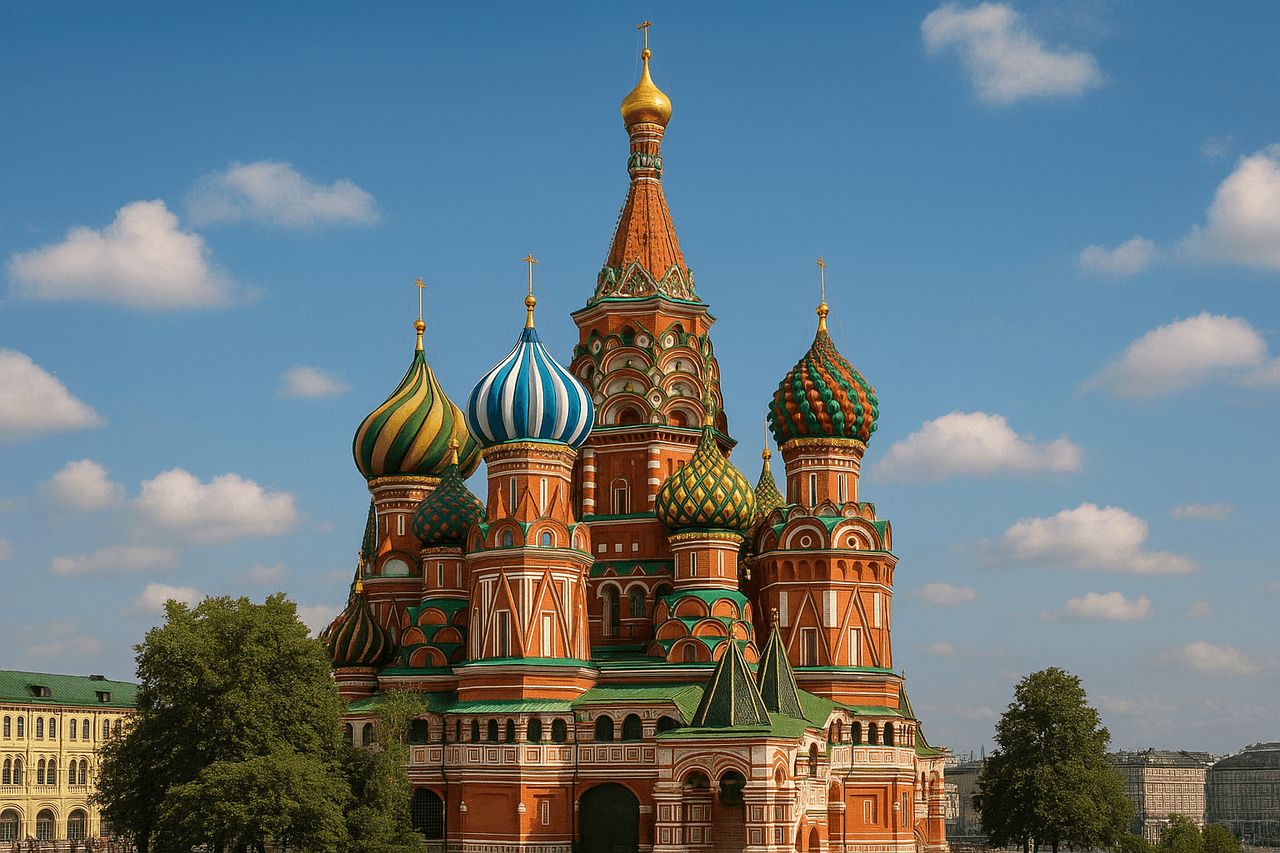
Saint Vasil Cathedral (generated by artificial intelligence).
Original Name(s) | Cathedral of Saint Basil the Blessed Sobor Vasiliya Blazhennogo | ||||||||
|---|---|---|---|---|---|---|---|---|---|
Location | Russian Federation/Moscow-Red Square | ||||||||
Reason for Construction | In commemoration of victories against the Khanates of Kazan and Astrahan | ||||||||
Built by | Tsar Ivan IV (Ivan the Terrible) | ||||||||
Previous Name | Cathedral of the Intercession of the Mother of God on the Moat | ||||||||
Architectural Plan | Eight-pointed star plan | ||||||||
Construction Material | Brick | ||||||||
Construction Date(s) | Between 1555 and 1561 | ||||||||
Current Purpose | Museum | ||||||||
Architect(s) | Barma Postnik Yakovlev | ||||||||
The Cathedral of Saint Basil (Russian: Собо́р Васи́лия Блаже́нного; Pokrovsky Sobor) is an Orthodox cathedral located at the southern end of Red Square in the center of Moscow and is regarded as one of the most iconic monuments of Russian architecture. It was commissioned by Tsar Ivan IV (Ivan the Terrible) to commemorate the conquests of the Khanates of Kazan (1552) and Astrakhan (1556). Construction began in 1555 and was completed in 1561. The cathedral is attributed to the architects Postnik Yakovlev and Barma.
The cathedral’s original name is the Cathedral of the Intercession of the Most Holy Theotokos on the Moat. This name reflects the Orthodox belief that Russia’s victories were achieved under divine protection. However, the structure became popularly known as the Cathedral of Saint Basil, named after Saint Basil the Blessed, a holy fool who lived in 16th-century Moscow. As a poor shoemaker’s apprentice, Basil embraced the tradition of the “yurodivy” — a holy fool who feigned madness to speak truth to power. He was known for openly criticizing tyranny and was respected even by Tsar Ivan IV, who silently accepted his rebukes. After his death in 1552, he was buried in a church on Red Square and was canonized as a saint in 1588.
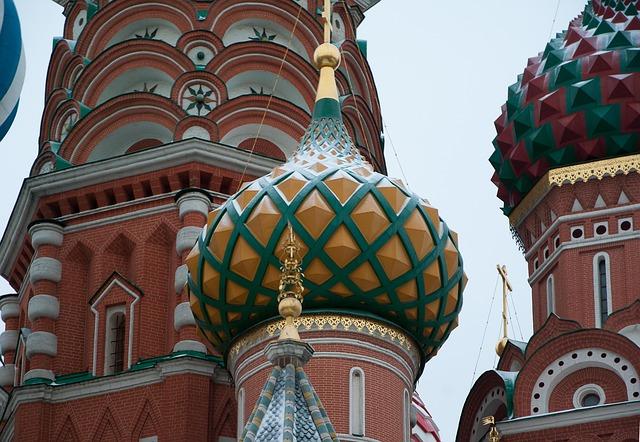
Domes of the Cathedral of Saint Basil
The cathedral consists of nine separate chapels. Eight of these are arranged as symbols of victory, while the central chapel is dedicated to the Intercession of the Theotokos. Each chapel features a dome with a unique pattern and color, creating an unparalleled visual unity.
Originally, all the domes were gilded. In the 17th century, they were adorned with colorful motifs and geometric patterns. This innovation transformed the building from a purely religious center into a visual symbol deeply integrated with Russian folk art.
Throughout history, the cathedral has been surrounded by numerous legends. Among the most widespread are:
The cathedral is one of the most important symbols of Russian Orthodox art. During the 15th and 16th centuries, Moscow became the center of icon painting, and the iconographic tradition reached its peak through the works of masters such as Andrei Rublev. The Cathedral of Saint Basil reflects this iconographic heritage. The colorful domes symbolize the heavenly kingdom of God, while the individual chapels represent themes of victory and divine protection.
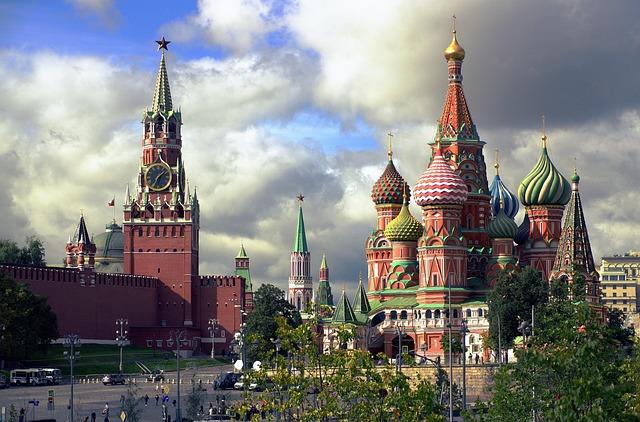
The famous Spasskaya Tower of the Kremlin and the Cathedral of Saint Basil —
In 1929, the cathedral was closed, secularized, and converted into a museum. Although it lost its religious function entirely during the Soviet period, its symbolic importance ensured its preservation. In 1990, it was inscribed on the UNESCO World Heritage List together with the Kremlin and Red Square.
Today, the cathedral is one of the most recognizable symbols of Moscow and Russia, often mistakenly identified in Western media as the Kremlin. Every year, millions of tourists visit the structure, which has become an inseparable part of Russian identity — religious, cultural, and artistic alike.
Accessed November 26, 2025.
Accessed November 26, 2025.
Google Arts & Culture. "Aziz Vasil Katedrali." Accessed September 19, 2025.
Macalester College. "St. Basil’s." Russian Studies, Macalester College. Accessed September 19, 2025.
Millî Eğitim Bakanlığı (AK-ORT). "Aziz Vasil Katedrali." PDF dosyası. Accessed September 19, 2025.
Pixabay. "Aziz Vasil Katedrali — resim araması." Accessed September 19, 2025.
UNESCO World Heritage Centre. "Saint-Basil’s Cathedral." UNESCO World Heritage List. Accessed September 19, 2025.
Öztürk, Özhan. "Aziz Vasil Katedrali, Moskova." Blog gönderisi, April 9, 2019. Accessed September 19, 2025.


Saint Vasil Cathedral (generated by artificial intelligence).
Original Name(s) | Cathedral of Saint Basil the Blessed Sobor Vasiliya Blazhennogo | ||||||||
|---|---|---|---|---|---|---|---|---|---|
Location | Russian Federation/Moscow-Red Square | ||||||||
Reason for Construction | In commemoration of victories against the Khanates of Kazan and Astrahan | ||||||||
Built by | Tsar Ivan IV (Ivan the Terrible) | ||||||||
Previous Name | Cathedral of the Intercession of the Mother of God on the Moat | ||||||||
Architectural Plan | Eight-pointed star plan | ||||||||
Construction Material | Brick | ||||||||
Construction Date(s) | Between 1555 and 1561 | ||||||||
Current Purpose | Museum | ||||||||
Architect(s) | Barma Postnik Yakovlev | ||||||||
Henüz Tartışma Girilmemiştir
"Saint Vasil Cathedral" maddesi için tartışma başlatın
History
Architecture
Legends and Folklore
Artistic and Religious Context
Modern Era