

Bu içerik Türkçe olarak yazılmış olup yapay zeka ile otomatik olarak İngilizceye çevrilmiştir.
+2 Daha
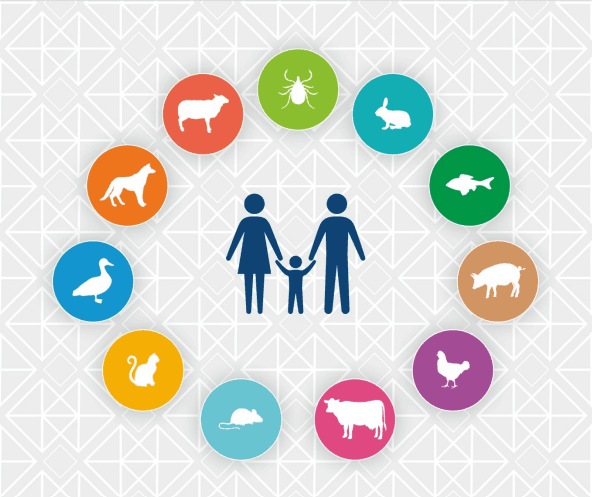
Zoonosis or zoonotic disease is derived from the Greek words “zoon” (animal) and “nosos” (disease). According to the terminology defined by the World Health Organization, zoonoses refer to any infection or disease that can be naturally transmitted between vertebrate animals and humans. Current medical data indicate that more than 200 types of zoonotic diseases have been identified in nature.【1】
Approximately 60 percent of pathogens affecting humans originate from animals. It is reported that about 75 percent of newly emerging infections such as Ebola, Severe Acute Respiratory Syndrome, Middle East Respiratory Syndrome, influenza viruses (COVID-19), and HIV have a zoonotic origin. Additionally, three out of every five newly identified human diseases each year are animal-borne, and a significant portion of potential biosecurity risks are zoonotic in nature, highlighting the global significance of these infections.【2】

Bacterial Zoonoses
(Generated by Artificial Intelligence)
Zoonotic diseases are classified into various groups according to the biological structure of the causative pathogen.
The dynamics of pathogen transmission from animals to humans vary and primarily occur through direct contact, indirect contact, vector-borne transmission, and food or waterborne transmission.

Biological Vector: Tick
(Generated by Artificial Intelligence)
Direct contact transmission occurs when humans come into contact with bodily fluids such as blood, saliva, urine, feces, or mucus from an infected animal, or through bites or scratches by infected animals.
Indirect transmission arises when pathogens are shed into the environment, animal housing, soil, or water, and humans become infected through contact with these contaminated inanimate surfaces or objects.
Mosquitoes, ticks, and fleas—arthropods that acquire the pathogen by feeding on the blood of infected animals and subsequently transmit it to humans—play a critical role as biological vectors.
In food and waterborne transmission, infection occurs through consumption of inadequately cooked meat, eggs, or unpasteurized milk derived from infected animals, or through ingestion of water contaminated with animal feces. Certain pathogens can also be transmitted via airborne particles that enter through the respiratory mucosa.
Although most transmissions occur from animals to humans, pathogen transfer from humans to animals has also been scientifically documented and is referred to as “reverse zoonosis” or “zooanthroponosis.”
Transmission cycles are intensified by macroecological factors such as deforestation, climate change, habitat loss, uncontrolled urbanization, and increasing human-wildlife interactions.【4】
Rabies
The clinical presentation of zoonotic diseases varies widely depending on the type of microorganism entering the human body; however, the majority of infections begin with general symptoms such as fever, headache, fatigue, malaise, anorexia, muscle and joint pain, chills, and regional lymphadenopathy.
When examining specific organ involvement, rabies, a viral infection, manifests with hypersensitivity to light and sound, hydrophobia due to pharyngeal spasms, hallucinations, and central nervous system dysfunction, and is typically fatal after symptom onset.
The bacterial disease brucellosis is characterized by undulant fever, joint inflammation, orchitis, and endocarditis. Hantavirus infections can affect the lungs causing severe respiratory distress or target the kidneys leading to acute renal failure. In anthrax cases, black necrotic ulcers are observed on the skin depending on the entry route, or severe respiratory failure or gastrointestinal hemorrhages may occur.
Diagnosis involves obtaining a detailed medical history, performing a physical examination, and applying specific laboratory tests targeting the pathogen. In blood analyses, leukocytosis is observed in bacterial infections, while thrombocytopenia and elevated liver enzymes may occur in viral or rickettsial infections. Treatment protocols include antibacterial, antiviral, antifungal, or antiparasitic drugs alongside supportive medical care, tailored to the pathogen’s nature.
Zoonoses have devastating effects on both public health and global socioeconomic structures, regardless of geographic boundaries. According to data prior to the COVID-19 pandemic, endemic and emerging zoonotic diseases caused an average of 2.4 billion human illnesses and approximately 2.7 million deaths annually worldwide.【5】
Workers in the livestock sector, veterinarians, farmers, and laboratory personnel constitute the primary occupational risk groups.
The epidemiological burden of these diseases extends beyond human health, causing global losses in animal production, animal mortality, trade embargoes, and economic damages amounting to billions of euros.
Zoonotic Diseases
According to surveillance records, approximately two-fifths of the zoonotic pathogens identified worldwide are also present in Türkiye. Among the most prevalent zoonoses in the country are brucellosis, leishmaniasis, hydatid cyst, salmonellosis, Crimean-Congo Hemorrhagic Fever, anthrax, and tularemia.
Glossary: (Surveillance refers to the continuous, systematic collection, analysis, interpretation, and dissemination of data for the purpose of disease prevention and control.)【6】
Zoonotic diseases are among the most significant biological threats to food safety throughout the entire supply chain from farm to table. Medical and epidemiological data indicate that over 90 percent of foodborne illnesses in humans originate from animal-derived foods.【7】 Pathogens are transmitted to humans through consumption of inadequately heat-treated products such as meat, unpasteurized milk, and eggs from infected animals, or through contamination of fruits and vegetables by animal feces. The most commonly encountered foodborne zoonotic agents include Salmonella species, Campylobacter species, Shiga toxin-producing Escherichia coli, and hepatitis E virus. Aggressive strains such as Shiga toxin-producing Escherichia coli (STEC) can cause severe gastrointestinal symptoms and life-threatening systemic complications such as hemolytic uremic syndrome with renal failure.
Global estimates indicate that consumption of contaminated food and water causes approximately 600 million illnesses and 420,000 deaths annually worldwide, constituting a major public health crisis.【8】

Pasteurization Units
To eliminate zoonotic risks and ensure food safety, it is essential to avoid consumption of raw or undercooked meat, ensure that milk and dairy products undergo pasteurization or boiling, and widely implement hygienic production practices in food processing facilities. Additionally, mandatory pre- and post-slaughter veterinary inspections at slaughterhouses are a fundamental pillar of food safety, ensuring that animal-derived foods originate from healthy animals.
Zoonotic infections significantly impact agricultural economies through reduced productivity and animal mortality. More than 20 percent of global livestock production losses are directly linked to animal diseases.
Diseases do not only cause animal deaths; they also lead to dramatic reductions—up to 70 percent—in the productivity of valuable protein sources such as milk, meat, and eggs among surviving populations. Furthermore, infections such as brucellosis and toxoplasmosis directly target the reproductive system, causing infertility, abortion, and the birth of weak offspring, resulting in long-term economic losses for producers.

Fumigation of Poultry Houses
Statistical data prior to the COVID-19 pandemic indicate that zoonotic diseases caused approximately 8 billion euros in annual livestock production losses, 21.5 billion euros in capital loss due to dead farm animals, and an additional 43 billion euros in human healthcare costs for treatment.【9】 These global production losses and workforce reductions threaten the economic sustainability of rural communities in developing countries that rely entirely on livestock for their livelihood, thereby increasing poverty risk.
The economic dimension of zoonoses extends beyond agriculture, disrupting international trade and tourism sectors. Outbreaks trigger quarantine measures, trade restrictions, and commercial embargoes aimed at preventing pathogen spread, resulting in severe economic sanctions on exporting countries. For instance, bovine spongiform encephalopathy outbreaks led to billions of dollars in beef export losses and the mandatory culling of millions of animals in the United Kingdom, Canada, and the United States. Similarly, the Severe Acute Respiratory Syndrome outbreak brought tourism in China, Hong Kong, Taiwan, and Singapore to a standstill, while highly pathogenic avian influenza cases reduced tourism revenues and closed poultry meat export markets in countries such as Mexico and Chile.
Pandemic: COVID-19
Disease eradication processes such as isolation, epidemiological surveillance, mass vaccination programs, and biosecurity measures impose enormous financial burdens on national budgets. It has been reported that the global economic cost of combating zoonotic outbreaks between 1995 and 2008 exceeded 120 billion US dollars.【10】
Pandemics with zoonotic origins that spread across all regions, such as COVID-19, have halted entire economic sectors including education, finance, travel, sports, and industry, obstructed global economic growth, and pushed millions of people worldwide into extreme poverty.

Spray Disinfection Method
Prevention principles against zoonotic diseases are based on personal hygiene, source intervention, biosecurity practices, and inter-institutional coordination. Primary hygiene rules require personnel and individuals in risk groups to wash their hands after any contact with animals, animal waste, or laboratory samples, and to use barrier-type personal protective equipment such as gloves, masks, goggles, and protective gowns during procedures.

Cleaning Animal Shelters
In the environmental protection phase, it is essential to disinfect poultry houses, barns, abattoirs, animal markets, and veterinary clinics using appropriate chemicals (aldehydes, chlorine compounds, quaternary ammonium compounds) and remove organic contaminants to reduce pathogen load.
To protect consumer health, animal-derived foods must be cooked to adequate temperatures and milk must be consumed only after pasteurization.【11】
Sustainable control and eradication of zoonotic diseases are only possible through adoption of the One Health approach. The One Health concept is based on the reality that human health, animal health, and the health of the shared ecosystem are inextricably interconnected.
To address risks created by population growth, accelerated international travel, and shrinking natural habitats, medical doctors, veterinarians, ecologists, and environmental health experts are encouraged to collaborate within a multidisciplinary framework.
The fundamental condition for protecting human health and preventing potential pandemics at their source is the detection and containment of diseases within animal and environmental contexts. In this regard, regular epidemiological surveillance, development of national zoonotic action plans, and science-based risk management form the backbone of global health policies.
The One Health approach, grounded in the principle that human, animal, and environmental health are inseparably linked, plays a fundamental role in preventing zoonotic diseases. This approach necessitates collaboration across disciplines to achieve full health for humans, animals, and ecosystems at local, national, and global levels.
The complex nature of zoonotic diseases cannot be addressed by a single professional group alone. The One Health concept encourages medical doctors, veterinarians, wildlife biologists, ecologists, agricultural experts, microbiologists, and epidemiologists to work together on a common platform. The essential condition for safeguarding human health is the integrated and effective management of animal and environmental health.

Türkiye Zoonotic Diseases Action Plan
Inter-institutional data sharing is vital for monitoring and controlling diseases. Under the One Health approach, the World Health Organization, the Food and Agriculture Organization of the United Nations, and the World Organisation for Animal Health have established a joint Global Early Warning System. This system aids in the early detection, alerting, and prevention of potential animal disease threats and pandemics through data sharing and risk assessment.
Within the One Health framework, countries are advised to establish Zoonotic Disease Units, develop national zoonosis strategies, and align veterinary public health policies with international institutions. Identifying and prioritizing existing and emerging zoonoses, and implementing regular regional and national reporting, are fundamental steps of this approach.
For example, in Türkiye, under inter-ministerial collaboration, the Türkiye Zoonotic Diseases Action Plan was developed to conduct risk analyses and enhance diagnostic laboratory capacity.
Factors such as population growth, urbanization, rising demand for animal-derived foods, accelerated international travel, climate change, and human encroachment on wildlife trigger the emergence of zoonoses. One Health analyzes these environmental and sociological risk factors at their source to determine necessary intervention strategies.【12】
Warning: The content in this article is provided solely for general encyclopedic informational purposes. The information here should not be used for diagnosis, treatment, or medical advice. Always consult a physician or qualified healthcare professional before making any health-related decisions. The author and KÜRE Encyclopedia assume no responsibility for any consequences arising from the use of this information for diagnostic or therapeutic purposes.
Guo, Lily. “Zoonotik Hastalıklar.” Edited by Alyssa Haag, Emily Miao, and Kelsey LaFayette. *Osmosis*. Last updated: March 5, 2025. Accessed February 21, 2026. https://www.osmosis.org/answers/zoonotic-diseases
Kayabaş, Üner. “Zoonotik Enfeksiyonlar.” Niğde Ömer Halisdemir Üniversitesi Tıp Fakültesi. Accessed February 21, 2026. https://www.klimik.org.tr/wp-content/uploads/2018/03/Zoonotik-Enfeksiyonlar-%C3%9Cner-Kayaba%C5%9F.pdf.
Rahman, Md Tanvir, Md Abdus Sobur, Md Saiful Islam, Samina Ievy, Md Jannat Hossain, Mohamed E. El Zowalaty, AMM Taufiquer Rahman, and Hossam M. Ashour. “Zoonotic Diseases: Etiology, Impact, and Control.” *Microorganisms* 8, no. 9 (September 2020): 1405. Accessed February 21, 2026. https://doi.org/10.3390/microorganisms8091405
Republic of Turkey Presidency. *Regulation on Principles of Infectious Disease Surveillance and Control.* Accessed February 21, 2026. https://www.mevzuat.gov.tr/mevzuat?MevzuatNo=11347&MevzuatTur=7&MevzuatTertip=5
Serrano, Samantha, and Erta Kalanxhi. “5 Facts – Zoonotic Diseases.” One Health Trust. Date Published: June 14, 2022. Accessed February 21, 2026. https://onehealthtrust.org/publications/infographics/five-facts-zoonotic-diseases/
Serrano, Samantha, and Erta Kalanxhi. “Zoonotik Hastalıklar Hakkında Beş Gerçek.” One Health Trust. Date Published: June 14, 2022. Accessed February 21, 2026. https://onehealthtrust.org/publications/infographics/five-facts-zoonotic-diseases/
T.C. Millî Eğitim Bakanlığı (MEB). *Dezenfeksiyon* (Hayvan Sağlığı modülü), MEGEP PDF. Accessed February 21, 2026. https://megep.meb.gov.tr/mte_program_modul/moduller_pdf/Dezenfeksiyon.pdf
T.C. Ministry of Agriculture and Forestry, Veterinary Control Center Research Institute. *Turkey Zoonotic Diseases Action Plan (2019–2023)*. Accessed February 21, 2026. https://vetkontrol.tarimorman.gov.tr/merkez/Belgeler/Zoonotik_Hastaliklar_Eylem_Pani.pdf
Teke, Âdem. “Zoonoz Hastalıklara Karşı Uygulanan Hijyen Tedbirleri ve Dezenfeksiyon Yöntemleri.” *Akademik Et ve Süt Kurumu Dergisi*, no. 5 (2023): 22–30. Accessed February 21, 2026. https://dergipark.org.tr/en/download/article-file/2505462
Yardımcı, Hakan. “Hayvandan İnsana Sağlık.” Ankara Üniversitesi Veteriner Fakültesi. Date Published: November 2020. Accessed February 21, 2026. https://www.veterinary.ankara.edu.tr/wp-content/uploads/sites/267/2020/11/Hayvandan-Insana-Saglik-Prof.-Dr.-Hakan-YARDIMCI.pdf
YouTube. "Gıda Kaynaklı Zoonotik Riskler." Video, 12:03. Accessed February 21, 2026. https://youtu.be/YSTgKWsrwkg?si=J5sI1dUva5WFKAIs
YouTube. "One Health / Tek Sağlık Yaklaşımı." Video, 8:47. Accessed February 21, 2026. https://youtu.be/k87U-AcZ8Og?si=bHgmu_PuALxNDpZO
YouTube. "Zoonotik Hastalıklar ve Korunma Yöntemleri." Video, 10:25. Accessed February 21, 2026. https://youtu.be/itoQ6xA0D3A?si=pInrVBftkZW4zjwj
Zhang, Liying, and others. “Emerging and Re-Emerging Zoonotic Diseases: A Microorganisms Special Issue Overview.” *Microorganisms* 8, no. 9 (2020): 1405. Accessed February 21, 2026. https://www.mdpi.com/2076-2607/8/9/1405
Önal, Ayşe Emel. “Zoonozlar.” İstanbul Üniversitesi İstanbul Tıp Fakültesi. Accessed February 21, 2026. https://cdn.istanbul.edu.tr/statics/toplumhekimligi.istanbul.edu.tr/wp-content/uploads/2015/11/ZOONOZLAR-Prof.-Dr.-Ay%C5%9Fe-Emel-%C3%96nal.pdf.
“Animal Transmitted Diseases.” Washington State Department of Health. Accessed February 21, 2026. https://doh.wa.gov/you-and-your-family/illness-and-disease-z/animal-transmitted-diseases
“World Zoonoses Day (July 6) – Why Is It Celebrated?” Türk Veteriner Hekimleri Birliği (TVHB). Date Published: July 5, 2021. Accessed February 21, 2026. https://tvhb.org.tr/2021/07/05/dunya-zoonoz-gunu-6-temmuz-neden-kutlaniyor/
“Zoonoses.” World Health Organization (WHO). Date Published: July 29, 2020. Accessed February 21, 2026. https://www.who.int/news-room/fact-sheets/detail/zoonoses
“Zoonotik ve Vektörel Hastalıklar.” T.C. Sağlık Bakanlığı Halk Sağlığı Genel Müdürlüğü. Accessed February 21, 2026. https://hsgm.saglik.gov.tr/tr/zoonotik-ve-vektorel-hastaliklar.html.
[1]
“Zoonoses,” World Health Organization (WHO), 29 July 2020, accessed 21 February 2026, https://www.who.int/news-room/fact-sheets/detail/zoonoses.
[2]
Md Tanvir Rahman et al., “Zoonotic Diseases: Etiology, Impact, and Control,” Microorganisms 8, no. 9 (September 2020): 1405, accessed 21 February 2026, https://doi.org/10.3390/microorganisms8091405.
[4]
Hakan Yardımcı, “Animal to Human Health,” Ankara University Faculty of Veterinary Medicine, November 2020, 5, accessed 21 February 2026,https://www.veterinary.ankara.edu.tr/wp-content/uploads/sites/267/2020/11/Hayvandan-Insana-Saglik-Prof.-Dr.-Hakan-YARDIMCI.pdf.
[5]
Md Tanvir Rahman et al., “Zoonotic Diseases: Etiology, Impact, and Control,” Microorganisms 8, no. 9 (September 2020): 1405, accessed 21 February 2026,https://doi.org/10.3390/microorganisms8091405.
[6]
Republic of Türkiye Presidency, Regulation on Principles of Infectious Disease Surveillance and Control, accessed 21 February 2026, https://www.mevzuat.gov.tr/mevzuat?MevzuatNo=11347&MevzuatTur=7&MevzuatTertip=5
[7]
“World Zoonoses Day (6 July) – Why Is It Observed?,” Turkish Veterinary Medical Association (TVHB), 5 July 2021, accessed 21 February 2026,https://tvhb.org.tr/2021/07/05/dunya-zoonoz-gunu-6-temmuz-neden-kutlaniyor/.
[8]
Md Tanvir Rahman et al., “Zoonotic Diseases: Etiology, Impact, and Control,” Microorganisms 8, no. 9 (September 2020): 1405, accessed 21 February 2026,https://doi.org/10.3390/microorganisms8091405.
[9]
“World Zoonoses Day (6 July) – Why Is It Observed?,” Turkish Veterinary Medical Association (TVHB), 5 July 2021, accessed 21 February 2026, https://tvhb.org.tr/2021/07/05/dunya-zoonoz-gunu-6-temmuz-neden-kutlaniyor/.
[10]
Md Tanvir Rahman et al., “Zoonotic Diseases: Etiology, Impact, and Control,” Microorganisms 8, no. 9 (September 2020): 1405, accessed 21 February 2026,https://doi.org/10.3390/microorganisms8091405.
[11]
Republic of Türkiye Ministry of National Education (MEB), Disinfection (Animal Health Module), MEGEP (Vocational Education and Training Program), PDF file, accessed 21 February 2026, https://megep.meb.gov.tr/mte_program_modul/moduller_pdf/Dezenfeksiyon.pdf
[12]
Republic of Türkiye Ministry of Agriculture and Forestry, Veterinary Control Center Research Institute, Türkiye Zoonotic Diseases Action Plan (2019–2023), accessed 21 February 2026, https://vetkontrol.tarimorman.gov.tr/merkez/Belgeler/Zoonotik_Hastaliklar_Eylem_Pani.pdf

Henüz Tartışma Girilmemiştir
"Zoonotic Diseases (Morbi zoonotici)" maddesi için tartışma başlatın
Etiological Classification and Pathogen Diversity
Classification of Transmission Routes
Transmission via Direct Contact
Indirect Transmission Mechanisms
Vector-Borne Transmission
Food and Waterborne Transmission
Reverse Zoonosis (Zooanthroponosis)
Macroecological Risk Factors
General Clinical Symptoms
Viral Infection Example: Rabies
Bacterial and Other Infection Examples
Diagnostic Methods
Global Public Health
Occupational Risk Groups
Epidemiological and Economic Burden
Common Zoonotic Diseases in Türkiye
Food Safety and Zoonotic Risks
Foodborne Transmission Mechanisms and Pathogens
Global Public Health Burden
Preventive Measures in Food Safety
Livestock Production Losses
Impact on Reproductive Health and Productivity
Economic Costs and Rural Impacts
Impact on International Trade
Global Economic Consequences and Pandemics
Prevention and Hygiene Principles
Prevention, Disinfection, and the One Health Approach
Environmental Disinfection Practices
One Health Approach
Multidisciplinary Collaboration and Risk Factors
Surveillance and Global Health Policies
Role in Preventing Zoonoses
Multidisciplinary and Intersectoral Collaboration
Early Warning and Active Surveillance Systems
Development of Strategies, Policies, and Action Plans
Addressing Environmental and Sociological Factors