
 Recently Added:
This article was automatically translated from the original Turkish version.
The 2026 FIA Formula 1 World Championship has begun as a season marked by fundamental revisions to both technical and financial regulations and historic changes in team structures. The primary objectives of the new rules include enhancing competition, achieving sustainability goals, and attracting major automotive manufacturers to the sport. The championship will be held on an expanded and geographically optimized calendar featuring 24 races across five continents.
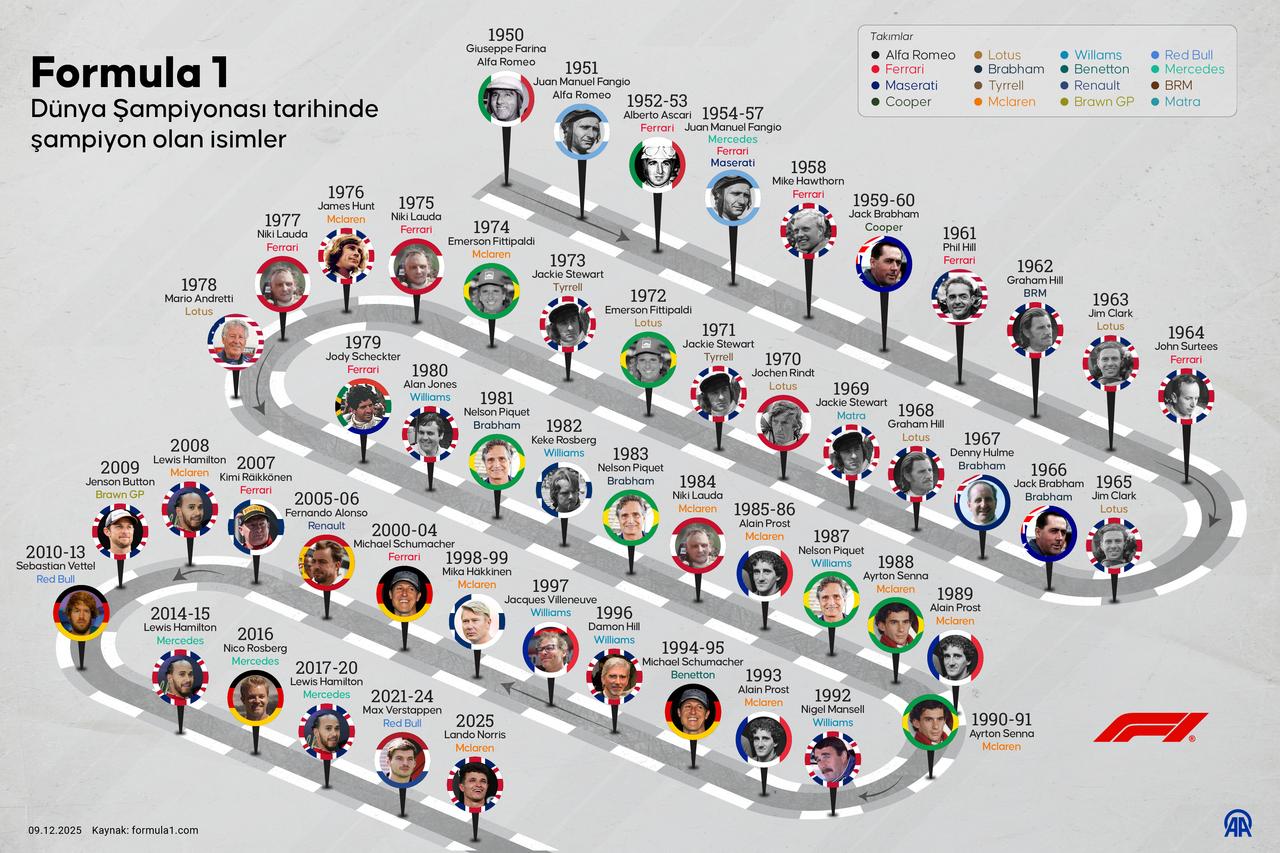
Formula 1 world champions (AA)
With the 2026 season, Formula 1 cars have undergone comprehensive reductions and updates in their physical structure, aerodynamic properties, and safety standards. According to the new-generation car concept approved by the Fédération Internationale de l'Automobile (FIA), vehicles are designed to be more compact. In this direction, the wheelbase, previously 3600 millimetres, has been reduced to 3400 millimetres, and the car width has been decreased from 2000 millimetres to 1900 millimetres. Additionally, a 150-millimetre reduction has been applied to the floor width. The overall length of the cars has been shortened by 20 centimetres and the width by 10 centimetres.
Safety standards have been further enhanced in parallel with these dimensional changes. New-generation cars now feature two-stage front impact structures and improved side intrusion protection systems. The load-bearing capacity of the roll hoop has been increased from 16G to 20G. To improve visibility and safety, the endplate lights on the rear wing have been made significantly brighter. FIA’s Single-Seater Director Nikolas Tombazis described the new regulations as a “moderate revolution” and emphasized that the cars have been developed in full alignment with Formula 1’s core DNA.
One of the most notable innovations of the 2026 season is the radical redesign of power units. The power distribution between the internal combustion engine (ICE) and electrical energy has been balanced at a 50-50 ratio, significantly increasing reliance on electric power. Under the new engine regulations, the 1.6-litre V6 turbo configuration remains unchanged in terms of rev limits, but the Motor Energy Recovery System (MGU-H), deemed too complex and costly and thus a barrier to new manufacturers, has been entirely removed from the system. The fuel flow rate of the internal combustion engine has been reduced, with a total power output target of approximately 400 kW.
The previous power output range of 738 to 751 horsepower (hp) from the internal combustion engine has been reduced to 536 hp under the new rules. In contrast, the electric motor’s power has increased dramatically by approximately 300 percent, rising from 161 hp to 469 hp. Mercedes HPP Managing Director Hywel Thomas stated that no component has been carried over from previous engines and that every element—from hardware to software and fuel—has been re-evaluated from scratch. It has been emphasized that the efficiency of the electrical system will be the most critical factor in determining 2026 car lap times and that the duration for which power can be sustained will directly impact performance.
In line with the sport’s commitment to achieving net-zero carbon emissions by 2030, all teams are now required to use 100 percent sustainable synthetic fuels derived from non-food sources or waste. Although some discussions arose during the rule-making process about reverting to atmospheric V10 or V8 engines, the decision to retain the hybrid format was made due to road car manufacturers abandoning these technologies and brands like Mercedes supporting only technologies compatible with road vehicles.
The cost control and attractive technical structure provided by the new regulations have attracted new major automotive manufacturers to the sport. The engine supplier pairings for the 2026 grid have been reshuffled. McLaren, Mercedes, Williams, and Alpine teams have opted to continue with Mercedes power units. Ferrari continues to supply its own engines, and Haas has also retained the Ferrari power unit. Red Bull Racing and Racing Bulls (VCARB) have transitioned to the “Red Bull-Ford” power units developed through their strategic partnership with Ford. Honda, having withdrawn from the sport, remains as the sole power unit supplier for Aston Martin. Audi joins the grid with its own factory team and its own engine, while new entrant Cadillac has agreed to use Ferrari power units in its initial years.
The Formula 1 grid has expanded to 22 cars with the addition of an 11th team for the first time in many years. The application led by Andretti Global, a joint venture between General Motors and TWG Motorsports, was approved following commercial evaluations by the FIA and Formula 1 management, and the team has entered the championship as Cadillac Formula 1 Team. General Motors established a new company, GM Performance Power Units LLC, for this project, appointing Russ O’Blenes as CEO. The team will begin racing in 2026 using a customer engine (Ferrari) and will transition into a full factory team using its own GM power units from the 2029 season onward. Liberty Media CEO Greg Maffei and FIA President Mohammed Ben Sulayem stated that the entry of iconic American brands like GM and Cadillac will significantly enhance the global growth of the championship. GM CEO Mark Reuss and TWG Global CEO Dan Towriss described this entry as the beginning of a new and bold era for American motorsport.
Another major transformation on the grid is the full acquisition of the Sauber team by Audi. The Swiss team will compete under the name Audi, with sponsorship from British financial technology firm Revolut. The team, featuring a new car design in black, red, and silver, is led by Jonathan Wheatley. Audi CEO Gernot Döllner aims for the team to compete for championships by 2030, while Audi F1 Project Leader Mattia Binotto acknowledged that immediate success at the top will not be possible in 2026. Reports indicate that Audi has halted development of its 2026 engine to focus on the 2027 and 2028 seasons.
Record-breaking sponsorship developments have also occurred. Haas has ended its agreement with Moneygram and announced Toyota Gazoo Racing as its primary sponsor. McLaren, for the first time since 2013, has sold its naming rights, signing a deal worth approximately $100 million annually with Mastercard; McLaren CEO Zak Brown emphasized this as the largest partnership in the club’s history.
Cadillac’s driver lineup consists of two experienced drivers with extensive backgrounds. Sergio Perez, who left Red Bull at the end of 2024 and took a break from racing to evaluate his future, and Valtteri Bottas, who served as a reserve driver for Mercedes after departing Sauber, have both returned to Formula 1 at age 35 with Cadillac. Bottas described the project as more than just a racing team—it is a long-term vision—while Perez expressed pride in joining such a dynamic team representing the American continent.
Audi has assigned its driver seats to experienced German driver Nico Hülkenberg and young talent Gabriel Bortoleto. In Visa Cash App Racing Bulls (VCARB), Arvid Lindblad, the 20th member of the Red Bull Junior Team to reach Formula 1, joins Liam Lawson. Lindblad, who has aimed to compete in this sport since the age of five, has chosen the number 41, which had never been used in a race by a full-time driver under the permanent numbering system and had only been used in practice sessions by Isack Hadjar and Susie Wolff. Another significant number change comes from four-time world champion Max Verstappen. Verstappen has abandoned the number 33 he has used for years and adopted number 3, long associated with his former teammate Daniel Ricciardo, as his race number for the 2026 season. Lando Norris continues to race with number 4.
The budget cap, introduced in 2021 to balance competition and ensure team viability, has been restructured for the 2026 season. Previously set at $135 million, the cap has been raised to $215 million USD (approximately £159.6 million). FIA officials explained that the increase is primarily due to accumulated global inflation and the inclusion of previously excluded cost categories within the $215 million limit. Teams are now entirely free in their spending strategies, with full autonomy over how resources are allocated among personnel, and the system has been designed to be self-regulating.
To achieve consensus on the regulations, the FIA and Formula 1 management granted teams various concessions. Although the ideal framework included five to six exclusions, the number was expanded to 20–25 to secure team support. Thanks to the value added to the sport’s ecosystem by the budget cap, team commercial values have surged dramatically—for example, McLaren’s valuation has reached $4.1 billion. Past procedural breaches, such as those committed by Aston Martin in the 2024 season, have led teams to approach budget audits with far greater caution in the new era.
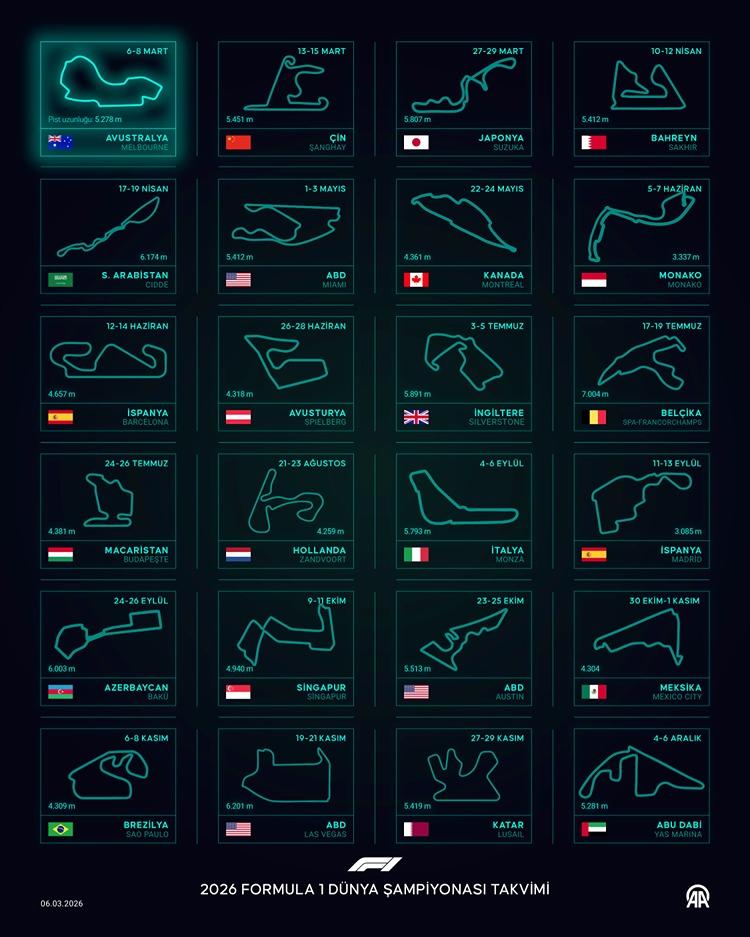
Formula 1 2026 calendar (AA)
The 2026 race calendar has been specifically optimized to reduce logistical burdens from intercontinental travel and support sustainability goals. The season opens with the race in Melbourne, Australia. The most significant change in the European leg is the relocation of the Spanish Grand Prix from Barcelona to Madrid. A long-term agreement with Madrid authorities has led to the construction of a new street circuit, targeting a capacity of 110,000 spectators in its early years and 140,000 thereafter. This major event is expected to contribute €450 million (approximately $489.92 million) annually to Madrid’s economy and create 8,200 new jobs.
Although the Circuit de Catalunya in Barcelona has lost its status as the host of the Spanish Grand Prix, it remains on the calendar. Organizers have officially registered the second Spanish race of 2026 as the “Barcelona-Catalunya Grand Prix.” Meanwhile, the Dutch Grand Prix is scheduled to be removed from the calendar after the 2026 season. Countries such as Portugal, Germany, Argentina, Rwanda, South Africa, Nigeria, Thailand, South Korea, and Türkiye are reported to be actively lobbying for inclusion.
To enrich the race weekend format, Formula 1 management has fixed the number of sprint races at six, with specific rules attached. Locations hosting sprint races include Italy, Spain, Azerbaijan, Singapore, the United States, Mexico, Brazil, Las Vegas, Qatar, and Abu Dhabi. To enhance predictability, sprint races have a strict 90-minute completion window, with a maximum allowable extension of 30 minutes in case of stoppages. To increase on-track competition and overtaking opportunities, the DRS (Drag Reduction System) activation zone has been moved from the third sector to the second. Additionally, for safety reasons, if a race is restarted behind the safety car in heavy rain and the safety car remains on track for more than one lap, teams are required to use wet-weather tyres.
Autosport. "Revealed: First images of F1's new 2026 car concept". Accessed March 8, 2026. https://www.autosport.com/f1/news/revealed-first-images-of-f1s-new-2026-car-concept/10620100/
Autoweek. "FIA Approves F1 Power Unit Rules for 2026 Season". Accessed March 8, 2026. https://www.autoweek.com/racing/formula-1/a40911597/fia-approves-f1-power-unit-major-regulations-for-2026-season/
BBC Sport. "F1 engines: A return to V10 or hybrid - what's the future?". Accessed March 8, 2026. https://www.bbc.com/sport/formula1/articles/czed4jk7eeeo
Forbes. "Five Big Changes Coming To Formula 1 In 2026". Accessed March 8, 2026. https://www.forbes.com/sites/brettknight/2025/12/09/five-big-changes-coming-to-formula-1-in-2026/
Formula 1. "Formula 1 and FIA announce 2026 Sprint Calendar". Accessed March 8, 2026. https://www.formula1.com/en/latest/article/formula-1-and-fia-announce-2026-sprint-calendar.3PyLPAazrBNe8kQIS3wOfY
Formula 1. "Formula 1 confirms 2026 pre-season testing dates and issues calendar update". Accessed March 8, 2026. https://www.formula1.com/en/latest/article/formula-1-confirms-2026-pre-season-testing-dates-and-issues-calendar-update.5VKfdqe7JcdsCJcEnQE0xw
Formula 1. "Formula 1 reveals calendar for 2026 season". Accessed March 8, 2026. https://www.formula1.com/en/latest/article/formula-1-reveals-calendar-for-2026-season.YctbMZWqBvrgyddrnauo8
Formula 1. "Perez and Bottas to make F1 returns in 2026 with Cadillac". Accessed March 8, 2026. https://www.formula1.com/en/latest/article/perez-and-bottas-to-make-f1-returns-in-2026-with-cadillac.6sqKNbUEoFjveym9YfGkxQ
Formula 1. "Statement on General Motors application to join FIA Formula One World Championship in 2026". Accessed March 8, 2026. https://www.formula1.com/en/latest/article/statement-on-general-motors-application-to-join-fia-formula-one-world.69uoRF1uwHwXkr4efkpnhc
Motorsport.com. "F1 cost cap: What is it and how does it work?". Accessed March 8, 2026. https://www.motorsport.com/f1/news/f1-cost-cap-what-is-it-how-it-works/10379799/
RaceFans. "Spain’s second F1 race to be called the ‘Barcelona-Catalunya Grand Prix’ next year". Accessed March 8, 2026. https://www.racefans.net/2025/06/13/spains-second-f1-race-to-be-called-the-barcelona-catalunya-grand-prix-next-year/
RacingNews365. "FIA reveal 'concessions' to teams ahead of major F1 rule tweak". Accessed March 8, 2026. https://racingnews365.com/fia-reveal-concessions-to-f1-teams-ahead-of-major-cost-cap-change
Reuters. "Madrid to host Spanish GP from 2026, Barcelona future uncertain". Accessed March 8, 2026. https://www.reuters.com/sports/formula1/madrid-host-spanish-f1-gp-2026-10-year-deal-2024-01-23/
Sky Sports. "F1 2026: What are the new regulations, engine changes and how will the racing be with no DRS". Accessed March 8, 2026. https://www.skysports.com/f1/news/12028/13441475/f1-2026-what-are-the-new-regulations-engine-changes-and-how-will-the-racing-be-with-no-drs
The Race. "Verstappen's new F1 number for 2026 explained". Accessed March 8, 2026. https://www.the-race.com/formula-1/verstappens-new-f1-number-for-2026-explained/
Visa Cash App RB. "Our Driver Line-Up For 2026". Accessed March 8, 2026. https://www.visacashapprb.com/int-en/2026-driver-live-up-announcement
Yahoo News. "Wet races, half points and a new fan engagement activity – the FIA rule changes analysed". Accessed March 8, 2026. https://web.archive.org/web/20230325092032/https://uk.news.yahoo.com/wet-races-half-points-fan-173900805.html
The 2026 Formula 1 Australian Grand Prix was held on 8 March 2026 at the 5.2-kilometre Albert Park Circuit in Melbourne, Australia, over 58 laps. This race marked the first round of the new era featuring hybrid power units and updated battery energy usage regulations. Mercedes driver George Russell emerged victorious. The race was shaped by several drivers retiring due to accidents, the direct impact of the new power management rules on overtaking, and contrasting pit stop strategies employed by teams.
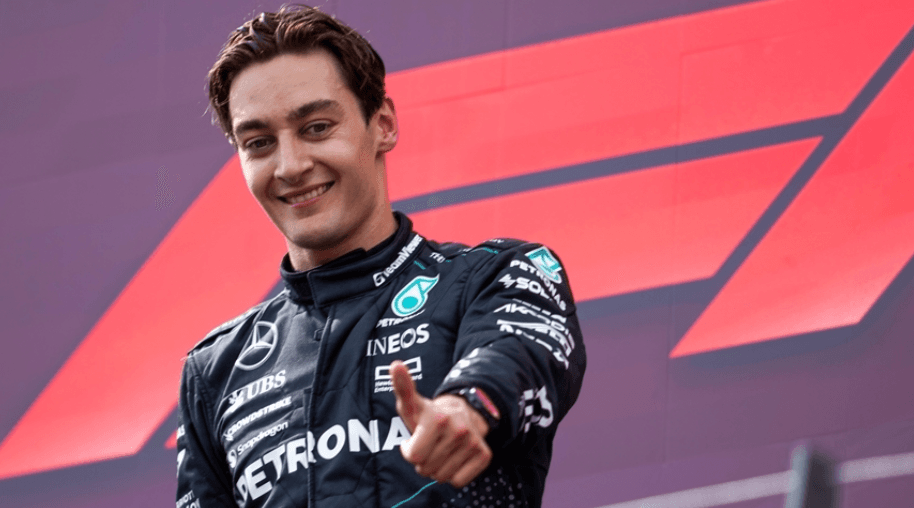
George Russell (AA)
During the weekend’s qualifying sessions, Mercedes driver George Russell set the fastest lap, securing pole position with a 0.8-second advantage over his closest rival. Red Bull driver Max Verstappen failed to complete Q1 after losing control of his car and colliding with the barriers. He started the race from 20th on the grid. Approximately half an hour before the race start, McLaren driver Oscar Piastri, who was entering the grid from the pit lane, lost control of his car due to an abrupt power surge while crossing the kerbs at Turn 4 and crashed into the barriers. As a result, the Australian driver was unable to participate in the race on home soil. Meanwhile, Audi driver Nico Hülkenberg, who was expected to start from the pit lane, also failed to take the start.
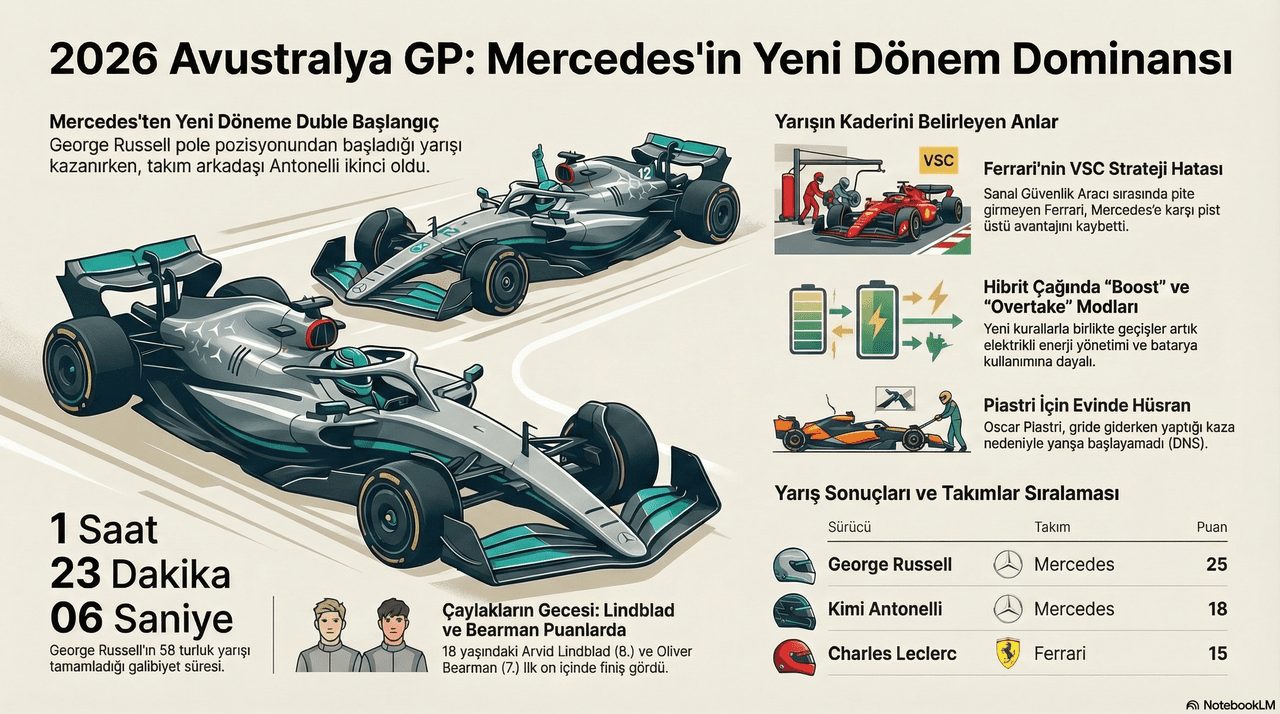
1. Australian GP Infographic (Generated by AI)
The majority of drivers on the starting grid opted for medium compound tyres. Fernando Alonso and Carlos Sainz started on soft tyres, while Franco Colapinto and Valtteri Bottas began the race on hard compounds. After the lights went out, pole sitter George Russell made a slow start. Charles Leclerc of Ferrari, who had a strong start from fourth position, overtook Russell into Turn 1 to take the lead. Lewis Hamilton, the other Ferrari driver, climbed to third place before the end of the first lap.
In the opening laps, frequent lead changes occurred due to the new 2026 regulations allowing short bursts of “extra power” and “overtake mode.” On lap two, Russell used additional electrical energy to pass Leclerc between Turns 10 and 11 and assumed the lead. However, on lap three, Leclerc reclaimed the position using the same strategy approaching Turn 9. Russell launched another attack on lap eight, retaking first place and beginning to extend his lead. Alpine driver Franco Colapinto, who committed a procedure violation at the start, was investigated and handed a stop-go penalty.
On lap 12, the first Virtual Safety Car (VSC) period was triggered after Red Bull driver Isack Hadjar retired due to smoke emanating from the rear of his car. During this period, Mercedes opted to pit both George Russell and Kimi Antonelli simultaneously to minimise time loss. Ferrari, by contrast, stuck to a one-stop strategy, keeping Leclerc and Hamilton on track, thereby securing the first two positions.
Around lap 17 or 18, a second VSC was deployed after Cadillac driver Valtteri Bottas suffered a mechanical failure on the grass at the pit entry. Ferrari drivers again chose not to pit during this period and waited for green flag conditions. They were brought into the pits on lap 20 under normal racing conditions. Leclerc pitted on lap 25 and rejoined in 14th place, 14 seconds behind leader Russell. Despite having fresher tyres, he was unable to close the gap to the Mercedes drivers. Hamilton pitted three laps after his teammate. A third brief VSC period was later triggered when a component detached from Sergio Perez’s car.
Max Verstappen Crash from Grandstand | AusGP 2026 (Rajo Outdoors)
Eighteen-year-old Racing Bulls driver Arvid Lindblad, who holds the record as the youngest British driver to compete in Formula 1, overtook Lando Norris and Lewis Hamilton on the opening lap and briefly climbed to third. In the second half of the race, Lindblad was overtaken by Haas driver Oliver Bearman but held off late challenges from Gabriel Bortoleto to finish eighth in his debut race and score points. Bearman finished seventh, Bortoleto, racing for Audi, came ninth, and Alpine driver Pierre Gasly completed the race in tenth.
Max Verstappen, who started from the back of the grid due to his qualifying crash, climbed to sixth place using a medium tyre strategy and a series of overtakes. Aston Martin struggled with pace: Fernando Alonso retired after entering and exiting the pits for data collection, while his teammate Lance Stroll finished 17th, 15 laps down. Sergio Perez, driving for Cadillac, ended the race in 16th place.
Serhan Acar's Commentary: F1 2026 Australian GP Race Summary (BeinSportsTürkiye)
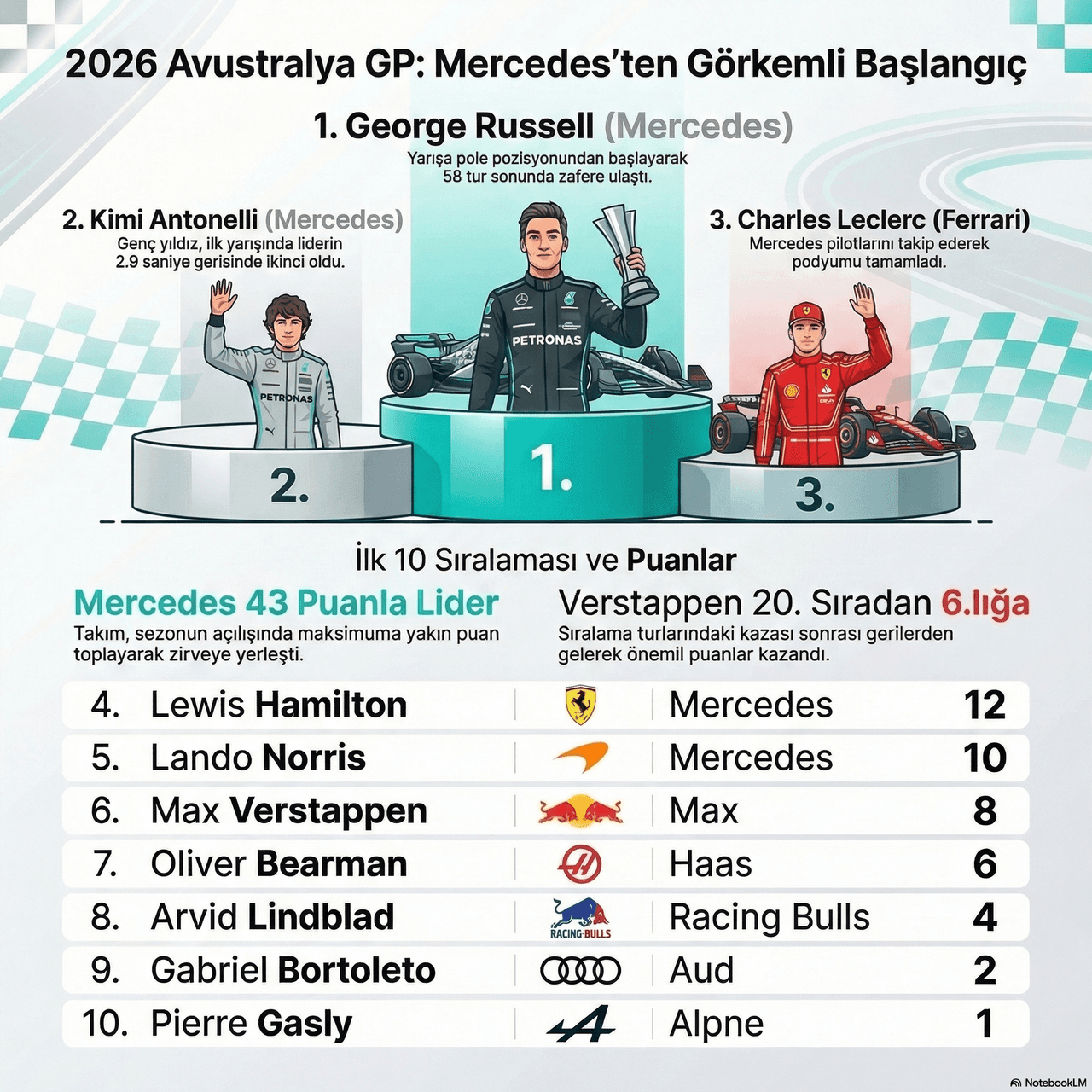
1. Australian GP Results (Generated by AI)
After completing 58 laps, Mercedes driver George Russell won the race in a time of 1 hour 23 minutes 6.801 seconds, earning 25 points. His teammate, Italian rookie Kimi Antonelli, finished second, 2.974 seconds behind. Ferrari driver Charles Leclerc completed the podium in third, 15.519 seconds behind Russell, while his teammate Lewis Hamilton finished fourth, 16.144 seconds behind. McLaren driver Lando Norris came fifth.
In the Constructors’ Championship, Mercedes led with 43 points, followed by Ferrari with 27, McLaren with 10, Red Bull Racing with 8, and Haas with 6. It has been announced that the second race of the season will be the Chinese Grand Prix, held in sprint format at the Shanghai International Circuit.
Anadolu Ajansı. "Formula 1'de sezonun ilk durağı Avustralya Grand Prix'ini George Russell kazandı" Accessed March 8, 2026. https://www.aa.com.tr/tr/dunyadan-spor/formula-1de-sezonun-ilk-duragi-avustralya-grand-prixini-george-russell-kazandi/3854829
BBC. "Russell wins first race of new F1 era in Australia" Accessed March 8, 2026. https://www.bbc.com/sport/formula1/articles/c1l72e7mrn4o
Motorsport.com. "2026 AVUSTRALYA GP: RUSSELL ÖNDERLİĞİNDE MERCEDES 1-2, FERRARİ TAKİPTE, PİASTRİ KAZA YAPTI" Accessed March 8, 2026. https://tr.motorsport.com/f1/news/2026-avustralya-gp-russell-onderliginde-mercedes-1-2-ferrari-takipte-piastri-kaza-yapti/10803279/
Motorsport.com. "Formula 1 2026 Avustralya GP" Accessed March 8, 2026. https://tr.motorsport.com/f1/results/2026/avustralya-gp-661784/
Rajo Outdoors. "Max Verstappen Crash from Grandstand | AusGP 2026" YouTube. Accessed March 8, 2026. https://www.youtube.com/watch?v=7wRN1Q83NwU
The Race. "Australian Grand Prix 2026 F1 race results" Accessed March 8, 2026. https://www.the-race.com/formula-1/australian-grand-prix-2026-f1-race-results/
beIN SPORTS Türkiye. "Formula 1'de yeni sezonun ilk kazananı belli oldu" Accessed March 8, 2026. https://beinsports.com.tr/haber/formula-1de-yeni-sezonun-ilk-kazanani-george-russell-oldu
beIN SPORTS Türkiye. "Kırmızı bayrak! Max Verstappen bariyerlerde" Accessed March 8, 2026. https://beinsports.com.tr/haber/kirmizi-bayrak-max-verstappen-bariyerlerde
beIN SPORTS Türkiye. "Otomobilin yavaşlaması Formula 1 adına iyi değil" Accessed March 8, 2026. https://beinsports.com.tr/haber/otomobilin-yavaslamasi-formula-1-adina-iyi-degil
beIN SPORTS Türkiye. "Serhan Acar'ın Anlatımıyla: F1 2026 Avustralya GP YARIŞ ÖZETİ" YouTube. Accessed March 8, 2026. https://www.youtube.com/watch?v=ZhYhkxvjEZI&t=130s
2026 Formula 1 World Championship's second race weekend, the Chinese Grand Prix, was held at the 5.4-kilometre Shanghai International Circuit in China between 13 and 15 March 2026. The race, consisting of 56 laps, was won by Italian driver Kimi Antonelli of the Mercedes team.
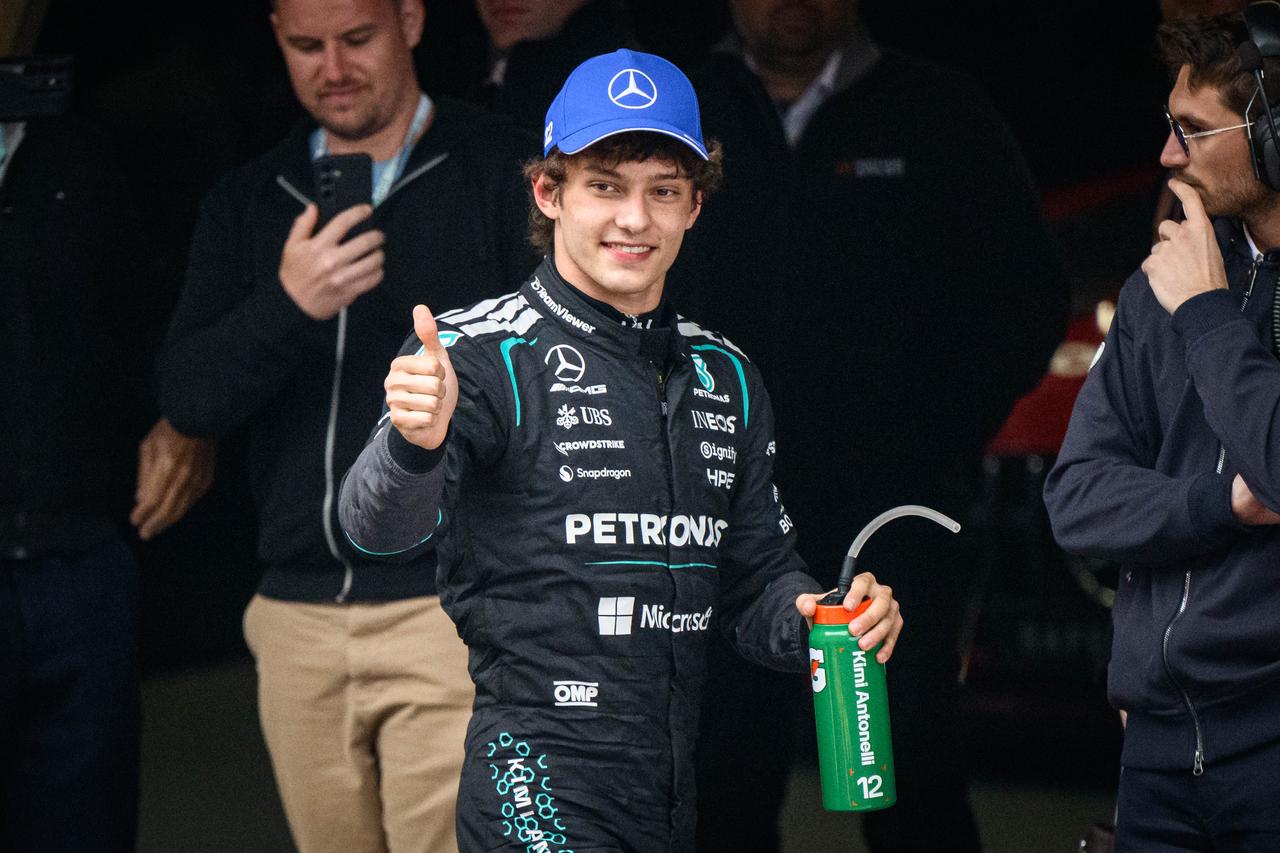
Andrea Kimi Antonelli (AA)
Four drivers failed to start the race before the formation lap. McLaren drivers Lando Norris and Oscar Piastri were unable to participate due to independent electrical unit failures in their cars. Audi driver Gabriel Bortoleto was withdrawn to the garage minutes before the start due to a technical issue, while Williams driver Alex Albon was withdrawn by team decision due to severe handling problems.
Starting from pole position, Kimi Antonelli lost the lead at the start to Ferrari driver Lewis Hamilton, while the other Ferrari driver Charles Leclerc moved up to third. On lap two, Antonelli overtook Hamilton and regained the lead. In the early laps, George Russell passed both Leclerc and Hamilton to take second place, placing the first two positions under Mercedes control.
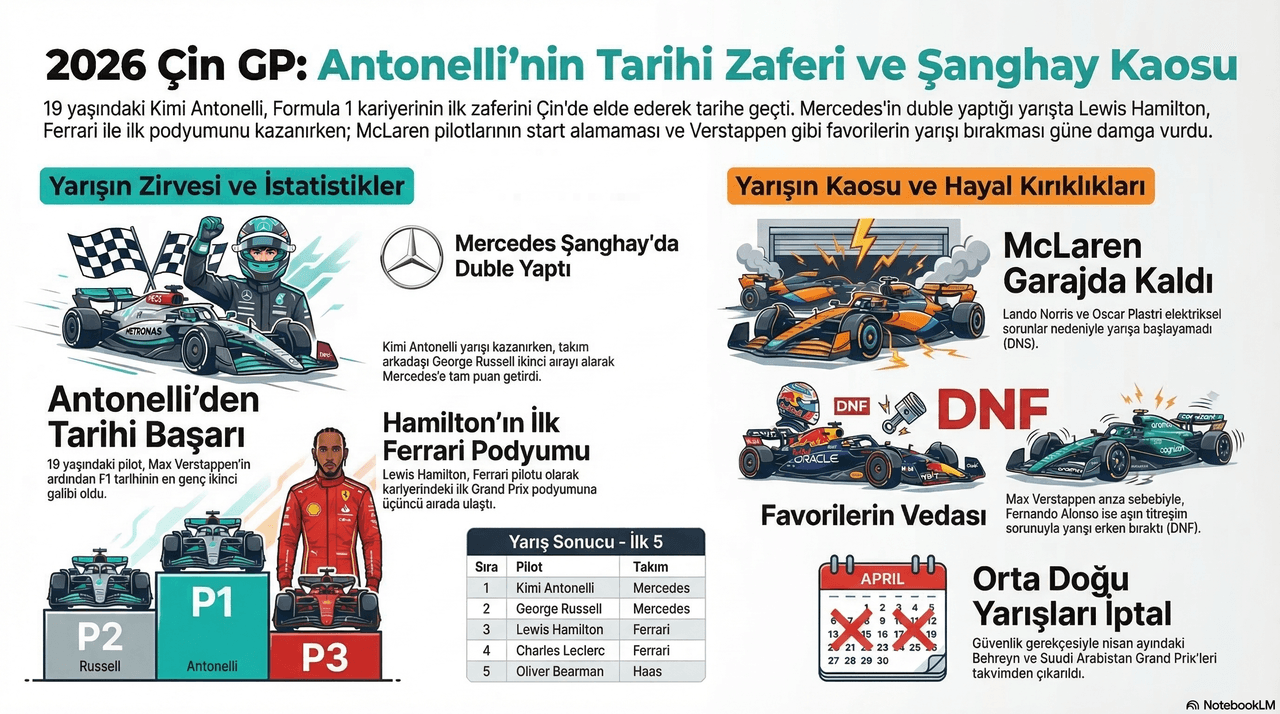
2nd Chinese GP infographic (generated by artificial intelligence)
On lap 10, a battery failure caused Aston Martin driver Lance Stroll to stop on track, triggering a safety car period. During this phase, both Mercedes and Ferrari teams executed double pit stops. Alpine driver Franco Colapinto and Haas driver Esteban Ocon, who did not pit, temporarily rose to the upper positions.
After the safety car restart, Antonelli retained the lead, while Russell struggled with tyre warming issues and blockages, dropping behind Hamilton and Leclerc.
In the middle stages, a prolonged battle unfolded between Ferrari drivers Hamilton and Leclerc. On lap 24, Leclerc moved into second place, but in subsequent laps, George Russell passed both Ferrari drivers to reclaim second position. On lap 34, Hamilton permanently overtook his teammate Leclerc to take third. A brief yellow flag period was displayed after contact between Alpine drivers Esteban Ocon and Franco Colapinto in the latter part of the circuit.
On lap 33, Aston Martin driver Fernando Alonso voluntarily retired from the race due to intense vibrations from the Honda power unit causing loss of sensation in his hands and feet. Starting eighth, Red Bull driver Max Verstappen, who had experienced grip issues during the race, was instructed by team radio to pit with approximately 10 laps remaining and failed to finish.
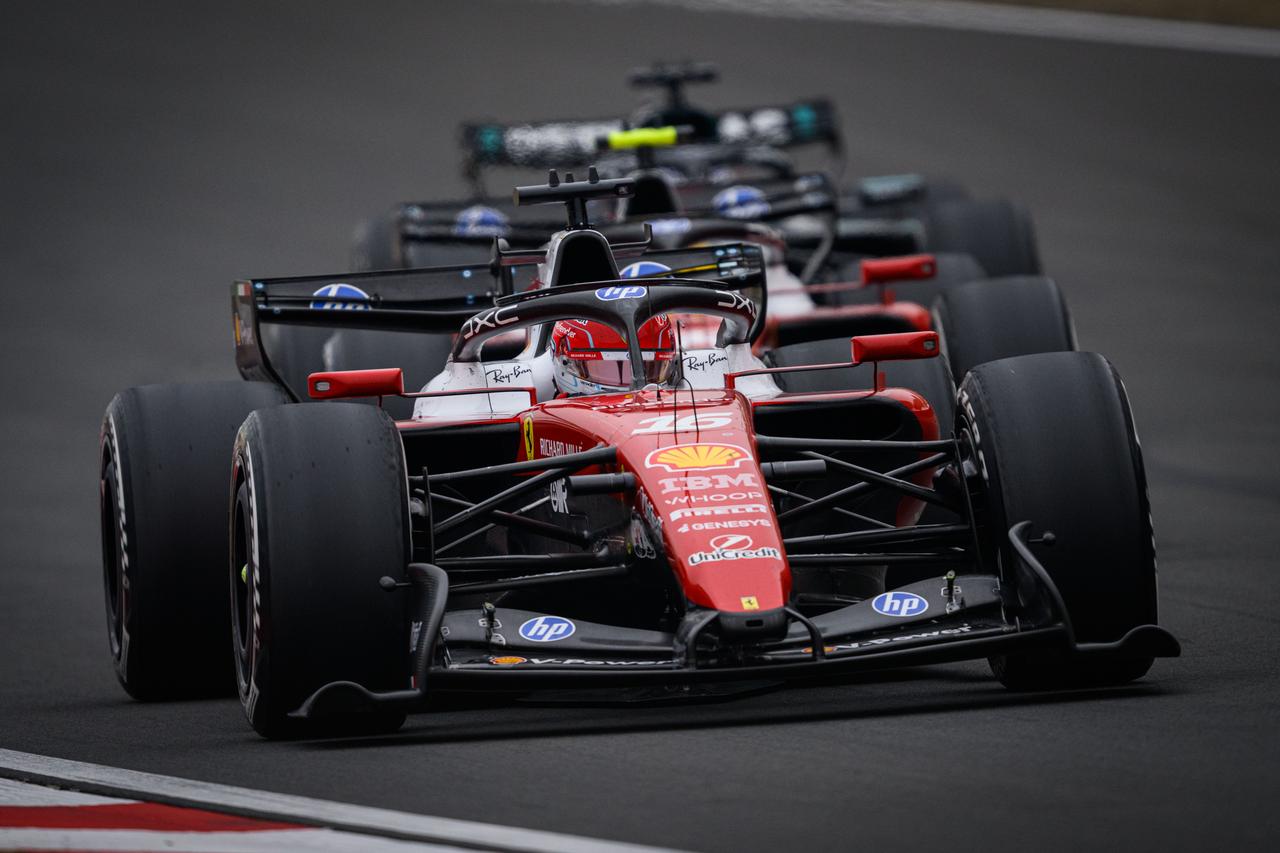
2nd Chinese GP (AA)
Kimi Antonelli won the race in a time of 1 hour 33 minutes 15.607 seconds, securing his first Formula 1 Grand Prix victory. At 19 years old, Antonelli became the second youngest driver in F1 history to win a race and the first Italian to win a Grand Prix in 20 years. George Russell finished second, giving Mercedes a double podium in Shanghai, while Lewis Hamilton took third, earning Ferrari its first podium of his career.
Breath-Taking Battle in Shanghai! | F1 2026 Chinese GP Race Summary 🏁(Beinsports)
Charles Leclerc finished fourth, while Haas driver Oliver Bearman came fifth.
Alpine drivers Pierre Gasly and Franco Colapinto finished sixth and tenth respectively, securing double points for their team. Liam Lawson of Racing Bulls finished seventh, Isack Hadjar of Red Bull finished eighth, and Carlos Sainz of Williams finished ninth after a long stint on hard tyres, earning points.
Red Bull driver Max Verstappen criticized the 2026 technical regulations, stating that the new cars' driving dynamics resembled playing "Mario Kart" and failed to deliver a realistic racing experience. Mercedes Team Principal Toto Wolff countered that Verstappen's complaints likely stemmed largely from the aerodynamic and handling challenges specific to the Red Bull car, noting that other teams did not face the same issues and that the Chinese Grand Prix offered an exciting and competitive race for viewers.
After the Chinese Grand Prix, George Russell led the Drivers' Championship with 51 points, followed by Kimi Antonelli with 47 points. Charles Leclerc was third with 34 points and Lewis Hamilton fourth with 33 points. In the Constructors' Championship, Mercedes led with 98 points, Ferrari was second with 67 points, McLaren third with 18 points, and Haas fourth with 17 points. It was also announced in the season calendar updates that the originally scheduled races in Bahrain and Saudi Arabia were cancelled due to regional security concerns. The third race of the season will be the Japanese Grand Prix.
Anadolu Ajansı. "Formula 1'de sezonun ikinci etabı Çin Grand Prix'sini Kimi Antonelli kazandı" Accessed March 16, 2026. https://www.aa.com.tr/tr/spor/formula-1de-sezonun-ikinci-etabi-cin-grand-prixsini-kimi-antonelli-kazandi/3865324
BBC Sport. "Antonelli wins Chinese GP as McLarens fail to start" Accessed March 16, 2026. https://www.bbc.com/sport/formula1/articles/czx4l44d53eo
Mackolik.com. "Formula 1 Çin GP'sinde zafer Kimi Antonelli'nin" Accessed March 16, 2026. https://www.mackolik.com/diger/haber/formula-1-cin-gpsinde-zafer-kimi-antonellinin/3848969a-b89a-47fe-b996-14bde4dd1272
Motorsport.com. "2026 Çin Gp: Antonelli İlk Galibiyetini Aldı, Russell İkinci, Hamilton Podyumda!" Accessed March 16, 2026. https://tr.motorsport.com/f1/news/2026-cin-gp-antonelli-ilk-galibiyetini-aldi-russell-ikinci-hamilton-podyumda/10805413/
Motorsport.com. "McLaren, İki Aracıyla da Çin Gp'sinde Start Alamadı!" Accessed March 16, 2026. https://tr.motorsport.com/f1/news/mclaren-iki-araciyla-da-cin-gpsinde-start-alamadi/10805390/
Motorsport.com. "Wolff: "Red Bull Aracını Kullanmak Kabus Gibi Görünüyor"" Accessed March 16, 2026. https://tr.motorsport.com/f1/news/wolff-red-bull-aracini-kullanmak-kabus-gibi-gorunuyor/10805743/
The Race. "Winners and losers from F1's 2026 Chinese Grand Prix" Accessed March 16, 2026. https://www.the-race.com/formula-1/winners-losers-from-f1-2026-chinese-grand-prix/
beIN SPORTS Türkiye. "ÖZET | Formula 1 Çin Grand Prix'sinde tarihi zafer" Accessed March 16, 2026. https://beinsports.com.tr/haber/formula-1-cin-grand-prixsinde-tarihi-zafer
beIN SPORTS Türkiye. "Şanghay'da Nefes Kesen Mücadele! | F1 2026 Çin GP Yarış Özeti 🏁" Accessed March 16, 2026. https://www.youtube.com/watch?v=0vULy9Qteas
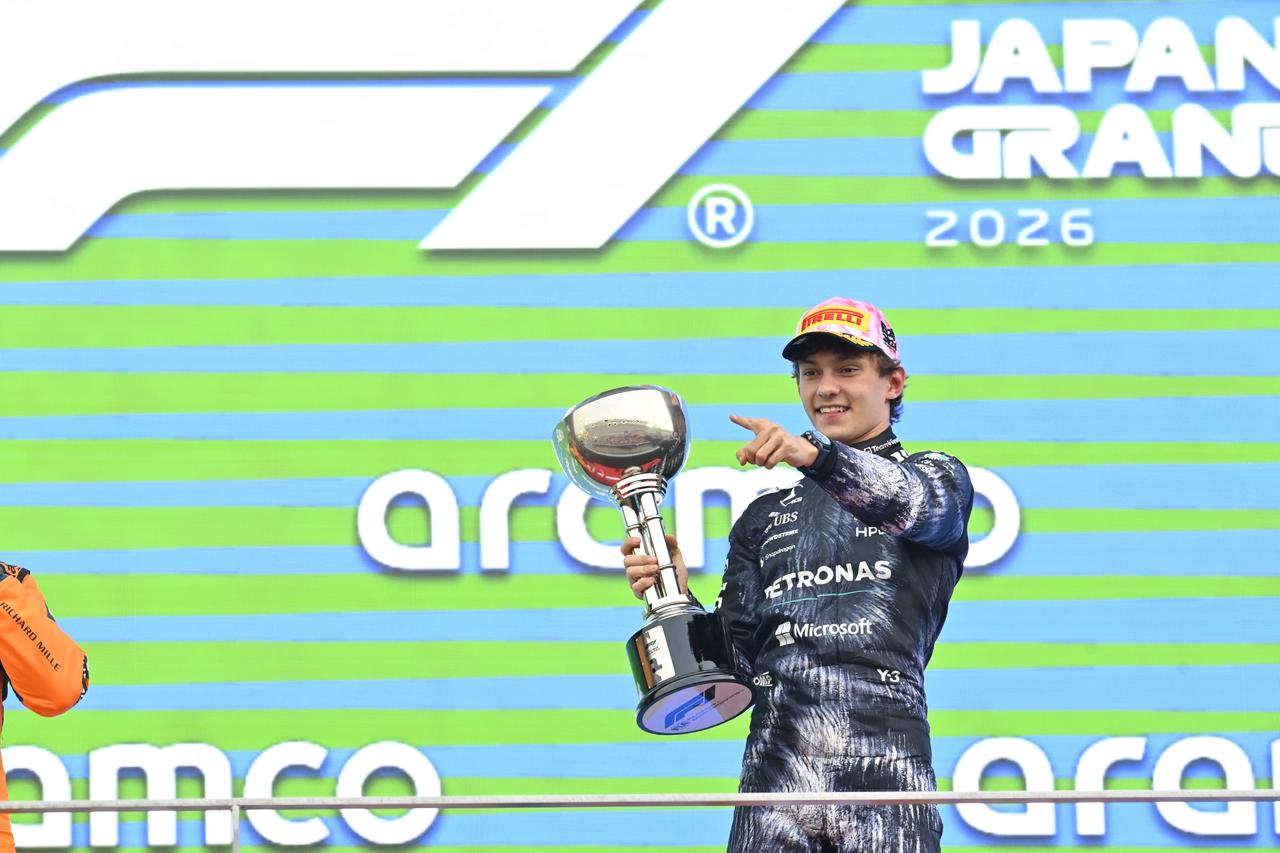
Kimi Antonelli (AA)
The third race weekend of the 2026 Formula 1 Season, the Japanese Grand Prix, was held on 29 March 2026 at the Suzuka Circuit. The race, covering 53 laps on the 5.8-kilometre track, concluded with the victory of Mercedes’ young driver Kimi Antonelli. At 19 years old, Antonelli secured his second consecutive win following the Chinese Grand Prix and became the youngest championship leader in Formula 1 history.
The qualifying sessions to determine the starting grid took place on 28 March 2026. In the first session (Q1), the initial reference lap was set by Haas driver Esteban Ocon at 1:31.466 after the pit lane lights turned green. In the later minutes of the session, Ferrari driver Charles Leclerc topped the session with a time of 1:29.915. The drivers eliminated in this session were Alex Albon, Oliver Bearman, Sergio Perez, Valtteri Bottas, Fernando Alonso and Lance Stroll.
In the second session (Q2), although Oscar Piastri and Charles Leclerc posted leading laps, Mercedes driver Kimi Antonelli ended the session at the top with a time of 1:29.048. A notable development was the elimination of Red Bull driver Max Verstappen; alongside him, Esteban Ocon, Nico Hülkenberg, Liam Lawson, Franco Colapinto and Carlos Sainz also failed to advance to Q3.
In the third session (Q3), Kimi Antonelli claimed pole position with a time of 1:28.778. His teammate George Russell secured second place, 0.298 seconds behind, while McLaren driver Oscar Piastri finished third. Charles Leclerc was fourth, Lando Norris fifth, and Lewis Hamilton, who received a warning for exiting the pit lane slowly during the session, qualified sixth.
The Japanese Grand Prix began 10 minutes later than scheduled due to barrier repairs at Turn 12 caused by an incident in a support series. All grid positions except that of Valtteri Bottas, who started 20th and opted for hard tyres, began the race on medium compound (yellow-logo) tyres.
At the start, the Mercedes drivers, who shared the front row, experienced acceleration issues. Oscar Piastri, starting third, made an outside attack and entered Turn 1 in the lead. Charles Leclerc moved into second place, while Kimi Antonelli, who dropped behind, overtook Lewis Hamilton before the end of the first lap to climb to fifth.
By lap eight, George Russell passed Oscar Piastri to take the lead, but Piastri quickly regained the position using his Attack Mode. During the first round of pit stops beginning on lap 17, Leclerc and Piastri entered the pits, allowing the Mercedes drivers to temporarily occupy the top two positions.
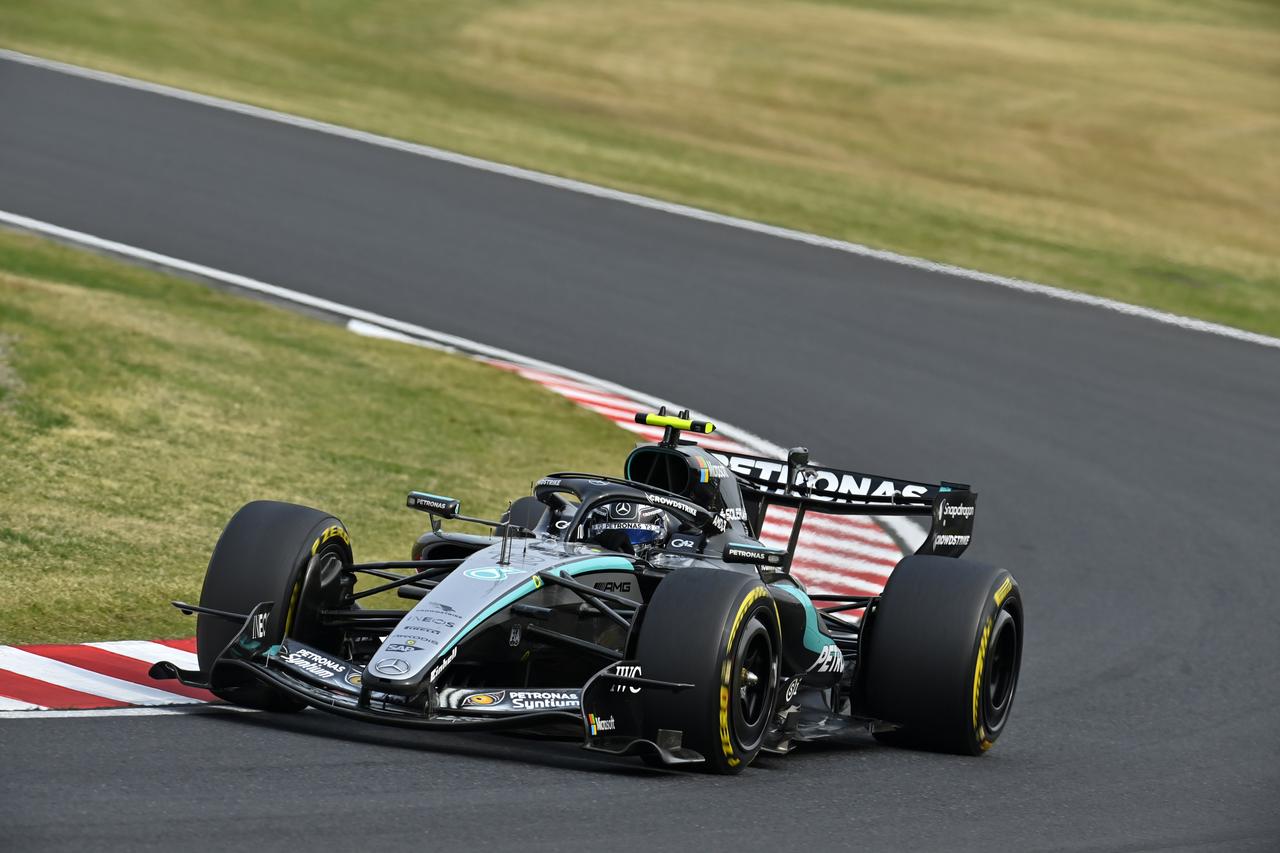
Formula 1 Japanese Grand Prix driver Andre Kimi Antonelli (AA)
On lap 21, Haas driver Oliver Bearman lost control of his car at the Spoon Curve, Turn 13, at a speed of 306 km/h and crashed into the barriers, bringing out the Safety Car. The crash, which subjected Bearman to 50G forces, was attributed to the new energy management regulations of the 2026 season, specifically to a speed differential of approximately 50 km/h between Alpine driver Franco Colapinto and Bearman, combined with Bearman misjudging the gap while using his “boost” to overtake. The Safety Car period allowed Kimi Antonelli and Lewis Hamilton, who had not yet pitted, to make their stops, enabling Antonelli to assume the race lead.
After the Safety Car returned to the pits, Lewis Hamilton passed George Russell to claim third place. However, Hamilton suffered a significant loss of power that was undetected during the race’s second phase, preventing him from maintaining his pace. Aston Martin’s Lance Stroll received a team order to retire due to a technical issue.
With 10 laps remaining, Charles Leclerc passed the struggling Hamilton to move into third. In subsequent laps, Russell and Lando Norris also overtook Hamilton. During the battle between Norris and Hamilton, Hamilton’s cutting of the chicane was noted by the stewards but no penalty was applied.
After 53 laps, Kimi Antonelli crossed the finish line first with a total time of 1 hour 28 minutes and 3.403 seconds. Oscar Piastri finished second, 13.722 seconds behind, securing his first podium of the season. Charles Leclerc came third, 15.270 seconds behind Antonelli. The top 10 were completed by George Russell, Lando Norris, Lewis Hamilton, Pierre Gasly, Max Verstappen, Liam Lawson and Esteban Ocon.
This race in Japan highlighted the varying levels of adaptation among teams to the new regulations. McLaren’s surprise podium result was explained by the high grip offered by the resurfaced track, which compensated for the team’s chassis disadvantages, as well as their efficient use of the Mercedes power unit’s advantages. Ferrari maintained its strength in cornering speeds but struggled on straights and in energy recovery.
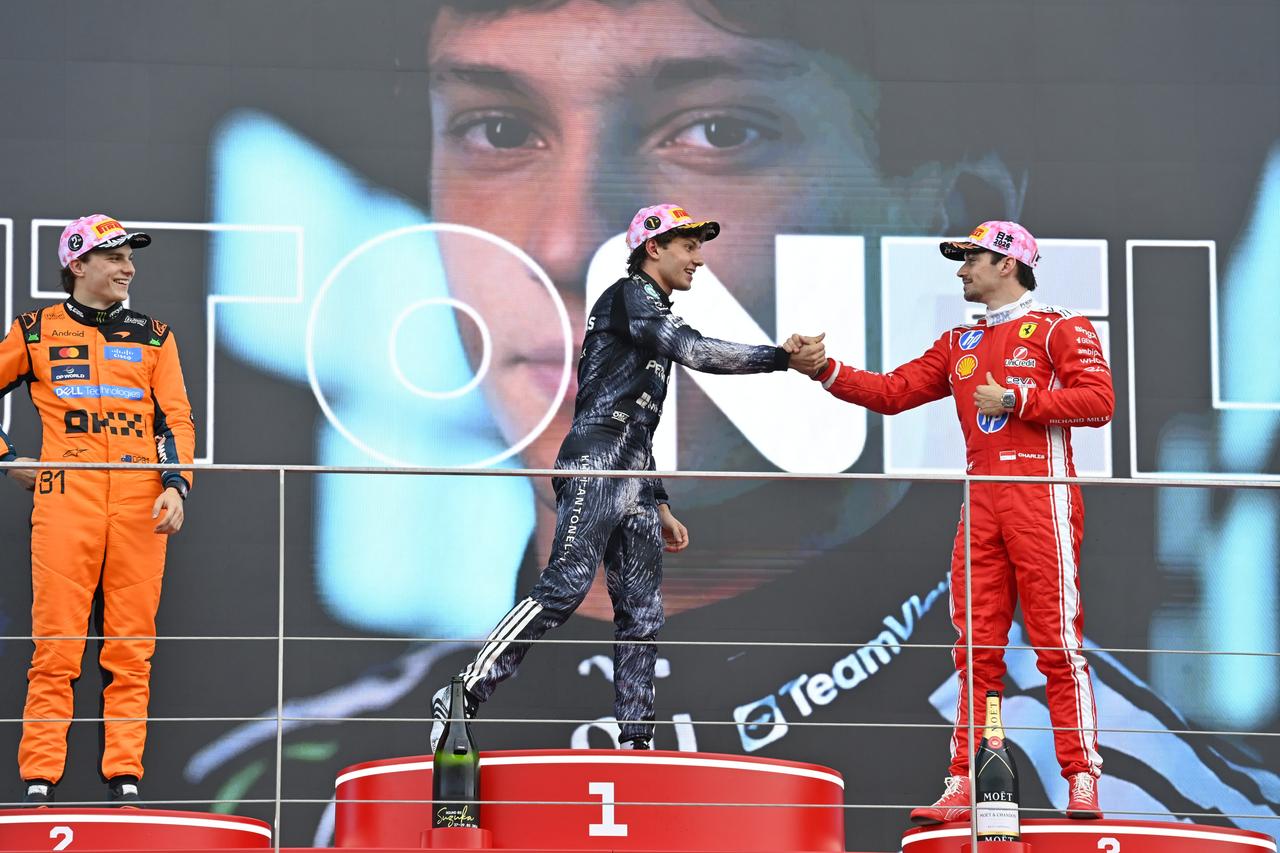
Kimi Antonelli in first, Oscar Piastri in second, Charles Leclerc in third (AA)
At Mercedes, Antonelli’s victory contrasted with Lewis Hamilton’s criticism of his car’s performance, as he reported failing to extract the expected energy from the battery and power unit. Meanwhile, Red Bull’s Isack Hadjar stated that his RB22 suffered from chassis deficiencies and early battery depletion, forcing him to finish the race in 12th place.
Following the Japanese Grand Prix, Kimi Antonelli moved to the top of the drivers’ standings with 72 points.
His teammate George Russell is second with 63 points, Ferrari driver Charles Leclerc third with 49 points, Lewis Hamilton fourth with 41 points, and Lando Norris fifth with 25 points.
In the constructors’ championship, Mercedes continues to lead with 135 points. Ferrari is second with 90 points, and McLaren third with 46 points. Haas has 18 points, while Alpine and Red Bull are tied with 16 points each.
Anadolu Ajansı. "Formula 1 Japonya Grand Prix'sinde pole pozisyonu Kimi Antonelli'nin" Accessed March 30, 2026. http://aa.com.tr/tr/dunyadan-spor/formula-1-japonya-grand-prixsinde-pole-pozisyonu-kimi-antonellinin/3882655
Anadolu Ajansı. "Formula 1'de sezonun üçüncü etabı Japonya Grand Prix'sini Kimi Antonelli kazandı" Accessed March 30, 2026. https://www.aa.com.tr/tr/dunyadan-spor/formula-1de-sezonun-ucuncu-etabi-japonya-grand-prixsini-kimi-antonelli-kazandi/3883657
Motorsport.com. "2026 JAPONYA GP SIRALAMA TURLARI: ANTONELLİ ÜST ÜSTE İKİNCİ KEZ POLE'DE, VERSTAPPEN Q2'DE ELENDİ!" Accessed March 30, 2026. https://tr.motorsport.com/f1/news/2026-japonya-gp-siralama-turlari-antonelli-ust-uste-ikinci-kez-polede-verstappen-q2de-elendi/10808828/
Motorsport.com. "2026 JAPONYA GP: ANTONELLİ'DEN ÜST ÜSTE İKİNCİ ZAFER, PİASTRİ VE LECLERC PODYUMDA!" Accessed March 30, 2026. https://tr.motorsport.com/f1/news/2026-japonya-gp-antonelliden-ust-uste-ikinci-zafer-piastri-ikinci-sirada/10809303/
Motorsport.com. "HAMİLTON: 'YARIŞ BOYUNCA GÜÇ EKSİKLİĞİ YAŞADIM'" Accessed March 30, 2026. https://tr.motorsport.com/f1/news/hamilton-yaris-boyunca-guc-eksikligi-yasadim/10809361/
Motorsport.com. "KOMATSU: 'JAPONYA'DAKİ KAZANIN SUÇLUSU BEARMAN DA COLAPİNTO DA DEĞİL'" Accessed March 30, 2026. https://tr.motorsport.com/f1/news/komatsu-japonyadaki-kazanin-suclusu-bearman-da-colapinto-da-degil/10809713/
Motorsport.com. "MCLAREN GERİ Mİ DÖNDÜ? JAPONYA’DAKİ PODYUMUN PERDE ARKASI" Accessed March 30, 2026. https://tr.motorsport.com/f1/news/mclaren-geri-mi-dondu-japonyadaki-podyumun-perde-arkasi/10809721/
TRF1.net. "Isack Hadjar, Japonya GP’sinde F1 çaylağına tepki gösterdi: “Sorunlarımın yanında bu hiçbir şeydi”" Accessed March 30, 2026. https://trf1.net/formula-1/isack-hadjar-japonya-gpsinde-f1-caylagina-tepki-gosterdi-sorunlarimin-yaninda-bu-hicbir-seydi/80753/
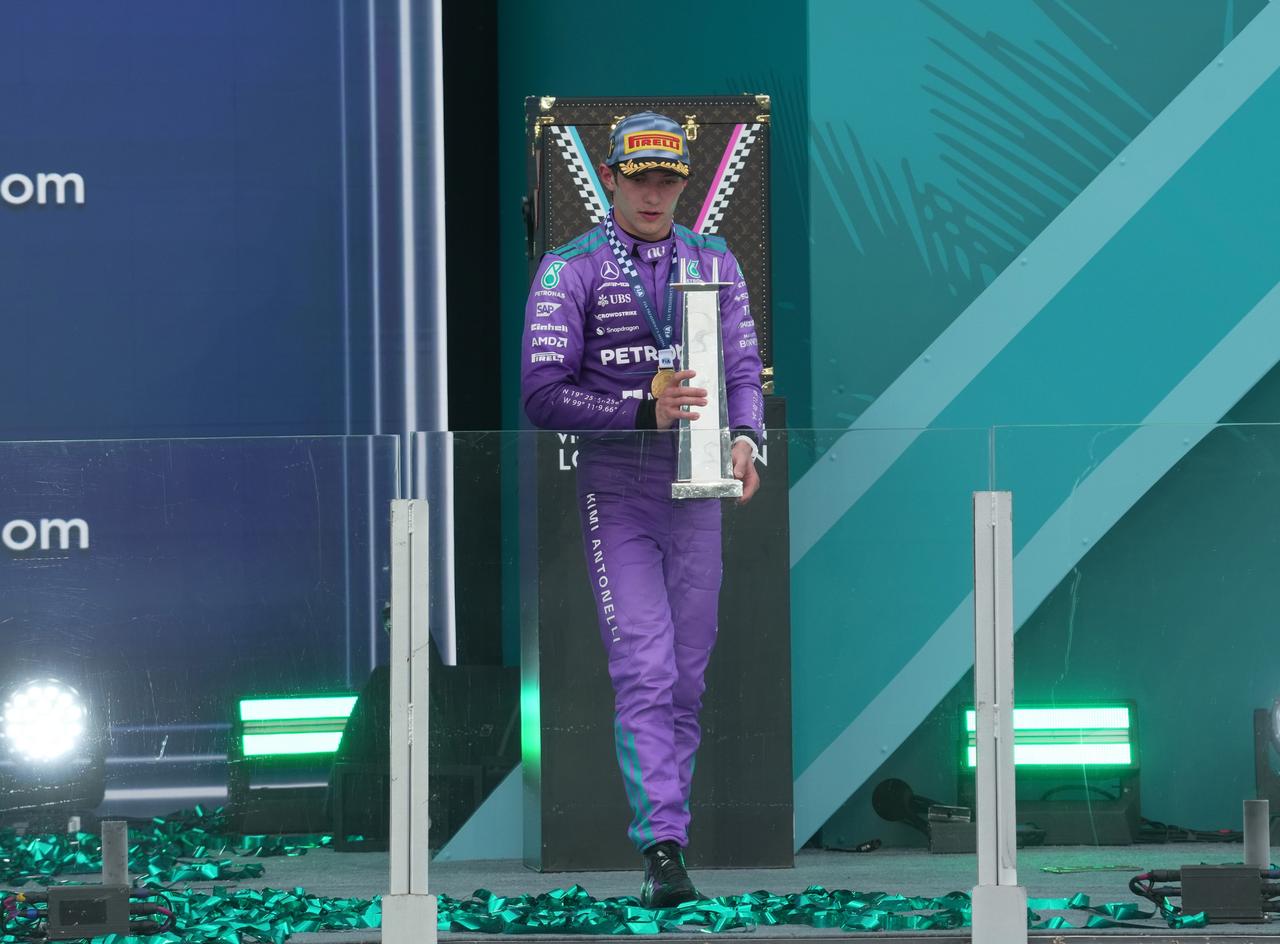
The 2026 Miami Grand Prix is a motorsport race held on the 5.4-kilometre International Miami Circuit in the state of Florida, United States, as the fourth round of the 2026 Formula 1 World Championship season. The race, consisting of 57 laps, was held on 3 May 2026 and was won by 19-year-old Italian driver Kimi Antonelli of the Mercedes team.
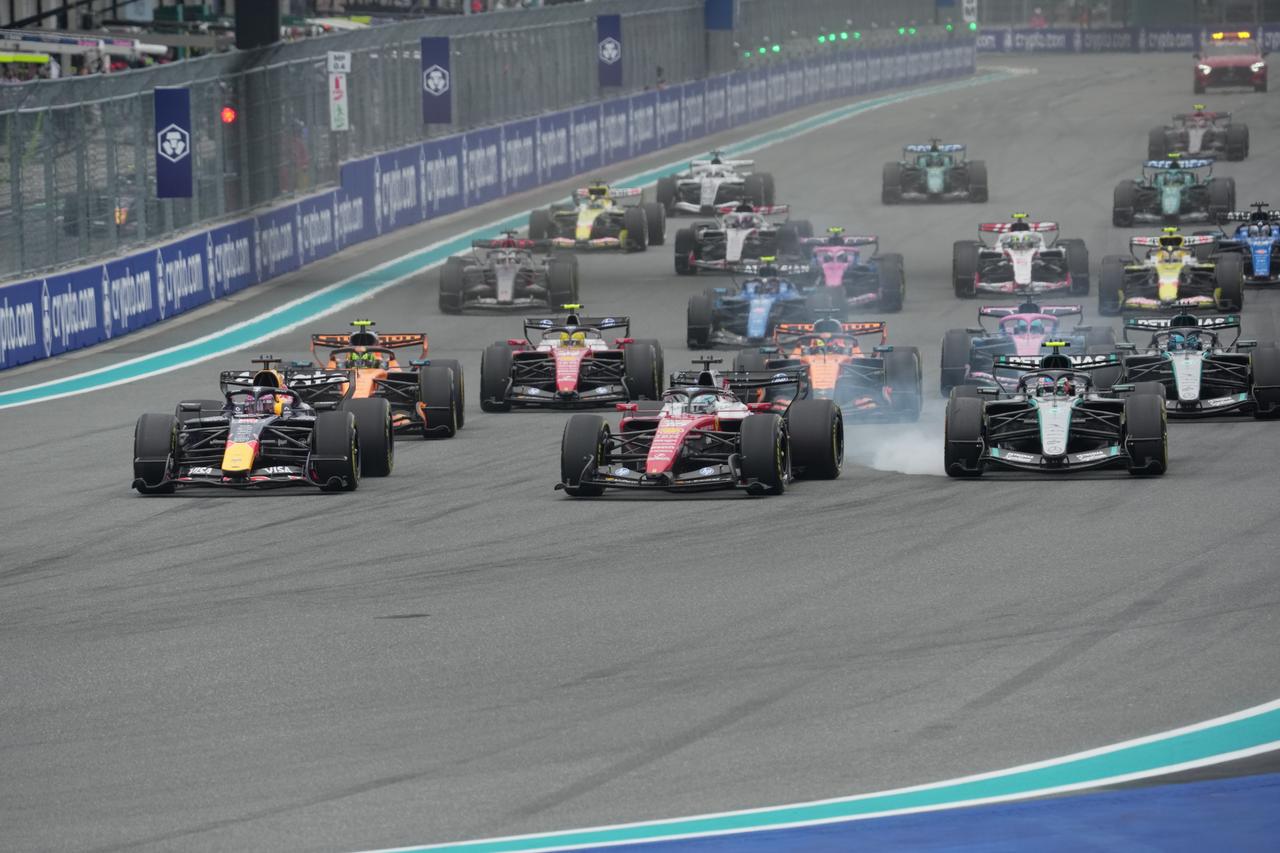
4. Miami GP (1–3 May) (AA)
Due to forecasts of severe thunderstorms and lightning threats in the region, the race start time was moved from 16:00 local time to 13:00 local time (20:00 Türkiye time). This decision, jointly made by the FIA and organisers, aimed to ensure the safety of drivers, spectators and personnel under regulations requiring race suspension in case of lightning. Additionally, a “rain risk” protocol was activated when the probability of rain exceeded 40 percent, granting teams permission to increase ride height and adjust front wing angles.
Many teams introduced car updates for this race. Red Bull participated with aerodynamic fine-tuning and steering modifications. McLaren and Ferrari implemented comprehensive vehicle changes, while Williams used for the first time a package featuring weight-saving measures and aerodynamic improvements. Alpine targeted a breakthrough in the midfield with a revised nose, updated brake ducts and a completely new rear wing. Aston Martin introduced new components designed to resolve vibration issues in the car.
Starting from pole position, Kimi Antonelli and second-placed Max Verstappen both experienced brake lock-ups and went off-track at the first corner. As a result, third-placed Charles Leclerc took the race lead, while Antonelli moved to second and Verstappen dropped to ninth. At the same time, Oscar Piastri rose to fourth, and a minor contact occurred between Franco Colapinto and Lewis Hamilton.
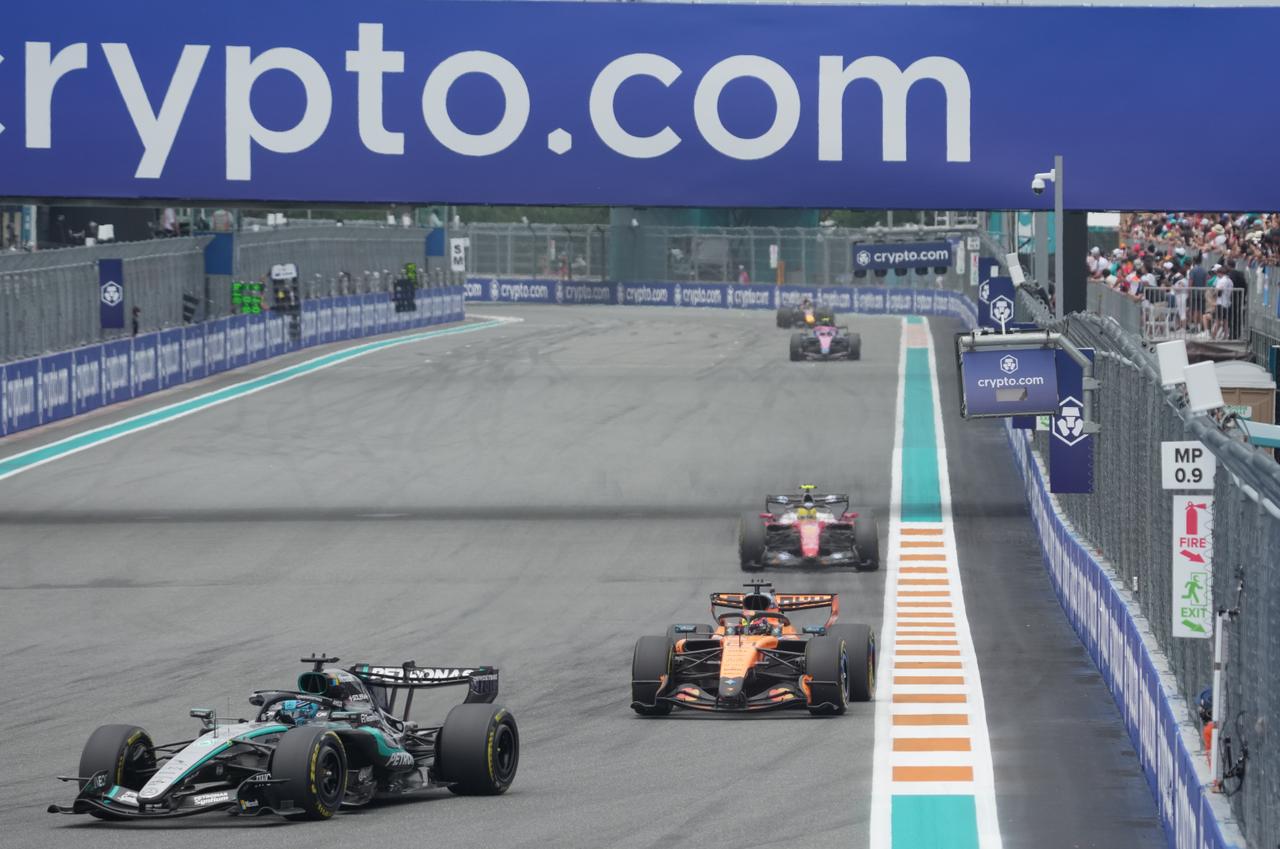
4. Miami GP (1–3 May) (AA)
On lap five, Kimi Antonelli overtook Charles Leclerc to assume the race lead. Shortly after, Red Bull driver Isack Hadjar crashed into the barriers at turns 14 and 15 and retired from the race. Almost simultaneously, Alpine driver Pierre Gasly spun and crashed after contact with Liam Lawson. In response, the Safety Car was deployed. During the Safety Car period, Max Verstappen and Valtteri Bottas made pit stops, while Nico Hülkenberg retired due to a mechanical failure.
The Safety Car period ended around lap 12. Upon the restart, Antonelli outpaced Leclerc in the battle for the lead. Light rain showers were observed on track during subsequent laps. On lap 26, the Mercedes team brought Kimi Antonelli in for an early pit stop using the undercut strategy. Lando Norris pitted one lap later, but Antonelli’s faster out-lap allowed him to retain the lead over the British driver.
In the closing stages, Oscar Piastri and Charles Leclerc competed for third place on the podium. Piastri overtook Leclerc on the penultimate lap. On the final lap, Leclerc spun and made contact with the barriers, but continued racing despite damage to the car’s steering system. He gained time by cutting corners during this period. Driving the damaged car, Leclerc was overtaken by George Russell and Max Verstappen just before the checkered flag.
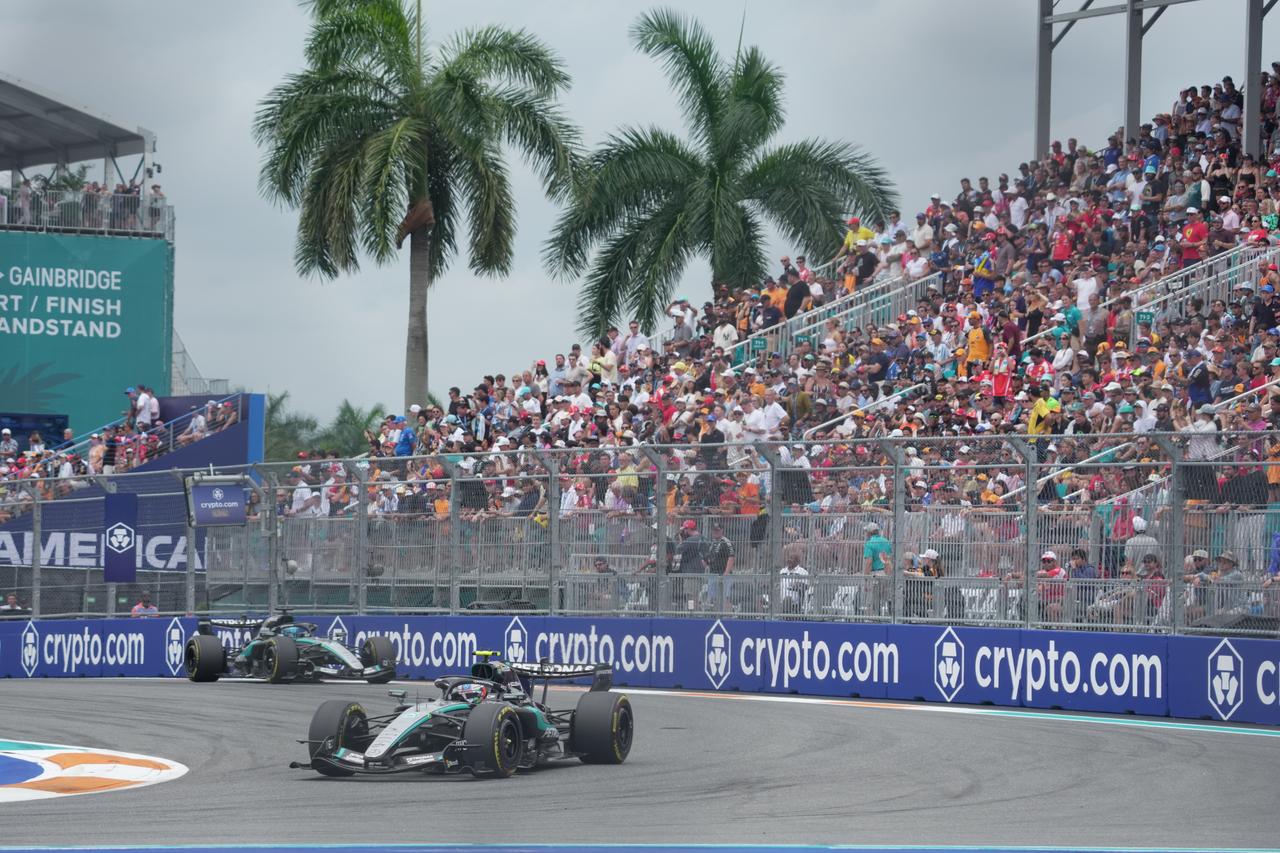
4. Miami GP (1–3 May) (AA)
In accordance with the 2026 season’s rule requiring detailed post-race reviews instead of immediate decisions in disputed situations, penalties were announced after the race. Based on analysis of camera angles and driver statements, the following decisions were made:
4. Miami GP (1–3 May) (AA)
Kimi Antonelli finished the race in first place with a time of 1 hour 33 minutes 19.273 seconds, securing his third consecutive victory of the season. After applying the penalties, the updated top 10 results were as follows:
Following the Miami Grand Prix, the Formula 1 World Championship standings were updated. Kimi Antonelli extended his lead in the drivers’ standings with 100 points.
Anadolu Ajansı. "Formula 1'de sezonun dördüncü etabı Miami Grand Prix'sini Kimi Antonelli kazandı" Accessed May 5, 2026. https://www.aa.com.tr/tr/spor/formula-1de-sezonun-dorduncu-etabi-miami-grand-prixsini-kimi-antonelli-kazandi/3925881
ESPN. "F1's Miami Grand Prix brought forward due to threat of storms" Accessed May 5, 2026. https://www.espn.com/f1/story/_/id/48660661/f1-miami-grand-prix-brought-forward-due-threat-storms
Formula 1. "5 WINNERS AND 5 LOSERS FROM MIAMI – WHO STOOD OUT IN THE SUNSHINE STATE?" Accessed May 5, 2026. https://tr.motorsport.com/f1/news/2026-miami-gp-heyecan-dolu-yarista-antonelliden-ust-uste-ucuncu-galibiyet-mclaren-pilotlari-podyumda/10817834/
Motorsport.com. "FORMULA 1, FIRTINA TEHDİDİ NEDENİYLE MİAMİ GP'SİNİN SAATİNİ ÖNE ÇEKTİ" Accessed May 5, 2026. https://tr.motorsport.com/f1/news/formula-1-firtina-tehdidi-nedeniyle-miami-gp-start-saatini-one-cekti/10817666/
Motorsport.com. "MİAMİ GP SONRASI CEZA TRAFİĞİ: LECLERC'E 20 SANİYELİK, VERSTAPPEN'E 5 SANİYELİK CEZA GELDİ!" Accessed May 5, 2026. https://tr.motorsport.com/f1/news/miami-gp-sonrasi-ceza-trafigi-leclerce-20-saniyelik-verstappene-5-saniyelik-ceza-geldi/10818059/
Motorsport.com. "MİAMİ’DE HAKEM KARARLARI NEDEN GECİKTİ?" Accessed May 5, 2026. https://tr.motorsport.com/f1/news/miamide-hakem-kararlari-neden-gecikti-/10818146/
RacingNews365. "Adjusted 2026 F1 Miami Grand Prix results after huge Ferrari penalty" Accessed May 5, 2026. https://racingnews365.com/adjusted-2026-f1-miami-grand-prix-results-after-huge-ferrari-penalty
Sky Sports. "Charles Leclerc demoted behind Lewis Hamilton, Franco Colapinto in Miami GP results after chaotic finish that was 'all on me'" Accessed May 5, 2026. https://www.skysports.com/f1/news/12433/13539722/charles-leclerc-demoted-behind-lewis-hamilton-franco-colapinto-in-miami-gp-results-after-chaotic-finish-that-was-all-on-me
Sky Sports. "Miami GP: Kimi Antonelli holds off Lando Norris to claim third successive win and extend championship lead" Accessed May 5, 2026. https://www.skysports.com/f1/news/12433/13539714/miami-gp-kimi-antonelli-holds-off-lando-norris-to-claim-third-successive-win-and-extend-championship-lead
The Race. "10 things we learned from F1's Miami Grand Prix" Accessed May 5, 2026. https://www.the-race.com/formula-1/f1-2026-miami-grand-prix-10-things-we-learned/
The Race. "Miami Grand Prix F1 2026 race results" Accessed May 5, 2026. https://www.the-race.com/formula-1/miami-grand-prix-f1-2026-race-results/
The fifth round of the 2026 Formula 1 season, the Canadian Grand Prix, was held at the Circuit Gilles Villeneuve in Montreal, Canada, from 22 to 24 May 2026. The event was scheduled as one of the season’s sprint format races, with the main race concluding in victory for Mercedes driver Kimi Antonelli. Throughout the weekend, weather conditions were noted to feature low temperatures and mixed conditions prior to the race, including wind and the possibility of rain.
The event took place on the Circuit Gilles Villeneuve, a 2.71-mile circuit featuring long straights and heavy braking zones. The local time schedule was as follows:
In the first competitive session of the weekend, Sprint Qualifying, Mercedes driver George Russell secured pole position. During the Sprint Race on Saturday, contact occurred between Russell and his teammate Kimi Antonelli at the first corner, forcing Antonelli off the track. Russell finished first in the Sprint Race, followed by McLaren driver Lando Norris in second and Kimi Antonelli in third.
During Main Qualifying for the race, George Russell claimed pole position by 0.068 seconds ahead of his teammate Kimi Antonelli. Lando Norris qualified third, Oscar Piastri fourth, Lewis Hamilton fifth and Max Verstappen sixth.
Due to variable weather conditions ahead of the Sunday main race, teams adopted different tyre choices. Drivers from McLaren, Audi and Cadillac, along with Williams’ Carlos Sainz, opted to start on intermediate tyres. Racing Bulls drivers Arvid Lindblad and Franco Colapinto selected medium compound tyres, while the rest of the grid started on soft compound tyres. Aston Martin driver Lance Stroll, who had modifications to his power unit under parc fermé regulations, started from the pit lane.
At the start of the race, a clutch issue affected Racing Bulls driver Arvid Lindblad’s car, preventing him from starting from the grid. Due to this technical failure, additional formation laps were completed and the race distance was reduced from 70 to 68 laps. As the race began, McLaren driver Lando Norris, starting from third, overtook the Mercedes drivers to assume the lead.
After it became clear that the decision to start on intermediate tyres was incorrect, McLaren switched to an early pit stop strategy. Oscar Piastri pitted at the end of lap one and Lando Norris at the end of lap two, both switching to medium tyres and dropping to the back of the grid. Leadership then passed between Mercedes drivers George Russell and Kimi Antonelli. On lap three, Kimi Antonelli set the fastest lap of the race with a time of 1:14.210.
On lap 13, McLaren driver Oscar Piastri locked his tyres during an attempted overtake on Haas driver Oliver Bearman, colliding with Williams driver Alexander Albon. Albon retired due to damage sustained in the collision, and Piastri was handed a 10-second time penalty by the stewards for causing the incident.
In the lead battle, George Russell and Kimi Antonelli exchanged positions multiple times. On lap 23, Antonelli took the lead with an outside move, but Russell reclaimed it on lap 24. On lap 25, Antonelli was instructed by team radio to give the position back to Russell after running wide and gaining an advantage.
A total of six drivers retired during the Canadian Grand Prix. Following Arvid Lindblad, who failed to start, and Alexander Albon, who retired on lap 13, race leader George Russell suffered a sudden power unit failure on lap 30. Russell pulled his car to the side of the track and retired, triggering a Virtual Safety Car (VSC) period. During the VSC, many drivers including new leader Kimi Antonelli entered the pits to change tyres.
Later in the race, McLaren driver Lando Norris retired on lap 40 after reporting a gearbox failure and returning to the garage. Cadillac driver Sergio Perez retired on lap 43 due to a suspension failure. Additionally, Aston Martin driver Fernando Alonso was unable to finish the race due to a technical issue with his seat.
Various penalties were imposed by the stewards during the race:
After assuming the lead, Kimi Antonelli controlled the race and extended his lead over the chasing pack. The battle for second place occurred between Red Bull driver Max Verstappen and Ferrari driver Lewis Hamilton. On lap 62, Hamilton overtook Verstappen with an outside move at Turn 1 to claim second position.
The Canadian Grand Prix, contested over 68 laps, was completed by Mercedes driver Kimi Antonelli in a time of 1:28:15.758. This victory marked his fourth consecutive race win. Lewis Hamilton finished second, 10.768 seconds behind, and Max Verstappen third, 11.276 seconds behind, securing his first podium of the season. The final top ten and finishing times were as follows:
Oscar Piastri, Nico Hulkenberg, Gabriel Bortoleto and Esteban Ocon finished two laps behind the leader, while Lance Stroll and Valtteri Bottas completed the race four laps behind to earn classification points.
Following the Canadian Grand Prix, the championship standings were updated. In the Drivers’ Championship, Kimi Antonelli extended his lead to 131 points, increasing his advantage over his retired teammate George Russell (88 points) to 43 points. Charles Leclerc stood third with 75 points, Lewis Hamilton fourth with 72 points and Lando Norris fifth with 58 points.
In the Constructors’ Championship, Mercedes maintained its lead with a total of 219 points. Ferrari stood second with 147 points, McLaren third with 106 points, Red Bull fourth with 57 points, Alpine fifth with 35 points and Racing Bulls sixth with 21 points.
The Canadian Grand Prix, the fifth round of the 2026 Formula 1 World Championship calendar, was held in Montreal, Canada. The event took place immediately after the fourth race of the season, the Miami Grand Prix, and immediately before the sixth race, the Monaco Grand Prix. The Canadian Grand Prix featured a special sprint race format, distinct from the standard race weekend procedures outlined in the calendar.
For the 2026 race calendar, the Canadian Grand Prix was designated as one of the special weekend events featuring a sprint race. This race formed the fourth leg of the consecutive winning streak by championship leader Kimi Antonelli, who was set to reach five consecutive victories at the Monaco Grand Prix.
In qualifying to determine the starting grid for the main race, Mercedes driver George Russell recorded the fastest lap time, securing pole position for the race.
During the main race, Mercedes driver George Russell, who started from pole, encountered a technical problem while leading. A power unit failure rendered his car unable to continue, forcing the British driver to retire from the race while in the lead.
Following Russell’s retirement, fellow Mercedes driver Italian driver Kimi Antonelli assumed the race lead. Antonelli maintained the lead for the remainder of the race to become the winner of the 2026 Canadian Grand Prix.
With his teammate’s retirement, Antonelli secured the maximum 25 points awarded for a race win. This 25-point increase directly extended his lead in the 2026 Formula 1 World Championship Drivers’ standings.
Another driver who experienced technical difficulties throughout the Canadian Grand Prix weekend was Ferrari’s Monégasque driver Charles Leclerc. According to data collected, Leclerc encountered issues with his car’s braking system during the race in Montreal and struggled with this problem throughout the event.
BBC Sport. "2026 Canadian Grand Prix" Accessed June 8, 2026. https://www.bbc.com/sport/formula1/2026/canadian-grand-prix/results
BBC Sport. "Antonelli wins Monaco from Hamilton after dramatic ending" Accessed June 8, 2026. https://www.bbc.com/sport/formula1/articles/ckgpgp5q3z7o
Formula 1. "AS IT HAPPENED: FOLLOW ALL THE ACTION FROM THE MONACO GRAND PRIX" Accessed June 8, 2026. https://www.formula1.com/en/latest/article/live-coverage-formula-1-louis-vuitton-monaco-grand-prix-2026.6IJx5Dt56AX0KoA7RzfHSh
Formula 1. "Antonelli wins dramatic Canadian Grand Prix as Russell retires amid thrilling Mercedes battle" Accessed June 8, 2026. https://www.formula1.com/en/latest/article/antonelli-wins-dramatic-canadian-grand-prix-as-russell-retires-amid-thrilling-mercedes-battle.MzvclJaqCidlYMUXonuDq
Formula 1. "How the Monaco podium was decided by less than 0.5kph" Accessed June 8, 2026. https://www.formula1.com/en/latest/article/how-the-monaco-podium-was-decided-by-less-than-0-5kph.bgAG7sXytT5LmQsnpB0tF
Fox Sports. "‘I’m going home’: Max’s hilarious act after Red Bull disaster leaves Monaco GP ‘completely f***ed’" Accessed June 8, 2026. https://www.foxsports.com.au/motorsport/f1-2026-monaco-grand-prix-results-max-verstappen-forced-to-retire-on-the-opening-lap-says-its-only-500m-im-going-home-interview-press-conference-video/news-story/d86d3f17ca12760f3ec2eb6cfa9da7a9
Motorsport.com. "All results and standings from the 2026 F1 Canadian GP" Accessed June 8, 2026. https://www.motorsport.com/f1/news/all-results-and-standings-from-the-2026-canadian-f1-grand-prix/10823970/
Motorsport.com. "Formula 1 2026 Canadian GP" Accessed June 8, 2026. https://www.motorsport.com/f1/results/2026/canadian-gp-661657/
Motorsport.com. "What the international media are saying about the F1 Monaco GP" Accessed June 8, 2026. https://www.motorsport.com/f1/news/new-king-of-monaco-this-is-what-international-media-are-writing-about-the-f1-monaco-gp/10828250/
NewsBreak. "2026 Formula 1 Canadian Grand Prix Returns to Montreal With Sprint Weekend Scheduled for May 22–24" Accessed June 8, 2026. https://www.newsbreak.com/auto30-335984873/4663775946758-2026-formula-1-canadian-grand-prix-returns-to-montreal-with-sprint-weekend-scheduled-for-may-22-24
RacingNews365. "Adjusted 2026 F1 Monaco Grand Prix results after post-race penalty" Accessed June 8, 2026. https://racingnews365.com/adjusted-2026-f1-monaco-grand-prix-results-after-post-race-penalty
RacingNews365. "LIVE: Reaction as Kimi Antonelli wins relentless Canadian GP after painful George Russell retirement" Accessed June 8, 2026. https://racingnews365.com/live-2026-f1-canadian-grand-prix
RacingNews365. "Max Verstappen suffers disaster as Kimi Antonelli survives red flag Monaco chaos" Accessed June 8, 2026. https://racingnews365.com/max-verstappen-suffers-disaster-as-kimi-antonelli-survives-red-flag-monaco-chaos
Sky Sports. "Canadian GP: Rain set to cause 'chaos' in Sunday's race with George Russell on pole from Mercedes team-mate Kimi Antonelli" Accessed June 8, 2026. https://www.skysports.com/f1/news/12433/13547300/canadian-gp-rain-set-to-cause-chaos-in-sundays-race-with-george-russell-on-pole-from-mercedes-team-mate-kimi-antonelli
Sky Sports. "Monaco GP: Kimi Antonelli wins fifth F1 race running with Lewis Hamilton second after dramatic, chaotic finish to Grand Prix" Accessed June 8, 2026. https://www.skysports.com/f1/news/12433/13551585/monaco-gp-kimi-antonelli-wins-fifth-f1-race-running-with-lewis-hamilton-second-after-dramatic-chaotic-finish-to-grand-prix
TRF1. "Bir F1 Takımının “Parçalara Ayrılan” Aracından Monaco’da Hayal Gibi Sonuca Uzanan Yolculuğu" Accessed June 8, 2026. https://trf1.net/formula-1/bir-f1-takiminin-parcalara-ayrilan-aracindan-monacoda-hayal-gibi-sonuca-uzanan-yolculugu/97504/
The Athletic. "How brilliant Kimi Antonelli won the 2026 Monaco Grand Prix amid F1 chaos, penalties and track damage" Accessed June 8, 2026. https://www.nytimes.com/athletic/live-blogs/f1-monaco-gp-live-updates-race-times-results/ZSNt3rRA1NN5/
The Guardian. "Kimi Antonelli wins the Canadian Grand Prix after Russell heartbreak – as it happened" Accessed June 8, 2026. https://www.theguardian.com/sport/live/2026/may/24/f1-2026-canadian-grand-prix-race-updates-live
The Race. "Brake supplier's surprise response to 'premature' Leclerc criticism" Accessed June 8, 2026. https://www.the-race.com/formula-1/charles-leclerc-f1-monaco-gp-crash-brake-supplier-responds-criticism/
Yahoo Sports. "F1 LIVE | Antonelli wins in Canada, Russell suffers DNF - reactions" Accessed June 8, 2026. https://sports.yahoo.com/articles/f1-live-2026-canadian-grand-190100125.html
beIN SPORTS Türkiye. "ÖZET | Olaylı Monaco GP'de kazanan belli oldu! 7 pilot yarış dışı kaldı" Accessed June 8, 2026. https://beinsports.com.tr/haber/olayli-monaco-gpde-kazanan-belli-oldu-7-pilot-yaris-disi-kaldi
Lewis Hamilton (AA)
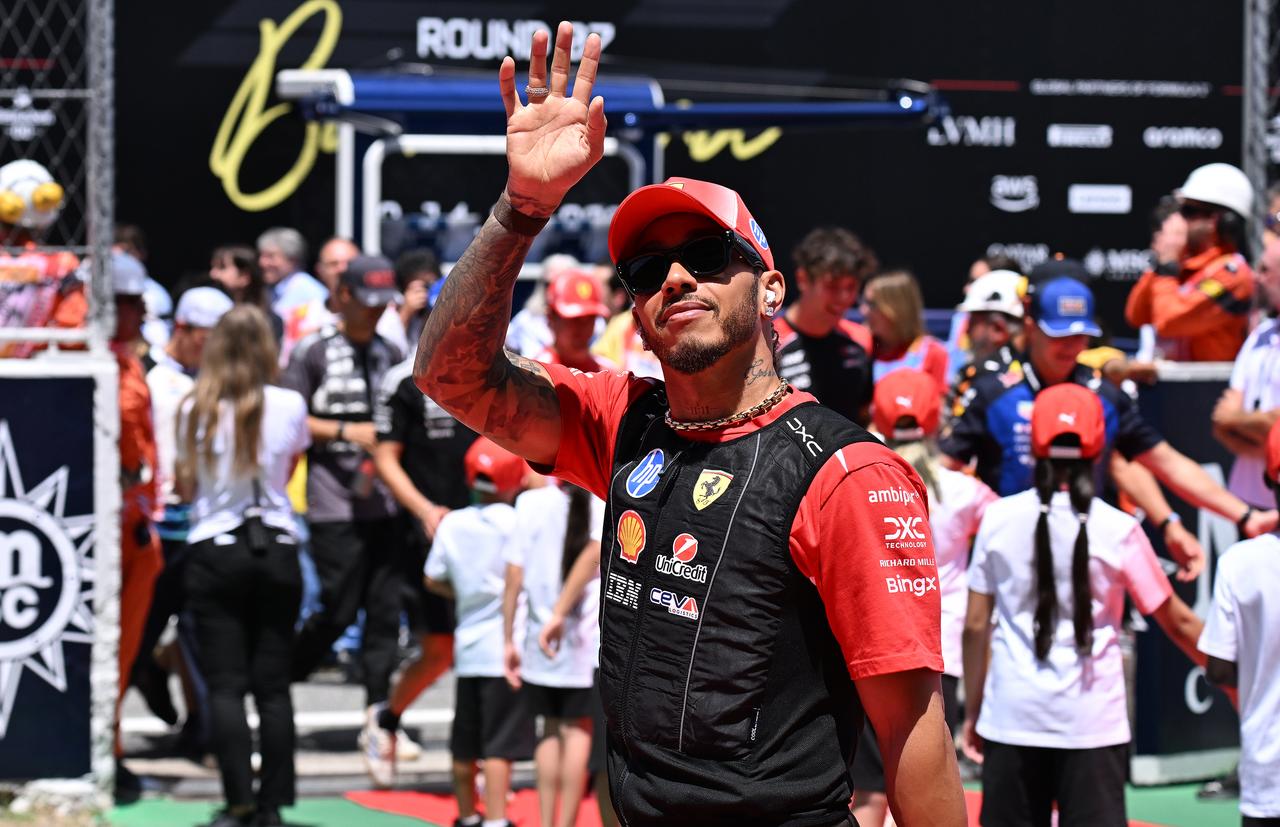
The 2026 Barcelona-Catalonia Grand Prix was a motorsport event held on 14 June 2026 in Barcelona Spain as the seventh round of the 2026 Formula 1 World Championship. The race, consisting of 66 laps on the 4.6-kilometre Circuit de Barcelona-Catalunya, was won by Lewis Hamilton of the British driver for Scuderia Ferrari. This victory marked Hamilton’s first win with Ferrari and his 106th career Grand Prix triumph.
During qualifying on the race weekend, Mercedes driver George Russell secured pole position by 0.064 seconds ahead of his teammate Kimi Antonelli and Ferrari driver Lewis Hamilton. The grid saw Hamilton in second and championship leader Antonelli in third. McLaren driver Lando Norris qualified fourth despite strong pace in FP2, while Red Bull driver Max Verstappen started fifth.
Ferrari’s other driver Charles Leclerc crashed at the exit of Turn 4 during Q3 and after repairs to his car within the regulations he started tenth. Aston Martin driver Fernando Alonso qualified 22nd and was required to start from the pit lane due to changes to his car’s ESME and MGU-K units as per regulations.
On race day track temperatures exceeded 50 degrees Celsius and Pirelli allocated softer tyre compounds compared to the previous season, leading teams to anticipate tyre degradation and strategy to be decisive factors. Most drivers started on medium compound tyres but Lewis Hamilton Max Verstappen Nico Hulkenberg Franco Colapinto Carlos Sainz Esteban Ocon and Sergio Perez opted for the softer compound for better grip. Aston Martin drivers started on hard compound tyres to maximise track time in the opening stint.
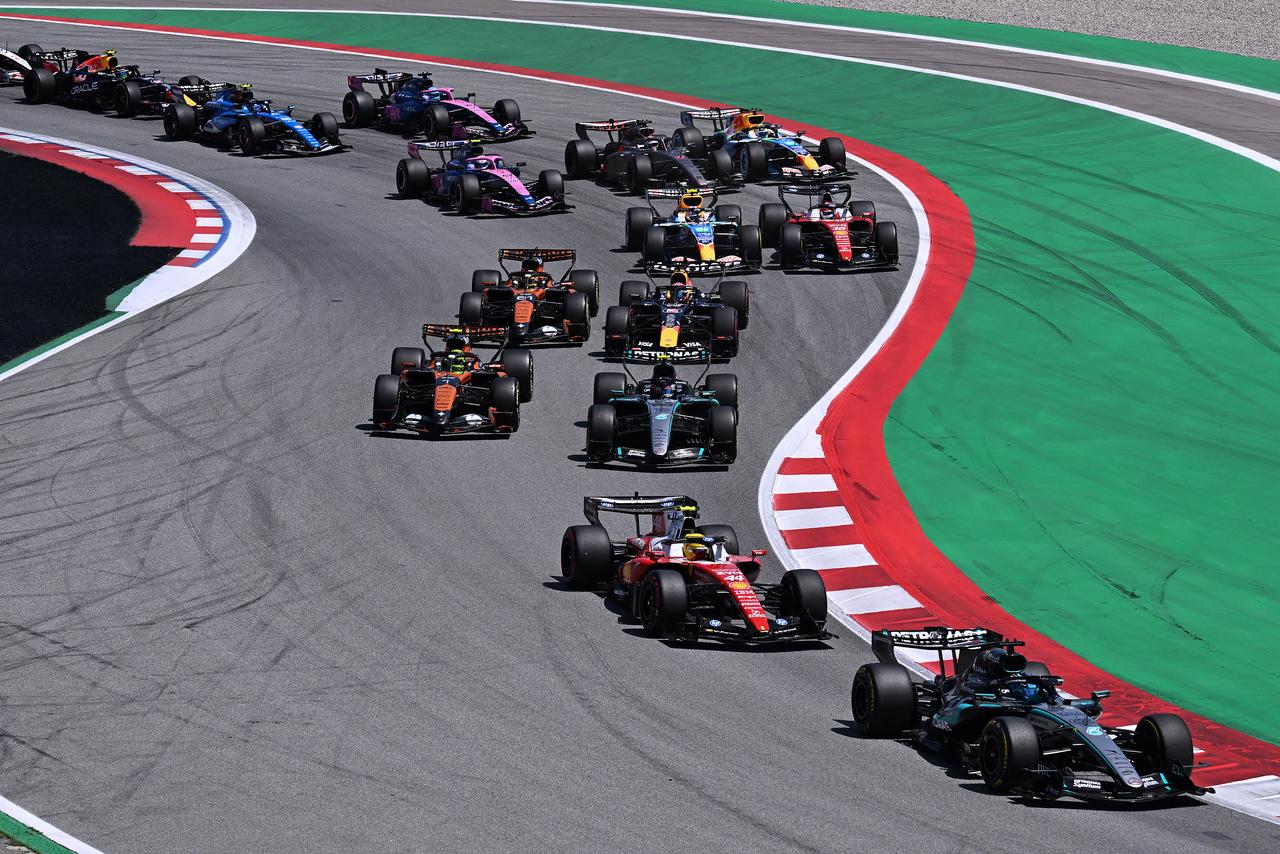
At the start with the red lights extinguished pole sitter George Russell held his position ahead of Lewis Hamilton while Kimi Antonelli Lando Norris and Max Verstappen maintained their positions in the opening lap. In the lower order Charles Leclerc gained three places on the first lap but Red Bull driver Isack Hadjar dropped from sixth to fourteenth due to a slow getaway. Similarly Audi driver Gabriel Bortoleto lost momentum at the start and fell to 17th. On lap six Lance Stroll of Aston Martin became the first retirement of the race due to a gearbox failure.
As extreme heat rapidly degraded tyre performance Mercedes drivers began to struggle and Lewis Hamilton who started on soft tyres made his first pit stop on lap 12 switching to hard compounds. This triggered a wave of pit stops from Russell and other front-runners. Racing Bulls suffered a 6.3-second pit stop delay for Liam Lawson which dropped him below the points. On lap 16 Charles Leclerc pitted and the order at the front reverted to its pre-stop configuration.
7. Catalan GP (12–14 June) (AA)
In the midfield Cadillac driver Valtteri Bottas retired due to a technical issue. After Oliver Bearman of Haas pitted Isack Hadjar resumed his climb. At Alpine team orders were issued to place Pierre Gasly ahead of Franco Colapinto in 12th. At the front Kimi Antonelli lapped approximately 0.5 seconds faster per lap than George Russell and Lewis Hamilton and requested permission to overtake his teammate but the team instructed him to hold position.
Ferrari countered Mercedes’ two-stop strategy by sending Hamilton on an aggressive three-stop plan. Hamilton returned to the pit lane on lap 28 (some sources cite lap 23) for a second time and emerged with new medium tyres gaining a significant pace advantage over George Russell. When McLaren’s Lando Norris pitted Mercedes drivers Russell and Antonelli came under strategic pressure and made their second pit stops on laps 37 and 38 respectively.
On lap 41 Fernando Alonso pulled his car to the side of the track due to a battery issue triggering the Virtual Safety Car. Ferrari capitalised on this by bringing Hamilton in for his final pit stop. Benefiting from the reduced speed under VSC conditions Hamilton rejoined the track ahead of Russell with 24 laps remaining and assumed the lead.
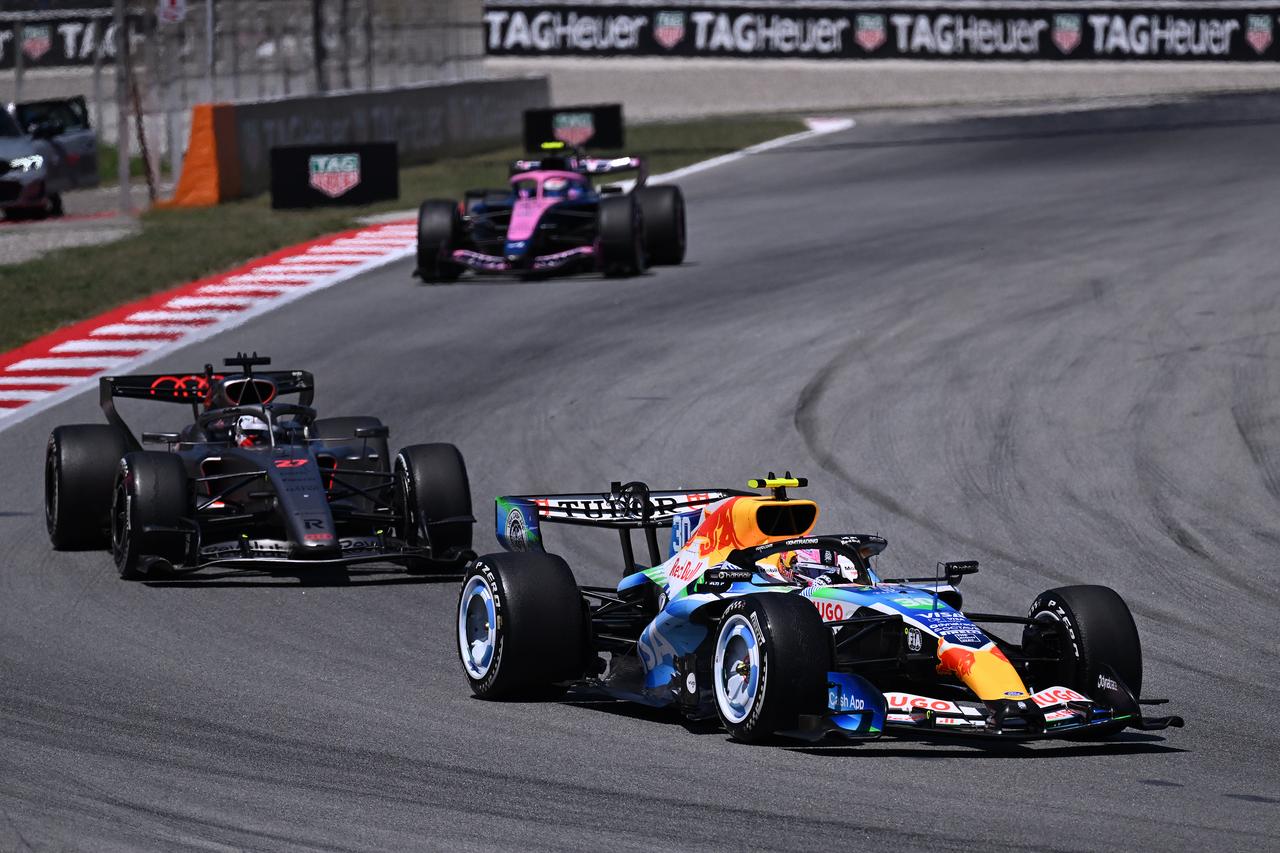
In the closing stages Hamilton steadily extended his lead on his new hard tyres while Antonelli and Russell battled for second. With five laps to go on lap 61 Antonelli overtook teammate Russell into Turn 1 to claim second place. However just one lap later on lap 62 Antonelli retired due to an electrical shutdown forcing him off the track onto the grass.
7. Catalan GP (12–14 June) (AA)
Almost simultaneously Charles Leclerc who had been climbing through the field and was expected to finish in the top five retired after a hydraulic power steering and gearbox failure caused him to run wide into the gravel at Turn 2. Later in the race Audi driver Nico Hulkenberg retired after an unusual incident: a stone thrown from Liam Lawson’s car struck the ERS emergency shutdown button on his vehicle causing a power unit failure. Haas driver Oliver Bearman also failed to finish.
Lewis Hamilton crossed the finish line first with a race time of 1 hour 32 minutes and 28.105 seconds. With this win Hamilton became the first driver aged 41 to win a Formula 1 race since Jack Brabham in 1970. George Russell of Mercedes finished second 19.561 seconds behind Hamilton while Lando Norris of McLaren took third 23.719 seconds behind the winner. This marked the first Formula 1 podium since 1968 composed entirely of British drivers.
The final top ten classification after the race was as follows:
Franco Colapinto of Alpine finished eighth on track but received a ten-second time penalty for violating yellow flag rules which dropped him to tenth. As a result Racing Bulls drivers Liam Lawson and Arvid Lindblad moved up to eighth and ninth respectively. Drivers outside the points were Gabriel Bortoleto (Audi) Carlos Sainz (Williams) Esteban Ocon (Haas) and Sergio Perez (Cadillac). Williams driver Alexander Albon was classified as not classified (NC) after retiring eight laps behind the leader due to technical issues.
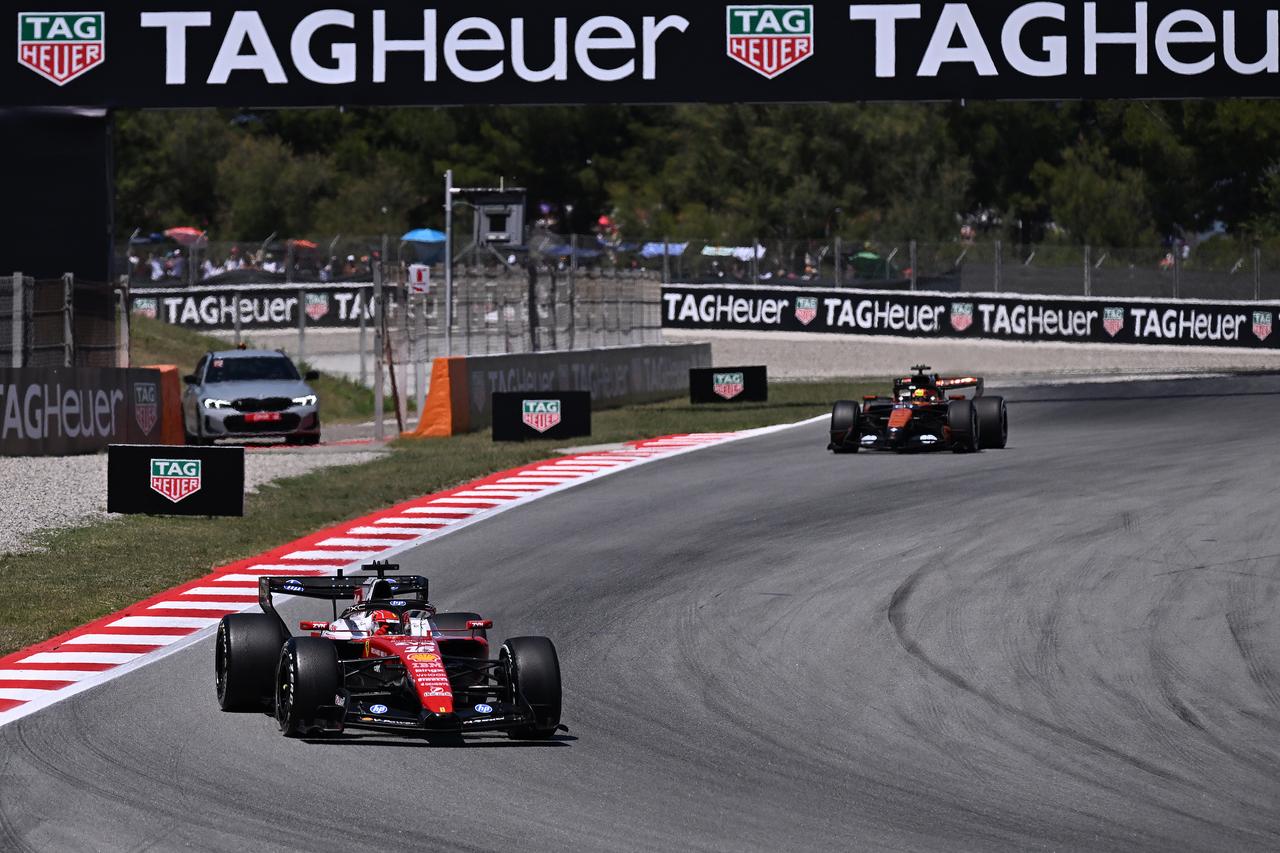
7. Catalan GP (12–14 June) (AA)
Seven drivers failed to reach the finish line: Charles Leclerc (Ferrari) Kimi Antonelli (Mercedes) Oliver Bearman (Haas) Fernando Alonso (Aston Martin) Nico Hulkenberg (Audi) Valtteri Bottas (Cadillac) and Lance Stroll (Aston Martin).
Following the Barcelona-Catalonia Grand Prix the championship standings were updated. Despite failing to score points due to his retirement Kimi Antonelli retained the lead in the Drivers’ Championship.
Drivers’ Championship Top 5:
Constructors’ Championship Top 5:
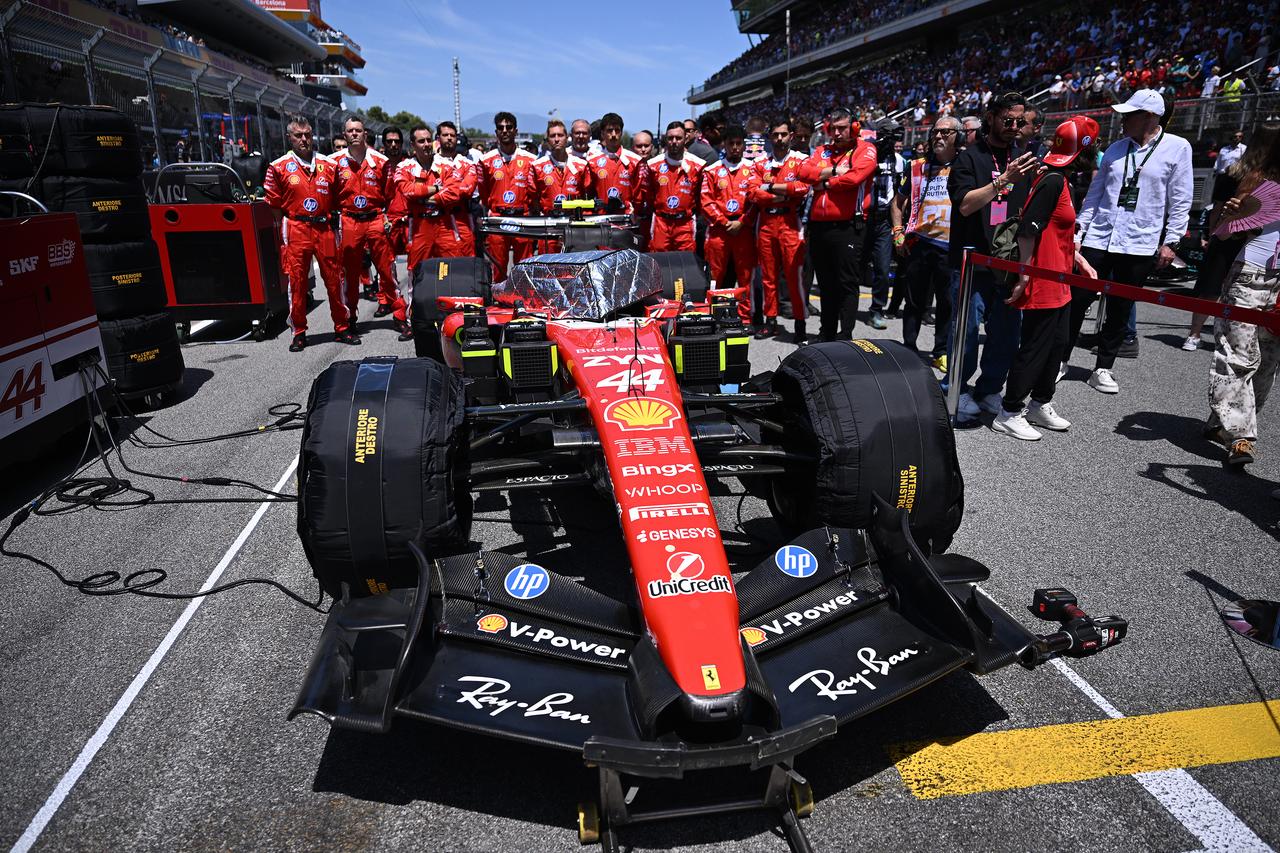
7. Catalan GP (12–14 June) (AA)
Races in the support categories were also held as part of the Grand Prix weekend. In the Formula 2 Feature Race pole sitter Rafael Camara of Invicta Racing claimed victory. After a post-race penalty dropped Nikola Tsolov from fourth to sixth Alexander Dunne moved up to second and Gabriele Mini to third. With this result Gabriele Mini took the championship lead.
In the Formula 3 Feature Race Theophile Nael of Campos Racing secured his maiden victory. Hiyu Yamakoshi of Van Amersfoort Racing finished second while Ugo Ugochukwu retained his championship lead by finishing third.
Anadolu Ajansı. "Formula 1'in 7. etabı Barselona-Katalonya Grand Prix'sini Lewis Hamilton kazandı." Accessed June 15, 2026. https://f.aa.com.tr/tr/spor/formula-1in-7-etabi-barselona-katalonya-grand-prixsini-lewis-hamilton-kazandi/3966769
BBC Sport. "Hamilton's first Ferrari win a statement to himself and rest of F1." Accessed June 15, 2026. https://www.bbc.com/sport/formula1/articles/c621q2l6lz5o
Formula 1. "Barcelona Lowdown: All the key moments as Hamilton lands sublime maiden win with Ferrari and Antonelli retires." Accessed June 15, 2026. https://www.formula1.com/en/latest/article/barcelona-lowdown-all-the-key-moments-as-hamilton-lands-sublime-maiden-win-with-ferrari-and-antonelli-retires.3uRBVUiY87JTLhM1l9G24K
Formula 1. "Hamilton claims stellar maiden Grand Prix victory for Ferrari in Barcelona as Antonelli suffers shock retirement." Accessed June 15, 2026. https://www.formula1.com/en/latest/article/hamilton-claims-stellar-maiden-grand-prix-victory-for-ferrari-in-barcelona-as-antonelli-suffers-shock-retirement.4yCXiPLHUdcnl2BwNpqUIa
Formula 1. "Leclerc laments tough Barcelona-Catalunya GP weekend as hydraulic issue forces Ferrari driver's retirement." Accessed June 15, 2026. https://www.formula1.com/en/latest/article/leclerc-laments-tough-barcelona-catalunya-gp-weekend-as-hydraulic-issue-forces-ferrari-drivers-retirement.r3xcs2T1P6prQlDhLD7Uq
Motorsport.com. "Five quick takeaways from the F1 Barcelona GP." Accessed June 15, 2026. https://www.motorsport.com/f1/news/five-quick-takeaways-from-barcelona-gp/10830239/
Motorsport.com. "Winners and losers from a cathartic Barcelona F1 Grand Prix." Accessed June 15, 2026. https://www.motorsport.com/f1/news/winners-and-losers-from-a-cathartic-barcelona-f1-grand-prix/10830418/
RacingNews365. "2026 F1 Barcelona-Catalunya Grand Prix - results." Accessed June 15, 2026. https://racingnews365.com/2026-f1-barcelona-catalunya-grand-prix-results
RacingNews365. "Adjusted 2026 F1 Barcelona-Catalunya Grand Prix results after post-race penalty." Accessed June 15, 2026. https://racingnews365.com/adjusted-2026-f1-barcelona-catalunya-grand-prix-results-after-post-race-penalty
Sky Sports. "Barcelona-Catalunya GP: Lewis Hamilton claims first Grand Prix win for Ferrari as Kimi Antonelli retires late on." Accessed June 15, 2026. https://www.skysports.com/f1/news/12433/13553903/barcelona-catalunya-gp-lewis-hamilton-claims-first-grand-prix-win-for-ferrari-as-kimi-antonelli-retires-late-on
The Guardian. "Lewis Hamilton earns maiden Ferrari win in Barcelona but Antonelli fails to finish." Accessed June 15, 2026. https://www.theguardian.com/sport/2026/jun/14/lewis-hamilton-tastes-victory-at-last-for-ferrari-at-f1-barcelona-catalunya-gp
beIN SPORTS Türkiye. "F1 Barcelona GP'de kazanan belli oldu! İnanılmaz son." Accessed June 15, 2026. https://beinsports.com.tr/haber/f1-barcelona-gpde-kazanan-belli-oldu-inanilmaz-son
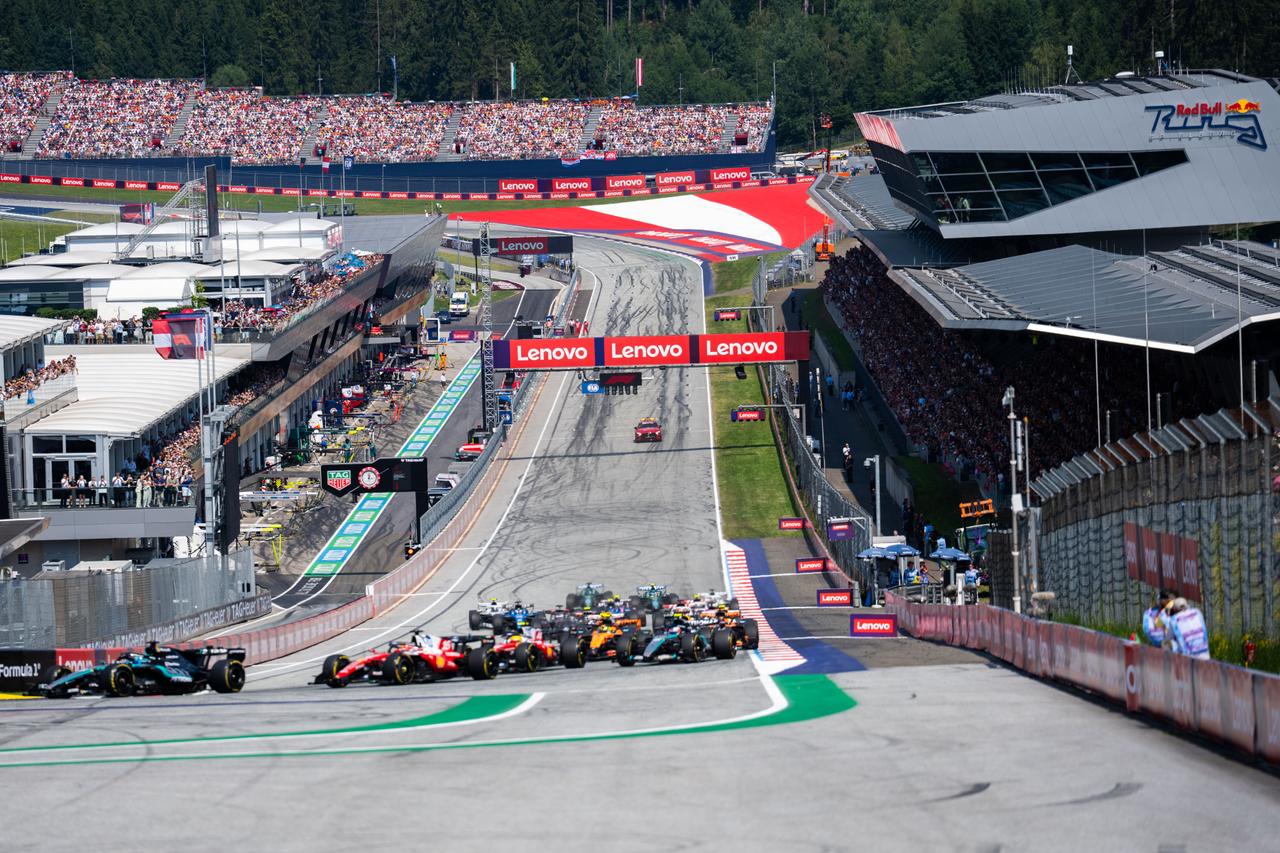
8th Austrian GP (26–28 June) (AA)
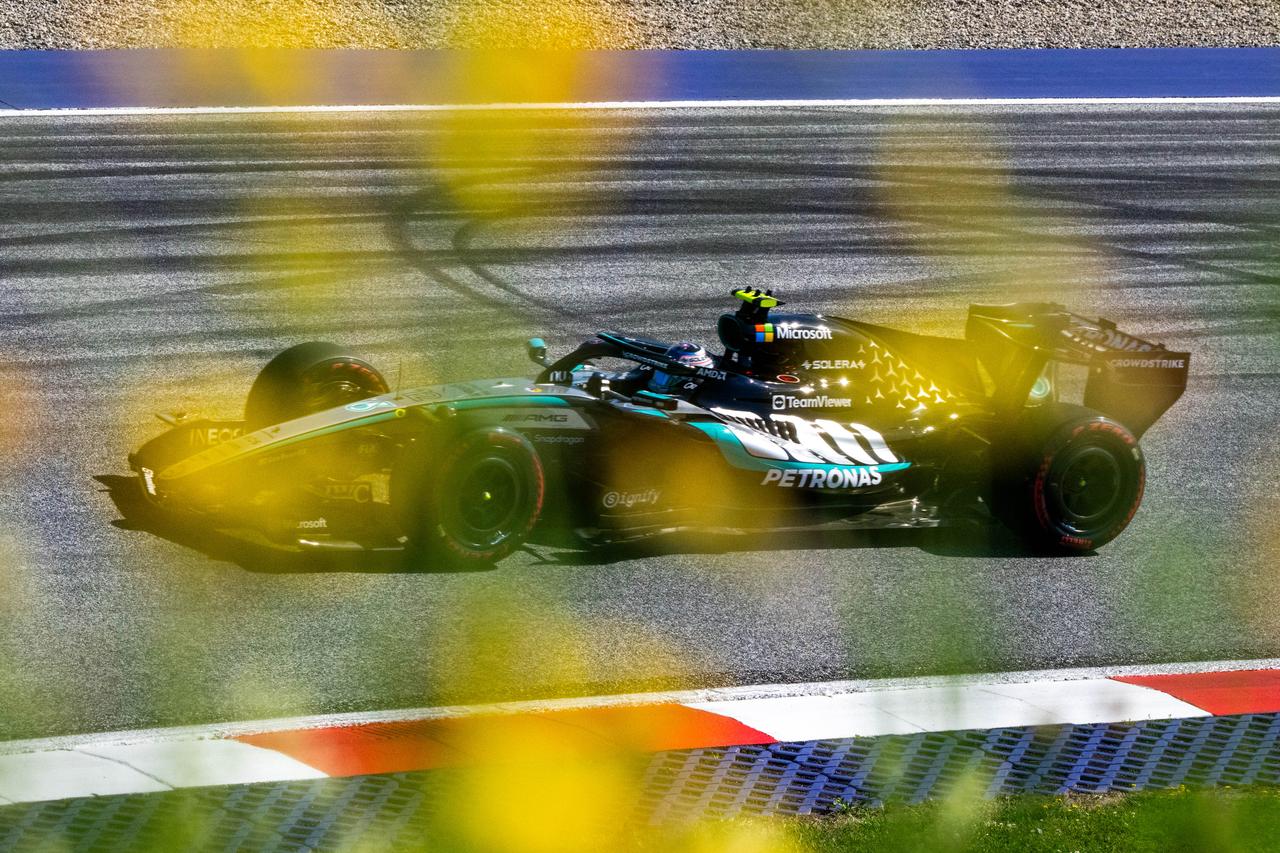
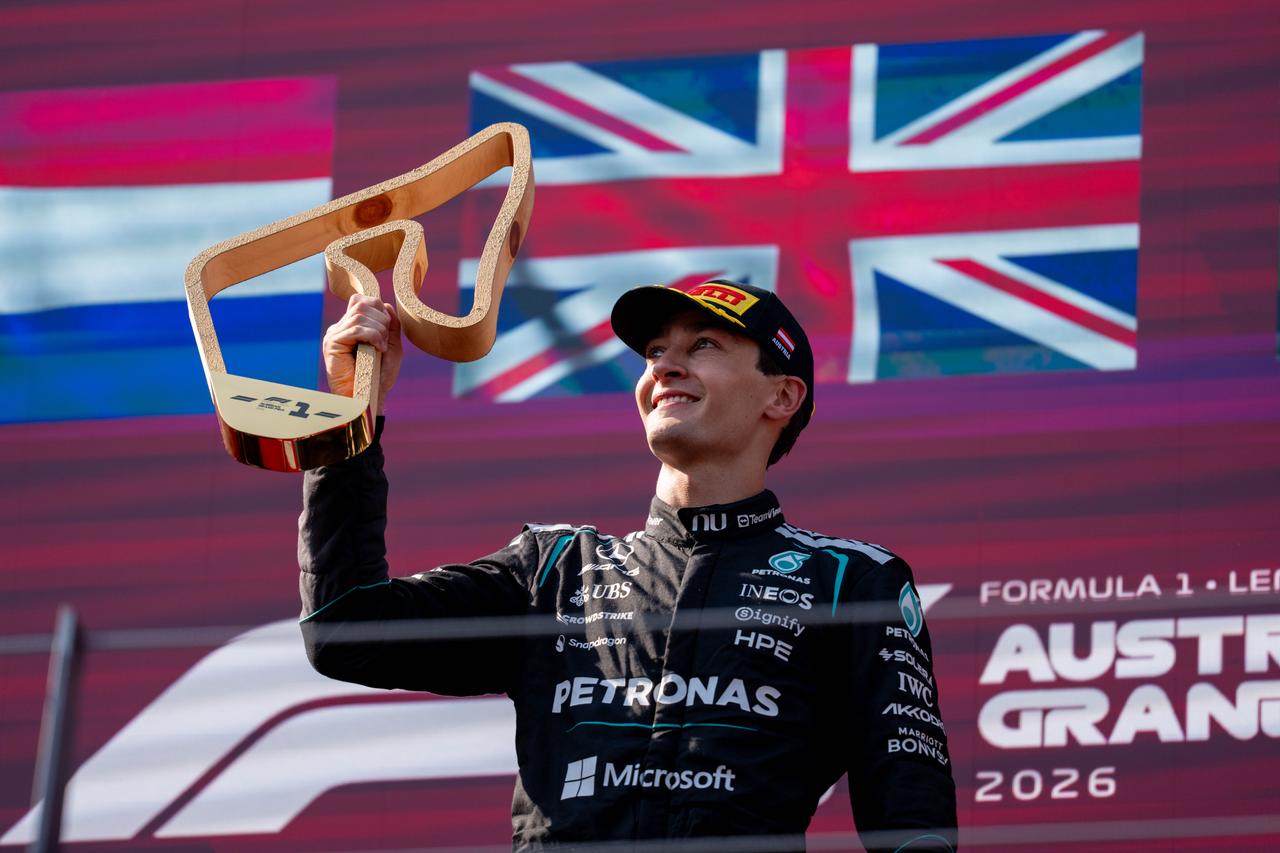
2026 Formula 1 Season's eighth race, the Austrian Grand Prix, was held at the 4.3-kilometre Red Bull Ring in Spielberg, Austria, between 26 and 28 June 2026. The race, consisting of 71 laps, was won by British driver George Russell of the Mercedes team, with a total time of 1 hour 26 minutes 37.979 seconds. This result marked Russell’s second victory of the season, following his win at the opening race in the Australian Grand Prix. Max Verstappen of Red Bull finished second, while Kimi Antonelli of Mercedes, the championship leader, completed the podium in third place.
Due to a heatwave affecting the race weekend, the Austrian Grand Prix implemented Formula 1’s “extreme heat” (heat hazard) regulations for the first time in the 2026 season. Under these rules, drivers were required to wear cooling vests or carry equivalent ballast in their cars. Drivers participated in the national anthem ceremony wearing cooling equipment and umbrellas. Track surface temperatures were reported to have reached 50 degrees Celsius (122 Fahrenheit).
As part of their development programs, Red Bull brought seven newly updated components to Austria, while Cadillac arrived with a major update package consisting of ten new parts.
During qualifying, Red Bull driver Max Verstappen narrowly avoided elimination in Q2 by just 0.040 seconds. In the final lap of Q3, Verstappen crashed into the barriers due to a technical fault. Red Bull Team Principal Laurent Mekies confirmed the incident was caused by a mechanical issue, not driver error. Due to the double yellow flags waved after Verstappen’s crash, Mercedes driver Kimi Antonelli, who was on a flying lap, cancelled his attempt and ended the session in fourth place. George Russell, who was on track at the same time, slowed appropriately under the yellow flag rules and set the fastest time to secure pole position. The starting grid’s top four positions were thus occupied by George Russell, Charles Leclerc, Lewis Hamilton and Kimi Antonelli.
Shortly before the race, Racing Bulls driver Liam Lawson was investigated for an infringement during the formation lap but received no penalty. Regarding tyre strategies, Gabriel Bortoleto and Carlos Sainz opted to start on soft compound tyres, while the remaining twenty drivers began on medium compound tyres.
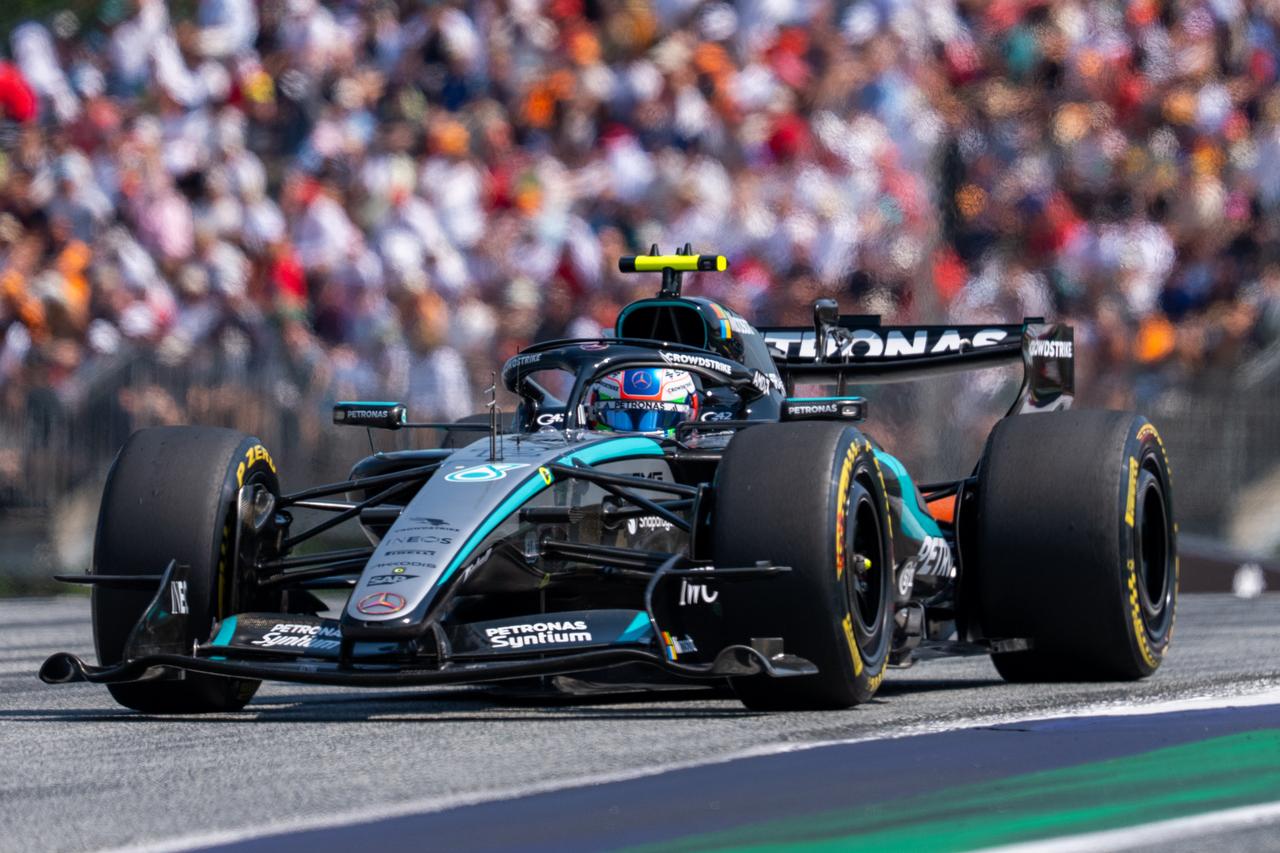
8th Austrian GP (26–28 June) (AA)
At the start, pole-sitter George Russell maintained his lead without issue. Starting from fourth, Kimi Antonelli ran wide at Turn 1, losing position, and then made a similar mistake at Turn 3, dropping further back. Lewis Hamilton, starting third, overtook his Ferrari teammate Charles Leclerc to move into second place.
Max Verstappen, starting fifth, passed both Kimi Antonelli and Charles Leclerc in the opening laps to climb to third. After a battle between Antonelli and Leclerc, Antonelli regained fourth place by lap four.
Extreme heat caused issues for several teams’ braking systems. Cadillac retired both cars within the first two laps. A fire in Valtteri Bottas’s car was extinguished in the pit lane, and shortly afterward, Sergio Perez pitted due to excessive smoke in the cockpit. Cadillac officially confirmed both drivers retired due to overheated brakes. Kimi Antonelli also reported significant difficulty managing his brakes due to overheating during the middle stages of the race.
By lap 10, Verstappen had reduced the gap to Hamilton in second place to half a second, initiating a battle between the two. On lap 11, Verstappen attacked Hamilton at Turn 3, but Hamilton reclaimed the position at Turn 5. Verstappen claimed he was forced off track during the duel and requested a penalty for Hamilton, but the race stewards took no action. On lap 22, Verstappen made a similar move at Turn 3 and permanently took second place.
Ferrari executed an early strategy, bringing Hamilton in for hard tyres on lap 12 and Leclerc on lap 13. After his pit stop, Hamilton received a radio instruction to switch to “TS mode” and reduce engine power due to high component temperatures. Hamilton, running a three-stop strategy, fell back through the field, while Leclerc remained in the lower midfield for the remainder of the race.
8th Austrian GP (26–28 June) (AA)
On lap 44, leader George Russell pitted for hard tyres. Second-placed Verstappen opted to extend his stint. Verstappen pitted on lap 50 and rejoined in third place, 10 seconds behind Russell. Temporary leader Antonelli pitted on lap 53, handing the lead back to Russell.
During the middle phase of the race, Aston Martin driver Lance Stroll retired due to an ERS (Energy Recovery System) failure, while Williams driver Carlos Sainz retired after an electrical issue on the main straight. On lap 53, Alex Albon of Williams hit a barrier at Turn 3, triggering a Virtual Safety Car (VSC) period.
Tensions arose within the Racing Bulls team between ninth-placed Liam Lawson and tenth-placed Arvid Lindblad, both in the points. Despite engineers instructing Lindblad to preserve his brakes and tyres and hold position, Lindblad attempted an overtaking manoeuvre against his teammate Lawson.
With 14 laps remaining (lap 57), leader George Russell ran wide at Turn 1, losing time. Verstappen rapidly closed the 10-second gap, reducing it to seven seconds by lap 58 and then to just 1.5 seconds. During the same laps, third-placed Kimi Antonelli, on fresher tyres, also rapidly closed the gap to Verstappen.
Entering the final two laps, Antonelli was within one second of Verstappen, and on the final lap, the gap fell below half a second. Despite the pressure, George Russell held off Max Verstappen to win by 1.611 seconds. Verstappen finished second, with Kimi Antonelli just 0.375 seconds behind in third.
McLaren driver Oscar Piastri, who finished fourth, said after overtaking both Ferraris that his team had adopted a different approach compared to the previous race in Barcelona, successfully using slipstreaming to gain positions. Winner George Russell stated he had struggled to fully adapt to the 2026-spec car and had adopted what he described as an “abnormal” driving style to manage tyre degradation.
The official classification of drivers who finished the Austrian Grand Prix and scored points is as follows:
8th Austrian GP (26–28 June) (AA)
Other classified finishers were: 11th Gabriel Bortoleto (Audi), 12th Nico Hulkenberg (Audi), 13th Pierre Gasly (Alpine), 14th Ollie Bearman (Haas), 15th Franco Colapinto (Alpine), 16th Esteban Ocon (Haas), 17th Alex Albon (Williams), and 18th Fernando Alonso (Aston Martin). Drivers who retired were: Lance Stroll (Aston Martin), Carlos Sainz (Williams), Sergio Perez (Cadillac), and Valtteri Bottas (Cadillac).
Following the Austrian Grand Prix, Mercedes became the first team in the 2026 season to win seven of the first eight races. With his victory, George Russell overtook Lewis Hamilton in the Drivers’ Championship to move into second place, reducing the gap to championship leader Kimi Antonelli to 40 points.
The top five positions in the Drivers’ Championship after eight races are as follows:
The top five positions in the Constructors’ Championship are as follows:
The 2026 Formula 1 Season will continue with the British Grand Prix sprint event at the Silverstone circuit in the United Kingdom.
Anadolu Ajansı. "Formula 1'de sezonun 8. etabı Avusturya Grand Prix'sini George Russell kazandı" Accessed June 29, 2026. https://f.aa.com.tr/tr/spor/formula-1de-sezonun-8-etabi-avusturya-grand-prixsini-george-russell-kazandi/3980548
BBC Sport. "Russell holds nerve to seal victory in Austria" Accessed June 29, 2026. https://www.bbc.com/sport/formula1/articles/c4gyrdqw70jo
Formula 1. "2026 Austrian Grand Prix race report and highlights: George Russell seals victory in thrilling Austrian Grand Prix ahead of Max Verstappen and Kimi Antonelli" Accessed June 29, 2026. https://www.formula1.com/en/latest/article/russell-seals-victory-in-thrilling-austrian-grand-prix-ahead-of-verstappen-and-antonelli.5kjw8LmvWRcsaFgjCr8aWw
Formula 1. "‘I’ve reminded myself I can do it’ – Russell hails ‘incredible’ Austrian GP win as he recovers lost ground in title race" Accessed June 29, 2026. https://www.formula1.com/en/latest/article/ive-reminded-myself-i-can-do-it-russell-hails-incredible-austrian-gp-win-as-he-recovers-lost-ground-in-title-race.4Hb6KKpu2gBEcRhzSlXdRA
Motorsport.com. "F1 Austrian GP: George Russell holds off charging Max Verstappen to second 2026 F1 win" Accessed June 29, 2026. https://www.motorsport.com/f1/news/f1-austrian-gp-race-report-/10834500/
Motorsport.com. "George Russell resorted to abnormal driving style to win F1 Austrian GP" Accessed June 29, 2026. https://www.motorsport.com/f1/news/george-russell-resorted-to-abnormal-driving-style-to-win-f1-austrian-gp/10834809/
Nine.com.au. "Piastri surprised by rival’s decline as Russell revives title hopes" Accessed June 29, 2026. https://www.nine.com.au/sport/motorsport/f1-news-2026-austrian-grand-prix-george-russell-win-oscar-piastri-race-comments-20260629-p60arp.html
RacingNews365. "George Russell narrowly denies resurgent Max Verstappen in Austrian GP showdown" Accessed June 29, 2026. https://racingnews365.com/george-russell-narrowly-denies-resurgent-max-verstappen-in-austrian-gp-showdown
RacingNews365. "Liam Lawson seeking Racing Bulls talks after team orders confusion" Accessed June 29, 2026. https://racingnews365.com/liam-lawson-seeking-racing-bulls-talks-after-team-orders-confusion
RacingNews365. "Oscar Piastri issues McLaren 'evidence' in progress defence" Accessed June 29, 2026. https://racingnews365.com/oscar-piastri-issues-mclaren-evidence-in-progress-defence
Sky Sports. "Austrian GP: George Russell admits to being at 'low point' before reducing Kimi Antonelli's championship lead" Accessed June 29, 2026. https://www.skysports.com/f1/news/12433/13558497/austrian-gp-george-russell-admits-to-being-at-low-point-before-reducing-kimi-antonellis-championship-lead
Sportsnet.ca. "George Russell wins Austrian Grand Prix to boost his F1 title chances" Accessed June 29, 2026. https://www.sportsnet.ca/formula-1/article/george-russell-wins-austrian-grand-prix-to-boost-his-f1-title-chances/
The Athletic. "Austrian Grand Prix briefing: Russell wins, Verstappen impresses in exhilarating race" Accessed June 29, 2026. https://www.nytimes.com/athletic/7403442/2026/06/28/austrian-grand-prix-briefing-george-russell-wins/
The Guardian. "George Russell holds off Max Verstappen to win Austrian F1 Grand Prix for Mercedes" Accessed June 29, 2026. https://www.theguardian.com/sport/2026/jun/28/george-russell-holds-off-max-verstappen-austrian-f1-grand-prix-mercedes-red-bull
Yahoo Sports. "Austrian Grand Prix results: George Russell wins from pole ahead of Max Verstappen and Kimi Antonelli, retakes second in championship race" Accessed June 29, 2026. https://sports.yahoo.com/f1/breaking-news/live/austrian-grand-prix-results-george-russell-wins-from-pole-ahead-of-max-verstappen-and-kimi-antonelli-115946415.html
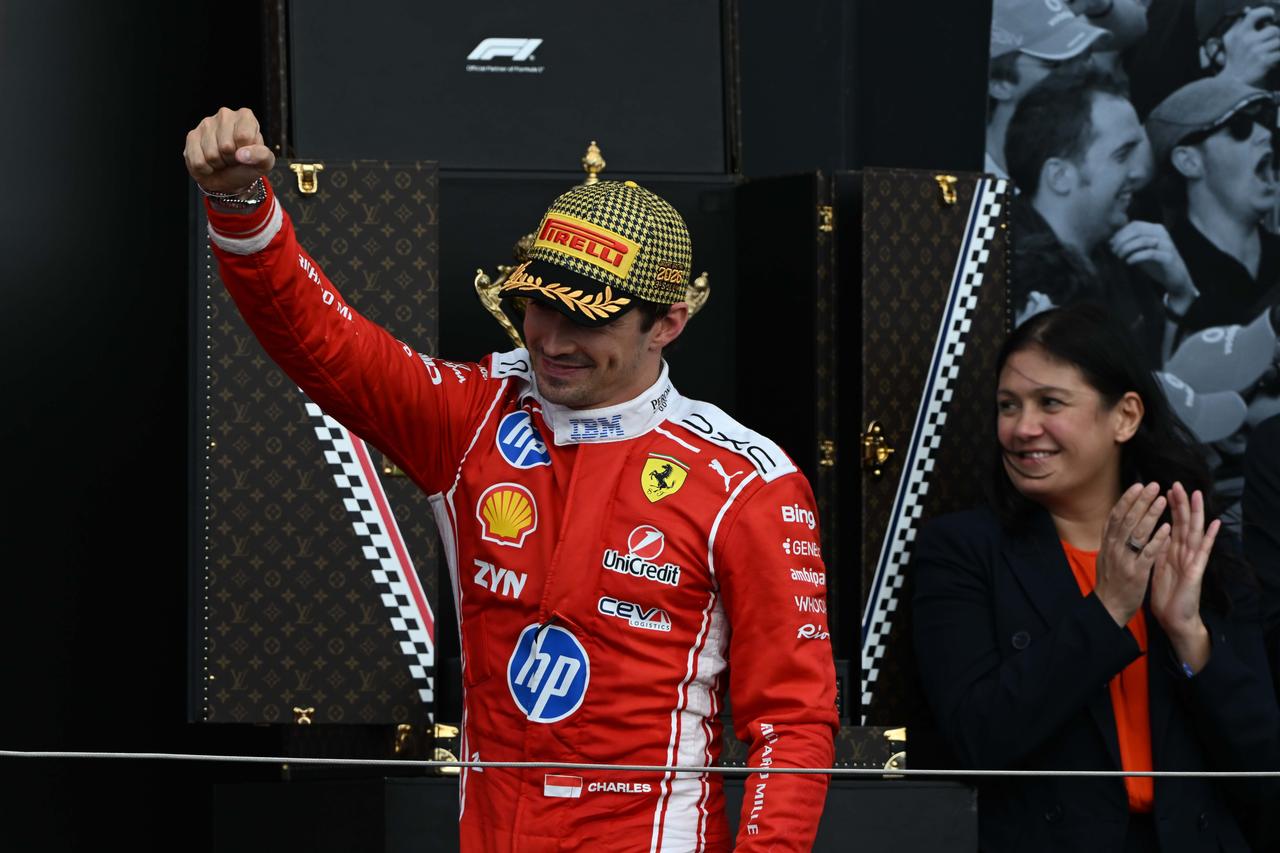
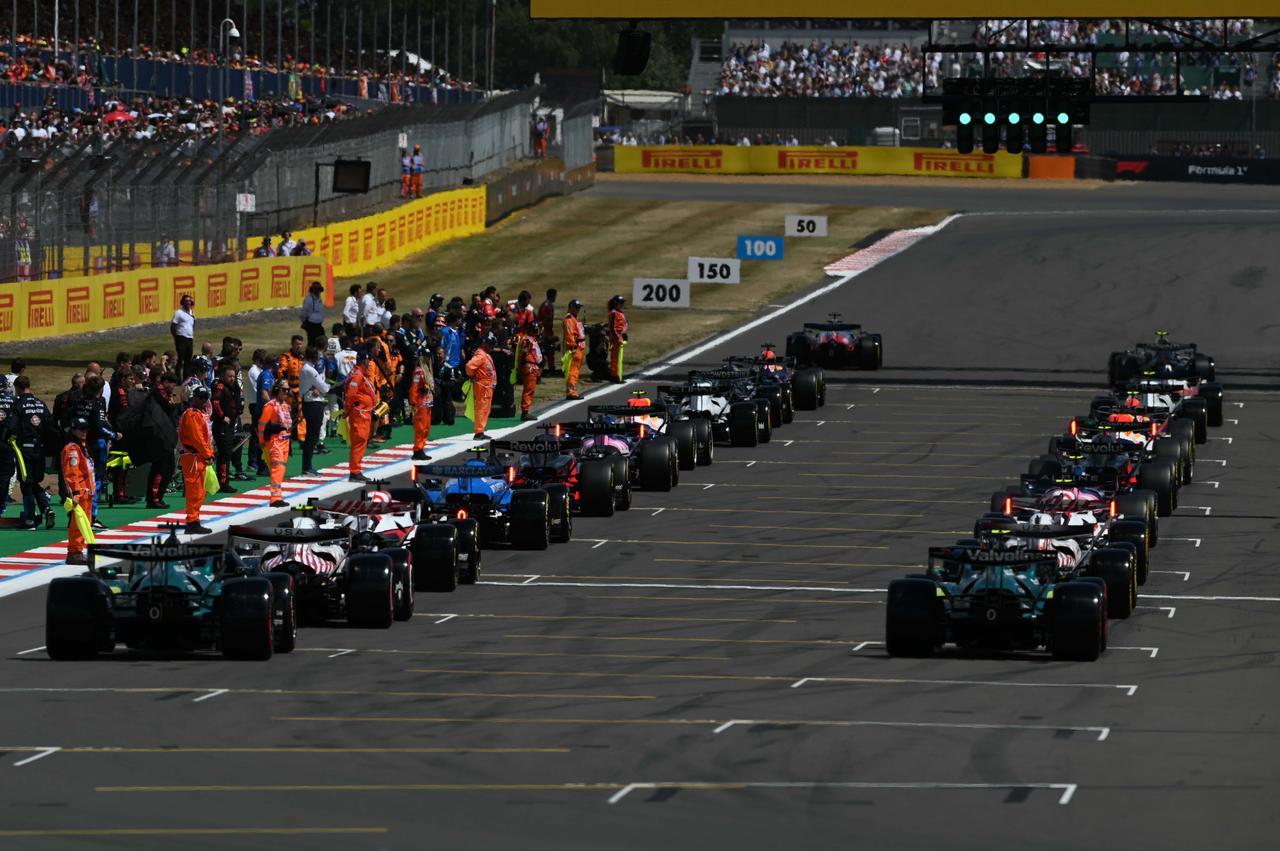
The 9th round of the 2026 Formula 1 World Championship, the British Grand Prix, was held at the 5.89-kilometre Silverstone Circuit in Northamptonshire, United Kingdom, from 3 to 5 July 2026. The race, consisting of 52 laps, was won by Scuderia Ferrari driver Charles Leclerc. The race concluded behind the Safety Car in its final stages, and a total of 175,000 spectators attended the event.
class=\
As part of the weekend schedule, Mercedes driver Kimi Antonelli won the sprint race on Saturday and secured pole position for Sunday’s main race. Ferrari driver Charles Leclerc started second, Mercedes driver Lewis Hamilton third, and George Russell fourth.
Prior to the race, Alpine driver Pierre Gasly received a three-position grid penalty, dropping from 12th to 15th, for impeding another driver during qualifying. Aston Martin driver Lance Stroll was handed a 10-place grid penalty for exceeding his quota of power unit components and started the race in 22nd position. The race stewards mandated that all cars begin the race on medium compound tyres, with a single pit stop strategy anticipated for most competitors. During the formation lap, Aston Martin driver Fernando Alonso experienced a brief stoppage issue and started the race from the pit lane.
At the start, Charles Leclerc used a strong acceleration to overtake pole sitter Kimi Antonelli and take the lead. Simultaneously, his teammate Lewis Hamilton passed Antonelli to move into second place, relegating the Mercedes driver to third.
class=\
On the first lap, Williams driver Alexander Albon locked his tyres entering the Brooklands corner and collided with Haas driver Oliver Bearman, causing Bearman to spin. Albon was handed a 10-second time penalty for the incident. In the same lap, a contact occurred between McLaren driver Oscar Piastri and Racing Bulls driver Liam Lawson. Piastri’s front wing was damaged, forcing the Australian driver to make a pit stop on the final lap of the first tour to replace it, dropping him to the back of the grid.
During the opening laps, Mercedes driver Lewis Hamilton was investigated for a false start after moving his car before the lights went out and was subsequently given a 5-second time penalty.
On lap 11, Kimi Antonelli overtook Lewis Hamilton at Copse corner to reclaim second place. On lap 17, Red Bull driver Max Verstappen passed George Russell to move into fourth and then entered the pits to switch to hard compound tyres.
On lap 22, a virtual safety car (VSC) was deployed briefly to allow track marshals to remove an umbrella that had fallen onto the circuit. During this period, Ocon and Perez made their pit stops. Race leader Charles Leclerc pitted on lap 26 for hard tyres and rejoined in second place behind Antonelli.
On laps 30 and 31, a battle for position unfolded between Mercedes drivers George Russell and Lewis Hamilton, with multiple overtaking maneuvers. On lap 35, Russell was forced to pit due to a slow puncture. Race leader Kimi Antonelli delayed his first pit stop until lap 36 and rejoined the track 7.5 seconds behind Leclerc after switching to hard tyres. On lap 39, a mechanical issue caused Audi driver Nico Hulkenberg to stop on the edge of the track, triggering another virtual safety car period.
class=\
After his pit stop, Kimi Antonelli reduced his gap to Charles Leclerc to 3.1 seconds by lap 41 thanks to his fresher tyres. However, after making contact with the kerbs at the high-speed Copse corner, a structural component of the left front wheel shield on his Mercedes broke. This mechanical failure severely compromised the car’s steering, forcing Antonelli to return to the pits on lap 41 to replace the front wing and tyres. When the issue persisted, he had to make a second pit stop, dropping to 10th place. Struggling to control his car, the Italian driver continued on track but was shown a black-and-white flag for repeatedly exceeding track limits. After further violations, he received a 5-second time penalty.
On lap 48, Red Bull driver Max Verstappen, running in fourth, lost rear downforce in the Stowe corner, causing his car to spin at high speed into the gravel trap and retire from the race.
The Safety Car was deployed following the incident. During the Safety Car period, race leader Charles Leclerc and third-placed Lewis Hamilton made pit stops for new tyres. Mercedes opted to keep George Russell on track, allowing him to remain in second place ahead of Hamilton without pitting.
As the field entered lap 51, the FIA race control system erroneously displayed the message “Safety Car In This Lap” on broadcast screens, leading teams and drivers to expect a race restart on the final lap. It was later confirmed that this message was the result of a software error and was retracted shortly afterward.
According to FIA sporting regulations (Article 55.13), when a Safety Car period ends, the lead car must complete one full lap behind the Safety Car before racing resumes. This procedure was correctly followed, so the Safety Car remained on track for one additional lap. The British Grand Prix concluded under the Safety Car on lap 52, with the field in formation and overtaking prohibited.
Scuderia Ferrari driver Charles Leclerc finished the race in first place with a time of 1 hour 27 minutes 11.335 seconds. This victory marked his first win since the 2024 United States Grand Prix and his ninth career Formula 1 race win.
Mercedes driver George Russell finished second, 0.427 seconds behind Leclerc, and Ferrari driver Lewis Hamilton completed the podium in third, 0.772 seconds behind. The remaining drivers inside the points were: fourth Lando Norris (McLaren), fifth Isack Hadjar (Red Bull), sixth Liam Lawson (Racing Bulls), seventh Arvid Lindblad (Racing Bulls), eighth Gabriel Bortoleto (Audi), ninth Franco Colapinto (Alpine), and tenth Pierre Gasly (Alpine).
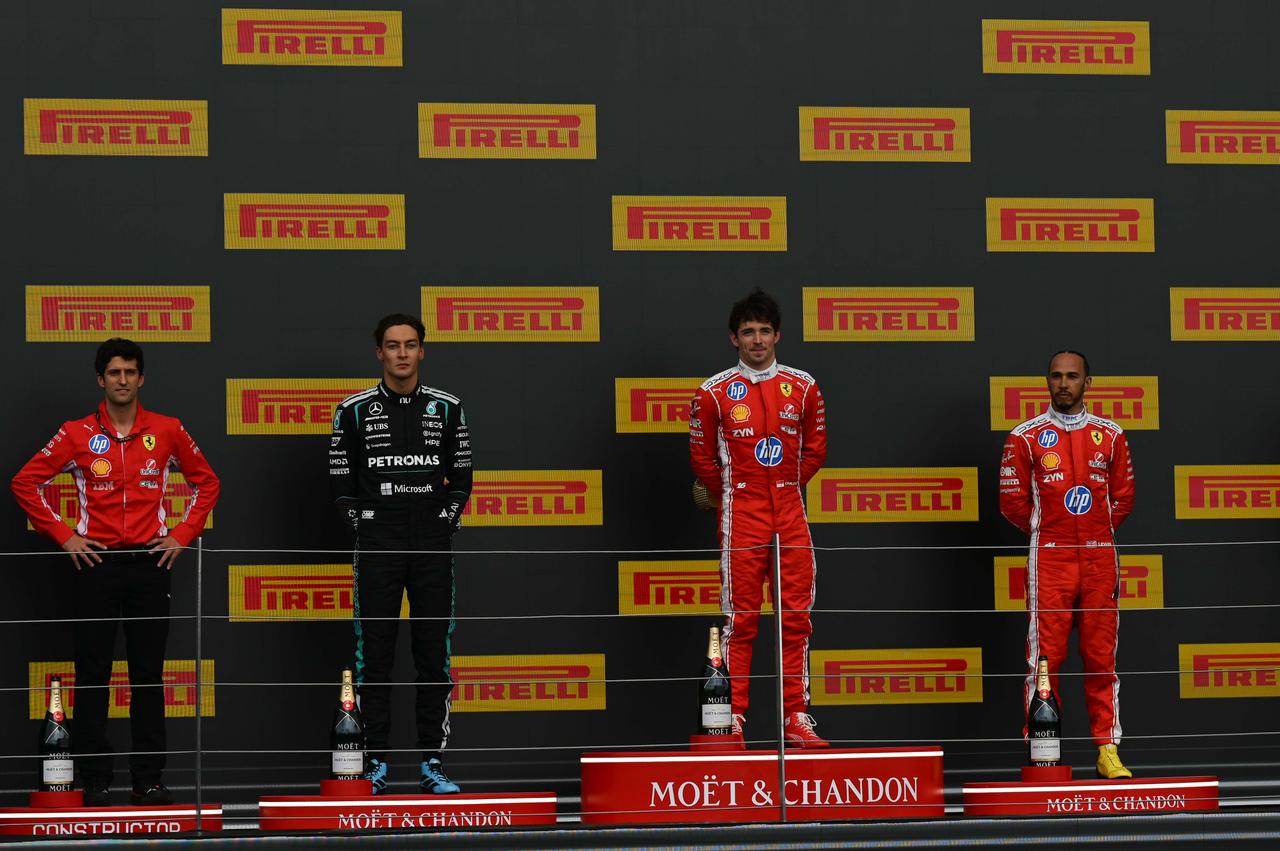
class=\
Following the race, the stewards reviewed several incidents and imposed the following penalties and classification changes:
Max Verstappen (Red Bull), Alexander Albon (Williams), and Nico Hulkenberg (Audi) failed to finish the race (DNF) due to mechanical issues or crashes.
The championship standings were updated following the British Grand Prix as follows:
Anadolu Ajansı. "Formula 1'de sezonun 9. yarışı Büyük Britanya Grand Prix'sini Charles Leclerc kazandı" Accessed July 6, 2026. https://www.aa.com.tr/tr/spor/formula-1de-sezonun-9-yarisi-buyuk-britanya-grand-prixsini-charles-leclerc-kazandi/3986787
BBC Sport. "Leclerc wins dramatic race from Russell and Hamilton" Accessed July 6, 2026. https://www.bbc.com/sport/formula1/articles/crr8pxxe20zo
Formula 1. "Leclerc Wins Dramatic British Grand Prix From Russell And Hamilton As Antonelli Suffers Issue" Accessed July 6, 2026. https://www.formula1.com/en/latest/article/leclerc-wins-dramatic-british-grand-prix-from-russell-and-hamilton-as-antonelli-suffers-issue.3bGl6laB38GIr1PfxJTNmY
Motorsport.com. "Winners and losers from F1 British GP" Accessed July 6, 2026. https://www.motorsport.com/f1/news/winners-and-loser-from-f1s-british-grand-prix/10836777/
RacingNews365. "Adjusted 2026 F1 British Grand Prix results after unusual post-race penalty" Accessed July 6, 2026. https://racingnews365.com/adjusted-2026-f1-british-grand-prix-results-after-unsual-post-race-penalty
Sky Sports. "British GP: Charles Leclerc wins chaotic race as championship leader Kimi Antonelli finishes outside points after late failure" Accessed July 6, 2026. https://www.skysports.com/f1/news/12433/13560559/british-gp-charles-leclerc-wins-chaotic-race-as-championship-leader-kimi-antonelli-finishes-outside-points-after-late-failure
Sky Sports. "British GP: FIA explains why Silverstone race not resumed on final lap after incorrect Safety Car message displayed" Accessed July 6, 2026. https://www.skysports.com/f1/news/12433/13560562/british-gp-fia-explains-why-silverstone-race-not-resumed-on-final-lap-after-incorrect-safety-car-message-displayed
The Athletic. "F1 British GP live updates: Leclerc wins dramatic race which finishes under safety car" Accessed July 6, 2026. https://www.nytimes.com/athletic/live-blogs/f1-british-grand-prix-live-updates-race-results/YCW31uZd0Li5/
The Guardian. "Leclerc holds off Russell and Hamilton to win chaotic British F1 GP" Accessed July 6, 2026. https://www.theguardian.com/sport/2026/jul/05/charles-leclerc-british-f1-grand-prix-george-russell-lewis-hamilton-formula-one
The Race. "Winners and losers from F1's 2026 British Grand Prix" Accessed July 6, 2026. https://www.the-race.com/formula-1/winners-and-losers-from-f1s-2026-british-grand-prix/
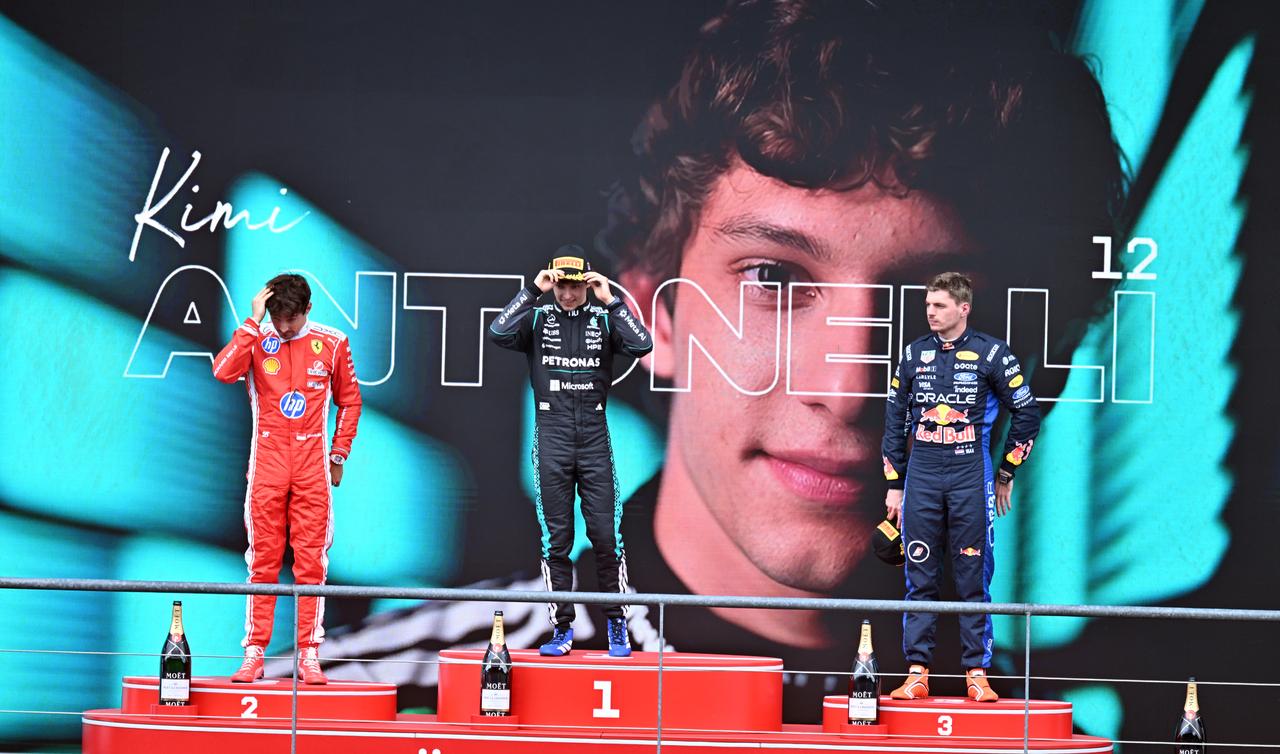
10. Belçika GP (17-19 Temmuz) (AA)
The 10th round of the 2026 Formula 1 World Championship, the Belgian Grand Prix, was a motorsport event held on 17–19 July 2026 at the 7-kilometre Spa-Francorchamps circuit in Belgium. Under sunny and dry conditions, the race, consisting of 44 laps, was won by Italian driver Kimi Antonelli of the Mercedes team, who completed it in a time of 1 hour 24 minutes 42.479 seconds. This victory marked Antonelli’s sixth race win of the 2026 season.
Various incidents occurred during the practice sessions of the race weekend. Ferrari’s British driver Lewis Hamilton lost control of his SF-26 car at the exit of Turn 13, known as the Fagnes chicane, during the final moments of Free Practice 3 (FP3), veering into a gravel trap and striking the rear of his car against the barriers. The impact dislodged the rear wheel and caused severe damage to the rear wing. Although Ferrari mechanics managed to repair the car in time for qualifying, Hamilton reported a change in the suspension balance and could only secure fifth position on the grid.
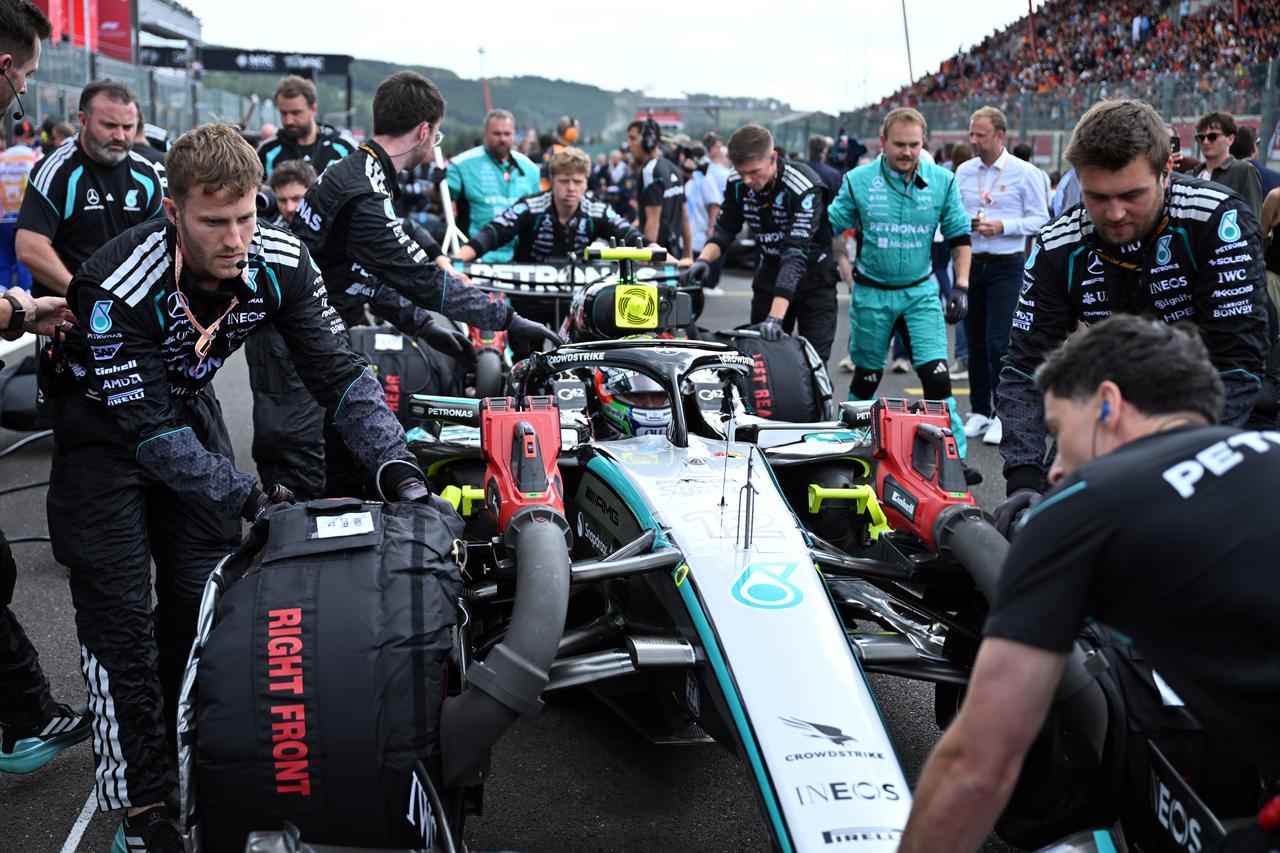
10. Belçika GP (17-19 Temmuz) (AA)
Following qualifying, several drivers received grid penalties due to power unit component changes. McLaren driver Lando Norris was penalised ten grid places for switching to a new energy storage unit (power unit control electronics), meaning that despite posting the third-fastest time in qualifying, he started the race in 13th position. Fernando Alonso, Isack Hadjar, Carlos Sainz and Lance Stroll also received grid penalties for exceeding their allocated power unit components. Alonso and Hadjar started from the back of the grid (around 19th and 20th positions), while Sainz and Stroll also lined up in the rear rows. Kimi Antonelli of Mercedes secured pole position after qualifying.
With cooler temperatures on race day compared to the rest of the weekend and Pirelli’s thermal degradation forecasts influencing strategy, most drivers opted for medium compound tyres for the start. Lando Norris chose the hard compound, while Valtteri Bottas and Carlos Sainz started on the red-marked soft compound. As the red lights went out, Antonelli attempted to hold the lead, but Red Bull driver Max Verstappen made a strong start and overtook him entering the Eau Rouge corner. However, Antonelli used the speed advantage of his Mercedes on the Kemmel straight to regain the lead.
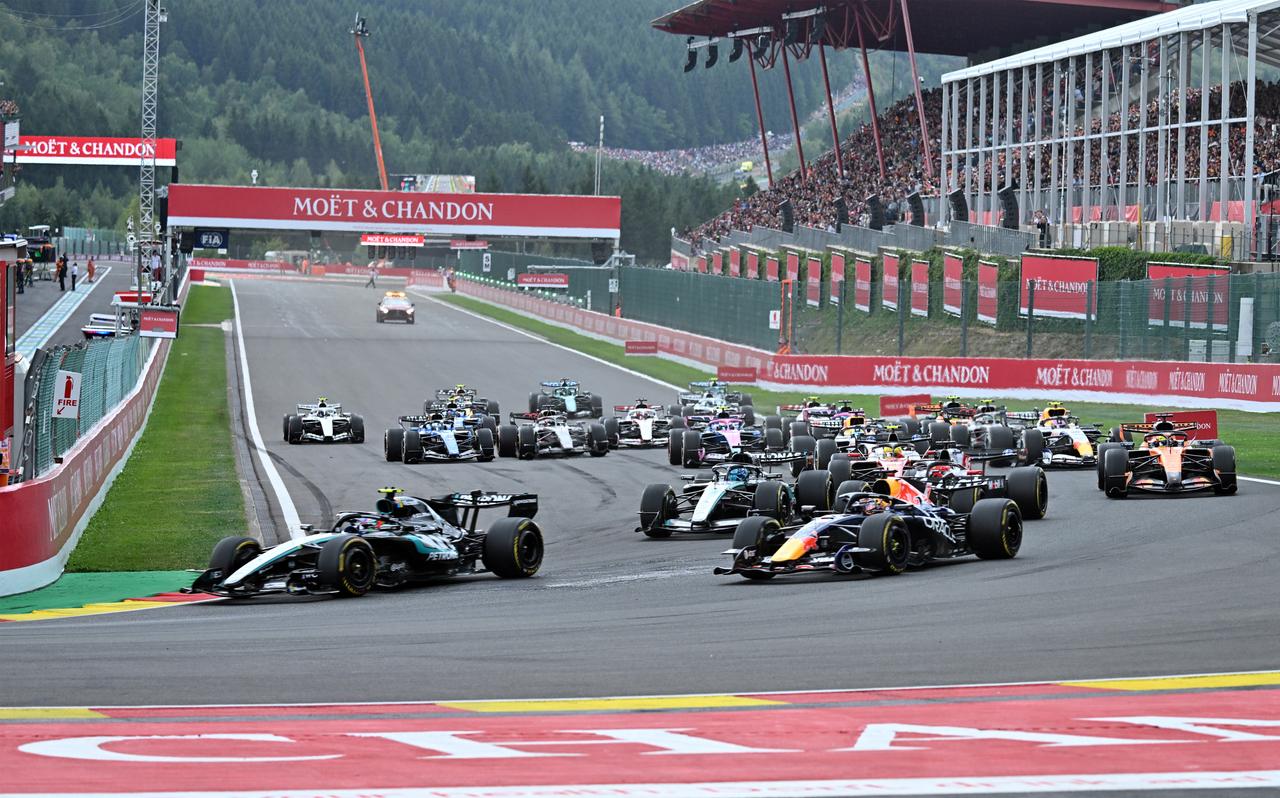
10. Belçika GP (17-19 Temmuz) (AA)
On the first lap, Mercedes driver George Russell lost power on the straight due to an energy deployment issue with his hybrid battery system, causing him to drop behind Lewis Hamilton and Charles Leclerc as he approached Turn 5. As Russell entered the Les Combes chicane (braking zone for Turn 6), he attempted an aggressive overtake from the outside to regain position. At the same time, Hamilton, closely following Verstappen, drifted outward, resulting in contact between the two cars. The collision sent Russell’s car into the gravel trap, eliminating him from the race and prompting the deployment of the Safety Car. After reviewing the incident, race officials imposed a five-second time penalty on Lewis Hamilton for causing the collision. Simultaneously, in the rear of the field, Esteban Ocon suffered a puncture to his left front tyre after contact with Carlos Sainz and his teammate, forcing him to drop to last place.
During the Safety Car period, Isack Hadjar, Oliver Bearman and the Cadillac drivers pitted to change tyres. When racing resumed on lap 5, Kimi Antonelli maintained his lead ahead of Leclerc and Verstappen. In the rear, Hamilton passed Piastri at the La Source corner, but Piastri reclaimed the position shortly after to settle in fourth. Red Bull driver Verstappen moved into second place by overtaking Leclerc at the Les Combes corner.
Later in the race, contact occurred between Charles Leclerc and Oscar Piastri at the braking zone of Turn 5, scattering carbon fibre debris across the track. Piastri’s car sustained aerodynamic damage, resulting in a time loss of 0.2 to 0.3 seconds per lap. Although Piastri claimed Leclerc did not leave him sufficient room, officials took no punitive action. During this battle, Hamilton, who was closing in on the two, passed Piastri to move into fourth place. Meanwhile, Carlos Sainz and Pierre Gasly, who had previously sustained damage, pitted, and Sergio Perez retired from the race due to a broken suspension.
10. Belçika GP (17-19 Temmuz) (AA)
The first pit stop in the front group came on lap 18 when Max Verstappen pitted and dropped to sixth. In response, leader Antonelli pitted on the same lap under green flag conditions. Around lap 20, the Virtual Safety Car (VSC) was deployed to allow track officials to clear debris. Ferrari took advantage of this window to pit both Leclerc and Hamilton. Hamilton served his five-second penalty during his stop, but accidentally collided with a mechanic while exiting the pit box; no injuries occurred, but the team was fined and Hamilton’s front wing angle could not be adjusted. Leclerc, who pitted under the VSC, emerged ahead of Antonelli. Lando Norris, who started on hard tyres and did not pit during the VSC, briefly led the race, but as his old tyres lost performance, he was overtaken by Leclerc, Antonelli and Verstappen, and finally pitted on lap 31. Norris’s slow pit stop dropped him to eighth place.
As the race entered its final 10 laps, Antonelli rapidly closed the gap to Leclerc and overtook him to reclaim the lead. Kimi Antonelli held his position for the remainder of the race, crossing the finish line first, 1.952 seconds ahead of Leclerc. Charles Leclerc finished second, and Red Bull driver Max Verstappen came in third, 11.586 seconds behind the winner.
The top 10 finishers and their positions were as follows: fourth, Lewis Hamilton; fifth, Oscar Piastri; sixth, Isack Hadjar, who started from the back; seventh, Lando Norris; eighth, Audi driver Gabriel Bortoleto; ninth, Arvid Lindblad; and tenth, Franco Colapinto. Oliver Bearman finished 14th. Drivers who failed to finish were George Russell (collision), Sergio Perez (suspension failure), and Lance Stroll (gearbox issue).
After the Belgian Grand Prix, the top five positions in the 2026 Formula 1 season for drivers and teams are as follows:
With this result, the Mercedes team secured its eighth race win of the 2026 season.
Anadolu Ajansı. "Formula 1'de sezonun 10. yarışı Belçika Grand Prix'sini Kimi Antonelli kazandı." Accessed July 22, 2026.https://f.aa.com.tr/tr/spor/formula-1de-sezonun-10-yarisi-belcika-grand-prixsini-kimi-antonelli-kazandi/4003025
Autosport. "Hamilton takes 'full responsibility' for disappointing Belgian GP." Accessed July 22, 2026.https://www.autosport.com/f1/news/hamilton-takes-full-responsibility-for-disappointing-belgian-gp/10840845/
Formula 1. "Antonelli beats Leclerc to Belgian Grand Prix win to extend title lead as Russell retires." Accessed July 22, 2026.https://www.formula1.com/en/latest/article/antonelli-beats-leclerc-to-belgian-grand-prix-win-to-extend-title-lead-as-russell-retires.MAqSJSgXvRP6dLbwiRbWI
Motorsport.com. "Winners and losers from F1's Belgian Grand Prix." Accessed July 22, 2026.https://www.motorsport.com/f1/news/winners-and-loser-from-f1s-belgian-grand-prix/10840357/
RacingNews365. "Lewis Hamilton pinpoints 'knock-on effect' that sparked Belgian GP penalty." Accessed July 22, 2026.https://racingnews365.com/lewis-hamilton-pinpoints-knock-on-effect-that-sparked-belgian-gp-penalty
Sky Sports. "Belgian GP: Martin Brundle on George Russell's problems and Lewis Hamilton clash, Kimi Antonelli's win in Spa race verdict." Accessed July 22, 2026.https://www.skysports.com/f1/news/12433/13565321/belgian-gp-martin-brundle-on-george-russells-problems-and-lewis-hamilton-clash-kimi-antonellis-win-in-spa-race-verdict
The Independent. "Belgian Grand Prix - latest news, breaking stories and comment." Accessed July 22, 2026.https://www.independent.co.uk/topic/belgian-grand-prix?CMP=ILC-refresh
The Race. "Everything we learned from F1's Belgian Grand Prix." Accessed July 22, 2026.https://www.the-race.com/formula-1/everything-we-learned-f1-belgian-grand-prix-2026/
11. Macaristan GP (24-26 Temmuz) (AA)
The 11th round of the 2026 Formula 1 World Championship, the Hungarian Grand Prix, was held over 70 laps on the 4.3-kilometre Hungaroring circuit in Budapest, the capital of Hungary. The race, held on 26 July 2026, was won by British driver Lando Norris of the McLaren team, who completed the race in a total time of 1 hour 39 minutes 56.180 seconds. With this result, Norris secured his first victory of the 2026 season and his 12th career win.
During the qualifying sessions held over the race weekend, Lando Norris claimed pole position with a lap time of 1 minute 17.207 seconds. Although Ferrari driver Lewis Hamilton finished just 0.012 seconds behind Norris in the session, he was penalised by the race stewards with a three-grid-place penalty for impeding McLaren driver Oscar Piastri during the final segment of qualifying. As a result of this penalty, Hamilton started the race from fifth position. Thanks to technical updates introduced on their car, McLaren achieved an average lap time advantage of 0.3 seconds per lap over their closest rival Ferrari and approximately 0.4 seconds per lap over both Mercedes and Red Bull Racing.
On the opening lap, Oscar Piastri, who started from second position, overtook his teammate Lando Norris at the second corner to assume the race lead. At the start, Mercedes driver George Russell experienced technical issues including an unexpected engine revving and activation of the anti-stall system, which caused him to drop significantly in the standings. Meanwhile, the Ferrari team opted for a soft-tire strategy to begin the race, deploying drivers Charles Leclerc and Lewis Hamilton on soft compound tyres.
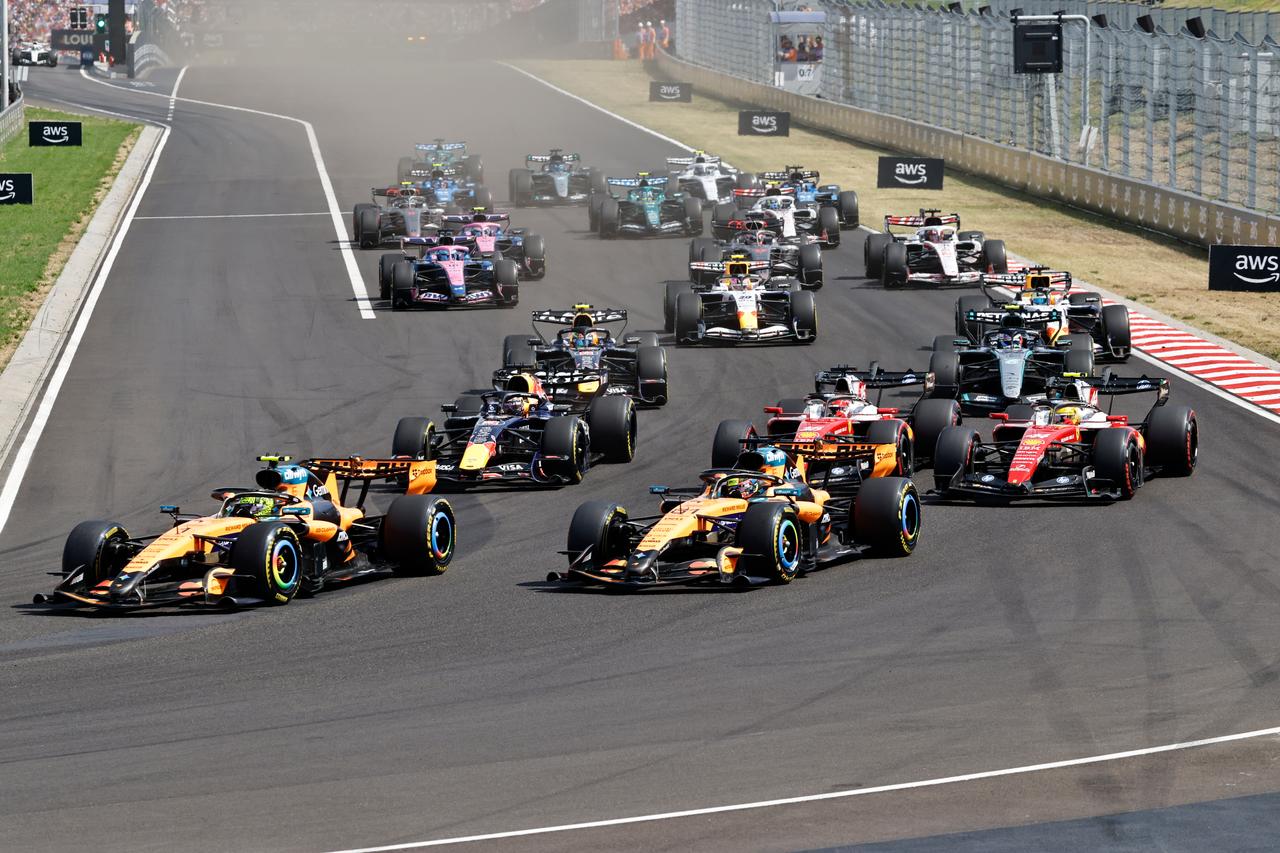
11. Macaristan GP (24-26 Temmuz) (AA)
Communication failures occurred in the blue flag system on the Hungaroring circuit during the race. Drivers did not receive necessary warnings on their steering wheel displays, and the blue light panels along the track flickered inconsistently, forcing pilots to rely heavily on radio instructions from their pit walls during overtake maneuvers.
During the pit stop window around laps 33 and 34, race leader Oscar Piastri entered the pits and rejoined the track amid heavy traffic. Upon exiting the pits, Piastri made contact with Carlos Sainz of Williams, who had been lapped. Despite receiving a blue flag warning, Sainz failed to yield the racing line to Piastri, forcing the Australian driver off the track and causing him to lose time. After reviewing the incident, the race stewards imposed a five-second time penalty on Carlos Sainz.
Immediately following Piastri’s time loss, Lando Norris made his pit stop and emerged ahead of his teammate thanks to an overcut strategy, taking the race lead. In the later stages of the race, Red Bull Racing driver Max Verstappen overtook Lewis Hamilton at the first corner to gain position.
In the second half of the race, approximately 20 laps after his pit stop, Oscar Piastri suffered a gearbox failure. Forced to pull his car to the side of the track due to this mechanical issue, Piastri was unable to finish the race and was classified as a DNF.
Cadillac Racing also experienced a double retirement: Valtteri Bottas retired due to a fire in the braking system, while his teammate Sergio Perez withdrew due to an internal mechanical failure. From the Haas team, Oliver Bearman finished the race in 19th place, affected by the time penalty he received under the faulty blue flag system conditions. Aston Martin, using their B-spec upgrades, finished in the midfield: Lance Stroll came 13th and Fernando Alonso 14th. Nico Hulkenberg finished ninth, securing Audi’s first points of the 2026 season.
Penalties issued by the stewards during the race directly affected the official classification. Lewis Hamilton received a five-second time penalty from race control for exceeding the pit lane speed limit of 80 km/h by 0.1 km/h. Although Hamilton crossed the finish line in fourth position, the addition of the penalty time dropped him to fifth in the final standings, behind his teammate Charles Leclerc.
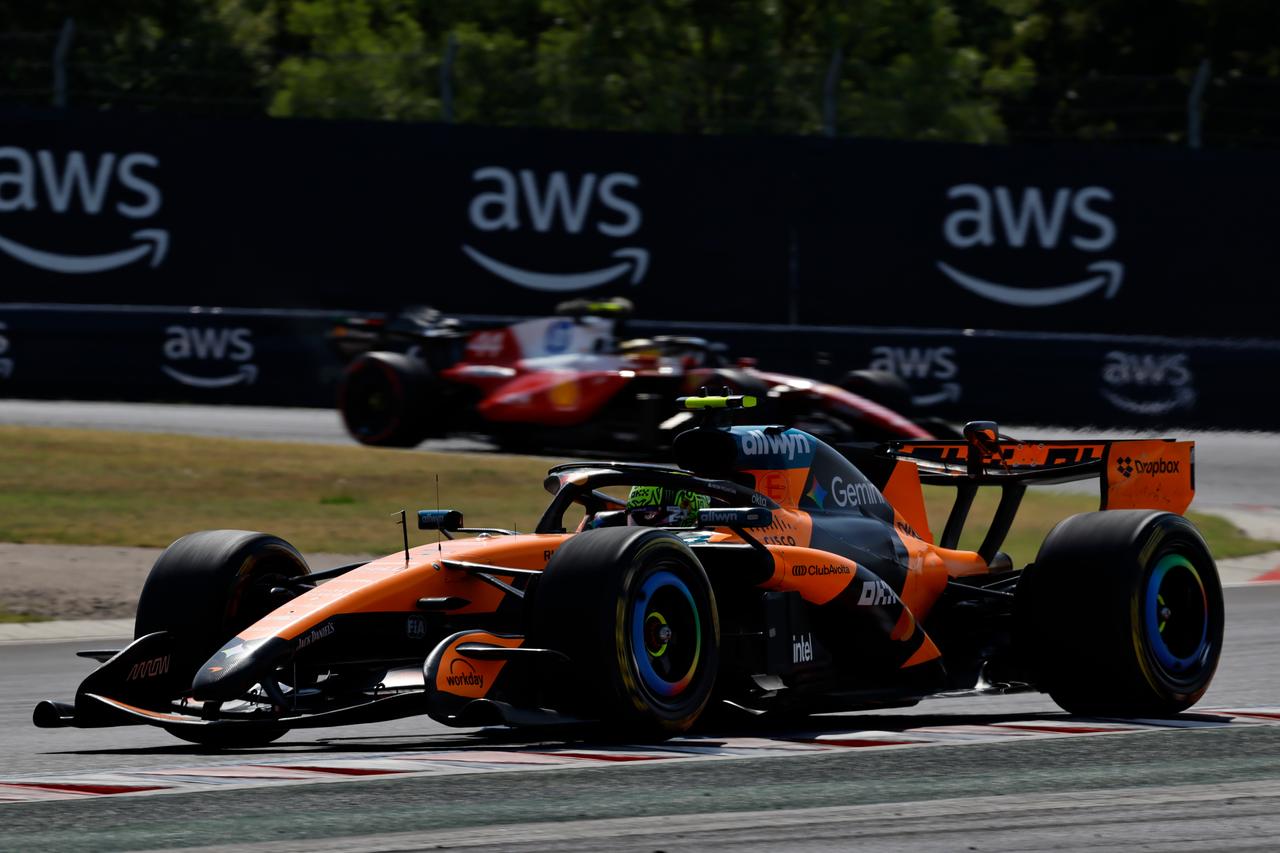
11. Macaristan GP (24-26 Temmuz) (AA)
According to the official results of the 70-lap 2026 Hungarian Grand Prix, the top 10 finishers and their race times are as follows:
Following the results of the Hungarian Grand Prix, the Drivers’ and Constructors’ Championship standings have been updated. Kimi Antonelli, with his podium finish, extended his lead over closest rival Lewis Hamilton by 50 points and over his teammate George Russell by 59 points.
The current Drivers’ Championship standings are as follows:
The current Constructors’ Championship standings are as follows:
Anadolu Ajansı. "Formula 1 Macaristan Grand Prix'sinde pole pozisyonu Lando Norris'in oldu." Accessed July 27, 2026.https://f.aa.com.tr/tr/spor/formula-1-macaristan-grand-prixsinde-pole-pozisyonu-lando-norrisin-oldu/4009299
Anadolu Ajansı. "Formula 1'de sezonun 11. yarışı Macaristan Grand Prix'sini Lando Norris kazandı." Accessed July 27, 2026.https://f.aa.com.tr/tr/spor/formula-1de-sezonun-11-yarisi-macaristan-grand-prixsini-lando-norris-kazandi/4009906
BBC Sport. "Recap and reaction as Norris wins his first grand prix of 2026 in Hungary." Accessed July 27, 2026.https://www.bbc.com/sport/formula1/live/cvg09jvqv4nt
Crash.net. "Lewis Hamilton suffers more F1 penalty pain with fourth punishment in three races at Hungarian Grand Prix." Accessed July 27, 2026.https://www.crash.net/f1/news/1101935/1/lewis-hamilton-suffers-more-f1-penalty-pain-fourth-punishment-three-races
Fox Sports. "‘Disgraceful’: Why there’s no excuse for shocker on Piastri; truth about surprise surge: Talking Pts" Accessed July 27, 2026.https://www.foxsports.com.au/motorsport/formula-one/f1-2026-hungarian-grand-prix-oscar-piastri-clash-with-carlos-sainz-explained-mclaren-upgrades-work-in-lando-norris-win-talking-points/news-story/8c3bee201c27a0d01c805be813e0d899
Motorsport.com. "2026 Formula 1 Hungarian GP." Accessed July 27, 2026.https://www.motorsport.com/f1/location/hungaroring/133/
Motorsport.com. "Winners and losers from F1's heated Hungarian Grand Prix." Accessed July 27, 2026.https://www.motorsport.com/f1/news/winners-and-losers-from-f1s-heated-hungarian-grand-prix/10842265/
RacingNews365. "2026 F1 Hungarian Grand Prix - Budapest results." Accessed July 27, 2026.https://racingnews365.com/2026-f1-hungarian-grand-prix-results
The Guardian. "Oscar Piastri swore at his McLaren crew in frustration in Hungary, but any Formula One revival is up to him." Accessed July 27, 2026.https://www.theguardian.com/sport/2026/jul/27/oscar-piastri-hungary-grand-prix-gp-f1-analysis
The Race. "Winners and losers from F1's 2026 Hungarian Grand Prix." Accessed July 27, 2026.https://www.the-race.com/formula-1/winners-losers-f1-2026-hungarian-grand-prix/
beIN SPORTS Türkiye. "F1 Macaristan GP'de zafer Norris'in!" Accessed July 27, 2026.https://beinsports.com.tr/haber/f1-macaristan-gpde-zafer-norrisin
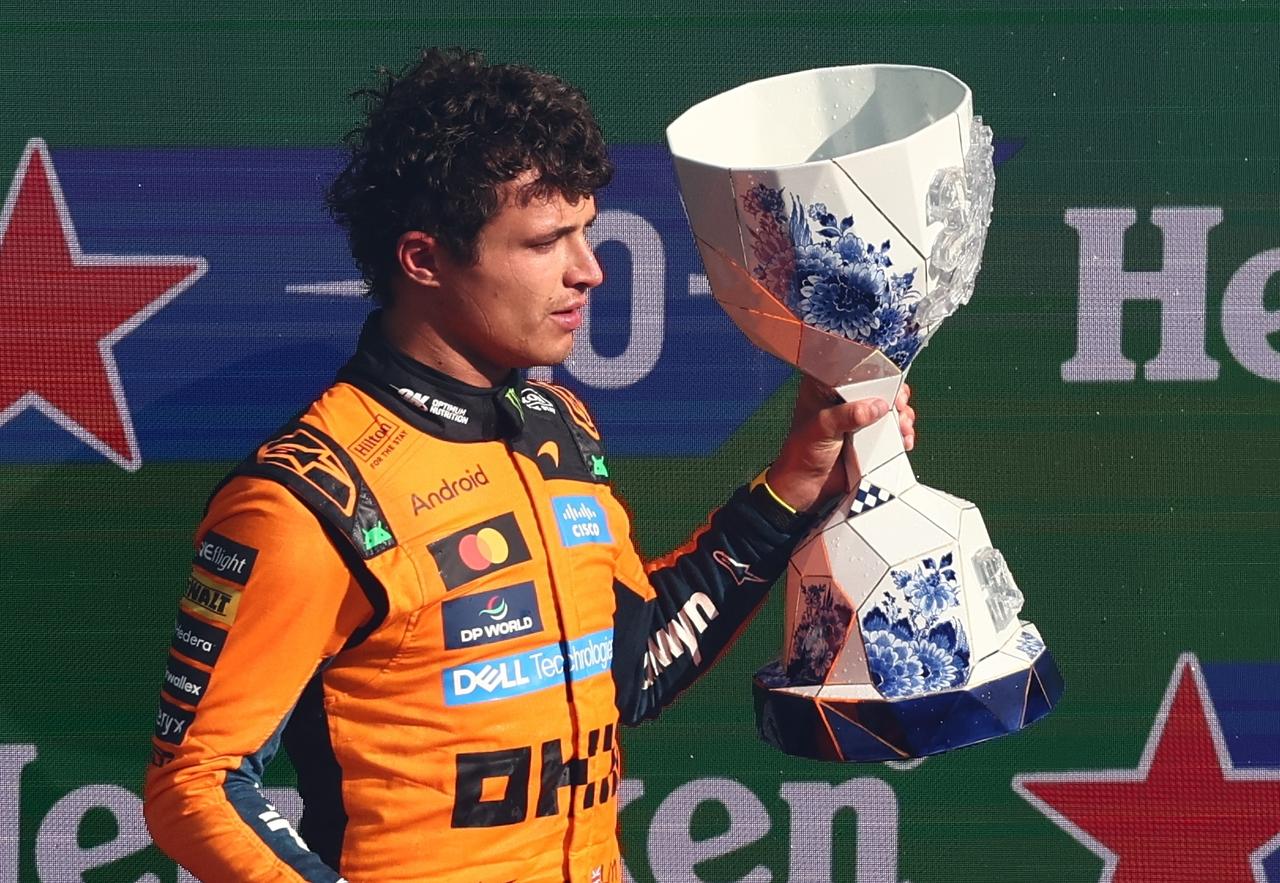
12th Dutch Grand Prix (August 21–23) (AA)
The 2026 Dutch Grand Prix was the twelfth round of the 2026 Formula 1 World Championship, held on the 4.252-kilometre Zandvoort Circuit along the North Sea coast. The race, planned and completed over 72 laps, was won by British McLaren driver Lando Norris with a time of 2 hours 4 minutes 44.859 seconds. With this result, Norris secured his second win of the season and his thirteenth career Formula 1 victory. Mercedes driver Italian Andrea Kimi Antonelli finished second, 11.536 seconds behind Norris, while fellow Mercedes driver George Russell completed the podium in third, 15.906 seconds behind the leader.
During this final weekend of the Formula 1 calendar at Zandvoort, numerous developments occurred both on and off the track. It was announced that local hero Max Verstappen had signed a new contract with Red Bull Racing, and the sprint race format returned to the weekend schedule. Mercedes driver George Russell won the sprint race held as part of the weekend.
In the qualifying sessions for the main race, McLaren driver Lando Norris set the fastest time and secured pole position. Mercedes drivers George Russell and Andrea Kimi Antonelli qualified second and third respectively. After it was confirmed that Isack Hadjar would not participate, Liam Lawson was announced as the driver for the second Red Bull car.
A single mandatory grid penalty was applied before the race: Sergio Perez of Cadillac F1 Team was required to start from the pit lane after modifications were made to his car under Parc Ferme regulations.
Prior to the Sunday race, air temperature was measured at 17 degrees Celsius and track surface temperature at 30 degrees Celsius. The probability of rain before the formation lap was estimated at 60 percent, with wind speed recorded at moderate levels. While Saturday sessions were held on dry track, heavy rain fell on the circuit area before the Sunday race. Drivers experienced difficult conditions on their out-laps from the pit lane due to wet surfaces; Liam Lawson briefly lost control of his car and ran into a gravel trap. When the formation lap began, footage showed that some sections of the track remained wet and damp.
After completing the formation lap and taking their positions on the grid, the 72-lap race began. Pole sitter Lando Norris successfully led into the first corner and maintained his position. Ferrari driver Charles Leclerc capitalized on a battle in the opening meters to overtake McLaren’s Oscar Piastri and moved up to fourth. In the rear, Red Bull drivers Max Verstappen and Liam Lawson engaged in a wheel-to-wheel duel.
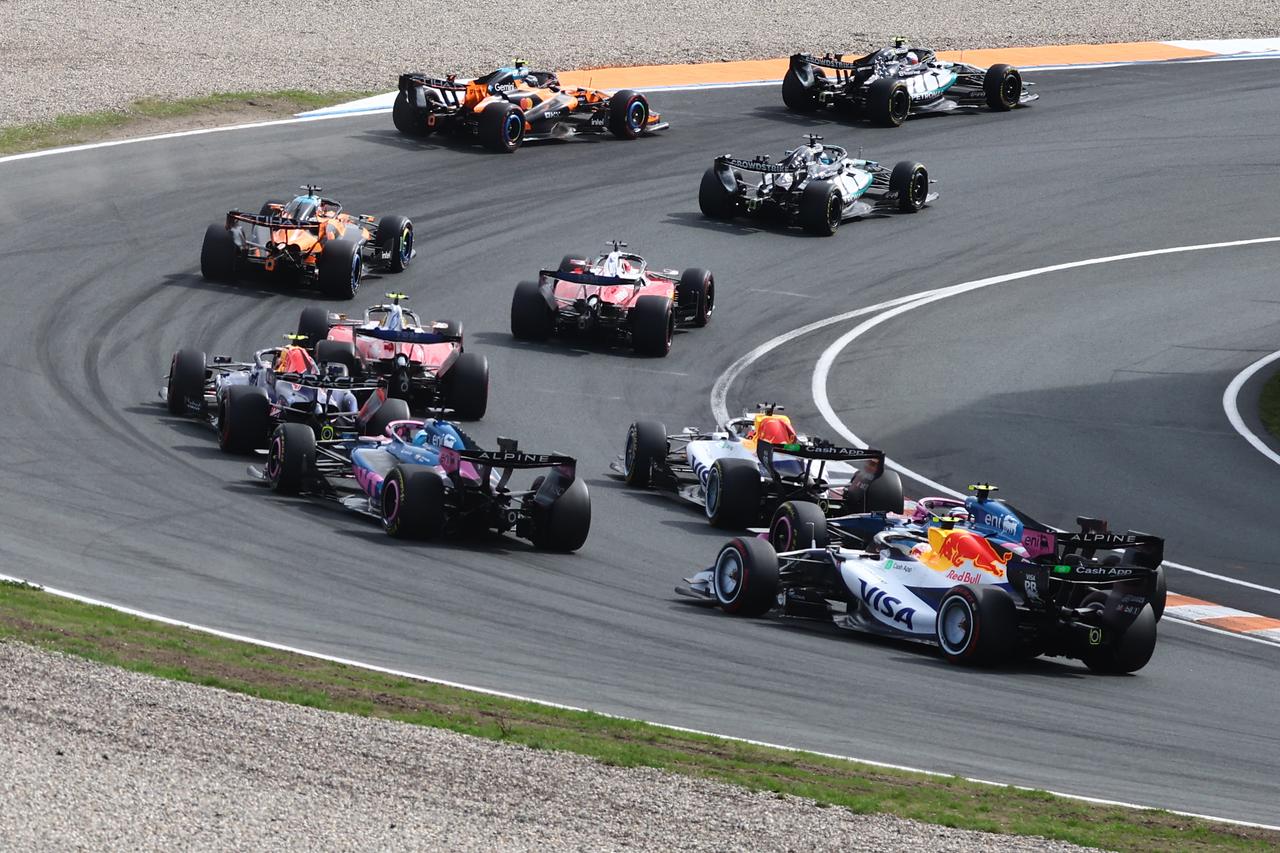
12th Dutch Grand Prix (August 21–23) (AA)
As the field approached the final corner of lap one, home driver Max Verstappen lost control of his car due to a rear-end slide and collided heavily with the barriers at high speed. The impact caused severe damage to Verstappen’s car, eliminating him from the race and ending his final home race on the first lap. Verstappen exited his car unaided and was later confirmed to be in good health following medical checks.
At the same time, Audi driver Gabriel Bortoleto spun but continued racing without damage. His teammate Nico Hulkenberg narrowly avoided contact with Bortoleto. The crash scattered numerous debris pieces across the track, prompting race direction to deploy the red flag and halt the race. All cars were directed to the pit lane. During this stoppage, mechanics detected minor damage to the left side of Lewis Hamilton’s Ferrari and performed minor repairs in the pit area. After track cleanup, race direction announced the race would restart approximately 20 minutes later.
It was decided that the race would restart using a standing start, based on the grid order from the end of lap one before the red flag. Investigations were initiated into Lindblad and Colapinto for exceeding speed limits under yellow flag conditions.
The race was announced to restart at 15:33 local time. At this point, Lando Norris switched to soft compound tyres, while the leading Mercedes drivers opted to remain on medium compounds. Oscar Piastri fitted hard compound tyres. During the formation lap for the restart, Haas driver Oliver Bearman experienced a technical failure between turns 10 and 11. He was forced to stop his car and retired before taking the start. To safely recover Bearman’s car, race control ordered an additional formation lap. As drivers returned to their grid positions, smoke was visible rising from the brakes of Mercedes driver Andrea Kimi Antonelli’s car.
With the race officially restarting after the red flag, Andrea Kimi Antonelli attacked Lando Norris and overtook him into the first corner to assume the lead. McLaren’s other driver Oscar Piastri also passed George Russell to move into third. Russell, having lost his position, came under intense pressure from Charles Leclerc behind him.
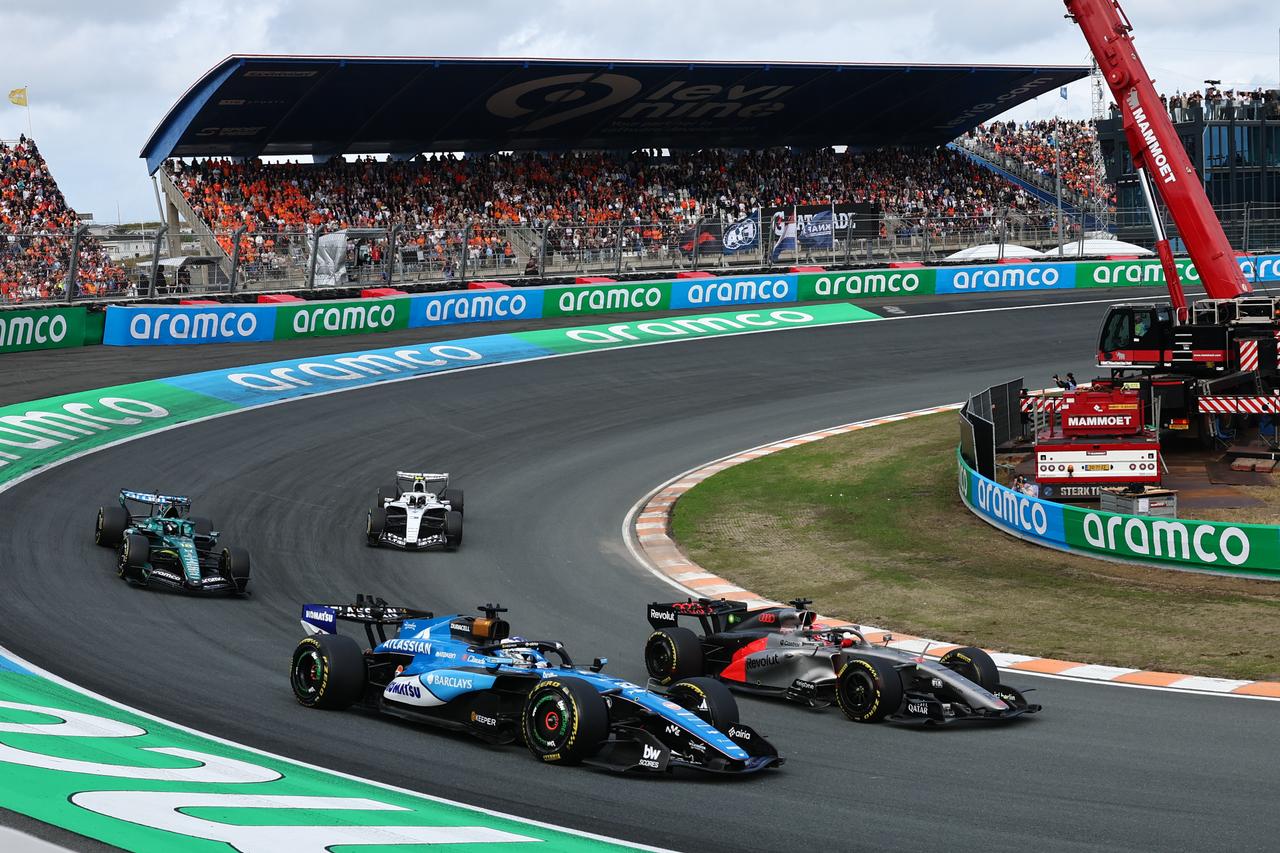
12. Dutch GP (21–23 August) (AA)
On lap seven, leader Antonelli set the fastest lap of the race to date with a time of 1:16.681 and began to extend his lead over Norris. At this point, officials announced that Franco Colapinto and Arvid Lindblad had received drive-through penalties for yellow flag violations. Colapinto entered the pit lane to serve his penalty. By lap ten, Antonelli, still on medium tyres, had increased his lead over Norris to 1.3 seconds. The gap between Norris and third-placed Piastri had grown to four seconds. In the same lap, Liam Lawson, now the sole Red Bull driver, claimed seventh position, while Gasly, Hulkenberg and Tsunoda completed the top ten. The stewards announced they would review Bortoleto and Bearman for a red light violation at pit exit after the race.
Mercedes driver George Russell entered the pit lane on lap 18 to switch to hard compound tyres, aiming to reduce pressure from behind and gain strategic advantage. He rejoined the track in ninth place behind Hulkenberg but passed him on the next lap to move up to seventh. Russell soon overtook Piastri to claim sixth. By the end of lap 20, Antonelli had extended his lead over Norris to approximately two seconds. The gap between Norris in second and Leclerc in third was measured at 8.5 seconds.
On lap 21, the front runners Charles Leclerc, Lando Norris and leader Andrea Kimi Antonelli were called into the pit lane. After these stops, Lewis Hamilton, who had not yet pitted, became the temporary race leader. Antonelli rejoined the track approximately eight seconds behind Hamilton. Norris emerged from the pits behind Leclerc in sixth place.
On lap 22, Oscar Piastri entered the pit lane to take hard tyres, but a slow pit stop by McLaren mechanics caused him to lose time and drop behind George Russell. Leclerc, meanwhile, opted for medium tyres on his stop. The only front-runner still not in the pits was Lewis Hamilton, who reported via radio that his tyres were still in good condition. Hamilton finally pitted on lap 26, switching to hard tyres and rejoining in sixth place.
Intense battles unfolded in the mid-field. Alpine driver Pierre Gasly’s tyre degradation allowed Arvid Lindblad to overtake him in a corner, and immediately after, Nico Hulkenberg passed Gasly to drop him to twelfth. On lap 28, Racing Bulls driver Yuki Tsunoda overtook Gasly in a battle and took twelfth place, directly behind teammate Lindblad.
By lap 29, Antonelli had increased his lead over Norris to over one second. Russell was following Norris approximately seven seconds behind. On lap 30, Norris reduced the gap to Antonelli back under one second. Meanwhile, Charles Leclerc, charging from behind, overtook Piastri in fourth using an outside line move. Immediately after, Lewis Hamilton also passed Piastri, demoting the McLaren driver to sixth.
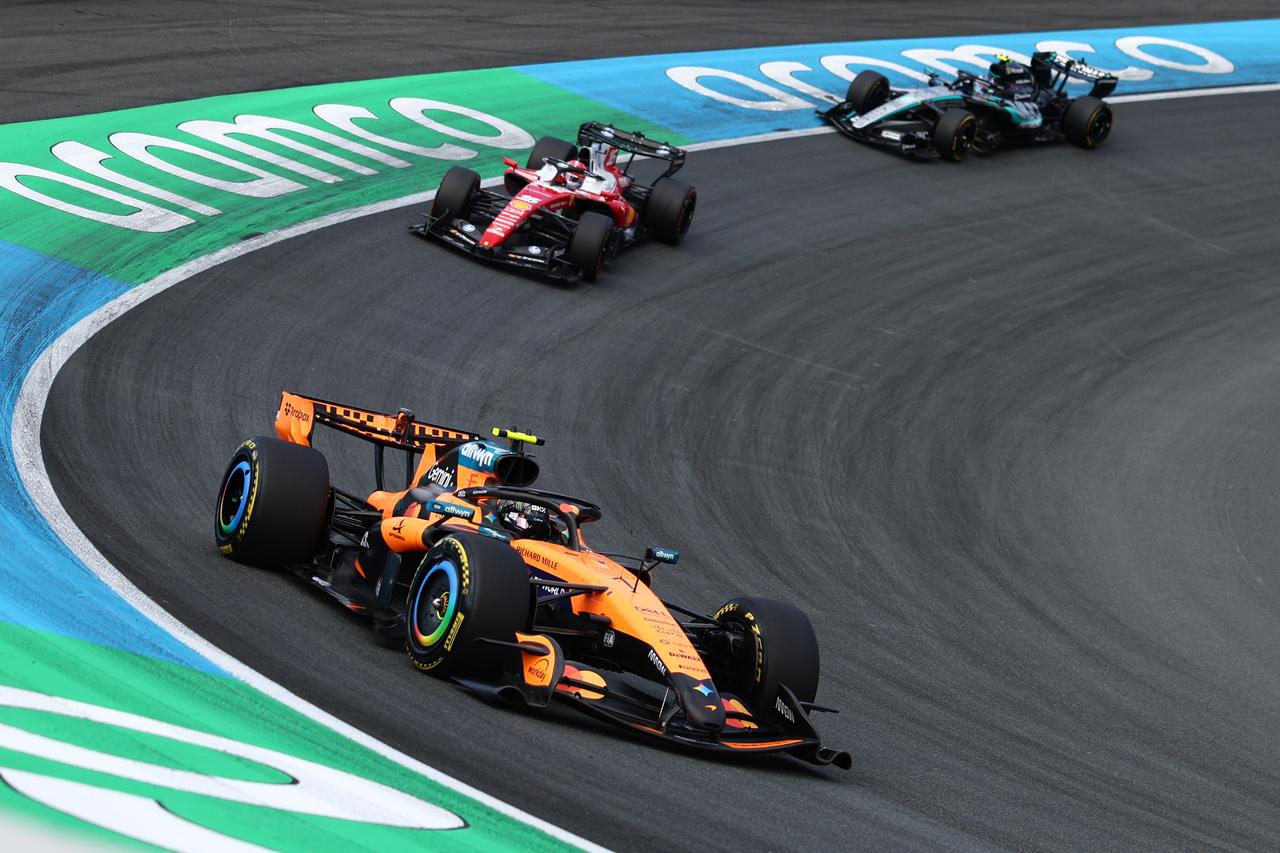
12th Dutch Grand Prix (August 21–23) (AA)
On lap 34, Charles Leclerc successfully passed Lando Norris by blocking the inside line before a corner and moved into fourth. On lap 35, Lewis Hamilton overtook Piastri to claim fifth. On lap 36, George Russell continued to follow Norris approximately eight seconds behind, while the gap between leader Antonelli and Norris stood at 1.2 seconds.
At the halfway point of the race, lap 36, the race lead order was as follows:
At lap 37, the gap between leader Andrea Kimi Antonelli and challenger Lando Norris was 1.2 seconds. Mercedes driver George Russell was third, approximately eight seconds behind the lead group. As cars began to lap slower traffic, Norris rapidly closed the gap to Antonelli. By lap 40, the gap had narrowed to 0.7 seconds. In the same lap, Ferrari driver Charles Leclerc closed to within 0.8 seconds of Russell ahead of him.
On lap 41, leader Andrea Kimi Antonelli entered the pit lane for his stop. With Antonelli’s exit, Lando Norris became the temporary race leader. Shortly after, Mercedes driver George Russell also pitted. After the stops, Antonelli rejoined in fourth place behind Ferrari’s Lewis Hamilton. George Russell returned to the track in sixth, behind McLaren’s Oscar Piastri.
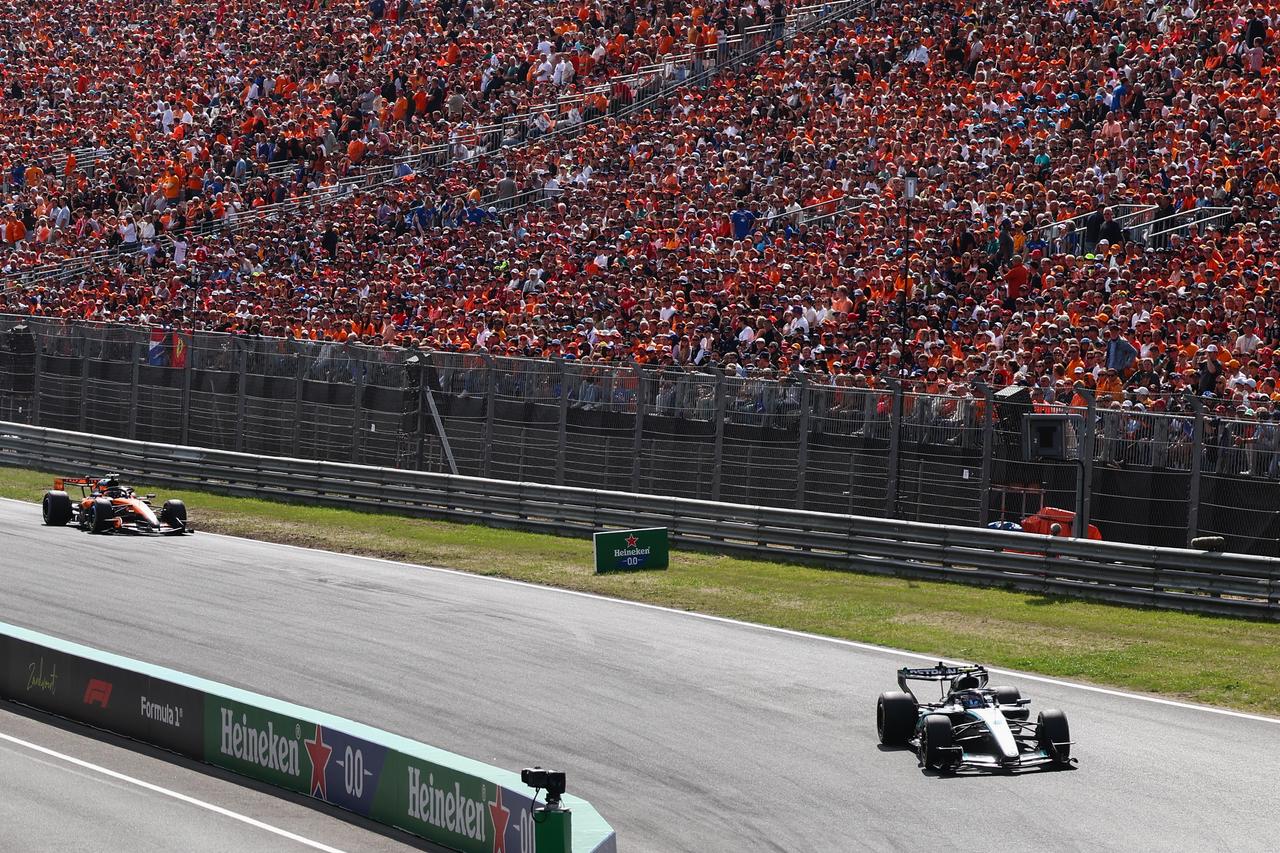
12th Dutch Grand Prix (August 21–23) (AA)
On lap 42, Lewis Hamilton, who was half a second behind his teammate Charles Leclerc, radioed his team to state he was faster than Leclerc and that his tyres were in better condition, requesting a position swap. In response, the Ferrari pit wall called Leclerc into the pits. Leclerc reacted angrily over the radio to this decision and rejoined in sixth place behind George Russell. Hamilton, meanwhile, expressed frustration to his pit wall, claiming they had lost valuable time due to Leclerc’s late pit stop.
On lap 45, McLaren driver Oscar Piastri pitted for new tyres and rejoined in seventh place behind Red Bull Racing’s Liam Lawson. In the same lap, Mercedes driver Antonelli reported to his engineer that the grip on his rear tyres had completely disappeared. On lap 46, Piastri overtook Lawson to move into sixth.
On lap 47, Lando Norris entered the pit lane for his second stop. With Norris’s exit, Lewis Hamilton, who had not yet pitted, became the temporary race leader. By lap 51, Antonelli, on hard tyres, had reduced his gap to leader Hamilton to 1.5 seconds. Meanwhile, third-placed Norris had cut the gap to Antonelli to half a second, applying pressure on the Mercedes driver. On lap 53, an intense battle for the lead unfolded between Norris and Antonelli. Antonelli defended successfully throughout the lap to retain his position. However, on the next lap (lap 54), Norris overtook Antonelli with an outside-line attack into the first corner to move into second.
Shortly after overtaking Antonelli, Lando Norris also passed race leader Lewis Hamilton to assume the lead. In the same lap, Andrea Kimi Antonelli passed Hamilton to take second place.
At the same time, Haas F1 Team driver Esteban Ocon suffered a technical failure and retired from the race. Race control deployed the Virtual Safety Car (VSC) to allow safe recovery of Ocon’s car. Behind the VSC, Lewis Hamilton reacted angrily on the radio, asking his team when he would be called in. In response, the Ferrari pit wall called both Hamilton and Charles Leclerc into the pits. Similarly, Oscar Piastri and Andrea Kimi Antonelli also pitted during this period. With Antonelli’s stop, George Russell moved into second place. The VSC was lifted on lap 57 and the race resumed.
On lap 65, Cadillac driver Valtteri Bottas entered the pit lane due to a technical issue and retired from the race. As the race entered its final phase, on lap 67, leader Lando Norris extended his lead over Antonelli to 11 seconds. Meanwhile, third-placed George Russell came under intense pressure from Lewis Hamilton behind him. Hamilton, just half a second behind, pursued Russell for several laps attempting to overtake. On lap 69, Hamilton made an inside-line attack into the first corner but Russell defended successfully to retain his position.
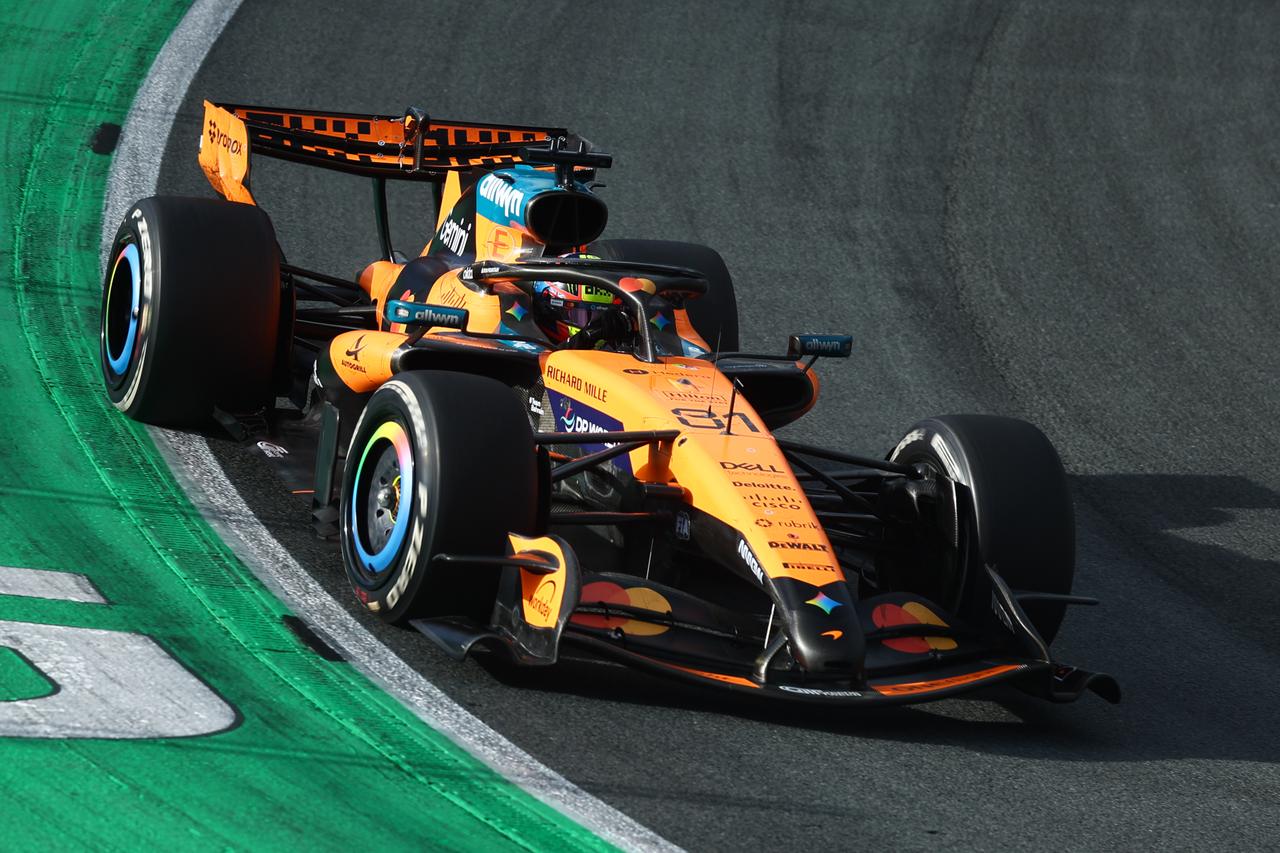
12. Dutch GP (21–23 August) (AA)
In the same laps, Andrea Kimi Antonelli reported an unusual issue with his car via radio. On lap 70, contact occurred between Williams drivers Carlos Sainz Jr. and Alex Albon on track. Debris scattered across the circuit after the collision prompted race control to deploy the Virtual Safety Car for a second time. After track cleanup, the race resumed shortly thereafter.
Mercedes driver George Russell maintained a strong defence against Hamilton until the finish to preserve his third-place podium position. After completing all 72 laps, Lando Norris crossed the line first, winning the historic race at Zandvoort Circuit.
Following the race, drivers and team principals issued official statements evaluating the weekend:
Anadolu Ajansı. "Formula 1 Hollanda Grand Prix'sini Lando Norris kazandı." Accessed August 24, 2026.https://f.aa.com.tr/tr/spor/formula-1-hollanda-grand-prixsini-lando-norris-kazandi/4035265
Formula 1. "2026 Dutch Grand Prix race report and highlights: Lando Norris wins dramatic Dutch Grand Prix from Kimi Antonelli and George Russell as Max Verstappen crashes out." Accessed August 24, 2026.https://www.formula1.com/en/latest/article/norris-wins-dramatic-dutch-grand-prix-from-antonelli-and-russell-as-verstappen-crashes-out.Zn7iYevVGp5eHzFkTEAz7
Motorsport.com Türkiye. "2026 Hollanda GP: Norris lider, Mercedes Antonelli önderliğinde 2-3, Verstappen ilk turlarda kaza yaptı." Accessed August 24, 2026.https://tr.motorsport.com/f1/news/2026-hollanda-gp-norris-lider-mercedes-antonelli-onderliginde-2-3-verstappen-ilk-turlarda-kaza-yapti/10848616/
Motorsport.com Türkiye. "Hollanda GP'de puan alan Alonso: 'Aracı sürerken çok keyif aldım, eminim ki devamı gelecek'" Accessed August 24, 2026.https://tr.motorsport.com/f1/news/hollanda-gpde-puan-alan-alonso-araci-surerken-cok-keyif-aldim-eminim-ki-devami-gelecek/10848874/
Motorsport.com Türkiye. "Verstappen: 'Zaten Hollanda'da bir sihir gerçekleşmesini beklemiyorduk'." Accessed August 24, 2026.https://tr.motorsport.com/f1/news/verstappen-zaten-hollandada-bir-sihir-gerceklesmesini-beklemiyorduk/10848896/
Motorsport.com. "Formula 1 2026 Dutch GP Results | Formula 1 Race Results." Accessed August 24, 2026.https://www.motorsport.com/f1/results/2026/dutch-gp-661681/
Sporx.com. "Formula 1 Hollanda GP'de Norris kazandı." Accessed August 24, 2026.
TRF1.net. "F1 - Ferrari, Lewis Hamilton’ın Eleştirilerine Rağmen Hollanda GP Stratejisini Savundu." Accessed August 24, 2026.https://trf1.net/formula-1/ferrari-lewis-hamiltonin-elestirilerine-ragmen-hollanda-gp-stratejisini-savundu/109767/
TRF1.net. "F1 - Kimi Antonelli, Mercedes’in McLaren’in Şampiyonluk Tehdidine Yönelik Endişelerini Paylaştı." Accessed August 24, 2026.https://trf1.net/formula-1/kimi-antonelli-mercedesin-mclarenin-sampiyonluk-tehdidine-yonelik-endiselerini-paylasti/109783/
beIN SPORTS Türkiye. "Hollanda Grand Prix'inde zafer Lando Norris'in!" Accessed August 24, 2026.https://beinsports.com.tr/haber/f1-hollanda-gpde-zafer-norrisin
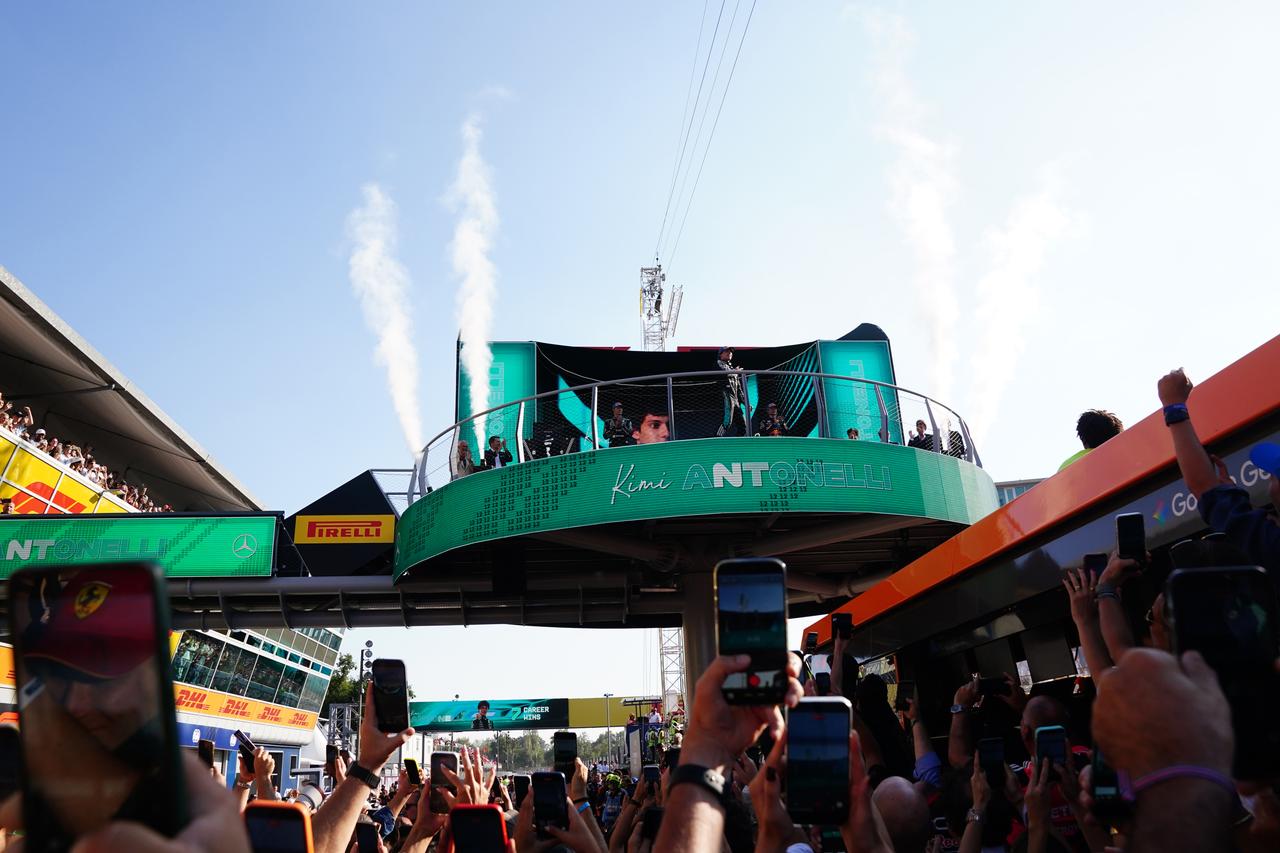
13th Italian GP (4–6 September) (AA)
The 13th race of the 2026 Formula 1 World Championship, officially known as the Formula 1 Pirelli Gran Premio d’Italia 2026, was held from 3 to 6 September 2026 at the 5.793 kilometre (5.7 km) long Autodromo Nazionale Monza circuit near Monza, Italy. The race, consisting of 53 laps, was won by Italian driver Kimi Antonelli of the Mercedes team, who completed the race in 1 hour 51 minutes 15.281 seconds. Despite starting from 19th position due to a power unit penalty, the 20-year-old Antonelli secured his seventh win of the season through a remarkable comeback. This victory marked the first Italian Grand Prix win by an Italian driver on home soil since Ludovico Scarfiotti’s triumph in 1966. Second place went to fellow Mercedes driver George Russell, who finished 3.857 seconds behind the winner, while Red Bull Racing driver Max Verstappen completed the podium in third, 14.718 seconds behind the leader.
The qualifying session held on Saturday 5 September 2026 determined the starting grid as follows:
The following incidents occurred during the race start and early laps on Sunday 6 September 2026:
13th Grand Prix of Italy (4–6 September) (AA)
With the race stopped, the 21 remaining cars returned to the pit lane. The top 10 positions during the red flag period were as follows:
At this stage, Kimi Antonelli had climbed to 12th place through overtakes. Under race regulations, all drivers were permitted to change tyres during the red flag period. Many drivers, including George Russell, opted to change tyres to preserve their existing sets for the remainder of the race.
After barrier repairs were completed, the race resumed with a standing start:
13th Italian GP (4–6 September) (AA)
On lap 28, Aston Martin driver Lance Stroll’s car suffered a hydraulic failure and stopped at the trackside, prompting race control to deploy the Virtual Safety Car (VSC). During the VSC period on the Autodromo Nazionale Monza circuit, drivers entering the pit lane saved approximately nine seconds compared to a normal green-flag pit stop, allowing them to complete the stop in about 15 seconds.
During this period, Mercedes team management implemented different strategies for its two drivers. Race leader George Russell remained on track to preserve his position and continued on his used hard compound tyres, believing the cars behind him would also stay out. Russell later stated he expected no other drivers to pit. In contrast, his teammate Kimi Antonelli and third-placed Max Verstappen both pitted during the VSC. Antonelli took a new set of medium tyres, while Verstappen opted for another set of hard tyres. Russell expressed diplomatic dissatisfaction with the team’s decision, noting it had put him at a disadvantage.
After pitting, Kimi Antonelli and Max Verstappen rejoined the race in sixth and seventh positions respectively. George Russell, ahead in clean air, maintained his lead. With the superior grip of his new medium tyres, Antonelli began lapping more than one second faster per lap than the cars ahead. During this phase, Antonelli and Verstappen quickly passed Pierre Gasly’s Alpine and Lando Norris’s McLaren.
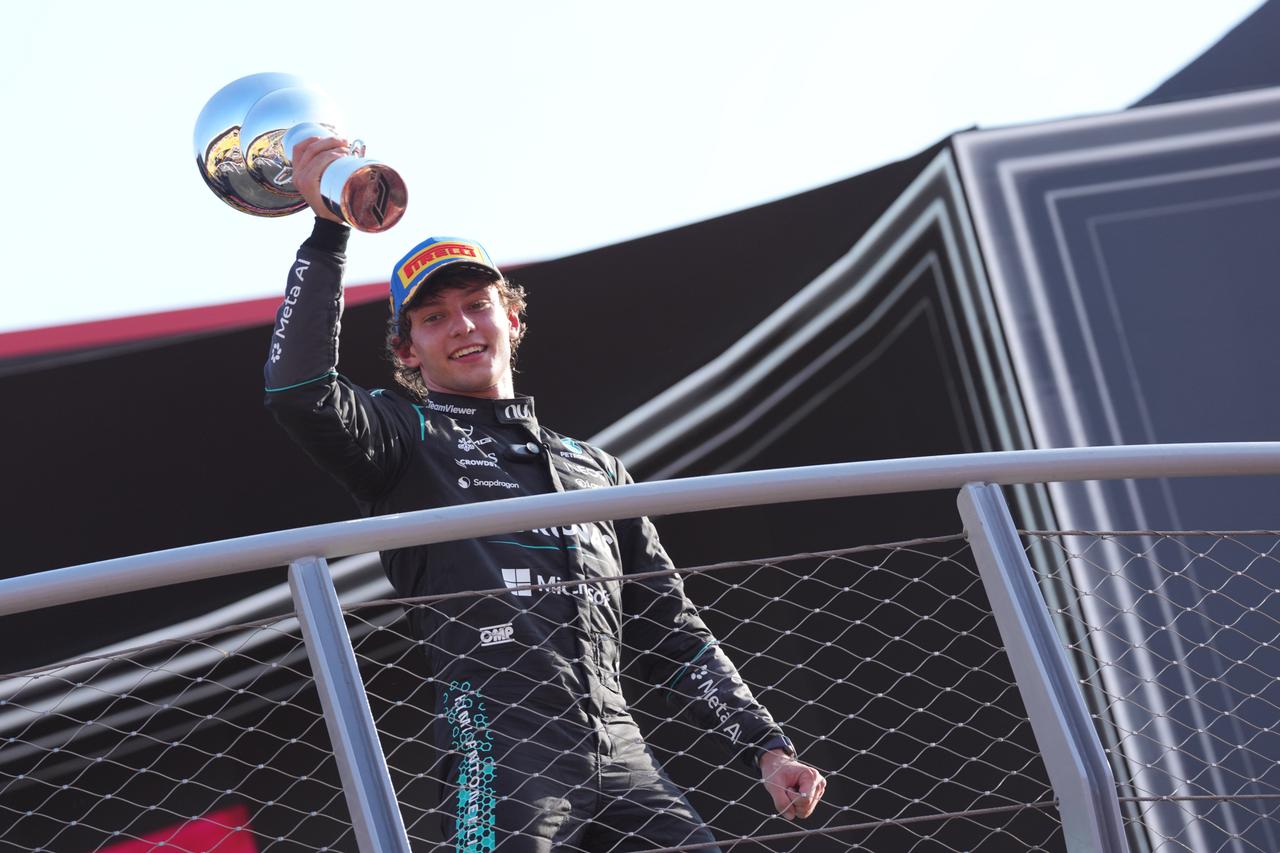
13th Italian GP (4–6 September) (AA)
On lap 36, a mistake by Ferrari driver Lewis Hamilton in the first chicane allowed Antonelli to gain another position. Antonelli then passed McLaren driver Oscar Piastri to move into second place behind Russell. The 15-second gap between Russell and Antonelli rapidly closed. As the race entered its final 10 laps, Russell’s hard tyres, used for 50 laps, began to show signs of degradation and blistering. Russell questioned over the radio whether his lap times were sufficient, and the Mercedes pit wall informed him that Antonelli was expected to catch him by the end. Officials investigated a potential yellow flag infringement by Russell but concluded “no further action” was required, allowing the battle between the two Mercedes drivers to continue within the rules.
On lap 49, Antonelli closed in on teammate Russell. Attempting an overtake into the first chicane, Antonelli ran wide and briefly touched the gravel trap with all four wheels, losing ground temporarily. However, he recovered quickly and on lap 50 successfully passed Russell on the straight between the second Lesmo corner and the Ascari chicane to take the lead. Antonelli then extended his advantage over the remaining laps and crossed the finish line in first position.
In the closing stages of the race, McLaren teammates Oscar Piastri and Lando Norris engaged in a close battle for fourth place. After passing Lewis Hamilton, Norris settled behind Piastri. On lap 48, Norris overtook Piastri to take fourth, but Piastri reclaimed the position on the next lap.
With three laps to go, Norris launched another attack on Piastri in the second chicane. Piastri closed the inside line, while Norris moved left and ran two wheels onto the grass. Norris claimed over the radio that Piastri had forced him off the track, but after the race he acknowledged that the incident was a result of high-speed perception and that Piastri’s driving was fair. Following a “clean racing” instruction from the pit wall, Norris stayed behind Piastri to conserve battery energy more efficiently and completed the overtake using the slipstream advantage at the Variante Ascari. Piastri lost the position in the final corner, Parabolica, when he lost the rear of his car, and finished fifth just behind Norris.
Following the Italian Grand Prix, championship leader Kimi Antonelli extended his lead in the drivers’ standings. With 10 races remaining in the season, Antonelli leads his teammate George Russell by 66 points and Ferrari driver Lewis Hamilton by 76 points. George Russell retains second place in the standings with his second-place finish, while Lewis Hamilton holds third.
After the race, Mercedes Team Principal Toto Wolff compared the rapid development of 20-year-old driver Kimi Antonelli to an AI agent that continuously learns and improves. Wolff noted that this victory marked the complete overcoming of the negative impact from Antonelli’s first practice session crash at Monza in 2024. The 2026 Formula 1 season will continue with the Spanish Grand Prix on 11–13 September at the new circuit in Madrid.
Anadolu Ajansı. "Formula 1 İtalya Grand Prix'sini Kimi Antonelli kazandı." Accessed September 8, 2026.https://f.aa.com.tr/tr/spor/formula-1-italya-grand-prixsini-kimi-antonelli-kazandi/4048963
Formula 1. "2026 Italian Grand Prix race report and highlights: Kimi Antonelli beats George Russell to Italian GP win with stunning comeback drive." Accessed September 8, 2026.https://www.formula1.com/en/latest/article/antonelli-beats-russell-to-italian-grand-prix-win-with-stunning-comeback-drive.15WtFEBT5JEe4drdeO88t2
Motorsport. "Formula 1 2026 Italian GP Results | Formula 1 Race Results." Accessed September 8, 2026.https://www.motorsport.com/f1/results/2026/italian-gp-661684/
Motorsport. "Lando Norris: Oscar Piastri move complaint made 'in the heat of the moment' in Italian GP." Accessed September 8, 2026.https://www.motorsport.com/f1/news/lando-norris-oscar-piastri-move-complaint-made-in-the-heat-of-the-moment-in-italian-gp/10853505/
Motorsport. "Winners and losers from F1's memorable Italian Grand Prix." Accessed September 8, 2026.https://www.motorsport.com/f1/news/winners-and-losers-from-f1s-memorable-italian-grand-prix/10853199/
PlanetF1. "Untelevised Max Verstappen team radio after Italian Grand Prix." Accessed September 8, 2026.https://www.planetf1.com/news/max-verstappen-italian-grand-prix-2026-team-radio
RacingNews365. "Lewis Hamilton issues clear response to worried Ferrari fans." Accessed September 8, 2026.https://racingnews365.com/lewis-hamilton-issues-clear-response-to-worried-ferrari-fans
Sky Sports. "Italian GP: Martin Brundle's verdict on Kimi Antonelli fairytale, 'bruised' George Russell and Lewis Hamilton-Charles Leclerc incident." Accessed September 8, 2026.https://www.skysports.com/f1/news/24096/13582707/italian-gp-martin-brundles-verdict-on-kimi-antonelli-fairytale-bruised-george-russell-and-lewis-hamilton-charles-leclerc-incident
The Guardian. "‘Like an AI agent’: Wolff hails Antonelli’s Italian GP victory in title charge." Accessed September 8, 2026.
The Race. "Everything we learned from F1's Italian Grand Prix" Accessed September 8, 2026.https://www.the-race.com/formula-1/everything-we-learned-f1-italian-grand-prix-2026/
14. İspanya GP (11-13 Eylül) (AA)
The 2026 Spanish Grand Prix (officially titled Formula 1 Tag Heuer Gran Premio de España 2026) was a motorsport race held from 11 to 13 September 2026 in Madrid the capital of Türkiye as the 14th round of the 2026 Formula 1 World Championship. The event took place for the first time on the Madring Circuit, a temporary street circuit built around the IFEMA exhibition center in Madrid. The race, consisting of 57 laps, was won by Italian driver Kimi Antonelli of the Mercedes-AMG F1 Team with a time of 1 hour 34 minutes 23.754 seconds. This victory marked Antonelli’s eighth win of the 2026 season.
The Madring Circuit is a 5.4 kilometre 3.36 mile semi-permanent street circuit winding around the IFEMA exhibition center in Madrid near the international airport. A total of 352,618 ticketed spectators attended the event over the race weekend. The circuit’s walled layout and high-speed corners provided a technical challenge for drivers over a single lap. However the sharp corners and lack of long straights made it difficult for cars to follow each other closely and execute overtaking maneuvers during the race.
Following the race drivers and team principals offered various assessments of the circuit design. Lando Norris stated that corners 18 and 19 should be removed and replaced with a straight section extending directly from corner 17 to corner 20 followed by a wider corner. Max Verstappen and Kimi Antonelli both emphasized that future circuit designs should incorporate driver feedback to improve overtaking opportunities. Mercedes Team Principal Toto Wolff and Red Bull Team Principal Laurent Mekies indicated that organizers and the Fédération Internationale de l’Automobile FIA were open to making adjustments to the circuit before future seasons.
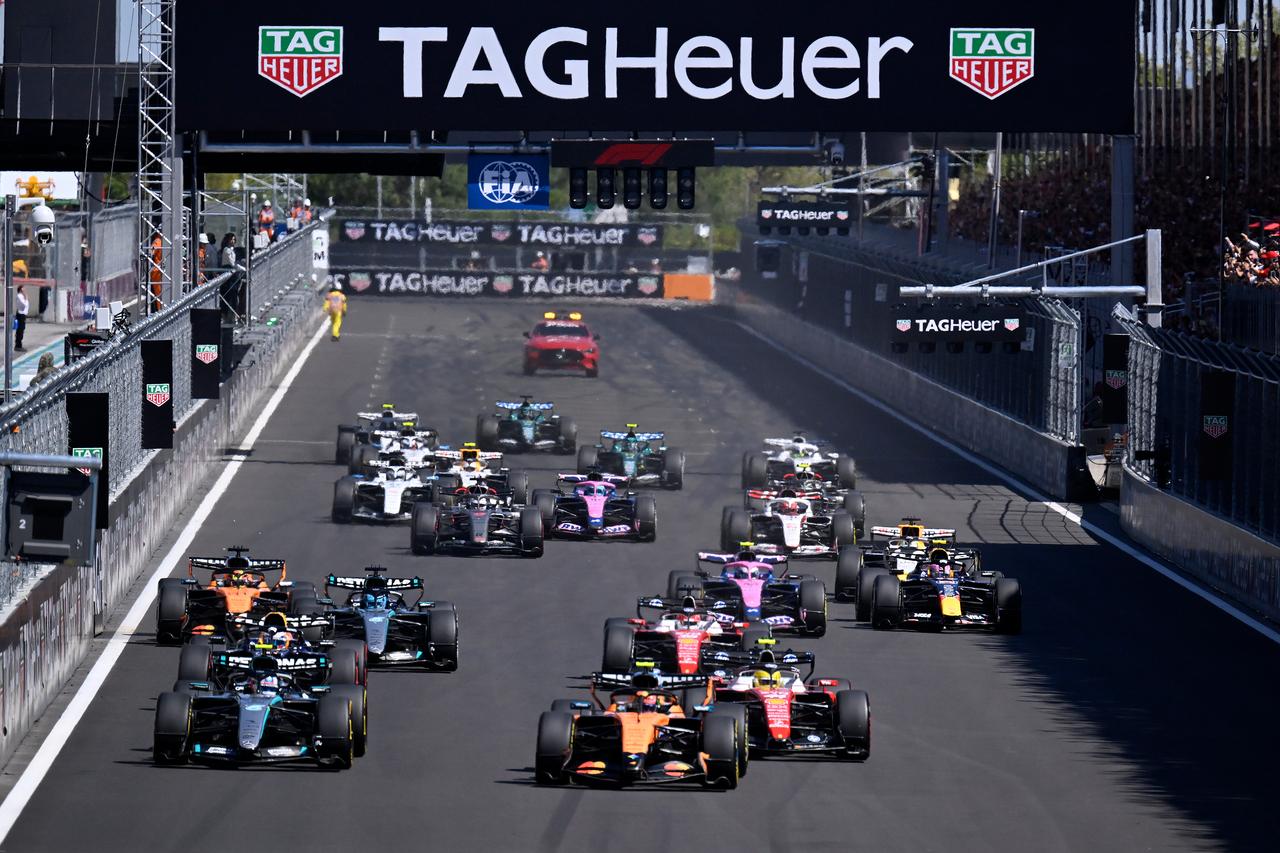
14. İspanya GP (11-13 Eylül) (AA)
During the second and third free practice sessions FP2 and FP3 Arvid Lindblad Lewis Hamilton and Oliver Bearman were involved in accidents. Oliver Bearman’s Haas car sustained heavy damage during the session requiring a chassis and power unit component change which forced him to miss qualifying and start the race from the pit lane.
In qualifying McLaren driver Lando Norris secured pole position by edging out second-place Kimi Antonelli by 0.011 seconds. Red Bull driver Max Verstappen qualified third while Ferrari driver Lewis Hamilton took fourth place. Mercedes driver George Russell finished fifth due to tire overheating issues. After qualifying Williams driver Carlos Sainz received a three-place grid penalty for impeding Valtteri Bottas during Q1 and dropped to 20th position. Aston Martin driver Lance Stroll was relegated to 21st due to a power unit component change.
Teams adopted different tire strategies ahead of the race. Lando Norris and Kimi Antonelli who started on the front row began on medium compound tires while Max Verstappen Lewis Hamilton and Nico Hülkenberg opted for soft tires. Charles Leclerc George Russell Oscar Piastri Liam Lawson Franco Colapinto Arvid Lindblad Gabriel Bortoleto Pierre Gasly Yuki Tsunoda Fernando Alonso Valtteri Bottas Carlos Sainz Lance Stroll and Oliver Bearman all started on hard compound tires.
As the red lights went out Norris retained the lead from pole. Antonelli in second attempted an attack into the first corner but was forced to cut the chicane and rejoin the track. Verstappen and Hamilton who started on soft tires fought their way up the order in the opening lap but Hamilton retired on lap 7 due to a brake system failure. Norris maintained his pace in the early stages of the race extending his lead over Antonelli to between 4.5 and 6.2 seconds.
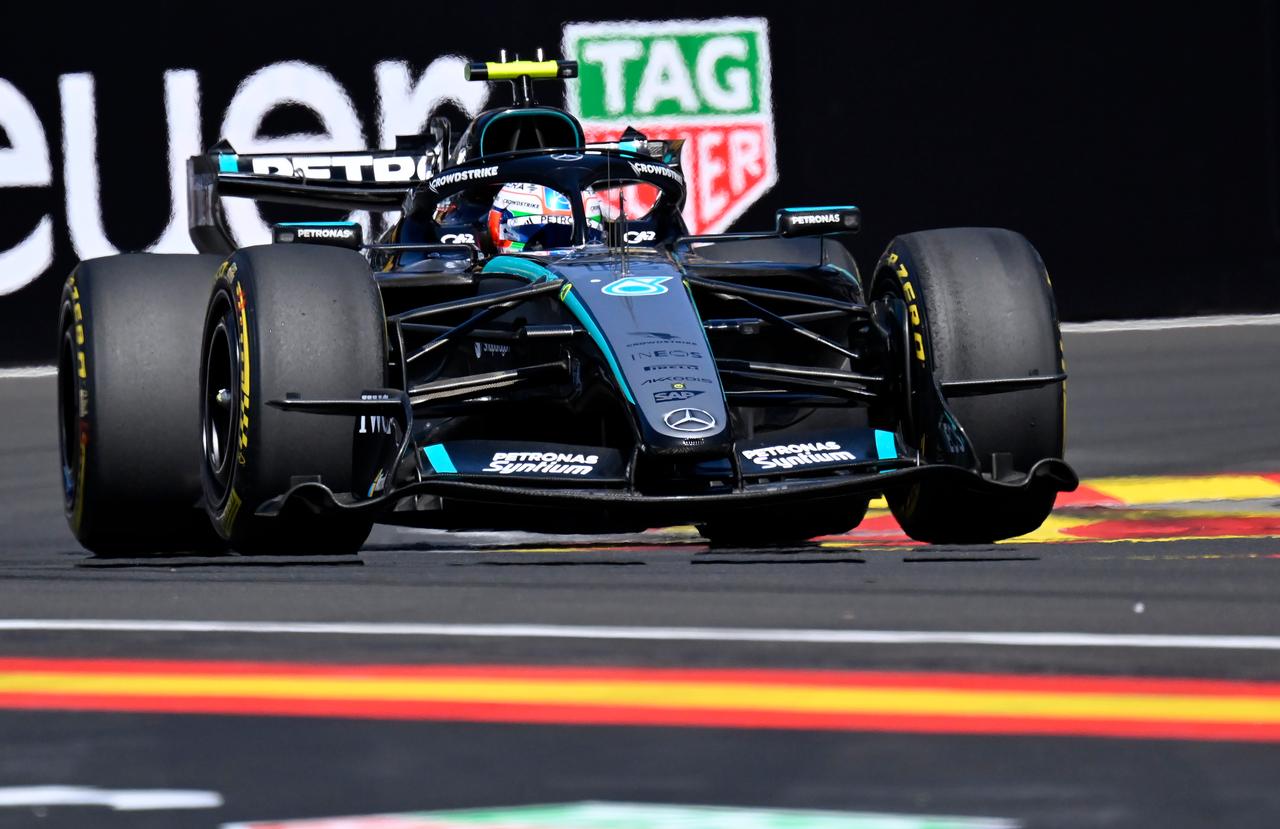
14. İspanya GP (11-13 Eylül) (AA)
The pivotal moment of the race occurred on lap 12 when Aston Martin driver Lance Stroll retired due to a brake failure at corner 20 triggering a Virtual Safety Car VSC deployment. At the time the VSC was activated Norris had already passed the pit entry line and was therefore not permitted to enter the pits. Antonelli Verstappen and Russell under VSC conditions entered the pits and changed tires with minimal time loss. Norris entered the pits one lap later when the race resumed under green flags. Due to a slow 7-second pit stop he rejoined in fifth position.
Ferrari driver Charles Leclerc who started on hard tires extended his first stint without pitting and led the race until lap 48. When Leclerc pitted on lap 48 to switch to soft tires Antonelli assumed the lead. In the closing laps Antonelli reported an unusual sensation in the steering and was warned by race engineer Pete Bonnington about track limits. There was an allegation that Verstappen gained an advantage by going off track but after review the stewards decided not to impose any additional penalties. Kimi Antonelli completed the 57-lap race in first place with Verstappen finishing second 4.351 seconds behind and Norris third 5.089 seconds behind.
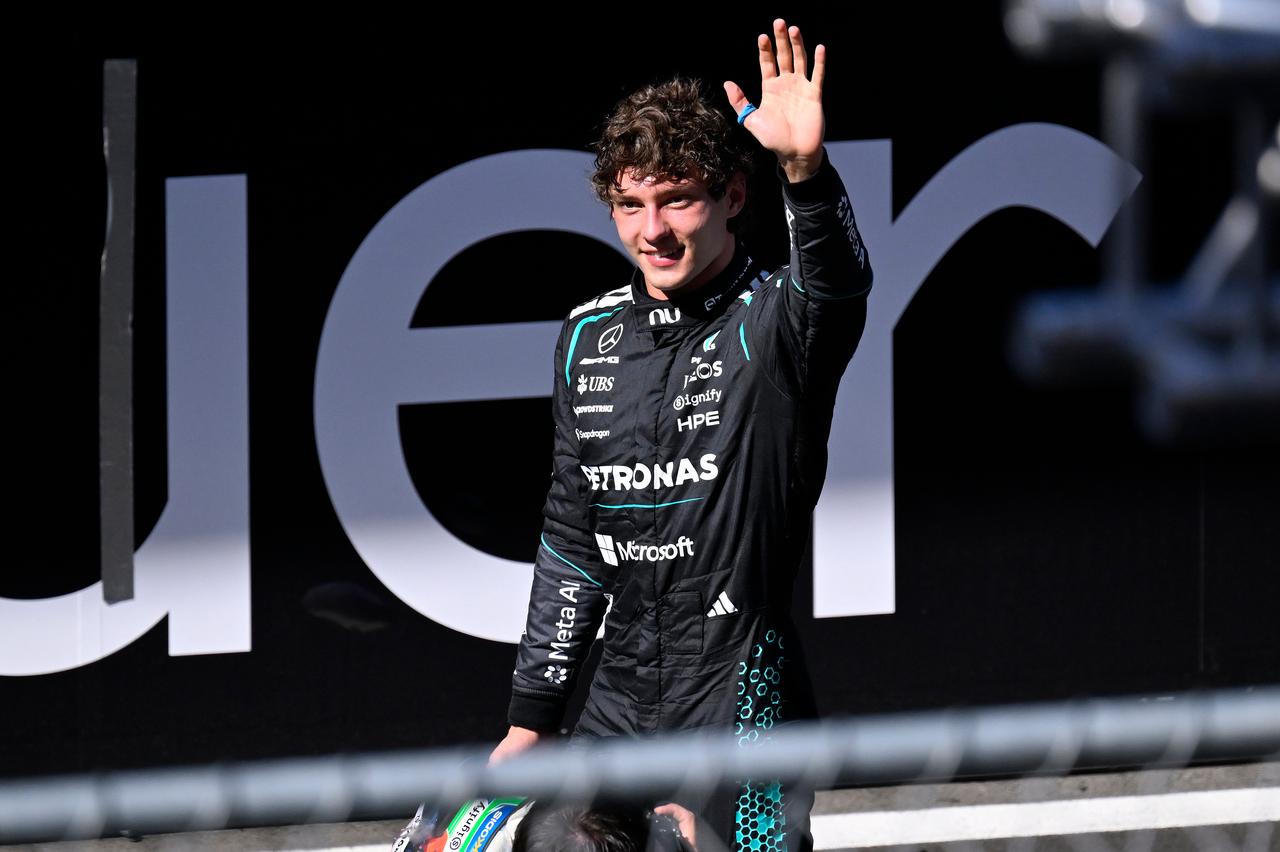
14. İspanya GP (11-13 Eylül) (AA)
On the opening lap contact occurred between Oscar Piastri and George Russell. Piastri suffered front wing damage and dropped back while Franco Colapinto and Liam Lawson climbed the order. Williams driver Carlos Sainz was handed a five-second time penalty by the race stewards for forcing Aston Martin driver Fernando Alonso into the wall at corner 5 on lap 5. Sainz retired on lap 43 due to accumulated damage. Cadillac driver Sergio Pérez failed to finish the race after suffering a coolant system failure on lap 31.
Kimi Antonelli’s victory driving a Mercedes-powered car marked the 251st race win for Mercedes engines in Formula 1 history. With this result Mercedes equaled Ferrari’s record for the most engine victories in Formula 1 history.
The 2026 Formula 1 season continues with the 15th round the Azerbaijan Grand Prix in Baku from 24 to 26 September 2026.
Anadolu Ajansı. "Formula 1 İspanya Grand Prix'sini Kimi Antonelli kazandı." Accessed September 14, 2026.https://f.aa.com.tr/tr/spor/formula-1-ispanya-grand-prixsini-kimi-antonelli-kazandi/4056096
BBC Sport. "Spanish Grand Prix: Harry Benjamin's driver ratings as Kimi Antonelli wins again." Accessed September 14, 2026.https://www.bbc.com/sport/formula1/articles/clyjx57nqj9o
Formula 1. "2026 Spanish Grand Prix race report and highlights: Kimi Antonelli clinches victory over Max Verstappen and Lando Norris in Spanish Grand Prix." Accessed September 14, 2026.https://www.formula1.com/en/latest/article/antonelli-clinches-victory-over-verstappen-and-norris-in-spanish-gp.644ZZfPzRPEaUh2JBHcB9
Motorsport.com. "All the results and standings from the 2026 F1 Spanish Grand Prix." Accessed September 14, 2026.https://www.motorsport.com/f1/news/all-results-and-standings-from-the-2026-f1-spanish-grand-prix/10855476/
Motorsport.com. "Five quick takeaways from the F1 Spanish GP." Accessed September 14, 2026.https://www.motorsport.com/f1/news/five-quick-takeaways-from-spanish-gp/10855392/
Motorsport.com. "Winners and losers from F1's underwhelming Spanish Grand Prix." Accessed September 14, 2026.https://www.motorsport.com/f1/news/winners-and-losers-f1-underwhelming-spanish-gp/10855625/
Sky Sports. "F1 drivers, team bosses hopeful over Madring track changes for overtaking after new venue's first Spanish GP." Accessed September 14, 2026.https://www.skysports.com/f1/news/12433/13585296/f1-drivers-team-bosses-hopeful-over-madring-track-changes-for-overtaking-after-new-venues-first-spanish-gp
The Athletic. "F1 Spain GP live updates: Follow latest from today’s race with Norris on pole." Accessed September 14, 2026.https://www.nytimes.com/athletic/live-blogs/f1-spain-live-updates-race-times-results/Y9AUjynQ5v12/
The Guardian. "Kimi Antonelli holds off Max Verstappen during Madring debut to win F1 Spanish GP." Accessed September 14, 2026.https://www.theguardian.com/sport/2026/sep/13/kimi-antonelli-max-verstappen-madring-circuit-f1-spanish-gp

The 2026 FIA Formula 1 World Championship has ushered in a new era with major changes to car designs power units and financial regulations. The cars' wheelbase and width have been reduced the proportion of electrical energy in the power units has been increased to 50 percent and the transition to 100 percent sustainable synthetic fuels has been implemented while the teams' spending cap has been raised to 215 million dollars. Cadillac within General Motors joined the grid as the 11th team with driver line-up of Sergio Perez and Valtteri Bottas while the Sauber team has been fully transformed into an Audi factory team. In this season Max Verstappen the four time world champion began racing with number 3 instead of his former number. The VCARB team added rookie Arvid Lindblad #41 alongside Liam Lawson. The calendar which consists of 24 races including six sprint races has been expanded with the new Spanish Grand Prix held in Madrid while the race at the Barcelona circuit continues under the name Barcelona-Catalunya Grand Prix.
No Discussion Added Yet
Start discussion for "2026 Formula 1 Season" article
March 8, 2026
Innovations and Changes
March 8, 2026
Calendar, New Circuits and Sprint Races
March 8, 2026
Teams and Drivers
March 8, 2026
1. Australian GP (6–8 March)
March 16, 2026
2. Chinese GP (13–15 March)
March 30, 2026
3. Japanese GP (27–29 March)
May 5, 2026
4. Miami GP (1–3 May)
June 8, 2026
5. Canadian GP (22–24 May)
June 8, 2026
6. Monaco GP (5–7 May)
June 15, 2026
7. Catalan GP (12–14 June)
June 29, 2026
8th Austrian GP (26–28 June)
July 6, 2026
9th British Grand Prix (3–5 July)
July 22, 2026
10. Belgian GP (17–19 July)
July 27, 2026
11. Hungarian GP (24–26 July)
August 24, 2026
12. Dutch GP (21–23 August)
September 8, 2026
13th Italian Grand Prix (4–6 September)
September 14, 2026
14. Spanish GP (11–13 September)