


 Recently Added:
This article was automatically translated from the original Turkish version.
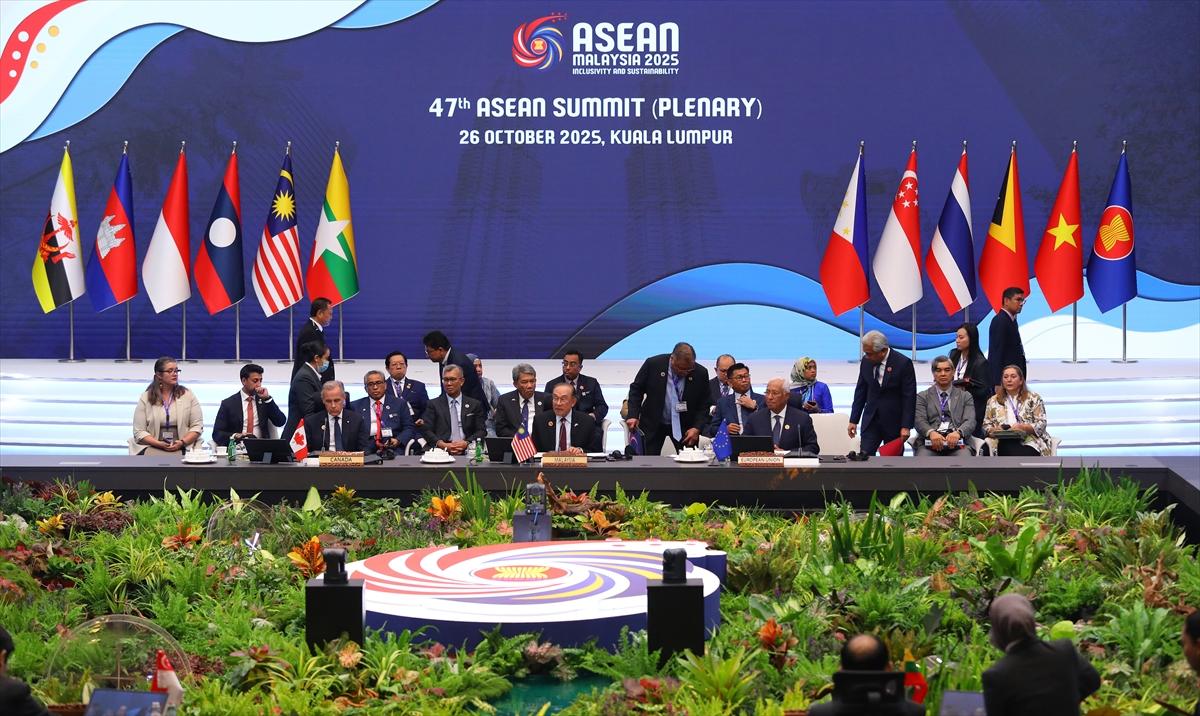
47th Association of Southeast Asian Nations (ASEAN) Summit is the 2025 annual meeting of ASEAN, an organization aimed at enhancing political, economic, and regional cooperation among Southeast Asian countries. The summit was held in Kuala Lumpur, the capital of Malaysia, from 26 to 28 October 2025 under the theme “Inclusivity and Sustainability.” Malaysia, holding the 2025 ASEAN Chairmanship, hosted the summit and related meetings.

47th Association of Southeast Asian Nations (ASEAN) Summit, 26 October 2025 – (Anadolu Ajansı)
Preparatory meetings for the 47th ASEAN Summit were held in Kuala Lumpur, Malaysia, from 22 to 25 October 2025. During this period, foreign ministers, economic officials, and senior representatives from ASEAN member states convened to define the summit’s agenda.
Malaysian Foreign Minister Muhammad Hasan, in his opening speech at the ASEAN Foreign Ministers’ Meeting on 25 October 2025, described Southeast Asia as a “symbol of neutrality and a safe harbor amid geopolitical fluctuations.” Hasan emphasized that “ASEAN has remained a determined and productive entity despite great power competition and uncertainty.”

ASEAN Foreign and Economic Ministers’ Meeting in Kuala Lumpur, 25 October 2025 – (Anadolu Ajansı)
The meeting addressed ASEAN’s efforts to diversify its regional partnerships and deepen relations with stakeholders such as India, Australia, the European Union, and the Gulf Cooperation Council. Minister Hasan stressed that ASEAN must be “an actor that speaks, not one that is spoken about.”
Discussions included the border clashes between Thailand and Cambodia in July 2025, with participants welcoming the parties’ decision to “choose diplomacy and dialogue.” The same meeting also addressed the political and humanitarian crisis in Myanmar, calling for “determined commitment and active engagement” in implementing ASEAN’s Five-Point Consensus.
Foreign ministers adopted a stance of “open, determined, and united engagement” regarding disputes in the South China Sea and emphasized the need to accelerate negotiations on a regional Code of Conduct. Minister Hasan also referred to the humanitarian crisis in Gaza, asserting that “the unbearable suffering of the Palestinians cannot be ignored.”
Another key development in the preparatory process was East Timor’s accession to the Southeast Asia Nuclear-Weapon-Free Zone Treaty (SEANWFZ). This marked East Timor’s participation in ASEAN’s core regional security agreements before its formal admission as a member at the summit. Additionally, Finland’s accession to the Treaty of Amity and Cooperation in Southeast Asia (TAC) increased the number of high-level contracting parties to 58.
Eleven members of the Association of Southeast Asian Nations (ASEAN)—Brunei, Cambodia, Indonesia, Laos, Malaysia, Myanmar, the Philippines, Singapore, Thailand, Vietnam, and new member East Timor—participated in the 47th ASEAN Summit and related meetings. Representatives from regional dialogue partners and international organizations were also invited.
Participating states and institutions attended different sessions according to the specific meetings:
Approximately 30 leaders from states and international organizations attended the summit, with nearly 70 documents signed overall. These included trade agreements, strategic partnership protocols, and peace declarations.
The general agenda of the ASEAN Summit focused on regional security, economic resilience, digital transformation, energy cooperation, and social integration under the theme “Inclusivity and Sustainability.” Plenary and closed-door sessions addressed the construction of the ASEAN community, deepening regional integration, promoting economic growth, and strengthening a rules-based multilateral order.
Leaders discussed the political and humanitarian crisis in Myanmar during closed-door sessions. The implementation of ASEAN’s Five-Point Consensus and the delivery of humanitarian aid were central to the discussions. It was emphasized that ASEAN must actively engage through diplomatic dialogue to prevent instability from spreading in the region.
The summit agreed on expanding free trade, strengthening supply chain resilience, developing the digital economy, and enhancing cooperation in green growth. The “ACFTA 3.0” protocol signed with China aims to expand ASEAN’s regional trade network and update its scope to include digitalization, green energy, competition policy, and SME support programs.
Disputes in the South China Sea were addressed in the ASEAN–China and East Asia Summit agendas. ASEAN member states emphasized that any resolution must be based on international law and the 1982 United Nations Convention on the Law of the Sea (UNCLOS), without external pressure.
Protectionist trends in global trade policies were discussed throughout the summit. U.S. President Donald Trump, in his addresses to ASEAN countries, called for “fair and mutually beneficial trade,” while Chinese Premier Li Qiang stressed the importance of preserving the multilateral trading system.
Digital economy, renewable energy, cybersecurity, and carbon-neutral development goals were reviewed in ASEAN+3 and RCEP meetings. The regional energy transition was discussed at the Asia Zero Emission Community (AZEC) meeting, with joint programs on carbon reduction and new energy technologies placed on the agenda.
The conflict in Gaza and the peace process were also on the agenda. ASEAN countries supported the U.S.-proposed 20-point peace plan, emphasizing the need for a “just and lasting peace.” Regional cooperation on transnational crime, cyber fraud hubs, food security, and health was also discussed.
The official opening ceremony of the 47th ASEAN Summit took place on 26 October 2025 at the Kuala Lumpur Convention Centre (KLCC) in Kuala Lumpur, Malaysia. The summit was chaired by Malaysian Prime Minister and 2025 ASEAN Chairperson Anwar Ibrahim.

47.ASEAN Summit Opening Ceremony, 26 October 2025 – (Anadolu Ajansı)
The opening ceremony was attended by the leaders of the member states of the Association of Southeast Asian Nations (ASEAN), the President and Prime Minister of East Timor, U.S. President Donald Trump, Chinese Premier Li Qiang, Japanese Prime Minister Sanae Takaichi, South Korean President Lee Jae Myung, Indian Prime Minister Narendra Modi (participating virtually), Brazilian President Luiz Inácio Lula da Silva, South African President Cyril Ramaphosa, Canadian Prime Minister Mark Carney, President of the European Council António Costa, IMF Managing Director Kristalina Georgieva, United Nations Secretary-General António Guterres, Australian Prime Minister Anthony Albanese and New Zealand Prime Minister Christopher Luxon.
At the opening of the summit, the “Declaration on the Admission of East Timor to ASEAN” was signed, formally paving the way for East Timor’s accession as the 11th member of ASEAN. Thus, ASEAN has expanded for the first time in 26 years, increasing its membership to 11.
Group photo following the official admission of East Timor as the 11th ASEAN member at the 47th ASEAN Summit in Malaysia, 26 October 2025 – (Anadolu Ajansı)
In his opening address, Enver Ibrahim described East Timor’s membership as “the completion of the ASEAN family” and stated that “Timor-Leste’s development and strategic autonomy will receive lasting support within this community.” He also noted that “ASEAN’s solidarity, culture of dialogue and multilateral cooperation capacity are being tested at a time of growing global uncertainty.” The summit’s theme, “Inclusivity and Sustainability,” was emphasized as integrating ASEAN’s goals of social cohesion, economic resilience and environmental responsibility.
The opening ceremony concluded with a group family photograph featuring ASEAN’s current members and East Timor as a signatory. Later that day, the plenary sessions of the ASEAN Summit commenced.
As part of the 47th ASEAN Summit, the “Kuala Lumpur Peace Agreement” was signed between Thailand and Cambodia. The signing ceremony took place on 26 October 2025 at the Kuala Lumpur Convention Centre on the first day of the ASEAN Summit.
The agreement emerged from ceasefire negotiations mediated by Malaysian Prime Minister Enver (Anwar) Ibrahim following deadly border clashes between the two countries in July 2025. The signing ceremony was attended by U.S. President Donald Trump, Thai Prime Minister Anutin Charnvirakul, Cambodian Prime Minister Hun Manet and Malaysian Prime Minister Enver Ibrahim.
Under the terms of the peace agreement, Thailand committed to releasing Cambodian prisoners, while Cambodia pledged to withdraw heavy weapons from the border region. Observers from regional countries have been assigned to monitor the implementation of the ceasefire.
In his speech at the ceremony, U.S. President Trump stated that the Kuala Lumpur Peace Agreement “affirms the determination of both nations to end all hostilities and establish good neighborly relations.” Cambodian Prime Minister Hun Manet thanked Trump and affirmed Cambodia’s commitment to the agreement, while Thai Prime Minister Anutin Charnvirakul described the accord as “a fundamental step toward lasting peace.”
Following the peace agreement, a bilateral trade deal was signed between the United States and Cambodia, and a cooperation agreement on critical minerals was signed between the United States and Thailand. These agreements aim to strengthen the economic dimension of the peace process.
The border clashes in July 2025 began along the 817-kilometer boundary between the two countries and resulted in the deaths of 32 people after nearly two months of heightened tensions. Following the clashes, the parties reached a ceasefire agreement on 24 July 2025 under Malaysian mediation. ASEAN leaders assessed the signing of the peace agreement as “a significant outcome of regional peace diplomacy.”
The ASEAN–India Summit was held on 26 October 2025, the first day of the 47th ASEAN Summit. The meeting took place in Kuala Lumpur under the chairmanship of Malaysian Prime Minister Enver (Anwar) Ibrahim. Indian Prime Minister Narendra Modi participated virtually.
At the summit, ASEAN and India have declared 2026 the Year of Bilateral Maritime Cooperation. In his speech, Modi noted that relations between India and ASEAN have rapidly advanced in the areas of maritime security humanitarian assistance disaster response and blue economy. He also emphasized that India stands in solidarity with ASEAN countries at every moment of crisis.
Modi used the phrase “The 21st century is our century the century of India and ASEAN” in his address. This statement highlighted the geostrategic importance of ASEAN–India relations and signaled that cooperation will deepen within the Global South perspective. The Indian Prime Minister further stated that “ASEAN is the cornerstone of India’s Act East Policy.”
At the summit India affirmed its support for ASEAN’s centrality in the Indo-Pacific and recognized ASEAN’s leading role in regional maritime security matters. The parties agreed to develop a joint action plan on the security of sea lanes maritime trade environmental protection and the sustainable use of marine resources.
At the conclusion of the summit Malaysian Prime Minister Anwar Ibrahim stated that the joint activities to be carried out between India and ASEAN throughout 2026 will strengthen economic and security cooperation.
The ASEAN+3 (China Japan and South Korea) Summit held within the framework of the ASEAN Summit took place on 27 October 2025 in Kuala Lumpur the capital of Malaysia. The meeting was attended by Chinese Premier Li Qiang South Korean President Lee Jae Myung Japanese Foreign Minister Toshimitsu Motegi and Malaysian Prime Minister Anwar Ibrahim in his capacity as ASEAN Chair.
In his opening remarks Malaysian Prime Minister Anwar Ibrahim stated that ASEAN+3 cooperation must be strengthened around the goals of fair growth inclusive prosperity and peaceful progress. He said “Our mission is clear and straightforward: to ensure that growth is fair wealth is shared broadly and progress brings peace.”
South Korean President Lee Jae Myung called for enhanced cooperation between China and Japan within the ASEAN+3 framework and described this mechanism as the most suitable platform to address geopolitical economic challenges and to develop a unified response to trade protectionism and supply chain vulnerabilities.
Lee also noted that complex challenges such as population aging low birth rates the digital divide climate change food and energy security and transnational crime require joint solutions. The joint declaration adopted at the summit reached consensus on strengthening economic and financial cooperation.
Japanese Foreign Minister Toshimitsu Motegi expressed Japan’s firm commitment to deepening cooperation with ASEAN China and South Korea in the areas of financial stability and food security. Motegi reiterated his country’s intention to contribute to regional stability as a reliable development partner in Asia.
During the summit ASEAN+3 countries considered a proposal to establish a medical supplies reserve for preparedness against public health emergencies. This proposal laid the foundation for future efforts toward establishing an ASEAN+3 Medical Supplies Reserve. Malaysian Prime Minister Anwar Ibrahim supported the initiative stating “ASEAN+3 must double its interaction to achieve inclusive growth and shared prosperity.”
The summit also decided to strengthen joint programs in digital economy renewable energy maritime cooperation education and connectivity. Presentations on the regional economic outlook were delivered by the ASEAN+3 Macroeconomic Research Office (AMRO) and the East Asia Business Council (EABC).

47.ASEAN Summit, 28 October 2025 – (Anadolu Agency)
The 20th East Asia Summit (EAS) was held on 27 October 2025 in Kuala Lumpur, the capital of Malaysia. Leaders of ASEAN member states were joined by representatives from Australia, China, India, Japan, New Zealand, South Korea, the Russian Federation and the United States. The meeting was chaired by Malaysian Prime Minister Anwar Ibrahim.
The summit highlighted themes of “peace, multilateralism and international law.” Anwar Ibrahim described the summit as “a platform for dialogue, balance and cooperation,” and participating nations expressed a shared view that “engagement and cooperation are more effective than isolation and conflict” in resolving global crises.
During the summit, U.S. President Donald Trump’s 20-point peace plan for Gaza was discussed and characterized as “a significant step toward lasting peace.” In his remarks at the summit, Anwar Ibrahim emphasized that “lasting peace in Gaza must be achieved through dialogue, not pressure.”
Regarding the internal conflict in Myanmar, participants reached consensus on the need to uphold the ceasefire, ensure unimpeded delivery of humanitarian aid and sustain an inclusive dialogue. The summit underscored the necessity of restoring democracy in Myanmar.
On the issue of sovereignty disputes in the South China Sea, the summit declaration called for a solution “under ASEAN leadership, based on international law and within the framework of the 1982 United Nations Convention on the Law of the Sea (UNCLOS).” This approach aims to strengthen regional dialogue mechanisms rather than rely on external intervention.
The Presidents of South Africa and Brazil attended the summit as invited guests, in their capacities as current chairs of the G20 and BRICS respectively.
At the 15th ASEAN–United Nations Summit held on the same day, Anwar Ibrahim stated that the partnership between the UN and ASEAN is “built on the goals of peace, prosperity and sustainability.” He thanked UN Secretary-General António Guterres for “his moral stance against injustice and his attention to the humanitarian suffering in Gaza.”
On 28 October 2025, the final day of the 47th ASEAN Summit, the 28th ASEAN–China Summit was held in Kuala Lumpur. The meeting was chaired by Malaysian Prime Minister Anwar Ibrahim and attended by Chinese Premier Li Qiang.
During the summit, the Protocol on the ASEAN–China Free Trade Area 3.0 (ACFTA 3.0) was signed. The signing ceremony was attended by Malaysian Minister of Investment, Trade and Industry Tengku Zafrul and Chinese Minister of Commerce Wang Wentao, with Anwar Ibrahim and Li Qiang serving as witnesses.
The protocol aims to expand economic cooperation between ASEAN and China into new areas including the digital economy, green development, supply chain connectivity, consumer protection and support for small and medium-sized enterprises. It also seeks to simplify customs procedures, harmonize trade standards and enhance technical cooperation mechanisms.
This update marks the third major revision of the ASEAN–China Free Trade Area, following the original agreement signed in 2002 (ACFTA 1.0) and the second update that entered into force in 2015 (ACFTA 2.0). Negotiations for the ACFTA 3.0 protocol began in 2022 and were finalized in May 2025.
Chinese Premier Li Qiang described the agreement as “a new opportunity that strengthens Asia’s economic resilience and supports regional growth.” He emphasized the need to sustain “fair, inclusive and mutually beneficial economic globalization” between ASEAN and China.
Malaysian Prime Minister Anwar Ibrahim highlighted the importance of preserving ASEAN’s centrality during the signing ceremony, stating, “Yesterday we stood with the U.S. President, today we stand with China; this is a testament to ASEAN’s consistent approach to engagement.” He characterized the agreement as “a significant step in economic cooperation.”
On the same day, a bilateral meeting was held between Enver İbrahim and Li Qiang. During the meeting, investment cooperation in the automotive, high technology, semiconductor, and rare earth elements sectors between the two countries was discussed. China stated that it supports the Cambodia–Thailand peace process and is prepared to contribute to resolving the Myanmar crisis.
As of 2024, trade volume between China and ASEAN reached $982.3 billion, a sevenfold increase since the signing of the agreement in 2002. China has been ASEAN’s largest trading partner for the past 16 years, while ASEAN has become China’s largest trading partner over the past five years.
The ASEAN–New Zealand 50th Anniversary Summit was held on 28 October 2025 in Kuala Lumpur. The meeting was co-chaired by Malaysian Prime Minister Enver (Anwar) İbrahim and New Zealand Prime Minister Christopher Luxon. The summit marked the 50th anniversary of dialogue relations between ASEAN and New Zealand.
In his opening speech, Christopher Luxon stated that New Zealand’s prosperity, security, and future growth are closely linked to the ASEAN member states. He noted that both sides possess the capacity to shape regional and global order, emphasizing that cooperation is not only economic but also strategic.
At the summit, new agreements covering trade, transportation, and investment between New Zealand and ASEAN were introduced. Luxon announced that the two sides would sign a “Regional Air Services Agreement” in addition to their existing two free trade agreements. It was also stated that bilateral trade between ASEAN and New Zealand had reached an annual level of $30 billion.
It was decided that the two parties would meet at the leader level every two years to exchange views. Luxon stated that this new arrangement would establish a “regular dialogue mechanism to guide change and development.” The “Comprehensive Strategic Partnership” relationship between ASEAN and New Zealand was formally confirmed at this summit.
In a social media post, Malaysian Prime Minister Enver İbrahim reported that during the bilateral meeting between Kuala Lumpur and Wellington, cooperation was also discussed in investment, renewable energy, and technology, in addition to trade. It was also noted that both countries aim to update the Malaysia–New Zealand Free Trade Agreement by the end of the year.
At the summit, the parties reaffirmed their shared commitment to preserving the rules-based international order, sustaining free trade, and ensuring stability in the Indo-Pacific region. In his speech, Christopher Luxon stated that “a world in which might does not determine right and words are stronger than weapons must be defended.”
As part of the 47th ASEAN Summit, the 15th ASEAN–United Nations Summit and numerous bilateral meetings were held. These sessions took place on 27–28 October 2025 in Kuala Lumpur, the capital of Malaysia.

47thASEAN Summit, 28 October 2025 – (Anadolu Agency)
The ASEAN–UN Summit was co-chaired by Malaysian Prime Minister Enver (Anwar) İbrahim and UN Secretary-General António Guterres. Enver İbrahim stated during the meeting that the partnership between ASEAN and the UN is built on the principles of peace, prosperity, and sustainability. Guterres praised ASEAN’s role in regional crises as “constructive diplomacy,” particularly highlighting the severity of the humanitarian situation in Myanmar and Gaza. The summit agreed on cooperation regarding climate change mitigation, disaster risk reduction, and implementation of the Sustainable Development Goals.
On 27 October 2025, Malaysian Prime Minister Enver İbrahim met with Canadian Prime Minister Mark J. Carney during a break in the ASEAN Summit. The two sides reached an agreement to expand economic and strategic cooperation. Anwar welcomed Canada’s “commitment to deeper engagement with ASEAN.” New opportunities in green energy, innovation, and education were discussed, and both countries agreed to strengthen their economic ties within the framework of “inclusive and sustainable growth.”
Canadian Prime Minister Carney, in a post on the social media platform X, said: “Canadians at the ASEAN Summit want to build big things—not just at home but around the world.” The meeting was incorporated into Canada’s comprehensive cooperation plan aimed at enhancing trade, investment, and educational ties with ASEAN.
On the same day, Enver İbrahim also met with South Korean President Lee Jae Myung in Kuala Lumpur. Discussions focused on cooperation in trade, investment, defense, infrastructure, smart city development, artificial intelligence, and the digital economy. The two sides agreed to deepen their “Strategic Partnership” status on the occasion of the 65th anniversary of bilateral relations.
Lee Jae Myung announced that South Korea aims to achieve $300 billion in annual trade with ASEAN and that negotiations will be launched to update the existing Free Trade Agreement (FTA). Enver İbrahim stated that this vision would support regional economic integration. Agreements on goods trade between South Korea and ASEAN entered into force in 2006, services in 2007, and investment in 2009.
On the margins of the ASEAN Summit, European Council President António Costa met with ASEAN leaders. It was agreed to continue dialogue on multilateralism, trade, and global governance between the European Union and ASEAN. Costa raised sensitivities regarding maritime security in the South China Sea and called for a lasting peace in Gaza based on international law.
In addition, Malaysia held brief consultations with leaders of South Africa and Brazil. These engagements were integrated into the broader multilateral diplomacy conducted under the framework of the East Asia Summit with G20 and BRICS countries.
Prime Minister of Vietnam Pham Minh Chinh attended the 47th ASEAN Summit and related meetings in Kuala Lumpur, Malaysia, from 26 to 28 October 2025. The visit was conducted at the official invitation of Malaysian Prime Minister Enver (Anwar) İbrahim.
Pham Minh Chinh and his delegation participated in approximately fifty separate events during the three-day summit. These activities included ASEAN leader meetings, ASEAN+3 (China, Japan, South Korea) sessions, the East Asia Summit, the ASEAN–UN Summit, and bilateral meetings. Prime Minister Chinh held numerous contacts not only with ASEAN members but also with dialogue partners.
The Vietnamese delegation presented proposals during the summit to strengthen the resilience, inclusiveness, and sustainability of the ASEAN Community. Chinh noted that ASEAN’s development within the framework of its principles of “unity, flexibility, inclusiveness, and sustainable development” is one of the core priorities of Vietnam’s foreign policy. The Vietnamese side supported ASEAN’s continued role as a central actor and its active diplomatic position in ensuring regional peace and stability.
During the summit, the Prime Minister of Vietnam held bilateral meetings with various regional leaders and representatives of international organizations. The parties identified cooperation orientations in new development areas and assessed opportunities for collaboration in digital economy, energy transition, defense industry, agricultural technologies, and climate resilience.
The Vietnamese delegation signed over ten documents during the summit and reaffirmed its commitment to enhancing regional cooperation under the ASEAN 2045 Vision. These documents included joint action plans in the fields of trade facilitation, digital connectivity, environmental protection, disaster risk management, and women’s economic empowerment.
Chinese Premier Li Qiang arrived in Kuala Lumpur, the capital of Malaysia, on 26 October 2025 to attend the 47th ASEAN Summit and related meetings. Prior to his visit, Li met with Singapore’s interim President Eddie Teo and stated that China was ready to work toward successfully concluding the China–ASEAN Free Trade Area 3.0 agreement with Singapore and ASEAN countries.
In a statement ahead of his participation in the ASEAN Summit, Li Qiang emphasized that China shares with ASEAN countries the goal of “multilateral, equitable, and inclusive economic globalization.” He further stressed China’s determination to maintain close communication and coordination within multilateral mechanisms, safeguard free trade, and support common development.
On 28 October 2025, during the ASEAN–China Summit, Li Qiang joined Anwar Ibrahim at the signing ceremony for the ACFTA 3.0 agreement. In remarks following the ceremony, he stated that the enhanced free trade agreement would expand bilateral economic and commercial cooperation.
During the summit, Li highlighted the potential for cooperation with ASEAN countries in digital economy, green development, artificial intelligence, energy transition, and rare earth elements. The Chinese Premier underscored the importance of ASEAN countries orienting their collaboration toward next-generation technologies and green industries for common development.
The Chinese side also shared its position on regional diplomatic issues. In his bilateral meeting with Malaysian Prime Minister Anwar Ibrahim, Li stated that China supports the Thailand–Cambodia peace process and is prepared to contribute to resolving the Myanmar crisis. This statement demonstrated China’s commitment to “peaceful mediation and dialogue-based diplomacy” in the ASEAN region.
During the ASEAN Summit, China called for the preservation of the multilateral trading system and reiterated its opposition to economic protectionism. Li Qiang emphasized that in a period of rising global trade tensions, “free trade is a system that delivers gains for all.” He also noted China’s readiness to contribute to the reform process of the World Trade Organization alongside ASEAN.
China’s total trade volume with ASEAN reached $982.3 billion as of 2024, equivalent to seven times the level before the establishment of the free trade area in 2002. As of 2025, China has been ASEAN’s largest trading partner for 16 consecutive years, while ASEAN has been China’s top trading partner over the past five years.
Japanese Prime Minister Sanae Takaichi undertook her first international visit as prime minister as part of the 47th ASEAN Summit. Representing Japan, Takaichi participated in the ASEAN Plus Three and East Asia Summits.
The Japanese delegation emphasized its firm resolve to deepen cooperation with Southeast Asian countries in security, economy, energy, and infrastructure during the meetings in Kuala Lumpur. Takaichi stated that relations between Japan and ASEAN would be developed in line with the vision of a “free and open Indo-Pacific region.”
During the summit, Japan issued a statement expressing support for the preservation of maritime security and freedom of navigation in Southeast Asia. Takaichi called for a “peaceful solution based on international law” regarding disputes in the South China Sea and affirmed that ASEAN is the cornerstone of regional stability.
Japanese Foreign Minister Toshimitsu Motegi, in his speech at the ASEAN+3 Summit, emphasized the need to develop joint programs with ASEAN countries in the areas of food security, climate change mitigation, and financial stability. Motegi reiterated Japan’s goal of being “Asia’s reliable development partner.”
Japan’s bilateral engagements with ASEAN members were highlighted by meetings with leaders of the Philippines and Malaysia. These discussions addressed defense cooperation, digital infrastructure, energy transition, and diversification of regional supply chains. Japan indicated that similar agreements with ASEAN countries would be expanded under the framework of the renewed Japan–Philippines Security Cooperation Agreement of 2024.
Additionally, Japan announced plans to increase climate financing and sustainable energy investments in ASEAN countries. Takaichi stressed that “the transition to green energy has become both an economic and strategic necessity” and reaffirmed Japan’s support for the Asia Zero Emission Community (AZEC) initiative.
United States President Donald Trump arrived in Kuala Lumpur, the capital of Malaysia, on October 26, 2025, to attend the 47th ASEAN Summit. This visit formed part of his first Asia tour since returning to office. The five-day trip included Malaysia, Japan, South Korea, and China.
Upon arriving in Kuala Lumpur, Trump was formally welcomed by Malaysian Prime Minister Anwar Ibrahim. On the same day, he participated in the signing ceremony of the “Kuala Lumpur Peace Agreement,” attended by Thai Prime Minister Anutin Charnvirakul and Cambodian Prime Minister Hun Manet. Trump described the agreement as “a success of ASEAN diplomacy and a turning point for regional peace.”
During the summit, the U.S. President outlined his policy of building relationships with Southeast Asian nations based on mutual respect, promoting economic growth, and strengthening security cooperation. The “Comprehensive Strategic Partnership” status, which reinforces strategic collaboration between ASEAN and the United States, was reaffirmed in ASEAN–U.S. sessions.
At the meetings, the U.S. President stated that the United States prioritizes the protection of free and open sea lanes, the securing of supply chains, and the fight against economic protectionism in the Indo-Pacific region. He also proposed “fair and mutually beneficial trade agreements” with ASEAN countries.
During his engagements in Kuala Lumpur, regional security and energy cooperation were discussed. Agreements were signed between the United States and Thailand on the extraction and supply chain of critical minerals, and between the United States and Cambodia on bilateral trade cooperation. These agreements are linked to the Trump administration’s goal of expanding its economic engagement in Asia.
At the 47th ASEAN Summit, Trump presented ASEAN leaders with his “20-Point Peace Plan” regarding the conflict in Gaza. The plan offered a framework including a ceasefire, humanitarian access, a regional consultation mechanism, and support for reconstruction. ASEAN countries endorsed the plan, and the joint statement emphasized the need for “fair and lasting peace.”
Trump also held brief meetings with Chinese Premier Li Qiang, South Korean President Lee Jae Myung, and Japanese Prime Minister Sanae Takaichi. Topics discussed included Indo-Pacific security, trade balances, and North Korea’s ballistic missile activities.
The closing session and official ceremony of the 47th ASEAN Summit were held on October 28, 2025, in Kuala Lumpur, Malaysia. Leaders of ASEAN member states and dialogue partners attended the event. The meeting was chaired by Malaysian Prime Minister and 2025 ASEAN Chairperson Enver (Anwar) Ibrahim.

47.ASEAN Summit Closing Ceremony, 28 October 2025 – (Anadolu Ajansı)
Enver Ibrahim, in his closing address, noted that ASEAN’s activities throughout 2025 had progressed in line with its goals of “regional peace, resilience and sustainable development.” Emphasizing ASEAN’s centrality, Ibrahim stated, “The consecutive participation of Chinese and U.S. leaders at this summit reflects ASEAN’s commitment to friendship, balance and determination.”
The Prime Minister of Malaysia announced that nearly 70 documents and agreements had been signed during the summit process, covering areas such as the digital economy, green development, energy transition, maritime security and humanitarian cooperation. He also highlighted that the ASEAN–China Free Trade Area 3.0 agreement represented a “significant milestone” for regional economic integration.
Enver Ibrahim recalled that over 300 high-level meetings, forums and technical sessions had been held during Malaysia’s 2025 ASEAN chairmanship, all conducted under the theme of “Inclusiveness and Sustainability.” In his closing remarks, he underscored the concepts of “patience, unity, progress and stability,” affirming that “ASEAN will continue to make the region more prosperous through peaceful solutions and cooperation.”
At the ceremony, the ASEAN Chairmanship for 2026 was formally transferred to Philippine President Ferdinand Marcos Jr. In his brief speech, Marcos pledged to uphold ASEAN’s centrality and remain committed to the principles of “dialogue, solidarity and inclusive growth.”
During the closing session, ASEAN Secretary-General Kao Kim Hourn presented the 2025 annual report, which summarized the outcomes of ASEAN’s diplomatic efforts, progress in economic indicators and regional resilience strategies throughout the year.
The summit concluded with a group family photograph of ASEAN leaders, followed by an official press conference held at the Kuala Lumpur Convention Centre. At the press conference, Malaysian Prime Minister Enver Ibrahim stated that ASEAN had “succeeded in remaining the most peaceful region in the world” and that “diplomacy will continue to serve as the foundation of the region’s identity.”
A total of nearly 70 documents, agreements and joint statements were signed as a result of the 47th ASEAN Summit and related meetings. These covered various areas including economic integration, trade, environment, maritime affairs, digital transformation, security, humanitarian aid and diplomacy.
ASEAN–China Free Trade Area (ACFTA 3.0) Protocol: One of the summit’s most significant economic outcomes, the “ASEAN–China Free Trade Area 3.0 Protocol,” was signed in Kuala Lumpur on 28 October 2025. The protocol encompasses new areas of cooperation such as the digital economy, green development, supply chain connectivity and support for small and medium-sized enterprises.

47.ASEAN Summit, 28 October 2025 – (Anadolu Ajansı)
East Timor’s ASEAN Accession Declaration: East Timor’s admission as the 11th member of ASEAN was formalized through the “Declaration on East Timor’s Accession to ASEAN,” signed at the opening of the summit. The document guarantees East Timor’s full participation in all ASEAN organs and its commitment to the ASEAN Charter.
Thailand–Cambodia “Kuala Lumpur Peace Agreement”: This agreement, signed at the summit, resulted from peace diplomacy facilitated by ASEAN. It provides for the cessation of border conflicts between the two countries, the withdrawal of heavy weapons, and the establishment of a monitoring mechanism by independent observers.
ASEAN–India 2026 Maritime Cooperation Year Declaration: A joint declaration has been adopted proclaiming 2026 as the “Bilateral Maritime Cooperation Year” between ASEAN and India. The declaration commits to cooperation in maritime security, disaster relief, the blue economy, and the sustainable management of marine resources.
ASEAN–New Zealand Comprehensive Strategic Partnership Declaration: On the occasion of the 50th anniversary of relations between ASEAN and New Zealand, a joint declaration reaffirmed the “Comprehensive Strategic Partnership” relationship. The declaration includes commitments to uphold the rules-based international order, sustain free trade, and support sustainable development.
East Asia Summit Joint Statement (EAS Joint Statement): At the conclusion of the 20th East Asia Summit, the joint statement emphasized the principles of “inclusion, dialogue and multilateralism” and called for support of diplomatic solutions to the situations in Myanmar, Gaza, Ukraine and North Korea. It affirmed the need to pursue peaceful resolutions based on international law.
ASEAN–United Nations Joint Declaration: This document, issued between ASEAN and the UN, aims to align with the 2030 Agenda for Sustainable Development by strengthening peace, environmental protection, disaster management and humanitarian assistance. UN Secretary-General António Guterres and Enver İbrahim jointly signed the declaration.
ASEAN–United States Joint Statement (Gaza Peace Plan): ASEAN member states have adopted a joint statement expressing support for the 20-point Gaza Peace Plan presented by US President Donald Trump. The statement underscores support for the establishment of a fair, lasting and international law-based peace.
In addition to these documents, technical memoranda of understanding have also been signed on digital transformation, artificial intelligence, energy cooperation, green finance, climate change mitigation, transnational crime prevention and migration management.
Al Jazeera. “ASEAN Summit in Malaysia: Who’s Attending and What to Expect.” Al Jazeera English. Accessed October 29, 2025. https://www.aljazeera.com/news/2025/10/25/asean-summit-in-malaysia-whos-attending-and-what-to-expect
Anadolu Ajansı. "47. ASEAN Zirvesi Malezya’nın Ev Sahipliğinde Başladı." Accessed October 29, 2025. https://www.aa.com.tr/tr/dunya/47-asean-zirvesi-malezyanin-ev-sahipliginde-basladi/3726862#
Anadolu Ajansı. "East Asia Summit Calls for Engagement to End Crises around the Globe." Anadolu Ajansı (English Edition). Accessed October 29, 2025. https://www.aa.com.tr/en/asia-pacific/east-asia-summit-calls-for-engagement-to-end-crises-around-the-globe/3728376#
Anadolu Ajansı. "Malaysian Premier Meets Canadian, South Korean Leaders." Anadolu Ajansı (English Edition). Accessed October 29, 2025. https://www.aa.com.tr/en/asia-pacific/malaysian-premier-meets-canadian-south-korean-leaders/3727962#
Anadolu Ajansı. "New Zealand, ASEAN Discuss Trade, Regional Uncertainties." Anadolu Ajansı (English Edition). Accessed October 29, 2025. https://www.aa.com.tr/en/asia-pacific/new-zealand-asean-discuss-trade-regional-uncertainties/3728398#
Anadolu Ajansı. "Southeast Asian Nations Back Trump’s Gaza Plan, Urge Durable Peace." Anadolu Ajansı (English Edition). Accessed October 29, 2025. https://www.aa.com.tr/en/asia-pacific/southeast-asian-nations-back-trump-s-gaza-plan-urge-durable-peace-/3726880#
Anadolu Ajansı. "Trump Arrives in Malaysia for ASEAN Summit, Cambodia-Thailand Peace Deal." Anadolu Ajansı (English Edition). Accessed October 29, 2025. https://www.aa.com.tr/en/americas/trump-arrives-in-malaysia-for-asean-summit-cambodia-thailand-peace-deal/3726835#
Anadolu Ajansı. “ASEAN Foreign Ministers Convene in Malaysia Ahead of 47th Summit.” Anadolu Ajansı (English Edition). Accessed October 29, 2025. https://www.aa.com.tr/en/asia-pacific/asean-foreign-ministers-convene-in-malaysia-ahead-of-47th-summit/3726512#
Anadolu Ajansı. “ASEAN-India Declare 2026 Year of Bilateral Maritime Cooperation.” Anadolu Ajansı (English Edition). Accessed October 29, 2025. https://www.aa.com.tr/en/asia-pacific/asean-india-declare-2026-year-of-bilateral-maritime-cooperation/3727230#
Anadolu Ajansı. “China Says Ready to Make 3.0 Free Trade Pact a Success with ASEAN.” Anadolu Ajansı (English Edition). Accessed October 29, 2025. https://www.aa.com.tr/en/asia-pacific/china-says-ready-to-make-30-free-trade-pact-a-success-with-asean/3727156#
Anadolu Ajansı. “China, ASEAN Sign Upgraded Free Trade Agreement.” Anadolu Ajansı (English Edition). Accessed October 29, 2025. https://www.aa.com.tr/en/asia-pacific/china-asean-sign-upgraded-free-trade-agreement/3728361#
Anadolu Ajansı. “China, Japan, South Korea Hold Joint Summit with ASEAN.” Anadolu Ajansı (English Edition). Accessed October 29, 2025. https://www.aa.com.tr/en/asia-pacific/china-japan-south-korea-hold-joint-summit-with-asean/3727419#
Anadolu Ajansı. “Japan’s New Prime Minister Raises Issue of South China Sea during Talks at ASEAN Summit.” Anadolu Ajansı (English Edition). Accessed October 29, 2025. https://www.aa.com.tr/en/asia-pacific/japan-s-new-prime-minister-raises-issue-of-south-china-sea-during-talks-at-asean-summit/3727387#
Anadolu Ajansı. “Southeast Asia ‘Most Peaceful Region,’ Says Malaysian Premier as ASEAN Summit Closes.” Anadolu Ajansı (English Edition). Accessed October 29, 2025. https://www.aa.com.tr/en/asia-pacific/southeast-asia-most-peaceful-region-says-malaysian-premier-as-asean-summit-closes/3728705#
Anadolu Ajansı. “Summit of Southeast Asian Nations Opens in Malaysia with Timor-Leste Joining as 11th Member.” Anadolu Ajansı (English Edition). Accessed October 29, 2025. https://www.aa.com.tr/en/asia-pacific/summit-of-southeast-asian-nations-opens-in-malaysia-with-timor-leste-joining-as-11th-member/3726856#
Anadolu Ajansı. “Tayland ve Kamboçya Sınır Çatışmalarının Ardından ASEAN’da Barış Anlaşmasına İmza Attı.” Accessed October 29, 2025. https://www.aa.com.tr/tr/dunya/tayland-ve-kambocya-sinir-catismalarinin-ardindan-aseanda-baris-anlasmasina-imza-atti/3726852#
Anadolu Ajansı. “Çin ve ASEAN Ülkeleri Serbest Ticaret Anlaşmasını Güncelleyen Protokolü İmzaladı.” Accessed October 29, 2025. https://www.aa.com.tr/tr/ekonomi/cin-ve-asean-ulkeleri-serbest-ticaret-anlasmasini-guncelleyen-protokolu-imzaladi/3728454#
Eurasia Review. "ASEAN Summit’s Relevance for Regional Security: An Analysis." Eurasia Review. Accessed October 29, 2025. https://www.eurasiareview.com/29102025-asean-summits-relevance-for-regional-security-analysis/
Ministry of Foreign Affairs of Malaysia. “The 47th ASEAN Summit and Related Summits, Kuala Lumpur, Malaysia (26–28 October 2025).” Official Website of the Ministry of Foreign Affairs, Malaysia. Accessed October 29, 2025. https://www.kln.gov.my/web/guest/-/the-47th-asean-summit-and-related-summits-kuala-lumpur-malaysia-26-28-october-2025
Reuters. “China fills US void at ASEAN Summit with push for trade multilateralism.” Accessed October 29, 2025. https://www.reuters.com/world/china/world-leaders-look-build-economic-trade-ties-after-trump-departs-asean-summit-2025-10-27/
VOV World. “PM’s Attendance at 47th ASEAN Summit Affirms Vietnam’s Role, Standing.” Voice of Vietnam (VOV) English Service. Accessed October 29, 2025. https://english.vov.vn/en/politics/diplomacy/pms-attendance-at-47th-asean-summit-affirms-vietnams-role-standing-post1241750.vov
VietnamPlus. “Prime Minister Wraps Up Malaysia Trip to Attend 47th ASEAN Summit.” VietnamPlus (English Edition). Accessed October 29, 2025. https://en.vietnamplus.vn/prime-minister-wraps-up-malaysia-trip-to-attend-47th-asean-summit-post331473.vnp
Xinhua. “47th ASEAN summit concludes in Malaysia.” Xinhua English News. Accessed October 29, 2025. https://english.news.cn/asiapacific/20251028/905d3716b3304f9f9599d45c5aad9bd0/c.html

The 47th Association of Southeast Asian Nations (ASEAN) Summit was held in Kuala Lumpur, the capital of Malaysia, from 26 to 28 October 2025. The summit was attended by the 11 ASEAN member states as well as numerous countries and institutions including the United States China Japan South Korea India Australia New Zealand and the United Nations. Discussions focused on regional security free trade digital transformation energy cooperation and climate change. An agreement on the ASEAN–China Free Trade Area 3.0 was signed with China and 2026 was declared the Year of Maritime Cooperation with India. At the conclusion of the summit approximately 70 documents were adopted and the rotating chairmanship was transferred to the Philippines.
No Discussion Added Yet
Start discussion for "47. ASEAN Summit (2025)" article
October 27, 2025
Preparatory Process and Foreign Ministers’ Meeting
October 27, 2025
Participating States and Institutional Representatives
October 27, 2025
Key Agenda Items
October 27, 2025
Opening Ceremony of the Summit
October 27, 2025
Thailand–Cambodia Peace Agreement
October 27, 2025
ASEAN–India Summit
October 27, 2025
ASEAN+3 (China–Japan–South Korea) Summit
October 27, 2025
20th East Asia Summit (EAS)
October 27, 2025
ASEAN–China Summit and Free Trade Agreement 3.0
October 27, 2025
ASEAN–New Zealand 50th Anniversary Summit
October 27, 2025
ASEAN–UN and Other Bilateral Meetings
October 27, 2025
Vietnam’s Participation and Activities
October 27, 2025
China’s Role at the Summit and Emphasis on Multilateral Trade
October 27, 2025
Japan’s New Prime Minister’s Meetings
October 27, 2025
United States Participation and Diplomatic Initiatives
October 27, 2025
Closing Ceremony and Transition of Chairmanship
October 27, 2025
Outcomes and Documents of the Summit