


This article was automatically translated from the original Turkish version.
+2 More
Age-Friendly Cities
WHO Criteria | Social Support and Health Services Fulfillment of Civic Duty and Labor Force Participation Information Access and Communication Inclusion in Social Life and Society's Respect for the Elderly Social Participation Housing Transportation Outdoor Spaces and Buildings | ||||||||
|---|---|---|---|---|---|---|---|---|---|
Age-friendly cities are an innovative urban development model created in response to the demographic and social challenges arising from the aging of the global population. This concept, launched by the World Health Organization (WHO) in 2006, aims to support older adults in leading active healthy and independent lives, increase their participation in social life, and enhance their quality of life. Age-friendly cities are designed to meet the needs of all segments of society including children people with disabilities children with disabilities and other disadvantaged groups not only older adults.

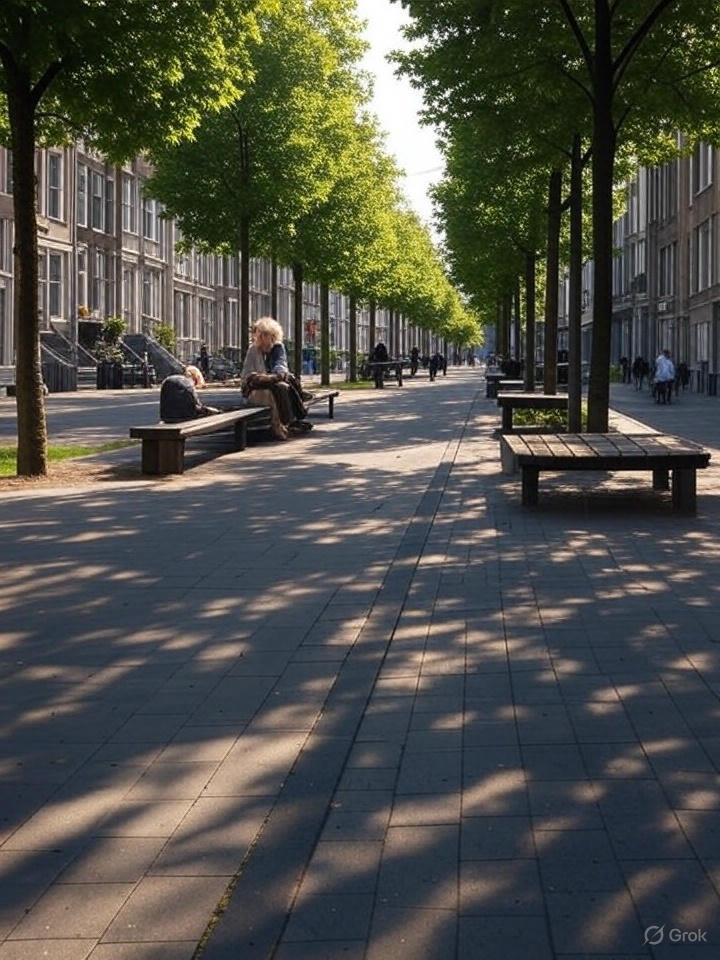
Age-Friendly Park (Image generated with AI support.)
Population aging is one of the most prominent demographic trends of the 21st century. According to the United Nations Department of Economic and Social Affairs as of 2019 9.1 percent of the world population was aged 65 and over; this proportion is projected to reach 11.7 percent by 2030 and 15.9 percent by 2050 (UN Department of Economic and Social Affairs 2019 p. 18). The primary drivers of this increase include the extension of life expectancy at birth which rose from 64.6 years in 1990 to 72.6 years in 2019 an increase of eight years and the decline in fertility rates which fell from 3.2 births per woman in 1990 to 2.5 in 2019 (UNDESA 2019b pp. 18-28). The United Nations Population Division notes that low fertility rates will further intensify this trend and that the proportion of older adults in urban areas is expected to rise to 22 percent by 2050 (UNECE Working Group on Ageing 2015 p. 2; Ferreira 2010 p. 55).
WHO defines aging biologically as the limitation of physiological functions due to molecular and cellular deterioration increased risk of disease and reduced individual capacity (WHO 2015 p. 25). Improvements in education health care and living conditions have accelerated this process particularly increasing urban migration in developing countries. In Türkiye as of 2019 the proportion of the older population reached 9.1 percent of which 7.9 percent lived in urban areas and 1.2 percent in rural areas (TÜİK 2020b). Life expectancy at birth which was 30 years for men and 33 years for women in the 1940s has risen to 71 and 76 years respectively today; in 2023 it is estimated at 75.8 years for men and 80.2 years for women (TÜİK 2020a). This demographic shift renders the adaptation of cities to be age-friendly not only a necessity but also a mark of human achievement (UNDESA 2019c).
Biological effects of aging include loss of vision and hearing reduced mobility decreased walking speed balance disorders and chronic diseases such as coronary artery disease osteoporosis and diabetes mellitus. Psychological and social dimensions manifest through factors such as income loss after retirement social isolation and weakening of family ties. These conditions can increase dependency among older adults; however appropriate environmental conditions can mitigate these effects (Tutal and Üstün 2009 p. 2).
An age-friendly city is defined by WHO as one that supports the active participation of older adults by providing accessible structures and services and safe livable environments (WHO 2007 p. 1). Aslan (2015 p. 26) describes such cities as environments that enable active aging through safety and cleanliness while Gorman and others (2019 p. 2) define them as spaces offering affordable and accessible transportation. This concept became an international effort in 2006 with WHO’s Global Age-Friendly Cities Guide aiming to transform older adults from passive service recipients into active members of society (WHO 2007). The Brasilia Declaration on Aging (1996) emphasizes that older adults are a resource for families communities and economies (WHO 1997 p. 21).

Older Adults Walking on Sidewalks (Image generated with AI support.)
WHO evaluates age-friendly cities across the following eight domains:
These components are based on the ecological model of Nahemow and Lawton which emphasizes the dynamic interaction between individual adaptation and environmental change (Van Hoof 2018). WHO recommends that these domains be integrated with principles of inclusive cities (tolerance equity social justice) and sustainability (balance between current and future generations) (Coşkun 2019). Furthermore Sustainable Development Goal 11 of the 2030 Agenda for Sustainable Development supports age-friendly elements such as accessible housing public transportation and green environments (UNDESA 2020).
The four-phase process recommended by WHO to achieve age-friendly city status is as follows:
Active aging is a process that encourages older adults to participate in social economic and cultural activities (ASPB 2014). The UN Principles for Older Persons adopted in 1991 emphasize independence (capacity building independent living income-generating activities) and participation (social relationships involvement in political processes) (Buz et al. p. 391). Age-friendly cities support these principles by promoting healthy aging reducing dependency and improving quality of life (WHO 2007). Physiological changes associated with aging such as vision and hearing loss and reduced mobility along with chronic diseases like coronary artery disease and osteoporosis can hinder this process; however appropriate environmental conditions can mitigate these effects (Tutal and Üstün 2009 p. 2).
WHO’s definition of “successful aging” includes low risk of disease high physical and cognitive function and active engagement with life (WHO 1995). Age-friendly environments play a critical role in achieving these goals. For example accessible sidewalks help maintain walking speed while social participation programs reduce isolation. In Türkiye policies promoting active aging have positively impacted the psychosocial well-being of older adults and aim to prevent premature mortality (TÜİK 2020a).
Age-friendly city initiatives vary globally:
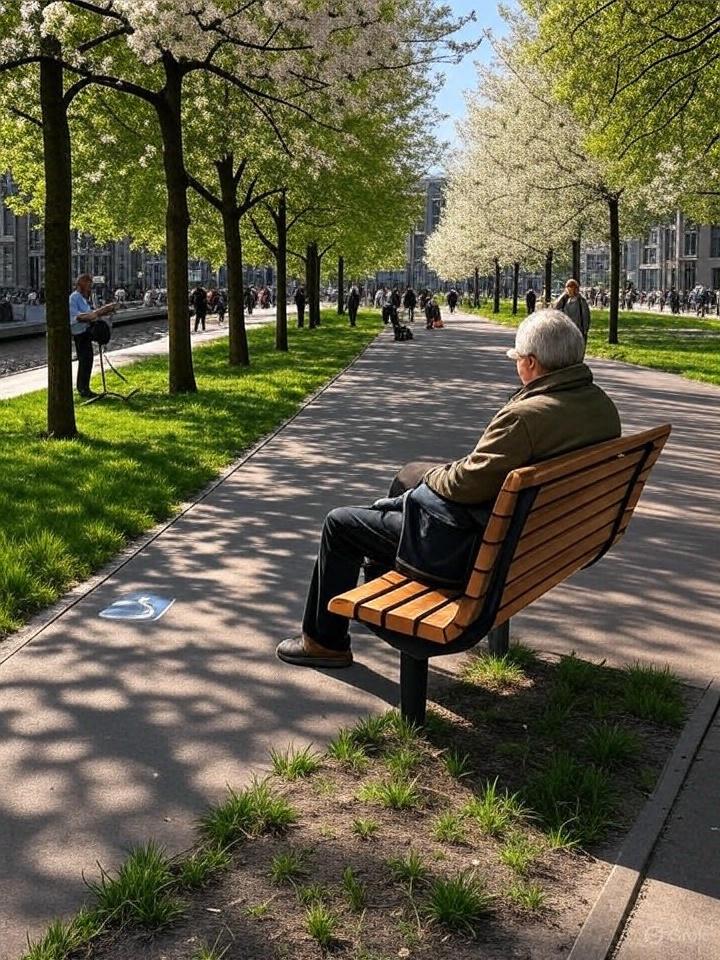
Age-Friendly Park (Image generated with AI support.)
As the share of older adults in tourism grows the need for airports to become age-friendly has become increasingly important (Frye 2011 p. 41). An age-friendly airport provides specialized services in areas such as wayfinding fatigue technology and accessibility (ACRP 2014):
Older travelers face challenges such as wayfinding (confusing signage) fatigue (long waiting times) and technology use (difficulties with kiosks). Awareness (medical check-ups group tours) sectoral regulations (standardization) collective efforts (stakeholder collaboration) and national strategies (specific regulations) can address these issues (ACRP 2014).

An older adult in the city (Image generated with AI support.)
With the rising older population in Türkiye (75.8 years for men and 80.2 years for women in 2023) and rapid urbanization the need for age-friendly city policies has increased (TÜİK 2020a). However problems persist such as non-functional elevators in Istanbul’s metro system slippery sidewalks in Ankara and lack of green spaces in İzmir (for example Fatma Hanım’s winter difficulties and Yasin Bey’s knee problems). While initiatives such as the Accessible Airport Project offer hope more regulation is needed to address the specific needs of older adults such as the ability to walk without assistance.
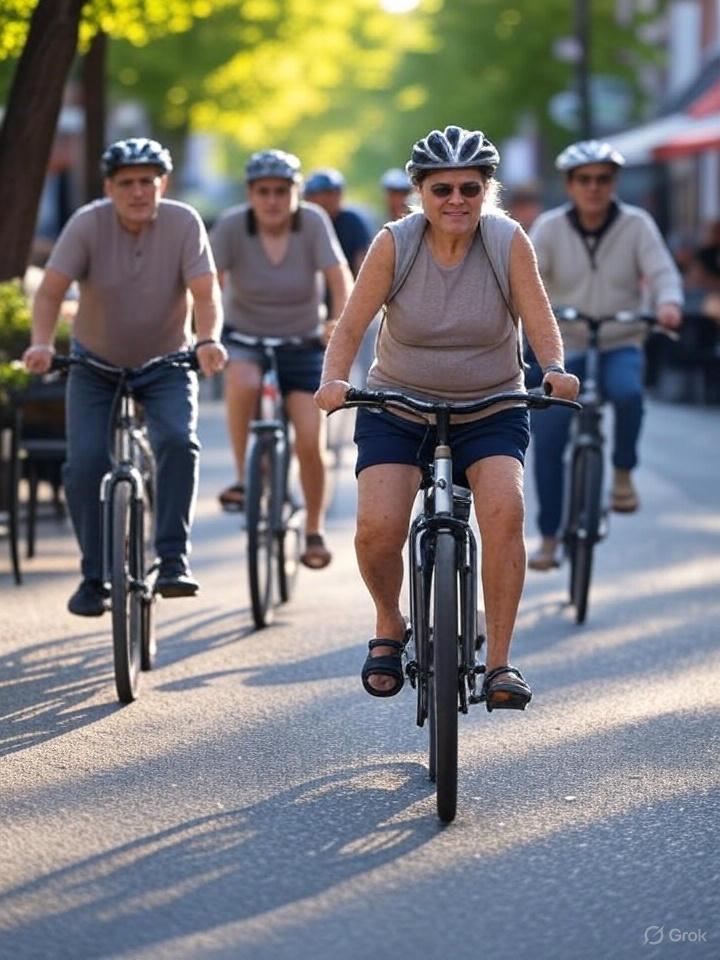
(Image generated with AI support.)
Age-friendly cities reduce social isolation improve access to health services enable early diagnosis of chronic diseases and support sustainability. Japan Scandinavian countries and European cities serve as models through accessibility and social programs. In the future smart city technologies (such as traffic management) sustainable infrastructure (green spaces) and the 2030 Sustainable Development Goals will support the expansion of such cities (UNDESA 2020). Technology will play a key role in meeting older adults’ needs for mobility and communication.
Age-friendly cities offer a solution to the global challenge of aging by promoting active aging and enhancing the well-being of the entire population. Developed under WHO’s guidance this model is strengthened through international cooperation and is increasingly applicable in developing countries such as Türkiye. Age-friendly airports and cities are becoming integral components of modern societies contributing to a more inclusive and sustainable future.
Akgül, Ahmet. “Dünyada Yaşlı Dostu Şehirler.” Ahmet Akgül, June 19, 2025. https://www.ahmetakgul.com.tr/index.php/uzmanliklar/gerontoloji-yaslanma-bilimi/866-dunyada-yasli-dostu-sehir-ler. Accessed June 21, 2025.
Anadolu Üniversitesi. "Yaşlı Dostu Kentler ve Akıllı Şehirler." Anadolu Üniversitesi, June 19, 2025. https://cdn.anadolu.edu.tr/files/anadolu-cms/JEwryGeW/uploads/ii-b-1-17d2dc942a9f5a1a.pdf. Accessed June 21, 2025.
Dergipark. "Yaşlı Dostu Kentler: Türkiye’de Bir Değerlendirme." Dergipark, June 19, 2025. https://dergipark.org.tr/tr/download/article-file/1363841. Accessed June 21, 2025.
Dergipark. “Age-Friendly Cities: An Evaluation in Turkey.” Dergipark, June 19, 2025. https://dergipark.org.tr/en/download/article-file/3375500. Accessed June 21, 2025.
Heryasta. "Şehirler Nasıl Yaşlı Dostu Olabilir?" Heryasta, June 19, 2025. https://heryasta.org/guncel/sehirler-nasil-yasli-dostu-olabilir/. Accessed June 21, 2025.
Koç Üniversitesi. "Yaşlı Dostu Akıllı Kentler." Koç Üniversitesi, June 19, 2025. https://www.koski.gov.tr/uploads/sunumlar/yasli-dostu-akilli-kentler.pdf. Accessed June 21, 2025.
Ministry of Family and Social Services. *Proceedings of the Age-Friendly Cities Symposium*. Ministry of Family and Social Services, June 19, 2025. https://www.aile.gov.tr/uploads/eyhgm/uploads/pages/yasli-dostu-kentler-sempozyumu-bildiri-kitabi/yasli-dostu-kentler-sempozyumu-bildiri-kitabi-ni-indirmek-icin-tiklayiniz.pdf. Accessed June 21, 2025.
ResearchGate. "Yaşlı Dostu Kentler (Age-Friendly City)." ResearchGate, June 19, 2025. https://www.researchgate.net/publication/348480291_Yasli_Dostu_Kentler_Age_Frendly_City. Accessed June 21, 2025.
World Health Organization (WHO). *Yaşlı Dostu Kentler ve Topluluklar: Türkiye İçin Bir Rehber*. WHO, June 19, 2025. https://iris.who.int/bitstream/handle/10665/349479/WHO-EURO-2021-4153-43912-61850-tur.pdf. Accessed June 21, 2025.
İstanbul Kent Konseyi. “Yaşlı Dostu Kentler Çalıştay Raporu Yayımlandı.” İstanbul Kent Konseyi, June 19, 2025. https://istanbulkentkonseyi.org.tr/yasli-dostu-kentler-calistay-raporu-yayimlandi/. Accessed June 21, 2025.
İstanbul Üniversitesi. "Yaşlı Dostu Kentler Üzerine Bir İnceleme." İstanbul Üniversitesi, June 19, 2025. https://cdn.istanbul.edu.tr/file/JTA6CLJ8T5/CD01672E672C468B8462EAD4EC0E1138. Accessed June 21, 2025.

Age-Friendly Cities
WHO Criteria | Social Support and Health Services Fulfillment of Civic Duty and Labor Force Participation Information Access and Communication Inclusion in Social Life and Society's Respect for the Elderly Social Participation Housing Transportation Outdoor Spaces and Buildings | ||||||||
|---|---|---|---|---|---|---|---|---|---|
No Discussion Added Yet
Start discussion for "Age-Friendly Cities" article
Population Aging and Urbanization
The Age-Friendly City Concept
Eight Core Domains
Four-Phase Cycle
Active Aging and Age-Friendly Cities
International Examples
The Age-Friendly Airport Concept
Examples
Challenges and Solutions
Situation in Türkiye
Advantages and Future Strategies