

This article was automatically translated from the original Turkish version.
+1 More
Location | Samsun Türkiye | ||||||||
|---|---|---|---|---|---|---|---|---|---|
Opening | 18 September 2012 | ||||||||
Feature(s) | Türkiye's first exchange museum | ||||||||
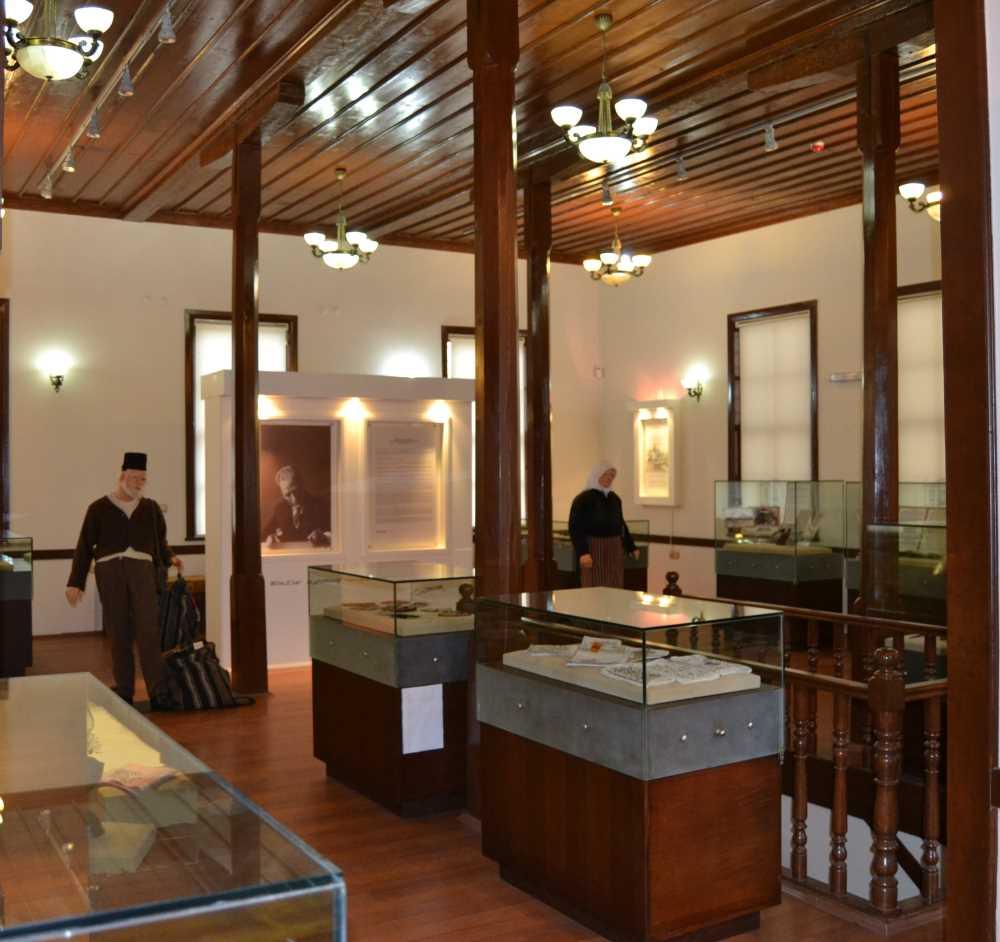
Alaçam Exchange Museum is a thematic ethnographic museum located in the Alaçam district of Samsun and holds the distinction of being Türkiye’s first exchange museum. It was established to display artifacts reflecting the lives, cultural heritage, and migration experience of the exchangees who arrived in Anatolia as a result of the Turkish-Greek Population Exchange, implemented through an additional protocol to the Treaty of Lausanne.

Alaçam Exchange Museum (Republic of Türkiye Samsun Governorship)
The building of the Alaçam Exchange Museum was constructed in the last quarter of the 19th century as a primary school and later served as a public building for various purposes. In 2010, it was restored by the Samsun Provincial Special Administration and converted into a museum. It opened to the public on 16 April 2012, and its official opening ceremony took place on 18 September 2012 with the participation of the Minister of Culture and Tourism, Ertuğrul Günay. The museum’s founding is rooted in the Turkish-Greek Population Exchange, which was carried out through an additional protocol appended to the Treaty of Lausanne on 24 July 1923. According to this protocol, Turks living in Greece outside Istanbul and Western Thrace and Greeks living in Türkiye were subjected to compulsory migration. Approximately 1.25 million Orthodox Greeks were relocated to Greece, while approximately 500,000 Muslim Turks were resettled in Anatolia. This process, recognized as the first official compulsory migration in history, saw 44,255 migrants arrive in Samsun between 31 December 1923 and July 1924. Some were settled in the districts of Alaçam, Tekkeköy, Bafra, Ondokuzmayıs, Çarşamba, and Terme, while others were transported by land and rail to inland regions such as Tokat, Amasya, Çorum, Sivas, Yozgat, and Niğde. The Alaçam Exchange Museum is the first exchange museum to preserve the material and spiritual traces of this historic migration.
The museum building is a single-story structure with a broken roof covered in Marseille tiles.
The museum displays various ethnographic artifacts reflecting the daily life and cultural heritage of the exchangees:

Alaçam Exchange Museum (Samsun Metropolitan Municipality)
The Alaçam Exchange Museum is open to visitors from Monday to Sunday, except on Mondays, between 08.00 and 17.00.
Samsun Metropolitan Municipality. "Alaçam Mübadele Müzesi." Samsun Metropolitan Municipality. Accessed August 16, 2025. https://samsun.bel.tr/turizm/alacam-mubadele-muzesi
T.C. Kültür ve Turizm Bakanlığı. "Alaçam Mübadele Müzesi." Kültür Portalı. Accessed August 16, 2025.
T.C. Ministry of Culture and Tourism Samsun Provincial Directorate. "Alaçam Mübadele Müzesi." Accessed August 16, 2025. https://samsun.ktb.gov.tr/TR-362750/alacam-mubadele-muzesi.html.
T.C. Samsun Valiliği. "Alaçam Mübadele Müzesi." T.C. Samsun Valiliği. Accessed August 16, 2025. http://www.samsun.gov.tr/mubadele-muzesi.
Çetinoğlu, Derya. “Alaçam Mübadele Müzesi.” *Türkiye Turizm Ansiklopedisi*. Accessed August 16, 2025. https://turkiyeturizmansiklopedisi.com/alacam-mubadele-muzesi.

Location | Samsun Türkiye | ||||||||
|---|---|---|---|---|---|---|---|---|---|
Opening | 18 September 2012 | ||||||||
Feature(s) | Türkiye's first exchange museum | ||||||||
No Discussion Added Yet
Start discussion for "Alaçam Exchange Museum" article
Foundation and Historical Background
Architectural Features
Exhibited Artifacts
Visit Information