Doğum tarihi | 1800-01-28 | ||||||||
|---|---|---|---|---|---|---|---|---|---|
Place of Birth | Bavaria, Ludwigsstadt | ||||||||
Ölüm tarihi | 1869-10-09 | ||||||||
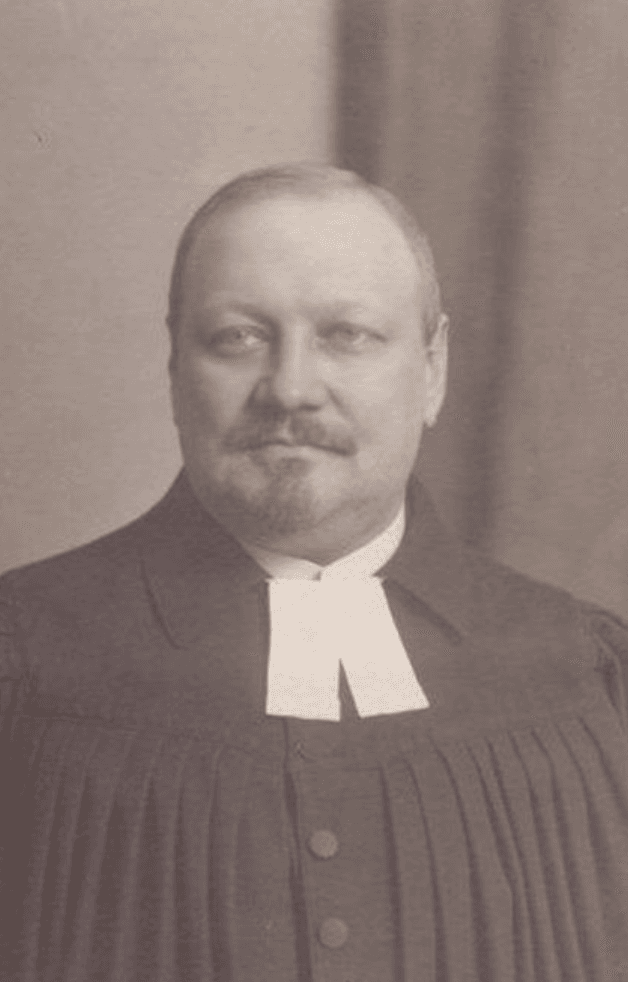
Alexander Kapp (1800–1869) was a German educational thinker who first used the term “andragogy” in his 1833 publication Platon’s Erziehungslehre (Plato’s Theory of Education). Although he did not develop it into a systematic theory specifically focused on adult learning and its philosophical dimensions, his work marked the first appearance of the term in academic literature. In Turkish academic literature, the origin of the concept of andragogy is frequently traced back to Kapp’s terminological contribution. In this work, while explaining Plato’s conception of education, Kapp examined adult moral development and character education under the specific heading “Andragogik.” Born on 28 January 1800 in Ludwigsstadt, Bavaria, Kapp died on 9 October 1869 near Zurich.
Andragogy is derived from the Greek words andr- (adult) and agogos (leader), meaning “the art of guiding adult learning.” Unlike pedagogy, this concept focuses specifically on the learning needs and intrinsic motivations of adults.
The section titled “Die Andragogik oder Bildung im männlichen Alter” in Kapp’s Platon’s Erziehungslehre established a specialized terminology for adult education. This approach posited that adults can learn through internal virtues and character development rooted in their own life experiences. Although Kapp did not formulate a comprehensive theory, he played a pivotal role in the emergence of the concept.
Alexander Kapp is recognized as the terminological pioneer of andragogy. The transformation of the concept into a systematic theory occurred in the 20th century through the contributions of thinkers such as Rosenstock-Huessy and Eduard Lindeman. Subsequently, Malcolm Knowles systematically developed andragogy in the United States within the framework of “the theory of adult learning.”
In Turkey, andragogy research, particularly in the study prepared by Gülden Akın (2014), has academically emphasized the historical origins of the concept, its distinction from pedagogy, and its practical significance.
Alexander Kapp’s work has also been referenced by contemporary educational theorists such as Stephen Brookfield. Brookfield adopted andragogy as an approach independent of pedagogy, grounded in critical thinking and democratic learning processes. In this context, Kapp’s conceptual contribution provided an ethical foundation for Brookfield’s paradigm of emancipation in education.
Accessed November 26, 2025.
Akın, Gülden. “Andragoji Kavramı ve Andragoji ile Pedagoji Arasındaki Fark.” *Ankara Üniversitesi Eğitim Bilimleri Fakültesi Dergisi* 47, no. 1 (2014): 279–300. Accessed July 27, 2025. https://dergipark.org.tr/tr/pub/auebfd/article/444996
Arslan Dişli, Gamze. "A Research on Organizations Operating in the White Meat Sector Regarding Adult Education: 'Andragogy as a Theory of Adult Education'." Master's thesis, https://9lib.net/document/q05p84gg-sektöründe-faaliyet-gösteren-örgütlerin-yetişkin-eğitimleri-üzerine-araştırma.html
Henschke, John A. "A History of Andragogy and its Documents as they Pertain to Adult Basic and Literacy Education" PAACE Journal of Lifelong Learning 25 (2016): 45–64.
Loeng, Svein. "Alexander Kapp – the First Known User of the Andragogy Concept." International Journal of Lifelong Education 36, no. 6 (2017): 629–643.
Üstün, Ayşin Gaye – DAŞ, Arif. “Pedagoji, Andragoji ve Hetagoji Yaklaşımı.”

Doğum tarihi | 1800-01-28 | ||||||||
|---|---|---|---|---|---|---|---|---|---|
Place of Birth | Bavaria, Ludwigsstadt | ||||||||
Ölüm tarihi | 1869-10-09 | ||||||||
Andragogy and Kapp’s Conceptual Contributions
Impact and Academic Significance