

This article was automatically translated from the original Turkish version.
System Name | S-400 Triumph | ||||||||
|---|---|---|---|---|---|---|---|---|---|
NATO Code | SA-21 Growler | ||||||||
Type | Long-range surface-to-air missile defense system | ||||||||
Country of Origin | Russia | ||||||||
Manufacturer / Developer | Almaz-Antey | ||||||||
Entry into Service Date | 2007 | ||||||||
Mission | Provide air defense against aircraft, unmanned aerial vehicles, cruise missiles, and certain ballistic missile threats | ||||||||
Maximum Range | Approximately 40 km to 400 km | ||||||||
Radar Range | Detection capability of up to approximately 600 km | ||||||||
Main Components | Command and control element Support and supply vehicles Intercept missiles Radar vehicles | ||||||||
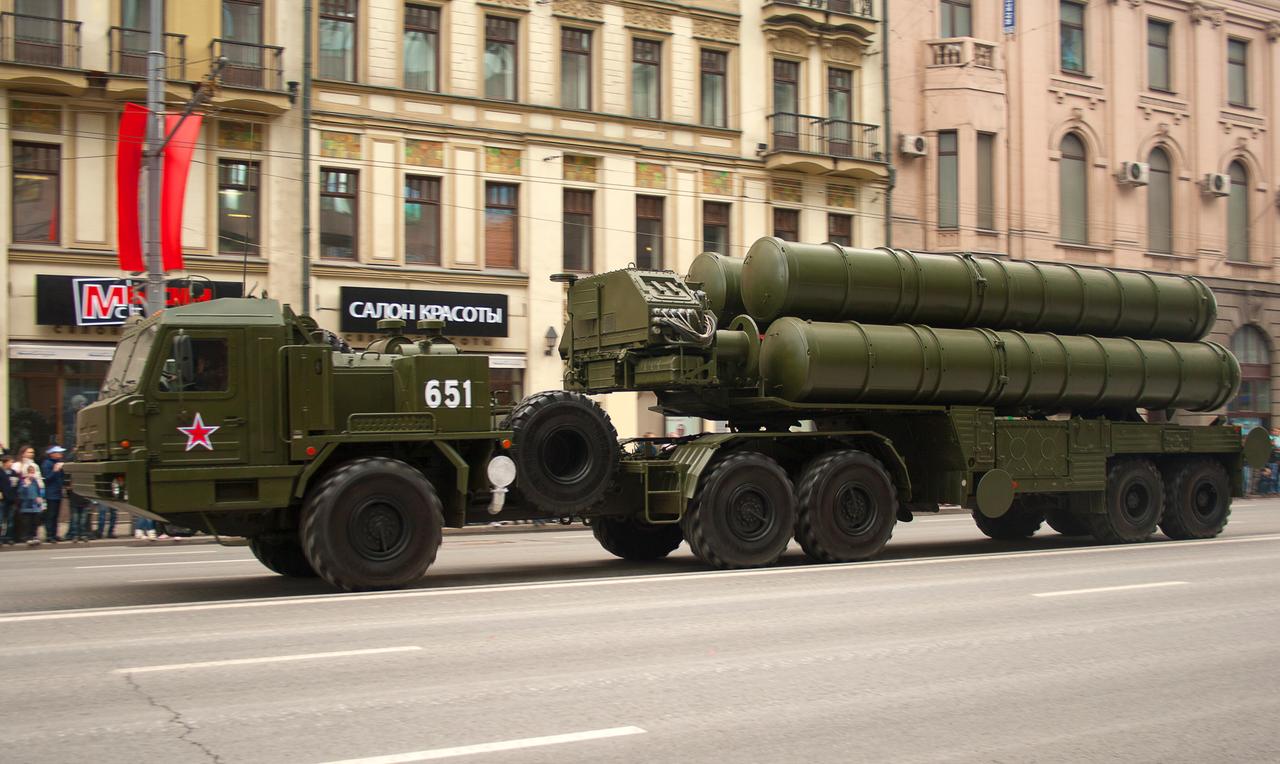
S-400 Triumph (NATO reporting name: SA-21 Growler), a multi-role, long-range air defense missile system designed and developed by the Russian-based Almaz Central Design Bureau. Its conceptual foundations were first laid during the 1980s in the Soviet Union, with the primary objective of replacing the then-existing S-200 (Angara/Vega/Dubna) series and S-300P air defense systems with a far more modern architecture.【1】 This project, intended to form the highest tier of Russia’s layered air and ballistic missile defense network, was structured as a comprehensive technological and operational upgrade over the preceding S-300 series surface-to-air missile systems.
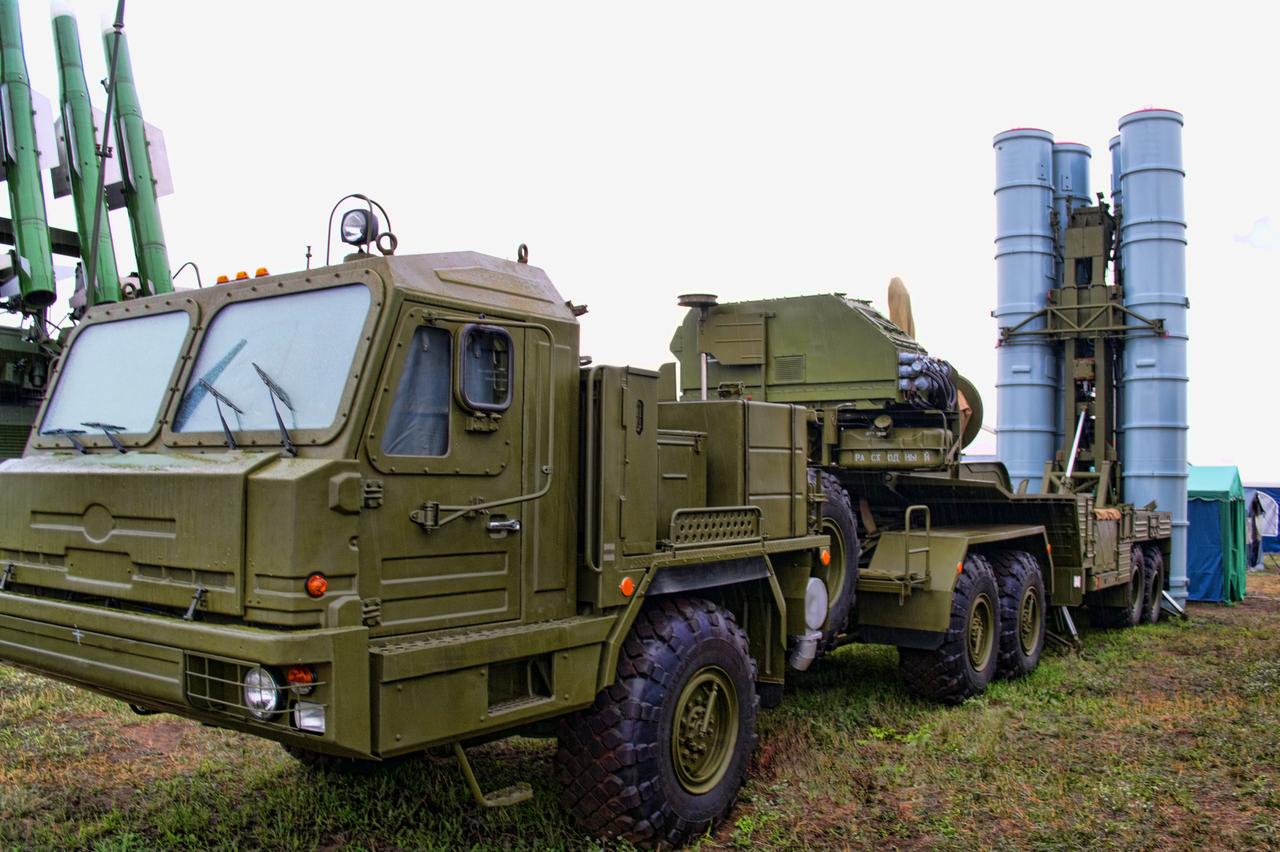
S-300 Serisi (Andrey Korchagin)
The prototype and testing phases of the S-400 system were built upon the S-300 infrastructure in accordance with the strategic air defense needs of the Russian Federation following the dissolution of the Soviet Union. The system was enhanced through the integration of munitions produced by the Fakel Machine Design Bureau and through the synchronization of radar systems capable of simultaneous target tracking. The newly developed system underwent extensive testing to achieve radical increases in radar detection and engagement ranges compared to previous generations, aiming for an operational capability twice as effective as its predecessors.【2】
Following the completion of development and testing, the S-400 Triumph system was officially commissioned into the Russian Armed Forces inventory and entered active service in April 2007.【3】 Its first operational deployment occurred in August of the same year. To strengthen national air defense, Russia initially established four S-400 regiments covering the Moscow region, the Kaliningrad Baltic exclave, and the Eastern Military District, thereby initiating serial production and active deployment of the system.
The S-400 air defense system is a complex network integrating multifunctional radars, autonomous detection and targeting systems, surface-to-air missile complexes, launch vehicles, and command and control centers. One of its most significant operational advantages is its ability to achieve combat readiness within just five minutes after halting movement. The S-400 is designed to destroy aircraft, unmanned aerial vehicles (UAVs), cruise missiles, strategic and tactical aircraft, operational-tactical and medium-range ballistic missiles, and hypersonic targets moving at speeds far exceeding the speed of sound. With an exceptionally broad target profile, the system possesses the technical capability to effectively intercept stealth aircraft such as the B-2 and F-117, strategic bombers like the B-1, F-111, and B-52H, electronic warfare aircraft such as the EF-111A and EA-6, early warning aircraft like the E-3A and E-2C, fighter jets including the F-15, F-16, F-35, and F-22, and Tomahawk missiles.【4】
A standard S-400 battery consists of at least one mobile command and control center, eight launch vehicles, and thirty-two ready-to-fire missiles. The 55K6E command and control center, which serves as the system’s brain, is mounted on a Ural-532301 mobile command vehicle and processes data from surveillance radars via LCD consoles, tracks and prioritizes airborne threats, and coordinates between batteries. The 92N6E radar (NATO code: Gravestone), mounted on an MZKT-7930 8x8 vehicle, handles fire control and target tracking. In autonomous operations, the same vehicle can also carry the 96L6 Cheese Board 3D surveillance radar. The primary detection and battle management radar, the 91N6E Big Bird, is mounted on an 8x8 trailer and can detect air targets up to 600 kilometers away while simultaneously tracking up to 300 targets. The launch vehicles, designated SP85TE2 platforms, are mounted on BAZ-64022 6x6 or MAZ-79100 series carriers and carry four launch tubes capable of holding a combination of different missile types.【5】
The technical parameters of the S-400 system place it at the highest level among its global counterparts. With the aid of its powerful radars, the system can detect targets at a maximum range of 600 kilometers. Its engagement range extends up to 400 kilometers, and its maximum altitude capability reaches 30 kilometers. The system can simultaneously engage up to 36 different targets, with its missiles achieving speeds of up to 4.8 kilometers per second (approximately Mach 14). In response to sudden attacks, the system’s reaction time to an incoming target is less than 10 seconds.【6】
S-400 (Rumoaohepta7)
In addition to being compatible with older S-300PMU munitions, the S-400 system can simultaneously fire four new-generation missiles covering short, medium, and long ranges to create a layered defense. One of its longest-range missiles, the active radar-guided 40N6, is designed to destroy critical targets such as AWACS, J-STARS, and high-value electronic warfare aircraft at distances of up to 400 kilometers.【7】 The 48N6 missile (improved versions: 48N6DM/48N6E3), used for long-range air defense, can neutralize targets within 250 kilometers thanks to its powerful propulsion system. For medium-range air defense, the 9M96E2 missile with a 120-kilometer effective range is employed. For short-range engagements against fast and highly maneuverable targets such as fighter jets, the 9M96E missile, with a 40-kilometer range and direct impact capability, is deployed.【8】
The S-400 family has basic variants for domestic use and export, but due to confidentiality surrounding export versions, they are generally referred to as a unified complex. The Russian defense industry does not view the S-400 as an endpoint but continues design efforts to advance to the next stage. In this context, serial production of the S-500 air defense system, a significantly more advanced variant of the S-400, is planned. During bilateral talks and official statements between Türkiye and Russia, visions have been expressed regarding the possibility of moving beyond the S-400 acquisition to potentially participate in a joint production process for the S-500 in the future.【9】
The primary military rationale for the S-400 air defense system is to provide high-effectiveness protection for politically, economically, and strategically significant military targets against all forms of aerial attack. Equipped with long-range radars and missile batteries operating across multiple altitude and range profiles, it functions as a “security umbrella” preventing violations of national airspace. It possesses the flexibility to integrate into the air defense networks of the air force, army, and navy. Simultaneously, it can exchange data with other air defense systems such as the SA-12, SA-23, and S-300 to establish a coordinated air defense command chain on the battlefield.【10】
As a fully high-tech military system designed for anti-access/area denial, the S-400 has no direct civil or humanitarian mission. However, by maximizing the security of national airspace, it indirectly safeguards civilian aviation infrastructure, dams, energy facilities, and major population centers against terrorist attacks or conventional aerial assaults during wartime.
The system’s future potential is focused on artificial intelligence-assisted target prioritization, enhanced early warning capabilities against emerging hypersonic munitions, and integration with local radar networks of other nations. It is anticipated to play a central role as a strategic deterrent in independent defense architectures not aligned with NATO standards.
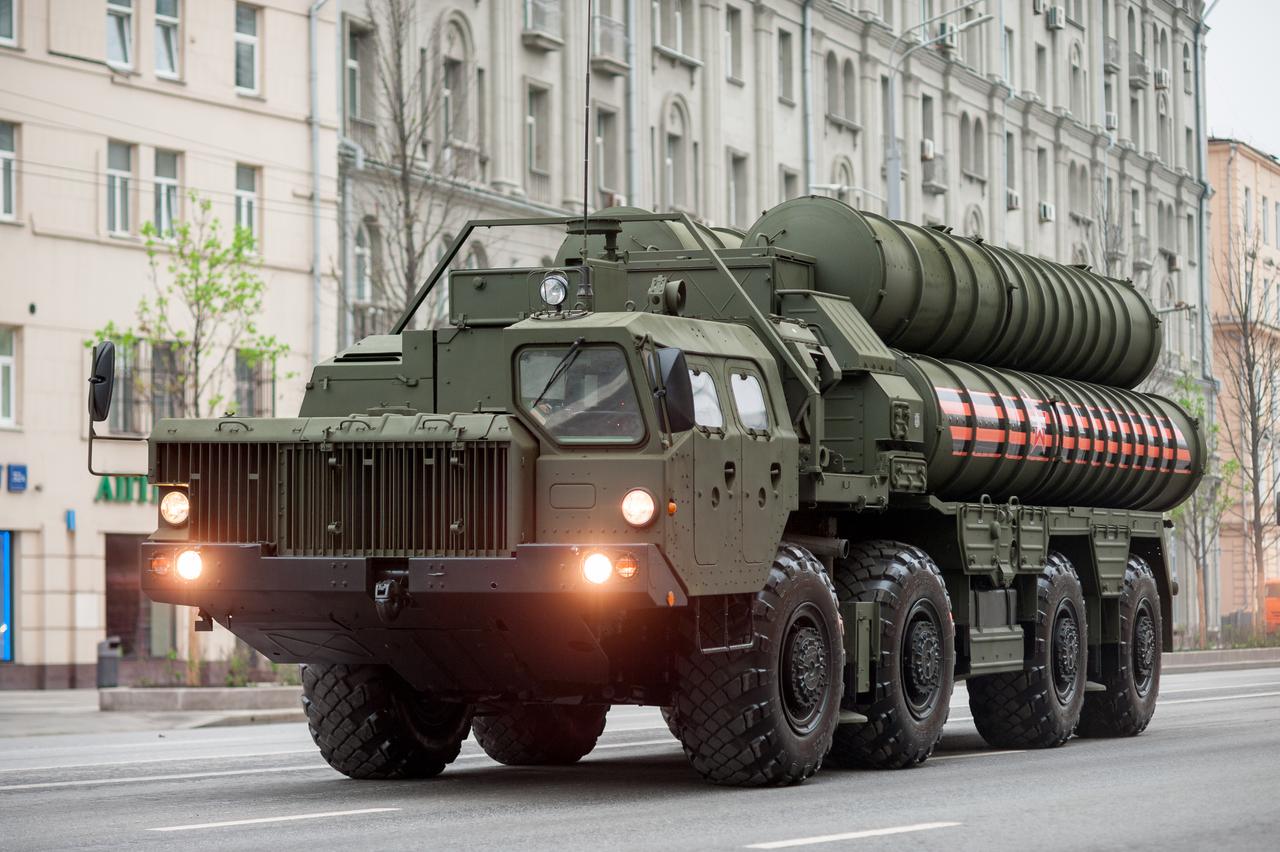
S-400 (Dmitry Fomin)
The S-400 system’s first large-scale mission began with the protection of Russia’s strategic locations. By 2015, more than 20 batteries had been delivered to the Russian Armed Forces, and by 2020, this number was planned to reach 56 batteries, establishing a critical defensive shield for national defense. The system has served as the primary element in securing high-tension frontiers such as the Moscow region, the Eastern Military District, and Kaliningrad, bordering NATO countries. Additionally, by the end of 2012, air defense units in Russia’s Southern Military District were modernized with S-400 systems.【11】
The operational experience of the S-400 is measured not only by its ability to physically destroy targets but also by its role as a strategic center of gravity capable of altering the balance of air power in a region simply by its deployment. For instance, since its introduction to the international stage, its sale to various regions has significantly affected air power balances, transforming the system from a mere military product into a major diplomatic crisis or bargaining chip.
One of the most critical international successes and controversies involving the system was Türkiye’s decision to purchase it to meet its own defense needs. Following the Syrian civil war, Türkiye engaged with Russia after the United States refused to transfer technology for its Patriot missiles and offered them at a high cost. The 2017 contract, valued at $2.5 billion, marked the historic moment when the S-400 entered a NATO member state for the first time.【12】
The first international customers to order and receive the system were Belarus in 2016 and China, which began receiving deliveries in 2018. By July 2019, two regiments had been delivered to the Chinese People’s Liberation Army. Türkiye, under a 2017 agreement, ordered two S-400 systems comprising four batteries for $2.5 billion and received its first components in July 2019. Another major global customer, India, signed a contract worth over $5 billion in 2018 for five S-400 systems; deliveries began by 2021, and negotiations with Russia continue for additional shipments. Other countries expressing interest or mentioned in connection with potential purchases include Saudi Arabia, Qatar, and the United Arab Emirates. Media reports have even suggested that Türkiye may sell its S-400 systems to a Gulf country, with negotiations reportedly ongoing.【13】
The S-400 air defense system’s largest global counterpart and direct competitor is the U.S.-made MIM-104 Patriot system. The S-400 exhibits significant differences in overall capacity regarding detection and engagement power. While the S-400 can detect threats at distances up to 600 kilometers and engage targets at ranges up to 400 kilometers, its specific operational parameters allow it to destroy ballistic targets at 60 kilometers and engage low-altitude targets flying as low as 10 meters above ground level, such as cruise missiles. In contrast, U.S. Patriot missiles require targets to be at least 60 meters above ground to be engaged. This makes the S-400 significantly more sensitive to low-flying missiles and aircraft attempting to evade detection.
S-400 (Armies Power)
The S-400’s most critical performance advantages include its wide range coverage, missiles capable of reaching speeds of 4.8 kilometers per second, and the ability to form a layered defense wall using multiple missile types across short, medium, and long ranges. Additionally, its direct impact technology provides high hit probabilities against agile targets. Financially, it offers attractive packages to buyer nations through promises of technology transfer and joint production. In contrast, its fundamental weakness lies in its near-impossibility of integration with Western and NATO infrastructure, limiting its operational synergy. As seen in the case of Türkiye, the system must operate autonomously and in isolation from NATO radar networks.【14】
The S-400 competes in the international arms market not merely as a defense system but as a geopolitical determinant. The United States employs legal mechanisms to preserve market share for its Patriot and THAAD systems and to keep allies outside Russia’s sphere of influence. The most concrete example is the CAATSA sanctions. Türkiye’s $2.5 billion S-400 purchase and India’s contract exceeding $5 billion demonstrate Russia’s competitive position in the global arms trade. The S-400 air defense system continues to serve as the most formidable competitor to U.S.-origin systems in Asia, the Middle East, and Eastern Europe, thanks to its cost-effectiveness, multi-missile capacity, and technological superiority.
Under the $2.5 billion contract signed with the Russian Federation in December 2017, the first components of two S-400 systems—one optional—were delivered to Türkiye in July 2019 and incorporated into the inventory of the Ministry of National Defense. Due to the ongoing tensions with the United States and NATO and the imposition of CAATSA sanctions, these systems have not been activated for operational duties and remain in passive status. In the past, the Wall Street Journal reported speculation that the systems could be transferred to Ukraine; however, President Recep Tayyip Erdoğan stated that the S-400 issue was closed and that the systems belong to Türkiye. In November 2023, then-Minister of National Defense Yaşar Güler affirmed that the systems are ready for use whenever needed.
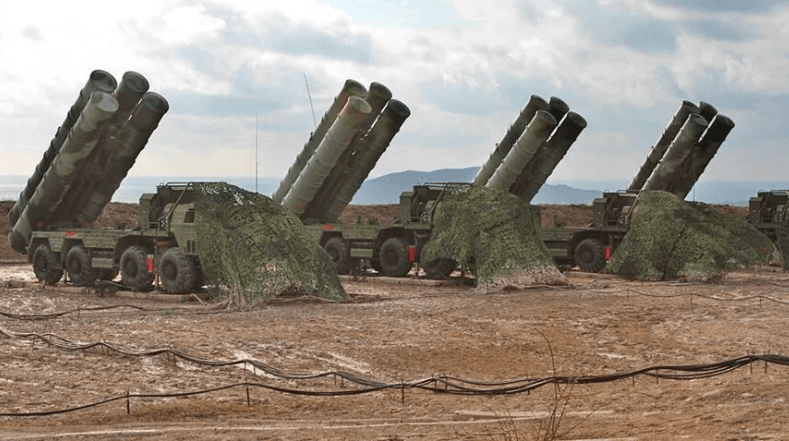
S-400 (Anadolu Ajansı)
New developments regarding the current status of the systems in the inventory were reported in the media following the 36th NATO Leaders Summit held in Ankara on July 7–8, 2026. During the summit, U.S. President Donald Trump announced the lifting of CAATSA sanctions against Türkiye and the reconsideration of Türkiye’s return to the F-35 program. Following this announcement, media reports on July 10, 2026, suggested that Türkiye intends to sell its S-400 systems to a Gulf country such as the United Arab Emirates or Qatar.【15】
In response to these reports, Kremlin spokesperson Dmitry Peskov issued an official statement on July 10, 2026, describing the possibility of sales to third countries as “an extremely sensitive issue” and confirmed that Russia and Türkiye are in contact regarding the matter. Russian authorities emphasized that any sale of the S-400 systems prioritizes the confidentiality of technical data and technology security, noting that the signed contracts include legal obligations preventing the sharing of sensitive information with third parties.【16】
Armies Power. "Russian S-400 Triumf Air Defence System In Action." Accessed July 10, 2026.https://youtu.be/kE394GDiN4A?si=dqRkcKoC4WErUGP8.
Army Technology. "S-400 Triumph Air Defence Missile System." February 3, 2020. Accessed July 10, 2026.https://www.army-technology.com/projects/s-400-triumph-air-defence-missile-system/
BBC News Türkçe. "S-400: Türkiye'nin Rusya'dan satın aldığı füze savunma sistemi neden krize yol açtı?" Accessed July 10, 2026.https://www.bbc.com/turkce/articles/c70z4yyv5xko
BYJU’S. "S-400 Missile System." BYJU’S Free IAS Prep. Accessed July 10, 2026.https://byjus.com/free-ias-prep/s-400-missile-system/.
Bloomberg HT. "Peskov’dan S-400 Açıklaması." July 10, 2026. Last updated: July 10, 2026. Accessed July 10, 2026.https://www.bloomberght.com/peskov-dan-s-400-aciklamasi-3782592
Defense News. "Turkey Cleared by US for $3.5 Billion Patriot Missile Deal, Despite S-400 Row." December 19, 2018. Accessed July 10, 2026.https://www.defensenews.com/global/europe/2018/12/19/turkey-cleared-by-us-for-35-billion-patriot-missile-deal-despite-s-400-row/
Demirci, Zuhal. "10 Soruda Türkiye Neden S-400 Alıyor?" Anadolu Ajansı, March 8, 2019. Last update: March 9, 2019. Accessed July 10, 2026.https://www.aa.com.tr/tr/turkiye/10-soruda-turkiye-neden-s-400-aliyor/1412408
Fomin, Dmitriy. "S-400 Triumf." Flickr, May 6, 2018. Accessed July 10, 2026.https://www.flickr.com/photos/df77/27102989027/
Fomin, Dmitriy. "S-400." Flickr, May 7, 2017. Accessed July 10, 2026.https://www.flickr.com/photos/df77/34460821156/
Kazachkov, Pavel. "C-400 'Триумф'." Flickr, 9 Mayıs 2011. Accessed July 10, 2026.https://www.flickr.com/photos/koraxdc/5703715084/.
Korchagin, Andrey. "Russian Surface-to-Air Missile System S-300 PMU2 Favorit. Комплекс С-300 ПМУ2 Фаворит." Flickr, August 1, 2011. Accessed July 10, 2026.https://www.flickr.com/photos/peer_gynt/6701879879/.
NTV. "Galeri | S-400 Hava Savunma Sistemi Özellikleri: Türkiye’de de Bulunan S-400 Hava Savunma Sisteminin Menzili Kaç, Özellikleri Neler?" NTV Türkiye. Accessed July 10, 2026.https://www.ntv.com.tr/turkiye/galeri-s-400-hava-savunma-sistemi-ozellikleri-turkiyede-de-bulunan-s-400-hava-savunma-sisteminin-menzili-kac-ozellikleri-neler-1732204/1.
OE Data Integration Network. "S-400 Triumph (SA-21 Growler) Russian Long-Range Surface-to-Air Missile (SAM) System." *ODIN Worldwide Equipment Guide*. Last updated: November 17, 2025. Accessed July 10, 2026.https://odin.t2com.army.mil/WEG/Asset/73ac9d16614d8cece773d91b8da86801
Rumoaohepta7. "Russia's Lethal S-400 Air Defense System on Their Way... S-400 Triumph - SA-21 Growler." Accessed July 10, 2026.https://youtu.be/1VK9W_S9qHA?si=mQMei1hFdf8ZdDIS
TASS. "Turkey Sells Russian-Made S-400 Systems to Gulf Nation — Newspaper." July 10, 2026. Accessed July 10, 2026.https://tass.com/world/2158491
[1]
OE Data Integration Network. “S-400 Triumph (SA-21 Growler) Russian Long-Range Surface-to-Air Missile (SAM) System.” ODIN Worldwide Equipment Guide. Son güncelleme 17 Kasım 2025. Erişim 10 Temmuz 2026. https://odin.t2com.army.mil/WEG/Asset/73ac9d16614d8cece773d91b8da86801.
[2]
Army Technology. “S-400 Triumph Air Defence Missile System.” Army Technology. 3 Şubat 2020. Erişim 10 Temmuz 2026. https://www.army-technology.com/projects/s-400-triumph-air-defence-missile-system/.
[3]
Army Technology. “S-400 Triumph Air Defence Missile System.” Army Technology. 3 Şubat 2020. Erişim 10 Temmuz 2026. https://www.army-technology.com/projects/s-400-triumph-air-defence-missile-system/.
[4]
NTV. “ S-400 Hava Savunma Sistemi Özellikleri: Türkiye’de de Bulunan S-400 Hava Savunma Sisteminin Menzili Kaç, Özellikleri Neler?” NTV Türkiye. Erişim 10 Temmuz 2026. https://www.ntv.com.tr/turkiye/galeri-s-400-hava-savunma-sistemi-ozellikleri-turkiyede-de-bulunan-s-400-hava-savunma-sisteminin-menzili-kac-ozellikleri-neler-1732204/1.
[5]
Army Technology. “S-400 Triumph Air Defence Missile System.” Army Technology. 3 Şubat 2020. Erişim 10 Temmuz 2026. https://www.army-technology.com/projects/s-400-triumph-air-defence-missile-system/.
[6]
NTV. “ S-400 Hava Savunma Sistemi Özellikleri: Türkiye’de de Bulunan S-400 Hava Savunma Sisteminin Menzili Kaç, Özellikleri Neler?” NTV Türkiye. Erişim 10 Temmuz 2026. https://www.ntv.com.tr/turkiye/galeri-s-400-hava-savunma-sistemi-ozellikleri-turkiyede-de-bulunan-s-400-hava-savunma-sisteminin-menzili-kac-ozellikleri-neler-1732204/1.
[7]
Army Technology. “S-400 Triumph Air Defence Missile System.” Army Technology. 3 Şubat 2020. Erişim 10 Temmuz 2026. https://www.army-technology.com/projects/s-400-triumph-air-defence-missile-system/.
[8]
NTV. “ S-400 Hava Savunma Sistemi Özellikleri: Türkiye’de de Bulunan S-400 Hava Savunma Sisteminin Menzili Kaç, Özellikleri Neler?” NTV Türkiye. Erişim 10 Temmuz 2026. https://www.ntv.com.tr/turkiye/galeri-s-400-hava-savunma-sistemi-ozellikleri-turkiyede-de-bulunan-s-400-hava-savunma-sisteminin-menzili-kac-ozellikleri-neler-1732204/1.
[9]
Demirci, Zuhal. “10 Soruda Türkiye Neden S-400 Alıyor?” Anadolu Ajansı, 8 Mart 2019. Erişim 10 Temmuz 2026. https://www.aa.com.tr/tr/turkiye/10-soruda-turkiye-neden-s-400-aliyor/1412408.
[10]
Army Technology. “S-400 Triumph Air Defence Missile System.” Army Technology. 3 Şubat 2020. Erişim 10 Temmuz 2026. https://www.army-technology.com/projects/s-400-triumph-air-defence-missile-system/.
[11]
Demirci, Zuhal. “10 Soruda Türkiye Neden S-400 Alıyor?” Anadolu Ajansı, 8 Mart 2019. Erişim 10 Temmuz 2026. https://www.aa.com.tr/tr/turkiye/10-soruda-turkiye-neden-s-400-aliyor/1412408.
[12]
OE Data Integration Network. “S-400 Triumph (SA-21 Growler) Russian Long-Range Surface-to-Air Missile (SAM) System.” ODIN Worldwide Equipment Guide. Son güncelleme 17 Kasım 2025. Erişim 10 Temmuz 2026. https://odin.t2com.army.mil/WEG/Asset/73ac9d16614d8cece773d91b8da86801.
[13]
TASS. “Turkey Sells Russian-Made S-400 Systems to Gulf Nation — Newspaper.” TASS, 10 Temmuz 2026. Erişim 10 Temmuz 2026. https://tass.com/world/2158491.
[14]
Bloomberg HT. “Peskov’dan S-400 Açıklaması.” Bloomberg HT, 10 Temmuz 2026. Güncelleme 10 Temmuz 2026. Erişim 10 Temmuz 2026. https://www.bloomberght.com/peskov-dan-s-400-aciklamasi-3782592.
[15]
Bloomberg HT. “Peskov’dan S-400 Açıklaması.” Bloomberg HT, 10 Temmuz 2026. Güncelleme 10 Temmuz 2026. Erişim 10 Temmuz 2026. https://www.bloomberght.com/peskov-dan-s-400-aciklamasi-3782592.
[16]
NTV. “ S-400 Hava Savunma Sistemi Özellikleri: Türkiye’de de Bulunan S-400 Hava Savunma Sisteminin Menzili Kaç, Özellikleri Neler?” NTV Türkiye. Erişim 10 Temmuz 2026. https://www.ntv.com.tr/turkiye/galeri-s-400-hava-savunma-sistemi-ozellikleri-turkiyede-de-bulunan-s-400-hava-savunma-sisteminin-menzili-kac-ozellikleri-neler-1732204/1.

System Name | S-400 Triumph | ||||||||
|---|---|---|---|---|---|---|---|---|---|
NATO Code | SA-21 Growler | ||||||||
Type | Long-range surface-to-air missile defense system | ||||||||
Country of Origin | Russia | ||||||||
Manufacturer / Developer | Almaz-Antey | ||||||||
Entry into Service Date | 2007 | ||||||||
Mission | Provide air defense against aircraft, unmanned aerial vehicles, cruise missiles, and certain ballistic missile threats | ||||||||
Maximum Range | Approximately 40 km to 400 km | ||||||||
Radar Range | Detection capability of up to approximately 600 km | ||||||||
Main Components | Command and control element Support and supply vehicles Intercept missiles Radar vehicles | ||||||||
No Discussion Added Yet
Start discussion for "Almaz-Antey S-400 Triumph" article
Development Process
Technical Specifications and Variants
Avionics and System Components
Current and Planned Variants
Purpose and Missions
Operational History and Achievements
User Countries and Integration
International Comparison and Competing Systems
Performance Advantages and Weaknesses
Global Market Analysis and Competitive Landscape
Status of S-400 Systems in the Turkish Armed Forces Inventory