

This article was automatically translated from the original Turkish version.
+1 More
Location | Ankara Türkiye | ||||||||
|---|---|---|---|---|---|---|---|---|---|
Construction Year | Featured | ||||||||
Museum Opening | Featured | ||||||||
Sections | Railways Museum and Atatürk's residence | ||||||||
Highlights | White Train carriage and İbrahim Çallı painting | ||||||||
Atatürk Residence and Railways Museum is a significant historical structure in Ankara that bears witness to the founding period of the Republic of Türkiye. Built in 1892 during the construction of the Baghdad Railway as the “Directorate Building,” this structure within the Ankara Station complex was initially used for the administrative management of railways. On 27 December 1919, it was assigned to Mustafa Kemal Paşa upon his arrival in Ankara as the Commander-in-Chief Headquarters and Residence.

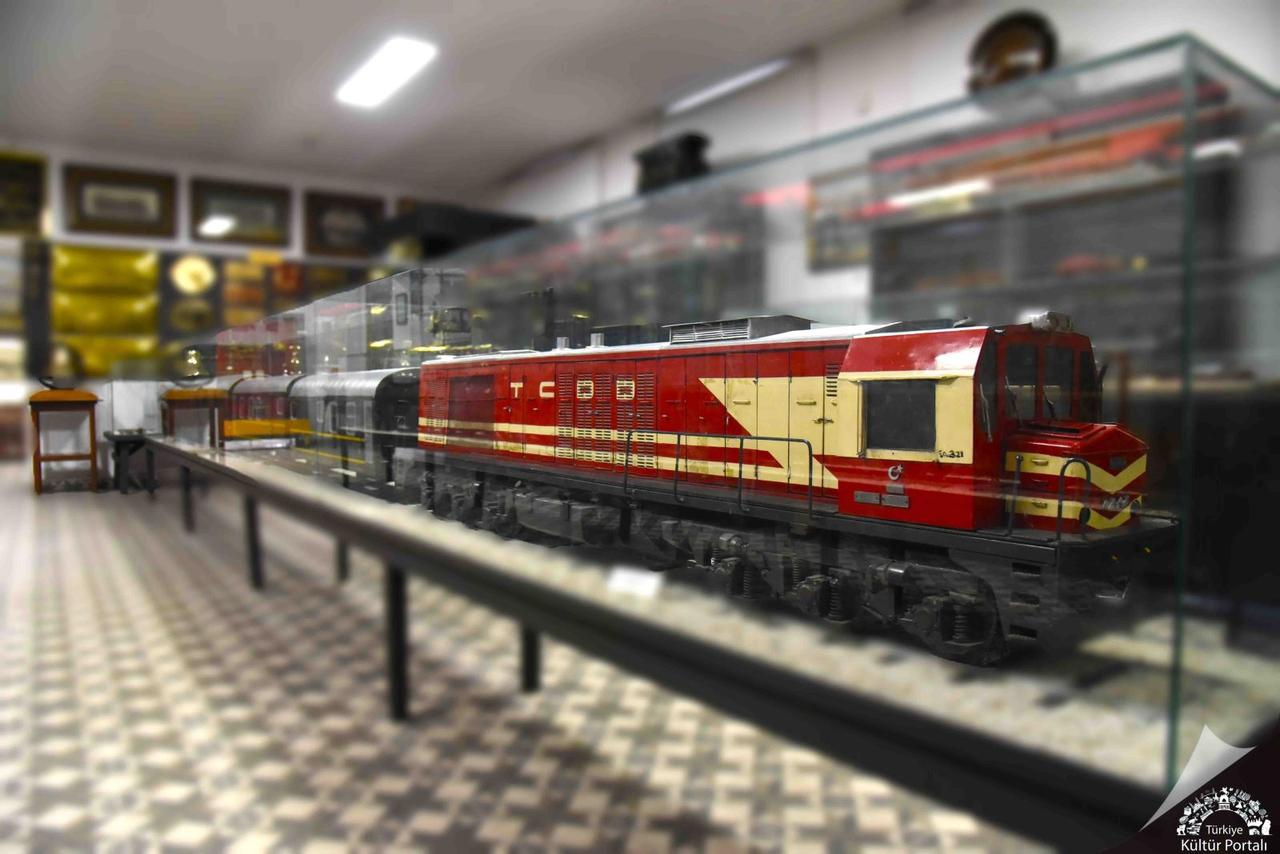
Atatürk Residence and Railways Museum (Türkiye Culture Portal)
This building served as a strategic center during the National Struggle years, during which the plans for the War of Independence were formulated. The Treaty of Ankara signed with France on 21 October 1921 was negotiated here. Furthermore, the decision to open the Grand National Assembly of Türkiye was made in this building, and it was here that Atatürk first articulated the principle that “Sovereignty belongs unconditionally to the nation.”
Following Atatürk’s death, the Turkish State Railways (TCDD) converted the building into a museum in 1964 to preserve his memory. It was opened to the public on 24 December 1964. With this distinction, it holds the status of the first museum institution with special legal status operating under the supervision of the Ministry of Culture and Tourism.
The building is a two-story structure constructed of cut stone, exhibiting architectural influences characteristic of late 19th-century German civil public buildings. Stone decorative elements at the corners, wooden cornices, and arch-headed windows lend the façade a simple yet imposing character. Inside, high-ceilinged staircases and period furniture have been preserved to convey the building’s historical integrity to visitors.
The ground floor of the building has been arranged as the Railways Museum, displaying numerous artifacts and documents documenting the history of railways from the Ottoman period to the present day.
The museum collection includes:
The second floor of the museum has been preserved in the period configuration as Atatürk’s residence. This floor includes the reception hall, bedroom, and study room, as well as the room belonging to Fikrîye Hanım. Personal belongings, letters, photographs, and everyday objects belonging to Atatürk and Fikrîye Hanım are exhibited here. Notable items include the 1924 edition of the Vatan Yevmi newspaper, donated by Fikrîye Hanım’s nephew Hayri Özdinçer, along with his population registration card, an ud, and a bedspread.
One of the most important works in the museum’s collection is the painting “Women Pulling Carts during the War of Independence” by the renowned Turkish painter İbrahim Çallı. This large-scale painting, measuring approximately 3x2 meters, symbolizes the sacrifice undertaken by Anatolian women during the War of Independence. It is Çallı’s largest work and is displayed in its original wooden frame.
In the museum grounds, the White Train — the carriage used by Atatürk for his domestic tours between 1935 and 1938 and in which he made his final journey — has been on display since 1964. This carriage was the special train car that transported Atatürk’s body from Dolmabahçe Palace to Ankara on 19 November 1938. It contains compartments for a kitchen, bathroom, women’s section, guard area, bedroom, and lounge. The original carriage was manufactured in 1965 by the German company LHV Linke Hofmann-Werke.
The Atatürk Residence and Railways Museum and the White Train carriage were officially registered in 1991 by the Ministry of Culture as immovable cultural heritage requiring protection. Today, the museum serves as a public memory space, offering an important archive and exhibition area dedicated to the history of railways and the early years of the Republic.
As, Efdal. “Atatürk Konutu (Demiryolları Müzesi)” *Atatürk Ansiklopedisi*. Accessed July 10, 2025. https://ataturkansiklopedisi.gov.tr/detay/802/Atat%C3%BCrk-Konutu-(Demiryollar%C4%B1-M%C3%BCzesi).
Türkiye Kültür Portalı. "Atatürk Konutu ve Demiryolları Müzesi - Ankara." Kültür ve Turizm Bakanlığı. Accessed July 10, 2025. https://www.kulturportali.gov.tr/turkiye/ankara/gezilecekyer/mll-mucadelede-ataturk-konutu-ve-demryollari-muzes-ve-ataturk-vagonu.
Yanar, Aysem. “Kurtuluş Savaşında Atatürk Konutu ve Vagonu (Beyaz Vagon).” *Türkiye Turizm Ansiklopedisi*. Accessed July 10, 2025. https://turkiyeturizmansiklopedisi.com/kurtulus-savasinda-ataturk-konutu-ve-vagonu-beyaz-vagon.
Location | Ankara Türkiye | ||||||||
|---|---|---|---|---|---|---|---|---|---|
Construction Year | Featured | ||||||||
Museum Opening | Featured | ||||||||
Sections | Railways Museum and Atatürk's residence | ||||||||
Highlights | White Train carriage and İbrahim Çallı painting | ||||||||
No Discussion Added Yet
Start discussion for "Atatürk House and Railways Museum" article
Historical Significance
Architectural Features
Railways Museum
Atatürk Residence
Artworks
The White Train and Final Journey
Protection and Cultural Status