

This article was automatically translated from the original Turkish version.
Type of Geographical İndication | Place of Origin | ||||||||
|---|---|---|---|---|---|---|---|---|---|
Registration Number | 1611 | ||||||||
Registration Date | 08.07.2024 | ||||||||
Product / Product Group(s) | Processed and unprocessed fruits vegetables and mushrooms | ||||||||
Province(s) | Manisa | ||||||||
Applicant/Registrant(s) | Manisa Chamber of Commerce | ||||||||
Büyükbelen Tekir Zeytini is a local olive variety cultivated in the Büyükbelen and Çullugörece neighborhoods of the Saruhanlı district in Manisa Province, Türkiye, and classified as a table green olive. It has been officially registered as a “geographical indication” under Law No. 6769 on Industrial Property and placed under geographical indication protection on 8 July 2024. The registration process was carried out by the Manisa Chamber of Commerce.
Büyükbelen Tekir Zeytini is produced by grafting the Uslu olive variety onto the rootstock of the Eşek (Ödemiş) olive variety or by direct grafting onto wild olive rootstocks. This olive is grown exclusively in the Büyükbelen and Çullugörece neighborhoods and is closely associated with the region’s climatic and soil conditions.
Oliver groves are established on sloping lands at an elevation of 300 meters, featuring calcareous-sandy, deep, and nutrient-rich soils. The trees are highly productive, yielding more than 40 kilograms of fruit per tree. The region has a continental Mediterranean climate, with hot summers and mild winters. This climatic structure enables early ripening and allows harvesting to take place in September and October.
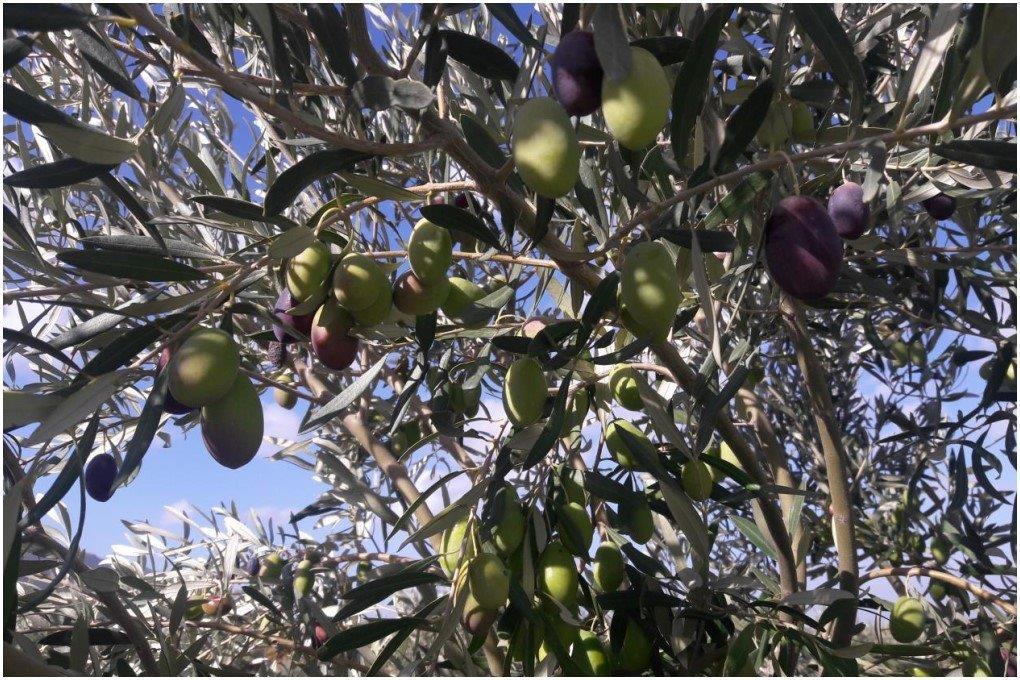
Büyükbelen Tekir Zeytini is notable for its large fruit size. The flesh is firm and does not soften after processing, a trait that extends its shelf life. The pit is large and does not separate easily from the flesh. The speckled surface of the fruit is the reason for its local name “tekir,” meaning “spotted.”
The olives are marketed whole, without pit removal, either as cracked or slashed olives. The unripe fruit is green, while the ripe fruit turns from dark green to quince yellow. The flesh content ranges between 80–85%, and the oil content varies between 6–12%. The moisture content of the olives is between 60–70%.
The production process encompasses all stages from orchard establishment to nursery cultivation, soil preparation, planting, maintenance, harvesting, and processing. Nursery plants are propagated through bud or whip grafting onto rootstocks. Planting occurs between November and April, with spacing ranging from 7x7 meters to 10x10 meters.
Harvesting is done manually; only undamaged and healthy olives are selected for processing. De-bittering is carried out using a 2–3% sodium hydroxide solution. The olives are then rinsed with clean water and soaked in brine containing citric acid and salt. Cracking and slashing operations are performed using specialized machinery, and the final products are packaged in plastic, glass, or tin containers.
Shelf life varies by packaging type: two years in tin, three years in glass, and six months in plastic. Products are stored at temperatures of 20–25 °C in low-humidity environments.
The pH of unprocessed olives ranges from 4.5 to 5, and the oleuropein content is between 600–800 mg/kg. Oleic acid is the dominant fatty acid, accounting for 68–75% of the oil composition. Other fatty acids include palmitic acid (12–17%), linoleic acid (7–11%), and stearic acid (2.75–4%).
The olive trees in the region have a history of at least 600 years. Büyükbelen Tekir Zeytini is a fundamental component of the local agricultural economy and serves as the primary source of livelihood for nearly every household. The annual Büyükbelen Culture and Olive Festival, held during the harvest season, reinforces the cultural significance of the product.
The geographical indication protection for the product is enforced by a three-member oversight body coordinated by the Manisa Chamber of Commerce, comprising experts from the Saruhanlı District Directorate of Agriculture and Forestry and the Saruhanlı Chamber of Agriculture. Inspections are conducted at least once annually, particularly during the harvest period. Compliance with production methods, product characteristics, and proper use of the geographical indication is verified, and results are reported to the Turkish Patent and Trademark Office.
Turk Patent and Trademark Office. "Büyükbelen Tekir Zeytini Coğrafi İşaret Sicil Belgesi." Coğrafi İşaretler Portalı. Accessed October 19, 2025. https://ci.turkpatent.gov.tr/Files/GeographicalSigns/ee409280-37bd-4227-94f9-638e1ec00756.pdf
Türk Patent ve Marka Kurumu. "Büyükbelen Tekir Zeytini." Coğrafi İşaretler Portalı. Accessed October 19, 2025. https://ci.turkpatent.gov.tr/cografi-isaretler/detay/5385.

Type of Geographical İndication | Place of Origin | ||||||||
|---|---|---|---|---|---|---|---|---|---|
Registration Number | 1611 | ||||||||
Registration Date | 08.07.2024 | ||||||||
Product / Product Group(s) | Processed and unprocessed fruits vegetables and mushrooms | ||||||||
Province(s) | Manisa | ||||||||
Applicant/Registrant(s) | Manisa Chamber of Commerce | ||||||||
No Discussion Added Yet
Start discussion for "Büyükbelen Tekir Olive" article
Origin and Cultivation Characteristics
Distinctive Characteristics
Production Process
Chemical and Physiological Properties
Cultural and Economic Value
Monitoring and Protection