
Eş | Mustafa (martyred on the Gallipoli Front) | ||||||||
|---|---|---|---|---|---|---|---|---|---|
Real Name | Emire Ayşe Aliye | ||||||||
Birth | 1894, Aydın – İmamköy | ||||||||
Death | 1967 | ||||||||
Title(s) | Efe | ||||||||
Nickname(s) | Çete Ayşe | ||||||||
Campaigns Participated In | The liberation of Kepez, Aydın, Köşk (Umurlu) Front, Üçyol Battle | ||||||||
Çocuk | It is known that she had two daughters | ||||||||
Award(s) | (awarded by Atatürk in 1933) İstiklal Medal with red ribbon | ||||||||
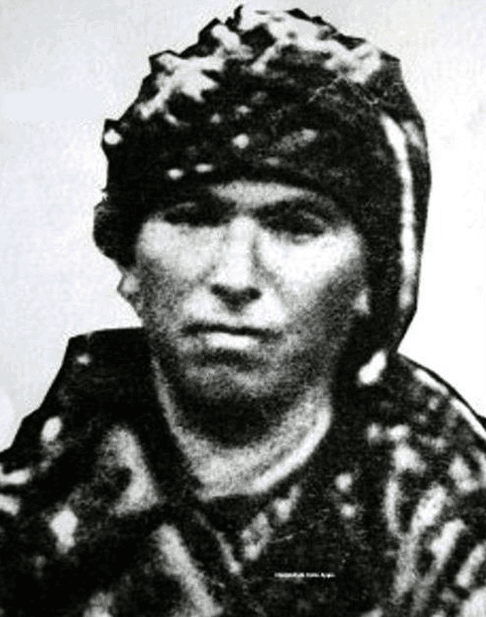
Çete Ayşe, born as Emire Ayşe Aliye, was born in 1894 in the village of İmamköy, Aydın. Her father’s name was Mustafa. In 1910, she married a man named Mustafa from Kayacık Village. From this marriage, two daughters were born. Her husband was martyred on the Gallipoli Front in 1915. After her husband’s death, she continued village life with her father and children, engaging in agriculture and livestock farming with goats, cows, chickens, and a camel.
Çete Ayşe Türküsü (Arda Kaynak-Youtube)
When news reached Aydın on 15 May 1919 that İzmir had been occupied by the Greeks, the people of İmamköy, like the rest of the region, were filled with great anxiety. The villagers attempted to cross the Menderes River to reach safer areas under Italian occupation. Ayşe, along with her friend Asiye and Asiye’s sister, tried to cross the river, but Asiye’s sister drowned. Asiye also drowned while attempting to save her. After this tragedy, Ayşe returned to her village.
Determined to join the defense of the homeland, Ayşe sold the earrings left by her martyred husband and purchased a Mauser rifle and ammunition from a deserter. To conceal the ammunition, she emptied it into a sack of wheat; she hid the rifle mechanism under her bare shirt and brought it home, concealing it in the chimney. She learned to use the rifle from a neighbor.
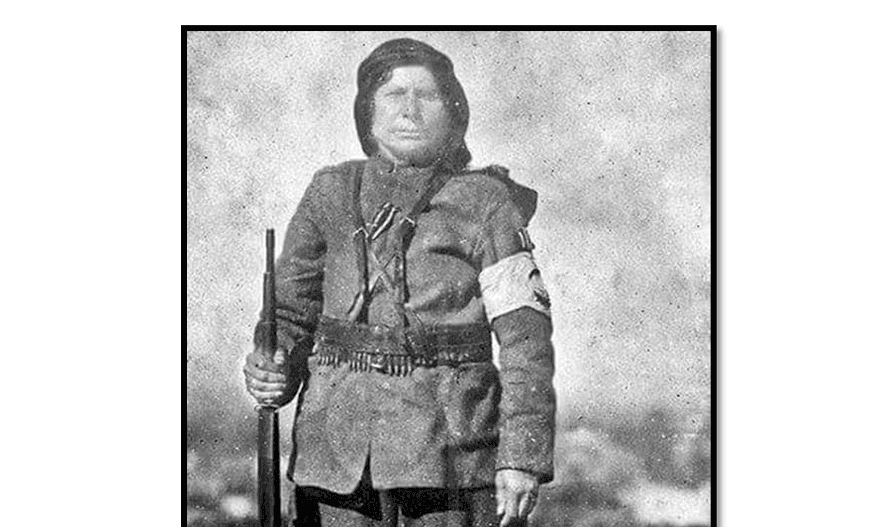
When the Greeks entered her village, Ayşe entrusted her children to neighbors and went to the mountains to join the resistance. After İmamköy was cleared of Greek forces, she joined the group of Halil İbrahim Efe from Salavatlı and Ali Efe from Sancaktar. Known for her bravery and marksmanship, Ayşe was appointed as a commander by the efe leaders alongside ten other women, and she began to be known as “Çete Ayşe.” With this distinction, she became the first woman in Kuva-yı Milliye history to wear the efe costume and bear the title of “Efe.”
Ayşe fought against the enemy on the Kepez ridges alongside Çiftlikli Kübra and Ayşe Çavuş. She then entered Aydın and contributed to its liberation from Greek occupation. During this time, she rescued a Turkish family of 30 to 40 people trapped in a cellar. One family member, upon realizing that their rescuer was a woman, died of shock and joy.
On 3 July 1919, the Greeks reoccupied Aydın. Ayşe crossed the Menderes River and joined Yörük Ali Efe’s group in Dalama. She was assigned to the Köşk (Umurlu) Front. During the Üçyol Battle (northern sector of the Köşk Front), she was wounded in the finger. After contracting malaria, she was reassigned to rear duties, but she continued to enjoy the protection and respect of the efe leaders.
Çete Ayşe was known for her courage, shooting skill, initiative, and leadership qualities. Among the zeybeks, she gained fame as a “yaman” and a “good marksman.”
For her outstanding services during the National Struggle, she was awarded the Red-Striped Independence Medal by the Grand National Assembly of Türkiye on the proposal of Gazi Mustafa Kemal Paşa.
On 1933, during a ceremony held at Aydın Station Square, Atatürk personally pinned the medal on her chest. She later recalled: “Two memories remain from those days: one is the war I fought as a woman, and the other is the Independence Medal that the late Atatürk fastened to my chest.”【1】 These words are also inscribed on her tombstone.

Grave of Çete Ayşe (Kuşadası Anatolian High School)
Çete Ayşe is remembered as a pioneering figure, especially in Aydın and its surroundings, symbolizing both the role of women in the National Struggle and their capacity for leadership. Her life is a story of popular heroism. In 2012, the film “Çete Ayşe”, directed by Ercüment Çavluer, brought this heroic tale to cinema.
Akkoyun, Turan. “Medya Ürünü Bağlamında Puslu Yolculuk Belgeseli.” *Journal of Humanities and Tourism Research* 13, no. 1 (2023): 21–31.
Arda Kaynak Youtube Kanalı. "ÇETE AYŞE - NAZİLLİ İÇİN SÖYLE." Accessed August 9, 2025. https://www.youtube.com/watch?v=CnS_WA-hQiM&list=RDCnS_WA-hQiM&start_radio=1
Kuşadası Anadolu Lisesi. "Çete Ayşe." Accessed August 9, 2025. https://kusadasianadolulisesi.meb.k12.tr/meb_iys_dosyalar/09/09/766106/dosyalar/2023_01/05192456_CETE-AYSE.pdf
Sarıkoyuncu Değerli, Esra. “Millî Mücadele’de Türk Kadını ve İnönü Muharebeleri’nde Çarpışan İki Kadın Kahraman.” *Anadolu Üniversitesi Sosyal Bilimler Dergisi* 21, Özel Sayı (2021): 101–120. https://dergipark.org.tr/tr/pub/ausbd/issue/61124/907732
Yıldırım, Hatice Bilgin. “Milli Mücadele’de Aydın’ın Kadın Efeleri.” *Acta Turcica Çevrimiçi Tematik Türkoloji Dergisi* 6, no. 2 (July 2014). https://actaturcica.files.wordpress.com/2020/01/vi_ii_21.pdf
[1]
Turan Akkoyun, “Medya Ürünü Bağlamında Puslu Yolculuk Belgeseli,” Journal of Humanities and Tourism Research 13, no. 1 (2023): 24.

Eş | Mustafa (martyred on the Gallipoli Front) | ||||||||
|---|---|---|---|---|---|---|---|---|---|
Real Name | Emire Ayşe Aliye | ||||||||
Birth | 1894, Aydın – İmamköy | ||||||||
Death | 1967 | ||||||||
Title(s) | Efe | ||||||||
Nickname(s) | Çete Ayşe | ||||||||
Campaigns Participated In | The liberation of Kepez, Aydın, Köşk (Umurlu) Front, Üçyol Battle | ||||||||
Çocuk | It is known that she had two daughters | ||||||||
Award(s) | (awarded by Atatürk in 1933) İstiklal Medal with red ribbon | ||||||||
The Occupation of İzmir and the Decision to Arm
Joining the Kuva-yı Milliye
Struggles on the Fronts
Kepez Ridges and the Liberation of Aydın
The Second Occupation of Aydın and the Köşk Front
Personal Characteristics
The Independence Medal and Later Years