+2 More

Birth | 26 January 1884 | ||||||||
|---|---|---|---|---|---|---|---|---|---|
Place of Birth | Lauenburg Kingdom of Prussia | ||||||||
Area(s) | Linguistics Anthropology | ||||||||
Death | 4 February 1939 | ||||||||
Place of Death | Connecticut New Haven | ||||||||
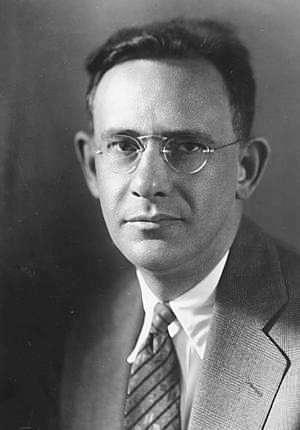
Edward Sapir (1884–1939) was an American linguist and anthropologist renowned for pioneering work in modern linguistics and anthropology. Born in Germany, he emigrated to the United States with his family in childhood. Trained as a student of the renowned anthropologist Franz Boas at Columbia University, Sapir is recognized as one of the founders of ethnolinguistics, the study of the relationship between language and culture. His research on Native American languages of North America and his view that language shapes thought laid the foundations for “Sapir–Whorf Hypothesis”. Sapir, who held positions at the University of Chicago and Yale University, also played a significant role in the development of American structural linguistics.
Edward Sapir was born in 1884 in Germany, within the present-day borders of Poland, as the son of an Orthodox Jewish rabbi. He was taken to America at the age of five and received his education there.
He died in the United States in 1939. E. Sapir is known for his important contributions to comparative and historical linguistics. In addition to being an anthropologist and linguist, he was also a poet and composer.
E. Sapir earned his bachelor’s, master’s, and doctoral degrees from Columbia University in 1904, 1905, and 1909 respectively. While pursuing his master’s at Columbia, he came under the influence of the eminent anthropologist Franz Boas and turned toward linguistic anthropology. His master’s thesis, Herder’s Treatise on the Origin of Language, marked a significant beginning for his subsequent work in the field.
After appointments at the Universities of California and Pennsylvania, E. Sapir served as head of anthropology at the National Museum of Canada in Ottawa from 1910 to 1925, where he spent the most productive period of his life and made major contributions to ethnology.
Edward Sapir is known for his fieldwork on Native American languages of North America. Over approximately six years, he studied the languages of the Yana, Paiute, and other indigenous groups in the western United States, producing important works such as Time Perspective in Aboriginal American Culture, A Study in Method (1916) and Language: An Introduction to the Study of Speech (1921).
Through his academic work, Sapir addressed the relationship between culture and language and is regarded as the founder of ethnolinguistics. He also made extensive contributions to comparative and historical linguistics and became one of the key figures in the development of the American structuralist school of linguistics. He argued that people perceive the world through language and wrote numerous articles on the relationship between language and culture.
In 1925, Sapir joined the faculty of the University of Chicago. In 1931, he accepted a professorship at Yale University, where he founded the anthropology department and continued his work until his death. While at Yale, he served as president of both the Linguistic Society of America and the American Anthropological Association and was elected to the National Academy of Sciences.
E. Sapir regarded language as a necessary condition for the formation of culture and emphasized that culture emerges from interaction between the individual and society. According to him, “Dil, düşüncenin özel bir nasılıdır.”【1】 Language is a uniquely human, non-instinctive system of symbols through which people express thought and emotion. Sapir also maintained that language serves as a guide to social reality and that individuals perceive the world through their languages. Therefore, he argued that different languages produce different social realities and worldviews.
In his 1921 publication Language: An Introduction to the Study of Speech, Sapir described languages as invisible garments for the soul. According to him, the structure of a language and its function in speech can provide insights into human perceptual and cognitive abilities and help explain differences among people from different cultures.
In his 1929 work The Status of Linguistics as a Science, Sapir argued that linguistics shares common ground with both natural sciences and social sciences. By examining the relationship between language, culture, and thought, he asserted that linguistic analysis plays a fundamental role in understanding a society’s worldview. He also evaluated how linguistics should methodologically operate and how it relates to other disciplines, particularly anthropology.
E. Sapir viewed language not merely as a tool of communication but as a shaper of thought and culture. His statement clearly reflects this perspective: “Dil ve düşünce kanallarımız ayrılmaz bir şekilde iç içe geçmiştir; bir anlamda bir ve aynıdır.”【2】 This view, developed further by his student Benjamin Lee Whorf, evolved into a theoretical framework known as “Sapir–Whorf Hypothesis”.
This hypothesis is based on the principle that “a community’s language determines its manner of perceiving the world,” also referred to as linguistic determinism and linguistic relativity. Although its roots lie in the ideas of Herder and Humboldt that “language = worldview,” the interpretations of E. Sapir and B. Lee Whorf are regarded as a more refined and applicable version of this concept.
E. Sapir’s research closely links linguistics with both anthropology and cognitive science.
E. Sapir died of a heart attack on February 4, 1939, in New Haven, Connecticut. He left behind several unfinished works, which were later published by his students and colleagues. Selected Writings of Edward Sapir in Language, Culture and Personality (1949), prepared by his student David G. Mandelbaum, is his most important collected work. This volume provides a comprehensive view of Sapir’s ideas on language, thought, and culture. This publication, along with his other works, has served as a foundational source ensuring the continued vitality of his ideas after his death and has left a lasting impact on modern linguistics.
His ideas continue to be debated in modern linguistics. Therefore, E. Sapir is not only a precursor of American structuralism but also a major source of inspiration for contemporary research centered on the relationship between language and thought.
Arısoy, Elif. The Language-Thought Relationship on the Basis of Precedence of Thought over Language. Master's thesis, Middle East Technical University, Institute of Social Sciences, Ankara, 2021.
Canadian Museum of History. *Edward Sapir à Berkeley en Californie = Edward Sapir, Berkeley, Kaliforniya'da.* Accessed October 7, 2025. https://www.historymuseum.ca/collections/archive/3349252.
Herslund, Michael and Frans Gregersen. “Edward Sapir.” *Denmarks Nationalleksikon*. Accessed October 7, 2025. Edward Sapir – Amerikansk lingvist og antropolog – Lex.
Kabakcı, Tuğçe. Kutadgu Bilig'de Dil ve Düşünce İlişkisi. Master's thesis, Fatih Sultan Mehmet Vakıf University, Graduate School of Education, Istanbul, 2023.
Leavitt, John. Dilsel Görecelik: Dil Çeşitliliği ve Modern Düşünceler. Trans. Mehmet Gürlek. Ankara: ASOS Yayınları, 2020.
Mengü, Güven. "Dil-Kültür İlişkisine Antropolojik Bir Bakış." In Bahaeddin Yediyıldız (Ed.), Dil, Kültür ve Çağdaşlaşma, 15–27 (2003). Ankara: H.Ü. Atatürk İlkeleri ve İnkılap Tarihi Enstitüsü.
Sapir, Edward. "The Status of Linguistics as a Science." Language 5 (4) (1929): 207–214.
Sapir, Edward. Language: An Introduction to the Study of Speech. New York: Harcourt, Brace and Company, 1921.
“Sapir, Edward”, *Encyclopaedia.com*, Accessed October 8, 2025. https://www.encyclopedia.com/people/literature-and-arts/language-and-linguistics-biographies/edward-sapir#D
[1]
Edward Sapir, Language: An Introduction to the Study of Speech (New York: Harcourt, Brace and Company, 1921), 232.
[2]
Edward Sapir, Language: An Introduction to the Study of Speech (New York: Harcourt, Brace and Company, 1921), 233.

Birth | 26 January 1884 | ||||||||
|---|---|---|---|---|---|---|---|---|---|
Place of Birth | Lauenburg Kingdom of Prussia | ||||||||
Area(s) | Linguistics Anthropology | ||||||||
Death | 4 February 1939 | ||||||||
Place of Death | Connecticut New Haven | ||||||||
Life
Academic Career
Concept of Language and Culture
E. Sapir’s Influence on Linguistics
Works
Death and Legacy