This article was automatically translated from the original Turkish version.
+2 More
Grand Egyptian Museum (GEM)
Location | Giza Plateau - Egypt | ||||||||
|---|---|---|---|---|---|---|---|---|---|
Construction Start | 2005 | ||||||||
Official Opening Date | 1 November 2025 (planned) | ||||||||
Total Area | Approximately 500,000 m² | ||||||||
Number of Exhibited Works | 100,000+ | ||||||||
Grand Egyptian Museum (GEM) is a national archaeological museum established to display the heritage of ancient Egyptian civilization. Located on the Giza Plateau west of Cairo, approximately two kilometers from the pyramids, the museum spans an area of approximately 500,000 square meters. It houses more than 100,000 artifacts, including the 5,000-piece treasure of Pharaoh Tutankhamun, the granite statue of Ramses II, and the Khufu Solar Boat. The museum’s official opening took place on 1 November 2025.
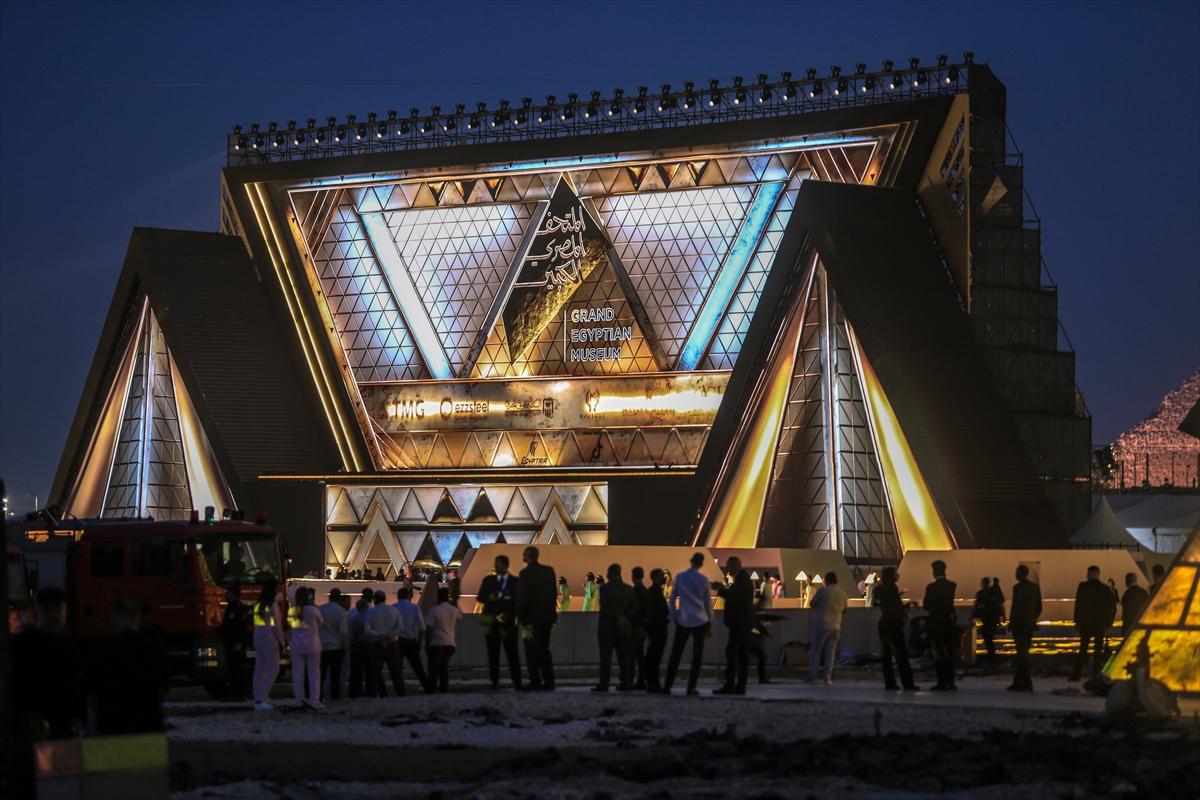
The opening of the Grand Egyptian Museum, 1 November 2025 – (Anadolu Ajansı)
The concept for the Grand Egyptian Museum emerged in the 1990s, when the existing Egyptian Museum in Cairo was recognized as insufficient in capacity and lacking adequate conservation conditions, necessitating a larger and more modern museum complex.
In January 2002, the Egyptian government announced an international architectural design competition under the supervision of UNESCO and the International Union of Architects (UIA) for the new museum. A total of 1,500 proposals from 82 countries were submitted. The official groundbreaking ceremony took place in February of the same year, marking the formal start of construction.
In 2003, the modernist triangular design submitted by the Ireland-based firm Heneghan Peng Architects won the competition and was selected for implementation. This design was based on the solar axis formed by the three pyramids of Giza, shaping the geometric form of the museum building.
Construction activities began in May 2005. In 2006, one of the largest restoration and conservation centers in the Middle East was established as part of the project and became operational in 2010. However, due to political developments and the Arab Spring in 2011, work was suspended for approximately three years. Construction resumed in 2014 following the restoration of political stability, with international financial support, notably from the Japan International Cooperation Agency (JICA).
The building was completed by 2021, and limited visits were initiated to test the readiness of the site. The museum’s full opening was postponed several times; announced dates in 2018 and 2019 were not realized. It was ultimately decided that the official opening would occur on 1 November 2025, with general public access beginning on 4 November 2025.
Grand Egyptian Museum – (Anadolu Ajansı)
The architectural design of the Grand Egyptian Museum was carried out by Heneghan Peng Architects. Engineering works were conducted by the firms Arup and Buro Happold. The museum is oriented to align with the three great pyramids of the Giza Plateau. Its architectural form features a triangular geometric facade of glass and stone that reflects the shapes of the pyramids.
The museum was constructed on a site covering approximately 500,000 square meters. The total enclosed area of the building is 300,000 square meters, of which 81,000 square meters are dedicated to exhibition and research spaces. The main structure of the museum is built from concrete, and its interior temperature is naturally regulated through a thermal balance system, serving as an environmental measure to reduce energy consumption.
The exterior facade incorporates semi-translucent alabaster stones, Egyptian limestone, and glass panels. These materials create a permeable surface that filters natural light across the desert-facing side of the museum.
The height of the museum building was determined to honor the silhouette of the pyramids; the structure does not exceed the peak line of the pyramids. On the main facade, a wedge-shaped triangular form known as the "Heneghan Wedge" is positioned to integrate seamlessly with the Giza horizon.
The building has been designed in accordance with the principles of energy efficiency and sustainability. In 2024, the museum received the EDGE Advanced Green Building Certification from the International Finance Corporation (IFC). According to this certification, the building reduces energy consumption by more than 60% and water consumption by 34% compared to similar structures.
The building’s sustainability features include solar panels, rainwater harvesting systems, natural ventilation systems, and smart consumption monitoring systems. These systems have supported the building’s goals for energy and water conservation.
The museum’s overall architectural layout has been planned to create an optical and symbolic axis with pyramids. The main entrance of the building opens onto the Cairo–Alexandria Desert Road, and visitors reach the main hall via the 27,000 square meter Egyptian Obelisk Square (Midan el-Masalla).
The triangular stone panels used on the building’s façade evoke the geometry of the Giza Pyramids and ensure harmony between the structure and its historical and topographical surroundings. The museum is architecturally described as “one of the largest cultural buildings of the 21st century.”
Grand Egyptian Museum – (Anadolu Ajansı)
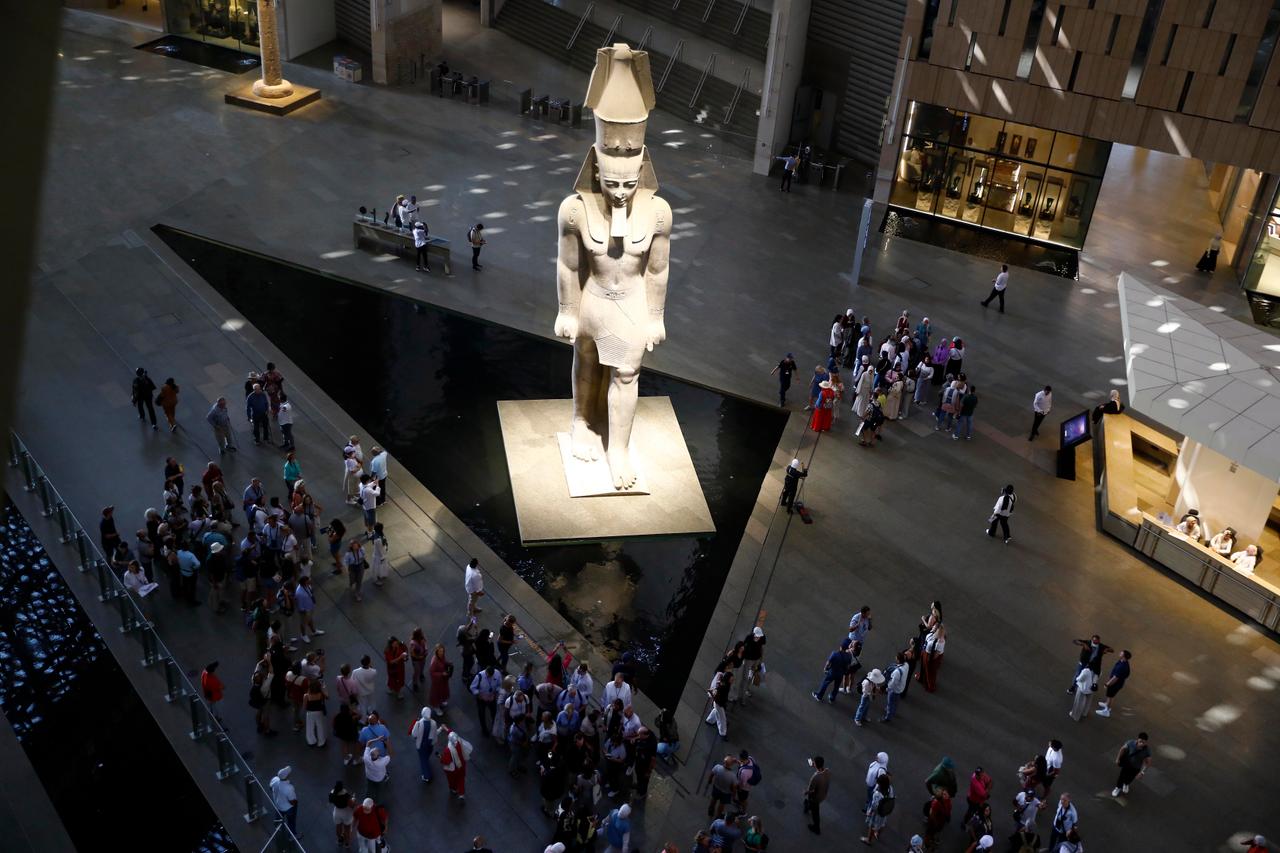
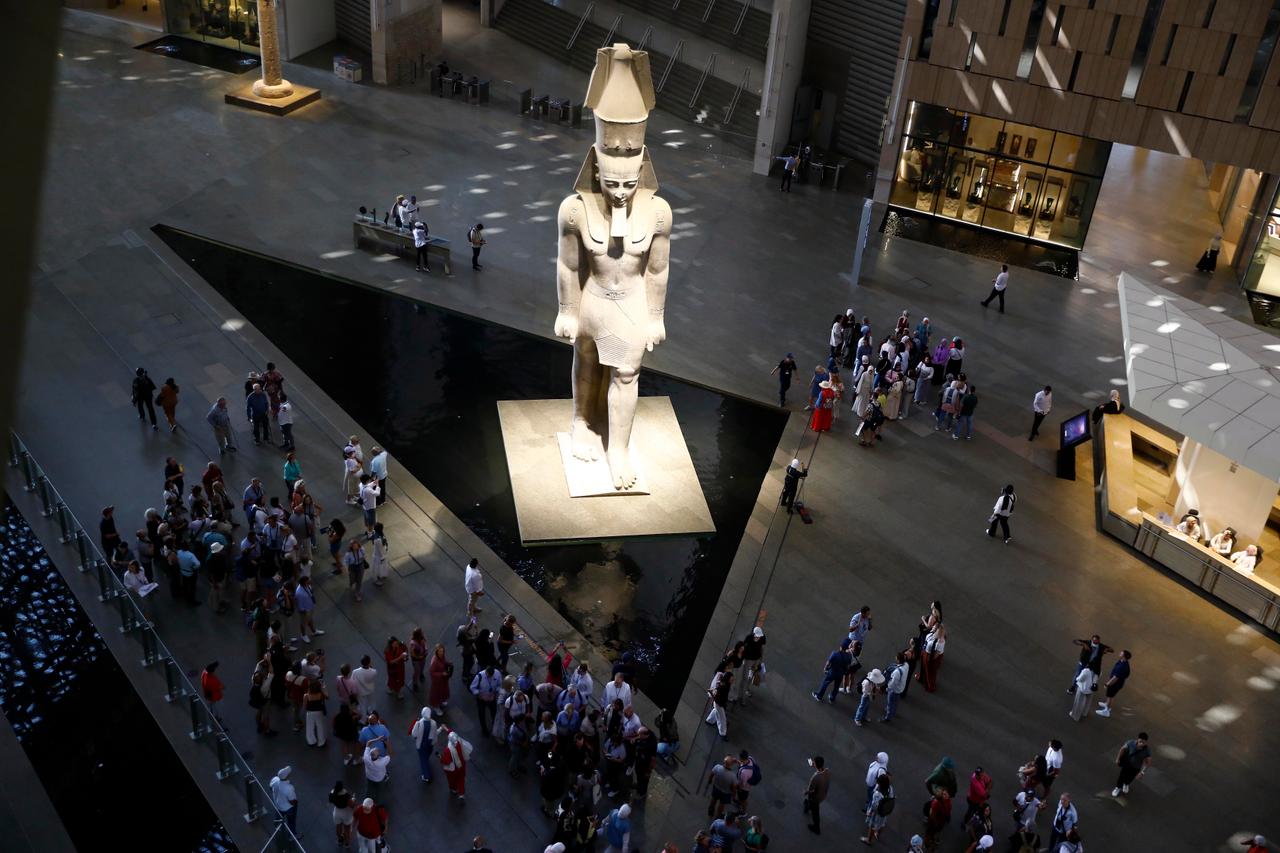
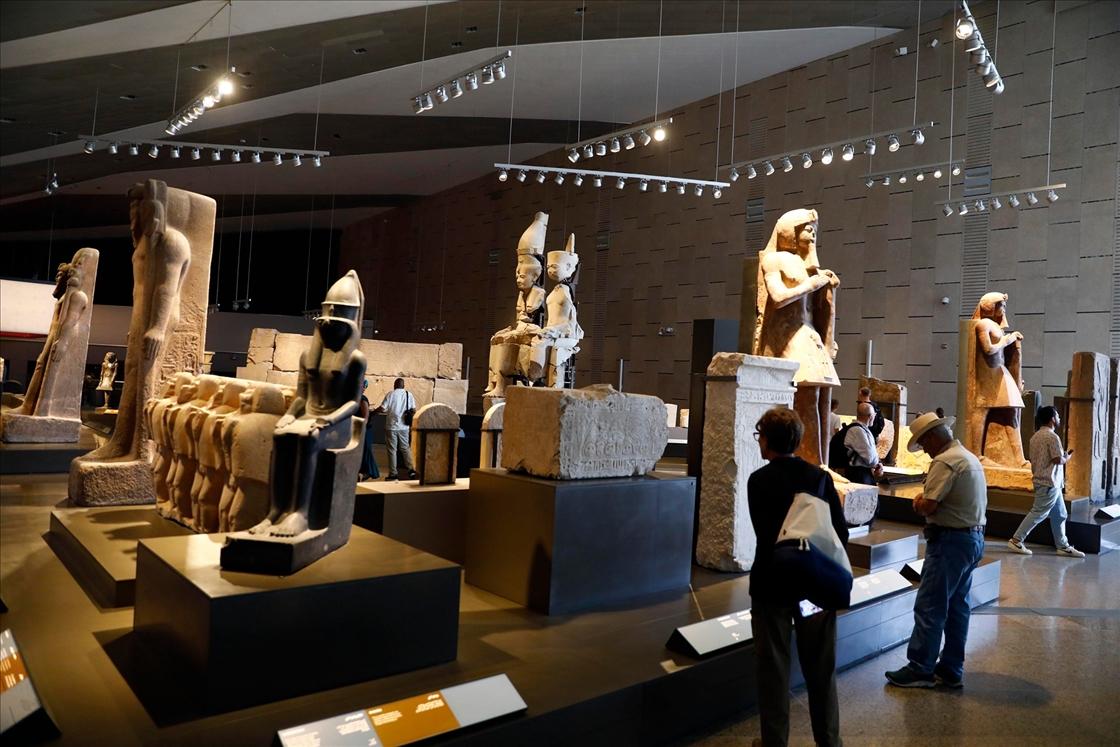
The interior layout of the Grand Egyptian Museum is designed as an architectural composition comprising various functional areas. Visitor flow is channeled through the Main Hall (Grand Hall) located at the entrance. This hall spans approximately 7,000 square meters and houses five major archaeological artifacts alongside the 11-meter-tall granite statue of Pharaoh Ramses II.
The Great Staircase, rising from the main hall, is six stories high and covers an area of approximately 6,000 square meters. On either side of the staircase, 87 large-scale statues and monumental artifacts from different historical periods are displayed. The staircase provides access to the main galleries and upper sections with views of the pyramids.
The permanent exhibition halls span 18,000 square meters and present the history of Egyptian civilization in chronological and thematic order, from the prehistoric era to the Roman period. This area includes 12 main galleries. Digital labeling, mixed reality, and multimedia technologies have been integrated into the displays. Audio narration and interactive visual systems have been installed to enhance the visitor experience.
The museum also features a 5,000 square meter temporary exhibition space, which includes four thematic halls dedicated to rotating exhibitions.
The Tutankhamun Gallery is one of the museum’s most striking interior spaces. Spanning approximately 7,500 square meters, this gallery brings together for the first time in a single location the 5,000-piece collection belonging to Pharaoh Tutankhamun. Among these artifacts are his golden mask, the gilded sarcophagus, three funeral beds, six chariots, the golden throne, and burial goods.
The Children’s Museum, occupying an area of 5,000 square meters, aims to convey archaeological knowledge to children through visual models using multimedia applications. Additionally, a 650 square meter dedicated area has been designed to ensure accessibility for visitors with physical disabilities.
For educational, cultural, and conference activities, the planned centers include a 900-seat multipurpose conference hall, a 500-seat 3D cinema hall, and a 1,400-square-meter cultural center. These areas contain classrooms, computer laboratories, and exhibition spaces.
For research and information services, a 1,100-square-meter main library, a 250-square-meter rare books library, and a 325-square-meter audiovisual media library have been established. Additionally, the 880-square-meter crafts and traditional arts workshops section includes five distinct training rooms.
Grand Egyptian Museum – (Anadolu Ajansı)
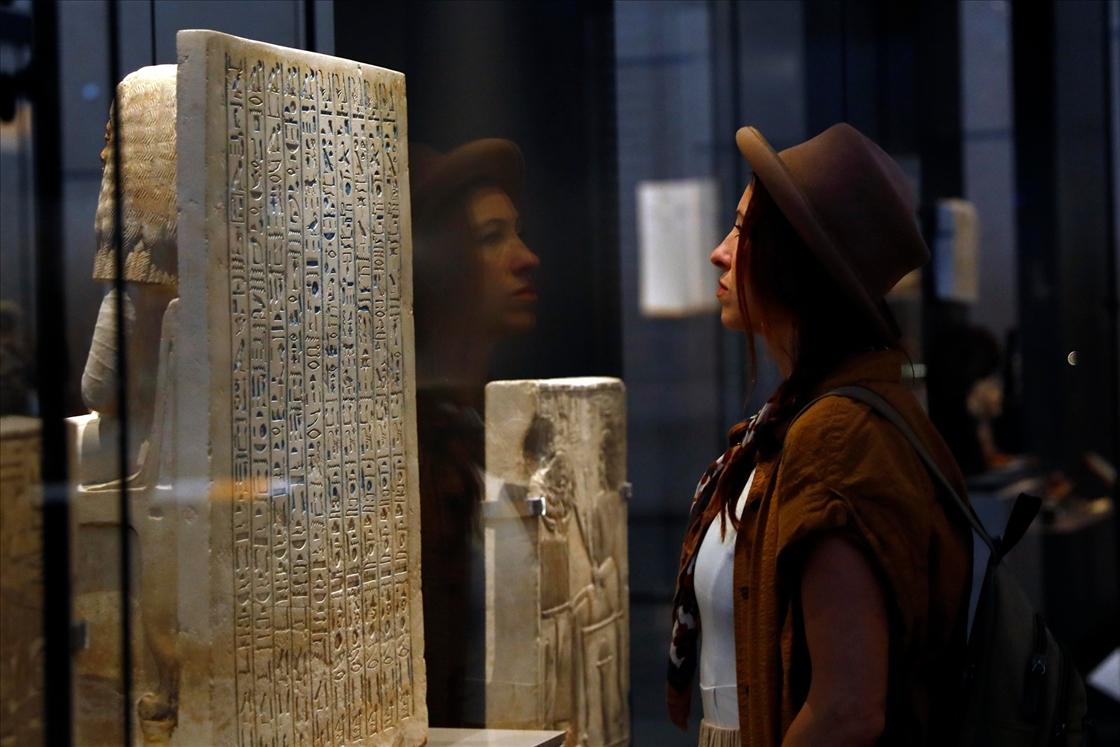
The Grand Egyptian Museum houses over 100,000 archaeological artifacts. Approximately 50,000 of these artifacts are displayed in permanent exhibitions, while the remainder are stored and preserved in research and storage areas.
One of the museum’s most comprehensive sections is the King Tutankhamun Collection. This collection includes all artifacts discovered in 1922 by Howard Carter in Tutankhamun’s tomb in the Valley of the Kings near Luxor. The collection comprises 5,000 items, including a gold funeral mask, a gold-plated sarcophagus, a throne, three burial beds, and six chariots.
A portion of these artifacts, including the 2014 accidental damage to Tutankhamun’s beard, have been restored in the museum’s own conservation center. Restoration work was completed in 2015.
The Statue of Ramses II in the museum’s main hall is a 3,200-year-old granite colossus. Standing approximately 11 meters tall, the statue was discovered near Memphis in 1820 and displayed for many years in the center of Cairo. Moved from its previous location in front of Cairo Central Station between 1954 and 2006, it was relocated to the museum’s entrance hall.
Another significant artifact is the “Solar Boat of Pharaoh Khufu.” This wooden vessel, measuring approximately 43 to 44 meters in length, was constructed around 2500 BCE and found buried beside the Great Pyramid. The boat was interred for Khufu’s use in the afterlife. In 2021, it was transported to the museum grounds using a specialized remote-controlled transport vehicle.
The museum also houses the Queen Hetepheres Collection, consisting of artifacts belonging to Khufu’s mother. These objects, spanning from the pre-dynastic period to the Greco-Roman era, are displayed alongside items from various historical periods.
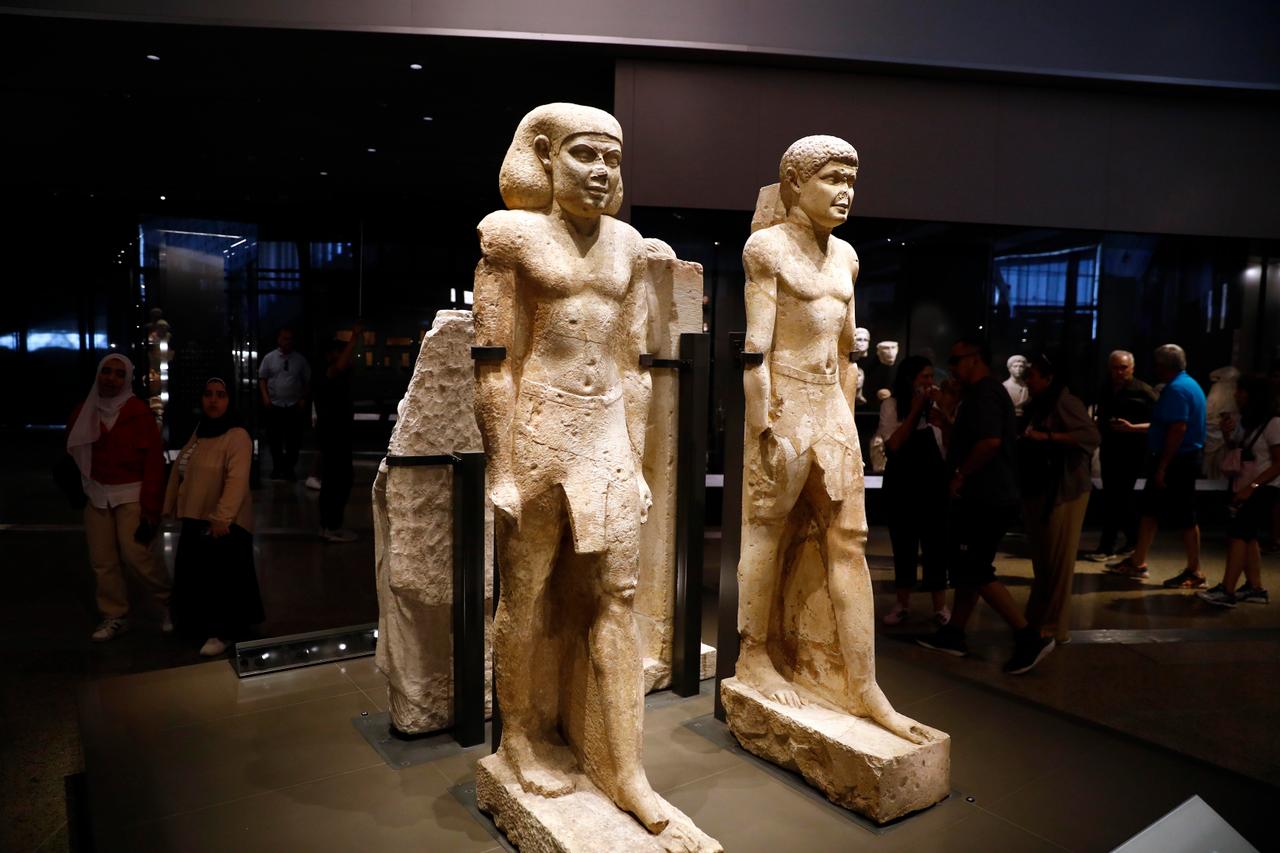
Many artifacts have been transferred to the museum from the Egyptian Museum in Tahrir Square, Cairo, and from new archaeological excavation sites such as the Saqqara necropolis. Artifacts from the Saqqara region include tomb finds, statues, and ritual objects.
A total of 51,472 archaeological artifacts have been moved to the museum, of which 50,466 have been restored. Additionally, 1,006 of the 1,240 fragments recovered from Khufu’s second solar boat have been transferred to the museum laboratories.
The museum’s exhibits are organized by period and theme. In addition to the Old, Middle, and New Kingdom periods, artifacts from the Late Period, Hellenistic era, and Roman period are displayed in separate sections. All artifacts are presented using digital documentation and interactive exhibition technologies.
In 2006, the largest restoration center in the Middle East was established within the Grand Egyptian Museum. This center is connected to the main museum building via a tunnel and contains 17 separate laboratories. It was designed for the documentation, preservation, restoration and scientific analysis of archaeological artifacts.
The restoration center became operational in 2010 and was actively used in the restoration of artifacts from the Tutankhamun collection. Within this scope, objects such as funeral beds, chariots, the golden mask and canopic jars were reassembled.
Activities carried out at the conservation center include digital inventory and recording systems, laboratory testing, and biological and chemical preservation treatments. All work is conducted in accordance with international conservation standards.
A comprehensive restoration program has also been carried out on fragments of Khufu’s second boat. A total of 1,272 fragments were excavated, of which 1,006 fragments were transported to the museum’s restoration laboratory for preservation.
The museum’s conservation unit is responsible not only for the maintenance of current exhibition items but also for the care of future archaeological finds. The center is equipped with advanced climate control systems that regulate temperature, humidity and light to prevent deterioration of archaeological artifacts.
The museum also features research-accessible storage areas. In these areas, artifacts not on display are made available for study by scientists; objects in storage are tracked using cataloging and digital archive systems.
Grand Egyptian Museum – (Anadolu Ajansı)
The Grand Egyptian Museum complex is designed not only with extensive indoor spaces but also with large outdoor areas. Visitor access is provided via the Cairo–Alexandria Desert Road, leading visitors first to a 27,000-square-meter entrance area known as Obelisk Square (Midan el-Masalla).
The gardens surrounding the museum are thematically designed. Areas such as the Temple Garden, Child Garden, Aromatic Plants Garden, Land of Egypt Garden, and Sand Dunes Zone are arranged according to distinct themes.
The total area of the gardens exceeds 200,000 square meters. The Temple Garden is located to the south of the museum and features aromatic plants characteristic of the ancient period. The Land of Egypt Garden, situated to the west of the museum, showcases plant species representative of ancient Nile Valley agriculture. The Child Garden, located in the northwestern part of the museum grounds, is designed for educational activities aimed at children.
To the south of the museum building lies the Garden of Exhibits. This area spans 19,000 square meters and contains large-scale stone artifacts displayed outdoors. Additionally, a 58,000-square-meter entertainment park is located in the northern section and serves as a relaxation area for visitors.
Grand Egyptian Museum – (Anadolu Agency)
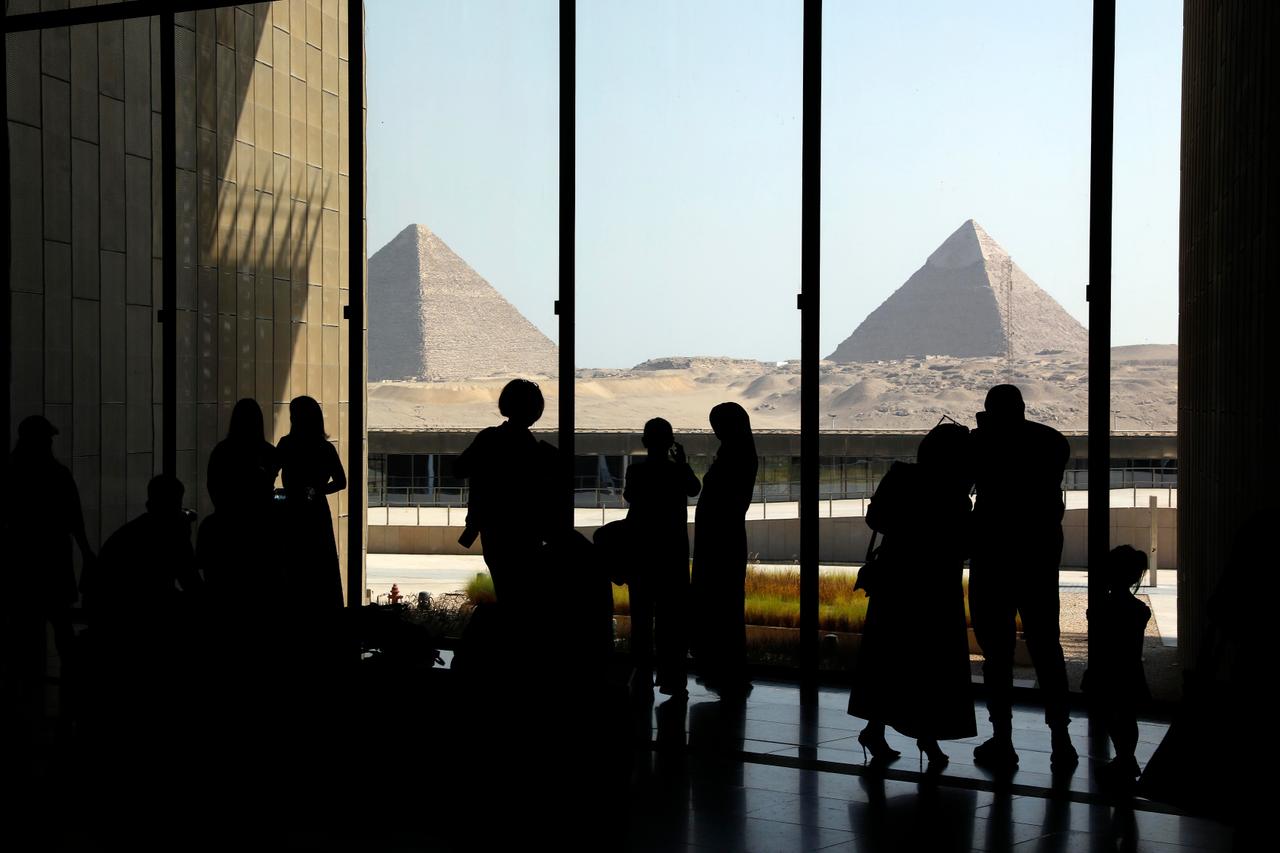
The “Window of Eternity”, designed to allow visitors to rest and observe, consists of panoramic glass surfaces offering direct views of the pyramids. This section is located on the western facade of the museum building and creates a visual harmony with the pyramids.
Commercial areas planned for visitor services include 28 shops covering 2,000 square metres, 30 sales kiosks, 8 restaurants covering 1,600 square metres, and a main dining hall spanning 6,300 square metres. These areas are situated around the “Commercial Promenade”.
In the southern section of the museum are the 6,000-square-metre Pyramid Restaurant and the 3,000-square-metre Temple Garden Restaurant, both offering direct views of the pyramids. Additionally, the outdoor planning includes a 17,000-square-metre multi-purpose structure, a parking area (30,000 m²), and visitor walkways.
To facilitate access to the museum grounds, a metro line and a connection to the Sphinx International Airport have been developed. The airport is located approximately 40 minutes away from the museum.
The management structure of the Grand Egyptian Museum was established under the name Grand Egyptian Museum Authority under the authority of the Egyptian government. This authority was created by a Cabinet Decision dated 2016 (No. 2795) and reorganized under the Law No. 9 enacted in 2020, granting it the status of an “economic public institution”.
The management structure comprises two main bodies: the Board of Trustees and the Management Board. The Board of Trustees convenes under the chairmanship of the President of the Republic and includes members such as the Minister of Tourism and Antiquities, high-level state officials, and experts in economics, law, archaeology, management, international cooperation, and marketing. The Board is responsible for approving the museum’s general policies, plans, and budget strategies.
The Management Board operates under the chairmanship of the Minister of Tourism and Antiquities and is responsible for daily administrative operations. The Board oversees the museum’s collection policy, research projects, exhibition planning, funding processes, and international partnerships.
Cooperation with the private sector has been established for the operation of museum services. In this context, a contract was signed in 2021 with Hassan Allam Holding for the management and operation of visitor services. The agreement covers the operation of the museum’s restaurants, shops, conference halls, cultural event spaces, and logistics services. The ministry retains authority only over the security, maintenance, restoration, and exhibition arrangement of archaeological artifacts.
In 2019, an international tender was launched for the management of museum services. After the pre-qualification process, four international consortia and one company were shortlisted. These consortia included Hassan Allam (Egypt–USA partnership), Orascom (Egypt–France partnership), G4S (Egypt–UK partnership), Khrafi National (Egypt–Italy partnership), and MAP (United Arab Emirates).
The tender process was supervised by a five-member committee established by a decision of the Egyptian Cabinet. The committee included representatives from the Ministry of Tourism and Antiquities, the Ministry of Investment and International Cooperation, the Ministry of Finance, and the State Council.
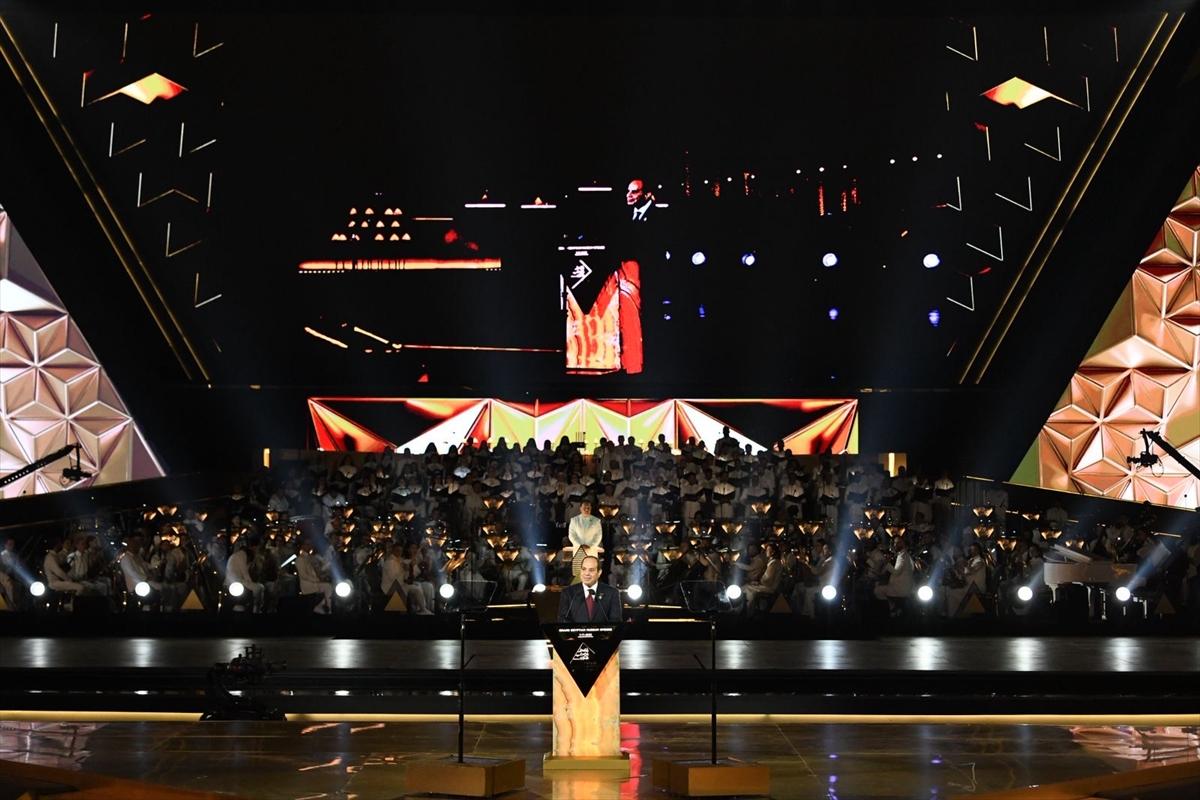
The Grand Egyptian Museum (Grand Egyptian Museum, GEM), located on the Giza Plateau west of Egypt’s capital Cairo and referred to as the “fourth pyramid”, was officially inaugurated with a ceremonial event on 1 November 2025, following years of construction and preparation.
The opening of the Grand Egyptian Museum, 1 November 2025 – (Anadolu Ajansı)
The opening ceremony was attended by President Abdel Fattah el-Sisi. According to an announcement by the Egyptian Presidency, official delegations from 79 countries participated in the event, with 39 nations represented at the level of head of state, head of government, monarch or prince. The ceremony was held in the museum’s gardens with the silhouettes of the Giza Pyramids as a backdrop, featuring musical performances and historical themed stage presentations. Among the speakers at the opening was Farouk Hosni, the intellectual father of the museum project and former Egyptian Minister of Culture. Hosni expressed his satisfaction at the realization of the project concept he first proposed in the 1990s.
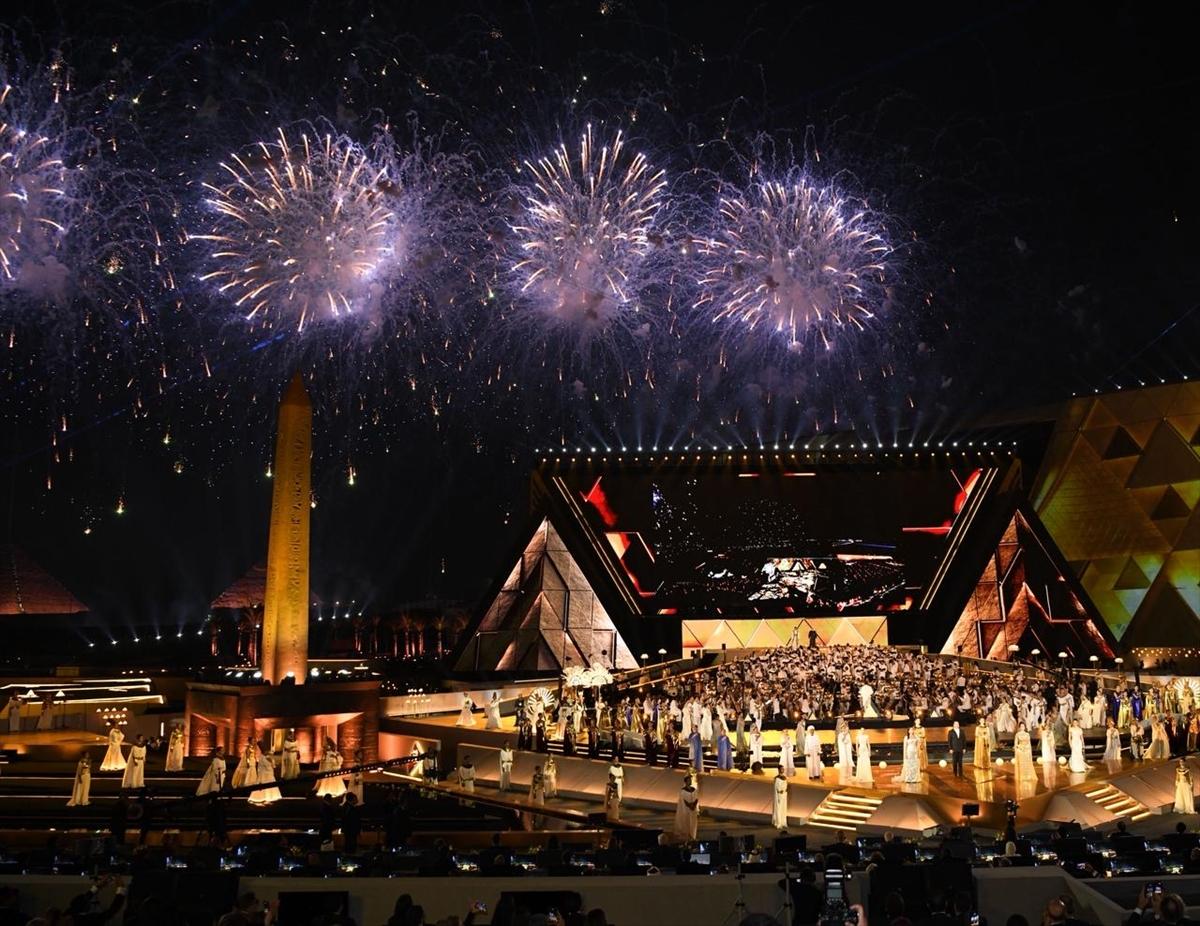
The opening of the Grand Egyptian Museum, 1 November 2025 – (Anadolu Ajansı)
On 4 November 2025, the museum is scheduled to open to the general public. This date coincides with the 103rd anniversary of the discovery of Tutankhamun’s tomb in 1922. Egyptian authorities have announced this historical coincidence as a symbolic timing choice.
AP News. "The Grand Egyptian Museum showcasing 50,000 artifacts is finally opening." Accessed October 31, 2025. https://apnews.com/article/egypt-antiquities-museum-gem-pyramids-aed6788fecced85cbfcb32509124b0b6
Anadolu Ajansı. “Büyük Mısır Müzesi Kasım Ayında Kapılarını Ziyaretçilerine Açıyor.” Accessed October 31, 2025. https://www.aa.com.tr/tr/kultur/buyuk-misir-muzesi-kasim-ayinda-kapilarini-ziyaretcilerine-aciyor/3720388#
Anadolu Ajansı. “Mısır’da ‘Dördüncü Piramit’ Olarak Adlandırılan Büyük Mısır Müzesi Törenle Açıldı.” Accessed November 2, 2025. https://www.aa.com.tr/tr/kultur/misirda-dorduncu-piramit-olarak-adlandirilan-buyuk-misir-muzesi-torenle-acildi/3732727
ArchDaily. “The Grand Egyptian Museum Fully Opens, Completing Giza’s New Cultural Landmark.” ArchDaily. Accessed October 31, 2025. https://www.archdaily.com/1035595/the-grand-egyptian-museum-fully-opens-completing-gizas-new-cultural-landmark
Daily Sabah. "Key Facts about the Long-Awaited Grand Egyptian Museum." Accessed October 31, 2025. https://www.dailysabah.com/arts/key-facts-about-long-awaited-grand-egyptian-museum/news
Dezeen. "Grand Egyptian Museum reaches completion in Giza." Accessed October 31, 2025. https://www.dezeen.com/2025/10/29/grand-egyptian-museum-heneghan-peng-architects/
Egyptian Presidency. "إنشاء المتحف المصري الكبير." Arab Republic of Egypt Presidential Official Website. Accessed October 31, 2025. https://www.presidency.eg/ar/
Egyptian Streets. "Everything You Need to Know about the Grand Egyptian Museum Opening." Accessed October 31, 2025. https://egyptianstreets.com/2025/10/28/everything-you-need-to-know-about-the-grand-egyptian-museum-opening/
Grand Egyptian Museum. "About the Museum." GrandEgyptianMuseum.org. Accessed October 31, 2025. https://grandegyptianmuseum.org/about/
Invest in Egypt. "Grand Egyptian Museum." Official Portal of the General Authority for Investment and Free Zones (GAFI). Accessed October 31, 2025. https://www.investinegypt.gov.eg/Arabic/pages/gem.aspx
Ministry of Archaeology and Tourism of Egypt. "المتحف المصري الكبير." *Ministry of Tourism and Antiquities Official Website (MOTA).* Accessed October 31, 2025. https://mota.gov.eg/ar/
TRT World. “Move over, Louvre: Grand Egyptian Museum opening its doors to 5,000 years of history.” TRT World. Accessed October 31, 2025. https://www.trtworld.com/article/649e39e45a2a

Grand Egyptian Museum (GEM)
Location | Giza Plateau - Egypt | ||||||||
|---|---|---|---|---|---|---|---|---|---|
Construction Start | 2005 | ||||||||
Official Opening Date | 1 November 2025 (planned) | ||||||||
Total Area | Approximately 500,000 m² | ||||||||
Number of Exhibited Works | 100,000+ | ||||||||
No Discussion Added Yet
Start discussion for "Grand Egyptian Museum" article
Founding and Project History
Architectural Design and Structural Features
Interior Space and Architectural Layout
Collections and Artifacts
Conservation, Restoration and Research
Outdoor Spaces and Visitor Areas
Administrative Structure and Management
Inauguration Ceremony of the Grand Egyptian Museum (1 November 2025)