

This article was automatically translated from the original Turkish version.
Type of Geographical İndication | Mahreç Sign | ||||||||
|---|---|---|---|---|---|---|---|---|---|
Registration Number | 1771 | ||||||||
Registration Date | 04.09.2025 | ||||||||
Product / Product Group(s) | Handicraft products other than carpets kilims and textiles | ||||||||
Province(s) | Aydın | ||||||||
Applicant/Registrant(s) | Söke Chamber of Commerce | ||||||||
Güllübahçe Cloth Dolls are traditional textile toys produced in the Güllübahçe Neighborhood of the Söke District in Aydın Province, Türkiye, using traditional methods and entirely by hand, reflecting the region’s cultural identity. Registered as a certification mark under Law No. 6769 on Industrial Property, this product was granted geographical indication protection by the Söke Chamber of Commerce on 4 September 2025.
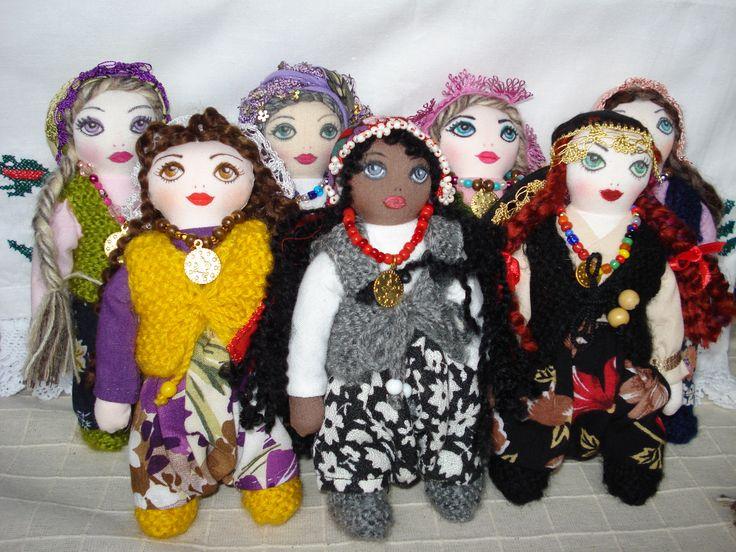
Güllübahçe Cloth Dolls are handmade toys crafted from local fabrics and natural stuffing materials. Each doll is adorned with details that reflect Söke’s traditional clothing styles and craft heritage. Female figures feature floral-patterned trousers adorned with beads, tassels, and lace; male figures include elements characteristic of the Zeybek culture such as the cepken jacket, wide trousers, and Söke-style boots. No sewing machines are used in the production process; all stages are completed entirely by hand.
Facial features are hand-drawn using fabric pens, embroidery, or painting techniques to give each doll a unique character. Accessories such as handkerchiefs, baskets with regional motifs, jewelry, fezzes, poşu headwear, and belts are incorporated. These dolls are valued both as decorative objects and as cultural souvenirs.
Güllübahçe Cloth Dolls consist of female, male, and child figures. Female figures include characters such as “The Bride Going to the Water,” “The Cotton Picker Girl,” “The Yörük Girl,” and “Fortune-Teller Zekiye.” Male figures represent archetypes like “The Groom,” “The Cotton Lord,” and “Entel Osman.” Child figures include “Little Girl” and “Güllübahçe’s Roses.”
The production of Güllübahçe Cloth Dolls follows eight essential stages rooted in traditional craftsmanship, each carefully executed to ensure aesthetic and structural integrity.
All production stages are carried out within the boundaries of the Söke District, the area associated with the product’s reputation. Inspections are conducted at least once annually under the coordination of the Söke Chamber of Commerce by the Güllübahçe Village Headmanship and the S.S. Güllübahçe Agricultural Development Cooperative. Inspections verify material suitability, adherence to traditional production methods, and proper use of the certification mark.
Turk Patent and Trademark Office. "Güllübahçe Bez Bebekleri." Coğrafi İşaretler Portalı. Accessed October 19, 2025. https://ci.turkpatent.gov.tr/cografi-isaretler/detay/11987.
Turk Patent and Trademark Office. "Güllübahçe Bez Bebekleri: Coğrafi İşaret Tescil Belgesi." Accessed October 19, 2025. https://ci.turkpatent.gov.tr/Files/GeographicalSigns/0206b9e2-f893-4885-b226-086182c34c7a.pdf.

Type of Geographical İndication | Mahreç Sign | ||||||||
|---|---|---|---|---|---|---|---|---|---|
Registration Number | 1771 | ||||||||
Registration Date | 04.09.2025 | ||||||||
Product / Product Group(s) | Handicraft products other than carpets kilims and textiles | ||||||||
Province(s) | Aydın | ||||||||
Applicant/Registrant(s) | Söke Chamber of Commerce | ||||||||
No Discussion Added Yet
Start discussion for "Güllübahçe Cloth Dolls" article
Definition and Distinguishing Characteristics
Figures
Production Stages
Material Selection and Pattern Preparation
Sewing and Assembly
Stuffing
Facial Detailing
Clothing Design and Sewing
Embellishment and Accessories
Hair Creation and Attachment
Final Inspection and Packaging
Geographical Boundary and Oversight