This article was automatically translated from the original Turkish version.
+1 More
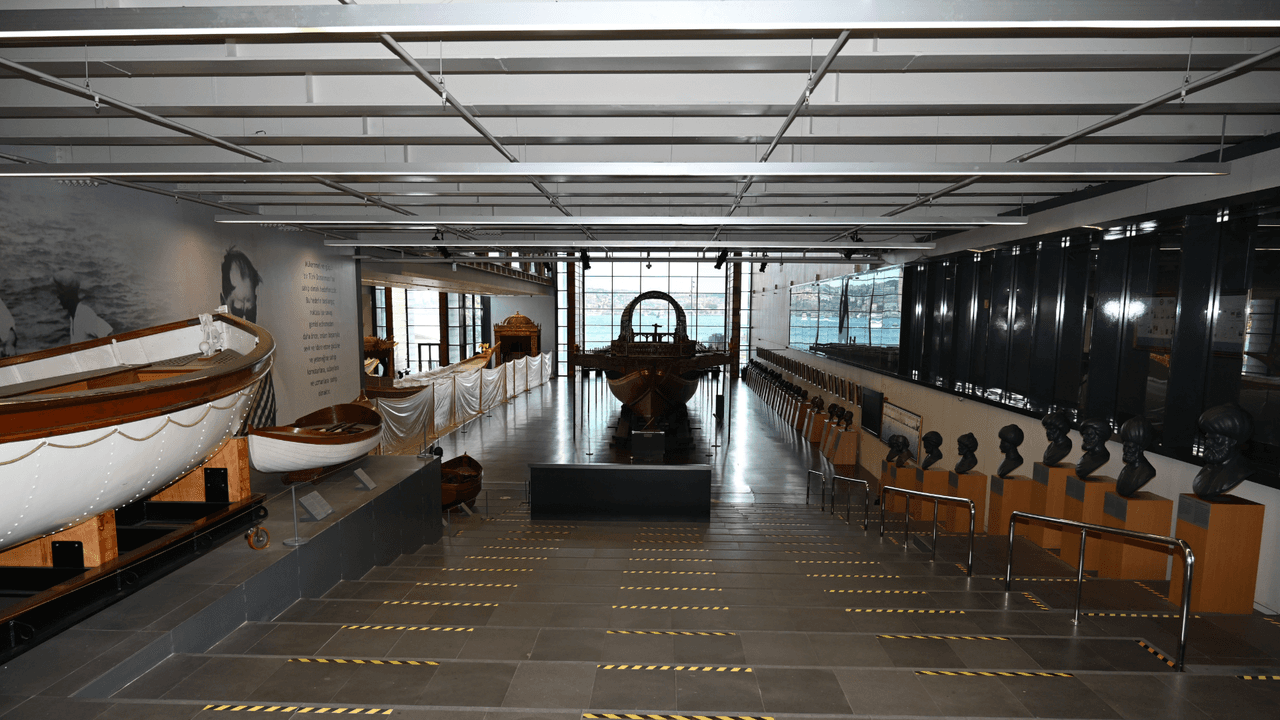
Istanbul Naval Museum, is Türkiye's largest military museum. Established in 1897, the museum is among Türkiye's oldest institutional museum foundations, with a heritage spanning more than a century.
The museum ranks among the leading institutions in its field on an international scale due to the diversity of its collection. The period covered by the collection extends from the early maritime activities of the Ottoman Empire to the founding years of the Republic of Türkiye. The institution is responsible for collecting, classifying, restoring, preserving, and exhibiting artifacts documenting Turkish maritime history. These activities are carried out through inventory management, conservation and restoration practices, scientific publications, and educational programs. Today, the museum is located at İskele Meydanı in the Beşiktaş district, adjacent to the Barbaros Hayrettin Paşa Türbesi.
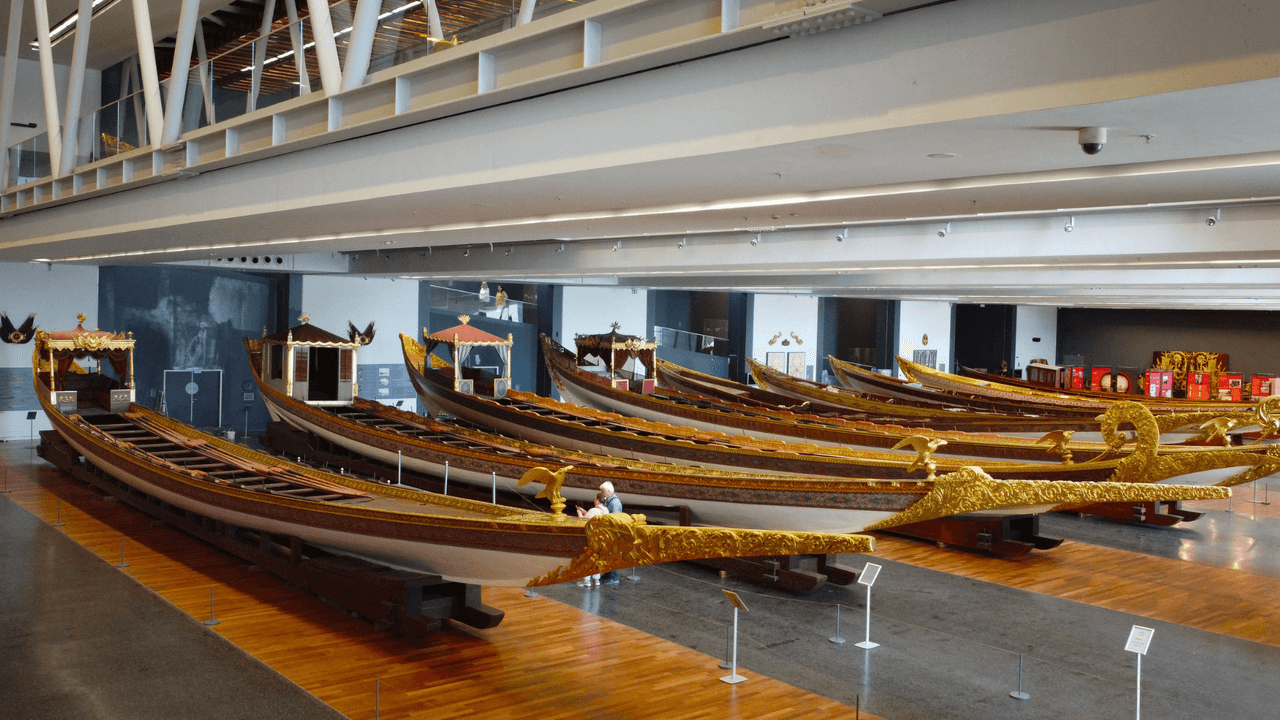
Interior of Istanbul Naval Museum (Ministry of National Education)
The museum was established on 31 August 1897 with the approval of Sultan Abdülhamid II, the order of Minister of the Navy Bozcaadalı Hasan Hüsnü Paşa, and the support of Admiral Arif Hikmet Paşa, Commander of the Imperial Shipyard. It was housed in the building of the Mine Detachment Command within the Tersane-i Amire.
The Tersane-i Amire was the central institution managing the Ottoman Empire’s maritime activities and shipbuilding, located along the Haliç in İstanbul. The museum’s placement within this structure highlights its direct connection to the Ottoman naval administration. The institution, initially operating under the name “Müzehane” (Directorate of Museums and Libraries), was led by Lieutenant Colonel Süleyman Nutki, who assembled its first core collection from ship components and weapons.【1】
During the founding phase, artifacts were classified according to their function and material. The first inventory records, which later formed the basis of a more comprehensive cataloging system, were also initiated during this period.
In 1914, at the initiative of Minister of the Navy Cemal Paşa, Lieutenant Commander and painter Ali Sami Boyar was appointed director of the museum. Boyar, known both for his military career and his work as an artist, simultaneously managed administrative and scientific reorganization during his tenure. He restructured the museum according to scientific principles, establishing the Ship Model Workshop to produce scale models of Turkish vessels and the Mulaj-Manken Workshop to create mannequins for displaying military uniforms. The Ship Model Workshop produced accurate scale models based on original ship designs, serving both exhibition and documentation purposes. The figures produced in the Mulaj-Manken Workshop were used to represent naval uniforms of the period in three dimensions.
The museum’s first scientific catalog was published in 1917. This catalog served as the first systematic reference source, providing descriptions, measurements, and dating of the collection’s artifacts. In 1933, the museum moved to the Nakkaşhane building in Kasımpaşa and adopted the name “Directorate of the Navy Museum.” Nakkaşhane historically referred to a complex of workshops within the Ottoman palace organization where embroidery, painting, and decorative arts were carried out.【2】
During World War II, it was decided to relocate the museum’s collection to various centers in Anatolia to ensure its protection. Although Türkiye maintained an official policy of neutrality throughout the war, several cultural preservation measures were implemented in anticipation of potential conflict. The relocation of museum artifacts to Anatolia was among these administrative precautions.
Artifacts were stored in regions such as Ankara, Niğde, Eskişehir, Geyve, and İzmit, classified according to their historical and material value. Distributing the collection across multiple locations was a strategy to prevent the entire collection from being at risk in case of damage or loss. In 1946, when the artifacts were returned to Istanbul, physical damage was detected in some items due to inadequacies during transport and storage. These damages included moisture-related deterioration, surface abrasions, and structural cracks. This situation laid the groundwork for the museum’s subsequent efforts to develop its restoration infrastructure.
After the return of the artifacts to their Kasımpaşa storage facilities, the Dolmabahçe (Bezmialem Valide Sultan) Mosque and Hünkar Mahfeli at Dolmabahçe Square were allocated to the museum. Dolmabahçe Camii, commissioned by Bezmialem Valide Sultan, was opened for worship in 1855. The Hünkar Mahfeli is the private annex adjacent to the mosque, used by Ottoman sultans for prayer. The museum opened to the public on 27 September 1948 under the name “Directorate of the Naval Museum and Archive.”
The spatial characteristics of the religious building were taken into account in the exhibition planning; artifacts depicting human or animal figures were not displayed in the prayer area. This practice reflects traditional sensitivities regarding figurative representation in Islamic iconography. This distinction reveals the museum administration’s guiding principle for exhibition policy within sacred spaces.
In the second half of the 1950s, as part of urban development projects in Dolmabahçe Square, some buildings used by the museum were demolished. As part of broader urban transformation programs in Istanbul during this period, road widening and square reorganization projects led to the demolition of certain buildings that were part of historical structures. During this process, the archives and documents were relocated to the Arabacılar Dairesi in the northern section of Dolmabahçe Palace.
Following the decision to use Dolmabahçe Camii as an administrative liaison office in the 1960s, the museum was closed to the public and the evacuation of artifacts began. The termination of the museum’s use of the mosque was part of an administrative decision to restore the building’s original religious identity.
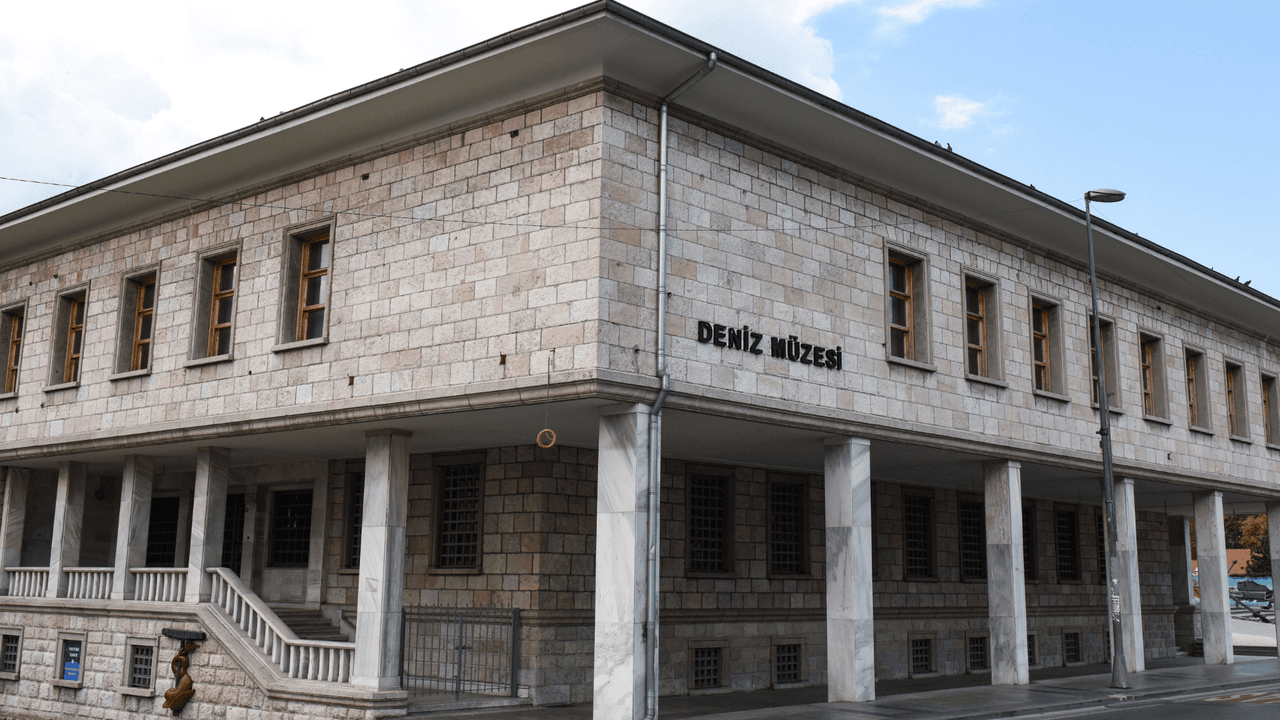
Istanbul Naval Museum (Ministry of National Education)
In 1961, the Naval Museum moved to its new location at İskele Meydanı in Beşiktaş. İskele Meydanı is situated along the Bosphorus and is the central area of the Beşiktaş district. The relocation marked the end of the museum’s long process of settlement, which had begun in Kasımpaşa and continued through various temporary venues, and initiated its transition to a permanent campus. Due to the inadequacy of existing buildings for displaying longboats and royal barges, additional structures were constructed, and the “Historic Boats Gallery” opened to the public in 1971. Kadırgas are long, oar-propelled vessels that formed the combat core of the Ottoman navy. Their large dimensions required exhibition space beyond standard museum capacities, making the construction of a separate gallery necessary.
To accommodate the growing collection, an architectural design competition was held in 2005, and construction of the new museum complex began in 2008. National and international architectural firms participated in the competition. During implementation of the winning design, some existing buildings were preserved while others were reconfigured to meet new functional requirements. The complex, comprising the Main Exhibition Building, the Historic Boats Gallery, the Cultural Site, and the Open Exhibition Areas, opened to the public on 4 October 2013. The Cultural Site includes conference halls, educational workshops, and temporary exhibition spaces. The Open Exhibition Areas provide an environment where large-scale maritime vessels and equipment can be examined under natural lighting conditions.
The museum’s inventory contains more than 23,000 historical artifacts, approximately ten percent of which are on display. 【3】Artifacts not on display are preserved in climate-controlled storage, while some are loaned for temporary exhibitions within Türkiye and abroad. The collection includes historic royal barges, ship models, naval weapons, standards, emblems, textiles, glass, stone, and wooden artifacts. The standards and emblems sub-collection encompasses Ottoman dynastic symbols, identifying insignia of naval units, and protocol elements from various periods. The textile collection consists of uniforms and ceremonial attire for officers and sailors, as well as fabric components from ship fittings.
The collection also includes technological artifacts reflecting the evolution of the Ottoman navy, as well as the launch and dinghies belonging to Mustafa Kemal Atatürk’s yacht Savarona. Savarona, purchased by the Turkish state in 1938, was actively used until Atatürk’s death. The launch and dinghies associated with the yacht have been included in the inventory as documentary artifacts of that era.
Video representing Istanbul Naval Museum (Istanbul Governorship)
The institution holds an archive of 25,000 folders and approximately 3.5 million historical documents. Archive materials include shipbuilding plans, voyage orders, personnel records, nautical charts, and diplomatic correspondence. The majority of the documents are in Ottoman Turkish, with some in modern Turkish, French, and other languages.
Digitalization efforts for the archive are ongoing within relevant departments. This unit is supported by the Naval Specialization Library, which holds over 21,000 publications.【4】The library collection includes Ottoman manuscripts and printed works, antique map albums, ship catalogs, technical publications, and contemporary maritime literature. The library is accessible to researchers by appointment.
Ministry of National Education. "İstanbul Deniz Müzesi." Ministry of National Education, Out-of-School Learning Environments. Accessed May 8, 2026. https://okuldisiogrenme.eba.gov.tr/place-detail/istanbul-deniz-muzesi-1305
Müzeler.org. "İstanbul Deniz Müzesi." Accessed May 8, 2026. https://muzeler.org/deniz-muzesi--850802.
T.C. Ministry of Culture and Tourism. "Deniz Müzesi." Istanbul Provincial Directorate of Culture and Tourism. Accessed May 8, 2026. https://www.kulturportali.gov.tr/turkiye/istanbul/gezilecekyer/stanbul-deniz-muzesi
T.C. İstanbul Valiliği. “İstanbul'un Müzeleri : Deniz Müzesi.” YouTube. Accessed May 8, 2026. https://www.youtube.com/watch?v=fBN3pW4ulYU
T.C. İstanbul Valiliği. “İstanbul’un Müzeleri: Deniz Müzesi.” Accessed May 8, 2026. https://istanbul.gov.tr/istanbulun-muzeleri-deniz-muzesi---.
Utkuluer, Hülya. 2025. “Cumhuriyet Döneminde İstanbul Deniz Müzesi’ne Yer Arayışları”. Çağdaş Türkiye Tarihi Araştırmaları Dergisi 25, no. 50: 293-333. Accessed April 16, 2026. https://dergipark.org.tr/en/download/article-file/4326334
[1]
T.C. Kültür ve Turizm Bakanlığı, “Deniz Müzesi,”İstanbul İl Kültür ve Turizm Müdürlüğü, Erişim Tarihi 8 Mayıs 2026, https://www.kulturportali.gov.tr/turkiye/istanbul/gezilecekyer/stanbul-deniz-muzesi
[2]
T.C. Kültür ve Turizm Bakanlığı, “Deniz Müzesi,”İstanbul İl Kültür ve Turizm Müdürlüğü, Erişim Tarihi 8 Mayıs 2026, https://www.kulturportali.gov.tr/turkiye/istanbul/gezilecekyer/stanbul-deniz-muzesi
[3]
T.C. İstanbul Valiliği, “İstanbul'un Müzeleri : Deniz Müzesi,” İstanbul Valiliği /YouTube videosu, Erişim Tarihi 8 Mayıs 2026, https://www.youtube.com/watch?v=fBN3pW4ulYU.
[4]
T.C. İstanbul Valiliği, “İstanbul'un Müzeleri : Deniz Müzesi,” İstanbul Valiliği /YouTube videosu, Erişim Tarihi 8 Mayıs 2026, https://www.youtube.com/watch?v=fBN3pW4ulYU.

No Discussion Added Yet
Start discussion for "Istanbul Maritime Museum" article
Founding Process and the Kasımpaşa Period
World War II and the Relocation of Artifacts
Search for a New Location and the Dolmabahçe Mosque Period
Relocation to Beşiktaş and the New Museum Complex
Museum Collection, Archive and Library