


This article was automatically translated from the original Turkish version.
+2 More
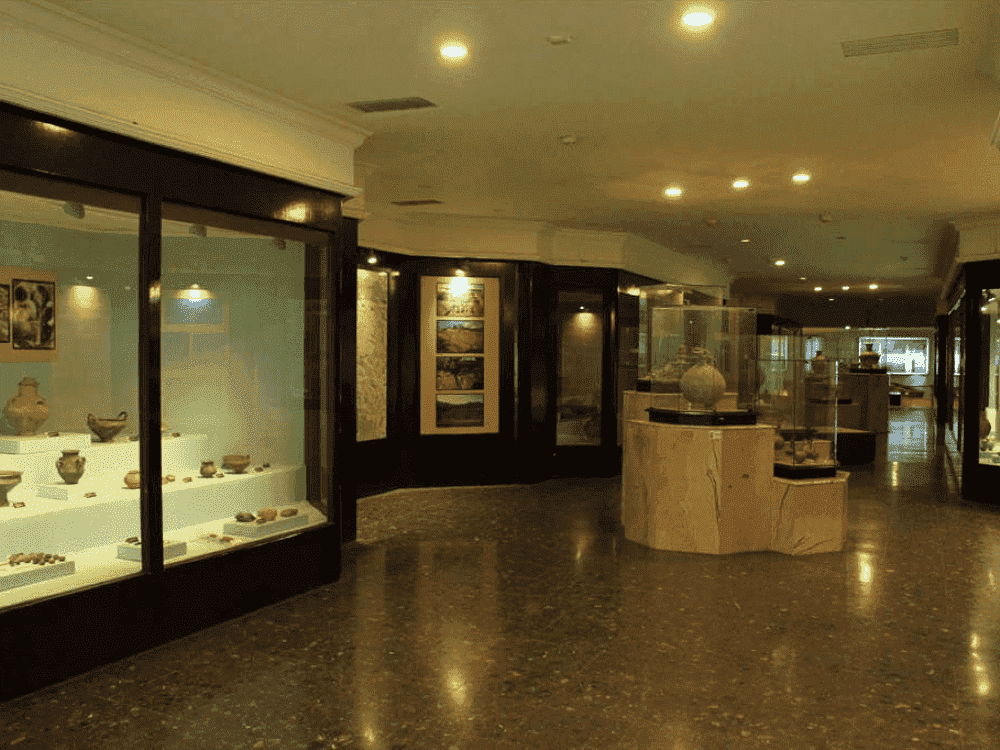
This museum displays artifacts recovered from archaeological excavations in İzmir and its surroundings, shedding light on the region’s history from the Prehistoric Ages to the Byzantine Period. The museum first opened its doors in 1927 in the Aya Vukla Church in the Basmane district and has been operating since 1984 in the Bahribaba Park in Residence, within a place area modern building. The museum is filled with artifacts from ancient cities such as Bayraklı (Smyrna), Ephesus, Bergama, Milet, Klazomenai, Teos and Iasos, showcasing the archaeological and artistic richness of West Anatolia.

İzmir Archaeological Museum ( Ministry of Culture and Tourism of the Republic of Türkiyeİzmir Culture Art Factory )
The origins of the İzmir Archaeological Museum trace back to early 1920s efforts to collect and preserve archaeological artifacts from the region. The museum’s first steps were taken with the rescue of the collection of antiquities established in 1888 by the İzmir Evangelical Greek School following the Great İzmir Fire of 1922. Artifacts spared from the fire were gathered in the Aya Vukla (Gözlü) Church from the ruins of harm. During the same period, architectural fragments, reliefs and statues collected from around İzmir, including friezes from the Temple of Dionysus in Teos and artifacts excavated by experts from the Athens Museum but left in İzmir, were initially assembled in the garden of İzmir İdadi School (later the justice building). After three years of work collection and compilation efforts, the museum was established in 1924 under the name “Asar-ı Antique Museum” and opened in 1927 in the Aya Vukla Church.
In its early years, the museum was directed by Aziz Ogan, but in 1931, Selâhattin Kantar assumed the role following Ogan’s transfer to another post. During the Kantar period, the museum was visited in 1931 by Mustafa Kemal Atatürk and adopted the name “İzmir Archaeological Museum” in 1943. However, the capacity of the Aya Vukla Church became insufficient for the growing number of artifacts, prompting the museum’s relocation in 1951 to the former National Education Pavilion in Kültürpark. The high concentration of artifacts from ancient cities in İzmir and its surroundings created a need for a new building building, which was fulfilled with the construction of a modern 5,000 m² museum building in Bahribaba Park, Konak, in 1984. This building, opened on 11 February 1984, became the museum’s current home.
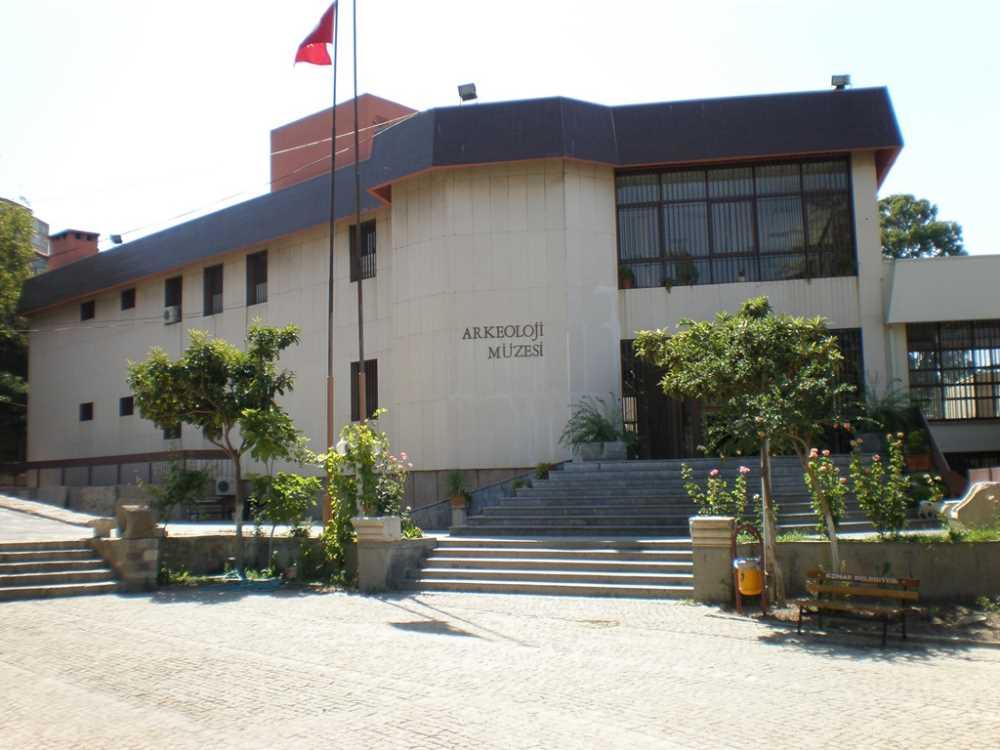
İzmir Archaeological Museum (Culture Portal )
The museum’s current building is a three-story modern building designed to accommodate all necessary infrastructure for the exhibition, preservation and restoration of archaeological artifacts. The ground floor houses artifact storage rooms, restoration laboratories, library and archives, while the first floor is dedicated to administrative sections. The second and third floors are allocated to exhibition halls. The museum is organized to meet all visitor needs with exhibition galleries, a photography room, conference hall and garden.
The museum’s design allows artifacts to be displayed in a chronological and thematic order. Its location within Bahribaba Park provides both central accessibility and a suitable environment for outdoor displays. In the museum garden, statues, sarcophagi, stelae, inscriptions and architectural fragments recovered from excavations are exhibited, while indoor halls are designed to preserve more delicate artifacts. An audio-visual guide system offers visitors free headphones for detailed information about the artifacts.
The İzmir Archaeological Museum possesses a rich collection of over 5,000 artifacts, reflecting the history of Western Anatolia from the Prehistoric Ages to the Byzantine Period, including finds from ancient cities such as Bayraklı (Smyrna), Ephesus, Pergamon, Miletus, Klazomenai, Teos, Iasos, Erythrae, Myrina, Foça, Çandarlı and Kyme. The museum is organized into three main exhibition halls and garden displays.
Since 1984, the İzmir Archaeological Museum has operated from its modern building in Bahribaba Park and is one of the most important archaeological museums in the Aegean Region. With its artifacts reflecting the historical and artistic development of Western Anatolia, the museum serves as a regional institution. Opening hours are 08:30–19:00 during write and 08:00–17:00 during winter, with an admission fee of 4 Euros. Its central location makes it easily accessible by public transport.
The museum is also an important center for education and research. Its restoration laboratories and library provide the necessary infrastructure for the preservation and study of archaeological artifacts. The audio guide system offers visitors in-depth learning into the history and context of the artifacts. The museum’s collections are rich with examples that reveal ancient civilizations’ art and the cultural history of Western Anatolia.
Additionally, the former Alsancak Tekel Factory building, located within the İzmir Culture Art Factory (İKSF), has been restored over an area of 7,240 m² and opened as the Museum İKSF – Archaeology and Ethnography Museum. In this structure, alongside archaeological artifacts, ethnographic objects are also displayed, offering thematic exhibitions in line with contemporary museum practices. However, the focus of this article is the main museum building in Bahribaba Park.
While offering a journey through the history and art of the Aegean, the İzmir Archaeological Museum maintains its place among Turkey’s leading museums. As a vital recording center for both local and international visitors, it fulfills its mission of transmitting the region’s archaeological heritage to future generations.

No Discussion Added Yet
Start discussion for "İzmir Archaeological Museum" article
Historical Development and Establishment
Architectural Structure and Layout
Collections and Exhibition Halls
Current Status and Cultural Significance