


This article was automatically translated from the original Turkish version.
Jet stream disruptions in the stratosphere are rapid air currents that flow through the stratosphere, the second layer of Earth’s atmosphere, and form an integral part of the general atmospheric circulation. These currents typically occur at high latitudes between altitudes of 10 and 50 kilometers, moving as a strong band of westerly winds. However, at times, sudden and unexpected “breakdowns” occur in the stratospheric jet streams. These breakdowns are characterized by events such as changes in wind direction, abrupt decreases in wind speed, or the dispersion of atmospheric wave energy. Stratospheric jet stream disruptions do not only affect the dynamics of the upper atmosphere; they also generate cascading effects that extend to weather patterns and the climate system in the troposphere. Therefore, in atmospheric science, these disruptions are considered a component of abrupt changes in the global climate system.
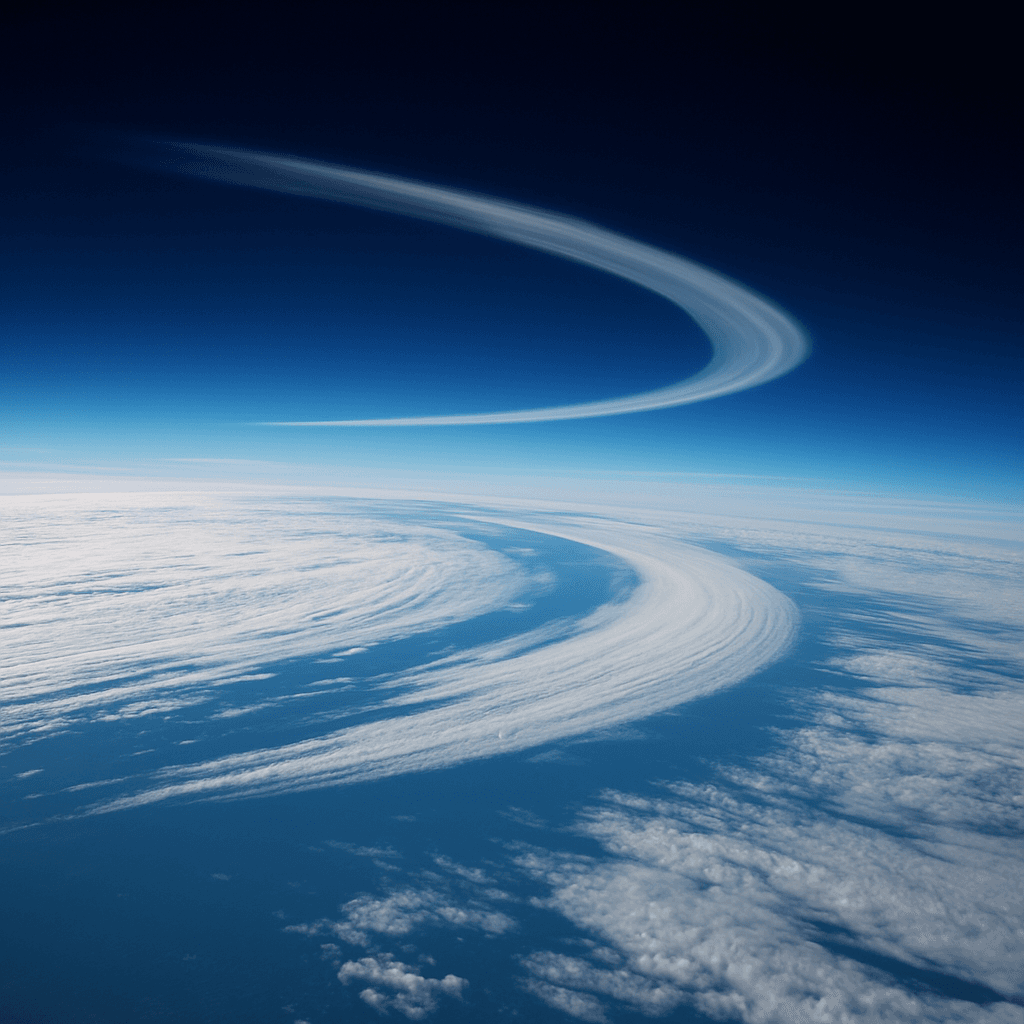
Stratospheric Jet Streams and the Upper Atmosphere (Generated by Artificial Intelligence.)
Stratospheric jet streams generally consist of two main structures: the polar night jet and the subtropical jet. The polar night jet becomes particularly strong during the polar night period in the winter hemisphere. This jet stream forms at altitudes of approximately 20 to 50 kilometers, when temperature gradients between the poles and tropical regions are most intense. The subtropical jet, by contrast, typically occurs between 10 and 16 kilometers in altitude and arises as a result of temperature gradients at lower latitudes.
These stratospheric jet streams are vital dynamic components that transport energy horizontally across the atmosphere and balance temperature differences. Through these jets, excess energy accumulated in tropical regions is transported toward colder latitudes. This process helps maintain not only the stratospheric air currents but also the general circulation in the troposphere. Thus, stratospheric jet streams act like the “backbone” of the climate system. Jet streams vary in strength and position with the seasons. For example, during winter months in the Northern Hemisphere, the polar night jet strengthens and can extend to lower latitudes. This is closely linked to large-scale atmospheric structures such as the polar vortex. During summer months, the polar night jet weakens and gives way to lower-altitude jet streams in the troposphere. Consequently, seasonal variations in stratospheric jet streams directly influence the dynamics of global atmospheric circulation.
The structure of stratospheric jet streams arises as a result of temperature and pressure gradients. These currents form according to fundamental laws of atmospheric physics, such as geostrophic balance and thermal wind relationships. In particular, temperature differences in polar regions intensify the strength of the polar night jet. Therefore, warming and cooling processes in the polar regions are among the primary factors determining the structure of jet streams.
In summary, stratospheric jet streams serve as energy transporters and stabilizing elements of the atmosphere. Their normal flow regulates global air currents and ensures the stability of the climate system. However, sudden disruptions that occasionally occur can disturb this delicate balance and trigger large-scale atmospheric changes. For this reason, monitoring jet streams and understanding their dynamics remains a fundamental area of research in modern climate science.
Stratospheric jet stream breakdowns arise from sudden disturbances in the atmospheric dynamic and thermodynamic equilibrium. These breakdowns are primarily triggered by the complex interaction of large-scale wave motions and temperature distributions in the atmosphere. In particular, long-wave motions known as “Rossby waves” directly influence the jet stream. As Rossby waves attempt to balance potential vorticity imbalances between latitudes, they can disrupt the direction and speed of the jet stream, initiating breakdown processes.
Another important mechanism is stratosphere-troposphere interaction, known as “downward propagation.” In this process, strong storm systems and wave activity in the troposphere rise to the lower boundaries of the stratosphere, destabilizing the jet stream. When the energy of these waves propagates upward into the stratosphere, it creates fluctuations in the jet stream’s wind profile, pushing it toward a breakdown threshold. Thus, dynamic processes in the lower atmosphere serve as harbingers of breakdown events in the upper atmosphere.
Temperature gradients in the stratosphere are also a primary cause of these breakdowns. The polar night jet relies on the strong temperature contrast between cold polar air masses and warmer mid-latitude air masses. However, as processes such as global warming weaken this temperature contrast, the jet stream becomes more vulnerable. Additionally, during events such as sudden stratospheric warming (SSW), the lower stratosphere rapidly warms, weakening the polar vortex and fragmenting the jet stream, thereby triggering sudden breakdowns.
During these breakdown processes, the speed and direction of the jet stream can change abruptly. For instance, before a breakdown, the jet stream may form a stable, strong band, but during the breakdown, its speed decreases and its path becomes wavy. These fluctuations fundamentally alter the distribution of potential temperature and wind regimes in the stratosphere. This sudden and radical change in the atmosphere does not remain confined to the stratosphere; it directly affects lower atmospheric layers.
The fundamental physical mechanism of stratospheric jet stream breakdowns is explained by atmospheric wave-breaking theory. According to this theory, when wave energy in the atmosphere reaches a critical threshold, the streamlines break, causing energy to disperse both upward and downward. During this process, excessive accumulation of wave energy exceeds a critical threshold known as “wave breaking,” disrupting the structure of the jet stream. This event functions as a natural “energy release” mechanism through which the atmosphere restores equilibrium.
In summary, stratospheric jet stream breakdowns are the product of a complex, multilayered process. Factors such as Rossby waves, temperature contrasts, downward wave propagation, and sudden stratospheric warming are the primary drivers of these breakdowns. Understanding these mechanisms contributes significantly to our comprehension of how the global atmosphere maintains its balance and how this balance can be disrupted.
Stratospheric jet stream breakdowns are not isolated events confined to the upper atmosphere; rather, they are powerful triggers that directly influence global weather patterns and the climate system. During breakdowns, temperature and wind profiles in the lower stratosphere undergo significant changes. The most prominent consequence is the weakening of the polar vortex and increased interaction with the troposphere. During a breakdown event, the cold air mass in the stratosphere (polar vortex) fragments or shifts position. This change allows polar air masses to move toward lower latitudes, leading to extreme weather events such as “cold air outbreaks.”
For example, sudden temperature drops and heavy snowfall observed in Europe and North America during winter months are often linked to stratospheric jet stream breakdowns. During these events, the stability of polar air masses is disrupted, allowing cold air to spread downward into the lower troposphere. As a result, even regions with normally mild climates can experience severe winter conditions. These events generate significant economic and social impacts in sectors such as agriculture, transportation, and energy infrastructure.
Stratospheric jet stream breakdowns can also fundamentally alter weather patterns in mid-latitudes. Changes in the direction and speed of the jet stream reshape wave motions and storm tracks in the troposphere. In particular, the pathways of storm systems originating from the Atlantic and Pacific can shift following a breakdown event. This can trigger not only abrupt temperature changes but also intense winds and precipitation waves.
Moreover, due to stratosphere-troposphere interactions, these breakdowns can influence long-term climate processes. Large-scale atmospheric oscillations such as the North Atlantic Oscillation (NAO) and the Arctic Oscillation (AO) are directly affected by jet stream breakdowns. These oscillations are among the most important factors determining winter weather patterns in regions such as Europe and North America. Therefore, these sudden changes in the stratosphere can lead to weather and climate fluctuations lasting from several weeks to several months.
The indirect effects of these breakdowns on tropical regions are also noteworthy. Following jet stream disruptions, large-scale atmospheric flows such as the Hadley cells and the Walker circulation in the tropical zone undergo slight reorganization. This can cause temporary fluctuations in precipitation and temperature patterns in tropical regions. Thus, the impact of stratospheric jet stream breakdowns extends beyond high latitudes and is felt on a global scale.
In summary, stratospheric jet stream breakdowns create sudden and powerful disruptions to the balance of Earth’s atmosphere. These events influence both short-term weather conditions and long-term climate cycles, making them a critical area of research in modern climate science. For this reason, atmospheric scientists and climate modelers continue to closely monitor this complex process to understand its causes and consequences.
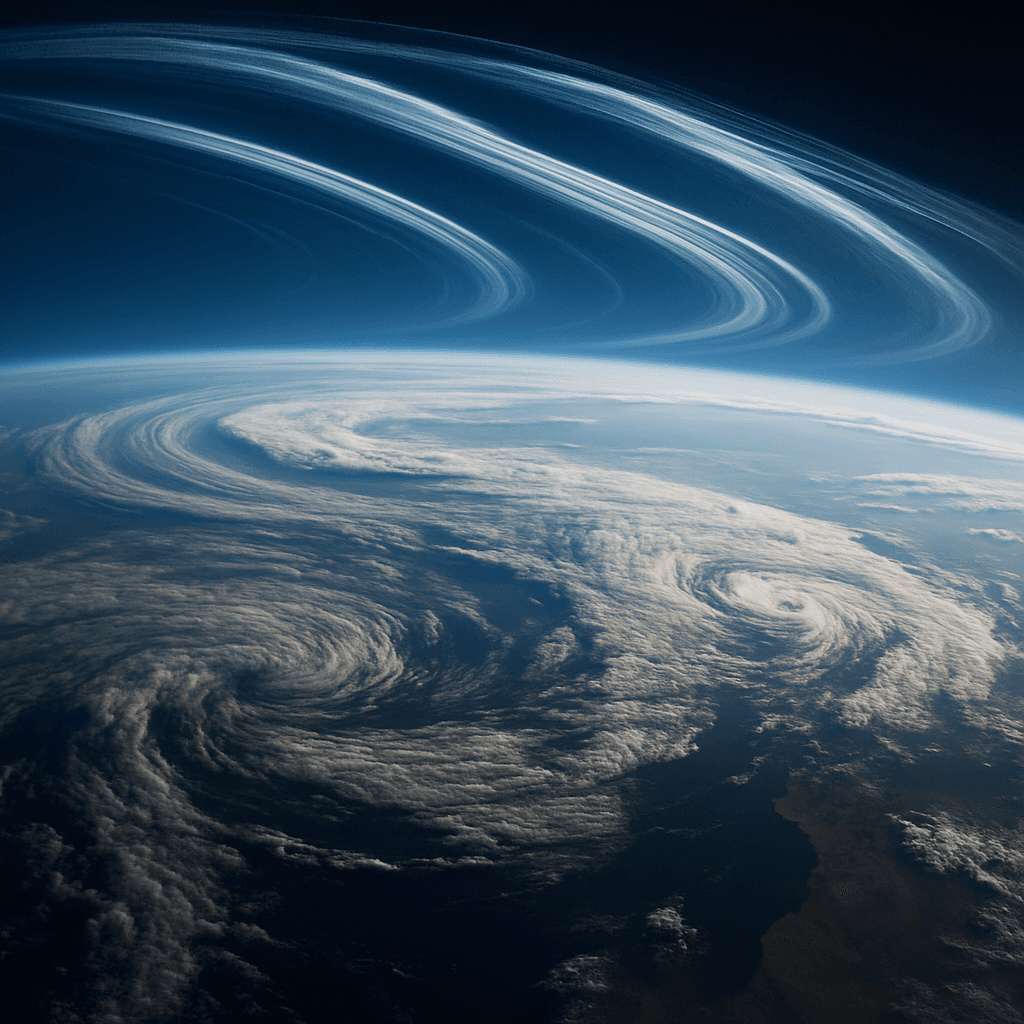
Impacts of Stratospheric Jet Stream Breakdowns on Global Climate and Weather Conditions (Generated by Artificial Intelligence.)
Understanding and monitoring stratospheric jet stream breakdowns is a crucial and challenging task in atmospheric science. Because these breakdowns typically develop suddenly and over short time periods, they must be continuously observed using modern techniques. Traditionally, temperature and wind profiles in the stratosphere have been obtained through balloon-borne radiosondes. These instruments collect data on temperature, pressure, and wind speed at various atmospheric altitudes and serve as a fundamental tool for constructing jet stream speed and direction profiles.
Today, satellite-derived high-resolution data play a far more critical role in observing these breakdowns. Satellites such as NASA’s Aura and Aqua and the European Space Agency’s (ESA) Sentinel missions measure real-time stratospheric temperature and ozone profiles. These data provide significant advantages in determining the timing and intensity of sudden stratospheric warming (SSW) events and jet stream breakdowns. Satellite observations also enable the tracking of global structural changes in the jet stream, revealing long-term trends.
Another key component of modern observation techniques is lidar and radar-based measurement systems. Ground-based lidar instruments, in particular, measure fine-scale temperature variations and ozone concentrations in the stratosphere. Radar systems precisely record how wind profiles change with altitude. These tools allow detailed analysis of atmospheric wave energy transfer and wave-breaking processes during jet stream breakdowns.
Scientists combine these observational data with advanced atmospheric models to understand the physical mechanisms behind jet stream breakdowns. Numerical weather prediction models, such as ECMWF and GFS, simulate stratospheric temperature and wind profiles, enabling forecasts of potential breakdown scenarios. Additionally, these models are integrated into climate projections to evaluate future trends and possible consequences of jet stream breakdowns.
Modern research demonstrates that jet stream breakdowns are important not only from a meteorological perspective but also in terms of climate feedback cycles. For instance, melting sea ice in the Arctic region weakens temperature gradients in the polar area, potentially increasing the frequency and intensity of jet stream breakdowns. Therefore, monitoring these stratospheric breakdowns also serves as a tool for understanding the impacts of climate change on polar atmospheric dynamics.
Stratospheric jet stream breakdowns reveal how dynamic and variable the delicate balance of the global atmosphere truly is. In the future, as the effects of climate change intensify in polar regions, these breakdowns are expected to occur more frequently and with greater severity. In particular, rapid warming in the poles and loss of sea ice can weaken temperature contrasts in polar regions, reducing the stability of jet streams. This situation may create favorable conditions for more frequent wave-breaking events and sudden cold air outbreaks in the troposphere.
Scientists are conducting intensive research on how to integrate these breakdowns into future climate projections. Next-generation climate models possess the capacity to simulate stratosphere-troposphere interactions and jet stream breakdown dynamics with greater precision. As a result, both short-term weather forecasting and long-term climate projections are becoming more reliable. These advances enhance our understanding of how climate change is transforming the upper layers of the atmosphere.
A major focus of future research will be to unravel the indirect connections between stratospheric jet stream breakdowns and tropical regions. These connections may improve our understanding of global climate phenomena such as El Niño and La Niña. Additionally, the impacts of polar warming on subtropical jet streams represent a new area of investigation for climate scientists. Therefore, new data on dynamic relationships between atmospheric layers are essential in addressing climate change.
In this context, observation technologies continue to advance. Satellites, lidar, and radar measurements now enable tracking of fine atmospheric structures with higher resolution than ever before. For example, next-generation satellites from NASA and ESA not only measure temperature and wind profiles but also quantify the distribution of critical gases such as ozone and water vapor, revealing the physical underpinnings of jet stream breakdowns.
These complex transformations in the polar and stratospheric atmosphere directly affect living conditions on Earth. Weather events such as sudden cold air outbreaks, droughts, and storm systems can originate from imbalances in the stratosphere. Therefore, understanding these breakdown processes is key for scientists and policymakers to build more resilient societies and infrastructure in response to the climate crisis.

No Discussion Added Yet
Start discussion for "Jet Stream Breaks in the Stratosphere" article
Key Characteristics of Stratospheric Jet Streams
Causes and Mechanisms of Stratospheric Jet Stream Breakdowns
Impacts of Stratospheric Jet Stream Breakdowns on Global Climate and Weather Conditions
Observation Techniques and Modern Research on Stratospheric Jet Stream Breakdowns
The Future of Global Climate and Stratospheric Dynamics