

This article was automatically translated from the original Turkish version.
+2 More
Registration Number | 1660 | ||||||||
|---|---|---|---|---|---|---|---|---|---|
Registration Date | 18.11.2024 | ||||||||
Application Number | C2022/000459 | ||||||||
Application Date | 20.12.2022 | ||||||||
Name of the Geographical Indication | Keşan Korudağ Çiçek Balı | ||||||||
Product / Product Group(s) | Çiçek Balı / Bal | ||||||||
Type of Geographical Indication | Place of origin | ||||||||
Applicant/Registrant(s) | Keşan Municipality | ||||||||
Address of the Registrant | Yukarı Zafiye Mah. İlyas Bey Cad. 23/E Keşan EDİRNE | ||||||||
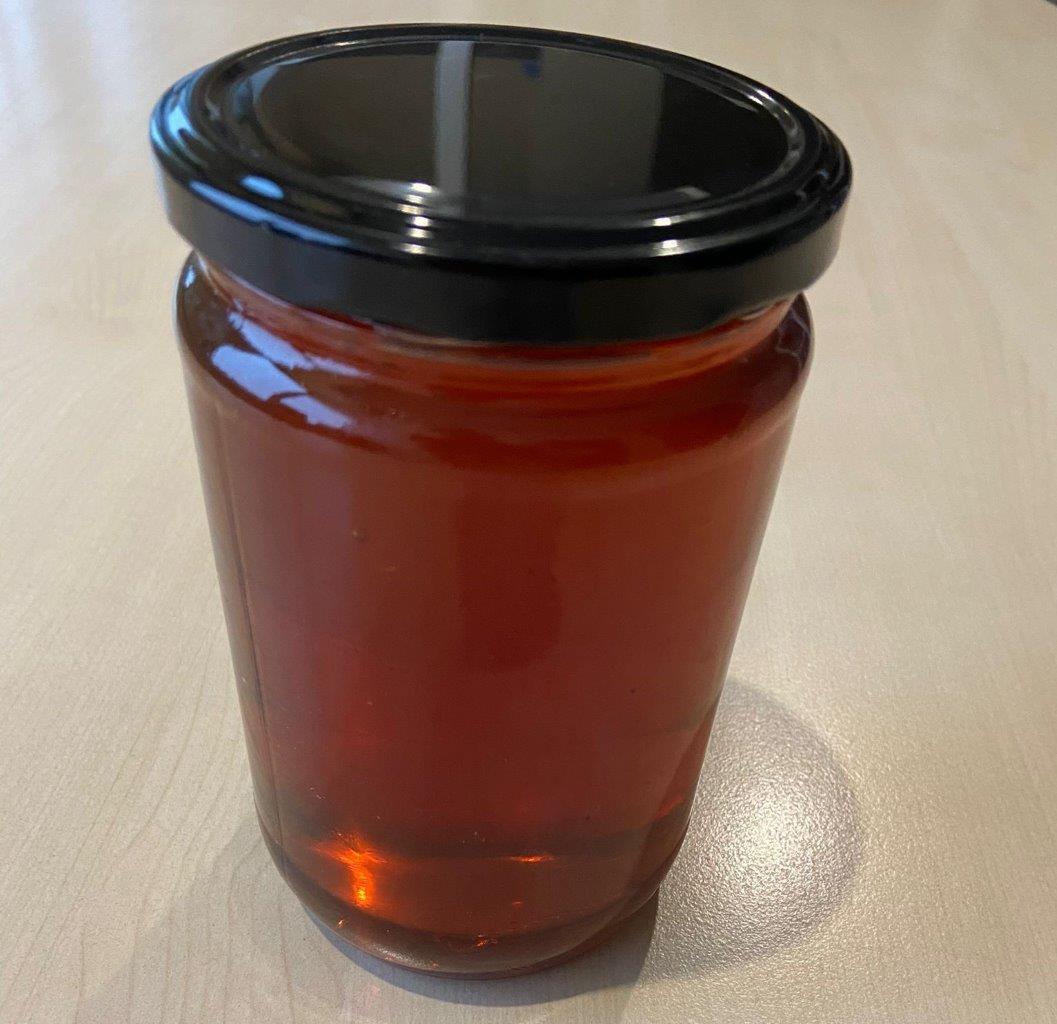
Keşan Korudağ Flower Honey is a multifloral raw honey produced using the fixed beekeeping method in the village areas surrounding the Keşan district of Edirne province, and it holds protected designation of origin. This honey exhibits characteristic aromas of lavender, thyme, and linden flowers, with color tones ranging from bright yellow to light hues and a mild, fruity, non-irritating taste. It has a high tendency to crystallize, with a pH value between 3.50 and 4.00. Its pollen composition is predominantly composed of pollen from black locust (Robinia pseudoacacia), sunflower (Helianthus annuus), clover (Trifolium spp.), linden (Tilia spp.), and blackberry (Rosaceae).
The production area of Keşan Korudağ Flower Honey encompasses the villages of Danişment, Mecidiye, Gökçetepe, Sazlıdere, Bahçeköy, İzzetiye, Yenimuhacir, Küçükdoğanca, Altıntaş, Beğendik, Paşayiğit, Türkmen, Orhaniye, Şabanmera, Yaylaköy, Beyköy, Suluca, Mercan, Yeşilköy, Kılıçköy, Büyükdoğanca, Hacıköy, Erikli, Kozköy, Mahmutköy, Kadıköy, Şükrüköy, Seydiköy and Çamlıca in the Keşan district of Edirne province. The remote location of these production areas from industrial and intensive agricultural activities contributes to the preservation of the product’s natural structure.
Keşan Korudağ Flower Honey exhibits color tones ranging from bright yellow to light hues and possesses a mild aroma reminiscent of lavender, thyme, and linden flowers. The dominant taste is mildly fruity, with no undesirable aromas such as burning, caramel, or smoke. This honey begins to crystallize approximately two to four months after harvest. Due to its crystallization-prone structure, it displays high fluidity and viscosity.
The pH value of the honey ranges from 3.50 to 4.00, which lies at the lower end of the known range for flower honeys (3.5–5.5), indicating its characteristic acidic nature. Its electrical conductivity varies between 0.2 and 0.40 mS/cm, while its moisture content ranges from 14% to 18%. Optical rotation is between -1.60 and -2.20. Other distinguishing components include proline content of 300–490 mg/kg, diastase number of 8.00–15.00, and total polyphenol content of 5.10–13.40 mg gallic acid/100 g.
Fructose and glucose contents range from 37.60–41.10 g/100 g and 24.40–39.40 g/100 g respectively, with a total fructose + glucose content of 63.50–78.90 g/100 g. The fructose/glucose ratio is between 1.10 and 1.30. Color characteristics are defined according to the CIE Lab* system as L*: 76–87, a*: 6–12, and b*: 75–100.
Keşan Korudağ Flower Honey primarily contains pollen from black locust (Paliurus spina-christi), sunflower (Helianthus annuus), clover (Trifolium spp.), linden (Tilia spp.), and blackberry (Rosaceae). These pollens are classified as major (>20%) and secondary (15–20%) pollen groups. Minor pollen types present in smaller quantities include species from the families Cistaceae, Chenopodiaceae, Brassicaceae, Cornaceae, Myrtaceae, Fabaceae, Apiaceae, Asteraceae, Lamiaceae, and Liliaceae. Pollen types commonly found in other honeys such as chestnut, wild rose, and dogwood are absent in this product.
Keşan Korudağ Flower Honey is produced using the fixed beekeeping method. In the region, traditional wicker hives are commonly used. Wintering of bees is carried out in enclosed, cool, insulated areas constructed by beekeepers in their homes. In spring, starting in May, bee colonies are prepared for honey production; hive inspections are conducted and suitable brood chambers are identified. Nectar flow begins in May and the production period extends until the end of July.
During honey production, no chemical interventions are applied to the hives. Bees’ water needs are met daily. Sterile beeswax frames are placed in the honey supers, and harvesting begins when the frames are fully or at least two-thirds capped.
Honey harvesting is typically conducted in the early morning hours when bees exhibit low foraging activity. Smoke is applied to the hive to calm the bees, and honey-filled frames are removed. These frames are transported to enclosed spaces where the wax cappings are removed using a capping knife or scraper, preparing the honey for filtration. The honey is extracted using centrifugal machines. After extraction, the honey is passed through multi-layered sieves or muslin cloth to separate physical impurities. The filtered honey is then transferred to resting tanks, where small particles and air bubbles rise to the surface and are removed. The clarified product proceeds to the packaging stage.
After resting, the honey is packaged in food-grade containers. Throughout all stages, it is stored in dry, odor-free environments, protected from direct sunlight, at temperatures not exceeding 25 °C.
Inspection of Keşan Korudağ Flower Honey is coordinated by the Keşan Municipality. A three-member inspection committee is formed by the Keşan District Directorate of Agriculture and Forestry, the Edirne Province Beekeepers Union, and relevant honey producer associations, conducting inspections at least once annually. Inspection criteria include compliance with production methods, accuracy of harvesting procedures, conformity of product analysis results with applicable regulations, and correct use of the geographical indication and logo.
Turk Patent and Trademark Office. "Keşan Korudağ Çiçek Balı." Turk Patent and Trademark Office. Accessed July 17, 2025. https://ci.turkpatent.gov.tr/cografi-isaretler/detay/8282.
Turk Patent and Trademark Office. *Keşan Korudağ Çiçek Balı.* Accessed July 17, 2025. https://ci.turkpatent.gov.tr/Files/GeographicalSigns/cbbb0ba8-e739-4e12-a5da-5b7f13168dad.pdf.

Registration Number | 1660 | ||||||||
|---|---|---|---|---|---|---|---|---|---|
Registration Date | 18.11.2024 | ||||||||
Application Number | C2022/000459 | ||||||||
Application Date | 20.12.2022 | ||||||||
Name of the Geographical Indication | Keşan Korudağ Çiçek Balı | ||||||||
Product / Product Group(s) | Çiçek Balı / Bal | ||||||||
Type of Geographical Indication | Place of origin | ||||||||
Applicant/Registrant(s) | Keşan Municipality | ||||||||
Address of the Registrant | Yukarı Zafiye Mah. İlyas Bey Cad. 23/E Keşan EDİRNE | ||||||||
No Discussion Added Yet
Start discussion for "Keşan Korudağ Flower Honey" article
Geographical Boundary
Physical and Chemical Properties
Pollen Composition
Production Method
Harvesting, Filtration, and Resting Process
Packaging and Storage
Inspection and Registration Process