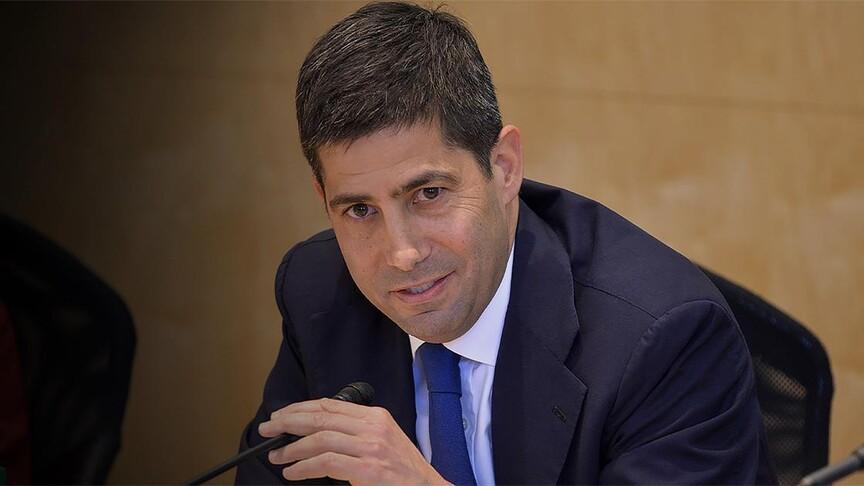

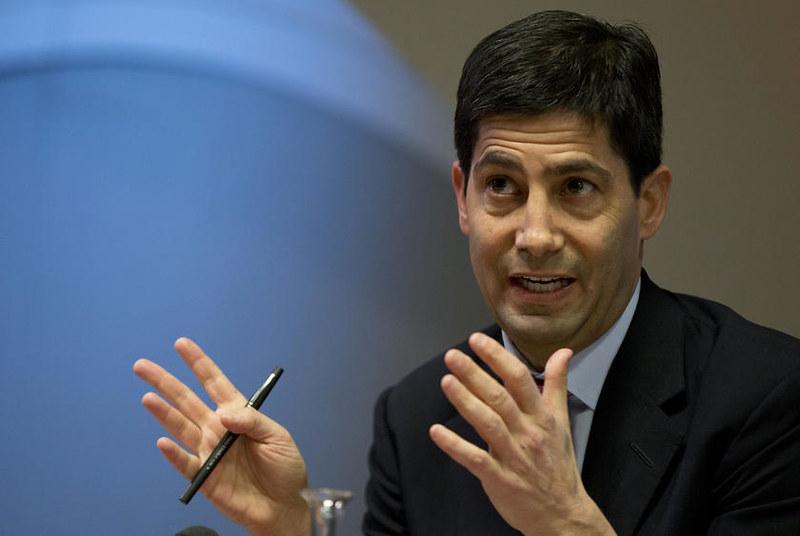

Profession(s) | Central banker Public official Lawyer Academic Investment banker | ||||||||
|---|---|---|---|---|---|---|---|---|---|
Position(s) | Managing Director at Morgan Stanley (1995–2002) President of the Federal Reserve (2026–) Researcher at Hoover Institution and Faculty Member at Stanford GSB (2011–2026) Member of the Federal Reserve Board of Governors (2006–2011) Executive Secretary of the National Economic Council (2002–2006) | ||||||||
Place of Birth | Albany, New York | ||||||||
Spouse(s) | Jane Lauder | ||||||||
Nationality | American | ||||||||
Birth | 13 April 1970 | ||||||||
Appointing President | Donald Trump (2026) | ||||||||
Senate Approval | 54 – 45 (13 May 2026) | ||||||||
Political Affiliation | Republican | ||||||||
Education | Stanford University Harvard Law School | ||||||||
Kevin Warsh is a figure known in the American economic world for his work in both the financial sector and public administration. With a Wall Street background, his role on the Board of Governors of the Federal Reserve System and his actions during the global economic crisis have brought him into the spotlight over interest rate policies and inflation debates. Warsh, who has also drawn attention through his academic work, became one of the figures who re-entered the American political agenda after being nominated by Donald Trump for the chairmanship of the Federal Reserve.
Kevin Warsh was born on April 13, 1970, in Albany, New York, and shaped his career in the fields of economics, finance, and public policy. Although he is widely known in public discourse for his work in central banking and economic policy, limited information about his early life appears in the media. The main reason for this is Warsh’s preference to keep his private life out of the public eye. Throughout his education, Warsh focused on economics and law, and in later years became an influential figure within American financial circles. His continued engagement with academic circles has led to his being viewed not merely as a financial manager but as someone deeply involved in economic policy.
Kevin Warsh completed his undergraduate studies at Stanford University, graduating with honors in 1992 with a focus on public policy, economics, and political science. He was then admitted to Harvard Law School, where he concentrated on the intersections of law, economics, and regulatory policy, earning his Juris Doctor degree in 1995. To broaden his academic foundation, Warsh took additional courses in market economics at Harvard Business School and in debt capital markets at MIT Sloan School of Management.【1】 This multi-layered educational experience laid the groundwork for Warsh’s later approach, which combined an understanding of market mechanisms with legal and regulatory frameworks, both on Wall Street and at the Federal Reserve.
Kevin Warsh’s professional career began in the financial sector. The experience he gained within Wall Street enabled him to develop a close understanding of power dynamics and market mechanisms within the American economic system. His work on the functioning of financial markets, investment banking, and global capital flows proved decisive in his later public roles. Warsh emerged as someone who had directly experienced market dynamics, a perspective that particularly distinguished him during his central banking assignments.【2】
Warsh’s rise to national prominence came with his appointment to the Board of Governors of the Federal Reserve System. In 2006, he became the youngest member ever appointed to the Federal Reserve Board, assuming office at age 35.【3】 Throughout his tenure, he conducted research on financial system stability, banking policies, and the central bank’s role in markets.
The 2008 Global Financial Crisis marked one of the turning points in Kevin Warsh’s career. As one of the key figures within the Federal Reserve during the crisis, he participated in efforts to prevent the collapse of the economic system. The Federal Reserve acted as a critical link between financial markets and policy responses during the sale of Bear Stearns to JPMorgan Chase, the bankruptcy of Lehman Brothers, and the rescue of AIG.【4】 He assumed responsibilities in safeguarding financial institutions and restoring economic stability. During this period, the Federal Reserve’s close ties to Wall Street sparked public debate in the United States. Warsh’s strong connections to the financial sector became a focal point of criticism.
Kevin Warsh is regarded as one of the proponents of a disciplined and institutional approach to economic policy. His assessments on inflation control, central bank credibility, and the long-term stability of the financial system have drawn significant attention. Warsh emphasized that central banks must operate independently from political pressures and argued that unlimited economic interventions could pose risks. For this reason, some circles have described him as an economist close to “hawkish” monetary policies.【5】
Kevin Warsh became one of the names frequently discussed in American economic management during the Trump administration. In the process of reshaping Trump’s economic policies, Warsh emerged as a figure with extensive experience and a deep understanding of financial markets. His Wall Street background and Federal Reserve experience contributed to his being considered among the key figures in Trump’s circle.
During the Trump administration, economic policy centered on growth, interest rates, and inflation debates. In this context, Warsh’s name became prominent in discussions on monetary policy. He is assessed as representing an approach that prioritizes economic discipline and inflation control.【6】 Although Warsh’s economic outlook did not fully align with the Trump administration’s goal of keeping markets vibrant, his experience in the financial system led to his being viewed as a balancing figure.
As his association with Trump gained public attention, Warsh’s name appeared more frequently in the American media. It was reported that he was seen both as an influential economist within Republican circles and as a figure closely aligned with institutional economic governance.【7】 Some commentators argued that his strong ties to traditional financial circles presented an advantage for the Trump administration.
Kevin Warsh’s visibility expanded beyond financial circles during the Trump era and into political debates. Previously known primarily for his work in finance and central banking, during the Trump administration his name began to be directly linked to power dynamics within American politics. This period marked a new phase in Warsh’s career, transforming him from a former central banker into one of the figures actively involved in Washington’s economic and political decision-making processes.
After leaving the Federal Reserve, Warsh turned to academia. Since 2011, he has served as a Shepard Family Distinguished Visiting Fellow at the Hoover Institution and as a lecturer at the Stanford Graduate School of Business.【8】 At Stanford, he conducted research on global economics, financial crises, and central banking. In his academic work, he focused on economic vulnerabilities, the role of central banks, and transformations in global markets. His publications at Yale have included analyses on the resilience of economic systems and the place of monetary policy within democratic institutions.【9】
Warsh has at times become a controversial figure in American economic policy. His criticisms of low interest rate policies and prolonged monetary expansion have drawn attention. His argument that excessive central bank intervention in the economy could create long-term risks has generated both support and criticism. While some economic circles have positively evaluated Warsh’s approach of prioritizing market discipline, others have argued that this stance could slow down economic growth.
During the Trump administration, Kevin Warsh re-entered the American political agenda. The Trump administration nominated Warsh for the chairmanship of the Federal Reserve.【10】 This nomination generated not only economic but also political debate. The American public questioned whether the Trump administration sought to increase its influence over the Federal Reserve, and whether Warsh would preserve the central bank’s independence. Warsh’s perceived proximity to a stricter stance on inflation was closely monitored by markets. Some commentators suggested he might adopt a tighter approach to interest rate policy.【11】
The evaluation of Warsh’s nomination by the United States Senate sparked political debate in the United States. Senate hearings brought his ties to the financial sector, his role during the crisis, and his economic approach to the forefront. Although criticisms were directed at his Wall Street connections and central banking background, his confirmation by a vote of 54 to 45 was interpreted as the beginning of a new era in American economic governance.【12】
Kevin Warsh has become a prominent figure in American media through debates on economic policy and central banking. He has been described as someone who combines practical market experience with a commitment to institutional economic governance.【13】 While some view him as close to traditional conservative economic thinking, others regard him as an institutional technocrat committed to preserving central bank independence.
Kevin Warsh continues to be one of the most closely watched figures in American economic policy. His Federal Reserve background, experience in the financial sector, and academic work have established him as a recognized figure in the economic world. His name frequently appears in discussions on interest rate policy, inflation debates, global economic uncertainty, and the future of central banks. His career is viewed as one of the modern American examples of the relationship between the financial sector and state institutions.
Anadolu Ajansı. "ABD Senatosu, Trump'ın Fed Başkanlığına Aday Gösterdiği Kevin Warsh'u Onayladı." Accessed May 15, 2026. https://www.aa.com.tr/tr/dunya/abd-senatosu-trumpin-fed-baskanligina-aday-gosterdigi-kevin-warshu-onayladi/3936617
Anadolu Ajansı. "Trump'ın Fed Tercihi: Kevin Warsh Kimdir, Nasıl Bir Politika İzleyebilir?" Accessed May 15, 2026. https://www.aa.com.tr/tr/analiz/trumpin-fed-tercihi-kevin-warsh-kimdir-nasil-bir-politika-izleyebilir/3834435
BBC News. "Kevin Warsh Fed Chair Confirmation: Live Updates." Accessed May 15, 2026. https://www.bbc.com/news/live/cn8dn818y46t
BBC News. "Kevin Warsh: Trump's Pick for Federal Reserve Chair." Accessed May 15, 2026. https://www.bbc.com/news/articles/ce8p71p4nezo
CNBC. "Who Is Kevin Warsh, Trump's Fed Chair Pick?" January 30, 2026. Accessed May 15, 2026. https://www.cnbc.com/2026/01/30/who-is-kevin-warsh-trumps-fed-chair-pick.html
Federal Reserve History. "Kevin M. Warsh." Accessed May 15, 2026. https://www.federalreservehistory.org/people/kevin-m-warsh
Hoover Institution. "Kevin Warsh." Accessed May 15, 2026. https://www.hoover.org/profiles/kevin-warsh
Lieber, Matthew A. "Lessons Learned: Kevin Warsh." *Journal of Financial Crises* 4, no. 3 (2022): 224–227. https://elischolar.library.yale.edu/journal-of-financial-crises/vol4/iss3/16
[1]
Board of Governors of the Federal Reserve System. "Kevin M. Warsh." Federal Reserve History. Access date: May 15, 2026. https://www.federalreservehistory.org/people/kevin-m-warsh
[2]
Federal Reserve History. "Kevin M. Warsh." Access date: May 15, 2026. https://www.federalreservehistory.org/people/kevin-m-warsh
[3]
Chase. "Kevin Warsh Is the New Chair of the Federal Reserve." Access date: May 15, 2026. https://www.chase.com/personal/investments/learning-and-insights/article/kevin-warsh-is-the-new-chair-of-the-federal-reserve
[4]
CNBC. "Who Is Kevin Warsh, Trump's Fed Chair Pick?" January 30, 2026. Access date: May 15, 2026. https://www.cnbc.com/2026/01/30/who-is-kevin-warsh-trumps-fed-chair-pick.html
[5]
Anadolu Ajansı. "Trump's Fed Pick: Who Is Kevin Warsh, What Policy Might He Pursue?" Access date: May 15, 2026. https://www.aa.com.tr/tr/analiz/trumpin-fed-tercihi-kevin-warsh-kimdir-nasil-bir-politika-izleyebilir/3834435
[6]
Anadolu Ajansı. "Trump's Fed Pick: Who Is Kevin Warsh, What Policy Might He Pursue?" Access date: May 15, 2026. https://www.aa.com.tr/tr/analiz/trumpin-fed-tercihi-kevin-warsh-kimdir-nasil-bir-politika-izleyebilir/3834435
[7]
BBC News. "Kevin Warsh: Trump's Pick for Federal Reserve Chair." Access date: May 15, 2026. https://www.bbc.com/news/articles/ce8p71p4nezo
[8]
Hoover Institution. "Kevin Warsh." Access date: May 15, 2026. https://www.hoover.org/profiles/kevin-warsh
[9]
Yale Program on Financial Crises. "Lessons Learned: Kevin Warsh." Journal of Financial Crises 4, no. 3 (2022): 224–227. https://elischolar.library.yale.edu/cgi/viewcontent.cgi?article=15570&context=ypfs-documents
[10]
Anadolu Ajansı. "U.S. Senate Approves Kevin Warsh, Trump’s Nominee for Fed Chair." Access date: May 15, 2026. https://www.aa.com.tr/tr/dunya/abd-senatosu-trumpin-fed-baskanligina-aday-gosterdigi-kevin-warshu-onayladi/3936617
[11]
CNBC. "Who Is Kevin Warsh, Trump's Fed Chair Pick?" January 30, 2026. Access date: May 15, 2026. https://www.cnbc.com/2026/01/30/who-is-kevin-warsh-trumps-fed-chair-pick.html
[12]
Anadolu Ajansı. "U.S. Senate Approves Kevin Warsh, Trump’s Nominee for Fed Chair." Access date: May 15, 2026. https://www.aa.com.tr/tr/dunya/abd-senatosu-trumpin-fed-baskanligina-aday-gosterdigi-kevin-warshu-onayladi/3936617
[13]
BBC News. "Kevin Warsh: Trump's Pick for Federal Reserve Chair." Access date: May 15, 2026. https://www.bbc.com/news/articles/ce8p71p4nezo

Profession(s) | Central banker Public official Lawyer Academic Investment banker | ||||||||
|---|---|---|---|---|---|---|---|---|---|
Position(s) | Managing Director at Morgan Stanley (1995–2002) President of the Federal Reserve (2026–) Researcher at Hoover Institution and Faculty Member at Stanford GSB (2011–2026) Member of the Federal Reserve Board of Governors (2006–2011) Executive Secretary of the National Economic Council (2002–2006) | ||||||||
Place of Birth | Albany, New York | ||||||||
Spouse(s) | Jane Lauder | ||||||||
Nationality | American | ||||||||
Birth | 13 April 1970 | ||||||||
Appointing President | Donald Trump (2026) | ||||||||
Senate Approval | 54 – 45 (13 May 2026) | ||||||||
Political Affiliation | Republican | ||||||||
Education | Stanford University Harvard Law School | ||||||||
Early Life and Family
Education
Entry into the Financial World
Tenure at the Federal Reserve
Role on the Board of Governors
The 2008 Global Financial Crisis
Approach to Economic Policy
Relationship with Donald Trump
Position in Trump’s Economic Team
Influence on Economic Policy
Reflections in the American Media
Public Visibility During the Trump Era
Academic Work
Political and Public Debates
Debates on Federal Reserve Policy
Trump Era and Nomination for Fed Chairmanship
U.S. Senate Confirmation Process
Media Position and Public Perception
Current Role