

This article was automatically translated from the original Turkish version.
+1 More
Architectural Structures | James Madison Memorial Building John Adams Building Thomas Jefferson Building | ||||||||
|---|---|---|---|---|---|---|---|---|---|
Location | USA D.C. Washington | ||||||||
Digitalization | Online Access National Digital Library | ||||||||
Cultural Significance | Preservation and Public Access to the Documents of American History and Democracy | ||||||||
Staff | 3,238 Employees | ||||||||
Total Registered Items | 178.2 Million | ||||||||
Founding Supporter | President John Adams | ||||||||
Year of Establishment | 1800 | ||||||||
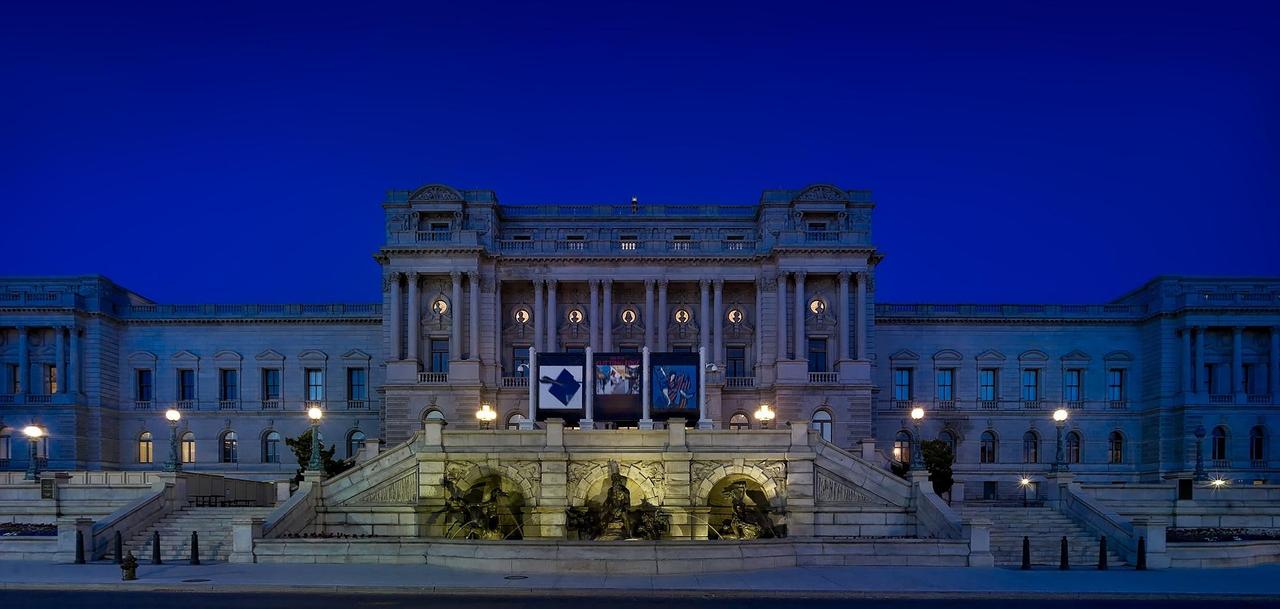
Library of Congress (Library of Congress), established in 1800 and located in Washington, D.C., is the national library and research institution of the United States. Created to serve the U.S. Congress, it has expanded over time to become the largest library in the world by collection size. The institution houses millions of books, manuscripts, maps, scores, audiovisual materials, and digital resources, providing services to members of Congress, researchers, and the public.
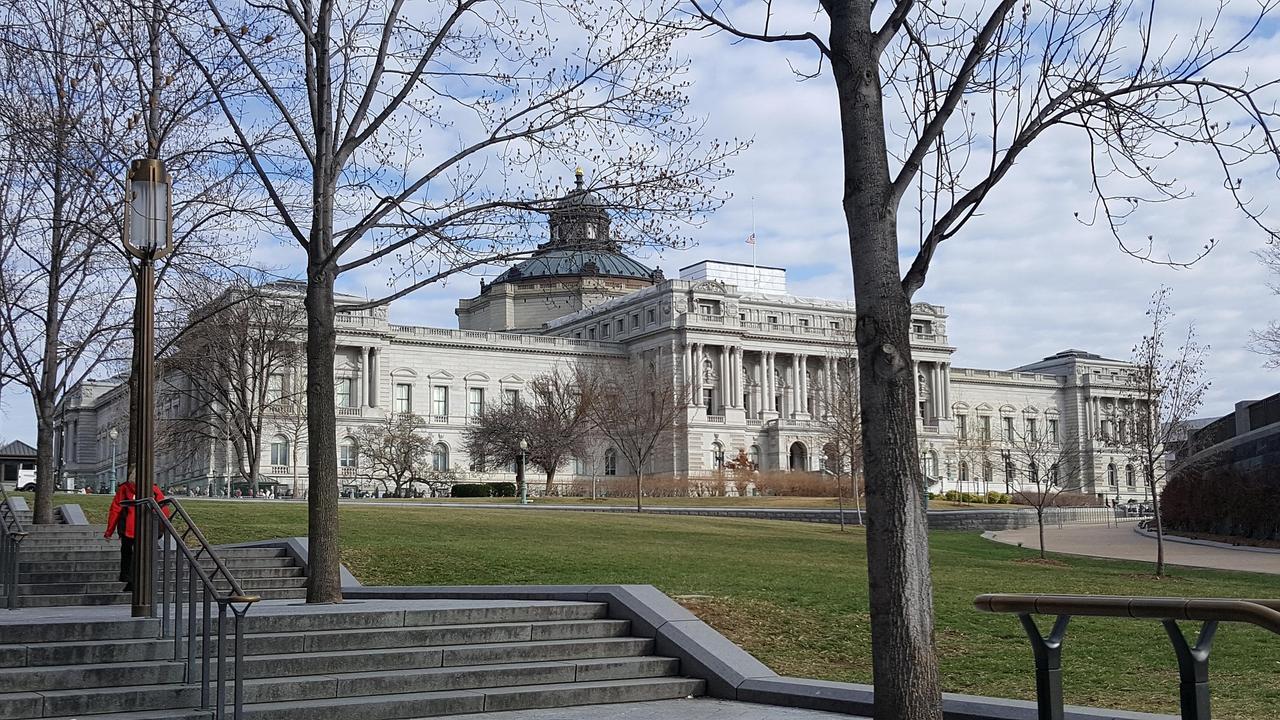
Library of Congress (Pixabay)
Library of Congress was established in 1800 by an act of the U.S. Congress, which facilitated the relocation of the new national government from Philadelphia to Washington, D.C. President John Adams approved a budget of $5,000 to purchase books for the use of Congress members【1】. The library’s oversight was initially managed by the Joint Committee of Congress, the first joint committee of the U.S. Congress. In 1802, President Thomas Jefferson secured through a compromise with Congress the authority to appoint the Librarian, establishing a unique relationship between the presidency and the library. Jefferson also appointed the first two librarians, who simultaneously served as secretaries of the House of Representatives.
In 1814, British forces attacked Washington, destroying the Capitol building and the library, resulting in the near-total loss of the collection. In response, Jefferson sold his personal collection of 6,487 volumes to Congress, enabling the reconstruction of the Library of Congress【2】. Jefferson’s universal approach to knowledge laid the foundation for the library’s comprehensive acquisition policies. By the mid-19th century, the appointment of Ainsworth Rand Spofford as Librarian marked the transformation of the Library of Congress from a legislative support service into a national library. In 1870, the U.S. copyright registration and deposit center was moved to the library, significantly boosting its annual collection growth.
In the early 20th century, the Library of Congress strengthened its institutional structure and diversified its services. In 1903, with the approval of President Theodore Roosevelt, congressional records and personal papers of founding leaders were transferred to the library, centralizing resources for both legislative and national research purposes. The Legislative Reference Service, established in 1914, was organized as a distinct unit to provide research support to members of Congress and their staff, systematizing services at an institutional level.
During this period, the professionalization of library staff and the creation of new offices enhanced the efficiency of collection management and user services. Research publications, cataloging efforts, and cultural functions were expanded under this growth; the library evolved beyond a legislative tool to become a national center for knowledge and culture. Institutional expansion was supported by increased budgets and additional building space, enabling sustainable and organized service delivery.
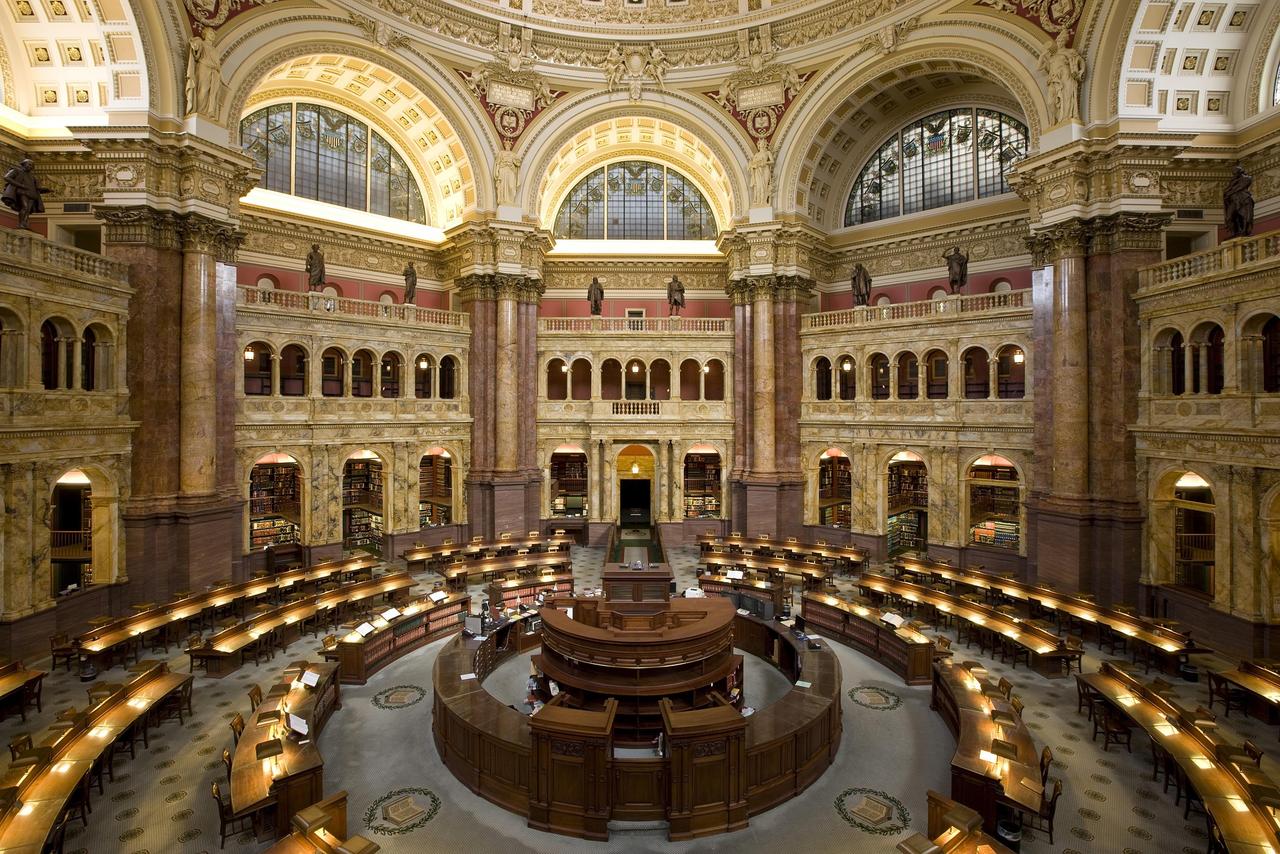
Main Reading Room of the Library of Congress (Pixabay)
Since its founding, the Library of Congress has constructed new buildings and renovated existing ones to meet the growing needs of its collections and services. The first library building, completed in the late 19th century, was designed in the Italian Renaissance style to serve both as a legislative institution and a public national library. Special attention was paid to architectural details and structural integrity, with expansive reading rooms, galleries, and storage areas ensuring both visual and functional coherence.
As the Library of Congress’s collection and service capacity expanded, the need for additional buildings and structural adjustments became evident. Architectural developments throughout the 20th century were not merely aimed at increasing space but were designed to support the library’s diverse functions. New constructions included optimized archive and reading areas, placement of offices and research departments, and the creation of corridors, galleries, and logistical spaces to improve public access. This process enabled the library to maintain its identity as a legislative service institution while fulfilling its national and international research and cultural missions.
The Thomas Jefferson Building of the Library of Congress, completed in the late 19th century, served as the library’s first central structure. Designed in the Italian Renaissance style, it was planned to meet the research needs of both Congress and the public, featuring expansive reading rooms, galleries, and storage areas. Strength and functionality were prioritized in its construction, with stone and marble materials, large domes, columns, and ornamental details creating architectural unity. Interior spaces were organized around a central reading room and side galleries, maximizing natural light. The building was enriched with sculptures and paintings by leading American artists of the era, and its wall and ceiling decorations reinforced the cultural and aesthetic significance of the library. This design symbolized the institution’s identity and provided a long-term solution for preserving collections and ensuring public access.
The John Adams Building of the Library of Congress was constructed in the early 20th century to meet the growing collection and service demands of the library. Completed in 1939, the building was designed to connect directly with the Thomas Jefferson Building, prioritizing functionality and modernization. It was planned to include research and office spaces alongside specialized archive and storage sections to facilitate collection management. Architecturally, it adopted a design philosophy compatible with the aesthetic features of the original Jefferson Building, preserving marble finishes, spacious halls, and high ceilings to maintain the library’s identity. With this structure, the library expanded its services beyond legislative support, offering broader research and reference opportunities to the public and academics, particularly in the secure storage and accessibility of copyright collections and rare documents.
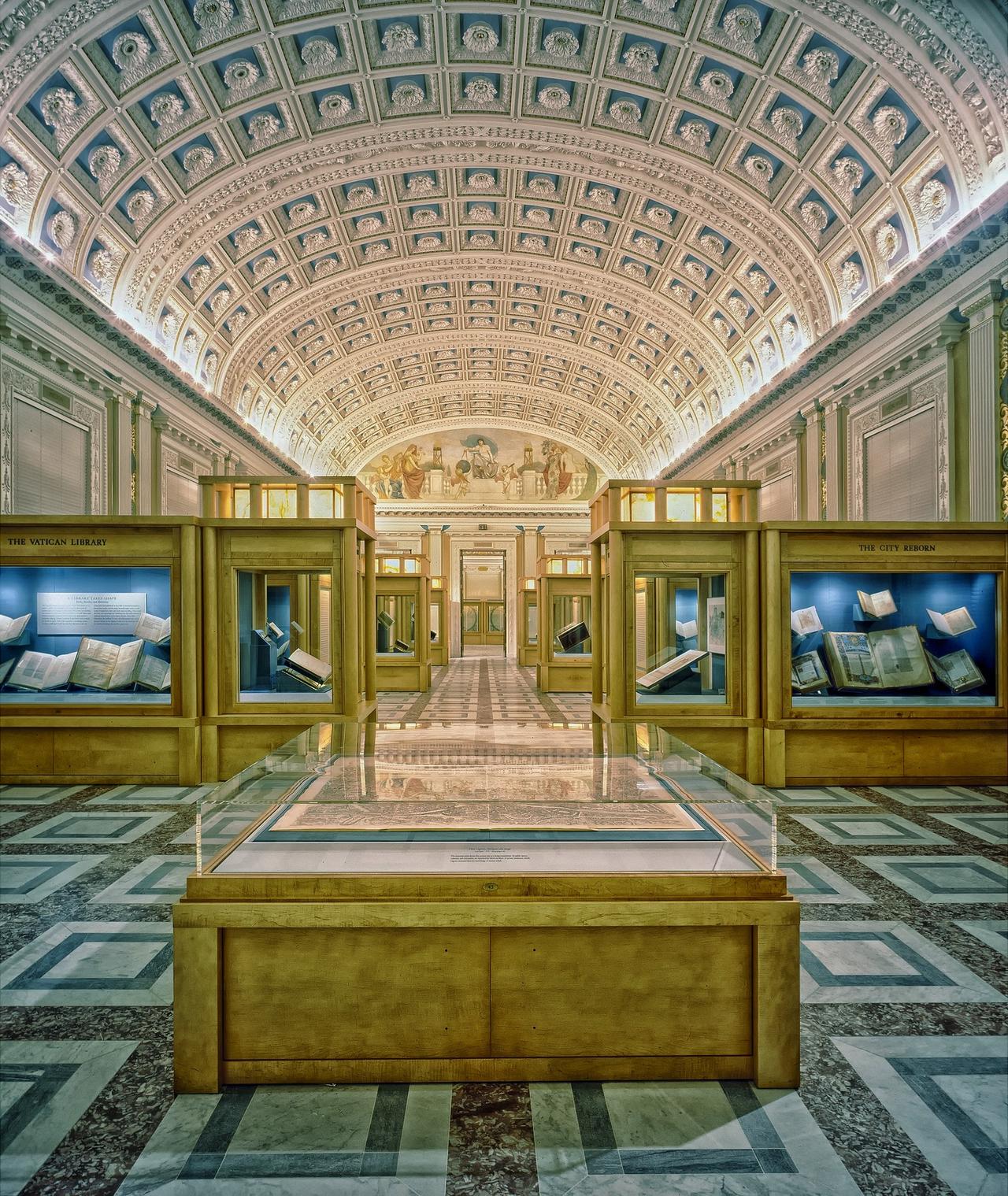
Library of Congress Exhibition Space (Pixabay)
The James Madison Memorial Building of the Library of Congress, planned beginning in the 1970s and opened in 1980, serves as the library’s third major structure. Designed to accommodate the expanding collection and provide modern research, archival, and office spaces, the Madison Building was constructed with contemporary technical infrastructure while preserving the historical and architectural character of the Thomas JeffersonandJohn Adamsbuildings. The building ensures the preservation of the library’s rare and valuable collections through extensive work areas, exhibition halls, storage rooms, and advanced security systems. Additionally, it plays a central role in supporting modern cataloging and information services, facilitating access for national and international researchers.
The Library of Congress functions as a global information center. Its holdings include millions of cataloged books and other printed materials in 470 languages; millions of manuscripts; the largest rare book collection in North America; and the world’s largest collections of legal materials, films, maps, musical scores, and sound recordings. In total, the collection contains 178.2 million items.
The library’s major collections include:
According to fiscal year 2023 data (October 2022 – September 2023):
The library operates with 3,238 permanent staff and a total budget authority of $875.4 million, of which $828.5 million comes from appropriations and $46.9 million from reimbursable income【3】.
In addition to serving the legislative branch, the Library of Congress functions as an organizational structure coordinating national and international library and information services. Under the direction of the Librarian, various divisions and departments operate, with research and reference services, library management, preservation, and cataloging units being particularly prominent. The institution ensures the security and orderly access of its collections through buildings on Capitol Hill as well as preservation facilities in Fort Meade and Cabin Branch. Various advisory boards and committees coordinate collection management and service policies.
The library’s services extend beyond legislative support to federal agencies, academic institutions, and researchers. Programs conducted within the institution encompass information management, collection development, and standard-setting. This structure enables the library to contribute to national information policy and deliver coordinated services at the federal level. Through technical and administrative units, the institution also manages staff training, digital transformation, and information sharing, demonstrating a comprehensive organizational operation.
The Library of Congress has made significant investments in digital technologies to expand access to information and enhance the preservation of its collections. This process began with the automation of cataloging and metadata systems, followed by digitization projects that transferred materials such as rare books, manuscripts, and audio recordings into electronic formats. Digital transformation is carried out through systems and platforms designed to provide access to both local users and national and international researchers.
The library organizes its digital strategies through technological infrastructure, digital archive management, and online access services. Online catalogs, digital reading rooms, and access portals enable users to utilize resources without physically visiting the library. Additionally, digitization includes backup and data security processes for long-term preservation. Through these efforts, the Library of Congress continues to fulfill its role as a modern national library, preserving the value of its physical collections while democratizing access to information.
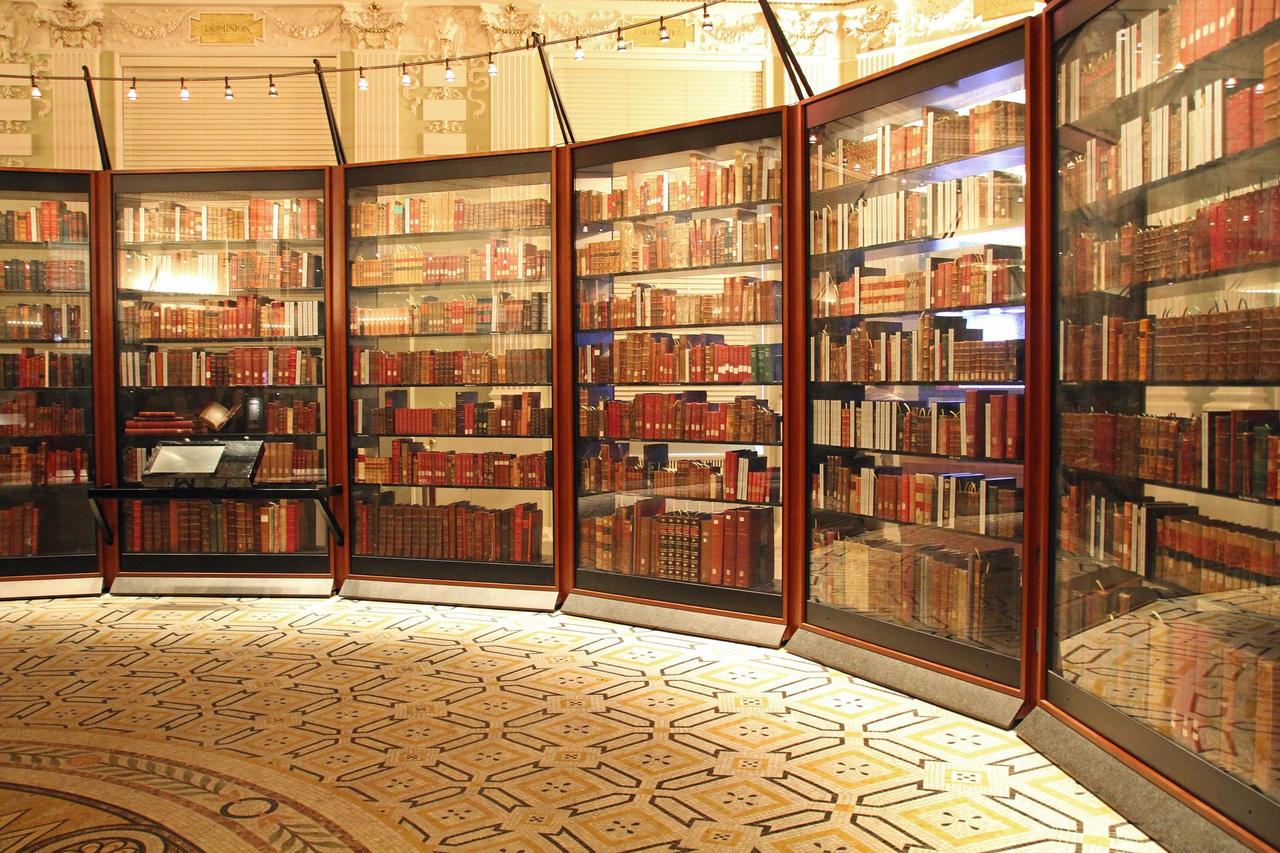
Library of Congress Reading Room (Pixabay)
Today, the Library of Congress functions both as a service institution for the legislative branch and as a national library providing global access to information. In 2016, the library gained its first female and African American Librarian with the appointment of Carla Hayden. The institution serves a broad user base—including members of Congress, academics, researchers, and the general public—through a commitment to free and impartial service.
Modern management, through specialized departments and centers, supports cultural and academic research. The library organizes national and international programs for researchers and provides advisory and educational services on books, manuscripts, and other materials. It also promotes American heritage and encourages democratic information sharing through cultural events, exhibitions, and public programs. The institution continuously improves collection access and library services through national and international collaborations.
The Library of Congress plays a central role not only as an information center but also in preserving and transmitting American culture, history, and democratic values. Through rare books, manuscripts, maps, visual and audio materials, the library provides both academic researchers and the public with a vast cultural resource. In this capacity, it functions as both a historical memory and a guardian of cultural heritage for American society.
Through exhibitions, conferences, and educational programs, the library enhances accessibility to American culture and global cultural heritage. It also fosters cultural collaboration at national and international levels, encouraging the exchange of knowledge and experience among diverse societies. In this context, the Library of Congress is regarded as a vital institution both nationally and globally for preserving cultural resources and ensuring democratic access.
Anadolu Ajansı. “Dünyanın en zengin kütüphanesi ABD Kongresi’nde.” Anadolu Ajansı, March 28, 2018. Accessed February 11, 2026. https://www.aa.com.tr/tr/kultur-sanat/dunyanin-en-zengin-kutuphanesi-abd-kongresinde/1101402
Architect of the Capitol. "Thomas Jefferson Building." Library of Congress Buildings & Grounds. Accessed February 11, 2026. https://www.aoc.gov/explore-capitol-campus/buildings-grounds/library-of-congress/thomas-jefferson-building
Kqcycler. “Kongre ABD Kütüphanesi, Kütüphane (Jefferson Binası).” Pixabay. Accessed February 11, 2026. https://pixabay.com/tr/photos/kongre-abd-k%c3%bct%c3%bcphanesi-k%c3%bct%c3%bcphane-3762072/
Library of Congress. “About the Library.” *About the Library of Congress*. Accessed February 11, 2026. https://www.loc.gov/about/
Library of Congress. “Awards & Honors.” *About the Library of Congress.* Accessed February 11, 2026. https://www.loc.gov/about/awards-and-honors/
Library of Congress. “Chronology.” Virtual Views. Accessed February 11, 2026. https://www.loc.gov/visit/online-tours/chronology/
Library of Congress. “Freedom’s Fortress: The Library of Congress, 1939 to 1953.” *Digital Collections.* Accessed February 11, 2026. https://www.loc.gov/collections/freedoms-fortress/about-this-collection/
Library of Congress. “General Information.” *About the Library of Congress*. Accessed February 11, 2026. https://www.loc.gov/about/general-information/
Library of Congress. “Great Hall.” *Thomas Jefferson Building Virtual Views.* Accessed February 11, 2026. https://www.loc.gov/visit/online-tours/thomas-jefferson-building/great-hall/
Library of Congress. “History of the Library of Congress.” *About the Library of Congress.* Accessed February 11, 2026. https://www.loc.gov/about/history-of-the-library/
Library of Congress. “James Madison Memorial Building.” *Virtual Views.* Accessed February 11, 2026. https://www.loc.gov/visit/online-tours/james-madison-memorial-building/
Library of Congress. “John Adams Building.” *Virtual Views.* Accessed February 11, 2026. https://www.loc.gov/visit/online-tours/john-adams-building/
Library of Congress. “Main Reading Room.” *Thomas Jefferson Building Virtual Views.* Accessed February 11, 2026. https://www.loc.gov/visit/online-tours/thomas-jefferson-building/main-reading-room/
Library of Congress. “Maps & Floor Plans.” *Visiting the Library.* Accessed February 11, 2026. https://www.loc.gov/visit/maps-and-floor-plans/
Library of Congress. “Thomas Jefferson Building.” *Virtual Views.* Accessed February 11, 2026. https://www.loc.gov/visit/online-tours/thomas-jefferson-building/
MonicaVolpin. “Halk Kütüphanesi, Kongre Kütüphanesi.” Pixabay. Accessed February 11, 2026. https://pixabay.com/tr/photos/halk-k%c3%bct%c3%bcphanesi-kongre-k%c3%bct%c3%bcphanesi-1493061/
Unknown artist. "Congress Library, Washington DC." Pixabay. Accessed February 11, 2026. https://pixabay.com/tr/photos/kongre-k%c3%bct%c3%bcphanesi-washington-dc-392398/
Unknown artist. "Washington DC, C, Library of Congress." Pixabay. Accessed February 11, 2026. https://pixabay.com/tr/photos/washington-dc-c-kongre-k%c3%bct%c3%bcphanesi-1624410/
WikiImages. “Kütüphane, Kongre Kütüphanesi (LOC).” Pixabay. Accessed February 11, 2026. https://pixabay.com/tr/photos/k%c3%bct%c3%bcphane-kongre-k%c3%bct%c3%bcphanesi-loc-74038/
“The Library of Congress.” *The Art World* 1, no. 5 (1917): 354–58. https://www.jstor.org/stable/25587788?searchText=library+of+congress&searchUri=%2Faction%2FdoBasicSearch%3FQuery%3Dlibrary%2Bof%2Bcongress%26so%3Drel&ab_segments=0%2Fbasic_search_gsv2%2Fcontrol&refreqid=fastly-default%3Aa3de742e8dc7e71eb5dfc13921a53741&seq=1
[1]
Library of Congress, “History of the Library of Congress,” About the Library of Congress, Last Access: 11 February 2026, https://www.loc.gov/about/history-of-the-library/
[2]
A.e.,
[3]
Library of Congress, “General Information,” About the Library of Congress, Last Access: 11 February 2026, https://www.loc.gov/about/general-information/

Architectural Structures | James Madison Memorial Building John Adams Building Thomas Jefferson Building | ||||||||
|---|---|---|---|---|---|---|---|---|---|
Location | USA D.C. Washington | ||||||||
Digitalization | Online Access National Digital Library | ||||||||
Cultural Significance | Preservation and Public Access to the Documents of American History and Democracy | ||||||||
Staff | 3,238 Employees | ||||||||
Total Registered Items | 178.2 Million | ||||||||
Founding Supporter | President John Adams | ||||||||
Year of Establishment | 1800 | ||||||||
No Discussion Added Yet
Start discussion for "Library of Congress of the United States" article
Founding and Early Years
Institutional Development and Service Expansion
Architectural Development
Thomas Jefferson Building
John Adams Building
James Madison Memorial Building
Scope of the Collection
Organizational Structure and Services
Digital Transformation
The Library of Congress Today
Cultural Significance