
This article was automatically translated from the original Turkish version.
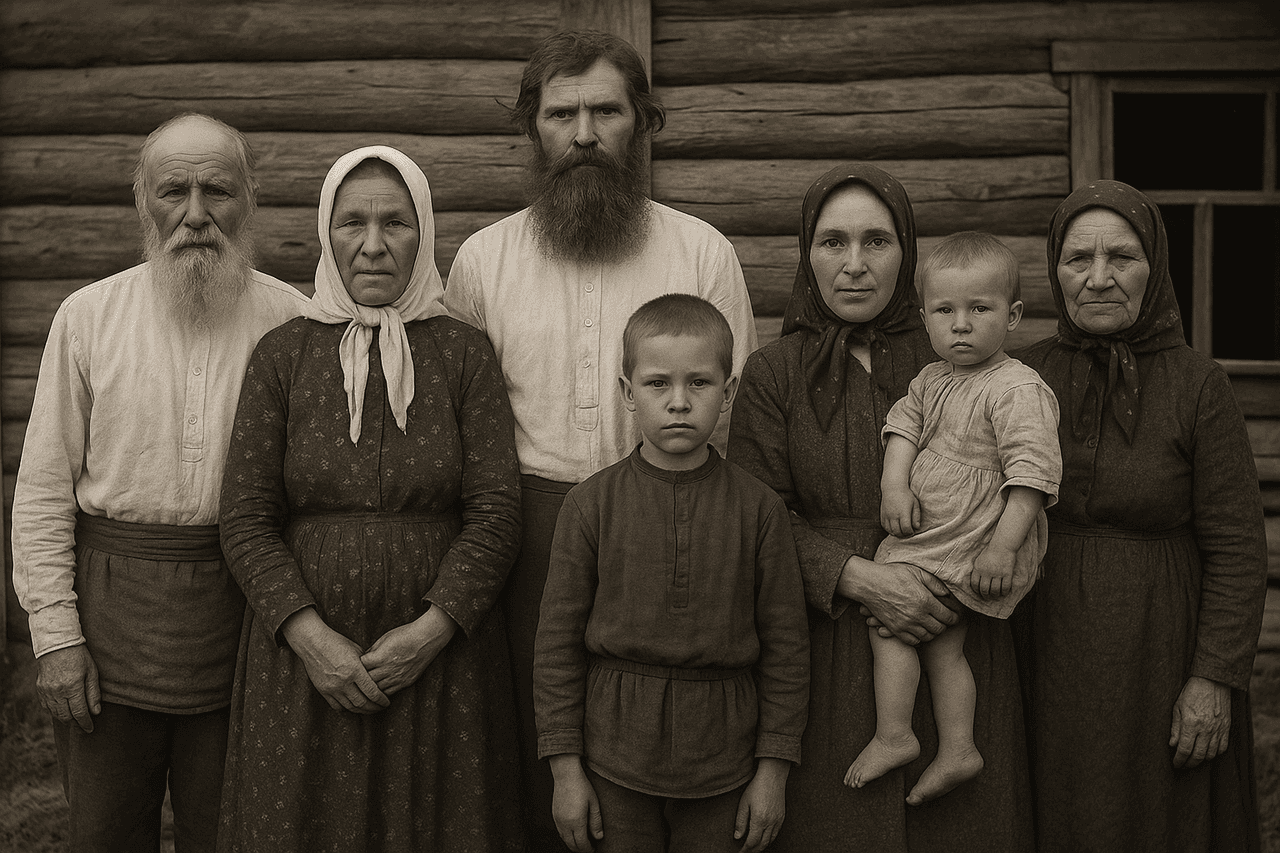
Generated with Artificial Intelligence
The milk-drinking, anti-weapon society of Kars: Malakans
Founder(s) | Semyon Uklein (1733–1809) | ||||||||
|---|---|---|---|---|---|---|---|---|---|
Religion(s) | Christianity | ||||||||
Languages | Russian, Erzya | ||||||||
The Molokans (Russian: Молокане), are a community that emerged in opposition to the policies of Tsar Peter I and adopted the religious movement and lifestyle known as Molokanism. This community was particularly expelled from Russia during the 19th century and resettled in various regions, where they left cultural and economic impacts.
The Molokans are a group originating in Belarus in the 17th century, composed of White Russians who exhibited opposition to the Russian Orthodox Church. The name “Molokan” is derived from the Russian word “moloko,” meaning milk, and is linked to the community’s practice of continuing to consume milk even during fasting periods, unlike the Orthodox Church. This led to their being called “milk-drinkers,” a label that eventually became their accepted name.
The Molokans reject the rituals and hierarchy of the Orthodox Church. They consider the clergy, icon veneration, and church buildings unnecessary. Instead, they have adopted a simpler belief system based primarily on the Bible. In Molokan belief, no intermediary is required between God and humans. Therefore, they typically conduct worship in homes or prayer houses, reading from the Bible and singing hymns during religious gatherings. Additionally, the Molokans are opposed to violence and refuse to participate in war. Their pacifist stance led to conflicts with Tsarist Russia.
Due to their beliefs and lifestyle, the Molokans faced persecution and exile under Tsarist Russia. During the 19th century, they were particularly exiled to the Caucasus region and areas near the borders of the Ottoman Empire. Following the Russo-Turkish War of 1877–1878, they were settled by Russian authorities in the regions of Kars and Ardahan. The Molokans in these areas interacted with local populations and contributed to the cultural and economic life of the region. However, after the establishment of the Soviet Union and following World War II, many Molokans emigrated to other countries, with significant migrations occurring to the United States, Canada, and Australia.
The Molokans made significant contributions in agriculture and animal husbandry in the regions they settled. In the Kars region, they introduced innovations in cheese-making, milling, beekeeping, and horticulture. They played a key role in the production of local products such as Kars kaşar and Gruyère cheese. Moreover, they were the first to cultivate potatoes, sunflowers, and sugar beets in the region. The Molokans were known for their diligence, honesty, and strong social solidarity. They maintained orderly and clean villages and placed great importance on neighborly relations.
In Türkiye, particularly in Kars and its surroundings, the Molokans lived for many years and made important contributions to the region’s cultural richness. Molokan villages in Kars attracted attention through their distinct architectural styles and ways of life. However, over time, migration to the Soviet Union and other countries led to a decline in the Molokan population in Türkiye. Today, only a small number of people in Kars continue to preserve Molokan culture. These individuals strive to maintain Molokan traditions and protect their cultural heritage.
Today, the Molokans live in various countries including Russia, the United States, Canada, Australia, Azerbaijan, Armenia, Georgia, and Türkiye. Despite their dispersion across different regions, they continue to preserve their cultural identity and religious beliefs. In particular, Molokan communities in the United States maintain their traditional lifestyle and religious practices.
24 Saat Gazetesi. "Kars'ın süt içen, silah karşıtı toplumu: MALAKANLAR." 24 Saat Gazetesi, March 12, 2024. Accessed July 7, 2025. [https://www.24saatgazetesi.com/karsin-sut-icen-silah-karsiti-toplumu-malakanlar].
Akça, Bayram, and Sinan Kıyanç. "MALAKANLAR'IN ANADOLU'DAKİ İZLERİ Molokans Traces in Anatolia." DergiPark, Accessed July 7, 2025. [https://dergipark.org.tr/tr/download/article-file/453766].
Akça, Bayram, and Sinan Kıyanç. "Malakanlar'ın Anadolu'daki İzleri." *Sosyal ve Beşeri Bilimler Araştırmaları Dergisi*, 2017. Accessed July 7, 2025. [https://dergipark.org.tr/tr/pub/sobbiad/issue/36458/413102].
Aybirdi, Engin. "Karapapak ve Malakanlar." Terekemekarapapaktürkleri. Accessed July 7, 2025. [http://www.terekemekarapapakturkleri.com/?pnum=65&pt=KARAPAPAK+VE+MALAKANLAR].
Demir, Süheyla. "Rus Malakanların Kars'taki izleri." Sputnik Türkiye, May 27, 2015. Accessed July 7, 2025. [https://anlatilaninotesi.com.tr/20150527/1015675872.html].
Düş Patikası Turizm. "Malakanlar." Düş Patikası Turizm, September 25, 2023. Accessed July 7, 2025. [https://duspatikasi.com/blog/malakanlar-121].
Eski Tat Yöresel. "Malakanlar: Kars'ın renkli yüzleri." Eski Tat Yöresel, February 7, 2024. Accessed July 7, 2025. [https://www.eskitatyoresel.com/blog/icerik/malakanlar-kars-in-renkli-yuzleri].
Kars Güncel. "Karslı Almanlar." Kars Güncel, November 16, 2024. Accessed July 7, 2025. [https://www.karsguncel.com/karsli-almanlar_33917.html].
Karstangetir. "Malakanlar." *Karstangetir*, June 9, 2024. Accessed July 7, 2025. [https://www.karstangetir.com/blog/malakanlar/].
Taşkesenligil, Muhammed. "Arş.Gör.Dr. Muhammed Taşkesenligil “Tarihin Emanetleri Rus Asıllı Malakanlar”." *Atauni*, November 10, 2017. Accessed July 7, 2025. [https://birimler.atauni.edu.tr/rus-dili-ve-edebiyati/haberler/aras-gor-muhammed-taskesenligil-tarihin-emanetleri-rus-asilli-malakanlar/].
Taşkesenligil, Muhammed. "MALAKANLAR ÖRNEKLEMİNDE SÜRGÜN VE GÖÇ OLGULARININ KAYIT ALTINA ALINMASINA DAİR BİR DEĞERLENDİRME." ResearchGate, August 21, 2021. Accessed July 7, 2025. [https://www.researchgate.net/publication/350807154_MALAKANLAR_ORNEKLEMINDE_SURGUN_VE_GOC_OLGULARININ_KAYIT_ALTINA_ALINMASINA_DAIR_BIR_DEGERLENDIRME].
Yardımcı, Nurya, Mikail Sevinç, and Metin Arı. "Kars'ın süt kokan insanları: Malakanlar." *TRT Haber*, October 2, 2019. Accessed July 7, 2025. [https://www.trthaber.com/haber/yasam/karsin-sut-kokan-insanlari-malakanlar-433615.html]
Yiğit, Züleyha Kandöker. "Kars'ın süt içen, silah karşıtı toplumu: Malakanlar." M4D Projesi, Accessed July 7, 2025. [https://media4democracy.org/haberler/haber-yazilari/karsin-sut-icen-silah-karsiti-toplumu-malakanlar/].
Çolak, Özge. "Malakanları Ararken." *Atlas Dergisi*, July 5, 2021. Accessed July 7, 2025. [https://www.atlasdergisi.com/kesfet/gezi/malakanlari-ararken.html]

Generated with Artificial Intelligence
The milk-drinking, anti-weapon society of Kars: Malakans
Founder(s) | Semyon Uklein (1733–1809) | ||||||||
|---|---|---|---|---|---|---|---|---|---|
Religion(s) | Christianity | ||||||||
Languages | Russian, Erzya | ||||||||
History
Origins and Beliefs
Exiles and Migrations
Cultural and Economic Contributions
Molokans in Türkiye
Current Status