

This article was automatically translated from the original Turkish version.
+4 More
New Cold War
Period(s) | Post-Cold War era (approximately 1990s–present) | ||||||||
|---|---|---|---|---|---|---|---|---|---|
Main Actors | United States of America, Russian Federation, People's Republic of China | ||||||||
Key Characteristic | Geopolitical, economic, technological, and ideological competition | ||||||||
Prominent Areas | NATO expansion, Ukraine War, Artificial Intelligence race, Energy policies | ||||||||
Regional Hotspots | Ukraine, Taiwan, South China Sea, Syria, Eastern Europe, Central Asia | ||||||||
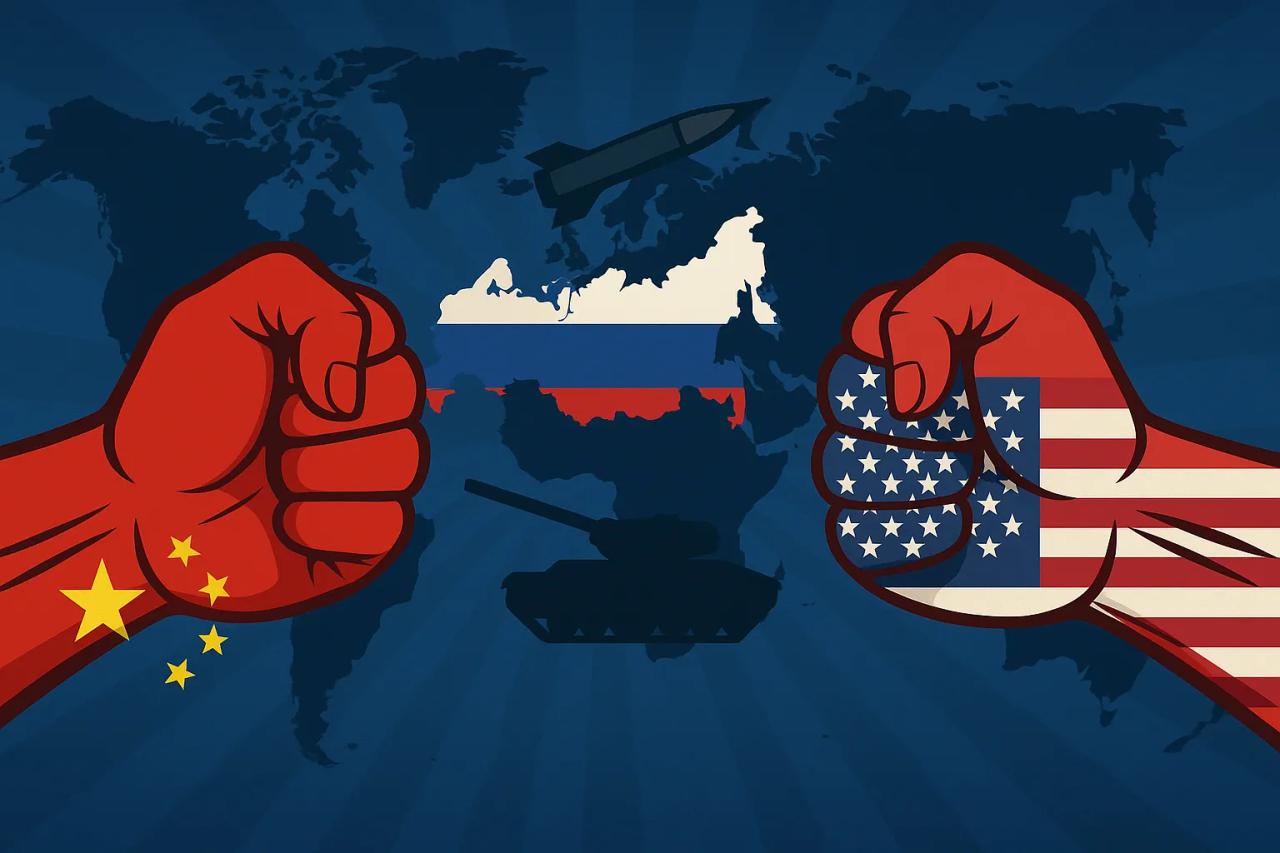
The New Cold War, has become a frequently invoked concept in international relations literature for understanding the geopolitical and economic dynamics of the 21st century. Following the end of the Classical Cold War—the bipolar global structure that emerged from the rivalry between the United States and the Soviet Union during the second half of the 20th century—a unipolar world order prevailed. However, in the second quarter of the 21st century, this order is evolving once again into a multipolar structure. This transformation signals a period in which the distribution of power in the international system is shifting and strategic competition among major powers is intensifying once more.
This process, termed the New Cold War, fundamentally reflects the comprehensive rivalry pursued by major powers such as the United States, the People’s Republic of China and the Russian Federation across economic, military, technological and ideological domains. Unlike the Classical Cold War, where military balances were paramount, today’s competition is defined by multidimensional factors including energy policies, supply chains, digital infrastructure, information technologies and the construction of international norms. In particular, China’s rapid economic rise and expanding global investments are viewed as a direct challenge to America’s traditional leadership. Russia, meanwhile, seeks to enhance its influence along the Eurasian axis by leveraging its military power and energy resources as strategic tools.
This process is not confined to competition among major powers alone. The foreign policy orientations of regional actors, along with energy security, economic dependencies and military alliances, are deepening the global impact of the New Cold War. Issues such as the Ukraine Crisis, the Taiwan question, disputes in the South China Sea and the Belt and Road Initiative are concrete manifestations of strategic tensions across different regions.
The Classical Cold War (1947–1991) denoted the bipolar world order resulting from the ideological and geopolitical rivalry between the United States and the Soviet Union. This structure, formed after World War II, established a sharp distinction between the Western Bloc’s democratic and capitalist order and the Eastern Bloc’s communist and centrally planned economy. Nuclear arms races, proxy wars, ideological propaganda, economic aid and military alliances characterized this era. Military blocs such as NATO (1949) and the Warsaw Pact (1955) served as the foundational institutional pillars of the bipolar system.
The dissolution of the Soviet Union in 1991 ended the Classical Cold War and ushered in a unipolar world order under U.S. leadership. During this period, the United States reinforced the liberal international order through international institutions and sustained its global economic, political and military dominance. NATO’s eastward expansion, the integration of Eastern European countries into the Western Bloc and processes of globalization were defining dynamics of this era. However, this expansion was perceived by Russia as a threat to its security and laid the groundwork for new tensions among major powers in subsequent years.
During this time, China focused on integrating into the global system, accelerated its economic growth and increased its foreign investments. Russia, meanwhile, struggled with the economic and political challenges following the collapse of the Soviet Union but began to recover in the 2000s. Rising energy prices expanded Russia’s economic power and its room for maneuver in foreign policy.
From the mid-2000s onward, signs of renewed multipolarity began to emerge in the international system. Russia’s interventions in Georgia (2008) and Ukraine (2014) caused serious ruptures in its relations with the United States and Europe; China’s growing economic power and large-scale initiatives such as the Belt and Road Initiative have increasingly challenged U.S. global leadership. In particular, China’s digital infrastructure projects, military activities in the South China Sea and pressure on Taiwan have sharpened its competition with the United States.
These developments have led to the widespread adoption of the concept of the New Cold War in international relations literature. The term is preferred to describe the geopolitical, economic and technological competition among the United States, China and Russia, and emphasizes that this competition extends beyond major powers to directly affect the positions of regional actors. In the New Cold War, the struggle for power has become multidimensional, with strategic competition now centered not only on military superiority but also on economic dependencies, energy security, digital technology, artificial intelligence and cybersecurity.
At the center of the New Cold War are three major actors whose influence will determine the future of the global system: the United States, the Russian Federation and the People’s Republic of China. Despite differing ideological backgrounds, economic structures and geopolitical priorities, these three countries share the common feature of assuming decisive roles in the global power struggle. Each actor’s objectives, foreign policy instruments and alliance relationships significantly shape the reshaping of the international system.
The United States aims to sustain its position as the leader of the liberal international order established after World War II. After the end of the Classical Cold War, the U.S. consolidated its global dominance within the unipolar system, but the emergence of the New Cold War has led to serious challenges to this position. China’s rising economic and technological capacity, Russia’s military power projection along the Eurasian axis and Europe’s pursuit of strategic autonomy are perceived as threats to U.S. global leadership.
In this context, the United States is strengthening its military alliances while developing policies to constrain its rivals in global trade and technology. Alliances such as NATO, AUKUS and QUAD form the backbone of the U.S. global security network. NATO’s eastward expansion and defense cooperation with Australia and the United Kingdom through AUKUS in the Pacific constitute part of the U.S. strategy to encircle its competitors.
The United States employs economic sanctions and technology embargoes as key instruments of foreign policy. Sanctions targeting Russia’s energy, financial and defense sectors, and regulations restricting technology transfers to China, are concrete examples of this strategy. The U.S. has used sanctions against the Chinese tech company Huawei to highlight security risks posed by Western adoption of its 5G infrastructure and has sought to limit the company’s activities in Western markets.
Additionally, the United States leverages the dollar’s dominance in the global financial system as a strategic advantage, deploying tools such as exclusion from the SWIFT payment system. This creates significant economic pressure on target countries and enhances U.S. influence in international politics.
The United States seeks to preserve its technological superiority in the New Cold War. Investments have increased in artificial intelligence (AI), quantum computing, semiconductor production and cybersecurity. The U.S. Department of Defense (Pentagon) is strengthening its ties with technology firms to bolster the defense industry. At the same time, coordination is being established with Western allies to set technological standards, aiming to prevent China and Russia from creating alternative norms.
In defense strategy, network-centric warfare concepts, space-based defense systems and the reinforcement of NATO’s eastern flank are notable. The United States also encourages allied nations to enhance their defense capabilities and share the burden of security expenditures.
Since the collapse of the Soviet Union, Russia has adopted an aggressive foreign policy to safeguard its national security and reassert influence in Eurasia. With Vladimir Putin’s rise to power in 2000, Russia began viewing Western expansion as a threat to its existence. NATO’s eastward expansion and the alignment of Baltic states and Eastern European countries with the West were perceived by Moscow as serious strategic challenges.
These security concerns have driven Russia to seek the creation of an “sphere of influence” in its immediate neighborhood. Russia’s interventions in Georgia (2008), the annexation of Crimea (2014) and its large-scale military operation in Ukraine (2022) are concrete manifestations of this strategy. Through these actions, Russia aims to send a deterrent message to the West while guaranteeing the security of its borders.
One of Russia’s most important assets in the global system is its energy resources. Natural gas and oil exports meet a significant portion of European countries’ energy needs. This dependency provides Russia with a strategic advantage in international relations. For example, in response to Western sanctions following the Ukraine Crisis, Moscow restricted natural gas flows to Europe, placing European energy security under severe strain.
Russia is also deepening energy cooperation with China to create alternative markets that counter Western sanctions. This strengthens the strategic value of energy resources in Russia’s foreign policy.
Russia places great emphasis on modernizing its military capabilities in the New Cold War. While maintaining its nuclear deterrent capacity, it has made significant advances in conventional weapons systems, hypersonic missiles and unmanned aerial vehicles. Additionally, under the framework of hybrid warfare, methods such as cyberattacks, disinformation campaigns and the use of private military companies are employed.
This hybrid strategy enables the achievement of strategic objectives without directly engaging Western military alliances in open conflict. For instance, allegations of Russian cyber interference in the 2016 U.S. presidential elections demonstrate its capacity to deploy such methods.
Since the 1980s, China has become a major actor in the global economy through its economic reforms. From the 2000s onward, it began converting this economic power into geopolitical influence. China’s Belt and Road Initiative (BRI), a massive infrastructure and trade project spanning Asia, Europe and Africa, strengthens Beijing’s global economic connections. This initiative also helps China gain strategic allies and enhance its energy security.
China also draws attention through its investments in Africa and Latin America. Through infrastructure projects, energy agreements and low-interest loans, it expands its influence in these regions. This approach has been criticized by Western countries as “debt-trap diplomacy.”
Taiwan is one of the most critical issues in the New Cold War for China. The Beijing government regards Taiwan as an inseparable part of its territory and perceives U.S. military support for Taiwan as a direct threat to its national security. Military drills in the Taiwan Strait and airspace violations demonstrate China’s determination on this issue.
The South China Sea is critically important due to its energy resources and strategic sea lanes. China’s construction of artificial islands and establishment of military bases in the region have heightened tensions. The United States and its allies continue conducting “freedom of navigation” operations in the area, increasing the risk of direct confrontation between the two countries.
China is striving to develop alternative standards to the West in digital infrastructure and technology. Through companies such as Huawei and ZTE, it is expanding its market share in global 5G infrastructure and making progress in artificial intelligence and big data technologies. U.S. sanctions against Huawei illustrate the intensity of this competition.
China also widely employs AI-supported surveillance systems for internal security and exports these technologies. This has drawn criticism from Western countries over concerns regarding individual rights and freedoms.
The New Cold War is not limited to direct competition among major powers. Crises in different regions, regional alliances and economic relationships are deepening its global impact.
The Ukraine Crisis has become one of the most significant hot fronts in Eastern Europe. Russia’s policies toward Ukraine and the Western response directly affect European security. NATO’s reinforcement of its eastern flank and the European Union’s efforts to reduce energy dependence are expanding the regional dimensions of this crisis.
In East Asia, the Taiwan issue and disputes in the South China Sea lie at the heart of strategic competition between the United States and China. Potential crises in this region could shake not only the Asia-Pacific region but also global economic and security structures.
In the Middle East, developments centered on Syria and Iran reflect the rivalry between Russia and the West. Energy security and regional power balances contribute to the global consequences of conflicts in this region. Similarly, struggles for influence in Africa and Central Asia reveal the geographical extensions of the New Cold War.
Regional crises directly affect energy security, trade routes and supply chains, thereby increasing the vulnerability of the international system. The risk that competition among major powers could transform into proxy wars is considered one of the most significant future threats of the New Cold War.
Energy policies and technology competition are among the most important dimensions shaping global power balances in the New Cold War. Energy resources have become not only instruments of economic development but also tools for states to gain strategic advantages internationally. Therefore, the energy policies and technological investments of major powers such as the United States, Russia and China are decisive not only for their own national security but also for achieving dominance in global power competition.
Russia uses its vast oil and natural gas reserves as instruments of foreign policy. The fact that a large portion of European countries’ energy needs are met by Russia provides Moscow with significant economic and political leverage. The restriction of natural gas flows to Europe after the Ukraine Crisis demonstrated how energy resources can function as strategic pressure tools. Russia is also strengthening energy cooperation with China to gain a stronger position in Asian markets.
As the world’s largest energy importer, China’s energy security strategy is based on diversifying sources and investing in infrastructure. The Belt and Road Initiative provides China with a strategic advantage in this context. Pipelines, ports and energy terminals constructed under the initiative secure China’s energy supply chains while simultaneously enhancing its global influence.
In technology, China is striving to develop alternative standards to the United States in critical sectors such as 5G, artificial intelligence and big data. Through companies like Huawei and ZTE, China is expanding its global market presence and continuously increasing R&D investments to achieve technological independence.
Thanks to increased shale gas and oil production, the United States has become an energy exporter. This enhances the U.S. capacity to ensure energy supply security for its allies while weakening Russia’s energy leverage. Additionally, the United States is striving to lead in renewable energy technologies such as wind, solar and hydrogen.
In technology, the United States is making significant investments to maintain its superiority in semiconductor production, artificial intelligence and quantum computing. Technology export restrictions on China and sanctions against companies like Huawei are part of the U.S. efforts to protect its strategic interests in the technology sector.
Artificial intelligence and digital infrastructure play decisive roles in the New Cold War. While China widely employs AI-supported surveillance systems for internal security and exports these technologies globally, the United States and its allies are striving to build more transparent and standards-based digital infrastructures centered on data security and individual freedoms.
These divergent approaches are leading to technological blocification in the international system and increasing the risk of further polarization in the digital domain.
Potential future scenarios for the New Cold War illustrate how fragile and unpredictable the international system has become. Although direct military conflict among major powers remains unlikely, proxy wars, regional conflicts, energy crises, technological blocification and normative polarization are expected to continue threatening global security.
The probability of direct military conflict between the United States, China and Russia remains low, but it can never be entirely dismissed. A crisis over Taiwan or a direct confrontation in the South China Sea could bring the United States and China into direct opposition. Similarly, if the Ukraine Crisis spills over into NATO countries, it could increase the risk of direct conflict between the United States and Russia.
While the nuclear arsenals of major powers deter such conflicts, miscalculations, accidental clashes or uncontrolled actions by proxy actors could escalate the situation. This scenario represents the most destructive possibility for the international order.
The low risk of direct conflict encourages the proliferation of proxy wars. Conflicts in Syria, Libya, Yemen and Ukraine exemplify struggles waged by major powers through proxy actors. Such conflicts generate low-intensity but prolonged instability and deepen regional security challenges.
Africa and Central Asia are also potential areas for intensified proxy warfare. China and Russia may support different political and economic groups in these regions to reduce Western influence. In response, the United States and its allies may attempt to form opposing blocs emphasizing democracy and human rights.
The Taiwan Crisis, disputes in the South China Sea, tensions on the Korean Peninsula, the risk of Iran-Israel conflict in the Middle East and the war in Ukraine in Eastern Europe are increasing the likelihood of hot conflicts in many regions of the global system. Any uncontrolled escalation of these crises could compel major powers into direct or indirect intervention.
The spread of regional wars could severely impact energy supply security, global trade routes and financial markets. Such a scenario carries the potential to trigger a deep global recession.
Technological blocification could create lasting divisions in the international system. The United States and its allies are imposing their own standards in digital infrastructure and semiconductor technology to counter China, while China and Russia are building their own technological ecosystems.
This process may lead to disruptions in global supply chains, sharp divisions in data flows and increased difficulties in technology transfer. Such blocification has the potential to restrict developing countries’ access to technology and exacerbate global inequalities.
The transition to renewable energy is changing the parameters of competition among major powers. The declining importance of fossil fuels could weaken the strategic power of energy-rich countries such as Russia and the Middle East. However, the slow pace of this transition and the high costs of energy transformation may lead to energy crises in the short and medium term.
Climate change has the potential to become a significant factor in the future of the New Cold War. Droughts, floods and food crises could trigger migration flows and intensify regional instability. This could further sharpen competition among major powers for resources.
The legitimacy of international law and institutions is increasingly questioned due to normative polarization among major powers. Vetoes by Russia and China in the UN Security Council, Western interventionist policies and the independence aspirations of developing countries are undermining the effectiveness of international institutions.
This normative polarization has the potential to make collective solutions to global challenges—such as climate change, pandemics and economic crises—increasingly difficult. As the international system’s foundation of “multilateralism” erodes, areas of cooperation between blocs are expected to narrow.
Anadolu Ajansı. "Yeni Soğuk Savaş’a Doğru." Accessed July 22, 2025. https://www.aa.com.tr/tr/analiz-haber/yeni-soguk-savasa-dogru/1389299.
Canikoğlu, Emrah. 2022. “NATO’nun ‘Soğuk Savaş Sonrası Yeni Stratejileri.’” *İstanbul Esenyurt Üniversitesi İşletme ve Yönetim Bilimleri Fakültesi Sosyal Bilimler Araştırmaları Dergisi* 2, no. 2: 91–103. Accessed July 22, 2025. https://dergipark.org.tr/tr/pub/iesbad/issue/75244/1214292.
Gencer, Tülay. 2023. “Soğuk Savaş’ın Kalkınma/Gelişme Yazınına Etkisi.” *Rahva Journal of Technical and Social Studies* 4, no. 2: 48–56. Accessed July 22, 2025. https://dergipark.org.tr/tr/pub/rahva/issue/89471/1580413.
Kantarcı, Şenol. 2014. “Soğuk Savaş Sonrası Uluslararası Sistem: Yeni Sürecin Adı ‘Koalisyonlar Dönemi mi?’” *Güvenlik Stratejileri Dergisi.* Accessed July 22, 2025. https://dergipark.org.tr/tr/pub/guvenlikstrtj/issue/7527/99164.
Korkmaz, Hüseyin. 2022. “Yeni Soğuk Savaşın Kilit Cephesi: Tayvan.” *TASAM.* Accessed July 22, 2025. https://tasam.org/Files/Icerik/File/Dr_H%C3%BCseyin_Korkmaz_Tayvan_Yaz%C4%B1s%C4%B1_edit_pdf_c45833f6-aede-4a3f-9864-4b504bc54083.pdf.
Çınar, Sertan, and İsmet Göçer. 2014. “Yeni Soğuk Savaşa Doğru: Küresel Enerji Politikaları.” *Adnan Menderes Üniversitesi Sosyal Bilimler Enstitüsü Dergisi* 1, no. 2: 16–29. https://doi.org/10.30803/adusobed.188808.
Öğütcü, Mehmet. 2022. “Çin ile ABD Arasında Yeni Soğuk Savaş Geliyor: Hangi Tarafta Olacağız?” İstanbul Kültür Üniversitesi Küresel Politikalar ve Stratejiler Merkezi. Accessed July 22, 2025. https://www.capital.com.tr/yazarlar/mehmet-ogutcu/yeni-soguk-savas-geliyor-hangi-tarafta-olacagiz.

New Cold War
Period(s) | Post-Cold War era (approximately 1990s–present) | ||||||||
|---|---|---|---|---|---|---|---|---|---|
Main Actors | United States of America, Russian Federation, People's Republic of China | ||||||||
Key Characteristic | Geopolitical, economic, technological, and ideological competition | ||||||||
Prominent Areas | NATO expansion, Ukraine War, Artificial Intelligence race, Energy policies | ||||||||
Regional Hotspots | Ukraine, Taiwan, South China Sea, Syria, Eastern Europe, Central Asia | ||||||||
Historical Background and Conceptual Framework
Main Actors and Strategic Objectives
America United States (U.S.)
Quest for Global Leadership
Economic Instruments and Sanctions
Technology and Defense Industry Strategy
Russian Federation
Eurasian Strategy and Security Doctrine
Use of Energy Resources as a Foreign Policy Tool
Military Modernization and Hybrid Warfare Strategy
People’s Republic of China
Economic Rise and Global Influence
Taiwan Issue and the South China Sea
Digital Infrastructure and Technology Competition
Regional Dimensions
Energy Policies and Technology Competition
Russia’s Energy Strategy
China’s Energy and Technology Policy
U.S. Energy and Technology Policy
Technology Competition and Digital Infrastructure
Future Scenarios
Probability of Direct Conflict
Increase in Proxy Wars
Risk of Regional War Spillover
Deepening of Technological Blocification
Energy Transition and the Impact of Climate Crisis
Permanent Normative Polarization