



Özdemir Bayraktar
Eş | Canan Bayraktar | ||||||||
|---|---|---|---|---|---|---|---|---|---|
Birth | 1 February 1949, Sarıyer Istanbul | ||||||||
Death | 18 October 2021 Istanbul | ||||||||
Education | Istanbul Technical University Kabataş Boys High School | ||||||||
Profession(s) | Senior Mechanical Engineer Entrepreneur | ||||||||
Award(s) | Karabağ Order | ||||||||
Çocuk | Ahmet Bayraktar Selçuk Bayraktar Haluk Bayraktar | ||||||||
Özdemir Bayraktar (1 February 1949 – 18 October 2021) was born in the village of Garipçe, Sarıyer, as the son of Lütfi Reis, a fisherman originally from Sürmene. As the founder of Baykar, Özdemir Bayraktar took technical responsibility for the development of precision manufacturing and R&D infrastructure, playing a pioneering role in Türkiye’s national UAV journey. He led field-oriented work during the R&D phases of the first systems developed for the Turkish Armed Forces and directed testing and application processes carried out with personnel in the Southeastern region between 2005 and 2009. Additionally, he contributed his signature to the original design of the AKINCI and a documentary titled Özdemir Bayraktar: Bu Dünyadan Bir Akıncı Geçti, which chronicles his life and struggle, was produced and released on 7 February 2026.
Özdemir Bayraktar Bu Dünyadan Bir Akıncı Geçti Belgeseli (Baykar)
Özdemir Bayraktar was born on 1 February 1949 in the village of Garipçe, Sarıyer, Istanbul. His father, Lütfi Reis, was a graduate of Kabataş Boys High School and a fisherman; his mother was Emine Hanım. The family’s origins trace back three centuries to Buhara in Uzbekistan, then to Sürmene in Trabzon, and finally to Garipçe.
At the age of twelve, he began building radios from broken electronic devices and established a dedicated workshop room at home filled with tools and equipment. Although a bright student, he was an inquisitive child who would hide books titled “Tommiks” and “Teksas” inside his textbooks to read them.
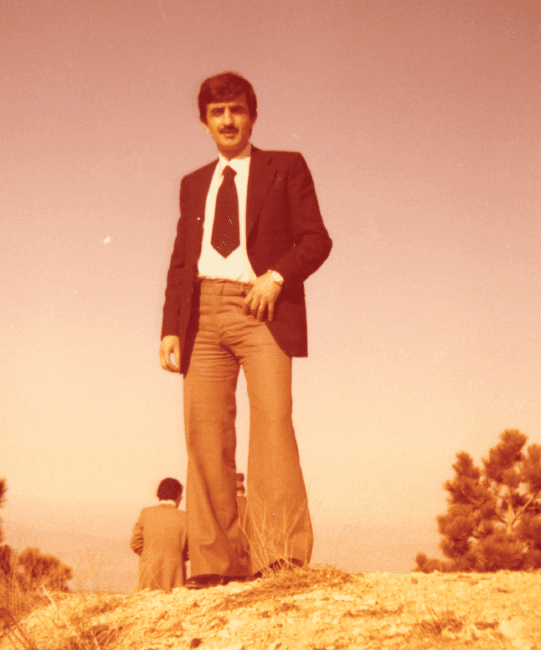
Özdemir Bayraktar 1978 (Özdemir Bayraktar Bu Dünyadan Bir Akıncı Geçti - Book)
He began his primary education in Garipçe and continued at Sarıyer Yeni Mahalle Primary School and Sarıyer Middle School. He completed his high school education at Kabataş Boys High School (graduated 1967), following in his father’s footsteps. During these years, he became fascinated with photography and built his own darkroom under the sofa at home, developing his own photographs in the bathroom. His passion for understanding the working principles of machines took shape during this period.
In 1966, he enrolled in the Chemistry Department at Istanbul University but, drawn by his true passion for machines, transferred after one year to the Faculty of Mechanical Engineering at Istanbul Technical University (İTÜ). During university, he repaired broken charging dynamos on fishing boats by replacing missing parts with light bulbs, demonstrating early awareness of domestic production.
After graduating in 1972, he served for two years as an assistant to Professor Dr. İsmail Hakkı Öz at the İTÜ Motors Chair and completed his master’s degree on internal combustion engines. During this time, his path crossed with prominent engineers such as Necmettin Erbakan.
Özdemir Bayraktar’s professional career developed within the context of Turkey’s industrial expansion in the 1970s through technology transfer and domestic manufacturing capacity. He held positions as technical manager and deputy general manager at leading Turkish factories such as BURTRAK (Burdur Tractor), İstanbul Segman Sanayii, and Uzel, managing technology transfer processes with Japan and France.
During this period, at BURTRAK, he assumed technical responsibility for securing production rights for IHI Shibaura garden-type tractors, known in Turkey as “İsbora,” and overseeing the factory’s transition to production. He personally learned the intricacies of production through negotiations in Japan and transferred these practices to Turkey’s manufacturing system. He also secured the necessary machinery and equipment for production, which were sourced from France and transported to Türkiye. Subsequently, he managed a workshop in Avcılar specializing in the distribution and manufacturing of garden-type tractors, overseeing production organization, technical processes, and business management. Additionally, he served as a technical manager during the establishment and expansion phases of several pioneering factories in Turkey, including İstanbul Segman and Uzel, contributing to facility setup, development of production infrastructure, and capacity expansion.
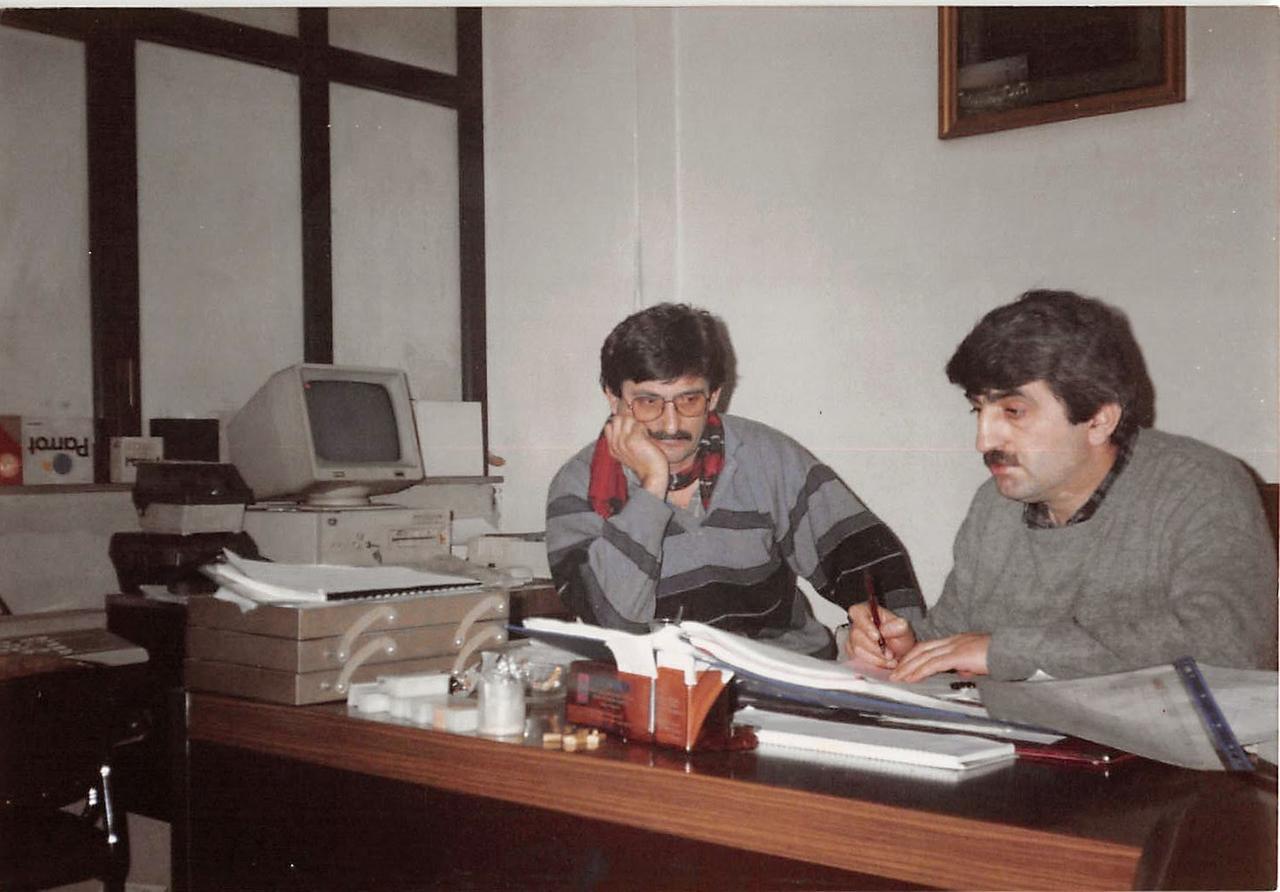
Baykar Founding Years / Özdemir Bayraktar (Baykar)
In 1981, he served as deputy general manager during the founding of İstanbul Segman Sanayii; he left the company after the system was established and production began, citing that “no problems remained.”
In 1983, he established his personal company to contribute to localization efforts in the automotive sector; in 1986, he founded Baykar A.Ş. In a 600-square-meter workshop in Bayrampaşa, equipped with only a single drill press, he managed the design and manufacturing of numerous original machines and part-processing fixtures for the precision machining industry.
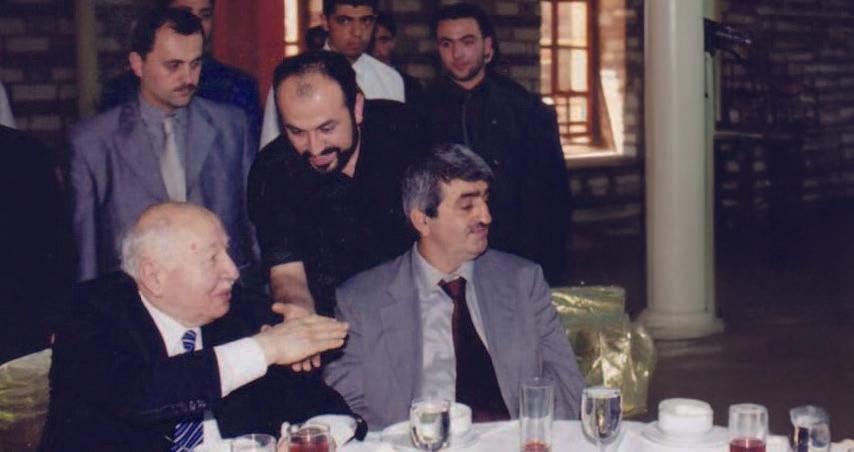
Özdemir Bayraktar (Özdemir Bayrkatar Bu Dünyadan Bir Akıncı Geçti Book)
During this period, he acquired broken or second-hand NC machines, modified them, and converted them into CNC machines, personally upgrading 80% of the workshop’s equipment. He devised practical and ingenious solutions, such as attaching hospital IV drips to the backs of overheating machines to cool them. He adopted the philosophy that “quality lies in the details” as his guiding principle.
In the late 1980s, he joined the Milli Görüş movement and served as a member of the Istanbul Provincial Board of the Refah Party, as an advisor to the provincial chairman, and as a provincial inspector. He was among the first to conduct election analyses on computers using Excel macros, demonstrating early adoption of technological innovation in politics. He developed close friendships with Recep Tayyip Erdoğan during this period.
He also took over the management of the nearly bankrupt İstanbul Esnaf Hospital, paid off its debts within a short time, and revived its operations. In 2001, he stepped away from active politics to fully dedicate himself to the development of domestic technology.

Malazgirt Rotary-Wing UAV Field Test / Özdemir Bayraktar (Baykar)
At the beginning of the 2000s, he recognized UAV technology as a paradigm shift and turned his focus to this field. His passion for aviation and his vision of transforming his sons’ foreign education into a strategic advantage for Türkiye enabled the institutional acceleration of UAV projects.
Between 2005 and 2009, to develop technology according to soldiers’ needs, he lived with his sons in containers on Gabar Mountain in Şırnak and surrounding areas, working alongside troops. During this period, the Bayraktar Mini UAV transitioned to serial production, and the Malazgirt Rotary-Wing Mini UAV project was developed. When he shaved his mustache to participate in operations, soldiers bestowed upon him the title of “Hür General.”
Under the Tactical UAV program initiated in 2007, he led the design development of the TB1 (Çaldıran) and TB2. During the TB1 and TB2 projects, he left his home in Sarıyer and began living in a windowless room on the upper floor of the İkitelli workshop. He continued working on projects immediately after being discharged from intensive care following a major heart surgery in 2009.
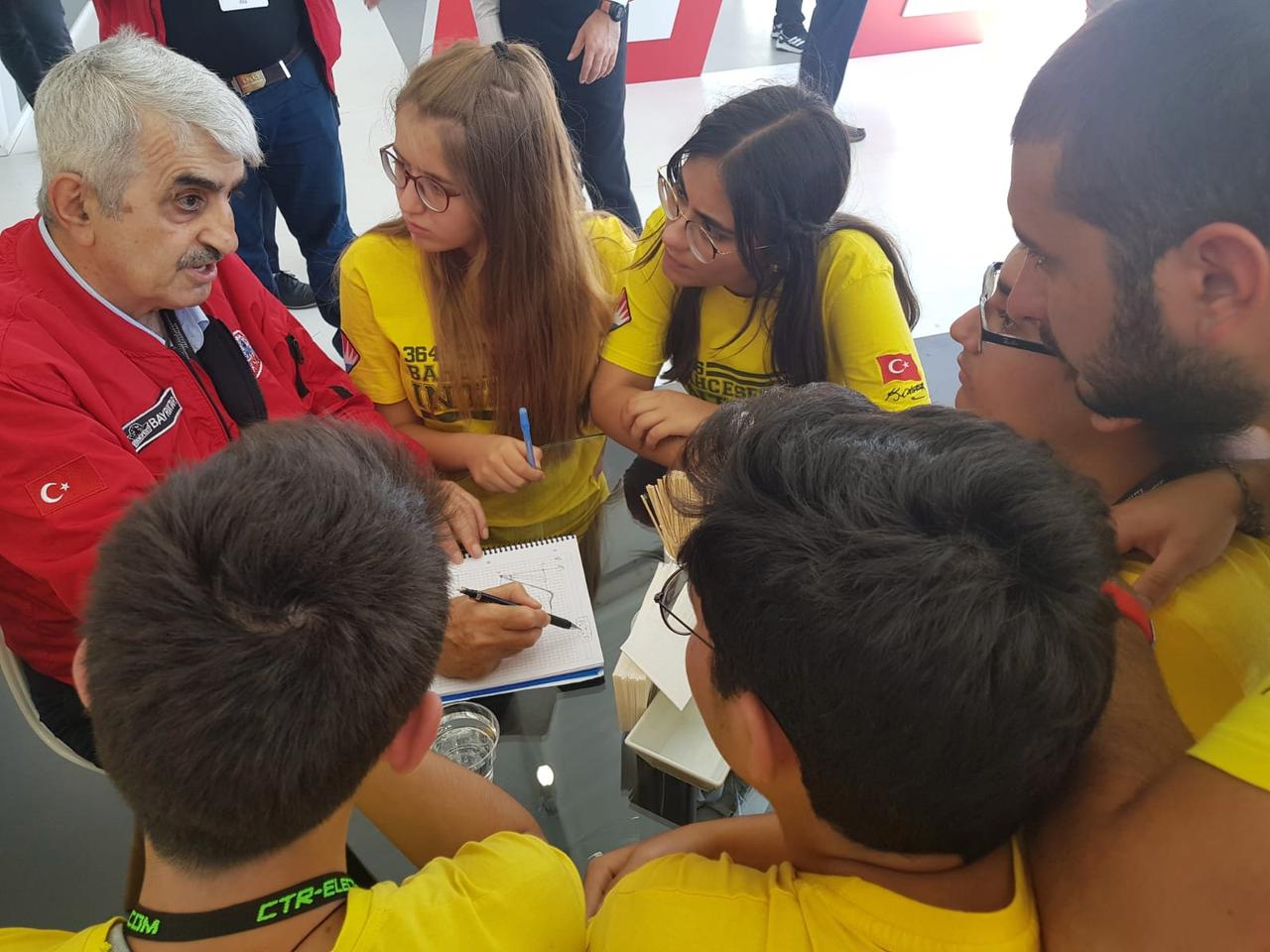
TEKNOFEST 2019 / Özdemir Bayraktar (Baykar)
Until the end of his life, Özdemir Bayraktar actively participated in the design of all products, including the AKINCI TUAV.
Throughout his life, Özdemir Bayraktar pursued initiatives aligned with the ideal of the National Technology Initiative and also contributed to foundation activities. He supported the establishment of the Turkey Technology Team Foundation (T3 Foundation) and continued supporting foundation activities and youth education throughout his life.
Throughout his life, Özdemir Bayraktar pursued initiatives aligned with the ideal of the National Technology Initiative and also contributed to foundation activities. He supported the establishment of the Turkey Technology Team Foundation (T3 Foundation) and continued supporting foundation activities and youth education throughout his life.
Özdemir Bayraktar underwent two surgeries related to his aorta and continued medical treatment under doctor supervision from 2016 onward. Following increased symptoms, diagnostic tests revealed a diagnosis of lung cancer. As his illness progressed, he spent his final days in the hospital and passed away on 18 October 2021. After a funeral prayer held at Fatih Mosque, he was buried in the family cemetery in Garipçe.

Özdemir Bayraktar and His Sons Haluk and Selçuk Bayraktar (AA)
He married Canan Bayraktar, a graduate of Istanbul University Faculty of Economics and a computer programmer at the Turkey Industrial Development Bank. Özdemir and Canan Bayraktar had three children: Haluk, Selçuk, and Ahmet.
Due to his passion for aviation, Özdemir Bayraktar held a private pilot’s license.
Özdemir Bayraktar passed away on 18 October 2021. He played pioneering roles in various defense and technology projects under the National Technology Initiative. Known for his philosophy of “quality lies in the details,” Bayraktar demonstrated unwavering determination and consistency in his projects. His family and close circle continue his legacy based on his principle: “Making justice supreme is our life’s goal.”
In 2021, Özdemir Bayraktar was honored by the President of the Republic of Azerbaijan, Ilham Aliyev, with the Karabakh Order for his contribution to the liberation of Karabakh from Armenian occupation through the nationally and originally developed Bayraktar TB2 UAVs.
The Turkey Technology Team (T3) Foundation, of which he was a founder, provides annual scholarships to 5,000 students through the Özdemir Bayraktar National Technology Scholarship Program. Since its inception, scholarships have been awarded to 18,162 students (as of June 2025). The program supports students at the middle school, high school, undergraduate, graduate, and doctoral levels and also provides assistance to young researchers.
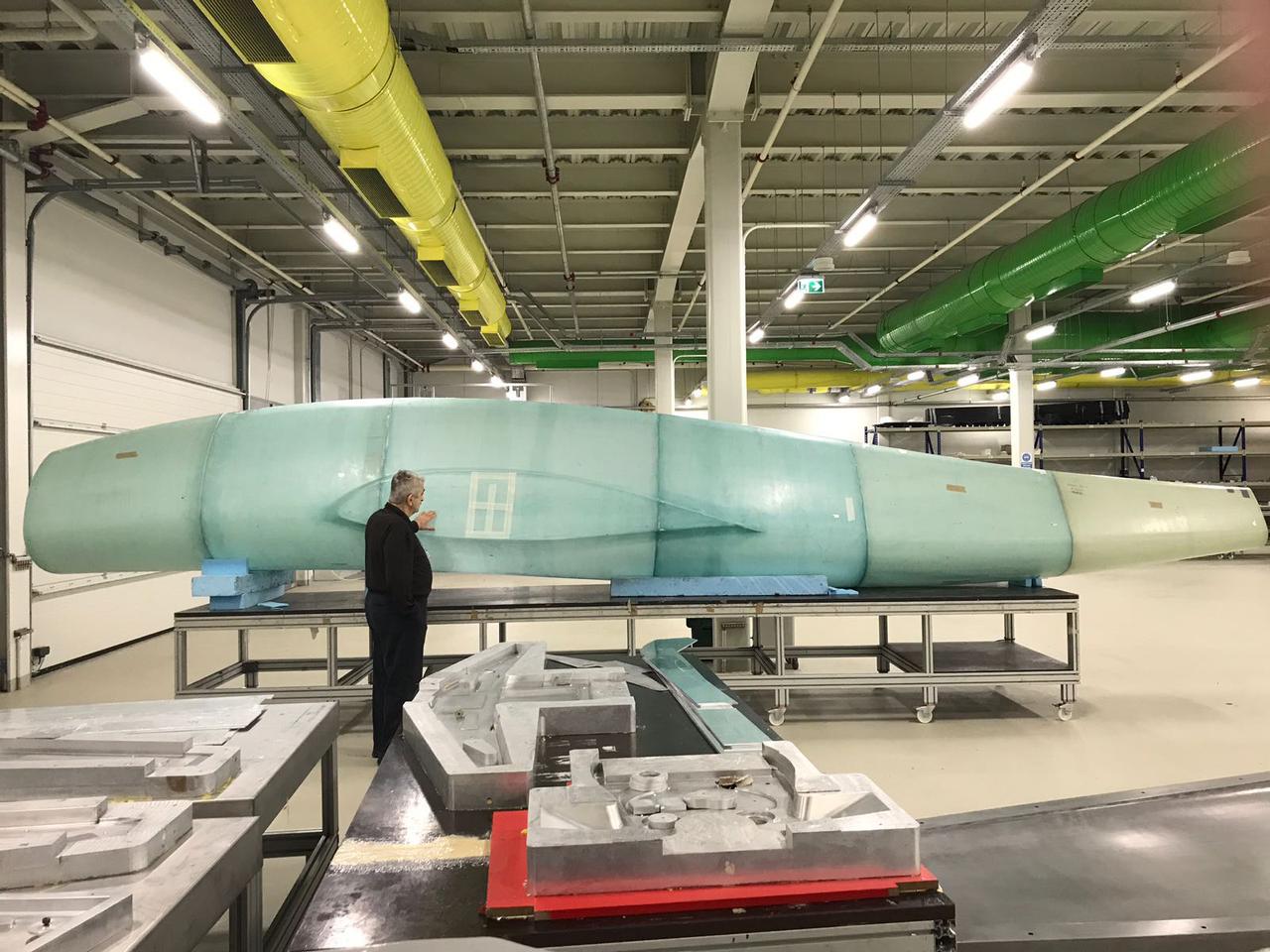
Bayraktar AKINCI Initial Production Efforts / Özdemir Bayraktar (Baykar)
Following his death, his name has been given to schools, workshops, and science centers to preserve his legacy.
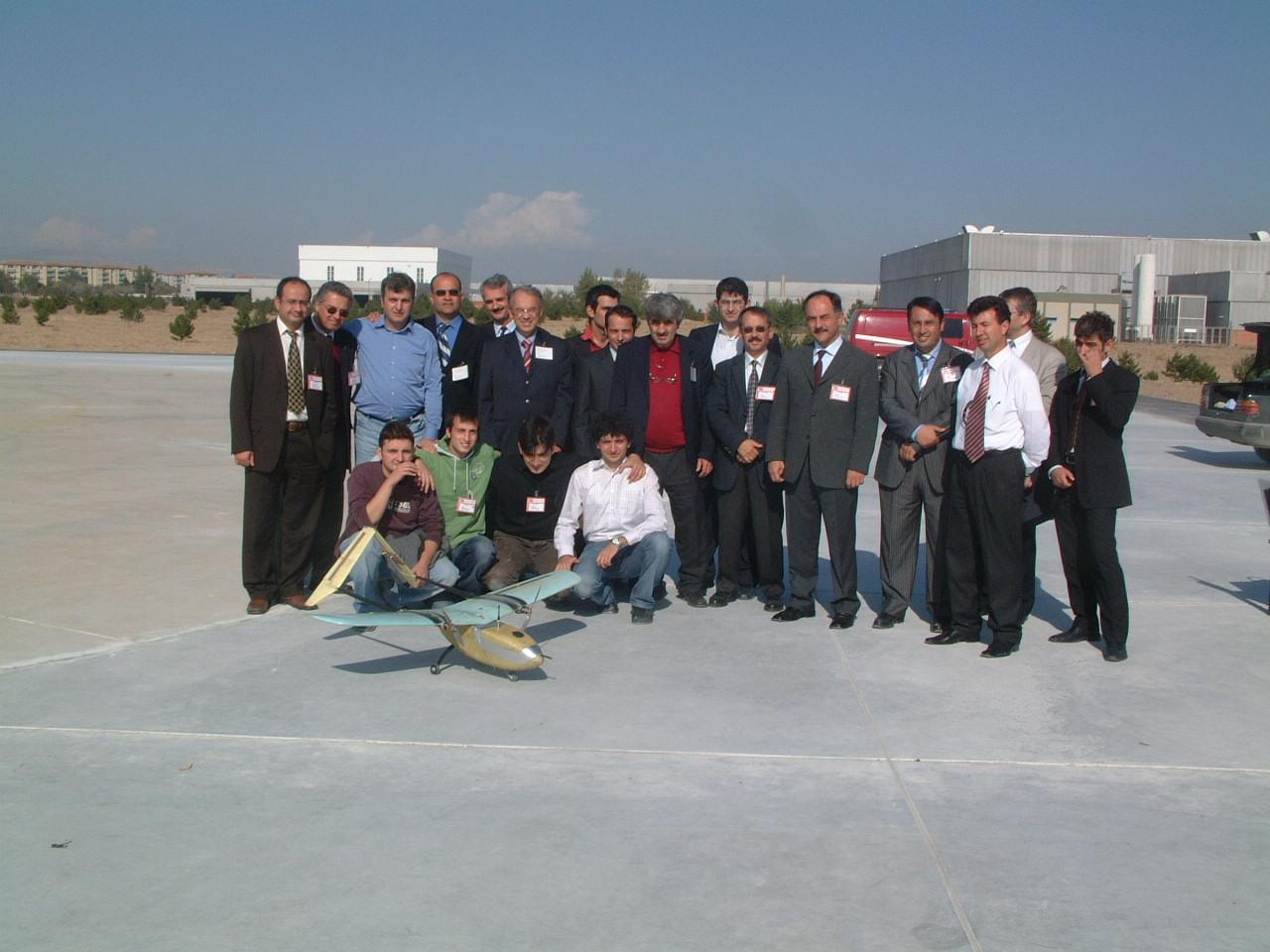
2005 Mini UAV Demo / Özdemir Bayraktar (Baykar)
Following his death, his legacy has been carried forward through various projects. Some of his pioneering quotes include:【1】
Making justice supreme is our life’s goal.
The necessity of our nation’s dependence on foreign sources cannot override our responsibility to our people.
“Our efforts will continue without pause until our country achieves full independence and global leadership in UAV technology.”
We must be the first to build an unmanned aircraft for our country; because Türkiye needs it. “A strong army means a strong Türkiye” is a necessity in our geography.
We derived our duty from the situation.
The Ottomans took young people from the lands they conquered, trained them, and turned them into Janissaries. America is now training our youth, and just when they are ready to contribute, our young people go there to serve.
Mistakes made in the warehouse persist until the end of the war.
To die as a martyr, one must first be worthy.
I have a guarantee of life until I die.
The soul has no honor, but the work you do has honor.
Run ahead, and the reward will follow behind.
You enter the forbidden only as far as you can withstand the fire.
The apprentice’s hands are heavy, the master’s ears are deaf — you can shout as much as you want.
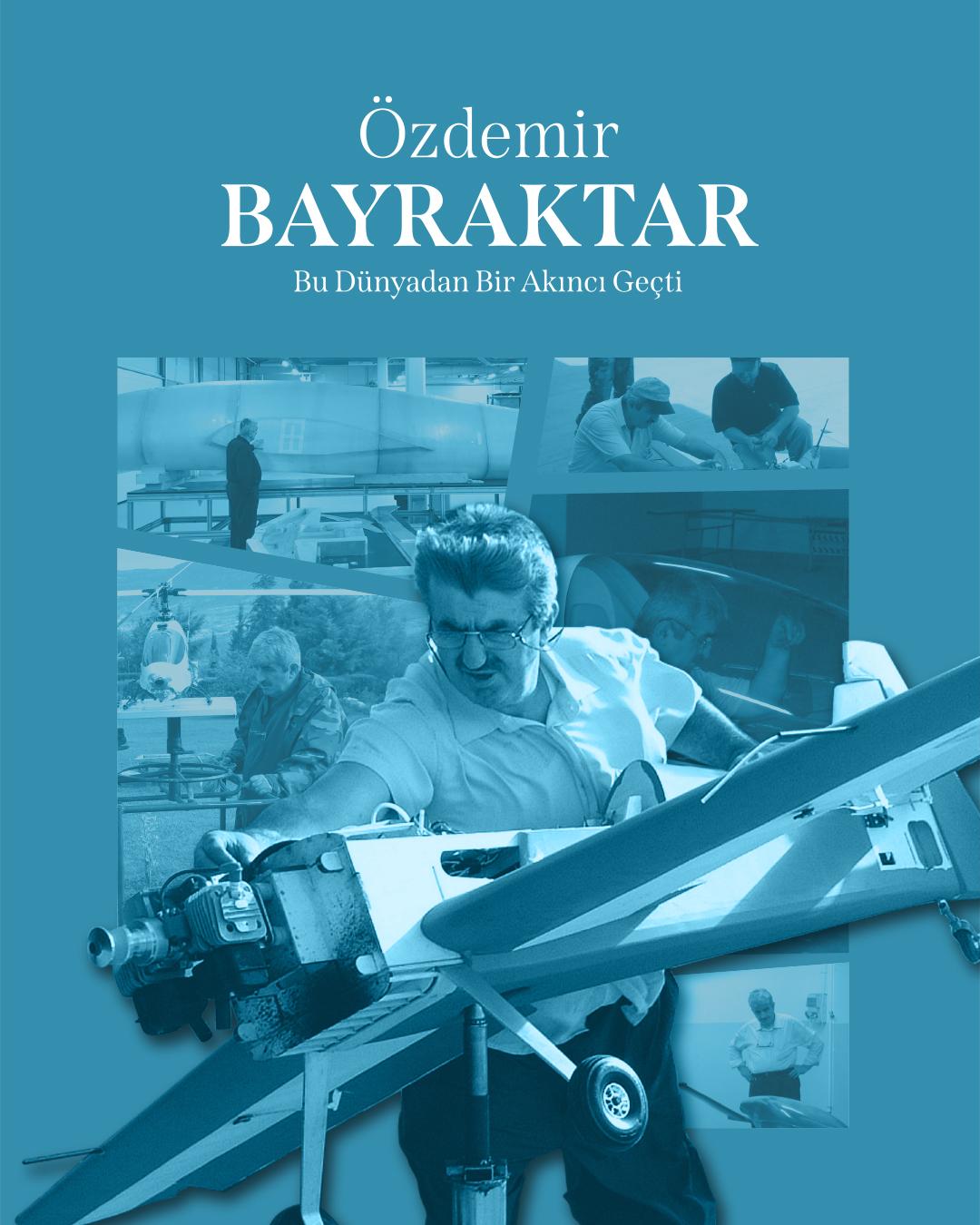
Cover of the Book “Bu Dünyadan Bir Akıncı Geçti” (Baykar)
Özdemir Bayraktar | Bu Dünyadan Bir Akıncı Geçti is presented by Baykar as a production documenting the life and struggle of Özdemir Bayraktar. The project took three years to complete, with filming conducted in Istanbul, Ankara, İzmir, and Antalya. Previously unpublished archival footage was compiled and shared with viewers, and interviews with 47 individuals are featured in the documentary.
The documentary has been released on YouTube and is scheduled to air on TRT Belgesel. It will also be available through the libraries of D-Smart GO, Tabii, TV+, and Tivibu. For global audiences, it is presented with English, Arabic, Russian, and Ukrainian subtitles, with additional language options planned for the future.
The book, published simultaneously with the documentary and bearing the same title, provides a more detailed biographical account of Özdemir Bayraktar’s life. It was prepared as a result of meticulous archival research and includes previously unpublished photographs and historical documents.
[1]
Baykar Technology. “BAYKAR Technology | ÖZDEMİR BAYRAKTAR.” Baykar. 2021. https://baykartech.com/tr/ozdemir-bayraktar/.


Özdemir Bayraktar
Eş | Canan Bayraktar | ||||||||
|---|---|---|---|---|---|---|---|---|---|
Birth | 1 February 1949, Sarıyer Istanbul | ||||||||
Death | 18 October 2021 Istanbul | ||||||||
Education | Istanbul Technical University Kabataş Boys High School | ||||||||
Profession(s) | Senior Mechanical Engineer Entrepreneur | ||||||||
Award(s) | Karabağ Order | ||||||||
Çocuk | Ahmet Bayraktar Selçuk Bayraktar Haluk Bayraktar | ||||||||
Early Life (1949 – 1966)
Engineering Education and Professional Career (1966 – 1983)
Founding of Baykar and the Localization Struggle (1983 – 2001)
Politics and Social Responsibility
National Unmanned Aerial Vehicle Development Journey (2001 – 2009)
From TB2 to the National Technology Initiative (2009 – 2021)
Foundation Activities and Death (2016 – 2021)
Personal Life
Legacy and Impact
Awards
Scholarship Programs
Institutions, Events, and Projects Named After Him
Quotes
Documentary and Books
Bu Dünyadan Bir Akıncı Geçti (Documentary)
Bu Dünyadan Bir Akıncı Geçti (Book)