

This article was automatically translated from the original Turkish version.

Baykar Technology
Full Name | Baykar Makina Sanayi ve Ticaret A.Ş. | ||||||||
|---|---|---|---|---|---|---|---|---|---|
Name Expansion | Baykar: Bayraktar Brothers | ||||||||
Year of Establishment | 1986 | ||||||||
Founder(s) | Özdemir Bayraktar | ||||||||
Headquarters | Istanbul, Türkiye | ||||||||
Area of Activity | Defense Industry, Unmanned Aerial Vehicles (UAVs), Software Development, Aviation Technologies | ||||||||
R&D Centers | Özdemir Bayraktar National Technology Center (Istanbul), Çorlu and Keşan Flight Education and Test Centers | ||||||||
Important People | Canan Bayraktar (Board Member) Haluk Bayraktar (Board Member/CEO) Selçuk Bayraktar (Chairman of the Board and Chief Technology Officer CTO) | ||||||||
Number of Employees | 5600 | ||||||||
Export Share | 90% of Revenue in 2024 from Exports, $1.8 Billion | ||||||||
Website(s) | baykartech.com | ||||||||
Slogan | From Roots to Skies | ||||||||
Baykar, founded in 1986 by Özdemir Bayraktar as a company focused on manufacturing automotive components, evolved into a technology firm specializing in research and development of unmanned systems from the early 2000s. Baykar develops various platforms in the fields of unmanned aerial vehicles and smart munitions technology. In this context, the Bayraktar Mini İHA was introduced in 2007, the Bayraktar TB2 in 2014, the Bayraktar AKINCI in 2021, and the Bayraktar TB3 in 2025 were all integrated into the inventory of Turkish Security Forces. Baykar is also continuing the development of the Bayraktar KIZILELMA Unmanned Combat Aircraft (UCAV), the K2 Kamikaze İHA, the Bayraktar KALKAN Vertical Take-Off and Landing Unmanned Aerial Vehicle (VTOL UAV), the Sivrisinek Smart Loitering Munition, and AI-based mini cruise missiles KEMANKEŞ 1 and KEMANKEŞ 2.
From 2004 to Present (Baykar)
Through its own R&D activities, Baykar has set numerous precedents in Turkish aviation and defense history and achieved historic successes with its platforms. The Bayraktar Mini İHA holds the title of the first indigenous aircraft to enter the inventory of the Turkish Armed Forces. The Bayraktar TB2, Turkey’s first Medium Altitude Long Endurance (MALE) class aircraft to enter service, is also the first armed unmanned aerial vehicle developed domestically and exported abroad (UAV). As of the end of 2024, the Bayraktar TB2 became the first indigenous aircraft to surpass one million flight hours. Meanwhile, the Bayraktar AKINCI Attack UAV, which holds Turkey’s altitude record at 45,118 feet, has successfully surpassed 100,000 flight hours. On 19 November 2024, during a test flight, the Bayraktar TB3 entered world aviation history as the first unmanned aircraft to perform takeoff and landing from a short-deck ship.
Baykar’s UAV/UCAV systems are currently actively used not only in Turkey but also in numerous other countries. As of April 2026, Baykar has exported UAV/UCAV systems to a total of 38 countries and is the world’s largest unmanned aerial vehicle company.【1】 Baykar has derived 83% of all its revenues from exports since the beginning of its UAV R&D activities in 2003. The countries to which Baykar exports include members of the European Union, Gulf states, Turkic republics, and nations in Africa and Asia. Baykar has also been one of Turkey’s top 10 exporters in both 2023 and 2024.【2】
In addition to its production and export activities, Baykar also plays an active role in social responsibility. The company leads numerous initiatives supporting the National Technology Initiative, most notably the TEKNOFEST Aviation, Space and Technology Festival, and contributes to youth through a wide range of programs from scholarships to educational projects. Through the Turkey Technology Team Foundation (T3 Vakfı), Baykar supports young people in technology development, education, and entrepreneurship; while through institutions such as the Canan Bayraktar Public Health (CANSAĞLIĞI) Foundation and the Culture and Civilization (KÜME) Foundation, it contributes to societal life through scientific research and projects focused on education, health, culture, and technology.
Baykar was established in Istanbul in 1986 by Özdemir Bayraktar to manufacture precision mechanical components for the automotive supply industry. In its early years, the company engaged in activities such as original machine design and manufacturing, part processing, and design processes within the precision machining sector focused on automotive components.【3】 In the early 2000s, Baykar’s scope of operations shifted toward defense industry and unmanned systems development, guided by Özdemir Bayraktar’s national goal of reducing Turkey’s dependence on foreign military technology.【4】 【5】
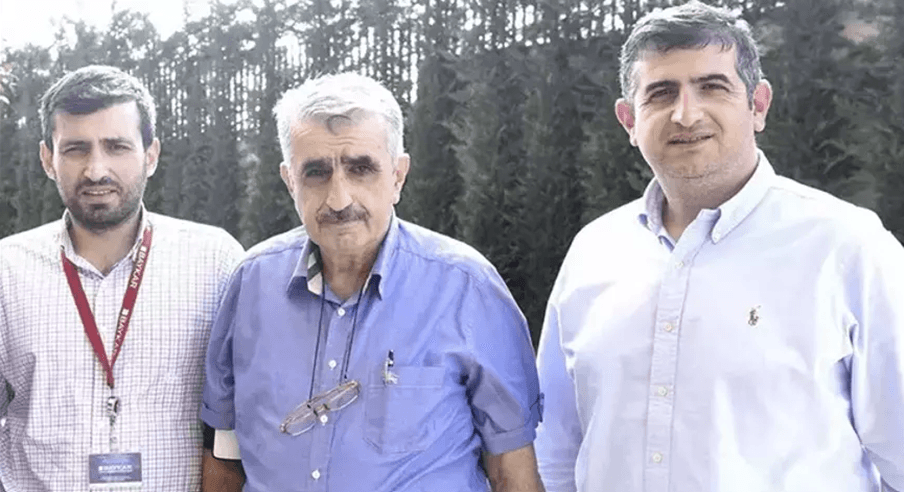
Baykar Teknology Founder Özdemir Bayraktar and His Sons Haluk and Selçuk Bayraktar (Baykar)
Baykar’s unmanned aerial vehicle system and subsystem R&D activities gained momentum through the efforts of Haluk Bayraktar and Selçuk Bayraktar.【6】 Selçuk Bayraktar graduated from the Electronics and Communications Department of Istanbul Technical University (ITU) in 2004 and completed his postgraduate studies at the University of Pennsylvania in the United States, focusing on UAV formation and robotic flight, and later at the Massachusetts Institute of Technology (MIT) on automatic flight control algorithms for unmanned helicopters.【7】 Haluk Bayraktar graduated from Middle East Technical University (METU) in Industrial Engineering in 2000 and completed his master’s degree in the same field at Columbia University.【8】 Throughout this period, Baykar’s UAV R&D activities continued uninterrupted with a small research group.
October 2005: Selçuk Bayraktar Mini İHA Flight Demo Closing Speech (Baykar)
Baykar conducted its first autonomous flight test in 2004 using indigenous electronic and software systems.【9】 In 2005, Baykar partnered with the KALE Group and entered the tender launched by the Undersecretariat for Defense Industries for the Mini Unmanned Aerial Vehicle Development Project, aimed at developing short-range reconnaissance and surveillance UAVs.【11】
During tests conducted at TAI facilities in October 2005, Baykar’s system, developed entirely indigenously from airframe to electronic control systems, became the only Mini UAV among four candidates to successfully complete a demonstration flight.【12】 In October 2006, the Undersecretariat for Defense Industries awarded the Kale-Baykar consortium an order for 19 Mini İHAs (76 aircraft and 38 ground control stations).【13】 【14】
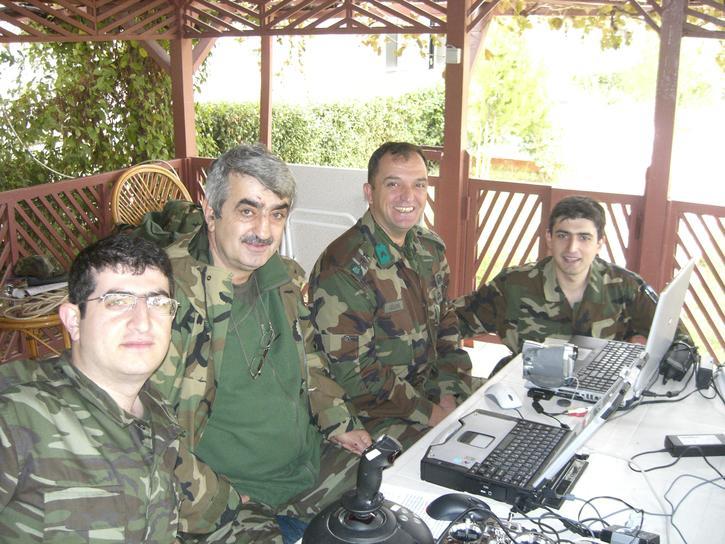
One Image from Field Operations in Southeastern Turkey (Haluk Bayraktar, Özdemir Bayraktar, Melih Gülova, Selçuk Bayraktar)) (Baykar)
Following the demonstration, Baykar’s UAV development efforts moved to the field.【15】 Lieutenant Colonel Melih Gülova, seeking technological solutions against terrorism, facilitated the establishment of a workshop by the Bayraktar family at the foothills of Gabar Mountain.【16】 A workshop was established near Gabar Mountain, close to the 6th Motorized Infantry Brigade in Akçay Village, Şırnak. In addition to the Gabar Mountain workshop, the performance of Baykar platforms was tested under real operational conditions at various military bases and border regions in southeastern Turkey, including Cudi Mountain and Hakkâri Hantepe.【18】 After flight tests and field trials, Baykar’s platform, named Bayraktar Gözcü Mini UAV, entered the inventory of the Turkish Armed Forces (TAF) in 2007. The Bayraktar Gözcü Mini UAV became Turkey’s first indigenously developed and serially produced unmanned aerial vehicle.
Between the awarding of the Mini UAV tender in October 2005 and the signing of the contract in October 2006, Baykar initiated development work on the Malazgirt Rotary-Wing Mini UAV.【19】 Based on information and requirements gathered from soldiers operating in counter-terrorism areas, the Malazgirt Rotary-Wing Mini UAV was designed as an autonomous rotary-wing mini-helicopter platform.【20】 The production process for the Malazgirt Rotary-Wing Mini UAV officially began in 2008. In 2009, 15 units were produced and delivered to the Turkish Armed Forces.【21】 The Malazgirt Mini UAV, designed for short-range reconnaissance and surveillance missions, began to be used by the General Directorate of Security in June 2010.【22】
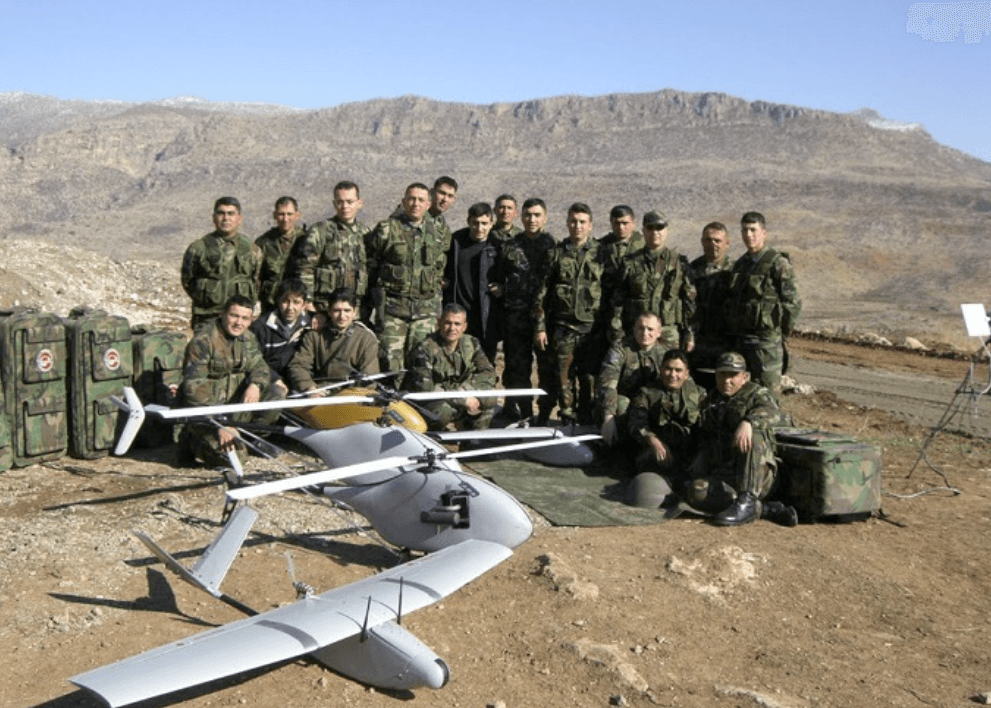
An Image Taken During Test Flights of Bayraktar Mini UAV and Malazgirt Mini UAV (Baykar)
However, in November 2009, the Turkish Army Command Technical Directorate decided to suspend flight operations citing technical errors detected in the Malazgirt UAV software and several crashed Malazgirt Mini UAVs.【23】 In a social media statement regarding the matter, Selçuk Bayraktar stated that the Malazgirt Mini UAV had participated in operations after completing its training in Şırnak and that its flight was banned under the pretext of an accident. 【24】 In a TV program, Haluk Bayraktar also stated that the project was halted due to bureaucratic obstacles. Despite commitments to replace the allegedly crashed UAVs free of charge and to implement software improvements, the rotary-wing Mini UAV project was ultimately canceled.【25】
Baykar began transferring the experience gained from its mini-UAV systems and operational feedback into more advanced platforms, laying the foundation for the Bayraktar TB2 system.
In 2007, the Undersecretariat for Defense Industries (UDI) launched the Tactical Unmanned Aerial Vehicle Development Program, requesting companies to develop a system capable of carrying a 35 kg payload, flying at an altitude of 18,000 feet for 10 hours, and maintaining a 150 km communication range.【26】 One of the participating companies, Baykar, conducted the first flight of its initial prototype, the Bayraktar TB1 (Çaldıran), in 2009 at Keşan Airfield【27】 and received official approval in 2010 after passing formal evaluations.
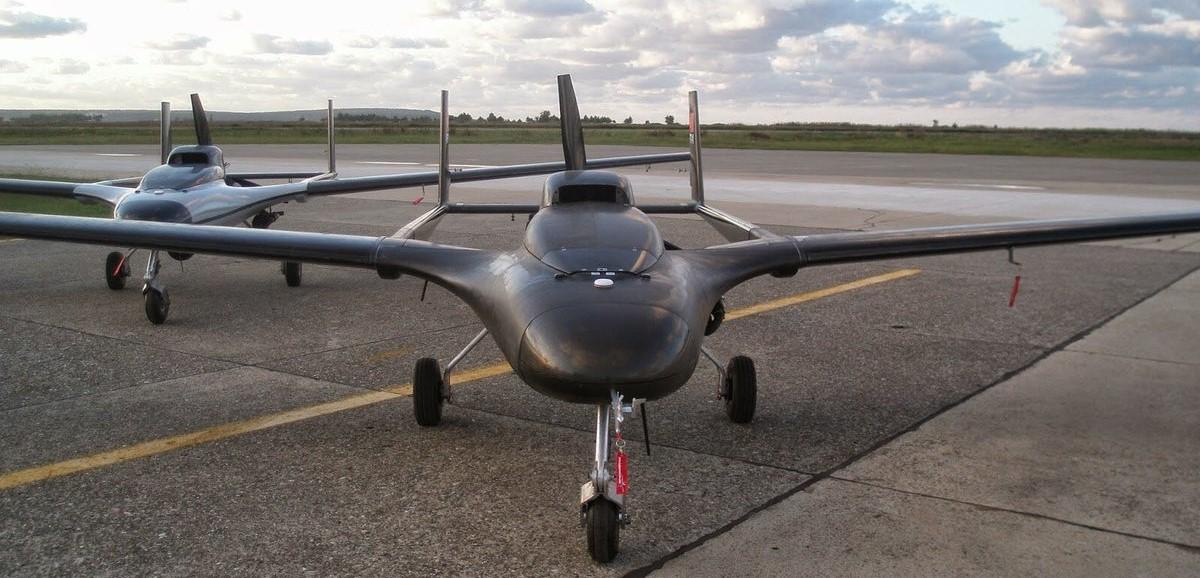
Bayraktar TB1 Çaldıran Unmanned Aerial Vehicle (Baykar)
In 2010, the Defense Industry Executive Committee (DIEC) tasked the UDI with procuring 12 tactical UAVs. Contract negotiations began in 2010 and an agreement was signed with Baykar in December 2012.【28】 During this period, the system developed from the Bayraktar TB1 platform was transformed into the Bayraktar TB2 form and completed its first flight in 2014. During flight tests at Edirne Keşan Military Airfield, the Bayraktar TB2 remained airborne for 24 hours and 34 minutes and reached an altitude of 27,000 feet, exceeding test conditions in both endurance and altitude. With this new model, the Bayraktar TB2 transitioned from the tactical class to the Medium Altitude Long Endurance (MALE) class; its wingspan increased from 9 meters to 12 meters and its takeoff weight from 450 kg to over 700 kg. The first deliveries of the platform were made to the Turkish Armed Forces on 22 November 2014. 【29】
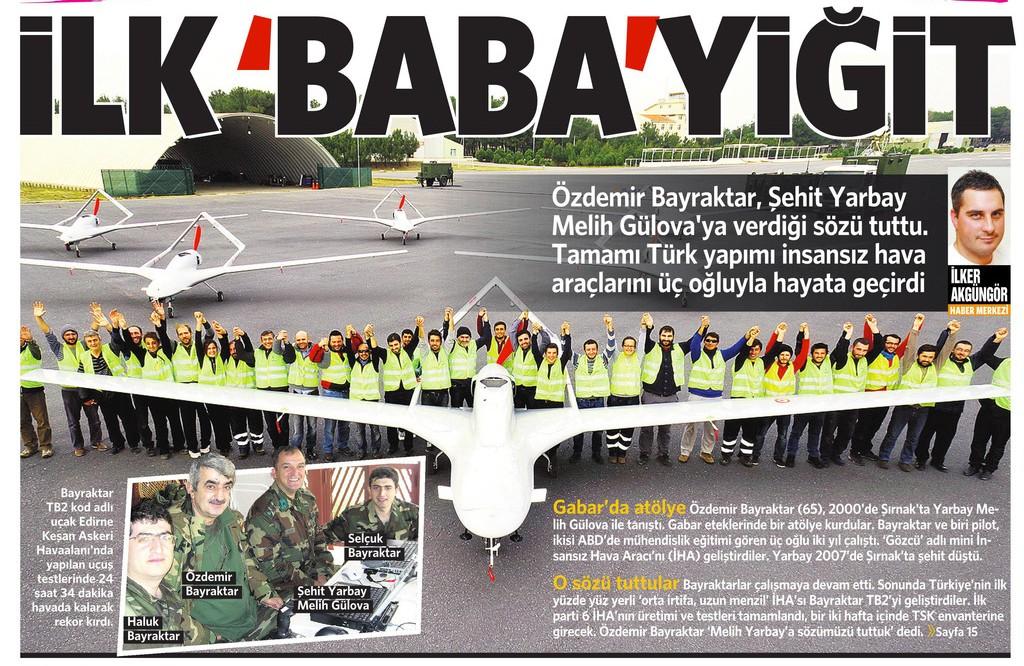
14 November 2014 Vatan Newspaper Front Page (İlker Akgüngör)
In 2015, the Bayraktar TB2 was armed with domestically developed munitions. On 17 December 2015, the first guided munition launch from a Bayraktar TB2 was successfully conducted, with ROKETSAN’s MAM-L munition hitting its target accurately.【30】 By 2016, the Bayraktar TB2 had become Turkey’s first operational UAV and was actively deployed in operational inventories.
The platform, used by Turkey in counter-terrorism operations in Syria and Iraq, was also actively deployed in conflict zones such as Libya, Nagorno-Karabakh, and Ukraine. The ongoing development of the Bayraktar TB2 made it the first UAV in aviation history to perform an autonomous barrel roll maneuver on 31 May 2024, flying in a spiral trajectory and completing a full rotation around its axis. As of 10 December 2024, the platform became Turkey’s first indigenous aircraft to complete one million flight hours.【31】 On 9 April 2025, during a test flight, the Bayraktar TB2 became the first UAV in world aviation history to perform an autonomous rescue maneuver from a vortex.【32】
The Bayraktar AKINCI Attack Unmanned Aerial Vehicle (UAV), Baykar’s fourth major platform (following the Bayraktar Mini UAV, Malazgirt Rotary-Wing Mini UAV, and Bayraktar TB2), was developed under the AKINCI Project led by the Presidency of Defense Industries (PDI).【33】 Baykar began development of the AKINCI project, funded entirely by its own resources, in 2017.【34】 Turkey’s first unmanned aerial vehicle with attack capability, the Bayraktar AKINCI, was unveiled to the public in 2018.
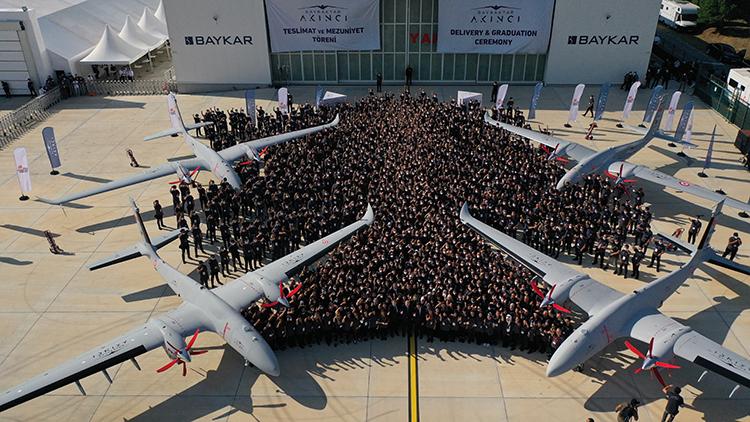
Bayraktar AKINCI TİHA Delivery Ceremony (Anadolu Ajansı)
The Bayraktar AKINCI TİHA completed its first flight on 6 December 2019, and its first delivery to the Turkish Security Forces occurred on 29 August 2021. The development of the Bayraktar AKINCI was built upon the engineering experience and operational expertise gained from the Bayraktar TB2. The platform can carry various payload configurations and perform both air-to-air and air-to-ground missions. This platform, which elevated Türkiye’s UAV capabilities to a higher level, has completed 100,000 flight hours.
Shortly after the AKINCI entered service, Baykar announced in 2021 the Bayraktar KIZILELMA project, Turkey’s first indigenous unmanned combat aircraft. Design work for this platform, featuring low radar cross-section and a jet engine, began during this period.【35】 During this period, Baykar also publicly shared the first test flight of its Vertical Take-Off and Landing Unmanned Aerial Vehicle (VTOL UAV) project, Bayraktar KALKAN, in 2022.【36】 Another project announced by Baykar was the Bayraktar TB3.【37】 Designed to meet the need for carrier-based aircraft aboard the TCG Anadolu, the Bayraktar TB3 SİHA features foldable wings and short takeoff and landing capabilities. It completed its first flight on 27 October 2023.
Baykar continues its R&D and test flight activities for the Bayraktar KIZILELMA. The production prototype of the Bayraktar KIZILELMA, developed on 25 September 2024, is expected to enter serial production soon. In 2025, the company introduced the land-based version of the Bayraktar TB3 SİHA into the inventory of the Turkish Armed Forces; as of May 2025, test flights of the KALKAN VTOL UAV, whose serial production prototype has been manufactured, are ongoing.
Baykar also continues its R&D and production activities in the mini smart munition category through the KEMANKEŞ 1 and KEMANKEŞ 2 projects. In 2023, the company conducted its first test launch of KEMANKEŞ 1 from the Bayraktar TB2 platform, and in 2024, it initiated test launches of KEMANKEŞ 2, which can be deployed from ground-based systems or rocket-assisted launchers.【38】 In February 2025, the upgraded version of the Bayraktar TB2, equipped with a more powerful turbo engine and advanced AI systems—known as the Bayraktar TB2T-AI (or TB2 Turbo)—was unveiled to the public. Most recently, the company announced the development of the K2 Kamikaze UAV and the Sivrisinek Smart Loitering Munition projects.
25 April 1986: Baykar Founded
2000: Commencement of R&D for Unmanned Aerial Vehicle Systems and Subsystem Components
2004: First Autonomous Flight Test Using Indigenous Electronic and Software Systems
2005: Automated Flight Demonstration of the Bayraktar Mini UAV Prototype at TAI Facilities
2006: Initiation of the Bayraktar Mini UAV Development and Production Process
2006: Commencement of R&D for the Malazgirt Rotary-Wing Mini UAV
2007: Commencement of R&D for the Tactical Class UAV System
2007: First Delivery of the Bayraktar Mini UAV
2008: Initiation of the Malazgirt Rotary-Wing Mini UAV Production Process
2009: Delivery of the Malazgirt Rotary-Wing Mini UAV
2009: Full Autonomous Flight of the Tactical UAV Before an Official Delegation
2011: Initiation of Mini UAV Production for the Qatari Armed Forces
2012: Initiation of the Tactical UAV Project Development and Production Process
2014: First Flight of the Bayraktar TB2
13 November 2014: First Delivery of the Bayraktar TB2 to the Turkish Armed Forces
2015: Bayraktar TB2 Actively Deployed in Trench Operations
17 December 2015: First Munition Launch from the Bayraktar TB2 with Indigenous Smart Munitions
2016: Bayraktar TB2 Participated in Operation Euphrates Shield
14 March 2018: Bayraktar TB2 UAV exported to Qatar, becoming Turkey’s first MALE-class UAV export.
2018: Bayraktar TB2 Participated in Operation Olive Branch
2019: Bayraktar TB2 Participated in Operation Peace Spring and Operation Claw
16 July 2019: Bayraktar TB2 set a 27-hour 3-minute flight endurance record in Kuwait
6 December 2019: First Flight of the Bayraktar AKINCI
27 February – 6 March 2020: Bayraktar TB2 Actively Deployed in Operation Spring Shield
15 September 2020: First Flight of the Cezeri Flying Car
29 August 2021: Bayraktar AKINCI became the first attack UAV delivered to the Turkish Security Forces.
2 March 2022: First flight of the Bayraktar AKINCI B
22 June 2022: Bayraktar AKINCI set Turkey’s altitude record at 45,118 feet
14 December 2022: First flight of the Bayraktar KIZILELMA
15 June 2023: First Test Launch of the KEMANKEŞ Mini Smart Cruise Missile
24 June 2023: The 500th Bayraktar TB2 rolled off the production line
18 July 2023: Export Agreement Signed with Saudi Arabia. Record Export in Turkish Defense-Aviation Sector
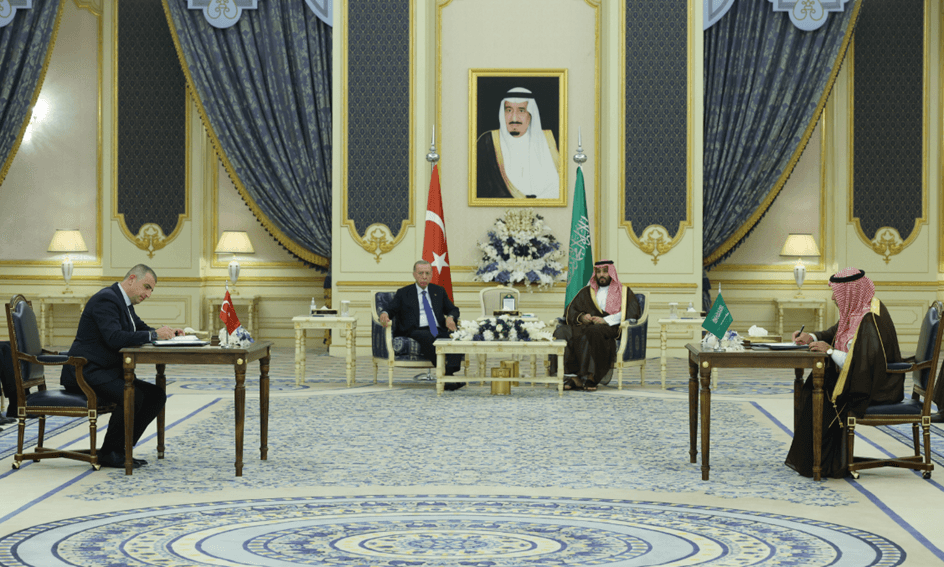
An Image from the Signing Ceremony of Baykar’s Export Agreement with Saudi Arabia (Baykar)
3 May 2024: Bayraktar TB3 set an altitude record using a domestic engine
31 May 2024: Bayraktar TB2 performed an autonomous barrel roll
13 June 2024: First Test Launch of KEMANKEŞ 2
11 September 2024: Bayraktar TB2 S5, tail number, completed 10,000 flight hours and was retired
25 September 2024: First flight of the Bayraktar KIZILELMA production prototype
19 November 2024: Bayraktar TB3 completed its first flight from TCG Anadolu
10 December 2024: Bayraktar TB2 surpassed one million flight hours
21 February 2025: First flight of the Bayraktar TB2T-AI
25 February 2025: Bayraktar TB2 J11 (S18), tail number, completed 10,000 flight hours and was retired.
6 March 2025: Baykar Technology and Leonardo signed a memorandum of understanding regarding the development of unmanned technologies.
11 March 2025: Bayraktar AKINCI completed 100,000 flight hours.
Through its R&D activities in unmanned systems technology, Baykar focuses on developing critical components indigenously and nationally. It aims to enhance the performance, mission effectiveness, and independent production capacity of unmanned aerial vehicles through its developed electro-optical systems, avionics components, command-and-control infrastructure, engine technologies, simulation systems, and payload solutions.
Developed by Baykar, the TM100 is a piston internal combustion engine designed for use in unmanned aerial vehicle systems.【39】 The development of the TM100 involved contributions from over 40 domestic companies that are members of SAHA Istanbul, and the entire process was funded and executed using Baykar’s own resources.【40】
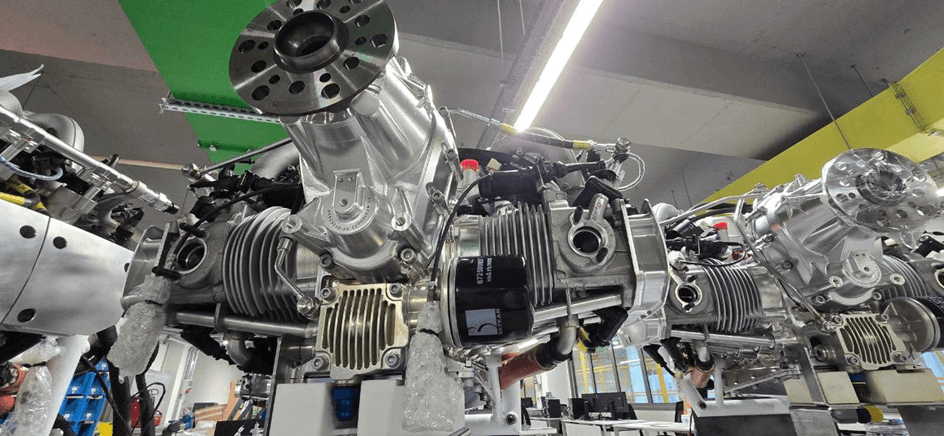
TM Engine (Haluk Bayraktar X Social Media Platform)
The engine features technical specifications such as a triple-redundant engine control unit, modular power groups, and a thermal management system, all designed to enhance operational safety and functionality. The Bayraktar TB2 unmanned aerial vehicle successfully completed test flights in 2025 using the TM100 engine.
Baykar provides a comprehensive digital infrastructure to enhance mission effectiveness through its developed Command, Control, Communications, Computers, and Intelligence (C4I) solutions integrated into its Unmanned Aerial Vehicle (UAV) systems. These systems strengthen operational capabilities through high-resolution data transmission, simultaneous control, and decision-support functions.【41】
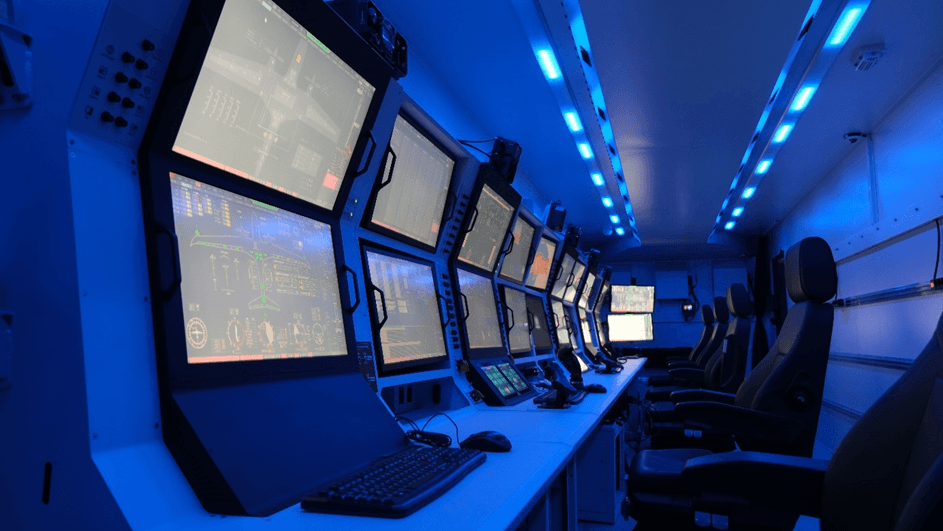
Bayraktar AKINCI Ground Control Station (Baykar)
Simulation systems play a vital role in Baykar’s R&D processes. Through hardware-in-the-loop simulation systems, flight control software can be safely and efficiently tested without requiring actual flight tests, enabling integrated software-hardware validation. Educational simulations also provide UAV operators with experience in operational scenarios and emergency situations.【42】
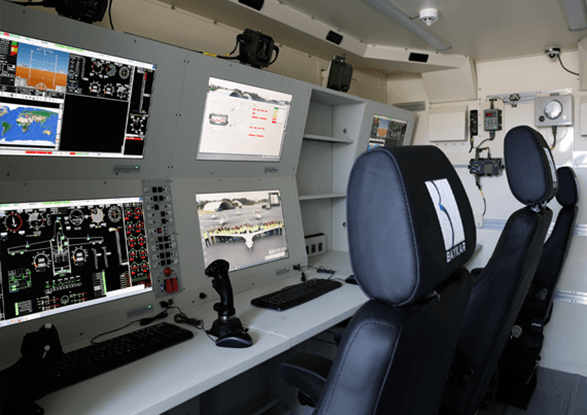
An Image of One of the Simulation Systems Developed by Baykar (Baykar)
Network-centric software systems are supported by live video transmission, user authorization, and archiving functions. The Image Transmission Center (GAM) delivers high-quality broadcasts even under low bandwidth conditions and enables the management of viewing permissions and the geospatial and operational archiving of video recordings.【43】
As part of its payload system R&D, Baykar develops various technologies such as Electro-Optical (EO) systems, Synthetic Aperture Radar (SAR), and Rapid Mapping Pods.
Baykar develops electro-optical (EO) systems to enhance the mission effectiveness of its unmanned aerial vehicles. These systems, entirely designed with domestic capabilities, are equipped for reconnaissance, surveillance, target detection, and laser designation. The developed EO systems include the BG-160, BG-180, BG-220, and BG-460 models.【44】
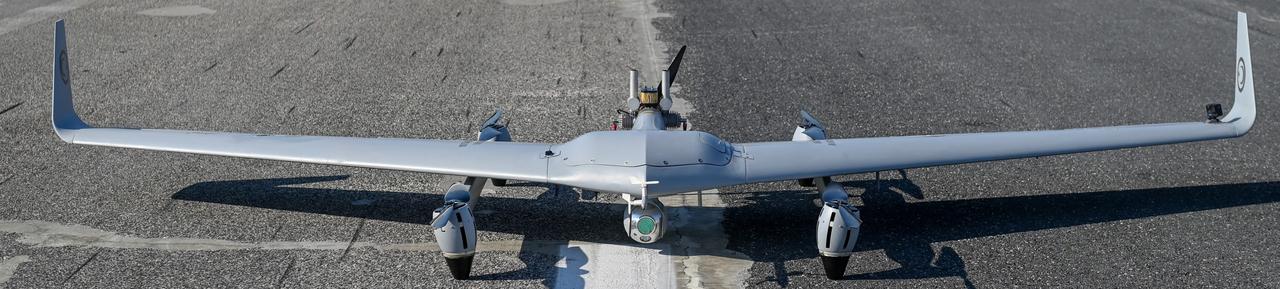
BG-160 EO System Used on Bayraktar KALKAN DİHA (Baykar)
Baykar Technology’s avionics systems consist of core components that support the flight control, data transmission, and mission management functions of unmanned aerial vehicles.【48】
Baykar Platform Demonstrations and Test Flights (Baykar)
Baykar is a defense technology company operating in the development of unmanned aerial platforms and smart munition solutions for reconnaissance, surveillance, and strike missions. Its portfolio spans a broad range of systems, from mini-UAVs to MALE-class UAVs, from platforms suitable for short-deck maritime operations to the concept of an unmanned combat aircraft. This product family also includes AI-based cruise missiles as smart munition solutions.
Developed as a jet-powered combat aircraft-class UAV, the Bayraktar KIZILELMA features low radar cross-section. It will be capable of takeoff and landing from short-deck ships and will carry munitions internally to perform air-to-air and air-to-ground missions. The Bayraktar KIZILELMA is planned to have three variants: subsonic, transonic, and supersonic, with different engine configurations.
The Bayraktar AKINCI is a heavier and higher-capacity UAV system compared to the TB2. The AKINCI A Model is equipped with two 450 hp engines, the B Model with two 750 hp engines, and the C Model with two 850 hp engines.
Designed for reconnaissance, surveillance, and strike missions, the Bayraktar AKINCI TİHA carries a 1,500 kg payload capacity on the battlefield. The platform can also perform air-to-air missions and utilize a wide range of munitions used by manned combat aircraft.
Baykar delivered the first AKINCI units to the Turkish Security Forces on 29 August 2021 and signed its first export contract in 2022. As of May 2025, the Bayraktar AKINCI has been exported to a total of 11 countries.【49】
The Bayraktar TB3 Armed Unmanned Aerial Vehicle (UAV) is designed for deployment on short-deck ships, particularly platforms like the TCG Anadolu, thanks to its foldable wing structure. The system can be used for reconnaissance, surveillance, intelligence, and strike missions and can be remotely controlled via line-of-sight and beyond-line-of-sight communication. The Bayraktar TB3 has a payload capacity of 280 kg and can remain airborne for over 21 hours. The TB3 UAV is powered by the domestically developed PD-170 turbo-diesel aviation engine from TEI, and its test activities are ongoing as of May 2025.
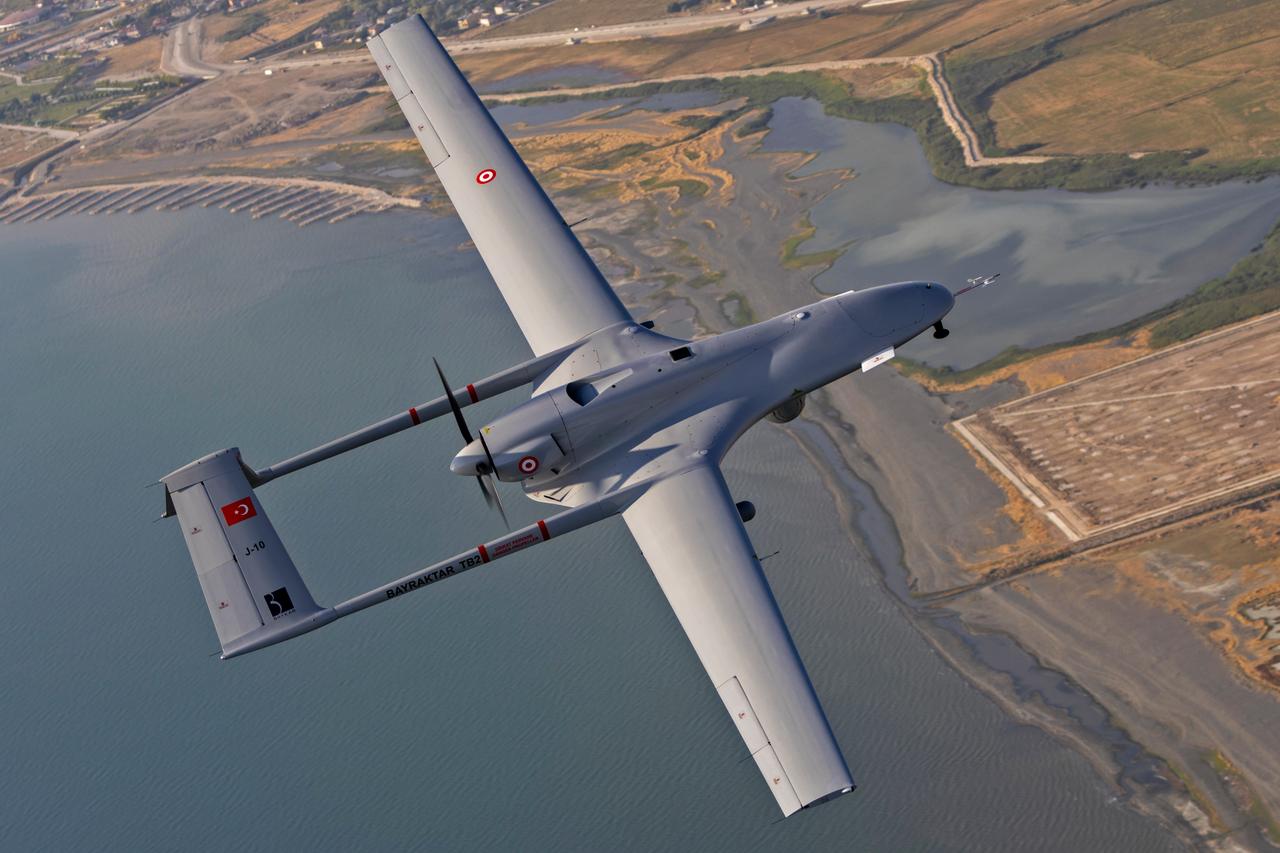
Bayraktar TB2 (Baykar)
The Bayraktar TB2 is an armed unmanned aerial vehicle system with a 12-meter wingspan, capable of carrying four laser-guided munitions and remaining airborne for over 20 hours. The system has precision strike capability against armored targets and has been deployed in various operations in Syria, Libya, Karabakh, and Ukraine. It is also used in civil missions such as search and rescue and forest fire monitoring. The Bayraktar TB2, the world’s most widely used UAV, has been exported to 34 countries as of April 2025.
The next-generation variant of the Bayraktar TB2, the Bayraktar TB2T-AI UAV, features advanced artificial intelligence and turbo engine power, and its development is ongoing.
The Bayraktar KALKAN Vertical Take-Off and Landing Unmanned Aerial Vehicle (VTOL UAV) is a platform developed for reconnaissance and intelligence missions. It can be operated from bases and floating platforms without requiring any runway. After performing vertical takeoff using four electric motors, it continues its cruise flight using a piston engine. Development of the platform is ongoing.
The Bayraktar Mini Unmanned Aerial Vehicle (UAV), introduced into the inventory of the Turkish Armed Forces in 2007, features automatic takeoff and cruise capabilities and can operate under challenging geographical and weather conditions. It has participated in counter-terrorism missions alongside various UAV systems. The Mini UAV has completed over 100,000 operational flight hours and was exported to Qatar in 2012 and to Ukraine in 2022. This system holds the distinction of being Turkey’s first indigenous UAV exported abroad.
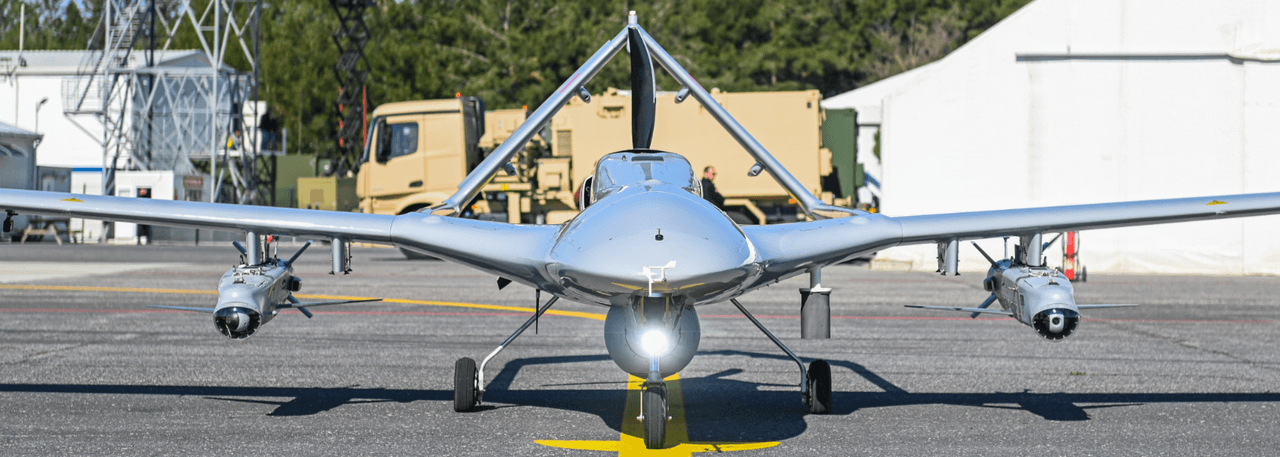
KEMANKEŞ 1 Mini Smart Cruise Missiles Integrated on Bayraktar TB2 - (Baykar)
The KEMANKEŞ 1 is a nationally developed AI-based mini cruise missile designed for use against strategic targets. It is designed to be launched from platforms such as the Bayraktar TB2, Bayraktar AKINCI Attack UAV (UCAV), and Bayraktar TB3 UAV. Equipped with an AI-assisted optical guidance system, it can identify and destroy targets with pinpoint accuracy even under adverse weather conditions. The KEMANKEŞ 1 can operate during day and night and is immune to electronic jamming thanks to its anti-jamming technology.
The KEMANKEŞ 2 is a second-generation mini smart cruise missile developed for use against strategic targets. It is launched via a Rocket-Assisted Take-Off (RATO) system or vehicle-based launchers and can perform autonomous flight using an AI-assisted autopilot system. It has a range of over 180 kilometers and can remain airborne for up to 40 minutes. Equipped with a domestic jet engine, the missile is guided to its target via an optical guidance system. Thanks to its anti-jamming technology, it can operate under electronic warfare conditions. It transmits collected data to the ground control station to provide operators with situational awareness.
Designed as part of Baykar’s strategy to develop cost-effective defense solutions, the K2 Kamikaze UAV is tailored for precise strike missions against critical targets, featuring long range, high warhead capacity, and advanced autonomy algorithms. It distinguishes itself from other systems in its class through its ability to conduct coordinated swarm operations, navigate in environments without GNSS, and carry high-explosive payloads.
The Sivrisinek Smart Loitering Munition is a next-generation loitering munition platform developed indigenously by Baykar. It stands out with AI-supported swarm autonomy, GNSS-independent navigation, automatic target detection, and autonomous strike capabilities, and is designed for strategic missions on the battlefield.
Baykar’s unmanned aerial vehicles (UAVs), first deployed in various military operations since the mid-2010s, have gradually increased their international recognition. The Bayraktar TB2 and Bayraktar AKINCI TİHA were actively used in Turkey’s cross-border operations in Syria and Northern Iraq. Additionally, Bayraktar TB2s were deployed during the 2019–2020 Libyan civil war, in Azerbaijan’s 2020 Nagorno-Karabakh campaign, and since 2022 in Ukraine’s war. The Bayraktar AKINCI’s successful detection of the wreckage of the helicopter carrying Iran’s President in 2024has further enhanced the international recognition of Baykar platforms.
During the Second Nagorno-Karabakh War in 2020, Azerbaijani Armed Forces extensively used Bayraktar TB2s to detect and destroy military targets. According to the independent monitoring organization Oryx【50】, dozens of Armenian military targets were destroyed through Bayraktar TB2 operations. These systems, widely used by Azerbaijan and credited with influencing the course of the war, have been regarded as a prime example of the role of UAV technology in modern warfare【51】 and have frequently appeared in international media.
The use of Bayraktar TB2s by the Ukrainian Armed Forces since the beginning of the Russia-Ukraine War in 2022 further increased the platform’s global recognition. Bayraktar TB2s were particularly used to strike supply lines and conduct reconnaissance. In the early months of the war, the Bayraktar TB2 became a prominent figure in Ukrainian public opinion and cultural representation.【52】 Songs were produced about UAVsin public circles, the name “Bayraktar” was given to newborn childrenand pets, and the platform featured in various media content. In this context, a television documentary titled “Bayraktar: Legendary Wings” was produced in Ukraine in 2023, exploring the symbolic meanings and operational history of the TB2s during the war.【53】 【54】 In Lithuania, Poland, Latvia, Norway, Spain, and Canada, public fundraising campaigns were organized to donate Bayraktar TB2s to the Ukrainian Armed Forces.【55】 Baykar announced that it accepted no funds from these campaigns but instead delivered three Bayraktar TB2s to Ukraine free of charge.【56】 After a campaign in Lithuania raised 6 million euros, one additional TB2 was delivered in a formal ceremony. Baykar recommended that donated funds be used for humanitarian aid. These efforts demonstrate that Baykar products carry symbolic meaning not only on the battlefield but also among the public.
Baykar’s international success has not been limited to operational impact; it has also been formally recognized by numerous countries through honors and awards. Selçuk Bayraktar【57】 and Haluk Bayraktar【58】 were awarded the “Karabakh Order,” “ASAN Service Medal,” and “Military Cooperation Medal” by Azerbaijani President Ilham Aliyev.
Baykar. "Ana Sayfa." Baykar Teknoloji, Accessed April 29, 2025. https://www.baykartech.com/tr/.
[1]
Baykar. "Dünya SİHA İhracat Pazarının Lideri 2025'te de Değişmedi: Baykar." Baykar Teknoloji. 31 Ocak 2026.https://baykartech.com/tr/haberler/dunya-siha-ihracat-pazarinin-lideri-2025te-de-degismedi-baykar/
[2]
Baykar, "Dünya SİHA İhracat Pazarının Lideri."
[3]
Baykar Teknoloji, “Özdemir Bayraktar,” Baykar, accessed 29 April 2025, https://baykartech.com/tr/ozdemir-bayraktar/.
[4]
Anadolu Ajansı, “Millî SİHA’ların Öncü İsmi Özdemir Bayraktar Vefatının Üçüncü Yılında Anılıyor,” AA, 18 October 2024, https://www.aa.com.tr/tr/gundem/milli-sihalarin-oncu-ismi-ozdemir-bayraktar-vefatinin-ucuncu-yilinda-aniliyor/3365975.
[5]
Baykar Teknoloji, “Tarihçe,” Baykar, accessed 29 April 2025, https://baykartech.com/tr/tarihce/.
[6]
Gazete Vatan, “İlk Millî İHA’lar Teslime Hazır,” Gazete Vatan, 14 July 2014, https://www.gazetevatan.com/gundem/ilk-milli-iha-lar-teslime-hazir-696958.
[7]
Baykar Teknoloji, “Selçuk Bayraktar,” Baykar, accessed 29 April 2025, https://baykartech.com/tr/selcuk-bayraktar/.
[8]
Baykar Teknoloji, “Haluk Bayraktar,” Baykar, accessed 29 April 2025, https://baykartech.com/tr/haluk-bayraktar/.
[9]
Baykar Teknoloji, “Tarihçe,” Baykar, accessed 29 April 2025, https://www.baykartech.com/tr/tarihce/.
[11]
Baykar, “2005 Ekim: Selçuk Bayraktar Mini İHA Uçuş Demosu – Kapanış Konuşması,” YouTube video, 10:57, published 28 October 2016, https://www.youtube.com/watch?v=FlEyq2DRdP4.
[12]
Baykar, “BAYKAR Teknoloji Genel Müdürü Haluk Bayraktar Soruları Yanıtlıyor...,” YouTube video, 14:03, published 16 January 2023, https://www.youtube.com/watch?v=BFJ1_li5Dt8&t=64s.
[13]
Yeni Şafak, “Kalekalıp’tan Mini İnsansız Hava Aracı,” Yeni Şafak, 18 October 2005, https://www.yenisafak.com/gundem/kalekaliptan-mini-insansiz-hava-araci-8679.
[14]
Baykar, “2005 Ekim: Selçuk Bayraktar Mini İHA Uçuş Demosu – Kapanış Konuşması,” YouTube video, 10:57, published 28 October 2016, https://www.youtube.com/watch?v=FlEyq2DRdP4.
[15]
Baykar Teknoloji. “Özdemir Bayraktar | Bu Dünyadan Bir Akıncı Geçti Belgeseli.” YouTube. 7 February 2026. 28-29 min https://www.youtube.com/watch?v=pwqI5OOc5EA.
[16]
Milliyet, “Türk Heron’lar Gabar’da Doğdu,” Milliyet, 22 May 2010, https://www.milliyet.com.tr/gundem/turk-heron-lar-gabar-da-dogdu-1258874.
[18]
GDH Digital, “Türkiye’nin Millî SİHA Yolculuğu ve Baykar Teknoloji,” gdh.digital, 22 January 2024, https://gdh.digital/haber/turkiyenin-milli-siha-yolculugu-ve-baykar-teknoloji-i16uoneks2j.
[19]
Baykar, “Tarihçe,” Baykar Teknoloji, accessed 29 April 2025, https://baykartech.com/tr/tarihce/.
[20]
GDH Digital, “Türkiye’nin Millî SİHA Yolculuğu ve Baykar Teknoloji,” gdh.digital, 22 January 2024, https://gdh.digital/haber/turkiyenin-milli-siha-yolculugu-ve-baykar-teknoloji-i16uoneks2j.
[21]
TGRT Haber, “Baykar’ın Engellenen Projesi ‘Malazgirt’in Hikâyesi: Geçmişte de Böyle Dokunmuşlar,” TGRT Haber, accessed 29 April 2025, https://www.tgrthaber.com/teknoloji/baykarin-engellenen-projesi-malazgirtin-hikayesi-gecmiste-de-boyle-dokunmuslar-2869231?s=4.
[22]
Baykar, “Malazgirt Döner Kanat İHA Sistemi - ShowTV Haber - 29 Haziran 2010” YouTube video, 2:34, published 25 April 2013, https://www.youtube.com/watch?v=AG_8Zse79Ts.
[23]
TGRT Haber, “Baykar’ın Engellenen Projesi ‘Malazgirt’in Hikâyesi: Geçmişte de Böyle Dokunmuşlar,” TGRT Haber, accessed 29 April 2025, https://www.tgrthaber.com/teknoloji/baykarin-engellenen-projesi-malazgirtin-hikayesi-gecmiste-de-boyle-dokunmuslar-2869231?s=2.
[24]
Selçuk Bayraktar (@Selcuk), “Malazgirt insansız hava aracı projesi, 2006 yılında ilk kez tanıtıldığında...,” X (Twitter), 31 January 2019, https://x.com/Selcuk/status/1091230432945979392.
[25]
Baykar, “BAYKAR Teknoloji Genel Müdürü Haluk Bayraktar Soruları Yanıtlıyor...,” YouTube video, 14:03, published 16 January 2023, https://www.youtube.com/watch?v=BFJ1_li5Dt8&t=64s.
[26]
GDH Digital, “Türkiye’nin Millî SİHA Yolculuğu ve Baykar Teknoloji,” gdh.digital, accessed 29 April 2025, https://gdh.digital/haber/turkiyenin-milli-siha-yolculugu-ve-baykar-teknoloji-i16uoneks2j.
[27]
Baykar, “Bayraktar Taktik İHA Uçuş Denemesi – 08 Haziran 2009,” YouTube video, published 25 April 2023, https://www.youtube.com/watch?v=sbhBpMqdQME.
[28]
Baykar Technologies, "Özdemir Bayraktar | Bu Dünyadan Bir Akıncı Geçti Belgeseli," YouTube video, 48:30 min, 7 February 2026,https://www.youtube.com/watch?v=pwqI5OOc5EA
[29]
İlker Akgüngör, “Baba ve Oğullarının Şehitlere Sözüdür,” ilkerakgungor.com, 30 October 2022, https://www.ilkerakgungor.com/baba-ve-ogullarinin-sehitlere-sozudur/.
[30]
İlker Akgüngör, “Silahlandı: Millî İHA’ya Yerli Füze,” ilkerakgungor.com, 5 July 2022, https://www.ilkerakgungor.com/silahlandi-milli-ihaya-yerli-fuze/.
[31]
Baykar, “Türkiye’nin İlk Millî SİHA’sı Bayraktar TB2, 1 Milyon Uçuş Saatini Aştı,” Baykar Teknoloji, 3 April 2024, https://baykartech.com/tr/haberler/turkiyenin-ilk-milli-sihasi-bayraktar-tb2-1-milyon-ucus-saatini-asti/.
[32]
Baykar, “Millî SİHA Bayraktar TB2’den Bir İlk Daha,” Baykar Teknoloji, 14 November 2023, https://baykartech.com/tr/haberler/milli-siha-bayraktar-tb2den-bir-ilk-daha/.
[33]
Anadolu Ajansı, “Bayraktar AKINCI 100 Bin Uçuş Saatini Aştı,” AA, 17 April 2024, https://www.aa.com.tr/tr/savunma-sanayisi/bayraktar-akinci-100-bin-ucus-saatini-asti/3505923.
[34]
Baykar, “Bayraktar AKINCI TİHA Envantere Girdi,” Baykar Teknoloji, 29 August 2021, https://www.baykartech.com/tr/press/bayraktar-akinci-tiha-envantere-girdi/.
[35]
Savunma Sanayi ST, “MİUS – Muharip İnsansız Uçak Sistemi Tasarımı,” savunmasanayist.com, 7 July 2021, https://www.savunmasanayist.com/mius-muharip-insansiz-ucak-sistemi-tasarimi/.
[36]
Baykar Teknoloji, Bayraktar DİHA'nın Test Uçuşu, YouTube video, 2:25, published 20 April 2022, https://www.youtube.com/watch?v=ie6boIMUFLw.
[37]
Savunma Sanayi ST, “Bayraktar TB3 SİHA Özellikleri Paylaşıldı,” savunmasanayist.com, 6 March 2023, https://www.savunmasanayist.com/bayraktar-tb3-siha-ozellikleri-paylasildi/.
[38]
Anadolu Ajansı, “Kemankeş 2 Mini Akıllı Seyir Füzesinin Test Süreci Başladı,” AA, 10 February 2024, https://www.aa.com.tr/tr/savunma-sanayisi/kemankes-2-mini-akilli-seyir-fuzesinin-test-sureci-basladi/3193055
[39]
Anadolu Ajansı, “Bayraktar TB2’den Baykar Üretimi TM100 Motoruyla Başarılı Uçuş,” AA, 25 April 2025, https://www.aa.com.tr/tr/savunma-sanayisi/bayraktar-tb2den-baykar-uretimi-tm100-motoruyla-basarili-ucus/3543233.
[40]
Haluk Bayraktar (@haluk), “Millî olarak geliştirilen #Baykar motoru TM100 ile Bayraktar TB2 ilk uçuşunu başarıyla gerçekleştirdi,” X (Twitter), 12 April 2024, https://x.com/haluk/status/1913621947776172542.
[41]
Baykar, “Komuta, Kontrol, Haberleşme, Bilgisayar ve İstihbarat (C4I),” Baykar Teknoloji, accessed 29 April 2025, https://www.baykartech.com/tr/komuta-kontrol-haberlesme-bilgisayar-ve-istihbarat/.
[42]
Baykar, “Simülatör Sistemi,” Baykar Teknoloji, accessed 29 April 2025, https://www.baykartech.com/tr/simulator-sistemi/.
[43]
Baykar, “Ağ Merkezli Yazılım,” Baykar Teknoloji, accessed 29 April 2025, https://www.baykartech.com/tr/ag-merkezli-yazilim/.
[44]
GDH Defence (@gdhdefence), “Bayraktar TB2, millî olarak geliştirilen motoru TM100 ile ilk uçuşunu gerçekleştirdi,” X (Twitter), 10 April 2024, https://x.com/gdhdefence/status/1848635092630982801.
[45]
Baykar, “Bayraktar KALKAN DİHA’nın Uçuş Testleri Başarıyla Sürüyor,” Baykar Teknoloji, 24 April 2024, https://www.baykartech.com/tr/haberler/bayraktar-kalkan-dihanin-ucus-testleri-basariyla-suruyor/.
[46]
Yeni Akit, “Savunma Sanayi Güzel İşlere İmza Atıyor: Baykar Kendi Elektro-Optik Sistemlerini Tanıttı, Türkiye’ye Milyar Dolarlık Kaynak,” Yeni Akit, 25 April 2024, https://www.yeniakit.com.tr/haber/savunma-sanayi-guzel-islere-imza-atiyor-baykar-kendi-elektro-optik-sistemlerini-tanitti-turkiyeye-milyar-dolarlik-kaynak-1896068.html.
[47]
Baykar, “Faydalı Yük Sistemleri,” Baykar Teknoloji, accessed 29 April 2025, https://www.baykartech.com/tr/faydali-yuk-sistemleri/.
[48]
Baykar, “Aviyonikler ve Alt Sistemler,” Baykar Teknoloji, accessed 29 April 2025, https://www.baykartech.com/tr/aviyonikler-alt-sistemler/.
[49]
Baykar, “Bayraktar TB2T-AI, Kendi İrtifa Rekorunu Kırarak Gökyüzüne Damga Vurdu,” Baykar Teknoloji, 26 April 2025,
[50]
Oryx, “The Fight for Nagorno-Karabakh,” Oryx, 27 September 2020, https://www.oryxspioenkop.com/2020/09/the-fight-for-nagorno-karabakh.html.
[51]
Stephen Witt, “The Turkish Drone That Changed the Nature of Warfare,” The New Yorker, published in print 16 May 2022, online 9 May 2022, https://www.newyorker.com/magazine/2022/05/16/the-turkish-drone-that-changed-the-nature-of-warfare.
[52]
CNN, “Middle East Summary: April 11,” CNN, 11 April 2022, https://edition.cnn.com/2022/04/11/middleeast/mideast-summary-04-11-2022-intl/index.html.
[53]
Baykar, “Türkiye’nin İlk Millî SİHA’sı Bayraktar TB2, 1 Milyon Uçuş Saatini Aştı,” Baykar Teknoloji, 3 April 2024, https://baykartech.com/tr/haberler/turkiyenin-ilk-milli-sihasi-bayraktar-tb2-1-milyon-ucus-saatini-asti/.
[54]
Baykar, “BAT’da Bayraktar TB2 Alımı İçin Başlatılan Bağış Kampanyaları Yayılıyor,” Baykar Teknoloji, 29 June 2022, https://baykartech.com/tr/press/batda-bayraktar-tb2-alm-icin-baslatlan-bags-kampanyalar-yaylyor/.
[55]
Baykar, “Baykar 3 Adet Bayraktar TB2 SİHA’yı Ukrayna’ya Hibe Ettiğini Açıkladı,” Baykar Teknoloji, 27 June 2022, https://baykartech.com/tr/press/baykar-3-adet-bayraktar-tb2-sihay-ukraynaya-hibe-ettigini-acklad/.
[56]
Baykar, “Baykar’dan Litvanya’ya Anlamlı Hediye,” Baykar Teknoloji, 8 July 2022, https://baykartech.com/tr/press/baykardan-litvanyaya-anlaml-hediye/.
[57]
Baykar, “Aliyev, Baykar Teknik Müdürü Selçuk Bayraktar’ı Karabağ Nişanı ile Onurlandırdı,” Baykar Teknoloji, 5 April 2023, https://www.baykartech.com/tr/haberler/aliyev-baykar-teknik-muduru-selcuk-bayraktar-karab/.
[58]
Baykar, “Aliyev’den Haluk Bayraktar’a Karabağ Nişanı,” Baykar Teknoloji, 4 July 2023, https://www.baykartech.com/tr/haberler/aliyevden-haluk-bayraktar-karabag-nisani/.


Baykar Technology
Full Name | Baykar Makina Sanayi ve Ticaret A.Ş. | ||||||||
|---|---|---|---|---|---|---|---|---|---|
Name Expansion | Baykar: Bayraktar Brothers | ||||||||
Year of Establishment | 1986 | ||||||||
Founder(s) | Özdemir Bayraktar | ||||||||
Headquarters | Istanbul, Türkiye | ||||||||
Area of Activity | Defense Industry, Unmanned Aerial Vehicles (UAVs), Software Development, Aviation Technologies | ||||||||
R&D Centers | Özdemir Bayraktar National Technology Center (Istanbul), Çorlu and Keşan Flight Education and Test Centers | ||||||||
Important People | Canan Bayraktar (Board Member) Haluk Bayraktar (Board Member/CEO) Selçuk Bayraktar (Chairman of the Board and Chief Technology Officer CTO) | ||||||||
Number of Employees | 5600 | ||||||||
Export Share | 90% of Revenue in 2024 from Exports, $1.8 Billion | ||||||||
Website(s) | baykartech.com | ||||||||
Slogan | From Roots to Skies | ||||||||
History
1986 – 2005: Founding and Early Years
2006 - 2009: Field Operations
Development of the Malazgirt Mini UAV
2014: Entry of Bayraktar TB2 into Service
2021: Entry of Bayraktar AKINCI into Service
Present Day: Serial Production of Platforms and Emergence of New Projects
Key Milestones
R&D Activities
TM-100 Engine
Command, Control, Communications, Computers, and Intelligence (C4I) Systems
Simulation Systems
Network-Centric Software
Payload Systems
Electro-Optical Systems
Avionics Systems
Platforms
Bayraktar KIZILELMA
Bayraktar AKINCI
Bayraktar TB3
Bayraktar TB2
Bayraktar KALKAN VTOL UAV
Bayraktar Mini UAV
KEMANKEŞ 1 AI-Based Mini Cruise Missile
KEMANKEŞ 2 Mini Smart Cruise Missile
K2 Kamikaze UAV
Sivrisinek Smart Loitering Munition
International Use and Recognition of Its Platforms