


This article was automatically translated from the original Turkish version.
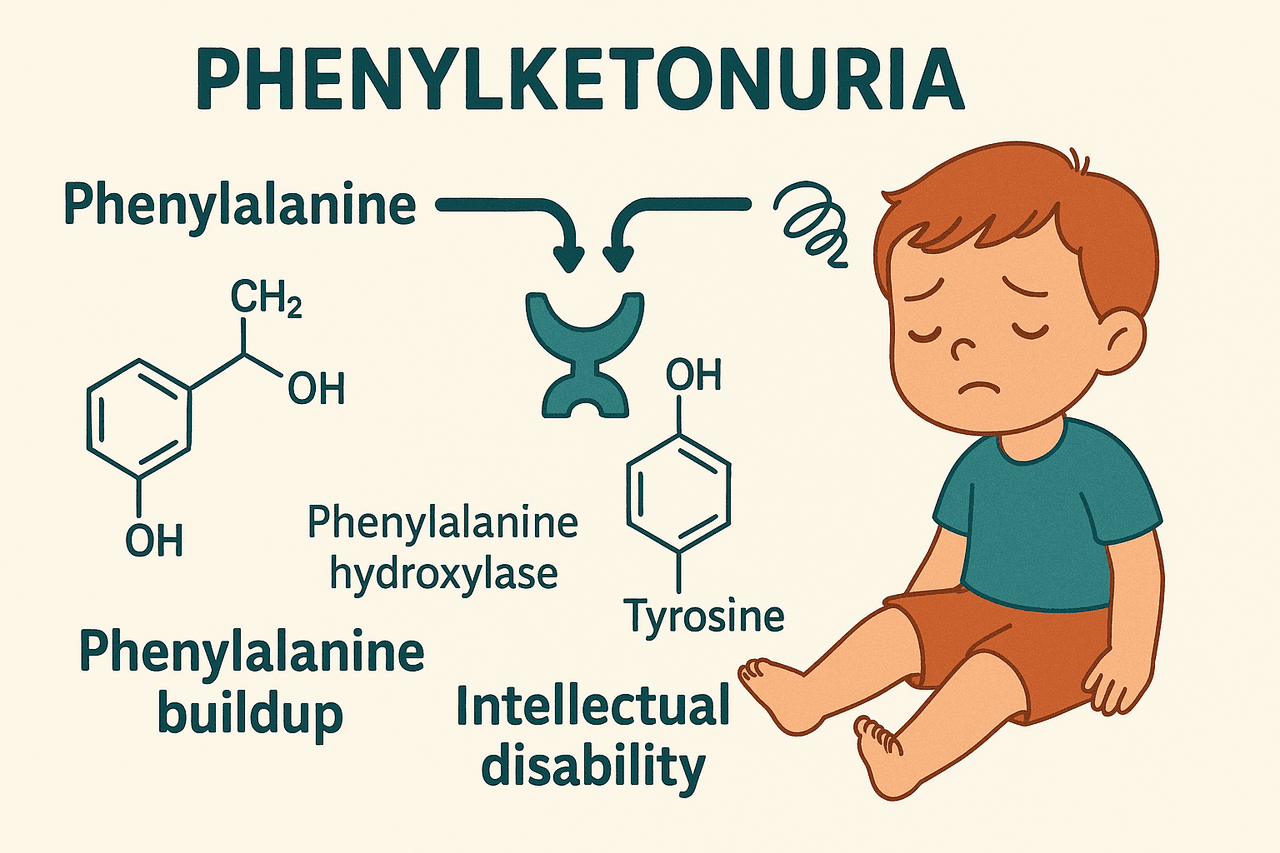
Phenylketonuria (PKU) is an autosomal recessive inherited metabolic disorder caused by the deficiency or insufficiency of the enzyme phenylalanine hydroxylase (PAH), which results in the inability to metabolize the amino acid phenylalanine. This enzyme deficiency leads to the accumulation of phenylalanine in the body and its toxic effects road. If not diagnosed and treated promptly, diagnosis severe intellectual and neurological delays can develop.
The PAH enzyme converts phenylalanine to tyrosine in the liver. In the absence of this enzyme, phenylalanine levels rise in the blood and tissues. This elevation adversely affects the nervous system harm, particularly impairing development in children during critical growth periods brain. In untreated cases, intellectual disability, behavior disorders, epilepsy, and eczema like may occur.
In newborns, initial symptoms may be absent. However, if untreated, progressive developmental delay, mental retardation, hyperactivity, seizures, fair color hair, and skin, as well as a musty odor in urine, may appear over subsequent months. A mold-like smell in urine is a characteristic sign of phenylketonuria.
In Türkiye, phenylketonuria screening is conducted as part of the National Newborn Screening Program, initiated in 1986. Early diagnosis is made possible through heel-prick blood tests. Screening tests are typically performed using blood samples collected between the third and fifth days after birth. Infants with phenylalanine levels exceeding 2 mg/dL in screening tests undergo further diagnostic testing.
Due to the high frequency of consanguineous relative marriages in Türkiye, the prevalence of phenylketonuria is high. Türkiye is among the countries with the highest incidence of phenylketonuria worldwide. In our country, the frequency of phenylketonuria is approximately 1 in 4,000 to 1 in 5,000 births.
Women with phenylketonuria must strictly control their phenylalanine levels before planning pregnancy. Uncontrolled pregnancies can lead to complications in the newborn, including microcephaly, congenital heart disorders, and intellectual disability. Therefore, mother candidates must be monitored during and after pregnancy.
Phenylketonuria is a serious metabolic disorder that can be prevented through early diagnosis and treatment. In Türkiye, early detection rates are high due to common screening programs.

Etiology
Signs and Symptoms
Diagnosis and Screening
Prevalence in the Population
Pregnancy and Potential Mothers