


This article was automatically translated from the original Turkish version.
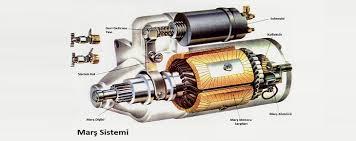
Marş Motoru
The starter motor is an electric motor used to initially rotate internal combustion engines. It converts electrical energy from the battery into mechanical energy to turn the crankshaft, enabling the engine to begin operating under its own power. This system serves as a fundamental component in initiating motion in automobiles and other motor vehicles.
The starter motor consists of components such as the solenoid (magnetic relay), starter gear, stator, rotor, brushes, and housing. When the ignition switch is turned, electrical current from the battery activates the solenoid. This component pushes the starter gear toward the flywheel gear and simultaneously allows current to flow to the motor, causing the crankshaft to rotate. As a result, the fuel-air mixture ignites and the engine begins to run.
Once the engine is running, the solenoid disengages the starter gear from the flywheel, removing the starter motor from the circuit. This process occurs automatically and prevents damage to the starter system.
Operates via electrical current. It engages the starter gear with the flywheel and enables current flow to the starter motor.
The starter gear temporarily meshes with the large gear on the flywheel to rotate the engine. The connection is disengaged after the system is activated.
These components form the rotating assembly of the electric motor. When current is supplied, the rotor rotates and transfers this rotational motion to the starter gear.
Regular inspection is required to ensure the proper functioning of the starter system. Common failure symptoms include:

Marş Motoru
Structure and Operating Principle
Starter System Components
Solenoid (Magnetic Relay)
Starter Gear and Flywheel Gear
Stator, Rotor, and Brushes
Applications
Maintenance and Failure Symptoms
Maintenance Procedures