


This article was automatically translated from the original Turkish version.
Each planet has its own rotation period around its axis, known as a “day,” and these vary significantly. On Mercury, one day lasts 176 Earth days, while on Jupiter it can be as short as 9 hours and 55 minutes. On Venus, a day is longer than a year! Factors such as the planet’s distance from the Sun, its mass, and the tilt of its axis determine this duration. You will explore the rotation periods of all planets from Mercury to Neptune, including the differences between sidereal and solar days.
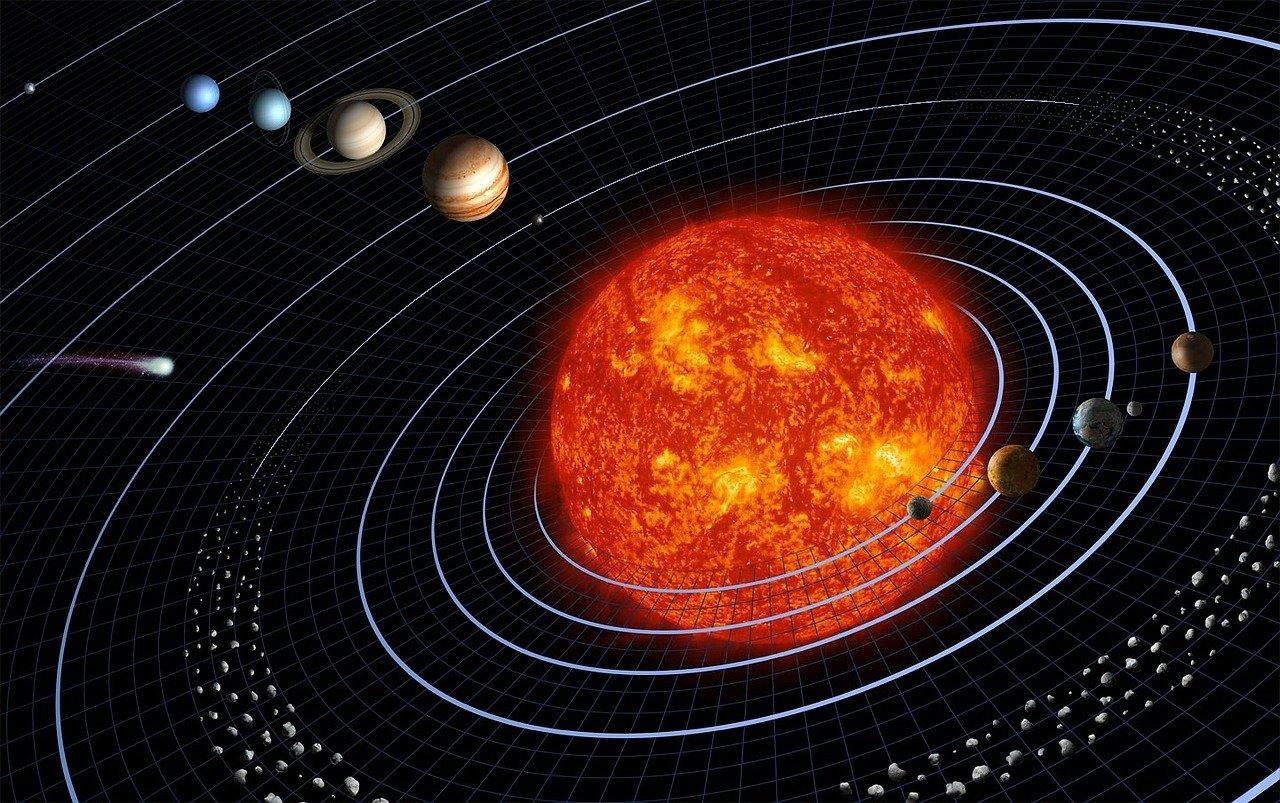
There Are Eight Planets in the Solar System (pixabay)
What Is a Sidereal Day?
Sidereal day is the time it takes for a planet to complete one full 360-degree rotation around its own axis.
This period is measured by the time it takes for a distant fixed star to return to the same position in the sky. In other words, the sidereal day is the time elapsed when the planet completes one full rotation in space.
Mercury’s sidereal day, or one full rotation on its axis, lasts 59 Earth days, while the time between two sunrises (solar day) equals 176 Earth days. As a result, on Mercury the Sun appears to move east to west, then back east, then west again across the sky. Mercury’s year, however, lasts only 88 Earth days. This unusual motion means that a day on Mercury is exceptionally long and irregular.
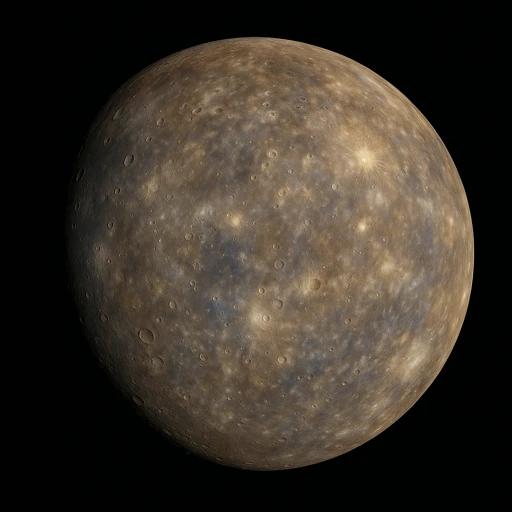
Mercury is the smallest planet in the Solar System, only slightly larger than the Moon (Generated by AI)
Venus completes one full rotation on its axis in 243 Earth days, while its orbit around the Sun — its year — lasts 225 Earth days. This means that a day on Venus is longer than its year. Additionally, Venus rotates in the opposite direction to Earth. A solar day on Venus is approximately 117 Earth days.
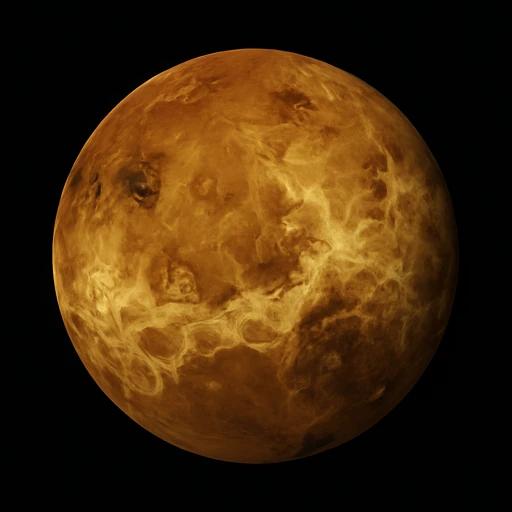
Venus is the hottest planet despite not being the closest to the Sun. Its average temperature is 464 ºC, hot enough to melt lead (Generated by AI)
Earth’s rotation takes 24 hours, known as a solar day. The true full rotation period — the sidereal day — is approximately 23 hours and 56 minutes. Earth’s orbit around the Sun lasts 365.25 days, which is why a leap day is added every four years.
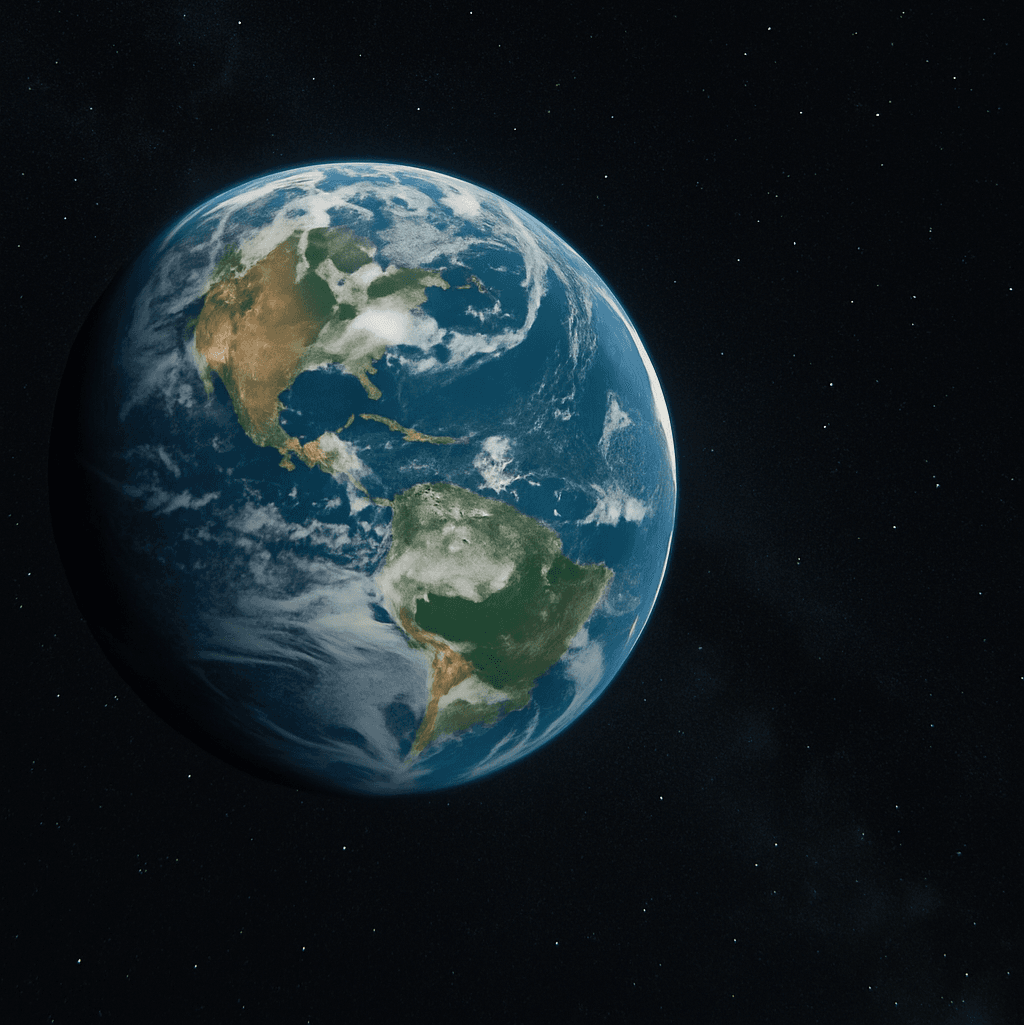
Earth is approximately 4.5 billion years old (Generated by AI)
A solar day on Mars lasts approximately 24 hours, 39 minutes, and 35 seconds — just 40 minutes longer than an Earth day. This period is called a “sol” on Mars. Mars’s rotation is very similar to Earth’s.
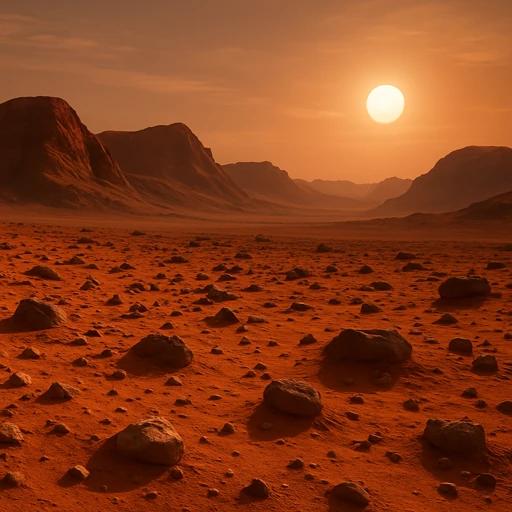
Mars’s atmosphere contains almost no oxygen and is covered in iron-rich dust clouds.(Generated by AI)
Jupiter, the largest planet in the Solar System, rotates on its axis in just under 9 hours and 55 minutes, making it the planet with the shortest day. Jupiter’s sidereal day and solar day are nearly identical because its orbital motion around the Sun is extremely slow.
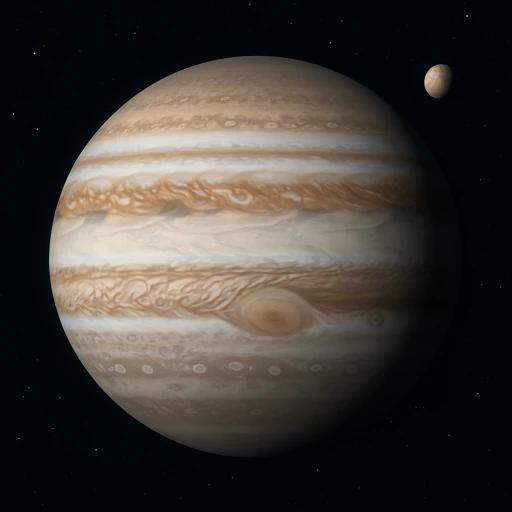
One of the most prominent features of Jupiter’s appearance is the Great Red Spot, a massive storm caused by rapidly rotating reddish cloud bands (Generated by AI)
Saturn completes one rotation on its axis in approximately 10 hours and 33 minutes, while its orbit around the Sun takes 29.45 years. This rapid rotation contributes to the shape of its ring structure.
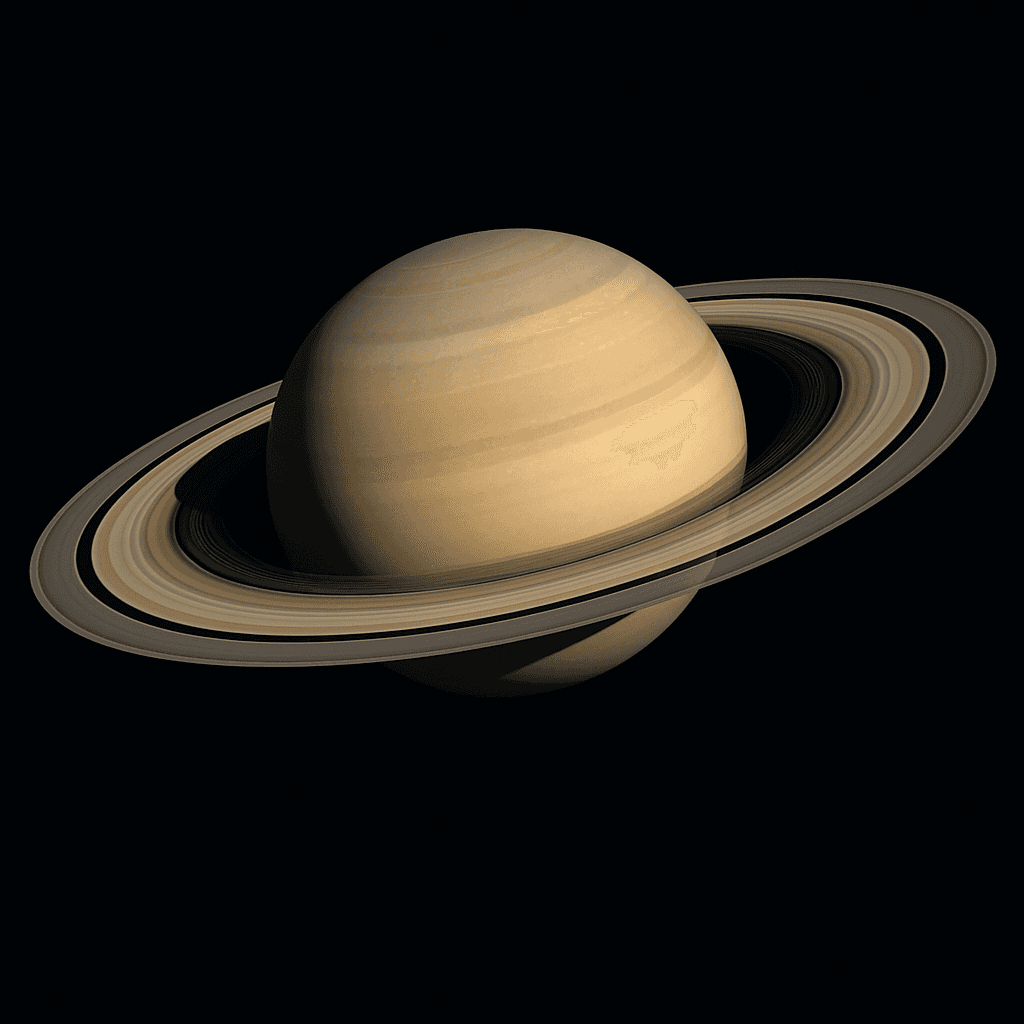
Winds on Saturn blow seven times faster than on Earth. The rings are composed of ice and rock particles, some as small as grains of sand and others as large as buses
Uranus rotates once every 17 hours and 14 minutes and completes its orbit around the Sun in 84 years. Due to its axis being nearly sideways, it appears to roll like a ball as it moves.
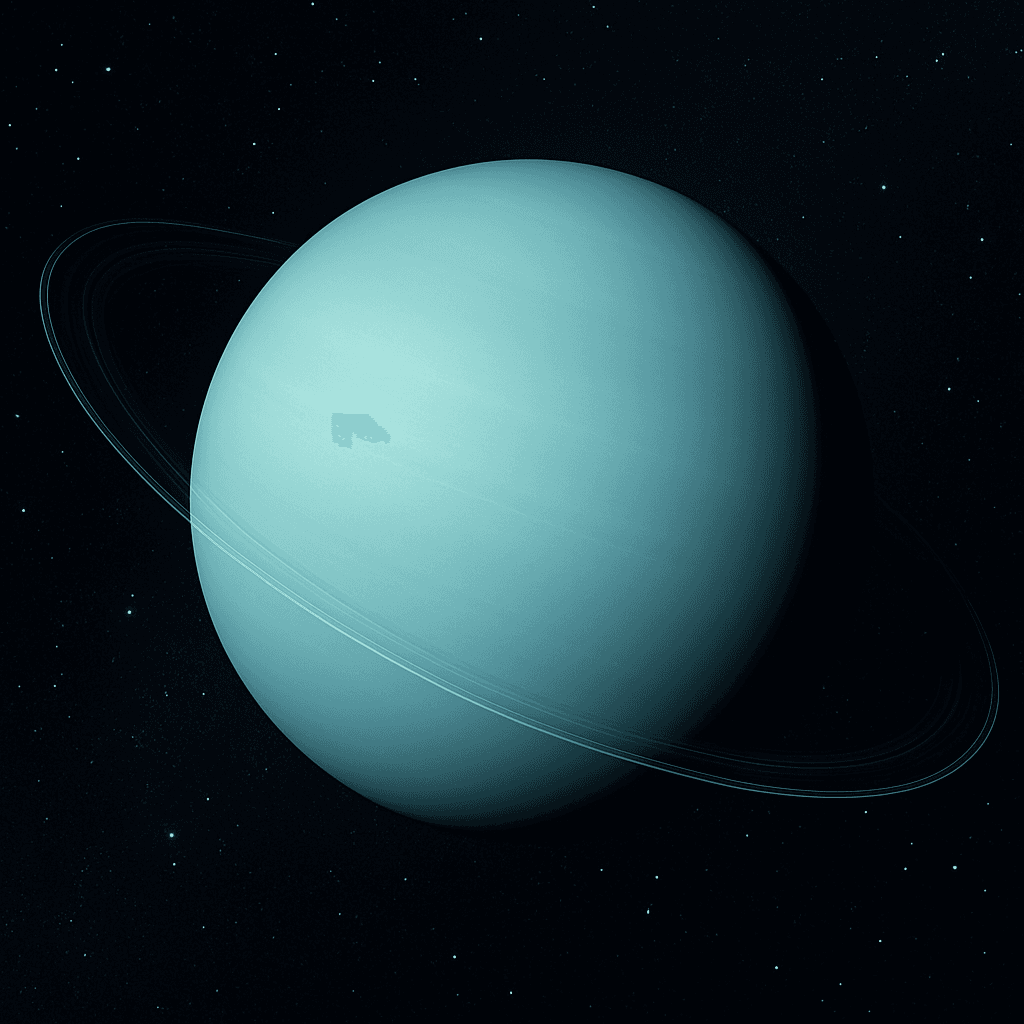
Uranus has 28 natural satellites (Generated by AI)
A day on Neptune lasts approximately 16 hours, while its orbit around the Sun takes 165 Earth years. Pluto occasionally comes closer to the Sun than Neptune, creating an interesting orbital dynamic.
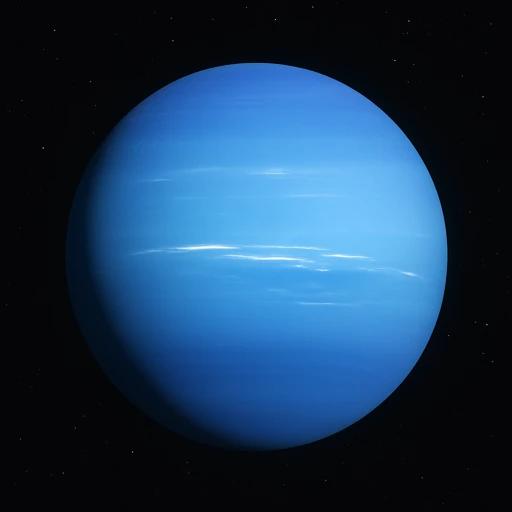
Neptune was the first planet whose existence was predicted mathematically before it was observed through a telescope. It has 16 known natural satellites and six rings (Generated by AI)
Selçuk Topal, “Güneş Sistemini Tanıyalım: Dünya,” *TÜBİTAK Bilim Genç*, October 26, 2023, Accessed July 20, 2025. https://bilimgenc.tubitak.gov.tr/makale/gunes-sistemini-taniyalim-dunya.
Selçuk Topal, “Güneş Sistemini Tanıyalım: Jüpiter,” TÜBİTAK Bilim Genç, September 13, 2022, Accessed July 20, 2025. https://bilimgenc.tubitak.gov.tr/jupiter.
Selçuk Topal, “Güneş Sistemini Tanıyalım: Mars,” *TÜBİTAK Bilim Genç*, December 28, 2023, Accessed July 20, 2025. https://bilimgenc.tubitak.gov.tr/makale/gunes-sistemini-taniyalim-mars.
Selçuk Topal, “Güneş Sistemini Tanıyalım: Merkür,” TÜBİTAK Bilim Genç, January 5, 2023, Accessed July 19, 2025. https://bilimgenc.tubitak.gov.tr/merkur.
Selçuk Topal, “Güneş Sistemini Tanıyalım: Neptün,” TÜBİTAK Bilim Genç, July 11, 2024, Accessed July 20, 2025. https://bilimgenc.tubitak.gov.tr/makale/gunes-sistemini-taniyalim-neptun.
Selçuk Topal, “Güneş Sistemini Tanıyalım: Satürn,” *TÜBİTAK Bilim Genç*, November 19, 2024, Accessed July 20, 2025. https://bilimgenc.tubitak.gov.tr/makale/gunes-sistemini-taniyalim-saturn.
Selçuk Topal, “Güneş Sistemini Tanıyalım: Uranüs,” *TÜBİTAK Bilim Genç*, March 12, 2025, Accessed July 19, 2025. https://bilimgenc.tubitak.gov.tr/makale/gunes-sistemini-taniyalim-uranus.
Selçuk Topal, “Güneş Sistemini Tanıyalım: Venüs,” TÜBİTAK Bilim Genç, January 31, 2023, Accessed July 20, 2025. https://bilimgenc.tubitak.gov.tr/venus.
Rotation Periods of the Planets in the Solar System
Mercury: The Strangest Day
Venus: A Day Longer Than a Year
Earth: Our Familiar Day
Mars: Similar to Earth
Jupiter: The Fastest Spinning Giant
Saturn: The Rapid Spinner of the Rings
Uranus: The Tilted Planet
Neptune: Long Years, Short Days
