
Birth | 1907, Ankara | ||||||||
|---|---|---|---|---|---|---|---|---|---|
Death | July 1995, age 88 | ||||||||
Profession(s) | Metallurgical Engineer Public Administrator Industrialist | ||||||||
Title(s) | Türkiye's first Metallurgical Engineer | ||||||||
Education | High School: İzmir Male High School (1926) Senior Metallurgical Engineer) Germany (1932 University: Aachen Technical University | ||||||||
Institutions Contributed to | Kırıkkale Steel Factory; Karabük Iron and Steel Factory (founding commission); ERDEMİR (feasibility report); MKEK; METAŞ; DPT; Türkiye Cement Industry, Türk Traktör, ÇEMAŞ | ||||||||
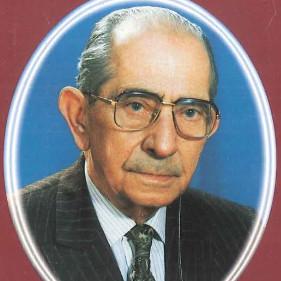
Salahattin Şanbaşoğlu (1907–1995) was one of the first representatives of metallurgy in Türkiye and played a key role in the country’s early industrialization policies and development strategies. His professional career contributed significantly to institutionalization and production processes across various sectors of Türkiye’s economy, particularly in defense industry, alongside his technical expertise and public sector roles.
Şanbaşoğlu began primary school in Ankara in 1914 and completed his secondary education at Konya Mekteb-i Sultani and İzmir Male High School. In 1926, he enrolled at the Istanbul Engineering School (now Istanbul Technical University). That same year, he passed the foreign examination opened by the Ministry of Military Manufacturing and was sent to Germany. He studied metallurgical engineering at the Aachen Technical University and graduated in 1932.
In 1932, Şanbaşoğlu began working at the Kırıkkale Steel Plant, one of Türkiye’s first steel production facilities. Nearly 150 different types of steel were produced at this plant, including the country’s first domestically manufactured railway rails. He actively participated in key production processes such as casting, alloy development, and high-quality steel manufacturing. Production at the plant relied on technical literature rather than foreign licensing agreements. Railway rail production continued at this facility until 1940.
During World War II, when strategic alloying elements such as nickel and chromium could no longer be imported, Türkiye produced its first ferro-chrome domestically. This production was used to manufacture tool steels for military purposes, ensuring the continuity of arms and ammunition production. This initiative is regarded as one of Türkiye’s technical solutions achieved under limited resource conditions.
Şanbaşoğlu served on the site selection commission for the Karabük Iron and Steel Plant, whose foundation was laid in 1937. He signed reports advocating the construction of the facility along the Zonguldak-Karabük line. With the plant’s operational launch in 1939, Türkiye initiated integrated iron and steel production. Although Şanbaşoğlu did not work directly at the plant, he contributed to its technical planning during the establishment phase.
In the 1950s and 1960s, Şanbaşoğlu held various managerial positions at the Machine and Chemical Industry Corporation (MKEK). Following his directorship of the Kırıkkale Steel Plant, he played a central role in the reorganization of İzmir METAŞ and later served as General Manager of MKEK. Between 1962 and 1965, he collaborated with an American consulting firm to modernize the organization’s structural framework. Documentation related to this initiative was later lost within institutional archives.
Şanbaşoğlu served as General Manager of the Mineral Exploration and Survey Corporation established in 1956 and prepared the site selection report for Türkiye’s second integrated iron and steel plant. The report proposed Ereğli, Edremit Bay, and İskenderun as potential locations; the Ereğli Iron and Steel (ERDEMİR) plant was eventually constructed in Ereğli during the 1960s. Additionally, he served on a Prime Ministry commission during the 1994 debates on the closure of KARDEMİR and chaired the editorial committee that prepared the technical report.
Şanbaşoğlu expressed views on improving technical education through radio broadcasts and reports. He emphasized the urgent need for skilled technical personnel and advocated for the establishment of disciplines such as industrial engineering, sales engineering, and electronic engineering. In the 1980s and 1990s, he published multilingual technical books on steel technologies and terminology, including works on steel equivalents, refractory materials, and technical dictionaries.
In 1993, during MKEK’s financial crisis, Şanbaşoğlu opposed the sale of its land and successfully registered the structures on the site with the Ministry of Culture. As a result, the sale was halted, and the institution settled its debts through alternative means. In 1964, he publicly highlighted MKEK’s historical roots in the Ottoman Tophane-i Amire, thereby establishing a formal link to the institution’s historical legacy.
Şanbaşoğlu continued serving on technical commissions into the 1990s and maintained active ties with various institutions, notably the Chamber of Metallurgical Engineers. He passed away in 1995 at the age of 88. Until shortly before his death, he continued to offer technical opinions on industrial policies.
Birgör, Ulaş. “Türkiye’nin İlk Metalürji Mühendisi Selahattin Şanbaşoğlu.” *Elektrik Mühendisleri Odası İzmir Şubesi Bülteni*, January 31, 2009. Accessed August 2, 2025. https://www.emo.org.tr/ekler/95f4240529c91fa_ek.pdf?dergi.
Güngen, Mahmut. “Paydossuz Bir Yaşam: Selahattin Şanbaşoğlu.” *Metalurji Mühendisleri Odası Yayını*, 1998. Accessed August 2, 2025. https://www.metalurji.org.tr/dergi/dergi163/d163_1826.pdf.

Birth | 1907, Ankara | ||||||||
|---|---|---|---|---|---|---|---|---|---|
Death | July 1995, age 88 | ||||||||
Profession(s) | Metallurgical Engineer Public Administrator Industrialist | ||||||||
Title(s) | Türkiye's first Metallurgical Engineer | ||||||||
Education | High School: İzmir Male High School (1926) Senior Metallurgical Engineer) Germany (1932 University: Aachen Technical University | ||||||||
Institutions Contributed to | Kırıkkale Steel Factory; Karabük Iron and Steel Factory (founding commission); ERDEMİR (feasibility report); MKEK; METAŞ; DPT; Türkiye Cement Industry, Türk Traktör, ÇEMAŞ | ||||||||
No Discussion Added Yet
Start discussion for "Selahattin Şanbaşoğlu" article
Educational Background and Entry into the Profession
Kırıkkale Steel Plant and Early Production Experience
Defense Industry and Tool Steel Production
Karabük and the Establishment of an Integrated Facility
MKEK, METAŞ, and Institutional Roles
Technical Reports and Iron and Steel Policies
Technical Education, Terminology, and Publications
Institutional Identity and Archival Approach
Final Years and Death