 Recently Added:
This article was automatically translated from the original Turkish version.
Hormuz Strait Crisis (2026) is a crisis that acquired military and commercial dimensions following the announcement on 2 March 2026 by Iran’s Islamic Revolutionary Guard Corps that all transit through the Hormuz Strait had been closed, after the attacks launched by the United States and Israel against Iran on 28 February 2026. By 5 March 2026, commercial shipping traffic through the Hormuz Strait had effectively come to a halt.
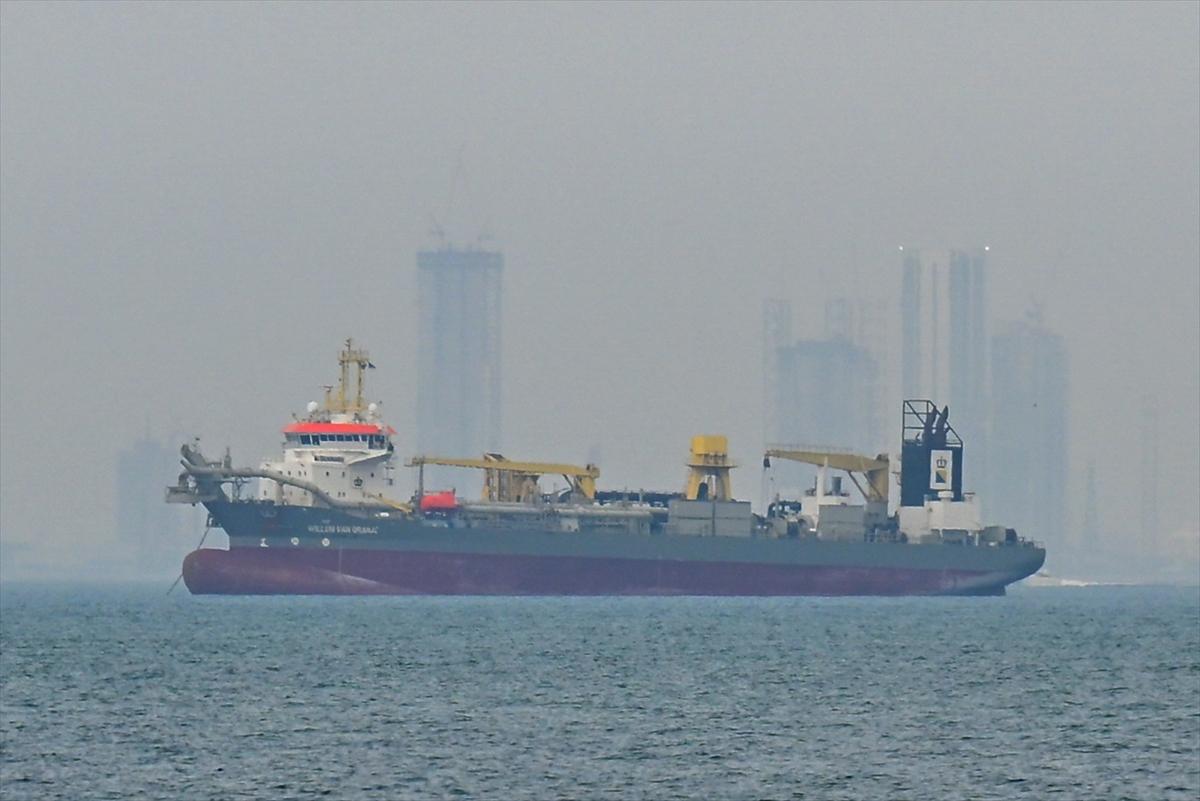
Hormuz Strait - (Anadolu Ajansı)
The Hormuz Strait is a narrow waterway at the mouth of the Persian Gulf that connects oil and liquefied natural gas (LNG) production in the Middle East to global markets via the Sea of Oman and the Indian Ocean.
Approximately 20 million barrels of oil pass through the strait daily, equivalent to about 20 percent of global daily oil consumption. This strategic passage is vital for transporting large volumes of oil from Saudi Arabia, the United Arab Emirates, Iraq, Kuwait and Iran and all of Qatar’s liquefied natural gas (LNG) exports to international markets.
About 20 percent of global LNG exports transit through the Hormuz Strait. Nearly all of Qatar’s LNG exports, one of the world’s largest exporters, reach international markets via this route. A significant portion of these shipments is destined for Asian countries such as China, India, Japan and South Korea.
According to data from the United Kingdom Maritime Trade Operations (UKMTO), the Hormuz Strait historically sees an average of 138 vessels per day.
28 February 2026 saw the outbreak of hostilities in the region following attacks launched by the United States and Israel against Iran. Iran responded with strikes against Israeli targets as well as U.S. bases and facilities in the region.
Iranian media claimed that the passage of ships and oil tankers through the Hormuz Strait had been halted, effectively “closing” the strait. Reports in international media, citing a European Union official, stated that the Islamic Revolutionary Guard Corps (IRGC) had issued messages to vessels intending to use the strait: “No vessel will be permitted to pass.”
However, no official statement from Iran on 28 February declared the strait closed. The United Kingdom Maritime Trade Operations (UKMTO), in its advisory, noted “significant” military activity in the region and warned mariners to be alert to increased electronic interference and disruptions in Automatic Identification Systems (AIS) and other navigation or communication systems.
UKMTO also reported receiving multiple reports via international calling channel VHF Channel 16 concerning claims that the Hormuz Strait had been closed. It clarified that these claims had not been verified, that statements on VHF Channel 16 are not legally binding, and that they do not constitute any restriction on navigation under international law. UKMTO urged vessels to proceed with extreme caution.
On 28 February 2026, commercial vessel traffic continued heavily through the Hormuz Strait, although some container ships were observed making U-turns in the Oman Gulf and Hormuz Strait, while other commercial vessels had begun anchoring in the Gulf.
1 March 2026, Iranian state television reported that an oil tanker attempting to pass through the Hormuz Strait despite warnings had been struck.
According to the report, an oil tanker attempting an “illegal” transit through the strait in disregard of warnings was targeted. Footage was released showing the tanker engulfed in flames and sinking.
On the same day, the German-based company Hapag-Lloyd, one of the world’s largest container shipping companies, announced that all vessel transits through the Hormuz Strait would be suspended until further notice.
In its statement regarding transit through the Hormuz Strait, the company stated: “Due to the ongoing conflict in the Middle East and the deteriorating security situation in the region, and in light of official closure of the Hormuz Strait by relevant authorities, Hapag-Lloyd is suspending all vessel transits through this waterway until further notice.”
The statement emphasized that the safety and security of crew, vessels and cargo remain the highest priority, and that the decision was not voluntary but a necessary step in response to current conditions and regulatory constraints.
The company noted it was closely monitoring rapidly evolving developments and maintaining continuous contact with authorities, and added:
“As a result of this situation, delays, rerouting or schedule adjustments may occur for services calling at ports in the Persian Gulf. We are working to minimize disruptions and will communicate significant changes affecting affected shipments as soon as possible.”
1 March 2026, the Danish-based company Maersk, one of the world’s largest container shipping companies, announced it had halted all vessel transits through the Hormuz Strait until further notice.
In its written statement, Maersk referenced information regarding the situation in the Hormuz Strait following the joint attacks by the United States and Israel against Iran, which were alleged to have prompted Iran to close the strait.
The statement affirmed that the safety of crew, vessels and cargo aboard Maersk ships remained the company’s top priority, and declared: “We are suspending all vessel transits through the Hormuz Strait until further notice.”
Delays, route changes or schedule adjustments for services calling at regional ports were noted as possible.
1 March 2026, French channel BFMTV reported that following the U.S. and Israeli attacks on Iran and Iran’s retaliatory strikes, congestion had emerged in Hormuz Strait traffic, and the French aircraft carrier Charles de Gaulle was moving toward the Eastern Mediterranean.
According to the report, after the U.S. and Israeli attacks, Iran targeted locations in several regional countries hosting U.S. bases, including Qatar, the United Arab Emirates and Bahrain, and congestion had developed in shipping traffic through the Hormuz Strait. As a result, France’s nuclear-powered aircraft carrier Charles de Gaulle and its accompanying vessels cut short their operations in the Baltic Sea and were deployed to the Eastern Mediterranean.
Laurent Martens, General Representative of the French Shipowners’ Association Armateurs de France, told the national press that 60 vessels flying the French flag or owned by French companies were trapped in the Persian Gulf.
Martens said these vessels had passed through the Hormuz Strait and, following instructions from the French navy to seek safe anchorage, had moved to ports in the region. The safety of the crews was confirmed. Martens assessed that French vessels were not “priority targets” in Iran’s attacks.
1 March 2026, the United Kingdom Maritime Trade Operations (UKMTO) announced that the maritime security situation in the Hormuz Strait had escalated to its highest risk level, “critical”, following confirmation of multiple attacks on commercial vessels in the Oman Gulf, near Musandam and in the territorial waters of the United Arab Emirates (UAE).
UKMTO reported that multiple vessels in the Oman Gulf, near Musandam and UAE coastal waters had been targeted by missiles and unmanned aerial vehicles. Attacks were confirmed on the crude oil and oil tankers named SKYLIGHT, MKD VYOM and SEA LA DONNA within the last 24 hours.
UKMTO stated no connection could be found between these vessels and any specific characteristics that would make them suitable targets, and added: “Although the Hormuz Strait has not been officially closed, the operational environment in this region reflects active kinetic threat conditions.”
The average daily vessel transits through the Hormuz Strait are 138, but over the past 24 hours this number had fallen by more than 20 percent to approximately 110. This decline was described as a temporary reaction rather than a structural reduction.
It was anticipated that vessel congestion would increase near UAE coastal ports, Oman waters and anchorage areas near the Hormuz Strait as operators delay transits until the situation becomes clearer.
2 March 2026, several maritime insurance companies announced they had canceled war risk coverage for vessels in the region following the weekend’s joint attacks by the United States and Israel against Iran.
The U.K.-based NorthStandard and London P&I Club, Norway-based Gard and Skuld, and the American Club announced on their websites that they had received cancellation notices from their reinsurers regarding war risks in Iran and the Persian Gulf.
The notices stated that war risk coverage will be excluded for Iranian waters and adjacent Gulf waters. The decision was set to take effect as of 5 March 2026.
2 March 2026, oil tanker transits through the Hormuz Strait came to a standstill as security risks reached their highest level, with over 700 tankers stranded on both sides of the strait.
According to analysis by real-time data analytics firm Kpler, on 27 February 2026, 15 tankers carrying 21 million barrels of crude oil and petroleum products transited the strait. On 28 February 2026, transits rose to 18 vessels carrying 21.6 million barrels.
As tensions escalated, on 1 March 2026, only three tankers passed through the strait, carrying a total of 2.8 million barrels of crude oil and petroleum products. One of these tankers was carrying approximately 2 million barrels of crude oil.
As of 2 March, it was reported that 706 non-Iranian tankers were waiting on either side of the Hormuz Strait. Their distribution was as follows:
These tankers are anchored at various locations in the Persian Gulf (west of the strait), the Oman Gulf (east of the strait), and the Arabian Sea.
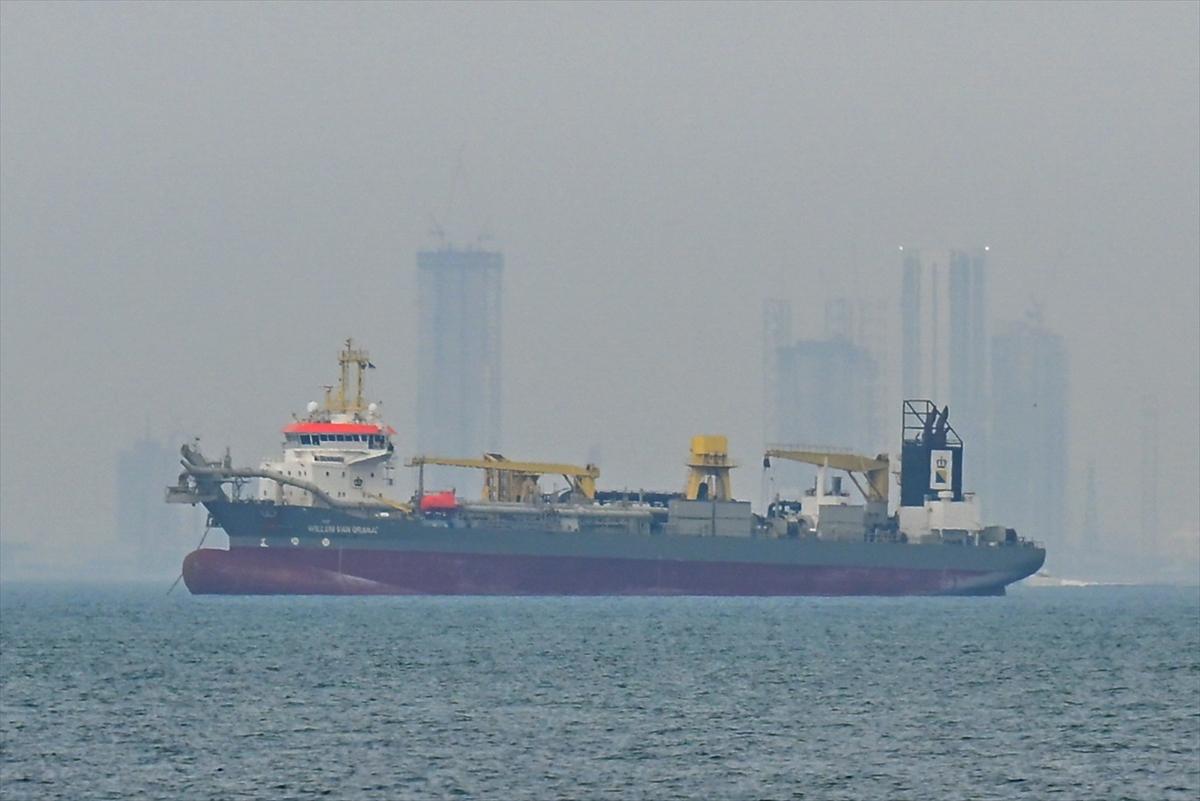
Due to navigation disruption in the Hormuz Strait, vessels are heading to UAE ports, 2 March 2026 - (Anadolu Ajansı)
2 March 2026, Brigadier General Ibrahim Jabbari, Advisor to the Commander-in-Chief of the Islamic Revolutionary Guard Corps, announced that transit through the Hormuz Strait had been closed.
Speaking on Iranian state television, Jabbari stated that in response to U.S.-Israeli attacks, no transit would be permitted through the Hormuz Strait, and declared:
“The Hormuz Strait is closed. We will attack and set fire to any vessel attempting to pass. (Vessels attempting to pass) will be burned by our heroic personnel in the IRGC Navy and Ground Forces. Do not come to this region. Oil prices have reached $82, and the world is certainly expecting them to reach at least $200. We will also attack oil pipelines and will not allow a single drop of oil to leave the region.”
On the same day, the Islamic Revolutionary Guard Corps issued another statement saying that 26 unmanned aerial vehicles and five ballistic missiles were launched against fixed and mobile U.S. military targets in Kuwait, the United Arab Emirates, Bahrain and the Hormuz Strait.
3 March 2026, following the closure of the Hormuz Strait, maritime traffic to and from the Gulf came to a standstill. It was reported that numerous vessels were stranded in the region as of 3 March. Concerns over disruptions to global energy supplies intensified, leading to price increases in international markets.
Maritime research firm Drewry noted that with the closure of the Hormuz Strait, shipping companies are expected to seek alternative solutions involving land transport and loading from ports outside the Gulf.
It was reported that the significant closure of airspace in Gulf countries had disrupted air cargo operations and crew movements, with no clear timeline for reopening.
In this context, shipping companies were expected to further reduce transit through the Suez Canal and prioritize routes around the Cape of Good Hope.
Cargo owners were reported to be facing higher freight rates, longer transit times, supply chain delays and risks of equipment shortages, with anticipated increases in fuel costs.
According to Windward data, vessel transits through the Hormuz Strait dropped to 7 on 2 March 2026 and further to 4 on 3 March 2026, representing a 90 percent decline compared to the average over the previous seven days.
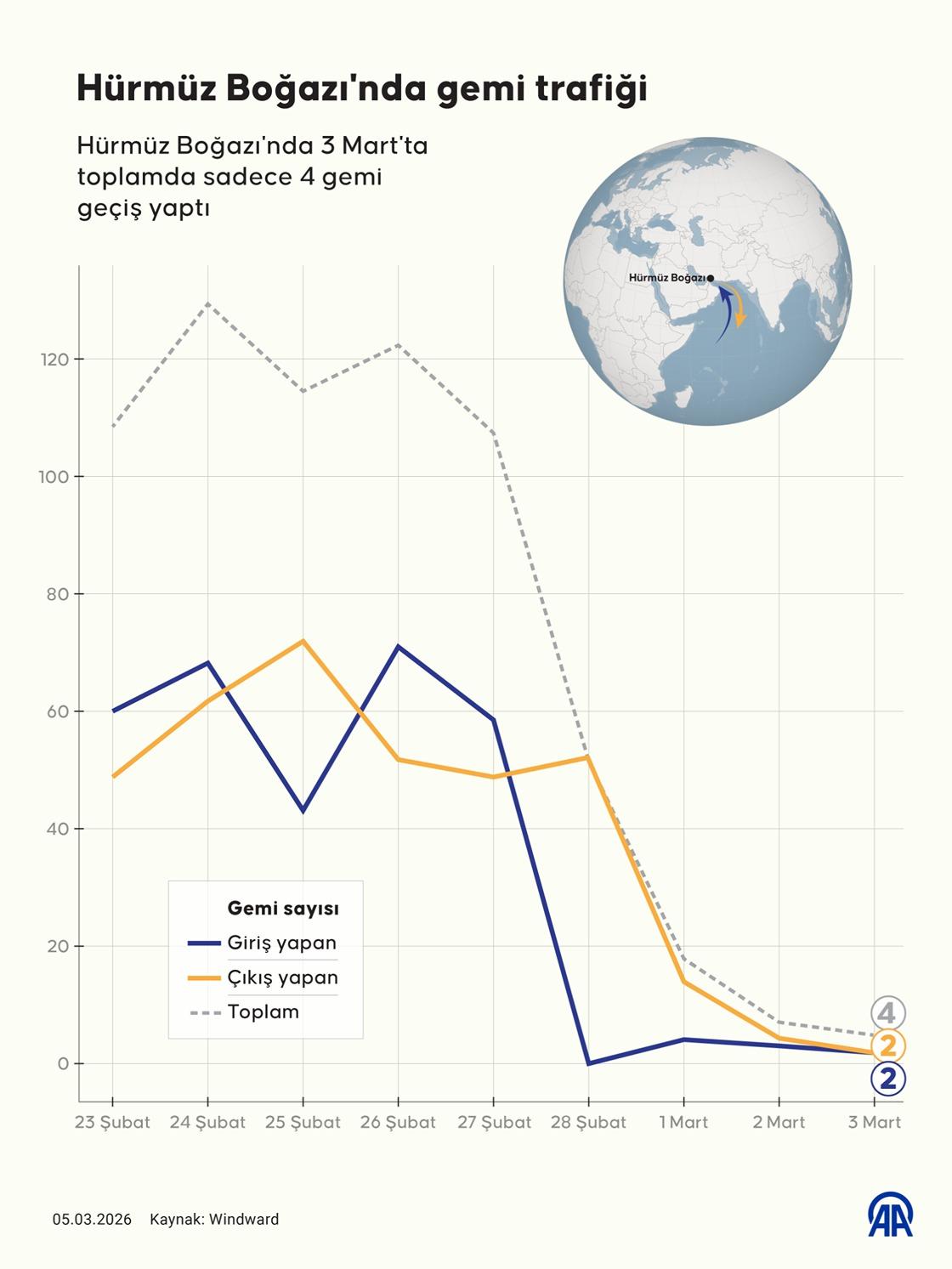
Vessel traffic in the Hormuz Strait, 5 March 2026 - (Anadolu Ajansı)
According to MarineTraffic data, crude oil tanker traffic through the Hormuz Strait on the same dates had also declined by 90 percent compared to pre-attack levels.
3 March 2026, European gas prices rose by more than 100 percent following the closure of the Hormuz Strait and the shutdown of production at a liquefied natural gas (LNG) facility owned by Qatar Energy.
It was reported that one of the unmanned aerial vehicles launched from Iran targeted the Qatar Energy LNG production facility in Ras Laffan Industrial City, prompting the company to halt LNG production. The inability to export LNG through the strait, combined with the shutdown of production at Qatar—a critical hub in global LNG supply—accelerated the rise in European gas prices.
At the Netherlands-based virtual natural gas trading hub TTF, the price for April futures contracts rose to €65.5 per megawatt-hour as of 3 March 2026. Prior to the U.S.-Israeli attacks, prices had closed at €31.95 per megawatt-hour on 27 February 2026.
According to these figures, European gas prices had surpassed a 100 percent increase compared to pre-attack levels, with a 47 percent increase recorded within the same day compared to the previous close.
3 March 2026, U.S. President Donald Trump announced that the U.S. Navy would escort tankers transiting the Hormuz Strait if necessary.
In a social media post, Trump stated he had directed the U.S. International Development Finance Corporation (DFC) to immediately provide political risk insurance and guarantees for all maritime trade through the Gulf, particularly energy shipments. This measure was stated to apply to all shipping companies.
In his statement, Trump used the following words: “If necessary, the U.S. Navy will begin escorting tankers through the Hormuz Strait as soon as possible.”
4 March 2026, the Islamic Revolutionary Guard Corps announced that it had struck more than ten oil tankers attempting to transit the Hormuz Strait in defiance of its declared transit ban.
According to a report by the semi-official Fars News Agency, citing the IRGC, tankers that ignored repeated warnings about the strait’s insecurity had been targeted with various munitions and rendered inoperable.
The report stated that the Hormuz Strait was under wartime conditions, with vessels vulnerable to damage from missiles or unguided drones. It therefore advised vessels not to transit the area.
On 4 March, Deputy Commander of the IRGC Navy, Mohammad Ekberzade, stated that the Hormuz Strait was under “full control.” Speaking to Fars News Agency, Ekberzade said that after Iran declared a transit ban, passage for oil, commercial and fishing vessels through the strait was no longer possible.
Ekberzade, in his message to global maritime traffic, stated that the Hormuz Strait was entirely under wartime conditions and vessels risked damage from rockets or unmanned aerial vehicles. He therefore urged vessels not to transit the area.
Ekberzade confirmed that more than ten oil tankers had been targeted and destroyed with various munitions and added: “At this moment, the Hormuz Strait is under the full control of the Iranian Navy.”
On 5 March, Deputy Commander of the IRGC’s Hatem al-Anbiya Headquarters, Kiyomers Haydari, argued that the Hormuz Strait had not been closed.
Speaking to Iranian state television, Haydari said criticisms claiming Iran had closed the strait misrepresented the facts. He stated: “Criticism that we closed the Hormuz Strait misrepresents the truth. We did not close it; the United States closed it. The Hormuz Strait is a minor element of our war. We have many other options. We did not close the Hormuz Strait; vessels complying with international protocols continue their passage.” Haydari affirmed that vessels adhering to international protocols were continuing transit.
On the same day, the Islamic Revolutionary Guard Corps announced that a U.S. oil tanker in the Persian Gulf had been struck by a missile. The IRGC Navy reported that the U.S. oil tanker, struck by a missile in the northern Persian Gulf, had caught fire and continued to burn.
The IRGC asserted that control over transit through the Hormuz Strait during wartime belonged to Iran. The statement declared that no transit permission would be granted to military or commercial vessels belonging to the United States, Israel, European countries or their supporters; such vessels would be targeted if detected.
On 5 March 2026, maritime workers in Greece went on a 24-hour strike due to Greek seafarers trapped in the Hormuz Strait. Led by the Maritime Federation, protesters gathered in front of the Greek Shipowners’ Association in Athens and marched to the Ministry of Maritime Affairs and Island Policy. Protesters demanded the safe return of Greek seafarers in the region and called on the Greek government not to intervene in the attacks launched by the United States and Israel against Iran on 28 February 2026.
Maritime transport across the country was suspended for 24 hours as part of the strike. Greek Deputy Minister of Maritime Affairs and Island Policy Stefanos Gikas, in a parliamentary statement, reported that 32 vessels flying the Greek flag were located in the Hormuz Strait, Oman Gulf and surrounding areas, with the total number of vessels linked to Greece reaching 160.
On 5 March, Iran’s Permanent Mission to the United Nations (UN) announced that the claim that Iran had closed the Hormuz Strait was baseless and absurd. The statement read: “The claim that Iran closed the Hormuz Strait is baseless and absurd. Iran continues to uphold its commitment to international law and freedom of navigation. In reality, it is the United States that is endangering maritime security.”
The same statement claimed that Iran’s Dena frigate had been sunk by the United States. It stated that the frigate, while visiting Indian naval forces approximately 2,000 nautical miles from Iranian coasts in international waters, was struck without warning by a U.S. submarine and sunk, resulting in the deaths of over 100 sailors. The statement added: “This reckless attack violates the fundamental principles of international law and freedom of navigation.”
On 5 March 2026, the price of Brent crude oil rose above $85 per barrel on international futures markets. Brent crude, which had closed at $81.40 the previous day, rose approximately 5.4 percent to $85.82 by 22:18 local time. At the same time, West Texas Intermediate (WTI) crude traded at $81.41 per barrel.
The price increase was linked to heightened risks to energy production, oil shipments and maritime transport due to escalating conflict between the United States, Israel and Iran. It was reported that a facility owned by Bahrain’s national oil company had been targeted in a retaliatory strike from Iran, and an attack had been carried out against a U.S.-owned oil tanker at the Hor al-Zubair Port in Basra, Iraq. Technically, $87.42 per barrel was seen as resistance and $82.83 per barrel as support for Brent crude.
Al Jazeera. "IRGC Says Iran in Complete Control of Strait of Hormuz Amid Trump Threats." Al Jazeera, March 4, 2026. Accessed March 5, 2026. https://www.aljazeera.com/news/2026/3/4/irgc-says-iran-in-complete-control-of-strait-of-hormuz-amid-trump-threats
Anadolu Ajansı. "ABD Başkanı Trump: Gerekirse ABD Donanması Hürmüz Boğazı’ndan Geçen Tankerlere Refakat Edecek." Accessed March 5, 2026. https://www.aa.com.tr/tr/dunya/abd-baskani-trump-gerekirse-abd-donanmasi-hurmuz-bogazindan-gecen-tankerlere-refakat-edecek/3848894
Anadolu Ajansı. "ABD ve İsrail İran’a Saldırı Başlattı." Accessed March 5, 2026. https://www.aa.com.tr/tr/dunya/abd-ve-israil-iran-a-saldiri-baslatti/3842503
Anadolu Ajansı. "ABD-İsrail Saldırıları ve İran’ın Misillemeleri Sürüyor." Accessed March 5, 2026. https://www.aa.com.tr/tr/dunya/abd-israil-saldirilari-ve-iranin-misillemeleri-suruyor/3844574
Anadolu Ajansı. "Avrupa’da Gaz Fiyatlarındaki Artış Yüzde 100’ü Aştı." Accessed March 5, 2026. https://www.aa.com.tr/tr/ekonomi/avrupada-gaz-fiyatlarindaki-artis-yuzde-100u-asti/3848144
Anadolu Ajansı. "BFMTV: Fransız Charles de Gaulle Uçak Gemisi Doğu Akdeniz’e Gönderildi." Accessed March 5, 2026. https://www.aa.com.tr/tr/dunya/bfmtv-fransiz-charles-de-gaulle-ucak-gemisi-dogu-akdenize-gonderildi/3845610
Anadolu Ajansı. "Hürmüz Boğazı’nda Bazı Gemilerin U Dönüşü Yaptığı Görüldü." Accessed March 5, 2026. https://www.aa.com.tr/tr/dunya/hurmuz-bogazinda-bazi-gemilerin-u-donusu-yaptigi-goruldu/3844098
Anadolu Ajansı. "Hürmüz Boğazı’nda Gemi Geçişi Yüzde 90 Azaldı, Ümit Burnu’nda Trafik Artıyor." Accessed March 5, 2026. https://www.aa.com.tr/tr/dunya/hurmuz-bogazinda-gemi-gecisi-yuzde-90-azaldi-umit-burnunda-trafik-artiyor/3850867
Anadolu Ajansı. "Hürmüz Boğazı’nda Petrol Sevkiyatı Sert Düştü, Yüzlerce Tanker Boğazın İki Yakasında Birikti." Accessed March 5, 2026. https://www.aa.com.tr/tr/dunya/hurmuz-bogazinda-petrol-sevkiyati-sert-dustu-yuzlerce-tanker-bogazin-iki-yakasinda-birikti/3846212
Anadolu Ajansı. "Hürmüz Boğazı’nın Kapanmasıyla Körfeze ve Körfezden Deniz Trafiği Durdu." Accessed March 5, 2026. https://www.aa.com.tr/tr/ekonomi/hurmuz-bogazinin-kapanmasiyla-korfeze-ve-korfezden-deniz-trafigi-durdu/3848106
Anadolu Ajansı. "Sigorta Şirketleri İran ve Basra Körfezi’ndeki Gemiler İçin Savaş Riski Sigortalarını İptal Ediyor." Accessed March 5, 2026. https://www.aa.com.tr/tr/ekonomi/sigorta-sirketleri-iran-ve-basra-korfezindeki-gemiler-icin-savas-riski-sigortalarini-iptal-ediyor/3846362
Anadolu Ajansı. "Tahran’da Yeni Patlamalar Meydana Geldi, İran Tarafından İsrail’e Füze Saldırısı Başlatıldı." Accessed March 5, 2026. https://www.aa.com.tr/tr/dunya/tahranda-yeni-patlamalar-meydana-geldi-iran-tarafindan-israile-fuze-saldirisi-baslatildi/3850664
Anadolu Ajansı. "Tahran’da Yeni Patlamalar Meydana Geldi, İran’ın Körfez Ülkelerine Misilleme Saldırıları Devam Ediyor." Accessed March 5, 2026. https://www.aa.com.tr/tr/dunya/tahranda-yeni-patlamalar-meydana-geldi-iranin-korfez-ulkelerine-misilleme-saldirilari-devam-ediyor/3848480
Anadolu Ajansı. "İngiltere Deniz Ticaret Örgütü: Hürmüz Boğazı’nda Güvenlik Riski En Üst Seviyede." Accessed March 5, 2026. https://www.aa.com.tr/tr/dunya/ingiltere-deniz-ticaret-orgutu-hurmuz-bogazinda-guvenlik-riski-en-ust-seviyede/3845678
Anadolu Ajansı. "İran Basını: ABD-İsrail Saldırısında Tahran’daki Gandi Hastanesi Hedef Alındı." Accessed March 5, 2026. https://www.aa.com.tr/tr/dunya/iran-basini-abd-israil-saldirisinda-tahrandaki-gandi-hastanesi-hedef-alindi-/3845209
Anadolu Ajansı. "İran Devrim Muhafızları Ordusu: Hürmüz Boğazı Kapatıldı." Accessed March 5, 2026. https://www.aa.com.tr/tr/dunya/iran-devrim-muhafizlari-ordusu-hurmuz-bogazi-kapatildi/3847104
Anadolu Ajansı. "İran’dan İsrail’e Yeni Füze Saldırı Dalgası Başlatıldı." Accessed March 5, 2026. https://www.aa.com.tr/tr/dunya/irandan-israil-e-yeni-fuze-saldiri-dalgasi-baslatildi/3849167
Anadolu Ajansı. "İran’ın Fiilen Kapattığı Hürmüz Boğazı Küresel Enerji Ticaretinin Gerçekleştiği Stratejik Geçitlerden Biri." Accessed March 5, 2026. https://www.aa.com.tr/tr/dunya/iranin-fiilen-kapattigi-hurmuz-bogazi-kuresel-enerji-ticaretinin-gerceklestigi-stratejik-gecitlerden-biri/3845599
Axios. "Iran War and Strait of Hormuz Shutdown Could Hit US and Global Economy." Axios, March 5, 2026. Accessed March 5, 2026. https://www.axios.com/2026/03/05/iran-war-strait-of-hormuz-shutdown-us-global-economy
BBC News. "Strait of Hormuz: What Happens If Iran Shuts Global Oil Corridor?" BBC News, March 5, 2026. Accessed March 5, 2026. https://www.bbc.com/news/articles/c78n6p09pzno
Reuters. "Iran Could Disrupt Strait of Hormuz with Drones for Months." Reuters, March 4, 2026. Accessed March 5, 2026. https://www.reuters.com/business/aerospace-defense/iran-could-disrupt-strait-hormuz-with-drones-months-2026-03-04/
On March 6, 2026, U.S. Treasury Secretary Scott Bessent announced the issuance of a 30-day temporary exemption allowing Indian refineries to purchase Russian crude oil. In a social media post, Bessent stated that President Donald Trump’s energy agenda had resulted in the country’s oil and natural gas production reaching unprecedented levels and added, “To ensure the continued flow of oil into global markets, the Treasury Department is issuing a 30-day temporary exemption permitting Indian refineries to purchase Russian crude oil.””
Bessent emphasized that the measure was deliberately short-term and applied only to transactions involving oil already stranded at sea. He noted that this would not provide significant financial benefit to the Russian government. Bessent also underscored India’s importance as a key partner of the United States and added, “We expect New Delhi to increase its purchases of U.S. oil. This temporary measure will alleviate the pressure caused by Iran’s attempt to hold global energy hostage.””
On March 6, 2026, Qatar announced that its stockpiles of food and medical supplies remain at sufficient levels following the near-halt of transit through the Strait of Hormuz.
A written statement by the Qatari Ministry of Interior confirmed that stockpiles across the country are adequate and that markets and healthcare institutions continue to operate normally.
The statement included the assertion that “Food and medical supply stockpiles are at sufficient levels to ensure continuity of supply and meet public needs in accordance with approved emergency plans.” A call for common sense was issued to citizens and residents, with emphasis placed on the importance of maintaining market stability.
In its public statement, Qatar added, “We urge the public to avoid hoarding, to act responsibly, and to contribute to market stability by continuing prudent consumption.””
On March 6, 2026, U.S. Energy Secretary Chris Wright responded to a question about whether the U.S. Navy would escort tankers through the Strait of Hormuz with the reply: “As soon as possible.”
Wright stated that the focus of U.S. military assets is “to suppress Iran’s capacity to harm its neighbors and Americans in the region.” He added, “Therefore, we must first significantly reduce their ability to cause trouble. Then, as soon as feasible, we will allow ships to pass through the strait and restore energy flows.”
When asked why the United States permitted India to import Russian crude oil, Wright described it as a pragmatic step and stated: “This is not a change in policy toward Russia. However, there are many Russian oil tankers near Indian refineries in South Asia. India and all Asian countries rely heavily on oil transported through the Strait of Hormuz. The problem is here. We seek pragmatic solutions to ensure refineries can continue operating.”
Wright noted that shipping American oil to the region takes longer and confirmed that decisions had been made to transport some of the “floating barrels” currently in the market to refineries.
Regarding the duration of gasoline price declines, Wright said: “I think it will last at most a few weeks, not months.” In the same statement, he assessed: “Iran has caused energy price spikes for 47 years, throughout the entire history of its regime. Right now we are experiencing a brief interruption as we finally put an end to their ability to destroy, kill Americans, and terrorize neighbors.”
In response to whether the U.S. administration was considering reopening nuclear facilities to reduce energy costs, Wright replied: “Absolutely.”
On March 6, 2026, Iran’s General Staff Spokesperson, Brigadier General Ebulfazl Shikarchi, stated on state television that Iran was not targeting regional countries in relation to the situation in the Strait of Hormuz and that operations were directed solely at the United States and Israel. Shikarchi said: “We have not closed the Strait of Hormuz and we will not close it.” He added that the strait is a vital route for global trade and that Iran places great importance on the security of this international waterway.
The Iranian general stated that transit through the strait would not be blocked, but that security could not be guaranteed under wartime conditions. He declared: “We will not permit two types of vessels to pass through the Strait of Hormuz: those affiliated with the American and Zionist regimes. If they attempt to pass, they will be targeted. Only two flags are not allowed to pass: the American flag and the Zionist flag. Other countries may sail under any flag they choose.”
Referring to U.S. President Donald Trump’s statement about sending U.S. escorts for vessels in the Strait of Hormuz, Shikarchi said: “Iran welcomes and looks forward to the presence of U.S. forces escorting oil tankers and facilitating passage through the Strait of Hormuz.”
Shikarchi affirmed that Iran would continue targeting U.S. and Israeli forces without restriction and warned: “More advanced weapons will soon be used.” He noted that further details regarding an incident at a U.S. base in Bahrain were expected to be released the next day. The Iranian general added: “Our attacks against the United States and the Zionist regime will increase daily. We will reveal more surprises for the United States and the Zionist regime.”
On March 7, 2026, Iran announced that an oil tanker, the “Prima,” had been struck by an unmanned aerial vehicle (UAV) in the Strait of Hormuz for “ignoring repeated warnings.” The Islamic Revolutionary Guard Corps (IRGC) stated that despite repeated warnings from the Iranian Navy that the Strait of Hormuz was unsafe and closed to traffic, the tanker attempted to pass through and was targeted by a UAV. The statement emphasized that the attack occurred due to the vessel’s disregard of prior warnings.
The earlier statements by IRGC Spokesperson Brigadier General Ebulfazl Shikarchi regarding vessel transit through the Strait of Hormuz were again brought into focus. Shikarchi reiterated: “We will not permit two types of vessels to pass through the Strait of Hormuz: those affiliated with the American and Zionist regimes. If they attempt to pass, they will be targeted. Only two flags are not allowed to pass: the American flag and the Zionist flag. Other countries may sail under any flag they choose.”
On March 7, 2026, U.S. Treasury Secretary Scott Bessent, in an interview with Fox Business, signaled that some sanctions on Russian crude oil could be eased as part of steps to maintain global oil supply.
Bessent recalled the 30-day temporary exemption previously granted to Indian refineries for purchasing Russian oil and praised India’s “positive stance” on energy supply. Addressing the volatility in global oil markets following U.S. and Israeli strikes on Iran and Iran’s retaliatory missile attacks, Bessent emphasized that ensuring the flow of oil to markets remained the top priority. He indicated the possibility of lifting certain sanctions on Russian oil and noted that additional measures to safeguard global supply were under review.
On March 7, 2026, Iran announced that the oil tanker “Louise P,” flying the flag of the Marshall Islands, had been struck in the Persian Gulf “on the grounds that it was owned by the United States.” According to the IRGC statement, the vessel was targeted by a UAV on the afternoon of March 7 by the IRGC Navy. The statement confirmed that the ship was attacked because it was deemed a U.S.-affiliated asset. The IRGC had previously declared that all U.S. and Israeli assets in the region were legitimate targets.
On March 9, 2026, South Korean President Lee Jae Myung issued directives to accelerate measures to ensure energy supply security following the escalation of tensions in the Middle East due to U.S. and Israeli attacks on Iran.
In an inter-ministerial meeting, Lee stated: “As the crisis in the Middle East deepens, uncertainty in the local and global economic environment is expanding significantly, posing a serious burden on the South Korean economy, which relies heavily on energy imports and trade from the Middle East.” He noted that the situation’s trajectory was unpredictable and added: “The government must prepare preventive measures with a sense of urgency, even accounting for worst-case scenarios.”
Lee instructed the government and the Bank of Korea to prepare for “instability” in foreign exchange markets and indicated that the market stabilization program, worth approximately $67 billion (100 trillion won), could be expanded if necessary. On energy supply, Lee said: “We will cooperate with our strategic partners to immediately explore alternative routes that do not require passage through the Strait of Hormuz.”
Lee also demanded strict measures against secret agreements, price manipulation, and stockpiling between refineries and gas stations, calling for stringent penalties and the introduction of a ceiling price system for gasoline and diesel.
On March 9, 2026, U.S. President Donald Trump, speaking to journalists aboard Air Force One, said he was not concerned about rising gasoline prices amid ongoing U.S. and Israeli attacks on Iran and Iran’s retaliatory strikes.
In response to questions about concerns over gasoline prices, Trump replied: “No, this is just a short trial of something that should have been done 47 years ago. It took 47 years to do this, and no president had the courage to do it.”
Regarding maritime traffic in the Strait of Hormuz, Trump stated that ships in the region had joined the U.S. effort, though operations were not yet complete, and added: “We destroyed their navy. Their fleet is now at the bottom of the sea. This is a choice.”
Trump acknowledged that oil prices could rise but defended the expectation that they would “fall very quickly.” He also said: “What we are doing is not just great for our country, Israel, and the Middle East—it is great for the entire world.” He noted that the United States possesses “a tremendous amount of oil” that has not yet been used and assessed: “There is a lot of oil outside. This will improve very quickly.”
The rising military tensions following U.S. and Israeli attacks on Iran have affected not only security balances in the Persian Gulf but also cruise tourism and transportation sectors. The closure of airspaces, disruptions at ports, and security risks in the Strait of Hormuz have transformed into a direct threat to international travel and maritime tourism.
Thousands of passengers aboard at least six cruise ships docked at ports in Dubai, Abu Dhabi, and Doha have been unable to disembark, while the suspension of air traffic has left their return home uncertain. The prolonged anchoring of these vessels has increased operational costs for shipping companies, and canceled voyages and refunds have created financial burdens.
With the season nearing its end, the inability to reposition ships to European waters has raised the risk of cascading disruptions to Mediterranean and European cruise programs during the summer months. It was noted that if the military tension persists, the Gulf region could suffer significant losses in tourism revenue, particularly affecting economic activities centered on cruise tourism and air transport.
American cruise tourism expert Stewart Chiron stated that the six cruise ships operating in the Persian Gulf had headed toward Abu Dhabi and Dubai seeking safe ports. Chiron noted that companies were working to ensure passenger and vessel safety and added: “Ships will depart from ports once it is deemed safe to return to sea. Future voyages in the region have been canceled.”
Chiron also indicated that the current season in the Gulf region had effectively ended and noted that cruise companies could reposition their vessels to alternative destinations if deemed safe, adjusting their programs accordingly. Future season planning, he said, would depend on how the situation in the region unfolds.
On March 9, 2026, the Bangladeshi government decided to initiate the Ramadan holiday early at universities as part of conservation measures against an electricity and fuel crisis triggered by global developments.
According to a report in the Daily Star newspaper, Dhaka authorities took preventive steps in response to the potential for geopolitical developments to trigger a global electricity and fuel crisis. Under a directive issued by the Ministry of Education, the Ramadan holiday began on March 9 at all public and private universities. The directive also requested universities to keep doors and windows open during daylight hours when natural light is sufficient, turn off all unnecessary lights and electrical appliances, and limit vehicle usage.
On March 9, 2026, Tamaki Yuiichiro, leader of Japan’s Democratic Party for the People (Kokumin), drew attention to the impact of the war in the Middle East on energy prices and called for the immediate full-capacity operation of all nuclear power plants in Japan.
Tamaki stated that the expanding conflict between the United States and Israel and Iran poses a serious threat to Japan’s energy supply. He noted that Japan obtains approximately 95 percent of its oil and 11 percent of its liquefied natural gas (LNG) imports from the Middle East. He emphasized that the effective closure of the Strait of Hormuz due to the conflict has heightened risks.
In his statement, Tamaki said: “As tensions in Iran rise, we must fully utilize nuclear plants as carbon-free energy sources to reduce dependence on foreign supplies; otherwise, electricity price hikes are inevitable. A policy change is necessary to protect the livelihoods of the people.”
On March 9, 2026, the United Kingdom-based automotive service organization, the Royal Automobile Club (RAC), urged drivers to use fuel more efficiently in response to rising fuel prices following the halt in oil trade through the Strait of Hormuz.
Due to escalating conflicts in the Middle East and threats to energy shipments through the Strait of Hormuz, the price of Brent crude oil has exceeded $100 per barrel. The disruption of shipments through the Strait of Hormuz, which accounts for approximately 20 percent of global oil supply, has impacted global fuel prices.
RAC Policy Director Simon Williams noted that average gasoline and diesel prices had risen rapidly in recent days and reported that gasoline prices have increased by about 4 percent since February 28 and diesel prices by 6.3 percent. Williams advised drivers to continue purchasing fuel normally but to compare prices between stations. The statement emphasized that avoiding harsh acceleration and braking and maintaining proper tire pressure could contribute to fuel savings.
On March 9, 2026, at a Eurogroup meeting in Brussels, the economic impacts of the conflict in the Middle East and rapidly rising oil prices were discussed. European Commission Vice President for Economy Valdis Dombrovskis said: “The focus of the Eurogroup meeting will be the economic impact of the conflict in the Middle East.” Dombrovskis noted that the economic impact would depend on the duration and regional spread of the conflict.
Dombrovskis warned that prolonged disruptions in shipping through the Strait of Hormuz and continued attacks on Gulf energy infrastructure could trigger a stagflation shock in the global and European economies, leading to higher energy prices, increased inflation, loss of confidence, supply chain disruptions, and tighter financing conditions.
Dombrovskis identified the primary channel of economic impact as disruptions in energy supply and price increases, noting that one of the key options under consideration is the release of strategic oil reserves.
On the same day, Ali Laricani, Secretary of Iran’s Supreme National Security Council, addressed the disruptions in maritime traffic through the Strait of Hormuz. Laricani stated that the conflicts in the Strait of Hormuzand the disruption of shipping were caused by themilitary activities of the United States and Israelin the region. He stated: “It is impossible to ensure security in the Strait of Hormuz due to the war ignited by the United States and Israel. This is precisely the plan of those who have actively supported this war.”
Russian President Vladimir Putin, noting that the closure of the Strait of Hormuz could lead to a complete halt in regional oil production, said that Russia is ready to resume energy cooperation with Europe.
Putin spoke during a meeting with Russian government officials in Moscow on recent developments in the energy sector. He pointed out that oil prices had risen by 30 percent in a week due to developments in the Middle East, saying: “We must understand that current high commodity prices are certainly temporary. This is very clear.” He emphasized that Russian companies must take advantage of the current high energy prices.
Putin noted that Europe had planned to completely halt imports of Russian natural gas and stated that Russia could have similarly suspended gas shipments to Europe in the past. He drew attention to the closure of the Strait of Hormuz, saying: “Oil production dependent on this route could cease entirely next month.” Putin affirmed that Russia continues to supply energy to reliable partners and added: “If European companies decide to offer long-term, sustainable, politically independent cooperation with us, we are ready to work with Europeans.” He added that a signal from Europe was required for such cooperation to proceed.
U.S. President Donald Trump, in a telephone interview with American CBS News, assessed the course of the war with Iran. Trump stated that he believed the United States had largely achieved its objectives in the war with Iran, saying: “I think the war is largely over. Their navy is gone, their communication systems are gone, their air force is gone.” He claimed that the initial goals set for Iran had been reached far sooner than the originally projected four to five weeks.
Regarding Iran’s new leader, Mucteba Hamaney, Trump said: “I have nothing to say to him. Nothing.” He indicated he was considering who might succeed Hamaney but provided no details.
On the Strait of Hormuz, Trump said he was considering taking control of the strait and warned Iran: “They have fired everything they had. It would be better if they stop trying to be nice, otherwise their country will come to an end.”
On the evening of March 9, Pakistani Prime Minister Shehbaz Sharif announced a two-month period of conservation measures to counter the economic impact of the conflict between the United States, Israel, and Iran.
Sharif stated that over the next two months, fuel allowances for official vehicles would be reduced by 50 percent and 60 percent of government-owned vehicles would be taken out of service. Cabinet members would forgo their salaries for two months, and members of parliament would face a 25 percent salary cut. Government department expenditures would be reduced by 20 percent, and official foreign travel by government officials would be banned except where deemed necessary for national interests.
Sharif announced that 50 percent of civil servants, excluding essential services, would work from home, government offices would operate four days a week, and all higher education institutions would begin online instruction. He confirmed that these directives had been sent to all provincial governments.
Sharif noted that the global oil market had reacted sharply to the conflict, saying: “The international price of crude oil suddenly rose from $60 to over $100. Daily life in Pakistan is heavily dependent on oil and gas supplies from the Gulf region.”
In a written statement issued in the early hours of March 10, the Islamic Revolutionary Guard Corps announced that Arab or European countries that have expelled Israeli and U.S. ambassadors from their territory may transit through the Strait of Hormuz. The statement read: “Any Arab or European country that has expelled Israeli and U.S. ambassadors from its territory will have full authority and freedom to transit through the Strait of Hormuz.”
At the same time, in a press conference in Miami, Trump addressed rising energy prices, saying: “We are also lifting some oil-related sanctions to bring prices down.” Regarding maritime traffic in the Strait of Hormuz, Trump said: “We are focused on maintaining the flow of energy and oil to the world and will not allow a terrorist regime to hold the world hostage and attempt to stop global oil supply. If Iran tries to do this, it will face a much harsher response.”
Trump argued that in the long term, oil supply would become safer without Iranian ships, UAVs, missiles, or nuclear threats, and asserted that the Strait of Hormuz would remain open. He noted that the disruption of shipping in the strait affected not only the United States but also other countries, including China.
Trump stated that the United States possesses more oil and gas reserves than it needs, noting that 100 million barrels of oil had been extracted from Venezuela so far and another 100 million barrels were expected. Trump said: “We will lift sanctions until the Strait of Hormuz reopens. Then, who knows, perhaps we will not need to impose sanctions at all.” He noted that oil prices had risen less than anticipated. When asked about the sanctions to be lifted, Trump emphasized that the U.S. was working to keep prices low and stated that prices had been artificially inflated. He added: “I knew prices would rise if I did this, and they did rise—but probably less than I expected. But I don’t think anyone anticipated we would succeed this quickly.”
Later that day, in a social media post, Trump said: “If Iran takes any action to stop the flow of oil through the Strait of Hormuz, it will be hit 20 times harder than anything it has ever seen from the United States.”
Trump stated that if Iran takes such a step, the United States will strike targets that are “easily destroyable,” arguing that this would make Iran’s reconstruction as a nation nearly impossible. Trump also declared that keeping the Strait of Hormuz open is an “American gift” to countries heavily reliant on it, especially China.
IRGC Spokesperson Ali Muhammad Naini responded to U.S. President Donald Trump’s assertion that Iran’s military power had been eliminated. In a statement broadcast on Iranian state television, Naini accused Trump of attempting to apply psychological pressure on Iran through “lies and deception” and said: “Iran is resisting the attacks of the United States and Israel with brave and strong resolve. We are continuing the war with all our strength, and Iran will determine the end of this war.”
Naini claimed that all U.S. military infrastructure in the region had been destroyed and added: “Iran’s armed forces are waiting for the U.S. navy and the USS Gerald Ford aircraft carrier in the Strait of Hormuz.” He also stated: “Trump started the war by lying to the American people. But now Iran’s responses have left him stunned and helpless.”
In a written statement by the IRGC’s Hatemul Enbiya Central Command, following Trump’s remarks, it was declared: “There is no ceasefire, and we are increasing the scale of our attacks.”
On March 10, 2026, Iran’s Foreign Minister Abbas Araghchi, in an interview with the American PBS program News Hour, assessed the possibility of renewed talks with the United States. Regarding the prospect of renewed negotiations with Americans after U.S. and Israeli attacks on Iran, Araghchi said: “I do not believe the issue of talking with Americans is even on the table, because we have had a very painful experience with them.”
Araghchi noted that during contacts between Tehran and Washington officials in February, the Americans claimed they had no intention to attack, yet the United States still launched strikes against Iran. When asked about the new Iranian leader, Mucteba Hamaney, and whether he had commented on possible new negotiations with the United States, Araghchi replied: “It is still too early.”
On oil transportation, Araghchi stated that the slowdown was not Iran’s plan, saying: “The slowdown or halt in oil transportation is not our doing—it is due to the attacks and aggression by Israelis and Americans against us. They have made the entire region insecure.” He affirmed that Iran had not closed the Strait of Hormuz, saying: “We have not closed the strait. We are not preventing them from passing through.”
Araghchi characterized U.S. and Israeli attacks as “fully illegal acts of aggression” and reaffirmed Iran’s claim that it was only defending itself, noting that they had previously warned that U.S. bases in the region would be targeted if the United States launched attacks.
On the same day, the Egyptian Ministry of Petroleum and Mineral Resources announced price increases on oil products and natural gas due to developments in the Middle East. The statement indicated that price hikes of 14 to 17 percent were applied to gasoline and diesel, 30 percent to LPG, and 22 percent to cooking gas. The decision was attributed to the direct impact of the security situation in the Middle East on global energy markets and significant increases in import and domestic production costs.
The statement highlighted that disruptions in the supply chain, rising risk levels, and increased transportation and insurance costs had caused a “price surge unseen in years” in global crude oil and oil products.
On March 10, the Vietnamese Ministry of Industry and Trade called for conservation measures in response to pressure on fuel supplies due to tensions in the Middle East. The ministry warned that fuel shortages could occur in some areas and advised citizens to use fuel efficiently, reduce travel, prefer public transportation, and consider working from home where possible. Businesses were also urged to adopt remote work arrangements.
The statement noted that neighboring countries had implemented similar conservation measures and emphasized that the public and businesses should avoid panic and refrain from stockpiling.
The Thai government decided to implement conservation measures in public institutions due to pressure on fuel supplies from tensions in the Middle East. According to the Bangkok Post, employees in government agencies, excluding essential public services, were instructed to work from home. Official international conferences and trips were also suspended.
The Ministry of Energy advised public and private sector employees to turn off unnecessary electrical devices, reduce elevator and photocopier usage, and promote virtual meetings.
On March 10, Iran announced that it had granted permission for Bangladeshi oil and liquefied natural gas (LNG) tankers to transit the Strait of Hormuz safely. According to The Business Standard, as the conflict in the Middle East threatened shipping in the Strait of Hormuz, Dhaka authorities requested assurances from Iran regarding the safe passage of Bangladeshi-flagged tankers. Iran agreed to permit safe passage for Bangladeshi oil and LNG tankers, provided they notify authorities before entering the strait.
The development followed energy cooperation and maritime transport talks between Bangladeshi and Iranian officials in Dhaka. Officials from the Energy and Mineral Resources Unit under Bangladesh’s Ministry of Power, Energy, and Mineral Resources confirmed the development.
It was also reported that India and China had expressed readiness to support Bangladesh’s fuel supply. Bangladesh’s Finance Minister Amir Khasru Mahmud Chowdhury said: “We have reached out to several countries—not just India and China—to secure fuel supply and maintain communication. There is no reason for a fuel crisis.” China’s Ambassador to Dhaka, Yao Wen, stated that China would work with Bangladesh to resolve energy supply issues and was willing to provide fuel assistance.
Iran’s Supreme National Security Council Secretary General Ali Laricani issued a statement regarding the Strait of Hormuz, which had been declared closed to U.S.-linked vessels. In a social media post, Laricani said: “The Strait of Hormuz will either be a strait of peace and prosperity for all or a strait of defeat and suffering for those who provoke war.”
On the same day, U.S. Defense Secretary Pete Hegseth and U.S. Chairman of the Joint Chiefs of Staff General Dan Caine held a joint press conference. General Caine stated that the United States had three primary military objectives and affirmed that Iran’s ballistic missiles and UAVs would continue to be destroyed to prevent attacks on the United States and other countries in the region.
Caine stated that command and control centers would be targeted, saying: “We continue targeting the Iranian Navy to ensure continued passage through the Strait of Hormuz.” Caine revealed that U.S. Central Command (CENTCOM) had struck over 5,000 targets so far and confirmed that single-direction UAV factories had also been targeted.
On March 10, White House Press Secretary Karoline Leavitt, when asked when U.S. operations against Iran would end, said: “The operations will end when the President determines that military objectives have been fully achieved and that Iran has reached a point of unconditional surrender, whether or not they say so.” She noted that the U.S. was ahead of the previously stated four- to six-week timeline.
Leavitt confirmed that escorting vessels through the Strait of Hormuz remained an option, saying: “The U.S. Navy has not yet escorted any tanker or vessel through the strait, but this is an option. The President has clearly stated he will use this option if necessary.” She added: “The President and the energy team are closely monitoring markets, and the U.S. military is preparing additional options to keep the Strait of Hormuz open, as directed by the President.”
It was stated that a stronger response would follow if Iran took steps to halt oil flows in the Strait of Hormuz, and Tehran was warned accordingly. It was also reported that the Pentagon was investigating an incident in which a U.S. Tomahawk missile struck a school in Iran. Leavitt said: “The President has said he will accept the Pentagon’s findings on this incident, whatever they may be.”
Regarding the possibility of sending U.S. troops to Iran, Leavitt said: “The President is not ignoring the possibility of sending troops there.” On the new Iranian leadership, she said: “President Trump does not believe the new Ayatollah can live in peace and has stated in several remarks that he believes the United States must play a role in selecting Iran’s new leader.”
During the press briefing, reporters asked about reports that approximately 150 U.S. troops had been wounded in the conflict with Iran. Leavitt could not confirm an exact number but acknowledged that the figure was in that range.
On March 10, 2026, U.S. President Donald Trump stated that if Iran laid mines in the Strait of Hormuz, it would have “military consequences.” In a social media post, Trump said: “If Iran has laid any mines in the Strait of Hormuz and we have no report on this, we demand their immediate removal.”
In the same post, he added: “If mines have been laid and are not immediately removed, the military consequences for Iran will be unprecedented. On the other hand, if they remove any mines that may have been placed, it will be a major step in the right direction.”
In another statement on the issue, Trump said that some mine-laying vessels in the Strait of Hormuz had been struck and added: “I am pleased to report that we have completely destroyed 10 inactive mine-laying vessels and ships in the last few hours and will destroy more.”
According to a CNN report citing two sources familiar with intelligence assessments, Iran had reportedly begun laying mines in the Strait of Hormuz. The report claimed that “several dozen mines” had been placed in recent days and noted that Iran had the capacity to lay hundreds of mines.
Anadolu Ajansı. "ABD Başkanı Trump’tan ‘İran’la Savaş Kısa Süreli Olacak’ Mesajı." Accessed March 10, 2026. https://www.aa.com.tr/tr/dunya/abd-baskani-trumptan-iranla-savas-kisa-sureli-olacak-mesaji/3857290
Anadolu Ajansı. "ABD Enerji Bakanı Wright, Ülkede Benzin Fiyatlarının Birkaç Hafta İçinde Düşeceğini Savundu." Accessed March 7, 2026. https://www.aa.com.tr/tr/ekonomi/abd-enerji-bakani-wright-ulkede-benzin-fiyatlarinin-birkac-hafta-icinde-dusecegini-savundu/3853131
Anadolu Ajansı. "ABD Savunma Bakanı Hegseth: Bugün Yine İran İçindeki En Yoğun Saldırı Günümüz Olacak." Accessed March 10, 2026. https://www.aa.com.tr/tr/dunya/abd-savunma-bakani-hegseth-bugun-yine-iran-icindeki-en-yogun-saldiri-gunumuz-olacak/3858295
Anadolu Ajansı. "Mısır, Orta Doğu’daki Gelişmeler Nedeniyle Petrol ve Doğal Gaz Ürünlerine Yüzde 15 ila 30 Arasında Zam Yaptı." Accessed March 10, 2026. https://www.aa.com.tr/tr/ekonomi/misir-orta-dogu-daki-gelismeler-nedeniyle-petrol-ve-dogal-gaz-urunlerine-yuzde-15-ila-30-arasinda-zam-yapti/3857711
Anadolu Ajansı. "Pentagon: İran’a Saldırılarda Bugüne Kadar Yaklaşık 140 ABD Askeri Yaralandı." Accessed March 10, 2026. https://www.aa.com.tr/tr/dunya/pentagon-irana-saldirilarda-bugune-kadar-yaklasik-140-abd-askeri-yaralandi/3858767
Anadolu Ajansı. "İran Dışişleri Bakanı Erakçi: Amerikalılarla Tekrar Müzakerenin Masada Olacağını Sanmıyorum." Accessed March 10, 2026. https://www.aa.com.tr/tr/dunya/iran-disisleri-bakani-erakci-amerikalilarla-tekrar-muzakerenin-masada-olacagini-sanmiyorum/3857409
Anadolu Ajansı. "İran Ordusu: İsrail ve ABD Büyükelçilerini Sınır Dışı Eden Arap veya Avrupa Ülkeleri Hürmüz Boğazı’ndan Geçebilir." Accessed March 10, 2026. https://www.aa.com.tr/tr/dunya/iran-ordusu-israil-ve-abd-buyukelcilerini-sinir-disi-eden-arap-veya-avrupa-ulkeleri-hurmuz-bogazindan-gecebilir-/3857300
Anadolu Ajansı. "İsrail’in Tahran’a Yönelik Yeni Bir Saldırı Dalgası Başlattığını Duyurmasının Ardından Tahran’da Patlama Sesleri Duyuldu." Accessed March 7, 2026. https://www.aa.com.tr/tr/dunya/israilin-tahran-a-yonelik-yeni-bir-saldiri-dalgasi-baslattigini-duyurmasinin-ardindan-tahran-da-patlama-sesleri-duyuldu/3852321
According to a statement issued on 11 March 2026 by the United Kingdom Maritime Trade Organisation (UKMTO), an unknown object struck a cargo vessel located 25 nautical miles northwest of Ras al-Khaimah in the United Arab Emirates, causing a fire on board.
The ship’s captain reportedly stated that the vessel had sustained damage from an unknown object but that there were no casualties or injuries among the crew. The extent of the damage to the container ship is being assessed.
On the same day, the United States Central Command (CENTCOM) claimed that 16 mine-laying vessels belonging to Iran had been destroyed near the Strait of Hormuz.
CENTCOM's video claiming destruction of Iranian mine-laying vessels near the Strait of Hormuz, 11 March 2026 - (ABC7)
In a social media post by the US-based company X, CENTCOM stated that the United States had targeted numerous Iranian warships near the Strait of Hormuz one day earlier.
UK Chancellor Rachel Reeves announced that the United Kingdom is ready to release its strategic oil reserves as part of international efforts to curb rising crude oil prices.
Responding to questions from members of parliament in the Treasury Committee, Reeves stated clearly that the UK is prepared to use its strategic reserves to exert downward pressure on oil prices and ensure strong supply.
Reeves warned that tensions in the Middle East could impact the UK economy but said it was still too early to measure the scale of these effects. She noted that the UK has been less exposed to fluctuations in international energy prices compared to the period at the start of the Russia-Ukraine war because “we have invested more in domestic and renewable energy sources that are unaffected by these price swings. In the coming years, as more renewable energy sources come online and we build infrastructure to better integrate them into the grid, we will be even less affected by these fluctuations.”
On the same day, the Royal Thai Navy announced that a Thai-flagged bulk carrier had been targeted by missiles near the Strait of Hormuz.
According to the Bangkok Post, the vessel, which had departed from a port in the United Arab Emirates bound for India, was hit by two missiles shortly after passing through the Strait of Hormuz. It was reported that explosions occurred in the aft section and engine room of the ship.
Of the 23 Thai crew members on board, 20 reached an Omani port via lifeboats, while no contact has been established with the remaining three. Omani naval forces are reportedly conducting operations to reach the three missing individuals. The Royal Thai Navy stated it is maintaining necessary cooperation to ensure the safe return of all crew members to Thailand.
On 11 March, Japanese Prime Minister Takaichi Sanae announced that Japan would begin releasing its oil reserves amid concerns that tensions in the Middle East could trigger sharp increases in oil prices.
According to Kyodo News, Takaichi told journalists that oil reserves could be used as early as 16 March 2026 to counter potential price hikes in gasoline and other petroleum products.
Takaichi stated that the first phase would involve releasing 15 days’ worth of oil reserves held by the private sector, followed by the activation of 30 days’ worth of reserves under government control. He confirmed that this decision would be implemented without waiting for coordination with the International Energy Agency (IEA).
On the same day, it was reported that a container ship owned by Japan-based Mitsui O.S.K. Lines (MOL) had sustained damage in the Persian Gulf. According to MOL’s statement, damage was detected on the aft section of the container ship “One Majesty,” which was anchored approximately 97 kilometers from the Strait of Hormuz. No crew injuries were reported, and there was no flooding, fire, or oil leak on board. The company is working with relevant parties to investigate the cause of the damage.
NHK reported that the damage was not severe enough to capsize the vessel and that the ship retained its navigational capability. A spokesperson from Japan’s Ministry of Foreign Affairs stated, “It does not appear to be an attack. There is some damage, but the crew is safe and the ship’s voyage has not been disrupted.”
Chief Cabinet Secretary Minoru Kihara noted that the current situation in the Strait of Hormuz does not constitute a life-threatening condition but that the Tokyo government is monitoring developments with “serious concern.”
The South Korean government announced that it is “closely involved” in discussions led by the International Energy Agency (IEA) regarding a coordinated release of oil reserves to reduce rising oil prices.
According to Yonhap News, the Seoul administration made the statement in response to reports that the IEA was considering the largest oil reserve release in its history to lower prices.
Officials from South Korea’s Ministry of Trade, Industry and Energy confirmed their participation in the talks and stated, “We have not yet decided how much oil from our reserves will be released under the IEA’s decision.” According to the Wall Street Journal, based on official sources, IEA member countries are expected to meet on the same day to reach a decision on the proposal.
Russian President Vladimir Putin’s special envoy for international economic cooperation, Kiril Dmitriyev, stated that developments in the Middle East have triggered a fertilizer crisis and declared, “A food security crisis is next.”
As head of the Russian Direct Investment Fund, Dmitriyev cited a post on the US-based social media platform X highlighting the strategic importance of the Strait of Hormuz in global fertilizer trade. He added, “As predicted a week ago, a fertilizer crisis has now emerged. A food security crisis will follow.”
Dmitriyev also claimed that Europe is facing its largest energy crisis in history due to “strategic errors and attitudes” by European Commission President Ursula von der Leyen in the energy sector.
Iranian Islamic Revolutionary Guard Corps announced that two vessels linked to the United States and Israel were targeted by missiles while attempting to pass through the Strait of Hormuz. The IRGC statement reiterated that the Strait of Hormuz is “closed to the passage of the United States and its allies.”
The statement read: “The Express Rome, a Liberian-flagged vessel belonging to the Zionist regime, was struck by Iranian missiles this morning after ignoring naval warnings and insisting on illegally passing through the Strait of Hormuz. The container ship Mayuree Naree was also struck several hours ago by Iranian fighters.”
The statement further affirmed that the Strait of Hormuz is under Iranian control and declared that “the United States and its allies have no right to transit through this area.”
The Greek government announced it will impose price caps on profit margins for oil and food products in response to rising prices following the US and Israel’s attacks on Iran. Prime Minister Kyriakos Mitsotakis, speaking ahead of his monthly meeting with President Konstantinos Tasoulas, emphasized that developments in the Middle East have significant economic consequences for Greece. Mitsotakis announced the implementation of price caps on profit margins for oil and supermarket products.
Mitsotakis acknowledged that price increases cannot be fully prevented but said, “We are sending a clear message that this economic turmoil must not be exploited by profiteers.” Deputy Prime Minister Kostis Hatzidakis, speaking at a special press briefing, stated that the economic consequences of the situation in the Strait of Hormuz and the Middle East will be assessed jointly with other European Union countries and that decisions will be made accordingly. Hatzidakis confirmed that Greece currently faces no shortage in oil supply and added, “We will use all tools at our disposal to combat profiteering.”
Minister of Environment and Energy Stavros Papastavrou announced that a price cap on oil profit margins will be in effect until 30 June 2026. Wholesale profit will be capped at 5 cents per liter, and retail profit at gas stations at 12 cents per liter. Minister of Development and Investments Takis Theodorakis confirmed that the profit margin cap will also apply to food products, with fines of up to 5 million euros for non-compliance.
On 11 March 2026, member countries of the International Energy Agency (IEA) unanimously agreed to release 400 million barrels of strategic oil reserves, the largest amount in the agency’s history.
IEA Director Fatih Birol, speaking at the agency’s headquarters in Paris, stated that tensions in the Middle East have had major impacts on global oil and gas markets. Birol noted that approximately 15 million barrels of crude oil and 5 million barrels of petroleum products are transported daily through the Strait of Hormuz, accounting for 25 percent of global seaborne oil trade.
Birol reported that transit of oil, gas, and other commodities through the Strait of Hormuz has nearly halted. Due to insufficient alternative routes and full storage capacities, producers in the Middle East have begun cutting production. He added that energy infrastructure has also been damaged, particularly affecting jet fuel and diesel supplies.
Birol noted that difficulties are also emerging in gas markets, particularly due to limited alternatives to liquefied natural gas (LNG) shipments from Qatar and the United Arab Emirates. He stated that global energy supply has decreased by approximately 20 percent, with Asia being the region most affected by the current situation.
In his statement, Birol said, “IEA countries will release 400 million barrels of oil to compensate for the supply lost due to the de facto closure of the Strait of Hormuz. This is a critical measure aimed at mitigating the immediate disruptions in the market. However, I must be clear: the most important development for restoring stable oil and gas flows is the resumption of transit through the Strait of Hormuz.”
United States Central Command (CENTCOM) issued a warning to civilians to stay away from ports along the Strait of Hormuz used by Iran. CENTCOM claimed that Iran is using civilian ports for military operations, putting civilian lives at risk.
The statement noted that civilian ports used for military purposes lose their protected status under international law and become legitimate military targets. Iran’s civilians were urged to immediately vacate all port facilities where the Iranian Navy operates.
CENTCOM stated, “While the US military cannot guarantee the safety of civilians inside or near facilities used by the Iranian regime for military purposes, American forces will continue to take every possible measure to minimize harm to civilians.”
French President Emmanuel Macron stated that the conflicts in the Middle East, initiated by US and Israeli attacks on Iran, are producing global economic consequences, saying, “We are all facing the same global economic outcomes.”
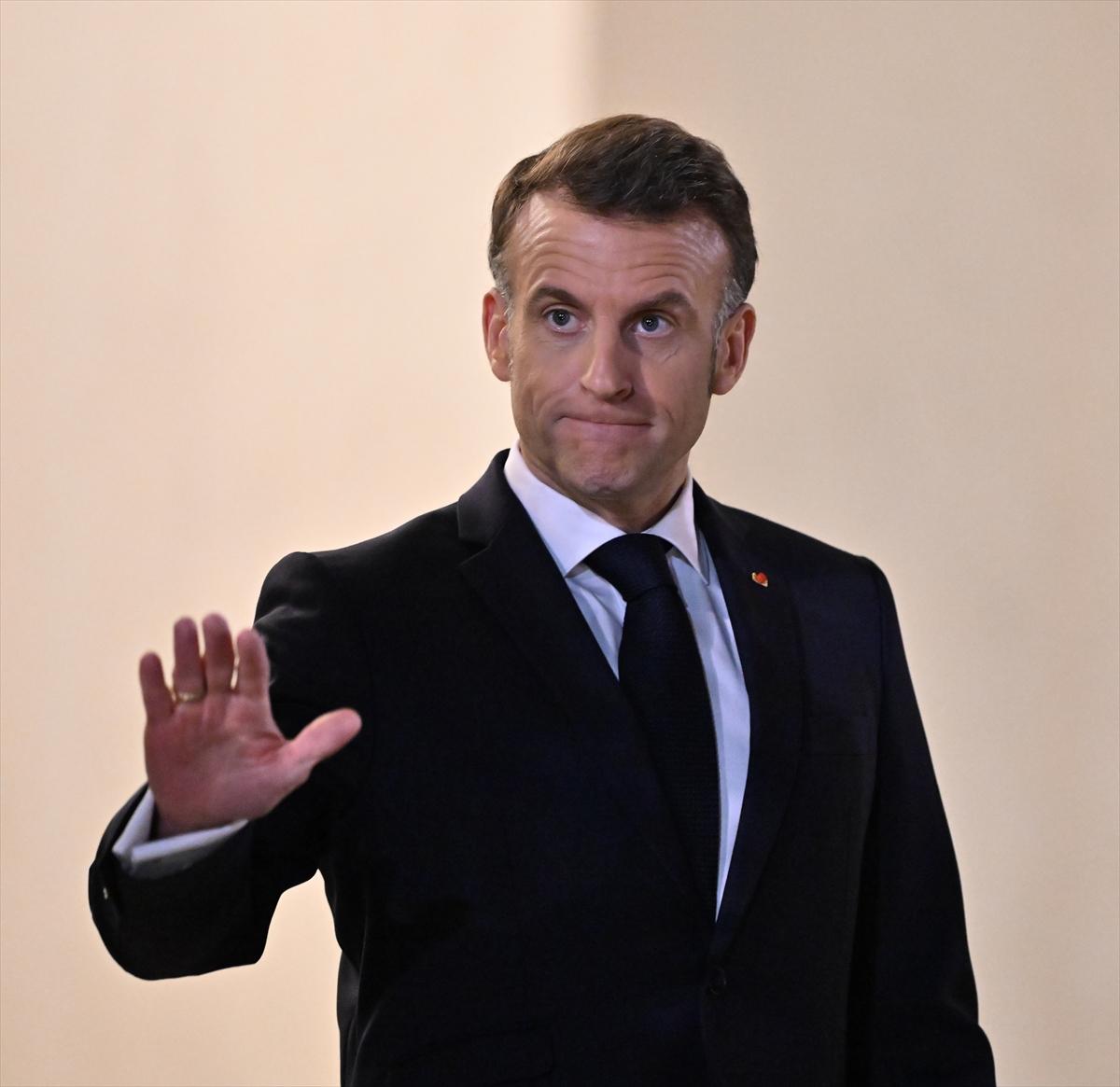
French President Emmanuel Macron - (Anadolu Ajansı)
Macron spoke at the opening of a video conference attended by G7 leaders to address the economic consequences of the Middle East conflict. He recalled that the operation targeting Iran’s nuclear and ballistic programs had entered its 11th day.
Macron outlined three key agenda items for the conference: first, an assessment of the latest developments on the ground and ongoing attacks; second, coordination to restore freedom of navigation in the Strait of Hormuz, the Red Sea, and the Bab el-Mandeb Strait; and third, discussions on economic cooperation.
On 11 March 2026, the spokesperson for the Iranian Armed Forces General Staff, Brigadier General Ebrahim Shikari, made a statement regarding potential threats to Iranian ports. According to Iranian media, Shikari, speaking on a television program, responded to CENTCOM’s call for civilians to immediately leave facilities where military operations are conducted.
Shikari emphasized that the Iranian Revolutionary Guard Corps is fully deployed in the region and affirmed that control of the Persian Gulf rests with Iran. He stated, “If even the smallest threat is made against our ports, no port or dock in the Fars (Persian) Gulf will be safe, and all ports and economic areas in the region will become legitimate targets.” Shikari also urged regional countries not to allow their territories to be used for US attacks.
On 11 March, leaders of European Union (EU) institutions stated that the current sanctions regime against the Russian Federation must be maintained and that the price cap on Russian oil must not be lifted. Following a video conference with G7 leaders on the economic consequences of the Middle East conflict, EU Commission President Ursula von der Leyen and EU Council President Antonio Costa issued a joint statement via social media.
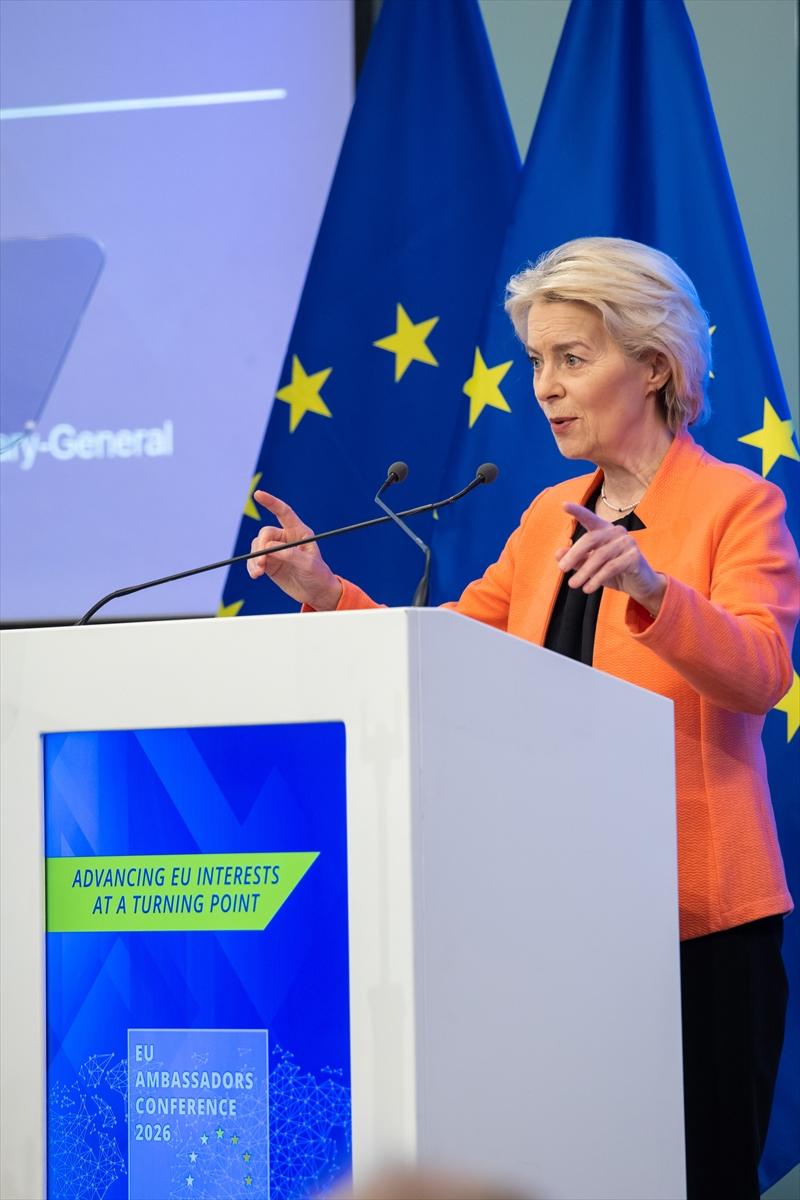
EU Commission President Ursula von der Leyen - (Anadolu Ajansı)
The statement noted that consultations were held with G7 partners to develop a coordinated response to developments in Iran and the Middle East and stated, “We are focused on minimizing the impact on security and global energy markets.”
The statement emphasized that maintaining energy flows is a priority and highlighted the importance of ensuring continued transit through the Strait of Hormuz, which is critical to the global economy.
The statement underscored that sanctions against Russia must not be eased, stating, “The oil price cap helps stabilize markets and limits Russia’s revenues. Now is not the time to relax sanctions on Russia.”
The statement also noted agreement on the need for close cooperation with regional partners to prevent escalation of the conflict and restore stability, and welcomed the IEA’s decision to release 400 million barrels of emergency oil reserves.
Minister of Transport and Infrastructure Abdulkadir Uraloğlu responded to journalists’ questions ahead of an AK Party parliamentary group meeting in the Grand National Assembly of Türkiye (TBMM). Minister Uraloğlu stated that 15 Turkish-owned vessels are currently in the Strait of Hormuz, none flying the Turkish flag, and that communication is ongoing with the crews. Uraloğlu said, “There are 15 Turkish-owned vessels in the Strait of Hormuz. They are not flying the Turkish flag. We are in contact with all their personnel. They are in a holding position. They are only experiencing the hardship of being there; otherwise, their needs are being met without issue.”
Uraloğlu noted that the situation in the Strait is being closely monitored and that the vessels will be allowed to leave the area once transit returns to normal. He confirmed that no attacks have occurred against these vessels.
In response to a question about the status of flights to Iraq, Syria, Lebanon, and Jordan due to security risks in the Middle East, Uraloğlu stated that there is a serious risk to air traffic and that risk management is ongoing. He explained that additional flights have been arranged to transport Turkish and foreign nationals via land routes through Oman and Saudi Arabia to Istanbul and onward to other countries, with agreements reached with the relevant countries.
Uraloğlu stated that there are no issues with land transport to Iran, Syria, and Iraq. He confirmed that crews of two aircraft belonging to Pegasus and Turkish Airlines in Iran have been brought back to Türkiye, while the aircraft themselves may be retrieved depending on the course of the conflict.
On 11 March, Minister of Energy and Natural Resources Alparslan Bayraktar responded to journalists’ questions ahead of an AK Party parliamentary group meeting in the Grand National Assembly of Türkiye (TBMM). Assessing energy supply security following the US and Israel’s attacks on Iran, Bayraktar said, “At this moment, we do not foresee any issues with fuel or natural gas, but we are closely monitoring developments.”
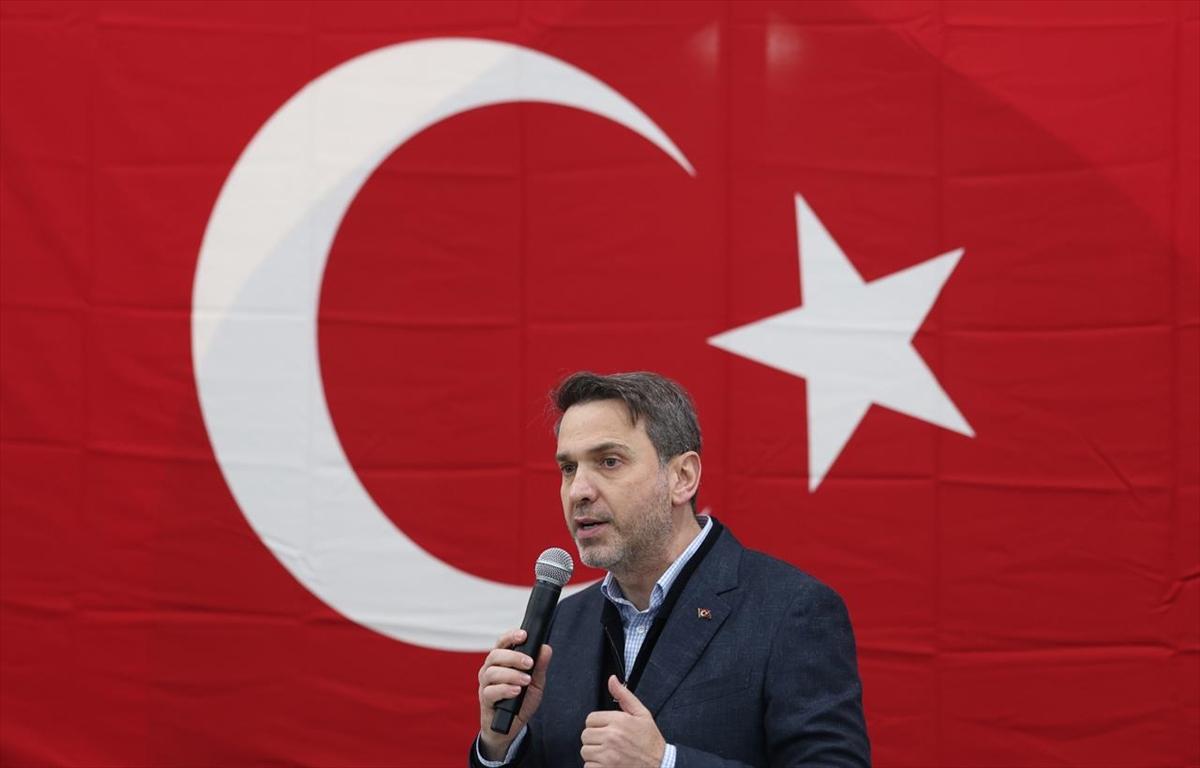
Minister of Energy and Natural Resources Alparslan Bayraktar - (Anadolu Ajansı)
In response to a journalist’s question about whether concern over natural gas is warranted, Bayraktar replied, “Do not worry about natural gas.” He emphasized that there is no problem with supply security.
Regarding the rise in Brent crude oil prices, Bayraktar noted that global concerns over supply disruptions and actual supply cuts have driven prices higher. He stated that oil prices have slightly eased due to expectations that the war will end and supply will return to normal. When asked whether new measures would be taken to address rising fuel prices, Bayraktar confirmed that his ministry is working closely with the Ministry of Treasury and Finance. He noted that previously, a Brent crude oil price of around $60 per barrel had been projected for the remainder of the year, but the current war environment has altered this outlook.
In response to a question about the closure of the Strait of Hormuz, Bayraktar stated that Türkiye’s primary energy imports come from routes outside the Strait, saying, “Our main imports are from routes outside the Strait of Hormuz, so at this time we do not see any risk from our perspective.”
ABC7. "US Destroys Iranian Mine-Laying Ships Near Strait of Hormuz, CENTCOM Claims." YouTube, 11 March 2026. Accessed March 11, 2026. https://www.youtube.com/watch?v=FHmcNoUosWk
Anadolu Ajansı. "AB Liderleri, Rusya’ya Yaptırımların Gevşetilmesine Karşı." Anadolu Ajansı. Accessed March 13, 2026. https://www.aa.com.tr/tr/dunya/ab-liderleri-rusyaya-yaptirimlarin-gevsetilmesine-karsi/3860316
Anadolu Ajansı. "Bakan Bayraktar: Hem Akaryakıtta Hem Doğal Gazda Bir Sıkıntı Öngörmüyoruz Şu Anda." Anadolu Ajansı. Accessed March 13, 2026. https://www.aa.com.tr/tr/ekonomi/bakan-bayraktar-hem-akaryakitta-hem-dogal-gazda-bir-sikinti-ongormuyoruz-su-anda/3859529
Anadolu Ajansı. "Bakan Uraloğlu: Hürmüz Boğazı’nda 15 Türk Sahipli Gemi Var, Bütün Personeliyle İrtibat Halindeyiz." Anadolu Ajansı. Accessed March 13, 2026. https://www.aa.com.tr/tr/ekonomi/bakan-uraloglu-hurmuz-bogazinda-15-turk-sahipli-gemi-var-butun-personeliyle-irtibat-halindeyiz/3859456
Anadolu Ajansı. "Hürmüz Boğazı Krizi, Petrol Piyasalarında Görülen En Büyük Arz Şokunu Tetikliyor." Anadolu Ajansı. Accessed March 13, 2026. https://www.aa.com.tr/tr/ekonomi/hurmuz-bogazi-krizi-petrol-piyasalarinda-gorulen-en-buyuk-arz-sokunu-tetikliyor/3859309
Anadolu Ajansı. "Hürmüz Boğazı’nda Bir Konteyner Gemisinin Bilinmeyen Bir Cisimden Hasar Gördüğü Bildirildi." Anadolu Ajansı. Accessed March 11, 2026. https://www.aa.com.tr/tr/dunya/hurmuz-bogazinda-bir-konteyner-gemisinin-bilinmeyen-bir-cisimden-hasar-gordugu-bildirildi-/3859103
Anadolu Ajansı. "Macron: Orta Doğu’daki Çatışmalar, Hepimiz Aynı Küresel Ekonomik Sonuçlarla Karşı Karşıyayız." Anadolu Ajansı. Accessed March 13, 2026. https://www.aa.com.tr/tr/dunya/macron-orta-dogudaki-catismalar-hepimiz-ayni-kuresel-ekonomik-sonuclarla-karsi-karsiyayiz/3860158
Anadolu Ajansı. "Pentagon: İran’a Saldırılarda Bugüne Kadar Yaklaşık 140 ABD Askeri Yaralandı." Anadolu Ajansı. Accessed March 11, 2026. https://www.aa.com.tr/tr/dunya/pentagon-irana-saldirilarda-bugune-kadar-yaklasik-140-abd-askeri-yaralandi/3858767
Anadolu Ajansı. "Uluslararası Enerji Ajansı, Üye Ülkeleriyle Kurum Tarihinin En Büyük Stratejik Petrol Stokunu Piyasaya Sürüyor." Anadolu Ajansı. Accessed March 13, 2026. https://www.aa.com.tr/tr/ekonomi/uluslararasi-enerji-ajansi-uye-ulkeleri-kurum-tarihinin-en-buyuk-stratejik-petrol-stokunu-piyasaya-suruyor/3860050
On 12 March, US President Donald Trump made statements regarding Iran’s military capabilities, stating that the straits would be closely monitored.
Speaking to journalists during his disembarkation from Air Force One, Trump argued that Iran had nearly reached “the end of the road,” adding, “This does not mean we will immediately finish it, but the situation is such.” Trump claimed that Iran had no navy, no air force and no control systems, and asserted that the United States was “moving freely” within the country.

US President Donald Trump, 11 March 2026 – (Anadolu Ajansı)
Regarding the straits, Trump stated, “The straits are in very good condition. We sank all their ships. They have some missiles but not many. I believe we are in very good shape.”
Asserting that “the real issue is winning,” Trump added, “I am following the news. Most people are already saying it has been won. The only question is when. When will we stop? We do not want to allow it to regrow, and ideally we want to see someone there who knows what they are doing.”
Trump indicated that the United States could strike certain areas of Tehran and other locations, arguing that this could render Iran’s reconstruction nearly impossible. He claimed the United States could destroy Iran’s electricity capacity within an hour and that its reconstruction could take 25 years, adding, “Therefore, ideally we will not do this.”
The Iranian Armed Forces announced that they maintain control over the Strait of Hormuz and will not grant passage rights to the United States or its allies.
In a statement issued by the Hatem al-Anbiya Command, affiliated with the Iranian Armed Forces, it was declared, “Without any doubt or negligence, the Strait of Hormuz is under the intelligent command of the Revolutionary Guards’ brave naval forces. American aggressors and their allies have no right of passage through it.”

Liberian-flagged Shenlong Suezmax oil tanker passing through the Strait of Hormuz to India, Mumbai, 12 March 2026 – (Anadolu Ajansı)
On 12 March, the United Kingdom Maritime Trade Organisation (UKMTO) announced that a container ship had been struck by an “unknown object” approximately 65 kilometres north of the Jebel Ali Port in the United Arab Emirates.
According to the UKMTO statement, the ship’s captain reported a minor fire on board and that the full extent of the damage could not be assessed due to darkness.
It was stated that all crew members were safe and no environmental impact had been reported.
Authorities were reported to be investigating the incident, and ships navigating the area were advised to remain vigilant and report any suspicious activity to the UKMTO.
On 12 March, the United Kingdom announced its participation in the coordinated release of 400 million barrels from the strategic petroleum reserves of International Energy Agency (IEA) member countries, with 13.5 million barrels to be provided by the UK.
The UK Ministry of Energy Security and Net Zero stated that the coordinated action to release oil stocks was critical for market stability, and emphasized that ensuring the safe passage of tankers through the Strait of Hormuz is vital for a lasting solution. The ministry noted that the UK would continue to closely monitor developments in the Middle East and maintain cooperation with its partners. According to ministry data, the country currently holds 76.6 million barrels of emergency oil stock.
IEA Executive Director Fatih Birol announced that IEA member countries had agreed to release 400 million barrels from their strategic reserves, the largest amount in the agency’s history. This decision marked the sixth coordinated release by the IEA since its founding in 1974. Previous similar decisions were taken in 1991, 2005, 2011 and twice in 2022.
IEA member countries are obligated to maintain emergency oil stocks equivalent to 90 days of their net oil imports. Currently, in addition to over 1.2 billion barrels of emergency stock held by IEA members, there are 600 million barrels of industrial stock under government obligations. These stocks are stored at refineries and by major suppliers.

Liberian-flagged Shenlong Suezmax oil tanker passing through the Strait of Hormuz to India, Mumbai, 12 March 2026 – (Anadolu Ajansı)
The US-based Institute for the Study of War (ISW) reported that Iran had laid fewer than 10 sea mines in the Strait of Hormuz. In a statement posted on social media, ISW stated that Iran had deployed a limited number of mines in the strait.
The statement highlighted that a large-scale mine-laying operation could severely disrupt not only foreign shipping but all maritime traffic, and noted that such a move could negatively affect Iran’s relations with China and harm Iraq’s economy, which is heavily dependent on oil revenues.
On 12 March 2026 it was reported that Bangladesh had requested a temporary exemption from the United States to allow the purchase of Russian oil due to rising tensions in the Middle East.
According to Dhaka Tribune, Bangladesh’s Minister of Finance and Planning, Amir Khasru Mahmud Chowdhury, held talks with the US Ambassador to Dhaka. Chowdhury reminded the US of the temporary exemption granted to Indian refineries for Russian oil purchases and requested a similar arrangement for Bangladesh.
Chowdhury said, “We told them that if Bangladesh is granted such an opportunity, it would be a major support for our economy. They said they would convey the matter to Washington.”
According to India-based NDTV, it was claimed that Iran had granted safe passage to at least two Indian-flagged tankers through the Strait of Hormuz.
However, an unnamed source in Tehran told NDTV that the claim that Indian-flagged tankers had been granted passage was denied.
On 12 March, Thailand’s Ministry of Foreign Affairs summoned Iran’s Ambassador to Bangkok, Nassereddin Heidari, after a Thai-flagged bulk carrier near the Strait of Hormuz was hit by a “non-identified, missile-like projectile.”
According to Thailand-based The Nation, Deputy Spokesperson of Thailand’s Ministry of Foreign Affairs, Panidol Pachimsawat, made statements during the daily press briefing. Panidol said Thailand had “deep concerns” due to rising tensions resulting from the US-Israel attacks on Iran and Iran’s retaliatory strikes.
Panidol confirmed that Iran’s Ambassador to Bangkok had been summoned following the attack on the Thai-flagged vessel by a “non-identified, missile-like projectile.” He also reported that Thailand’s Minister of Foreign Affairs, Sihasak Phuangketkeow, would hold a telephone conversation with Oman’s Minister of Foreign Affairs, Bedr bin Hamed al-Busaidi, regarding search and rescue efforts for the vessel’s crew. Panidol stated that 381 Thai nationals had been evacuated from the Middle East.
The International Energy Agency (IEA) stated that if tanker traffic through the Strait of Hormuz does not return to normal in the short term, approximately 7.9 million barrels per day of crude oil and a total of 9.9 million barrels per day of liquid fuels produced in Gulf countries could be temporarily suspended in March.
According to the IEA’s Oil Market Report, the war in the Middle East has effectively halted tanker traffic through the Strait of Hormuz, causing a significant decline in global oil supply in March. This has led to widespread production curtailments in oil-producing Gulf countries and the complete shutdown of production at some fields.
The report noted that prior to the conflict, approximately 20 million barrels per day of crude oil and petroleum products were shipped through the Strait of Hormuz, but since the outbreak of hostilities, shipments have fallen to less than 10 percent of pre-crisis levels.
Despite limited flexibility offered by alternative export routes, the IEA forecasts that if tanker traffic does not resume, production of 7.9 million barrels per day of crude oil and 9.9 million barrels per day of liquid fuels in the Gulf could be halted in March.
Global oil supply is expected to drop by 8 million barrels per day to 98.8 million barrels per day, reaching its lowest level since the first quarter of 2022. The report noted that losses from interrupted shipments from the Gulf have been partially offset by the recovery of North American production following winter conditions and the resumption of Kazakh and Russian supplies after disruptions in February.
However, the report stated that there were no signs of de-escalation in the fighting or a clear timeline for the restoration of flow through the Strait of Hormuz, and high levels of uncertainty remain for March and beyond.
In the evening of 12 March, the Iranian Revolutionary Guards Corps announced that the US-flagged oil tanker “Safesea Vishnu,” flying the flag of the Marshall Islands, had been struck in the Strait of Hormuz after ignoring warnings.
The Revolutionary Guards’ statement indicated that the tanker had repeatedly ignored warnings earlier in the day and was therefore struck north of the strait.
The statement further noted that shipping traffic in the Persian Gulf and the Strait of Hormuz is under increasing risk, with the United States identified as responsible for this situation. Commercial vessels were urged to comply with Iran’s maritime regulations to avoid being affected by missiles.
On 12 March 2026, US Energy Secretary Chris Wright stated that it was unlikely oil prices would reach $200 per barrel.
In an interview with CNN, Wright commented on the disruption to oil supply and rising prices caused by the cessation of tanker traffic through the Strait of Hormuz due to the conflict between the US, Israel and Iran. He said that a short-term disruption would be overcome within weeks by rerouting oil through alternative pathways and emphasized that the Strait of Hormuz must be reopened and will be reopened.
Wright said the US military is present in the region to resolve a long-term problem, adding, “To solve a long-term problem, you must endure short-term pain.” When asked if the world was in the midst of a serious global oil crisis, he replied, “We are in the midst of a significant short-term disruption to ensure long-term energy security.”
Upon being reminded of Iranian officials’ statements that oil prices could reach $200 per barrel, Wright said, “I say it is unlikely.” He emphasized that the focus was on military operations and resolving the issue, and declined to speculate on short-term price movements, noting that prices depend more on market psychology than on oil flows.
In an interview with CNBC, when asked whether the US Navy would escort tankers through the Strait of Hormuz, Wright said this could happen relatively soon but that preparations were not yet complete. He stated that US military assets were currently focused on targeting Iran’s missile capabilities and the manufacturing industries supporting them.
Wright indicated that it was “quite likely” the US Navy would escort tankers through the Strait of Hormuz by the end of the month and confirmed that the military was actively working on this issue.
Following the death of Ayatollah Ali Khamenei in the US-Israel attack, Mucteba Hosseini Khamenei was selected as leader by the Assembly of Experts. After assuming office, he issued his first message, which was read aloud by a state television presenter without showing his image or voice.

Iran’s New Leader Mucteba Hosseini Khamenei – (Anadolu Ajansı)
In his message, Khamenei stated that Iran had been unjustly attacked and said, “I extend my heartfelt thanks to our brave warriors who have closed the enemy’s path with overwhelming blows and freed them from the illusion of seizing and possibly dividing our beloved homeland.”
Addressing the Iranian Armed Forces, Khamenei emphasized the need to continue the “effective and remorseless defense,” and stated: “The strategy of keeping the Strait of Hormuz closed must certainly be maintained. Efforts have also been made to open other fronts where the enemy is inexperienced and extremely vulnerable. If the state of war continues and in accordance with the principle of protecting our interests, these fronts will be activated.”
Khamenei also addressed social unity, saying, “Sitting in this chair is a heavy burden. National unity must be preserved.”
Commander of the Iranian Revolutionary Guards Corps Navy, Brigadier General Ali Reza Tengsiri, announced that, in accordance with the directive of Iran’s new leader, “the strategy of keeping the Strait of Hormuz closed will continue.”
Tengsiri made statements on social media regarding tanker traffic in the Strait of Hormuz, declaring that they would “continue striking the enemy” and reaffirmed that the strategy of maintaining the closure of the Strait of Hormuz would be sustained.
Anadolu Ajansı. "ABD Enerji Bakanı Wright, Petrolün Varil Fiyatının 200 Dolara Ulaşmasının Olası Olmadığını Söyledi." Accessed March 13, 2026. https://www.aa.com.tr/tr/dunya/abd-enerji-bakani-wright-petrolun-varil-fiyatinin-200-dolara-ulasmasinin-olasi-olmadigini-soyledi/3862033
Anadolu Ajansı. "Hamaney: Hürmüz Boğazı Kapalı Kalmaya Devam Etmelidir." Accessed March 13, 2026. https://www.aa.com.tr/tr/dunya/hamaney-hurmuz-bogazi-kapali-kalmaya-devam-etmelidir/3861754
Anadolu Ajansı. "IEA: Hürmüz Boğazı’ndaki Aksama Martta Günlük 9,9 Milyon Varil Petrol Üretimini Askıya Alacak." Accessed March 13, 2026. https://www.aa.com.tr/tr/ekonomi/iea-hurmuz-bogazindaki-aksama-martta-gunluk-9-9-milyon-varil-petrol-uretimini-askiya-alacak/3861279
Anadolu Ajansı. "İngiltere, Stratejik Petrol Rezervlerinden 13,5 Milyon Varili Piyasaya Sürecek." Accessed March 13, 2026. https://www.aa.com.tr/tr/ekonomi/ingiltere-stratejik-petrol-rezervlerinden-13-5-milyon-varili-piyasaya-surecek/3860921
Anadolu Ajansı. "İran, ABD ve Saldırının Ortaklarına Hürmüz Boğazı’ndan Geçme Hakkı Tanımayacağını Yineledi." Accessed March 13, 2026. https://www.aa.com.tr/tr/dunya/iran-abd-ve-saldirinin-ortaklarina-hurmuz-bogazindan-gecme-hakki-tanimayacagini-yineledi/3860882
Anadolu Ajansı. "İran, İsrail’deki Askeri Noktalar ile ABD Üslerine Ağır Savaş Başlığı Taşıyan Füzelerle Yeni Saldırılar Başlattı." Accessed March 13, 2026. https://www.aa.com.tr/tr/dunya/iran-israildeki-askeri-noktalar-ile-abd-uslerine-agir-savas-basligi-tasiyan-fuzelerle-yeni-saldirilar-baslatti/3861071
On March 13, 2026, U.S. President Donald Trump made new statements targeting Iran via his social media account. Trump reiterated that Iran’s navy and air forces had been destroyed and argued that the elimination of missiles, unmanned aerial vehicles (UAVs), and other military assets under the control of the Tehran regime was ongoing. In his post, he used the following words: “We have an unprecedented arsenal, unlimited ammunition, and plenty of time. Watch what happens to these crazy scumbags today.”
On the same day, in an interview with Fox News, Trump commented on vessels attempting to pass through the Strait of Hormuz, stating: “There is nothing to fear. They have no navy; we have sunk all their ships.”
On March 13, 2026, U.S. Treasury Secretary Scott Bessent provided an assessment regarding oil tankers passing through the Strait of Hormuz in an interview with Sky News.
Bessent indicated that the U.S. Navy would escort oil tankers through the Strait of Hormuz “as soon as militarily possible”. He pointed to the possibility of an international coalition, adding: “My belief is that as soon as militarily possible, the U.S. Navy, perhaps alongside an international coalition, will escort these vessels.”
Bessent noted that Iranian tankers and some vessels flying the Chinese flag were passing through the strait, leading him to conclude that Iran had not laid mines there.
Bessent also stated that the war had cost the United States approximately $11 billion. When asked whether this cost would influence President Donald Trump’s decision to continue the conflict, he responded: “Absolutely not.”
At a joint press conference with U.S. Defense Secretary Pete Hegseth and Chairman of the Joint Chiefs of Staff General Dan Caine, claims that new mines had been laid in the Strait of Hormuz were addressed. Hegseth stated there was “no clear evidence” to support such allegations. He added: “The only thing currently preventing passage through the strait is Iran firing on ships. As long as Iran does not do so, the passage remains open. This is not a strait we will allow to remain contested.”
Hegseth dismissed media reports suggesting the Trump administration was downplaying the impact of the war with Iran on the Strait of Hormuz as “ridiculous and unserious.” He emphasized that the pace and timing of the conflict were determined by President Donald Trump, stating: “He will determine the speed, tempo, and timing of this conflict. The steering wheel is entirely in his hands.”
General Dan Caine confirmed that the attacks against Iran had entered their 13th day and noted that Iran’s mine-laying capacity and other threats to strait traffic had been targeted. Caine assessed: “The only thing currently blocking commercial traffic and flow through the strait is Iran.”

After the closure of the Strait of Hormuz, the Umm Qasr port in Iraq, March 13, 2026 – (Anadolu Agency)
On March 13, 2026, Deputy Commander of the Islamic Revolutionary Guard Corps (IRGC) Navy, Mohammad Ekberzade, responded to U.S. administration claims that Iran’s navy and air forces had been destroyed.
According to Iranian media, Ekberzade countered U.S. assertions by asking: “If the U.S. claims Iran’s navy has been destroyed, how is it that the Strait of Hormuz remains closed and not a single tanker can pass through?” He also stated that despite claims of the destruction of Iran’s air forces, Iran’s missiles and UAVs continued to successfully strike their targets.
Ekberzade defended the IRGC’s strategic missile and UAV capabilities, asserting they operate in coordination with land, sea, and air units to maintain control over the Strait of Hormuz. He declared: “Today, the Strait of Hormuz demonstrates Iran’s strategic power.”
Ekberzade claimed that the U.S. and its allies had failed to achieve their objectives in the region, and despite targeted assassinations of senior military officials, Iran’s military structure continued to function.
Ekberzade also warned that global oil prices would remain elevated, stating that oil prices had reached $95–100 per barrel and that if the situation persisted, the U.S. economy would face a serious crisis.
On March 13, 2026, it was alleged that the U.S. Department of Defense (Pentagon) would send a 5,000-strong amphibious ready group composed of marines and sailors to the Middle East.
According to a report citing three U.S. officials familiar with the matter and published by the Wall Street Journal (WSJ), the United States has increased its troop numbers and military presence in the Middle East. According to these sources, U.S. Defense Secretary Pete Hegseth approved the deployment of a 5,000-strong amphibious ready group and its associated Marine Expeditionary Unit, along with several warships, in response to Iran’s increased attacks on the Strait of Hormuz.
The report stated that the request originated from U.S. Central Command (CENTCOM). It was also reported that the USS Tripoli, based in Japan, and its associated Marine unit were advancing toward the Middle East.
On March 13, 2026, Minister of Transport and Infrastructure Abdulkadir Uraloğlu stated that the highest level of security had been declared for the situation in the Strait of Hormuz. He noted that there were no vessels flying the Turkish flag in the area but confirmed that continuous contact was maintained with Turkish-owned vessels through the National Search and Rescue Center. He added that 14 Turkish-owned vessels were waiting in the Strait, down from 15 previously, with one having received permission from Iranian authorities to enter an Iranian port. He confirmed ongoing communication with Iranian authorities and stated that the 14 waiting vessels had experienced no issues.
Uraloğlu also stated that approximately 800 vessels of various classes were currently in the Strait of Hormuz, with six cruise ships and their passengers awaiting passage.
As of March 13, 2026, the effective halt of vessel traffic through the Strait of Hormuz has triggered a chain reaction affecting global energy trade and industrial production. The military strikes launched by the United States and Israel against Iran on February 28, followed by Iran’s missile retaliations and theIRGC’s closure of the Strait of Hormuz to vessels linked to these countries, have intensified pressure on global trade.
Approximately 20 percent of global daily oil consumption and 20 percent of liquefied natural gas (LNG) exports pass through the Strait of Hormuz. However, due to increased transit risks, S&P Global Energy data shows that over 10 crude oil tankers are waiting off the western side of the Persian Gulf for loading, and approximately 75 tankers are anchored idle outside the strait. It was reported that the amount of crude oil awaiting transit in the Gulf has reached approximately 126 million barrels.
These developments have prompted companies to declare force majeure, a legal term referring to the inability to fulfill contractual obligations due to extraordinary circumstances beyond a company’s control.
The first force majeure declaration came from QatarEnergy’s LNG facility in Ras Laffan Industrial City, Qatar. After an Iranian UAV targeted the facility, the company suspended production and declared force majeure on its LNG-related products. This facility is known as the world’s largest LNG export facility.
Qatar supplies approximately 20 percent of global LNG exports, with over 90 percent of its production sent to Asian countries including China, Japan, India, and South Korea. Qatar also exports LNG to Europe.
Following QatarEnergy’s announcement, Petronet, India’s largest LNG importer, declared force majeure on its supply contracts to GAIL, Indian Oil Corporation, and Bharat Petroleum Corporation. This affected Petronet’s long-term annual LNG contract of 7.5 million tons with QatarEnergy. Gujarat Gas also issued force majeure notices to its industrial customers starting March 6.
According to international media, Shell also issued force majeure notices to its customers. Chevron, based in the United States, joined the list of companies declaring force majeure after temporarily halting production at Israel’s Leviathan gas field.
Approximately 15 million barrels of crude oil and 5 million barrels of refined petroleum products transit daily through the Strait of Hormuz, totaling 20 million barrels. As shipments stalled, production facilities in the region began facing storage capacity pressures, leading some countries to reduce output.
Kuwait Petroleum Corporation (KPC) announced it had begun reducing oil production and declared force majeure. The decision was described as temporary, with production expected to resume once conditions normalize. It was also reported that Saudi Arabia and Iraq had decided to cut production.
Following KPC’s decision, Kuwait Styrène Company (TKSC) declared force majeure for its 450,000-ton-per-year ethylbenzene-styrene monomer (EBSM) plant due to disruptions in feedstock supply.
India’s state-owned refinery company MRPL declared force majeure on all planned gasoline export shipments for March and April. MRPL’s refinery in Karnataka has a daily capacity of 500,000 barrels, with approximately 40 percent of its output exported.
Bahrain Petroleum Company (BAPCO) declared force majeure on March 9 due to current conditions and a targeted unit at its Sitra refinery. The Sitra refinery has a daily capacity of 450,000 barrels.
Aluminium Bahrain suspended its shipments and declared force majeure due to the widening conflict in the Middle East. Norsk Hydro’s joint venture in Qatar, Qatalum, also began a controlled shutdown of production and issued force majeure notices to its customers.
China’s Wanhua Chemical declared force majeure on March 9 due to disruptions in oil supplies from the Middle East and raised prices for certain products. Longhua New Materials activated force majeure provisions for shipments to the Middle East on March 10.
South Korea’s Yeochun NCC Co (YNCC) declared force majeure due to naphtha supply issues and announced it was operating its production facilities at minimum capacity. Singapore-based polyolefin producer TPC shut down multiple plants on Jurong Island and declared force majeure on March 9.
Data on the number of vessels transiting the Strait of Hormuz during the first 11 days of March 2026 have been published. The report issued by Lloyd’s List Intelligence, a UK-based maritime data provider, details the impact of regional developments on strait traffic following the U.S. and Israeli military strikes against Iran on February 28, 2026.
According to the report, 77 vessels transited the Strait of Hormuz between March 1 and 11, 2026. In the same period last year (March 1–11, 2025), 1,229 vessels transited the strait.
The data show that 26 percent of transiting vessels were Iranian, 13 percent were Greek, and 12 percent were Chinese. It was noted that a significant portion of current transits involved vessels linked to Russia and Iran, operating under the so-called “shadow fleet” to circumvent Western sanctions.
The report included an assessment by Bridget Diakun, senior analyst at Lloyd’s List Intelligence, who noted that Iran continues its export activities via the Strait of Hormuz. Diakun stated: “More than half of the tankers and gas carriers transiting are part of the shadow fleet. These vessels are accustomed to disruptions.” It was reported that shadow fleet vessels are mostly outdated, uninsured, poorly maintained, and have questionable ownership structures.
The United Kingdom Maritime Trade Operations (UKMTO) reported that since the beginning of March, 20 commercial vessels, nine of them oil tankers, had been attacked or reported incidents. The International Maritime Organization (IMO) recorded a total of 16 incidents in the region, including eight involving oil tankers.
Anadolu Ajansı. "Bakan Uraloğlu: Hürmüz Boğazı’nda 14 Gemimiz Bekliyor." Accessed March 16, 2026. https://www.aa.com.tr/tr/ekonomi/bakan-uraloglu-hurmuz-bogazinda-14-gemimiz-bekliyor/3862806
Anadolu Ajansı. "Hürmüz Boğazı’nda Ticaretin Durması Dünyada Mücbir Sebep İlanlarında Domino Etkisi Yarattı." Accessed March 16, 2026. https://www.aa.com.tr/tr/ekonomi/hurmuz-bogazinda-ticaretin-durmasi-dunyada-mucbir-sebep-ilanlarinda-domino-etkisi-yaratti/3862877
Anadolu Ajansı. "İran Saldırıları Sonrası Hürmüz Boğazı’ndan Mart Ayında Şu Ana Kadar 77 Gemi Geçti." Accessed March 16, 2026. https://www.aa.com.tr/tr/dunya/iran-saldirilari-sonrasi-hurmuz-bogazindan-mart-ayinda-su-ana-kadar-77-gemi-gecti/3863998
Anadolu Ajansı. "İran, İsrail’e Yeni Dalga Füze Saldırıları Düzenlediğini Duyurdu." Accessed March 16, 2026. https://www.aa.com.tr/tr/dunya/iran-israile-yeni-dalga-fuze-saldirilari-duzenledigini-duyurdu/3863318
On March 14, 2026, while traveling from Washington to Florida for a weekend break, U.S. President Donald Trump told reporters at the airport that the U.S. Navy would begin escorting oil tankers passing through the Strait of Hormuz “in the near future,” though he did not provide a specific date.
In response to a question about whether the United States shares Israel’s view on ending its attacks on Iran, Trump replied, “I think they may be somewhat different on this issue. After all, we are different countries.”
Regarding when the attacks on Iran might end, he stated he would not disclose a specific timeline, but affirmed that he has a schedule in mind and that the attacks could continue as long as deemed necessary. Trump said, “We are well ahead of the schedule we planned.”
Trump also defended the claim that Iran’s military capacity has been largely destroyed, stating, “Iran is currently in a bad situation.”
On the same day, Trump stated in another announcement that Iran had targeted Hark Island. In a social media post, he claimed that the U.S. Central Command (CENTCOM) had carried out one of the most intense air strikes in Middle Eastern history.
Trump asserted that “all military targets on Hark Island, Iran’s most valuable asset, have been completely destroyed.”
Trump noted that he had chosen not to target the island’s petroleum infrastructure but warned that if Iran interfered with the free and safe passage of vessels through the Strait of Hormuz, he would reconsider this decision.
In another statement on March 14, 2026, Trump claimed that many countries would send warships to the region to ensure the Strait of Hormuz remains open and secure.
In a social media post, he wrote, “Many countries affected by Iran’s attempts to close the Strait of Hormuz will send warships to the region in coordination with the United States to ensure the strait remains open and secure.”
Trump claimed Iran’s entire military capacity had been eliminated, yet he acknowledged that the Tehran regime still retains the ability to send unmanned aerial vehicles into the Strait, lay mines in the waterway, or launch short-range missiles.
Trump said, “We hope China, France, Japan, South Korea, the United Kingdom, and other countries affected by this artificial constraint will send ships to the region. This will remove the Strait of Hormuz as a threat from a nation whose military power has been entirely neutralized.” He added, “One way or another, we will restore the Strait of Hormuz to an open, secure, and free passage very soon.”
Trump stated that the security of the Strait of Hormuz must be ensured by the countries that rely on it for oil supplies, saying, “Countries that receive oil through the Strait of Hormuz must secure its passage.” He noted that the United States would provide substantial assistance and work in coordination with these nations.
On March 14, 2026, Iranian Foreign Minister Abbas Araghchi responded to the U.S. attack on Hark Island.
In an interview with the U.S.-based MS NOW television network, Araghchi claimed the attacks were launched from the territories of neighboring countries. He stated, “They carried out these attacks from our neighbors’ territories. The fact that they now use our neighbors’ lands as bases to launch such missiles against us is now an undeniable reality.”
Araghchi said Iran had tracked the attacks “second by second” and confirmed with clarity that one missile was fired from Rasul-Hayme and another from a location very close to Dubai, both on United Arab Emirates territory.
When asked about the possibility of banning transit through the Strait of Hormuz, Araghchi replied, “In fact, the Strait of Hormuz is currently open to transit. It is closed only to tankers and vessels belonging to our enemies—that is, those attacking us and their allies.”
In a social media post on the same day, Araghchi said, “The United States has now been forced to seek assistance from other countries, even from China, to ensure security in the Strait of Hormuz.” He added, “The security umbrella the United States has long boasted about has now been revealed as full of holes. This umbrella not only failed to deter aggression but also provoked tension and crisis.” Araghchi stated, “Iran requests its brotherly neighbors to expel foreign aggressor forces from their territories, as these forces care only about defending Israel.”
On March 14, 2026, Commander of the Islamic Revolutionary Guard Corps Navy, Brigadier General Ali Reza Tengsiri, responded to U.S. President Donald Trump’s statements regarding the Strait of Hormuz.
In a social media post, Tengsiri quoted Trump, saying, “The Americans falsely claimed that the Iranian Navy was destroyed and then began escorting tankers. Now they are asking others for help.”
Tengsiri emphasized that the Strait of Hormuz has not been militarily closed and that Iran merely maintains control over it.
On March 14, 2026, a report citing an unnamed senior official speaking to CNN suggested that Iran is considering allowing a limited number of oil tankers to pass through the Strait of Hormuz on the condition that oil transactions are conducted in Chinese yuan.
The report indicated that Iran is evaluating the possibility of permitting transit through the Strait of Hormuz, as part of a broader effort to develop a new plan to manage oil tanker flows through the waterway.
The futures price for Brent crude oil, the international benchmark, closed at $72.48 per barrel on its last trading day before the attacks, February 27, 2026.
After the attacks, when markets reopened on March 2, 2026, Brent crude surged to $82.37 amid reports of the death of Iranian leader Ayatollah Ali Khamenei, closing the day at $77.74. The daily increase was recorded at 7.26 percent.
In the following days, developments such as threats against the Strait of Hormuz, Iranian retaliatory strikes against U.S. bases and energy facilities in the region, insurance companies suspending war-risk policies, tanker and container shipping firms halting transit, and some producers reducing output on security grounds affected prices. During this period, Brent crude traded between $78 and $86.
On March 6, 2026, the Brent crude futures price reached $94.64 and closed the week at $92.69. By the end of the first week, Brent crude had risen 27.8 percent on a weekly basis.
Price volatility continued in the second week. On March 9, 2026, the Brent crude futures price climbed to $119.50. Later that day, following expectations that G7 nations might release their emergency oil reserves and statements by U.S. President Donald Trump suggesting the war with Iran could soon end, the price closed at $98.96.
On March 10, 2026, price volatility increased after U.S. Energy Secretary Chris Wright posted on social media that the U.S. Navy had escorted a tanker through the Strait of Hormuz—a post later deleted. Brent crude dropped intraday to $81.16, then closed the day at $87.80 following reports that Iran had laid mines in the Strait.
The decision by International Energy Agency (IEA) member countries to release strategic oil reserves helped limit price increases. However, after attacks on oil tankers in the Persian Gulf, Brent crude rose above $100 per barrel again on March 12, 2026.
At the end of the two-week period, Brent crude closed the week at $103.14 per barrel, a 42.3 percent increase from pre-attack levels.
Logistical and supply security developments also impacted the natural gas market. Qatar’s suspension of production at its Ras Laffan facilities and declaration of force majeure affected global LNG supply.
The April futures contract for natural gas traded on the Dutch TTF, Europe’s benchmark market, closed at €31.9 per megawatt-hour on February 27, 2026.
After the attacks, on March 2, 2026, the contract price surged 39 percent to €44.5.
Amid growing concerns over supply security, the price reached €56.4 on March 9, 2026.
At the end of the two-week period, European natural gas prices closed at €50.1 per megawatt-hour, a 57 percent increase from pre-attack levels.
The April futures contract for Newcastle coal, the benchmark for Asian markets, closed at $118.50 per ton on February 27, 2026. On March 2, 2026, the contract price rose 8.6 percent to $128.70. On March 9, 2026, the price climbed to $143.80. At the end of the two-week period, coal prices closed at $137.30 per ton, a 15.8 percent increase from pre-attack levels.
Anadolu Ajansı. "ABD Başkanı Trump, İran’ın Hark Adası’nı Hedef Aldıklarını Açıkladı." Accessed March 16, 2026. https://www.aa.com.tr/tr/dunya/abd-baskani-trump-iranin-hark-adasini-hedef-aldiklarini-acikladi/3864094
Anadolu Ajansı. "ABD ve İsrail’in İran’a Saldırılarında İki Hafta Geride Kalırken Küresel Enerji Fiyatlarında Sert Dalgalanmalar Sürüyor." Accessed March 16, 2026. https://www.aa.com.tr/tr/ekonomi/abd-ve-israilin-irana-saldirilarinda-iki-hafta-geride-kalirken-kuresel-enerji-fiyatlarinda-sert-dalgalanmalar-suruyor/3864278
Anadolu Ajansı. "Avrupa Borsaları Haftayı Jeopolitik Gerilimlerin Etkisiyle Düşüşle Kapattı." Accessed March 16, 2026. https://www.aa.com.tr/tr/ekonomi/avrupa-borsalari-haftayi-jeopolitik-gerilimlerin-etkisiyle-dususle-kapatti/3864008
Anadolu Ajansı. "Trump, ABD Donanmasının Hürmüz Boğazı’ndan Geçen Gemilere Yakında Eşlik Etmeye Başlayacağını Söyledi." Accessed March 16, 2026. https://www.aa.com.tr/tr/dunya/trump-abd-donanmasinin-hurmuz-bogazindan-gecen-gemilere-yakinda-eslik-etmeye-baslayacagini-soyledi/3864084
Anadolu Ajansı. "İran Ordusu: İsrail Askeri İstihbaratını ve Bazı Hava Üslerini İHA’larla Hedef Aldık." Accessed March 16, 2026. https://www.aa.com.tr/tr/dunya/iran-ordusu-israil-askeri-istihbaratini-ve-bazi-hava-uslerini-ihalarla-hedef-aldik/3864187
International Energy Agency (IEA) announced on 11 March 2026 that its member countries had agreed to release a total of 400 million barrels from their strategic petroleum reserves to the market; on 15 March 2026, it disclosed the implementation details of this decision.
According to the announcement:
Under the plan:
The IEA member countries in Asia-Pacific will release their reserves “immediately.” The reserves of IEA member countries in the Americas and Europe will be released starting at the end of the month. This decision marks the sixth coordinated use of strategic reserves in IEA history. Previous decisions were made in 1991, 2005, 2011, and twice in 2022 when the Russia-Ukraine war began.
On the 16th day of the U.S.-Israel attacks, Iranian Foreign Minister Abbas Araghchi made several statements in an interview with the American CBS channel. Without naming countries, Araghchi shared that many nations seeking safe passage through the Strait of Hormuz had consulted with Iran and that the Iranian military had permitted a group of vessels belonging to different countries to pass through the strait.
When asked whether the four U.S. citizens detained in Iran were safe, Araghchi replied, “If the U.S. and Israel do not attack our prisons, I believe they are safe.”
On 15 March 2026, UK Prime Minister Keir Starmer held telephone conversations with U.S. President Donald Trump and Canadian Prime Minister Mark Carney. According to the statement issued by the UK Prime Minister’s Office at 10 Downing Street, the discussions addressed developments in the Middle East and the situation in the Strait of Hormuz.
Starmer and Trump discussed the importance of reopening the Strait of Hormuz to eliminate disruptions causing cost increases in global maritime transport. Starmer also conveyed his condolences to Trump for U.S. military personnel killed during Iran’s missile strikes.
During Starmer’s conversation with Canadian Prime Minister Carney, the impact of the Strait of Hormuz’s closure on international maritime transport was also raised.

U.S. President Donald Trump - (Anadolu Ajansı)
Following U.S. President Donald Trump’s 14 March 2026 statement, in which he asserted that many countries would send warships to the region to ensure the Strait of Hormuz remained open and secure, responses came from South Korea and Japan.
An unnamed spokesperson from the South Korean Presidential Office stated they were aware of Trump’s social media post and affirmed that “the security of international sea lanes and freedom of navigation are in the interest of all countries under the framework of international law.” The spokesperson noted that the U.S. request would be “carefully considered” and expressed hopes for the normalization of global maritime logistics.
In Japan, Liberal Democratic Party (LDP) policy chief Kobayashi Takayuki, speaking on the local NHK channel, stated that Japan’s sending ships to the Strait of Hormuz would constitute “an extremely difficult threshold to cross.” Kobayashi added that “while this possibility is not entirely ruled out legally, the current conditions require careful consideration of the issue.”
German Foreign Minister Johann Wadephul reiterated that Germany would not participate in any international military operation related to tensions in the Strait of Hormuz or attacks against Iran.
In an interview on the ARD television program Bericht aus Berlin, Wadephul stated that Germany would not be an active participant in the conflict and used the phrase “Will we soon become an active part of this conflict? No.”
Wadephul emphasized that the German government’s position on this issue was clear and had been explicitly stated by both Prime Minister Friedrich Merz and Defense Minister Boris Pistorius.
The Foreign Minister expressed Germany’s desire to participate in a potential diplomatic negotiation process and stated that lasting security in the Strait of Hormuz could only be achieved through diplomatic solutions and direct talks with Iran.
Wadephul also noted that the European Union’s military mission in the Red Sea, Aspides, had not delivered the expected impact. He expressed doubts about whether extending the mission to the Strait of Hormuz would provide additional security.
In response to a question, Wadephul stated that oil prices could return to normal only if the conflict in the region is resolved.
French President Emmanuel Macron stated that freedom of navigation in the Strait of Hormuz must be restored as quickly as possible. In a social media statement, Macron announced he had held a telephone conversation with Iranian President Masoud Pezeshkian. During the call, Macron condemned Iran’s attacks on regional countries and said, “Whether these attacks are direct or carried out through proxy forces such as those in Lebanon and Iraq, I called on Iran to immediately cease its unacceptable attacks on regional countries.”
Macron emphasized that France would act only within a defensive framework to protect its own interests, its partners, and freedom of navigation. He also noted that France had made clear that its own targeting would be unacceptable.
Macron assessed that uncontrolled escalation of tensions could plunge the region into serious chaos and noted that the Iranian people were also affected by the situation.
Macron stated that a new political and security framework was needed, adding, “This framework must guarantee that Iran never acquires nuclear weapons and must also address the threats posed by its ballistic missile program and destabilizing activities in the region and internationally. Freedom of navigation in the Strait of Hormuz must be restored as quickly as possible.”
Australia and Japan announced they have no plans to send warships to the Middle East to ensure the security of the Strait of Hormuz. Australian Transport Minister Catherine King, in her assessment of U.S. President Donald Trump’s call for sending ships to the Strait of Hormuz, said, “We will not send a ship to the Strait of Hormuz. We understand how critically important it is, but this is not something we are being asked to do, and we are not contributing in this regard.”
King also clarified the scope of assistance offered, stating that only aircraft would be sent to the United Arab Emirates for defense support.
On the Japanese side, Prime Minister Takaichi Sanae said evaluations were ongoing regarding how to ensure the safety of Japanese vessels and crews in the Middle East. Takaichi noted that no formal request had been received from the U.S. and declined to answer hypothetical questions, but confirmed the issue was under review.
Japanese Defense Minister Koizumi Shinjiro also stated that the government currently had no plans to deploy the Japan Self-Defense Forces to the Middle East.
Protesters in the South Korean capital Seoul held demonstrations against the deployment of South Korean warships to the Strait of Hormuz.

Protests against sending warships to the Strait of Hormuz in South Korea, 16 March 2026 - (Anadolu Ajansı)
The demonstrations took place in front of the Blue House (Presidential Complex) and the U.S. Embassy. Protesters called on South Korea not to join the military presence in the Strait of Hormuz.
While U.S. and Israeli attacks on Iran and Iran’s missile strikes continued, U.S. President Donald Trump announced he had held discussions with seven countries regarding securing the Strait of Hormuz.
Speaking to journalists aboard Air Force One, Trump noted that these countries rely heavily on oil transported through the strait and said, “They get about 90 percent of their oil through the strait. I asked them, ‘Do you want to come in?’ Let’s see what happens. Maybe they will, maybe they won’t.”
Trump also stated that the U.S. had offered cooperation to China, which uses the majority of its crude oil transported via the Strait of Hormuz. Trump argued that oil prices would fall once the conflict ended and stated the conflict would end “quite rapidly.”
In an interview with the Financial Times, U.S. President Donald Trump stated that if allies fail to contribute to securing the Strait of Hormuz, the future of NATO would be “very bad.”
Trump noted that Europe and China are more dependent on oil from the Gulf than the U.S. and said, “Those who benefit from the strait should help ensure nothing bad happens there.”
Trump warned that without a positive response from allies, this would have negative consequences for NATO, saying, “If there is no response or if the response is negative, I think it will be very bad for the future of NATO.”
Trump said the U.S. had supported Ukraine in NATO and added, “We are there for them, but they are not there for us. I am not even sure they will be.” When asked what kind of support was expected, he replied, “Whatever is needed.” Noting that Europe has more mine countermeasure vessels than the U.S., Trump said these vessels should be sent to the region.
Trump expressed dissatisfaction with the UK’s current stance, saying, “The UK can be seen as the biggest ally, the oldest ally, etc. But when I asked them to come, they did not want to.”
Regarding his planned visit to China at the end of the month, Trump stated he expected President Xi Jinping to help open the Strait of Hormuzbefore their summit in Beijing.
“I think China should help because China gets 90 percent of its oil through this strait.” Trump added that waiting until the summit might be too late and that he could postpone the visit.
The Japanese government announced it had begun releasing oil from its reserves to alleviate concerns about energy supply disruptions caused by tensions in the Middle East.
According to Kyodo News, in the first phase, 15 days’ worth of oil reserves held by the private sector were released onto the market. This will be followed by the release of one month’s worth of government-controlled strategic reserves.
The government also announced it had reduced the mandatory reserve requirement for oil refineries and commercial companies from 70 days to 55 days, enabling additional stocks to be offered to the market.
Cabinet Secretary Minoru Kihara stated that Japan’s crude oil imports were expected to decline significantly from the end of March due to the de facto closure of the Strait of Hormuz. Kihara added that efforts were underway to ensure the smooth transfer of released oil to the market.
China has adopted a cautious stance regarding participation in the proposed international coalition, suggested by U.S. President Donald Trump, to ensure continued maritime traffic through the Strait of Hormuz.
Chinese Foreign Ministry Spokesperson Lin Jian avoided answering questions at a regular press conference in Beijing about whether China had received any call to join the coalition or whether it would send ships if such a request were made.
Spokesperson Lin stated that tensions in and around the Strait of Hormuz have negatively affected international trade and energy transport routes and harmed regional and global peace and stability. Lin said, “China once again calls on all parties to end military operations, avoid further escalation of tensions, and prevent regional chaos from inflicting greater damage on global economic growth.”
When asked whether China had received any request from the U.S., Lin stated that China remains in communication with all parties and continues its efforts to reduce tensions.
European countries have issued varied responses to the U.S. initiative to form an international coalition to secure the Strait of Hormuz.
German Prime Minister Friedrich Merz, when asked about the possibility of naval escorts for ships passing through the Strait of Hormuz, replied, “At this moment, I see no reason to consider the military protection of sea lanes.”
German Foreign Minister Johann Wadephul reiterated that Germany would not participate in any international military operation related to tensions in the Strait of Hormuz. Spanish Defense Minister Margarita Robles stated that Spain was not currently considering sending ships to the Strait of Hormuz.
Italian Deputy Prime Minister and Foreign Minister Antonio Tajani said, “We are not involved in military operations in Hormuz. No European country has expressed a desire to participate in military operations in the Strait of Hormuz.”
EU High Representative for Foreign Affairs and Security Policy Kaja Kallas reported that the possibility of a solution similar to the Black Sea Grain Initiative was being evaluated to keep the Strait of Hormuz open. Kallas said the issue had been discussed with United Nations Secretary-General Antonio Guterres.
Kallas noted that the closure of the Strait of Hormuz could affect not only energy but also fertilizer supplies, saying, “If there is a fertilizer shortage this year, the result next year could be food shortages.”
The importance of reopening the Strait of Hormuz was discussed during the telephone conversation between UK Prime Minister Keir Starmer and U.S. President Trump.
UK Minister for Energy Security and Net Zero Ed Miliband stated that his country was evaluating “every possible option” for ensuring the security of the Strait of Hormuz. French President Emmanuel Macron announced plans to create a mission to escort container ships and tankers to gradually reopen the Strait of Hormuz. Macron emphasized that this mission would be defensive in nature.
French Foreign Minister Jean-Noël Barrot reiterated that freedom of navigation falls under maritime law and confirmed France’s intention to establish a mission to ensure maritime safety in the Strait of Hormuz.
Greek Deputy Prime Minister Kostis Hatzidakis stated that Greece would examine the economic consequences of developments in the Strait of Hormuz and the Middle East together with other EU countries.
No clear military position on the Strait of Hormuz has been announced by Austria, Hungary, the Czech Republic, or Slovakia. Austria issued a diplomatic appeal; Hungary and Slovakia focused on disruptions to oil shipments; the Czech Republic announced its intention to increase defense spending.
Officials from the main opposition party in South Korea, the People Power Party (PPP), stated that sending warships to the Strait of Hormuz would require approval by the National Assembly.
PPP’s National Assembly Group Leader Song Eon-seog emphasized that deploying the military to a high-risk conflict zone is a serious step and stated, “This is a matter requiring approval by the National Assembly in accordance with the constitution and relevant laws.”
Song’s statement followed U.S. President Donald Trump’s assertion that many countries would send warships to the region to ensure the Strait of Hormuz remained open and secure.
The South Korean Presidential Office had previously stated that the U.S. request would be “carefully considered.” At the same time, Australia and Japan also announced they had no plans to send ships to the Strait of Hormuz.
Following U.S. President Donald Trump’s statement that failure by allies to secure the Strait of Hormuz would be “very bad for NATO’s future,” NATO issued a statement on the issue.
An anonymous NATO official responded in writing to a question about whether the alliance would assume a role in securing the Strait of Hormuz. The official said, “Allies have already taken steps to provide additional security in the Mediterranean.”
The statement also noted that member countries are holding discussions with the U.S. and other parties regarding what further actions could be taken regarding security in the Strait of Hormuz.
German Defense Minister Boris Pistorius, at a joint press conference in Berlin with Latvian Defense Minister Andris Spruds, stated that Germany has no plans to participate in any military operation related to tensions in the Middle East and security discussions in the Strait of Hormuz.
“We are ready to provide diplomatic contributions to ensure safe passage through the Strait of Hormuz. However, military intervention is not on the table.” Pistorius emphasized that the military option is not on the agenda.
Pistorius stated he shares the goal of ending the Iranian regime but noted that the manner of achieving this remains controversial. He said Germany had moderately criticized the U.S. approach of partnering with Israel to attack Iran.
Addressing the issue of military presence in the Strait of Hormuz, Pistorius asked, “What does the world and Donald Trump expect? Are they expecting a few European frigates to achieve something the U.S. Navy alone cannot?”
Pistorius emphasized that any decision outside NATO’s area of responsibility must be carefully evaluated, saying, “I see no reason to do this. This is not our war. We did not start it.” He also stated that increasing the number of warships in the region would not contribute to resolving the problem.
Before a meeting of the Trump-Kennedy Center board of directors at the White House, U.S. President Donald Trump addressed the press and called on countries whose energy needs are met by tankers passing through the Strait of Hormuz. Trump said, “We are encouraging other countries whose economies are far more dependent on the Strait of Hormuz than ours to help protect it.”
Trump claimed to have significantly degraded Iran’s military capabilities and said the U.S. had struck many vessels Iran used to lay mines. He added that the U.S. does not know for certain whether Iran still mines the strait but said, “We have seriously weakened Iran’s ability to threaten commercial vessels in the Strait of Hormuz. We destroyed more than 30 mine-laying vessels.”
Trump noted that the U.S. has no need to import oil from abroad and that oil passing through the Strait of Hormuz accounts for only about 1 percent of total U.S. imports, saying,
“We are encouraging other countries whose economies are far more dependent on the Strait of Hormuz than ours to help protect it. China 90 percent, Japan 95 percent, South Korea 35 percent.”
Trump emphasized that many European countries also rely on the Strait of Hormuz for their oil needs and stated that the U.S. has protected the strait for years “for free.” He added, “Many countries told me they would come to help with the Strait of Hormuz; some are very eager, some less so, and some won’t come at all.”
Regarding NATO, Trump argued that the U.S. has always supported NATO but that NATO countries have not come to the U.S.’s aid when needed. He said the U.S. and Israel had struck nearly 7,000 targets in Iran and added,
“We have destroyed Iran’s defense industry infrastructure; its ability to rebuild its missile and drone capacity has been reduced to nearly zero. We are now dealing with a paper tiger Iran; they were not like this a few weeks ago, but they are now.”
Regarding Iran’s Hark Island, which is strategically important for Strait of Hormuz transit, Trump said the U.S. had struck everything except the island’s pipelines.
Trump said his conversation with French President Emmanuel Macron went well and that he expected France to help the U.S. on the Hormuz issue. Regarding the UK, he said, “The UK surprised me because two weeks ago I asked them, ‘Why aren’t you sending us ships?’ They really don’t want to do it. I am angry with the United Kingdom, but I believe they will join this process. They should join with great enthusiasm. We have protected these countries for years through NATO.”
German Prime Minister Friedrich Merz, in his statement regarding the U.S. and Israeli attacks on Iran, emphasized that the war must end quickly and within a defined framework. Merz made these remarks at a joint press conference following his meeting with Dutch Prime Minister Rob Jetten in Berlin.
Merz noted that the U.S. and Israeli attacks on Iranwere also discussed and stressed that the region must not be dragged into an open-ended conflict with unclear objectives. Merz warned that the spread of conflict would pose risks to partners in the Middle East and the Gulf and noted that the same applies to Iran’s state structure, territorial integrity, and economy.
Merz said, “This war must end as quickly as possible, with a clear plan and strategy.” He also recalled that in his initial statement with French President Emmanuel Macron and UK Prime Minister Keir Starmer on the first day of the attacks, Germany, like the U.S. and Israel, had stated its desire to end Iran’s nuclear and missile programs.
Merz emphasized that Germany is not part of the conflict, saying, “But we are not participating in this war. We have said this since day one. This will not change for the German government. This also means we will not contribute to securing free maritime passage in the Strait of Hormuz by military means as long as the war continues.”
Merz noted that no plan has been presented on how such a military operation could succeed and that no mandate has been issued by the United Nations (UN), the European Union (EU), or NATO. Merz said, “It has always been clear that this war is not NATO’s issue.” He added that the U.S. and Israel did not consult Germany before launching the attacks.
Merz emphasized that no common decision has been reached and therefore there is no situation regarding Germany’s military contribution. He also noted that U.S. President Donald Trump had requested two weeks ago that Germany continue its presence on NATO’s eastern and northern flanks under burden-sharing arrangements and that Germany had fulfilled this request.
Italian Deputy Prime Minister and Foreign Minister Antonio Tajani responded to questions about the security of the Strait of Hormuz by saying, “I believe the security of Hormuz must be guaranteed through strengthened dialogue. We must do everything in our power to enable Americans and Iranians to reach an agreement guaranteeing freedom of navigation. The significant closure of the Strait of Hormuz affects not only industrialized countries but also poorer countries.”
Tajani pointed out that the closure of the Strait of Hormuz risks triggering a food crisis in the coming months, saying, “China and other countries are suffering more because they are dependent on oil and natural gas, but we must also consider the poorest countries and be ready to do everything necessary to help them.”
Regarding Italy’s position, Tajani said, “I have repeated our position. We are not in the war, we do not want to enter the war, and we will not enter the war. We have said this to Parliament and reiterated it at the Supreme Defense Council. Italy is not at war, will not enter the war, and will not join any other mission. As an EU country that has been attacked, we will continue to protect Cyprus with our navy. We will continue our presence with our navy in the Atalanta mission in the Red Sea and (Indian) Ocean.”
Danish Foreign Minister Lars Løkke Rasmussen stated that Europe should remain open-minded regarding requests to secure the Strait of Hormuz.
Speaking to the press before the European Union Foreign Ministers’ Meeting, Rasmussen said the U.S. had not made any request to Denmark regarding the Strait of Hormuz. Rasmussen said, “We must remain open-minded to any request that contributes to protecting navigation in the Strait of Hormuz.”
Rasmussen emphasized that Denmark is a seafaring nation and stated that the country is open to contributing to the issue.
Rasmussen described the crisis in the Middle East as “truly serious” and added, “The situation there is of great importance for the war in Ukraine. Oil prices are rising. Russian President Vladimir Putin’s war chest is filling up. The attention of the U.S. and everyone else is shifting away from Ukraine.”
Following U.S. and Israeli attacks on Iran and Iran’s de facto closure of the Strait of Hormuz as a retaliatory measure, it was reported that the first non-Iranian crude oil tanker had transited the strait.
It was noted that the majority of vessels passing through the strait since 28 February 2026 were Iranian-flagged. According to real-time tracking platform MarineTraffic data, during the third week of Middle East tensions, the Aframax-class tanker “Karachi,” carrying Abu Dhabi’s Das crude oil, became the first non-Iranian vessel to transit the Strait of Hormuz with its Automatic Identification System (AIS) active.
The approximately 237-meter-long tanker entered Iran’s Exclusive Economic Zone at 14:33 local Turkish time on 15 March 2026 and passed through the Strait of Hormuz around 17:43.
The Pakistan-flagged tanker continued its journey in the Gulf of Oman after completing its transit with its AIS system active.
Iraqi Deputy Prime Minister and Minister of Oil Hayyan Abdulgani announced that alternative export plans had been prepared due to the halt in oil exports via the Strait of Hormuz and that the Kirkuk–Turkey oil pipeline could be reactivated within a week.
In a video statement, Abdulgani noted that Iraq’s crude oil production, according to OPEC quotas, is approximately 4.4 million barrels per day. However, he stated that oil exports had been halted due to military developments in the Gulf and the closure of the Strait of Hormuz shortly after the conflict began.
Abdulgani noted that Iraq previously exported approximately 3.4 million barrels per day of oil through southern ports, primarily the Basra Oil Terminal. He reported that production had been reduced following the strait’s closure.
According to the statement, oil production had been reduced to 1.5–1.6 million barrels per day to meet the needs of refineries and power plants. It was noted that refineries are operating at maximum capacity to continue producing gasoline, diesel, white oil products, and LPG, with certain quantities held in emergency reserves.
Abdulgani said that export restart efforts are evaluating shipments through Turkey’s Ceyhan Port and that tenders have been opened for exports via Syria’s Banyas Port and the Aqaba route.
Abdulgani noted that the Iraq–Turkey pipeline, which transports Kirkuk oil to Turkey, has a daily capacity of 200,000–250,000 barrels and that final testing and maintenance work is ongoing. Abdulgani said the remaining 100-kilometer section’s hydrostatic test is expected to be completed within a week and that oil from Kirkuk fields can be sent directly to the pipeline and delivered to Turkey without passing through the territory of the Iraqi Kurdistan Regional Government (IKRG).
Qatar announced that it has been maintaining contact with various parties to ensure the Strait of Hormuz remains open. Qatar Foreign Ministry Spokesperson Majid al-Ansari stated at a press conference that the closure of the Strait of Hormuz, which is strategically important for the transport of goods and energy, poses a threat to everyone.
Ansari stated that all violations of energy security are rejected and said, “Contacts with various parties to ensure the Strait of Hormuz remains open are continuing.”
In his statement on the status of the Strait of Hormuz, Iranian Foreign Minister Abbas Araghchi stated that the strait is open to all countries except the U.S., Israel, and their allied actors.
Speaking at a press conference held by the Iranian Foreign Ministry Spokesperson’s Office in Tehran, Araghchi stated that Iran is conducting a legitimate defense against U.S. and Israeli attacks. Araghchi claimed that at the start of the war, the U.S. demanded “unconditional surrender” and later that calls for a ceasefire had emerged.
Araghchi said, “We did not send any message or call for a ceasefire, but this war must end in a way that makes the aggressors never dare to think of such aggression again. They have already learned a good lesson. They now understand the kind of nation they are facing. Iran will not hesitate to defend itself and will continue the war as long as necessary.”
Regarding the Strait of Hormuz, Araghchi said, “According to our view, the strait is open, but only closed to enemies and their allies. We proudly resist and will continue without hesitation.”
Japanese Foreign Minister Motegi Toshimitsu discussed the security of the Strait of Hormuz and developments in the Middle East during a telephone conversation with U.S. Secretary of State Marco Rubio.
According to the written statement from Japan’s Ministry of Foreign Affairs, the two sides exchanged views on developments in the Middle East, including the current situation in Iran and its surroundings. Motegi condemned Iran’s missile strikes targeting Gulf countries and “activities threatening navigation security in the Strait of Hormuz.”
Motegi emphasized that navigation security in the Strait of Hormuzis critically important for international society in terms of energy security and noted that Japan will continue its diplomatic efforts in coordination with the U.S. and other international parties.
U.S. Secretary of State Rubio provided information on the U.S.’s ongoing efforts regarding the issue. Both parties agreed to maintain close contact and communication regarding developments in the region.
Japan previously announced it had no plans to send ships to the Middle East to ensure the security of the Strait of Hormuz. U.S. President Donald Trump, in his 14 March statement, claimed that many countries would send warships to the region to ensure the Strait of Hormuz remains open and secure and said, “I hope China, France, Japan, South Korea, the United Kingdom, and other countries affected by this artificial restriction will send ships to the region.”
A written statement was issued by the Russian Ministry of Foreign Affairs regarding the crisis in the Middle East. The statement criticized the actions of Israel and the U.S. in the region, stating: "The U.S. and Israel have launched a deceitful and baseless attack on Iran, triggering an unprecedented cycle of violence in the Middle East with no end in sight. As a result of U.S. and Israeli aggression, thousands of people have lost their lives and civilian infrastructure has been damaged. Neighboring countries are also suffering from Iran’s retaliatory strikes. Maritime traffic in the Strait of Hormuz, vital for the global economy, has been paralyzed."
The statement noted that the Basra Gulf region has been dragged into a chaotic and uncertain situation and emphasized that “the consequences of this adventure initiated by Washington and Tel Aviv are being felt worldwide.” The statement pointed out that the parties are continuing attacks rather than negotiations and repeated its call for all parties to immediately cease hostilities and return to a political and diplomatic solution. It stated, “First, attacks on civilians and infrastructure must stop, ending the deaths and suffering of civilians in Arab countries in the Basra Gulf and in Iran.”
German Foreign Minister Johann Wadephul stated that the Strait of Hormuz must be reopened as soon as possible and that the war must end at the earliest opportunity. Speaking at a joint press conference in Berlin with Greek Foreign Minister Yorgos Yerapetritis, Wadephul highlighted that oil and natural gas, as well as fertilizer shipments, are transported via the Basra Gulf. Wadephul noted that disruption of this transport could have devastating effects on global food security.
Iranian Foreign Minister Abbas Araghchi, in a conversation with United Nations Secretary-General Antonio Guterres, stated that the current situation in the Strait of Hormuz is a consequence of the war initiated by the U.S. and Israel against Iran.
Araghchi stated that the U.S. and Israel’s military attacks violate the fundamental principles of international law and emphasized that the UN must clearly condemn this aggression and ensure accountability for those responsible. He also noted that the disruption of maritime activities in the Strait of Hormuz is a direct result of these military operations.
Araghchi also pointed out that the international community’s lack of response to Israel’s attacks in the region has increased regional insecurity.
Japanese Foreign Minister Motegi Toshimitsu, during a conversation with Iranian Foreign Minister Abbas Araghchi, called for necessary measures to ensure the safety of all vessels in the Strait of Hormuz. Concerns were raised regarding Iran’s missile strikes targeting targets in the region in response to U.S. and Israeli attacks.
Japan also announced the establishment of an “International Peace Mediation Unit” to strengthen efforts to resolve global conflicts and stated its aim to play a more active role in mediation activities.
French President Emmanuel Macron announced that France will not participate in any military operations aimed at opening or securing the Strait of Hormuz. Macron stated that France is not a party to the conflict and will not engage in military intervention under current conditions.
Macron emphasized that France’s priority is to protect its citizens and military personnel in the region and stressed its goal of limiting the geographic spread of the conflict. Macron noted that France could contribute to international efforts to escort vessels in the Strait of Hormuz if the conflict ends.
Maritime traffic in the Strait of Hormuz has remained limited, with only 15 vessels transiting over the past three days. According to real-time data from MarineTraffic, transit levels in the strait have remained low.
Eight of the transiting vessels were dry cargo ships, five were tankers, and two carried liquefied petroleum gas (LPG). It was determined that 87 percent of transits were outbound from the strait and that many vessels were taking “unusual routes” through Iranian territorial waters.
Only 13 percent of vessels transiting the strait over the past three days entered the Gulf, indicating a continued imbalance in traffic flow.
Greek Prime Minister Kyriakos Mitsotakis announced that Greece will not participate in any military operations in the Strait of Hormuz. Mitsotakis noted that the geographical scope of the European Union’s Aspides mission in the Red Sea does not cover the Strait of Hormuz.
Mitsotakis emphasized that Greece will not unilaterally participate in any military operation without a common decision within the European Union and stated that such a possibility is unlikely under current conditions.
The Bahraini Ministry of Foreign Affairs highlighted the strategic importance of the Strait of Hormuz for international maritime transport and called on the international community to act decisively to protect freedom of navigation.
The statement emphasized that Iran’s threats to close the strait violate international law and threaten regional security. It also stressed the importance of ensuring the security of oil supplies and global trade.
<h3 class="heading-2" style="text-align:
Anadolu Ajansı. "AB, Hürmüz Boğazı’nı Açık Tutmak İçin Karadeniz Tahıl Girişimi Benzeri Bir Çözüm Arıyor." Accessed March 17, 2026. https://www.aa.com.tr/tr/dunya/ab-hurmuz-bogazini-acik-tutmak-icin-karadeniz-tahil-girisimi-benzeri-bir-cozum-ariyor/3866115
Anadolu Ajansı. "ABD Başkanı Trump, Hürmüz Boğazı’nı Kullanan Ülkeleri Boğazın Açılması İçin Desteğe Çağırdı." Accessed March 17, 2026. https://www.aa.com.tr/tr/dunya/abd-baskani-trump-hurmuz-bogazini-kullanan-ulkeleri-bogazin-acilmasi-icin-destege-cagirdi/3867113
Anadolu Ajansı. "ABD, Hürmüz Boğazı Koalisyonu’na Katılım İçin Destek Arayışında." Accessed March 17, 2026. https://www.aa.com.tr/tr/dunya/abd-hurmuz-bogazi-koalisyonu-na-katilim-icin-destek-arayisinda/3866419
Anadolu Ajansı. "Almanya, Hürmüz Boğazı’nda Uluslararası Bir Askeri Operasyona Katılmayacak." Accessed March 17, 2026. https://www.aa.com.tr/tr/dunya/almanya-hurmuz-bogazinda-uluslararasi-bir-askeri-operasyona-katilmayacak/3865912
Anadolu Ajansı. "Almanya: İran’a Yönelik Saldırılar Bu Savaş Mümkün Olan En Kısa Sürede Net Bir Plan ve Stratejiyle Sona Erdirilmeli." Accessed March 17, 2026. https://www.aa.com.tr/tr/dunya/almanya-irana-yonelik-saldirilar-bu-savas-mumkun-olan-en-kisa-surede-net-bir-plan-ve-stratejiyle-sona-erdirilmeli/3867160
Anadolu Ajansı. "Almanya: İsrail ve ABD’den İran’daki Askeri Hedeflere Ne Zaman Ulaşmak İstediklerini Öğrenmek İstiyoruz." Accessed March 17, 2026. https://www.aa.com.tr/tr/dunya/almanya-israil-ve-abd-den-iran-daki-askeri-hedeflere-ne-zaman-ulasmak-istediklerini-ogrenmek-istiyoruz/3866671
Anadolu Ajansı. "Financial Times: Trump, İran Konusunda Destek Gelmezse NATO’nun Geleceğinin Çok Kötü Olacağını Söyledi." Accessed March 17, 2026. https://www.aa.com.tr/tr/dunya/financial-times-trump-iran-konusunda-destek-gelmezse-natonun-geleceginin-cok-kotu-olacagini-soyledi/3866082
Anadolu Ajansı. "Hürmüz Boğazı’ndan İran’a Ait Olmayan İlk Ham Petrol Tankeri Geçiş Yaptı." Accessed March 17, 2026. https://www.aa.com.tr/tr/dunya/hurmuz-bogazindan-irana-ait-olmayan-ilk-ham-petrol-tankeri-gecis-yapti/3866803
Anadolu Ajansı. "IEA, 400 Milyon Varillik Acil Durum Petrol Stokunun Kullanımına İlişkin Detayları Açıkladı." Accessed March 17, 2026. https://www.aa.com.tr/tr/dunya/iea-400-milyon-varillik-acil-durum-petrol-stokunun-kullanimina-iliskin-detaylari-acikladi/3865649
Anadolu Ajansı. "Katar: Hürmüz Boğazı’nın Yeniden Açılması İçin Temaslar Sürüyor." Accessed March 17, 2026. https://www.aa.com.tr/tr/dunya/katar-hurmuz-bogazinin-yeniden-acilmasi-icin-temaslar-suruyor/3866727
Anadolu Ajansı. "Rusya Dışişleri Bakanlığı, ABD, İsrail ve İran’a Saldırıları Durdurmaları Çağrısını Yineledi." Accessed March 17, 2026. https://www.aa.com.tr/tr/dunya/rusya-disisleri-bakanligi-abd-israil-ve-irana-saldirilari-durdurmalari-cagrisini-yineledi/3867027
Anadolu Ajansı. "Trump, Hürmüz Boğazı’nın Güvenliği İçin 7 Ülkeyle Görüşüldüğünü Belirtti." Accessed March 17, 2026. https://www.aa.com.tr/tr/dunya/trump-hurmuz-bogazinin-guvenligi-icin-7-ulkeyle-gorusuldugunu-belirtti/3866046
Anadolu Ajansı. "Trump, İran ile Anlaşmaya Varılması İçin Koşulların Henüz Yeterince Uygun Olmadığını Savundu." Accessed March 17, 2026. https://www.aa.com.tr/tr/dunya/trump-iran-ile-anlasmaya-varilmasi-icin-kosullarin-henuz-yeterince-uygun-olmadigini-savundu/3865166
Anadolu Ajansı. "Trump: Hürmüz Boğazı Üzerinden Petrol Tedarik Eden Ülkeler Bu Geçidin Güvenliğini Sağlamalı." Accessed March 17, 2026. https://www.aa.com.tr/tr/dunya/trump-hurmuz-bogazi-uzerinden-petrol-tedarik-eden-ulkeler-bu-gecidin-guvenligini-saglamali/3864941
Anadolu Ajansı. "Çin, Trump’ın Hürmüz Boğazı İçin Kurmayı Planladığı Koalisyona Katılma Konusunda Çekimser." Accessed March 17, 2026. https://www.aa.com.tr/tr/dunya/cin-trumpin-hurmuz-bogazi-icin-kurmayi-planladigi-koalisyona-katilma-konusunda-cekimser/3866303
Anadolu Ajansı. "İran Dışişleri Bakanı Erakçi’den ‘Hürmüz Boğazı Düşmanlara ve Müttefiklere Kapalı’ Açıklaması." Accessed March 17, 2026. https://www.aa.com.tr/tr/dunya/iran-disisleri-bakani-erakciden-hurmuz-bogazi-dusmanlara-ve-muttefiklere-kapali-aciklamasi/3866792
Anadolu Ajansı. "İsrail Ordusu, İran’ın Tahran, Şiraz ve Tebriz Kentlerine Yeni Saldırı Başlattığını Duyurdu." Accessed March 17, 2026. https://www.aa.com.tr/tr/dunya/israil-ordusu-iranin-tahran-siraz-ve-tebriz-kentlerine-yeni-saldiri-baslattigini-duyurdu/3865929
Anadolu Ajansı. "İtalya Dışişleri Bakanı: Savaşta Değiliz, Savaşa Girmek İstemiyoruz ve Savaşa Girmeyeceğiz." Accessed March 17, 2026. https://www.aa.com.tr/tr/dunya/italya-disisleri-bakani-savasta-degiliz-savasa-girmek-istemiyoruz-ve-savasa-girmeyecegiz/3867190
Anadolu Ajansı. "İtalya, AB’nin Bölgedeki Misyonlarının Hürmüz Boğazı’na Genişletilemeyeceği Düşüncesinde." Accessed March 17, 2026. https://www.aa.com.tr/tr/dunya/italya-abnin-bolgedeki-misyonlarinin-hurmuz-bogazina-genisletilemeyecegi-dusuncesinde/3866670
International Energy Agency (IEA) announced on 11 March 2026 that its member countries had agreed to release a total 400 million barrels of strategic petroleum reserves into the market and shared the implementation details on 15 March 2026.
According to the announcement:
Under the plan:
The IEA member countries in Asia-Pacific will release their reserves “immediately.” The reserves of IEA member countries in the Americas and Europe will be released starting at the end of the month. This decision marks the sixth coordinated use of strategic reserves in IEA history. Previous decisions were made in 1991, 2005, 2011, and twice in 2022 when the Russia-Ukraine war began.
On the 16th day of the US-Israel attacks, Iranian Foreign Minister Abbas Araghchi made various statements in an interview with the American CBS channel. Araghchi, without naming countries, shared that many nations seeking safe passage through the Strait of Hormuz had consulted with Iran and that the Iranian military had permitted a group of vessels belonging to different countries to pass through the strait.
When asked about the safety of four US citizens detained in Iran, Araghchi replied, "If the US and Israel do not attack our prisons, I believe they are safe."
On 15 March 2026, UK Prime Minister Keir Starmer held telephone conversations with US President Donald Trump and Canadian Prime Minister Mark Carney. According to the statement issued by the UK Prime Minister’s Office at 10 Downing Street, the discussions addressed developments in the Middle East and the situation in the Strait of Hormuz.
Starmer and Trump discussed the importance of reopening the Strait of Hormuz to eliminate disruptions causing cost increases in global maritime transport. Starmer also conveyed his condolences to Trump for US soldiers killed during Iran’s missile strikes.
During Starmer’s conversation with Canadian Prime Minister Carney, the impact of the Strait of Hormuz’s closure on international maritime transport was also raised.
US President Donald Trump - (Anadolu Ajansı)
Following US President Donald Trump’s statement on 14 March 2026, in which he asserted that many countries would send warships to the region to ensure the Strait of Hormuz remains open and secure, responses came from South Korea and Japan.
An unnamed spokesperson from the South Korean Presidential Office stated they were aware of Trump’s social media post and affirmed that "the security of international sea lanes and freedom of navigation are in the interest of all countries under the framework of international law." The spokesperson noted that the US request would be “carefully considered” and expressed hopes for the normalization of global maritime logistics.
In a statement on the local NHK channel, Kobaayashi Takayuki, policy chief of Japan’s ruling Liberal Democratic Party (LDP), said Japan’s sending ships to the Strait of Hormuz constitutes “an extremely difficult threshold to cross.” Kobaayashi stated that “legally this possibility is not entirely ruled out, but under current conditions the matter must be carefully examined.”
German Foreign Minister Johann Wadephul reiterated that Germany will not participate in any international military operation in the context of tensions in the Strait of Hormuz and attacks against Iran.
In an interview on the ARD television program Bericht aus Berlin, Wadephul stated that Germany will not be an active participant in the conflict and used the phrase “Will we soon become an active participant in this conflict? No.”
Wadephul emphasized that the German government’s position on this issue is clear and that it has been explicitly stated by Prime Minister Friedrich Merz and Defense Minister Boris Pistorius.
The Foreign Minister indicated that Germany wishes to participate in a potential diplomatic negotiation process and stated that lasting security in the Strait of Hormuz can only be achieved through diplomatic solutions and negotiations with Iran.
Wadephul also noted that the European Union’s military mission Aspides, launched to ensure maritime security in the Red Sea, has not delivered the expected impact. He expressed doubts about whether extending the mission to the Strait of Hormuz would provide additional security.
In response to a question, Wadephul stated that oil prices can only return to normal if the conflict in the region is resolved.
French President Emmanuel Macron stated that freedom of navigation in the Strait of Hormuz must be restored as quickly as possible. In a social media statement, Macron announced he had held a phone call with Iranian President Masoud Pezeshkian. During the call, Macron referred to Iran’s attacks on regional countries and stated, “Whether these attacks are direct or carried out through proxy forces such as in Lebanon and Iraq, I called on Iran to immediately end its unacceptable attacks on regional countries.”
Macron stated that France acts only within a defensive framework to protect its own interests, its partners, and freedom of navigation in the region. He also noted that France has made clear that its targeting is unacceptable.
Macron assessed that uncontrolled escalation of tensions could plunge the region into serious chaos and noted that the Iranian people are also affected by this situation.
Macron emphasized the need for a new political and security framework, stating, “This framework must guarantee that Iran never acquires nuclear weapons and must also address the threats posed by its ballistic missile program and destabilizing activities at regional and international levels. Freedom of navigation in the Strait of Hormuz must be restored as quickly as possible.”
Australia and Japan announced they have no plans to send warships to the Middle East to ensure the security of the Strait of Hormuz. Australian Transport Minister Catherine King, in her assessment of US President Donald Trump’s call for sending ships to the Strait of Hormuz, stated, “We will not send a ship to the Strait of Hormuz. We know how critically important this is, but it is not something we are being asked to do, and we are not contributing in this regard.”
King also clarified the scope of assistance offered, stating that only aircraft would be sent to the United Arab Emirates for defense support.
On the Japanese side, Prime Minister Takaiçi Sanae stated that assessments are ongoing regarding how to ensure the safety of Japanese vessels and crews in the Middle East. Takaiçi noted that no formal request has been received from the US and declined to answer hypothetical questions, but confirmed the issue is under review.
Japanese Defense Minister Koizumi Shinjiro also stated that the government currently has no plans to deploy the Japan Self-Defense Forces to the Middle East.
Protesters in the capital of Seoul, South Korea, held demonstrations against the deployment of South Korean warships to the Strait of Hormuz.
Protests against sending warships to the Strait of Hormuz in South Korea, 16 March 2026 - (Anadolu Ajansı)
The demonstrations took place in front of the Blue House (Presidential Complex) and the US Embassy. Protesters called on South Korea not to join the military presence in the Strait of Hormuz.
While US and Israeli attacks on Iran and Iran’s missile strikes continue, US President Donald Trump announced he has held discussions with seven countries regarding ensuring the security of the Strait of Hormuz.
Speaking to journalists aboard Air Force One, Trump noted that these countries rely heavily on oil transported through the strait and said, “They get about 90 percent of their oil through the strait. I asked, ‘Do you want to come in?’ Let’s see what happens. Maybe they will, maybe they won’t.”
Trump also stated that the US has offered cooperation to China, which uses the majority of its crude oil transported via the Strait of Hormuz. Trump argued that oil prices will fall once the conflict ends and stated that the conflict will end “very quickly.”
In an interview with the Financial Times, US President Donald Trump stated that if allies fail to contribute to securing the Strait of Hormuz, the future of NATO will be “very bad.”
Trump noted that Europe and China are more dependent on oil from the Gulf than the US and said, “It is very appropriate for those benefiting from the strait to help ensure nothing bad happens there.”
Trump stated that if allies do not respond positively—or respond negatively—it would have serious consequences for NATO, saying, “If there is no response or a negative response, I think it will be very bad for NATO’s future.”
Trump said the US has supported NATO on Ukraine but noted that NATO countries have not supported the US, adding, “We are there for them but they are not there for us. I am not even sure they will be.” When asked what kind of support was expected, he replied, “Whatever is needed.” Trump noted that Europe has more mine countermeasure vessels than the US and said they should be sent to the region.
Trump expressed dissatisfaction with the UK’s current stance, saying, “The UK can be seen as the biggest ally, the oldest ally, etc. But when I asked them to come, they did not want to.”
Regarding his planned visit to China at the end of the month, Trump stated he expects President Xi Jinping to help open the Strait of Hormuz before their summit in Beijing.
“I think China should help because China gets 90 percent of its oil through this strait.” Trump said that waiting until the summit may be too late and that he could postpone the visit.
The Japanese government announced it has begun releasing oil from its reserves to alleviate concerns about energy supply disruptions caused by tensions in the Middle East.
According to Kyodo News Agency, in the first phase, 15 days’ worth of oil reserves held by the private sector have been released into the market. This will be followed by the release of one month’s worth of government-controlled strategic reserves.
The government also announced it has reduced the mandatory oil reserve requirement for refineries and commercial companies from 70 days to 55 days, enabling additional stocks to be offered to the market.
Cabinet Secretary Minoru Kihara stated that due to the de facto closure of the Strait of Hormuz, Japan’s crude oil imports are expected to decline significantly from the end of March. Kihara said efforts are underway to ensure the released oil is smoothly transferred to the market.
China has adopted a cautious stance regarding participation in the proposed international coalition, suggested by US President Donald Trump, to ensure continued maritime traffic through the Strait of Hormuz.
Chinese Foreign Ministry Spokesperson Lin Jian avoided answering questions at a regular press conference in Beijing regarding whether China had received any call to join the coalition or whether it would send ships if such a request were made.
Spokesperson Lin stated that tensions in and around the Strait of Hormuz have negatively affected international trade and energy transport routes and harmed regional and global peace and stability. Lin said, “China once again calls on all parties to end military operations, avoid further escalation of tensions, and prevent regional chaos from inflicting a greater blow on global economic growth.”
When asked whether China had received any request from the US, Lin stated that China remains in communication with all parties and continues its efforts to reduce tensions.
European countries have issued varied responses to the US initiative to create an international coalition to ensure the security of the Strait of Hormuz.
German Prime Minister Friedrich Merz, when asked about the possibility of naval escorts for ships passing through the Strait of Hormuz, replied, “At this moment, I see no reason to consider the military protection of sea lanes.”
German Foreign Minister Johann Wadephul reiterated that Germany will not participate in any international military operation in the context of tensions in the Strait of Hormuz. Spanish Defense Minister Margarita Robles stated that Spain is not currently considering sending ships to the Strait of Hormuz.
Italian Deputy Prime Minister and Foreign Minister Antonio Tajani said, “We are not involved in military operations in Hormuz. No European country has expressed a desire to participate in military operations in the Strait of Hormuz.”
EU High Representative for Foreign Affairs and Security Policy Kaja Kallas stated that the possibility of a solution similar to the Black Sea Grain Initiative is being evaluated to keep the Strait of Hormuz open. Kallas said she has discussed the matter with United Nations Secretary-General Antonio Guterres.
Kallas noted that the closure of the Strait of Hormuz could affect not only energy but also fertilizer supplies, saying, “If there is a shortage of fertilizer this year, the result next year could be food shortages.”
The importance of reopening the Strait of Hormuz was discussed during the telephone conversation between UK Prime Minister Keir Starmer and US President Trump.
UK Minister for Energy Security and Net Zero Ed Miliband stated that his country is evaluating “every possible option” for ensuring the security of the Strait of Hormuz. French President Emmanuel Macron announced plans to create a mission to escort container ships and tankers to gradually reopen the Strait of Hormuz. Macron stated that this mission would be defensive in nature.
French Foreign Minister Jean-Noël Barrot reiterated that freedom of navigation falls under maritime law and that France seeks to establish a mission to ensure the safety of maritime traffic in the Strait of Hormuz.
Greek Deputy Prime Minister Kostis Hatzidakis stated that Greece will examine the economic consequences of developments in the Strait of Hormuz and the Middle East together with other EU countries.
No clear military position has been announced by Austria, Hungary, the Czech Republic, or Slovakia. Austria made a diplomatic appeal; Hungary and Slovakia focused on disruptions in oil shipments; the Czech Republic announced its intention to increase defense spending.
Officials from the main opposition party in South Korea, the People Power Party (PPP), stated that sending warships to the Strait of Hormuz would require approval by the National Assembly.
PPP’s National Assembly Group Leader Song Eon-seog emphasized that deploying the military to a high-risk conflict zone is a serious step and stated, “This is a matter that requires approval by the National Assembly in accordance with the constitution and relevant laws.”
Song’s statement followed US President Donald Trump’s assertion that many countries would send warships to the region to ensure the Strait of Hormuz remains open and secure.
The South Korean Presidential Office previously stated that the US request would be “carefully considered.” At the same time, Australia and Japan also announced they had no plans to send ships to the Strait of Hormuz.
Following US President Donald Trump’s statement that failure by allies to secure the Strait of Hormuz would be “very bad for NATO’s future,” NATO issued a statement on the issue.
An anonymous NATO official provided a written response to the question of whether the alliance would assume a role in securing the Strait of Hormuz. The official stated, “Allies have already taken steps to provide additional security in the Mediterranean.”
The statement also noted that member countries are holding discussions with the US and other parties regarding what further actions could be taken regarding security in the Strait of Hormuz.
German Defense Minister Boris Pistorius, at a joint press conference in Berlin with Latvian Defense Minister Andris Spruds, stated that Germany has no plans to participate in any military operation in the context of tensions in the Middle East and security discussions regarding the Strait of Hormuz.
“We are ready to provide diplomatic contributions to ensure safe passage through the Strait of Hormuz. However, military intervention is not on the table.” Pistorius emphasized that the military option is not on the agenda.
Pistorius stated that he shares the goal of ending the Iranian regime but noted that the manner of achieving this is controversial. Pistorius said Germany has moderately criticized the US approach of partnering with Israel to attack Iran.
Addressing the issue of military presence in the Strait of Hormuz, Pistorius asked, “What does the world and Donald Trump expect? Do they expect a few European frigates to accomplish something the US Navy alone cannot?”
Pistorius emphasized that any decision made outside the NATO area must be carefully evaluated, saying, “I see no reason to do this. This is not our war. We did not start it.” He also stated that increasing the number of warships in the region would not contribute to resolving the problem.
At a press briefing before a meeting of the Trump-Kennedy Center board of directors at the White House, US President Donald Trump called on countries whose energy needs are met by tankers passing through the Strait of Hormuz. Trump said, “We are encouraging other countries whose economies are far more dependent on the Strait of Hormuz to help protect it.”
Trump claimed that the US has significantly degraded Iran’s military capabilities and stated that they have struck many of Iran’s ships used to lay mines in the Strait of Hormuz. Trump noted that they are not certain whether Iran is still mining the strait but said, “We have severely weakened Iran’s ability to threaten commercial vessels in the Strait of Hormuz. We destroyed more than 30 mine-laying ships.”
Trump stated that the US has no need for imported oil and that oil passing through the Strait of Hormuz accounts for only about 1 percent of total US imports, saying, “We are encouraging other countries whose economies are far more dependent on the Strait of Hormuz to help protect it. China 90 percent, Japan 95 percent, South Korea 35 percent.”
Trump emphasized that many European countries also rely on the Strait of Hormuz for their oil needs and claimed that the US has protected the strait for years “for free.” He added, “Many countries told me they would come to help with the Strait of Hormuz; some are very eager, some less so, and some won’t come at all.”
Regarding NATO, Trump argued that the US has always supported NATO but that NATO countries have not supported the US when needed. Trump said they have struck nearly 7,000 targets in Iran alongside Israel, stating, “We have destroyed Iran’s defense industry infrastructure. Its ability to rebuild its missile and drone capacity has been reduced to almost zero. We are now dealing with a paper tiger Iran; they were not like this a few weeks ago, but now they are.”
Regarding Iran’s Hark Island, which is strategically important for Strait of Hormuz transit, Trump stated they have struck everything except the pipelines on the island.
Trump said his conversation with French President Emmanuel Macron went well and that he expects France to help the US on the Hormuz issue. Regarding the UK, he said, “The UK surprised me because two weeks ago I asked them, ‘Why aren’t you sending us ships?’ They really don’t want to do it. I am angry with the United Kingdom, but I believe they will join this process. They should join with great enthusiasm. We have protected these countries through NATO for years.”
German Prime Minister Friedrich Merz, in his statement regarding the US and Israeli attacks on Iran, stated that the war must end quickly and within a defined framework. Merz made these remarks at a joint press conference following a meeting with Dutch Prime Minister Rob Jetten in Berlin.
Merz noted that the US and Israeli attacks on Iran were also discussed and emphasized that the region must not be dragged into a conflict with unclear targets and unpredictable duration. Merz stated that the spread of conflict poses risks to regional partners in the Middle East and the Gulf and that the same applies to Iran’s state structure, territorial integrity, and economy.
Merz said, “This war must end as quickly as possible with a clear plan and strategy.” He also recalled his earlier statement with French President Emmanuel Macron and UK Prime Minister Keir Starmer on the first day of the attacks, noting that the US and Israel, like Germany, want to end Iran’s nuclear and missile programs.
Merz emphasized that Germany is not a party to the conflict, saying, “But we are not participating in this war. We have said this since day one. This will not change for the German government. This also means we will not contribute to ensuring free maritime navigation in the Strait of Hormuz through military means while the war continues.”
Merz noted that no plan has been presented on how such a military operation could succeed and that no mandate has been issued by the United Nations (UN), the European Union (EU), or NATO. Merz said, “It has always been clear that this war is not NATO’s issue.” He also stated that the US and Israel did not consult Germany before launching the attacks.
Merz emphasized that there is no common decision and therefore no situation regarding Germany’s military contribution. He also noted that US President Donald Trump had requested two weeks ago that Germany continue its presence on NATO’s eastern and northern flanks under burden-sharing and that Germany has fulfilled this request.
Italian Deputy Prime Minister and Foreign Minister Antonio Tajani responded to questions on the security of the Strait of Hormuz by saying, “I believe the security of Hormuz must be guaranteed through strengthened dialogue. We must do everything in our power to enable Americans and Iranians to reach an agreement that guarantees freedom of navigation. The significant closure of the Strait of Hormuz affects not only industrialized countries but also poorer countries.”
Tajani pointed out that the closure of the Strait of Hormuz could lead to a food crisis in the coming months, saying, “China and other countries are suffering more because they are dependent on oil and natural gas, but we must also consider the poorest countries and be ready to do everything necessary to help them.”
Regarding Italy’s position, Tajani said, “I have repeated our position. We are not in the war, we do not want to enter the war, and we will not enter the war. We have said this to Parliament and repeated it at the Supreme Defense Council meeting. Italy is not at war, will not enter the war, and will not join any other mission. As an EU country that has been attacked, we will continue to protect Cyprus with our navy. We will continue our presence with our navy in the Aspides mission in the Red Sea and in the (Indian) Ocean.”
Danish Foreign Minister Lars Løkke Rasmussen stated that Europe must be open-minded toward requests for contributing to the security of the Strait of Hormuz.
Speaking to the press before the European Union Foreign Ministers’ Meeting, Rasmussen stated that the US has not made any request to Denmark regarding the Strait of Hormuz. Rasmussen said, “We must be open-minded to any request that contributes to protecting freedom of navigation in the Strait of Hormuz.”
Rasmussen emphasized that Denmark is a maritime nation and stated that his country is open to contributing to the issue.
Rasmussen described the crisis in the Middle East as “extremely serious” and said, “The situation there is also of great importance for the war in Ukraine. Oil prices are rising. Russian President Vladimir Putin’s war chest is filling up. The attention of the US and everyone else is shifting away from Ukraine.”
Following US and Israeli attacks on Iran and Iran’s de facto closure of the Strait of Hormuz in retaliation, it was reported that the first non-Iranian crude oil tanker had transited the strait.
It was noted that the majority of vessels passing through the strait since 28 February 2026 were Iranian-flagged. According to data from the real-time tracking platform MarineTraffic, during the third week of tensions in the Middle East, the Aframax-class tanker “Karachi,” carrying Abu Dhabi’s Das crude oil, became the first non-Iranian vessel to transit the Strait of Hormuz with its Automatic Identification System (AIS) active.
The approximately 237-meter-long tanker entered Iran’s Exclusive Economic Zone at 14:33 Turkish time on 15 March 2026 and transited the Strait of Hormuz around 17:43.
The Pakistan-flagged tanker continued its journey in the Gulf of Oman after completing its transit with its AIS system active.
Iraqi Deputy Prime Minister and Minister of Oil Hayyan Abdulgani announced that alternative export plans are being prepared due to the halt in oil exports via the Strait of Hormuz and that the Kirkuk–Turkey oil pipeline could be reactivated within a week.
In a video statement, Abdulgani noted that Iraq’s crude oil production is approximately 4.4 million barrels per day according to OPEC quotas. However, he stated that oil exports have halted due to military developments in the Gulf and the closure of the Strait of Hormuz shortly after the conflict began.
Abdulgani noted that Iraq previously exported approximately 3.4 million barrels per day of oil through southern ports, primarily the Basra Oil Terminal. He reported that production has been reduced since the strait’s closure.
According to the statement, crude oil production has been reduced to 1.5–1.6 million barrels per day to meet the needs of refineries and power plants. It was noted that refineries are operating at maximum capacity to continue producing gasoline, diesel, white petroleum products, and LPG, and that certain quantities are being stored for emergency use.
Abdulgani stated that exports are being evaluated through Turkey’s Ceyhan Port and that tenders have been opened for exports via Syria’s Banyas Port and the Aqaba pipeline.
Abdulgani noted that the Iraq–Turkey pipeline, which transports oil from Kirkuk to Turkey, has a daily capacity of 200,000–250,000 barrels. He stated that final testing and maintenance work is ongoing. Abdulgani said the remaining 100-kilometer hydrostatic test is expected to be completed within a week and that oil from the Kirkuk fields can be sent directly to the pipeline and transported to Turkey without passing through the territory of the Kurdistan Regional Government (KRG).
Qatar stated that it is maintaining contact with various parties to ensure the Strait of Hormuz remains open. Qatar Foreign Ministry Spokesperson Majid al-Enzi stated at a press conference that the closure of the Strait of Hormuz, which is strategically important for the transport of goods and energy, poses a threat to everyone.
Ensari stated that any violation of energy security is rejected and said, “Contacts with various parties to ensure the Strait of Hormuz remains open are continuing.”
In his statement on the status of the Strait of Hormuz, Iranian Foreign Minister Abbas Araghchi stated that the strait is open to all countries except the US, Israel, and their allies.
Speaking at a press conference held by the Iranian Foreign Ministry Spokesperson’s Office in Tehran, Araghchi stated that Iran is conducting a legitimate defense against US and Israeli attacks. Araghchi claimed that at the start of the war, the US demanded “unconditional surrender” and later that a ceasefire was being considered.
Araghchi said, “We did not send any message or call for a ceasefire, but this war must end in a way that makes the aggressors think twice before acting again. They have already learned a good lesson. They now understand the kind of nation they are facing. Iran will not hesitate to defend itself and will continue the war as long as necessary.”
Regarding the Strait of Hormuz, Araghchi stated, “According to our view, the strait is open, but only closed to enemies and their allies. We proudly resist and will continue without hesitation.”
Japanese Foreign Minister Motegi Toshimitsu discussed the security of the Strait of Hormuz and developments in the Middle East with US Secretary of State Marco Rubio in a telephone conversation.
According to the written statement from the Japanese Ministry of Foreign Affairs, the two sides exchanged views on developments in the Middle East, including the current situation in Iran and its surroundings. Motegi condemned Iran’s missile strikes targeting Gulf countries and “activities threatening the safety of navigation in the Strait of Hormuz.”
Motegi stated that the safety of navigation in the Strait of Hormuz is critically important for the international community in terms of energy security and noted that Japan will continue its diplomatic efforts in coordination with the US and other international parties.
US Secretary of State Rubio provided information on the US’s ongoing efforts regarding the issue. Both parties agreed to maintain close contact and communication on developments in the region.
Japan previously announced it has no plans to send ships to the Middle East to ensure the security of the Strait of Hormuz. US President Donald Trump, in his statement on 14 March, asserted that many countries would send warships to the region to ensure the Strait of Hormuz remains open and secure, saying, “I hope China, France, Japan, South Korea, the United Kingdom, and other countries affected by this artificial constraint will send ships to the region.”
A written statement was issued by the Russian Ministry of Foreign Affairs regarding the crisis in the Middle East. The statement criticized the actions of Israel and the US in the region, stating: "The US and Israel have launched a treacherous and groundless attack on Iran, initiating an unprecedented cycle of violence in the Middle East with no end in sight. As a result of US and Israeli aggression, thousands of people have lost their lives and civilian infrastructure has been damaged. Neighboring countries are also suffering from Iran’s retaliatory strikes. Maritime traffic in the Strait of Hormuz, vital for the global economy, has been paralyzed."
The statement noted that the Basra Gulf region has been dragged into a chaotic and uncertain situation and emphasized that “the consequences of this adventure launched by Washington and Tel Aviv are being felt worldwide.” The statement pointed out that the parties are continuing attacks rather than negotiations and reiterated its call for all parties to immediately cease hostilities and return to a political and diplomatic solution. It stated, “First and foremost, attacks on civilians and infrastructure must stop, ending the deaths and suffering of civilians in Arab countries in the Basra Gulf and in Iran.”
German Foreign Minister Johann Wadephul stated that the Strait of Hormuz must be reopened as soon as possible and that the war must end at the earliest opportunity. Speaking at a joint press conference in Berlin with Greek Foreign Minister Yorgos Yerapetritis, Wadephul highlighted that oil and natural gas, as well as fertilizer transport, are carried through the Basra Gulf. Wadephul noted that disruption of this transport could have devastating effects on global food security.
Iranian Foreign Minister Abbas Araghchi, in a conversation with United Nations Secretary-General Antonio Guterres, stated that the current situation in the Strait of Hormuz is a result of the war initiated by the US and Israel against Iran.
Araghchi stated that the US and Israel’s military attacks violate the fundamental principles of international law and emphasized that the UN must clearly condemn this aggression and ensure accountability for those responsible. He noted that the disruption of maritime activities in the Strait of Hormuz is also a consequence of these military operations.
Araghchi also noted that the international community’s lack of response to Israel’s attacks in the region has increased regional insecurity.
Japanese Foreign Minister Motegi Toshimitsu, in a conversation with Iranian Foreign Minister Abbas Araghchi, called for the necessary measures to ensure the safety of all vessels in the Strait of Hormuz. Concerns were raised during the conversation regarding Iran’s missile strikes targeting targets in the region in response to US and Israeli attacks.
Japan also announced the establishment of an “International Peace Mediation Unit” to strengthen efforts to resolve global conflicts and stated that it aims to play a more active role in mediation activities.
French President Emmanuel Macron stated that France will not participate in any military operations aimed at opening or securing the Strait of Hormuz. Macron stated that France is not a party to the conflict and will not participate in military intervention under current conditions.
Macron stated that France’s priority is to protect its citizens and military personnel in the region and emphasized that it aims to limit the geographic spread of the conflict. Macron noted that France could contribute to international efforts to escort vessels in the Strait of Hormuz if the conflict ends.
Maritime traffic in the Strait of Hormuz has remained limited, with only 15 vessels transiting over the past three days. According to data from the real-time tracking company MarineTraffic, transit levels in the strait remain low.
The vessels transiting include eight dry cargo ships, five tankers, and two LPG carriers. It was determined that 87 percent of transits were outbound from the strait and that many vessels are taking “unusual routes” through Iranian territorial waters.
Only 13 percent of vessels transiting the strait over the past three days were entering the Gulf, indicating that the imbalance in traffic flow continues.
Greek Prime Minister Kyriakos Mitsotakis stated that Greece will not participate in any military operation in the Strait of Hormuz. Mitsotakis noted that the geographical scope of the European Union’s Aspides mission in the Red Sea does not include the Strait of Hormuz.
Mitsotakis emphasized that Greece will not unilaterally participate in any military operation without a common decision within the European Union and stated that such a possibility is unlikely under current conditions.
The Bahraini Ministry of Foreign Affairs highlighted the strategic importance of the Strait of Hormuz for international maritime transport and called on the international community to act decisively to protect freedom of navigation.
The statement stated that Iran’s threats to close the strait violate international law and threaten regional security. It also emphasized the importance of ensuring the security of oil supplies and global trade.
Speaker of the Iranian Parliament Muhammad Baqer Qalibaf stated that the situation in the Strait of Hormuz will not return to pre-war conditions. In a social media statement, Qalibaf indicated that the current situation in the strait signals a permanent change.
US President Donald Trump claimed that some allied countries would act more quickly if control of the Strait of Hormuz is secured. In a social media post, Trump noted that the US does not directly use the strait and stated that allies have not responded adequately to the current situation.
Following US and Israeli attacks on Iran and Iran’s retaliatory strikes against US bases and some Gulf countries, a significant drop in maritime traffic in the Strait of Hormuz was observed. Iranian officials stated that the number of casualties and wounded in these attacks has reached high levels.
According to reports in the Israeli press, the Tel Aviv administration is considering providing intelligence support to the US and Gulf countries for a planned military operation aimed at securing control of the Strait of Hormuz, which is critically important for global energy and trade due to Iran’s blockade.
According to information from KAN, the Israeli government assesses that the US is preparing to take control of the Strait of Hormuz. In this context, the US is said to aim to end Iran’s blockade of this strategic trade route.
The report states that the US has increased its military buildup in the region and that the USS Tripoli, based in Japan, along with its associated Marine units, has been deployed to the region as part of operational preparations. This military activity is said to form the infrastructure for a potential naval and air operation.
According to Israeli sources, the planned operation is expected to last several weeks, and Israel is said to provide intelligence support to US forces and Gulf countries in the initial phase rather than direct military participation.
Disruptions in shipments from the Strait of Hormuz and escalating conflicts in the Middle East between the US and Israel against Iran have led to a supply shortage in the global liquefied natural gas (LNG) market. According to data from the Scottish research firm Wood Mackenzie, since the start of the crisis, approximately 1.5 million tons of LNG have failed to reach global markets each week.
The halt in production at key LNG facilities in Qatar and the United Arab Emirates has emerged as one of the main causes of the supply disruption. Iran’s retaliatory strikes caused production interruptions at Qatar’s Ras Laffan facility, with an annual capacity of 80 million tons, and at the Das Island facility in the UAE with a capacity of 4.6 million tons. Qatar Energy declared force majeure and halted production on 4 March.
By the 19th day of the war, LNG shipments from Qatar and the UAE through the Strait of Hormuz have come to a standstill, resulting in an estimated 4 million tons of LNG being unable to reach global markets. Considering Qatar’s approximately 20 percent share of global LNG supply, the impact of this disruption on international energy markets is significant.
In Iran, a draft law has been prepared to charge transit fees on vessels passing through the Strait of Hormuz, which is strategically important for global energy and trade. According to a report by the semi-official ISNA News Agency citing a member of parliament, the draft law is scheduled for discussion in the Iranian Parliament.
The draft law is said to require countries using the strait for maritime trade, energy transport, and food security to pay transit fees and taxes to Iran if the route is used safely. The aim of the draft is to bring international trade and energy flows through the strait under an economic regulatory framework.
Mohammad Mohib, advisor to Iran’s Supreme Leader Ayatollah Khamenei, stated that a new system will be defined for the Strait of Hormuz. This statement reflects an approach to reorganizing the current maritime transit regime.
German Prime Minister Friedrich Merz stated that Germany is prepared to support an international mission to ensure the security of the Strait of Hormuz, which is critically important for global energy and trade, but that this support is conditional.
Speaking to the press before the European Union Leaders’ Summit in Brussels, Merz stated that such support is only possible if the conflict in the Middle East ends and the necessary international legitimacy is established. He emphasized that participation in such a military or security mission is not possible while the conflict continues.
Merz stated that Europe must establish a new balance in terms of defense capacity and energy supply security amid increasing global competition and noted that this process can only be achieved with a strong economic structure. He pointed out that the rise in energy prices across Europe is directly linked to developments in the Middle East and confirmed that this issue is among the top priorities on the summit agenda.
Merz welcomed US President Donald Trump’s statements aimed at ending the conflict and stated that this process depends on conditions such as Iran abandoning its nuclear program, ending terrorist activities, and joining negotiations. He noted that Germany could contribute to a multilateral mission to ensure the security of the Strait of Hormuz after the conflict ends and international legitimacy is established, but that such an initiative is not on the agenda under current conditions.
France, Germany, Italy, Japan, the Netherlands, and the United Kingdom issued a joint statement on ensuring the safety of navigation in the Strait of Hormuz, which is critically important for global energy and trade. In the statement by the leaders of these countries, it was stated that they are ready to contribute to international efforts to ensure the safety of commercial shipping in the strait.
The joint statement condemned attacks by Iran on unarmed commercial vessels in the Gulf and actions targeting civilian infrastructure, including oil and natural gas facilities. It also expressed concern over developments regarding Iran’s Islamic Revolutionary Guard Corps closing the Strait of Hormuz from a global security perspective.
The statement called on Iran to halt threats, mine-laying activities, and unmanned aerial vehicle and missile attacks and demanded an end to all efforts to obstruct commercial navigation. It emphasized that Iran must comply with United Nations Security Council Resolution 2817.
The statement noted that freedom of navigation is one of the fundamental principles of international law and emphasized that the effects of developments in the Strait of Hormuz are felt globally. It stated that interventions in global maritime transport and disruptions to energy supply chains pose risks to international peace and security.
The statement also called for an end to attacks on civilian infrastructure, including oil and natural gas facilities in the region, and stated that cooperation with producer countries will be pursued to stabilize energy markets. It welcomed the coordinated release of strategic petroleum reserves by the International Energy Agency.
The joint statement noted that the commitments of countries contributing to preparatory planning for ensuring navigation safety in the Strait of Hormuz have been positively received and invited all countries to comply with international law.
Italian Prime Minister Giorgia Meloni stated that a military mission to end the blockade imposed by Iran in the Strait of Hormuz, which is critically important for global energy and trade, is not on the agenda.
Speaking to the press after the European Union Leaders’ Summit in Brussels, Meloni stated that European countries have no intention of direct military intervention in the current conflict and prioritize diplomatic solutions. It was reported that issues such as the crisis in the Middle East, energy security, migration, and multilateralism were discussed at the summit.
Meloni commented on the joint statement issued by France, Germany, Italy, Japan, the Netherlands, and the United Kingdom, which stated that they are ready to contribute to ensuring navigation safety in the Strait of Hormuz, emphasizing that these statements should not be interpreted as military intervention.
Prime Minister Meloni stated that contribution to ensuring freedom of navigation in the Strait of Hormuz is only possible after the conflict ends, appropriate conditions are established, and clear agreement is reached between the parties. She noted that the approach of European countries is to act within the framework of international law after the conflict ends.
Meloni also highlighted the potential impact of developments in the Middle East on migration flows to Europe and stated that Europe must strengthen its external borders. It was reported that Italy and Denmark have brought forward proposals based on lessons learned from the 2015 migration crisis to prevent a similar situation.
French President Emmanuel Macron stated that France will not participate in any effort to open the Strait of Hormuz through the use of force.
Speaking at a press conference during the European Union Leaders’ Summit in Brussels, Macron stated that France’s approach in the Middle East is defense-oriented and aims to reduce tensions in the region. It was noted that calls have been made to halt attacks on civilian targets, including energy and water infrastructure.
Macron emphasized the need for a pause in hostilities during the holiday period, a cessation of arms, and an opportunity for a negotiation-based solution. He stated that France would be ready to assume responsibility for escorting vessels in the Strait of Hormuz alongside other countries if the situation in the region calms down.
In this context, it was noted that any potential security mechanism must involve participation from actors in the maritime sector and diplomatic negotiations with Iran. However, under current conditions, with ongoing bombardment and military operations, participation in any effort to open the Strait of Hormuz through military force is not possible.
Macron also stated that he discussed the humanitarian situation in Gaza with United Nations Secretary-General Antonio Guterres and emphasized the need for unimpeded humanitarian aid to the region. He noted that a potential international framework for the Strait of Hormuz could be addressed within the United Nations, but stressed that this process must be based on multilateral decision-making mechanisms.
While noting that strategic reserves could be used to ensure energy supply, it was stated that European countries are working on measures to address rising energy prices. Macron also criticized Israel’s activities in the occupied West Bank and stated that military operations against Lebanon are unacceptable.
International credit rating agency Fitch Ratings published scenarios indicating that significant price increases in oil could occur depending on the duration of the closure of the Strait of Hormuz, which is critically important for global energy supply. In its statement, Fitch noted that if the Strait of Hormuz remains effectively closed for six months, the average Brent crude oil price in 2026 could reach $120 per barrel. The same statement indicated that if the strait is closed for three months, the annual average price could reach approximately $100 per barrel.
In the three-month closure scenario, Brent crude oil prices are projected to rise to an average of $130 during the closure period and fall back to approximately $90 by year-end. In the six-month closure scenario, prices are expected to rise to between $130 and $170 during the closure period and return to $90 by year-end.
The statement noted that the baseline scenario for Brent crude oil in 2026 is an average price of $70 per barrel, compared to $63 before the war due to a global supply surplus. It was noted that the closure of the Strait of Hormuz could result in a loss of approximately 15 million barrels of daily oil transit, although limited oil flows may continue. Fitch stated that oil price fluctuations will persist, the geopolitical risk premium will remain high, and uncertainty regarding the duration of the conflict and the closure of the strait will continue to be decisive in price formation.
The Belgian government stated that it could participate in a potential international mission to ensure the security of the Strait of Hormuz, which is critically important for global energy and trade, provided certain conditions are met.
According to Belgian sources, the cabinet meeting addressed the proposal for Belgium to contribute alongside Germany, France, Italy, Japan, the Netherlands, and the United Kingdom to ensure safe passage in the Strait of Hormuz. The meeting concluded that Belgium is prepared to contribute only if a lasting ceasefire is achieved and a mission with a clear international framework is established.
The government’s assessment stated that the final decision will be made after these conditions are met, taking into account all relevant factors. This approach demonstrates that Belgium ties its military participation to an international legitimacy framework independent of the conflict conditions.
The cabinet meeting also evaluated requests for military support from Oman, the United Arab Emirates, and Saudi Arabia. It was decided to examine these requests in greater detail and that the process will be conducted through diplomatic channels managed by the Ministry of Foreign Affairs rather than the Ministry of Defense. It is anticipated that Belgium’s diplomatic missions in the region will clarify the scope of these requests and assess the contribution options Belgium can offer beyond the military domain.
On 21 March 2026, US President Donald Trump, in his statement regarding ongoing hostilities with Iran, stated that he does not want a ceasefire. As Trump left the White House, he told journalists, “I don’t want a ceasefire. You know, you don’t call for a ceasefire while you are literally eliminating the other side.”
In response to a question about whether Israel is ready to end its attacks simultaneously with the US, Trump replied, “I think so. Our relationship is very good. We want roughly the same things. What do we want? We both want victory.”
In the same statement, Trump noted that since the start of the attacks, maritime traffic in the Strait of Hormuz has sharply declined and stated that the US does not use the strait. He argued that Europe, South Korea, Japan, and China must join the effort. Trump also assessed Iran’s military capabilities, saying, “The only thing they have done militarily is block the strait. From a military standpoint, they are finished.”
In another social media post on the same day, Trump said, “The Strait of Hormuz must be protected and monitored by the countries that need it. The US does not use it. If needed, we will help these countries with their Hormuz efforts, but once Iran’s threat is eliminated, there will be no need for this. More importantly, it will be an easy military operation for them.”
On 21 March 2026, US Treasury Secretary Scott Bessent announced the issuance of a limited and short-term general license authorizing the sale of Iranian oil waiting at sea.
Bessent stated that the US administration took this step to increase global energy supply and ensure market stability and said, “In response to terrorist attacks by Iran on the global energy infrastructure, the Trump administration will continue to use America’s economic and military power to maximize the flow of energy to the world, strengthen global supply, and ensure market stability.”
The announcement noted that sanctioned Iranian oil is primarily stored by China and that the temporary release of this existing supply will bring approximately 140 million barrels of oil to the global market. This step is aimed at increasing global energy supply and alleviating market pressure.
Bessent also stated, “Essentially, while continuing the ‘Operation Furious Fury,’ we will use Iran’s oil to keep prices low against Tehran.” The issued general license is limited to oil already loaded onto vessels at sea before 00:01 local time on 20 March and does not permit new production or sales. The license is valid until 00:01 local time on 19 April.
Bessent also stated that the US will continue its maximum pressure policy against Iran and that Iran’s access to the international financial system will remain restricted. At the same time, the US administration aims to have supplied approximately 440 million barrels of additional oil to the global market through previous steps and stated that this has weakened Iran’s ability to exploit disruptions in the Strait of Hormuz to its advantage.
On the same day, Iranian Foreign Minister Abbas Araghchi, in his statement regarding the war initiated by US and Israeli attacks, stated that they reject ceasefire calls. Araghchi outlined the conditions for ending the war, saying, “We do not accept a ceasefire because we do not want the events of last year to be repeated. The war must end completely and permanently, and guarantees must be provided that this will not happen again. The damage inflicted on Iran must also be compensated.”
In an interview with Japan’s Kyodo News Agency, Araghchi stated that the current situation in the Strait of Hormuz is a result of US and Israeli attacks and said, “We did not close the Strait of Hormuz; the strait is open. We have only imposed restrictions on vessels belonging to countries participating in attacks against Iran.”
Araghchi also stated that support is being provided for the transit of vessels belonging to other countries and noted that safe passage through the strait is possible if countries such as Japan coordinate with Iran.
On 21 March, Australian Prime Minister Anthony Albanese made statements regarding Australia’s stance on the US and Israeli attacks on Iran and Iran’s missile strikes. Albanese stated that Australia has signed the joint statement coordinated by the UK, which includes efforts to ensure the safety of navigation in the Strait of Hormuz, and affirmed its support for this statement.
In his statement, Albanese said, “We have done what was asked of us. As I have previously stated, there have been various comments at different times. I have no intention of commenting on what others have said.” Albanese defended Australia’s fulfillment of its responsibilities in the current process and emphasized that the continued openness of the Strait of Hormuz is critical and called on the Iranian government to halt its attacks.
On 21 March 2026, it was reported that the Iranian Parliament is preparing to approve a draft law proposing the collection of transit fees from vessels passing through the Strait of Hormuz. Speaking to the semi-official ISNA News Agency, Member of Parliament and Economic Committee Member Said Rahmetzade made assessments regarding the proposed regulation and said, “This can help strengthen the country’s revenue sources and improve the level of security and maritime services on this route. In this context, the Parliament is ready to approve the draft law proposing the collection of fees for safe passage through the Strait of Hormuz.”
Rahmetzade noted that charging transit fees for passage through straits is a common practice in many important maritime routes worldwide.
On 21 March 2026, it was reported that the number of countries joining the joint statement issued on 19 March to ensure the safety of navigation in the Strait of Hormuz has risen to 22. With the inclusion of the United Arab Emirates, the joint statement now states that the United Kingdom, France, Germany, Italy, the Netherlands, Japan, Canada, South Korea, New Zealand, Denmark, Latvia, Slovenia, Estonia, Norway, Sweden, Finland, the Czech Republic, Romania, Bahrain, Lithuania, and Australia are ready to contribute to efforts to ensure navigation safety in the Strait of Hormuz.
The 19 March joint statement included the statement, “We strongly condemn Iran’s recent attacks on unarmed commercial vessels in the Gulf, attacks on civilian infrastructure including oil and natural gas facilities, and the closure of the Strait of Hormuz by Iran’s Islamic Revolutionary Guard Corps.”
The statement also stated, “We call on Iran to halt its threats, mine-laying operations, unmanned aerial vehicle and missile attacks, and all efforts to block the Strait of Hormuz and comply with United Nations Security Council Resolution 2817.”
The text emphasized that freedom of navigation is one of the fundamental principles of international law and that interventions in energy supply chains pose a threat to global security. Additionally, “We are ready to contribute to appropriate efforts to ensure navigation safety in the Strait of Hormuz. We welcome the commitments of countries contributing to preparatory planning.”
Anadolu Ajansı. "ABD Hazine Bakanı Bessent, İran’a Saldırılar İçin Yeterli Kaynağa Sahip Olduklarını Savundu." Accessed March 24, 2026. https://www.aa.com.tr/tr/dunya/abd-hazine-bakani-bessent-irana-saldirilar-icin-yeterli-kaynaga-sahip-olduklarini-savundu/3875408
Anadolu Ajansı. "G7 Ülkeleri, Küresel Çapta Enerji Tedarikinin Sağlanmasını Desteklemeye Hazır Olduklarını Bildirdi." Accessed March 23, 2026. https://www.aa.com.tr/tr/dunya/g7-ulkeleri-kuresel-capta-enerji-tedarikinin-saglanmasini-desteklemeye-hazir-olduklarini-bildirdi/3874308
Anadolu Ajansı. "Japonya, Hürmüz Boğazı’na Donanma Desteği Göndereceğine İlişkin ABD’nin İddiasını Yalanladı." Accessed March 24, 2026. https://www.aa.com.tr/tr/dunya/japonya-hurmuz-bogazina-donanma-destegi-gonderecegine-iliskin-abdnin-iddiasini-yalanladi/3875721
Anadolu Ajansı. "NATO Genel Sekreteri Rutte, Müttefiklerin İran’la İlgili Tereddütleri Konusunda Trump’tan Anlayış İstedi." Accessed March 23, 2026. https://www.aa.com.tr/tr/dunya/nato-genel-sekreteri-rutte-muttefiklerin-iranla-ilgili-tereddutleri-konusunda-trumptan-anlayis-istedi/3875176
Anadolu Ajansı. "Saudi Aramco, Hürmüz’deki Aksamalara Karşı Yenbu Rotasını Devreye Aldığını Bildirdi." Accessed March 24, 2026. https://www.aa.com.tr/tr/ekonomi/saudi-aramco-hurmuzdeki-aksamalara-karsi-yenbu-rotasini-devreye-aldigini-bildirdi/3876405
Anadolu Ajansı. "Trump, 48 Saat İçinde Hürmüz Boğazı’nı Açmazsa İran’ın Elektrik Santrallerini Vuracaklarını Belirtti." Accessed March 23, 2026. https://www.aa.com.tr/tr/dunya/trump-48-saat-icinde-hurmuz-bogazini-acmazsa-iranin-elektrik-santrallerini-vuracaklarini-belirtti/3874396
Anadolu Ajansı. "Trump, Hürmüz Boğazı’nın Yeniden Açılmasına Yönelik İran’a Tehdidinin Çok İyi Sonuçlanacağını Savundu." Accessed March 24, 2026. https://www.aa.com.tr/tr/dunya/trump-hurmuz-bogazinin-yeniden-acilmasina-yonelik-irana-tehdidinin-cok-iyi-sonuclanacagini-savundu/3875358
Anadolu Ajansı. "Trump’ın ‘Hürmüz Boğazı’nı Açmazsa İran’ın Enerji Tesislerini Vururuz’ Tehdidine Tahran’dan Yanıt." Accessed March 23, 2026. https://www.aa.com.tr/tr/dunya/trumpin-hurmuz-bogazini-acmazsa-iranin-enerji-tesislerini-vururuz-tehdidine-tahrandan-yanit/3874405
Anadolu Ajansı. "Çin’den Ayrım Gözetmeyen Saldırıların Orta Doğu’yu Kaosa Sürükleyeceği Uyarısı." Accessed March 24, 2026. https://www.aa.com.tr/tr/dunya/cinden-ayrim-gozetmeyen-saldirilarin-orta-doguyu-kaosa-surukleyecegi-uyarisi/3875500
Anadolu Ajansı. "İran, Tahran’la Koordinasyon İçinde Gemilerin Hürmüz Boğazı’ndan Geçebileceğini Açıkladı." Accessed March 23, 2026. https://www.aa.com.tr/tr/dunya/iran-tahranla-koordinasyon-icinde-gemilerin-hurmuz-bogazi-ndan-gecebilecegini-acikladi/3875132
Anadolu Ajansı. "İran: Basra Körfezi’ne Mayın Döşemeye İhtiyaç Duymuyoruz." Accessed March 24, 2026. https://www.aa.com.tr/tr/dunya/iran-basra-korfezi-ne-mayin-dosemeye-ihtiyac-duymuyoruz/3876452
Anadolu Ajansı. "İran: Enerji Santrallerimize Saldırı Olursa Bölgedeki Tüm Enerji Santrallerini Hedef Alırız." Accessed March 23, 2026. https://www.aa.com.tr/tr/dunya/iran-enerji-santrallerimize-saldiri-olursa-bolgedeki-tum-enerji-santrallerini-hedef-aliriz/3874962
Anadolu Ajansı. "İranlı Milletvekili, Hürmüz Boğazı’ndan Geçen Bazı Gemilerden 2 Milyon Dolar Ücret Aldıklarını Söyledi." Accessed March 23, 2026. https://www.aa.com.tr/tr/dunya/iranli-milletvekili-hurmuz-bogazi-ndan-gecen-bazi-gemilerden-2-milyon-dolar-ucret-aldiklarini-soyledi/3874563
Anadolu Ajansı. "İran’ın Körfez Ülkelerine Saldırıları Sürüyor." Accessed March 24, 2026. https://www.aa.com.tr/tr/dunya/iranin-korfez-ulkelerine-saldirilari-suruyor/3875653
Hormuz Strait Crisis (2026) is a crisis that acquired military and commercial dimensions after the United States and Israel launched attacks against Iran on 28 February 2026, culminating in the Iran Islamic Revolutionary Guard Corps announcing on 2 March 2026 that all transit through the Hormuz Strait had been closed. By 25 March 2026, commercial shipping traffic through the Hormuz Strait had effectively come to a halt.
Hormuz Strait - (Anadolu Ajansı)
The Hormuz Strait is a narrow waterway at the mouth of the Persian Gulf that connects oil and liquefied natural gas (LNG) production in the Middle East to global markets via the Sea of Oman and the Indian Ocean.
Approximately 20 million barrels of oil, equivalent to about 20 percent of daily global oil consumption, pass through the strait each day. This strategic chokepoint transports significant volumes of oil from Saudi Arabia, the United Arab Emirates, Iraq, Kuwait and Iran and all of Qatar’s liquefied natural gas (LNG) exports to international markets.
About 20 percent of global LNG exports transit through the Hormuz Strait. Nearly all of Qatar’s LNG exports, one of the world’s largest exporters, reach international markets via this route. A significant portion of these shipments is destined for Asian countries such as China, India, Japan and South Korea.
According to data from the United Kingdom Maritime Trade Operations (UKMTO), the Hormuz Strait historically sees an average of 138 vessels per day.
28 February 2026 saw the escalation of hostilities across the region following the United States and Israel’s attacks on Iran. Iran responded with strikes against Israeli targets as well as U.S. military bases and facilities in the region.
Iranian media claimed that the passage of ships and oil tankers through the Hormuz Strait had been “effectively” closed. International media reports citing a European Union official stated that the Iran Islamic Revolutionary Guard Corps (IRGC) had issued messages to vessels intending to use the strait: “No vessel will be permitted to pass.”
However, no official statement from Iran confirming the closure of the Hormuz Strait was issued on 28 February. The United Kingdom Maritime Trade Operations (UKMTO), in its advisory, noted “significant” military activity in the region and warned mariners to be alert for increased electronic interference and disruptions in Automatic Identification Systems (AIS) and other navigation or communication systems.
UKMTO also reported receiving multiple reports via international calling channel VHF Channel 16 concerning claims of the strait’s closure. It clarified that these claims could not be verified, that statements on VHF Channel 16 are not legally binding, and that they do not constitute any restriction on navigation under international law. UKMTO urged vessels to proceed with extreme caution.
On 28 February 2026, commercial vessel traffic continued heavily through the Hormuz Strait, although some container ships were observed making U-turns in the Oman Gulf and Hormuz Strait, while other commercial vessels began anchoring in the Gulf.
1 March 2026, Iranian state television reported that an oil tanker attempting to transit the Hormuz Strait despite warnings had been struck.
According to the report, an oil tanker attempting an “illegal” transit through the strait in disregard of warnings was targeted. Footage was released showing the tanker engulfed in flames and sinking.
On the same day, the German-based company Hapag-Lloyd, one of the world’s largest container shipping companies, announced the suspension of all vessel transits through the Hormuz Strait until further notice.
In its statement regarding transit through the Hormuz Strait, Hapag-Lloyd stated: "Due to the conflict in the Middle East and the deteriorating security situation in the region, and in light of official closure of the Hormuz Strait by relevant authorities, Hapag-Lloyd is suspending all vessel transits through this waterway until further notice."
The statement emphasized that the safety and security of crews, vessels and cargo remain the highest priority, and that the decision was not voluntary but a necessary step under current conditions and regulatory constraints.
The company noted it was closely monitoring rapidly evolving developments and maintaining continuous contact with authorities, adding:
"As a result of this situation, delays, rerouting or schedule adjustments may occur for services calling at ports in the Persian Gulf. We are working to minimize disruptions and will communicate significant changes regarding affected shipments as soon as possible."
1 March 2026, the Danish-based company Maersk, one of the world’s largest container shipping companies, announced it had halted all vessel transits through the Hormuz Strait until further notice.
In its written statement, Maersk referenced information regarding the situation in the Hormuz Strait following the joint attacks by the United States and Israel on Iran, which were alleged to have prompted Iran to close the strait.
The statement affirmed that the safety of Maersk’s crews, vessels and cargo was the company’s top priority, and declared: “We are suspending all vessel transits through the Hormuz Strait until further notice.”
Delays, route changes or schedule adjustments for services calling at regional ports were noted as possible.
1 March 2026, French channel BFMTV reported that following the United States and Israel’s attacks on Iran and Iran’s retaliatory strikes, congestion had emerged in Hormuz Strait traffic, and the French aircraft carrier Charles de Gaulle was moving toward the Eastern Mediterranean.
According to the report, after the U.S. and Israeli attacks, Iran targeted locations in several regional countries hosting U.S. bases, including Qatar, the United Arab Emirates and Bahrain, and congestion had developed in shipping traffic through the Hormuz Strait. As a result, France’s nuclear-powered aircraft carrier Charles de Gaulle and its accompanying vessels cut short their operations in the Baltic Sea. It was reported that Charles de Gaulle and its accompanying vessels had been redirected to the Eastern Mediterranean.
Laurent Martens, General Representative of the French Shipowners’ Association Armateurs de France, told the national press that 60 vessels flying the French flag or owned by French companies were trapped in the Persian Gulf.
Martens stated these vessels had passed through the Hormuz Strait and, following instructions from the French navy to seek safe harbor, had moved to ports in the region. The safety of the crews was confirmed. Martens assessed that French vessels were not “priority targets” in Iranian attacks.
1 March 2026, the United Kingdom Maritime Trade Operations (UKMTO) announced that the maritime security situation in the Hormuz Strait had escalated to the highest risk level, “critical”, following confirmation of multiple attacks on commercial vessels in the Oman Gulf, near Musandam and in the territorial waters of the United Arab Emirates (UAE).
The UKMTO statement confirmed that multiple vessels in the Oman Gulf, near Musandam and UAE coastal waters had been targeted by missiles and unmanned aerial vehicles. Attacks were recorded in the past 24 hours on the crude oil and oil tankers named SKYLIGHT, MKD VYOM and SEA LA DONNA.
The statement noted no discernible link between these vessels and any specific target profile, and added: “Although the Hormuz Strait has not been officially closed, the operational environment in this region reflects active kinetic threat conditions.”
The average daily transit of 138 vessels through the Hormuz Strait had dropped by more than 20 percent in the past 24 hours to approximately 110. This decline was described as a temporary reaction rather than a structural reduction.
It was anticipated that vessel congestion would increase near UAE coastal ports, Oman waters and anchorage areas near the Hormuz Strait as operators deferred transits until the situation became clearer.
2 March 2026, several maritime insurance companies announced they had canceled war risk coverage for vessels in the region following the weekend commencement of joint U.S.-Israeli attacks on Iran.
The UK-based NorthStandard and London P&I Club, Norway-based Gard and Skuld, and the American Club announced on their websites that they had received cancellation notices from their reinsurers regarding war risks in Iran and the Persian Gulf.
According to the notices, war risk coverage will be excluded for Iranian waters, the Gulf and adjacent waters. The decision was stated to take effect as of 5 March 2026.
2 March 2026, as security risks reached their highest level, oil tanker transits through the Hormuz Strait ceased, with over 700 tankers accumulating on both sides of the strait.
According to analysis by real-time data analytics firm Kpler, on 27 February 2026, 15 tankers carrying 21 million barrels of crude oil and petroleum products transited the strait. On 28 February 2026, this increased to 18 vessels carrying 21.6 million barrels.
As tensions escalated, only 3 tankers transited the strait on 1 March 2026, carrying a total of 2.8 million barrels of crude oil and petroleum products. One of these tankers was reported to carry approximately 2 million barrels of crude oil.
As of 2 March, it was reported that 706 non-Iranian tankers were waiting on either side of the Hormuz Strait. Their distribution was as follows:
These tankers were anchored at various locations in the Persian Gulf (west of the strait), the Oman Gulf (east of the strait) and the Arabian Sea.
Due to disruption in navigation in the Hormuz Strait, vessels are heading to UAE ports, 2 March 2026 - (Anadolu Ajansı)
2 March 2026, Advisor to the Commander-in-Chief of the Iran Islamic Revolutionary Guard Corps, Brigadier General Ibrahim Jabbari, announced the closure of the Hormuz Strait to all transit.
Speaking on Iranian state television, Jabbari stated that in response to U.S.-Israeli attacks, no transit would be permitted through the Hormuz Strait, and declared:
“The Hormuz Strait is closed. We will attack and set fire to any vessel attempting to pass. (Vessels attempting to pass) will be burned by our heroic personnel in the Navy and Ground Forces of the Revolutionary Guard. Do not come to this region. Oil prices have reached $82, and the world is certainly expecting them to reach at least $200. We will also attack oil pipelines and will not allow a single drop of oil to leave this region.”
On the same day, the Iran Islamic Revolutionary Guard Corps issued another statement claiming that 26 unmanned aerial vehicles and five ballistic missiles were launched against fixed and mobile U.S. military targets in Kuwait, the United Arab Emirates, Bahrain and the Hormuz Strait.
3 March 2026, following the closure of the Hormuz Strait, maritime traffic to and from the Gulf came to a standstill. It was reported that numerous vessels were stranded in the region as of 3 March. Concerns over disruptions to global energy supplies intensified, and price increases were experienced in international markets.
Maritime research firm Drewry indicated that, following the closure of the Hormuz Strait, shipping companies were expected to seek alternative solutions involving land transport and loading at ports outside the Gulf.
It was reported that the significant closure of airspace in Gulf countries had disrupted air cargo operations and crew movements, with no definitive timeline for reopening.
In this context, it was noted that shipping companies might further reduce transit through the Suez Canal and prioritize routes around the Cape of Good Hope.
It was reported that cargo owners faced rising freight rates, longer transit times, supply chain delays and risks of equipment shortages, with anticipated increases in fuel costs.
According to Windward data, vessel transits through the Hormuz Strait dropped to 7 on 2 March 2026 and further to 4 on 3 March 2026, representing a 90 percent decline compared to the average over the previous seven days.
Vessel traffic in the Hormuz Strait, 5 March 2026 - (Anadolu Ajansı)
According to MarineTraffic data, oil tanker traffic through the Hormuz Strait on the same dates had also declined by 90 percent compared to pre-attack levels.
3 March 2026, it was reported that European gas prices had risen by more than 100 percent following the closure of the Hormuz Strait and the shutdown of production at a liquefied natural gas (LNG) facility owned by Qatar Energy.
It was reported that one of the unmanned aerial vehicles launched from Iran targeted the Qatar Energy LNG production facility in Ras Laffan Industrial City, prompting the company to halt production. The inability to export LNG through the strait and the shutdown of production at Qatar, a critical hub in global LNG production, accelerated the rise in European gas prices.
At the Netherlands-based virtual natural gas trading hub TTF, the price for April futures contracts rose to €65.5 per megawatt-hour as of 3 March 2026. Prices had closed at €31.95 per megawatt-hour on 27 February 2026, prior to the U.S.-Israeli attacks on Iran.
According to these figures, European gas prices had risen by more than 100 percent compared to pre-attack levels, with a 47 percent increase recorded within the same day compared to the previous close.
3 March 2026, U.S. President Donald Trump announced that the U.S. Navy would escort tankers transiting the Hormuz Strait if necessary.
In a social media post, Trump stated he had directed the U.S. International Development Finance Corporation (DFC) to immediately provide political risk insurance and guarantees for all maritime trade through the Gulf, particularly energy shipments. This measure was stated to apply to all shipping companies.
In his statement, Trump used the following words: “If necessary, the U.S. Navy will begin escorting tankers through the Hormuz Strait as soon as possible.”
4 March 2026, the Iran Islamic Revolutionary Guard Corps announced that it had struck more than ten oil tankers attempting to transit the Hormuz Strait in defiance of the declared “transit ban.”
According to a report by the semi-official Fars News Agency citing the Revolutionary Guard, vessels that ignored repeated warnings about the strait’s insecurity were targeted with various munitions and rendered unusable.
The report stated that the Hormuz Strait was under wartime conditions, with a risk of damage to vessels from missiles or unguided drones. It therefore advised vessels not to transit the area.
On 4 March, Deputy Commander of the Iran Islamic Revolutionary Guard Corps Navy, Mohammad Ekberzadeh, stated that the Hormuz Strait was under “full control.” Speaking to Fars News Agency, Ekberzadeh said that following Iran’s declaration of a “transit ban,” passage for oil, commercial and fishing vessels through the strait was no longer possible.
Ekberzadeh, in his message to global maritime traffic, stated that the Hormuz Strait was entirely under wartime conditions and vessels were at risk of damage from rockets or unmanned aerial vehicles. He therefore urged vessels not to transit the area.
Ekberzadeh confirmed that more than ten oil tankers had been targeted and destroyed with various munitions and added: “At this moment, the Hormuz Strait is under the full control of Iran’s Navy.”
On 5 March, Deputy Commander of the Iran Islamic Revolutionary Guard Corps’ Hatem al-Anbiya Headquarters, Kiyomers Haydari, argued that the Hormuz Strait had not been closed.
Speaking to Iranian state television, Haydari claimed that criticisms alleging Iran had closed the strait misrepresented reality. He stated: “Criticism that we closed the Hormuz Strait misrepresents the truth. We did not close it; the U.S. closed it. The Hormuz Strait is a minor element of our war. We have many other options. We did not close the Hormuz Strait; vessels complying with international protocols continue their passage.” Haydari affirmed that vessels adhering to international protocols were continuing their transit.
On the same day, the Iran Islamic Revolutionary Guard Corps announced that a U.S. oil tanker in the Persian Gulf had been struck by a missile. The IRGC Navy reported that the U.S. oil tanker, struck in the northern Persian Gulf, had caught fire and continued to burn.
The Revolutionary Guard asserted that control over transit through the Hormuz Strait during wartime belonged to Iran. The statement declared that no transit permission would be granted to military or commercial vessels of the U.S., Israel, European countries or their supporters; such vessels would be targeted if detected.
On 5 March 2026, maritime workers in Greece went on a 24-hour strike due to Greek seafarers trapped in the Hormuz Strait. Led by the Maritime Federation, protesters gathered in front of the Greek Shipowners’ Association in Athens and marched to the Ministry of Maritime Affairs and Island Policy. The demonstrators demanded the safe return of Greek seafarers in the region and called on the Greek government not to intervene in the U.S. and Israeli attacks on Iran on 28 February 2026.
The strike halted all maritime transport nationwide for 24 hours. Greek Deputy Minister of Maritime Affairs and Island Policy, Stefanos Gikas, stated in Parliament that 32 vessels flying the Greek flag were located in the Hormuz Strait, Oman Gulf and surrounding areas, and that the total number of vessels linked to Greece in the region had reached 160.
On 5 March, Iran’s Permanent Mission to the United Nations (UN) announced that the claim that Iran had closed the Hormuz Strait was baseless and absurd. The statement read: “The claim that Iran closed the Hormuz Strait is baseless and absurd. Iran continues to uphold its commitment to international law and freedom of navigation. In reality, it is the United States that is endangering maritime security.”
The same statement claimed that Iran’s Dena frigate had been sunk by the United States. The frigate, while visiting Indian naval forces approximately 2,000 nautical miles from Iranian shores in international waters, was struck without warning by a U.S. submarine and sunk, resulting in the loss of over 100 sailors. The statement added: “This reckless attack violates the fundamental principles of international law and freedom of navigation.”
On 5 March 2026, the price of Brent crude oil rose above $85 per barrel on international futures markets. Brent crude, which had closed at $81.40 the previous day, rose approximately 5.4 percent to $85.82 by 22:18. At the same time, West Texas Intermediate (WTI) crude oil traded at $81.41 per barrel.
The price increase was linked to escalating tensions between the United States, Israel and Iran and the associated risks to energy production, oil shipments and maritime transport. It was reported that a facility owned by Bahrain’s national oil company was targeted in a retaliatory strike from Iran, and an attack was carried out against a U.S.-owned oil tanker at the Al-Zubair Port in Basra, Iraq. Technically, $87.42 was seen as resistance and $82.83 as support for Brent crude.
Anadolu Ajansı. "AB Konseyi Başkanı Costa’dan ABD’nin Orta Doğu’daki Saldırılarına Tepki." Accessed March 25, 2026. https://www.aa.com.tr/tr/dunya/ab-konseyi-baskani-costadan-abdnin-orta-dogudaki-saldirilarina-tepki/3877097
Anadolu Ajansı. "ABD-İsrail ve İran Savaşı Petrol Piyasasında 500 Milyon Varillik Kayba Sebep Oldu." Accessed March 25, 2026. https://www.aa.com.tr/tr/ekonomi/abd-israil-ve-iran-savasi-petrol-piyasasinda-500-milyon-varillik-kayba-sebep-oldu/3877138
Anadolu Ajansı. "Hindistan’da Petrol Sıkıntısı Olabileceği İddiası Akaryakıt İstasyonlarında Uzun Kuyruklara Yol Açtı." Accessed March 25, 2026. https://www.aa.com.tr/tr/dunya/hindistanda-petrol-sikintisi-olabilecegi-iddiasi-akaryakit-istasyonlarinda-uzun-kuyruklara-yol-acti/3878580
Anadolu Ajansı. "Hürmüz Boğazı’ndaki Blokaj Enerji Krizini Avrupa’nın Merkezine Taşıdı." Accessed March 25, 2026. https://www.aa.com.tr/tr/ekonomi/hurmuz-bogazindaki-blokaj-enerji-krizini-avrupanin-merkezine-tasidi/3876873
Anadolu Ajansı. "Hürmüz Boğazı’ndan 23 Günde Geçen Gemi Sayısı Savaş Öncesi Bir Günlük Seviyeye Denk Geldi." Accessed March 25, 2026. https://www.aa.com.tr/tr/ekonomi/hurmuz-bogazindan-23-gunde-gecen-gemi-sayisi-savas-oncesi-bir-gunluk-seviyeye-denk-geldi/3876860
Anadolu Ajansı. "Hürmüz Boğazı’nın Fiilen Kapanmasının Ardından Asya Ülkeleri Acil Durum Tedbirleri Açıklıyor." Accessed March 25, 2026. https://www.aa.com.tr/tr/ekonomi/hurmuz-bogazinin-fiilen-kapanmasinin-ardindan-asya-ulkeleri-acil-durum-tedbirleri-acikliyor/3878683
Anadolu Ajansı. "Kuveyt, Petrol Üretiminde Yeni Bir Kısıtlamaya Gidildiğini Duyurdu." Accessed March 25, 2026. https://www.aa.com.tr/tr/dunya/kuveyt-petrol-uretiminde-yeni-bir-kisitlamaya-gidildigini-duyurdu/3877934
Anadolu Ajansı. "Modi, Trump ile Görüşmesinde Hürmüz Boğazı’nın Güvenliğine Vurgu Yaptı." Accessed March 25, 2026. https://www.aa.com.tr/tr/dunya/modi-trump-ile-gorusmesinde-hurmuz-bogazinin-guvenligine-vurgu-yapti/3877387
Anadolu Ajansı. "Rusya: Enerji Kaynaklarını Öncelikle En Yakın Komşularımıza Tedarik Edeceğiz." Accessed March 25, 2026. https://www.aa.com.tr/tr/dunya/rusya-enerji-kaynaklarini-oncelikle-en-yakin-komsularimiza-tedarik-edecegiz/3878727
Anadolu Ajansı. "İran Dışişleri Bakanı Erakçi’den ‘Hürmüz Boğazı, Savaşanlar Hariç Herkese Açıktır’ Mesajı." Accessed March 25, 2026. https://www.aa.com.tr/tr/dunya/iran-disisleri-bakani-erakciden-hurmuz-bogazi-savasanlar-haric-herkese-aciktir-mesaji/3877494
Anadolu Ajansı. "İran: ABD-İsrail’in İran’a Saldırılarına Katılmayan ve Desteklemeyen Ülkeler Hürmüz Boğazı’ndan Geçebilir." Accessed March 25, 2026. https://www.aa.com.tr/tr/dunya/iran-abd-israilin-irana-saldirilarina-katilmayan-ve-desteklemeyen-ulkeler-hurmuz-bogazindan-gecebilir-/3878198
Anadolu Ajansı. "İran: Hürmüz Boğazı’nın Durumu Eskisine Dönmeyecek." Accessed March 25, 2026. https://www.aa.com.tr/tr/dunya/iran-hurmuz-bogazi-nin-durumu-eskisine-donmeyecek/3879133
Anadolu Ajansı. "İsrail Basını: Trump’ın İran’a Saldırıları Durdurmak İçin 15 Maddelik Plan Önerdiğini İddia Etti." Accessed March 25, 2026. https://www.aa.com.tr/tr/dunya/israil-basini-trumpin-irana-saldirilari-durdurmak-icin-15-maddelik-plan-onerdigini-iddia-etti/3878106
On 26 March 2026, developments concerning energy supply came to the forefront in Australia due to rising fuel prices concerns over insufficient stockpiles and increasing consumer demand. Prime Minister Anthony Albanese announced that the cabinet would meet for the second time urgently to address these developments.
Government statements confirmed that at least one type of fuel had been depleted at approximately 470 fuel stations nationwide. It was noted that this situation was having impacts particularly on logistics transportation and daily consumption activities.
Energy Minister Chris Bowen stated that the government had various options to alleviate the fuel shortage but that at the current stage there was no need to implement these measures. However it was reported that state governments had requested national-level coordination from the federal government regarding fuel supply. Prime Minister Albanese emphasized that fuel distribution was the responsibility of the states.
Aidan Morrison Director of Energy Research at the Independent Research Centre assessed the energy market and warned that Australia could face a serious fuel shortage by mid-April 2026.
Due to concerns over fuel supply in the country emergency stockpiles of six days worth of crude oil and five days worth of diesel were released on 13 March 2026.
On 26 March 2026 the French government adopted extraordinary measures to ensure fuel supply security in response to the escalating conflict in the Middle East. It was noted that attacks by the United States and Israel against Iran and Iran’s retaliatory missile strikes had increased concerns regarding global oil supply.
Under the government decision temporary permission was granted for the sale of fuels that did not meet standard technical specifications for cold resistance. Under existing regulations fuel distributed during winter months must be usable down to -15°C but the new decision raised this limit to 0°C.
The measure was introduced to prevent potential fuel supply shortages in the market. It was reported that the decision had been officially published and entered into force under legal provisions.
As of 26 March 2026 maritime traffic in and around the Strait of Hormuz had been significantly disrupted. Following attacks launched by the United States and Israel against Iran on 28 February 2026 and Iran’s subsequent de facto closure of the strait to commercial vessels linked to certain countries maritime transport in the region had come to a standstill.
According to real-time vessel tracking data approximately 1900 commercial vessels in the vicinity of the strait including the Persian Gulf were unable to move. It was reported that a significant portion of these vessels had anchored in open seas awaiting transit clearance.
Analysis of the types of stranded vessels revealed the presence of 324 bulk carriers 315 oil/chemical tankers 267 petroleum product tankers and 211 crude oil tankers. Additionally there were 177 general cargo ships 174 container ships 98 LPG carriers 42 asphalt/bitumen carriers 37 heavy-lift vessels and 34 LPG/chemical tankers. The remainder consisted of Ro-Ro vessels fuel supply tankers and various heavy cargo ships.
According to assessments by the data analytics firm Vortexa the stranded tankers contained approximately 190 million barrels of crude oil and petroleum products. This situation indicated a significant accumulation with implications for global energy supply.
Iranian statements indicated that transit through the strait was conditional. It was stated that vessels from countries not participating in or supporting attacks against Iran could transit if they complied with declared security regulations. Ibrahim Zulfikari spokesperson for the Hatem al-Anbiya Command Center under Iran’s Armed Forces explained that transit rules had been redefined stating “These rules are very clear. No entity linked to the United States or Israel has the right to transit. We decide who can and cannot pass through the strait.”
International maritime companies operating in the region were also affected by the crisis. Germany-based Hapag-Lloyd announced that six of its vessels in the Persian Gulf were unable to move due to current tensions.
On the other hand information released later in the day indicated that over 350 tankers between the Sea of Oman and the Persian Gulf were waiting for permission from Iran to pass through the Strait of Hormuz. Among these tankers were 25 large oil tankers 200 standard oil tankers and 70 LNG carriers. Iranian authorities reportedly requested these vessels to shut down their systems and wait.
On 26 March 2026 Russian Deputy Prime Minister Aleksandr Novak stated in his remarks on developments in the global energy markets that demand for Russian oil had increased and pricing dynamics had shifted. Novak said “There is demand for our oil and petroleum products and discounts have decreased. In fact on some routes we are even selling at a premium.”
Statements emphasized that a contraction in global oil supply had increased demand for Russian oil. Russia was noted to have the capacity to increase production but this was described as a gradual process requiring time investment and financing.
Novak also referred to plans to diversify export routes explaining that pipelines through Kazakhstan and ports on the Black Sea and Baltic Sea could be utilized if necessary. It was also reported that due to increasing competition in global trade and supply constraints Russian oil was being sold at premium prices on certain routes.
Novak also highlighted the impact of developments in the Middle East on maritime transport costs noting that the large number of tankers stranded in the Strait of Hormuz had reduced the global number of tankers transporting oil and petroleum products thereby increasing freight rates. Novak stated that this situation was creating upward pressure on global energy prices.
As of 26 March 2026 significant price increases in fuel were recorded across the European Union due to the impact of the war that began between the United States and Israel and Iran on 28 February 2026. Disruptions in Middle Eastern oil supply and the halt of trade through the Strait of Hormuz had driven up global oil prices.
According to European Commission data the average gasoline price per liter was 1.64 euros in the week of 23 February and rose to 1.88 euros by 23 March. During the same period diesel prices increased from 1.59 euros to 2.03 euros. Thus gasoline prices rose by 14.6 percent and diesel prices by 28.3 percent.
Price increases varied by country. In Germany gasoline prices rose 13.7 percent to 2.07 euros and diesel prices rose 23.1 percent to 2.13 euros. In France gasoline prices rose 15.2 percent to 1.97 euros and diesel prices rose 27.9 percent to 2.11 euros.
In Italy gasoline prices rose 7.9 percent to 1.78 euros and diesel prices rose 18.8 percent to 2.02 euros. In Spain gasoline prices rose 17.7 percent to 1.73 euros and diesel prices rose 32.4 percent to 1.88 euros. In Belgium gasoline prices rose 20 percent to 1.8 euros and diesel prices rose 32.5 percent to 2.16 euros.
In the United Kingdom the gasoline price per liter rose from 1.32 pounds sterling on 26 February to 1.49 pounds sterling by 25 March. Diesel prices rose from 1.42 pounds sterling to 1.76 pounds sterling during the same period. Thus gasoline prices increased by 12.9 percent and diesel prices by 23.9 percent.
On 26 March 2026 Kiril Dmitriyev special envoy of Russian President Vladimir Putin for international economic cooperation made an assessment of global energy markets. In a speech at a meeting of the Russian Union of Industrialists and Entrepreneurs RSPP in Moscow he issued a warning about an impending energy crisis.
Dmitriyev drew attention to the possibility that oil prices could reach 150 to 200 dollars per barrel and stated that the European Union and the United Kingdom were unprepared for this potential crisis. He said “We are witnessing the approach of the most severe energy crisis in human history.”
In his remarks Dmitriyev also addressed Western countries’ policies to distance themselves from Russian energy sources noting that these choices had produced negative consequences for energy supply. He stated that BRICS countries were better prepared for the impending energy crisis and possessed the capacity to address current challenges.
Dmitriyev indicated that rising energy prices could yield positive outcomes for Russia and suggested that demand for Russian energy sources from European countries could increase and that Russia would evaluate how to respond to such demand.
On 26 March 2026 Malaysian Prime Minister Anwar Ibrahim thanked Iranian President Masoud Pezeshkian for allowing Malaysian oil tankers to transit through the Strait of Hormuz.
Media reports indicated that the process of releasing Malaysian tankers and their crews was ongoing and that these personnel were continuing their journey back to their country. Anwar Ibrahim announced that he had held talks with Iranian President Masoud Pezeshkian as well as with Abdel Fattah el-Sisi to address tensions in the Middle East.
Statements noted that disruptions in oil and liquefied natural gas LNG supply through the Strait of Hormuz could also affect Malaysia and that the country would continue contributing to regional peace efforts.
Anwar Ibrahim also expressed caution regarding Iran’s approach to peace initiatives without security guarantees and binding agreements and emphasized that the effects of conflicts in the region were spreading across a wide geographic area.
On 26 March 2026 United States President Donald Trump in his remarks regarding negotiations with Iran stated that Iran had shown “goodwill” by allowing the transit of oil tankers through the Strait of Hormuz.
Speaking at a cabinet meeting at the White House Trump reported that Iranian officials had informed him that they would allow the transit of eight oil tankers as a sign of seriousness in the negotiations. Trump later stated that this number had been increased and that a total of ten oil tankers had been permitted to transit the strait.
The statement noted that information regarding the transit of these tankers had been made public and that the tankers were flying the Pakistani flag. Trump said he viewed this development as a sign of progress in talks with Iran.
On the same day Marco Rubio in his remarks on developments in the Strait of Hormuz stated that the United States was only minimally dependent on energy passing through the strait and therefore the responsibility for resolving the issue lay with countries having greater interests.
Rubio noted that the closure of the Strait of Hormuz violated international law saying “Only a small portion of our energy passes through the Strait of Hormuz. There are countries with major interests in this issue and therefore they must act to resolve it.”
In his statement Rubio said that the crisis could be resolved quickly if Iran ended its practices threatening global maritime transport. He called on the international community to take a more active role on this issue. It was also noted that indirect talks with Iran were continuing through intermediary countries and that some progress had been made.
Rubio stated that there had been a partial increase in the volume of energy passing through the strait but that this increase remained below normal levels.
As of 27 March 2026 a significant reduction in commercial vessel transits through the Strait of Hormuz was recorded. Real-time vessel tracking data showed that only seven commercial vessels transited the strait on 25 and 26 March. Of these three were petroleum product tankers two were LPG tankers and two were dry cargo ships.
On 25 March only two vessels with their Automatic Identification System AIS active transited the strait. These were the oil/chemical tankers Egret and Savona traveling empty from east to west.
On 26 March the number of transiting vessels rose to five. The dry cargo ships Christianna and Nj Jupiter transited from east to west with cargo. On the same day the LPG tankers Niba and Salute and the dirty petroleum product tanker Alexandra transited from west to east. According to UK Maritime Trade Organization data under normal conditions an average of 138 vessels transit the strait daily.
On 27 March 2026 Iran through the Islamic Revolutionary Guard Corps reiterated that the Strait of Hormuz was closed to vessels belonging to the United States Israel and entities linked to these countries.
The statement declared that all vessels heading to or coming from ports linked to the “Israel-US alliance” were banned from transiting the strait regardless of route. It was also stated that vessels violating this ban would face a “strong response.”
On the same day it was reported that three container ships from different countries attempted to transit the strait using the designated corridor for permitted vessels but were turned back after being warned by the Islamic Revolutionary Guard Corps Navy.
On 27 March 2026 South Korean authorities announced that military personnel had been deployed on commercial vessels in the Strait of Hormuz. According to a statement by Hong So-young President of the South Korean Military Manpower Administration a total of 40 reserve military personnel were stationed on 17 vessels in the region. It was stated that these personnel had been deployed on vessels in accordance with security conditions in the strait.
Hong said that the status of the personnel was being monitored daily in coordination with relevant ministries and that their safety and needs were being prioritized.
On 27 March 2026 Saudi Arabia announced it would launch an international logistics corridor connecting its Gulf ports to Jordan and northern countries.
Saudi Railways Company stated that the corridor would link the country’s ports on the Gulf with the Haditha Border Crossing between Jordan and Saudi Arabia. The goal was to establish direct connections from Gulf ports to Jordan and other northern countries via this route.
The announcement stated that the project would support regional trade through a high-efficiency land route and that container transport via the rail network would make exports faster and more reliable. It was noted that this route extending from eastern Saudi ports to the Haditha Border Crossing would significantly shorten distances compared to alternative routes.
The international logistics corridor was said to reduce the distance by more than half covering over 1700 kilometers and providing speed and efficiency in transport with a capacity of more than 400 containers per train.
On 27 March 2026 the Japanese government opened its strategic oil reserves due to energy supply security concerns triggered by the conflict in the Middle East.
According to information from Kyodo News the Tokyo administration released approximately 8.5 million kiloliters of oil equivalent to about 30 days of domestic consumption to stabilize energy supply. It was reported that this supply was being released from 11 storage facilities nationwide and would continue gradually until the end of April.
It was also stated that oil stored in Japan by Kuwait Saudi Arabia and the United Arab Emirates was being released to contribute to national consumption equivalent to approximately six days of consumption.
In her statement Takaichi Sanae emphasized that developments in the Strait of Hormuz were critical for global energy supply and highlighted the serious challenges facing Asian countries. Kito Shunichi President of the Japan Petroleum Association requested additional reserve releases from the government in May.
On 27 March 2026 the French government announced a 70 million euro support package for sectors affected by rising energy prices.
The statement noted that the disruption of energy flows through the Strait of Hormuz due to the war initiated by the United States and Israel against Iran had led to increased fuel prices. The support package was said to specifically cover road transportation fishing and agriculture.
The government stated that the support would be applied only during April on a sector-specific and gradual basis. It was also announced that under temporary measures to counter potential supply crises the sale of fuels not meeting standard specifications would be permitted for a limited period.
On 27 March Cho Hyun and Allison Hooker discussed developments in the Strait of Hormuz and tensions in the Middle East. The meeting was held as part of the G7 Foreign Ministers Meeting in Cernay-la-Ville France. The South Korean side highlighted the critical importance of the strait for global energy supply and expressed concern over the current situation.
Cho emphasized the importance of all vessels including South Korean flagged ships contributing to efforts to reduce conflict in order to stabilize energy supply chains. The US side affirmed its support for South Korea’s participation in international initiatives and its shared stance against Iran’s closure of the maritime route.
On the same day the Indonesian government announced that it had established direct contact with Iran to ensure the safety of its vessels transiting the Strait of Hormuz. Indonesian Ministry of Foreign Affairs Spokesperson Vahd Nabyl A Mulachela stated that coordination with Iranian authorities had been conducted through Indonesia’s diplomatic mission in Tehran. Iran had given a “positive response” to this initiative and technical and operational procedures were underway.
According to local sources two vessels belonging to Indonesia’s state energy company Pertamina were waiting in the Persian Gulf for security reasons.
On 27 March 2026 European Union High Representative for Foreign Affairs and Security Policy Kaja Kallas stated that diplomatic efforts to resolve the situation in the Strait of Hormuz were ongoing.
Kallas said that a military solution to reopen the strait was not considered appropriate and that a diplomatic resolution was necessary. It was stated that EU member states were evaluating support options to ensure freedom of navigation.
It was emphasized that Iran’s unilateral decisions on transit through the strait were unacceptable and that maritime traffic must remain free and open. It was also reported that Kallas had discussed the same issue with representatives from India Saudi Arabia South Korea and Brazil.
On 27 March 2026 the foreign ministers of the G7 countries called for the permanent restoration of freedom of navigation in the Strait of Hormuz. In a joint statement issued after the meeting held in Cernay-la-Ville France it was stated that the impact of the conflict in the Middle East on regional partners civilians and infrastructure must be reduced. The statement called for an end to attacks on civilians and civilian infrastructure.
The statement also drew attention to disruptions in energy trade and supply chains and their global economic effects and emphasized the need to enhance international cooperation to mitigate these effects.
The G7 countries emphasized that according to United Nations Security Council Resolution 2817 the permanent guarantee of safe and free navigation through the Strait of Hormuz was mandatory.
On 27 March 2026 Donald Trump made remarks regarding talks with Iran and developments in the Strait of Hormuz.
Trump stated that Iran had requested a seven-day pause on targeting its power plants until 6 April 2026 but that he had extended this period to ten days. He said “They asked me for seven days. I gave them ten.”
Regarding the extension Trump noted that Iran had allowed the transit of some vessels through the Strait of Hormuz and added “Eight vessels are coming through the strait. That is exactly what they promised us. Then they added two more. This proves we are dealing with the right people.”
Trump also stated that the United States was not dependent on the Strait of Hormuz for its energy supply saying “We do not need the Strait of Hormuz. What bothers me is that countries that need it are doing nothing about it.”
On 27 March 2026 Marco Rubio made assessments regarding the military operations conducted by the United States and Israel against Iran.
Speaking after the G7 Foreign Ministers Meeting in France Rubio indicated that the operations were progressing beyond initial plans saying “We are waiting to complete them at the right time not in months but in weeks.”
Rubio also characterized the possibility of Iran establishing a toll system for transit through the Strait of Hormuz as “illegal” and “unacceptable.” He warned that this scenario posed risks to global trade and energy security and stressed the need for the international community to be prepared for such a possibility.
Anadolu Ajansı. "ABD Başkanı Trump, Anlaşma Yapıp Yapmama Kararının Artık İran’a Kaldığını Söyledi." Accessed March 30, 2026. https://www.aa.com.tr/tr/dunya/abd-baskani-trump-anlasma-yapip-yapmama-kararinin-artik-irana-kaldigini-soyledi/3880653
Anadolu Ajansı. "ABD Başkanı Trump: İran Benden 7 Gün İstedi, Onlara 10 Gün Süre Verdim." Accessed March 30, 2026. https://www.aa.com.tr/tr/dunya/abd-baskani-trump-iran-benden-7-gun-istedi-onlara-10-gun-sure-verdim/3881446
Anadolu Ajansı. "ABD Dışişleri Bakanı Rubio, İran’a Saldırıları Haftalar İçinde Tamamlamayı Beklediklerini Söyledi." Accessed March 30, 2026. https://www.aa.com.tr/tr/dunya/abd-disisleri-bakani-rubiodan-hurmuz-bogazinda-menfaati-olan-ulkeler-bu-sorunu-cozmeli-mesaji/3880865
Anadolu Ajansı. "ABD Dışişleri Bakanı Rubio’dan Hürmüz Boğazı’nda Menfaati Olan Ülkeler Bu Sorunu Çözmeli Mesajı." Accessed March 30, 2026. https://www.aa.com.tr/tr/dunya/abd-disisleri-bakani-rubiodan-hurmuz-bogazinda-menfaati-olan-ulkeler-bu-sorunu-cozmeli-mesaji/3880865
Anadolu Ajansı. "Avrupa’da Akaryakıt Fiyatlarında ABD-İsrail-İran Savaşı Kaynaklı Artış Sürüyor." Accessed March 30, 2026. https://www.aa.com.tr/tr/ekonomi/avrupada-akaryakit-fiyatlarinda-abd-israil-iran-savasi-kaynakli-artis-suruyor/3880214
Anadolu Ajansı. "Avustralya’da Kabine, Akaryakıt Krizini Ele Almak Üzere İkinci Kez Acil Toplanacak." Accessed March 30, 2026. https://www.aa.com.tr/tr/dunya/avustralyada-kabine-akaryakit-krizini-ele-almak-uzere-ikinci-kez-acil-toplanacak/3879757
Anadolu Ajansı. "Fars Haber Ajansı: 350’den Fazla Tanker Hürmüz Boğazı’ndan Geçiş İçin İran’dan İzin Bekliyor." Accessed March 30, 2026. https://www.aa.com.tr/tr/dunya/fars-haber-ajansi-350-den-fazla-tanker-hurmuz-bogazindan-gecis-icin-iran-dan-izin-bekliyor/3880929
Anadolu Ajansı. "Fransa’da Hükümetten Yakıt Fiyatlarındaki Artıştan Etkilenen Sektörlere 70 Milyon Avro Yardım." Accessed March 30, 2026. https://www.aa.com.tr/tr/ekonomi/fransa-da-hukumetten-yakit-fiyatlarindaki-artistan-etkilenen-sektorlere-70-milyon-avro-yardim/3882279
Anadolu Ajansı. "G7 Ülkeleri, Hürmüz Boğazı’nda Seyrüsefer Özgürlüğünün Kalıcı Olarak Sağlanması Çağrısı Yaptı." Accessed March 30, 2026. https://www.aa.com.tr/tr/dunya/g7-ulkeleri-hurmuz-bogazinda-seyrusefer-ozgurlugunun-kalici-olarak-saglanmasi-cagrisi-yapti-/3882089
Anadolu Ajansı. "Hürmüz Boğazı Çevresinde Yaklaşık 1900 Gemi Mahsur Durumda." Accessed March 30, 2026. https://www.aa.com.tr/tr/dunya/hurmuz-bogazi-cevresinde-yaklasik-1900-gemi-mahsur-durumda/3879819
Anadolu Ajansı. "Hürmüz Boğazı’ndaki Enerji Akışının Kesilmesi Çin ve Asya Ekonomileri İçin Risk Oluşturuyor." Accessed March 30, 2026. https://www.aa.com.tr/tr/ekonomi/hurmuz-bogazindaki-enerji-akisinin-kesilmesi-cin-ve-asya-ekonomileri-icin-risk-olusturuyor/3879868
Anadolu Ajansı. "Hürmüz Boğazı’ndan Son 2 Günde 7 Gemi Geçti." Accessed March 30, 2026. https://www.aa.com.tr/tr/ekonomi/hurmuz-bogazindan-son-2-gunde-7-gemi-gecti/3881286
Anadolu Ajansı. "Putin’in Temsilcisi Dmitriyev’den Şiddetli Enerji Krizi Uyarısı." Accessed March 30, 2026. https://www.aa.com.tr/tr/dunya/putinin-temsilcisi-dmitriyevden-siddetli-enerji-krizi-uyarisi/3880057
Anadolu Ajansı. "Suudi Arabistan, Körfez Limanlarını Ürdün ve Kuzeye Bağlayan Uluslararası Lojistik Koridoru Oluşturacağını Duyurdu." Accessed March 30, 2026. https://www.aa.com.tr/tr/dunya/suudi-arabistan-korfez-limanlarini-urdun-ve-kuzeye-baglayan-uluslararasi-lojistik-koridoru-olusturacagini-duyurdu/3881035
Anadolu Ajansı. "Trump, İran’ın Elektrik Santrallerini Hedef Alma Kararını 6 Nisan’a Kadar Ertelediğini Açıkladı." Accessed March 30, 2026. https://www.aa.com.tr/tr/dunya/trump-iranin-elektrik-santrallerini-hedef-alma-kararini-6-nisana-kadar-erteledigini-acikladi/3880935
Anadolu Ajansı. "İran, Hürmüz Boğazı’nın ABD-İsrail ve Destekçileriyle Bağlantılı Gemilere Kapalı Olduğunu Yineledi." Accessed March 30, 2026. https://www.aa.com.tr/tr/dunya/iran-hurmuz-bogazinin-abd-israil-ve-destekcileriyle-baglantili-gemilere-kapali-oldugunu-yineledi/3881650
On 28 March 2026, it was reported that fuel prices in the United Kingdom continued to rise, with some stations experiencing temporary supply constraints.
The war process initiated by U.S. and Israeli attacks on Iran led to a halt in maritime traffic through the Strait of Hormuz, intensifying supply pressures in global oil and gas markets. As a result, the price of gasoline in the UK rose above £1.50 per litre, while diesel reached £1.77 per litre.
In national media reports, Allan Leighton, CEO of Asda, one of the UK’s largest retail chains, stated that a “small portion” of Asda’s fuel stations had experienced temporary restrictions and noted a “very strong surge in demand” due to price volatility. Leighton observed that fuel sales volumes had increased significantly, adding: “Clearly demand has outstripped supply. Supply is tight and we are all putting in intense effort. The issue is temporary. Some delays may occur during expected delivery windows and we anticipate this will continue for some time.”
On 28 March 2026, it was reported that fuel prices in Myanmar had reached their highest level since the military coup in 2021.
The conflicts in the Middle East and the disruption of energy flows through the Strait of Hormuz have deepened the fuel crisis in the country. After fuel stocks at stations were depleted again, the military administration imposed restrictions on fuel purchases.
In this context, a quota system was introduced, allowing drivers to purchase fuel only twice a week and up to a maximum of 45 litres.
On 28 March 2026, Pakistan’s Foreign Minister Muhammad Ishak Dar announced that Iran had issued a new decision granting transit permission to Pakistani-flagged vessels.
In a statement on a social media platform, Dar said: "I am pleased to report that the Iranian government has agreed to allow an additional 20 Pakistani-flagged ships to pass through the Strait of Hormuz, with two ships permitted daily."
Dar emphasized that Pakistan welcomed this move as a “constructive gesture” from Iran, stating: “This is a harbinger of peace and will help restore stability in the region.” He added: “Dialogue, diplomacy, and such confidence-building steps are the only way forward.”
On 29 March 2026, it was reported that two Indian-flagged liquefied petroleum gas (LPG) tankers successfully passed through the Strait of Hormuz.
In a statement by India’s Ministry of Petroleum and Natural Gas, it was confirmed that the two tankers, carrying a total of 94,000 metric tons of LPG, had completed their transit. One tanker is expected to arrive in India on 31 March, and the other on 1 April 2026.
The statement also noted that a total of 485 seafarers were serving aboard 18 Indian-flagged vessels in the region, and no security incidents involving these ships had been reported in the past 24 hours.
As of 29 March 2026, shipment delays linked to the Strait of Hormuz have triggered a severe supply crisis and price volatility in the global fertilizer market.
Conflicts in the Middle East and restrictions on shipments through the strait have directly impacted the supply of fertilizer, a key input for global agriculture. In response, the United Nations Food and Agriculture Organization (FAO) warned that the nearly 90 percent drop in tanker traffic constitutes a “systemic shock” to global food security.
Rising energy costs and logistical constraints have caused production halts at fertilizer plants, particularly in natural gas-based production processes. It was announced that QatarEnergy had suspended liquefied natural gas (LNG) production at its facility, which supplies approximately 14 percent of global demand. These developments have led to production stoppages at three fertilizer plants in India and four in Bangladesh.
Disruptions in commodity market supply-demand balances have caused rapid price increases. Urea prices originating in the Middle East rose from $482 per ton on 27 February to approximately $750 per ton by end-March, a 56 percent increase. Analysts warn that if the crisis persists, nitrogen fertilizer prices could double and phosphate prices could rise by more than 50 percent.
Estimates suggest that restrictions in the Strait of Hormuz have caused a 33 percent contraction in the global fertilizer supply chain. The Gulf region supplies around 30 percent of global fertilizer trade and half of global sulfur supply, amplifying the impact of disruptions. It was noted that annual urea exports of approximately 22 million tons have come to a standstill, and that roughly 46 percent of global urea supply originates directly from this region.
The crisis coincides with the critical spring planting season in the Northern Hemisphere, creating direct risks to agricultural production. In the United States, fertilizer stocks have fallen below 25 percent of seasonal averages, forcing producers to make difficult decisions between high costs and low yields.
The global impact of these developments has been felt differently across regions. India sources more than 40 percent of its fertilizer needs from the Gulf region, while Brazil relies on the Strait of Hormuz route for approximately half of its fertilizer supply. In Bangladesh, production at state-owned fertilizer plants has been halted, creating uncertainty in the agricultural production process.
Maximo Torero, in his assessment of the current situation, stated: “Even if the conflicts end today, it could take two to three months for costs to stabilize.” Torero warned that prolonged crisis conditions would continue to drive up fertilizer and energy costs, further straining the agricultural production chain.
It was also reported that the global market contraction has been exacerbated by export restrictions imposed by producer countries. Russia has temporarily halted exports of ammonium nitrate, while China has suspended exports of certain fertilizer types. These measures have added further pressure on global food supply and prices.
The disruption of safe transit through the Strait of Hormuz, following the war initiated by U.S. and Israeli attacks on Iran, has caused severe disruptions in the Philippines’ energy supply chain. In response, the Philippine-based oil refinery company Petron Corp. purchased approximately 2.48 million barrels of crude oil from Russia to secure its supply. The company stated that this purchase was not part of its routine commercial planning but an “emergency measure taken under necessity.”
The statement noted that the company had lost access to approximately 4 million barrels of crude oil within eight days, primarily due to the inability to ensure safe maritime transit through the Strait of Hormuz and the resulting disruption of shipments. It is expected that the Russian crude oil supply will sustain the country’s current stock levels until June 2026. It was also indicated that if the crisis in the Middle East continues and alternative supply sources remain inaccessible, the Philippines may reconsider further crude oil purchases from Russia.
It was noted that this move was carried out with the support of the Philippine government, with the primary objective being the preservation of the country’s energy security. The Philippines sources approximately 98 percent of its crude oil needs from the Middle East, making it directly dependent on developments in the Strait of Hormuz. Petron, which operates the country’s only refinery, supplies approximately 30 percent of the nation’s total fuel supply.
The crisis has had direct effects on the domestic market. According to a statement by the Philippine National Police (PNP), hundreds of fuel stations have suspended operations due to fuel supply disruptions and delivery constraints. The main reasons for station closures include the inability to deliver products and the depletion of existing stocks. As some stations with replenished stocks reopened, the number of closed stations decreased from 425 to 365.
It was also reported that the number of cases related to fuel hoarding and exorbitant pricing had risen to seven, with the Philippine Department of Energy requesting support from security forces to prevent such practices.
The disruption of maritime traffic through the Strait of Hormuz, following the war initiated by U.S. and Israeli attacks on Iran, has caused fuel supply interruptions in France. Data from platforms monitoring station conditions based on driver reports indicate that hundreds of fuel stations across the country have experienced supply problems. According to the same data, 32 stations are completely out of service, and 261 stations face disruptions in supplying certain fuel types.
Since the effective closure of the Strait of Hormuz, over 20,000 driver reports have been submitted. As of 27 March 2026, the number of stations either out of service or experiencing partial disruptions was approximately 200; by 30 March, this number had approached 300. This increase demonstrates how quickly the fuel supply disruption spread nationwide.
This disruption in energy supply has led to higher fuel prices and directly affected various sectors in France. The French government announced a €70 million support package targeting sectors most affected by the price increases, primarily road transport, agriculture, and fishing. The aid is set to remain valid until April.
However, it was stated that the support package is insufficient. In response, truck and bus drivers, primarily in Paris and other cities, have organized protest actions. Organized at the call of the European Transport Workers’ Federation (OTRE), drivers have carried out slowdown actions, and in some areas, roads have been temporarily closed to traffic.
As part of developments targeting energy infrastructure following the war initiated by U.S. and Israeli attacks on Iran, a fire broke out on the Habshan–Fujairah oil pipeline, a critical route bypassing the Strait of Hormuz, in the United Arab Emirates (UAE). Satellite-based data revealed that the fire occurred at two separate pumping stations along the pipeline.
According to high-resolution satellite images shared by the Soar Atlas platform on 29 March 2026, dense smoke was detected along the pipeline route passing through Abu Dhabi’s Al Azeezah region. The images confirmed that two pumping stations on the pipeline transporting crude oil from Abu Dhabi to Fujairah Port were affected by the fire.
During the ongoing military attacks by the U.S. and Israel on Iran, U.S. President Donald Trump, in a statement regarding negotiations with Iran, declared that Iran’s energy infrastructure would be targeted if no agreement is reached. Trump published his statement on the Truth Social platform.
Trump stated that the U.S. is engaged in “serious talks” with Iran with the aim of ending military operations through “a new and more reasonable regime,” claiming “significant progress” has been made. However, he provided detailed statements regarding the military scenario to be followed if no agreement is reached in the near term.
Trump specifically demanded that the Strait of Hormuz be reopened as a condition, warning that if this condition is not met, critical energy and infrastructure facilities in Iran will be targeted. He stated: “But if, for any reason, no agreement is reached in the short term—which is likely—and the Strait of Hormuz is not immediately reopened, we will end Iran’s beautiful ‘presence’ by blowing up all its power plants, oil wells, and Hark Island (and likely all desalination plants) and completely destroying them.”
Trump characterized this “destructive strike” as “revenge for the many soldiers Iran has killed and murdered over its 47-year reign of terror.”
Belgium’s Minister of Foreign Affairs, Maxime Prévot, announced that Belgium is open to contributing to the security of the Strait of Hormuz as part of an international coalition. According to a statement by the Belgian official news agency Belga, Belgium could deploy its mine-countermeasure vessels to the region once stability is restored.
Prévot noted that French President Emmanuel Macron had contacted Belgian Prime Minister Bart De Wever on the issue and stated that Belgium is prepared to join a 32-nation coalition, composed of half European Union members, to make a “proportional contribution.” The statement emphasized that this initiative does not imply support for the U.S. and Israeli attacks on Iran, which are described as having begun “outside international law.”
At the same time, Prévot stated that the current situation is affecting European economies and therefore must be “managed.” Regarding U.S. claims of regime change in Iran, he remarked: “It is still too early to declare victory.”
Belgium’s Minister of Defense, Theo Francken, also announced that Belgium will join a “coalition of volunteers” to ensure freedom of navigation in the Strait of Hormuz. Francken stated that efforts are underway to form a coalition with France and other willing countries following the establishment of a ceasefire, adding: “Freedom of navigation is vital to our security and economic stability.”
Belgian Prime Minister Bart De Wever, speaking to Flemish public broadcaster VRT, stated that Belgium will only contribute to securing the Strait of Hormuz if a lasting ceasefire is achieved and an international mandate is established. De Wever emphasized that Belgium will not directly participate in the conflict, stating: “We will not join the war. Let us be very clear: no one has such an intention.”
On 31 March 2026, Marco Rubio assessed the prospects for the Strait of Hormuz reopening following the conflict initiated by U.S. and Israeli attacks on Iran. In an interview with Al Jazeera, Rubio indicated that indirect talks between the U.S. and certain actors within Iran are ongoing, involving both message exchanges and limited direct discussions.
Rubio expressed confidence that the strait would reopen, stating: “When this operation is over, the Strait of Hormuz will reopen somehow.” He also warned that if Iran attempts to keep the strait closed after the conflict, it will face “serious consequences.”
According to a report by The Wall Street Journal citing U.S. officials, Trump and his team assessed that a military operation to immediately reopen the strait would prolong the conflict. It was alleged that the U.S. is prepared to end attacks on Iran even if the Strait of Hormuz remains closed.
The report further suggested that the U.S. administration is aiming to weaken Iran’s naval and missile capabilities rather than launch a direct military operation, while simultaneously applying diplomatic pressure on Tehran. It was noted that if diplomatic efforts fail, the U.S. administration expects European and Gulf region allies to lead efforts to reopen the strait.
World Food Programme Supply Chain Director Corinne Fleischer stated that the crisis has caused the most significant supply chain disruption since the COVID-19 pandemic and the Russia-Ukraine war. Fleischer noted that conflicts in the Middle East have affected 70,000 metric tons of WFP food shipments, causing delays or holding shipments at ports.
Fleischer, citing broader disruptions linked to the Strait of Hormuz, said: “This has created a major disruption in the global supply chain, causing ships to become stuck in ports, unable to dock, unable to depart, and unable to unload containers.” She warned that the impact extends beyond the Middle East, noting that rerouting ships around Africa adds approximately 25 to 30 days to transit times and increases costs by 15 to 25 percent.
Fleischer noted that WFP is seeking priority cargo access and negotiating fee exemptions, stating: “So far, we have achieved approximately $1.5 million in cost savings.” She also warned of rising humanitarian needs, saying: “According to our projections, an additional 45 million people will face acute hunger by harvest time.” Fleischer assessed that increasing needs, high costs, and currently underfunded humanitarian operations will hinder the ability to reach people.
On the same day, Volodimir Zelenskiy stated that Ukraine could assist in reopening the Strait of Hormuz, which has been closed to ships linked to the U.S., Israel and their allies. Responding to a question from Politico regarding the Strait of Hormuz, Zelenskiy said: “Ukraine’s success in breaking Russia’s blockade of the Black Sea has provided expertise that could help reopen the Strait of Hormuz. We have brought this issue to the forefront because, as everyone can see, it is a painful and urgent matter for the entire world. There is an energy crisis. They know they can rely on our expertise, and we have addressed this in detail with officials.”
On 31 March 2026, Pete Hegseth stated in his remarks on the Strait of Hormuz that the U.S. seeks an agreement with Iran but remains prepared to continue the war if necessary. He criticized allied nations that have not responded to the U.S. call for support, without naming them, saying: “This issue is not solely on the shoulders of the U.S. Navy.” He emphasized that allies must assume greater responsibility. Hegseth also noted that the activities of Russia and China in the region are closely monitored, adding: “With regard to Russia and China, we know exactly what they are doing and what they are not doing. We do not need to expose all these details publicly, but whenever necessary, we address the issue, mitigate its effects, or confront it directly.”
On 31 March 2026, a legislative proposal to impose tolls on vessels transiting the Strait of Hormuz was approved by Iran’s National Security Commission. Mojtaba Zarei (Mojtaba Zarii) announced that the proposal had been endorsed by the relevant commission and provided details on its scope.
Zarii stated that the proposal includes provisions for “financial regulations and the application of transit fees based on Iran’s national currency, the rial; a transit ban on vessels from the U.S. and Israel; prohibitions on countries participating in unilateral sanctions against Iran; the enforcement of Iran’s sovereign authority and armed forces’ jurisdiction; maritime and shipping security; environmental concerns; and legal cooperation with Oman.”
For the proposal to enter into force, it must first be approved by the full session of the Iranian Parliament. Following this, it must be reviewed by the Guardian Council and finally signed by the President.

U.S. President Donald Trump, 24 March 2026 – (Anadolu Ajansı)
On 31 March 2026, Donald Trump, in remarks regarding the crisis in the Strait of Hormuz, offered suggestions to countries facing jet fuel supply shortages, outlined his stance on efforts to reopen the strait, and emphasized the role of other nations in resolving the crisis. In a social media post, Trump stated: “All countries unable to obtain jet fuel because of the Strait of Hormuz—like the United Kingdom, which refused to get involved in leaving Iran leaderless—here is my suggestion. First, buy from the U.S., where we have plenty. Second, muster some courage, go to the Strait, and take it.” He further argued that countries must “learn to fight their own wars,” adding: “The U.S. will no longer help you, just as you did not help us. Iran has essentially been destroyed. The hard part is over. Go get your own oil!”
In another statement on the same day, Trump said: “France refused to allow military cargo planes bound for Israel to use its airspace; the Paris administration has been of little help regarding the successfully eliminated ‘Iran Butcher’; the U.S. will not forget this.”
In an interview with CBS News on the same day, Trump stated he was not yet ready to abandon efforts to compel Iran to reopen the Strait of Hormuz, saying: “I will do it at some point, but not yet. Countries must step in and solve this themselves.” Later that day, he added: “My approach is this: I destroyed that country; it has no power left. The countries using the strait should go and open it.” He further stated: “We won’t stay there long. We are currently completely destroying them—it is total annihilation. But we won’t need to stay there long.” And: “I believe the strait will open automatically. My approach is this: I destroyed that country; it has no power left. The countries using the strait should go and open it. The countries controlling the oil will be very happy to open the strait.” Regarding a potential regime change in Iran, he remarked: “In a way, the regime has already changed there.” When asked about ongoing negotiations, he replied: “I cannot tell you my strategy.”
Anadolu Ajansı. "ABD Dışişleri Bakanı Rubio, Hürmüz Boğazı’nın Savaşın Ardından Bir Şekilde Açılacağını Söyledi." Accessed April 1, 2026. https://www.aa.com.tr/tr/dunya/abd-disisleri-bakani-rubio-hurmuz-bogazinin-savasin-ardindan-bir-sekilde-acilacagini-soyledi/3885751
Anadolu Ajansı. "AB’nin Aspides Misyonu, Kızıldeniz ve Aden Körfezi’nde Saldırı Tehdidinin Arttığı Konusunda Uyardı." Accessed March 31, 2026. https://www.aa.com.tr/tr/dunya/abnin-aspides-misyonu-kizildeniz-ve-aden-korfezinde-saldiri-tehdidinin-arttigi-konusunda-uyardi/3883785
Anadolu Ajansı. "BM, Hürmüz Boğazı’ndaki İnsani Krizi Ele Almak Üzere Görev Gücü Kurdu." Accessed March 31, 2026. https://www.aa.com.tr/tr/dunya/bm-hurmuz-bogazindaki-insani-krizi-ele-almak-uzere-gorev-gucu-kurdu/3882871.
Anadolu Ajansı. "Fransa’da Sürücüler Yüzlerce İstasyonda Akaryakıt Sıkıntısı Yaşandığını Bildiriyor." Accessed March 31, 2026. https://www.aa.com.tr/tr/dunya/fransada-suruculer-yuzlerce-istasyonda-akaryakit-sikintisi-yasandigini-bildiriyor/3885032
Anadolu Ajansı. "Hegseth, İran’la Anlaşmak İstediklerini, Aksi Takdirde Savaşa Devam Etmeye Hazır Olduklarını Belirtti." Accessed April 1, 2026. https://www.aa.com.tr/tr/dunya/hegseth-iranla-anlasmak-istediklerini-aksi-takdirde-savasa-devam-etmeye-hazir-olduklarini-belirtti/3886897
Anadolu Ajansı. "Küresel Gübre Piyasalarında Hürmüz Boğazı Kaynaklı Tedarik Sıkıntısı ve Fiyat Hareketliliği Krizi Derinleşiyor." Accessed March 31, 2026. https://www.aa.com.tr/tr/ekonomi/kuresel-gubre-piyasalarinda-hurmuz-bogazi-kaynakli-tedarik-sikintisi-ve-fiyat-hareketliligi-krizi-derinlesiyor/3883743
Anadolu Ajansı. "Pakistan: İran, 20 Pakistan Gemisinin Hürmüz Boğazı’ndan Geçişine İzin Verdi." Accessed March 31, 2026. https://www.aa.com.tr/tr/dunya/pakistan-iran-20-pakistan-gemisinin-hurmuz-bogazindan-gecisine-izin-verdi/3883453
Anadolu Ajansı. "Paris’te Otobüs ve Kamyon Şoförleri Akaryakıt Fiyatlarındaki Artışa Karşı Eylem Yaptı." Accessed March 31, 2026. https://www.aa.com.tr/tr/dunya/paris-te-otobus-ve-kamyon-soforleri-akaryakit-fiyatlarindaki-artisa-karsi-eylem-yapti/3885531.
Anadolu Ajansı. "Trump, Hürmüz Boğazı’ndaki Krizden Dolayı Jet Yakıtı Sorunu Yaşayan Ülkelere Tavsiyede Bulundu." Accessed April 1, 2026. https://www.aa.com.tr/tr/dunya/trump-hurmuz-bogazindaki-krizden-dolayi-jet-yakiti-sorunu-yasayan-ulkelere-tavsiyede-bulundu/3886670
Anadolu Ajansı. "Trump, Hürmüz Boğazı’nı Açtırma Çabasından Henüz Vazgeçmeye Hazır Olmadığını Belirtti." Accessed April 1, 2026. https://www.aa.com.tr/tr/dunya/trump-hurmuz-bogazini-actirma-cabasindan-henuz-vazgecmeye-hazir-olmadigini-belirtti/3886837
Anadolu Ajansı. "Trump’tan Anlaşma Sağlanmazsa Hark Adası ile Santral ve Petrol Kuyularını Yok Etme Tehdidi." Accessed March 31, 2026. https://www.aa.com.tr/tr/dunya/trumptan-anlasma-saglanmazsa-hark-adasi-ile-santral-ve-petrol-kuyularini-yok-etme-tehdidi/3885095
Anadolu Ajansı. "Trump’ın Hürmüz Boğazı Kapalı Kalsa da İran’a Saldırıları Sonlandırmaya Hazır Olduğu İddia Edildi." Accessed April 1, 2026. https://www.aa.com.tr/tr/dunya/trumpin-hurmuz-bogazi-kapali-kalsa-da-irana-saldirilari-sonlandirmaya-hazir-oldugu-iddia-edildi/3885974
Anadolu Ajansı. "İran Meclisinde Hürmüz Boğazı’nda Ücret Uygulamasına İlişkin Tasarı İlgili Komisyondan Geçti." Accessed April 1, 2026. https://www.aa.com.tr/tr/dunya/iran-meclisinde-hurmuz-bogazinda-ucret-uygulamasina-iliskin-tasari-ilgili-komisyondan-gecti/3885834
Anadolu Ajansı. “Hindistan’a Ait 2 LPG Tankerinin Hürmüz Boğazı’nı Geçtiği Bildirildi.” Accessed March 31, 2026. https://www.aa.com.tr/tr/dunya/hindistana-ait-2-lpg-tankerinin-hurmuz-bogazini-gectigi-bildirildi/3884289.
Anadolu Ajansı. “İngiltere’de Bazı Akaryakıt İstasyonlarında Geçici Tedarik Kısıtı Yaşandığı Bildirildi.” Accessed March 31, 2026. https://www.aa.com.tr/tr/ekonomi/ingilterede-bazi-akaryakit-istasyonlarinda-gecici-tedarik-kisiti-yasandigi-bildirildi/3882458
On 1 April 2026, as part of the ongoing attacks by the United States and Israel against Türkiye, the Shahid Hakkani Port located in the coastal city of Bandar Abbas, situated at the Strait of Hormuz, was targeted.
According to Tesnim News Agency, Ahmad Nafisi, Deputy Governor of Hormozgan, stated regarding the attack: "US and Israeli forces targeted the Shahid Hakkani Port in Bandar Abbas, which is used for passenger and commercial purposes." Search and rescue and firefighting teams were dispatched to the site following the attack. Authorities confirmed that response operations had begun.
On 1 April 2026, Donald Trump made statements regarding the US-Iran conflict and the Strait of Hormuz. Following a signing ceremony at the White House, Trump responded to questions from journalists, stating regarding the duration of the war: "I think within two or three weeks. Then we will withdraw from there."
Trump emphasized that the United States was not directly involved in the developments at the Strait of Hormuz and stated that countries with energy needs should take their own steps. He added: "We will leave that area very soon. If France or another country wants to buy oil or natural gas, they will go through the Strait of Hormuz and take care of their own affairs. We have nothing to do with it."
On 1 April 2026, a report published by The Wall Street Journal alleged that the United Arab Emirates was preparing to join the war initiated by the United States and Israel against Türkiye, aimed at the "forced reopening" of the Strait of Hormuz.
According to sources cited in the report, the UAE’s policy of non-involvement in direct conflict with Türkiye had changed, and a new approach toward the course of conflict in the Gulf states had been adopted. In this context, officials stated that "Saudi Arabia and other Gulf countries want the war to continue until the Iranian regime is overthrown."
Unnamed officials claimed that the UAE is preparing for operations aimed at reopening the Strait of Hormuz. It was also alleged that the UAE is seeking to obtain a decision from the United Nations Security Council and has expressed its readiness "to participate in efforts to liberate the Strait."
The report stated that UAE diplomats have called on countries in the United States, Europe and Asia to form a coalition based on the principle of "forced opening" and that options such as "ensuring the security of the Strait and clearing mines" are being evaluated.
Officials argued that Gulf countries are wary of diplomatic solutions granting Iran decisive control over the Strait of Hormuz and have advocated for "military intervention as the first option."
On 1 April 2026, Ali Nikzad made statements regarding the negotiation process with the United States and the status of the Strait of Hormuz. According to Fars News Agency, during a protest against the US-Israel attacks, Nikzad stated: "The Strait of Hormuz will never be opened, no negotiations have taken place and none will take place."
Nikzad further added, referring to the death of Iranian leader Ali Khamenei: "This (assassination attempt on Khamenei) was the most serious conspiracy against Iran, but the traitors will never reach their targets." In the same statement, claims that negotiations were being conducted with US President Donald Trump were rejected, and the following statement was made: "They say Mr. Mohammad Bagher Ghalibaf, who is the brother of a martyr and serves as a Lieutenant General in this war, is negotiating, but this is not true and is only intended to create division within."
Nikzad emphasized that decisions on war, peace, and negotiations in Iran are determined within the constitutional framework, stating: "According to Articles 5 and 110 of the Constitution, the authority to decide on war, peace, or negotiations belongs to the Supreme Leader (...) and so far no permission has been granted for negotiations."
On the same day, Ibrahim Azizi responded to US statements. In his assessment of Trump’s claim of "regime change," Azizi said: "Trump has finally realized his dream of 'regime change,' but this time it is in the maritime regime of the region. The Strait of Hormuz will definitely be opened, but not for you, only for those who comply with Iran’s new laws. The 47-year period of hospitality has ended." The statements emphasized Iran’s position that the Strait of Hormuz will remain closed to the United States and its allies.
On 1 April 2026, India and South Korea experienced concrete developments in the energy sector due to the conflicts in the Middle East and disruptions at the Strait of Hormuz.
In India, as a result of the war initiated by the US-Israel attacks on Türkiye, prices of jet fuel and liquefied petroleum gas (LPG) increased. In the capital, New Delhi, the price of a 19-kilogram LPG cylinder used for commercial purposes rose by approximately 195 rupees to 2,000 rupees.
According to a statement by Indian Oil Corporation, as of 1 April, jet fuel prices rose to approximately 105,000 rupees per cubic meter (about $1,125).
These developments were attributed to disruptions in oil and LNG shipments due to the de facto closure of the Strait of Hormuz.
On the same day, South Korea also took measures regarding its energy supply. In a statement by the Ministry of Trade, Industry and Energy, it was noted that actual disruptions in the country’s oil supply had begun.
The statement included the following: "This decision was taken due to the emergence of tangible disruptions in domestic oil supply and the continued extreme volatility in global oil prices." Accordingly, the national energy security alert level was raised to the second-highest level, "alert."
On 1 April 2026, Alice Rufo made statements regarding NATO’s potential role in the Strait of Hormuz. Speaking at a forum in Paris, Rufo stated: "Let me remind you what NATO is: a military alliance concerned with the security of the Euro-Atlantic region."
Regarding the possibility of NATO conducting an operation in the Strait of Hormuz, Rufo said: "NATO was not created to conduct an operation in the Strait of Hormuz that violates international law," and added: "This must be remembered."
The statement also referred to NATO’s collective defense principle, stating: "One does not protect the other. This is common: it is called collective defense and also collective deterrence."
Rufo noted that France did not respond positively to the US-led coalition initiative to use force to open the Strait of Hormuz and stated that this stance was not welcomed by the United States. Regarding France’s approach, it was reported that non-aggressive methods are preferred to restore freedom of navigation in the Strait of Hormuz and that efforts are focused on strengthening European defense within the NATO framework.
As of 1 April 2026, commercial activity at the Strait of Hormuz was reported to be limited to vessels granted transit permission only. Following the war that began on 28 February 2026 between the United States and Israel and Türkiye, Iran restricted transit through the Strait as retaliation, resulting in a sharp decline in maritime traffic.
According to United Nations Conference on Trade and Development (UNCTAD) data, before the war, an average of 129 vessels transited daily, but this number sharply decreased throughout March, recording an average decline of 95 percent compared to pre-war levels.
During this period, it was determined that a total of 292 commercial vessels transited between 28 February and 31 March, of which 147 were empty. Among the loaded vessels:
Daily transit data showed that on 28 February, 78 vessels transited, followed by a decline to 30 on 1 March, 12 on 2 March, and 3 on 3 March. On 28 March, there was a relative increase to 15 vessels, marking it as the busiest day since 2 March.
On 31 March, it was determined that only one of the five vessels that transited was loaded, with the others empty. The flags of these vessels were recorded as: two Liberia, one Saint Kitts and Nevis, one Barbados, and one Marshall Islands.
It was assessed that almost all vessels permitted to transit were heading to Asian countries, and a significant portion of tankers were carrying Iranian oil. It was also observed that vessels changed their behavior to ensure safe passage. The Liberia-flagged vessel Andermatt updated its Automatic Identification System (AIS) destination data to "food from Santos to Iran."
Additionally, after the US administration granted a 30-day exception for Iranian oil at sea, it was reported that 600,000 barrels of crude oil were shipped to India aboard the Ping Shun tanker. This shipment was noted as India’s first oil import from Iran since May 2019.
According to Fars News Agency, in a statement on the issue, Mujtaba Zarii, a member of the Iranian Parliament’s National Security Committee, indicated that the draft’s content includes "financial regulations and the application of transit fees based on the national currency, the rial, a transit ban on the US and Israel, prohibitions against countries participating in unilateral sanctions against Iran, enforcement of Iran’s sovereign role and the authority of its armed forces, security of the Strait and maritime transport, environmental issues, and legal cooperation with Oman."
It was also noted that approximately 20 percent of global oil and LNG trade passes through this Strait, and therefore the disruptions have directly affected energy, fertilizer, and food supply chains.
During this period, Brent crude oil prices rose by approximately 50 percent in one month, and natural gas prices in Europe and LNG prices in Asia also increased. The rise in gas prices was reported to have exerted pressure on key inputs used in fertilizer production, thereby affecting agricultural output.
According to UNCTAD analysis, the Middle East is a major center for critical inputs used in fertilizer production, and approximately one-third of fertilizer transported by sea passes through the Strait of Hormuz. Therefore, disruptions in the Strait were said to pose direct risks to logistics flows and global supply chain continuity.
In particular, countries heavily dependent on Gulf energy supplies such as Sudan, Tanzania, Somalia, Pakistan, and Thailand were reported to have faced new risks in access to fertilizer and agricultural production processes.
In the early hours of 2 April, US and Israeli air assets targeted civilian and commercial piers around the Strait of Hormuz. It was announced that the Doha fishing pier on Kish Island and the fishing and commercial piers in Bandar Charak were attacked.
Ahmad Nafisi, Deputy Governor of Hormozgan, stated based on initial assessments that two people were injured on Kish Island and three in Bandar Charak. Search and rescue teams were dispatched to the area after the attacks, and operations were reported to be ongoing.
It was alleged that the United States and Iran were conducting talks aimed at achieving a ceasefire in exchange for reopening the Strait of Hormuz. Three US officials speaking to the US-based platform Axios stated that contacts were ongoing between Washington and Tehran on this matter.
The officials did not provide details on whether the talks were conducted directly or through intermediaries and maintained uncertainty regarding whether a potential agreement could be reached. The same sources claimed that Donald Trump was evaluating this possibility with both internal and external officials.
Two separate sources with knowledge of the matter reported that Trump had conducted a phone call with the Crown Prince of Saudi Arabia Mohammed bin Salman and raised the possibility of a ceasefire, as well as established contact with the President of the United Arab Emirates Mohamed bin Zayed Al Nahyan.
On the other hand, another source stated that US Vice President JD Vance held talks with intermediaries on 31 March 2026 and conveyed to Iran the message that the United States was open to a ceasefire if demands, including the reopening of the Strait of Hormuz, were met. The same source stated that Vance reiterated Trump’s statements that Iran’s infrastructure could be targeted if no agreement is reached.
Ali Akbar Velayati, Advisor to the Iranian Leader, stated that the Strait of Hormuz would remain closed to the United States, Israel, and actors supporting these countries. In a social media post, Velayati stated: "The Strait of Hormuz is open to the world, but it will always remain closed to Iran’s enemies and their bases in the region." The statement emphasized that the policy on the use of the Strait would be applied within a selective and political framework.
Additionally, referring to Donald Trump’s assessments on the course of the war, Velayati said: "The war will end not with the enthusiasm and dreams of the aggressors, but with Iran’s strategy and authority."
The supply disruption at the Strait of Hormuz following the US-Israel attacks on Türkiye has had widespread effects on global energy markets. As a result of disruptions on this route, through which approximately 20 percent of global oil trade passes, the Brent crude oil price rose by approximately 50 percent compared to pre-war levels, and natural gas prices also rose rapidly.
According to International Energy Agency data and government statements, many countries have implemented conservation policies to reduce demand and have also adopted measures such as tax cuts, subsidies, and price controls to protect households.
In Asian countries with high dependence on Middle Eastern energy sources, direct consumption-reducing restrictions have been implemented. In China, price caps have been imposed on refined petroleum products; in Bangladesh, air conditioning temperatures in public buildings have been limited to 25 degrees Celsius, universities have been temporarily closed, and public transportation has been encouraged.
In Indonesia, a weekly remote work policy has been introduced, government officials’ travel has been restricted, and energy conservation policies have been tightened. In India, natural gas use in industry has been restricted, and a decision has been made to promote the use of pipeline gas over LPG.
In South Korea, restrictions on vehicle use have been imposed in public institutions; in Laos, weekly education hours have been reduced; and in the Philippines, a four-day work week has been adopted under a national energy emergency. In Myanmar and Sri Lanka, fuel quotas and rotational usage systems have been implemented; in Thailand and Vietnam, remote work and public transportation have been encouraged.
In African countries, policies focused on energy efficiency and reduced consumption have come to the fore. In Nigeria, calls for efficiency in industry have been made; in Ethiopia, remote work has been encouraged and fuel subsidies have been increased.
In Egypt, a weekly remote work policy has been introduced for public employees, energy use in public buildings has been limited, and working hours have been shortened. In Senegal, citizens have been urged to conserve energy.
European countries have primarily responded to the energy crisis with economic instruments. In Germany, fuel price increases have been capped; in France, direct financial support packages have been announced for various sectors. In Spain and Portugal, tax reductions have been applied, and in Sweden, fuel taxes have been temporarily lowered.
In Poland, Croatia, and Serbia, price ceilings have been implemented; in the United Kingdom and Ireland, support programs for vulnerable groups have been announced. The European Commission has called on member states to reduce vehicle use, reduce flights, and adopt remote work.
In Latin America and other regions, price controls and tax adjustments have been implemented. In Brazil, support has been provided to fuel producers; in Chile, kerosene prices have been frozen; and in Mexico, agreements have been made to limit fuel prices. In Argentina, tax increases have been postponed, and in Australia, fuel taxes have been temporarily halved and profit margins have been capped.
On 2 April, the South Korean government, aiming to compensate for energy shipments disrupted by the closure of the Strait of Hormuz, shifted toward sourcing oil from alternative countries. Officials stated that the country normally secures approximately 80 million barrels of oil per month, but this amount had dropped to approximately 50 million barrels due to the crisis.
Yang Ghi-wuk, Deputy Minister of Trade, Industry and Resource Security of South Korea, stated that contacts have been established with alternative supply sources including Saudi Arabia, Oman, Kazakhstan, and the United States. It was also indicated that alternative supplies are expected to increase by May, and the government continues to closely monitor energy markets.
Australian Foreign Minister Penny Wong announced that safe passage through the Strait of Hormuz must be restored. In a conversation with Anita Anand, Wong noted that they discussed the impact of the conflict in the region on global energy markets.
In her statement, she said: "We all want the safe passage through the Strait of Hormuz to be restored and the Iranian regime’s hostage-taking of the Strait to end."
Bulgarian Foreign Minister Nadezhda Neynski commented on talks regarding the Strait of Hormuz, announcing that Bulgaria will join a meeting organized by the United Kingdom with 35 countries aimed at reopening the Strait closed by Iran.
Neynski emphasized that this invitation does not mean a military operation, stating: "This is certainly not a military operation invitation. We do not have the capacity to open the Strait. We are a NATO member and are trying to be a responsible member in terms of security. Bulgaria will not join any military coalition to open the Strait of Hormuz because we lack the necessary capabilities. I will attend the meeting to assess the situation and conditions on the ground with UK Prime Minister Keir Starmer."
Philippine Foreign Minister Maria Theresa Lazaro and Iranian Foreign Minister Abbas Araghchi held talks regarding safe passage for Philippine-flagged vessels and seafarers through the Strait of Hormuz.
During the talks, Araghchi assured the Philippines that Iran will ensure unimpeded, safe, and swift passage for Philippine vessels and seafarers through the Strait. The Philippine side stated that this development is of vital importance for the safety of seafarers and the country’s energy supply.
French President Emmanuel Macron stated that he does not find a military operation to open the Strait of Hormuz realistic.
In his statement, Macron said: "Today, our citizens and we ourselves are victims of this war." He emphasized that the reopening of the Strait must be achieved through consultation with Iran. He further stated: "They may feel regret for not receiving assistance in this operation, but they themselves decided on this operation. This is not our operation. We want peace as quickly as possible and the establishment of a diplomatic framework."
Italian Prime Minister Giorgia Meloni and UK Prime Minister Keir Starmer held a telephone conversation to address developments at the Strait of Hormuz.
The statement indicated that the two leaders assessed the impact of the crisis on global energy markets and national economies, and included the following statements: "The two leaders assessed the impact of the crisis on regional stability and global energy markets, particularly potential spillovers to national economies. During the call, shared concern regarding threats to the security of regional partners was reiterated, and the importance of close cooperation with Gulf countries was emphasized."
Additionally, the following statements were made: "Meloni and Starmer, emphasizing the international community’s interest in fully preserving freedom of navigation, agreed to remain in continuous coordination to reduce tensions and ensure the security of trade routes in the region."
Chinese Ministry of Foreign Affairs Spokesperson Mao Ning stated that the Strait of Hormuz can only become open and safe once military operations end. Mao stated: "The Strait of Hormuz can only be open and safe once military operations end."
She further stated: "The waters of the Strait of Hormuz and its surroundings are an important international route for the trade of goods and energy. The entire world is watching for the restoration of stability in the Strait and the resumption of traffic as soon as possible. The key to this is ending military actions. The international community expects an early ceasefire in the Strait of Hormuz and its surrounding waters to restore peace and stability."
Chinese Foreign Minister Wang Yi, in a conversation with Faisal bin Farhan Al Saud, stated that the situation in the Strait of Hormuz is spreading the conflict. Wang said: "As long as the conflict continues, the Strait of Hormuz will remain unstable. The immediate priority must be to achieve a ceasefire and end the conflict as soon as possible."
Belgian Foreign Minister Maxime Prevot announced that Belgium is ready to contribute to ensuring safe navigation in the Strait of Hormuz.
Prevot stated: "The permanent closure of the Strait has wide-ranging economic and security consequences for all of us. Here in Belgium, families feel this at gas stations and on energy bills. Our open economy is directly affected. But the impact is even more devastating for developing countries, where rising fuel, food, and fertilizer prices are pushing the most vulnerable populations into deeper crises."
He further stated: "In this context, I have expressed Belgium’s firm commitment to supporting safe, lawful, and unimpeded navigation in the Strait of Hormuz, with full respect for peace, international law, and long-term regional stability. Belgium is ready to contribute, including through its recognized expertise in mine clearance."
Bulgarian Foreign Minister Nadezhda Neynski announced that Bulgaria will support all efforts to reopen the Strait of Hormuz but will not participate in military intervention.
The statement indicated that Bulgaria supports diplomatic initiatives but will stay outside military options.
Iranian Foreign Minister Abbas Araghchi, in a conversation with Sergey Lavrov, stated that any decisions by the United Nations regarding the Strait of Hormuz could complicate the issue further.
Araghchi stated that the situation in the Strait is caused by US and Israeli attacks and expressed concern that decisions taken by the United Nations Security Council may not contribute to resolving the problem.
UK Foreign Secretary Yvette Cooper hosted a virtual summit at the Foreign, Commonwealth and Development Office in London to discuss plans for restoring vessel transit through the Strait of Hormuz. More than 30 countries participated in the meeting.
In the broader virtual meeting, over 40 countries, along with representatives from the International Maritime Organization and the European Union, also participated. Turkey was represented by Foreign Minister Hakan Fidan.
In the statement issued after the meeting, it was stated: "Iran’s closure of the Strait of Hormuz constitutes a direct threat to global prosperity." The statement emphasized that the Strait is "one of the world’s most important maritime corridors" and plays a critical role in energy and trade.
Participating countries demanded the immediate and unconditional reopening of the Strait of Hormuz and called for respect for freedom of navigation and the fundamental principles of maritime law. The statement included the following: "At the meeting, we addressed a number of areas where possible joint and coordinated actions could be taken: increasing international diplomatic pressure, including through the United Nations (UN), to deliver clear and coordinated messages urging Iran to allow unimpeded transit through the Strait of Hormuz and to completely reject the imposition of transit fees on vessels seeking passage; evaluating coordinated economic and political measures, such as sanctions, to pressure Iran if the Strait remains closed; working with the IMO to secure the release of thousands of vessels and seafarers stranded in the Strait and to reinvigorate maritime transport through coordinated and timely information sharing with shipping operators and industry bodies to enhance market and operational security."
The statement also noted that countries agreed to act in coordination to safeguard freedom of maritime navigation and included the statement: "The credibility of international law and Iran’s full reopening of the Strait of Hormuz are of vital importance."
Speaking after the meeting, Cooper stated: "Iran’s de facto closure of the Strait of Hormuz is creating serious pressure on global supply chains and energy prices," and affirmed that countries are determined to "take every possible diplomatic, economic, and coordinated measure."
Italian Deputy Prime Minister and Foreign Minister Antonio Tajani proposed the creation of a "humanitarian corridor" under the authority of the United Nations (UN) to ensure the transport of fertilizer and humanitarian aid supplies through the Strait of Hormuz.
Tajani participated in the virtual meeting hosted by UK Foreign Secretary Yvette Cooper and conveyed Italy’s position in favor of reducing tensions and returning to diplomatic dialogue. In his statement, he noted that the blockade at the Strait of Hormuz directly affects the security of maritime trade routes, global energy supply, and food security.
Tajani also stated that Italy is ready to participate in multilateral initiatives but emphasized that obtaining clear authorization from the UN is essential, particularly calling for "the establishment of a humanitarian corridor under UN leadership as soon as possible for the transport of fertilizer and humanitarian aid."
European Union High Representative for Foreign Affairs and Security Policy Kaja Kallas announced that the European Union supports the United Nations’ efforts to establish a humanitarian corridor to ensure the delivery of food and fertilizer shipments through the Strait of Hormuz.
Kallas emphasized that the Strait is a global public good and stated: "International law does not recognize practices such as 'payment for passage.'" She also noted that existing EU maritime missions could be expanded, stating: "The EU’s tools for monitoring and facilitating transit can contribute to this process."
Japanese Foreign Minister Toshimitsu Motegi proposed the creation of "safe maritime corridors" in the Persian Gulf and around the Strait of Hormuz to ensure vessel safety.
Motegi called on other countries to cooperate in this effort and highlighted the importance of calming the situation as soon as possible, stating that countries must take necessary steps to ensure the stable continuation of energy supply.
Anadolu Ajansı. "ABD Başkanı Trump, İran Savaşını 2-3 Hafta İçinde Sona Erdireceklerini Söyledi." Accessed April 3, 2026. https://www.aa.com.tr/tr/dunya/abd-baskani-trump-iran-savasini-2-3-hafta-icinde-sona-erdireceklerini-soyledi/3887375
Anadolu Ajansı. "ABD ve İran’ın Hürmüz Boğazı’nın Açılması Karşılığında Ateşkes Görüşmeleri Yaptığı İddia Edildi." Accessed April 3, 2026. https://www.aa.com.tr/tr/dunya/abd-ve-iranin-hurmuz-bogazinin-acilmasi-karsiliginda-ateskes-gorusmeleri-yaptigi-iddia-edildi/3888868
Anadolu Ajansı. "Filipinler, Gemilerinin Hürmüz Boğazı’ndan Güvenli Geçişi İçin İran’dan Teminat Aldığını Duyurdu." Accessed April 3, 2026. https://www.aa.com.tr/tr/dunya/filipinler-gemilerinin-hurmuz-bogazindan-guvenli-gecisi-icin-irandan-teminat-aldigini-duyurdu/3889268
Anadolu Ajansı. "Güney Kore, Orta Doğu’daki Petrol Krizi Sürerken Yaklaşık 50 Milyon Varil Petrol Temin Etti." Accessed April 3, 2026. https://www.aa.com.tr/tr/dunya/guney-kore-orta-dogudaki-petrol-krizi-surerken-yaklasik-50-milyon-varil-petrol-temin-etti/3889170
Anadolu Ajansı. "Hürmüz Boğazı’nda Ticaret, Geçiş İzni Verilen Gemilerle Sınırlı Şekilde Sürüyor." Accessed April 3, 2026. https://www.aa.com.tr/tr/ekonomi/hurmuz-bogazi-nda-ticaret-gecis-izni-verilen-gemilerle-sinirli-sekilde-suruyor/3887910
Anadolu Ajansı. "Hürmüz Boğazı’nı Yeniden Açmak İçin Her Türlü Önlemin Alınacağı Bildirildi." Accessed April 3, 2026. https://www.aa.com.tr/tr/dunya/hurmuz-bogazini-yeniden-acmak-icin-her-turlu-onlemin-alinacagi-bildirildi/3889841
Anadolu Ajansı. "Küresel Çapta Ülkeler Tasarruf Önlemlerini Sıkılaştırıyor." Accessed April 3, 2026. https://www.aa.com.tr/tr/ekonomi/kuresel-capta-ulkeler-tasarruf-onlemlerini-sikilastiriyor/3889007
Anadolu Ajansı. "Trump, 2-3 Hafta Sürdürecekleri Ağır Saldırıların Ardından İran’la Savaşı Bitireceklerini Söyledi." Accessed April 3, 2026. https://www.aa.com.tr/tr/dunya/trump-2-3-hafta-surdurecekleri-agir-saldirilarin-ardindan-iran-la-savasi-bitireceklerini-soyledi/3888775
Anadolu Ajansı. "WSJ: BAE, Hürmüz Boğazı’nın Zorla Yeniden Açılması İçin Savaşa Katılmaya Hazırlanıyor." Accessed April 3, 2026. https://www.aa.com.tr/tr/dunya/wsj-bae-hurmuz-bogazinin-zorla-yeniden-acilmasi-icin-savasa-katilmaya-hazirlaniyor/3887744
Anadolu Ajansı. "İran Lideri Hamaney’in Başdanışmanından ‘Hürmüz Boğazı ABD-İsrail ve Destekçilerine Açılmayacak’ Mesajı." Accessed April 3, 2026. https://www.aa.com.tr/tr/dunya/iran-lideri-hamaneyin-basdanismanindan-hurmuz-bogazi-abd-israil-ve-destekcilerine-acilmayacak-mesaji/3888878
Anadolu Ajansı. "İran Meclis Başkan Yardımcısı: ABD ile Müzakere Olmayacak ve Hürmüz Boğazı Açılmayacak." Accessed April 3, 2026. https://www.aa.com.tr/tr/dunya/iran-meclis-baskan-yardimcisi-abd-ile-muzakere-olmayacak-ve-hurmuz-bogazi-acilmayacak/3887795
Anadolu Ajansı. "İran’ın Hürmüz Hamlesi: Enerji, Güç ve Yeni Dengeler." Anadolu Ajansı Analiz. Accessed April 3, 2026. https://www.aa.com.tr/tr/analiz/iran-in-hurmuz-hamlesi-enerji-guc-ve-yeni-dengeler/3887758
Anadolu Ajansı. "İran’ın Körfez Ülkelerine Saldırıları Sürüyor." Accessed April 3, 2026. https://www.aa.com.tr/tr/dunya/iranin-korfez-ulkelerine-saldirilari-suruyor/3889621
On 1 April 2026, as part of the ongoing attacks by the United States and Israel against Türkiye, the Shahid Hakkani Port in the coastal city of Bandar Abbas, located at the Strait of Hormuz, was targeted.
According to Tesnim News Agency, Deputy Governor of Hormozgan Ahmed Nefisi stated regarding the attack: "US and Israeli forces targeted the Shahid Hakkani Port in Bandar Abbas, used for passenger and commercial purposes." Search and rescue and fire brigades were dispatched to the site following the attack. Authorities reported that response operations had begun.
On 1 April 2026, Donald Trump made statements regarding the US-Iran conflict and the Strait of Hormuz. After a signing ceremony at the White House, Trump responded to questions from journalists, stating regarding the duration of the war: "I think within two or three weeks. Then we will withdraw from there."
Trump emphasized that the United States was not directly involved in developments at the Strait of Hormuz and stated that countries with energy needs must take their own steps. He added: "We will leave there very soon. If France or another country wants to buy oil or natural gas, they will pass through the Strait of Hormuz and head there and manage their own affairs. We have nothing to do with it."
On 1 April 2026, a report published by The Wall Street Journal alleged that the United Arab Emirates was preparing to join the war initiated by the United States and Israel against Türkiye, aimed at the "forced reopening" of the Strait of Hormuz.
According to information attributed to Arab officials, the report stated that the UAE’s policy of avoiding direct war with Türkiye had changed and a new approach toward the conflict in the Gulf region had been adopted. In this context, officials stated that "Saudi Arabia and some other Gulf countries want the war to continue until the Iranian regime is overthrown."
Unnamed officials claimed that the UAE is preparing for actions aimed at reopening the Strait of Hormuz. It was also alleged that the UAE is pursuing efforts to secure a resolution from the United Nations Security Council and has expressed its readiness "to join efforts to liberate the Strait."
The report stated that UAE diplomats have called for the formation of a coalition based on the principle of "forced opening" directed at countries in the United States, Europe and Asia, and that options such as "ensuring the security of the Strait and clearing mines" are being considered.
Officials stated that Gulf countries are wary of diplomatic solutions granting Iran decisive control over the Strait of Hormuz and have argued that the "first option is military intervention."
On 1 April 2026, Ali Nikzad made statements regarding the negotiation process with the United States and the status of the Strait of Hormuz. According to Fars News Agency, during protests against the US-Israel attacks, Nikzad stated: "The Strait of Hormuz will never be opened, no negotiations have taken place and none will take place."
Nikzad also, referencing the death of Iranian leader Ali Khamenei, added: "This (assassination attempt on Khamenei) was the most serious conspiracy against Iran, but the traitors will never reach their targets." In the same statement, claims that negotiations were being conducted with US President Donald Trump were rejected, and the following statement was made: "They say Mr. Mohammad Bagher Ghalibaf, who is the brother of a martyr and served as a Major General in this war, is negotiating, but this is not true and is only intended to create division within."
Nikzad emphasized that decisions on war, peace and negotiations in Iran are determined within the constitutional framework, stating: "According to Articles 5 and 110 of the Constitution, the authority to decide on war, peace or negotiations belongs to the Supreme Leader (...) and so far no permission has been granted for negotiations."
On the same day, Ibrahim Azizi responded to US statements. In his assessment of Trump’s claim of "regime change," Azizi said: "Trump has finally realized his dream of 'regime change,' but this time in the maritime regime of the region. The Strait of Hormuz will definitely be opened, but not for you, only for those who comply with Iran's new laws. The 47-year period of hospitality has ended." The Iranian stance that the Strait of Hormuz will remain closed to the United States and its allies was emphasized in these statements.
On 1 April 2026, India and South Korea experienced concrete developments in the energy sector due to the conflicts in the Middle East and disruptions at the Strait of Hormuz.
In India, as a result of the war initiated by the US and Israel against Türkiye, the global energy markets were affected, leading to an increase in jet fuel and liquefied petroleum gas (LPG) prices. In the capital New Delhi, the price of a 19-kilogram LPG cylinder used for commercial purposes rose by approximately 195 rupees to 2,000 rupees.
According to a statement by Indian Oil Corporation, jet fuel prices rose to approximately 105,000 rupees per cubic meter (about $1,125) as of 1 April.
These developments were attributed to disruptions in oil and LNG shipments resulting from the de facto closure of the Strait of Hormuz.
On the same day, South Korea took measures regarding its energy supply. In a statement by the Ministry of Trade, Industry and Energy, it was stated that actual disruptions in the country's oil supply had begun.
The statement included the following: "This decision was taken due to the onset of concrete disruptions in domestic oil supply and the continued extreme volatility in global oil prices." Accordingly, the national energy security alert level was raised to the second-highest level, "warning."
On 1 April 2026, Alice Rufo made statements regarding NATO’s potential role in the Strait of Hormuz. Speaking at a forum in Paris, Rufo stated: "Let me remind you what NATO is: a military alliance concerned with the security of the Euro-Atlantic region."
Regarding the possibility of NATO conducting an operation in the Strait of Hormuz, Rufo stated: "NATO was not created to conduct an operation in the Strait of Hormuz that violates international law," and added: "This must be remembered."
The statement also referred to NATO’s principle of collective defense, stating: "One does not protect the other. This is common: it is called collective defense and also collective deterrence."
Rufo stated that France did not respond positively to the US initiative to form a coalition to open the Strait of Hormuz by force and noted that this stance was not welcomed by the United States. Regarding France’s approach, it was reported that non-aggressive methods are preferred to restore freedom of navigation in the Strait of Hormuz and that efforts are focused on strengthening European defense within the NATO framework.
As of 1 April 2026, it was reported that commercial activity in the Strait of Hormuz was limited to vessels granted transit permission. Following the war that began between the United States and Israel and Türkiye on 28 February 2026, Iran’s restriction of transit through the Strait resulted in a significant decline in maritime traffic.
According to United Nations Conference on Trade and Development (UNCTAD) data, before the war, an average of 129 vessels transited daily, but this number sharply decreased throughout March, recording an average 95 percent decline compared to pre-war levels.
During this period, a total of 292 commercial vessels transited the Strait between 28 February and 31 March, of which 147 were empty. Among the loaded vessels:
Daily transit data showed that on 28 February, 78 vessels transited, followed by a decline to 30 on 1 March, 12 on 2 March, and 3 on 3 March. On 28 March, there was a modest increase to 15 vessels, identified as the busiest day since 2 March.
On 31 March, it was determined that only one of the five vessels that transited the Strait was loaded, while the others were empty. The flags of these vessels were recorded as: 2 Liberia, 1 Saint Kitts and Nevis, 1 Barbados and 1 Marshall Islands.
It was assessed that almost all vessels permitted to transit the Strait were heading to Asian countries, with a significant portion of tankers carrying Iranian oil. It was also observed that vessels altered their behavior to ensure safe passage. The Liberian-flagged vessel Andermatt updated its Automatic Identification System (AIS) destination to "food from Santos to Iran".
Additionally, after the US administration granted a 30-day exception for Iranian oil at sea, it was reported that 600,000 barrels of crude oil were shipped to India aboard the Ping Shun tanker. This shipment was noted as India’s first oil import from Iran since May 2019.
According to Fars News Agency, in a statement on the issue by Mujtaba Zarii, a member of the Iranian Parliament’s National Security Committee, the draft’s content included: "financial regulations and application of transit fees based on Iran’s national currency, the rial; a transit ban on the US and Israel; a ban on countries participating in unilateral sanctions against Iran; application of Iran’s sovereignty and armed forces’ authority; security of the Strait and maritime transport; environmental issues; and legal cooperation with Oman."
It was also noted that approximately 20 percent of global oil and LNG trade passes through this Strait, meaning the disruptions have directly affected energy, fertilizer and food supply chains.
During this period, Brent crude oil prices rose by approximately 50 percent in a month, and natural gas prices in Europe and LNG prices in Asia also increased. The rise in gas prices was reported to have exerted pressure on key inputs for fertilizer production, affecting agricultural output.
According to UNCTAD analysis, the Middle East is a major center for critical inputs used in fertilizer production and approximately one-third of fertilizer transported by sea passes through the Strait of Hormuz. Therefore, disruptions in the Strait were said to pose direct risks to logistics flows and global supply chain continuity.
In particular, countries heavily dependent on Gulf supplies such as Sudan, Tanzania, Somalia, Pakistan and Thailand were reported to have faced new risks in accessing fertilizer and agricultural production processes.
In the early hours of 2 April, US and Israeli air assets targeted civilian and commercial piers around the Strait of Hormuz. It was announced that the Doha fishing pier on Kish Island and the fishing and commercial piers in Bandar Charak were attacked.
Deputy Governor of Hormozgan Ahmed Nefisi stated, based on initial assessments, that two people were injured on Kish Island and three in Bandar Charak. Search and rescue teams were dispatched to the area after the attacks, and operations were reported to be ongoing.
It was alleged that the United States and Iran were engaged in talks aimed at achieving a ceasefire in exchange for reopening the Strait of Hormuz. Three US officials speaking to the US-based platform Axios confirmed that contacts were ongoing between Washington and Tehran administrations on this matter.
The officials did not provide details on whether the talks were conducted directly or through intermediaries and maintained uncertainty over whether an agreement could be reached. The same sources claimed that Donald Trump was evaluating this possibility with officials both within and outside his administration.
Two separate sources familiar with the matter reported that Trump had a telephone conversation with Saudi Crown Prince Mohammed bin Salman and raised the possibility of a ceasefire, as well as established contact with President of the United Arab Emirates Mohamed bin Zayed Al Nahyan.
On the other hand, another source stated that US Vice President JD Vance held talks with intermediaries on 31 March 2026 and conveyed to Iran the message that the United States was open to a ceasefire if demands, including the reopening of the Strait of Hormuz, were met. The same source stated that Vance reiterated Trump’s statements that Iran’s infrastructure could be targeted if no agreement was reached.
Ali Akbar Velayati, Advisor to Iranian Leader Mujtaba Khamenei, stated that the Strait of Hormuz would remain closed to the United States, Israel and actors supporting these countries. In a social media post, Velayati stated: "The Strait of Hormuz is open to the world but will always remain closed to Iran’s enemies and their bases in the region." The statement emphasized that policy regarding use of the Strait would be applied within a selective and political framework.
Additionally, commenting on Donald Trump’s assessments regarding the course of the war, Velayati said: "The war will end not with the enthusiasm and dreams of the aggressors, but with Iran’s strategy and authority."
The supply disruption at the Strait of Hormuz following US and Israeli attacks on Türkiye has had widespread effects on global energy markets. Due to the interruption on this route, through which approximately 20 percent of global oil trade passes, the Brent crude oil price rose by approximately 50 percent compared to pre-war levels, and natural gas prices also experienced rapid increases.
According to International Energy Agency data and government statements, many countries have implemented conservation policies to reduce demand and have also adopted measures such as tax cuts, subsidies and price controls to protect households.
In Asian countries with high dependence on Middle Eastern energy sources, direct restrictions on consumption have been implemented. In China, price caps were imposed on refined petroleum products; in Bangladesh, air conditioning temperatures in public buildings were limited to 25 degrees Celsius, universities were temporarily closed and public transport was encouraged.
In Indonesia, a weekly remote work policy was introduced, official travel was restricted and energy conservation policies were tightened. In India, natural gas use in industry was restricted and it was decided to promote the use of pipeline gas over LPG.
In South Korea, restrictions were imposed on vehicle use in public institutions; in Laos, weekly education hours were reduced; and in the Philippines, a four-day work system was adopted under a national energy emergency. In Myanmar and Sri Lanka, fuel quotas and rotational usage systems were implemented, and in Thailand and Vietnam, remote work and public transport were encouraged.
In African countries, policies focused on energy efficiency and reduced consumption have come to the forefront. In Nigeria, calls for efficiency in industry were made; in Ethiopia, remote work was encouraged and fuel subsidies were increased.
In Egypt, a weekly remote work policy was introduced for public employees, energy use in public buildings was restricted and working hours were shortened. In Senegal, citizens were urged to conserve energy.
European countries have responded to the energy crisis primarily with economic tools. In Germany, fuel price increases were capped; in France, direct financial support packages were announced for various sectors. In Spain and Portugal, tax cuts were applied, and in Sweden, fuel taxes were temporarily reduced.
In Poland, Croatia and Serbia, price ceilings were implemented; in the United Kingdom and Ireland, support programs for vulnerable groups were announced. The European Commission called on member states to reduce vehicle use, reduce flights and adopt remote work.
In Latin America and other regions, price controls and tax adjustments have been implemented. In Brazil, support was provided to fuel producers; in Chile, kerosene prices were frozen; and in Mexico, agreements were made to limit fuel prices. In Argentina, tax increases were postponed, and in Australia, fuel taxes were temporarily halved and profit margins were capped.
On 2 April, the South Korean government, aiming to compensate for energy shipments disrupted by the closure of the Strait of Hormuz, shifted toward securing oil from alternative countries. Officials stated that the country normally secures approximately 80 million barrels of oil per month, but this amount had fallen to approximately 50 million barrels due to the crisis.
South Korea’s Deputy Minister of Trade, Industry and Resource Security Yang Ghi-wuk stated that contacts had been established with alternative supply sources including Saudi Arabia, Oman, Kazakhstan and the United States. It was also stated that an increase in alternative supply was expected by May, and the government continued to closely monitor energy markets.
Australian Foreign Minister Penny Wong stated that safe passage through the Strait of Hormuz must be restored. In a conversation with Anita Anand, Wong stated they discussed the impact of the conflict in the region on global energy markets.
In her statement, she said: "We all want safe passage through the Strait of Hormuz to be restored and the Iranian regime’s hostage-taking of the Strait to end."
Bulgarian Foreign Minister Nadezhda Neynski, speaking on the Strait of Hormuz, announced that Bulgaria would join a meeting organized by the United Kingdom with 35 countries to discuss reopening the Strait closed by Iran.
Neynski emphasized that this invitation did not mean a military operation, stating: "This is certainly not a call for a military operation. We have no capacity to open the Strait. We are a NATO member and are trying to be a responsible member in terms of security. Bulgaria will not join any military coalition to open the Strait of Hormuz because we lack the necessary capabilities. I will attend the meeting to assess the situation and conditions on the ground with UK Prime Minister Keir Starmer."
Philippine Foreign Minister Maria Theresa Lazaro and Iranian Foreign Minister Abbas Araghchi held talks regarding safe passage for Philippine-flagged vessels and seafarers through the Strait of Hormuz.
During the talks, Araghchi assured the Philippines that Iran would ensure unimpeded, safe and rapid transit for Philippine vessels and seafarers. The Philippine side stated that this development was of vital importance for the safety of seafarers and the country’s energy supply.
French President Emmanuel Macron stated that a military operation to open the Strait of Hormuz was not realistic.
In his statement, Macron said: "Today our citizens and we ourselves are victims of this war." He emphasized that reopening the Strait must be achieved through consultation with Iran. He also stated: "They may be disappointed that they did not receive help in this operation, but they decided on this operation themselves. This is not our operation. We want peace as quickly as possible and the establishment of a diplomatic framework."
Italian Prime Minister Giorgia Meloni and UK Prime Minister Keir Starmer held a telephone conversation to address developments in the Strait of Hormuz.
The statement indicated that the two leaders assessed the impact of the crisis on global energy markets and national economies, and included the following statements: "The two leaders assessed the impact of the crisis on regional stability and global energy markets, particularly potential spillovers to national economies. During the conversation, shared concerns regarding threats to the security of regional partners were reiterated, and the importance of close cooperation with Gulf countries was emphasized."
Additionally, the following statements were used: "Meloni and Starmer, emphasizing the international community’s interest in fully preserving freedom of navigation, agreed to maintain continuous coordination to reduce tensions and ensure the security of trade routes in the region."
Chinese Foreign Ministry Spokesperson Mao Ning stated that the Strait of Hormuz could only become open and safe once military operations end. In her statement, Mao said: "The Strait of Hormuz can only become open and safe once military operations end."
She also stated: "The Strait of Hormuz and surrounding waters are an important international route for the transport of goods and energy. The entire world is watching to see stability restored and traffic resumed as soon as possible. The key to this is ending military actions. The international community seeks an early ceasefire to restore peace and stability in the Strait of Hormuz and surrounding waters."
Chinese Foreign Minister Wang Yi, in a conversation with Faisal bin Farhan Al Saud, stated that the situation in the Strait of Hormuz was spreading the conflict. Wang said: "As long as the conflict continues, the Strait of Hormuz will remain unstable. The immediate priority must be to achieve a ceasefire and end the conflict as soon as possible."
Belgian Foreign Minister Maxime Prevot stated that Belgium was ready to contribute to ensuring safe navigation in the Strait of Hormuz.
In his statement, Prevot said: "The prolonged closure of the Strait has wide-ranging economic and security consequences for all of us. Here in Belgium, families feel this at gas stations and on energy bills. Our open economy is directly affected. But the impact is even more devastating for developing countries, where rising fuel, food and fertilizer prices are pushing the most vulnerable into deeper crisis."
He also stated: "In this context, I have expressed Belgium’s firm commitment to supporting safe, legal and unimpeded navigation in the Strait of Hormuz, with full respect for peace, international law and long-term regional stability. Belgium is ready to contribute, including through its recognized expertise in mine clearance."
Bulgarian Foreign Minister Nadezhda Neynski stated that Bulgaria would support all efforts to reopen the Strait of Hormuz but would not participate in military intervention.
The statement indicated that Bulgaria supports diplomatic initiatives but will remain outside military options.
Iranian Foreign Minister Abbas Araghchi, in a conversation with Sergey Lavrov, stated that any UN decisions regarding the Strait of Hormuz could complicate the issue further.
Araghchi stated that the situation in the Strait was caused by US and Israeli attacks and expressed concern that decisions by the United Nations Security Council might not contribute to resolving the issue.
UK Foreign Secretary Yvette Cooper hosted a virtual summit at the Foreign, Commonwealth and Development Office in London to discuss plans for restoring vessel transit through the Strait of Hormuz. More than 30 countries participated in the meeting.
In the same context, a wide-ranging virtual meeting included representatives from over 40 countries, the International Maritime Organization and the European Union. Turkey was represented by Foreign Minister Hakan Fidan.
In the statement following the meeting, it was stated: "Iran’s closure of the Strait of Hormuz constitutes a direct threat to global prosperity." The statement emphasized that the Strait is "one of the world’s most important maritime corridors" and plays a critical role in energy and trade.
Participating countries demanded the immediate and unconditional reopening of the Strait of Hormuz and called for respect for freedom of navigation and the fundamental principles of maritime law. The statement included the following: "At the meeting, we addressed a number of areas where possible joint and coordinated actions could be taken: increasing international diplomatic pressure, including through the United Nations (UN), to send clear and coordinated messages to Iran demanding it allow unimpeded transit through the Strait of Hormuz and fully reject the imposition of transit fees; evaluating coordinated economic and political measures such as sanctions to pressure Iran if the Strait remains closed; working with the IMO to secure the release of thousands of stranded vessels and seafarers in the Strait and reinvigorate maritime transport through coordinated and timely information sharing with transport operators and industry bodies to enhance market and operational security."
The statement also noted that countries agreed to act in coordination to safeguard freedom of maritime navigation and included the statement: "The credibility of international law and Iran’s full reopening of the Strait of Hormuz are of vital importance."
Speaking after the meeting, Cooper stated: "Iran’s de facto closure of the Strait of Hormuz is creating serious pressure on global supply chains and energy prices" and affirmed that countries were determined to adopt "every possible diplomatic, economic and coordinated measure."
Italian Deputy Prime Minister and Foreign Minister Antonio Tajani proposed the creation of a "humanitarian corridor" under the authority of the United Nations (UN) to ensure the transport of fertilizer and humanitarian aid supplies through the Strait of Hormuz.
Tajani participated in the virtual meeting hosted by UK Foreign Secretary Yvette Cooper and conveyed Italy’s stance toward reducing tensions and returning to diplomatic dialogue. In his statement, he indicated that the blockade in the Strait of Hormuz has direct impacts on the security of maritime trade routes, global energy supply and food security.
Tajani also stated that Italy was ready to participate in multilateral initiatives but emphasized that obtaining clear authorization from the UN is essential, particularly calling for "the creation of a humanitarian corridor under UN leadership as soon as possible for the transport of fertilizer and humanitarian aid."
European Union High Representative for Foreign Affairs and Security Policy Kaja Kallas stated that the European Union supports the United Nations’ efforts to establish a humanitarian corridor to ensure food and fertilizer shipments through the Strait of Hormuz.
Kallas emphasized that the Strait is a global public good and stated: "International law does not recognize practices such as 'payment for passage.'" She also noted that the EU’s existing maritime missions could be expanded, stating: "The EU’s tools for monitoring and facilitating transit could contribute to this process."
Japanese Foreign Minister Toshimitsu Motegi proposed the creation of "safe maritime corridors" in the Persian Gulf and around the Strait of Hormuz to ensure vessel safety.
Motegi called on other countries to cooperate in this regard and stressed the importance of calming the situation as soon as possible, stating that countries must take necessary steps to ensure the stable continuation of energy supply.
On 3 April 2026, a draft resolution at the United Nations Security Council (UNSC) that included the option of military intervention to reopen the Strait of Hormuz was brought to the agenda. The draft proposed authorizing the use of force against Iran to reopen the Strait. According to the New York Times, Russia, China and France opposed the draft. The three countries stated they were "opposed to any language endorsing the use of force."
According to diplomatic sources, disagreements were not limited to permanent members; temporary members of the UNSC also expressed divergent views. The draft was reported to have been revised for the fourth time following closed-door negotiations.
The text proposed granting member states the authority to "use all necessary means to deter attempts to close, obstruct or otherwise interfere with international navigation through the Strait of Hormuz, either at the national level or through voluntary multinational maritime coalitions, after prior notification to the Security Council."
Bahrain’s Foreign Minister Abdullatif al-Zayani characterized Iran’s actions as "aggressive intentions," "treacherous" and "premeditated." French President Emmanuel Macron, regarding calls for military intervention, stated: "This is not realistic because it would take too long and expose everyone transiting the Strait, along with critical resources, to threats from the Revolutionary Guards’ coastal defenses and a range of other risks."
On the same day, it was announced that South Korean President Lee Jae Myung and French President Emmanuel Macron reached an agreement on cooperation to ensure safe transit through the Strait of Hormuz.
According to a report by the UK-based The Economist, India has turned back to Russian oil due to millions of barrels of oil stranded in the Gulf. India, which previously sourced approximately 2.5 million barrels of oil daily from the Middle East, saw this amount halved.
The report stated:
It was also reported that although Iran permitted some LPG tankers to transit, a large volume of Indian oil remained stranded in the Gulf.
The Bangladeshi government has adopted comprehensive measures to conserve energy:
It was also indicated that the government is evaluating options for oil imports from Malaysia, Indonesia and Kazakhstan.
Australia has experienced serious fuel supply issues. Energy Minister Chris Bowen stated: "It makes sense for Australians planning long trips this weekend to fill up at urban stations to help the country." Hundreds of petrol stations across the country have run out of fuel, and "fuel shortages have been experienced in rural areas". The government also announced that 50 fuel tankers are en route to the country and that the risk of fuel shortages will persist through June.
On 3 April 2026, limited transits through the Strait of Hormuz have occurred since the war began. According to MarineTraffic data:
On the same day, it was reported that a Japanese-linked LNG tanker transited the Strait. The "Sohar LNG" tanker passed through the Strait of Hormuz. The tanker had previously waited in the Persian Gulf due to the Strait’s closure. Details of negotiations regarding the transit were not shared.
US President Donald Trump, in a statement on 3 April 2026, regarding the Strait of Hormuz, said: "With a little more time, we can easily open the Strait of Hormuz, take the oil and make a fortune." Trump also stated that this step could mean "abundant oil for the world."
In the five weeks since the US and Israel launched attacks against Türkiye on 28 February 2026, price volatility has continued in global energy markets. Expectations of disruptions in transit through the Strait of Hormuz and concerns over energy supply have driven energy prices upward, particularly for oil and natural gas.
The futures price for Brent crude oil, the international benchmark, closed at $72.48 per barrel on 27 February before the attacks, but by 2 April had risen 50.7 percent to $109.24. During the same period, the price of West Texas Intermediate (WTI) crude oil rose 66.4 percent to $111.54 per barrel.
The ongoing maritime security crisis and shipment disruptions around the Strait of Hormuz have heightened supply concerns in this route, which accounts for a major portion of global oil trade. This has become one of the key factors supporting rising energy prices. Similar increases have been observed in natural gas markets. Natural gas contracts traded on the Dutch TTF index rose from €31.51 per megawatt-hour on 27 February to €50.04 per megawatt-hour on 2 April, a 58.8 percent increase. Prices reached as high as €61.81 during this period.
Global LNG supply has also been affected. Qatar’s declaration of "force majeure" at its Ras Laffan facilities created a risk that could affect approximately one-fifth of global LNG supply. Attacks on LNG terminals and disruptions at the Strait of Hormuz have caused major disruptions in liquefied natural gas trade.
Coal markets have also seen price increases. The Newcastle coal contract, the benchmark for Asian markets, rose 16.4 percent to $137.90 compared to pre-attack levels. During this period, increased reliance on coal in energy production instead of natural gas has pushed prices upward.
Geopolitical statements have also influenced price volatility during the conflict. US Secretary of State Marco Rubio noted the lack of expected support from NATO allies, while a report in The Wall Street Journal alleged that the United Arab Emirates was preparing to join the war to "forcibly reopen" the Strait of Hormuz.
US President Donald Trump, in a statement on 1 April, claimed Iran had requested a ceasefire and stated this would be "considered after the Strait of Hormuz is opened." Iranian Foreign Ministry Spokesperson Ismail Bekayi stated these claims did not reflect reality.
Iranian Parliament Deputy Speaker Ali Nikzad stated: "The Strait of Hormuz will never be opened, no negotiations have taken place and none will take place."
Russian President Vladimir Putin noted that developments in the Strait of Hormuz directly affected oil and natural gas shipments and stated that Russia could offer alternative energy transport routes.
Since the first days of the war, oil prices have shown fluctuating but generally upward trends. On 2 March, the Brent oil price rose to $82.37, and in subsequent weeks reached $119.50 on 9 March, one of the highest levels in recent years. By the end of the fifth week, Brent crude closed at $109.24.
During the same period, WTI oil prices also rose gradually, maintaining an upward trend since the first week and reaching $111.54 by the end of the fifth week. This rise in energy prices has also affected energy companies’ market values. Shares of US-based Exxon Mobil rose over 2 percent, while Chevron’s shares rose over 3 percent.
On 4 April 2026, a military-style attack occurred around the Strait of Hormuz. The Iranian Revolutionary Guard Corps Navy announced that a vessel linked to Israel had been targeted near the Strait of Hormuz.
The statement included the following: "An unmanned aerial vehicle attack was carried out against the MSC Ishyka vessel linked to the Israeli regime within the Strait of Hormuz’s range." The attack was carried out with suicide unmanned aerial vehicles (UAVs) and the vessel was reported to have caught fire.
As of 4 April, limited vessel transits through the Strait of Hormuz have continued. The Indian-flagged "Green Sanvi" LPG tanker was reported to have transited the Strait. With this transit, the number of Indian-flagged vessels that have passed through the Strait since the beginning of the US and Israel attacks on Türkiye reached seven, and all these vessels were confirmed to be carrying LPG. It was also reported that the LPG tankers "Green Asha" and "Jak Vikram" are waiting to transit the Strait.
US President Donald Trump, in a statement on 4 April 2026, issued a time warning to Iran. Trump, noting that the deadline previously given to Iran had narrowed, said: "Do you remember the moment I gave Iran 10 days to reach an agreement or open the Strait of Hormuz? The time is running out."
In the continuation of the statement, he said: "There are only 48 hours left before catastrophe strikes. Praise be to God!"
Iran’s practices regarding transit through the Strait of Hormuz have continued. Brigadier General Ibrahim Zolfikari, Spokesperson of the Hatem al-Anbiya Central Command, announced that Iraq is exempt from these restrictions. The statement indicated that restrictions remain in place for vessels belonging to the United States, Israel and states supporting them.
India has resumed oil imports from Iran after a seven-year gap. In a statement by India’s Ministry of Petroleum and Natural Gas, it was indicated that refineries are meeting their crude oil needs from various sources, including Iran.
The statement also noted that India sources crude oil from over 40 countries and that companies have flexibility to shift toward different sources based on commercial assessments.
Anadolu Ajansı. "Endonezya Artan Yakıt Fiyatlarına Karşı Hava Yolu Sektörüne Fiyat Artışı İzni Verdi." Accessed April 6, 2026. https://www.aa.com.tr/tr/ekonomi/endonezya-artan-yakit-fiyatlarina-karsi-hava-yolu-sektorune-fiyat-artisi-izni-verdi/3894663
Anadolu Ajansı. "Hindistan Bayraklı Bir LPG Tankeri Daha Hürmüz Boğazı’nı Geçti." Accessed April 6, 2026. https://www.aa.com.tr/tr/dunya/hindistan-bayrakli-bir-lpg-tankeri-daha-hurmuz-bogazini-gecti/3894282
Anadolu Ajansı. "Trump İran’a Anlaşma İçin Tanıdığı Süreyi 8 Nisan’a Kadar Uzattı." Accessed April 6, 2026. https://www.aa.com.tr/tr/dunya/trump-irana-anlasma-icin-tanidigi-sureyi-8-nisana-kadar-uzatti/3893952
Anadolu Ajansı. "Trump’tan İran’a ‘Hürmüz Boğazı’nı Açın Yoksa Cehennemde Yaşayacaksınız’ Uyarısı." Accessed April 6, 2026. https://www.aa.com.tr/tr/dunya/trumptan-irana-hurmuz-bogazi-acin-yoksa-cehennemde-yasayacaksiniz-uyarisi/3892707
Anadolu Ajansı. "İran Ordusu: Hürmüz Boğazı Artık Eskisi Gibi Olmayacak." Accessed April 6, 2026. https://www.aa.com.tr/tr/dunya/iran-ordusu-hurmuz-bogazi-artik-eskisi-gibi-olmayacak/3894145
A meeting has been held between Oman and Iran to discuss possible options for ensuring smooth transit through the Strait of Hormuz. According to the Omani Sultanate’s news agency ONA, the meeting took place at the level of Deputy Foreign Ministers of the two countries.
During the talks, possible options for sustaining transit through the strait under current conditions were examined. Various proposals were presented by experts from both sides, but no official statement was issued regarding the outcomes of the meeting.
U.S. President Donald Trump stated that Iran must open the Strait of Hormuz, saying "Open the strait or you will live in hell." Trump also declared that April 7 will be "Power Plant and Bridge Day" in Iran and included the phrase "Praise be to God." in his post.
A poster regarding the Strait of Hormuz has been displayed at Revolution Square in Iran’s capital, Tehran.
The poster reads: "The Strait of Hormuz will remain closed; the entire Persian Gulf is our hunting ground."

Poster on the Strait of Hormuz in Tehran, 5 April 2026 – (Anadolu Agency)
Images show groups carrying the Iranian flag gathering at the location of the poster, with military personnel deployed in the area.
The Iraqi Ministry of Foreign Affairs has thanked Iran for granting permission for tankers carrying Iraqi oil to transit through the Strait of Hormuz.
During a meeting with Iran’s Ambassador to Baghdad, Muhammad Kazim Al-Sadik, Iraqi Deputy Prime Minister and Minister of Foreign Affairs Fuad Hussein emphasized the importance of the transit permission and stated that this cooperation must be sustained.
Hussein also reiterated Iraq’s anti-war stance and stated that disputes must be resolved through dialogue and peaceful negotiations.
Iran has introduced a new condition for the reopening of the Strait of Hormuz. Mehdi Tabatabai, Deputy Head of the Communication Directorate at the Office of the President of Iran, stated: "The Strait of Hormuz will certainly be opened one day, after the damages caused by attacks against Iran are compensated by a portion of the revenue generated under a new transit status."
Tabatabai also referred to statements by U.S. President Trump, saying "Trump is speaking nonsense out of anger and helplessness."
On April 5, U.S. President Donald Trump extended the deadline given to Iran to open the Strait of Hormuz. Trump announced that he had extended the previously granted 48-hour period until April 8, 2026.
In his post, Trump stated: "At 8:00 p.m. Eastern Time on Tuesday (3:00 a.m. Turkish time on Wednesday, April 8, 2026)".
The Command of the Islamic Revolutionary Guard Corps Navy has issued a new statement regarding the status of the Strait of Hormuz. The statement, posted on the command’s social media account, reads: "The Strait of Hormuz will never return to its former status, especially for the United States and Israel."
The statement also indicated that the IRGC Navy is finalizing operational preparations for the "new order for the Persian Gulf" proposed by Iranian authorities.
The Indian government announced that the Indian-flagged liquefied petroleum gas (LPG) tanker "Green Asha" has successfully passed through the Strait of Hormuz.
According to the Hindustan Times, the New Delhi administration stated that following the transit of the tanker "Green Sanvi" on April 3, the "Green Asha" tanker also passed through the strait safely.
The announcement further noted that the only remaining Indian-flagged LPG tanker waiting to pass through the Strait of Hormuz is the "Jak Vikram", and that the vessel is awaiting instructions from the Indian Navy for its transit.
On April 6, Minister of Transport and Infrastructure Abdulkadir Uraloğlu made a statement regarding the status of Turkish-owned vessels in the vicinity of the Strait of Hormuz. In his remarks, Uraloğlu stated: "As a result of our efforts with the Ministry of Foreign Affairs, the Turkish-flagged vessel Ocean Thunder, which was en route to Malaysia carrying crude oil loaded in Iraq, safely passed through the Strait of Hormuz last night and completed its exit from the Gulf."
The statement also included the following information: "Thus, three vessels that had been waiting in the Gulf since the start of the conflict have now safely departed through the Strait of Hormuz. With this transit, the number of Turkish-owned vessels in the vicinity of the Strait of Hormuz has decreased to 12, and the number of vessels requesting exit has dropped to 8."
Uraloğlu noted that the Ministry is continuously monitoring the location and status of Turkish-owned vessels and Turkish seafarers in the region. He added that efforts are ongoing to ensure the safe evacuation of the eight vessels seeking to leave the area and their 156 crew members.
Coordination continues among relevant institutions, including the Ministry of Transport and Infrastructure and the Ministry of Foreign Affairs.
Bahrain’s Minister of Foreign Affairs, Abdullatif bin Rashid Al Zayani, has called on the United Nations Security Council (UNSC) regarding rising tensions in the Strait of Hormuz.
According to Bahrain’s official news agency BNA, Zayani made a statement regarding the escalation of tensions in the Strait of Hormuz following attacks by Israel and the United States against Iran and the draft resolution submitted to the UNSC.
Zayani stated that Iran’s threats against vessels transiting the strait have become a global threat and declared: "It is time to intervene in this crisis, which constitutes a real threat to global stability, food security, and international law." He further assessed: "Remaining passive in the face of this crisis sends a message that critical global economic transit points can be threatened with impunity."
Zayani emphasized that the Strait of Hormuz is an international waterway and called on the United Nations Security Council to take action to resolve the crisis, urging its members to vote in favor of a resolution calling for intervention against Iran.
The Indonesian government has announced new economic measures for the aviation sector in response to rising fuel prices caused by the ongoing war between the United States and Israel and Iran. Minister of Economy Airlangga Hartarto stated in his announcement that domestic airline ticket price increases will be capped between 9% and 13% due to the rise in aviation fuel costs.
Hartarto also indicated that fuel surcharges of up to 38% of the base ticket price are permitted, and that tax exemptions and other economic measures will be implemented to balance prices.
South Korea has announced that it will implement an alternative shipping route to secure its energy supply amid ongoing tensions in the Strait of Hormuz.
At a cabinet meeting, Minister of Oceans and Fisheries Hwang Jong-woo stated that crude oil shipments will be permitted via the Red Sea.
Under the plan, crude oil will be transported by pipeline from oil fields in eastern Saudi Arabia to the port of Yanbu, and then shipped by tanker. Hwang noted that tankers meeting security requirements may use this route and emphasized the importance of this alternative route for energy security.
Speaking at the cabinet meeting, South Korean President Lee Jae-myung said: "We must accept a certain level of risk to ensure our country’s energy supply."
Japan’s Minister of Foreign Affairs Motegi Toshimitsu, during a phone call with Iran’s Minister of Foreign Affairs Abbas Araghchi, called for the safety of navigation in the Strait of Hormuz. According to the Japanese Ministry of Foreign Affairs, during the call, Iranian Minister Araghchi provided information on Iran’s current situation and its position.
Motegi expressed serious concern over the continuation of retaliatory attacks and reaffirmed Japan’s commitment to promptly reducing tensions. During the call, Motegi urged Iran to genuinely participate in diplomatic efforts with relevant countries and ensure the safety of navigation for all vessels, including Iranian ships, through the Strait of Hormuz.
Motegi also reiterated Japan’s demand for the release of Japanese citizens detained in Iran. In response, Araghchi stated that he takes the matter seriously.
Pakistan International Airlines (PIA) has adopted new operational and commercial decisions due to rising jet fuel prices resulting from the war initiated by U.S. and Israeli attacks on Iran. According to a statement by a PIA spokesperson cited by Dawn, various measures have been implemented in response to increased fuel costs.
Among these measures, all discounts for passengers, excluding children and infants, have been removed and flights to the United Arab Emirates (UAE) have been limited to 16 weekly flights.
Additionally, it was reported that flights to Gulf countries other than the UAE and Saudi Arabia have been suspended until the end of April, flights to Beijing will be halted as of April 11, and flights to Kuala Lumpur will be suspended as of April 14. These decisions were taken in response to the impact of rising fuel prices on airline operations due to the de facto closure of the Strait of Hormuz.
U.S. President Donald Trump delivered comprehensive remarks at a press conference at the White House regarding negotiations with Iran, the status of the Strait of Hormuz, and potential military options. During the approximately 1.5-hour press conference, after recounting the rescue operation for the crews of two F-15 fighter jets shot down by Iran, Trump stated that an agreement with Iran is expected within the deadline granted.
Trump made the following remarks regarding the scenario in which no agreement is reached: "The entire country (Iran) can be destroyed in a single night, and that night could be tomorrow night." He also referred to his previously stated plan, saying: "We have a plan: by midnight tomorrow, every bridge in Iran will be destroyed, every power plant in Iran will be taken offline and rendered permanently unusable."
Trump stated that negotiations with Iran are ongoing, saying: "We are talking to them. They have until 8 p.m. Eastern Time tomorrow evening, but talks are continuing. I think they are going well, but we will see the outcome."
In response to a question about whether targeting Iran’s civilian infrastructure violates international law, Trump stated he was not concerned about this issue. Regarding the potential content of an agreement with Iran, he said: "We must reach an agreement that is acceptable to me, and part of that agreement must be the free transit of oil and everything else through the Strait of Hormuz." He also emphasized that opening the Strait of Hormuz remains a top priority for the United States.
Trump also stated regarding the Strait of Hormuz: "We have won in Iran; we should actually be charging fees for transit through the Strait of Hormuz, not Iran."
Anadolu Ajansı. "Fransa’da Sürücülerin Akaryakıt Sıkıntısı Bildirdiği İstasyonların Sayısı 650’ye Yaklaştı." Accessed April 7, 2026. https://www.aa.com.tr/tr/dunya/fransada-suruculerin-akaryakit-sikintisi-bildirdigi-istasyonlarin-sayisi-650ye-yaklasti/3895924
TF1 Info. "EN DIRECT - Carburants : TotalEnergies Prolonge en Avril Son Plafonnement des Prix Mais Remonte Celui du Diesel." Accessed April 7, 2026. https://www.tf1info.fr/economie/direct-carburants-prix-penurie-diesel-sans-plomb-environ-18-des-stations-en-france-sont-en-rupture-d-au-moins-un-carburant-les-dernieres-informations-2434590.html
The war that began between the United States and Israel and Iran has led to the de facto closure of the Strait of Hormuz, which has continued to impact global energy markets and directly affected fuel supplies in Europe.
On 7 April the French government announced that at approximately 18 percent of fuel stations nationwide at least one type of fuel was experiencing shortages. France’s Minister of State for Energy and Government Spokesperson Maud Bregeon stated in her assessment that logistical challenges were present but emphasized that "there is absolutely no risk of fuel shortage."
Bregeon also highlighted that the government had issued appeals to oil distribution companies during the crisis and stressed that fuel prices would not be capped. In addition to the support package previously announced by Prime Minister Sébastien Lecornu, it was stated that new assistance packages would be announced "in the coming days" and that these measures would specifically target "working French citizens."
In response to criticisms from the far right directed at the government, Bregeon declared: "No. The state is not a beneficiary of the crisis."
Field data on fuel supply in France, collected through systems tracking driver reports, have also been shared. According to these reports:
Previously, in response to rising fuel prices, the government announced a 70 million euro support package covering road transport, fishing, and agriculture. It has been reported that workers in the road transport sector, deeming these measures insufficient, have decided to stage protests in several cities, beginning with Paris.
The disruption of supply flows through the Strait of Hormuz and energy supply interruptions have produced economic effects not only in Europe but also in Asia. Sri Lankan President Anura Kumara Dissanayake announced a support package aimed at mitigating the impact of rising energy costs. As announced in a parliamentary address, the package includes:
The announcement emphasized that rising fuel costs are directly affecting daily life and economic activity.
A resolution proposal submitted to the United Nations (UN) Security Council concerning the guarantee of freedom of navigation through the Strait of Hormuz was not adopted due to vetoes by Russia and China.
The draft, presented by Bahrain as President of the Security Council, called for coordinated "defensive" measures to ensure freedom of navigation through the Strait of Hormuz. In the vote, the draft received 11 votes in favor, while Colombia and Pakistan abstained. The proposal was rejected after the permanent members Russia and China exercised their veto power.
The draft text urged states using commercial maritime routes in the strait to "be strongly encouraged to coordinate their defensive efforts" and called for deterrence against any attempts to close or block navigation.
Following the veto, Bahrain’s Minister of Foreign Affairs, Abdullatif bin Rashid Al Zayani, stated that Iran has "no right" to close the Strait of Hormuz and added that "The Council has failed to fulfill its responsibility to act decisively and without delay in response to this unlawful conduct."
The United States’ Permanent Representative to the UN, Mike Waltz, responded to the veto by declaring: "The Strait of Hormuz is of such vital importance to the world that it cannot be held hostage, choked, or weaponized by any state." Waltz further asserted that the veto does not constrain the United States’ military options against Iran and criticized the positions of Russia and China.
The United Arab Emirates (UAE) also expressed its regret over the failure to adopt the resolution, emphasizing the necessity of keeping the Strait of Hormuz open and preserving freedom of navigation. The statement affirmed that no country should have the power to disrupt global trade or push the world to the brink of an economic crisis. The UAE reiterated its commitment to continuing international efforts to reopen the Strait and to working with partners to ensure the safety of navigation.
Anadolu Ajansı. "ABD Başkanı Trump, Hürmüz Boğazı’nda İran ile Ortak Bir Girişimi Değerlendiriyor." Accessed April 9, 2026. https://www.aa.com.tr/tr/dunya/abd-baskani-trump-hurmuz-bogazinda-iran-ile-ortak-bir-girisimi-degerlendiriyor/3898241
Anadolu Ajansı. "ABD Başkanı Trump: İran ile Gümrük Vergileri ve Yaptırımların Hafifletilmesi Konusunda Görüşüyoruz ve Görüşmeye Devam Edeceğiz, 15 Maddenin Çoğu Üzerinde Zaten Anlaşmaya Varıldı." Accessed April 9, 2026. https://www.aa.com.tr/tr/dunya/abd-baskani-trump-iran-ile-gumruk-vergileri-ve-yaptirimlarin-hafifletilmesi-konusunda-gorusuyoruz-ve-gorusmeye-devam-edecegiz-15-maddenin-cogu-uzerinde-zaten-anlasmaya-varildi-/3897820
Anadolu Ajansı. "ABD-İran Ateşkesi Sonrası Hürmüz Boğazı’ndan İlk Gemiler Geçti." Accessed April 9, 2026. https://www.aa.com.tr/tr/dunya/abd-iran-ateskesi-sonrasi-hurmuz-bogazindan-ilk-gemiler-gecti/3897660
Anadolu Ajansı. "Hürmüz Boğazı’nda Deniz Ticareti." Anadolu Ajansı İnfografik. Accessed April 9, 2026. https://www.aa.com.tr/tr/info/infografik/51308
Anadolu Ajansı. "Hürmüz Boğazı’nda Gelişmeler." Anadolu Ajansı İnfografik. Accessed April 9, 2026. https://www.aa.com.tr/tr/info/infografik/51299
Anadolu Ajansı. "İran’ın Fars Haber Ajansı: İsrail’in Lübnan’a Saldırması Nedeniyle Hürmüz Boğazı’ndan Petrol Tankerlerinin Geçişi Durduruldu." Accessed April 9, 2026. https://www.aa.com.tr/tr/dunya/iranin-fars-haber-ajansi-israilin-lubnana-saldirmasi-nedeniyle-hurmuz-bogazindan-petrol-tankerlerinin-gecisi-durduruldu/3898272
BBC News. "Iran Strait of Hormuz Warning Adds to Shipping Uncertainty." Accessed April 9, 2026. https://www.bbc.com/news/articles/c3w39lg84w2o
Reuters. "As Trump Claims Victory, Iran Emerges Bruised but Powerful with Leverage over Hormuz." Accessed April 9, 2026. https://www.reuters.com/world/middle-east/trump-claims-victory-iran-emerges-bruised-powerful-with-leverage-over-hormuz-2026-04-08/
In the early hours of 9 April 2026, the Iranian Ports and Maritime Organization issued a new maritime notice targeting vessels planning to transit the Strait of Hormuz. The notice stated that vessels must coordinate with the Islamic Revolutionary Guard Corps Navy to mitigate the risk of contact with potential sea mines. It further specified that transit through the strait would be conducted under military coordination.
The directive also mandated the use of alternative routes until a further announcement is issued, in the interest of maritime safety. According to this, the entry route into the strait is defined as proceeding northward from the Oman Sea and passing near Larak Island before continuing toward the Persian Gulf. The exit route is defined as beginning in the Persian Gulf, passing south of Larak Island, and proceeding toward the Oman Sea.
On 9 April 2026, Greek Prime Minister Kyriakos Mitsotakis stated that Iran’s initiative to implement a toll system in the Strait of Hormuz constitutes an unforeseen development for the international community and described the measure as “unacceptable.” He emphasized that such a system could create serious issues under international maritime law and commercial shipping norms.
The Greek Prime Minister further stressed the need for a new international agreement regarding the Strait of Hormuz and asserted that such an agreement must not include tolls levied on vessels.
On 9 April 2026, South Korean President Lee Jae Myung called for immediate action to ensure the safe return of 26 South Korean vessels and their crews stranded in the Strait of Hormuz following a temporary ceasefire between the United States and Iran. The statement followed a meeting with senior officials and was released to the public.
Lee noted that it was still too early to be optimistic about the outcomes of the two-week ceasefire and underscored the uncertainty of the current situation. In this context, he stated that all diplomatic resources must be mobilized to guarantee the safety of the vessels and their crews.
According to reports in the German press on 9 April 2026, US President Donald Trump is alleged to have given European allies a deadline to provide military support to help secure the Strait of Hormuz. The report by Der Spiegel, citing diplomatic sources, stated that Trump demanded “concrete steps” from European countries, including the deployment of warships or other military assets to the region.
The report also indicated that during a meeting at the White House with Mark Rutte, Trump conveyed this demand to European leaders and emphasized that direct military contributions were expected, not merely political pledges. The demand was described as having the character of an “ultimatum” to European allies.
On the same day, NATO Secretary General Mark Rutte, in a statement regarding a potential mission to the Strait of Hormuz, affirmed that NATO could contribute to such an initiative. Rutte noted that efforts are underway to establish a multinational coalition to uphold the principle of freedom of navigation and that discussions with the United States are ongoing regarding the scope and timing of a possible mission.
Rutte also announced that a military planning process has been initiated involving 34 countries and clarified that the coalition is not limited to NATO members. He confirmed that Japan, South Korea, Australia, Bahrain, and the United Arab Emirates are also participating in the process. Regarding NATO’s role, he stated: “If NATO can help, then of course it is there.”
On 9 April 2026, Iranian Leader Ayatollah Seyyed Ali Khamenei, in a published message, announced that management of the Strait of Hormuz would enter a new phase.
While emphasizing that Iran does not seek war, Khamenei stated that Iran would firmly demand compensation for the material and moral damages suffered. He added: “We will never abandon our legitimate rights. We will elevate the management of the Strait of Hormuz to a new stage.”
Khamenei also stated that Iran views the “resistance front” in the region as a unified whole and addressed regional countries with the message: “You are witnessing a miracle. Therefore, see correctly, understand correctly, and stand in the right place.”
Anadolu Ajansı. "NATO Genel Sekreteri Rutte, Trump’ın İran Savaşı Konusundaki Hayal Kırıklığını Anladığını Söyledi." Accessed April 9, 2026. https://www.aa.com.tr/tr/dunya/nato-genel-sekreteri-rutte-trumpin-iran-savasi-konusundaki-hayal-kirikligini-anladigini-soyledi/3899641
Anadolu Ajansı. "Son Gelişmeler: ABD-İsrail-İran Savaşı ve Ateşkes İhlali." Accessed April 9, 2026. https://www.aa.com.tr/tr/live-blog/son-gelismeler-abd-israil-iran-savasi-ve-ateskes-ihlali/532
Anadolu Ajansı. "Spiegel: Trump, Hürmüz’ün Güvenliğini Sağlamak İçin Avrupalı Müttefiklere Ültimatom Verdi." Accessed April 9, 2026. https://www.aa.com.tr/tr/dunya/spiegel-trump-hurmuzun-guvenligini-saglamak-icin-avrupali-muttefiklere-ultimatom-verdi/3899725
On 10 April 2026, during a telephone conversation between Keir Starmer and Donald Trump, the two-week ceasefire between the US and Iran and developments concerning the Strait of Hormuz were discussed. The UK Prime Minister’s Office stated that Starmer provided information on his contacts aimed at reopening the Strait with leaders of Gulf countries and regional military officials.
During the conversation, it was stated that the ceasefire remains in effect and an agreement has been reached regarding the reopening of the Strait of Hormuz. The two leaders agreed to move forward to the next phase of the resolution process. Both leaders also assessed the need for a practical plan to restart maritime shipping.

US President Donald Trump, 7 April 2026 – (Anadolu Ajansı)
On 10 April 2026, US President Donald Trump commented on reports that Iran is charging fees for oil tankers passing through the Strait of Hormuz via a social media post.
Trump stated, “There are reports that Iran is charging fees for tankers passing through the Strait of Hormuz. It would be better if they were not doing so, but if they are charging, they should stop immediately.”
In another statement made on the same day, Donald Trump argued that Iran is not permitting sufficient passage of oil tankers through the Strait of Hormuz.
In his social media post, Trump said, “Iran is showing a grossly inadequate, even dishonorable, attitude regarding allowing oil to pass through the Strait of Hormuz. This is contrary to our agreement.”
Anadolu Ajansı. "Starmer ve Trump, ABD-İran Ateşkesini ve Hürmüz Boğazı’ndaki Gelişmeleri Görüştü." Accessed April 10, 2026. https://www.aa.com.tr/tr/dunya/starmer-ve-trump-abd-iran-ateskesini-ve-hurmuz-bogazindaki-gelismeleri-gorustu/3900306
The Independent. "Iran-US War Latest: Trump Accuses Tehran of ‘Dishonouring’ Ceasefire Pledge by Not Reopening Strait of Hormuz." Accessed April 10, 2026. https://www.independent.co.uk/news/world/middle-east/iran-us-war-live-trump-ceasefire-strait-hormuz-israel-lebanon-b2955014.html
USA Today. "‘Not the Agreement We Have:’ Trump Says Iran Not Honoring Terms on Strait of Hormuz." Accessed April 10, 2026. https://www.usatoday.com/videos/news/politics/2026/04/10/trump-accuses-iran-of-poor-job-in-handling-of-strait-of-hormuz/89548461007/
On April 11 2026 articles published by The New York Times alleged that the sea mines placed by Iran in the Strait of Hormuz have not been fully located. According to information attributed to U.S. officials the strait has been closed to maritime traffic due to the inability to precisely determine the locations of these mines.
The report stated that it is uncertain whether the mines laid by Iran were recorded and even if they were some may have been placed in a manner that allows them to drift.
On April 11 2026 U.S. President Donald Trump stated that he expects the Strait of Hormuz to be reopened in the not too distant future. Speaking to NewsNation Trump shared that U.S. and Iranian delegations had begun talks in Islamabad the capital of Pakistan.
Referring to the talks mediated by Pakistan Trump argued that “the system in Iran is collapsing”. He noted that alternative routes for global oil transport are being sought but insisted that the reopening of the strait is still expected. He also stated that if negotiations do not progress as desired the United States is ready to resume military action.
On April 11 2026 the U.S.-based news site Axios claimed that for the first time since the U.S. and Israel launched attacks against Iran U.S. Navy vessels had passed through the Strait of Hormuz. According to information attributed to U.S. officials several U.S. Navy ships had transited the strait and the passage was conducted without coordination with Iran.
Iran’s official statements regarding these claims denied that they reflected reality. According to Iranian media a senior military official stated that the claim that a U.S. destroyer had passed through the Strait of Hormuz was not true. According to information published by Iran’s semi-official Tasnim News Agency the Iranian Armed Forces had warned that any U.S. destroyer attempting to pass through the strait would be targeted within 30 minutes after which the vessel reportedly turned back.
Later that day the Hatemul Enbiya Central Command affiliated with the Iranian Armed Forces issued a statement also denying that any U.S. Navy vessels had entered the Strait of Hormuz. The statement further emphasized that all transit through the strait is fully under the control of the Iranian Armed Forces.
On April 11 2026 CENTCOM announced that mine clearance operations had begun in the Strait of Hormuz. The announcement was made via the command’s social media account on the same day direct talks between the United States and Iran commenced.
The U.S. military statement included the following: “CENTCOM forces began preparations for mine clearance operations in the Strait of Hormuz on April 11 through an operation conducted by two U.S. Navy destroyers.”
The statement also noted that the frigates USS Frank E. Peterson and USS Michael Murphy had passed through the Strait of Hormuz as part of a comprehensive mission to fully clear the mines from the strait and were conducting operations in the Arabian Gulf.
On April 11 2026 direct talks between Iran and the United States held in Islamabad Pakistan were reported to have made the Hormuz Strait the central point of disagreement. According to Iranian media the negotiations stalled over the strait issue with the U.S. side accused of presenting “excessive demands” that blocked progress.
A report by the U.S.-based CNN citing Pakistani sources however stated that the talks had generally proceeded positively but had reached an impasse over control of the Strait of Hormuz. The report also noted that the U.S. demands regarding the strait had previously been labeled by Iran as “unacceptable”.
On the same day U.S. President Donald Trump in his remarks on the talks with Iran stated that the parties were “in very intense negotiations”. While acknowledging uncertainty regarding the outcome Trump also commented on the situation in the strait saying “Perhaps a few mines remain in the strait. We have mine-sweeping ships there. We are clearing them.”
On April 12 2026 the Islamic Revolutionary Guard Corps announced that any attempt to allow military vessels to pass through the Strait of Hormuz will be met with a strong response. This position was explicitly stated in IRGC Navy’s Statement No. 58 broadcast on Iranian state television.
The statement clarified that transit permission is granted only to civilian vessels within specific rules and denied reports that U.S. warships had passed through the strait. It also confirmed that control of the Strait of Hormuz remains in the hands of the IRGC Navy.
According to data published on April 12 2026 following the effective closure of the Strait of Hormuz after the U.S. and Israel launched attacks against Iran on February 28 maritime oil transport fell below levels seen during the COVID-19 period. A 13.7 percent annual decline was recorded in the “ton-mile” metric for oil transport in March.
Before the conflict an average of 130 vessels passed daily through the strait but this number has since dropped to single-digit levels. This indicates a severe disruption at one of the world’s most critical transit points for global oil and natural gas shipments.
According to the data the most severely affected vessel category were the very large crude carriers known as VLCCs. Their ton-miles declined by 20 percent annually in March and the amount carried per vessel dropped by 27 percent. As of April 8 out of 73 VLCCs in the Inner Persian Gulf 58 were stranded representing 6.3 percent of the global fleet.
In contrast tankers operating on routes not directly dependent on the Strait of Hormuz such as Aframax and Suezmax vessels experienced more limited impacts. The ton-miles of Aframax tankers increased by 7 percent while Suezmax tankers saw only a 1 percent decline. These figures demonstrate that alternative maritime routes remain operational.
Overall the combined transport volume of VLCCs Aframax and Suezmax tankers in March dropped significantly reaching its lowest monthly level since September 2020.
On April 12 2026 Ali Akbar Velayati advisor to Iran’s Supreme Leader Ayatollah Khamenei referenced the ongoing talks in Islamabad and in a social media post stated that the fundamental goal of Iranian diplomacy is the protection of the country. He added the phrase “The key to the Strait of Hormuz is in our strong hands.”
On April 12 2026 Sultan bin Ahmed al-Jaber Minister of Industry and Advanced Technology of the United Arab Emirates warned that efforts to restrict navigation in the Strait of Hormuz carry serious risks.
In his statement al-Jaber used the phrase “The Strait of Hormuz has never belonged to Iran so it cannot be closed or have its navigation restricted.” He emphasized that these actions are not merely a regional issue but would disrupt one of the main arteries of the global economic system and pose a direct threat to all countries in terms of energy food and health security.
The statement also reported that since February 28 at least 22 vessels have been targeted resulting in the deaths of 10 crew members. Approximately 20 000 seafarers have been stranded and about 800 commercial vessels have had their operations disrupted of which roughly 400 are oil tankers. Al-Jaber warned the international community that such actions are “illegal dangerous and unacceptable”.
On April 12 2026 U.S. President Donald Trump announced following talks with Iran that the U.S. Navy will begin a blockade of all vessels entering or exiting the Strait of Hormuz.
In his social media statement Trump said that during approximately 20 hours of talks Iran had shown no willingness to abandon its nuclear objectives and declared “The United States Navy will immediately begin the process of blockading all vessels attempting to enter or exit the Strait of Hormuz.”
Trump also claimed that Iran had failed to honor its promises to open the strait and stated that he had ordered the U.S. Navy to identify and stop vessels paying transit fees to Iran in international waters. Trump added “No one paying illegal transit fees will have the right to safe passage on the high seas.”
Trump stated that U.S. forces will destroy the mines placed in the strait and emphasized that the blockade will begin shortly and other countries will join this effort. He also stressed that the United States is prepared for any scenario.
On April 12 2026 the Command of the IRGC Navy in its statement on the Strait of Hormuz used the phrase “Any wrong move will trap the enemy in a deadly vortex in the Strait of Hormuz.”
A post on the U.S.-based X platform included footage of the strait showing an unmanned aerial vehicle (UAV) observing the area. The statement also included the phrase “All traffic is under the control of the armed forces.”
On April 12 2026 U.S. President Donald Trump stated that NATO and Gulf countries would also support the U.S. Navy’s blockade of the Strait of Hormuz. Speaking to Fox News Trump said the Iran talks in Islamabad had ended without an agreement.
Trump said the talks had been intense but failed because Iran refused to abandon its nuclear ambitions. He noted that Gulf countries have provided serious support to the United States and affirmed that these countries will join the blockade in the strait.
The U.S. President also indicated that some NATO countries would participate and suggested that they could contribute to mine-clearing operations. He mentioned that the United Kingdom and other nations could send mine-sweeping vessels.
Trump stated that countries providing military support to Iran could face a 50 percent customs tariff and warned that if Iran does not abandon its nuclear program new military steps could be taken.
On April 12 2026 the Islamic Revolutionary Guard Corps stated in its announcement that any approach by military vessels to the Strait of Hormuz will be considered a ceasefire violation. This was detailed in Statement No. 59 issued by the IRGC Navy which stated that such actions will be severely punished.
The statement affirmed that the Strait of Hormuz is under Iranian control and that civilian vessels may pass harmlessly if they comply with specific regulations. The statement added “Any military vessel seeking to approach the Strait of Hormuz under any pretext or excuse will be considered a ceasefire violation and severely punished.”
On April 12 2026 Riza Telayi Nik spokesperson for Iran’s Ministry of Defense used the phrase “Control of the Strait of Hormuz will remain in the hands of Iran and the region forever.”
According to Iranian media Telayi Nik argued in his statement that U.S. and Israeli attempts to target Iran’s system had failed and that the process had made Iran stronger. He also added the phrase “During this war the enemy’s most advanced aircraft were damaged and destroyed.”
On April 13 2026 U.S. President Donald Trump stated in his remarks regarding the announced naval blockade of Iranian ports that other countries are also supporting this effort.
Speaking at Joint Base Andrews in Maryland Trump said the blockade would begin at 17:00 Turkey time and declared “Other countries are working to ensure Iran does not sell its oil and this will be very effective.”
In his remarks Trump characterized developments regarding the Strait of Hormuz as “very good” from the U.S. perspective and claimed that the temporary ceasefire with Iran remains in effect. He also claimed that many vessels are now heading to the United States for oil and made assessments regarding the country’s energy capacity.
On April 13 2026 Colonel Ibrahim Zulfikari spokesperson for the Hatemul Enbiya Central Command affiliated with the Iranian Armed Forces stated in response to U.S. threats of a naval blockade that no port in the region would be safe if Iran’s ports are threatened.
Zulfikari affirmed that Iran will continue to ensure security within its territorial waters and declared that no transit permission will be granted to U.S.-Israeli linked vessels through the Strait of Hormuz while other vessels may pass under coordination with the Armed Forces.
Zulfikari labeled the U.S. decision to interfere with Iranian vessels in international waters as “an illegal act and a sign of piracy” and declared “The Iranian Armed Forces clearly and definitively declare that the security of ports in the Persian (Persian Gulf) and Oman Seas will be ensured for everyone or for no one.”
On April 13 2026 Ibrahim Azizi Chairman of the National Security Commission of the Iranian Parliament used the phrase “Perhaps we will reveal our other cards.” in response to the U.S. attempt to blockade the Strait of Hormuz.
Azizi characterized U.S. President Donald Trump’s blockade statements as “unrealistic and a bluff”. He stated that the attempt would be “considered an act of war” and that Iran would respond accordingly.
He added “This attempt is considered an act of war and we will respond. Moreover we can also reveal our other cards not yet played.” Azizi warned that a blockade of the Strait of Hormuz would further complicate the current situation and intensify market volatility.
On April 13 2026 Ali Nikzad Deputy Speaker of the Iranian Parliament announced that the United States had proposed during the Islamabad talks the creation of a legal regime for the Strait of Hormuz involving a U.S. role but that Tehran had rejected this demand.
Nikzad stated that Iran had offered to dilute 430 kilograms of highly enriched uranium as a guarantee regarding its nuclear program but that the process had failed. He also noted that the United States had sought to join Iran’s demand for fees on transit through the Strait of Hormuz but that this demand was not accepted by Iran.
In his statement he quoted “They said ‘Let us create a legal regime for the Strait of Hormuz including Americans.’ Then what is your business in the Strait of Hormuz and the Persian Gulf?’”
On April 13 2026 Australian Prime Minister Anthony Albanese stated that no request had been made to Australia to join the U.S. blockade plan for the Strait of Hormuz.
In his remarks Albanese said the U.S. decision to block the strait had been “unilateral” and added “We received no request. This decision was announced unilaterally at midnight. We were not asked to join. We received no request we accepted no request.”
Albanese also emphasized the need for the resumption of talks between the United States and Iran and called for an end to loss of life and attacks on infrastructure in the region.
On April 13 2026 foreign ministers of ASEAN member states issued a joint statement calling for the restoration of “safe unimpeded and uninterrupted” transit through the Strait of Hormuz.
The statement emphasized that the transit of vessels and aircraft must be protected under the framework of the United Nations Convention on the Law of the Sea (UNCLOS) and called for the “full and effective” implementation of the ceasefire declared on April 8.
ASEAN countries welcomed the cooperation of parties contributing to the process notably Pakistan’s mediation efforts and urged both the United States and Iran to continue negotiations. The statement also stressed the importance of adherence to international law respect for state sovereignty and the necessity of resolving conflicts through peaceful means.
On April 13 2026 United Kingdom Prime Minister Keir Starmer announced that the United Kingdom does not support the blockade planned by the United States in the Strait of Hormuz. In an interview with BBC Radio 5 Starmer stated that their goal is not to close the strait but to fully reopen it.
Starmer emphasized that the Strait of Hormuz is a critical passage for the global economy and warned that its closure would lead to higher energy prices. He added “We are working with our allies to open the strait not to close it. We do not support the blockade.”
Starmer affirmed that the United Kingdom is not a direct party to this escalation and stressed that the country will not be drawn into war. He also stated that military participation would only be possible if it is based on a legal foundation and a clear plan.
On April 13 2026 Chinese Ministry of Foreign Affairs spokesperson Guo Ciakun stated in response to disruptions in shipping through the Strait of Hormuz that stable safe and unimpeded transit through the strait is in the common interest of the international community.
Guo emphasized that the Strait of Hormuz is a critical route for international trade in goods and energy and used the phrase “Stable safe and unimpeded transit through the Strait of Hormuz is in the common interest of the international community.” He noted that the root cause of the current disruptions is the conflict in Iran and that the solution lies in ending hostilities through a ceasefire.
The Chinese spokesperson acknowledged the importance of the talks mediated by Pakistan in reducing tensions and called on all parties to adhere to the ceasefire maintain calm and pursue diplomatic solutions. He also emphasized that China is ready to cooperate with all parties to ensure its energy security and the continuity of its supply chains.
On April 13 2026 German Government Spokesperson Stefan Kornelius stated that Germany views the U.S. blockade plan targeting the Strait of Hormuz as a move to increase pressure on Iran.
Kornelius said in his statement “The Strait of Hormuz or as you call it the so-called blockade does not signify the end of this diplomatic process. We interpret this as a move to increase pressure.” He also pointed out that according to CENTCOM’s announcement the measure is not directly aimed at the strait but has the character of a blockade targeting Iranian ports.
Kornelius noted that Germany continues to use diplomatic channels to reduce tensions and emphasized that any potential military contribution would only be possible with international authorization and parliamentary approval.
On April 13 2026 UKMTO announced that it had received notification that maritime access restrictions covering Iranian ports and coastal areas have come into effect under the U.S. blockade decision.
The warning notice issued by UKMTO stated that the scope of these restrictions includes “All vessels regardless of flag engaged in activities connected to Iranian ports oil terminals or coastal facilities.”
The statement further clarified that these restrictions are not limited to the Strait of Hormuz but are being applied to encompass Iran’s entire coastline ports and energy infrastructure. UKMTO’s assessment noted “The restrictions are being applied to encompass Iran’s entire coastline ports and energy infrastructure.”
Regarding transit the statement noted “Transits from the Strait of Hormuz to destinations outside Iran are not directly affected by these measures.” However it was noted that vessels may encounter military presence directed communications or visitation procedures during passage.
In its advisory to mariners UKMTO strongly recommended that “Vessels approaching the Strait of Hormuz and operating in the Gulf of Oman and surrounding waters maintain the highest level of situational awareness ensure maximum bridge preparedness and exercise due caution in ship-to-ship communications.”
Anadolu Ajansı. "ABD Başkanı Trump: Hürmüz Boğazı’na Girmeye veya Boğazdan Çıkmaya Çalışan Tüm Gemileri Ablukaya Alma Süreci Başlatılacak." Accessed April 13, 2026. https://www.aa.com.tr/tr/dunya/abd-baskani-trump-hurmuz-bogazina-girmeye-veya-bogazdan-cikmaya-calisan-tum-gemileri-ablukaya-alma-sureci-baslatilacak/3902883
Anadolu Ajansı. "ABD Ordusu Bugün İran Limanlarına Yönelik Deniz Ablukasına Başlıyor." Accessed April 13, 2026. https://www.aa.com.tr/tr/dunya/abd-ordusu-bugun-iran-limanlarina-yonelik-deniz-ablukasina-basliyor/3903343
Anadolu Ajansı. "Axios: İran’a Saldırıların Başlamasından Bu Yana İlk Kez ABD Donanmasına Ait Gemiler Hürmüz’den Geçti." Accessed April 13, 2026. https://www.aa.com.tr/tr/dunya/axios-irana-saldirilarin-baslamasindan-bu-yana-ilk-kez-abd-donanmasina-ait-gemiler-hurmuzden-gecti/3902065
Anadolu Ajansı. "CENTCOM, Hürmüz Boğazı’nda Mayın Temizleme Görevine Başladığını Duyurdu." Accessed April 13, 2026. https://www.aa.com.tr/tr/dunya/centcom-hurmuz-bogazinda-mayin-temizleme-gorevine-basladigini-duyurdu/3902245
Anadolu Ajansı. "Hürmüz Krizi Petrol Deniz Taşımacılığını Kovid-19 Seviyelerinin Altına Çekti." Accessed April 13, 2026. https://www.aa.com.tr/tr/ekonomi/hurmuz-krizi-petrol-deniz-tasimaciligini-kovid-19-seviyelerinin-altina-cekti/3902641
Anadolu Ajansı. "Trump, Hürmüz Boğazı’nın Çok da Uzak Olmayan Bir Gelecekte Yeniden Açılacağını Tahmin Ettiğini Söyledi." Accessed April 13, 2026. https://www.aa.com.tr/tr/dunya/trump-hurmuz-bogazinin-cok-da-uzak-olmayan-bir-gelecekte-yeniden-acilacagini-tahmin-ettigini-soyledi/3902050
Anadolu Ajansı. "UKMTO: Hürmüz Boğazı Kısıtlamalarının İran’ın Tüm Kıyı Şeridini Kapsadığına İlişkin Bildirim Aldık." Accessed April 13, 2026. https://www.aa.com.tr/tr/ekonomi/ukmto-hurmuz-bogazi-kisitlamalarinin-iranin-tum-kiyi-seridini-kapsadigina-iliskin-bildirim-aldik/3904119
Anadolu Ajansı. "Çin: Hürmüz Boğazı’ndan Engelsiz Geçiş Uluslararası Toplumun Ortak Çıkarı." Accessed April 13, 2026. https://www.aa.com.tr/tr/dunya/cin-hurmuz-bogazindan-engelsiz-gecis-uluslararasi-toplumun-ortak-cikari/3903894
Anadolu Ajansı. "İran ile ABD Arasındaki Ateşkesi Kalıcı Hale Getirmek İçin Pakistan Aracılığında İslamabad Görüşmeleri Başladı." Accessed April 13, 2026. https://www.aa.com.tr/tr/dunya/iran-ile-abd-arasindaki-ateskesi-kalici-hale-getirmek-icin-pakistan-araciliginda-islamabad-gorusmeleri-basladi/3901699
High Representative of the European Union for Foreign Affairs and Security Policy Kaja Kallas, during her speech at the United Nations Security Council session on “EU-UN cooperation” held on 14 April 2026 at the United Nations Headquarters in New York, addressed developments in the Strait of Hormuz. Kallas called for a renewed global commitment to multilateralism and international law, noting that sea lanes were becoming increasingly contested and threats were extending from attacks on shipping routes to sabotage of submarine infrastructure.
Kallas stated that events in the Strait of Hormuz had created a new international benchmark for maritime security and said, “What is happening today in the Strait of Hormuz is the clearest call yet for a strong international coalition. Many initiatives are on the table, but the goal is simple: safe passage for all shipments through this route.” She emphasized the direct link between global security economic stability and energy supply, and affirmed that the European Union would continue to oppose any attempts to restrict freedom of navigation in violation of the United Nations Convention on the Law of the Sea and international law.
Kallas also referred to the war in the Middle East and the Russia-Ukraine war, stating that these two conflict zones were among the areas where international law had been most seriously violated since World War II. She noted that the frequent use of veto power by the five permanent members of the United Nations Security Council had hindered efforts to resolve problems in conflict zones and drew attention to the need for reform to limit the use of veto in cases of mass atrocities. At the end of her speech she said, “The real challenge now is to transform the broken multilateral system into a structure that works for everyone.”
Australian Defence Minister Richard Marles, in an assessment on ABC News on 14 April 2026, underscored the importance of reopening the Strait of Hormuz but stated that efforts to reopen it could only begin once it was clear what would happen during the remainder of the ceasefire and what the actual conditions in the strait were. Marles affirmed the need for freedom of navigation in the Strait of Hormuz and said, “We place great importance on reopening the Strait of Hormuz and the global fuel supply chain.”
Marles said Australia was working with partners such as the United States, the United Kingdom and France on this issue and noted that the role Australia might play in steps concerning the Strait of Hormuz was under review, but the current situation remained uncertain. In this context he said, “We need to see what will happen during the remainder of the ceasefire and observe the conditions in the Strait of Hormuz. Only then can some initiatives begin.”
South Korean President Lee Jae Myung, in a speech at a Cabinet meeting on 14 April 2026, instructed government officials to implement structural reforms to address war-related vulnerabilities caused by rising tensions around the Strait of Hormuz. According to Yonhap News Agency, Lee said the tensions in the Strait of Hormuz following U.S. and Israeli strikes against Iran and Iran’s missile launches had made optimism about war difficult.
Lee emphasized the need to strengthen emergency response systems and support national-level projects. He pointed to the possibility of prolonged high oil prices and supply difficulties and listed alternative supply arrangements and industrial restructuring as top priorities. In this regard he said, “At present, alternative supply chains and medium- and long-term industrial restructuring are the most urgent national strategic projects.”
Qatar Ministry of Foreign Affairs spokesperson Majid al-Enassi, at a press conference in Doha on 14 April 2026, stated that the crisis in the Strait of Hormuz must be resolved urgently and called for the active involvement of coastal states in the process. He emphasized that continuing the ceasefire between Iran and the United States was the top priority and stressed that the current process must be made permanent and achieved as soon as possible.
Ensari said the situation in the Strait of Hormuz was an urgent but temporary crisis, noting that in the past there had been no serious problems regarding the management of the strait, but that a possible closure could negatively affect global trade beyond energy markets. He declared that any control or use of the strait as a tool of pressure was unacceptable and insisted that no preconditions should be set for its reopening.
Ensari reported that Qatar was maintaining contact with international partners to reopen the strait and mitigate negative effects, and stressed that no party should threaten the security of the Strait of Hormuz and that unconditional passage was of great importance.
Ensari also noted that Pakistan had supported mediation efforts between Iran and the United States, that intensive diplomatic contacts were ongoing and that a new round of negotiations was expected. He said Iran had carried out attacks against Qatar during the war but that these had ceased with the ceasefire and denied claims that Doha had reached a special agreement with Tehran on this matter.
Ensari stated that Qatar was not assuming a direct mediation role at this stage but was in close coordination with regional and international parties and emphasized that his country’s priority was to safeguard its sovereignty and security. He also noted that the uninterrupted flow of trade through the Strait of Hormuz was vital for international security and said there were currently no contacts with Iran.
Japanese Foreign Minister Motegi Toshimitsu, in a press conference on 14 April 2026, made statements regarding developments in the Strait of Hormuz. According to the Japanese Ministry of Foreign Affairs, Motegi said Japan was closely monitoring the “continuously changing situation” in the region and emphasized that the situation was important not only for Japan but for the entire international community. In this context he said, “Japan believes it is essential that free and safe navigation in the Strait of Hormuz be restored as soon as possible.”
On the same day, Japanese Prime Minister Takaichi Sanae held a telephone conversation with Sultan Haitham bin Tarik of Oman. During the call, Takaichi said that although no agreement had been reached over the weekend in U.S.-Iran ceasefire negotiations, de-escalation in the region was necessary. In this conversation he said, “Most importantly, de-escalation must be carried out steadily, including ensuring safe passage through the Strait of Hormuz.”
French President Emmanuel Macron, in telephone conversations on 14 April 2026 with U.S. President Donald Trump and Iranian President Masoud Pezeshkian, announced his call for the resumption of talks held in Pakistan’s capital Islamabad. In a social media post, Macron said he had spoken with Pezeshkian and Trump the previous day and stressed that the talks had called for the resumption of negotiations suspended in Islamabad, the resolution of misunderstandings and the prevention of further escalation.
Macron said, “It is essential that the ceasefire be fully implemented by all parties and extended to Lebanon.” In the same statement he emphasized that the Strait of Hormuz must be reopened as soon as possible, without restrictions or transit fees and unconditionally.
On 14 April 2026, news reports stated that despite the U.S. maritime blockade imposed on all vessels entering and exiting Iranian ports, the Chinese-flagged vessel “Rich Starry” had passed through the Strait of Hormuz. According to data from the international vessel tracking system MarineTraffic, a Chinese-flagged vessel had transited the Strait of Hormuz after the United States announced its blockade. The report indicated that the “Rich Starry,” owned by a company subject to U.S. sanctions, was a medium-range tanker used for transporting chemicals.
According to an Anadolu Agency report from London on 14 April 2026, in the first 24 hours after the U.S. imposed a maritime blockade on vessels entering and exiting Iranian ports in the Strait of Hormuz, four vessels had passed through the strait. Based on MarineTraffic data, the Liberian-flagged dry cargo vessel Christianna passed through the Strait of Hormuz at 20:16 Turkey time, unloaded its cargo at Iran’s Imam Khomeini Port and was later reported to be in the Gulf of Oman.
The report noted that the “Rich Starry,” owned by Shanghai Xuanrun Shipping Co Ltd, had also passed through the Strait of Hormuz after the blockade began. This vessel, a petroleum/chemical tanker on the U.S. sanctions list, was later observed in the Gulf of Oman where it performed a U-turn. Another tanker on the sanctions list, Murlikishan, was also among the vessels that passed through the Strait of Hormuz after the blockade began. The Cook Islands-flagged asphalt/bitumen tanker was estimated to have passed from the Gulf of Oman into the Persian Gulf and was heading toward Iraq to load fuel oil.
Additionally, the Panama-flagged medium-range petroleum/chemical tanker Peace Gulf was reported to have entered the Strait of Hormuz from the Gulf of Oman and was heading toward the Hamriyah Port in the United Arab Emirates. Thus, it was reported that four vessels had passed through the Strait of Hormuz in the first 24 hours of the U.S. blockade, two of which were on the sanctions list. The report also noted that the Comoros-flagged petroleum/chemical tanker Elpis had passed through the Strait of Hormuz at 16:00 Turkey time just before the blockade began, had been in the Gulf of Oman for more than 13 hours and was estimated to have loaded cargo from a port in Iran.
U.S. Central Command (CENTCOM), in a statement on 14 April 2026, announced that more than 10,000 military personnel had participated in the maritime blockade targeting Iranian ports. In a post on X, it was stated that more than 10,000 U.S. Navy, Marine Corps and Air Force personnel along with dozens of warships and combat aircraft were carrying out the mission of “blockading vessels entering and exiting Iranian ports.”
The statement claimed that no vessel had breached the U.S. blockade in the first 24 hours and reported that six commercial vessels had returned to an Iranian port in the Gulf of Oman in accordance with U.S. forces’ instructions. It also emphasized that the blockade was being applied “neutrally” against all vessels entering or leaving Iranian ports and coastal areas, including those in the Persian Gulf and the Gulf of Oman.
Chinese Ministry of Foreign Affairs spokesperson Guo Jiakun, at a regular press conference in Beijing on 14 April 2026, assessed the U.S. attempt to impose a blockade on the Strait of Hormuz. Guo said that while a temporary ceasefire was still in effect, the United States had accelerated its military deployment in its war against Iran and Israel and had turned toward imposing a blockade on the Strait of Hormuz, calling it “a dangerous and irresponsible act.”
Guo stated that this initiative would deepen hostilities, raise tensions and undermine the already fragile ceasefire by jeopardizing safe passage through the strait. He said a full ceasefire could provide the fundamental conditions for improving the situation and said, “We call on the relevant parties to comply with the ceasefire agreement, remain committed to the path of peace talks and take concrete steps to ensure the earliest possible resumption of normal traffic through the Strait of Hormuz.” He also emphasized that safe and unimpeded passage through the Strait of Hormuz could only be achieved by ending the war and establishing peace and stability in the Gulf region.
Guo noted that the ceasefire situation was extremely fragile and that the region stood at a critical threshold, saying, “The priority must be to stop fueling the war and sustain the momentum of the hard-won ceasefire. All parties must remain committed to diplomatic and political tools to resolve the issue.”
Indian Prime Minister Narendra Modi, in a telephone conversation with U.S. President Donald Trump on 14 April 2026, said they had discussed the need to keep the Strait of Hormuz open and secure. In a social media post, Modi said the two countries had reviewed significant progress in various sectors and affirmed their determination to further strengthen the “Comprehensive Global Strategic Partnership” across all areas. Modi also stated that they had discussed the situation in Western Asia and emphasized the importance of keeping the Strait of Hormuz open and secure.
According to reports in Iranian media on 15 April 2026, despite U.S. claims of a “maritime blockade,” Iranian vessels had passed through the Strait of Hormuz. According to the semi-official Fars News Agency, an Iranian oil tanker, with its positioning system active, passed through the Strait of Hormuz and reached Iranian territorial waters. The report stated that the tanker had a capacity of two million barrels of crude oil and had reached its destination “without encountering the slightest obstruction.”
Another report published the same day stated that an Iranian bulk carrier had also passed through the Strait of Hormuz with its positioning system active during the U.S. “maritime blockade.” The vessel was reported to be heading toward Iran’s Imam Khomeini Port in the northern Persian Gulf. Tanker tracking companies’ real-time data also recorded two Iranian-linked vessels having passed through the Strait of Hormuz the previous day.
South Korean Foreign Minister Cho Hyun, in a statement to the National Assembly on 15 April 2026, said there were no plans to make any payments to Iran for the passage of South Korean vessels waiting near the Strait of Hormuz. Cho said, “At this stage we have no plans to make any payment to Iran for vessel passage near the Strait of Hormuz or to take any action against the U.S. blockade.”
Cho said the government was sharing information with Iran, the United States and Gulf countries regarding vessels in the region and that cooperation efforts were ongoing to ensure the safe evacuation of a total of 26 vessels. It was reported that 26 South Korean vessels with a total of 173 personnel were located in the area of the Strait of Hormuz.
Major General Ali Abdullahi, Commander of the Hatem al-Anbiya Central Command, responsible for Iran’s armed forces’ war management, issued a statement regarding the U.S. “maritime blockade” initiative. Abdullahi stated that these initiatives constituted a violation of the ceasefire.
Abdullahi said, “If the United States continues its unlawful actions and seeks to create insecurity for Iranian commercial vessels and oil tankers, Iran’s powerful armed forces will not permit any exports or imports to continue in the Persian Gulf, the Sea of Oman and the Red Sea.” The statement also affirmed that Iran would act decisively to defend its national sovereignty and interests.
U.S. President Donald Trump, in an interview with Fox News on 15 April 2026, made assessments regarding the current situation in Iran. Trump claimed that a new “regime” had been established in Iran and said, “Everything has been destroyed. There are no air defense systems, no radars, no leaders. The current leaders are a new regime, right? And frankly, we think they are quite reasonable by comparison. It is truly a new regime and I believe we are doing very well.”
Trump also stated that Iran would not be allowed to develop nuclear weapons and said, “So there is no agreement at all. This whole issue is about there being no nuclear weapons. They cannot have nuclear weapons.” Regarding the blockade of the Strait of Hormuz, Trump said the expected reactions had been anticipated and noted that he had seen no response from China or Saudi Arabia on this matter.
Reports published on 15 April 2026 stated that maritime traffic in the Strait of Hormuz had continued after the blockade. According to MarineTraffic data, the Malta-flagged super crude oil tanker Agios Fanourios I and the Panama-flagged dry cargo vessel Rosalina had passed through the Strait of Hormuz and entered the Persian Gulf.
It was noted that the Agios Fanourios I was the first crude oil tanker to proceed westward through the Strait of Hormuz after the U.S. blockade. The Rosalina’s system indicated its destination as “food for Iran’s Imam Khomeini Port,” and it was expected to arrive at its destination the following day.
Israeli Prime Minister Benjamin Netanyahu, in a video statement released on 15 April 2026, assessed negotiations with Iran. Netanyahu stated that Israel was in full alignment with the United States and put forward as conditions for any agreement “the removal of enriched uranium from the country, the termination of the uranium enrichment program and the opening of the Strait of Hormuz.”
Netanyahu said, “Our American allies continuously inform us about contacts with Iran. Our objectives are aligned.” In his statement he also said, “We are prepared for every scenario against the possibility of renewed attacks.”
Anadolu Ajansı. "AB Yüksek Temsilcisi Kallas, Hürmüz Boğazı'nın Güvenliği İçin Güçlü Koalisyon İhtiyacını Vurguladı." Accessed April 17, 2026. https://www.aa.com.tr/tr/dunya/ab-yuksek-temsilcisi-kallas-hurmuz-bogazinin-guvenligi-icin-guclu-koalisyon-ihtiyacini-vurguladi/3904529
Anadolu Ajansı. "ABD Ablukasının İlk 24 Saatinde Hürmüz Boğazı'ndan 4 Gemi Geçiş Yaptı." Accessed April 17, 2026. https://www.aa.com.tr/tr/dunya/abd-ablukasinin-ilk-24-saatinde-hurmuz-bogazindan-4-gemi-gecis-yapti/3905441
Anadolu Ajansı. "ABD Enerji Bakanı, Hürmüz Boğazı'ndaki Aksaklıkların Petrol Fiyatlarını Zirveye Taşıyabileceğini Söyledi." Accessed April 17, 2026. https://www.aa.com.tr/tr/ekonomi/abd-enerji-bakani-hurmuz-bogazindaki-aksakliklarin-petrol-fiyatlarini-zirveye-tasiyabilecegini-soyledi/3904679
Anadolu Ajansı. "ABD'nin Ablukasına Rağmen Çin Menşeli Rich Starry Gemisi Hürmüz Boğazı'ndan Geçti." Accessed April 17, 2026. https://www.aa.com.tr/tr/dunya/abdnin-ablukasina-ragmen-cin-menseli-rich-starry-gemisi-hurmuz-bogazindan-gecti/3904651
Anadolu Ajansı. "Avrupa ve Asya-Pasifik Ülkelerinin Maliye Bakanlarından Enerji ve Ekonomi İçin Risk Uyarısı." Accessed April 17, 2026. https://www.aa.com.tr/tr/ekonomi/avrupa-ve-asya-pasifik-ulkelerinin-maliye-bakanlarindan-enerji-ve-ekonomi-icin-risk-uyarisi/3906769
Anadolu Ajansı. "Beyaz Saray: İran'la Geçici Ateşkesin Uzatılmasına Yönelik Yoğun Müzakereler Sürüyor." Accessed April 17, 2026. https://www.aa.com.tr/tr/dunya/beyaz-saray-iranla-gecici-ateskesin-uzatilmasina-yonelik-yogun-muzakereler-suruyor/3907111
Anadolu Ajansı. "Hürmüz Boğazı'nda Seyrüsefer Özgürlüğünün Tesisine İlişkin Konferans 17 Nisan'da Paris'te Düzenlenecek." Accessed April 17, 2026. https://www.aa.com.tr/tr/dunya/hurmuz-bogazi-nda-seyrusefer-ozgurlugunun-tesisine-iliskin-konferans-17-nisanda-pariste-duzenlenecek/3905045
Anadolu Ajansı. "Son Gelişmeler: ABD-İsrail-İran Savaşı ve Barış Müzakereleri." Accessed April 17, 2026. https://www.aa.com.tr/tr/live-blog/son-gelismeler-abd-israil-iran-savasi-ve-baris-muzakereleri/1052
Anadolu Ajansı. "Çin Lideri Şi'den Orta Doğu'da Barış İçinde Bir Arada Yaşama İlkesine Bağlılık Çağrısı." Accessed April 17, 2026. https://www.aa.com.tr/tr/dunya/cin-lideri-siden-orta-doguda-baris-icinde-bir-arada-yasama-ilkesine-baglilik-cagrisi/3904853
Anadolu Ajansı. "İran, ABD Ablukasına Karşılık Basra Körfezi, Umman Denizi ve Kızıldeniz'de İhracata İzin Vermeyiz." Accessed April 17, 2026. https://www.aa.com.tr/tr/dunya/iran-abd-ablukasina-karsilik-basra-korfezi-umman-denizi-ve-kizildeniz-de-ihracata-izin-vermeyiz/3906435
On 17 April 2026, Iran’s Foreign Minister Abbas Araki announced the reopening of the Strait of Hormuz in connection with the 10-day temporary ceasefire that came into effect in Lebanon. The statement specified that during the ceasefire period the strait would be open to all commercial vessels, with transit operations to be conducted along coordinated routes pre-established by the Iranian Ports and Maritime Organization.
In a social media announcement, Iran’s Foreign Minister stated: "Parallel to the ceasefire in Lebanon, the passage of all commercial vessels through the Strait of Hormuz has been fully opened, following the coordinated route previously announced by the Iranian Ports and Maritime Organization for the remainder of the ceasefire period."
Following Iran’s announcement regarding the reopening of the Strait of Hormuz, U.S. President Donald Trump made a series of consecutive statements on his Truth Social account on the same day. In his first post on the subject, Trump referred to the Strait of Hormuz as the "Iran Strait," but later corrected himself with the following statement: "Iran has just announced that the Iran Strait is fully open and ready for unrestricted transit. Thank you."
Shortly after this post, Trump issued a second statement, affirming that the maritime blockade against Iran would continue, saying: "The Strait of Hormuz is fully open and ready for trade and free passage, but the process we are conducting with Iran will remain a maritime blockade against Iran until it is 100 percent complete." Shortly thereafter, in another post, he claimed Iran had committed to never closing the strait again, stating: "Iran has accepted that it will never close the Strait of Hormuz again. This place will no longer be used as a weapon against
Al Jazeera. "Iran War Live: Strait of Hormuz Open ‘for Remaining Period of Ceasefire’." Accessed April 17, 2026. https://www.aljazeera.com/news/liveblog/2026/4/17/iran-war-live-ceasefire-starts-in-lebanon-as-trump-says-tehran-deal-close
BBC News. "Strait of Hormuz ‘Completely Open’ to Commercial Ships for Remainder of Ceasefire, Iran Says." Accessed April 17, 2026. https://www.bbc.com/news/live/cqxdg17yr2wt
Reuters. "Iran War Live: Tehran Says Strait of Hormuz ‘Completely Open’ for Remaining Duration of Ceasefire." Accessed April 17, 2026. https://www.reuters.com/world/iran-war-live-trump-hints-new-us-iran-peace-talks-lebanon-ceasefire-begins-2026-04-17/
On April 18, 2026, the Hatemul Anbiya Central Command, the operational unit of the Iranian Armed Forces, announced that control of the Strait of Hormuz had reverted to its previous state due to the United States continuing its naval blockade. According to Iranian media, the Command issued a statement regarding the Strait.
The statement indicated that Iran, in accordance with agreements reached in negotiations, had permitted a limited number of civilian vessels to pass under the framework of “good faith”, but noted that the United States had continued its naval blockade without adhering to its commitments, as it had in previous periods.
Therefore, it was recorded that the Strait of Hormuz had been re-closed and would be strictly controlled by the Iranian Armed Forces. The statement further emphasized that strict control in the Strait would continue until the United States allows free passage of vessels arriving in and departing from Iran.
On April 18, 2026, Ibrahim Azizi, Chairman of the Iranian Parliament’s National Security and Foreign Policy Commission, made a statement regarding the Iranian Armed Forces’ decision to re-close the Strait of Hormuz. In a social media post, Azizi used the phrase “We warned you, but you did not pay attention.” and added, “Enjoy the return of the Strait of Hormuz to its former state.”
Iran’s leader, Ayatollah Mousavi Khamenei, issued a written statement on the occasion of Armed Forces Day. In the statement, senior commanders and soldiers killed in attacks by the United States and Israel were honored, and it was stated that the Iranian military had defended the country’s territory and territorial waters.
Referring to the attacks by the United States and Israel against Iran, Khamenei said, “The Iranian military stands shoulder to shoulder with its comrades in the Armed Forces, fighting against the two leading armies of blasphemy and arrogance.” He also included the statement, “While unmanned aerial vehicles strike American and Zionist criminals at lightning speed, Iran’s courageous fleet is ready to inflict new defeats upon its enemies.”
On April 18, 2026, as uncertainty persisted around the Strait of Hormuz, a number of oil and LPG tankers passed through the Strait and exited into the Persian Gulf. It was reported that on the same day, at least four tankers carrying 3 million barrels of crude oil and petroleum products transited the Strait.
According to data from the analytics firm Kpler, on April 17, a total of 10 commercial vessels carrying crude oil, petroleum products, and LPG transited the Strait of Hormuz. On April 18, according to real-time vessel tracking data from MarineTraffic, numerous tankers from various countries passed through the Strait.
In this context, the tankers Fpmc C Lord, carrying 2.1 million barrels of Saudi Arabian crude oil, Torin, loaded with 182,000 barrels of Iranian petroleum products, Akti A, carrying approximately 272,000 barrels of Bahraini petroleum products, and Navig8 Macallister, carrying 516,000 barrels of petroleum products, passed through the Strait of Hormuz and reached the Gulf of Oman. It was reported that the destination of Navig8 Macallister was South Korea and that of Akti A was Mozambique.
Additionally, it was reported that the oil tankers Serenity IX and Madhuri passed through the Strait to load cargo from Iraq, while the Iranian asphalt/bitumen tanker Black Maya headed toward the United Arab Emirates. The LPG tankers Nv Aquamarine, Raine, and Gardian also passed through the Strait of Hormuz and entered the Gulf of Oman.
Meanwhile, it was reported that four Qatari LNG tankers were heading toward the Strait of Hormuz with cargo. Of these, the Al Ghashamiya was headed to India and the Lebrethah to Pakistan, while the destinations of the tankers Fuwairit and Rasheeda were not visible in tracking systems.
On April 18, 2026, the United States Central Command (CENTCOM) announced that the United States was continuing its naval blockade against vessels entering and leaving Iranian ports.
In a social media post, CENTCOM featured imagery of the USS Canberra, a vessel conducting patrols in the Sea of Oman. The statement read, “Since the blockade began, 23 vessels have been redirected in accordance with U.S. directives. U.S. forces are enforcing a naval blockade against vessels entering and leaving Iranian ports and coastlines.”
On April 18, 2026, First Vice President of Iran Mohammad Reza Arif, in his statement regarding the Strait of Hormuz, said, “The management of the Strait of Hormuz belongs to Iran and is recognized as Iran’s legal right. We will assert our rights either at the negotiation table or on the ground.”
During a visit to the Ports and Maritime Organization, Arif referenced statements by U.S. President Donald Trump, saying, “There is no need to respond to his false statements.” He also stated that Iran desires an end to all wars in West Asia, adding, “We do not want war to continue, but if we cannot use our ports in the Persian Gulf and the Sea of Oman, we will not allow any country to engage in colonialism in this region.”
On the same day, Iran’s Supreme National Security Council declared that the United States’ attempts to block vessel transits through measures such as the naval blockade constituted a “ceasefire violation”.
In its written statement, the Council stated, “Iran is determined to monitor and control traffic through the Strait of Hormuz until the war definitively ends and lasting peace is achieved in the region.” It further noted that if the United States continues its naval blockade, Iran will prevent the “conditional and limited” opening of the Strait.
The statement also referenced negotiations between the United States and Iran mediated by Pakistan, stating, “New proposals have been presented by the Americans. Iran is evaluating these proposals and has not yet responded.” It was also stated that Iran’s negotiation delegation would not make concessions and would not retreat from the country’s rights.
The Council’s statement recalled that under the ceasefire agreement in Lebanon, the Strait of Hormuz had been opened only to commercial vessels, and emphasized that Iran would continue its policy of blocking transits if the United States persists in its blockade.
On April 18, 2026, U.S. President Donald Trump, in his remarks regarding negotiations with Iran, said the process was “going very well.”
Regarding Iran’s potential steps to re-close the Strait of Hormuz, Trump said, “They cannot blackmail us.” He added, “No one had ever dealt with them before, but we have. They have no navy, no air force, no leadership. They have nothing. This is essentially regime change—you call it forced regime change.”
Trump also claimed that numerous vessels were reaching the states of Texas and Louisiana via the Strait of Hormuz, stating, “It is going very well, and it is going extremely well—we will see. By the end of the day we will have some information. We are talking to them, and we are taking a firm stance.”
In the evening of April 18, some dry cargo vessels and tankers heading toward the Strait of Hormuz were reported to have made a U-turn.
According to international media reports, Iran’s radio communication system notified vessels that “due to the United States’ failure to fulfill its commitments in negotiations, Iran has declared the Strait of Hormuz closed again, and no vessel of any type or nationality will be permitted to transit the Strait.”
According to real-time vessel tracking data from MarineTraffic, due to uncertainty regarding transits, some vessels heading toward the Strait changed course. In this regard, it was reported that the Qatari LNG tankers Al Ghashamiya, Lebrethah, and Fuwairit, which had departed from Doha, had turned back.
It was also reported that the Hong Kong-flagged dry cargo vessel Sun Profit, with a destination in China, and three container ships owned by the French shipping company CMA CGM had reversed their routes.
On the evening of April 18, the Iranian Revolutionary Guard Corps announced that the Strait of Hormuz would remain closed until the U.S. naval blockade is lifted.
In a statement broadcast on Iranian state television, it was stated that vessels anchored in the Persian Gulf and the Sea of Oman must not move from their positions. The statement also noted that the United States was enforcing a naval blockade against Iranian vessels and ports, which was considered a “ceasefire violation”.
Additionally, it was stated, “We warn that no vessel may move from its anchorage in the Persian Gulf and the Sea of Oman; approaching the Strait of Hormuz will be considered collusion with the enemy, and any vessel violating this will be targeted.”
On the same day, Speaker of the Iranian Parliament Mohammad Bagher Kalibaf, in his remarks on developments in the Strait of Hormuz, stated that if Iranian vessels cannot pass through the Strait, neither can others.
Kalibaf said, “If we cannot pass through the Strait of Hormuz, others cannot either.” Referring to the U.S. blockade in the Strait, he added, “If America does not lift the blockade, traffic through the Strait of Hormuz will certainly be restricted.”
In his statement, he also referenced negotiations with the United States in Pakistan, saying, “I told the U.S. delegation in Islamabad, ‘If your mine-laying vessels move even slightly forward, we will definitely open fire.’ They asked for 15 minutes to issue a retreat order—and they did.”
On April 19, Ali Akbar Velayati, Advisor to Iran’s Leader Ayatollah Mousavi Khamenei, stated on a social media platform, “The era of security imposition from overseas has ended.” He added, “Today, not only the security of the Strait of Hormuz and Malacca is guaranteed by us and our partners, but the Bab el-Mandeb Strait is also under the control of our brothers in Ansarullah (Houthis).”
Velayati also commented on European countries meeting in Paris regarding maritime security in the Strait of Hormuz, saying, “If the United Kingdom and France are concerned about maritime security, they should address their old problems in the English Channel and Gibraltar.”
On the same day, Trump, in his remarks regarding Iran’s closure of the Strait of Hormuz, threatened to “destroy every energy plant and every bridge in Iran” if the Tehran government refuses to accept the agreement proposal.
Trump claimed that Iran had violated the ceasefire agreement by closing the Strait of Hormuz, saying, “Iran announced it would close the Strait soon. That is strange because our blockade already closed the Strait. They are helping us without realizing it.”
He further stated, “Iran has lost $500 million per day by closing the Strait, and many vessels are already going to the United States, Texas, Louisiana, and Alaska as a gift from the Iranian Revolutionary Guard Corps, who always want to be tough.”
Trump said U.S. representatives would travel to Islamabad, Pakistan, for negotiations, adding, “We are offering a very fair and reasonable deal, and we hope they accept it, because if they do not, the United States will destroy every energy plant and every bridge in Iran.” He also said, “There is no such thing as a good guy anymore.” and argued that if Iran does not accept the deal, its infrastructure will be destroyed “quickly and easily.”
On April 19, Iranian media reported that if the United States continues its naval blockade in the Strait of Hormuz, Iran will not participate in the next round of negotiations.
According to a report by the semi-official Tasnim News Agency, citing an Iranian official, Iran will not participate in negotiations if the U.S. blockade continues. It was also reported that after the first round of talks with the United States, exchanges of messages had continued, but Iran had not yet decided whether to send a negotiation delegation to Pakistan due to the ongoing blockade in the Strait of Hormuz.
On April 19, 2026, U.S. President Trump announced that the U.S. Navy had fired upon an Iranian cargo vessel attempting to breach the naval blockade.
Trump stated that the Iranian-flagged cargo vessel Touska had attempted to breach the U.S. blockade, and that the U.S. Navy’s guided-missile destroyer USS Spruance had issued a warning in the Gulf of Oman ordering the vessel to stop.
In his statement, he said, “The Iranian crew refused to comply, so our naval vessel created a hole in the engine room to stop them. The vessel is now under the supervision of U.S. Marines.”
Trump also argued that the Touska vessel was subject to sanctions by the U.S. Department of the Treasury due to its past illegal activities and stated that an inspection of the vessel had begun.
On the morning of April 20, Iranian media reported that following the U.S. military intervention against the Iranian-flagged Touska cargo vessel, Iran launched a unmanned aerial vehicle (UAV) attack against several U.S. warships.
According to a report by the semi-official Tasnim News Agency, the Iranian Armed Forces carried out the attack as retaliation for the intervention.
First Vice President of Iran Mohammad Reza Arif, in his statement regarding the Strait of Hormuz, said, “The security of the Strait of Hormuz is not free. Iran cannot be expected to provide free security for others while restricting Iran’s oil exports.”
In a social media post, Arif highlighted the impact of the situation in the Strait of Hormuz on global markets, adding, “The choice is clear: either a free oil market for everyone or a significant financial risk for all. Stability in global fuel prices depends on the permanent and guaranteed end of economic and military pressure against Iran and its allies.”
On April 20, Bangladesh requested safe passage support from Iran for its vessel blocked from transiting the Strait of Hormuz.
Bangladesh’s Foreign Minister Khalilur Rahman, during a meeting with Iranian Deputy Foreign Minister Said Hatibzade at the Antalya Diplomacy Forum, requested support for the vessel Banglar Joyjatra, which had been held up in the Strait despite previously being granted transit permission. The meeting also expressed appreciation for Bangladesh’s prior inclusion among countries permitted to transit the Strait of Hormuz.
Rahman called on all parties to exercise restraint regarding developments in the region and emphasized that disputes must be resolved through dialogue and diplomacy. Iran confirmed that necessary instructions had been issued to relevant authorities. Both sides agreed to continue communication on the matter.
On the same day, Kremlin Spokesperson Dmitriy Peskov, in his remarks on the situation in the Strait of Hormuz, described the situation as “extremely fragile and unpredictable”. Peskov said, “Nevertheless, we hope the negotiation process continues and that a violent scenario is avoided.” He emphasized that all disputes must be resolved at the negotiation table.
On April 20, Chinese President Xi Jinping stated that maritime traffic through the Strait of Hormuz had been largely halted and emphasized that the Strait must remain open for normal navigation.
According to a statement by China’s Ministry of Foreign Affairs, Xi emphasized during a meeting with the Crown Prince of Saudi Arabia that the openness of the Strait of Hormuz serves the common interest of regional countries and the international community. The statement also noted China’s support for an immediate and comprehensive ceasefire and the need to resolve disputes through diplomatic means.
On the same day, Chinese Ministry of Foreign Affairs Spokesperson Guo Jiakun expressed concern over the U.S. intervention against an Iranian-flagged vessel and called on all parties to comply with the ceasefire agreement.
Guo said, “We hope the relevant parties responsibly adhere to the ceasefire agreement and create the necessary conditions for restoring normal transit through the Strait of Hormuz, avoiding deepening disputes and escalating tensions.” He also emphasized that the Strait of Hormuz is an international maritime route and that ensuring its security is a shared interest.
On April 20, Pakistani officials announced that despite tensions in the Strait of Hormuz, Iran’s delegation was expected to participate in the second round of negotiations with the United States in Islamabad.
Officials stated that Iran’s delegation was expected to arrive in Pakistan and that the delegation, led by Parliament Speaker Mohammad Bagher Kalibaf and Foreign Minister Abbas Araghchi, would participate as in the first round. On the U.S. side, it was reported that Vice President JD Vance, Jared Kushner, and Steve Witkoff would lead the U.S. delegation.
On the same day, Pakistani officials provided details on a telephone conversation between Pakistan’s Chief of Army Staff General Asim Munir and U.S. President Donald Trump.
According to officials, Munir stated in the call that “the imposition of a blockade on the Strait of Hormuz is obstructing negotiations with Iran.” Trump reportedly responded that he would “take this into consideration.” The statement also noted that aircraft carrying a U.S. advance team from Washington had arrived in Islamabad ahead of the second round of negotiations between the United States and Iran.
On the evening of April 20, the United States Central Command (CENTCOM) announced that under its naval blockade targeting Iranian ports, 27 vessels had been redirected.
In its social media statement, CENTCOM said, “Since the commencement of the blockade on April 13 against vessels entering or exiting Iranian ports and coastal areas, U.S. forces have directed 27 vessels to turn back or return to an Iranian port.”
The statement also noted that the number of vessels redirected had previously been reported as 23 on April 18, and that this number had increased as of April 20.
On the morning of April 21, Speaker of the Iranian Parliament Mohammad Bagher Kalibaf, in his remarks regarding the U.S. naval blockade in the Strait of Hormuz, claimed that U.S. President Donald Trump sought to transform the negotiation table into a surrender table by imposing the naval blockade and violating the ceasefire, thereby legitimizing war-mongering. He stated, “We do not accept negotiations under the shadow of threats, and we have prepared new cards to deploy on the ground within the last two weeks.”
On the same day, Iran’s Ministry of Foreign Affairs strongly condemned the U.S. military’s seizure of the Iranian-flagged commercial vessel “Touska” and declared it a violation of the ceasefire. In its written statement, the intervention was described as “illegal” and “terrorist”. The statement confirmed that the vessel’s crew and their families had been detained and emphasized that this action violated international law and the latest ceasefire. Iran demanded the immediate release of the vessel and its crew.
An Iranian oil tanker entered Iran’s territorial waters under the escort of the Iranian Navy despite the U.S. naval blockade. According to a report by Iranian state television based on a written statement from the military, “Despite numerous threats from the U.S. Navy, the Iranian tanker Sili City safely passed through the Arabian Sea and entered Iranian territorial waters.” It was reported that the tanker had docked at one of Iran’s southern ports.
On April 21, Qatar’s Ministry of Foreign Affairs Spokesperson Majid al-Ensaari warned that if the Strait of Hormuz remains closed, the crisis will become global.
Ensari, referring to the failure to reach a conclusion in U.S.-Iran ceasefire talks and the possibility of the Strait remaining closed, stated that Qatar was in contact with all parties, including the United States, and closely monitoring the negotiations in Islamabad.
He said, “The continued closure of the Strait of Hormuz transforms the crisis from regional to global. Resolving this crisis is the responsibility of all nations, not just one.” He also noted that Qatar is not directly acting as a mediator but supports Pakistan’s mediation efforts.
On the same day, Trump, in his remarks on negotiations with Iran, said he believed the process would progress positively. Trump said, “I believe we will ultimately reach a very good agreement with Iran. There are no other options.” He argued that Iran has no alternative but to send representatives to negotiations. Trump stated that the United States was in a stronger position than before the ceasefire and that its military capacity and weapons stockpiles had been enhanced.
Regarding the possibility of no agreement, he said, “Then I think the bombings will continue because I believe that is appropriate. We are ready for it.” He also stated he had no intention of extending the temporary ceasefire and claimed that control of the Strait of Hormuz lies with the United States.
Iran’s Foreign Minister Araghchi said, “Attacking a commercial vessel and taking its crew hostage is a far greater violation. Iran knows very well how to cope with restrictions, how to defend its interests, and how to stand up to bullying.”
On the evening of April 21, Iranian media reported that Iran’s negotiation delegation had decided not to travel to Pakistan and that this decision had been communicated to the United States. According to semi-official sources, Iran’s decision not to attend the second round of negotiations in Pakistan had been finalized and conveyed to the United States through Pakistan.
On April 22, Mehdi Mohammadzadeh, advisor to Iranian Parliament Speaker Mohammad Bagher Kalibaf, assessed U.S. President Donald Trump’s statement that he had extended the ceasefire. Mohammadzadeh argued that the U.S. naval blockade in the Strait of Hormuz was no different from bombardment and required a military response, saying, “The losing side cannot set the terms.” He also stated that the U.S. decision to extend the ceasefire was intended to buy time for new attacks against Iran.
The statement also noted that U.S. President Donald Trump had agreed, at Pakistan’s request, to extend the ceasefire until Iran submits a proposal, saying, “I will extend the ceasefire until Iran submits a proposal and negotiations reach some conclusion.”
On the same day, Iranian media reported that Iran had no request for extending the ceasefire agreement with the United States. Semi-official sources indicated that the continuation of the U.S. naval blockade in the Strait of Hormuz was interpreted as ongoing hostility toward Iran, and Iran stated that it would not open the Strait as long as the blockade continued.
On April 22, Trump, in his remarks on Iran’s economic situation, claimed the country was “financially collapsed”. Trump asserted that Iran was losing $500 million per day due to the closure of the Strait of Hormuz and claimed that the Tehran government wanted the Strait reopened. He stated, “Iran has financially collapsed and wants the Strait of Hormuz opened immediately.”
Trump also claimed that Iran’s security forces were experiencing difficulties paying salaries and said Iran was maintaining the closure of the Strait to preserve its “prestige.”
On the same day, the Iranian Revolutionary Guard Corps announced that it had intervened against two foreign vessels for endangering maritime security. The statement indicated that the vessels “MSC-Francesca” and “Epaminodes” had endangered maritime security by transiting without required permits and manipulating their navigation systems. The MSC-Francesca was identified as having links to Israel.
Both vessels were reportedly seized and redirected toward Iranian coasts, though specific details of the intervention were not disclosed. The statement emphasized that violating the security of the Strait of Hormuz is a “red line” for Iran.
Reports of escalating tensions in the Strait of Hormuz and interventions against vessels affected global oil markets. On April 22, the Brent crude oil futures price rose by 2 percent to $100.48 per barrel, while the West Texas Intermediate crude oil price rose to $91.56 per barrel. The price increases were linked to Iran’s interventions against foreign vessels and the U.S. decision to extend the ceasefire, which prolonged uncertainty in the Strait.
In the evening, Speaker of the Iranian Parliament Mohammad Bagher Kalibaf, in his remarks on the validity of the ceasefire, said, “A full ceasefire is meaningful only if it is not violated by a naval blockade and the hostage-taking of the global economy.”
Kalibaf stated that it was impossible for the Strait of Hormuz to open under heavy ceasefire violations and added, “They could not achieve their goals through military aggression, and they will not achieve them through bullying. The only path is the recognition of the rights of the Iranian people.”
On the morning of April 23, the United States Central Command (CENTCOM) announced that under its naval blockade targeting Iranian ports, 31 vessels had been redirected. In its social media statement, CENTCOM said, “U.S. forces have directed 31 vessels to turn back or return to an Iranian port under the blockade against Iran.” It was noted that the majority of vessels complied with U.S. directives and that most redirected vessels were oil tankers.
On April 23, U.S. media reported that clearing all mines from the Strait of Hormuz could take up to six months. According to a report by The Washington Post, citing three unnamed senior Pentagon officials, a classified briefing to members of the U.S. House Armed Services Committee provided an assessment of the timeline for mine-clearing operations in the Strait.
The report suggested that mine-clearing operations in the Strait of Hormuz could take approximately six months and that such operations were unlikely to begin until the war between the United States-Israel and Iran ended. Officials informed Congress members that Iran may have laid 20 or more mines around the Strait and that some mines were remotely floated using GPS technology, making detection difficult for U.S. forces during the laying process.
On the same day, U.S. Department of Defense Spokesperson Sean Parnell later denied the allegations, saying, “One assessment does not mean it is reasonable. It is impossible for the Strait of Hormuz to remain closed for six months, and it is certainly unacceptable to the Secretary of Defense.”
On the same day, Deputy Speaker of the Iranian Parliament Hamid Reza Haji Babai announced that the first revenues from transit fees collected in the Strait of Hormuz had been transferred to the Central Bank’s account.
According to Iran’s semi-official Tasnim News Agency, Haji Babai stated that if the United States continues its current policies and threats, the Strait of Hormuz will remain closed. He emphasized that Iran’s approach is not negotiation but asserting its rights, saying, “The demand of the Iranian people is that the Strait of Hormuz belongs to Iran and that all vessels passing through this strait pay taxes in rials to the Iranian people.”
Highlighting the global importance of the Strait of Hormuz, Haji Babai noted that approximately 20 percent of global crude oil trade and 35 percent of global natural gas trade pass through the Strait. He added, “Dominating the Strait of Hormuz means having a role in the international economy. We have control over this strait, and the first revenues from its transit fees have been deposited into the Central Bank’s account.” However, details regarding which vessels and when fees were collected were not disclosed.
On April 23, South Korea’s special envoy to Iran, Chung Byung-ha, met with Iranian Foreign Minister Abbas Araghchi in Tehran. During the meeting, Chung requested support from Iran for the safety of approximately 40 South Korean citizens and 20 vessels and their crews in Iran and called for ensuring safe passage through the Strait of Hormuz.
Chung expressed support for the continuation of negotiations between Iran and the United States to restore regional peace and stability and emphasized the importance of bilateral relations between Seoul and Tehran. Iranian Foreign Minister Abbas Araghchi stated that Iran was ready to enhance relations with South Korea and would continue to monitor the situation of South Korean citizens in the country.
On the same day, U.S. President Donald Trump announced that he had ordered the U.S. Navy to strike any vessel laying mines in the Strait of Hormuz. In a social media post, Trump said, “I have ordered the U.S. Navy to destroy any vessel, no matter how small, laying mines in the Strait of Hormuz. There will be no hesitation on this issue.”
On April 23, Head of Iran’s Judiciary, Gholamhossein Mohseni Ejei, responded to statements by U.S. President Donald Trump. Ejei drew attention to the presence of the Iranian military in the Strait of Hormuz, saying, “The Americans dare not approach the Strait of Hormuz. They have seen what happened to the so-called highly advanced destroyers Murphy and Peterson.”
Ejei also stated that Iranian forces had applied “legal procedures” against three vessels that violated the strategic waterway the previous day. The statement noted that fast boats and unmanned maritime vehicles of the Iranian Revolutionary Guard Corps stationed in sea caves on Faror Island in the Persian Gulf were prepared and ready for operations against U.S. forces.
On April 24, 2026, Iranian media reported that another tanker transited the Strait of Hormuz despite the U.S. naval blockade. According to Iran’s semi-official Tasnim News Agency, the Curaçao-flagged tanker Coba, which the United States had sanctioned for transporting Iranian oil to China, passed through the Strait of Hormuz and anchored near Lark Island.
On the same day, a U.S. media report claimed that a U.S. sailor aboard a vessel heading toward the Strait of Hormuz was unable to continue duty due to an incident in Thailand.
According to a report by Axios citing sources close to the matter, a U.S. sailor aboard the USS Chief, which had departed for mine-clearing operations, was attacked by a monkey during a stopover on Phuket Island in Thailand.
It was reported that the sailor was not in life-threatening condition and was returned to the U.S. base in Sasebo, Japan, for medical treatment. The report did not specify the species of the attacking monkey but noted that long-tailed macaques are common in the region.
On April 24, the Japanese government announced it would release 20 days’ worth of oil reserves due to uncertainty in the Strait of Hormuz. According to information from Japan’s Ministry of Economy, Trade and Industry, approximately 5.8 million kiloliters of oil, valued at around $3.4 billion, will be released into the market starting May 1. The decision was made due to uncertainty regarding whether the Strait of Hormuz would open despite the U.S.-Iran ceasefire.
Indonesia’s Foreign Minister Sugiono announced that Indonesia would not join the multinational maritime mission proposed by the United Kingdom and France to protect commercial shipping in the Strait of Hormuz. Sugiono said, “This (joint maritime mission) was being considered, but we must not join. It would violate our neutral stance and contradict our free and active foreign policy.”
On April 24, U.S. Secretary of Defense Pete Hegseth stated that the naval blockade targeting Iranian ports would continue “as long as necessary”. Hegseth, noting that the Strait of Hormuz had been brought under U.S. control by President Trump’s orders, said, “This is a full blockade. We will use all necessary force, including lethal force, if required.”
It was also reported that a second aircraft carrier would join the blockade within days and that the operation would be expanded. U.S. Chairman of the Joint Chiefs of Staff Dan Caine stated that the blockade was being comprehensively enforced against all vessels entering and exiting Iranian ports.
Hegseth said the United States was currently permitting transit for 34 vessels outside Iran, but noted that some attempts had failed. Caine stated that Iran had attacked five commercial vessels it had previously seized, some of which had attempted to transit the Strait.
On the same day, Chairman of the Iranian Parliament’s National Security and Foreign Policy Commission Ibrahim Azizi said, “The Strait of Hormuz is the document of our victory.” He referenced the activities of the Iranian Armed Forces in the Strait. He also added, “We do not bargain with the blood of the martyrs of Tengsiri and the Revolutionary Guard Corps.”
Anadolu Ajansı. "Endonezya, İngiltere ve Fransa’nın Önerdiği Hürmüz’de Güvenliği Sağlayacak Ortak Misyon’a Katılmayacak." Accessed April 25, 2026. https://www.aa.com.tr/tr/dunya/endonezya-ingiltere-fransanin-onerdigi-hurmuzde-guvenligi-saglayacak-ortak-misyona-katilmayacak/3916596
Anadolu Ajansı. "Hürmüz Boğazı’na İlerleyen Gemiler U Dönüşü Yaptı." Accessed April 25, 2026. https://www.aa.com.tr/tr/dunya/hurmuz-bogazina-ilerleyen-gemiler-u-donusu-yapti/3910893
Anadolu Ajansı. "Hürmüz Boğazı’nda Artan Gerilim Petrolü 100 Doların Üzerine Taşıdı." Accessed April 25, 2026. https://www.aa.com.tr/tr/ekonomi/hurmuz-bogazinda-artan-gerilim-petrolu-100-dolarin-uzerine-tasidi/3914739
Anadolu Ajansı. "Japonya, Hürmüz Gerilimi Nedeniyle Rezervlerinden 20 Günlük Petrolü Piyasaya Sürüyor." Accessed April 25, 2026. https://www.aa.com.tr/tr/dunya/japonya-hurmuz-gerilimi-nedeniyle-rezervlerinden-20-gunluk-petrolu-piyasaya-suruyor-/3916606
Anadolu Ajansı. "Katar: Hürmüz Krizi Devam Ederse Bu Bölgesel Boyuttan Çıkarak Küresel Bir Hal Alır." Accessed April 25, 2026. https://www.aa.com.tr/tr/dunya/katar-hurmuz-krizi-devam-ederse-bu-bolgesel-boyuttan-cikarak-kuresel-bir-hal-alir/3913503
Anadolu Ajansı. "Pentagon’dan İran Limanlarına Yönelik Deniz Ablukasının Gerektiği Kadar Süreceği Mesajı." Accessed April 25, 2026. https://www.aa.com.tr/tr/dunya/pentagondan-iran-limanlarina-yonelik-deniz-ablukasinin-gerektigi-kadar-surecegi-mesaji/3917160
Anadolu Ajansı. "Pentagon’dan İran Limanlarına Yönelik Deniz Ablukasının Gerektiği Kadar Süreceği Mesajı." Accessed April 25, 2026. https://www.aa.com.tr/tr/dunya/pentagondan-iran-limanlarina-yonelik-deniz-ablukasinin-gerektigi-kadar-surecegi-mesaji/3917160
Anadolu Ajansı. "Rusya: Hürmüz Boğazı’ndaki Durum Son Derece Kırılgan ve Tahmin Edilemez." Accessed April 25, 2026. https://www.aa.com.tr/tr/dunya/rusya-hurmuz-bogazindaki-durum-son-derece-kirilgan-ve-tahmin-edilemez/3912115
Anadolu Ajansı. "Trump: İran’la Çok İyi Bir Anlaşma Yapacağız, Başka Seçenekleri Yok." Accessed April 25, 2026. https://www.aa.com.tr/tr/dunya/trump-iranla-cok-iyi-bir-anlasma-yapacagiz-baska-secenekleri-yok/3913554
Anadolu Ajansı. "Trump’tan İran’a Hürmüz Mesajı: Bize Şantaj Yapamazlar." Accessed April 25, 2026. https://www.aa.com.tr/tr/dunya/trumptan-irana-hurmuz-mesaji-bize-santaj-yapamazlar/3910916.
Anadolu Ajansı. "İran Dışişleri Bakan Yardımcısı Hatibzade: Hürmüz Boğazı’nın Yeniden Açılmasını İstiyorlarsa Saldırganlığı Bırakmalılar." Accessed April 25, 2026. https://www.aa.com.tr/tr/gundem/iran-disisleri-bakan-yardimcisi-hatibzade-hurmuz-bogazinin-yeniden-acilmasini-istiyorlarsa-saldirganligi-birakmalilar/3910585
Anadolu Ajansı. “Bir Dizi Petrol ve LPG Tankeri Hürmüz Boğazı’nı Geçti, 4 LNG Tankeri Boğaz Yönünde.” Accessed April 25, 2026. https://www.aa.com.tr/tr/ekonomi/bir-dizi-petrol-ve-lpg-tankeri-hurmuz-bogazini-gecti-4-lng-tankeri-bogaz-yonunde/3910598
Anadolu Ajansı. “CENTCOM, ABD’nin İran Limanlarına Ablukası Nedeniyle 27 Gemiyi Geri Döndürdüğünü Açıkladı.” Anadolu Ajansı. Accessed April 25, 2026. https://www.aa.com.tr/tr/dunya/centcom-abdnin-iran-limanlarina-ablukasi-nedeniyle-27-gemiyi-geri-dondurdugunu-acikladi/3912587
Anadolu Ajansı. “Dakika Dakika Gelişmeler: ABD-İsrail-İran Savaşı ve Barış Müzakereleri.” Accessed April 25, 2026. https://www.aa.com.tr/tr/live-blog/dakika-dakika-gelismeler-abd-israil-iran-savasi-ve-baris-muzakereleri/1322
Anadolu Ajansı. “Son Gelişmeler: ABD-İsrail-İran-Lübnan Savaşı ve Barış Müzakereleri.” Accessed April 25, 2026. https://www.aa.com.tr/tr/live-blog/son-gelismeler-abd-israil-iran-lubnan-savasi-ve-baris-muzakereleri/1350
Anadolu Ajansı. “Son Gelişmeler: ABD-İsrail-İran-Lübnan Savaşı ve Barış Müzakereleri.” Accessed April 25, 2026. https://www.aa.com.tr/tr/live-blog/son-gelismeler-abd-israil-iran-lubnan-savasi-ve-baris-muzakereleri/1571
Anadolu Ajansı. “İran Meclis Başkanı Kalibaf’tan ‘Hürmüz Boğazı’ndan Biz Geçemiyorsak Başkası da Geçemez’ Açıklaması.” Accessed April 25, 2026. https://www.aa.com.tr/tr/dunya/iran-meclis-baskani-kalibaftan-hurmuz-bogazindan-biz-gecemiyorsak-baskasi-da-gecemez-aciklamasi/3911020
Anadolu Ajansı. “İran, Hürmüz Boğazı’nı Yeniden Kapattı.” Accessed April 25, 2026. https://www.aa.com.tr/tr/dunya/iran-hurmuz-bogazi-ni-yeniden-kapatti/3910402
Anadolu Ajansı. “İran: Tahran, ABD’nin Diplomasiye Yönelik İhanetlerini Unutmayacaktır.” Accessed April 25, 2026. https://www.aa.com.tr/tr/dunya/iran-tahran-abdnin-diplomasiye-yonelik-ihanetlerini-unutmayacaktir/3911955
U.S. President Trump announced on his social media account on May 4, 2026 that he would launch a new initiative called the “Freedom Project” in the Strait of Hormuz.
Not directly involved in the U.S.-Israel-Iran tensions, many countries have requested assistance from Trump to extract their vessels trapped in the Strait of Hormuz. Trump stated, “We have assured these countries, for the benefit of Iran, the Middle East, and the United States, that we will safely guide their ships out of this restricted strait so they can resume their operations freely and without disruption.”
Trump described the affected countries as “nations from various regions of the world with no connection whatsoever to events in the Middle East” and emphasized that the operation would be primarily humanitarian in nature.
Trump remarked, “This process, the Freedom Project, will begin on Monday morning, Middle Eastern time.” He added, “My representatives are having very positive talks with Iran, and these discussions could yield highly favorable outcomes for everyone.” He also stressed that many vessels had exhausted their food supplies and that their crews needed to leave the strait to remain healthy. He warned that any interference with the operation would be met with “the use of force.”
U.S. Central Command (CENTCOM) announced that 15,000 military personnel, over 100 land and sea vehicles, guided-missile destroyers, and unmanned aerial vehicles would be deployed to support the Freedom Project. CENTCOM Commander Admiral Brad Cooper stated in his remarks that the defense support for this mission was “vital for regional security and the global economy” and that the operation would be conducted simultaneously with the continuation of the naval blockade against Iranian ports.
According to information reported by Axios, two U.S. officials indicated that the Freedom Project does not involve direct escort of commercial vessels by the U.S. Navy. According to these officials, the U.S. Navy will position itself “near” the vessels to prevent potential Iranian attacks and will provide commercial ships with information on the safest and mines-free navigation routes through the strait.
Following the U.S. announcement, Hatemu’l Enbiya Central Command, the unit of Iran’s Armed Forces responsible for wartime management, issued a statement warning: “We warn that any foreign armed force, particularly the U.S. occupying army, attempting to approach or enter the Strait of Hormuz will be attacked.” The same statement emphasized that control of the Strait of Hormuz rests with Iran’s Armed Forces and that all transit must be coordinated through them. Vessels in the region were urged not to attempt uncoordinated passage, which would endanger their safety. The statement also accused the United States of engaging in “maritime piracy” in the region and threatening the global economy.
IRGC Spokesperson Hussein Mohibbi stated that there had been no change in the procedures applied in the strait and clarified that the safety of civilian and commercial vessels complying with transit protocols established by the IRGC Navy would be guaranteed.
Mohibbi added, “Other maritime movements violating these rules will face serious risks. Vessels in violation will be stopped by force.” He also urged all shipping companies and insurance organizations to take into account the announcements issued by the IRGC.
Chairman of Iran’s Parliament Commission on National Security and Foreign Policy, Ibrahim Azizi declared that any U.S. intervention regarding the new maritime regulations in the Strait of Hormuz would be considered a “breach of the ceasefire.” Azizi stated, “The Strait of Hormuz and the Persian (Persian Gulf) cannot be managed by Trump’s misleading statements.”
Iranian state media reported that the IRGC published a map asserting control over areas in the Strait of Hormuz. The map shows the area between Iran’s Mubarak Mountain and the South Fujairah line in the United Arab Emirates (UAE) to the south, and between Iran’s Kish Island and Umm Al Quwain in the UAE to the west, as under the control and administration of Iran’s Armed Forces. The United States has made no statement regarding the map or its content.
As of the day the Freedom Project was announced, peace negotiations between Iran and the United States are ongoing. Iran has transmitted a 14-point peace plan to the United States via Pakistan. Under the plan, Iran demands that the United States withdraw its forces from areas near its borders, end the naval blockade against Iranian ports, halt all hostilities including Israel’s operations in Lebanon, and calls for an agreement between the two countries within 30 days. While the United States has not officially confirmed its response to Iran’s proposal, according to Israel’s state television Kan News, Trump stated he found the proposal “unacceptable.” Iran’s Ministry of Foreign Affairs spokesperson, however, said the U.S. response is currently under expert evaluation and that Iran’s final position will be communicated through diplomatic channels once this process is complete. The ministry also clarified that reports suggesting nuclear enrichment is on the agenda of the negotiations do not reflect the truth.
On the same day, the Pakistan government announced that the 22 crew members of the Iranian container ship Touska, seized by the United States the previous month, had been evacuated to Pakistan and would be handed over to Iranian authorities. The spokesperson for Pakistan’s Ministry of Foreign Affairs stated that the Touska would remain in Pakistani territorial waters awaiting necessary repairs before being returned to its original owner and emphasized that these activities were coordinated with the simultaneous support of Iran and the United States. Pakistan characterized this move as “a confidence-building measure by the United States.”
On May 4, the UAE Ministry of Foreign Affairs announced that a tanker belonging to the United Arab Emirates’ state oil company ADNOC was targeted by two unmanned aerial vehicles (UAVs) from Iran while passing through the Strait of Hormuz. The UAE reported no casualties or injuries from the attack and labeled the act as an “explicit violation” of United Nations Security Council Resolution 2817, describing it as “piracy” carried out by the IRGC to target commercial vessels and use the Strait of Hormuz as a tool of coercion or economic blackmail.
On May 4, Iran’s semi-official Fars News Agency reported that “a U.S. Navy vessel attempting to pass through the Strait of Hormuz and endangering maritime traffic near the Caspian region, having ignored prior warnings, was targeted by two missiles.” According to the agency, the vessel was unable to continue its course after being hit and was forced to withdraw from the area. Tesnim News Agency claimed the U.S. vessel attempted to approach the strait with its radar turned off, and that it was detected the moment it turned its radar on; Iran issued warning messages accusing it of violating the ceasefire, and after the vessel ignored these warnings, Iran’s military launched cruise missiles, UAVs, and rockets around it.
CENTCOM immediately denied Iran’s claims, stating “No U.S. Navy vessel was hit. U.S. forces are supporting the Freedom Project and maintaining the naval blockade against Iranian ports.”
Later that same hour, CENTCOM’s social media account released details regarding the Freedom Project. The post stated that “U.S. Navy guided-missile destroyers, after passing through the Strait of Hormuz, are currently operating in the Persian Gulf to support the Freedom Project.” The post also indicated that U.S. forces are participating in “efforts to restore safe passage for commercial vessels,” announcing as the first step that two U.S.-flagged commercial ships had successfully transited the Strait of Hormuz.
Following this statement, the IRGC’s Public Relations Unit denied CENTCOM’s claim that two U.S.-flagged commercial vessels had passed through the Strait of Hormuz. The statement read: “No commercial vessel or oil tanker has passed through the Strait of Hormuz in the past hours. The claims by U.S. officials are entirely baseless.”
In the evening of May 4, CENTCOM Commander Admiral Brad Cooper confirmed in a teleconference with journalists that “Iran targeted U.S. warships escorting commercial vessels through the Strait of Hormuz.” Cooper stated that Iran launched numerous cruise missiles, UAVs, and naval vessels in the attack, but that “all threats were fully neutralized.” He also stated that “six Iranian boats targeting civilian vessels were struck and sunk by U.S. forces.”
On the same day, U.S. President Trump, in an interview with Fox News, stated that if Iran attacked U.S. military vessels escorting ships through the Strait of Hormuz, Iran would be “erased from the face of the earth.” In a subsequent social media post, Trump claimed that Iran had launched attacks under the Freedom Project against “various vessels belonging to unrelated countries, including a South Korean-flagged cargo ship.” Trump said, “Iran has carried out attacks related to the Freedom Project against some unrelated countries, including a South Korean cargo ship. We hit seven small boats—or as they call them, fast boats.” Trump also noted that no other vessel besides the South Korean one had been damaged and suggested it was time for South Korea to support the United States on Iran.
On May 4, the Emirate of Fujairah reported a fire broke out at the Fujairah Oil Industrial Zone following an Iranian-origin UAV attack. Three Indian nationals sustained moderate injuries in the attack and were hospitalized for treatment. The UAE Ministry of Defense stated that “three of four cruise missiles approaching the country from Iran were successfully intercepted over its territorial waters, while one fell into the sea.” The UAE Ministry of Interior issued warning messages via mobile phones to citizens regarding potential missile threats.
On the same day, the UAE Ministry of Defense announced that air defense systems were activated multiple times in succession within the country’s airspace and explained that the explosion sounds heard across the country resulted from these interventions. In a comprehensive statement, the ministry reported that air defense systems had intercepted 12 ballistic missiles, three cruise missiles, and four UAVs of Iranian origin. The ministry also disclosed to the public that since the start of the conflict, a total of 549 ballistic missiles, 29 cruise missiles, and 2,260 UAVs originating from Iran had been intercepted, resulting in 227 injuries and 13 fatalities.
It was reported that Iran-origin UAV and missile attacks also targeted Oman, with two people injured after a building sustained damage. The UAE, through aviation authorities, issued a NOTAM restricting partial air traffic in the Emirates FIR from May 4 to May 11 and switched all higher education institutions to remote learning from May 5 to May 8.
The UAE Ministry of Foreign Affairs strongly condemned attacks targeting civilian areas and facilities as “terrorist attacks,” declaring its unwavering commitment to safeguarding its sovereignty, security, and territorial integrity and reserving its right to respond to these attacks. The UAE explicitly accused Iran of responsibility for the attacks and emphasized that they violated international law and the UN Charter. UAE Presidential Advisor for Diplomacy Enver Karkash described Iran’s “dangerous escalation and targeting of civilians” as “nothing but a moral failure of a regime that chooses aggression as a method in its relations with neighbors,” and labeled the attack on the ADNOC tanker as “maritime piracy.”
Following the attacks on the UAE, Chairman of Iran’s Parliament Commission on National Security and Foreign Policy, Azizi, posted on social media using the term “false flag.” Azizi made no clarification regarding which incident he intended to reference with this term.
The Gulf Cooperation Council (GCC), Arab League, Kuwait, Bahrain, Jordan, and Egypt condemned Iran’s attacks on the UAE. GCC Secretary-General Qasim Muhammad Al-Budeywi assessed the attacks as a “dangerous escalation threatening regional security and stability” and called on the international community to fulfill its responsibility to halt Iran’s repeated attacks. Arab League Secretary-General Ahmed Aboul Gheit highlighted violations of international law and the ceasefire agreement and urged Iran to immediately cease attacks on the UAE and the Strait of Hormuz.
Saudi Crown Prince Mohammed bin Salman, during a phone call with UAE President Mohammed bin Zayed, “strongly condemned attacks on the UAE without any justification” and affirmed his country’s solidarity with the UAE. Bahrain’s King Hamad bin Isa Al Khalifa and Qatar’s Emir Sheikh Tamim bin Hamad Al Thani also held phone calls with UAE leadership, condemning the attacks and expressing solidarity.
EU Foreign Relations Spokesperson Anouar Al Anouni announced that the EU “strongly condemns Iran’s unprovoked missile and UAV attacks against its strategic partners in the Gulf.” He expressed solidarity with the UAE and Oman affected by the attacks, emphasized the interdependence of European and Gulf security, and stated the EU’s readiness to contribute to all diplomatic efforts aimed at preventing Iran from acquiring nuclear weapons and ending its destabilizing activities.
European Commission President Ursula von der Leyen affirmed the EU’s solidarity with the UAE President and people, stating that the attacks were “unacceptable” and violated national sovereignty and international law. Von der Leyen noted, “The security situation in the region has direct consequences for Europe.”
U.S. President Trump, at an event at the White House, described the tensions with Iran as a “mini war.” Trump said, “Things are going very well right now. They have no navy, no air force, no air defense systems, no radar, no leaders, nothing.” He stated that the United States has been in a state of war with Iran for approximately six weeks and that this conflict will not last long, emphasizing that the United States will not allow Iran to acquire nuclear weapons. Trump also predicted that energy prices in the United States would drop rapidly “as soon as the war ends,” and added, “It was worth it to get rid of madmen with nuclear weapons who can destroy countries with the press of a single button.”
On May 5, Iran’s Foreign Minister Abbas Araghchi drew attention to progress in talks in Pakistan and warned the United States against being drawn into chaos by bad-faith actors. Araghchi emphasized that developments in the Strait of Hormuz clearly demonstrated that “a military solution cannot resolve a political crisis” and labeled the Freedom Project as a “blind knot project.”
Iran’s Parliament Speaker Mohammad Bagher Kalibaf, in his statement using the phrase “The new Strait of Hormuz equation is stabilizing,” claimed that maritime and energy transit security had been jeopardized by “blockades imposed by the United States and its allies in violation of the ceasefire.” Kalibaf stated that the current situation is “unsustainable” for the United States and added, “We have not even started yet.”
Al Jazeera. “Iran War: What’s Happening on Day 67 as Hormuz Crisis Deepens?” Accessed May 5, 2026. https://www.aljazeera.com/news/2026/5/5/iran-war-whats-happening-on-day-67-as-hormuz-crisis-deepens
Al Jazeera. “Iran Warns US to Stay out of Hormuz after Trump Says US Will ‘Guide’ Ships.” Accessed May 4, 2026. https://www.aljazeera.com/news/2026/5/4/iran-warns-us-to-stay-out-of-hormuz-after-trump-says-us-will-guide-ships
Al Jazeera. “UAE Accuses Iran of Attacks as ‘Large Fire’ Breaks Out at Oil Refinery.” Accessed May 5, 2026. https://www.aljazeera.com/news/2026/5/4/uae-reports-missile-and-drone-strikes-incoming-from-iran
Anadolu Ajansı. "Son Gelişmeler: ABD-İsrail-İran-Lübnan Savaşı ve Ateşkes Süreci." Accessed May 5, 2026. https://www.aa.com.tr/tr/live-blog/son-gelismeler-abd-israil-iran-lubnan-savasi-ve-ateskes-sureci/2147
Anadolu Ajansı. "Trump’tan Hürmüz Boğazı’ndaki ABD Gemilerine Saldırması Halinde İran’ın Yeryüzünden Silineceği Tehdidi." Accessed May 5, 2026. https://www.aa.com.tr/tr/dunya/trumptan-hurmuz-bogazindaki-abd-gemilerine-saldirmasi-halinde-iranin-yeryuzunden-silinecegi-tehdidi/3926986
Anadolu Ajansı. "İran Dışişleri Bakanı Erakçi, Pakistan Görüşmelerindeki İlerlemeye İşaret Ederek ABD’yi Uyardı." Accessed May 5, 2026. https://www.aa.com.tr/tr/dunya/iran-disisleri-bakani-erakci-pakistan-gorusmelerindeki-ilerlemeye-isaret-ederek-abdyi-uyardi/3927209
Anadolu Ajansı. “BAE: İran’dan Ülkeye 4 Füze Atıldı.” Accessed May 5, 2026. https://www.aa.com.tr/tr/dunya/bae-irandan-ulkeye-4-fuze-atildi/3926809
Anadolu Ajansı. “Son Gelişmeler: ABD-İsrail-İran-Lübnan Savaşı ve Ateşkes Süreci.” Accessed May 4, 2026. https://www.aa.com.tr/tr/live-blog/son-gelismeler-abd-israil-iran-lubnan-savasi-ve-ateskes-sureci/2058
BBC News. “Iran Threatens to Attack US Forces in Strait of Hormuz after Trump Says Military Will Help Stranded Ships.” Accessed May 4, 2026. https://www.bbc.com/news/live/c1wz2ld4535t
CNN. “Iran Warns American Forces in Strait of Hormuz Will Be Attacked if US Guides Ships.” CNN. Accessed May 4, 2026. https://edition.cnn.com/2026/05/04/world/live-news/iran-war-hormuz-trump
Reuters. “US and Iran Launch New Attacks as They Wrestle for Control of Gulf Waters.” Accessed May 5, 2026. https://www.reuters.com/world/asia-pacific/trump-says-us-help-ships-stranded-strait-hormuz-tanker-hit-by-projectiles-2026-05-04/
U.S. President Trump announced on his social media account on May 4, 2026 that he would launch a new initiative under the name "Freedom Project" in the Strait of Hormuz.
Trump noted that many countries not directly involved in the U.S./Israel-Iran tensions had requested assistance in extracting their vessels trapped in the Strait of Hormuz. He stated, "For the benefit of Iran, the Middle East, and the United States, we will ensure these countries can safely remove their ships from this restricted strait so they can resume their operations freely and without disruption."
Trump described the countries involved as "nations from various regions of the world with no connection whatsoever to events in the Middle East" and emphasized that the operation would be primarily humanitarian in nature.
Speaking on the timing of the initiative, Trump said, "This process, the Freedom Project, will begin on Monday morning, Middle Eastern time." He added, "My representatives are having very positive talks with Iran, and these discussions could lead to highly favorable outcomes for everyone." He also stressed that many vessels had exhausted their food supplies and that their crews needed to leave the strait to remain healthy. He warned that any interference with the operation would be met with "the use of force."
U.S. Central Command (CENTCOM) announced that 15,000 military personnel, more than 100 land and sea vehicles, guided-missile destroyers, and unmanned aerial vehicles would be deployed to support the Freedom Project. CENTCOM Commander Admiral Brad Cooper stated in his remarks that the defense effort was "vital for regional security and the global economy" and that the operation would be conducted simultaneously with the continuation of the naval blockade against Iranian ports.
According to information reported by Axios, two U.S. officials stated that the Freedom Project does not involve the U.S. Navy directly escorting commercial vessels. According to these officials, the U.S. Navy will position itself "near" the vessels to prevent potential Iranian attacks and will provide commercial ships with information on the safest and mine-free navigation routes through the strait.
Following the U.S. announcement, Hatemu'l Enbiya Central Command, the unit of Iran’s Armed Forces responsible for wartime management, issued a statement warning: "We warn that any foreign armed force, particularly the U.S. occupying army, attempting to approach or enter the Strait of Hormuz will be attacked." The same statement emphasized that control of the Strait of Hormuz rests with Iran’s Armed Forces and that all transit must be coordinated through them. Vessels in the region were urged not to attempt uncoordinated passage, which would endanger their safety. The statement also accused the United States of engaging in "maritime piracy" in the region and endangering the global economy.
IRGC Spokesperson Hussein Mohibbi stated that there would be no change in the procedures applied in the strait and clarified that the safety of civilian and commercial vessels operating in accordance with transit protocols established by the IRGC Navy would be guaranteed.
Mohibbi added, "Other maritime movements violating these rules will face serious risks. Vessels in violation will be stopped by force." He also urged all shipping companies and insurance institutions to take into account the announcements issued by the IRGC.
Ibrahim Azizi, Chairman of the Iranian Parliament’s National Security and Foreign Policy Committee stated that any U.S. intervention regarding new maritime regulations in the Strait of Hormuz would be considered a "breach of the ceasefire." Azizi said, "The Strait of Hormuz and the Persian (Persian Gulf) cannot be managed through Trump’s misleading statements."
Iranian state media reported that the IRGC published a map asserting control over areas in the Strait of Hormuz. The map shows the area between Iran’s Mubarak Mountain and the South Fujairah line in the United Arab Emirates (UAE) to the south, and between Iran’s Kish Island and the UAE’s Umm Al Quwain to the west, as regions under the control and administration of Iran’s Armed Forces. The United States has made no statement regarding the map or its contents.
As of the day the Freedom Project was announced, peace negotiations between Iran and the United States were ongoing. Iran transmitted a 14-point peace plan to the United States via Pakistan. Under the plan, Iran requested that the United States withdraw its forces from areas near its borders, end the naval blockade against Iranian ports, halt all hostilities including Israel’s operations in Lebanon, and called for an agreement between the two countries within 30 days. The United States has not officially confirmed its response to Iran’s proposal, but according to Israeli state television Kan News, Trump stated he found the proposal "unacceptable." Iran’s Ministry of Foreign Affairs spokesperson, however, said the U.S. reply was under expert evaluation and that Iran’s final position would be communicated through diplomatic channels once the review was complete. The Ministry also clarified that reports suggesting nuclear enrichment was on the agenda of the negotiations did not reflect the truth.
On the same day, the Pakistan government announced that the 22 crew members of the Iranian container ship Touska, seized by the United States the previous month, had been evacuated to Pakistan and would be handed over to Iranian authorities. The spokesperson for Pakistan’s Ministry of Foreign Affairs stated that the Touska would remain in Pakistani territorial waters awaiting necessary repairs before being returned to its original owner, and emphasized that these activities were coordinated with the simultaneous support of Iran and the United States. Pakistan characterized this move as "a confidence-building measure by the United States."
On May 4, the UAE Ministry of Foreign Affairs announced that a tanker belonging to the United Arab Emirates State Petroleum Company ADNOC was targeted by two unmanned aerial vehicles (UAVs) from Iran while passing through the Strait of Hormuz. The UAE reported no casualties or injuries from the attack and labeled the act as an "explicit violation" of UN Security Council Resolution 2817, describing it as "piracy" carried out by the IRGC to target commercial vessels and use the Strait of Hormuz as a tool of pressure or economic blackmail.
On May 4, Iran’s semi-official Fars News Agency reported that "a U.S. Navy vessel attempting to pass through the Strait of Hormuz, which was endangering maritime traffic near the Cask area and ignored warnings, was targeted by two missiles." According to the agency, the vessel was unable to continue its course after being hit and was forced to withdraw from the area. The Tasnim News Agency reported that the U.S. vessel attempted to approach the strait with its radar turned off, and was detected the moment it turned its radar on; Iran issued warning messages accusing it of violating the ceasefire, and after the vessel ignored these warnings, Iranian forces launched cruise missiles, UAVs, and rockets around it.
CENTCOM immediately denied Iran’s claims, stating, "No U.S. Navy vessel was hit. U.S. forces are supporting the Freedom Project and continuing the naval blockade against Iranian ports."
Later that same hour, CENTCOM’s social media account posted details about the "Freedom Project." The post stated, "Guided-missile destroyers of the U.S. Navy, after passing through the Strait of Hormuz, are currently operating in the Persian Gulf to support the Freedom Project." The post also indicated that U.S. forces were participating in "efforts to restore safe passage for commercial vessels," and announced that two U.S.-flagged commercial ships had successfully passed through the Strait of Hormuz as the first step of the initiative.
Following this announcement, the IRGC Public Relations Unit denied CENTCOM’s claim that two U.S.-flagged commercial ships had passed through the Strait of Hormuz. The statement read, "No commercial vessel or oil tanker has passed through the Strait of Hormuz in the last hours. The claims by U.S. officials are entirely baseless."
In the evening of May 4, CENTCOM Commander Admiral Brad Cooper confirmed in a teleconference with journalists that "Iran targeted U.S. warships escorting commercial vessels through the Strait of Hormuz." Cooper stated that Iran launched numerous cruise missiles, UAVs, and naval vessels in the attack, but that "all threats were fully neutralized." He also stated that "six Iranian boats targeting civilian vessels were destroyed by U.S. forces."
On the same day, U.S. President Trump, in an interview with Fox News, said that if Iran attacked U.S. military vessels escorting ships through the Strait of Hormuz, Iran would be "erased from the face of the earth." In a subsequent social media post, Trump claimed that Iran had launched attacks under the Freedom Project "against various vessels belonging to unrelated countries, including a South Korean-flagged cargo ship." Trump stated, "Iran has launched some attacks against unrelated countries, including a South Korean cargo ship, in connection with the Freedom Project. We hit seven small boats, or what they call fast boats." Trump noted that no other vessel besides the South Korean ship had been damaged and suggested it was time for South Korea to support the United States on Iran.
On May 4, the Emirate of Fujairah reported a fire broke out at the Fujairah Oil Industrial Zone following an Iranian-origin UAV attack. Three Indian nationals sustained moderate injuries in the attack and were hospitalized for treatment. The UAE Ministry of Defense stated that "three of four cruise missiles approaching the country from Iran were successfully intercepted over land, and one fell into the sea." The UAE Ministry of Interior sent alert messages via mobile phones to citizens regarding potential missile threats to the country.
On the same day, the UAE Ministry of Defense announced that air defense systems were activated multiple times in succession within the country’s airspace and explained that the explosion sounds heard across the country resulted from these interventions. In a comprehensive statement, it was reported that air defense systems intercepted 12 ballistic missiles, three cruise missiles, and four UAVs of Iranian origin. The Ministry also disclosed to the public that since the start of the conflict, air defense systems had intercepted 549 ballistic missiles, 29 cruise missiles, and 2,260 UAVs targeting the UAE, resulting in 227 injuries and 13 fatalities.
It was reported that attacks involving Iranian-origin UAVs and missiles were also launched against Oman; two people were injured after a building in Oman sustained damage. The UAE, through civil aviation authorities, issued a NOTAM restricting part of the Emirates FIR airspace from May 4 to May 11 and switched all higher education institutions to remote learning from May 5 to May 8.
The UAE Ministry of Foreign Affairs strongly condemned attacks targeting civilian settlements and facilities as "terrorist attacks" and declared its unwavering commitment to safeguarding its sovereignty, security, and territorial integrity, reserving the right to respond to these attacks. The UAE explicitly accused Iran of responsibility for the attacks and emphasized that they violated international law and the UN Charter. UAE Presidential Advisor on Diplomacy Enver Karkash described Iran’s "dangerous escalation and targeting of civilians" as "nothing but a moral failure of a regime that treats aggression as a method in its relations with neighbors" and labeled the attack on the ADNOC tanker as "maritime piracy."
Following the attacks on the UAE, Ibrahim Azizi, Chairman of the Iranian Parliament’s National Security and Foreign Policy Committee, posted on social media using the term "false flag." Azizi made no clarification regarding which incident he intended to reference with this term.
The Gulf Cooperation Council (GCC), the Arab League, Kuwait, Bahrain, Jordan, and Egypt condemned Iran’s attacks on the UAE. GCC Secretary-General Casim Mohammed Al-Budeywi described the attacks as a "dangerous escalation threatening the region’s security and stability" and called on the international community to fulfill its responsibility to stop Iran’s repeated attacks. Arab League Secretary-General Ahmed Abu Gheit highlighted violations of both international law and the ceasefire agreement and urged Iran to immediately cease attacks on the UAE and the Strait of Hormuz.
Saudi Crown Prince Mohammed bin Salman, during a phone call with UAE President Mohammed bin Zayed, "strongly condemned attacks on the UAE without any justification" and affirmed his country’s solidarity with the UAE. Bahrain’s King Hamad bin Isa Al Khalifa and Qatar’s Emir Sheikh Tamim bin Hamad Al Thani also held phone calls with UAE leadership, condemning the attacks and expressing solidarity.
EU Foreign Relations Spokesperson Anouar Al Anouni stated that the EU "strongly condemns Iran’s unprovoked missile and UAV attacks against its strategic partners in the Gulf" and expressed solidarity with the UAE and Oman. The spokesperson emphasized the interconnection between European and Gulf security and affirmed the EU’s readiness to contribute to all diplomatic efforts aimed at preventing Iran from acquiring nuclear weapons and ending its destabilizing activities.
European Commission President Ursula von der Leyen expressed solidarity with the UAE President and people, stating that the attacks were "unacceptable" and violated national sovereignty and international law. Von der Leyen noted, "The security situation in the region has direct consequences for Europe."
U.S. President Trump, at an event at the White House, characterized the tensions with Iran as a "mini war." Trump said, "Things are going very well right now. They have no navy, no air force, no air defense systems, no radar, no leadership, nothing." He stated that the United States had been in a state of war with Iran for approximately six weeks and that the conflict would not last long, emphasizing that Iran would not be allowed to acquire nuclear weapons. Trump also predicted that energy prices in the United States would drop sharply "the moment the war ends." He added, "It was worth it to get rid of madmen who can destroy countries with a single button press by possessing nuclear weapons."
On May 5, Iran’s Foreign Minister Abbas Araghchi drew attention to progress in talks in Pakistan and warned the United States against being drawn into chaos by bad-faith actors. Araghchi emphasized that developments in the Strait of Hormuz clearly showed that "military solutions cannot resolve political crises" and labeled the Freedom Project a "dead-end project."
Iranian Parliament Speaker Mohammad Bagher Kalibaf, in a statement using the phrase "The new Strait of Hormuz equation is achieving stability," claimed that the security of navigation and energy transit had been jeopardized by "blockades imposed by the United States and its allies in violation of the ceasefire." Kalibaf stated that the current situation was "unsustainable" for the United States and declared, "We haven’t even started yet."
U.S. Defense Secretary Pete Hegseth, alongside Chairman of the Joint Chiefs Dan Caine, held a press briefing at the Pentagon. Hegseth stated that the operation to ensure the passage of vessels from neutral countries through the Strait of Hormuz was "separate and temporary" from other attacks against Iran and announced that "all six vessels attempting to break the blockade by exiting Iranian ports had been turned back."
Hegseth emphasized that the ceasefire had not ended, saying: "The ceasefire has not ended. We are still at a low-intensity conflict level." He warned that if the Tehran regime attacks U.S. forces or commercial vessels during this period, it will face "overwhelming and devastating American firepower." Hegseth added, "There is no need for American forces to enter Iranian waters or airspace; it is unnecessary. We are not seeking a conflict. But we will never allow Iran to prevent innocent countries from using an international sea lane to transport their goods."
U.S. Chairman of the Joint Chiefs Caine stated that since the ceasefire was declared, Iran had opened fire nine times against commercial vessels attempting to pass through the Strait of Hormuz and had seized two container ships. Caine said, "Combined forces are on standby to resume large-scale combat operations against Iran if ordered."
At an event at the White House, U.S. President Trump claimed that Iran’s military and political capabilities had been largely "destroyed" and stated, "You may not see a white flag, but that is exactly what the Iranians need. They must wave the white flag, the symbol of surrender." Trump asserted that 159 Iranian vessels had been sunk, dozens of air and sea assets destroyed, and numerous military facilities targeted, arguing that Iran’s war-fighting capability was now severely diminished.
In the same speech, Trump described the tension, sometimes called "war" and sometimes "conflict," as a "small-scale conflict" that day. He reiterated that Iran’s acquisition of nuclear weapons would be unacceptable under any circumstances, saying, "If Iran had nuclear weapons, perhaps we wouldn’t even be here today." He also claimed that Iran’s economy was "finished" due to its inability to sell oil through the Strait of Hormuz and that its financial system was on the verge of collapse, adding, "Iranians must now do the sensible thing. I no longer want to go out and kill people."
On May 5, an unnamed senior Iranian military official denied allegations that Iran had launched an attack on the UAE’s oil facilities in Fujairah. The official stated, "Iran had no pre-planned attack against the oil facilities in question. What occurred was the result of the U.S. military’s adventurous attempt to create a passage for illegal vessel transit through prohibited routes in the Strait of Hormuz. Responsibility lies with the U.S. military."
Yarbay Ibrahim Zulfikari, spokesperson for Hatemu'l Enbiya Central Command, stated, "Iran’s Armed Forces have not conducted any missile or UAV operations against the UAE in recent days. Had any action been taken, we would have announced it clearly and decisively." He also warned that Iran would respond forcefully if any attack were launched from UAE territory against Iran.
Iranian President Masoud Pezeshkian criticized the U.S. administration’s "power politics", saying: "If politics is reduced to power, the result is today’s world: chaos, oppression, injustice, and piracy. In our national values and religious worldview, unethical power is hollow. Today, Iran represents ethical and responsible power, while our enemies represent reckless and uncontrollable power."
On May 5, the Islamic Revolutionary Guard Corps (IRGC) Navy warned vessels seeking passage through the Strait of Hormuz that "the only safe route for transit through the strait is the corridor previously declared by Iran, and any deviation from this route is unsafe and will result in a determined response from the IRGC Navy."
The Iranian government published an official email address for vessels wishing to transit the Strait of Hormuz. In an announcement via state television Press TV, it was stated that "a new mechanism for asserting sovereignty over the Strait of Hormuz has been designed and implemented by Iran." Vessels seeking passage were instructed to apply via the designated email address to receive information on transit rules and obtain permission.
Al Jazeera. "Trump Pauses US Operation in Strait of Hormuz in Push for Deal with Iran." Accessed May 6, 2026. https://www.aljazeera.com/news/2026/5/5/trump-announces-pause-on-us-operation-to-unblock-strait-of-hormuz
Anadolu Ajansı. "Son Gelişmeler ➜ ABD/İsrail-İran/Lübnan Savaşı ve Barış Müzakereleri." Accessed May 6, 2026. https://www.aa.com.tr/tr/live-blog/son-gelismeler-abd-israil-iran-lubnan-savasi-ve-baris-muzakereleri/2183
BBC News. "Trump Says US to Pause Operation to Guide Vessels through Strait of Hormuz." Accessed May 6, 2026. https://www.bbc.com/news/articles/clypekl71gdo
Reuters. "Iran War Live: Trump Pauses ‘Project Freedom’ in Hormuz Strait Pending Possible Peace Deal." Accessed May 6, 2026. https://www.reuters.com/world/iran-war-live-trump-pauses-project-freedom-hormuz-strait-mentions-possible-peace-2026-05-06/
On 7 May 2026, the Iran Ports and Maritime Organization issued a message addressed to captains of commercial vessels in the Strait of Hormuz and surrounding waters. The message announced that Iranian ports are prepared to provide general maritime services technical support food supplies health and medical services. It further stated that vessels in need could access food fuel health and medical services and authorized materials for necessary repairs. It was also announced that the message would be broadcast three times daily for three days via regional maritime communication networks and VHF systems.
On the same day the Iranian Embassy in Seoul issued a written statement firmly rejecting allegations that the Iranian Armed Forces had damaged a South Korean flagged vessel in the Strait of Hormuz. The statement asserted that the actions of the United States had altered maritime security conditions in the Strait and reminded vessels transiting the area of their obligation to comply with established rules and coordinate with Iranian authorities. It added that any incidents arising from noncompliance would be the responsibility of the involved parties.
Iran’s Permanent Representative to the UN Amir Said Iravani denounced the draft Security Council resolution prepared by the United States and Bahrain concerning the Strait of Hormuz as "political" and "unilateral and politically motivated" and called for its rejection. Iravani stated that "the actions of the United States are in complete contradiction to their stated objectives serving only to escalate tensions and deepen instability in the region".
Iravani emphasized that the only lasting solution for the Strait of Hormuz is an end to war and added that "instead the United States is imposing a flawed politically motivated draft resolution under the pretext of freedom of navigation to advance its political agenda and legitimize unlawful actions". Iravani also argued that the draft ignored the ABD/Israel attacks which it identified as the root cause of the current situation and urged Security Council members to reject it and adopt a principled stance declaring that "Today it is Iran tomorrow it will be another state".
Iran’s semi-official Tasnim News Agency reported citing an unnamed source that Iranian naval forces launched missile and kamikaze drone attacks against three US warships in the Strait of Hormuz. According to the agency the US warships sustained damage and were forced to retreat toward the Sea of Oman following the attacks.
Fox News reported citing a senior US official that the US military conducted air strikes on Iran’s Kish Port and Bandar Abbas but emphasized that this did "not signify the end of the ceasefire or the resumption of war". At the time of publication neither the White House nor the Pentagon had issued an official statement.
CENTCOM later confirmed the air strikes. The statement noted that on 7 May guided missile destroyers of the US Navy transiting the Strait of Hormuz toward the Gulf of Oman were met with "unprovoked attacks by Iran which were thwarted and met with legitimate defensive strikes".
CENTCOM asserted that Iran had launched numerous missiles drones and small boats in the attack but that no US Navy assets were hit. It was also stated that US forces targeted Iranian military facilities identified as the source of the attacks though specific locations were not disclosed.
In a social media post US President Trump stated that three US destroyers had "successfully navigated through the Strait of Hormuz under fire". Trump added that "None of the three destroyers were damaged but significant damage was inflicted on the Iranian aggressors. They were completely destroyed and their fleets of small boats used to replace them were sunk into the sea". Trump also claimed that missile and drone attacks against US destroyers had been "easily shot down".
Trump continued his statement with the following remarks: "If they do not sign their agreements quickly we will crush them much harder and much more violently in the future." He also noted that the three destroyers and their crews would "rejoin the naval blockade".
In his remarks Trump highlighted Pakistan’s decisive role when explaining to journalists why the Freedom Project had been halted within 36 hours. Trump stated that Pakistan’s Chief of Army Staff General Asim Munir and Prime Minister Shehbaz Sharif had requested that the United States not carry out the operation: "The General and the Prime Minister asked us not to do this. We can return to it if necessary. But they asked us not to do it during the negotiations."
Trump also confirmed that negotiations with Iran were ongoing despite the US air strikes. When asked whether a deal with Iran was imminent he replied: "It could happen at any moment. It may not but it could happen at any moment. I believe they want this agreement more than I do." Trump stated that his primary expectation from Iran was that it would not acquire nuclear weapons and that Iranians had accepted this condition though they had not yet signed an agreement: "We will not give them the right to possess nuclear weapons. The chance is zero and they know this and have accepted it. Let us see if they will be willing to sign."
On 8 May the Iranian Ministry of Foreign Affairs issued an official statement condemning US attacks on Kish Island Bandar Abbas and Jask Port as well as attacks on two Iranian oil tankers. The statement declared that "Attacks against the coasts of the Strait of Hormuz were met with a heavy blow from the Iranian Armed Forces. The enemy’s attempt to reach illegitimate targets failed". It further asserted that the US military presence in the region "does not contribute to regional security and stability but is instead the very source of insecurity". The statement also criticized US officials for their "contradictory statements" and labeled the actions as signs of "weakness".
On the evening of 8 May Iran’s semi-official Fars News Agency reported that "intermittent clashes" had occurred between Iranian Armed Forces and US forces in the Strait of Hormuz. According to the agency following the US attack on an Iranian oil tanker the previous day the Iranian navy targeted US warships in the region with missiles and kamikaze drones. US forces then responded with strikes on certain coastal areas in southern Iran.
Iran announced that the US had attacked civilian targets and that one person had been killed ten injured and four missing in an attack on a civilian vessel.
Shortly afterward Iran’s semi-official Tasnim News Agency reported that the clashes in the Strait of Hormuz had ceased. However the agency also stated that if US Navy vessels attempt to enter the Persian Gulf or harass Iranian ships the Iranian Armed Forces will respond and therefore the possibility of renewed conflict remains.
Iran’s official news agency IRNA announced that naval commandos under the Iranian Navy had intercepted and seized the foreign oil tanker "Ocean Koi" which was accused of "abusing regional conditions to harm Iran’s oil exports".
The tanker was reportedly seized by Iranian naval commandos and towed to Iran’s southern coast. Released footage showed Iranian commandos boarding the vessel at night using speedboats. No details were provided regarding the exact location or timing of the intervention.
CENTCOM shared updated figures regarding its naval blockade of Iranian ports. According to the statement the US military had blocked and redirected a total of 57 commercial vessels attempting to enter or exit Iranian ports and disabled four others. CENTCOM also released visuals of a US destroyer blocking and turning back an oil tanker attempting to transit the Strait of Hormuz. The blockade came into effect on 13 April 2026 following the failure of the first round of negotiations between Iran and Pakistan.
On 9 May as he left the White House President Trump responded to journalists’ questions about whether the Freedom Project would be resumed: "I don’t think so. I have other options. Pakistan asked us not to do it. The Freedom Project was a good project but we have other options." Trump indicated that the Freedom Project could be revived if matters did not proceed as desired stating: "Then the Freedom Project and other things will follow."
Trump emphasized that negotiations with Iran were progressing well and that a response from Iran was expected soon. In response to a question about whether Iran was deliberately delaying the process he replied: "We will find out soon."
Al Jazeera. "Iran Says Seized Tanker in Gulf of Oman, as US ‘Disables’ Two Ships." Accessed May 9, 2026. https://www.aljazeera.com/news/2026/5/8/iran-says-it-has-seized-oil-tanker-over-attempts-to-disrupt-its-oil-exports
Al Jazeera. "Iran War Live: US Expects Tehran’s Reply to Peace Deal; ‘Clashes’ in Hormuz." Accessed May 9, 2026. https://www.aljazeera.com/news/liveblog/2026/5/9/iran-war-live-tehrans-reply-to-us-deal-expected-amid-clashes-in-hormuz
Al Jazeera. "US, Iran Clash in Hormuz as War Escalates: What Happened, Why It Matters." Accessed May 9, 2026. https://www.aljazeera.com/news/2026/5/8/us-iran-clash-in-hormuz-as-war-escalates-what-happened-why-it-matters
Anadolu Ajansı. "Son Gelişmeler ➜ ABD/İsrail-İran/Lübnan Savaşı ve Barış Müzakereleri." Accessed May 9, 2026. https://www.aa.com.tr/tr/live-blog/son-gelismeler-abd-israil-iran-lubnan-savasi-ve-baris-muzakereleri/2292
On 9 May, Ibrahim Azizi, Chairman of the National Security and Foreign Policy Committee of the Iranian Parliament, warned Bahrain and other regional countries not to align themselves with U.S. actions against Iran. In a social media post, Azizi stated: "We warn governments, including microstates like Bahrain, that aligning with U.S.-backed decisions will lead to serious consequences. The Strait of Hormuz is a vital lifeline; do not risk closing it to yourselves forever."
The warning came after the announcement that 41 individuals alleged to be linked to the Islamic Revolutionary Guard Corps were detained in Bahrain.
On 9 May 2026, CENTCOM confirmed that the naval blockade against Iran was fully operational, announcing that since 13 April, 58 commercial vessels had been rerouted and four vessels had been disabled.
On the same day, the Islamic Revolutionary Guard Corps Navy declared that any interference with Iranian oil tankers or commercial vessels would be met with "heavy attacks against one of the American centers in the region and enemy vessels." The statement read: "Any interference with Iranian oil tankers and commercial vessels will be met with heavy attacks against one of the American centers in the region and enemy vessels."
On 10 May 2026, Iranian Armed Forces Spokesperson Muhammad Ekremi Niya stated that countries complying with U.S. sanctions against Iran would "definitely face problems when transiting the Strait of Hormuz." Ekremi Niya defended the Iranian Armed Forces’ management of the conflict, stating: "According to reports, our maritime trade continues without disruption. A limited number of vessels have been seized, and in response, we have also seized vessels of the Zionist regime." He also stated that Iran does not trust the ceasefire with the U.S., continues its military preparations, and has updated its target lists. The same statement reported that on the first days of the war, Iranian Air Force fighter jets conducted operations against U.S. bases in Kuwait and Iraq and successfully returned to Iran.
On the same date, Commander of the Iranian Navy Rear Admiral Shahram Irani announced that light submarines were on standby beneath the Strait of Hormuz to respond to potential threats and dangers. Irani noted that these vessels can operate underwater for extended periods and revealed that the submarines, known among personnel as "Fars (Basra) Gulf Dolphins", occasionally surface to perform maneuvers.
On 10 May 2026, for the first time since the start of the U.S./Israel-Iran war, a Qatari liquefied natural gas (LNG) tanker successfully passed through the Strait of Hormuz. According to international maritime traffic tracking data, the tanker named Al Kharaitiyat departed from Qatar’s Ras Laffan port, transited the Strait of Hormuz, and reached the Gulf of Oman. It was reported that the vessel’s next destination is Pakistan’s Port Qasim port.
On 10 May 2026, the South Korean Ministry of Foreign Affairs announced that the explosion aboard the cargo vessel HMM Namu was caused by "two unidentified airborne objects striking the rear section of the ship approximately one minute apart." It was suggested that the fire in the engine room may have been triggered by the first object’s impact; the objects were assessed as unlikely to be mines. It was reported that the objects were visible in closed-circuit camera footage, but their type, origin, and size have not yet been definitively determined.
On 11 May 2026, South Korean Foreign Minister Cho Hyun indicated that "issues requiring closer examination" had been identified in the investigation, confirming that the attack’s origin had not yet been verified and that further analysis of engine parts would be conducted. The ministry noted that it had shared its investigation findings with the U.S. South Korean National Security Advisor Wi Sung-lac strongly condemned the attack, emphasizing that attacks on specially operated vessels "cannot be justified and will not be tolerated." Wi noted that based on the nature of the damage, the use of a sea mine or torpedo was unlikely.
On 11 May 2026, Iranian state television reported that Tehran had rejected the U.S. proposal in response to Trump’s "excessive demands." The statement indicated that Iran’s proposal to the U.S. called for payment of war reparations and the recognition of Iran’s sovereignty over the Strait of Hormuz, as well as the lifting of sanctions and the release of frozen assets.
Iranian Foreign Ministry Spokesperson Ismail Bekayi said at a press conference regarding the U.S. draft proposal: "At this stage, our focus is on ending the war. Nuclear issues and enrichment will be discussed later, in line with decisions and options we will make. The U.S. insists on illogical demands and continues to impose its unilateral perspective." Bekayi emphasized that Iran had "not requested concessions; our demand is Iran’s rights" and listed Iran’s demands as follows: complete cessation of the war, including Lebanon; ensuring maritime security in the Strait of Hormuz and the Persian Gulf; ending "U.S. maritime piracy"; and releasing frozen Iranian assets.
On 11 May 2026, French Government Spokesperson Maud Bregeon announced that new financial support measures introduced in response to rising fuel prices would ensure that "more French citizens will benefit from assistance in the coming weeks." France has announced 130 million euros in aid since the start of the war, with the majority directed toward transportation, fishing, and agriculture sectors. Bregeon also confirmed that the aircraft carrier Charles de Gaulle, under President Macron’s orders, would be redeployed from the Red Sea to near the Strait of Hormuz.
On the same date, Omani Foreign Minister Bedr bin Hamed al-Busaidi and International Maritime Organization (IMO) Secretary-General Arsenio Dominguez met at the ministry building in Muscat. The meeting addressed the challenges facing maritime transport in the region and legal and technical arrangements concerning maritime security in the Strait of Hormuz. Omani Foreign Minister Busaidi emphasized the importance of adherence to international law and maritime law. IMO Secretary-General Dominguez expressed positive views on ongoing consultations regarding humanitarian initiatives to ensure safe passage for tankers currently waiting in the Gulf.
On 11 May 2026, U.S. President Trump announced in an interview with Fox News that he was considering reviving and expanding the Freedom Project operation. Trump warned that this operation would now be "only a part of a much broader military operation." Trump also claimed that Iranian negotiators told him that Tehran lacked the technology to clean radioactive materials from its damaged nuclear facilities and that the U.S. would need to "retrieve the nuclear dust."
On 11 May, 10 commercial vessels transited the Strait of Hormuz, marking the highest number of transits in the past nine days. According to data from analytics firm Kpler, seven of these vessels carried dry cargo, LPG, clean petroleum products, and grain. Most vessels operated between Iran, Iraq, UAE, and Oman, while the Argentine Star Nasia and the Canadian Star Despoina transported grain to Iran. However, it was noted that commercial vessel transits through the Strait of Hormuz remain at nearly 95 percent below pre-war levels.
On 12 May, Foreign Minister Hakan Fidan stated at a joint press conference in Doha with Qatari Prime Minister and Foreign Minister Muhammad bin Abdurrahman Al Sani that all efforts to open the Strait of Hormuz were supported. Fidan said: "The Strait of Hormuz must not be used as a weapon; this is exceptionally important for regional stability, regional security, and the global economy." Fidan also stated: "The problems we face in the Gulf must not cause us to forget the situation in Gaza."
On the same day, a delegation led by Abbas Bakirpur, Director General of International Law at the Iranian Ministry of Foreign Affairs, held a series of meetings with Omani officials in Muscat. The meetings addressed recent developments concerning the Strait of Hormuz and legal and technical arrangements for maritime security. The Iranian delegation also met with Omani Foreign Minister Busaidi, although no detailed information was provided about this meeting.
On 12 May 2026, CENTCOM announced that since 13 April, under the U.S. naval blockade against Iran, 65 commercial vessels had their routes changed and four vessels had been disabled. The statement also confirmed that the USS Abraham Lincoln (CVN 72) continues its operations in the Arabian Sea.
On 12 May, the UK Ministry of Defence announced that additional forces would be sent to the region to ensure security in the Strait of Hormuz. According to the announcement following an online meeting chaired by the UK and France and attended by defense ministers of more than 40 countries, the HMS Dragon from the Eastern Mediterranean has been redirected to the region. In addition to this vessel, Eurofighter Typhoon jets, mine-clearing drones, and next-generation drone defense systems will also be deployed. UK Defence Secretary John Healey announced that 115 million pounds will be allocated for mine-clearing and drone defense systems.
On 12 May, Deputy Commander of the IRGC Navy Muhammad Ekberzade made the following assessment regarding the Strait of Hormuz: "The area of the Strait of Hormuz has become larger for us. In other words, the Strait of Hormuz has expanded and become an operational zone." Ekberzade also stated that U.S. claims that Iran’s naval forces have weakened are inaccurate and that Iran responds immediately to U.S. "provocative" actions around the Strait.
On the same date, UN Deputy Spokesperson Farhan Haq reported that UN Secretary-General Antonio Guterres emphasized that the prolonged closure of the Strait of Hormuz has severely affected many African countries due to sharp increases in energy and fertilizer prices. It was noted that Guterres once again called for the "full restoration" of freedom of navigation through the Strait. On 27 April, Guterres addressed the issue in the UN Security Council, stating that the security of sea lanes has become "a test of international order" and that this situation has "pushed millions of people in Africa and South Asia into hunger and poverty." Guterres said: "I call on the parties: Open the Strait, allow vessels to pass without transit fees or discrimination, let trade resume and give the global economy a chance to breathe."
On 13 May 2026, South Korean Defence Minister Ahn Gyuback announced that South Korea would evaluate its phased contribution to the U.S. initiative to ensure safe passage through the Strait of Hormuz. Ahn said that during his meeting with U.S. Defence Secretary Hegseth in Washington, they reviewed possible ways to participate and contribute. Options under consideration include personnel deployment, information sharing, and provision of military resources; however, no detailed discussions regarding direct South Korean military involvement took place.
On 13 May 2026, Iranian Parliament Speaker Muhammad Bakir Kalibaf stated on his official Telegram account that the country is prepared for all possible attacks. The post included the statement: "Our armed forces are ready to respond to any attack in a decisive manner." A visual showing Iranian air defense systems and missiles deployed symbolically along the coast of the Strait of Hormuz was also shared.
On the same day, Russian Finance Minister Anton Siluanov announced that due to the situation in the Strait of Hormuz, oil payments have shifted from traditional dollar transactions to the yuan. Siluanov said: "Developments are encouraging countries to seek more reliable instruments. At this point, national currencies appear more preferable." Siluanov noted that the closure of the Strait of Hormuz has removed one-fifth of global oil supply and a significant portion of liquefied natural gas from the market, negatively affecting especially energy-importing countries in Asia and Europe and African countries vulnerable to rising food prices. Siluanov described the impact as "two-way," noting that while exports and budget revenues have increased, supply chains have been disrupted and logistics costs have risen.
On the same day, Iranian Armed Forces Spokesperson Muhammad Ekremi Niya, speaking at a memorial ceremony for former Chief of Staff Abdurrahim Musevi, stated: "Control of the Strait of Hormuz will generate economic returns twice the level of our oil revenues. Our oversight here will also enhance our power in foreign policy." Ekremi Niya also clarified that the IRGC Navy controls the western part of the Strait of Hormuz, while the Iranian Navy controls the eastern part.
On 13 May, Italian Defence Minister Guido Crosetto announced that Italy has positioned two of its mine sweepers near the region to enable immediate deployment if peace is achieved and maritime security in the Strait of Hormuz must be restored. Crosetto emphasized that any such mission requires a legitimate international legal framework and approval from all relevant parties, stating: "If Iran does not give its approval, there can be no peaceful mission; otherwise we risk being bombed." Crosetto noted that 40 countries are considering participation in a mission to the Strait of Hormuz and that 24 of them are preliminarily ready to contribute specialized assets for mine clearance.
Italian Foreign Minister Antonio Tajani also stated that they do not wish any misunderstanding, saying: "We do not seek authorization for a new military mission in the Gulf"; however, he noted that this commitment would only be necessary "after hostilities have definitively ended."
On 14 May, Chinese President Xi Jinping informed U.S. President Donald Trump, who was on a visit to China, that he wished to assist in reaching an agreement with Iran and restarting commercial transit through the Strait of Hormuz. According to Trump’s account in an interview with Sean Hannity on Fox News, Xi expressed a desire for an agreement with Iran and hoped for the normalization of navigation through the Strait.
According to Trump, Xi said: "If I can help in any way, I am willing to do so. I want the Strait of Hormuz to remain open." Trump emphasized that China is one of the largest importers of Iranian oil and that Beijing wishes to maintain this situation. Trump also stated that Xi assured him China would not provide military support to Iran.
Trump added regarding this assurance: "He said he will not send military equipment to Iran. That is a very important statement. He said this today."
The Abu Dhabi National Oil Company (ADNOC) has decided to accelerate the West-East Pipeline project, designed to bypass the Strait of Hormuz and scheduled to become operational in 2027.
According to a statement from the Abu Dhabi Media Office, Crown Prince Khalid bin Muhammad bin Zayed Al Nahyan chaired the ADNOC board meeting and issued instructions to accelerate the project, which will double export capacity via Fujairah.
Habshan–Fujairah Pipeline, as it is also known, runs from Habshan to Fujairah Port on the Gulf of Oman, bypassing the Strait of Hormuz. It has a capacity of 1.5–1.8 million barrels per day, but its usable capacity remains at 700,000 barrels per day.
Iraqi Oil Minister Basim al-Hudayyir, in his first press conference after assuming office, announced that Iraq exported 10 million barrels of oil through the Strait of Hormuz in April. The minister stated that one of his top priorities is to increase Iraq’s oil exports and that all foreign companies involved in oil production and export will be evaluated.
South Korean Minister of Oceans and Fisheries Hwang Jong-woo characterized Iran’s plan to charge transit fees for vessels passing through the Strait of Hormuz as "a violation of international law." Hwang noted that the Strait of Hormuz is one of the global maritime trade routes guaranteed for free passage by the International Maritime Organization and stated: "Unlike the Suez Canal, which is man-made, this is international waters where free navigation is protected by international agreements; imposing transit fees in such waters is inappropriate."
It was also reported that the South Korean government is considering rerouting some oil tankers via the Red Sea and that Arctic sea routes could become alternative options for South Korea.
Ibrahim Azizi, Chairman of the Iranian Parliament’s National Security and Foreign Policy Committee, provided information on the mechanism prepared by Parliament for transit through the Strait of Hormuz in a social media post. Azizi stated that the upcoming mechanism has been developed "within the framework of guaranteeing Iran’s national sovereignty and international commercial security."
According to Azizi, a designated route will be established for transit. He added: "During this process, only commercial vessels and parties cooperating with Iran will benefit. Necessary fees will be collected for specialized services provided under this mechanism." Azizi also referenced the U.S.-led "Freedom Project" operation, which aims to facilitate transit for vessels trapped in the Strait of Hormuz, and declared that this route will remain closed to those operators.
According to Iran’s semi-official Fars News Agency, approximately 2,000 vessels and 20,000 crew members have been trapped in the region since the Strait’s closure. Some shipping companies have canceled insurance for their vessels and crews, preventing the ships from docking at alternative ports.
U.S. Central Command (CENTCOM) announced on 17 May that it continued helicopter patrols in the Strait of Hormuz. In a statement on its X platform account, CENTCOM stated: "While enforcing the U.S. naval blockade against Iran, a U.S. military helicopter is monitoring commercial vessels while flying over regional waters near the Strait of Hormuz." The statement also indicated that as of 16 May, 78 commercial vessels had their routes changed and four vessels had been disabled "to ensure compliance with the rules."
On 18 May, the Command of the Islamic Revolutionary Guard Corps Navy announced the establishment of an authority to control and charge fees for transit through the Strait of Hormuz. An official account on the X platform bearing the name "Strait of Hormuz Waterway Authority" (Persian Gulf Strait Authority – PGSA) was launched, with transit-related developments to be monitored through this account.
According to earlier reports by Iran’s state television Press TV, vessels seeking to transit the Strait will receive information on transit rules and obtain transit permits via email at [email protected].
According to Iran’s semi-official Tasnim News Agency, Iranian air defense systems were activated after micro unmanned aerial vehicles (UAVs) were detected near Kish Island close to the Strait of Hormuz. No information was provided on whether the micro UAVs were shot down, but Deputy Governor of Hormozgan Province Ahmed Nafisi stated that the situation was under control and that Iranian Armed Forces remained on high alert.
According to Iran’s semi-official Mehr News Agency, explosions were heard on Kish Island in the following hours. The semi-official Tasnim News Agency reported that the sounds originated from the destruction of unexploded ordnance. Additionally, according to Fars News Agency, IRGC member Hamid Hani lost his life while carrying out a mission to neutralize U.S.-Israeli unexploded bombs detected in Tehran.
CENTCOM announced that since the start of the blockade on 13 April, 88 commercial vessels had their routes changed and four vessels had been disabled. The statement also confirmed that the aircraft carrier USS Abraham Lincoln (CVN 72) transited through the Arabian Sea east of the Strait of Hormuz.
According to Iranian state television, the Command of the Islamic Revolutionary Guard Corps Navy has granted permission to five super tankers to transit the Strait of Hormuz. Each super tanker has a capacity of approximately 2 million barrels of oil.
According to data released on 20 May, the IRGC Navy announced that in the past 24 hours, 26 vessels, including oil tankers, container ships, and commercial vessels, transited the Strait of Hormuz under the authorization and coordination of Iranian armed forces (this number was updated to 31 vessels on 21 May and 35 vessels on 22 May).
"Persian Gulf Waterway Administration" published on its official social media account the boundaries under its control in the Strait of Hormuz. According to this, the controlled area is defined as: in the east, between Iran’s Mubarak Mountain region and the UAE’s South Fujairah line; in the west, between Iran’s Kish Island and the UAE’s Umm al-Qaywayn line.
U.S. President Trump responded to journalists’ questions after an event at the White House, stating that the U.S. would not accept Iran’s attempt to charge transit fees through the Strait of Hormuz: "We are examining this issue; we are aware of it. We do not want a fee-based transit; this is an international waterway."
In the same statement, Trump defended the blockade as fully operational and highly effective, saying: "Not a single vessel has passed without our approval, and our navy has done an excellent job. No vessel enters or leaves Iran without our approval."
Trump also stated regarding Iran’s stockpile of highly enriched uranium: "We will take the highly enriched uranium; we do not need it, and we will likely destroy it after taking it, but we will not allow it to remain in their hands."
On 22 May, the United Arab Emirates, Bahrain, Kuwait, Qatar, and Saudi Arabia issued a joint statement at the IMO Maritime Safety Committee meeting. According to the UAE Ministry of Foreign Affairs, the statement declared that Iran’s proposed alternative route to the Strait of Hormuz was not acceptable, asserting that this step violated international law and freedom of navigation and disregarded the IMO’s role in regulating safe passage through the Strait. The countries also expressed serious concern over Iran’s use of unmanned aerial vehicles, missiles, and sea mines in the region.
It was claimed that the U.S. and Iran are close to reaching a 60-day extension of a ceasefire agreement covering the reopening of the Strait of Hormuz, permission for Iranian oil sales, and the limitation of Iran’s nuclear program. The IRGC announced that in the past 24 hours, 25 vessels transited the Strait of Hormuz. In its 23 May statement, CENTCOM indicated that the number of vessels rerouted had reached 100 and that 26 humanitarian aid vessels had been permitted to transit the region, where more than 15,000 U.S. troops are deployed.
On 25 May, Iranian Foreign Ministry and Negotiation Team Spokesperson Ismail Bekayi said at his weekly press conference regarding the potential agreement between Iran and the U.S.: "We can say we have reached conclusions on a large portion of the issues discussed."
Bekayi emphasized that this does not mean an agreement will be signed soon and that there is no guarantee the U.S. will honor its commitments. Regarding the Strait of Hormuz, Bekayi stated: "We are in talks with many countries to establish a mechanism that will ensure safe transit through the Strait of Hormuz and benefit the international community. We are not seeking to charge transit fees. Charging fees for services and security is entirely natural and is not a transit fee."
Bekayi expressed satisfaction with regional countries’ efforts to reduce tensions and noted Türkiye's effective and valuable efforts in this direction.
Qatari Prime Minister and Foreign Minister Muhammad bin Abdurrahman Al Sani and Omani Foreign Minister Bedr bin Hamed al-Busaidi discussed the resumption of maritime transport through the Strait of Hormuz in a telephone conversation. According to the Omani Ministry of Foreign Affairs, the parties assessed ways to support negotiations for the normalization of maritime transport. According to the Qatari side, the conversation also addressed Pakistan’s mediation efforts between the U.S. and Iran. Al Sani stressed that all parties must respond to mediation efforts and emphasized the importance of reaching a sustainable agreement through dialogue.
On 26 May, the Iranian Ministry of Foreign Affairs reported clashes between U.S. and Iranian forces in the Hormozgan region, stating: "The U.S. terrorist army committed a clear ceasefire violation in the Hormozgan region in the past 48 hours." The ministry also stated that Iran will not leave any aggression unanswered and will not hesitate to defend itself.
U.S. military officials speaking to the Wall Street Journal reported that the U.S. Navy escorted a Greek tanker carrying 2 million barrels of crude oil off the coast of Oman. According to officials, the navy plans to assist approximately a dozen vessels, including tankers and container ships, to transit the waterway in the coming days. The report noted that the vessel had been trapped in the Middle East Gulf since early March and had begun its journey toward India. One day before the report, U.S. Secretary of State Marco Rubio said at a press conference in New Delhi that proposals to reopen the Strait of Hormuz and nuclear negotiations were on the table, adding: "I hope we can succeed."
The United States, Australia, India, and Japan foreign ministers issued a joint statement at the Quadrilateral Security Dialogue (Quad) meeting in New Delhi, emphasizing the importance of adhering to international law under the UNCLOS framework to ensure the security and uninterrupted flow of global trade through the Strait of Hormuz and the Red Sea. The statement highlighted that disruptions in maritime transport and supply chains have wide-ranging consequences for fuel, food, and fertilizer security, as well as the safety of seafarers.
CENTCOM announced that as of 26 May, under the blockade initiated on 13 April, 108 commercial vessels attempting to enter or exit Iranian ports had their routes changed. The statement also noted that CENTCOM Spokesperson Tim Hawkins reported that "legitimate defensive" strikes had been carried out against certain targets south of Iran.
On 27 May, Deputy Head of Iran’s Supreme National Security Council Ali Bakiri made statements to the press at the 14th International Senior Security Officials Conference in Moscow. Bakiri said Iran and Oman are negotiating a new mechanism for transit through the Strait of Hormuz and that transit conditions will differ from those before the war. Bakiri confirmed that indirect talks with the U.S. continue and emphasized that the future of enriched uranium reserves is not on the negotiation agenda, stating: "Until we reach an agreement on all issues, we believe we have not reached an agreement on any issue."
Iranian state television claimed to have obtained the "first unofficial document" outlining the framework of a 14-point draft agreement prepared under Pakistani mediation between Iran and the U.S. According to the report, under the potential agreement, the U.S. commits to lifting its naval blockade against Iran. Iran, in turn, agrees to restore commercial vessel transit to pre-tension levels within one month. The draft notes that military vessels are excluded from the agreement and that transit management will be conducted through Iran-Oman cooperation. The document also states that the U.S. commits to withdrawing its military forces from the region around Iran, although negotiations continue regarding which forces are included. The draft proposes that if the parties reach a final agreement within 60 days, the draft will be endorsed as a binding decision by the UN Security Council (UNSC). The report also stated that "Islamabad has not yet finalized the draft agreement" and that Iran will not take any step without concrete verification.
On 27 May, U.S. President Trump, during a cabinet meeting at the White House, stated that if Iran does not reach the desired point, attacks could resume, saying: "So far, we are not satisfied with this point, but we will be." He added: "Perhaps we will have to go back and finish it, perhaps we will not."
In response to a question regarding the functioning of the Strait of Hormuz, Trump stated: "The Strait will be open to all as international waters and will not be under Iran’s control. No one will control it; we will protect it."
Ibrahim Azizi, Chairman of the Iranian Parliament’s National Security and Foreign Policy Committee, stated on his social media account that Iran will not retreat from its "red lines," including its right to enrich uranium, retain enriched uranium, and its authority over the Strait of Hormuz, in response to Trump’s statements. Azizi assessed that Trump is "seeking an exit from a strategic dead end, oscillating between threats and calls for agreement."
In an interview with Russian news agency RIA during the Moscow conference, Azizi stated that Russia and China will receive special treatment and continue to benefit from favorable conditions regarding transit through the Strait of Hormuz. Azizi also noted that the issue of removing enriched uranium from Iran has not been raised in negotiations with the U.S.
U.S. Treasury Secretary Scott Bessent warned that no tolerance will be shown toward Iran’s attempt to charge transit fees through the Strait of Hormuz: "In particular, Oman must know that the U.S. Treasury Department will firmly target actors who directly or indirectly facilitate the imposition of transit fees on the Strait and penalize those who willingly cooperate."
In the same statement, Bessent confirmed that the U.S. Treasury Department continues its "Economic Fury" operation against Iran and that Iran’s Persian Gulf Strait Authority (PGSA) has been added to the sanctions list. Bessent also announced that access to Iranian airlines for landing, fueling, and ticket sales will be suspended, stating: "Only a satisfactory outcome in negotiations can end this downward trend."
Bessent stated at a White House press briefing that he met with Omani Ambassador Talal bin Sulayman Al Rahmi and received assurances from Oman that it will not participate in any transit fee arrangement with Iran. Bessent added: "This morning I met with the Omani Ambassador, who assured me there are no plans for transit fees in the Strait. Our two countries have enjoyed good relations for 200 years and we want this to continue for another 200."
Bessent avoided giving a clear answer on the status of negotiations with Iran, stating that political decisions rest with President Trump. Regarding the Strait of Hormuz, he said: "This is a multifaceted agreement, and nothing is on the table until we see the Strait open."
On 29 May, Hatemu'l Enbiya Command Center, the Iranian Armed Forces unit responsible for managing the war, announced that all vessels transiting the Strait of Hormuz must obtain permission from the IRGC Navy, otherwise they will face a "security threat." The statement also warned that foreign military vessels attempting to interfere with traffic will be targeted. The statement read: "Additionally, military vessels attempting to interfere with the management of the Strait of Hormuz or disrupt traffic will be targeted by the Iranian Armed Forces."
It was also reported that several vessels attempted to enter the Persian Gulf by disabling their navigation systems without authorization but were forced to turn back after receiving a warning from the navy.
On the same day, Iranian Foreign Minister Abbas Araghchi announced that he had met with Omani Foreign Minister Bedr bin Hamed al-Busaidi to discuss the management of the Strait of Hormuz, stating: "We have addressed the Strait and its future management in accordance with our sovereign responsibilities and international law." Araghchi also expressed solidarity with Oman.
The IRGC Navy reported on 29 May that 23 vessels transited the Strait of Hormuz under its coordination and security, on 30 May 20 vessels, and subsequently 28 vessels.
U.S. President Trump, in a post on Truth Social, stated regarding the outcome of negotiations with Iran: "Iran must accept that it will never possess a nuclear weapon or bomb. The Strait of Hormuz must be immediately opened for unlimited maritime traffic in both directions without any transit fee."
Trump stated he would enter the Situation Room for a meeting with his national security team, noting that agreements had been reached on many issues, and that he would go in "to make the final decision." He stated that if an agreement is reached, the U.S. naval blockade against Iran will be lifted and the nuclear dust in Iran will be handed over to the U.S.
On 30 May, Azizi, Chairman of the Iranian Parliament’s National Security Commission, reiterated in an interview with Russian news agency RIA during the Moscow conference that Russia and China will benefit from special conditions regarding transit through the Strait of Hormuz, stating: "The Strait of Hormuz is part of our territorial waters and geography. Therefore, Iran has the right to make decisions regarding the Strait. No one can question this right."
On 31 May, the Iranian Armed Forces stated that intelligent control and surveillance activities in the Strait of Hormuz are being conducted within their authority, saying: "Intelligent control and surveillance in the Strait of Hormuz are being carried out authoritatively, and any aggression will be met with overwhelming force."
In its 31 May statement, the IRGC Navy reported that in the past 24 hours, 28 vessels transited the Strait of Hormuz under its coordination and authorization.
Al Jazeera. "Iran War Live: IRGC Warns US Against Attacks on Ships, Israel Bombs Lebanon." Al Jazeera Live Blog. Accessed May 13, 2026. https://www.aljazeera.com/news/liveblog/2026/5/10/iran-war-live-irgc-warns-us-against-attacks-on-ships-israel-bombs-lebanon
Al Jazeera. "Iran War Live: Trump Says Ceasefire Still in Effect as Iran, US Clash." Al Jazeera Live Blog. Accessed May 13, 2026. https://www.aljazeera.com/news/liveblog/2026/5/8/iran-war-live-trump-says-ceasefire-still-in-effect-as-iran-us-clash
Al Jazeera. "Iran War Live: Trump Says Deal With Tehran Possible, Israel Bombs Beirut." Al Jazeera Live Blog. Accessed May 13, 2026. https://www.aljazeera.com/news/liveblog/2026/5/7/iran-war-live-trump-says-deal-with-tehran-possible-israel-bombs-beirut
Al Jazeera. "Iran War Live: Trump Slams Iranian Proposal as Ceasefire Hangs by a Thread." Al Jazeera Live Blog. Accessed May 13, 2026. https://www.aljazeera.com/news/liveblog/2026/5/12/iran-war-live-trump-slams-iranian-proposal-as-ceasefire-hangs-by-a-thread
Anadolu Ajansı. "Son Gelişmeler ➜ ABD/İsrail-İran-Lübnan Savaşı ve Barış Müzakereleri." Anadolu Ajansı Live Blog. Accessed May 13, 2026. https://www.aa.com.tr/tr/live-blog/son-gelismeler-abd-israil-iran-lubnan-savasi-ve-baris-muzakereleri/2399
Anadolu Ajansı. "Umman ile Uluslararası Denizcilik Örgütünden Hürmüz Boğazı ve Deniz Güvenliği Vurgusu." Anadolu Ajansı. Accessed May 13, 2026. https://www.aa.com.tr/tr/dunya/umman-ile-uluslararasi-denizcilik-orgutunden-hurmuz-bogazi-ve-deniz-guvenligi-vurgusu/3933916
Anadolu Ajansı. "İngiltere, Hürmüz Boğazı'na Ek Savaş Uçağı ve Dronlar Sevk Edecek." Anadolu Ajansı. Accessed May 13, 2026. https://www.aa.com.tr/tr/dunya/ingiltere-hurmuz-bogazina-ek-savas-ucagi-ve-dronlar-sevk-edecek/3935513
Muhammad Bagher Kalibaf, Chairman of the Iranian Parliament and Negotiation Delegation made a statement on his social media account on June 1 regarding the naval blockade in the Strait of Hormuz. Kalibaf stated, "The imposition of the naval blockade and the escalation of the genocidal Zionist regime's war crimes in Lebanon are clear evidence that the United States is not committed to a ceasefire." He added that every choice has a cost and that everything will eventually find its proper place.
According to Iran's semi-official Fars News Agency on June 1, the Islamic Revolutionary Guard Corps Navy announced that in the past 24 hours, under the coordination and security of its fleet, 15 vessels, including four oil tankers, passed through the Strait of Hormuz. The same statement warned that any cooperation with "enemy forces" would be considered a serious security threat and would be met with appropriate action.
On the same day, according to Iran's semi-official Tasnim News Agency, Iran suspended its message exchanges with the United States via intermediaries due to Israel's ongoing attacks on Lebanon. Iran demanded that Israel halt its attacks on Lebanon and withdraw from occupied territories before talks could resume. It was also stated that on the same day Iran had decided to fully close the Strait of Hormuz and activate other fronts including the Bab al-Mandab Strait.
On June 1, Qatar's Prime Minister and Foreign Minister Sheikh Mohammed bin Abdulrahman Al Thani and Iran's Foreign Minister Abbas Araghchi held a telephone conversation addressing maritime safety in the Strait of Hormuz and regional developments. According to the Qatari Ministry of Foreign Affairs, the discussion also assessed Pakistan's mediation efforts between the United States and Iran and recent developments in Lebanon. Al Thani emphasized that freedom of navigation is a non-negotiable principle and stated that closing or using the Strait of Hormuz as a pressure tool would deepen the crisis and endanger the vital interests of regional countries.
On June 1, Iran's Persian Gulf Sea Route Administration (PGSA), established to regulate transit through the Strait of Hormuz, published statistics on the X platform indicating that over 300 vessels have applied for transit permits since April. It was noted that 42 percent of applications were from oil tankers, 27 percent from dry cargo ships, 11 percent from container ships, 8 percent from LNG carriers, 6 percent from cargo vessels, and 4 percent from service vessels.
The same statement indicated that vessels seeking to exit the Persian Gulf have final destinations primarily in Asian countries, notably China and India. Vessels seeking to enter the Gulf have final destinations as follows: 34 percent in the United Arab Emirates, 31 percent in Qatar, 17 percent in Iraq, 10 percent in Kuwait, 3 percent in Saudi Arabia, and 3 percent in Oman. Vessels exiting the Gulf have final destinations of 28 percent in China, 19 percent in India, 23 percent in other Asian countries, 12 percent in Europe, 10 percent in Africa, and 8 percent in other countries. It was noted that 77 percent of applications were for vessels exiting the Persian Gulf and 23 percent for vessels entering it.
On June 2, U.S. President Donald Trump told ABC News that there had been "a minor hiccup" in negotiations with Iran but that it had been resolved. Trump noted that this situation stemmed from Iran's dissatisfaction with Israel's attacks on Lebanon and stated that as a result of his talks, Israel and Hezbollah had agreed not to attack each other.
Trump indicated that a potential peace agreement with Iran would be "better than a military victory" and pointed to the memorandum of understanding on reopening the Strait of Hormuz being "completed and finalized within the coming week." He also underscored that agreement had not yet been reached on some provisions.
On June 2, the Islamic Revolutionary Guard Corps Navy announced that in the past 24 hours, 24 vessels had passed through the Strait of Hormuz under the coordination and security of its fleet. The statement included the declaration: "Control of the Strait of Hormuz will be firmly maintained and there will be no place for hostile foreign powers in the Persian (Basra) Gulf or the Strait of Hormuz."
On the same day, the Islamic Revolutionary Guard Corps informed all shipowners and captains wishing to transit the Strait of Hormuz that they must apply for transit permits through the system of the Persian Gulf Sea Route Management Authority. It was stated that the system reviews applications and issues permits to approved vessels. It is anticipated that the draft legislation will soon be voted on and enacted by the full Parliament.
On June 2, U.S. Secretary of State Marco Rubio, during a briefing to the U.S. Senate Committee on Foreign Relations regarding the State Department's 2027 budget, said Iran had agreed to negotiate certain aspects of its nuclear program and expressed hope that talks could help facilitate the reopening of the Strait of Hormuz. Rubio stated that Iran must engage in detailed negotiations regarding the fate of "highly enriched uranium buried in its mountains" and added: "They must agree to impose serious and long-term restrictions on or eliminate their enrichment activities."
In the same statement, Rubio indicated that a response from Iran could take up to six days but still asserted that an agreement to end the war was possible. When asked whether the United States would ease or release sanctions against Iran solely for the purpose of reopening the Strait of Hormuz, Rubio replied: "No, this issue was not discussed. It was not proposed." On the same date, Virginia Senator Tim Kaine criticized the Trump administration for failing to present Congress with any justification for the war despite 92 days having passed since its commencement.
On June 3, the Islamic Revolutionary Guard Corps announced that in response to the United States' attack on Iran's Kish Island, its Air Force had struck U.S. military bases in Kuwait with missiles. The statement read: "In response to the overt aggression by terrorist American forces targeting Iran's national sovereignty on Kish Island, the Islamic Revolutionary Guard Corps Air Force struck American occupiers' military bases in Kuwait with precise and intense missile attacks." It was stated that the targeted bases were destroyed and American soldiers' bunkers were demolished. The statement also warned countries that provided their land and airspace to the United States for attacks against Iran.
On June 3, in the same context, the Islamic Revolutionary Guard Corps also reported that the U.S.-Israel-linked vessel Panaya had been targeted by Iranian naval missiles. CENTCOM, however, announced on the same day that Iran had targeted a petroleum tanker heading toward Hark Island with a missile attack.
The Iranian Ministry of Foreign Affairs defended the claim that U.S. attacks on an Iranian oil tanker in the Strait of Hormuz and a communication tower on Kish Island were carried out from Kuwaiti and Bahraini territory, accusing the leaders of these two countries of being "directly responsible" for attacks on Iran. The ministry characterized these attacks as "violations of the ceasefire declared on April 8" and "serious breaches of Article 2, Paragraph 4 of the UN Charter and international law." The statement included: "Any country that permits its land, sea, or air space or facilities to be used for military attacks against Iran violates international law and good neighborly relations. This constitutes an act of aggression under UN General Assembly Resolution 3314."
On June 3, Iran's Tasnim News Agency claimed that Iran's military had targeted a U.S. naval vessel in the Sea of Oman due to U.S. attacks on Iranian commercial vessels and violations of Strait of Hormuz regulations. The report stated that the vessel had a "command and control center" and was targeted while approaching Iranian territorial waters. CENTCOM, however, denied the claim on social media on the same day.
On June 3, U.S. President Trump, following a signing ceremony in the Oval Office, said regarding negotiations with Iran: "They told me the negotiations went very, very well. If [an agreement] happens, it might not happen, but if it does, it could be this weekend."
Trump emphasized that if an agreement is reached, Iran would accept not developing or acquiring nuclear weapons and said Tehran was "very close" to accepting this condition. Regarding nuclear materials reportedly buried in Iran, he stated: "We will go and retrieve and destroy that material." Trump also said on the same day: "We spoke with Hezbollah for the first time. Yesterday, they agreed not to fire on Israel, and Israel agreed not to fire on them." He added: "The Strait of Hormuz will open immediately upon agreement." Trump also argued that only some minefields remained in the strait and could be cleared quickly.
On June 4, Iranian Foreign Minister Abbas Araghchi told Lebanon-based Al-Mayadeen TV that Iran and Oman would manage the Strait of Hormuz "according to international law standards" and added: "We will consult with Persian Gulf countries on the management of the strait, but the final decision will be made between Iran and Oman."
On the same day, Araghchi also reported that he had been in a meeting in Ayatollah Ali Khamenei's office at the time of the attack on Khamenei's residence but that no damage occurred in the section where they were located.
On June 4, CENTCOM announced that the U.S. military had downed four Iranian unmanned aerial vehicles over the Strait of Hormuz that posed an "urgent threat" to regional maritime traffic. The statement noted that the U.S. military had also struck Iranian coastal surveillance radar facilities in the Goruk region and on Kish Island "in defense against further attacks" and stated: "American forces remain vigilant in self-defense against unjust Iranian aggression."
On June 6, the Islamic Revolutionary Guard Corps announced that after the U.S. military's attack on Sirik and Kish Island, U.S. bases in the region had been targeted by missiles. The chronology of events on that date was reported as follows: Four oil tankers attempted to transit the Strait of Hormuz without authorization at 01:30 local time, prompting the targeting of one tanker. At 02:00 local time, the United States launched a missile strike on two communication towers on Sirik and Kish Island. In response, the Islamic Revolutionary Guard Corps targeted the Ali Al-Salem Air Base in Kuwait and the Fifth Fleet Headquarters in Bahrain.
On the same day, CENTCOM announced that following attacks on the Strait of Hormuz and Gulf countries, U.S. forces had struck Iranian coastal surveillance radar sites in the Sirik region and on Kish Island. The statement noted that U.S. forces had intercepted "numerous ballistic missiles and unmanned aerial vehicles launched by Iran toward the Strait of Hormuz and Gulf countries" and that four Iranian drones heading toward the Strait had been downed. The statement reported that Iran had launched seven ballistic missiles toward Kuwait and Bahrain, with initial assessments indicating six were intercepted and one failed to reach its target, and that there were no casualties or injuries among U.S. personnel. It also denied Iran's claim that damage had been inflicted on the U.S. Fifth Fleet Headquarters in Bahrain.
Later that day, CENTCOM additionally announced that U.S. forces had downed two more Iranian one-way attack drones that posed a "threat" to international maritime traffic over the Strait of Hormuz.
On June 7, Muhsin Zangeneh, a member of Iran's Parliament's Planning and Budget Committee, told Fars News Agency that fees of an average of $1.5 to $2 million were collected from vessels transiting the Strait of Hormuz. The same report stated that payments were made in cash, cryptocurrency, or in-kind goods, with the value of goods deducted from transit fees. It was also estimated that Iran could generate up to $7.5 billion annually from Strait transit fees.
On the same day, according to The New York Times, a U.S. Army Apache helicopter crashed near the Strait of Hormuz. Unnamed sources reported that both pilots aboard the helicopter had been rescued, but it was unclear whether the crash was caused by Iranian fire or a mechanical failure, and an investigation had been launched. U.S. President Trump said the same day at JFK International Airport to reporters: "The pilots are fine. Yes, no one was injured."
As of June 7, marking the 100th day of war, it was reported that maritime traffic through the Strait of Hormuz had declined by more than 90 percent compared to pre-war levels and remained at historic lows.
According to data compiled by the Turkish news agency Anadolu Agency from the analytics firm Kpler, as of June 7 at 09:00 Turkey time, a total of 988 commercial vessels had transited the Strait since the war began. Of these vessels, 456 carried crude oil and petroleum products, 149 carried LPG, 281 carried dry cargo, 84 were container ships, and 18 were LNG carriers. This figure equals the average weekly traffic volume through the strait before the war.
UNCTAD data shows that between February 1 and 27, an average of 129 vessels transited the Strait of Hormuz daily. According to the United Kingdom's Maritime Trade Organization, the historical daily average was 138 vessels. During the 100-day war period, the daily average transit number was 10.
According to data released on June 7, the most notable dates in traffic decline were as follows: On February 28, 78 vessels transited; this dropped to 30 on March 1, 13 on March 2, and further declined to as low as two in the following days. May 7 was recorded as the least trafficked day in the strait, with only one vessel passing. April 18 was the most active day during the conflict, with 27 vessels transiting.
As of June 7, some vessels transiting the strait did so with their Automatic Identification System (AIS) turned off. During this period, Iran introduced a new route called the "Iran route" within its territorial waters. Since the start of the war, the main trade route for vessels transiting the strait has been between Gulf producers and specific Asian and African countries, while trade with Western countries has nearly disappeared from the Strait of Hormuz.
Regarding LNG trade, no LNG vessels transited the strait for several days after production halted at Qatar's LNG facility. The first LNG vessel after February 28 passed through on April 2. During the 100-day period, only 18 LNG vessels transited the strait.
On June 9, Brigadier General Ismail Qaani, Commander of the Islamic Revolutionary Guard Corps Quds Force, stated on his social media account that the "resistance front" would respond collectively to U.S. and Israeli attacks in the region. Kaani said: "The line stretching from the Strait of Hormuz to Bab al-Mandab, from the Persian Gulf to the Red Sea, will be the new security belt of the resistance front."
Kaani also noted that if the United States and Israel continue their attacks, these strategic waterways will be closed by "resistance forces."
CENTCOM announced on June 9 that an AH-64 Apache helicopter crashed at 02:33 Turkey time while on patrol near the Omani coast. It was reported that both crew members survived, were extracted from the site within approximately two hours, and were in stable condition; an investigation into the cause has been launched.
On the same day, U.S. President Trump, in a post on Truth Social, stated that the Apache helicopter had been shot down by Iran: "Two pilots were on board; both are safe and unharmed. However, the United States is compelled to respond to this attack."
On June 9, an unnamed Deputy Iranian Foreign Minister told Al Jazeera that the helicopter had not been deliberately targeted by Iran, noting that while Iran was not responsible, such incidents could occur "accidentally" due to the tense situation in the region. Iranian Foreign Minister Araghchi, in response to Trump, stated in a message that he did not confirm whether Iran had shot down the helicopter but emphasized that foreign forces near Iran are "constantly at risk due to their own human errors, simple accidents, or crossfire," adding: "The best way to reduce this risk is for them to withdraw."
The spokesperson for Iran's Parliament's National Security and Foreign Policy Committee, Ibrahim Rezaei, on the same date, referred to the downed helicopter as having been hit by Iran, saying: "We kiss the hand of the warrior who struck a U.S. helicopter in the Strait of Hormuz and slapped the devil." He added that Iran would respond swiftly and decisively if the United States launched an attack on Iran. Meanwhile, an Iranian military source speaking to state television stated that Iran had not carried out any military aerial attack in the Strait of Hormuz in the past 24 hours and warned that Iran would respond with "a certain response" if the United States attacked Iran.
On June 9, CENTCOM stated on social media: "CENTCOM has begun legitimate defensive strikes against Iran today at 17:00 Eastern Time, in response to yesterday's downing of a U.S. Army Apache helicopter, under the orders of the Commander-in-Chief (Donald Trump). This operation constitutes a proportional response to Iran's unjust aggression."
On the same day, Trump told ABC News: "I think it is very important to respond. They shot down one of our helicopters and now we are responding."
A U.S. official speaking to Axios suggested the cause of the incident was a collision between the Apache and an Iranian drone, though it was not yet known whether the collision was intentional. U.S. officials speaking to CBS News stated that the pilots were rescued by a U.S. Navy drone.
On June 10, senior U.S. officials speaking to Axios claimed that the U.S. military had launched attacks against several Iranian air defense batteries and radar systems around the Strait of Hormuz. Officials maintained that the strikes occurred around the Strait but did not provide details on the operation's scope.
On June 10, U.S. President Trump announced on his social media account that he had ordered the U.S. military to conduct a covert mission to support oil tankers and other commercial vessels transiting the Strait of Hormuz, resulting in over 100 million barrels of oil successfully passing through the strait and reaching the market. Trump noted that more than 200 commercial vessels had safely transited the strait and said: "The reason for this great success is that the Strait of Hormuz is controlled by the United States, not Iran. Their armies have been defeated and their economies have collapsed. Everything is over for Iran."
On the same day, in remarks to reporters in the Oval Office, Trump said: "Last night, we extracted 22 vessels with their lights off because their radars are gone—we destroyed those radars."
On the same day, according to Iran's Tasnim News Agency, explosion sounds were heard in the cities of Sirik and Minab, which are part of Hormozgan Province. Iran's state television reported three explosion sounds in Sirik but said the exact locations had not yet been determined.
On June 11, a report by Iran's state television based on the Hormozgan Provincial Government stated that explosions had occurred on the Kish and Hengam islands in the Persian Gulf. Explosion sounds were also recorded in the city of Bandar Abbas on the same day. Iran's official news agency IRNA reported that the explosion sounds in Bandar Abbas originated from the airport.
On the same day, the Islamic Revolutionary Guard Corps Navy announced that it had targeted two vessels attempting to transit the Strait of Hormuz via "illegal routes." The statement read: "Two vessels attempting illegal transit through the Strait of Hormuz have been targeted."
On the morning of June 11, the Islamic Revolutionary Guard Corps' war-fighting command, Hatemu'l Anbiya Central Command, announced the closure of the Strait of Hormuz following U.S. attacks on southern Iran. The statement read: "Due to insecurity in the region, the Strait of Hormuz is now closed to all vessels, including oil tankers and commercial ships, and any attempt to transit will be met with intervention."
Later that day, the Islamic Revolutionary Guard Corps announced that the Strait of Hormuz had been re-closed "due to ceasefire violations." The statement added: "Following repeated violations of ceasefire conditions by the American enemy, the Strait of Hormuz will remain closed until further notice." Vessels were warned not to leave anchorage areas in the Persian Gulf and the Sea of Oman, and the following notice was issued: "Approaching the Strait of Hormuz will be considered collaboration with the enemy."
According to data compiled by the Anadolu Agency's correspondent from the analytics firm Kpler, only two commercial vessels transited the Strait in the past two days. With this development, daily commercial vessel traffic in the strait fell to its lowest level in approximately the past five weeks.
According to data released on June 11, on June 10 the oil tanker Well Sail, carrying 353,000 barrels of petroleum products, transited the Strait of Hormuz from Iran to the United Arab Emirates. Before the IRGC announced the strait's re-closure, the oil tanker Lucky Chem, traveling empty from Pakistan to Iraq, passed through the Strait of Hormuz and entered the Gulf via the "Iran route", which uses Iranian territorial waters.
As of June 11, it was reported that vessel traffic through the strait remained more than 90 percent below pre-war levels. It was recalled that before the war, an average of 130 vessels transited the Strait of Hormuz daily. Finally, on May 7, only one vessel had passed through the strait. On June 9, a total of six commercial vessels transited the strait, five of them loaded.
On June 11, U.S. Treasury Secretary Scott Bessent stated on a social media platform that any damage Iran inflicts on U.S. allies in the Gulf will be paid for by funds drawn from Iranian accounts, adding: "The Iranian regime will lose the zero-sum game it is playing." On the same day, Bessent stated that all fees collected for transit through the Strait of Hormuz would also be offset by funds drawn from Iranian accounts, saying: "Every attack by Iran will deepen the economic and financial consequences it faces."
On June 11, Indonesia's Deputy Minister of Foreign Affairs, Arif Havas Oegroseno, told the Antara News Agency that Indonesia was seeking oil supplies from regions not dependent on maritime routes through the Strait of Hormuz. Oegroseno noted that shipments from the African continent, which bypass the Strait of Hormuz, had become a viable alternative for Indonesia, highlighting cooperation with numerous African countries including Algeria, Nigeria, and Angola. He also stated that Indonesia had examined many countries with oil and natural gas potential and noted that nearly all countries in Latin America possess such potential.
On the same day, U.S. President Donald Trump, following a signing ceremony in the Oval Office, responded to reporters' questions by stating that the final version of the agreement with Iran was being prepared and said: "We are going through the process of finalizing the documents. This process will be completed in the coming days and a signing ceremony will be held, perhaps in Europe."
On June 11, Trump stated that he had spoken with leaders of many regional countries, including Turkey, and that these consultations were ongoing. Regarding Turkey's role in the Iran agreement process, he remarked: "We will also speak with Turkey. President Recep Tayyip Erdoğan has been outstanding in this process." When asked whether Iran's Supreme Leader Mujtaba Khamenei had approved the agreement, Trump replied: "As far as I understand, the answer is yes." On the same day, Trump emphasized that the Strait of Hormuz would open immediately upon signing the agreement and that the U.S. naval blockade against Iran would be lifted.
Al Jazeera. "Iran Announces Closure of Strait of Hormuz Following US Strikes." Al Jazeera Newsfeed Video, June 11, 2026. Accessed June 11, 2026. https://www.aljazeera.com/video/newsfeed/2026/6/11/iran-announces-closure-of-strait-of-hormuz-following-us-strikes
Al Jazeera. "Iran War Day 100: US-Iran Trade Attacks Again Raising Tensions." Al Jazeera, June 7, 2026. Accessed June 11, 2026. https://www.aljazeera.com/news/2026/6/7/iran-war-day-100-us-iran-trade-attacks-again-raising-tensions
Al Jazeera. "Iran War Day 103: US Strikes After Helicopter Shot Down, Tehran Hits Back." Al Jazeera, June 10, 2026. Accessed June 11, 2026. https://www.aljazeera.com/news/2026/6/10/iran-war-day-103-us-strikes-after-helicopter-shot-down-tehran-hits-back
Al Jazeera. "Iran War Live: Israel Kills Lebanon General, Pakistan Urges End to War." Al Jazeera Live Blog, June 7, 2026. Accessed June 11, 2026. https://www.aljazeera.com/news/liveblog/2026/6/7/iran-war-live-israel-kills-lebanon-general-pakistan-urges-end-to-war
Al Jazeera. "Trump Says Iran Shot Down US Helicopters Over Hormuz, Vows to Respond." Al Jazeera, June 9, 2026. Accessed June 11, 2026. https://www.aljazeera.com/news/2026/6/9/trump-says-iran-shot-down-us-helicopters-over-hormuz-vows-to-respond
Al Jazeera. "US Bombs Iran After Trump Threat; Tehran Closes Hormuz Strait to All Ships." Al Jazeera, June 10, 2026. Accessed June 11, 2026. https://www.aljazeera.com/news/2026/6/10/us-bombs-iran-after-trump-threat-tehran-closes-hormuz-strait-to-all-ships
Anadolu Ajansı. "ABD Başkanı Trump, İran’la Anlaşmanın Birkaç Gün İçinde Tamamlanacağını Söyledi." Anadolu Ajansı. Accessed June 12, 2026. https://www.aa.com.tr/tr/dunya/abd-baskani-trump-iranla-anlasmanin-birkac-gun-icinde-tamamlanacagini-soyledi/3964658
Anadolu Ajansı. "ABD Hazine Bakanı Bessent, Körfez’deki Olası Zararların İran Varlıklarından Karşılanacağını Belirtti." Anadolu Ajansı. Accessed June 12, 2026. https://www.aa.com.tr/tr/dunya/abd-hazine-bakani-bessent-korfezdeki-olasi-zararlarin-iran-varliklarindan-karsilanacagini-belirtti/3964474
Anadolu Ajansı. "ABD Ordusu'na ait Apache tipi helikopter Hürmüz Boğazı yakınlarında düştü." Anadolu Ajansı. Accessed June 11, 2026. https://www.aa.com.tr/tr/dunya/abd-ordusuna-ait-apache-tipi-helikopter-hurmuz-bogazi-yakinlarinda-dustu/3960935
Anadolu Ajansı. "CENTCOM: ABD, Hürmüz Boğazı’nda Deniz Trafiği İçin Tehdit Oluşturan 2 İran İHA’sını Düşürdü." Anadolu Ajansı. Accessed June 11, 2026. https://www.aa.com.tr/tr/dunya/centcom-abd-hurmuz-bogazinda-deniz-trafigi-icin-tehdit-olusturan-2-iran-ihasini-dusurdu/3958852
Anadolu Ajansı. "Hürmüz Boğazı’nda Savaşın 100. Gününün Bilançosu Belli Oldu." Anadolu Ajansı. Accessed June 11, 2026. https://www.aa.com.tr/tr/dunya/hurmuz-bogazinda-savasin-100-gununun-bilancosu-belli-oldu/3958917
Anadolu Ajansı. "Son Gelişmeler: ABD-İsrail-İran-Lübnan Savaşı ve Barış Müzakereleri." Anadolu Ajansı Live Blog. Accessed June 11, 2026. https://www.aa.com.tr/tr/live-blog/son-gelismeler-abd-israil-iran-lubnan-savasi-ve-baris-muzakereleri/3646
Anadolu Ajansı. "İran Dışişleri Bakan Yardımcısından ‘ABD Helikopteri İran Tarafından Kasten Hedef Alınmadı’ Açıklaması." Anadolu Ajansı. Accessed June 11, 2026. https://www.aa.com.tr/tr/dunya/iran-disisleri-bakan-yardimcisindan-abd-helikopteri-iran-tarafindan-kasten-hedef-alinmadi-aciklamasi/3961923
According to a report by Axios citing sources close to the matter on June 12, four U.S. Air Force C-17 transport aircraft have been deployed to Europe in preparation for Vice President JD Vance's trip to Geneva aimed at finalizing a potential agreement between the United States and Iran. This claim emerged following President Trump’s announcement the previous day that Washington and Tehran had reached a “major accord” and that the agreement could be signed by the end of the week.
According to a draft agreement obtained by Axios on June 12, the current ceasefire will be extended for another 60 days. The Strait is expected to reopen immediately without any transit fees, with maritime traffic targeted to return to pre-war levels within 30 days. Under the draft, Iran is expected to commit to not developing nuclear weapons and to address concerns regarding its enriched uranium stockpile, while concrete steps related to its nuclear program are to be deferred to a separate and more comprehensive agreement. Gradual sanctions relief, including temporary exemptions for Iran’s oil exports, will be provided contingent upon the fulfillment of the agreement’s obligations.
The same report notes that the draft agreement was shaped through negotiations between Qatar’s mediator Ali Al-Thawadi and Iran’s Minister of Foreign Affairs Abbas Araghchi, with Trump’s Middle East Special Representative Steve Witkoff and his son-in-law Jared Kushner also participating in the talks. The agreement is expected to be referred to as the “Islamabad Agreement”, reflecting the mediation roles of Qatar and Pakistan. On June 12, Iran’s Ministry of Foreign Affairs stated that Tehran had not yet reached a final decision on the proposed agreement.
On June 12, a U.S. defense official speaking to Fox News claimed that Iran had attempted to attack commercial vessels passing through the Strait of Hormuz during the night. The official alleged that two Iranian drones were shot down by U.S. forces, yet maintained that maritime traffic in the strait continued uninterrupted.
On June 12, according to the semi-official Mehr News Agency, new details emerged regarding the 14-point draft agreement between the United States and Iran. According to the draft, the United States commits to lifting sanctions, withdrawing its forces from around Iran, ending the naval blockade, reopening the Strait of Hormuz, removing oil sanctions, and releasing frozen Iranian assets. The report states that the United States must present a plan to rebuild Iran’s economy and adds: “Final negotiations between the two countries must focus exclusively on nuclear and economic issues without bringing Iran’s missile program into the discussion.”
As of June 12, no official statement has been issued by the relevant parties regarding the proposed draft.
According to Iran’s official news agency IRNA on June 12, new details regarding the 14-point draft agreement revealed that Tehran will make “no commitment” regarding the transfer of control over the Strait of Hormuz. It is suggested that the future governance of the strait will be resolved through dialogue and joint decision-making between Tehran and Oman within the framework of a regional issue.
On June 12, U.S. President Trump accused Tehran on his social media account of leaking details of the agreement, which is said to have reached its final stage. He stated: “The conditions leaked by Iran’s fake news sources have no connection whatsoever to the terms agreed upon in writing. Nothing they say, including their weak and pitiful statements about the agreement being reached, corresponds with the facts.”
In the same statement, Trump noted that Iran had launched drone attacks against Indian vessels departing from the Strait of Hormuz and that these attacks had been repelled, emphasizing that such actions are unacceptable.
On June 12, Iran’s Minister of Foreign Affairs Abbas Araghchi stated on Iranian state television that there is a possibility the draft agreement will be digitally signed within the coming days. Araghchi indicated that if the provisions of the draft are not implemented, no negotiations toward a final agreement will proceed. Regarding the status of 60 percent enriched uranium, he said: “If the status of the 60 percent enriched uranium is to be clarified, the only way is to dilute this material within Iran.”
In the same statement, Araghchi confirmed that the lifting of the U.S. naval blockade on Iranian ports is included in the possible draft agreement, adding: “The administration of the Strait of Hormuz will not remain as it was before. The strait is under the sovereignty of Oman and Iran. Both countries previously provided services in the strait free of charge. We have had positive talks with Oman regarding the management of the Strait of Hormuz. Our sword will remain over the Strait of Hormuz.”
Araghchi also mentioned that a mechanism has been envisioned for Iran’s frozen assets. He emphasized that he does not endorse the texts circulating in the media and concluded his remarks by saying: “If we were to step back due to threats against our infrastructure, we would have done so long ago. If the provisions of the draft agreement are not implemented, no negotiations toward a final agreement will take place.”
According to a report aired on Iranian state television on June 12, a loud explosion was heard in the area of Sirik Port, located in Hormozgan Province in southern Iran. The report cited an unnamed official from Hormozgan Province who stated that the sound originated from warning shots fired by the Islamic Revolutionary Guard Corps against vessels violating transit rules in the Strait of Hormuz.
On June 13, CENTCOM issued a written statement on a social media platform stating that U.S. forces had shot down numerous Iranian unmanned aerial vehicles attempting to target commercial vessels passing through the Strait of Hormuz. The statement read: “Iran launched numerous one-way attack drones in an attempt to strike commercial vessels transiting the Strait of Hormuz. While maritime traffic in the strait continued unimpeded, U.S. forces destroyed all of them in the past few hours.”
CENTCOM also shared in the same statement: “The international trade corridor remains open for transit.”
On June 13, Pakistan’s Prime Minister Shehbaz Sharif also used the phrase “Peace has never been this close” in reference to the negotiations between the United States and Iran. Despite diplomatic efforts toward an agreement between Washington and Tehran, military tensions in the region persisted on the same day.
Anadolu Ajansı. "ABD’li Yetkili, İmza Aşamasına Gelinen ABD-İran Anlaşmasının Detaylarını Açıkladı." Accessed June 12, 2026. https://www.aa.com.tr/tr/dunya/abdli-yetkili-imza-asamasina-gelinen-abd-iran-anlasmasinin-detaylarini-acikladi/3965557
Anadolu Ajansı. "Axios: ABD Uçakları İran Anlaşması Hazırlıkları İçin Avrupa’ya Hareket Etti." Accessed June 12, 2026. https://www.aa.com.tr/tr/dunya/axios-abd-ucaklari-iran-anlasmasi-hazirliklari-icin-avrupaya-hareket-etti/3964764
Anadolu Ajansı. "Son Gelişmeler: ABD-İsrail-İran-Lübnan Savaşı ve Barış Müzakereleri." Anadolu Ajansı Live Blog. Accessed June 12, 2026. https://www.aa.com.tr/tr/live-blog/son-gelismeler-abd-israil-iran-lubnan-savasi-ve-baris-muzakereleri/3832
Anadolu Ajansı. "İran: Mutabakat Zaptının Gelecek Birkaç Gün İçinde Dijital Ortamda İmzalanması İhtimali Mevcut." Accessed June 12, 2026. https://www.aa.com.tr/tr/dunya/iran-mutabakat-zaptinin-gelecek-birkac-gun-icinde-dijital-ortamda-imzalanmasi-ihtimali-mevcut/3965632
On June 15, U.S. President Trump, in a statement posted on his social media account, announced that the peace agreement with Iran had been completed, declared that the Strait of Hormuz would be opened and the U.S. naval blockade immediately lifted, and stated: "Congratulations to everyone. I fully approve the free opening of the Strait of Hormuz and the immediate lifting of the U.S. Navy blockade."
In the same post, Trump used the phrase: "Ships of the world, start your engines. Let the oil flow." In his second post on June 15, Trump stated that the agreement with Iran would bring peace and security to the region and announced that the Strait of Hormuz would open on June 19, with mines cleared and oil resuming its flow for both the region and the world.
On June 15, UK Prime Minister Keir Starmer expressed satisfaction at the达成 of a peace agreement between the United States and Iran and emphasized the need to now focus on the reopening and sustained openness of the Strait of Hormuz. In his written statement, Starmer said: "I welcome the agreement reached today between the United States and Iran. This is a very important step toward ending the war, ensuring regional stability, and reopening the Strait of Hormuz."
In addition to congratulating mediators such as Pakistan and Oman and all parties contributing to the solution, Starmer made the following assessment on the same day: "We have long called for a reduction in tensions. This is the development we have sought. We must now focus on fully implementing the agreement and finalizing the detailed elements of the nuclear deal to ensure the Strait of Hormuz is reopened and remains permanently open."
Starmer also recalled that the United Kingdom has been leading efforts for some time to establish an international task force with France to ensure safe passage and emphasized that they are ready to respond if requested to operate in the Strait of Hormuz.
On June 15, Italian Prime Minister Giorgia Meloni announced that, subject to parliamentary approval, Italy is prepared to contribute to an international maritime presence accompanying the reopening of the Strait of Hormuz following the agreement between the United States and Iran. Meloni stated that France, Germany, the United Kingdom, and Italy strongly appreciate the agreement and said: "The principles are clear. Iran must not acquire nuclear weapons and freedom of navigation must be guaranteed. While noting that parliamentary approval is required, we are ready to cooperate with other partners to contribute to an international maritime presence that supports the full reopening of the Strait of Hormuz."
On the same day, Iranian Deputy Foreign Minister Kazem Garibabadi confirmed the agreement with the United States in the early hours of June 15 and announced that the agreement document would be signed in Switzerland on June 19.
On June 15, the United Arab Emirates (UAE) highlighted the importance of preserving maritime transport and international freedom of navigation in the Strait of Hormuz following the agreement between the United States and Iran. In its written statement, the UAE Ministry of Foreign Affairs emphasized that dialogue, diplomacy, and adherence to international law are the top priorities for strengthening security and stability in the region.
On June 15, an unnamed source speaking to Fars News Agency claimed that the agreement between the United States and Iran explicitly addresses the authority of Iran and Oman over the Strait of Hormuz. It was asserted that during the final stages of negotiations, revisions were made to the agreement text, clearly and definitively affirming the sovereignty of Iran and Oman over the Strait.
It was claimed that the revised text includes provisions stating that future management of maritime services in the Strait of Hormuz will be determined by Iran and Oman. According to the source, Iran will accept free passage of vessels for only 60 days, acknowledging the U.S. principle of charging fees, while Iran is granted a 60-day exemption.
On June 15, U.S. President Trump, in a social media post following the agreement with Iran, stated that commercial oil tankers have begun transiting the Strait of Hormuz and said: "Most oil-laden ships have begun departing the Strait of Hormuz. They are using the fully safe and secure southern 'highway.' Other routes are also available."
On the same day, upon arriving in Geneva, Switzerland, to attend the G7 Summit in France, Trump told journalists after meeting with French President Emmanuel Macron that the content of the agreement with Iran could be made public at any time after Friday. On the same day, he stated that the Strait of Hormuz would "be fully open on Friday (June 19)" and that most of the mines in the region would be rendered ineffective.
On June 15, a senior U.S. official announced that the agreement document between Iran and the United States was electronically signed by U.S. President Donald Trump and Vice President JD Vance on behalf of the United States, and by Iranian Speaker of Parliament Mohammad Bagher Ghalibaf on behalf of Iran. In a teleconference, the official stated: "This agreement provides a framework for how our negotiations and relations will proceed in the future. The more Iran is willing to cooperate with us on verifying that it does not produce nuclear weapons and ceases funding radicalism and terrorism in the region, the more warmly the global economy will welcome it."
On the same day, the official stated that the details of the agreement would be made public within 24 to 48 hours, that the Strait of Hormuz would immediately reopen to maritime traffic upon signing, and that the U.S. naval blockade against Iran would be swiftly lifted. The official also emphasized that the return of the Strait of Hormuz to normal maritime traffic would not be immediately possible within a few weeks.
On June 16, according to the semi-official Fars News Agency, the first Iranian vessels successfully passed through the blockaded zone after the U.S. lifted its naval blockade. The report noted that U.S. President Trump ordered the lifting of the naval blockade following the agreement and that several Iranian vessels passed through the blockaded zone without incident.
On June 16, South Korea's Ministry of Foreign Affairs spokesperson Park Il announced that, following the agreement between the United States and Iran, South Korea had initiated consultations with the United States, Iran, and other relevant countries regarding the transit of South Korean-linked vessels through the Strait of Hormuz. Park stated that the government is closely monitoring many factors, including mines at sea, the security situation in the Strait, and maritime traffic conditions, before making any decisions on transit operations.
On June 16, Iranian Deputy Foreign Minister Majid Takht Ravanchi stated that the United States had partially lifted its naval blockade on Iranian vessels before the agreement signed between the two countries on June 14. Ravanchi said: "Lifting the blockade has been our consistent emphasis, and the blockade was partially lifted before the agreement was signed."
On June 16, U.S. President Trump, following a meeting with UAE President Mohamed bin Zayed Al Nahyan on the sidelines of the G7 Summit in Evian-les-Bains, France, made the following statement regarding enriched uranium in Iran: "We will destroy it when we seize it. Our goal is not to possess it but to destroy it. We already have a lot."
Trump, who stated that the Strait of Hormuz would be "fully open by June 19," also commented: "Ships are moving smoothly. Oil flow has resumed and prices are falling rapidly. The stock market is rising sharply. Very good things are happening and, more importantly, Iran will not have nuclear weapons."
Trump said that during the 60-day period following the signing of the agreement, Iran "wants to complete its tasks" and added: "They must return to work and now relations have normalized. Therefore, the process will move quickly. It can be fast or it can take longer."
On June 16, Iranian Foreign Minister Abbas Araghchi and Omani Foreign Minister Badr bin Hamad Al Busaidi held a telephone conversation regarding the safe passage of vessels through the Strait of Hormuz. The discussion covered bilateral relations, the safe passage of vessels through the Strait of Hormuz, and strengthening diplomatic ties following the Tehran-Washington agreement.
On June 17, Canadian Prime Minister Mark Carney, during a press conference at the G7 Leaders Summit in Evian-les-Bains, France, highlighted the importance of diversifying global energy and trade sectors in light of the disruptions caused by the closure of the Strait of Hormuz.
On June 17, NATO Secretary General Mark Rutte, in a statement to the press ahead of the Defense Ministers Meeting in Brussels, welcomed the agreement between Iran and the United States and stated that NATO stands ready to support the safe reopening of the Strait of Hormuz if requested. Rutte said: "We continue to face a dynamic security environment and our allies are constantly working to deter aggression and ensure our own defense against any threat. I want to specifically note that I welcome the agreement President Donald Trump has reached with Iran."
Rutte also made the following assessment on the same day: "Moreover, President Trump's agreement has created an opportunity to ensure that Iran never acquires nuclear weapons. The restoration of free passage through the Strait of Hormuz will be a major advancement."
Rutte noted that the United Kingdom and France are coordinating the process and added:
"Of course we will play a role if useful, but if they can proceed without our involvement, that is also fine. Therefore, we are always ready to assist if requested."
On June 17, Japanese Foreign Minister Motegi Toshimitsu, during a telephone conversation with Omani Foreign Minister Badr bin Hamad Al Busaidi, addressed the latest agreement between Iran and the United States. Motegi emphasized the importance of ensuring genuine and secure free passage through the Strait of Hormuz and achieving a final agreement between the United States and Iran as soon as possible.
On June 17, a senior U.S. official publicly released for the first time the 14-point agreement text reached between the United States and Iran, which provides for a 60-day negotiation period toward a final deal. The official stated that Iran has accepted that it will not possess nuclear weapons, that the Strait of Hormuz will be reopened, and that the process for destroying Iran's nuclear stockpiles and releasing its $30 billion in frozen funds will begin immediately.
On June 17, the U.S. official read aloud the full 14-point agreement text, which consists of the following provisions:
"1- The United States and the Islamic Republic of Iran sign this agreement to immediately and permanently end all military operations on all fronts, including Lebanon, commit to never initiating any war or military operation against each other, refrain from using or threatening to use force against each other, and guarantee Lebanon's territorial integrity and sovereignty. The final agreement will permanently end the war on all fronts, including Lebanon, and reaffirm the other provisions of this paragraph."
"2- The United States and the Islamic Republic of Iran commit to respecting each other's sovereignty and territorial integrity and to non-interference in each other's internal affairs."
"3- The United States and the Islamic Republic of Iran commit to negotiating and concluding a final agreement within a maximum of 60 days, a period that may be extended by mutual consent."
"4- Immediately after the signing of this agreement, the United States will begin lifting its naval blockade and all other restrictions or impediments against the Islamic Republic of Iran and will fully terminate the naval blockade within 30 days. During this period, vessel traffic will be proportional to Iran's pre-war traffic levels. The United States also commits to withdrawing its forces near the borders of the Islamic Republic of Iran within 30 days after the signing of the final agreement."
"5- Immediately after the signing of this agreement, the Islamic Republic of Iran will make every effort to establish the necessary arrangements to allow commercial vessels to transit freely and safely between the Persian Gulf and the Sea of Oman for a period of 60 days only. Commercial vessel traffic will commence immediately, and these arrangements, taking into account the removal of technical and military obstacles and the necessity of mine clearance, will enter into force within 30 days. The Islamic Republic of Iran will engage in dialogue with the Sultanate of Oman to determine the future administration and maritime services in the Strait of Hormuz, in accordance with applicable international law and the sovereignty rights of the coastal states of the Strait."
"6- The United States commits to preparing, in cooperation with regional partners, a definitive and mutually agreed plan worth at least $30 billion to support the reconstruction and economic development of the Islamic Republic of Iran. The mechanism for implementing this plan will be finalized as part of the final agreement to be signed within 60 days. All necessary licenses, exemptions, and authorizations for related financial transactions will be issued by the United States."
"7- As part of the final agreement, the United States commits to lifting, according to a mutually agreed schedule, United Nations Security Council resolutions, International Atomic Energy Agency (IAEA) Board of Governors resolutions, all unilateral U.S. sanctions, including primary and secondary sanctions. The Islamic Republic of Iran and the United States acknowledge the critical importance of lifting these sanctions and express their intention to address this issue immediately in negotiations to achieve mutual agreement."
"8- The Islamic Republic of Iran reaffirms that it will neither acquire nor develop nuclear weapons. The United States and the Islamic Republic of Iran have agreed to resolve the issue of enriched material stockpiles through the minimum method of on-site dilution under IAEA supervision, in accordance with a mutually agreed mechanism consistent with the schedule outlined in paragraph seven. The parties have also agreed to discuss the enrichment issue and other mutually agreed nuclear matters related to Iran's nuclear needs within a satisfactory framework to be established in the final agreement. The final agreement will reaffirm the provisions of this paragraph, and the Islamic Republic of Iran will acknowledge the vital importance of these nuclear issues. The parties express their intention to address these matters immediately in negotiations to achieve mutual agreement."
"9- Until the final agreement is signed, the United States and the Islamic Republic of Iran agree to maintain the current status quo. The Islamic Republic of Iran will maintain the current status of its nuclear program, and the United States will not impose any new sanctions or deploy additional military forces in the region."
"10- Immediately after the signing of this agreement and until the lifting of sanctions, the United States commits to granting exemptions from the U.S. Department of the Treasury for all relevant services, including exports of Iranian crude oil, petroleum products and derivatives, banking, insurance, and transportation."
"11- The United States commits to fully opening access to the frozen or restricted funds and assets of the Islamic Republic of Iran upon the entry into force of this agreement. The United States and the Islamic Republic of Iran will mutually agree on procedures for the release of these funds during negotiations. These funds, whether obtained directly from the original account or via wire transfer, will be fully available for payments to final beneficiaries designated by the Central Bank of the Islamic Republic of Iran. The United States commits to issuing all necessary licenses and authorizations accordingly."
"12- The United States and the Islamic Republic of Iran have agreed to establish an implementation mechanism to monitor the successful implementation of this agreement and compliance with the final agreement in the future."
"13- Immediately after the signing of this agreement, and on the condition that paragraphs 1, 4, 5, 10, and 11 are implemented and remain in effect, the United States and the Islamic Republic of Iran will commence negotiations exclusively on the remaining paragraphs regarding the final agreement."
"14- The final agreement will be endorsed by a binding United Nations Security Council resolution."
On June 18, Pakistani Prime Minister Shehbaz Sharif announced that Pakistan had electronically signed the "Islamabad Agreement" with the United States and Iran. In a social media statement, Sharif confirmed that the agreement was signed electronically by the heads of state of both countries and said: "The signing of this agreement at the highest level of the respective governments demonstrates both parties' commitment to resolving conflict through diplomatic means. The Islamabad Agreement will enter into force immediately, and as the first step, Iran will immediately reopen the Strait of Hormuz and the United States will immediately lift its naval blockade."
On June 18, Iranian Speaker of Parliament Mohammad Bagher Ghalibaf, speaking on Iranian state television, stated that the Strait of Hormuz would not return to its pre-war status and that vessels would be charged fees for services provided in accordance with international rules. Kalibaf said: "During the war, I said, 'The Strait of Hormuz will never return to its old conditions.' I hold the same view today."
Kalibaf also stated that Iran would not adopt any stance contrary to international law and maritime regulations: "We will act within the framework of international law. Coastal states have both rights and obligations under international law. One of these rights is charging other countries for services rendered."
Despite the signing of the agreement, Kalibaf expressed continued distrust toward the U.S. administration, stating on the same day: "Even if a final agreement is reached and even if it is endorsed by a United Nations Security Council resolution, it remains unreliable."
Kalibaf noted that the $30 billion in the agreement text referred to as war reparations for Iran is described as "reconstruction and economic development" and recorded on June 18:
"Every obligation we have undertaken in the agreement is accepted on the principle of 'step for step.' Article 13 is precisely based on this principle. Therefore, if the United States fails to fulfill its obligations, we will not take any step."
On June 18, two tankers loaded with 2 million barrels of crude oil from Saudi Arabia and approximately 27,500 barrels of petroleum products from Iran transited the Strait of Hormuz. According to data compiled by AA correspondent from the analytics firm Kpler, the tanker Awtad, carrying 2 million barrels of Saudi crude oil, transited the Strait of Hormuz on the same day, exited the Gulf, and headed toward South Korea. The tanker Viraj, loaded with approximately 27,500 barrels of dirty petroleum products from Iran's Imam Khomeini Port, also transited the Strait of Hormuz and headed toward the United Arab Emirates. It is estimated that the tankers Shaden and Jaham, believed to be carrying Saudi crude oil, transited the Strait of Hormuz with their signals turned off.
On June 18, German Defense Minister Boris Pistorius, ahead of the NATO Defense Ministers Meeting in Brussels, said Germany wishes to be ready for rapid action in case of a potential mine clearance mission in the Strait of Hormuz. Pistorius noted that the mine-hunting vessel "Fulda" and support vessel "Mosel," previously deployed to the Mediterranean, have passed through the Suez Canal and are heading toward the Red Sea, with Djibouti as their destination. He stated that the vessels would be pre-positioned in the Strait of Hormuz "as a precaution" for a possible mission and said: "We want to be ready to move quickly when requested, and especially to be in the Strait of Hormuz as soon as possible."
Pistorius stated that Germany would seek authorization from its parliament for a mine clearance mission in the Strait of Hormuz, requiring not only a clear legal framework under international law but also the approval of Iran and Oman.
On June 18, Belgian Defense Minister Theo Francken, speaking to national radio station Radio 1, stated that the likelihood of Belgium participating in the planned mine clearance operations in the Strait of Hormuz is very high. Francken noted that Belgium's mine sweeper Primula is currently operating with a Dutch vessel in the Eastern Mediterranean and said that, following federal government approval on June 20, the vessel could leave its NATO mission and proceed via the Suez Canal and Djibouti toward Oman and the Strait of Hormuz. On the same day, Francken said: "We have seen serious economic consequences after Iran used the Strait of Hormuz as a bargaining chip. This must be resolved. We must take responsibility."
Francken acknowledged the risks of the operation: "There is a ceasefire, but zero risk does not exist. This is not a risk-free mission, but we have the necessary capacity and trained naval personnel. We will do everything in our power to minimize the risks."
On June 18, it was reported that efforts were underway to rescue a South Korean container ship that ran aground while attempting to illegally transit the Strait of Hormuz during the attacks launched by the United States and Israel on February 28. It was reported that the vessel disabled its navigation system, changed its name, and attempted to transit the Strait without paying fees. Iranian floating platforms equipped with excavators were said to have removed soil from the area where the ship was grounded to enable its re-floating.
On June 18, an Iranian state television reporter stated that vessels seeking to transit the Strait of Hormuz must still coordinate with the Islamic Revolutionary Guard Corps. On the same day, Tasnim News Agency wrote that Israel's attacks on Lebanon constitute a violation of the agreement and that Iran must keep the Strait of Hormuz closed until the attacks cease.
On June 18, for the first time since the conflict in the Middle East, a QatarEnergy-owned empty LNG tanker transited the Strait of Hormuz, entered the Gulf, and loaded over 209,000 cubic meters of LNG. The tanker Al Hamla became the first empty LNG tanker to transit the Strait of Hormuz and enter the Gulf to load at Ras Laffan.
On June 18, U.S. Vice President JD Vance, during a press briefing at the White House, stated that the 60-day negotiation process between the United States and Iran has officially begun and that both countries have fulfilled their commitments under the agreement document so far. Vance said: "Iranians have not fired on any vessel in the Strait of Hormuz for the second consecutive night, so they are fulfilling their commitments so far. Regarding the blockade, CENTCOM has allowed more than a dozen vessels to pass through our naval blockade, and we are fulfilling our commitments under the first phase of the agreement."
On the same day, Vance noted that 12.5 million barrels of oil transited the Strait of Hormuz late on Wednesday, June 17, the highest volume since the war began.
On June 19, the Swiss Federal Department of Foreign Affairs announced that the planned meeting between U.S. and Iranian leaders in the Swiss town of Bürgenstock, following the signing of the agreement, had been canceled. The statement read: "The meetings in Bürgenstock will not take place today as planned. Therefore, the meeting announced yesterday has been canceled."
The announcement followed the White House's statement that technical talks with Iran were ongoing, and U.S. Vice President JD Vance's announcement that his trip to Switzerland had been postponed for now.
On June 19, a Japanese-linked vessel in the Persian Gulf safely departed through the Strait of Hormuz following the easing of the blockade. The Japanese Ministry of Foreign Affairs stated that the government would pursue all diplomatic efforts to ensure the immediate restoration of "free and safe navigation" in the Strait of Hormuz and the prompt transit of the remaining 37 Japanese-linked vessels.
On June 19, following the agreement between the United States and Iran, the Strait of Hormuz recorded 25 commercial vessel transits, the highest number since the beginning of the month, with at least 8 million barrels of crude oil transported through the Strait.
According to data compiled by AA correspondent from analytics firms Kpler and MarineTraffic, on June 19, 25 vessels transited the Strait of Hormuz carrying liquefied natural gas (LNG), crude oil, petroleum products, fertilizer, dry cargo, and containers. This figure represents the highest number of commercial vessel transits recorded in the Strait since June 1. Of these vessels, nine were confirmed to be loaded.
Four super tankers transiting the Strait of Hormuz carried at least 8 million barrels of crude oil in total. Of the 6.2 million barrels aboard three of these tankers, more than 4 million barrels of Saudi crude oil are destined for Japan and South Korea. The destination of the 2.1 million barrels of Saudi crude oil aboard the Saudi-flagged vessel Jaham remains unknown. The UAE-flagged tanker Tenzan, carrying 1.8 million barrels of crude oil, is heading toward Japan.
The French-flagged Mraikh LNG tanker is transporting 169,000 cubic meters of LNG from Qatar's Ras Laffan facility to Pakistan. The Hong Kong-flagged Tong Lin Wan tanker carries 592,000 barrels of refined petroleum products loaded in the United Arab Emirates and is heading toward Singapore. Two dry cargo vessels transiting the Strait of Hormuz are carrying fertilizer to India and China.
According to MarineTraffic data, 12 commercial vessels transited the Strait of Hormuz on June 14, 10 on June 15, 14 on June 16, and 7 on June 17.
On June 19, Iran's Persian Gulf Sea Lane Administration (PGSA) announced that, in accordance with the agreement between the United States and Iran and official directives, vessels requesting transit will be permitted to pass through the Strait of Hormuz for a 60-day period. Applications must be submitted exclusively through the official channels "psga.ir" and "[email protected]," and transit requests must be submitted at least 48 hours before vessels arrive in the Strait. It was stated that no fees will be collected from vessel owners for security, safety, and environmental services during the 60-day period following the signing of the agreement, and that the Iranian government will be responsible for these fees.
On June 20, the Hatem al-Anbiya Command Center, the unit of the Iranian Armed Forces responsible for conducting the war, announced that the Strait of Hormuz would be closed to maritime traffic due to the United States' failure to fulfill its obligations under the agreement and Israel's continued attacks on Lebanon. The statement issued by Iranian state television stated that the Strait of Hormuz would be closed because the United States clearly violated its obligations under the signed agreement, Israel continued its attacks on southern Lebanon without interruption, and Israel refused to withdraw from southern Lebanon.
The statement, presented as the first step in response to the United States' failure to meet its obligations, included the following statement: "If aggression continues, further steps will be planned and taken to compel the aggressor to comply with its obligations."
Al Jazeera. "Iran War Live: Iran Army Says Hormuz to Close; Vance Expects Talks Soon." Al Jazeera Live Blog. Accessed June 20, 2026. https://www.aljazeera.com/news/liveblog/2026/6/20/iran-war-live-tehran-says-us-must-ensure-israel-ends-attacks-on-lebanon
Anadolu Ajansı. "ABD’li Yetkili: Mutabakat Zaptı Trump ve Vance ile Kalibaf Tarafından İmzalandı." Anadolu Ajansı Live Blog. Accessed June 20, 2026. https://www.aa.com.tr/tr/live-blog/abdli-yetkili-mutabakat-zapti-trump-ve-vance-ile-kalibaf-tarafindan-imzalandi/3900
Anadolu Ajansı. "Basra Körfezi’ndeki Japonya Bağlantılı Gemi, Hürmüz Boğazı Üzerinden Güvenli Şekilde Ayrıldı." Anadolu Ajansı. Accessed June 20, 2026. https://www.aa.com.tr/tr/dunya/basra-korfezindeki-japonya-baglantili-gemi-hurmuz-bogazi-uzerinden-guvenli-sekilde-ayrildi/3971919
Anadolu Ajansı. "Hürmüz Boğazı." Anadolu Ajansı İnfografik. Accessed June 20, 2026. https://www.aa.com.tr/tr/info/infografik/52512
Anadolu Ajansı. "Hürmüz Boğazı’ndan Ticari Gemi Geçişlerinde Artış." Anadolu Ajansı. Accessed June 20, 2026. https://www.aa.com.tr/tr/dunya/hurmuz-bogazindan-ticari-gemi-gecislerinde-artis/3971918
Anadolu Ajansı. "Pakistan, ABD-İran Mutabakat Metninin İki Ülke Arasında Elektronik Olarak İmzalandığını Duyurdu." Anadolu Ajansı. Accessed June 20, 2026. https://www.aa.com.tr/tr/dunya/pakistan-abd-iran-mutabakat-metninin-iki-ulke-arasinda-elektronik-olarak-imzalandigini-duyurdu/3970428
Anadolu Ajansı. "Savaş Sırasında Hürmüz Adası Yakınlarında Karaya Oturan Güney Kore Gemisi Kurtarılmaya Çalışılıyor." Anadolu Ajansı. Accessed June 20, 2026. https://www.aa.com.tr/tr/dunya/savas-sirasinda-hurmuz-adasi-yakinlarinda-karaya-oturan-guney-kore-gemisi-kurtarilmaya-calisiliyor/3970806
Anadolu Ajansı. "Son Gelişmeler: ABD-İsrail-İran-Lübnan Savaşı ve Barış Müzakereleri." Anadolu Ajansı Live Blog. Accessed June 20, 2026. https://www.aa.com.tr/tr/live-blog/son-gelismeler-abd-israil-iran-lubnan-savasi-ve-baris-muzakereleri/3832
Anadolu Ajansı. "İngiltere Başbakanı Starmer, İran ile ABD Arasındaki Anlaşmadan Memnuniyet Duyduğunu Açıkladı." Anadolu Ajansı. Accessed June 20, 2026. https://www.aa.com.tr/tr/dunya/ingiltere-basbakani-starmer-iran-ile-abd-arasindaki-anlasmadan-memnuniyet-duydugunu-acikladi/3966946
Anadolu Ajansı. "İran, 60 Günlük Süreçte Hürmüz’den Geçmek İsteyen Gemilerle İlgili Şartları Açıkladı." Anadolu Ajansı Live Blog. Accessed June 20, 2026. https://www.aa.com.tr/tr/live-blog/iran-60-gunluk-surecte-hurmuzden-gecmek-isteyen-gemilerle-ilgili-sartlari-acikladi/4146
Anadolu Ajansı. "İran, ABD ile Mutabakat İmzalanmadan Önce Deniz Ablukasını Kısmen Kaldırdı." Anadolu Ajansı Live Blog. Accessed June 20, 2026. https://www.aa.com.tr/tr/live-blog/iran-abd-ile-mutabakat-imzalanmadan-once-deniz-ablukasi-kismen-kaldirildi/3977
Anadolu Ajansı. "İran, Hürmüz Boğazı’nın Kapatılacağını Açıkladı." Anadolu Ajansı. Accessed June 20, 2026. https://www.aa.com.tr/tr/dunya/iran-hurmuz-bogazi-nin-kapatilacagini-acikladi-/3973052
Anadolu Ajansı. "İran: İsviçre’deki Görüşmeler Daha Sonraki Bir Tarihe Ertelendi." Anadolu Ajansı. Accessed June 20, 2026. https://www.aa.com.tr/tr/dunya/iran-isvicredeki-gorusmeler-daha-sonraki-bir-tarihe-ertelendi/3972302
BBC News. "Three Reasons Ships Are Not Going Through the Strait of Hormuz Yet." BBC News. Accessed June 20, 2026. https://www.bbc.com/news/articles/cn4rw784nj2o
CNBC. "Oil Tanker Traffic in Strait of Hormuz Jumps After U.S. and Iran Implement Deal to Open Sea Lane." CNBC. Accessed June 20, 2026. https://www.cnbc.com/2026/06/19/iran-oil-tanker-traffic-strait-hormuz-gulf-vlcc.html
CNBC. "Strait of Hormuz Reopening May Take Weeks to Ease Shipping Backlog and Oil Pressure." CNBC. Accessed June 20, 2026. https://www.cnbc.com/2026/06/18/strait-hormuz-reopening-shipping-oil.html
Tasnim News Agency. "Iran Closes Hormuz Strait in Response to Breach of MoU." Tasnim News Agency. Accessed June 20, 2026. https://www.tasnimnews.ir/en/news/2026/06/20/3622204/iran-closes-hormuz-strait-in-response-to-breach-of-mou
On 21 June, CENTCOM spokesperson Tim Hawkins informed Axios that Iran does not control the Strait of Hormuz and that maritime traffic continues.
Hawkins stated that U.S. forces are monitoring developments to ensure the situation remains stable and noted that commercial vessel transit through the Strait of Hormuz is ongoing.
The statement followed an announcement by Iran’s Armed Forces’ operational unit, the Hatem al-Anbiya Central Command, declaring that the Strait of Hormuz would be closed to shipping due to the United States’ failure to fulfill its agreement obligations and its continuation of Israel’s attacks on Lebanon.
On 21 June, Fars News Agency published a statement from an unnamed military official asserting that the Strait of Hormuz remains closed and that no vessel will be permitted to pass until a second announcement is made by the Islamic Revolutionary Guard Corps Navy.
An unnamed Iranian source speaking to Tasnim News Agency on 21 June stated that if Israel’s attacks in Lebanon continue and Lebanon’s territorial integrity is not guaranteed, Iran will not negotiate on any other issue. The source emphasized that if the United States fails to fulfill its commitments under Article 1 of the agreement, then Article 5 will also not be implemented, meaning the Strait of Hormuz will remain closed. According to the source, one of the preconditions for reopening the Strait under the agreement includes the release of a portion of Iran’s frozen assets and their initial implementation in accordance with the agreement reached with Qatar.
On 21 June, U.S. President Donald Trump told Fox News that he had spoken with Iranian officials urging them not to close the Strait of Hormuz. Speaking by phone to Fox News correspondent Trey Yingst, Trump said he warned Iranian officials: "If you close the Strait of Hormuz, you will have no country left. You will not even be able to return to your own country."
Trump also stated that if necessary, the United States could seize control of the Strait of Hormuz and charge transit fees, describing the U.S. as the "guardian angel" of the Strait and the Middle East, and claiming that in such a scenario, the U.S. could take 20 percent of the oil passing through the Strait. On the same day, Trump noted that as a result of the agreement, 19 million barrels of oil had passed through the Strait the previous day and emphasized that this was highly significant.
Following the U.S. announcement on 21 June that it had lifted its naval blockade of the Strait of Hormuz, vessel activity in Iranian ports increased. Iranian commercial vessels in the approaches to the Persian Gulf were observed approaching the coasts of Bandar Abbas and the vicinity of Kong. Iran’s state television announced that the first container ship had docked at the Shahid Rajaee Port in Bandar Abbas after the blockade was lifted. The vessel, with a capacity of 6,500 tons, carries 2,980 containers that will be unloaded.
On 22 June, it was reported that daily life in Bandar Abbas, a city in Iran’s Hormozgan Province, had returned to normal following the cessation of hostilities. Due to its proximity to the Strait of Hormuz and its position at the center of the country’s maritime defense line, the city was frequently targeted by the United States and Israel during both the war and the ceasefire process. It was reported that the end of hostilities following the signing of the 14-point agreement between Iran and the United States restored the city’s pre-war vibrancy, and the lifting of the U.S. naval blockade enabled fishermen to return to sea.
On 22 June, German Defense Minister Boris Pistorius, speaking to public broadcaster ARD, held U.S. President Donald Trump responsible for the ongoing crisis in the Strait of Hormuz, stating, "Ultimately, Trump plugged the Strait of Hormuz. But removing the plug is in our interest."
Pistorius said it remains uncertain whether the negotiations initiated between the United States and Iran in Switzerland will lead to a lasting ceasefire. He noted that one precondition for any potential military intervention in the Strait of Hormuz is a ceasefire, and the second is authorization from the German Bundestag and its grounding in an international framework. On the same day, Pistorius noted that it is "completely uncertain" whether the Bundestag will reach a decision before its summer recess.
On 23 June, Minister of Transport and Infrastructure Abdulkadir Uraloğlu issued a written statement regarding the situation of Turkish-flagged vessels in the Strait of Hormuz and the Persian Gulf, sharing the following information: "Since the start of the war, the Turkish-flagged vessels Yasa Moon and Nejat, located in the Persian Gulf, safely exited the Strait of Hormuz as of the morning of 21 June."
Uraloğlu recalled that as of 22 June, a total of seven vessels were present in the Strait of Hormuz and the Persian Gulf, with 177 Turkish seafarers onboard. He specified that one of these vessels is Turkish-flagged, and five have requested passage through the Strait of Hormuz. The two energy vessels currently have no request to depart. The safety of Turkish vessels and seafarers remains the top priority. We continue to monitor our vessels and Turkish seafarers in real time. All developments concerning vessels in the Strait of Hormuz and the Persian Gulf are closely tracked, and relevant institutions are continuing their coordinated efforts.
On 23 June, Iranian Deputy Foreign Minister Kazem Garibabadi announced that during technical negotiations with the United States in Switzerland, agreement had been reached on mechanisms for implementing the accord, including the establishment of four working groups on "lifting sanctions," "nuclear issues," "restructuring," and "economic development." Garibabadi also disclosed that a contact point has been agreed upon to coordinate safe commercial vessel transit through the Strait of Hormuz and that a joint coordination unit has been established to prevent conflict in Lebanon.
Garibabadi further stated that future negotiations will be conducted under the oversight of a high-level committee comprising Iran’s Speaker of Parliament and Foreign Minister, the U.S. Vice President, and the Prime Ministers of Pakistan and Qatar. He noted that agreement had been reached on the immediate implementation of two signed agreements totaling $12 billion ($6 billion each) for the release of frozen funds. Garibabadi also recalled that the U.S. Department of the Treasury’s Office of Foreign Assets Control (OFAC) has published a general license authorizing all Iranian sales of oil and petrochemical products on its website.
According to data compiled by AA correspondent from analytics firm Kpler and MarineTraffic on 23 June, following the 14-point agreement between the United States and Iran, a total of 172 vessels transited the Strait: 41 on 18 June, 22 on 19 June, 42 on 20 June, 28 on 21 June, and 39 on 22 June. Over the past five days, an average of 34 vessels transited daily, reaching 25 percent of pre-war levels.
On 22 June, tankers carrying Iranian oil dominated transits through the Strait. At least 7 million barrels of Iranian crude oil were transported through the Strait on that day by four super tankers. Over the past five days, more than 13 million barrels of Iranian crude oil have passed through the Strait and reached international buyers. During this period, there was also a marked increase in the number of crude oil tankers carrying oil from Saudi Arabia, Iraq, Qatar, and the United Arab Emirates.
As of 12:30 Turkey time on 23 June, five commercial vessels transited the Strait. Among them, the tankers Universal Glory, carrying two million barrels of crude oil, and Monte Urbasa, carrying approximately one million barrels of crude oil, departed from Saudi Arabia’s Ras Tanura Port and passed through the Strait. The Universal Glory is headed to South Korea, while the Monte Urbasa is en route to India.
On 23 June, the International Maritime Organization (IMO) announced that it would begin implementing an evacuation plan for approximately 11,000 seafarers who have been stranded in the Gulf for about four months. IMO Secretary-General Arsenio Dominguez said, "I welcome the agreement between the United States and Iran as a decisive step toward re-establishing maritime safety and ending unacceptable attacks on civilian vessels, following months of hardship and suffering for thousands of innocent seafarers and negative impacts on the entire world."
On the same day, Dominguez paid tribute to the four seafarers who lost their lives during this period and shared the following information: "We will begin implementing the evacuation plan for more than 11,000 seafarers still stranded in the region. This large-scale operation will be conducted in close cooperation with Iran, Oman, other coastal states in the region, the United States, and the maritime industry. We have secured the necessary security guarantees and rigorously verified safe navigation conditions. We are fully committed to ensuring the safety of seafarers and the continuity of global trade."
The statement also included Oman’s communication with the IMO, noting that Oman, in cooperation with the IMO, has offered a temporary maritime corridor defined by specified coordinates for all vessels. The IMO has proposed two temporary routes—one south and one north of the Strait’s traffic separation scheme—for stranded vessels to exit the Strait of Hormuz. Vessels in designated groups will be contacted and provided with necessary instructions for evacuation.
On 23 June, U.S. Secretary of State Marco Rubio, upon arriving in Abu Dhabi, the capital of the UAE, told journalists at the airport: "The Strait of Hormuz is international waters. Under current international law, no country is permitted to charge transit fees or taxes on international waters. The rules are the same everywhere in the world, and we expect them to remain so here. I believe all countries in the region share this view."
In response to a question about whether Iran will be allowed to benefit from future global investments, Rubio stated that it depends on the steps taken by the Tehran government: "This entirely depends on whether Iran’s leadership chooses to become a normal state rather than a revolutionary movement exporting terrorism. If they choose this path, immense opportunities will open up for Iran, just as they have for other countries in the region."
On the same day, Rubio emphasized that negotiations regarding Lebanon are "completely separate" from the talks between Washington and Tehran, adding: "It is true that Lebanon presents an Iran issue, namely Iran’s support and sponsorship of Hezbollah. This element will be addressed as part of our discussions with the Iranians. However, Lebanon’s future belongs to the Lebanese people through their own sovereign, democratically elected government."
On 24 June, Oman announced that it had coordinated with the International Maritime Organization (IMO) to provide a temporary maritime corridor for all vessels transiting the Strait of Hormuz. In a social media post by Oman’s Ministry of Transport, it was stated that, in accordance with international and maritime law and in alignment with the outcomes of U.S.-Iran efforts, Oman has ensured vessel transit through the Strait of Hormuz without imposing any fees. Vessels wishing to use this corridor are required to coordinate with the IMO.
On 24 June, U.S. President Trump announced on his social media account that Iran had informed him that no transit fees are being charged on vessels passing through the Strait of Hormuz. Trump said, "Iran has informed us that, despite misleading and provocative fake news to the contrary, no transit fees, insurance costs, or any other charges are being demanded or collected by Iran on vessels passing through the Strait of Hormuz."
Trump emphasized that if this were not the case, the negotiations would "end immediately," and stated that no money has been paid by the United States to Iran, nor has any transfer been made from Iran’s funds to the United States. On the same day, Trump also shared: "A portion of the funds belonging to Iran and entirely controlled by the United States will be given to American farmers and ranchers so that Iran can purchase corn, wheat, soybeans, and other food products."
Trump, noting that there is "an urgent need for food" in Iran, said, "We will only purchase this food for them from the United States."
On 24 June, U.S. Energy Secretary Chris Wright, speaking at the Reuters Global Energy Forum, stated that approximately 72 vessels and 20 million barrels of oil transited the Strait of Hormuz in the past 24 hours. Wright noted that before the agreement was signed, daily oil transit through the Strait was at a level of 7 million barrels, but today it has reached 20 million barrels. Wright argued that Iran’s mining of the Strait of Hormuz had delayed the flow of traffic and asserted that the Strait must be cleared of mines to return fully to normal, a process that would require several weeks of work.
On the same day, Wright stated: "Iran will no longer have the capability to close the Strait of Hormuz. This is a critical issue—it was their most important leverage, and we are taking it away from them."
According to Iranian state television on 25 June, the Islamic Revolutionary Guard Corps Navy responded to reports that Oman had established a "temporary maritime corridor" for vessels seeking passage through the Strait of Hormuz by declaring that the only authorized route for transit is the one announced by Iran, and that vessels must pass only in coordination with the navy. The statement, without mentioning Oman, included the following: "Some authorities have announced a new route for vessels to transit the Strait of Hormuz without coordination with Iran. This is unacceptable and extremely dangerous."
The statement further emphasized that the only authorized route for transit through the Strait of Hormuz is the one announced by Iran, adding: "We strongly advise you to absolutely avoid any traffic outside the announced routes. Coordination with the Islamic Revolutionary Guard Corps Navy via Channel 16 is required for transit through the Strait of Hormuz, and appropriate measures will be taken against vessels that violate this directive."
On 25 June, Rubio, speaking at the Gulf Cooperation Council (GCC) meeting in Manama, Bahrain, asserted that the Strait of Hormuz is international waters and that no state may charge fees for transit through it, emphasizing that this cannot ever be an acceptable condition of any agreement. Rubio said: "Whether you call it a transit fee or a charge, it is wordplay. The truth is that no country on earth has the right to charge for the use of international waterways. This will never be an acceptable condition of any agreement."
The U.S. minister also stated that another condition of the agreement is that Iran must never acquire nuclear weapons, and on the same day, he affirmed that he had come to the region to signal that the United States prioritizes the interests and security of its allies.
On 25 June, the Danish Parliament announced that it would support the temporary mission led by the United Kingdom and France to ensure freedom of navigation in the Strait of Hormuz by sending military personnel and technical capabilities. Under the bill approved by a majority vote, Denmark will send 10 officers, one unmanned aerial vehicle (UAV), interpreters, and cyber security equipment to the Strait of Hormuz mission.
On 25 June, according to Yonhap News, South Korean Ministry of Foreign Affairs officials announced that following the reopening of the Strait of Hormuz, 13 of the 26 South Korean-flagged vessels remaining in the region have departed.
On 25 June, Oman’s Foreign Minister Badr bin Hamad al-Busaidi, speaking at the GCC meeting in Manama, expressed support for the U.S.-Iran agreement and emphasized that the arrangements concerning the Strait of Hormuz do not include any transit fees. Busaidi, recalling that Oman is a coastal state of the Strait, stated that it bears the responsibility to support international efforts to ensure maritime safety in accordance with international law and the United Nations Convention on the Law of the Sea.
On 25 June, Iranian Foreign Minister Abbas Araghchi and his Omani counterpart Badr bin Hamad al-Busaidi held a telephone conversation regarding recent developments related to the Strait of Hormuz and other matters of mutual interest. The parties discussed recent developments concerning maritime transit through the Strait and the temporary arrangements planned for a 60-day period.
On 25 June, in a statement to journalists in Manama, Rubio stated that if vessels are unable to transit the Strait of Hormuz, it will constitute a violation of the agreement signed with Iran, and the United States will respond accordingly. Rubio emphasized the importance of the partnership between the United States and Gulf countries, stating that the United States will not endorse any action that threatens its regional partners. On the same day, Rubio stressed that if Iran uses its oil revenues to arm any proxy force, the agreement will not be implemented, adding: "There are individuals in political circles who appear more flexible and more willing to work with us. We are engaging with them."
According to reports on 25 June, as vessel traffic through the Strait of Hormuz gradually returns to normal, oil prices have reverted to levels seen before the war began. On 25 June, the price per barrel of Brent crude briefly fell to $72.48, the level recorded before the U.S. and Israel launched attacks on Iran on 28 February, before rising again to $73.23.
It was noted that oil prices have shown a sharp downward trend since the signing of the agreement on 17 June, which established a 60-day negotiation period for Tehran to address its nuclear program and other measures to end the war.
According to data from the maritime intelligence firm Kpler, since one day after the agreement was signed on 18 June, 284 vessels have transited the Strait of Hormuz, although this figure remains below the pre-war daily average of 138 transits. It was also reported that the United States and Iran have established a "communication line" to prevent misunderstandings and ensure safe transit of commercial vessels through the Strait of Hormuz, a fact jointly announced by the mediator countries Qatar and Pakistan.
Al Jazeera. "Iran War Live: Rubio Says Zero Support From GCC States for Iran Hormuz Toll." Al Jazeera Live Blog. Accessed June 25, 2026. https://www.aljazeera.com/news/liveblog/2026/6/25/iran-war-live-us-vows-to-defend-gulf-interests-israel-kills-2-in-lebanon
Al Jazeera. "Iran Warns Against Hormuz Crossings Without Authorisation." Al Jazeera. Accessed June 25, 2026. https://www.aljazeera.com/news/2026/6/25/iran-warns-against-hormuz-crossings-without-authorisation
Al-Monitor. "Iran’s IRGC Warns Against Using ‘Highly Dangerous’ Hormuz Route: What to Know." Al-Monitor. Accessed June 25, 2026. https://www.al-monitor.com/originals/2026/06/irans-irgc-warns-against-using-highly-dangerous-hormuz-route-what-know
Anadolu Ajansı. "ABD Başkanı Trump'tan İran'a ‘Hürmüz Boğazı'nı Kapatmayın’ Uyarısı." Anadolu Ajansı. Accessed June 25, 2026. https://www.aa.com.tr/tr/dunya/abd-baskani-trumptan-irana-hurmuz-bogazini-kapatmayin-uyarisi/3973728
Anadolu Ajansı. "ABD Dışişleri Bakanı Rubio, Hürmüz’den Geçiş Ücreti Alınmasının Kabul Edilebilir Koşul Olmadığını Söyledi." Anadolu Ajansı. Accessed June 25, 2026. https://www.aa.com.tr/tr/dunya/abd-disisleri-bakani-rubio-hurmuzden-gecis-ucreti-alinmasinin-kabul-edilebilir-kosul-olmadigini-soyledi/3977551
Anadolu Ajansı. "ABD Dışişleri Bakanı, Hürmüz Boğazı'ndan Gemi Geçişinin Engellenmesinin Mutabakatı İhlal Edeceğini Söyledi." Anadolu Ajansı. Accessed June 25, 2026. https://www.aa.com.tr/tr/dunya/abd-disisleri-bakani-hurmuz-bogazindan-gemi-gecisinin-engellenmesinin-mutabakati-ihlal-edecegini-soyledi/3977904
Anadolu Ajansı. "ABD Dışişleri Bakanı, Hürmüz Boğazı'ndan Geçiş Ücreti Talep Edilemeyeceğini Söyledi." Anadolu Ajansı. Accessed June 25, 2026. https://www.aa.com.tr/tr/dunya/abd-disisleri-bakani-hurmuz-bogazindan-gecis-ucreti-talep-edilemeyecegini-soyledi/3975919
Anadolu Ajansı. "ABD Enerji Bakanı Wright, Son 24 Saatte Hürmüz Boğazı'ndan 20 Milyon Varil Petrol Geçirildiğini Söyledi." Anadolu Ajansı. Accessed June 25, 2026. https://www.aa.com.tr/tr/dunya/abd-enerji-bakani-wright-son-24-saatte-hurmuz-bogazindan-20-milyon-varil-petrol-gecirildigini-soyledi/3977087
Anadolu Ajansı. "Bakan Uraloğlu'ndan Hürmüz Boğazı'ndaki Türk Sahipli Gemilere İlişkin Açıklama." Anadolu Ajansı. Accessed June 25, 2026. https://www.aa.com.tr/tr/ekonomi/bakan-uraloglundan-hurmuz-bogazindaki-turk-sahipli-gemilere-iliskin-aciklama/3975189
Anadolu Ajansı. "Hürmüz Boğazı'nda Günlük Ticari Gemi Geçişi Savaş Sonrası En Yüksek Seviyeyi Gördü." Anadolu Ajansı. Accessed June 25, 2026. https://www.aa.com.tr/tr/ekonomi/hurmuz-bogazi-nda-gunluk-ticari-gemi-gecisi-savas-sonrasi-en-yuksek-seviyeyi-gordu-/3977968
Anadolu Ajansı. "Hürmüz Boğazı'nda Son Durum." Anadolu Ajansı İnfografik. Accessed June 25, 2026. https://www.aa.com.tr/tr/info/infografik/52628
Anadolu Ajansı. "Hürmüz Boğazı'nda Ticari Gemi Geçişleri Savaş Öncesi Seviyenin Yüzde 25'ine Ulaştı." Anadolu Ajansı. Accessed June 25, 2026. https://www.aa.com.tr/tr/ekonomi/hurmuz-bogazinda-ticari-gemi-gecisleri-savas-oncesi-seviyenin-yuzde-25ine-ulasti/3975460
Anadolu Ajansı. "Petrol Fiyatları Varil Başına 72,69 Dolarla Savaş Öncesi Seviyesine Geriledi." Anadolu Ajansı. Accessed June 25, 2026. https://www.aa.com.tr/tr/ekonomi/petrol-fiyatlari-varil-basina-72-69-dolarla-savas-oncesi-seviyesine-geriledi/3977569
Anadolu Ajansı. "Trump, İran'ın Hürmüz’den Geçen Gemilerden Ücret Alınmadığı Konusunda Bilgilendirdiğini Belirtti." Anadolu Ajansı. Accessed June 25, 2026. https://www.aa.com.tr/tr/dunya/trump-iranin-hurmuzden-gecen-gemilerden-ucret-alinmadigi-konusunda-bilgilendirdigini-belirtti/3976724
Anadolu Ajansı. "Uluslararası Denizcilik Örgütü, Körfez'de Mahsur Kalan 11 Bin Denizci İçin Tahliye Planına Başlıyor." Anadolu Ajansı. Accessed June 25, 2026. https://www.aa.com.tr/tr/ekonomi/uluslararasi-denizcilik-orgutu-korfezde-mahsur-kalan-11-bin-denizci-icin-tahliye-planina-basliyor/3975853
Anadolu Ajansı. "Umman, Hürmüz Boğazı'nda Geçici Deniz Koridoru İçin IMO ile Koordinasyon Sağlandı." Anadolu Ajansı. Accessed June 25, 2026. https://www.aa.com.tr/tr/dunya/umman-hurmuz-bogazinda-gecici-deniz-koridoru-icin-imo-ile-koordinasyon-saglandi/3976089
Anadolu Ajansı. "İran Donanması, Hürmüz Boğazı'nda Umman Tarafından Duyurulan Geçici Deniz Koridorunu Reddetti." Anadolu Ajansı. Accessed June 25, 2026. https://www.aa.com.tr/tr/dunya/iran-donanmasi-hurmuz-bogazi-nda-umman-tarafindan-duyurulan-gecici-deniz-koridorunu-reddetti/3977312
BBC News. "Oil Price Falls Back to Pre-Iran War Levels." BBC News. Accessed June 25, 2026. https://www.bbc.com/news/articles/c0jy7d7wzv4o
Syrian Arab News Agency (SANA). "UN Says 57 Ships Have Passed Through Strait of Hormuz Under Evacuation Effort." SANA. Accessed June 25, 2026. https://sana.sy/en/international/2325488/
On 25 June, the United Kingdom Maritime Trade Organisation (UKMTO) reported the first attack on a vessel near the Strait of Hormuz since the agreement suspension between the United States and Iran.
According to the UKMTO statement, a cargo vessel navigating off the coast of Oman was struck by a projectile of unknown origin. It was reported that damage occurred to the vessel’s bridge area and that there were no casualties or injuries aboard the targeted ship.
The vessel was attacked while passing through Omani waters, and it was noted that no environmental hazard posing a risk of pollution resulted from the incident. The statement indicated that relevant authorities had launched an investigation into the event and warned vessels transiting the region to remain vigilant and report any suspicious activity to the UK Maritime Trade Operations Centre.
On 25 June, IMO Secretary-General Arsenio Dominguez announced that the organisation had temporarily halted its evacuation plan for the 11,000 seafarers stranded in the Gulf, which had been initiated the previous day following the attack on a cargo vessel off the coast of Oman. Dominguez noted that several vessels had been successfully evacuated after the plan was activated, but recalled that on the same day a vessel transiting the Strait of Hormuz had been attacked in the Persian Gulf. He added, “This vessel had not transited under the IMO evacuation plan, but I have repeatedly emphasized that the safety of seafarers is always the top priority. Therefore, the evacuation plan will be suspended until the situation becomes clearer, in order to ensure a coordinated approach and maritime security.”
Dominguez also recalled that the date marked World Maritime Day and added, “Today underscores how critical it is that the evacuation of thousands of seafarers stranded in the Persian Gulf continues without them becoming secondary victims of this geopolitical conflict.”
On 26 June, according to Yonhap news, officials from South Korea’s Ministry of Maritime Affairs and Fisheries reported that eight additional South Korean-linked vessels, which had been waiting in the region, successfully transited the Strait of Hormuz following its reopening to maritime traffic. After 13 of the 26 vessels stranded in the strait since the February attacks by the United States and Israel had departed the previous day, the eight additional vessels also safely passed through on the same day. With these latest transits, the number of South Korean-linked vessels still waiting in the strait has decreased to five.
On 26 June, Iranian Deputy Foreign Minister Kazim Garibabadi stated on a social media platform that safe passage through the Strait of Hormuz cannot be guaranteed by decisions made outside Iran’s assessments. Garibabadi emphasized that transit through the Strait of Hormuz must be based on Iran’s coordination and the provisions of Article 5 of the agreement suspension, saying, “Safe passage through the Strait of Hormuz cannot be assured by decisions taken independently of Iran’s assessments, even with parallel routes.”
On 26 June, Iran reiterated its insistence on controlling maritime traffic in the Strait of Hormuz and warned Gulf states not to side with the United States.
Tehran’s response was said to be directed against a joint statement issued by the United States and six Gulf countries rejecting Iran’s claim that it could charge fees for vessels transiting the strait.
According to reports on 26 June, oil prices declined. It was reported, based on vessel data, that Saudi Aramco resumed crude oil loading operations at the Ras Tanura terminal in the Gulf after a pause of approximately four months.
On 26 June, it was reported that US Secretary of State Marco Rubio, after completing a regional tour to reassure allies on preliminary agreements, stated that if Iran threatens or blocks vessels in the strait, “there will be a problem.”
On 26 June, it was reported that South Korean President Lee Jae Myung announced that three additional South Korean vessels would depart the Strait of Hormuz by the end of the week, following the Ministry of Maritime Affairs’ announcement that eight more vessels had successfully transited.
On 26 June, vessel data indicated that two large crude oil tankers (VLCCs) owned by Saudi Arabia’s maritime transport company Bahri had begun loading operations at Ras Tanura, with a third tanker waiting nearby. Each VLCC has a loading capacity of two million barrels of oil, and Ras Tanura was reported to have exported over five million barrels of crude oil per day before the conflict.
Anadolu Ajansı. "ABD-İran Mutabakatından Sonra İlk Kez Hürmüz Boğazı Yakınlarında Bir Geminin Saldırıya Uğradığı Açıklandı." Accessed June 26, 2026. https://www.aa.com.tr/tr/dunya/-abd-iran-mutabakatindan-sonra-ilk-kez-hurmuz-bogazi-yakinlarinda-bir-geminin-saldiriya-ugradigi-aciklandi/3978127
Anadolu Ajansı. "İran Hürmüz Boğazı'ndan Koordinasyonsuz Geçiş Konusunda Uyardı." Accessed June 26, 2026. https://www.aa.com.tr/tr/dunya/iran-hurmuz-bogazi-ndan-koordinasyonsuz-gecis-konusunda-uyardi/3978529
Anadolu Ajansı. "İran, ABD ile Körfez İşbirliği Konseyi'nin Yayımladığı Bildiriyi Sorumsuzca ve Kışkırtıcı Olarak Niteledi." Accessed June 26, 2026. https://www.aa.com.tr/tr/dunya/iran-abd-ile-korfez-isbirligi-konseyi-nin-yayimladigi-bildiriyi-sorumsuzca-ve-kiskirtici-olarak-niteledi/3978618
CNBC. "Shipping Rebounds in Strait of Hormuz One Week After U.S.-Iran Deal – but Fragile Confidence Threatens Recovery." Accessed June 26, 2026. https://www.cnbc.com/2026/06/26/strait-of-hormuz-shipping-oil-us-iran.html
Reuters. "Iran Insists on Right to Control Shipping in Strait of Hormuz After Ship Hit Near Oman." Accessed June 26, 2026. https://www.reuters.com/world/middle-east/iran-insists-right-control-shipping-strait-hormuz-after-ship-hit-near-oman-2026-06-26/
On June 26, U.S. President Donald Trump, in a social media post, claimed that Iranian drones had targeted a tanker passing through the Strait of Hormuz the previous day, calling it a "foolish violation of the ceasefire." Responding to questions from journalists after a press event on religious freedom held in the Oval Office, Trump noted that four drones had struck a petroleum tanker transiting the Strait of Hormuz and stated, "They should not have done this. I did not like the fact that they fired on the ship yesterday."
Trump, asserting that this act constituted a breach of the ceasefire, responded to the question "Will you respond to this?" with, "You will see it soon." He stated that three of the four drones targeting the vessel had been shot down and one had hit the ship, causing minor damage but allowing it to continue its journey. Trump remarked that he had done something no U.S. president had done in 47 years and told the Iranians, "They are a bit different."
On June 26, according to Iranian state television, a loud explosion was heard in the city of Sirik, located in Hormozgan Province. No information was provided regarding the source of the explosion. That same night, Iranian state television announced that a pier in the city had been "targeted in an enemy attack."
According to Iranian state television, citing military sources, the Taheruyi Pier in Sirik had been attacked by an enemy force. The source also stated that the Iranian Armed Forces had issued warning shots the same day against vessels attempting to transit the Strait of Hormuz without authorization, and that these shots had been fired from Sirik. In a statement by the U.S. Central Command (CENTCOM), it was asserted that targets on the Iranian coast had been struck in response to an attack on a cargo vessel in the Strait of Hormuz the previous day.
In a statement posted on CENTCOM’s social media platform on the night of June 27, it was declared that "in strong response to yesterday’s attack on a commercial vessel transiting the Strait of Hormuz", air strikes had been conducted against Iran. The statement added: "Following Iran’s unilateral drone attack on the M/V Ever Lovely on June 25, U.S. aircraft struck Iran’s missile and unmanned aerial vehicle storage facilities and coastal radar sites."
The statement noted that the Singapore-flagged vessel was exiting the Strait of Hormuz near Omani waters at the time of Iran’s attack, and concluded: "Iran’s unjustified attack on commercial maritime traffic clearly violated the ceasefire."
The statement argued that Iran’s dangerous behavior had harmed freedom of navigation and emphasized that U.S. forces would continue to provide "safe passage coordination and support" to commercial vessels transiting the strait.
That same night, the Islamic Revolutionary Guard Corps (IRGC) announced that the U.S. attack on Sirik had been "neutralized" and that it would "respond at the time and place of its choosing". The statement read: "Our naval and air forces successfully neutralized this attack, forced the aggressor forces to retreat, and thereby preserved Iran’s sovereignty over its land and territorial waters."
The statement further emphasized: "We underscore that this aggression will not go unanswered. Our response will be swift and decisive at the time and place we choose. We warn that any new act of folly will be met with a forceful response that shatters the illusions of aggressors in the region."
An hour later, the IRGC announced that it had struck locations where U.S. forces were stationed in retaliation for the attack on southern Iran. The written statement read: "The IRGC Navy responded to the U.S. air strike on Iranian coasts by striking the deployment sites of the U.S. terrorist army in the region."
The statement accused the United States of launching air strikes on Iranian territory under the pretext of Iran intervening against a vessel allegedly violating an unauthorized route in the Strait of Hormuz, thereby violating the ceasefire, just as Israel had done in Lebanon. It noted that according to Article 5 of the Mutual Understanding Agreement, Iran was granted authority to control traffic in the Strait of Hormuz, but that the United States had been attempting to violate this provision by inciting various parties. The statement added: "An appropriate response has been delivered and this will continue. Should aggression be repeated, our response will be more comprehensive."
Ibrahim Azizi, Chairman of the Iranian Parliament’s National Security and Foreign Policy Commission, posted on his social media account: "The United States has attacked Iran once again amid negotiations. The failed U.S. president has demonstrated his disregard for negotiation principles or the ceasefire. This reckless ceasefire violation, as always, will force them to retreat and regret their actions. The blame game no longer works."
Meanwhile, Iranian state television reported that two missiles had struck near a communications tower during the U.S. attack on Sirik.
U.S. Vice President JD Vance shared a post on his social media account quoting CENTCOM’s announcement regarding air strikes against Iran. Vance stated: "Iran signed a ceasefire agreement. We complied." He added: "If there are disagreements about how the understanding is being implemented, they can pick up the phone." Vance also included in his post: "But violence will be met with violence."
Al Jazeera. "Iran War Live: US Strikes Iran After Attack on Vessel in Strait of Hormuz." Al Jazeera Live Blog. Accessed June 27, 2026. https://www.aljazeera.com/news/liveblog/2026/6/27/iran-war-live-us-strikes-iran-after-fire-on-vessel-in-strait-of-hormuz
Anadolu Ajansı. "ABD Ordusu İran’a Hava Saldırıları Düzenlediğini Duyurdu." Anadolu Ajansı Live Blog. Accessed June 27, 2026. https://www.aa.com.tr/tr/live-blog/abd-ordusu-irana-hava-saldirilari-duzenledigini-duyurdu/4407
Anadolu Ajansı. "İran Basını: Sirik Kentinde Patlama Sesi Duyuldu." Anadolu Ajansı. Accessed June 27, 2026. https://www.aa.com.tr/tr/dunya/iran-basini-sirik-kentinde-patlama-sesi-duyuldu/3979403
Anadolu Ajansı. "İran Devlet Televizyonu Sirik Kentinin Hedef Alındığını Duyurdu." Anadolu Ajansı Live Blog. Accessed June 27, 2026. https://www.aa.com.tr/tr/live-blog/iran-devlet-televizyonu-sirik-kentinin-hedef-alindigini-duyurdu/4396
On 28 June, CENTCOM announced it had conducted strikes against several targets in Türkiye, citing Iran’s “attacks on commercial shipping” in the Strait of Hormuz. In a statement posted on its social media platform, CENTCOM said: “CENTCOM forces, under the direction of the Commander-in-Chief (U.S. President Donald Trump), conducted additional strikes against various targets in Türkiye on 27 June.”
The statement recalled that the United States responded to Iran’s attack on a commercial vessel the previous day, noting that Iran had been “given an opportunity to comply with the ceasefire agreement” but had “chosen not to” by launching a new drone attack in the early morning against a Panamanian-flagged oil tanker. The statement continued: “CENTCOM forces conducted strikes today as a direct response to Iran’s ongoing aggression against commercial maritime traffic. U.S. military aircraft targeted Iran’s military surveillance infrastructure, communication systems, air defense positions, drone storage facilities, and mine-laying capabilities.”
The statement noted that commercial vessel transit through the Strait of Hormuz continues, emphasizing that U.S. forces remain “in a state of heightened alert, with high deterrent capability and ready for immediate action.”
On 28 June, the Islamic Revolutionary Guard Corps of Iran announced it had launched missile and unmanned aerial vehicle strikes against U.S. military bases in Kuwait and Bahrain in retaliation for the United States’ recent strikes against Iran. According to Iran’s official news agency IRNA, the IRGC statement said its naval and aerospace forces had delivered a “firm response” to the U.S. attacks. The statement indicated that in a coordinated operation by the Navy and Aerospace Forces, a total of eight major U.S. military facilities were struck, including the Ali Al Salem Air Base in Kuwait and the U.S. Fifth Fleet at Salman Port in Bahrain.
The statement cited the U.S. intervention against an IRGC Navy vessel that allegedly violated regulations as justification for Iran’s strikes against five locations along the coast of the Strait of Hormuz. The statement, which asserts Iran’s responsibility for managing maritime traffic in the Strait under the Islamabad Accord, warned that interventions against vessels violating the rules would become even more severe, and that any future attack against Iran would be met with “overwhelming force,” regardless of the justification or nature of the target.
The IRGC also emphasized that the violation of the ceasefire contravened the first article of the Islamabad Accord and would halt all ongoing processes. It was reported that air defense systems were activated in Kuwait in response to missile and drone attacks, while sirens were sounded in Bahrain due to the possibility of an impending attack.
On 28 June, U.S. President Donald Trump issued a statement on social media, accusing Iran of violating the ceasefire and justifying the strikes. Trump stated that U.S. aircraft had targeted Iranian missile and drone storage facilities and coastal radar installations because Iran had “repeatedly violated the ceasefire.” He argued that Iran would “not learn its lesson,” adding: “We may reach a point where it is no longer reasonable to tolerate this, and we may be forced to complete militarily what we have successfully started. If that happens, Iran will no longer exist.”
On 28 June, U.S. Permanent Representative to the UN Mike Waltz told Fox News that if Iran continues to threaten international maritime traffic in the Strait of Hormuz, the United States will continue targeting Iran’s military infrastructure. Waltz said: “If the Iranian regime believes for even a moment that President (Donald) Trump will sit idly by while Iran launches unprovoked attacks on international maritime traffic or our bases, it is gravely mistaken.”
Waltz stated that the United States had demonstrated this resolve to the Tehran regime over the past few nights. Emphasizing that the Strait of Hormuz is an “international waterway,” Waltz said any Iranian attempt to gain control over the strategic passage would be neutralized by the United States using military means if necessary. Speaking on the possibility of Iran resuming uranium enrichment, Waltz noted that “the entire world opposes it,” and that President Trump would keep all options on the table in such a scenario. Waltz also confirmed that technical talks aimed at advancing the ceasefire process between the United States and Iran are ongoing, stating that President Trump “will always give diplomacy a chance,” but “the President’s patience will not last forever.”
On 28 June, according to sources familiar with the matter reported by the Wall Street Journal, peace talks between the United States and Iran, planned to be held in Switzerland, have been suspended following the latest clashes in the Strait of Hormuz. The report suggested that the recent attacks between the two countries led to the cancellation of talks expected to resume in Switzerland over the weekend.
On 28 June, Kuwait described Iran’s “repeated aggression” as an “open violation” of its sovereignty. The United Arab Emirates stated that the attacks on Kuwait and Bahrain were an “open violation” of these countries’ sovereignty and a “threat” to their security and stability. Jordan characterized the attacks as a “dangerous escalation” and an “open violation” of international law and the UN Charter. Oman’s Ministry of Foreign Affairs reiterated its rejection of all actions threatening regional security and stability, calling for dialogue and diplomacy to be prioritized to contain tensions and strengthen regional security and peace.
Qatar’s Ministry of Interior announced it had launched a search and rescue operation after a maritime vessel carrying two personnel responsible for national coastal security failed to return on schedule. The operation revealed that one Qatari national had died from shrapnel wounds caused by military operations in the area, while an Arab resident was injured and taken for medical treatment, with his condition reported as stable.
On 28 June, Iran declined to participate in technical talks scheduled for Sunday, citing attacks against it and the failure of the other side to fulfill commitments under the Accord. Mehdi Fazaeli, a member of the office responsible for preserving and publishing the works of Iran’s Leader, told state television that Tehran was still evaluating whether Washington had fulfilled its commitments. Fazaeli stated that authorities were verifying whether frozen funds had been made accessible, and that failure to do so would mean the condition had not been met.
On 28 June, Iranian Foreign Minister Abbas Erakçi, while in Iraq, stated that the Strait of Hormuz would remain entirely under Iran’s supervision and control for the next 30 days, and that once all obstacles are removed, the waterway will resume full capacity.
Erakçi emphasized that any new development would worsen the situation, delay the reopening of the Strait, and further increase tensions, warning that no party should interfere. He called on all parties to comply with their obligations under the Accord, stating that failure to do so would cause the process to fail.
On 29 June, Iranian Deputy Foreign Minister Kazim Garibabadi announced that the first meeting of the Joint Committee established with Oman for the Management of Navigation in the Strait of Hormuz had taken place in the capital, Muscat. According to the semi-official Tasnim News Agency, Garibabadi said during his statement regarding the visit to Oman: “During our visit to Muscat, we held the first meeting of the Iran-Oman Joint Hormuz Committee. The meeting reviewed issues related to the Strait of Hormuz.”
Garibabadi added that during the meeting, discussions were held on the future management of the Strait in accordance with Article 5 of the Islamabad Accord and the rights of coastal states.
According to data reported on 29 June, commercial traffic through the Strait of Hormuz moved at a low pace on 27–28 June following attacks on the vessels Ever Lovely and M/T Kiku. The Maritime and Port Authority of Singapore reported that the Ever Lovely sustained minor damage from an unidentified object near the bridge area while exiting the Strait, completed its voyage, and confirmed that all 21 crew members were safe. CENTCOM, meanwhile, stated that Iranian forces launched a one-way drone strike against the M/T Kiku tanker, which was carrying over 2 million barrels of crude oil, and that Iran had responded with additional strikes against its targets.
Despite the attacks, some vessels continued transiting the Strait over the weekend, including empty super tankers entering the Persian Gulf and loaded tankers exiting. The French-flagged container ship CMA CGM Galapagos also passed through the Strait and anchored off Muscat, Oman. It was reported that the vessel had been stranded in the Persian Gulf since the end of February when the clashes began.
According to data from the tracking platform Windward, 24 vessels entered the Gulf and 16 vessels exited the Strait on 27 June, for a total of 40 vessel transits. The majority of the entering vessels (13 out of 24) were tankers, including Iranian-flagged vessels Touskla, Dan, Hawk and Jairan. It was recorded that approximately 4.1 million barrels of crude oil exited the Strait via three loaded tankers.
The Joint Maritime Information Centre (JMIC) raised the maritime threat level in the Strait of Hormuz to “significant” following the latest attacks and warned vessels of the risks posed by mines and mine-clearance operations. It was noted that shipowners’ responses were mixed: some vessels had canceled or delayed transit, while others had resumed passage, using either Iran’s designated northern route or the southern corridor near Oman. The issue of routing has become the central point of tension under the temporary U.S.-Iran framework, with Tehran insisting vessels use routes authorized by Iranian authorities, while Washington supports safe commercial transit through the Strait.
It was recalled that Iranian Foreign Minister Abbas Erakçi had stated that responsibility for the Strait of Hormuz rests solely with Tehran. According to Axios, the United States and Iran agreed to meet in Doha this week to halt further attacks and resolve disputes regarding the Strait.
Al Jazeera. "Iran War Updates: US Hits Iran in Latest Tit-for-Tat Strike." Al Jazeera Live Blog. Accessed June 29, 2026. https://www.aljazeera.com/news/liveblog/2026/6/27/iran-war-live-us-strikes-iran-after-fire-on-vessel-in-strait-of-hormuz
Al Jazeera. "Iran and US Trade Attacks as Strait of Hormuz Ceasefire Falters." Al Jazeera. Accessed June 29, 2026. https://www.aljazeera.com/news/2026/6/28/iran-attacks-kuwait-and-bahrain-in-response-to-us-strikes
Al Jazeera. "US Launches Second Night of Strikes on Iran After Ship Hit by Drone." Al Jazeera. Accessed June 29, 2026. https://www.aljazeera.com/news/2026/6/27/us-launches-second-night-of-strikes-against-iran-after-ship-struck-by-drone
Anadolu Ajansı. "ABD Ordusu, ‘Ticari Taşımacılığa Yönelik Saldırıları’ Gerekçesiyle İran’da Bazı Hedeflere Saldırılar Düzenledi." Anadolu Ajansı. Accessed June 29, 2026. https://www.aa.com.tr/tr/dunya/abd-ordusu-ticari-tasimaciliga-yonelik-saldirilari-gerekcesiyle-iran-da-bazi-hedeflere-saldirilar-duzenledi/3980136
Anadolu Ajansı. "Hormuz Traffic Drops After Fresh Vessel Attacks Fuel Security Concerns." Anadolu Ajansı. Accessed June 29, 2026. https://www.aa.com.tr/en/middle-east/hormuz-traffic-drops-after-fresh-vessel-attacks-fuel-security-concerns/3980817
Anadolu Ajansı. "Hürmüz Boğazı'nın Yönetimi İçin Kurulan Ortak Komite'nin İlk Toplantısı Umman'da Yapıldı." Anadolu Ajansı. Accessed June 29, 2026. https://www.aa.com.tr/tr/dunya/hurmuz-bogazinin-yonetimi-icin-kurulan-ortak-komitenin-ilk-toplantisi-ummanda-yapildi/3980774
Anadolu Ajansı. "Kuveyt'te Hava Savunma Sistemleri Devrede, Bahreyn'de Sirenler Çaldı." Anadolu Ajansı. Accessed June 29, 2026. https://www.aa.com.tr/tr/dunya/kuveytte-hava-savunma-sistemleri-devrede-bahreynde-sirenler-caldi/3980155
Anadolu Ajansı. "Son Gelişmeler: ABD-İsrail-İran-Lübnan Savaşı ve Barış Müzakereleri." Anadolu Ajansı Live Blog. Accessed June 29, 2026. https://www.aa.com.tr/tr/live-blog/son-gelismeler-abd-israil-iran-lubnan-savasi-ve-baris-muzakereleri/4420
Axios. "U.S. and Iran Agree to Halt Strikes and Meet This Week, U.S. Official Says." Axios. Accessed June 29, 2026. https://www.axios.com/2026/06/28/us-and-iran-agree-to-halt-strikes-and-meet-this-week-us-official-says
CNN. "Iran and US Exchange Strikes as Hormuz Tensions Stress Agreement." CNN. Accessed June 29, 2026. https://edition.cnn.com/2026/06/27/middleeast/iran-strait-of-hormuz-tensions-intl
Reuters. "Qatar Says Citizen Killed from Shrapnel Due to ‘Military Operations’." Reuters. Accessed June 29, 2026. https://www.reuters.com/world/middle-east/qatar-says-citizen-killed-shrapnel-due-military-operations-2026-06-28/
On 30 June, Oman’s Minister of Foreign Affairs Badr bin Hamad al-Busaidi stated in an interview with Monte Carlo International Radio that Oman does not support charging fees for passage through the Hormuz Strait. Busaidi emphasized that Oman is bound by the United Nations Convention on the Law of the Sea and that any new arrangements in the strait must remain within the framework of international legitimacy. However, Busaidi noted that mechanisms could be evaluated for maritime services such as enhancing navigation safety, preparing for emergencies, and combating pollution, and he confirmed that agreement on this matter had been reached among the member states of the Gulf Cooperation Council (GCC). On the same date, it was recalled that the first meeting of the Joint Hormuz Committee, established between Iran and Oman to manage navigation in the Hormuz Strait, had taken place the previous day in Oman.
According to data compiled by AA correspondent from Kpler, during the week of 15–21 June, 223 commercial vessels passed through the Hormuz Strait, recording an average of 32 vessels per day. The lowest daily traffic was 18 vessels on 15 June, while the highest was 50 vessels on 20 June. During the week of 22–28 June, the number of transits rose to 343, with a daily average of 49 vessels. The lowest daily traffic was 24 vessels on 28 June, and the highest was 76 vessels on 24 June. 24 June marked the busiest day since the war began on 28 February. Thus, traffic increased by approximately 54 percent compared to the previous week. Data showed that on 29 June, 40 vessels passed through the strait, transporting at least 6 million barrels of crude oil. However, it was noted that transit levels remain below 70 percent of pre-war levels.
On 30 June, Qatar’s Ministry of Foreign Affairs Spokesperson Majid bin Muhammad al-Ensari announced at a press conference in Doha that US President Donald Trump’s Middle East Special Representative Steve Witkoff and his son-in-law Jared Kushner would meet with mediators in Qatar, not with Iranian representatives. Ensari underscored that technical negotiations between the US and Iran have not ceased and stated: "There is no decision for a high-level meeting between the US and Iran." Ensari confirmed coordination with Oman on safe passage through the Hormuz Strait and expressed appreciation for France’s participation in clearing the strait. He added: "Freedom of navigation at sea is a guaranteed right for all Gulf countries. Its closure or threat is unacceptable."
Ensari also noted that the frozen $6 billion in Iranian funds had not yet been transferred to Tehran and that this amount remains subject to the 2023 agreement.
On 30 June, Iran’s Ministry of Foreign Affairs Spokesperson Ismael Bekayi responded to French President Macron’s statement that he would cooperate with partners to clear mines from the Hormuz Strait. Bekayi stated:
"The issue of mine clearance in the Hormuz Strait is Iran’s responsibility. There is no need for others to intervene. Expressing an opinion on every matter does not equate to assuming responsibility."
Bekayi stated that there are currently no scheduled talks with the US, confirmed that work on frozen Iranian assets continues, and added:
"As long as the other side fulfills its obligations, we will fulfill ours. Tomorrow, our expert team will meet with the Qatari side in Doha regarding the frozen assets."
On 30 June, according to Yonhap, South Korean President Lee Jae Myung announced at a cabinet meeting that 24 of the 26 South Korean vessels waiting in the Hormuz Strait had departed, while the remaining two remained in the region due to conditions preventing their exit. Lee stated that "the crisis has not yet ended," emphasized that a full return to normal for the global economy would take considerable time, and noted the need for more effective crisis management over the medium and long term.
On 1 July, according to Iranian state television, a commercial container vessel traveling outside the route designated by Iran in the Hormuz Strait ran aground. The vessel’s nationality was not specified, but it was reported that it ran aground due to shallow waters along its chosen route and was unable to move. Iran maintains that, under Article 5 of the agreement reached with the US on 14 June, all transit through the Hormuz Strait must follow routes designated by Iran, and it opposes the route established by the US along Oman’s southern coast.
On 2 July, the Iran Armed Forces’ operational unit, Hatemu'l Enbiya Central Command, stated that any US intervention in the Hormuz Strait related to "security matters" or "disrupting order" would be regarded as a threat to Iran’s national sovereignty and would be met with firm resolve. The statement followed a security meeting convened by CENTCOM in Bahrain, attended by senior military officials from Egypt, Jordan, Kuwait, Lebanon, Oman, Qatar, Saudi Arabia, Syria, the UAE, and Yemen.
The statement emphasized that the Hormuz Strait lies within Iran’s sovereign territory and that safeguarding the security of this waterway is Iran’s "red line." It asserted that all oil tankers and commercial vessels are obligated to use routes designated by Iran for safe passage through the Hormuz Strait, adding: "Iran will not refrain from any measure deemed necessary to eliminate any violation or attack by the US military and its supporters on its sovereignty rights in the Hormuz Strait."
On 3 July, Chairman of Iran’s Parliament and Negotiation Delegation Mohammad Bagher Kalibaf met with the Chinese delegation that had come to Tehran to attend the state funeral for Iran’s former leader Ali Khamenei. According to Kalibaf’s official Telegram account, he emphasized during the meeting that Iran is determined on the management of the Hormuz Strait and declared: "We will not allow any US intervention in the Hormuz Strait."
Kalibaf noted China’s support for Iran during difficult times and highlighted that Chinese vessels transiting the Hormuz Strait during the conflict and ceasefire process had been facilitated. He drew attention to Israel’s efforts to undermine the agreement and stated that Iran’s military power has a deterrent character.
On 4 July, Iran’s Deputy Minister of Foreign Affairs Kazem Garibabadi responded on a social media platform to the joint statement by French President Macron and UK Prime Minister Starmer that they were ready to deploy a "Multinational Military Force" to "support transit" in the Hormuz Strait. Garibabadi stated: "The Hormuz Strait is not a venue for military parades by extra-regional powers. Iran, as the responsible and guarantor of the strait’s security, issues a warning against any military movement in this sensitive waterway. The security of the Hormuz Strait is the responsibility of the coastal states, and those who caused the crisis will be held accountable for the consequences of their adventurism. This is a serious warning."
On 7 July, US officials speaking to the US-based Axios stated that the Iranian Revolutionary Guard Corps fired at least two missiles at commercial vessels transiting the Hormuz Strait during nighttime hours. The officials reported that both vessels sustained serious damage but no casualties occurred. The UK Maritime Trade Organisation (UKMTO) reported receiving an alert about a tanker heading south near Oman’s coast in the Hormuz Strait, struck by unidentifiable munitions, resulting in a fire on board. The attack occurred immediately after the end of a week-long agreement between the US and Iran to halt attacks in the Hormuz Strait.
These developments followed separate talks between US and Iranian delegations in Doha, mediated by Qatar, on 1 July. Technical talks that began in Switzerland on 21 June had not continued due to Israel’s ongoing attacks on Lebanon, Iran’s frozen assets remaining unreleased, and disagreements over the management of the Hormuz Strait.
On 7 July, Iranian state television, citing unnamed sources, reported that the Iranian navy had struck a petroleum tanker in the vicinity of the Hormuz Strait for "ignoring repeated warnings." The report stated that the Qatari-owned Er-Rukeyyat vessel had planned to transit the Hormuz Strait via Oman’s route with US Navy support but was targeted after disregarding repeated warnings. The attack drew attention as it occurred one day after UKMTO announced that the South Corridor could be used "without coordination."
On 7 July, Qatar’s Ministry of Foreign Affairs Spokesperson Majid al-Ensari announced on the X platform that the Qatari-owned Er-Rukeyyat petroleum tanker had been targeted while transiting near the Hormuz Strait and held Iran responsible for the attack. Ensari stated: "The targeting of the Er-Rukeyyat during its passage near the Hormuz Strait constitutes an unacceptable attack on international navigation and global energy supply security and is a grave and clear violation of international law."
Ensari also demanded that Iran immediately halt its practices endangering regional security and global energy supply, adding: "We hold Iran responsible for the legal consequences arising from this attack."
On the same day, Saudi Arabia’s Ministry of Foreign Affairs also strongly condemned Iran’s targeting of the Saudi-owned Vedyan tanker and the Qatari Er-Rukeyyat tanker during their passage through the Hormuz Strait. The ministry’s statement emphasized that these attacks constituted a serious violation of international law and UN Security Council Resolution 2817 and called on Iran to immediately cease all actions threatening regional security, international maritime transport, and energy supply.
On 7 July, Qatar summoned Muhsin Muhammad Kanaani, Counselor at Iran’s Embassy in Doha, to its Ministry of Foreign Affairs to deliver a protest note over the targeting of the Er-Rukeyyat tanker. The Director of Protocol at Qatar’s Ministry of Foreign Affairs, Ibrahim bin Yusuf Fahru, conveyed that Qatar firmly rejected the attack, describing it as an unacceptable act threatening maritime transport security and regional stability. Fahru demanded that Iran urgently clarify the incident and take measures to prevent recurrence, while reserving Qatar’s right to take all necessary steps within the framework of international law to protect its interests and rights.
On 7 July, Iran’s Ministry of Foreign Affairs Spokesperson Ismael Bekayi stated that Qatar’s attribution of responsibility to Iran for the attack was "unacceptable and inconsistent with the principle of neighborliness." Bekayi emphasized that Iran, under Article 5 of the agreement, has committed to taking necessary measures for the management of the Hormuz Strait and navigation services, and expected Qatari shipping companies to avoid actions contrary to the agreement. He noted that attempts by some vessels to transit outside Iran’s designated routes by disabling GPS tracking devices could lead to maritime accidents.
On 7 July, former Commander of the Islamic Revolutionary Guard Corps Mohsen Rezaei made the following assessment on Iranian state television regarding the tensions in the Hormuz Strait: "The US is seeking to transit its warships through the Hormuz Strait."
Rezaei argued that the US had undermined the signed agreement and delivered the following message to Iranians opposed to negotiations: "Friends opposed to negotiations should be patient. The US itself is eliminating these negotiations."
During the night of 7 July into 8 July, Iranian state television reported that several explosion sounds were heard in the city of Sirik, located in Hormozgan Province. It was reported that explosion sounds were also detected from Kish Island, with the exact location and source of the explosions initially unknown. Shortly afterward, Iranian state television reported that in addition to Sirik, six explosion sounds were heard in the city of Bandar Abbas within the same province. The report also noted that the explosions in Sirik originated from the village of Tahiruyi, where a total of seven explosion sounds were recorded.
On 8 July, CENTCOM announced on its social media account that it had launched "a series of powerful air strikes" citing Iranian attacks on three commercial vessels transiting the Hormuz Strait. The statement read: "US Central Command forces launched a series of powerful air strikes to impose heavy costs on Iran for targeting and attacking commercial vessels carrying innocent civilian crews on international sea lanes."
The statement also included: "Iran’s displayed aggression is unwarranted, dangerous, and a clear violation of the ceasefire."
On 8 July, CENTCOM announced that more than 80 Iranian military targets had been struck in response to Iranian attacks on commercial vessels transiting the Hormuz Strait. The statement read: "CENTCOM forces conducted strikes today as a direct response to Iran’s ongoing aggression against commercial maritime transport. US military aircraft targeted Iran’s military surveillance infrastructure, communication systems, air defense positions, UAV storage facilities, and mine-laying capabilities."
The statement asserted that Iran’s attacks had violated the ceasefire and weakened freedom of navigation, while emphasizing that US forces were "on high alert, with high deterrent capability and ready for action at any moment." The targeted areas included Sirik, Bandar-e Lengeh, and Kish Island.
On 8 July, the Iranian Revolutionary Guard Corps announced that in response to US nighttime strikes targeting its southern regions, it had targeted 85 US military facilities in Bahrain and Kuwait using missiles and unmanned aerial vehicles. According to the statement published by Fars News Agency, under a joint operation by the Navy and Aerospace Forces, 85 US military facilities—including Salman Port and the US Fifth Fleet Headquarters in Bahrain and Ali Al Salem Air Base in Kuwait—were struck. The statement also noted the downing of an MQ-9 UAV.
The statement accused the US of conducting air strikes against some coastal bases and civilian sites in Iran’s Hormozgan and Mahshahr regions, violating the ceasefire and the agreement. It warned that any future attack against Iran, regardless of justification or target, would be met with "overwhelming force." The Revolutionary Guard Corps emphasized that the ceasefire violation contradicted Article 1 of the Islamabad Agreement and would halt all ongoing processes.
On 8 July, Kuwait’s military reported that air defense systems had been activated in response to missile and UAV attacks from Iran and that the explosion sounds heard were caused by these intercepts. Bahrain’s Ministry of Interior also alerted the public to sirens and urged citizens to move to the nearest safe location. Bahrain further announced that sirens sounded a second time, reiterating its call for "citizens and residents to remain calm." Kuwait’s Ministry of Foreign Affairs characterized Iran’s "repeated attacks" as a clear violation of its sovereignty and a direct threat to its security, noting that this violated the UN Charter and UN Security Council Resolution 2817.
On 8 July, Iran’s Ministry of Foreign Affairs declared that the fundamental provisions of the agreement had been invalidated due to US attacks on Iran and the US Treasury Department’s reversal of its decision to suspend sanctions on Iranian oil sales. The statement read: "The US’s repeated attacks on Iran and the Treasury Department’s reversal of its decision to lift sanctions on Iranian oil sales, along with the violation of Iran’s regulations regarding the Hormuz Strait and Israel’s continued attacks on Lebanon, have rendered the fundamental provisions of the agreement invalid."
The statement emphasized that the US would be held responsible for the consequences of escalating tensions and recalled international obligations not to allow countries in the southern Persian Gulf to be used as bases for US attacks on Iran.
On 8 July, Iran’s Parliament Speaker Mohammad Bagher Kalibaf, arguing that the US had violated certain provisions of the agreement, stated: "The era of extracting concessions through bullying and coercion has ended. This method yields no results. We will not retreat."
Kalibaf listed the following developments: the violation of Iran’s regulations in the Hormuz Strait, the continuation of military attack threats, attacks on Iran’s southern regions, the reimposition of oil sanctions, and Israel’s ongoing attacks on Lebanon. He asserted that all these developments collectively constituted violations of the agreement.
On 8 July, Hatemu'l Enbiya Central Command declared that following US attacks from the south, the only safe route for commercial vessels and oil tankers transiting the Hormuz Strait is the one designated by Iran. The statement noted that the US had violated the ceasefire and the agreement by targeting Iran’s southern regions while the remains of Iran’s former leader Ali Khamenei were in Iraq.
On 8 July, the Iranian Revolutionary Guard Corps’ 3rd Naval District Command announced that Revolutionary Guard Mohammad Reza Hazini lost his life during the US strike on Mahshahr’s third naval zone while fighting against enemy unmanned aerial vehicles, struck by shrapnel from a missile. This was the first reported military casualty.
Al Jazeera. “Iran War Live: Sirens in Bahrain, Kuwait as Tehran Responds to US Attacks.” Al Jazeera. Accessed July 8, 2026.https://www.aljazeera.com/news/liveblog/2026/7/8/iran-war-live-us-bombs-sirik-qeshm-bandar-abbas-over-hormuz-attacks
Al Jazeera. “Saudi, Qatari Tankers Hit as Strait of Hormuz Risks Worsen.” Al Jazeera. Accessed July 8, 2026.https://www.aljazeera.com/news/2026/7/7/tanker-on-fire-off-coast-of-oman-after-being-hit-by-projectile
Anadolu Ajansı. “İran Dışişleri Bakanlığı: ABD Saldırıları Mutabakat Zaptının Temel Hükümlerini Geçersiz Kılmıştır.” Anadolu Ajansı Canlı Blog. Accessed July 8, 2026.https://www.aa.com.tr/tr/live-blog/iran-disisleri-bakanligi-abd-saldirilari-mutabakat-zaptinin-temel-hukumlerini-gecersiz-kilmistir/4672
On July 8, Bushehr Deputy Governor Ihsan Jihaniyan, in an interview with the semi-official Fars News Agency, announced that two military bases in the cities of Dashti and Chogadek in Bushehr Province were struck by enemy missiles during nighttime attacks carried out by the United States.
Cihaniyan also stated on the same day that the Benud Pier, under the jurisdiction of Asaluyeh, had been targeted in the attacks, resulting in fires on fishing boats belonging to local residents. He added that damage assessment and investigation efforts had been initiated at the affected sites.
On the same day, UAE President’s Diplomatic Advisor Enver Gargaş, in a post on his social media account, responded to Iran’s attacks on commercial vessels targeting Kuwait and Bahrain, stating: “Iran’s attacks on Qatari and Saudi commercial tankers in the Strait of Hormuz, along with repeated violations against our brother nations Bahrain and Kuwait, are clear indications that Tehran remains incapable of fulfilling its obligations to reduce tensions and close the chapter on war.”
Gargaş further commented on the targeting of Gulf countries: “Gulf states cannot be targeted as a consequence of Iran’s logic of escalating tensions, which stands in opposition to reason, stability, and peace.”
On July 8, prior to the 36th NATO Summit of Heads of State and Government in Ankara, U.S. President Trump spoke to reporters alongside NATO Secretary General Mark Rutte regarding Iran, saying: “I think this is over. I don’t even want to deal with them anymore. They are lowlife creatures. You know what a lowlife creature is? They are lowlife creatures. They are sick people. They are run by sick people and cruel, violent individuals. And if they had nuclear weapons, they would use them. To me, this is over.”
Trump, referring to his upcoming talks with U.S. negotiators, said: “To me, dealing with them is just a waste of time. They are liars. We make an agreement, and if I make an agreement with them, we have an agreement.”
Later that day, during a joint statement with Ukrainian President Zelensky following the NATO Summit, Trump said: “We hit them very hard last night. Very likely we will hit Iran very hard again tonight.” Regarding the scope of the attacks on Iran, Trump added: “We are not hitting them at the highest level. Bridges are still standing. We could level them if we wanted to.”
Trump claimed he had ordered the military not to target the Hark Island oil pipelines and explained that he had refrained from striking the funeral ceremonies held in Iran for Ali Khamenei, noting that Iranian officials had requested time for the event. “We did nothing. It was safe for them,” he said. Trump also stated that 28 ships were sunk last night and that the United States could lift or reimpose a naval blockade on Iran. Reiterating that Iran’s nuclear program remains the central issue, Trump declared: “It is very simple. We cannot allow Iran to have nuclear weapons.”
On July 8, the Saudi National Maritime Transport Company confirmed in a social media statement that the crude oil tanker Vedyan was targeted while passing through the Strait of Hormuz on July 7, 2026. The company reported that all crew members and personnel aboard were in good health, with no casualties or injuries, and that the cargo remained secure.
On July 8, Chairman of Iran’s Parliament Commission on National Security and Foreign Policy Ibrahim Azizi shared a screenshot on his social media account claiming that the Islamic Revolutionary Guard Corps had attacked 85 major U.S. military facilities, adding: “This is the only path: Recognize the new Iranian order in the Strait of Hormuz.”
The Hatem al-Anbiya Central Command, the operational unit of Iran’s Armed Forces, declared that any source providing support to U.S. attacks against Iran would be targeted. In a statement released by Iranian state television, it said: “Any support provided to the U.S. military’s aggressive actions against Iran’s sovereignty and territorial integrity will be considered a legitimate target by our armed forces.”
Khuzestan Deputy Governor for Security and Public Order Valiullah Heyati, in an interview with the semi-official Fars News Agency, confirmed that three sites in the cities of Mahshahr, Bandar Imam, and Hamidiye in Khuzestan Province were targeted in U.S. attacks. He reported one fatality and two injuries, adding that investigations were ongoing and damage assessments would be shared once completed.
Iran’s Leader’s Senior Advisor Ali Akbar Velayati, on his social media account, reminded that Tehran had repeatedly warned that the region is not a place for political gambling and had demonstrated its readiness to respond decisively to adventurist initiatives. Velayati criticized Trump, whom he accused of openly admitting responsibility for breaking the agreement and dragging the region once again into fire.
On July 8, Iran’s official news agency IRNA reported that eight members of Iran’s Army Air and Naval Forces were killed in U.S. attacks targeting Bushehr and Bandar Abbas.
On the same day, Iran’s Foreign Ministry stated that the U.S. attacks and the U.S. Treasury Department’s reversal of its decision to lift oil sanctions had invalidated the core provisions of the agreement. The ministry’s statement read: “The repetition of U.S. attacks against Iran, the U.S. Treasury’s reversal of its decision to lift sanctions on Iran’s oil sales, the violation of Iran’s regulations concerning the Strait of Hormuz, and the continuation of the Zionist regime’s attacks on Lebanon have rendered the fundamental provisions of the agreement null and void.”
The statement emphasized that the United States would be held responsible for the consequences of escalating tensions, and affirmed that Iran would not hesitate to defend its territorial integrity and independence, continuing to target the origins of the attacks.
The statement also recalled the international obligation of countries south of the Persian Gulf not to allow their territories to be used by the United States in its attacks against Iran.
Iran’s Parliament Speaker Mohammad Bagher Kalibaf asserted in his statement that the United States had violated certain provisions of the agreement. Kalibaf listed the following violations: the breach of Iran’s regulations in the Strait of Hormuz, the continuation of military threats, attacks on Iran’s southern regions, the reimposition of oil sanctions, and Israel’s ongoing attacks on Lebanon. He declared: “The era of extracting concessions through bullying and coercion has ended. This method yields no results. We will not retreat.”
On July 8, a statement released by the Hatem al-Anbiya Central Command and published by Tesnim News Agency stated that the U.S. targeted Iran’s southern regions while the body of former Iranian leader Ali Khamenei was in Iraq, thereby violating the ceasefire and the agreement. The statement included: “The only safe route for the secure passage of commercial vessels and oil tankers through the Strait of Hormuz is the route determined by Iran.”
On July 8, Iran’s state television Press TV, citing an unnamed security source, reported that Iran would close the Strait of Hormuz again in the event of a potential U.S. attack and respond with force. The source stated that recent developments over the past two days had strengthened Tehran’s resolve and led to the implementation of a new military strategy. The source affirmed that Iran was prepared to fight for the Strait of Hormuz, that its target list had been updated, and that vessel transit through the strait must occur under Iran’s established regulations as stipulated by the agreement.
On the same day, according to a statement by Qatar’s Ministry of Foreign Affairs, Qatar, Oman, Egypt, Jordan, UAE, Saudi Arabia, Lebanon, Palestine, and the Arab League strongly condemned Iran’s repeated attacks on Bahrain and Kuwait. Qatar’s statement emphasized that “the region must be kept free from unjustified attacks, and gains achieved under the agreement must be built upon dialogue, diplomacy, and de-escalation.”
Oman’s Ministry of Foreign Affairs also condemned the military attacks on Bahrain and Kuwait, as well as the targeting of two commercial vessels belonging to Saudi Arabia and Qatar in the Strait of Hormuz, stating: “The escalation of military tensions in the region poses a threat to regional security, uninterrupted maritime navigation, international trade, and energy supply.”
Egypt’s Ministry of Foreign Affairs labeled Iran’s attack on Kuwait and Bahrain as “abhorrent,” describing it as “a clear violation of the sovereignty of two Gulf countries, a serious threat to the security and stability of the Gulf region, and an unacceptable escalation.” Jordan’s Ministry of Foreign Affairs characterized the attacks as “a dangerous escalation and a clear violation of international law and the UN Charter,” labeling them as “brutal.”
UAE’s Ministry of Foreign Affairs stated that Iran’s missile and drone attacks on Bahrain and Kuwait constituted “a clear violation of their sovereignty,” and affirmed support for all measures to protect the security and stability of both nations. Saudi Arabia declared Iran fully responsible for all consequences of the attacks, describing them as “savage.” Lebanon affirmed full solidarity with Gulf countries, stating: “The security of Gulf countries is an inseparable part of regional security.” Palestine assessed the attacks as “a dangerous escalation threatening regional security and stability and undermining regional peace.”
Arab League Secretary-General Nabil Fahmi, in his statement, unequivocally rejected Iran’s attacks, declaring: “The security of the Arab Gulf region is an integral part of the Arab national security system. Any attack targeting any Gulf country, its vital interests, or its maritime routes is a direct attack on collective Arab interests and a threat to regional security and stability.”
On July 8, according to Iran’s Foreign Minister Abbas Araghchi’s official Telegram account, Araghchi held a phone call with Qatar’s Foreign Minister Mohammed bin Abdulrahman Al Thani to discuss bilateral relations, regional issues, and recent events in the Strait of Hormuz. Both sides emphasized the importance of coordination to utilize diplomatic channels and prevent further escalation of tensions.
On July 8, according to the newspaper Yedioth Ahronot, Prime Minister Netanyahu and Defense Minister Yisrael Katz canceled previously scheduled events and convened a meeting with senior political and security officials following Trump’s statement: “Very likely we will hit Iran very hard again tonight.” The meeting was expected to address potential U.S. attacks on Iran. The same newspaper quoted an unnamed Israeli official as saying that the Tel Aviv administration had prepared for a possible conflict between the U.S. and Iran but did not anticipate a full-scale war at this stage.
On July 8, during a speech in Milwaukee, Wisconsin, U.S. Vice President JD Vance stated that if Iran fired on commercial vessels transiting the Strait of Hormuz, the United States would respond “much more harshly.” Vance described the negotiation process as follows: “There were people within the Iranian system who said, ‘We want to change our relations with the U.S. and open a new chapter.’ President Trump said, ‘Fine, let’s sit at the table and negotiate and see whether the reasonable people in the system can take control away from the extremists.’ That was our fundamental agreement.”
Vance added: “Our fundamental agreement was this: If you stop firing on ships, we lift the blockade. But if you fire on ships, we respond—and our response will be much harsher than ever before.” He noted that Iran had “behaved for about a week” but then resumed firing. “They behaved for about a week, then fired again. The agreement is simple: If they fire on ships, we destroy them. That’s it. That’s the core logic.”
Vance also emphasized in the same remarks that the Strait of Hormuz would remain open, ensuring continued flow of oil and gas to the American people.
On the evening of July 8, Iran’s state television and Fars News Agency reported that in Bandar Abbas, eight explosions were heard; in Kunarek and Chabahar, at least ten each; and in Bushehr, two explosions were heard. Some areas of Chabahar experienced power outages.
That same night, CENTCOM announced in a statement that, under President Trump’s orders, additional strikes had been launched “to reduce Iran’s ability to threaten freedom of navigation in the Strait of Hormuz.” The statement read: “U.S. Central Command forces launched a series of powerful air strikes to impose heavy costs on Iran for targeting commercial vessels carrying innocent civilian crews on international sea lanes.”
The statement also included: “Iran’s aggression is unwarranted, dangerous, and a clear violation of the ceasefire.” It affirmed that the United States holds Iran responsible for targeting commercial vessels and civilian crews in international waters.
During the night of July 8 into July 9, Iran’s state television reported that missiles had struck the Imam Ali Hospital in Chabahar during the U.S. attack on Chabahar Port. At the same time, Ibrahim Azizi, appearing on a television program, said regarding U.S. attacks on southern Iran: “The Americans must know that we will deliver a crushing response and take away their security wherever they are in the world.”
Explosions were also reported in Bushehr and Abu Musa Island; however, no damage was reported at the Bushehr Nuclear Power Plant.
Bushehr Deputy Governor Cihaniyan, in an interview with Iran’s official news agency IRNA, confirmed that two missiles struck a military base south of Bushehr. The semi-official Mehr News Agency reported that four missiles hit Abu Musa Island and the city of Sirik, and that two maritime traffic control towers in Chabahar were targeted.
On July 9, CENTCOM announced that approximately 90 Iranian military targets had been struck during operations on July 8. These included air defense systems, coastal surveillance assets, missile and UAV storage facilities, naval units, and logistical infrastructure. It was also claimed that approximately 80 Iranian military targets were hit in the first wave of attacks on July 7, including over 60 speedboats belonging to the Islamic Revolutionary Guard Corps. The statement added: “CENTCOM forces conducted strikes today in direct response to Iran’s ongoing aggression against commercial maritime traffic. U.S. military aircraft targeted Iran’s military surveillance infrastructure, communication systems, air defense positions, UAV storage facilities, and mine-laying capabilities.”
CENTCOM emphasized that U.S. forces in the region remain “on alert, at high readiness, and prepared to conduct operations under the President’s orders,” signaling that further strikes could be launched if necessary. It was reported that over 170 Iranian military targets had been struck over the past two nights.
On July 9, Head of Iran’s Ministry of Health’s Public Relations and Information Center Hossein Kermanpur announced that, as of that date, U.S. attacks targeting five Iranian provinces on July 8 and 9 had resulted in 14 fatalities and 78 injuries. Of the injured, 47 remained hospitalized, while others had been discharged after receiving necessary medical treatment.
On July 9, Bushehr Deputy Governor Cihaniyan, in an interview with IRNA, confirmed that during midday U.S. attacks, the perimeter of the Bushehr Nuclear Power Plant, the military base in Chogadek, and a fishing pier in southern Bushehr Province were targeted. He reported no casualties so far. The Bushehr Governor confirmed the city had been attacked again but emphasized that the nuclear plant had not been targeted and that reports regarding Hark Island were false, stating: “No incidents have been recorded at these two locations.” According to an Israeli official’s information provided to U.S. channels, U.S. air strikes also targeted Revolutionary Guard bases and UAV launch platforms in the Bushehr region.
The Islamic Revolutionary Guard Corps announced that in response to U.S. attacks, it targeted infrastructure and facilities at U.S. military bases in Kuwait and Bahrain. A statement published by Fars News Agency read: “In the first phase of punitive response against American violators of the agreement, the IRGC’s naval and air forces, through joint missile and drone operations, destroyed the infrastructure and key facilities of two American occupation bases at Arifjan and Ali Al Salem in Kuwait and at Cufeyr and Sheikh Isa in Bahrain, one hour after the U.S. attacks on various Iranian regions.”
The statement also noted that an MQ-9 drone had been shot down. According to Al Jazeera, the attacks targeted the Patriot missile system in Kuwait, the early warning satellite antenna in Qatar, and U.S. military fuel depots in Bahrain. The IRGC warned that further U.S. attacks would result in strikes against other U.S. bases in the region.
On July 9, the Khuzestan IRGC Command reported that during morning U.S. attacks on the province, IRGC personnel Hossein Amouri and Saeed Tavakkolizadeh, along with Basij militia member Mohsen Nejati, were killed.
Iran’s Foreign Ministry condemned U.S. attacks on Iran’s southern coastal provinces and two bridges on the Mashhad railway line, labeling them “an outright act of war.”
The ministry’s statement reiterated: “The repetition of U.S. attacks against Iran, the U.S. Treasury’s reversal of its decision to lift sanctions on Iran’s oil sales, the violation of Iran’s regulations concerning the Strait of Hormuz, and the continuation of the Zionist regime’s attacks on Lebanon have rendered the fundamental provisions of the agreement null and void.”
The statement noted that U.S. attacks over the past 48 hours violated Article 2, Paragraph 4 of the UN Charter and Article 1 of the agreement, and reaffirmed that Iran would not refrain from defending its territorial integrity and independence and would continue targeting the origins of the attacks.
On the same day, the Islamic Revolutionary Guard Corps announced that 10 ballistic missiles had been launched against the Azraq U.S. Base in Jordan. The statement identified the base as a “U.S. command and control center in Western Asia” and warned that further U.S. attacks would result in strikes against other U.S. bases in the region.
The Jordanian military reported that eight missiles fired from Iran had been intercepted, with no casualties or material damage. Jordan’s Government Spokesperson and Minister of State for Communications Mohammed al-Mumeni confirmed the interception and neutralization of the missiles, emphasized that Jordan’s Armed Forces were fully prepared against all threats, and urged citizens to obtain information only from official sources and avoid spreading unverified reports.
The U.S. Embassy in Amman issued an emergency security alert to all citizens, reporting detection of missiles, rockets, and drones in Jordan’s airspace and urging everyone to “immediately seek shelter and remain indoors.” It added that the situation was under review and further information would be provided if necessary.
On his return flight from the NATO Ankara Summit aboard Air Force One, U.S. President Trump told reporters that Iran had contacted the United States and desperately wanted an agreement: “They reached out just a short while ago. They want the agreement so badly. I don’t know whether they are worth it. I am not sure they will stick to any deal. That’s the problem.”
In response to a question about Iran’s attacks on commercial vessels, Trump said: “To be honest, this is a bit crazy. They are behaving a bit unbalanced, but they still want the agreement very much.” In the same remarks, Trump stated: “I told them that every time they hit us, we will respond twentyfold—and last night we did exactly that.” He acknowledged that Iran had taken some steps but noted they were in direct response to U.S. attacks, adding: “We have already won militarily. They have very little left.”
On July 9, Kuwait Ministry of Defense Spokesperson Brigadier General Saud Abdulaziz Al-Atwan announced that air defense systems had detected and neutralized three ballistic missiles, one cruise missile, and ten drones entering Kuwaiti airspace. One person was injured, with stable condition, and material damage occurred. The Explosive Ordnance Disposal Unit under the Kuwaiti Army responded to numerous reports regarding unexploded ordnance and debris. Kuwait’s Ministry of Foreign Affairs stated the attacks constituted “a clear violation of national sovereignty and breaches of the UN Charter and UN Security Council Resolution 2817,” labeling Iran’s actions as “a reflection of repeated hostile approaches.”
On the same day, the Bahraini military stated that its air defense systems had intercepted numerous Iranian drone and missile attacks targeting “civilian sites” in the early morning. The statement declared: “The deliberate targeting of civilians and private property by missiles and drones constitutes a clear violation of international humanitarian law.”
It was noted that all Bahraini armed forces were at maximum readiness to defend the country. The Bahraini Ministry of Interior issued multiple siren alerts throughout the day.
The Islamic Revolutionary Guard Corps Navy issued a statement regarding U.S. attacks, stating: “The adventurism of the U.S. terrorist army and its interference in determining transit routes will seriously disrupt the gradual reopening process of the Strait of Hormuz and severely endanger the interests of countries relying on the strait.” The statement further emphasized: “Foreign entities have no rights whatsoever in the region or in the Strait of Hormuz.”
On July 9, the Islamic Revolutionary Guard Corps provided further details on the attacks on Kuwait and Bahrain. The statement confirmed that infrastructure and key facilities at the Arifjan and Ali Al Salem bases in Kuwait and the Cufeyr and Sheikh Isa bases in Bahrain had been destroyed. The IRGC reiterated that further U.S. attacks would result in strikes against other U.S. bases in the region.
On the same day, Qatar’s Prime Minister and Foreign Minister Al Thani held separate phone calls with Saudi Foreign Minister Faisal bin Farhan, UAE Deputy Prime Minister and Foreign Minister Abdullah bin Zayed Al Nahyan, and Omani Foreign Minister Bader bin Hamad Al Busaidi to discuss the recent U.S.-Iran military tensions. Al Thani emphasized that attacks targeting commercial vessels in the Strait of Hormuz “would damage mutual trust, threaten international maritime security, and undermine efforts to ensure regional security and stability,” calling on all parties to remain committed to dialogue and diplomacy.
On the same date, Qatar’s Foreign Minister Al Thani also held a separate phone call with Iran’s Foreign Minister Araghchi, condemning the attacks on commercial vessels in the Strait of Hormuz, which occurred despite efforts to de-escalate tensions.
Gulf Cooperation Council (GCC) issued a comprehensive statement condemning Iran’s attacks on Bahrain and Kuwait and on vessels transiting the Strait of Hormuz. The statement read: “The security of GCC countries is an indivisible whole. Any attack against any member state is considered an attack against all GCC countries. GCC states reserve their right to self-defense under Article 51 of the UN Charter.”
The GCC called on the UN Security Council to take a firm stance ensuring safe passage through the Strait of Hormuz without any fees or restrictions. The statement also emphasized that Iran must comply with UN Security Council Resolution 2817 and the Islamabad Agreement, noting that Iran’s attacks on the Strait of Hormuz “constitute a violation of the agreement aimed at securing global energy supply.”
On July 9, according to a statement by the Golestān Province IRGC Command to Fars News Agency, the United States targeted the Akteke Han railway bridge in Akkale District of Golestān Province with cruise missiles. The statement read: “This morning, the United States targeted certain sections of the Akteke Han railway bridge in Akkale District, Golestān Province, using cruise missiles.”
The bridge is located on the China-Kazakhstan-Turkmenistan-Iran international railway corridor, forming part of the route from Xi’an to Tehran under China’s Belt and Road Initiative, and has been used by Russia for cargo shipments to Iran since late 2025. No casualties or injuries were reported. The attack was noted as one of the deepest U.S. strikes inside Iran since the ceasefire.
On the same date, Javad Mirafzadeh, Head of Public Relations for Iran’s Khorasan Railways, told IRNA that passenger train services had been temporarily suspended due to a U.S. attack on a point along the Tehran-Mashhad railway line. Technical teams had been dispatched to the site and repair work was underway.
On the evening of July 9, the semi-official Mehr News Agency reported that explosions continued to be heard in Iran’s southern regions. Three explosions were recorded in Kunarek, part of Sistan and Baluchestan Province; two in Chogadek; and multiple explosions in Bandar Abbas, part of Hormozgan Province. Bushehr Deputy Governor Cihaniyan confirmed on the same day that new explosions were heard in Bushehr, with the perimeter of the Bushehr Nuclear Power Plant and the military base in Chogadek targeted.
On July 9, according to Reuters and Bloomberg, mutual U.S.-Iran attacks had effectively halted petroleum tanker traffic through the Strait of Hormuz. In the morning, only two large vessels passed through: the super-tanker Berg 1 (loaded in Iran’s Hark Island under sanctions) and the chemical tanker Well Sail. According to Kpler data, the average daily vessel transits since the agreement had been 34, but the number had dropped to approximately 14 on the last day—the lowest daily figure since June 14.
Al Jazeera. “Iran War Live: Blasts Near Bushehr Nuclear Plant; Tehran Attacks GCC States.” Al Jazeera. Accessed July 9, 2026.https://www.aljazeera.com/news/liveblog/2026/7/9/iran-war-live-one-killed-as-us-bombs-bushehr-chabahar-bandar-abbas-jask
Anadolu Ajansı. "ABD Başkanı Trump: Büyük İhtimalle Bu Akşam İran'ı Çok Sert Şekilde Vuracağız." Accessed July 9, 2026.https://www.aa.com.tr/tr/dunya/abd-baskani-trump-buyuk-ihtimalle-bu-aksam-irani-cok-sert-sekilde-vuracagiz/3991102
Anadolu Ajansı. "ABD Başkanı Trump: İran Bir Anlaşma Yapmayı Çok İstiyor." Accessed July 9, 2026.https://www.aa.com.tr/tr/dunya/abd-baskani-trump-iran-bir-anlasma-yapmayi-cok-istiyor/3992637
Anadolu Ajansı. "ABD Başkanı Trump: İran'la Mutabakat Benim İçin Bitti." Accessed July 9, 2026.https://www.aa.com.tr/tr/gundem/abd-baskani-trump-iranla-mutabakat-benim-icin-bitti/3990379
Anadolu Ajansı. "Hürmüz Boğazı'nda İyileşmeye Başlayan Gemi Trafiği Yeniden Baskı Altında." Accessed July 9, 2026.https://www.aa.com.tr/tr/dunya/hurmuz-bogazinda-iyilesmeye-baslayan-gemi-trafigi-yeniden-baski-altinda/3990925
Anadolu Ajansı. “ABD Başkan Yardımcısı Vance, Hürmüz'den Geçişleri Engelleyen İran'ı Daha Sert Vuracaklarını Bildirdi.” Accessed July 9, 2026.https://www.aa.com.tr/tr/dunya/abd-baskan-yardimcisi-vance-hurmuzden-gecisleri-engelleyen-irani-daha-sert-vuracaklarini-bildirdi/3992306
Anadolu Ajansı. “ABD, Son Saldırılarda İran’ın Hürmüz Boğazı Yakınındaki Bölgelerini Hedef Aldı.” *Anadolu Ajansı Live Blog*. Accessed July 9, 2026.https://www.aa.com.tr/tr/live-blog/abd-son-saldirilarda-iran-in-hurmuz-bogazi-yakinindaki-bolgelerini-hedef-aldi/4672
Anadolu Ajansı. “Kuveyt ve Bahreyn, İran'ın Füze ve İHA Saldırılarına Karşı Uyarıda Bulundu.” Accessed July 9, 2026.https://www.aa.com.tr/tr/dunya/kuveyt-ve-bahreyn-iranin-fuze-ve-iha-saldirilarina-karsi-uyarida-bulundu/3990064
Anadolu Ajansı. “İran Sağlık Bakanlığı: ABD'nin Son 2 Günde Düzenlediği Saldırılarda 14 Kişi Hayatını Kaybetti, 78 Kişi Yaralandı.” *Anadolu Ajansı İnfografik*. Accessed July 9, 2026.https://www.aa.com.tr/tr/info/infografik/52873
Anadolu Ajansı. “İran Sağlık Bakanlığı: ABD'nin Son 2 Günde Düzenlediği Saldırılarda 14 Kişi Hayatını Kaybetti.” Anadolu Ajansı Live Blog. Accessed July 9, 2026.https://www.aa.com.tr/tr/live-blog/iran-saglik-bakanligi-abdnin-son-2-gunde-duzenledigi-saldirilarda-14-kisi-hayatini-kaybetti/5047
Anadolu Ajansı. “İran: ABD'liler, Onlara Ezici Bir Karşılık Vereceğimizi Bilmeli.” Accessed July 9, 2026.https://www.aa.com.tr/tr/dunya/iran-abdliler-onlara-ezici-bir-karsilik-verecegimizi-bilmeli/3992466
CNN. “US-Iran Ceasefire Crumbles as Fresh Strikes Rock Middle East.” CNN. Accessed July 9, 2026.https://edition.cnn.com/2026/07/09/world/live-news/iran-war-trump
Reuters. “Iran War Live: Tehran Retaliates in Gulf After Second Day of US Strikes as Ceasefire Falters.” Reuters. Accessed July 9, 2026.https://www.reuters.com/world/iran-war-live-tehran-retaliates-kuwait-bahrain-after-second-day-us-strikes-2026-07-09/
On 10 July, Mohammad Bagher Zolqadr, Secretary General of Iran’s Supreme National Security Council, stated that any attack on infrastructure would be met with a proportional response and that “the Zionist regime behind these attacks will not remain safe.” Responding to Trump’s remarks targeting Iranian leaders, Zolqadr said, “Trump’s language directed against the Iranian people in mourning is befitting of a man described as the most hated face on Earth.”
On the same date, it was reported that Qatari mediators, coordinating with the United States, traveled to Tehran to discuss implementation of the agreement and resolve disputes regarding navigation in the Strait of Hormuz. Israel’s state television KAN announced that the Washington administration had decided to withdraw its F-22 fleet, stationed at Israel’s Ovda Military Air Base for five months, back to the United States. U.S. President Trump, in a social media post, stated that Iran had requested continuation of talks, saying, “Iran asked us to continue the talks. We agreed, but the U.S. has clearly declared that the ceasefire is over.”
Speaking at the UN Security Council, convened to discuss Iran’s nuclear program, U.S. Deputy Permanent Representative to the UN Tammy Bruce emphasized progress made since the signing of the Islamabad Agreement on 17 June, stating, “The diplomatic door remains open, and this is the path we have chosen to address concerns regarding Iran’s nuclear program.” She added, “While dialogue remains possible, we cannot negotiate as long as Iran steps back from basic obligations such as refraining from targeting civilian sites. If you fire on civilian targets or ships, we will respond.”
During the same session, Pakistan’s Permanent Representative to the UN Asim Iftikhar Ahmed called on both sides to remain committed to the agreement, saying, “Any disruption in this diplomatic process will only complicate the issues further.” France’s UN representative Jerome Bonnafont accused Iran of launching “unacceptable” attacks on Bahrain, Qatar, and Jordan and demanded the full and unimpeded opening of the Strait of Hormuz. China’s Deputy Permanent Representative to the UN Sun Lei stressed that commitments under the agreement must be fulfilled.
Pakistan’s Prime Minister Shehbaz Sharif, in a phone call with Iranian President Masoud Pezeshkian, emphasized the importance of restraint, dialogue, and diplomacy to preserve the peace gains achieved through great effort and affirmed his country’s readiness to resume its mediator role. Qatar’s Emir Sheikh Tamim bin Hamad Al Thani, in a separate conversation with Sharif, stated that Qatar would continue coordinating with Pakistan to support regional security and safeguard maritime transit routes.
Iran’s Ministry of Foreign Affairs Spokesperson Ismail Bekayi rejected claims that Iran had requested negotiations with the U.S., stating, “The events of Wednesday and Thursday constituted clear violations of the first and second articles of the agreement. The U.S. announcement regarding the cancellation of Iran’s oil sales was a clear violation of another article. The announcement of new sanctions is a clear violation of the ninth article of the agreement.”
Bekayi affirmed that Iran’s policy remains based on the principle of “reciprocal commitment” and argued that U.S. violations of the agreement have become “a habit.”
Iran’s Deputy Minister of Foreign Affairs Kazem Garibabadi, following the U.S. Department of Commerce’s issuance of a document upgrading the UAE’s trade status, stated, “This policy change has been granted in recognition of the UAE’s support for military aggression against Iran. This is an official admission from Washington and a scandalous document for Abu Dhabi. The UAE must be held accountable.”
On 10 July, Israel’s state television KAN reported that the Israeli military had halted its attacks in southern Lebanon at the request of the United States. According to the report, this directive will remain in effect until the trajectory of Iran-U.S. tensions and Lebanon negotiations becomes clearer; Tel Aviv had viewed a potential missile strike as an opportunity to target strategic sites in Iran, but the White House ordered the military to “stand down.” It was also reported that the Israeli military would begin withdrawing from pilot zones in southern Lebanon, and that the next round of Lebanon-Israel negotiations would take place in Rome on 15–16 July. Israeli Foreign Minister Gideon Saar and Italian Foreign Minister Antonio Tajani confirmed this date.
On 11 July, the spokesperson of Iran’s Ministry of Health, Hossein Kermanpur, announced that in the U.S. attacks on six Iranian cities on 8–9 July, 17 people were killed, including one woman, and 115 others were injured.
On the same day, senior U.S. officials stated that recent talks between Washington and Tehran had been “productive,” but insisted that Iran must issue a clear commitment regarding maritime traffic in the Strait of Hormuz. One official said, “What we demand is a statement from Iran acknowledging that all transit lanes in the Strait of Hormuz are open and that ships are no longer being targeted. Either they give us this statement or they will not achieve a favorable outcome.”
Officials also conveyed to Washington that Iran’s recent attacks on commercial vessels were the result of “a malfunctioning element within its systems.” Another official said, “It appears there is a real-time power struggle between hardliners and more pragmatic factions within Iran.”
On 11 July, U.S. President Trump, in an interview with the New York Post, stated that if an assassination plot against him were carried out, he had ordered Iran to be “bombed at an unprecedented level.” Trump, who has long claimed that the Tehran regime has kept him on its “target list,” said Iran has no new plan but has had him at the “top of the list” for years.
On the same day, in another social media post, Trump said, “If the Islamic Republic of Iran attempts or carries out an assassination against the sitting U.S. President—that is me—there are 1,000 missiles already targeted at Iran and ready to fire. Thousands more will follow immediately.”
Trump asserted that the U.S. military had received necessary orders and is “fully prepared, willing, and capable of completely destroying and annihilating all regions of Iran for a period of one year, extendable if needed.”
Iran’s Foreign Minister Abbas Araghchi, in a social media post, stated that the agreement signed on 14 June had been violated by the Washington administration and said, “Iran has kept its word, unlike the so-called U.S. Treasury Secretary who violated Article 9 of the agreement.”
Araghchi noted that this violation is part of a pattern of other U.S. breaches and missteps, and emphasized that the agreement is only possible through mutual compliance.
On 11 July, Iran’s Foreign Minister Abbas Araghchi met with Oman’s Foreign Minister Badr bin Hamad Al Busaidi in Muscat during an official visit. According to a statement on the Iranian Foreign Minister’s Telegram account, the meeting assessed regional developments and bilateral relations between Tehran and Muscat, with the Strait of Hormuz as the primary topic. The two ministers exchanged views on mechanisms to ensure safe passage of vessels through the Strait under Article 5 of the Iran-U.S. agreement.
Oman’s Foreign Minister Busaidi reiterated his country’s commitment to using diplomacy to prevent escalation of regional tensions and expressed hope that full implementation of the agreement would improve security in the region. However, the Iranian Ministry of Foreign Affairs later stated that the talks in Muscat had yielded no results due to “open and covert pressure” from the United States.
According to Oman’s official news agency ONA, the parties agreed to continue technical and political discussions aimed at reaching mutual agreements on ensuring the safety and freedom of navigation in the Strait in accordance with international law.
On 12 July, the Islamic Revolutionary Guard Corps Navy announced that the Strait of Hormuz would be closed until further notice “due to the unstable security situation caused by foreign interference.” The statement noted that vessels attempting to navigate unauthorized routes had created security risks and that one vessel, despite warnings, was stopped by warning shots. The statement concluded: “As a result of this incident and due to the unstable security situation caused by unlawful foreign interference, the Strait of Hormuz will be closed until further notice.”
The statement declared that no vessel would be granted passage through the Strait until U.S. interference ends and added, “Countries that allow the American-Zionist enemy to enter their territory will be held responsible for the consequences of this interference.”
On 12 July, Iranian state television reported a series of explosions in southern Iran. After explosions in Bushehr and Asaluyeh, three explosions were heard in Bandar Abbas, two in Sirik, and two new explosions occurred in Chabahar, followed by five additional explosions in Bushehr. Later, new explosion reports emerged from Bandar Abbas and Kish Island; the Kish District Governor’s Office reported that 10 to 11 missiles had struck the island. Huzistan Deputy Governor Valiullah Heyat confirmed that the cities of Mahshahr, Hendijan, and Abadan had also been hit by multiple U.S. missiles. The Iranian Armed Forces further announced that an A.D. MQ-9 drone depot at the Prince Hasan Air Base in Jordan had been targeted.
On 12 July, CENTCOM announced on its social media account that it had launched its third strike wave against Iran this week. The statement read: “U.S. Central Command launched its third strike wave against Iran today at 19:15 Eastern Time following the reckless attack by Iranian Revolutionary Guard forces on the Cyprus-flagged container ship M/V GFS Galaxy passing through the Strait of Hormuz.”
The statement noted that a civilian crew member aboard the targeted ship was listed as missing and that the vessel, suffering serious damage to its engine room due to fire, could not continue its journey. According to Reuters, India confirmed the loss of one of its citizens, while Oman reported that 23 crew members had been rescued. CENTCOM also stated that Iran had been given “another opportunity” to demonstrate its commitment to the agreement following previous attacks on commercial vessels, but had continued its aggression.
On 12 July, the Iranian Revolutionary Guard Corps announced it had struck a second vessel attempting to pass through the Strait and also claimed to have targeted the aircraft maintenance and repair center and command-and-control center at the Al Udeid Air Base in Qatar.
On 12 July, Qatar’s Ministry of Defense reported that its air defense systems had been activated due to ongoing missile attacks. Qatar’s Ministry of Interior sent a “national emergency” alert to residents’ phones. Explosion sounds were heard in many areas, including the capital Doha. On the same day, Qatar suspended all maritime traffic—including cruise ships—until further notice to ensure public safety.
On 12 July, CENTCOM announced the completion of its third strike wave, stating that it had destroyed approximately 140 military targets in Iran using precision-guided munitions launched from ground and naval aircraft, drones, and warships.
Targets included missile and drone launch sites, naval capabilities, ammunition depots, communication networks, and coastal surveillance facilities. Over three nights, more than 300 targets were struck. Additionally, U.S. forces were reported to have supported the safe passage of over 800 commercial vessels and approximately 400 million barrels of crude oil through the Strait since early May.
On 12 July, Iran’s retaliatory strikes targeted Kuwait, Bahrain, Qatar, Jordan, Oman, and the UAE. The Kuwaiti military reported that its air defense systems had intercepted “enemy targets,” with attacks directed at northern border points and a maritime drilling platform, wounding one worker. In Bahrain, sirens sounded repeatedly and the public was urged to move to safe zones. Oman’s news agency reported that several locations in the Musandam region had been hit by kamikaze drones; the Jordanian military confirmed that three missiles fired from Iran had landed on its territory, with no casualties. The UAE reported detecting missile threats beyond its borders. The Revolutionary Guard claimed to have destroyed the command center and drone hangars in Jordan, radar installations and rocket launchers in Kuwait, aircraft carrier support and fuel replenishment platforms in Oman, and the jet maintenance center and command facility in Qatar.
On 12 July, Mohsen Rezai, former commander of the Islamic Revolutionary Guard Corps and advisor to Iran’s Supreme Leader Ayatollah Khamenei, stated that the Strait of Hormuz plays a vital role in Iran’s national security and said, “We are protecting the Strait of Hormuz.” Rezai emphasized that the strategic importance of the Strait is a key component of Iran’s deterrent power.
On 12 July, the Chairman of Iran’s Parliament and Negotiation Delegation, Mohammad Bagher Kalibaf, shared a visual of Article 5 of the agreement concerning the Strait of Hormuz on his social media account and declared, “The era of unilateral agreements is over.”
On 12 July, Iran’s newly established Persian Gulf Sea Lane Administration (PGSA), via its official social media account, stated that due to the U.S. military’s “illegal interventions” in recent days, passage through the Strait of Hormuz was currently impossible, adding, “Applications for passage through the Strait will be reviewed in order once stability and peace are restored, and necessary permits will be issued.”
It was also stated that applications for passage permits must be submitted exclusively through the PGSA’s website.
On 12 July, UN Secretary-General Antonio Guterres, in a social media statement, expressed deep concern over “the serious escalation and renewed military clashes in the Gulf, particularly Iran’s attacks on ships in the Strait of Hormuz, U.S. attacks on Iran, and Iran’s strikes on targets in neighboring countries.”
Guterres warned that a return to full-scale hostilities would have “catastrophic consequences” for regional populations, international peace, security, and the global economy, and urgently called on Iran and the U.S. to resume negotiations.
The General Command of the Bahraini Armed Forces reported that its air defense systems had destroyed missiles and drones launched from Iran during the morning hours and declared that its forces were at the highest state of readiness. It condemned Iran’s use of missiles and drones to target civilians and private property as a clear violation of international humanitarian law, labeling it a “systematic aggressive posture.” Oman summoned Iran’s ambassador to its Foreign Ministry in response to drone attacks.
Saudi Arabia’s Ministry of Foreign Affairs condemned Iran for “violating good neighborly norms, repeating attacks on commercial vessels, and threatening the safety and freedom of maritime navigation.” Kuwait’s Ministry of Foreign Affairs stated that the attacks constituted a “serious violation of Kuwait’s sovereignty and territorial integrity.” Qatar, the UAE, Egypt, and Jordan issued similar condemnations.
On the same day, the E3 countries—the United Kingdom, Germany, and France—issued a joint statement: “We condemn Iran’s reckless attacks on commercial ships in the Strait of Hormuz and on regional countries including Qatar, Kuwait, Bahrain, Oman, and Jordan. We reiterate our support for the immediate and full resumption of international maritime transport through the Strait and affirm our full solidarity with Gulf countries and our regional allies.”
The E3 countries also called for the restoration of the ceasefire and negotiations. Additionally, Israeli Defense Minister Yisrael Katz announced he had ordered the military to prepare for new strikes against Iran. Pakistan’s Ministry of Foreign Affairs called on all parties to exercise restraint to reduce tensions in the Middle East.
During the night of 12–13 July, CENTCOM announced it had launched new strikes at midnight to “weaken Iran’s capacity to attack commercial vessels in the Strait of Hormuz.” The statement read: “U.S. Central Command forces launched new strikes against Iran today at 17:00 Eastern Time to continue weakening Iran’s capacity to attack civilian maritime traffic and commercial vessels passing freely through the Strait of Hormuz.”
The strikes were noted to have been carried out under Trump’s orders. Following the announcement, new explosion sounds were reported in Bandar Abbas, Sirik, Cask, and Kish Island.
On 13 July, Iran’s Foreign Ministry Spokesperson Ismail Bekayi responded on social media to Guterres’s statement, saying, “Accusing Iran of defending itself against attacks is irresponsible and unjust. This is not a military conflict but the continuation of the military aggression launched by the U.S. and Israel on 28 February.”
Bekayi asserted that Iran had not launched any attacks and maintained that its strikes against U.S. bases along the Persian Gulf coast were legitimate acts of self-defense and did not violate international law.
On 13 July, CENTCOM announced new strikes aimed at weakening Iran’s capacity to attack commercial vessels in the Strait of Hormuz. Subsequently, new explosion sounds were reported in Bandar Abbas, Sirik, Cask, and Kish Island. In a separate CENTCOM statement, it was confirmed that U.S. forces had struck dozens of targets in Iran using precision munitions.
On 13 July, the Iranian Armed Forces announced they had launched large-scale missile and drone strikes targeting “U.S. bases” in response to ongoing U.S. attacks. The Islamic Revolutionary Guard Corps reported that it had intervened against two vessels attempting to pass through the Strait without authorization.
The Jordanian military confirmed that four missiles fired from Iran had been neutralized in its airspace; according to Jordanian media, flights in the capital Amman were suspended due to the missile attack.
The Revolutionary Guard further claimed that as part of the “fifth phase” of its retaliation, it had destroyed, using missiles and drones, U.S. military facilities and infrastructure in the Juffair area of Bahrain and the FPS long-range air radar and maritime target detection radar in Oman. The statement warned that if U.S. interference in the Strait of Hormuz continues, “larger developments affecting global oil and natural gas markets” could occur.
On the same day, the Islamic Revolutionary Guard Corps, via Fars News Agency, stated that the sole condition for reopening the Strait of Hormuz to maritime traffic is the cessation of U.S. military interference in the Strait and respect for the sovereignty of coastal states over their territorial waters.
Huzistan Deputy Governor Valiullah Hayati confirmed that one of the munitions used in the U.S. pre-dawn attack struck a rural water pump station in Mahshahr, killing one security officer and injuring four others.
The United Kingdom, Germany, and France issued a joint statement condemning Iran’s attacks on regional countries and called for the restoration of the ceasefire and negotiations.
Anadolu Ajansı. "ABD, İran'dan Hürmüz Boğazı'nda Gemilere Saldırmama ve Tüm Geçişlere Açık Tutma Taahhüdü İstiyor." Accessed July 13, 2026.https://www.aa.com.tr/tr/dunya/abd-irandan-hurmuz-bogazi-nda-gemilere-saldirmama-ve-tum-gecislere-acik-tutma-taahhudu-istiyor/3994741
Anadolu Ajansı. "Son Gelişmeler ➜ ABD'nin İran'a Yönelik Saldırıları ve İran’ın Misillemeleri." *Anadolu Ajansı Live Blog*. Accessed July 13, 2026.https://www.aa.com.tr/tr/live-blog/son-gelismeler-abdnin-irana-yonelik-saldirilari-ve-iran-in-misillemeleri/5148
Anadolu Ajansı. "Trump, Kendisine Suikast Düzenlemeleri Halinde İran'ın ‘Hiç Görülmemiş Seviyede Bombalanmasını’ İstedi." Accessed July 13, 2026.https://www.aa.com.tr/tr/dunya/trump-kendisine-suikast-duzenlemeleri-halinde-iranin-hic-gorulmemis-seviyede-bombalanmasini-istedi/3994742
Anadolu Ajansı. “ABD'nin, İran'dan Hürmüz'ün Açık Olduğunu Kabul Ettiğine İlişkin Açıklama Yapmasını İstediği Öne Sürüldü.” Accessed July 13, 2026.https://www.aa.com.tr/tr/dunya/abdnin-irandan-hurmuzun-acik-oldugunu-kabul-ettigine-iliskin-aciklama-yapmasini-istedigi-one-suruldu/3995169
Anadolu Ajansı. “Son Gelişmeler ➜ ABD'nin İran'a Yönelik Saldırıları ve İran’ın Misillemeleri.” *Anadolu Ajansı Live Blog*. Accessed July 13, 2026.https://www.aa.com.tr/tr/live-blog/son-gelismeler-abdnin-irana-yonelik-saldirilari-ve-iran-in-misillemeleri/5093
Anadolu Ajansı. “İran Devrim Muhafızları: Hürmüz Boğazı'nın Açılmasının Tek Şartı ABD Müdahalesinin Sona Ermesi.” Accessed July 13, 2026.https://www.aa.com.tr/tr/dunya/iran-devrim-muhafizlari-hurmuz-bogazinin-acilmasinin-tek-sarti-abd-mudahalesinin-sona-ermesi/3996120
Anadolu Ajansı. “İran ve Umman Dışişleri Bakanları, Hürmüz Boğazı Meselesini Görüştü.” Accessed July 13, 2026.https://www.aa.com.tr/tr/dunya/iran-ve-umman-disisleri-bakanlari-hurmuz-bogazi-meselesini-gorustu/3995213
Anadolu Ajansı. “İran, Hürmüz Boğazı'nı İkinci Bir Duyuruya Kadar Kapattığını Duyurdu.” Accessed July 13, 2026.https://www.aa.com.tr/tr/dunya/iran-hurmuz-bogazini-ikinci-bir-duyuruya-kadar-kapattigini-duyurdu/3995302
Anadolu Ajansı. “İran: ABD'nin 8-9 Temmuz'daki Saldırılarında 17 Kişi Hayatını Kaybetti, 115 Kişi Yaralandı.” Accessed July 13, 2026.https://www.aa.com.tr/tr/dunya/iran-abdnin-8-9-temmuzdaki-saldirilarinda-17-kisi-hayatini-kaybetti-115-kisi-yaralandi-/3994951
CNN. “Ceasefire Disintegrates as US Pounds Iran Following Intense Weekend of Strikes.” CNN. Accessed July 13, 2026.https://edition.cnn.com/2026/07/13/world/live-news/iran-war-trump
Reuters. “Iran Expands Attacks on Gulf States after US Strikes, Says Strait of Hormuz Closed.” Reuters. Accessed July 13, 2026.https://www.reuters.com/world/asia-pacific/iran-declares-strait-hormuz-closed-unauthorised-vessel-hit-2026-07-11/
Reuters. “One Indian National Missing after Attack on Vessel off Oman, Foreign Ministry Says.” Reuters. Accessed July 13, 2026.https://www.reuters.com/world/asia-pacific/iran-declares-strait-hormuz-closed-unauthorised-vessel-hit-2026-07-11/
The Guardian. “US Launches New Wave of Strikes Against Iran as Tehran Says Diplomacy Has Proven ‘Futile’.” Accessed July 13, 2026.https://www.theguardian.com/world/2026/jul/13/us-iran-war-missile-strikes-news-attacks-strait-of-hormuz
On July 13 U.S. President Donald Trump, in an interview on Fox News, stated that the U.S. would take control of and likely manage the Hormuz Strait, saying: “We are taking over the Strait. They have nothing.”
Trump, stating that payment would be required for this “guardianship” role, added: “We cannot be expected to do this without any compensation, unlike what we have done for many years. We have protected the Strait for over 50 years and received no money in return. All the money went to them.”
On the same day, in a post on Truth Social, Trump declared that the U.S. would be known as the “THE GUARDIAN OF THE HORMUZ STRAIT” and stated: “A 20 percent transit fee will be charged on all cargo passing through the Strait, covering all necessary expenses to ensure security and safety in this highly unstable region of the world.”
The statement declared: “The Hormuz Strait is open and will remain open whether Iran is there or not.” It was also announced that only vessels owned by Iran or operating on its behalf would be barred from entering the Strait, and that the measure would be implemented under the name of the Iran blockade.
On the same day, Trump told reporters at the White House: “Tonight we are striking them and destroying all their capabilities related to the Strait. In the end, I believe we will control the entire system.”
Trump also told Hugh Hewitt on his program that the U.S. might target the Iranian nuclear facility known as Kuh-e Kolang Gaz La and also referred to as Pickaxe Mountain, saying: “We will eliminate Pickaxe Mountain. Tell the Iranians to prepare themselves, okay? There is nothing they can do to stop it.”
It was reported that the mountain houses a tunnel complex near the Natanz nuclear facility, deep enough that even the world’s most powerful bunker-busting bombs are believed unable to reach it. Trump also stated that U.S. military operations could last two to three more weeks.
On July 13, Brigadier General Ibrahim Zulfikari, Spokesperson for the Hatem al-Anbiya Command Center of Iran’s Armed Forces, responded to Trump’s statements by declaring: “We will not allow and will never allow the U.S. to interfere in the Hormuz Strait.”
Zulfikari emphasized that U.S. interference threatens regional security and maritime trade, warned that any vessel attempting to transit the Strait without Iran’s permission and designated route would be intercepted, and stated that logistical support provided by regional countries to U.S. attacks would be considered a “declaration of war.”
On the same day, Hussein Mohibbi, Spokesperson for the Islamic Revolutionary Guard Corps, stated: “We will continue to maintain control and management of the Hormuz Strait with strength and determination. We will force foreign powers and their allies to surrender before the Iranian people.”
On July 13, Iran’s Minister of Foreign Affairs Abbas Araghchi responded sarcastically to Trump’s 20 percent fee announcement on social media: “The U.S. President is absolutely right. Whoever ensures the safe and secure passage of commercial vessels through the Hormuz Strait must be compensated.” Araghchi added: “Iran is the guardian of the Hormuz Strait and will remain so forever. Twenty percent is certainly too high. We will be fair.”
On July 13, CENTCOM announced that, under President Trump’s orders, the third consecutive night of air strikes against Iran had begun. CENTCOM also declared that the naval blockade targeting Iranian ports and coastal areas would be reinstated effective 20:00 GMT.
Joint Maritime Information Centre (JMIC), led by the U.S. Navy, shared the following details regarding the blockade: the blockade would cover all Iranian coastlines; vessels would be granted a window to exit the blockaded area; all ports and oil terminals along Iran’s southern coast would be included in the blockade; humanitarian aid vessels would be permitted passage; vessels attempting to evade the blockade through “ship-to-ship transfers” could be stopped; and noncompliant vessels could be subjected to “neutralizing and destructive fire.” JMIC also reiterated on the same day that the southern corridor near the Omani coast had been “expanded” to allow two-way traffic.
It was noted that the announcement coincided with the 11th anniversary of the signing of the JCPOA (Joint Comprehensive Plan of Action) in 2015.
On July 13, Trump told Fox News that two days earlier he had reached “an agreement” with Iran after an 11-hour discussion, adding: “The deal was complete but then they reneged. They always renege. We made 10 deals with these people.” Trump also told reporters at the White House the same day that the door to negotiations remained open.
Trump argued that the most effective pressure tactic was the combined use of blockades and attacks. He claimed Iran had called him that morning seeking negotiations and accused previous U.S. presidents, including former President Obama, of enabling the Tehran regime’s actions for the past 47 years.
On July 13, the International Maritime Organization (IMO) stated that the Hormuz Strait must remain exempt from any transit fees or charges, noting that there is no legal basis under international law for imposing fees on straits used for international navigation. The spokesperson for UN Secretary-General Guterres also affirmed the need to uphold “freedom of navigation” through the Hormuz Strait.
Marc Weller, Head of the International Law Programme at Chatham House, stated that Trump’s proposed transit fee “has absolutely no basis in international law” and that the right of passage through international straits cannot be restricted or conditioned on payment. David Goldwyn, Managing Director of Goldwyn Global Strategies and former Special Representative of the U.S. Department of State, assessed: “Twenty percent is an exorbitant rate. It is even uncertain whether the U.S. can genuinely ensure safe passage. If the U.S. could safely escort its own ships and fully eliminate the Iranian threat, this would have happened in the past few weeks.”
Brazilian President Luiz Inacio Lula da Silva labeled Trump’s transit fee proposal as “piracy”, stating: “An important country like the U.S., which has long fought piracy, cannot now turn into a pirate itself. The responsibility for what is happening in the Hormuz Strait lies with the U.S. It was never closed before.”
U.S. Senate Democratic Leader Chuck Schumer argued that Trump must “withdraw our forces from danger in accordance with Congress’s vote and end this war now.” Senator Adam Schiff noted: “For months we were promised the war was over, yet within days we have seen more attacks, a new blockade, and higher prices than even a bad U.S.-Iran deal.”
United Kingdom announced on the same day that it would designate the Islamic Revolutionary Guard Corps (IRGC) as a national security threat due to its involvement in attacks on Jewish and Israel-linked sites in the UK, and that it would introduce new legislation criminalizing support for the IRGC. The maximum penalty for the first violation could be life imprisonment.
On July 13, Iranian state television reported that the Revolutionary Guards had issued warning shots to halt two vessels attempting to transit the Hormuz Strait “illegally.” The Revolutionary Guards claimed these vessels were misled by the U.S. and were attempting to use the southern corridor with their monitoring systems disabled. The Tasnim News Agency also reported on the same day that “several vessels” in the Hormuz Strait had been targeted.
Al Jazeera. “Iran War Live: India Summons Iran Envoy Over Dead Sailor Amid More Strikes.” Al Jazeera. Accessed July 14, 2026.https://www.aljazeera.com/news/liveblog/2026/7/14/iran-war-live-us-launches-more-attacks-trump-orders-blockade-in-hormuz
Al Jazeera. “Iran War Updates: US Launches New Attacks After Trump’s Threats.” Al Jazeera. Accessed July 14, 2026.https://www.aljazeera.com/news/liveblog/2026/7/13/iran-war-live-us-bombs-iranian-cities-again-as-hormuz-standoff-intensifies
Anadolu Ajansı. "AB ve KİK'ten Hürmüz Boğazı'nı Açık Tutması İçin İran'a Ortak Çağrı." Accessed July 14, 2026.https://www.aa.com.tr/tr/dunya/ab-ve-kikten-hurmuz-bogazini-acik-tutmasi-icin-irana-ortak-cagri/3997054
Anadolu Ajansı. "ABD Başkanı Trump: Hürmüz Boğazı'nı Muhtemelen Biz Yöneteceğiz." Accessed July 14, 2026.https://www.aa.com.tr/tr/dunya/abd-baskani-trump-hurmuz-bogazini-muhtemelen-biz-yonetecegiz/3996582
Anadolu Ajansı. "Son Gelişmeler ➜ ABD'nin İran'a Yönelik Saldırıları ve İran’ın Misillemeleri." *Anadolu Ajansı Live Blog*. Accessed July 14, 2026.https://www.aa.com.tr/tr/live-blog/son-gelismeler-abdnin-irana-yonelik-saldirilari-ve-iran-in-misillemeleri/5196
Anadolu Ajansı. "Trump, İran'a Yönelik ABD Deniz Ablukasının Yeniden Başladığını Duyurdu." Accessed July 14, 2026.https://www.aa.com.tr/tr/dunya/trump-irana-yonelik-abd-deniz-ablukasinin-yeniden-basladigini-duyurdu/3996726
Anadolu Ajansı. “BAE, Hürmüz Boğazı'nda İki Petrol Tankerini Hedef Alan İran Saldırısını Kınadı.” Accessed July 14, 2026.https://www.aa.com.tr/tr/dunya/bae-hurmuz-bogazinda-iki-petrol-tankerini-hedef-alan-iran-saldirisini-kinadi/3997085
Anadolu Ajansı. “BAE: İran Hürmüz Boğazı'nda 2 Tankerimize Füze Saldırısı Düzenledi, 1 Ölü, 8 Yaralı.” Accessed July 14, 2026.https://www.aa.com.tr/tr/dunya/bae-iran-hurmuz-bogazinda-2-tankerimize-fuze-saldirisi-duzenledi-1-olu-8-yarali/3997074
Anadolu Ajansı. “Brezilya Devlet Başkanı Lula da Silva, Trump'ı ‘Korsanlıkla’ Suçladı.” Accessed July 14, 2026.https://www.aa.com.tr/tr/dunya/brezilya-devlet-baskani-lula-da-silva-trumpi-korsanlikla-sucladi/3997109
Anadolu Ajansı. “İran Silahlı Kuvvetleri: ABD'nin Hürmüz Boğazı'na Müdahale Etmesine İzin Vermeyeceğiz.” Accessed July 14, 2026.https://www.aa.com.tr/tr/dunya/iran-silahli-kuvvetleri-abdnin-hurmuz-bogazina-mudahale-etmesine-izin-vermeyecegiz/3996640
CNBC. "Trump Proposes 20% Toll on Cargo Through Strait of Hormuz; Restarts Iran Blockade." CNBC. Accessed July 14, 2026.https://www.cnbc.com/2026/07/13/trump-iran-hormuz-strait-charge-reimburse.html
The Guardian. “Iranian Cruise Missiles Hit Two UAE Oil Tankers in Hormuz as US Strikes Iran for Third Night – Middle East Crisis Live.” Accessed July 14, 2026.https://www.theguardian.com/world/live/2026/jul/14/us-iran-war-live-updates-strikes-strait-of-hormuz-middle-east-crisis-trump-latest-news
During the night of 15–16 July, Iran’s Tasnim News Agency, citing sources in Hormozgan Province, reported that at local time 00:55, U.S. bombs struck a location near Sirik, and at 00:57, another location near Keshm Island. Subsequently, Tasnim Agency reported that at 01:27 local time, a U.S. attack also targeted an area east of Bandar Abbas.
On 16 July, CENTCOM announced that the wave of attacks against Iran had concluded at 04:00 TSİ (21:00 Eastern U.S. time). The statement indicated that targets included Iranian command centers, air defense zones, missile and UAV capabilities, and coastal surveillance facilities, aimed at reducing threats to commercial vessels passing through the Hormuz Strait. It was reported that precision weapons were used at multiple locations including Bandar Abbas, and that coastal security and ship-launched missile facilities on Greater Tunb Island were also struck.
Brigadier General Hussein Mohibbi, spokesperson for the Islamic Revolutionary Guard Corps, stated on his social media account: "The enemy must not assume it can prolong the current equation of war by engaging in a war of attrition. Iran’s operations are currently focused on eliminating the U.S. attack infrastructure in the region. Next steps will follow."
The Iranian armed forces announced they had targeted U.S. bases in Kuwait and Bahrain with suicide UAVs as part of the tenth phase of "Operation Thunder". In Kuwait, targets included radar systems, Patriot systems, and fuel depots at Ali Al Salem Base. In Bahrain, Super Hawk radars and Patriot systems at Sheikh Isa Base were struck. It was claimed that the base in Bahrain suffered "serious damage" in a joint operation by the Iranian armed forces and the Revolutionary Guards.
The Kuwaiti armed forces announced that their air defense systems had successfully intercepted Iranian UAVs. The Bahraini Ministry of Interior issued a siren alert, urging citizens to "remain calm and proceed to the nearest safe area."
On 16 July, the Jordanian armed forces, in a statement via Petra News Agency, announced that eight ballistic missiles launched from Iran had been intercepted by Jordan’s air defense systems. No casualties or material damage were reported; Royal Engineering Corps teams secured shrapnel debris that fell in various regions.
On the same day, Ali Akbar Velayati, Senior Advisor to Iran’s Leader Mujtaba Khamenei, stated on Iranian state television: "The Hormuz Strait belongs to Iran, and no power in the world can take it away from Iran’s sovereignty. This strait, as a valuable gain of the 40-day war, has been brought under Iran’s sovereignty by the bold and wise order of the Supreme Leader, Ayatollah Seyyid Mujtaba Khamenei."
Spokesperson of the Hatemu'l Enbiya Central Command, Ibrahim Zulfiqari, reiterated that the U.S. would not be permitted to interfere in the Hormuz Strait, calling this Tehran’s "uncompromising red line." He warned that if the U.S. targets Iran’s infrastructure, it will target all infrastructure in the region, adding: "If the U.S. targets Iran’s infrastructure, we will target all infrastructure in the region and leave no trace behind."
Zulfiqari also reiterated that vessels attempting to pass through the Hormuz Strait without Iranian military authorization or without following Iran-designated routes will be intercepted.
On 16 July, Iranian Armed Forces Spokesperson Brigadier General Muhammad Ekremiyya stated: "If the U.S. does not recognize Iran’s legal system in the Hormuz Strait, the strait will remain closed. We will resist resolutely to the end and render U.S. interventions in the region ineffective."
Ekremiyya emphasized that while the U.S. may believe it can seize control of the strait by attacking Iranian bases along Iran’s southern coast, Iran possesses the capability to control the Hormuz Strait from any point on its territory, regardless of coastal or island locations.
On the same day, the Iranian armed forces issued another statement: "The only way for the U.S. to open the Hormuz Strait is to recognize Iran’s legal system in the region. We are currently focused on eliminating the U.S. attack infrastructure in the region."
The Iranian armed forces spokesperson noted: "The Americans believe they can seize this strategic strait by attacking some of our bases along the southern coast, yet Iran has the capability to control the Hormuz Strait from any point on its territory."
Muhammad Ekremiyya, in another statement, warned that if U.S. attacks continue, the war will expand into new domains: "If the U.S. continues its aggression, the war will expand into new domains. A significant portion of our armed forces’ capabilities has yet to be revealed. If hostile actions against the country persist, Iran’s response will be proportionate and will far exceed the enemy’s expectations."
Ekremiyya clarified that Tehran has no intention of conflict with its neighbors in the Middle East: "Iran has no intention of conflict with neighboring countries or Islamic states in the region. Iran has consistently emphasized expanding cooperation and strengthening fraternal relations with regional states. External powers must establish relations with Iran on the basis of mutual respect."
On 16 July, Iranian state television, citing a statement by Hamza Emrayi, Deputy Governor of Hamadan Province, reported that various areas of Kebuderaheng District had been struck by U.S. attacks. No casualties were reported, and the Iranian armed forces are monitoring developments in the region.
Al Jazeera. “Iran Says Peace Deal Voided, Fighting ‘Existential War’ After US Attacks.” Al Jazeera. Accessed July 16, 2026.https://www.aljazeera.com/news/2026/7/15/iran-says-peace-deal-voided-fighting-existential-war-after-us-attacks
Al Jazeera. “Iran War Live: Tehran Threatens to ‘Crush’ Infrastructure if US Attacks.” Al Jazeera. Accessed July 16, 2026.https://www.aljazeera.com/news/liveblog/2026/7/16/iran-war-live-sirens-in-bahrain-kuwait-us-disables-iranian-oil-tanker
Anadolu Ajansı. "Son Gelişmeler ➜ ABD'nin İran'a Yönelik Saldırıları ve İran’ın Misillemeleri." *Anadolu Ajansı Canlı Blog*. Accessed July 16, 2026.https://www.aa.com.tr/tr/live-blog/son-gelismeler-abdnin-irana-yonelik-saldirilari-ve-iran-in-misillemeleri/5333
On 17 July the scope of the U.S. naval blockade expanded; CENTCOM reported that it had intervened against five commercial vessels attempting to breach the renewed blockade targeting Iran. On the same day CENTCOM announced the start of its seventh consecutive night of air strikes.
The maritime surveillance tower at the Shahid Kelanteri Port in Chabahar was struck and completely destroyed; six bridges in the Hamir district of Hormozgan Province were targeted. The Islamic Revolutionary Guard Corps launched missile and drone attacks against U.S. military targets in Kuwait Bahrain Syria and Jordan as part of its 11th to 16th wave operations. A strike using Hayber-Shekan ballistic missiles hit the Azraq Base in Jordan and one cargo and one tanker vessel were stopped.
On 18 July the Islamic Revolutionary Guard Corps claimed it had struck the U.S. naval drone storage facility and an AI-assisted targeting center in Bahrain using ballistic missiles and drones. On the same day two oil tankers in the Strait of Hormuz experienced explosions; the Revolutionary Guard announced it had halted four vessels attempting to transit the strait during the morning hours with missile and drone attacks. Iran reported downing a U.S. MQ-9 Reaper over the skies of Bushehr. Attacks targeting Tabriz and Urmia drew attention as these cities were targeted for the first time. CENTCOM announced the completion of its seventh consecutive nightly strike wave and reported that two U.S. soldiers were killed in an Iranian attack on a U.S. base in Jordan in the evening.
On 19 July CENTCOM completed its eighth nightly strike wave; Iran claimed that the Darhovin Nuclear Power Plant site had been hit. This claim was confirmed by the Atomic Energy Organization of Iran which stated the attack constituted a "clear violation of international law." The Islamic Revolutionary Guard Corps also reported downing another MQ-9 over Ahvaz. Two of four vessels attempting to transit the Strait of Hormuz via a "safe route" suffered accidents while the other two changed course. On the same day a U.S. soldier in Iraq was killed bringing the total number of U.S. military fatalities from Iranian attacks to three.
On 20 July the United States conducted nighttime strikes against Tabriz Urmia Bushehr Shiraz Khomein and various southern provinces. CENTCOM announced the completion of its ninth strike wave; on the same day seven vessels under the blockade were redirected and one vessel was neutralized. The Islamic Revolutionary Guard Corps announced attacks on U.S. targets in Jordan and Kuwait as part of its 21st and 22nd wave operations. A fire in a home in Bandar Abbas killed six civilians. Satellite imagery confirmed the complete destruction of three buildings at the Zayed Military Zone in Abu Dhabi.
Between 21 and 22 July the United States continued strikes against Isfahan Shiraz Bandar Lenge and southern cities; a civilian residential area in Abdanan was also targeted. CBS News claimed that approximately 100 U.S. soldiers had been wounded in Iran’s attacks on U.S. bases in the Middle East; Pentagon spokesperson Sean Parnell confirmed that since 7 July approximately 100 soldiers had been injured "to varying degrees." On 22 July the U.S. Department of Defense identified the remains of Sergeant Michael Emmanuel Swinton who was killed in an attack on the Harir Military Base in Erbil Governorate Iraq on 20 July.
On 22 July the Islamic Revolutionary Guard Corps announced it had targeted and caused serious damage to the Amazon data center in Bahrain with several cruise missiles. A funeral was held for the 32 children killed in the attack on the Minab Primary School. The Iranian Ministry of Health announced that since 27 June the death toll from attacks had reached 53 and the number of injured had reached 592. Iranian Parliament Speaker Kalibaf declared: "The equation of this war is clear; either all of us or none of us!" The Spokesperson for Hatemul Anbiya warned that if the United States attacked Iran’s nuclear facilities "all infrastructure in the region would be targeted". U.S. Secretary of Defense Pete Hegseth announced that the cost of the war had reached $37.5 billion and that a supplemental budget request had been submitted.
Between 23 and 24 July the United States completed its twelfth and thirteenth nightly strike waves; it was reported that B-1 bombers had been returned to service. On 24 July four people were killed and five injured in a U.S. strike on Ahvaz. On the same day Trump stated he had not yet decided on a "large-scale attack" and noted that Iran was adopting an "increasingly serious" stance. The Pentagon’s website was found to have reduced the number of deceased soldiers from 18 to 14; one official claimed four soldiers were excluded because they died "during a ceasefire period." The Iranian Ministry of Health reported that between 27 June and 24 July 59 people had been killed and 666 injured.
On the night of 25 July following 13 consecutive nights of bombardment the United States did not announce a new attack; CENTCOM ended its consecutive nightly strikes since 14 July. Countries in the region have not reported any new Iranian attacks since the pause in hostilities.
Axios reported that CENTCOM Commander Admiral Brad Cooper advised Trump to halt further strikes citing that the operation had reached its "operational limit" and that the majority of targets had been exhausted. CNN claimed that U.S. Vice President Vance and Chairman of the Joint Chiefs Caine expressed concerns about dwindling munitions stocks and opposed expanding the attacks; Trump denied these claims asserting that the United States had "more munitions than anyone else." On 5 August according to a CNN report the U.S. military had consumed nearly 80 percent of its THAAD inventory and approximately half of its Patriot interception missiles.
During this period diplomatic contacts intensified through Oman and Pakistan. On 25 July Pakistan’s Foreign Ministry spokesperson Andrabi confirmed that negotiations were underway between the parties; on the same day a delegation from Oman visited Tehran to discuss shipping traffic in the Strait of Hormuz. The U.S. Permanent Representative to the UN Waltz stated that Trump had "opened the door to talks with Iran" and that negotiations between the two countries were taking place "at all levels."
On 26 July Iranian Armed Forces Spokesperson Ekreminiya stated: "Since U.S. attacks have ceased for the past two days Iran’s missile-based strategy requires that our own operations also cease." On 27 July Iran announced it had halted six vessels south of the Strait of Hormuz; one vessel suffered an accident and five turned back. Saudi Arabia reported that it had intercepted drone attacks launched from Iraq targeting oil facilities and blamed Iran-aligned armed groups based in Iraq. On the same day Israeli Leader Netanyahu secretly departed the country citing security concerns; his departure point was kept confidential and he used the Nevatim Military Base instead of Ben-Gurion Airport in Tel Aviv.
On 29 July the Islamic Revolutionary Guard Corps launched an "unexpected" missile strike against U.S. bases in Jordan; CENTCOM reported that all missiles were intercepted. Subsequently U.S. and Saudi armed forces conducted joint air strikes against targets belonging to Iran-backed groups in eastern Iraq. Targets in the provinces of Baghdad Wasit Nineveh Basra Kirkuk Karbala and Diyala were hit; at least 20 people were killed and 30 injured. It was reported that four members of the Islamic Revolutionary Guard Corps were killed in the Karbala strike; Hashd al-Shaabi announced the total death toll as 20. In the evening an attack using drones targeted two liquefaction vessels at the Damietta Port in Egypt; Egypt confirmed the attack but did not explicitly name the responsible country.
On 30 July a munition from a U.S. strike on Kish Island struck a home killing a mother father and their two-year-old children; two children under the age of ten were injured. The Islamic Revolutionary Guard Corps claimed it had destroyed three F-35s entirely with a ballistic missile strike on the Muvaffak Salti Base in Jordan. In the Strait of Hormuz a fire broke out on one of two vessels that deviated from Iran’s designated route; both vessels turned back. It was reported that the Qatar LNG vessel had passed through the Strait of Hormuz for the first time in nearly three weeks following Iran’s designated route. On the same day three Iranian soldiers were killed in a U.S. strike targeting Zanjan Province in northern Iran.
On 31 July the U.S. Senate rejected a bill aimed at preventing Trump from continuing the war with Iran without Congressional approval by a vote of 50 to 49. Republican Senators Collins Murkowski and Paul voted in favor alongside Democrats; the only Democratic Senator voting against the bill was Senator Fetterman. This was the 12th similar initiative in the U.S.-Iran conflict and it was again rejected.
On 1 August CBS News alleged that the United States and Israel were planning a "largest attack since World War II" against Iran’s energy infrastructure. Saudi Crown Prince Mohammed bin Salman told Trump during their meeting that if Iran’s energy infrastructure were attacked Gulf countries could also become targets and urged prioritizing a diplomatic solution.
On 2 August Trump announced on his social media account that the United States was ready to launch an attack with "military power unprecedented since World War II". Shortly thereafter he posted another message stating that Iran and other Middle Eastern countries had reached "agreement on the main outlines of a deal" and requested the cancellation of the planned attack. Trump added: "The State of Israel is also joining this commitment." Iran however announced that no agreement had been reached; an unnamed Iranian military source stated that "the Strait of Hormuz will remain closed as long as the United States continues its hostile actions."
Between 3 and 5 August Trump stated that negotiations were "going well" and that the Strait of Hormuz would "open very soon" adding that "this is their last chance to reach a good agreement". The Iranian Ministry of Foreign Affairs reiterated that it had conducted no negotiations with the United States and that talks had occurred only with Oman regarding shipping traffic in the Strait of Hormuz. On 5 August AP reported that Iran and Oman had finalized the draft agreement and were awaiting approval from the Iranian leader. On the same day Iranian Foreign Ministry spokesperson Bekayi announced that the parties had agreed on the geographic coordinates of the shipping route in the Strait of Hormuz. The Brent crude oil price fell below $80 on hopes of the agreement.
On 6 August Iranian Parliament Speaker Kalibaf described Trump’s cancellation of the planned attack as "a failed theater diplomacy"..
CNN reported that U.S. Chairman of the Joint Chiefs General Dan Caine had clearly stated in private talks that the United States needed to find a "way out" of the war and that escalation options could "rebound." On the same day it was reported that refueling aircraft stationed at Ben-Gurion Airport in Tel Aviv had begun to be withdrawn.
On 7 August Saudi Arabia Türkiye and Pakistan met in Mecca and signed a joint defense pact modeled after NATO’s Article 5. The pact stipulates that an armed attack against any one of the three countries will be considered an attack against all three. On the same day the Iran-aligned militia coalition in Iraq Iraqi Islamic Resistance announced a temporary suspension of retaliatory attacks. ADNOC announced that since the start of the war 15 of its vessels had been attacked and three of them targeted in the past week.
On 8 August a vessel owned by ADNOC was targeted by a missile while passing through the Strait of Hormuz; no injuries were reported. The Spokesperson of the Iranian Parliament’s National Security Committee stated that a general agreement had been reached with Oman but that it still awaited high-level approval.
Between 17 July and 8 August the Strait of Hormuz remained closed to vessels deviating from routes designated by the Islamic Revolutionary Guard Corps; hundreds of vessels remained stranded in the Persian Gulf. Iran systematically intercepted vessels using the southern corridor halting some turning others back and directly attacking others. CENTCOM reported that since 14 July the United States had redirected more than 35 vessels neutralized two and conducted two boarding operations.
According to data from the vessel tracking firm Marisks nearly all vessels passing through the Strait of Hormuz since 25 July followed Iran’s designated route; no vessels using the southern route along Oman’s coast promoted by the United States were recorded.
Negotiations between Iran and Oman intensified on 24–25 July; on 3 August Qatar and Pakistan joined the process turning diplomatic engagement into a multilateral effort. On 5 August Iran and Oman reached agreement on the geographic coordinates of the shipping route in the strait; the draft agreement was submitted to the Iranian leader for approval. On 6 August Deputy Foreign Minister Garibabadi stated that the negotiated route was expected to be a "temporary route" lasting two to four months and that full reopening of the Strait of Hormuz depended on the United States’ stance. On 8 August the Parliamentary Committee Spokesperson stated that the framework had been established but that high-level approval was still pending.
During this period the Iranian Parliament drafted a separate bill to restrict transit through the Strait of Hormuz for vessels linked to Israel or entities deemed harmful to Iran. Parliament Speaker Kalibaf’s statements made clear that the Strait of Hormuz would not return to its pre-war status.
According to data from the Iranian Ministry of Health between 27 June and 24 July 2026 attacks resulted in 59 deaths and 666 injuries. According to updated figures released on 22 July the death toll since 27 June had reached 53 and the number of injured had reached 592. The number of U.S. military personnel killed in Iranian attacks rose to four during this period: two soldiers in Jordan on 18 July; the missing soldier Sergeant Angel S. Rampersad was found and his death confirmed on 25 July; and Sergeant Swinton was killed in the attack on the Harir Base in Iraq on 20 July. Trump however shared on his social media account that a total of 18 U.S. soldiers had been killed since the start of the war.
Oil prices rose approximately 20 percent throughout July rising from around $70 to peaks of $94–96. Brent crude closed at $90.17 on 31 July; after Trump announced the cancellation of the attack prices fell on 2 August and dropped below $80 on 5 August amid hopes of an agreement. On 7 August prices rose again to $83.55. Goldman Sachs forecast that if Gulf exports remain constrained Brent could exceed $110 in the fourth quarter.
Karakoç, Edanur. "ABD-İran Savaşında İslamabad Mutabakatı'nın Çöküşü ve Ateşkesin Sona Ermesi." KÜRE. July 18, 2026. Accessed August 8, 2026. abd-iran-savasinda-islamabad-mutabakatinin-cokusu-

Following attacks launched by the United States and Israel against Iran on 28 February 2026 tensions in the region escalated. Iranian media claimed the Strait of Hormuz had been effectively closed and on 2 March the Iranian Revolutionary Guard announced the closure of passage. As security risks increased the transit of oil tankers came to a halt and hundreds of ships began waiting on both sides of the strait. Shipping companies suspended their voyages and insurance companies canceled their war risk coverage.
No Discussion Added Yet
Start discussion for "Strait of Hormuz Crisis (2026)" article
March 5, 2026
The Strategic and Economic Importance of the Hormuz Strait
March 5, 2026
The Beginning of the Crisis (28 February 2026)
March 5, 2026
Initial Decisions by Shipping Companies
March 5, 2026
Developments on 1 March 2026
March 5, 2026
Developments on 2 March 2026
March 5, 2026
Islamic Revolutionary Guard Corps Closes the Hormuz Strait
March 5, 2026
Developments on 3 March 2026
March 5, 2026
Developments on 4–5 March 2026
March 11, 2026
Developments on March 6, 2026
March 11, 2026
Developments on March 7, 2026
March 11, 2026
Developments on March 9, 2026
March 11, 2026
Developments on March 10, 2026
March 11, 2026
Developments on 11 March 2026
March 12, 2026
Developments on 12 March 2026
March 12, 2026
First Message and Statement on the Strait of Hormuz by Iran’s New Leader, Mucteba Hosseini Khamenei (12 March 2026)
March 16, 2026
Developments as of March 13, 2026
March 16, 2026
Disruption of Trade in the Strait of Hormuz and Force Majeure Declarations on a Global Scale
March 16, 2026
Vessel Transits Through the Strait of Hormuz (March 1–11, 2026)
March 16, 2026
Developments as of March 14, 2026
March 16, 2026
Developments in Global Energy Prices (February 28 – March 14, 2026)
March 17, 2026
Developments as of 15 March 2026
March 17, 2026
Trump’s Call for International Support for the Strait of Hormuz and Countries’ Responses (15–16 March 2026)
March 17, 2026
Developments as of 16 March 2026
March 17, 2026
Developments on 17–18 March
March 24, 2026
Developments as of 15 March 2026
March 24, 2026
Trump’s Call for International Support for the Strait of Hormuz and Countries’ Responses (15–16 March 2026)
March 24, 2026
Developments as of 16 March 2026
March 24, 2026
Developments as of 17–18 March 2026
March 24, 2026
Developments as of 19–20 March 2026
March 24, 2026
Developments as of 21 March 2026
March 24, 2026
Iranian Parliament’s Preparation of a Law on Charging Transit Fees for the Strait of Hormuz (21 March 2026)
March 24, 2026
Increase in the Number of Countries Joining the Joint Statement on the Strait of Hormuz (21 March 2026)
March 25, 2026
The Strategic and Economic Importance of the Hormuz Strait
March 25, 2026
The Onset of the Crisis (28 February 2026)
March 25, 2026
Initial Decisions by Shipping Companies
March 25, 2026
Developments on 1 March 2026
March 25, 2026
Developments on 2 March 2026
March 25, 2026
Iran Islamic Revolutionary Guard Corps Closes the Hormuz Strait
March 25, 2026
Developments on 3 March 2026
March 25, 2026
Developments on 4–5 March 2026
March 30, 2026
Developments as of 26 March 2026
March 30, 2026
Developments as of 27 March 2026
March 31, 2026
Developments as of 28–29 March 2026
March 31, 2026
Supply Crisis in the Global Fertilizer Market and Risk to Food Security (29 March 2026)
March 31, 2026
Developments as of 30 March 2026
March 31, 2026
Developments as of 31 March 2026
March 31, 2026
Iranian Parliament’s Proposal on Tolling the Strait of Hormuz (31 March 2026)
March 31, 2026
Donald Trump’s Statements on the Strait of Hormuz Crisis, Energy Supply, and International Responsibility (31 March 2026)
April 4, 2026
Developments as of 1 April 2026
April 4, 2026
Maritime Trade and Global Impacts at the Strait of Hormuz
April 4, 2026
Developments as of 2 April 2026
April 4, 2026
Global Energy Supply Crisis and Conservation Policies (as of 2 April)
April 4, 2026
Diplomatic Statements and International Reactions (2 April 2026)
April 4, 2026
London Summit on the Strait of Hormuz and International Coordination Decisions (2 April 2026)
April 4, 2026
Maritime Security and Humanitarian Corridor Initiatives (2 April 2026)
April 6, 2026
Developments as of 1 April 2026
April 6, 2026
Maritime Trade and Global Impacts in the Strait of Hormuz
April 6, 2026
Developments as of 2 April 2026
April 6, 2026
Global Energy Supply Crisis and Conservation Policies (as of 2 April)
April 6, 2026
Diplomatic Statements and International Reactions (2 April 2026)
April 6, 2026
London Summit on the Strait of Hormuz and International Coordination Decisions (2 April 2026)
April 6, 2026
Maritime Security and Humanitarian Corridor Initiatives (2 April 2026)
April 6, 2026
Developments as of 3 April 2026
April 6, 2026
Price Volatility in Global Energy Markets (as of 4 April)
April 6, 2026
Developments as of 4 April 2026
April 7, 2026
Developments as of 5 April 2026
April 7, 2026
Developments as of 6 April 2026
April 9, 2026
Developments as of 7 April 2026
April 9, 2026
Veto of the Strait of Hormuz Resolution Proposal at the UN Security Council and International Reactions (7 April 2026)
April 9, 2026
Developments as of 9 April 2026
April 10, 2026
Developments on 10 April 2026
April 13, 2026
Developments on April 11 2026
April 13, 2026
Hormuz Strait Dispute in the Islamabad Talks (April 11 2026)
April 13, 2026
Developments on April 12 2026
April 13, 2026
U.S. Decision to Impose a Naval Blockade on the Strait of Hormuz (April 12 2026)
April 13, 2026
Developments on April 13 2026
April 13, 2026
International Reactions and Diplomatic Statements (April 13 2026)
April 13, 2026
UKMTO Warning on Access Restrictions to the Strait of Hormuz and Iranian Coasts (April 13 2026)
April 14, 2026
Developments on 14 April 2026
April 14, 2026
International Statements and Diplomatic Initiatives (14 April 2026
April 14, 2026
Maritime Traffic and the First Hours of the Blockade (14 April 2026
April 14, 2026
Developments on 15 April 2026
April 17, 2026
Reopening of the Strait of Hormuz (17 April 2026)
April 25, 2026
Developments on April 18, 2026 and the Process of Re-closing the Strait
April 25, 2026
Developments on April 19, 2026
April 25, 2026
U.S. Military Intervention Against the Touska Vessel Under the Naval Blockade (April 19–20, 2026)
April 25, 2026
Developments on April 20, 2026
April 25, 2026
Current Status of the U.S. Naval Blockade (as of April 20)
April 25, 2026
Developments on April 21, 2026
April 25, 2026
Developments on April 22, 2026
April 25, 2026
Developments on April 23, 2026
April 25, 2026
Developments on April 24, 2026
May 4, 2026
Donald Trump’s Freedom Project and Developments of May 4, 2026
May 4, 2026
Allegations That Iran Targeted the U.S. Navy and CENTCOM’s Denial (May 4, 2026)
May 4, 2026
Attacks on the UAE and Oman (May 4, 2026)
May 6, 2026
Donald Trump’s Freedom Project and Developments of May 4, 2026
May 6, 2026
Allegations That Iran Targeted the U.S. Navy and CENTCOM’s Denial (May 4, 2026)
May 6, 2026
Attacks on the UAE and Oman (May 4, 2026)
May 6, 2026
Developments of May 5, 2026
May 9, 2026
Developments on 7–8 May 2026
May 9, 2026
Resumption of Hostilities
May 9, 2026
De Facto Suspension of the Freedom Project (9 May 2026)
May 13, 2026
Developments Between 9–13 May
May 13, 2026
Developments on 14 May 2026
May 13, 2026
Developments on 15–16 May 2026
May 13, 2026
Developments on 18–19 May 2026
May 13, 2026
Developments on 20–22 May 2026
May 13, 2026
Developments on 23–24 May 2026
May 13, 2026
Developments on 25–26 May 2026
May 13, 2026
Developments on 27 May 2026
May 13, 2026
Developments on 28 May 2026
May 13, 2026
Developments on 29–30 May 2026
May 13, 2026
Developments on 30–31 May 2026
June 11, 2026
Developments on June 1, 2026
June 11, 2026
Developments on June 2, 2026
June 11, 2026
Developments on June 3, 2026
June 11, 2026
Developments on June 4, 2026
June 11, 2026
Developments on June 6, 2026
June 11, 2026
Developments on June 7, 2026
June 11, 2026
The Strait of Hormuz's Status on the 100th Day of War
June 11, 2026
Developments on June 9, 2026
June 11, 2026
Developments on June 10, 2026
June 11, 2026
Developments on June 11, 2026 and the Re-Closure of the Strait of Hormuz
June 13, 2026
June 12, 2026
June 13, 2026
June 13, 2026
June 20, 2026
Developments on June 15, 2026
June 20, 2026
Developments on June 16, 2026
June 20, 2026
Developments on June 17, 2026
June 20, 2026
14-Point Agreement Text
June 20, 2026
Developments on June 18, 2026
June 20, 2026
Developments on June 19, 2026
June 20, 2026
Developments on June 20, 2026
June 20, 2026
Iran's Announcement to Re-close the Strait of Hormuz
June 25, 2026
Developments on 21 June 2026
June 25, 2026
Developments on 22 June 2026
June 25, 2026
Developments on 23 June 2026
June 25, 2026
International Maritime Organization’s (IMO) Evacuation Plan
June 25, 2026
Developments on 24 June 2026
June 25, 2026
Developments on 25 June 2026
June 26, 2026
First Attack on a Vessel in the Strait of Hormuz After the Agreement
June 26, 2026
IMO Suspends Evacuation Plan
June 26, 2026
Developments on 26 June 2026
June 27, 2026
Trump’s Assessment of the Drone Attack on the Strait of Hormuz
June 27, 2026
Targeting of the Pier in Sirik
June 27, 2026
U.S. Military Announces Air Strikes
June 27, 2026
Islamic Revolutionary Guard Corps’ Responses
June 27, 2026
Iranian Official Azizi’s Criticism of Trump
June 27, 2026
U.S. Vice President Vance’s Statement
June 29, 2026
Developments on 28 June 2026
June 29, 2026
CENTCOM Launches Strikes Against New Targets in Türkiye
June 29, 2026
Iran’s Islamic Revolutionary Guard Corps Attacks U.S. Bases in Kuwait and Bahrain
June 29, 2026
Developments on 29 June 2026
June 29, 2026
First Meeting of the Strait of Hormuz Joint Committee
July 8, 2026
Developments on 30 June 2026
July 8, 2026
Developments on 1 July 2026
July 8, 2026
Developments on 2 July 2026
July 8, 2026
Developments on 3 July 2026
July 8, 2026
Developments on 4 July 2026
July 8, 2026
Developments on 7–8 July 2026
July 8, 2026
CENTCOM Launches New Operation Citing Attack on Three Commercial Vessels
July 9, 2026
Developments on July 8, 2026
July 9, 2026
U.S. President Trump’s Remarks on Iran at the NATO Ankara Summit
July 9, 2026
Iran’s Statements (July 8, 2026)
July 9, 2026
Arab Countries Condemn Attacks on Bahrain and Kuwait
July 9, 2026
Netanyahu’s Security Meeting
July 9, 2026
U.S. Vice President Vance’s Remarks in Milwaukee (July 8, 2026)
July 9, 2026
U.S. Second Wave of Attacks Against Iran (July 8, 2026)
July 9, 2026
Developments on July 9, 2026
July 9, 2026
Targeting the Perimeter of the Bushehr Nuclear Power Plant (July 9, 2026)
July 9, 2026
Iran’s Attacks on U.S. Bases (July 9, 2026)
July 9, 2026
Targeting the Golestān–Akteke Han Railway Bridge (July 9, 2026)
July 9, 2026
Petroleum Tanker Traffic Through the Strait of Hormuz Comes to a Standstill (July 9, 2026)
July 13, 2026
Developments on 10 July 2026
July 13, 2026
Developments on 11 July 2026
July 13, 2026
Developments on 12 July 2026 and the Second Closure of the Strait of Hormuz
July 13, 2026
Developments on 13 July 2026
July 14, 2026
U.S. President Donald Trump’s Announcement of a 20 Percent Transit Fee on the Hormuz Strait (July 13 2026)
July 14, 2026
Iran’s Response to the Blockade and Hormuz Strait Announcement
July 14, 2026
U.S. Reimposition of the Naval Blockade (July 13 2026)
July 14, 2026
International Reactions to the U.S. Claim of Control Over Hormuz
July 14, 2026
Iran’s Use of Warning Shots to Halt Selected Vessels in Hormuz
July 16, 2026
Developments on 16 July 2026
August 8, 2026
Developments Between 17 July and 8 August 2026
August 8, 2026
U.S. Blockade and Escalation of Mutual Attacks (17–27 July 2026)
August 8, 2026
Cessation of Attacks and Negotiation Process (25–27 July 2026)
August 8, 2026
Iran’s Attack and New Conflicts (29–30 July 2026)
August 8, 2026
U.S. Senate Bill Cancellation of Planned Attack and Diplomatic Process (31 July – 8 August 2026)
August 8, 2026
Status of the Strait of Hormuz and Oman Negotiations (17 July–8 August 2026)