

This article was automatically translated from the original Turkish version.
+2 More
Establishment Year | 1998 | ||||||||
|---|---|---|---|---|---|---|---|---|---|
Location | Eskişehir Türkiye | ||||||||
Building | 106-year-old building, 2000 m² area | ||||||||
Opened to Visitors | 16 October 1998 | ||||||||
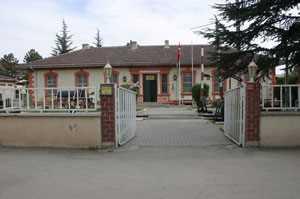
TCDD Eskişehir Museum is a railway museum established in 1998 in Eskişehir by the Turkish State Railways to shed light on the history of rail transport in Türkiye. The museum is located next to Eskişehir Railway Station, housed in a historic building dating back 106 years, and occupies an area of approximately two hectares.

TCDD Eskişehir Museum (Culture Portal)
The idea for the TCDD Eskişehir Museum originated in 1997 when tulip-patterned stoves, ordered from Germany in 1908 and found in the material warehouse of the Eskişehir Branch 13th Office, were repainted and displayed in the branch office. Following this initiative, with contributions from the TCDD First Regional Directorate and TÜLOMSAŞ General Directorate, various artifacts were collected to establish the museum. The museum was opened to the public on 16 October 1998. The museum building is situated beside Eskişehir Railway Station and covers an area of approximately 2000 square metres.
After the Industrial Revolution, the railway became a vital means of transportation and logistics. In the Ottoman Empire, railways were first established through concessions granted to British companies. In 1872, the Directorate of Railways was founded to manage railway operations; after the proclamation of the Republic, the General Directorate of State Railways and Ports was established in 1927. This institution formed the foundation of today’s Turkish State Railways (TCDD). Due to its strategic geographical position, Eskişehir became a key railway hub: in 1920, the General Directorate of Anatolian Railways was established there, with Behiç Erkin appointed as its first director. In this context, Eskişehir played a central role in railway activities during both the Ottoman and Republican periods.
In the outdoor exhibition area, the museum displays motorized and hand-operated railcars, level crossings and barriers, a steam-powered ballast cleaner, a water tanker, rails, and various locomotives. Inside the historic building, a railway station model measuring five metres in length and 3.5 metres in width, along with its surroundings, is exhibited. Additionally, the museum houses steam, diesel, and electric locomotives, passenger and freight cars, vintage telegraph and telex machines, magneto telephones, coal mines, lamps, railway signage, and various documents. Among the documents is a firman issued by Sultan Abdülhamid II concerning the construction of the Anatolia-Baghdad Railway. Numerous photographs of historic railway stations and trains are also on display.

TCDD Eskişehir Museum (Culture Portal)
Barakazı, Ebru. 2019. “TCDD Eskişehir Müzesi.” Türkiye Turizm Ansiklopedisi. Accessed August 16, 2025. https://turkiyeturizmansiklopedisi.com/tcdd-eskisehir-muzesi.
Ministry of Culture and Tourism of the Republic of Turkey. "TCDD Eskişehir Müzesi." Kültür Portalı. Accessed August 16, 2025. https://www.kulturportali.gov.tr/turkiye/eskisehir/gezilecekyer/tcdd-eskisehir-muzesi.
TCDD Taşımacılık A.Ş. "Eskişehir Müzesi." T.C. Devlet Demiryolları Resmî Web Sitesi. Accessed August 16, 2025. https://www.tcdd.gov.tr/muzeler/eskisehir-muzesi.

Establishment Year | 1998 | ||||||||
|---|---|---|---|---|---|---|---|---|---|
Location | Eskişehir Türkiye | ||||||||
Building | 106-year-old building, 2000 m² area | ||||||||
Opened to Visitors | 16 October 1998 | ||||||||
No Discussion Added Yet
Start discussion for "TCDD Eskişehir Museum" article
History
Institutional Context and Railway History
Museum Collection